
Soul
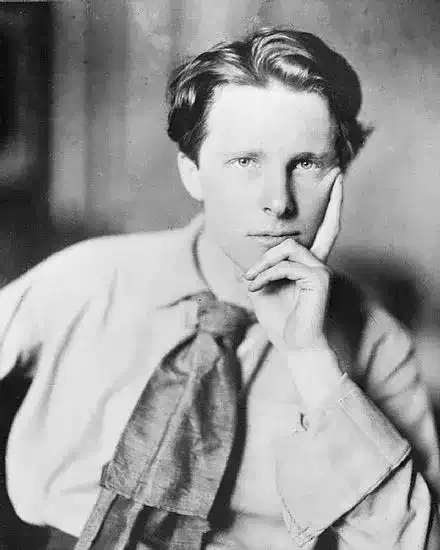
Rupert Brooke
The Hill
Breathless, we flung us on the windy hill,
Laughed in the sun, and kissed the lovely grass.
You said, “Through glory and ecstasy we pass;
Wind, sun, and earth remain, the birds sing still,
When we are old, are old.…” “And when we die
All’s over that is ours; and life burns on
Through other lovers, other lips,” said I,
—“Heart of my heart, our heaven is now, is won!”
“We are Earth’s best, that learnt her lesson here.
Life is our cry. We have kept the faith!” we said;
“We shall go down with unreluctant tread
Rose-crowned into the darkness!”… Proud we were,
And laughed, that had such brave true things to say.
—And then you suddenly cried, and turned away.
Read more →
432

Emily Dickinson
Always Mine!
Always Mine!
No more Vacation!
Term of Light this Day begun!
Failless as the fair rotation
Of the Seasons and the Sun.
Old the Grace, but new the Subjects-
Old, indeed, the East,
Yet upon His Purple Programme
Every Dawn, is first.
Read more →
433
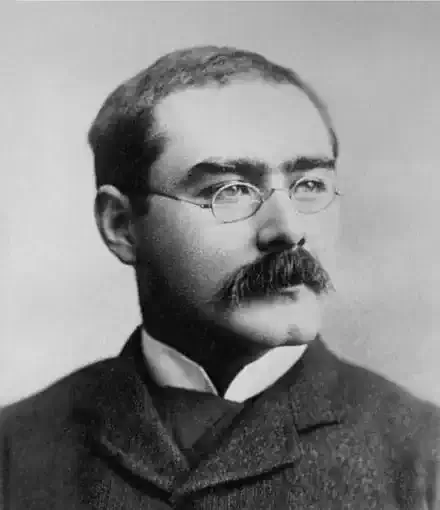
Rudyard Kipling
The Gift Of The Sea
The dead child lay in the shroud,
And the widow watched beside;
And her mother slept, and the Channel swept
The gale in the teeth of the tide.
But the mother laughed at all.
"I have lost my man in the sea,
And the child is dead. Be still," she said,
"What more can ye do to me?"
The widow watched the dead,
And the candle guttered low,
And she tried to sing the Passing Song
That bids the poor soul go.
And "Mary take you now," she sang,
"That lay against my heart."
And "Mary smooth your crib to-night,"
But she could not say "Depart."
Then came a cry from the sea,
But the sea-rime blinded the glass,
And "Heard ye nothing, mother?" she said,
"'Tis the child that waits to pass."
And the nodding mother sighed.
"'Tis a lambing ewe in the whin,
For why should the christened soul cry out
That never knew of sin?"
"O feet I have held in my hand,
O hands at my heart to catch,
How should they know the road to go,
And how should they lift the latch?"
They laid a sheet to the door,
With the little quilt atop,
That it might not hurt from the cold or the dirt,
But the crying would not stop.
The widow lifted the latch
And strained her eyes to see,
And opened the door on the bitter shore
To let the soul go free.
There was neither glimmer nor ghost,
There was neither spirit nor spark,
And "Heard ye nothing, mother?" she said,
"'Tis crying for me in the dark."
And the nodding mother sighed:
"'Tis sorrow makes ye dull;
Have ye yet to learn the cry of the tern,
Or the wail of the wind-blown gull?"
"The terns are blown inland,
The gray gull follows the plough.
'Twas never a bird, the voice I heard,
O mother, I hear it now!"
"Lie still, dear lamb, lie still;
The child is passed from harm,
'Tis the ache in your breast that broke your rest,
And the feel of an empty arm."
She put her mother aside,
"In Mary's name let be!
For the peace of my soul I must go," she said,
And she went to the calling sea.
In the heel of the wind-bit pier,
Where the twisted weed was piled,
She came to the life she had missed by an hour,
For she came to a little child.
She laid it into her breast,
And back to her mother she came,
But it would not feed and it would not heed,
Though she gave it her own child's name.
And the dead child dripped on her breast,
And her own in the shroud lay stark;
And "God forgive us, mother," she said,
"We let it die in the dark!"
Read more →
433

Ella Wheeler Wilcox
Be Not Weary
Sometimes, when I am toil-worn and aweary,
And tired out with working long and well,
And earth is dark, and skies above are dreary,
And heart and soul are all too sick to tell,
These words have come to me like angel fingers
Pressing the spirit's eyelids down in sleep,
'Oh let us not be weary in well doing,
For in due season we shall surely reap.'
Oh, blessed promise! When I seem to hear it,
Whispered by angel voices on the air,
It breathes new life and courage to my spirit,
And gives me strength to suffer and forbear.
And I can wait most patiently for harvest,
And cast my seeds, nor ever faint, nor weep,
If I know surely that my work availeth,
And in God's season, I at last shall reap.
When mind and body were borne down completely,
And I have thought my efforts were all in vain,
These words have come to me so softly, sweetly,
And whispered hope, and urged me on again.
And though my labour seems all unavailing,
And all my striving fruitless, yet the Lord
Doth treasure up each little seed I scatter,
And sometime, sometime, I shall reap the reward.
Read more →
431

Johann Wolfgang von Goethe
The Exchange
THE stones in the streamlet I make my bright pillow,
And open my arms to the swift-rolling billow,
That lovingly hastens to fall on my breast.
Then fickleness soon bids it onwards be flowing;
A second draws nigh, its caresses bestowing,--
And so by a twofold enjoyment I'm blest.
And yet thou art trailing in sorrow and sadness
The moments that life, as it flies, gave for gladness,
Because by thy love thou'rt remember'd no more!
Oh, call back to mind former days and their blisses!
The lips of the second will give as sweet kisses
As any the lips of the first gave before!
Read more →
434
Johann Wolfgang von Goethe
Book Of Suleika - Hatem 03
HOLD me, locks, securely caught
In the circle of her face!
Dear brown serpents, I have nought
To repay this act of grace,
Save a heart whose love ne'er dies,
Throbbing with aye-youthful glow;
For a raging ETA lies
'Neath its veil of mist and snow.
Yonder mountain's stately brow
Thou, like morning beams, dost shame;
Once again feels Hatem now
Spring's soft breath and summer's flame.
One more bumper! Fill the glass;
This last cup I pledge to thee!--
By mine ashes if she pass,
"He consumed," she'll say, "for me."
Read more →
431
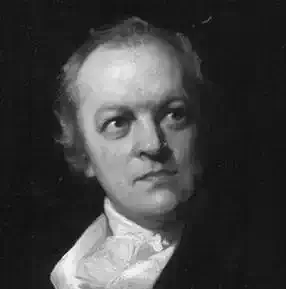
William Blake
The Book of Urizen: Chapter III
. The voice ended, they saw his pale visage
Emerge from the darkness; his hand
On the rock of eternity unclasping
The Book of brass. Rage siez'd the strong
. Rage, fury, intense indignation
In cataracts of fire blood & gall
In whirlwinds of sulphurous smoke:
And enormous forms of energy;
All the seven deadly sins of the soul
In living creations appear'd
In the flames of eternal fury.
. Sund'ring, dark'ning, thund'ring!
Rent away with a terrible crash
Eternity roll'd wide apart
Wide asunder rolling
Mountainous all around
Departing; departing; departing:
Leaving ruinous fragments of life
Hanging frowning cliffs & all between
An ocean of voidness unfathomable.
. The roaring fires ran o'er the heav'ns
In whirlwinds & cataracts of blood
And o'er the dark desarts of Urizen
Fires pour thro' the void on all sides
On Urizens self-begotten armies.
. But no light from the fires. all was darkness
In the flames of Eternal fury
. In fierce anguish & quenchless flames
To the desarts and rocks He ran raging
To hide, but He could not: combining
He dug mountains & hills in vast strength,
He piled them in incessant labour,
In howlings & pangs & fierce madness
Long periods in burning fires labouring
Till hoary, and age-broke, and aged,
In despair and the shadows of death.
. And a roof, vast petrific around,
On all sides He fram'd: like a womb;
Where thousands of rivers in veins
Of blood pour down the mountains to cool
The eternal fires beating without
From Eternals; & like a black globe
View'd by sons of Eternity, standing
On the shore of the infinite ocean
Like a human heart strugling & beating
The vast world of Urizen appear'd.
. And Los round the dark globe of Urizen,
Kept watch for Eternals to confine,
The obscure separation alone;
For Eternity stood wide apart,
As the stars are apart from the earth
. Los wept howling around the dark Demon:
And cursing his lot; for in anguish,
Urizen was rent from his side;
And a fathomless void for his feet;
And intense fires for his dwelling.
. But Urizen laid in a stony sleep
Unorganiz'd, rent from Eternity
. The Eternals said: What is this? Death
Urizen is a clod of clay.
. Los howld in a dismal stupor,
Groaning! gnashing! groaning!
Till the wrenching apart was healed
. But the wrenching of Urizen heal'd not
Cold, featureless, flesh or clay,
Rifted with direful changes
He lay in a dreamless night
. Till Los rouz'd his fires, affrighted
At the formless unmeasurable death.
Read more →
434
Ella Wheeler Wilcox
When Love Is Lost
When love is lost, the day sets towards the night,
Albeit the morning sun may still be bright,
And not one cloud-ship sails across the sky.
Yet from the places where it used to lie
Gone is the lustrous glory of the light.
No splendour rests in any mountain height,
No scene spreads fair and beauteous to the sight;
All, all seems dull and dreary to the eye
When love is lost.
Love lends to life its grandeur and its might;
Love goes, and leaves behind it gloom and blight;
Like ghosts of time the pallid hours drag by,
And grief's one happy thought is that we die.
Ah, what can recompense us for its flight
When love is lost?
Read more →
431
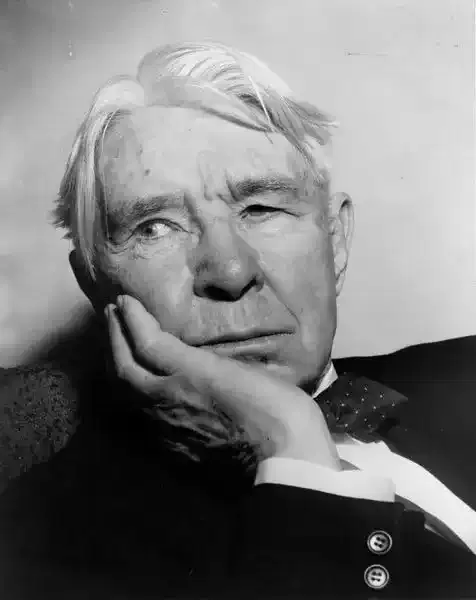
Carl Sandburg
Jungheimer's
In western fields of corn and northern timber lands,
They talk about me, a saloon with a soul,
The soft red lights, the long curving bar,
The leather seats and dim corners,
Tall brass spittoons, a nigger cutting ham,
And the painting of a woman half-dressed thrown reckless across a bed after a night of
booze and riots.
Read more →
432
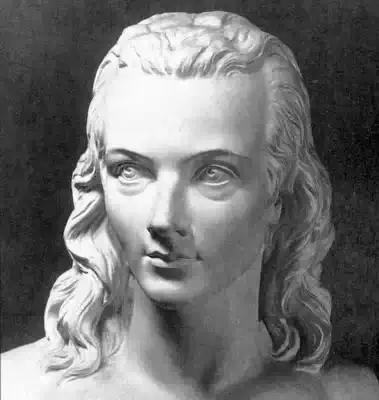
Novalis
Hymns to the Night
Before all the wondrous shows of the widespread space around him, what living,
sentient thing loves not the all-joyous light -- with its colors, its rays and undulations,
its gentle omnipresence in the form of the wakening Day? The giant-world of the
unresting constellations inhales it as the innermost soul of life, and floats dancing in its
blue flood -- the sparkling, ever-tranquil stone, the thoughtful, imbibing plant, and the
wild, burning multiform beast inhales it -- but more than all, the lordly stranger with
the sense-filled eyes, the swaying walk, and the sweetly closed, melodious lips. Like a
king over earthly nature, it rouses every force to countless transformations, binds and
unbinds innumerable alliances, hangs its heavenly form around every earthly
substance. -- Its presence alone reveals the marvelous splendor of the kingdoms of the
world.
Aside I turn to the holy, unspeakable, mysterious Night. Afar lies the world -- sunk in a
deep grave -- waste and lonely is its place. In the chords of the bosom blows a deep
sadness. I am ready to sink away in drops of dew, and mingle with the ashes. -- The
distances of memory, the wishes of youth, the dreams of childhood, the brief joys and
vain hopes of a whole long life, arise in gray garments, like an evening vapor after the
sunset. In other regions the light has pitched its joyous tents. What if it should never
return to its children, who wait for it with the faith of innocence?
What springs up all at once so sweetly boding in my heart, and stills the soft air of
sadness? Dost thou also take a pleasure in us, dark Night? What holdest thou under
thy mantle, that with hidden power affects my soul? Precious balm drips from thy hand
out of its bundle of poppies. Thou upliftest the heavy-laden wings of the soul. Darkly
and inexpressibly are we moved -- joy-startled, I see a grave face that, tender and
worshipful, inclines toward me, and, amid manifold entangled locks, reveals the
youthful loveliness of the Mother. How poor and childish a thing seems to me now the
Light -- how joyous and welcome the departure of the day -- because the Night turns
away from thee thy servants, you now strew in the gulfs of space those flashing
globes, to proclaim thy omnipotence -- thy return -- in seasons of thy absence. More
heavenly than those glittering stars we hold the eternal eyes which the Night hath
opened within us. Farther they see than the palest of those countless hosts -- needing
no aid from the light, they penetrate the depths of a loving soul -- that fills a loftier
region with bliss ineffable. Glory to the queen of the world, to the great prophet of the
holier worlds, to the guardian of blissful love -- she sends thee to me -- thou tenderly
beloved -- the gracious sun of the Night, -- now am I awake -- for now am I thine and
mine -- thou hast made me know the Night -- made of me a man -- consume with
spirit-fire my body, that I, turned to finer air, may mingle more closely with thee, and
then our bridal night endure forever.
Read more →
432
Rudyard Kipling
The City of Sleep
Over the edge of the purple down,
Where the single lamplight gleams,
Know ye the road to the Merciful Town
That is hard by the Sea of Dreams--
Where the poor may lay their wrongs away,
And the sick may forget to weep?
But we--pity us! Oh, pity us!
We wakeful; ah, pity us! --
We must go back with Policeman Day--
Back from the City of Sleep!
Weary they turn from the scroll and crown,
Fetter and prayer and plough--
They that go up to the Merciful Town,
For her gates are closing now.
It is their right in the Baths of Night
Body and soul to steep,
But we--pity us! ah, pity us!
We wakeful; oh, pity us!--
We must go back with Policeman Day--
Back from the City of Sleep!
Over the edge of the purple down,
Ere the tender dreams begin,
Look--we may look--at the Merciful Town,
But we may not enter in!
Outcasts all, from her guarded wall
Back to our watch we creep:
We--pity us! ah, pity us!
We wakeful; oh, pity us!--
We that go back with Policeman Day--
Back from the City of Sleep!
Read more →
433
Johann Wolfgang von Goethe
Roman Elegies I
Tell me you stones, O speak, you towering palaces!
Streets, say a word! Spirit of this place, are you dumb?
All things are alive in your sacred walls
eternal Rome, only for me all’s still.
Who will whisper to me, at what window
will I see the sweet thing who will kindle me, and quicken?
Already I guess the ways, walking to her and from her,
ever and always I’ll go, while sweet time slips by.
I’m gazing at church and palace, ruin and column,
like a serious man making sensible use of a journey,
but soon it will happen, and all will be one vast temple,
Love’s temple, receiving its new initiate.
Though you are a whole world, Rome, still, without Love,
the world’s not the world, Rome cannot be Rome.
Read more →
431
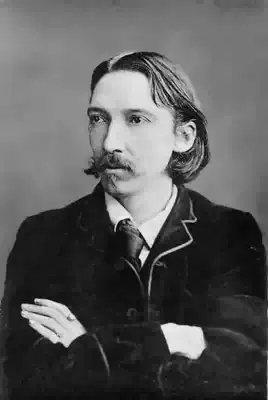
Robert Louis Stevenson
Swallows Travel To And Fro
SWALLOWS travel to and fro,
And the great winds come and go,
And the steady breezes blow,
Bearing perfume, bearing love.
Breezes hasten, swallows fly,
Towered clouds forever ply,
And at noonday, you and I
See the same sunshine above.
Dew and rain fall everywhere,
Harvests ripen, flowers are fair,
And the whole round earth is bare
To the moonshine and the sun;
And the live air, fanned with wings,
Bright with breeze and sunshine, brings
Into contact distant things,
And makes all the countries one.
Let us wander where we will,
Something kindred greets us still;
Something seen on vale or hill
Falls familiar on the heart;
So, at scent or sound or sight,
Severed souls by day and night
Tremble with the same delight -
Tremble, half the world apart.
Read more →
432
Johann Wolfgang von Goethe
Venetian Epigrams I
Sarcophagi, urns, were all covered with lifelike scenes,
fauns dancing with girls from a Bacchanalian choir,
paired-off, goat-footed creatures puffing their cheeks,
forcing ear-splitting notes from the blaring horns.
Cymbals and drumbeats, the marble is seen and is heard.
How delightful the fruit in the beaks of fluttering birds!
No startling noise can scare them, or scare away love,
Amor, whose torch waves more gladly in this happy throng.
So fullness overcomes death, and the ashes within
seem still, in their silent house, to feel love’s delight.
So may the Poet’s sarcophagus be adorned,
with this book the writer has filled with the beauty of life.
Read more →
434
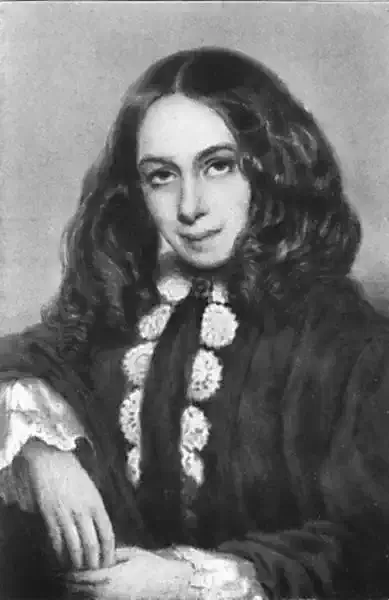
Elizabeth Barrett Browning
Sonnet XXVII: My Dear Belovèd
My dear Belovèd, who hast lifted me
From this drear flat of earth where I was thrown,
And, in betwixt the languid ringlets, blown
A life-breath, till the forehead hopefully
Shines out again, as all the angels see,
Before thy saving kiss! My own, my own,
Who camest to me when the world was gone,
And I who looked for only God, found thee!
I find thee; I am safe, and strong, and glad.
As one who stands in dewless asphodel
Looks backward on the tedious time he had
In the upper life,--so I, with bosom-swell,
Make witness, here, between the good and bad,
That Love, as strong as Death, retrieves as well.
Read more →
431

Henry Wadsworth Longfellow
Youth And Age. (Sonnet III.)
Oh give me back the days when loose and free
To my blind passion were the curb and rein,
Oh give me back the angelic face again,
With which all virtue buried seems to be!
Oh give my panting footsteps back to me,
That are in age so slow and fraught with pain,
And fire and moisture in the heart and brain,
If thou wouldst have me burn and weep for thee!
If it be true thou livest alone, Amor,
On the sweet-bitter tears of human hearts,
In an old man thou canst not wake desire;
Souls that have almost reached the other shore
Of a diviner love should feel the darts,
And be as tinder to a holier fire.
Read more →
428
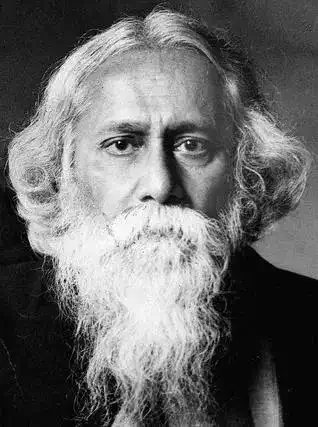
Rabindranath Tagore
Poems On Life
Life is given to us,
we earn it by giving it.
Let the dead have the immortality of fame,
but the living the immortality of love.
Life's errors cry for the merciful beauty
that can modulate their isolation into a
harmony with the whole.
Life, like a child, laughs,
shaking its rattle of death as it runs.
Read more →
428

Kabir
O lord Increate, who will serve Thee?
O lord Increate, who will serve Thee?
Every votary offers his worship to the God of his own creation:
each day he receives service-
None seek Him, the Perfect:
Brahma, the Indivisible Lord.
They believe in ten Avatars;
but no Avatar can be the Infinite Spirit,
for he suffers the results of his deeds:
The Supreme One must be other than this.
The Yogi, the Sanyasi,
the Ascetics, are disputing one with another:
Kabîr says, 'O brother! he who has seen that radiance of love,
he is saved.'
Read more →
428
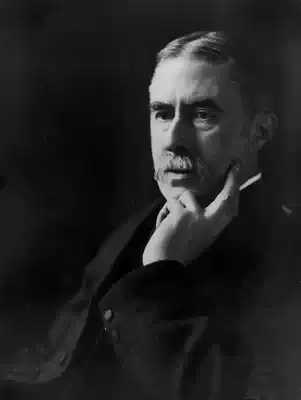
Alfred Edward Housman
Ho, everyone that thirsteth
Ho, everyone that thirsteth
And hath the price to give,
Come to the stolen waters,
Drink and your soul shall live.
Come to the stolen waters,
And leap the guarded pale,
And pull the flower in season
Before desire shall fail.
It shall not last for ever,
No more than earth and skies;
But he that drinks in season
Shall live before he dies.
June suns, you cannot store them
To warm the winter's cold,
The lad that hopes for heaven
Shall fill his mouth with mold.
Read more →
430
Ella Wheeler Wilcox
A Glass Of Wine
'What's in a glass of wine?'
There, set the glass where I can look within.
Now listen to me, friend, while I begin
And tell you what I see-
What I behold with my far-reaching eyes,
And what I know to be
Below the laughing bubbles that arise
Within this glass of wine.
There is a little spirit, night and day,
That cries one word, for ever and alway:
That single word is 'More!'
And whoso drinks a glass of wine, drinks him:
You fill the goblet full unto the brim,
And strive to silence him.
Glass after glass you drain to quench his thirst,
Each glass contains a spirit like the first;
And all their voices cry
Until they shriek and clamor, howl and rave,
And shout 'More!' noisily,
Till welcome death prepares the drunkard's grave,
And stills the imps that rave.
That see I in the wine:
And tears so many that I cannot guess;
And all these drops are labelled with 'Distress.'
I know you cannot see.
And at the bottom are the dregs of shame:
Oh! it is plain to me.
And there are woes too terrible to name:
Now drink your glass of wine.
Read more →
428
Ella Wheeler Wilcox
New And Old
I and new love, in all its living bloom,
Sat vis-à-vis, while tender twilight hours
Went softly by us, treading as on flowers.
Then suddenly I saw within the room
The old love, long since lying in its tomb.
It dropped the cerecloth from its fleshless face
And smiled on me, with a remembered grace
That, like the noontide, lit the gloaming gloom.
Upon its shroud there hung the grave’s green mould,
About it hung the odour of the dead;
Yet from its cavernous eyes such light was shed
That all my life seemed gilded, as with gold;
Unto the trembling new love “Go, ” I said,
“I do not need thee, for I have the old.”
Read more →
428
Ella Wheeler Wilcox
At Eleusis
I, at Eleusis, saw the finest sight,
When early morning's banners were unfurled.
From high Olympus, gazing on the world,
The ancient gods once saw it with delight.
Sad Demeter had in a single night
Removed her sombre garments! and mine eyes
Beheld a 'broidered mantle in pale dyes
Thrown o'er her throbbing bosom. Sweet and clear
There fell the sound of music on mine ear.
And from the South came Hermes, he whose lyre
One time appeased the great Apollo's ire.
The rescued maid, Persephone, by the hand
He led to waiting Demeter, and cheer
And light and beauty once more blessed the land.
Read more →
429

Claude Mckay
Spring in New Hampshire
Too green the springing April grass,
Too blue the silver-speckled sky,
For me to linger here, alas,
While happy winds go laughing by,
Wasting the golden hours indoors,
Washing windows and scrubbing floors.
Too wonderful the April night,
Too faintly sweet the first May flowers,
The stars too gloriously bright,
For me to spend the evening hours,
When fields are fresh and streams are leaping,
Wearied, exhausted, dully sleeping.
Read more →
430

Paul Laurence Dunbar
A Choice
They please me not-- these solemn songs
That hint of sermons covered up.
'T is true the world should heed its wrongs,
But in a poem let me sup,
Not simples brewed to cure or ease
Humanity's confessed disease,
But the spirit-wine of a singing line,
Or a dew-drop in a honey cup!
Read more →
430