
Soul
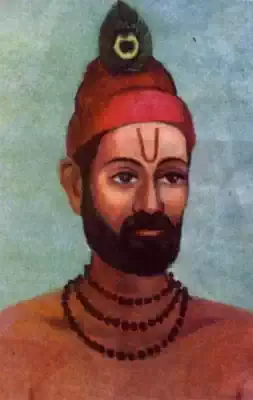
Kabir
Many Hoped
Many hoped
but no one found
Hari's heart.
Where do the senses rest?
Where do the Ram-chanters go?
Where do the bright ones go?
Corpses: all gone
to the same place.
Drunk on the juice
of Ram's bliss,
Kabir says,
I've said and I've said,
I'm tired of saying.
Read more →
but no one found
Hari's heart.
Where do the senses rest?
Where do the Ram-chanters go?
Where do the bright ones go?
Corpses: all gone
to the same place.
Drunk on the juice
of Ram's bliss,
Kabir says,
I've said and I've said,
I'm tired of saying.
437
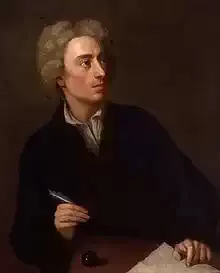
Alexander Pope
The Messiah : A Sacred Eclogue
Ye nymphs of Solyma! begin the song,
To heavenly themes sublimer strains belong.
The mossy fountains, and the sylvan shades,
The dreams of Pindus, and the Aonian maids,
Delight no more - O thou, my voice inspire,
Who touched Isaiah's hallowed lips with fire!
Rapt into future times the bard begun,
A virgin shall conceive, a Virgin bear a son!
From Jesse's root behold a branch arise,
Whose sacred flower with fragrance fills the skies;
The ethereal Spirit o'er its leaves shall move,
And on its top descend the mystic Dove.
Ye heavens! from high the dewy nectar pour,
And in soft silence shed the kindly shower!
The sick and weak, the healing Plant shall aid,
From storms a shelter, and from heat a shade.
All crimes shall cease, and ancient fraud shall fail;
Returning justice lift aloft her scale.
Peace o'er the world her olive wand extend,
And white robed innocence from heaven descend.
Swift fly the years, and rise the expected morn!
O spring to light, auspicious Babe, be born!
See! nature hastes her earliest wreaths to bring,
WIth all the incense of the breathing spring!
See! lofty Lebanon his head advance,
See! nodding forests on the mountains dance:
See! spicy clouds from lowly Sharon rise;
And Carmel's flowery top perfumes the skies.
Hark! a glad voice the lonely desart cheers;
Prepare the way! a God, a God appears:
A God, a God! the vocal hills reply,
The rocks proclaim the approaching Deity.
Lo! earth receives him from the bending skies!
Sink down ye mountains, and ye vallies rise!
With heads declined ye cedars homage pay!
Be smooth ye rocks, ye rapid floods give way!
The Saviour comes! by ancient bards foretold:
Hear him ye deaf, and all ye blind, behold!
He from thick films shall purge the visual ray,
And on the sightless eye-ball pour the day.
'Tis he the obstructed paths of sound shall clear,
The dumb shall sing, the lame his crutch forego,
And leap exulting like the bounding roe:
No sigh, no murmer the wide world shall hear;
From every face he wipes off every tear.
In adamantine chains shall death be bound,
And hell's grim tyrant feel the eternal wound.
As the good shepherd tends his fleecy care,
Seeks freshest pastures and the purest air:
Explores the lost, the wandering sheep directs,
By day o'ersees them, and by night protects;
The tender lambs he raises in his arms,
Feeds from his hand, and in his bosom warms!
Thus shall mankind his guardian care engage,
The promis'd father of the future age.
No more shall nation against nation rise,
Nor ardent warriors meet with hateful eyes;
Nor fields with gleaming steel be cover'd o'er,
The brazen trumpets kindle rage no more;
But useless lances into scythes shall bend,
And the broad faulchion in a plough-share end.
Then palaces shall rise: the joyful son
Shall finish what his short-liv'd fire begun;
Their vines a shadow to their race shall yield,
And the same hand that sow'd, shall reap the field.
The swain in barren desarts with surprise
Sees lillies spring, and sudden verdure rise,
And starts amidst the thirsty wilds to hear
New falls of water murmuring in his ear;
On rifted rocks, the dragon's late abodes,
The green reed trembles, and the bulrush nods.
Waste sandy vallies once perplex'd with thorn,
The spiry fir and shapely box adorn;
The leafless shrubs the flow'ring palms succeed,
And odorous myrtle to the noisome weed.
The lambs with wolves shall grace the verdant mead,
And boys in flow'ry bands the tyger lead;
The steer and lion at one crib shall meet,
And harmless serpents lick the pilgrim's feet.
The smiling infant in his hand shall take
The crested basilisk and speckled snake;
Pleas'd, the green lustres of the scales survey,
And with their forky tongues shall innocently play.
Rise, crown'd with light, imperial Salem rise!
Exalt thy tow'ry head, and lift thy eyes!
See! a long race thy spacious courts adorn;
See! future sons and daughters yet unborn,
In crowding ranks on ev'ry side arise,
Demanding life, impatient for the skies!
See! barb'rous nations at thy gates attend,
Walk in thy light, and in thy temple bend;
See! thy bright altars throng'd with prostrate kings,
And heap'd with products of Sabaean springs!
For thee Idume's spicy forests blow,
And seeds of gold in Ophir's mountains glow.
See! heav'n its sparkling portals wide display,
And break upon thee in a flood of day!
No more the rising sun shall gild the morn,
Nor ev'ning Cynthia fill her silver horn;
But lost, dissolv'd in thy superior rays,
One tide of glory, one unclouded blaze,
O'erflow thy courts: the Light Himself shall shine
Reveal'd, and God's eternal day be thine!
The seas shall waste, the skies in smoke decay,
Rocks fall to dust, and mountains melt away;
But fix'd his word, his saving pow'r remains,
Thy realm for ever lasts, thy own Messiah reigns.
Read more →
To heavenly themes sublimer strains belong.
The mossy fountains, and the sylvan shades,
The dreams of Pindus, and the Aonian maids,
Delight no more - O thou, my voice inspire,
Who touched Isaiah's hallowed lips with fire!
Rapt into future times the bard begun,
A virgin shall conceive, a Virgin bear a son!
From Jesse's root behold a branch arise,
Whose sacred flower with fragrance fills the skies;
The ethereal Spirit o'er its leaves shall move,
And on its top descend the mystic Dove.
Ye heavens! from high the dewy nectar pour,
And in soft silence shed the kindly shower!
The sick and weak, the healing Plant shall aid,
From storms a shelter, and from heat a shade.
All crimes shall cease, and ancient fraud shall fail;
Returning justice lift aloft her scale.
Peace o'er the world her olive wand extend,
And white robed innocence from heaven descend.
Swift fly the years, and rise the expected morn!
O spring to light, auspicious Babe, be born!
See! nature hastes her earliest wreaths to bring,
WIth all the incense of the breathing spring!
See! lofty Lebanon his head advance,
See! nodding forests on the mountains dance:
See! spicy clouds from lowly Sharon rise;
And Carmel's flowery top perfumes the skies.
Hark! a glad voice the lonely desart cheers;
Prepare the way! a God, a God appears:
A God, a God! the vocal hills reply,
The rocks proclaim the approaching Deity.
Lo! earth receives him from the bending skies!
Sink down ye mountains, and ye vallies rise!
With heads declined ye cedars homage pay!
Be smooth ye rocks, ye rapid floods give way!
The Saviour comes! by ancient bards foretold:
Hear him ye deaf, and all ye blind, behold!
He from thick films shall purge the visual ray,
And on the sightless eye-ball pour the day.
'Tis he the obstructed paths of sound shall clear,
The dumb shall sing, the lame his crutch forego,
And leap exulting like the bounding roe:
No sigh, no murmer the wide world shall hear;
From every face he wipes off every tear.
In adamantine chains shall death be bound,
And hell's grim tyrant feel the eternal wound.
As the good shepherd tends his fleecy care,
Seeks freshest pastures and the purest air:
Explores the lost, the wandering sheep directs,
By day o'ersees them, and by night protects;
The tender lambs he raises in his arms,
Feeds from his hand, and in his bosom warms!
Thus shall mankind his guardian care engage,
The promis'd father of the future age.
No more shall nation against nation rise,
Nor ardent warriors meet with hateful eyes;
Nor fields with gleaming steel be cover'd o'er,
The brazen trumpets kindle rage no more;
But useless lances into scythes shall bend,
And the broad faulchion in a plough-share end.
Then palaces shall rise: the joyful son
Shall finish what his short-liv'd fire begun;
Their vines a shadow to their race shall yield,
And the same hand that sow'd, shall reap the field.
The swain in barren desarts with surprise
Sees lillies spring, and sudden verdure rise,
And starts amidst the thirsty wilds to hear
New falls of water murmuring in his ear;
On rifted rocks, the dragon's late abodes,
The green reed trembles, and the bulrush nods.
Waste sandy vallies once perplex'd with thorn,
The spiry fir and shapely box adorn;
The leafless shrubs the flow'ring palms succeed,
And odorous myrtle to the noisome weed.
The lambs with wolves shall grace the verdant mead,
And boys in flow'ry bands the tyger lead;
The steer and lion at one crib shall meet,
And harmless serpents lick the pilgrim's feet.
The smiling infant in his hand shall take
The crested basilisk and speckled snake;
Pleas'd, the green lustres of the scales survey,
And with their forky tongues shall innocently play.
Rise, crown'd with light, imperial Salem rise!
Exalt thy tow'ry head, and lift thy eyes!
See! a long race thy spacious courts adorn;
See! future sons and daughters yet unborn,
In crowding ranks on ev'ry side arise,
Demanding life, impatient for the skies!
See! barb'rous nations at thy gates attend,
Walk in thy light, and in thy temple bend;
See! thy bright altars throng'd with prostrate kings,
And heap'd with products of Sabaean springs!
For thee Idume's spicy forests blow,
And seeds of gold in Ophir's mountains glow.
See! heav'n its sparkling portals wide display,
And break upon thee in a flood of day!
No more the rising sun shall gild the morn,
Nor ev'ning Cynthia fill her silver horn;
But lost, dissolv'd in thy superior rays,
One tide of glory, one unclouded blaze,
O'erflow thy courts: the Light Himself shall shine
Reveal'd, and God's eternal day be thine!
The seas shall waste, the skies in smoke decay,
Rocks fall to dust, and mountains melt away;
But fix'd his word, his saving pow'r remains,
Thy realm for ever lasts, thy own Messiah reigns.
434

William Butler Yeats
A Bronze Head
HERE at right of the entrance this bronze head,
Human, superhuman, a bird's round eye,
Everything else withered and mummy-dead.
What great tomb-haunter sweeps the distant sky
(Something may linger there though all else die;)
And finds there nothing to make its tetror less
Hysterica passio of its own emptiness?
No dark tomb-haunter once; her form all full
As though with magnanimity of light,
Yet a most gentle woman; who can tell
Which of her forms has shown her substance right?
Or maybe substance can be composite,
profound McTaggart thought so, and in a breath
A mouthful held the extreme of life and death.
But even at the starting-post, all sleek and new,
I saw the wildness in her and I thought
A vision of terror that it must live through
Had shattered her soul. Propinquity had brought
Imagiation to that pitch where it casts out
All that is not itself: I had grown wild
And wandered murmuring everywhere, 'My child, my
child! '
Or else I thought her supernatural;
As though a sterner eye looked through her eye
On this foul world in its decline and fall;
On gangling stocks grown great, great stocks run dry,
Ancestral pearls all pitched into a sty,
Heroic reverie mocked by clown and knave,
And wondered what was left for massacre to save.
Read more →
Human, superhuman, a bird's round eye,
Everything else withered and mummy-dead.
What great tomb-haunter sweeps the distant sky
(Something may linger there though all else die;)
And finds there nothing to make its tetror less
Hysterica passio of its own emptiness?
No dark tomb-haunter once; her form all full
As though with magnanimity of light,
Yet a most gentle woman; who can tell
Which of her forms has shown her substance right?
Or maybe substance can be composite,
profound McTaggart thought so, and in a breath
A mouthful held the extreme of life and death.
But even at the starting-post, all sleek and new,
I saw the wildness in her and I thought
A vision of terror that it must live through
Had shattered her soul. Propinquity had brought
Imagiation to that pitch where it casts out
All that is not itself: I had grown wild
And wandered murmuring everywhere, 'My child, my
child! '
Or else I thought her supernatural;
As though a sterner eye looked through her eye
On this foul world in its decline and fall;
On gangling stocks grown great, great stocks run dry,
Ancestral pearls all pitched into a sty,
Heroic reverie mocked by clown and knave,
And wondered what was left for massacre to save.
435
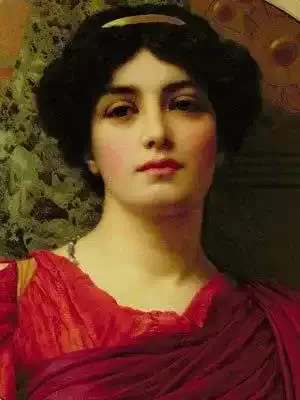
Safo
Words
Although they are
only breath, words
which I command
are immortal
Sappho
tr. Barnard
Read more →
only breath, words
which I command
are immortal
Sappho
tr. Barnard
437
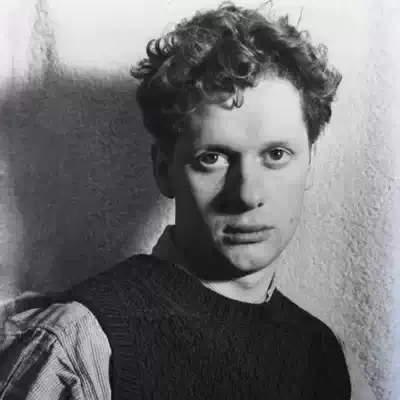
Dylan Thomas
All That I Owe the Fellows of the Grave
All that I owe the fellows of the grave
And all the dead bequeathed from pale estates
Lies in the fortuned bone, the flask of blood,
Like senna stirs along the ravaged roots.
O all I owe is all the flesh inherits,
My fathers' loves that pull upon my nerves,
My sisters tears that sing upon my head
My brothers' blood that salts my open wounds
Heir to the scalding veins that hold love's drop,
My fallen filled, that had the hint of death,
Heir to the telling senses that alone
Acquaint the flesh with a remembered itch,
I round this heritage as rounds the sun
His winy sky, and , as the candles moon,
Cast light upon my weather. I am heir
To women who have twisted their last smile,
To children who were suckled on a plague,
To young adorers dying on a kiss.
All such disease I doctor in my blood,
And all such love's a shrub sown in the breath.
Then look, my eyes, upon this bonehead fortune
And browse upon the postures of the dead;
All night and day I eye the ragged globe
Through periscopes rightsighted from the grave;
All night and day I wander in these same
Wax clothes that wax upon the ageing ribs;
All night my fortune slumbers in its sheet.
Then look, my heart, upon the scarlet trove,
And look, my grain, upon the falling wheat;
All night my fortune slumbers in its sheet.
Read more →
And all the dead bequeathed from pale estates
Lies in the fortuned bone, the flask of blood,
Like senna stirs along the ravaged roots.
O all I owe is all the flesh inherits,
My fathers' loves that pull upon my nerves,
My sisters tears that sing upon my head
My brothers' blood that salts my open wounds
Heir to the scalding veins that hold love's drop,
My fallen filled, that had the hint of death,
Heir to the telling senses that alone
Acquaint the flesh with a remembered itch,
I round this heritage as rounds the sun
His winy sky, and , as the candles moon,
Cast light upon my weather. I am heir
To women who have twisted their last smile,
To children who were suckled on a plague,
To young adorers dying on a kiss.
All such disease I doctor in my blood,
And all such love's a shrub sown in the breath.
Then look, my eyes, upon this bonehead fortune
And browse upon the postures of the dead;
All night and day I eye the ragged globe
Through periscopes rightsighted from the grave;
All night and day I wander in these same
Wax clothes that wax upon the ageing ribs;
All night my fortune slumbers in its sheet.
Then look, my heart, upon the scarlet trove,
And look, my grain, upon the falling wheat;
All night my fortune slumbers in its sheet.
435
William Butler Yeats
Youth And Age
MUCH did I rage when young,
Being by the world oppressed,
But now with flattering tongue
It speeds the parting guest.
Read more →
Being by the world oppressed,
But now with flattering tongue
It speeds the parting guest.
436
William Butler Yeats
A Crazed Girl
THAT crazed girl improvising her music.
Her poetry, dancing upon the shore,
Her soul in division from itself
Climbing, falling She knew not where,
Hiding amid the cargo of a steamship,
Her knee-cap broken, that girl I declare
A beautiful lofty thing, or a thing
Heroically lost, heroically found.
No matter what disaster occurred
She stood in desperate music wound,
Wound, wound, and she made in her triumph
Where the bales and the baskets lay
No common intelligible sound
But sang, 'O sea-starved, hungry sea.'
Read more →
Her poetry, dancing upon the shore,
Her soul in division from itself
Climbing, falling She knew not where,
Hiding amid the cargo of a steamship,
Her knee-cap broken, that girl I declare
A beautiful lofty thing, or a thing
Heroically lost, heroically found.
No matter what disaster occurred
She stood in desperate music wound,
Wound, wound, and she made in her triumph
Where the bales and the baskets lay
No common intelligible sound
But sang, 'O sea-starved, hungry sea.'
437
William Butler Yeats
To Some I Have Talked With By The Fire
WHILE I wrought out these fitful Danaan rhymes,
My heart would brim with dreams about the times
When we bent down above the fading coals
And talked of the dark folk who live in souls
Of passionate men, like bats in the dead trees;
And of the wayward twilight companies
Who sigh with mingled sorrow and content,
Because their blossoming dreams have never bent
Under the fruit of evil and of good:
And of the embattled flaming multitude
Who rise, wing above wing, flame above flame,
And, like a storm, cry the Ineffable Name,
And with the clashing of their sword-blades make
A rapturous music, till the morning break
And the white hush end all but the loud beat
Of their long wings, the flash of their white feet.
Read more →
My heart would brim with dreams about the times
When we bent down above the fading coals
And talked of the dark folk who live in souls
Of passionate men, like bats in the dead trees;
And of the wayward twilight companies
Who sigh with mingled sorrow and content,
Because their blossoming dreams have never bent
Under the fruit of evil and of good:
And of the embattled flaming multitude
Who rise, wing above wing, flame above flame,
And, like a storm, cry the Ineffable Name,
And with the clashing of their sword-blades make
A rapturous music, till the morning break
And the white hush end all but the loud beat
Of their long wings, the flash of their white feet.
435

Matsuo Bashō
In this world of ours
Yo no naka wa kutte hako shite nete okite
Sate sono ato wa shinuru bakari zo
In this world of ours,
We eat only to cast out,
Sleep only to wake,
And what comes after all that
Is simply to die at last.
Read more →
Sate sono ato wa shinuru bakari zo
In this world of ours,
We eat only to cast out,
Sleep only to wake,
And what comes after all that
Is simply to die at last.
438

Ella Wheeler Wilcox
The Hammock's Complaint
Who thinks how desolate and strange
To me must seem the autumn's change,
When housed in attic or in chest,
A lonely and unwilling guest,
I lie through nights of bleak December,
And think in silence, and remember.
I think of hempen fields, where I
Once played with insects floating by,
And joyed alike in sun and rain,
Unconscious of approaching pain.
I dwell upon my later lot,
Where, swung in some secluded spot
Between two tried and trusted trees,
All summer long I wooed the breeze.
With song of bee and call of bird
And lover's secrets overheard,
And sight and scent of blooming flowers,
To fill the happy sunlight's hours.
When verdant fields grow bare and brown,
When forest leaves come raining down,
When frost has mated with the weather
And all the birds go south together,
When drying boats turn up their keels,
Who wonders how the hammock feels?
Read more →
To me must seem the autumn's change,
When housed in attic or in chest,
A lonely and unwilling guest,
I lie through nights of bleak December,
And think in silence, and remember.
I think of hempen fields, where I
Once played with insects floating by,
And joyed alike in sun and rain,
Unconscious of approaching pain.
I dwell upon my later lot,
Where, swung in some secluded spot
Between two tried and trusted trees,
All summer long I wooed the breeze.
With song of bee and call of bird
And lover's secrets overheard,
And sight and scent of blooming flowers,
To fill the happy sunlight's hours.
When verdant fields grow bare and brown,
When forest leaves come raining down,
When frost has mated with the weather
And all the birds go south together,
When drying boats turn up their keels,
Who wonders how the hammock feels?
436

Claude Mckay
Enslaved
Oh when I think of my long-suffering race,
For weary centuries despised, oppressed,
Enslaved and lynched, denied a human place
In the great life line of the Christian West;
And in the Black Land disinherited,
Robbed in the ancient country of its birth,
My heart grows sick with hate, becomes as lead,
For this my race that has no home on earth.
Then from the dark depths of my soul I cry
To the avenging angel to consume
The white man's world of wonders utterly:
Let it be swallowed up in earth's vast womb,
Or upward roll as sacrificial smoke
To liberate my people from its yoke!
Read more →
For weary centuries despised, oppressed,
Enslaved and lynched, denied a human place
In the great life line of the Christian West;
And in the Black Land disinherited,
Robbed in the ancient country of its birth,
My heart grows sick with hate, becomes as lead,
For this my race that has no home on earth.
Then from the dark depths of my soul I cry
To the avenging angel to consume
The white man's world of wonders utterly:
Let it be swallowed up in earth's vast womb,
Or upward roll as sacrificial smoke
To liberate my people from its yoke!
435

Dorothy Parker
A Well-Worn Story
In April, in April,
My one love came along,
And I ran the slope of my high hill
To follow a thread of song.
His eyes were hard as porphyry
With looking on cruel lands;
His voice went slipping over me
Like terrible silver hands.
Together we trod the secret lane
And walked the muttering town.
I wore my heart like a wet, red stain
On the breast of a velvet gown.
In April, in April,
My love went whistling by,
And I stumbled here to my high hill
Along the way of a lie.
Now what should I do in this place
But sit and count the chimes,
And splash cold water on my face
And spoil a page with rhymes?
Read more →
My one love came along,
And I ran the slope of my high hill
To follow a thread of song.
His eyes were hard as porphyry
With looking on cruel lands;
His voice went slipping over me
Like terrible silver hands.
Together we trod the secret lane
And walked the muttering town.
I wore my heart like a wet, red stain
On the breast of a velvet gown.
In April, in April,
My love went whistling by,
And I stumbled here to my high hill
Along the way of a lie.
Now what should I do in this place
But sit and count the chimes,
And splash cold water on my face
And spoil a page with rhymes?
434

Elizabeth Barrett Browning
Work And Contemplation
The woman singeth at her spinning-wheel
A pleasant chant, ballad or barcarole;
She thinketh of her song, upon the whole,
Far more than of her flax; and yet the reel
Is full, and artfully her fingers feel
With quick adjustment, provident control,
The lines--too subtly twisted to unroll--
Out to a perfect thread. I hence appeal
To the dear Christian Church--that we may do
Our Father's business in these temples mirk,
Thus swift and steadfast, thus intent and strong;
While thus, apart from toil, our souls pursue
Some high calm spheric tune, and prove our work
The better for the sweetness of our song.
Read more →
A pleasant chant, ballad or barcarole;
She thinketh of her song, upon the whole,
Far more than of her flax; and yet the reel
Is full, and artfully her fingers feel
With quick adjustment, provident control,
The lines--too subtly twisted to unroll--
Out to a perfect thread. I hence appeal
To the dear Christian Church--that we may do
Our Father's business in these temples mirk,
Thus swift and steadfast, thus intent and strong;
While thus, apart from toil, our souls pursue
Some high calm spheric tune, and prove our work
The better for the sweetness of our song.
437

Sara Teasdale
The Tree of Song
I sang my songs for the rest,
For you I am still;
The tree of my song is bare
On its shining hill.
For you came like a lordly wind,
And the leaves were whirled
Far as forgotten things
Past the rim of the world.
The tree of my song stands bare
Against the blue --
I gave my songs to the rest,
Myself to you.
Read more →
For you I am still;
The tree of my song is bare
On its shining hill.
For you came like a lordly wind,
And the leaves were whirled
Far as forgotten things
Past the rim of the world.
The tree of my song stands bare
Against the blue --
I gave my songs to the rest,
Myself to you.
435
Dorothy Parker
The False Friends
They laid their hands upon my head,
They stroked my cheek and brow;
And time could heal a hurt, they said,
And time could dim a vow.
And they were pitiful and mild
Who whispered to me then,
"The heart that breaks in April, child,
Will mend in May again."
Oh, many a mended heart they knew.
So old they were, and wise.
And little did they have to do
To come to me with lies!
Who flings me silly talk of May
Shall meet a bitter soul;
For June was nearly spent away
Before my heart was whole.
Read more →
They stroked my cheek and brow;
And time could heal a hurt, they said,
And time could dim a vow.
And they were pitiful and mild
Who whispered to me then,
"The heart that breaks in April, child,
Will mend in May again."
Oh, many a mended heart they knew.
So old they were, and wise.
And little did they have to do
To come to me with lies!
Who flings me silly talk of May
Shall meet a bitter soul;
For June was nearly spent away
Before my heart was whole.
436

Henry Wadsworth Longfellow
The Masque Of Pandora
THE WORKSHOP OF HEPHAESTUS
HEPHAESTUS (standing before the statue of Pandora.)
Not fashioned out of gold, like Hera's throne,
Nor forged of iron like the thunderbolts
Of Zeus omnipotent, or other works
Wrought by my hands at Lemnos or Olympus,
But moulded in soft clay, that unresisting
Yields itself to the touch, this lovely form
Before me stands, perfect in every part.
Not Aphrodite's self appeared more fair,
When first upwafted by caressing winds
She came to high Olympus, and the gods
Paid homage to her beauty. Thus her hair
Was cinctured; thus her floating drapery
Was like a cloud about her, and her face
Was radiant with the sunshine and the sea.
THE VOICE OF ZEUS.
Is thy work done, Hephaestus?
HEPHAESTUS.
It is finished!
THE VOICE.
Not finished till I breathe the breath of life
Into her nostrils, and she moves and speaks.
HEPHAESTUS.
Will she become immortal like ourselves?
THE VOICE.
The form that thou hast fashioned out of clay
Is of the earth and mortal; but the spirit,
The life, the exhalation of my breath,
Is of diviner essence and immortal.
The gods shall shower on her their benefactions,
She shall possess all gifts: the gift of song,
The gift of eloquence, the gift of beauty,
The fascination and the nameless charm
That shall lead all men captive.
HEPHAESTUS.
Wherefore? wherefore?
(A wind shakes the house.)
I hear the rushing of a mighty wind
Through all the halls and chambers of my house!
Her parted lips inhale it, and her bosom
Heaves with the inspiration. As a reed
Beside a river in the rippling current
Bends to and fro, she bows or lifts her head.
She gazes round about as if amazed;
She is alive; she breathes, but yet she speaks not!
(PANDORA descends from the pedestal.)
CHORUS OF THE GRACES
AGLAIA.
In the workshop of Hephaestus
What is this I see?
Have the Gods to four increased us
Who were only three?
Beautiful in form and feature,
Lovely as the day,
Can there be so fair a creature
Formed of common clay?
THALIA.
O sweet, pale face! O lovely eyes of azure,
Clear as the waters of a brook that run
Limpid and laughing in the summer sun!
O golden hair that like a miser's treasure
In its abundance overflows the measure!
O graceful form, that cloudlike floatest on
With the soft, undulating gait of one
Who moveth as if motion were a pleasure!
By what name shall I call thee? Nymph or Muse,
Callirrhoe or Urania? Some sweet name
Whose every syllable is a caress
Would best befit thee; but I cannot choose,
Nor do I care to choose; for still the same,
Nameless or named, will be thy loveliness.
EUPHROSYNE.
Dowered with all celestial gifts,
Skilled in every art
That ennobles and uplifts
And delights the heart,
Fair on earth shall be thy fame
As thy face is fair,
And Pandora be the name
Thou henceforth shalt bear.
II.
OLYMPUS
HERMES (putting on his sandals.)
Much must he toil who serves the Immortal Gods,
And I, who am their herald, most of all.
No rest have I, nor respite. I no sooner
Unclasp the winged sandals from my feet,
Than I again must clasp them, and depart
Upon some foolish errand. But to-day
The errand is not foolish. Never yet
With greater joy did I obey the summons
That sends me earthward. I will fly so swiftly
That my caduceus in the whistling air
Shall make a sound like the Pandaean pipes,
Cheating the shepherds; for to-day I go,
Commissioned by high-thundering Zeus, to lead
A maiden to Prometheus, in his tower,
And by my cunning arguments persuade him
To marry her. What mischief lies concealed
In this design I know not; but I know
Who thinks of marrying hath already taken
One step upon the road to penitence.
Such embassies delight me. Forth I launch
On the sustaining air, nor fear to fall
Like Icarus, nor swerve aside like him
Who drove amiss Hyperion's fiery steeds.
I sink, I fly! The yielding element
Folds itself round about me like an arm,
And holds me as a mother holds her child.
III.
TOWER OF PROMETHEUS ON MOUNT CAUCASUS
PROMETHEUS.
I hear the trumpet of Alectryon
Proclaim the dawn. The stars begin to fade,
And all the heavens are full of prophecies
And evil auguries. Blood-red last night
I saw great Kronos rise; the crescent moon
Sank through the mist, as if it were the scythe
His parricidal hand had flung far down
The western steeps. O ye Immortal Gods,
What evil are ye plotting and contriving?
(HERMES and PANDORA at the threshold.)
PANDORA.
I cannot cross the threshold. An unseen
And icy hand repels me. These blank walls
Oppress me with their weight!
PROMETHEUS.
Powerful ye are,
But not omnipotent. Ye cannot fight
Against Necessity. The Fates control you,
As they do us, and so far we are equals!
PANDORA.
Motionless, passionless, companionless,
He sits there muttering in his beard. His voice
Is like a river flowing underground!
HERMES.
Prometheus, hail!
PROMETHEUS.
Who calls me?
HERMES.
It is I.
Dost thou not know me?
PROMETHEUS.
By thy winged cap
And winged heels I know thee. Thou art Hermes,
Captain of thieves! Hast thou again been stealing
The heifers of Admetus in the sweet
Meadows of asphodel? or Hera's girdle?
Or the earth-shaking trident of Poseidon?
HERMES.
And thou, Prometheus; say, hast thou again
Been stealing fire from Helios' chariot-wheels
To light thy furnaces?
PROMETHEUS.
Why comest thou hither
So early in the dawn?
HERMES.
The Immortal Gods
Know naught of late or early. Zeus himself
The omnipotent hath sent me.
PROMETHEUS.
For what purpose?
HERMES.
To bring this maiden to thee.
PROMETHEUS.
I mistrust
The Gods and all their gifts. If they have sent her
It is for no good purpose.
HERMES.
What disaster
Could she bring on thy house, who is a woman?
PROMETHEUS.
The Gods are not my friends, nor am I theirs.
Whatever comes from them, though in a shape
As beautiful as this, is evil only.
Who art thou?
PANDORA.
One who, though to thee unknown,
Yet knoweth thee.
PROMETHEUS.
How shouldst thou know me, woman?
PANDORA.
Who knoweth not Prometheus the humane?
PROMETHEUS.
Prometheus the unfortunate; to whom
Both Gods and men have shown themselves ungrateful.
When every spark was quenched on every hearth
Throughout the earth, I brought to man the fire
And all its ministrations. My reward
Hath been the rock and vulture.
HERMES.
But the Gods
At last relent and pardon.
PROMETHEUS.
They relent not;
They pardon not; they are implacable,
Revengeful, unforgiving!
HERMES.
As a pledge
Of reconciliation they have sent to thee
This divine being, to be thy companion,
And bring into thy melancholy house
The sunshine and the fragrance of her youth.
PROMETHEUS.
I need them not. I have within myself
All that my heart desires; the ideal beauty
Which the creative faculty of mind
Fashions and follows in a thousand shapes
More lovely than the real. My own thoughts
Are my companions; my designs and labors
And aspirations are my only friends.
HERMES.
Decide not rashly. The decision made
Can never be recalled. The Gods implore not,
Plead not, solicit not; they only offer
Choice and occasion, which once being passed
Return no more. Dost thou accept the gift?
PROMETHEUS.
No gift of theirs, in whatsoever shape
It comes to me, with whatsoever charm
To fascinate my sense, will I receive.
Leave me.
PANDORA.
Let us go hence. I will not stay.
HERMES.
We leave thee to thy vacant dreams, and all
The silence and the solitude of thought,
The endless bitterness of unbelief,
The loneliness of existence without love.
CHORUS OF THE FATES
CLOTHO.
How the Titan, the defiant,
The self-centred, self-reliant,
Wrapped in visions and illusions,
Robs himself of life's best gifts!
Till by all the storm-winds shaken,
By the blast of fate o'ertaken,
Hopeless, helpless, and forsaken,
In the mists of his confusions
To the reefs of doom he drifts!
LACHESIS.
Sorely tried and sorely tempted,
From no agonies exempted,
In the penance of his trial,
And the discipline of pain;
Often by illusions cheated,
Often baffled and defeated
In the tasks to be completed,
He, by toil and self-denial,
To the highest shall attain.
ATROPOS.
Tempt no more the noble schemer;
Bear unto some idle dreamer
This new toy and fascination,
This new dalliance and delight!
To the garden where reposes
Epimetheus crowned with roses,
To the door that never closes
Upon pleasure and temptation,
Bring this vision of the night!
IV.
THE AIR
HERMES (returning to Olympus.)
As lonely as the tower that he inhabits,
As firm and cold as are the crags about him,
Prometheus stands. The thunderbolts of Zeus
Alone can move him; but the tender heart
Of Epimetheus, burning at white heat,
Hammers and flames like all his brother's forges!
Now as an arrow from Hyperion's bow,
My errand done, I fly, I float, I soar
Into the air, returning to Olympus.
O joy of motion! O delight to cleave
The infinite realms of space, the liquid ether,
Through the warm sunshine and the cooling cloud,
Myself as light as sunbeam or as cloud!
With one touch of my swift and winged feet,
I spurn the solid earth, and leave it rocking
As rocks the bough from which a bird takes wing.
V.
THE HOUSE OF EPIMETHEUS
EPIMETHEUS.
Beautiful apparition! go not hence!
Surely thou art a Goddess, for thy voice
Is a celestial melody, and thy form
Self-poised as if it floated on the air!
PANDORA.
No Goddess am I, nor of heavenly birth,
But a mere woman fashioned out of clay
And mortal as the rest.
EPIMETHEUS.
Thy face is fair;
There is a wonder in thine azure eyes
That fascinates me. Thy whole presence seems
A soft desire, a breathing thought of love.
Say, would thy star like Merope's grow dim
If thou shouldst wed beneath thee?
PANDORA.
Ask me not;
I cannot answer thee. I only know
The Gods have sent me hither.
EPIMETHEUS.
I believe,
And thus believing am most fortunate.
It was not Hermes led thee here, but Eros,
And swifter than his arrows were thine eves
In wounding me. There was no moment's space
Between my seeing thee and loving thee.
O, what a telltale face thou hast! Again
I see the wonder in thy tender eyes.
PANDORA.
They do but answer to the love in thine,
Yet secretly I wonder thou shouldst love me.
Thou knowest me not.
EPIMETHEUS.
Perhaps I know thee better
Than had I known thee longer. Yet it seems
That I have always known thee, and but now
Have found thee. Ah, I have been waiting long.
PANDORA.
How beautiful is this house! The atmosphere
Breathes rest and comfort, and the many chambers
Seem full of welcomes.
EPIMETHEUS.
They not only seem,
But truly are. This dwelling and its master
Belong to thee.
PANDORA.
Here let me stay forever!
There is a spell upon me.
EPIMETHEUS.
Thou thyself
Art the enchantress, and I feel thy power
Envelop me, and wrap my soul and sense
In an Elysian dream.
PANDORA.
O, let me stay.
How beautiful are all things round about me,
Multiplied by the mirrors on the walls!
What treasures hast thou here! Yon oaken chest,
Carven with figures and embossed with gold,
Is wonderful to look upon! What choice
And precious things dost thou keep hidden in it?
EPIMETHEUS.
I know not. 'T is a mystery.
PANDORA.
Hast thou never
Lifted the lid?
EPIMETHEUS.
The oracle forbids.
Safely concealed there from all mortal eyes
Forever sleeps the secret of the Gods.
Seek not to know what they have hidden from thee,
Till they themselves reveal it.
PANDORA.
As thou wilt.
EPIMETHEUS.
Let us go forth from this mysterious place.
The garden walks are pleasant at this hour;
The nightingales among the sheltering boughs
Of populous and many-nested trees
Shall teach me how to woo thee, and shall tell me
By what resistless charms or incantations
They won their mates.
PANDORA.
Thou dost not need a teacher.
(They go out.)
CHORUS OF THE EUMENIDES.
What the Immortals
Confide to thy keeping,
Tell unto no man;
Waking or sleeping,
Closed be thy portals
To friend as to foeman.
Silence conceals it;
The word that is spoken
Betrays and reveals it;
By breath or by token
The charm may be broken.
With shafts of their splendors
The Gods unforgiving
Pursue the offenders,
The dead and the living!
Fortune forsakes them,
Nor earth shall abide them,
Nor Tartarus hide them;
Swift wrath overtakes them!
With useless endeavor,
Forever, forever,
Is Sisyphus rolling
His stone up the mountain!
Immersed in the fountain,
Tantalus tastes not
The water that wastes not!
Through ages increasing
The pangs that afflict him,
With motion unceasing
The wheel of Ixion
Shall torture its victim!
VI.
IN THE GARDEN
EPIMETHEUS.
Yon snow-white cloud that sails sublime in ether
Is but the sovereign Zeus, who like a swan
Flies to fair-ankled Leda!
PANDORA.
Or perchance
Ixion's cloud, the shadowy shape of Hera,
That bore the Centaurs.
EPIMETHEUS.
The divine and human.
CHORUS OF BIRDS.
Gently swaying to and fro,
Rocked by all the winds that blow,
Bright with sunshine from above
Dark with shadow from below,
Beak to beak and breast to breast
In the cradle of their nest,
Lie the fledglings of our love.
ECHO.
Love! love!
EPIMETHEUS.
Hark! listen! Hear how sweetly overhead
The feathered flute-players pipe their songs of love,
And echo answers, love and only love.
CHORUS OF BIRDS.
Every flutter of the wing,
Every note of song we sing,
Every murmur, every tone,
Is of love and love alone.
ECHO.
Love alone!
EPIMETHEUS.
Who would not love, if loving she might be
Changed like Callisto to a star in heaven?
PANDORA.
Ah, who would love, if loving she might be
Like Semele consumed and burnt to ashes?
EPIMETHEUS.
Whence knowest thou these stories?
PANDORA.
Hermes taught me;
He told me all the history of the Gods.
CHORUS OF REEDS.
Evermore a sound shall be
In the reeds of Arcady,
Evermore a low lament
Of unrest and discontent,
As the story is retold
Of the nymph so coy and cold,
Who with frightened feet outran
The pursuing steps of Pan.
EPIMETHEUS.
The pipe of Pan out of these reeds is made,
And when he plays upon it to the shepherds
They pity him, so mournful is the sound.
Be thou not coy and cold as Syrinx was.
PANDORA.
Nor thou as Pan be rude and mannerless.
PROMETHEUS (without).
Ho! Epimetheus!
EPIMETHEUS.
'T is my brother's voice;
A sound unwelcome and inopportune
As was the braying of Silenus' ass,
Once heard in Cybele's garden.
PANDORA.
Let me go.
I would not be found here. I would not see him.
(She escapes among the trees.)
CHORUS OF DRYADES.
Haste and hide thee,
Ere too late,
In these thickets intricate;
Lest Prometheus
See and chide thee,
Lest some hurt
Or harm betide thee,
Haste and hide thee!
PROMETHEUS (entering.)
Who was it fled from here? I saw a shape
Flitting among the trees.
EPIMETHEUS.
It was Pandora.
PROMETHEUS.
O Epimetheus! Is it then in vain
That I have warned thee? Let me now implore.
Thou harborest in thy house a dangerous guest.
EPIMETHEUS.
Whom the Gods love they honor with such guests.
PROMETHEUS.
Whom the Gods would destroy they first make mad.
EPIMETHEUS.
Shall I refuse the gifts they send to me?
PROMETHEUS.
Reject all gifts that come from higher powers.
EPIMETHEUS.
Such gifts as this are not to be rejected.
PROMETHEUS.
Make not thyself the slave of any woman.
EPIMETHEUS.
Make not thyself the judge of any man.
PROMETHEUS.
I judge thee not; for thou art more than man;
Thou art descended from Titanic race,
And hast a Titan's strength, and faculties
That make thee godlike; and thou sittest here
Like Heracles spinning Omphale's flax,
And beaten with her sandals.
EPIMETHEUS.
O my brother!
Thou drivest me to madness with thy taunts.
PROMETHEUS.
And me thou drivest to madness with thy follies.
Come with me to my tower on Caucasus:
See there my forges in the roaring caverns,
Beneficent to man, and taste the joy
That springs from labor. Read with me the stars,
And learn the virtues that lie hidden in plants,
And all things that are useful.
EPIMETHEUS.
O my brother!
I am not as thou art. Thou dost inherit
Our father's strength, and I our mother's weakness:
The softness of the Oceanides,
The yielding nature that cannot resist.
PROMETHEUS.
Because thou wilt not.
EPIMETHEUS.
Nay; because I cannot.
PROMETHEUS.
Assert thyself; rise up to thy full height;
Shake from thy soul these dreams effeminate,
These passions born of indolence and ease.
Resolve, and thou art free. But breathe the air
Of mountains, and their unapproachable summits
Will lift thee to the level of themselves.
EPIMETHEUS.
The roar of forests and of waterfalls,
The rushing of a mighty wind, with loud
And undistinguishable voices calling,
Are in my ear!
PROMETHEUS.
O, listen and obey.
EPIMETHEUS.
Thou leadest me as a child, I follow thee.
(They go out.)
CHORUS OF OREADES.
Centuries old are the monntains;
Their foreheads wrinkled and rifted
Helios crowns by day,
Pallid Selene by night;
From their bosoms uptossed
The snows are driven and drifted,
Like Tithonus' beard
Streaming dishevelled and white.
Thunder and tempest of wind
Their trumpets blow in the vastness;
Phantoms of mist and rain,
Cloud and the shadow of cloud,
Pass and repass by the gates
Of their inaccessible fastness;
Ever unmoved they stand,
Solemn, eternal, and proud,
VOICES OF THE WATERS.
Flooded by rain and snow
In their inexhaustible sources,
Swollen by affluent streams
Hurrying onward and hurled
Headlong over the crags,
The impetuous water-courses,
Rush and roar and plunge
Down to the nethermost world.
Say, have the solid rocks
Into streams of silver been melted,
Flowing over the plains,
Spreading to lakes in the fields?
Or have the mountains, the giants,
The ice-helmed, the forest-belted,
Scattered their arms abroad;
Flung in the meadows their shields?
VOICES OF THE WINDS.
High on their turreted cliffs
That bolts of thunder have shattered,
Storm-winds muster and blow
Trumpets of terrible breath;
Then from the gateways rush,
And before them routed and scattered
Sullen the cloud-rack flies,
Pale with the pallor of death.
Onward the hurricane rides,
And flee for shelter the shepherds;
White are the frightened leaves,
Harvests with terror are white;
Panic seizes the herds,
And even the lions and leopards,
Prowling no longer for prey,
Crouch in their caverns with fright.
VOICES OF THE FOREST.
Guarding the mountains around
Majestic the forests are standing,
Bright are their crested helms,
Dark is their armor of leaves;
Filled with the breath of freedom
Each bosom subsiding, expanding,
Now like the ocean sinks,
Now like the ocean upheaves.
Planted firm on the rock,
With foreheads stern and defiant,
Loud they shout to the winds,
Loud to the tempest they call;
Naught but Olympian thunders,
That blasted Titan and Giant,
Them can uproot and o'erthrow,
Shaking the earth with their fall.
CHORUS OF OREADES.
These are the Voices Three
Of winds and forests and fountains,
Voices of earth and of air,
Murmur and rushing of streams,
Making together one sound,
The mysterious voice of the mountains,
Waking the sluggard that sleeps,
Waking the dreamer of dreams.
These are the Voices Three,
That speak of endless endeavor,
Speak of endurance and strength,
Triumph and fulness of fame,
Sounding about the world,
An inspiration forever,
Stirring the hearts of men,
Shaping their end and their aim.
VII.
THE HOUSE OF EPIMETHEUS
PANDORA.
Left to myself I wander as I will,
And as my fancy leads me, through this house,
Nor could I ask a dwelling more complete
Were I indeed the Goddess that he deems me.
No mansion of Olympus, framed to be
The habitation of the Immortal Gods,
Can be more beautiful. And this is mine
And more than this, the love wherewith he crowns me.
As if impelled by powers invisible
And irresistible, my steps return
Unto this spacious hall. All corridors
And passages lead hither, and all doors
But open into it. Yon mysterious chest
Attracts and fascinates me. Would I knew
What there lies hidden! But the oracle
Forbids. Ah me! The secret then is safe.
So would it be if it were in my keeping.
A crowd of shadowy faces from the mirrors
That line these walls are watching me. I dare not
Lift up the lid. A hundred times the act
Would be repeated, and the secret seen
By twice a hundred incorporeal eyes.
(She walks to the other side of the hall.)
My feet are weary, wandering to and fro,
My eyes with seeing and my heart with waiting.
I will lie here and rest till he returns,
Who is my dawn, my day, my Helios.
(Throws herself upon a couch, and falls asleep.)
ZEPHYRUS.
Come from thy caverns dark and deep.
O son of Erebus and Night;
All sense of hearing and of sight
Enfold in the serene delight
And quietude of sleep!
Set all the silent sentinels
To bar and guard the Ivory Gate,
And keep the evil dreams of fate
And falsehood and infernal hate
Imprisoned in their cells.
But open wide the Gate of Horn,
Whence, beautiful as planets, rise
The dreams of truth, with starry eyes,
And all the wondrous prophecies
And visions of the morn.
CHORUS OF DREAMS FROM THE IVORY GATE.
Ye sentinels of sleep,
It is in vain ye keep
Your drowsy watch before the Ivory Gate;
Though closed the portal seems,
The airy feet of dreams
Ye cannot thus in walls incarcerate.
We phantoms are and dreams
Born by Tartarean streams,
As ministers of the infernal powers;
O son of Erebus
And Night, behold! we thus
Elude your watchful warders on the towers!
From gloomy Tartarus
The Fates have summoned us
To whisper in her ear, who lies asleep,
A tale to fan the fire
Of her insane desire
To know a secret that the Gods would keep.
This passion, in their ire,
The Gods themselves inspire,
To vex mankind with evils manifold,
So that disease and pain
O'er the whole earth may reign,
And nevermore return the Age of Gold.
PANDORA (waking).
A voice said in my sleep: 'Do not delay:
Do not delay; the golden moments fly!
The oracle hath forbidden; yet not thee
Doth it forbid, but Epimetheus only!'
I am alone. These faces in the mirrors
Are but the shadows and phantoms of myself;
They cannot help nor hinder. No one sees me,
Save the all-seeing Gods, who, knowing good
And knowing evil, have created me
Such as I am, and filled me with desire
Of knowing good and evil like themselves.
(She approaches the chest.)
I hesitate no longer. Weal or woe,
Or life or death, the moment shall decide.
(She lifts the lid. A dense mist rises from
the chest, and fills the room. PANDORA
falls senseless on the floor. Storm without.)
CHORUS OF DREAMS FROM THE GATE OF HORN.
Yes, the moment shall decide!
It already hath decided;
And the secret once confided
To the keeping of the Titan
Now is flying far and wide,
Whispered, told on every side,
To disquiet and to frighten.
Fever of the heart and brain,
Sorrow, pestilence, and pain,
Moans of anguish, maniac laughter,
All the evils that hereafter
Shall afflict and vex mankind,
All into the air have risen
From the chambers of their prison;
Only Hope remains behind.
VIII.
IN THE GARDEN
EPIMETHEUS.
The storm is past, but it hath left behind it
Ruin and desolation. All the walks
Are strewn with shattered boughs; the birds are silent;
The flowers, downtrodden by the wind, lie dead;
The swollen rivulet sobs with secret pain,
The melancholy reeds whisper together
As if some dreadful deed had been committed
They dare not name, and all the air is heavy
With an unspoken sorrow! Premonitions,
Foreshadowings of some terrible disaster
Oppress my heart. Ye Gods, avert the omen!
PANDORA (coming from the house).
O Epimetheus, I no longer dare
To lift mine eyes to thine, nor hear thy voice,
Being no longer worthy of thy love.
EPIMETHEUS.
What hast thou done?
PANDORA.
Forgive me not, but kill me.
EPIMETHEUS.
What hast thou done?
PANDORA.
I pray for death, not pardon.
EPIMETHEUS.
What hast thou done?
PANDORA.
I dare not speak of it.
EPIMETHEUS.
Thy pallor and thy silence terrify me!
PANDORA.
I have brought wrath and ruin on thy house!
My heart hath braved the oracle that guarded
The fatal secret from us, and my hand
Lifted the lid of the mysterious chest!
EPIMETHEUS.
Then all is lost! I am indeed undone.
PANDORA.
I pray for punishment, and not for pardon.
EPIMETHEUS.
Mine is the fault not thine. On me shall fall
The vengeance of the Gods, for I betrayed
Their secret when, in evil hour, I said
It was a secret; when, in evil hour,
I left thee here alone to this temptation.
Why did I leave thee?
PANDORA.
Why didst thou return?
Eternal absence would have been to me
The greatest punishment. To be left alone
And face to face with my own crime, had been
Just retribution. Upon me, ye Gods,
Let all your vengeance fall!
EPIMETHEUS.
On thee and me.
I do not love thee less for what is done,
And cannot be undone. Thy very weakness
Hath brought thee nearer to me, and henceforth
My love will have a sense of pity in it,
Making it less a worship than before.
PANDORA.
Pity me not; pity is degradation.
Love me and kill me.
EPIMETHEUS.
Beautiful Pandora!
Thou art a Goddess still!
PANDORA.
I am a woman;
And the insurgent demon in my nature,
That made me brave the oracle, revolts
At pity and compassion. Let me die;
What else remains for me?
EPIMETHEUS.
Youth, hope, and love:
To build a new life on a ruined life,
To make the future fairer than the past,
And make the past appear a troubled dream.
Even now in passing through the garden walks
Upon the ground I saw a fallen nest
Ruined and full of rain; and over me
Beheld the uncomplaining birds already
Busy in building a new habitation.
PANDORA.
Auspicious omen!
EPIMETHEUS.
May the Eumenides
Put out their torches and behold us not,
And fling away their whips of scorpions
And touch us not.
PANDORA.
Me let them punish.
Only through punishment of our evil deeds,
Only through suffering, are we reconciled
To the immortal Gods and to ourselves.
CHORUS OF THE EUMENIDES.
Never shall souls like these
Escape the Eumenides,
The daughters dark of Acheron and Night!
Unquenched our torches glare,
Our scourges in the air
Send forth prophetic sounds before they smite.
Never by lapse of time
The soul defaced by crime
Into its former self returns again;
For every guilty deed
Holds in itself the seed
Of retribution and undying pain.
Never shall be the loss
Restored, till Helios
Hath purified them with his heavenly fires;
Then what was lost is won,
And the new life begun,
Kindled with nobler passions and desires.
Read more →
HEPHAESTUS (standing before the statue of Pandora.)
Not fashioned out of gold, like Hera's throne,
Nor forged of iron like the thunderbolts
Of Zeus omnipotent, or other works
Wrought by my hands at Lemnos or Olympus,
But moulded in soft clay, that unresisting
Yields itself to the touch, this lovely form
Before me stands, perfect in every part.
Not Aphrodite's self appeared more fair,
When first upwafted by caressing winds
She came to high Olympus, and the gods
Paid homage to her beauty. Thus her hair
Was cinctured; thus her floating drapery
Was like a cloud about her, and her face
Was radiant with the sunshine and the sea.
THE VOICE OF ZEUS.
Is thy work done, Hephaestus?
HEPHAESTUS.
It is finished!
THE VOICE.
Not finished till I breathe the breath of life
Into her nostrils, and she moves and speaks.
HEPHAESTUS.
Will she become immortal like ourselves?
THE VOICE.
The form that thou hast fashioned out of clay
Is of the earth and mortal; but the spirit,
The life, the exhalation of my breath,
Is of diviner essence and immortal.
The gods shall shower on her their benefactions,
She shall possess all gifts: the gift of song,
The gift of eloquence, the gift of beauty,
The fascination and the nameless charm
That shall lead all men captive.
HEPHAESTUS.
Wherefore? wherefore?
(A wind shakes the house.)
I hear the rushing of a mighty wind
Through all the halls and chambers of my house!
Her parted lips inhale it, and her bosom
Heaves with the inspiration. As a reed
Beside a river in the rippling current
Bends to and fro, she bows or lifts her head.
She gazes round about as if amazed;
She is alive; she breathes, but yet she speaks not!
(PANDORA descends from the pedestal.)
CHORUS OF THE GRACES
AGLAIA.
In the workshop of Hephaestus
What is this I see?
Have the Gods to four increased us
Who were only three?
Beautiful in form and feature,
Lovely as the day,
Can there be so fair a creature
Formed of common clay?
THALIA.
O sweet, pale face! O lovely eyes of azure,
Clear as the waters of a brook that run
Limpid and laughing in the summer sun!
O golden hair that like a miser's treasure
In its abundance overflows the measure!
O graceful form, that cloudlike floatest on
With the soft, undulating gait of one
Who moveth as if motion were a pleasure!
By what name shall I call thee? Nymph or Muse,
Callirrhoe or Urania? Some sweet name
Whose every syllable is a caress
Would best befit thee; but I cannot choose,
Nor do I care to choose; for still the same,
Nameless or named, will be thy loveliness.
EUPHROSYNE.
Dowered with all celestial gifts,
Skilled in every art
That ennobles and uplifts
And delights the heart,
Fair on earth shall be thy fame
As thy face is fair,
And Pandora be the name
Thou henceforth shalt bear.
II.
OLYMPUS
HERMES (putting on his sandals.)
Much must he toil who serves the Immortal Gods,
And I, who am their herald, most of all.
No rest have I, nor respite. I no sooner
Unclasp the winged sandals from my feet,
Than I again must clasp them, and depart
Upon some foolish errand. But to-day
The errand is not foolish. Never yet
With greater joy did I obey the summons
That sends me earthward. I will fly so swiftly
That my caduceus in the whistling air
Shall make a sound like the Pandaean pipes,
Cheating the shepherds; for to-day I go,
Commissioned by high-thundering Zeus, to lead
A maiden to Prometheus, in his tower,
And by my cunning arguments persuade him
To marry her. What mischief lies concealed
In this design I know not; but I know
Who thinks of marrying hath already taken
One step upon the road to penitence.
Such embassies delight me. Forth I launch
On the sustaining air, nor fear to fall
Like Icarus, nor swerve aside like him
Who drove amiss Hyperion's fiery steeds.
I sink, I fly! The yielding element
Folds itself round about me like an arm,
And holds me as a mother holds her child.
III.
TOWER OF PROMETHEUS ON MOUNT CAUCASUS
PROMETHEUS.
I hear the trumpet of Alectryon
Proclaim the dawn. The stars begin to fade,
And all the heavens are full of prophecies
And evil auguries. Blood-red last night
I saw great Kronos rise; the crescent moon
Sank through the mist, as if it were the scythe
His parricidal hand had flung far down
The western steeps. O ye Immortal Gods,
What evil are ye plotting and contriving?
(HERMES and PANDORA at the threshold.)
PANDORA.
I cannot cross the threshold. An unseen
And icy hand repels me. These blank walls
Oppress me with their weight!
PROMETHEUS.
Powerful ye are,
But not omnipotent. Ye cannot fight
Against Necessity. The Fates control you,
As they do us, and so far we are equals!
PANDORA.
Motionless, passionless, companionless,
He sits there muttering in his beard. His voice
Is like a river flowing underground!
HERMES.
Prometheus, hail!
PROMETHEUS.
Who calls me?
HERMES.
It is I.
Dost thou not know me?
PROMETHEUS.
By thy winged cap
And winged heels I know thee. Thou art Hermes,
Captain of thieves! Hast thou again been stealing
The heifers of Admetus in the sweet
Meadows of asphodel? or Hera's girdle?
Or the earth-shaking trident of Poseidon?
HERMES.
And thou, Prometheus; say, hast thou again
Been stealing fire from Helios' chariot-wheels
To light thy furnaces?
PROMETHEUS.
Why comest thou hither
So early in the dawn?
HERMES.
The Immortal Gods
Know naught of late or early. Zeus himself
The omnipotent hath sent me.
PROMETHEUS.
For what purpose?
HERMES.
To bring this maiden to thee.
PROMETHEUS.
I mistrust
The Gods and all their gifts. If they have sent her
It is for no good purpose.
HERMES.
What disaster
Could she bring on thy house, who is a woman?
PROMETHEUS.
The Gods are not my friends, nor am I theirs.
Whatever comes from them, though in a shape
As beautiful as this, is evil only.
Who art thou?
PANDORA.
One who, though to thee unknown,
Yet knoweth thee.
PROMETHEUS.
How shouldst thou know me, woman?
PANDORA.
Who knoweth not Prometheus the humane?
PROMETHEUS.
Prometheus the unfortunate; to whom
Both Gods and men have shown themselves ungrateful.
When every spark was quenched on every hearth
Throughout the earth, I brought to man the fire
And all its ministrations. My reward
Hath been the rock and vulture.
HERMES.
But the Gods
At last relent and pardon.
PROMETHEUS.
They relent not;
They pardon not; they are implacable,
Revengeful, unforgiving!
HERMES.
As a pledge
Of reconciliation they have sent to thee
This divine being, to be thy companion,
And bring into thy melancholy house
The sunshine and the fragrance of her youth.
PROMETHEUS.
I need them not. I have within myself
All that my heart desires; the ideal beauty
Which the creative faculty of mind
Fashions and follows in a thousand shapes
More lovely than the real. My own thoughts
Are my companions; my designs and labors
And aspirations are my only friends.
HERMES.
Decide not rashly. The decision made
Can never be recalled. The Gods implore not,
Plead not, solicit not; they only offer
Choice and occasion, which once being passed
Return no more. Dost thou accept the gift?
PROMETHEUS.
No gift of theirs, in whatsoever shape
It comes to me, with whatsoever charm
To fascinate my sense, will I receive.
Leave me.
PANDORA.
Let us go hence. I will not stay.
HERMES.
We leave thee to thy vacant dreams, and all
The silence and the solitude of thought,
The endless bitterness of unbelief,
The loneliness of existence without love.
CHORUS OF THE FATES
CLOTHO.
How the Titan, the defiant,
The self-centred, self-reliant,
Wrapped in visions and illusions,
Robs himself of life's best gifts!
Till by all the storm-winds shaken,
By the blast of fate o'ertaken,
Hopeless, helpless, and forsaken,
In the mists of his confusions
To the reefs of doom he drifts!
LACHESIS.
Sorely tried and sorely tempted,
From no agonies exempted,
In the penance of his trial,
And the discipline of pain;
Often by illusions cheated,
Often baffled and defeated
In the tasks to be completed,
He, by toil and self-denial,
To the highest shall attain.
ATROPOS.
Tempt no more the noble schemer;
Bear unto some idle dreamer
This new toy and fascination,
This new dalliance and delight!
To the garden where reposes
Epimetheus crowned with roses,
To the door that never closes
Upon pleasure and temptation,
Bring this vision of the night!
IV.
THE AIR
HERMES (returning to Olympus.)
As lonely as the tower that he inhabits,
As firm and cold as are the crags about him,
Prometheus stands. The thunderbolts of Zeus
Alone can move him; but the tender heart
Of Epimetheus, burning at white heat,
Hammers and flames like all his brother's forges!
Now as an arrow from Hyperion's bow,
My errand done, I fly, I float, I soar
Into the air, returning to Olympus.
O joy of motion! O delight to cleave
The infinite realms of space, the liquid ether,
Through the warm sunshine and the cooling cloud,
Myself as light as sunbeam or as cloud!
With one touch of my swift and winged feet,
I spurn the solid earth, and leave it rocking
As rocks the bough from which a bird takes wing.
V.
THE HOUSE OF EPIMETHEUS
EPIMETHEUS.
Beautiful apparition! go not hence!
Surely thou art a Goddess, for thy voice
Is a celestial melody, and thy form
Self-poised as if it floated on the air!
PANDORA.
No Goddess am I, nor of heavenly birth,
But a mere woman fashioned out of clay
And mortal as the rest.
EPIMETHEUS.
Thy face is fair;
There is a wonder in thine azure eyes
That fascinates me. Thy whole presence seems
A soft desire, a breathing thought of love.
Say, would thy star like Merope's grow dim
If thou shouldst wed beneath thee?
PANDORA.
Ask me not;
I cannot answer thee. I only know
The Gods have sent me hither.
EPIMETHEUS.
I believe,
And thus believing am most fortunate.
It was not Hermes led thee here, but Eros,
And swifter than his arrows were thine eves
In wounding me. There was no moment's space
Between my seeing thee and loving thee.
O, what a telltale face thou hast! Again
I see the wonder in thy tender eyes.
PANDORA.
They do but answer to the love in thine,
Yet secretly I wonder thou shouldst love me.
Thou knowest me not.
EPIMETHEUS.
Perhaps I know thee better
Than had I known thee longer. Yet it seems
That I have always known thee, and but now
Have found thee. Ah, I have been waiting long.
PANDORA.
How beautiful is this house! The atmosphere
Breathes rest and comfort, and the many chambers
Seem full of welcomes.
EPIMETHEUS.
They not only seem,
But truly are. This dwelling and its master
Belong to thee.
PANDORA.
Here let me stay forever!
There is a spell upon me.
EPIMETHEUS.
Thou thyself
Art the enchantress, and I feel thy power
Envelop me, and wrap my soul and sense
In an Elysian dream.
PANDORA.
O, let me stay.
How beautiful are all things round about me,
Multiplied by the mirrors on the walls!
What treasures hast thou here! Yon oaken chest,
Carven with figures and embossed with gold,
Is wonderful to look upon! What choice
And precious things dost thou keep hidden in it?
EPIMETHEUS.
I know not. 'T is a mystery.
PANDORA.
Hast thou never
Lifted the lid?
EPIMETHEUS.
The oracle forbids.
Safely concealed there from all mortal eyes
Forever sleeps the secret of the Gods.
Seek not to know what they have hidden from thee,
Till they themselves reveal it.
PANDORA.
As thou wilt.
EPIMETHEUS.
Let us go forth from this mysterious place.
The garden walks are pleasant at this hour;
The nightingales among the sheltering boughs
Of populous and many-nested trees
Shall teach me how to woo thee, and shall tell me
By what resistless charms or incantations
They won their mates.
PANDORA.
Thou dost not need a teacher.
(They go out.)
CHORUS OF THE EUMENIDES.
What the Immortals
Confide to thy keeping,
Tell unto no man;
Waking or sleeping,
Closed be thy portals
To friend as to foeman.
Silence conceals it;
The word that is spoken
Betrays and reveals it;
By breath or by token
The charm may be broken.
With shafts of their splendors
The Gods unforgiving
Pursue the offenders,
The dead and the living!
Fortune forsakes them,
Nor earth shall abide them,
Nor Tartarus hide them;
Swift wrath overtakes them!
With useless endeavor,
Forever, forever,
Is Sisyphus rolling
His stone up the mountain!
Immersed in the fountain,
Tantalus tastes not
The water that wastes not!
Through ages increasing
The pangs that afflict him,
With motion unceasing
The wheel of Ixion
Shall torture its victim!
VI.
IN THE GARDEN
EPIMETHEUS.
Yon snow-white cloud that sails sublime in ether
Is but the sovereign Zeus, who like a swan
Flies to fair-ankled Leda!
PANDORA.
Or perchance
Ixion's cloud, the shadowy shape of Hera,
That bore the Centaurs.
EPIMETHEUS.
The divine and human.
CHORUS OF BIRDS.
Gently swaying to and fro,
Rocked by all the winds that blow,
Bright with sunshine from above
Dark with shadow from below,
Beak to beak and breast to breast
In the cradle of their nest,
Lie the fledglings of our love.
ECHO.
Love! love!
EPIMETHEUS.
Hark! listen! Hear how sweetly overhead
The feathered flute-players pipe their songs of love,
And echo answers, love and only love.
CHORUS OF BIRDS.
Every flutter of the wing,
Every note of song we sing,
Every murmur, every tone,
Is of love and love alone.
ECHO.
Love alone!
EPIMETHEUS.
Who would not love, if loving she might be
Changed like Callisto to a star in heaven?
PANDORA.
Ah, who would love, if loving she might be
Like Semele consumed and burnt to ashes?
EPIMETHEUS.
Whence knowest thou these stories?
PANDORA.
Hermes taught me;
He told me all the history of the Gods.
CHORUS OF REEDS.
Evermore a sound shall be
In the reeds of Arcady,
Evermore a low lament
Of unrest and discontent,
As the story is retold
Of the nymph so coy and cold,
Who with frightened feet outran
The pursuing steps of Pan.
EPIMETHEUS.
The pipe of Pan out of these reeds is made,
And when he plays upon it to the shepherds
They pity him, so mournful is the sound.
Be thou not coy and cold as Syrinx was.
PANDORA.
Nor thou as Pan be rude and mannerless.
PROMETHEUS (without).
Ho! Epimetheus!
EPIMETHEUS.
'T is my brother's voice;
A sound unwelcome and inopportune
As was the braying of Silenus' ass,
Once heard in Cybele's garden.
PANDORA.
Let me go.
I would not be found here. I would not see him.
(She escapes among the trees.)
CHORUS OF DRYADES.
Haste and hide thee,
Ere too late,
In these thickets intricate;
Lest Prometheus
See and chide thee,
Lest some hurt
Or harm betide thee,
Haste and hide thee!
PROMETHEUS (entering.)
Who was it fled from here? I saw a shape
Flitting among the trees.
EPIMETHEUS.
It was Pandora.
PROMETHEUS.
O Epimetheus! Is it then in vain
That I have warned thee? Let me now implore.
Thou harborest in thy house a dangerous guest.
EPIMETHEUS.
Whom the Gods love they honor with such guests.
PROMETHEUS.
Whom the Gods would destroy they first make mad.
EPIMETHEUS.
Shall I refuse the gifts they send to me?
PROMETHEUS.
Reject all gifts that come from higher powers.
EPIMETHEUS.
Such gifts as this are not to be rejected.
PROMETHEUS.
Make not thyself the slave of any woman.
EPIMETHEUS.
Make not thyself the judge of any man.
PROMETHEUS.
I judge thee not; for thou art more than man;
Thou art descended from Titanic race,
And hast a Titan's strength, and faculties
That make thee godlike; and thou sittest here
Like Heracles spinning Omphale's flax,
And beaten with her sandals.
EPIMETHEUS.
O my brother!
Thou drivest me to madness with thy taunts.
PROMETHEUS.
And me thou drivest to madness with thy follies.
Come with me to my tower on Caucasus:
See there my forges in the roaring caverns,
Beneficent to man, and taste the joy
That springs from labor. Read with me the stars,
And learn the virtues that lie hidden in plants,
And all things that are useful.
EPIMETHEUS.
O my brother!
I am not as thou art. Thou dost inherit
Our father's strength, and I our mother's weakness:
The softness of the Oceanides,
The yielding nature that cannot resist.
PROMETHEUS.
Because thou wilt not.
EPIMETHEUS.
Nay; because I cannot.
PROMETHEUS.
Assert thyself; rise up to thy full height;
Shake from thy soul these dreams effeminate,
These passions born of indolence and ease.
Resolve, and thou art free. But breathe the air
Of mountains, and their unapproachable summits
Will lift thee to the level of themselves.
EPIMETHEUS.
The roar of forests and of waterfalls,
The rushing of a mighty wind, with loud
And undistinguishable voices calling,
Are in my ear!
PROMETHEUS.
O, listen and obey.
EPIMETHEUS.
Thou leadest me as a child, I follow thee.
(They go out.)
CHORUS OF OREADES.
Centuries old are the monntains;
Their foreheads wrinkled and rifted
Helios crowns by day,
Pallid Selene by night;
From their bosoms uptossed
The snows are driven and drifted,
Like Tithonus' beard
Streaming dishevelled and white.
Thunder and tempest of wind
Their trumpets blow in the vastness;
Phantoms of mist and rain,
Cloud and the shadow of cloud,
Pass and repass by the gates
Of their inaccessible fastness;
Ever unmoved they stand,
Solemn, eternal, and proud,
VOICES OF THE WATERS.
Flooded by rain and snow
In their inexhaustible sources,
Swollen by affluent streams
Hurrying onward and hurled
Headlong over the crags,
The impetuous water-courses,
Rush and roar and plunge
Down to the nethermost world.
Say, have the solid rocks
Into streams of silver been melted,
Flowing over the plains,
Spreading to lakes in the fields?
Or have the mountains, the giants,
The ice-helmed, the forest-belted,
Scattered their arms abroad;
Flung in the meadows their shields?
VOICES OF THE WINDS.
High on their turreted cliffs
That bolts of thunder have shattered,
Storm-winds muster and blow
Trumpets of terrible breath;
Then from the gateways rush,
And before them routed and scattered
Sullen the cloud-rack flies,
Pale with the pallor of death.
Onward the hurricane rides,
And flee for shelter the shepherds;
White are the frightened leaves,
Harvests with terror are white;
Panic seizes the herds,
And even the lions and leopards,
Prowling no longer for prey,
Crouch in their caverns with fright.
VOICES OF THE FOREST.
Guarding the mountains around
Majestic the forests are standing,
Bright are their crested helms,
Dark is their armor of leaves;
Filled with the breath of freedom
Each bosom subsiding, expanding,
Now like the ocean sinks,
Now like the ocean upheaves.
Planted firm on the rock,
With foreheads stern and defiant,
Loud they shout to the winds,
Loud to the tempest they call;
Naught but Olympian thunders,
That blasted Titan and Giant,
Them can uproot and o'erthrow,
Shaking the earth with their fall.
CHORUS OF OREADES.
These are the Voices Three
Of winds and forests and fountains,
Voices of earth and of air,
Murmur and rushing of streams,
Making together one sound,
The mysterious voice of the mountains,
Waking the sluggard that sleeps,
Waking the dreamer of dreams.
These are the Voices Three,
That speak of endless endeavor,
Speak of endurance and strength,
Triumph and fulness of fame,
Sounding about the world,
An inspiration forever,
Stirring the hearts of men,
Shaping their end and their aim.
VII.
THE HOUSE OF EPIMETHEUS
PANDORA.
Left to myself I wander as I will,
And as my fancy leads me, through this house,
Nor could I ask a dwelling more complete
Were I indeed the Goddess that he deems me.
No mansion of Olympus, framed to be
The habitation of the Immortal Gods,
Can be more beautiful. And this is mine
And more than this, the love wherewith he crowns me.
As if impelled by powers invisible
And irresistible, my steps return
Unto this spacious hall. All corridors
And passages lead hither, and all doors
But open into it. Yon mysterious chest
Attracts and fascinates me. Would I knew
What there lies hidden! But the oracle
Forbids. Ah me! The secret then is safe.
So would it be if it were in my keeping.
A crowd of shadowy faces from the mirrors
That line these walls are watching me. I dare not
Lift up the lid. A hundred times the act
Would be repeated, and the secret seen
By twice a hundred incorporeal eyes.
(She walks to the other side of the hall.)
My feet are weary, wandering to and fro,
My eyes with seeing and my heart with waiting.
I will lie here and rest till he returns,
Who is my dawn, my day, my Helios.
(Throws herself upon a couch, and falls asleep.)
ZEPHYRUS.
Come from thy caverns dark and deep.
O son of Erebus and Night;
All sense of hearing and of sight
Enfold in the serene delight
And quietude of sleep!
Set all the silent sentinels
To bar and guard the Ivory Gate,
And keep the evil dreams of fate
And falsehood and infernal hate
Imprisoned in their cells.
But open wide the Gate of Horn,
Whence, beautiful as planets, rise
The dreams of truth, with starry eyes,
And all the wondrous prophecies
And visions of the morn.
CHORUS OF DREAMS FROM THE IVORY GATE.
Ye sentinels of sleep,
It is in vain ye keep
Your drowsy watch before the Ivory Gate;
Though closed the portal seems,
The airy feet of dreams
Ye cannot thus in walls incarcerate.
We phantoms are and dreams
Born by Tartarean streams,
As ministers of the infernal powers;
O son of Erebus
And Night, behold! we thus
Elude your watchful warders on the towers!
From gloomy Tartarus
The Fates have summoned us
To whisper in her ear, who lies asleep,
A tale to fan the fire
Of her insane desire
To know a secret that the Gods would keep.
This passion, in their ire,
The Gods themselves inspire,
To vex mankind with evils manifold,
So that disease and pain
O'er the whole earth may reign,
And nevermore return the Age of Gold.
PANDORA (waking).
A voice said in my sleep: 'Do not delay:
Do not delay; the golden moments fly!
The oracle hath forbidden; yet not thee
Doth it forbid, but Epimetheus only!'
I am alone. These faces in the mirrors
Are but the shadows and phantoms of myself;
They cannot help nor hinder. No one sees me,
Save the all-seeing Gods, who, knowing good
And knowing evil, have created me
Such as I am, and filled me with desire
Of knowing good and evil like themselves.
(She approaches the chest.)
I hesitate no longer. Weal or woe,
Or life or death, the moment shall decide.
(She lifts the lid. A dense mist rises from
the chest, and fills the room. PANDORA
falls senseless on the floor. Storm without.)
CHORUS OF DREAMS FROM THE GATE OF HORN.
Yes, the moment shall decide!
It already hath decided;
And the secret once confided
To the keeping of the Titan
Now is flying far and wide,
Whispered, told on every side,
To disquiet and to frighten.
Fever of the heart and brain,
Sorrow, pestilence, and pain,
Moans of anguish, maniac laughter,
All the evils that hereafter
Shall afflict and vex mankind,
All into the air have risen
From the chambers of their prison;
Only Hope remains behind.
VIII.
IN THE GARDEN
EPIMETHEUS.
The storm is past, but it hath left behind it
Ruin and desolation. All the walks
Are strewn with shattered boughs; the birds are silent;
The flowers, downtrodden by the wind, lie dead;
The swollen rivulet sobs with secret pain,
The melancholy reeds whisper together
As if some dreadful deed had been committed
They dare not name, and all the air is heavy
With an unspoken sorrow! Premonitions,
Foreshadowings of some terrible disaster
Oppress my heart. Ye Gods, avert the omen!
PANDORA (coming from the house).
O Epimetheus, I no longer dare
To lift mine eyes to thine, nor hear thy voice,
Being no longer worthy of thy love.
EPIMETHEUS.
What hast thou done?
PANDORA.
Forgive me not, but kill me.
EPIMETHEUS.
What hast thou done?
PANDORA.
I pray for death, not pardon.
EPIMETHEUS.
What hast thou done?
PANDORA.
I dare not speak of it.
EPIMETHEUS.
Thy pallor and thy silence terrify me!
PANDORA.
I have brought wrath and ruin on thy house!
My heart hath braved the oracle that guarded
The fatal secret from us, and my hand
Lifted the lid of the mysterious chest!
EPIMETHEUS.
Then all is lost! I am indeed undone.
PANDORA.
I pray for punishment, and not for pardon.
EPIMETHEUS.
Mine is the fault not thine. On me shall fall
The vengeance of the Gods, for I betrayed
Their secret when, in evil hour, I said
It was a secret; when, in evil hour,
I left thee here alone to this temptation.
Why did I leave thee?
PANDORA.
Why didst thou return?
Eternal absence would have been to me
The greatest punishment. To be left alone
And face to face with my own crime, had been
Just retribution. Upon me, ye Gods,
Let all your vengeance fall!
EPIMETHEUS.
On thee and me.
I do not love thee less for what is done,
And cannot be undone. Thy very weakness
Hath brought thee nearer to me, and henceforth
My love will have a sense of pity in it,
Making it less a worship than before.
PANDORA.
Pity me not; pity is degradation.
Love me and kill me.
EPIMETHEUS.
Beautiful Pandora!
Thou art a Goddess still!
PANDORA.
I am a woman;
And the insurgent demon in my nature,
That made me brave the oracle, revolts
At pity and compassion. Let me die;
What else remains for me?
EPIMETHEUS.
Youth, hope, and love:
To build a new life on a ruined life,
To make the future fairer than the past,
And make the past appear a troubled dream.
Even now in passing through the garden walks
Upon the ground I saw a fallen nest
Ruined and full of rain; and over me
Beheld the uncomplaining birds already
Busy in building a new habitation.
PANDORA.
Auspicious omen!
EPIMETHEUS.
May the Eumenides
Put out their torches and behold us not,
And fling away their whips of scorpions
And touch us not.
PANDORA.
Me let them punish.
Only through punishment of our evil deeds,
Only through suffering, are we reconciled
To the immortal Gods and to ourselves.
CHORUS OF THE EUMENIDES.
Never shall souls like these
Escape the Eumenides,
The daughters dark of Acheron and Night!
Unquenched our torches glare,
Our scourges in the air
Send forth prophetic sounds before they smite.
Never by lapse of time
The soul defaced by crime
Into its former self returns again;
For every guilty deed
Holds in itself the seed
Of retribution and undying pain.
Never shall be the loss
Restored, till Helios
Hath purified them with his heavenly fires;
Then what was lost is won,
And the new life begun,
Kindled with nobler passions and desires.
437

William Blake
To Tirzah
Whate'er is Born of Mortal Birth
Must be consumed with the Earth
To rise from Generation free:
Then what have I to do with thee?
The Sexes sprung from Shame & Pride,
Blow'd in the morn, in evening died;
But Mercy chang'd Death into Sleep;
The Sexes rose to work & weep.
Thou, Mother of my Mortal part,
With cruelty didst mould my Heart,
And with false self-deceiving tears
Didst bind my Nostrils, Eyes, & Ears:
Didst close my Tongue in senseless clay,
And me to Mortal Life betray.
The Death of Jesus set me free:
Then what have I to do with thee?
Read more →
Must be consumed with the Earth
To rise from Generation free:
Then what have I to do with thee?
The Sexes sprung from Shame & Pride,
Blow'd in the morn, in evening died;
But Mercy chang'd Death into Sleep;
The Sexes rose to work & weep.
Thou, Mother of my Mortal part,
With cruelty didst mould my Heart,
And with false self-deceiving tears
Didst bind my Nostrils, Eyes, & Ears:
Didst close my Tongue in senseless clay,
And me to Mortal Life betray.
The Death of Jesus set me free:
Then what have I to do with thee?
434
Ella Wheeler Wilcox
The Hour
This is the world's stupendous hour-
The supreme moment for the race
To see the emptiness of power,
The worthlessness of wealth and place,
To see the purpose and the plan
Conceived by God for growing man.
And they who see and comprehend
That ultimate and lofty aim
Will wait in patience for the end,
Knowing injustice cannot claim
One lasting victory, or control
Laws that bar progress for the whole.
This is an epoch-making time;
God thunders through the universe
A message glorious and sublime,
At once a blessing and a curse.
Blessings for those who seek His light,
Curses for those whose law is might.
Ephemeral as the sunset glow
Is human grandeur. Mortal life
Was given that souls might seek and know
Immortal truths; and through the strife
That shakes the earth from land to land
The wise shall hear and understand.
Out of the awful holocaust,
Out of the whirlwind and the flood,
Out of old creeds to Bedlam tossed,
Shall rise a new earth washed in blood-
A new race filled with spirit power,
This is the world's stupendous hour.
Read more →
The supreme moment for the race
To see the emptiness of power,
The worthlessness of wealth and place,
To see the purpose and the plan
Conceived by God for growing man.
And they who see and comprehend
That ultimate and lofty aim
Will wait in patience for the end,
Knowing injustice cannot claim
One lasting victory, or control
Laws that bar progress for the whole.
This is an epoch-making time;
God thunders through the universe
A message glorious and sublime,
At once a blessing and a curse.
Blessings for those who seek His light,
Curses for those whose law is might.
Ephemeral as the sunset glow
Is human grandeur. Mortal life
Was given that souls might seek and know
Immortal truths; and through the strife
That shakes the earth from land to land
The wise shall hear and understand.
Out of the awful holocaust,
Out of the whirlwind and the flood,
Out of old creeds to Bedlam tossed,
Shall rise a new earth washed in blood-
A new race filled with spirit power,
This is the world's stupendous hour.
431

Lord Byron
Answer To Some Elegant Verses Sent By A Friend To The Author, Complaining
That One Of His Descriptions Was Rather Too Warmly Drawn
'But if any old lady, knight, priest or physician
Should condemn me for printing a second edition;
If good Madam Squintum my work should abuse,
May I venture to give her a smack of my muse?' — New Bath Guide.
CANDOUR compels me, BECHER! to commend
The verse which blends the censor with the friend.
Your strong yet just reproof extorts applause
From me, the heedless and imprudent cause.
For this wild error which pervades my strain,
I sue for pardon, — must I sue In vain?
The wise sometlrnes ftom Wisdom's ways depart:
Can youth then hush the dlctates of the heart?
Precepts of prudence curb, but can't control
The fierce emotions of the flowing soul.
When Love's delirium haunts the glowing mind
Limping Decorum lingers far behind:
Vainly the dotard mends her prudish pace,
Outstript and vanquish'd In the mental chase.
The young, the old, have worn the chains of love;
Let those they ne'er confined my lay reprove:
Let those whose souls Conternn the pleasing power
Their censures on the hapless victim shower.
Oh! how I hate the nerveless, frigid song,
The ceaseless echo of the rhyming throng,
Whose labour'd lines In chilling numbers flow,
To paint a pang the author ne'er can know!
The artless Helicon I boast is youth;—
My lyre, the heart; my muse, the simple truth.
Far be 't from me the 'vlrgin's stand' to 'taint':
Seduction's dread is here no slight restraint.
The maid whose virgin breast is void of guile,
Whose wishes dimple in a modest smile,
Whose downcast eye disdains the wanton leer,
Firzn in her virtue's strength, yet not severe
She whom a conscious grace shall thus refine
Will ne'er be 'tainted' by a strain of mine.
But for the nymph whose premature desires
Torment her bosom with unholy fires,
No net to snare her willing heart is spread
Sho would have fallen, though she ne'er had read.
For me, I fain would please the chosen few,
Whose souls, to feeling and to nature true,
Will spare the childish verse, and not destroy
The light effusions of a heedless boy.
I seek not glory from the senseless crowd;
Of fancied laurels I shall ne'er he proud;
Their warrnest plaudits I would scarcely prize,
Their sneers or censures I alike despise.
Read more →
'But if any old lady, knight, priest or physician
Should condemn me for printing a second edition;
If good Madam Squintum my work should abuse,
May I venture to give her a smack of my muse?' — New Bath Guide.
CANDOUR compels me, BECHER! to commend
The verse which blends the censor with the friend.
Your strong yet just reproof extorts applause
From me, the heedless and imprudent cause.
For this wild error which pervades my strain,
I sue for pardon, — must I sue In vain?
The wise sometlrnes ftom Wisdom's ways depart:
Can youth then hush the dlctates of the heart?
Precepts of prudence curb, but can't control
The fierce emotions of the flowing soul.
When Love's delirium haunts the glowing mind
Limping Decorum lingers far behind:
Vainly the dotard mends her prudish pace,
Outstript and vanquish'd In the mental chase.
The young, the old, have worn the chains of love;
Let those they ne'er confined my lay reprove:
Let those whose souls Conternn the pleasing power
Their censures on the hapless victim shower.
Oh! how I hate the nerveless, frigid song,
The ceaseless echo of the rhyming throng,
Whose labour'd lines In chilling numbers flow,
To paint a pang the author ne'er can know!
The artless Helicon I boast is youth;—
My lyre, the heart; my muse, the simple truth.
Far be 't from me the 'vlrgin's stand' to 'taint':
Seduction's dread is here no slight restraint.
The maid whose virgin breast is void of guile,
Whose wishes dimple in a modest smile,
Whose downcast eye disdains the wanton leer,
Firzn in her virtue's strength, yet not severe
She whom a conscious grace shall thus refine
Will ne'er be 'tainted' by a strain of mine.
But for the nymph whose premature desires
Torment her bosom with unholy fires,
No net to snare her willing heart is spread
Sho would have fallen, though she ne'er had read.
For me, I fain would please the chosen few,
Whose souls, to feeling and to nature true,
Will spare the childish verse, and not destroy
The light effusions of a heedless boy.
I seek not glory from the senseless crowd;
Of fancied laurels I shall ne'er he proud;
Their warrnest plaudits I would scarcely prize,
Their sneers or censures I alike despise.
432

Walt Whitman
To Old Age
I SEE in you the estuary that enlarges and spreads itself grandly as
it pours in the great Sea.
it pours in the great Sea.
433
William Butler Yeats
The Song Of Wandering Aengus
I WENT out to the hazel wood,
Because a fire was in my head,
And cut and peeled a hazel wand,
And hooked a berry to a thread;
And when white moths were on the wing,
And moth-like stars were flickering out,
I dropped the berry in a stream
And caught a little silver trout.
When I had laid it on the floor
I went to blow the fire aflame,
But something rustled on the floor,
And some one called me by my name:
It had become a glimmering girl
With apple blossom in her hair
Who called me by my name and ran
And faded through the brightening air.
Though I am old with wandering
Through hollow lads and hilly lands.
I will find out where she has gone,
And kiss her lips and take her hands;
And walk among long dappled grass,
And pluck till time and times are done
The silver apples of the moon,
The golden apples of the sun.
Read more →
Because a fire was in my head,
And cut and peeled a hazel wand,
And hooked a berry to a thread;
And when white moths were on the wing,
And moth-like stars were flickering out,
I dropped the berry in a stream
And caught a little silver trout.
When I had laid it on the floor
I went to blow the fire aflame,
But something rustled on the floor,
And some one called me by my name:
It had become a glimmering girl
With apple blossom in her hair
Who called me by my name and ran
And faded through the brightening air.
Though I am old with wandering
Through hollow lads and hilly lands.
I will find out where she has gone,
And kiss her lips and take her hands;
And walk among long dappled grass,
And pluck till time and times are done
The silver apples of the moon,
The golden apples of the sun.
434
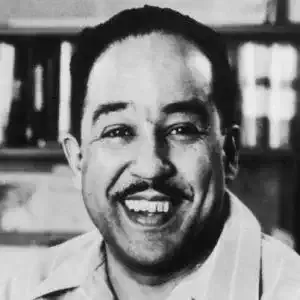
Langston Hughes
Personal
In an envelope marked:
PERSONAL
God addressed me a letter.
In an envelope marked:
PERSONAL
I have given my answer.
Read more →
PERSONAL
God addressed me a letter.
In an envelope marked:
PERSONAL
I have given my answer.
434

Carl Sandburg
Kin
Brother, I am fire
Surging under the ocean floor.
I shall never meet you, brother—
Not for years, anyhow;
Maybe thousands of years, brother.
Then I will warm you,
Hold you close, wrap you in circles,
Use you and change you—
Maybe thousands of years, brother.
Read more →
Surging under the ocean floor.
I shall never meet you, brother—
Not for years, anyhow;
Maybe thousands of years, brother.
Then I will warm you,
Hold you close, wrap you in circles,
Use you and change you—
Maybe thousands of years, brother.
432
Ella Wheeler Wilcox
How does Love speak?
In the faint flush upon the tell-tale cheek,
And in the pallor that succeeds it; by
The quivering lid of an averted eye -
The smile that proves the parent of a sigh:
Thus doth Love speak.
How does Love speak?
By the uneven heart-throbs, and the freak
Of bounding pulses that stand still and ache
While new emotions, like strange barges, make
Along vein-channels their disturbing course,
Still as the dawn, and with the dawn's swift force:
Thus doth Love speak.
How does Love speak?
In the avoidance of that which we seek
The sudden silence and reserve when near;
The eye that glistens with an unshed tear;
The joy that seems the counterpart of fear,
As the alarmed heart leads in the breast,
And knows, and names, and greets its godlike guest:
Thus doth Love speak.
How does Love speak?
In the proud spirit suddenly grown meek,
The haughty heart grown humble; in the tender
And unnamed light that floods the world with splendour;
In the resemblance which the fond eyes trace
In all fair things to one beloved face;
In the shy touch of hands that thrill and tremble;
In looks and lips that can no more dissemble:
Thus doth Love speak.
How does Love speak?
In wild words that uttered seem so weak
They shrink ashamed to silence; in the fire
Glance strikes with glance, swift flashing high and higher,
Like lightnings that precede the mighty storm
In the deep, soulful stillness; in the warm,
Impassioned tide that sweeps thro' throbbing veins,
Between the shores of keen delights and pains;
In the embrace where madness melts in bliss,
And in the convulsive rapture of a kiss:
Thus doth Love speak.
Read more →
And in the pallor that succeeds it; by
The quivering lid of an averted eye -
The smile that proves the parent of a sigh:
Thus doth Love speak.
How does Love speak?
By the uneven heart-throbs, and the freak
Of bounding pulses that stand still and ache
While new emotions, like strange barges, make
Along vein-channels their disturbing course,
Still as the dawn, and with the dawn's swift force:
Thus doth Love speak.
How does Love speak?
In the avoidance of that which we seek
The sudden silence and reserve when near;
The eye that glistens with an unshed tear;
The joy that seems the counterpart of fear,
As the alarmed heart leads in the breast,
And knows, and names, and greets its godlike guest:
Thus doth Love speak.
How does Love speak?
In the proud spirit suddenly grown meek,
The haughty heart grown humble; in the tender
And unnamed light that floods the world with splendour;
In the resemblance which the fond eyes trace
In all fair things to one beloved face;
In the shy touch of hands that thrill and tremble;
In looks and lips that can no more dissemble:
Thus doth Love speak.
How does Love speak?
In wild words that uttered seem so weak
They shrink ashamed to silence; in the fire
Glance strikes with glance, swift flashing high and higher,
Like lightnings that precede the mighty storm
In the deep, soulful stillness; in the warm,
Impassioned tide that sweeps thro' throbbing veins,
Between the shores of keen delights and pains;
In the embrace where madness melts in bliss,
And in the convulsive rapture of a kiss:
Thus doth Love speak.
431