

Poems in this topic
Relationships and Family

William Shakespeare
Shall I compare thee to a summer's day? (Sonnet 18)
Shall I compare thee to a summer's day? (Sonnet 18)
Shall I compare thee to a summer's day?
Thou art more lovely and more temperate.
Rough winds do shake the darling buds of May,
And summer's lease hath all too short a date.
Sometime too hot the eye of heaven shines,
And often is his gold complexion dimmed;
And every fair from fair sometime declines,
By chance, or nature's changing course, untrimmed;
But thy eternal summer shall not fade,
Nor lose possession of that fair thou ow'st,
Nor shall death brag thou wand'rest in his shade,
When in eternal lines to Time thou grow'st.
So long as men can breathe, or eyes can see,
So long lives this, and this gives life to thee.
Shall I compare thee to a summer's day?
Thou art more lovely and more temperate.
Rough winds do shake the darling buds of May,
And summer's lease hath all too short a date.
Sometime too hot the eye of heaven shines,
And often is his gold complexion dimmed;
And every fair from fair sometime declines,
By chance, or nature's changing course, untrimmed;
But thy eternal summer shall not fade,
Nor lose possession of that fair thou ow'st,
Nor shall death brag thou wand'rest in his shade,
When in eternal lines to Time thou grow'st.
So long as men can breathe, or eyes can see,
So long lives this, and this gives life to thee.
1,806
2
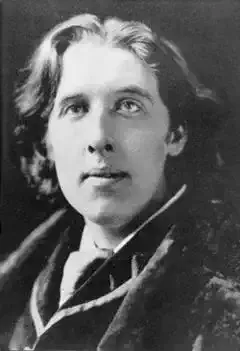
Oscar Wilde
Madonna Mia
A lily-girl, not made for this world's pain,
With brown, soft hair close braided by her ears,
And longing eyes half veiled by slumberous tears
Like bluest water seen through mists of rain:
Pale cheeks whereon no love hath left its stain,
Red underlip drawn in for fear of love,
And white throat, whiter than the silvered dove,
Through whose wan marble creeps one purple vein.
Yet, though my lips shall praise her without cease,
Even to kiss her feet I am not bold,
Being o'ershadowed by the wings of awe,
Like Dante, when he stood with Beatrice
Beneath the flaming Lion's breast, and saw
The seventh Crystal, and the Stair of Gold.
With brown, soft hair close braided by her ears,
And longing eyes half veiled by slumberous tears
Like bluest water seen through mists of rain:
Pale cheeks whereon no love hath left its stain,
Red underlip drawn in for fear of love,
And white throat, whiter than the silvered dove,
Through whose wan marble creeps one purple vein.
Yet, though my lips shall praise her without cease,
Even to kiss her feet I am not bold,
Being o'ershadowed by the wings of awe,
Like Dante, when he stood with Beatrice
Beneath the flaming Lion's breast, and saw
The seventh Crystal, and the Stair of Gold.
775
1
William Shakespeare
Carpe Diem
Carpe Diem
O mistress mine, where are you roaming?
O stay and hear! your true-love's coming
That can sing both high and low;
Trip no further, pretty sweeting,
Journey's end in lovers' meeting--
Every wise man's son doth know.
What is love? 'tis not hereafter;
Present mirth hath present laughter;
What's to come is still unsure:
In delay there lies no plenty,--
Then come kiss me, Sweet and twenty,
Youth's a stuff will not endure.
O mistress mine, where are you roaming?
O stay and hear! your true-love's coming
That can sing both high and low;
Trip no further, pretty sweeting,
Journey's end in lovers' meeting--
Every wise man's son doth know.
What is love? 'tis not hereafter;
Present mirth hath present laughter;
What's to come is still unsure:
In delay there lies no plenty,--
Then come kiss me, Sweet and twenty,
Youth's a stuff will not endure.
2,285
1
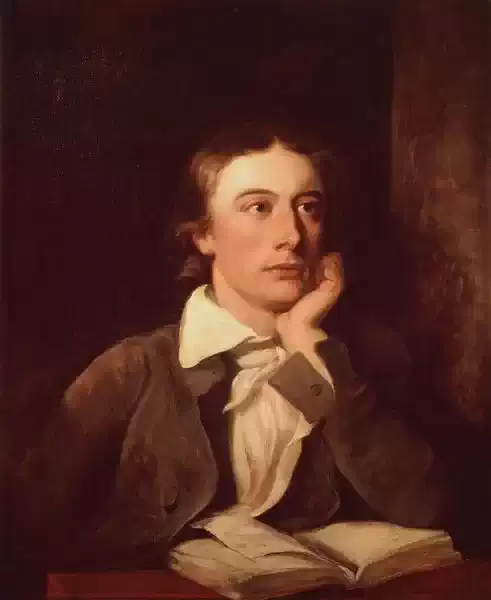
John Keats
You Say You Love
You Say You Love
I
You say you love ; but with a voice
Chaster than a nun's, who singeth
The soft Vespers to herself
While the chime-bell ringeth-
O love me truly!
II
You say you love; but with a smile
Cold as sunrise in September,
As you were Saint Cupid 's nun,
And kept his weeks of Ember.
O love me truly!
III
You say you love but then your lips
Coral tinted teach no blisses,
More than coral in the sea
They never pout for kisses
O love me truly!
IV
You say you love ; but then your hand
No soft squeeze for squeeze returneth,
It is like a statue's dead
While mine to passion burneth
O love me truly!
V
O breathe a word or two of fire!
Smile, as if those words should bum me,
Squeeze as lovers should O kiss
And in thy heart inurn me!
O love me truly!
I
You say you love ; but with a voice
Chaster than a nun's, who singeth
The soft Vespers to herself
While the chime-bell ringeth-
O love me truly!
II
You say you love; but with a smile
Cold as sunrise in September,
As you were Saint Cupid 's nun,
And kept his weeks of Ember.
O love me truly!
III
You say you love but then your lips
Coral tinted teach no blisses,
More than coral in the sea
They never pout for kisses
O love me truly!
IV
You say you love ; but then your hand
No soft squeeze for squeeze returneth,
It is like a statue's dead
While mine to passion burneth
O love me truly!
V
O breathe a word or two of fire!
Smile, as if those words should bum me,
Squeeze as lovers should O kiss
And in thy heart inurn me!
O love me truly!
480
1
John Keats
You Say You Love
You Say You Love
I
You say you love ; but with a voice
Chaster than a nun's, who singeth
The soft Vespers to herself
While the chime-bell ringeth-
O love me truly!
II
You say you love; but with a smile
Cold as sunrise in September,
As you were Saint Cupid 's nun,
And kept his weeks of Ember.
O love me truly!
III
You say you love but then your lips
Coral tinted teach no blisses,
More than coral in the sea
They never pout for kisses
O love me truly!
IV
You say you love ; but then your hand
No soft squeeze for squeeze returneth,
It is like a statue's dead
While mine to passion burneth
O love me truly!
V
O breathe a word or two of fire!
Smile, as if those words should bum me,
Squeeze as lovers should O kiss
And in thy heart inurn me!
O love me truly!
I
You say you love ; but with a voice
Chaster than a nun's, who singeth
The soft Vespers to herself
While the chime-bell ringeth-
O love me truly!
II
You say you love; but with a smile
Cold as sunrise in September,
As you were Saint Cupid 's nun,
And kept his weeks of Ember.
O love me truly!
III
You say you love but then your lips
Coral tinted teach no blisses,
More than coral in the sea
They never pout for kisses
O love me truly!
IV
You say you love ; but then your hand
No soft squeeze for squeeze returneth,
It is like a statue's dead
While mine to passion burneth
O love me truly!
V
O breathe a word or two of fire!
Smile, as if those words should bum me,
Squeeze as lovers should O kiss
And in thy heart inurn me!
O love me truly!
480
1
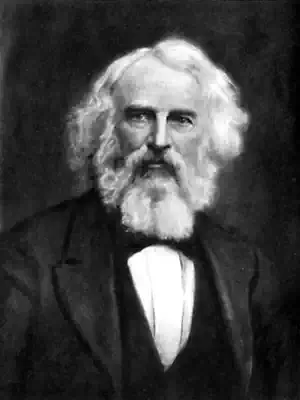
Henry Wadsworth Longfellow
Serenade from “The Spanish Student”
Serenade from “The Spanish Student”
STARS of the summer night!
Far in yon azure deeps,
Hide, hide your golden light!
She sleeps!
My lady sleeps!
Sleeps!
Moon of the summer night!
Far down yon western steeps,
Sink, sink in silver light!
She sleeps!
My lady sleeps!
Sleeps!
Wind of the summer night!
Where yonder woodbine creeps,
Fold, fold thy pinions light!
She sleeps!
My lady sleeps!
Sleeps!
Dreams of the summer night!
Tell her, her lover keeps
Watch! while in slumbers light
She sleeps!
My lady sleeps!
Sleeps!
STARS of the summer night!
Far in yon azure deeps,
Hide, hide your golden light!
She sleeps!
My lady sleeps!
Sleeps!
Moon of the summer night!
Far down yon western steeps,
Sink, sink in silver light!
She sleeps!
My lady sleeps!
Sleeps!
Wind of the summer night!
Where yonder woodbine creeps,
Fold, fold thy pinions light!
She sleeps!
My lady sleeps!
Sleeps!
Dreams of the summer night!
Tell her, her lover keeps
Watch! while in slumbers light
She sleeps!
My lady sleeps!
Sleeps!
983
1
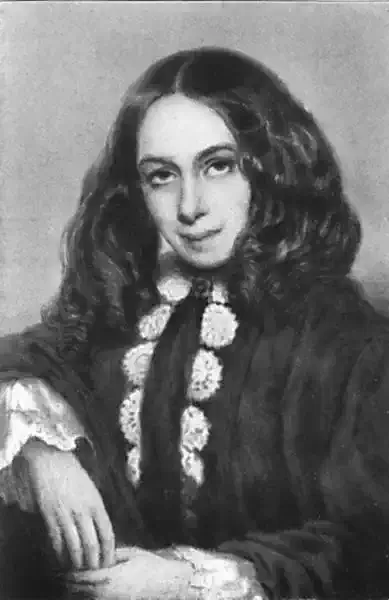
Elizabeth Barrett Browning
XXIV
XXIV
Let the world's sharpness, like a clasping knife,
Shut in upon itself and do no harm
In this close hand of Love, now soft and warm,
And let us hear no sound of human strife
After the click of the shutting. Life to life--
I lean upon thee, Dear, without alarm,
And feel as safe as guarded by a charm
Against the stab of worldlings, who if rife
Are weak to injure. Very whitely still
The lilies of our lives may reassure
Their blossoms from their roots, accessible
Alone to heavenly dews that drop not fewer,
Growing straight, out of man's reach, on the hill.
God only, who made us rich, can make us poor.
Let the world's sharpness, like a clasping knife,
Shut in upon itself and do no harm
In this close hand of Love, now soft and warm,
And let us hear no sound of human strife
After the click of the shutting. Life to life--
I lean upon thee, Dear, without alarm,
And feel as safe as guarded by a charm
Against the stab of worldlings, who if rife
Are weak to injure. Very whitely still
The lilies of our lives may reassure
Their blossoms from their roots, accessible
Alone to heavenly dews that drop not fewer,
Growing straight, out of man's reach, on the hill.
God only, who made us rich, can make us poor.
946
1
Elizabeth Barrett Browning
XXII
XXII
When our two souls stand up erect and strong,
Face to face, silent, drawing nigh and nigher,
Until the lengthening wings break into fire
At either curved point,--what bitter wrong
Can the earth do to us, that we should not long
Be here contented ? Think. In mounting higher,
The angels would press on us and aspire
To drop some golden orb of perfect song
Into our deep, dear silence. Let us stay
Rather on earth, Beloved,--where the unfit
Contrarious moods of men recoil away
And isolate pure spirits, and permit
A place to stand and love in for a day,
With darkness and the death-hour rounding it.
When our two souls stand up erect and strong,
Face to face, silent, drawing nigh and nigher,
Until the lengthening wings break into fire
At either curved point,--what bitter wrong
Can the earth do to us, that we should not long
Be here contented ? Think. In mounting higher,
The angels would press on us and aspire
To drop some golden orb of perfect song
Into our deep, dear silence. Let us stay
Rather on earth, Beloved,--where the unfit
Contrarious moods of men recoil away
And isolate pure spirits, and permit
A place to stand and love in for a day,
With darkness and the death-hour rounding it.
1,061
1
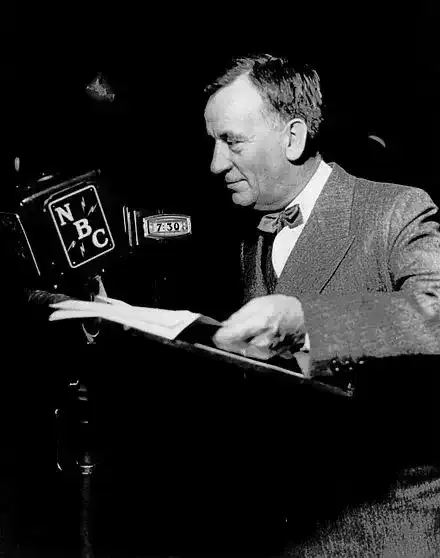
Edgar Albert Guest
A Father's Prayer
A Father's Prayer
Lord, make me tolerant and wise;
Incline my ears to hear him through;
Let him not stand with downcast eyes,
Fearing to trust me and be true.
Instruct me so that I may know
The way my son and I should go.
When he shall err, as once did I,
Or boyhood folly bids him stray,
Let me not into anger fly
And drive the good in him away.
Teach me to win his trust, that he
Shall keep no secret hid from me.
Lord, strengthen me that I may be .
A fit example for my son.
Grant he may never hear or see
A shameful deed that I have done.
However sorely I am tried,
Let me not undermine his pride.
In spite of years and temples gray,
Still let my spirit beat with joy;
Teach me to share in all his play
And be a comrade with my boy.
Wherever we may chance to be,
Let him find happiness with me.
Lord, as his father, now I pray
For manhood's strength and counsel wise;
Let me deal justly, day by day,
In all that fatherhood implies.
To be his father, keep me fit;
Let me not play the hypocrite!
Lord, make me tolerant and wise;
Incline my ears to hear him through;
Let him not stand with downcast eyes,
Fearing to trust me and be true.
Instruct me so that I may know
The way my son and I should go.
When he shall err, as once did I,
Or boyhood folly bids him stray,
Let me not into anger fly
And drive the good in him away.
Teach me to win his trust, that he
Shall keep no secret hid from me.
Lord, strengthen me that I may be .
A fit example for my son.
Grant he may never hear or see
A shameful deed that I have done.
However sorely I am tried,
Let me not undermine his pride.
In spite of years and temples gray,
Still let my spirit beat with joy;
Teach me to share in all his play
And be a comrade with my boy.
Wherever we may chance to be,
Let him find happiness with me.
Lord, as his father, now I pray
For manhood's strength and counsel wise;
Let me deal justly, day by day,
In all that fatherhood implies.
To be his father, keep me fit;
Let me not play the hypocrite!
1,320
1
Edgar Albert Guest
A Father's Prayer
A Father's Prayer
Lord, make me tolerant and wise;
Incline my ears to hear him through;
Let him not stand with downcast eyes,
Fearing to trust me and be true.
Instruct me so that I may know
The way my son and I should go.
When he shall err, as once did I,
Or boyhood folly bids him stray,
Let me not into anger fly
And drive the good in him away.
Teach me to win his trust, that he
Shall keep no secret hid from me.
Lord, strengthen me that I may be .
A fit example for my son.
Grant he may never hear or see
A shameful deed that I have done.
However sorely I am tried,
Let me not undermine his pride.
In spite of years and temples gray,
Still let my spirit beat with joy;
Teach me to share in all his play
And be a comrade with my boy.
Wherever we may chance to be,
Let him find happiness with me.
Lord, as his father, now I pray
For manhood's strength and counsel wise;
Let me deal justly, day by day,
In all that fatherhood implies.
To be his father, keep me fit;
Let me not play the hypocrite!
Lord, make me tolerant and wise;
Incline my ears to hear him through;
Let him not stand with downcast eyes,
Fearing to trust me and be true.
Instruct me so that I may know
The way my son and I should go.
When he shall err, as once did I,
Or boyhood folly bids him stray,
Let me not into anger fly
And drive the good in him away.
Teach me to win his trust, that he
Shall keep no secret hid from me.
Lord, strengthen me that I may be .
A fit example for my son.
Grant he may never hear or see
A shameful deed that I have done.
However sorely I am tried,
Let me not undermine his pride.
In spite of years and temples gray,
Still let my spirit beat with joy;
Teach me to share in all his play
And be a comrade with my boy.
Wherever we may chance to be,
Let him find happiness with me.
Lord, as his father, now I pray
For manhood's strength and counsel wise;
Let me deal justly, day by day,
In all that fatherhood implies.
To be his father, keep me fit;
Let me not play the hypocrite!
1,320
1
Oscar Wilde
Soneto: The New Remorse
The sin was mine; I did not understand.
So now is music prisoned in her cave,
Save where some ebbing desultory wave
Frets with its restless whirls this meagre strand.
And in the withered hollow of this land
Hath Summer dug herself so deep a grave,
That hardly can the leaden willow crave
One silver blossom from keen Winter's hand.
But who is this who cometh by the shore?
(Nay, love, look up and wonder!) Who is this
Who cometh in dyed garments from the South?
It is thy new-found Lord, and he shall kiss
The yet unravished roses of thy mouth,
And I shall weep and worship, as before.
So now is music prisoned in her cave,
Save where some ebbing desultory wave
Frets with its restless whirls this meagre strand.
And in the withered hollow of this land
Hath Summer dug herself so deep a grave,
That hardly can the leaden willow crave
One silver blossom from keen Winter's hand.
But who is this who cometh by the shore?
(Nay, love, look up and wonder!) Who is this
Who cometh in dyed garments from the South?
It is thy new-found Lord, and he shall kiss
The yet unravished roses of thy mouth,
And I shall weep and worship, as before.
672
Oscar Wilde
Soneto: On the Sale by Auction of Keats' Love Letters
These are the letters which Endymion wrote
To one he loved in secret, and apart.
And now the brawlers of the auction mart
Bargain and bid for each poor blotted note,
Ay! for each separate pulse of passion quote
The merchant's price. I think they love not art
Who break the crystal of a poet's heart
That small and sickly eyes may glare and gloat.
Is it not said that many years ago,
In a far Eastern town, some soldiers ran
With torches through the midnight, and began
To wrangle for mean raiment, and to throw
Dice for the garments of a wretched man,
Not knowing the God's wonder, or His woe?
To one he loved in secret, and apart.
And now the brawlers of the auction mart
Bargain and bid for each poor blotted note,
Ay! for each separate pulse of passion quote
The merchant's price. I think they love not art
Who break the crystal of a poet's heart
That small and sickly eyes may glare and gloat.
Is it not said that many years ago,
In a far Eastern town, some soldiers ran
With torches through the midnight, and began
To wrangle for mean raiment, and to throw
Dice for the garments of a wretched man,
Not knowing the God's wonder, or His woe?
656
Oscar Wilde
Soneto: On the Sale by Auction of Keats' Love Letters
These are the letters which Endymion wrote
To one he loved in secret, and apart.
And now the brawlers of the auction mart
Bargain and bid for each poor blotted note,
Ay! for each separate pulse of passion quote
The merchant's price. I think they love not art
Who break the crystal of a poet's heart
That small and sickly eyes may glare and gloat.
Is it not said that many years ago,
In a far Eastern town, some soldiers ran
With torches through the midnight, and began
To wrangle for mean raiment, and to throw
Dice for the garments of a wretched man,
Not knowing the God's wonder, or His woe?
To one he loved in secret, and apart.
And now the brawlers of the auction mart
Bargain and bid for each poor blotted note,
Ay! for each separate pulse of passion quote
The merchant's price. I think they love not art
Who break the crystal of a poet's heart
That small and sickly eyes may glare and gloat.
Is it not said that many years ago,
In a far Eastern town, some soldiers ran
With torches through the midnight, and began
To wrangle for mean raiment, and to throw
Dice for the garments of a wretched man,
Not knowing the God's wonder, or His woe?
656
Oscar Wilde
Under The Balcony
O beautiful star with the crimson mouth!
O moon with the brows of gold!
Rise up, rise up, from the odorous south!
And light for my love her way,
Lest her little feet should stray
On the windy hill and the wold!
O beautiful star with the crimson mouth!
O moon with the brows of gold!
O ship that shakes on the desolate sea!
O ship with the wet, white sail!
Put in, put in, to the port to me!
For my love and I would go
To the land where the daffodils blow
In the heart of a violet dale!
O ship that shakes on the desolate sea!
O ship with the wet, white sail!
O rapturous bird with the low, sweet note!
O bird that sits on the spray!
Sing on, sing on, from your soft brown throat!
And my love in her little bed
Will listen, and lift her head
From the pillow, and come my way!
O rapturous bird with the low, sweet note!
O bird that sits on the spray!
O blossom that hangs in the tremulous air!
O blossom with lips of snow!
Come down, come down, for my love to wear!
You will die on her head in a crown,
You will die in a fold of her gown,
To her little light heart you will go!
O blossom that hangs in the tremulous air!
O blossom with lips of snow!
O moon with the brows of gold!
Rise up, rise up, from the odorous south!
And light for my love her way,
Lest her little feet should stray
On the windy hill and the wold!
O beautiful star with the crimson mouth!
O moon with the brows of gold!
O ship that shakes on the desolate sea!
O ship with the wet, white sail!
Put in, put in, to the port to me!
For my love and I would go
To the land where the daffodils blow
In the heart of a violet dale!
O ship that shakes on the desolate sea!
O ship with the wet, white sail!
O rapturous bird with the low, sweet note!
O bird that sits on the spray!
Sing on, sing on, from your soft brown throat!
And my love in her little bed
Will listen, and lift her head
From the pillow, and come my way!
O rapturous bird with the low, sweet note!
O bird that sits on the spray!
O blossom that hangs in the tremulous air!
O blossom with lips of snow!
Come down, come down, for my love to wear!
You will die on her head in a crown,
You will die in a fold of her gown,
To her little light heart you will go!
O blossom that hangs in the tremulous air!
O blossom with lips of snow!
734
Oscar Wilde
Like burnt-out torches by a sick man's bed
We caught the tread of dancing feet,
We loitered down the moonlit street,
And stopped beneath the harlot's house.
Inside, above the din and fray,
We heard the loud musicians play
The 'Treues Liebes Herz' of Strauss.
Like strange mechanical grotesques,
Making fantastic arabesques,
The shadows raced across the blind.
We watched the ghostly dancers spin
To sound of horn and violin,
Like black leaves wheeling in the wind.
Like wire-pulled automatons,
Slim silhouetted skeletons
Went sidling through the slow quadrille,
Then took each other by the hand,
And danced a stately saraband;
Their laughter echoed thin and shrill.
Sometimes a clockwork puppet pressed
A phantom lover to her breast,
Sometimes they seemed to try to sing.
Sometimes a horrible marionette
Came out, and smoked its cigarette
Upon the steps like a live thing.
Then, turning to my love, I said,
'The dead are dancing with the dead,
The dust is whirling with the dust.'
But she - she heard the violin,
And left my side, and entered in:
Love passed into the house of lust.
Then suddenly the tune went false,
The dancers wearied of the waltz,
The shadows ceased to wheel and whirl.
And down the long and silent street,
The dawn, with silver-sandalled feet,
Crept like a frightened girl.
We loitered down the moonlit street,
And stopped beneath the harlot's house.
Inside, above the din and fray,
We heard the loud musicians play
The 'Treues Liebes Herz' of Strauss.
Like strange mechanical grotesques,
Making fantastic arabesques,
The shadows raced across the blind.
We watched the ghostly dancers spin
To sound of horn and violin,
Like black leaves wheeling in the wind.
Like wire-pulled automatons,
Slim silhouetted skeletons
Went sidling through the slow quadrille,
Then took each other by the hand,
And danced a stately saraband;
Their laughter echoed thin and shrill.
Sometimes a clockwork puppet pressed
A phantom lover to her breast,
Sometimes they seemed to try to sing.
Sometimes a horrible marionette
Came out, and smoked its cigarette
Upon the steps like a live thing.
Then, turning to my love, I said,
'The dead are dancing with the dead,
The dust is whirling with the dust.'
But she - she heard the violin,
And left my side, and entered in:
Love passed into the house of lust.
Then suddenly the tune went false,
The dancers wearied of the waltz,
The shadows ceased to wheel and whirl.
And down the long and silent street,
The dawn, with silver-sandalled feet,
Crept like a frightened girl.
826
Oscar Wilde
Like burnt-out torches by a sick man's bed
We caught the tread of dancing feet,
We loitered down the moonlit street,
And stopped beneath the harlot's house.
Inside, above the din and fray,
We heard the loud musicians play
The 'Treues Liebes Herz' of Strauss.
Like strange mechanical grotesques,
Making fantastic arabesques,
The shadows raced across the blind.
We watched the ghostly dancers spin
To sound of horn and violin,
Like black leaves wheeling in the wind.
Like wire-pulled automatons,
Slim silhouetted skeletons
Went sidling through the slow quadrille,
Then took each other by the hand,
And danced a stately saraband;
Their laughter echoed thin and shrill.
Sometimes a clockwork puppet pressed
A phantom lover to her breast,
Sometimes they seemed to try to sing.
Sometimes a horrible marionette
Came out, and smoked its cigarette
Upon the steps like a live thing.
Then, turning to my love, I said,
'The dead are dancing with the dead,
The dust is whirling with the dust.'
But she - she heard the violin,
And left my side, and entered in:
Love passed into the house of lust.
Then suddenly the tune went false,
The dancers wearied of the waltz,
The shadows ceased to wheel and whirl.
And down the long and silent street,
The dawn, with silver-sandalled feet,
Crept like a frightened girl.
We loitered down the moonlit street,
And stopped beneath the harlot's house.
Inside, above the din and fray,
We heard the loud musicians play
The 'Treues Liebes Herz' of Strauss.
Like strange mechanical grotesques,
Making fantastic arabesques,
The shadows raced across the blind.
We watched the ghostly dancers spin
To sound of horn and violin,
Like black leaves wheeling in the wind.
Like wire-pulled automatons,
Slim silhouetted skeletons
Went sidling through the slow quadrille,
Then took each other by the hand,
And danced a stately saraband;
Their laughter echoed thin and shrill.
Sometimes a clockwork puppet pressed
A phantom lover to her breast,
Sometimes they seemed to try to sing.
Sometimes a horrible marionette
Came out, and smoked its cigarette
Upon the steps like a live thing.
Then, turning to my love, I said,
'The dead are dancing with the dead,
The dust is whirling with the dust.'
But she - she heard the violin,
And left my side, and entered in:
Love passed into the house of lust.
Then suddenly the tune went false,
The dancers wearied of the waltz,
The shadows ceased to wheel and whirl.
And down the long and silent street,
The dawn, with silver-sandalled feet,
Crept like a frightened girl.
826
Oscar Wilde
The Grave Of Shelley
Like burnt-out torches by a sick man's bed
Gaunt cypress-trees stand round the sun-bleached stone;
Here doth the little night-owl make her throne,
And the slight lizard show his jewelled head.
And, where the chaliced poppies flame to red,
In the still chamber of yon pyramid
Surely some Old-World Sphinx lurks darkly hid,
Grim warder of this pleasaunce of the dead.
Ah! sweet indeed to rest within the womb
Of Earth, great mother of eternal sleep,
But sweeter far for thee a restless tomb
In the blue cavern of an echoing deep,
Or where the tall ships founder in the gloom
Against the rocks of some wave-shattered steep.
ROME.
Gaunt cypress-trees stand round the sun-bleached stone;
Here doth the little night-owl make her throne,
And the slight lizard show his jewelled head.
And, where the chaliced poppies flame to red,
In the still chamber of yon pyramid
Surely some Old-World Sphinx lurks darkly hid,
Grim warder of this pleasaunce of the dead.
Ah! sweet indeed to rest within the womb
Of Earth, great mother of eternal sleep,
But sweeter far for thee a restless tomb
In the blue cavern of an echoing deep,
Or where the tall ships founder in the gloom
Against the rocks of some wave-shattered steep.
ROME.
829
Oscar Wilde
Silentium Amoris
As often-times the too resplendent sun
Hurries the pallid and reluctant moon
Back to her sombre cave, ere she hath won
A single ballad from the nightingale,
So doth thy Beauty make my lips to fail,
And all my sweetest singing out of tune.
And as at dawn across the level mead
On wings impetuous some wind will come,
And with its too harsh kisses break the reed
Which was its only instrument of song,
So my too stormy passions work me wrong,
And for excess of Love my Love is dumb.
But surely unto Thee mine eyes did show
Why I am silent, and my lute unstrung;
Else it were better we should part, and go,
Thou to some lips of sweeter melody,
And I to nurse the barren memory
Of unkissed kisses, and songs never sung.
Hurries the pallid and reluctant moon
Back to her sombre cave, ere she hath won
A single ballad from the nightingale,
So doth thy Beauty make my lips to fail,
And all my sweetest singing out of tune.
And as at dawn across the level mead
On wings impetuous some wind will come,
And with its too harsh kisses break the reed
Which was its only instrument of song,
So my too stormy passions work me wrong,
And for excess of Love my Love is dumb.
But surely unto Thee mine eyes did show
Why I am silent, and my lute unstrung;
Else it were better we should part, and go,
Thou to some lips of sweeter melody,
And I to nurse the barren memory
Of unkissed kisses, and songs never sung.
751
Oscar Wilde
Serenade (For Music)
The western wind is blowing fair
Across the dark AEgean sea,
And at the secret marble stair
My Tyrian galley waits for thee.
Come down! the purple sail is spread,
The watchman sleeps within the town,
O leave thy lily-flowered bed,
O Lady mine come down, come down!
She will not come, I know her well,
Of lover's vows she hath no care,
And little good a man can tell
Of one so cruel and so fair.
True love is but a woman's toy,
They never know the lover's pain,
And I who loved as loves a boy
Must love in vain, must love in vain.
O noble pilot, tell me true,
Is that the sheen of golden hair?
Or is it but the tangled dew
That binds the passion-flowers there?
Good sailor come and tell me now
Is that my Lady's lily hand?
Or is it but the gleaming prow,
Or is it but the silver sand?
No! no! 'tis not the tangled dew,
'Tis not the silver-fretted sand,
It is my own dear Lady true
With golden hair and lily hand!
O noble pilot, steer for Troy,
Good sailor, ply the labouring oar,
This is the Queen of life and joy
Whom we must bear from Grecian shore!
The waning sky grows faint and blue,
It wants an hour still of day,
Aboard! aboard! my gallant crew,
O Lady mine, away! away!
O noble pilot, steer for Troy,
Good sailor, ply the labouring oar,
O loved as only loves a boy!
O loved for ever evermore!
Across the dark AEgean sea,
And at the secret marble stair
My Tyrian galley waits for thee.
Come down! the purple sail is spread,
The watchman sleeps within the town,
O leave thy lily-flowered bed,
O Lady mine come down, come down!
She will not come, I know her well,
Of lover's vows she hath no care,
And little good a man can tell
Of one so cruel and so fair.
True love is but a woman's toy,
They never know the lover's pain,
And I who loved as loves a boy
Must love in vain, must love in vain.
O noble pilot, tell me true,
Is that the sheen of golden hair?
Or is it but the tangled dew
That binds the passion-flowers there?
Good sailor come and tell me now
Is that my Lady's lily hand?
Or is it but the gleaming prow,
Or is it but the silver sand?
No! no! 'tis not the tangled dew,
'Tis not the silver-fretted sand,
It is my own dear Lady true
With golden hair and lily hand!
O noble pilot, steer for Troy,
Good sailor, ply the labouring oar,
This is the Queen of life and joy
Whom we must bear from Grecian shore!
The waning sky grows faint and blue,
It wants an hour still of day,
Aboard! aboard! my gallant crew,
O Lady mine, away! away!
O noble pilot, steer for Troy,
Good sailor, ply the labouring oar,
O loved as only loves a boy!
O loved for ever evermore!
1,594
Oscar Wilde
Santa Decca
The Gods are dead: no longer do we bring
To grey-eyed Pallas crowns of olive-leaves!
Demeter's child no more hath tithe of sheaves,
And in the noon the careless shepherds sing,
For Pan is dead, and all the wantoning
By secret glade and devious haunt is o'er:
Young Hylas seeks the water-springs no more;
Great Pan is dead, and Mary's son is King.
And yet - perchance in this sea-tranced isle,
Chewing the bitter fruit of memory,
Some God lies hidden in the asphodel.
Ah Love! if such there be, then it were well
For us to fly his anger: nay, but see,
The leaves are stirring: let us watch awhile.
CORFU.
To grey-eyed Pallas crowns of olive-leaves!
Demeter's child no more hath tithe of sheaves,
And in the noon the careless shepherds sing,
For Pan is dead, and all the wantoning
By secret glade and devious haunt is o'er:
Young Hylas seeks the water-springs no more;
Great Pan is dead, and Mary's son is King.
And yet - perchance in this sea-tranced isle,
Chewing the bitter fruit of memory,
Some God lies hidden in the asphodel.
Ah Love! if such there be, then it were well
For us to fly his anger: nay, but see,
The leaves are stirring: let us watch awhile.
CORFU.
748
Oscar Wilde
Roses And Rue
(To L. L.)
Could we dig up this long-buried treasure,
Were it worth the pleasure,
We never could learn love's song,
We are parted too long.
Could the passionate past that is fled
Call back its dead,
Could we live it all over again,
Were it worth the pain!
I remember we used to meet
By an ivied seat,
And you warbled each pretty word
With the air of a bird;
And your voice had a quaver in it,
Just like a linnet,
And shook, as the blackbird's throat
With its last big note;
And your eyes, they were green and grey
Like an April day,
But lit into amethyst
When I stooped and kissed;
And your mouth, it would never smile
For a long, long while,
Then it rippled all over with laughter
Five minutes after.
You were always afraid of a shower,
Just like a flower:
I remember you started and ran
When the rain began.
I remember I never could catch you,
For no one could match you,
You had wonderful, luminous, fleet,
Little wings to your feet.
I remember your hair - did I tie it?
For it always ran riot -
Like a tangled sunbeam of gold:
These things are old.
I remember so well the room,
And the lilac bloom
That beat at the dripping pane
In the warm June rain;
And the colour of your gown,
It was amber-brown,
And two yellow satin bows
From your shoulders rose.
And the handkerchief of French lace
Which you held to your face -
Had a small tear left a stain?
Or was it the rain?
On your hand as it waved adieu
There were veins of blue;
In your voice as it said good-bye
Was a petulant cry,
'You have only wasted your life.'
(Ah, that was the knife!)
When I rushed through the garden gate
It was all too late.
Could we live it over again,
Were it worth the pain,
Could the passionate past that is fled
Call back its dead!
Well, if my heart must break,
Dear love, for your sake,
It will break in music, I know,
Poets' hearts break so.
But strange that I was not told
That the brain can hold
In a tiny ivory cell
God's heaven and hell.
Could we dig up this long-buried treasure,
Were it worth the pleasure,
We never could learn love's song,
We are parted too long.
Could the passionate past that is fled
Call back its dead,
Could we live it all over again,
Were it worth the pain!
I remember we used to meet
By an ivied seat,
And you warbled each pretty word
With the air of a bird;
And your voice had a quaver in it,
Just like a linnet,
And shook, as the blackbird's throat
With its last big note;
And your eyes, they were green and grey
Like an April day,
But lit into amethyst
When I stooped and kissed;
And your mouth, it would never smile
For a long, long while,
Then it rippled all over with laughter
Five minutes after.
You were always afraid of a shower,
Just like a flower:
I remember you started and ran
When the rain began.
I remember I never could catch you,
For no one could match you,
You had wonderful, luminous, fleet,
Little wings to your feet.
I remember your hair - did I tie it?
For it always ran riot -
Like a tangled sunbeam of gold:
These things are old.
I remember so well the room,
And the lilac bloom
That beat at the dripping pane
In the warm June rain;
And the colour of your gown,
It was amber-brown,
And two yellow satin bows
From your shoulders rose.
And the handkerchief of French lace
Which you held to your face -
Had a small tear left a stain?
Or was it the rain?
On your hand as it waved adieu
There were veins of blue;
In your voice as it said good-bye
Was a petulant cry,
'You have only wasted your life.'
(Ah, that was the knife!)
When I rushed through the garden gate
It was all too late.
Could we live it over again,
Were it worth the pain,
Could the passionate past that is fled
Call back its dead!
Well, if my heart must break,
Dear love, for your sake,
It will break in music, I know,
Poets' hearts break so.
But strange that I was not told
That the brain can hold
In a tiny ivory cell
God's heaven and hell.
748
Oscar Wilde
Roses And Rue
(To L. L.)
Could we dig up this long-buried treasure,
Were it worth the pleasure,
We never could learn love's song,
We are parted too long.
Could the passionate past that is fled
Call back its dead,
Could we live it all over again,
Were it worth the pain!
I remember we used to meet
By an ivied seat,
And you warbled each pretty word
With the air of a bird;
And your voice had a quaver in it,
Just like a linnet,
And shook, as the blackbird's throat
With its last big note;
And your eyes, they were green and grey
Like an April day,
But lit into amethyst
When I stooped and kissed;
And your mouth, it would never smile
For a long, long while,
Then it rippled all over with laughter
Five minutes after.
You were always afraid of a shower,
Just like a flower:
I remember you started and ran
When the rain began.
I remember I never could catch you,
For no one could match you,
You had wonderful, luminous, fleet,
Little wings to your feet.
I remember your hair - did I tie it?
For it always ran riot -
Like a tangled sunbeam of gold:
These things are old.
I remember so well the room,
And the lilac bloom
That beat at the dripping pane
In the warm June rain;
And the colour of your gown,
It was amber-brown,
And two yellow satin bows
From your shoulders rose.
And the handkerchief of French lace
Which you held to your face -
Had a small tear left a stain?
Or was it the rain?
On your hand as it waved adieu
There were veins of blue;
In your voice as it said good-bye
Was a petulant cry,
'You have only wasted your life.'
(Ah, that was the knife!)
When I rushed through the garden gate
It was all too late.
Could we live it over again,
Were it worth the pain,
Could the passionate past that is fled
Call back its dead!
Well, if my heart must break,
Dear love, for your sake,
It will break in music, I know,
Poets' hearts break so.
But strange that I was not told
That the brain can hold
In a tiny ivory cell
God's heaven and hell.
Could we dig up this long-buried treasure,
Were it worth the pleasure,
We never could learn love's song,
We are parted too long.
Could the passionate past that is fled
Call back its dead,
Could we live it all over again,
Were it worth the pain!
I remember we used to meet
By an ivied seat,
And you warbled each pretty word
With the air of a bird;
And your voice had a quaver in it,
Just like a linnet,
And shook, as the blackbird's throat
With its last big note;
And your eyes, they were green and grey
Like an April day,
But lit into amethyst
When I stooped and kissed;
And your mouth, it would never smile
For a long, long while,
Then it rippled all over with laughter
Five minutes after.
You were always afraid of a shower,
Just like a flower:
I remember you started and ran
When the rain began.
I remember I never could catch you,
For no one could match you,
You had wonderful, luminous, fleet,
Little wings to your feet.
I remember your hair - did I tie it?
For it always ran riot -
Like a tangled sunbeam of gold:
These things are old.
I remember so well the room,
And the lilac bloom
That beat at the dripping pane
In the warm June rain;
And the colour of your gown,
It was amber-brown,
And two yellow satin bows
From your shoulders rose.
And the handkerchief of French lace
Which you held to your face -
Had a small tear left a stain?
Or was it the rain?
On your hand as it waved adieu
There were veins of blue;
In your voice as it said good-bye
Was a petulant cry,
'You have only wasted your life.'
(Ah, that was the knife!)
When I rushed through the garden gate
It was all too late.
Could we live it over again,
Were it worth the pain,
Could the passionate past that is fled
Call back its dead!
Well, if my heart must break,
Dear love, for your sake,
It will break in music, I know,
Poets' hearts break so.
But strange that I was not told
That the brain can hold
In a tiny ivory cell
God's heaven and hell.
748
Oscar Wilde
Quia Multum Amavi
Dear Heart, I think the young impassioned priest
When first he takes from out the hidden shrine
His God imprisoned in the Eucharist,
And eats the bread, and drinks the dreadful wine,
Feels not such awful wonder as I felt
When first my smitten eyes beat full on thee,
And all night long before thy feet I knelt
Till thou wert wearied of Idolatry.
Ah! hadst thou liked me less and loved me more,
Through all those summer days of joy and rain,
I had not now been sorrow's heritor,
Or stood a lackey in the House of Pain.
Yet, though remorse, youth's white-faced seneschal,
Tread on my heels with all his retinue,
I am most glad I loved thee - think of all
The suns that go to make one speedwell blue!
When first he takes from out the hidden shrine
His God imprisoned in the Eucharist,
And eats the bread, and drinks the dreadful wine,
Feels not such awful wonder as I felt
When first my smitten eyes beat full on thee,
And all night long before thy feet I knelt
Till thou wert wearied of Idolatry.
Ah! hadst thou liked me less and loved me more,
Through all those summer days of joy and rain,
I had not now been sorrow's heritor,
Or stood a lackey in the House of Pain.
Yet, though remorse, youth's white-faced seneschal,
Tread on my heels with all his retinue,
I am most glad I loved thee - think of all
The suns that go to make one speedwell blue!
752
Oscar Wilde
My Voice
Within this restless, hurried, modern world
We took our hearts' full pleasure - You and I,
And now the white sails of our ship are furled,
And spent the lading of our argosy.
Wherefore my cheeks before their time are wan,
For very weeping is my gladness fled,
Sorrow has paled my young mouth's vermilion,
And Ruin draws the curtains of my bed.
But all this crowded life has been to thee
No more than lyre, or lute, or subtle spell
Of viols, or the music of the sea
That sleeps, a mimic echo, in the shell.
We took our hearts' full pleasure - You and I,
And now the white sails of our ship are furled,
And spent the lading of our argosy.
Wherefore my cheeks before their time are wan,
For very weeping is my gladness fled,
Sorrow has paled my young mouth's vermilion,
And Ruin draws the curtains of my bed.
But all this crowded life has been to thee
No more than lyre, or lute, or subtle spell
Of viols, or the music of the sea
That sleeps, a mimic echo, in the shell.
667
Page 1
Next