

Poems in this topic
Relationships and Family
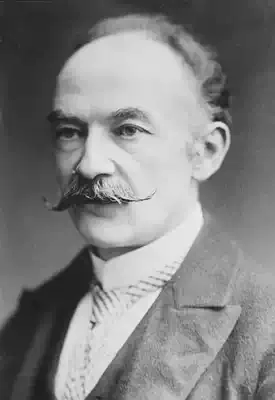
Thomas Hardy
Mad Judy
Mad Judy
When the hamlet hailed a birth
Judy used to cry:
When she heard our christening mirth
She would kneel and sigh.
She was crazed, we knew, and we
Humoured her infirmity.
When the daughters and the sons
Gathered them to wed,
And we like-intending ones
Danced till dawn was red,
She would rock and mutter, "More
Comers to this stony shore!"
When old Headsman Death laid hands
On a babe or twain,
She would feast, and by her brands
Sing her songs again.
What she liked we let her do,
Judy was insane, we knew.
When the hamlet hailed a birth
Judy used to cry:
When she heard our christening mirth
She would kneel and sigh.
She was crazed, we knew, and we
Humoured her infirmity.
When the daughters and the sons
Gathered them to wed,
And we like-intending ones
Danced till dawn was red,
She would rock and mutter, "More
Comers to this stony shore!"
When old Headsman Death laid hands
On a babe or twain,
She would feast, and by her brands
Sing her songs again.
What she liked we let her do,
Judy was insane, we knew.
237
Thomas Hardy
Let Me Enjoy
Let Me Enjoy
Minor Key
I
Let me enjoy the earth no less
Because the all-enacting Might
That fashioned forth its loveliness
Had other aims than my delight.
II
About my path there flits a Fair,
Who throws me not a word or sign;
I'll charm me with her ignoring air,
And laud the lips not meant for mine.
III
From manuscripts of moving song
Inspired by scenes and dreams unknown
I'll pour out raptures that belong
To others, as they were my own.
IV
And some day hence, towards Paradise
And all its blest -- if such should be --
I will lift glad, afar-off eyes
Though it contain no place for me.
Minor Key
I
Let me enjoy the earth no less
Because the all-enacting Might
That fashioned forth its loveliness
Had other aims than my delight.
II
About my path there flits a Fair,
Who throws me not a word or sign;
I'll charm me with her ignoring air,
And laud the lips not meant for mine.
III
From manuscripts of moving song
Inspired by scenes and dreams unknown
I'll pour out raptures that belong
To others, as they were my own.
IV
And some day hence, towards Paradise
And all its blest -- if such should be --
I will lift glad, afar-off eyes
Though it contain no place for me.
235
Thomas Hardy
In Vision I Roamed
In Vision I Roamed
IN vision I roamed the flashing Firmament,
So fierce in blazon that the Night waxed wan,
As though with an awed sense of such ostent;
And as I thought my spirit ranged on and on
In footless traverse through ghast heights of sky,
To the last chambers of the monstrous Dome,
Where stars the brightest here to darkness die:
Then, any spot on our own Earth seemed Home!
And the sick grief that you were far away
Grew pleasant thankfulness that you were near,
Who might have been, set on some outstep sphere,
Less than a Want to me, as day by day
I lived unware, uncaring all that lay
Locked in that Universe taciturn and drear.
IN vision I roamed the flashing Firmament,
So fierce in blazon that the Night waxed wan,
As though with an awed sense of such ostent;
And as I thought my spirit ranged on and on
In footless traverse through ghast heights of sky,
To the last chambers of the monstrous Dome,
Where stars the brightest here to darkness die:
Then, any spot on our own Earth seemed Home!
And the sick grief that you were far away
Grew pleasant thankfulness that you were near,
Who might have been, set on some outstep sphere,
Less than a Want to me, as day by day
I lived unware, uncaring all that lay
Locked in that Universe taciturn and drear.
274
Thomas Hardy
In The Vaulted Way
In The Vaulted Way
In the vaulted way, where the passage turned
To the shadowy corner that none could see,
You paused for our parting, - plaintively:
Though overnight had come words that burned
My fond frail happiness out of me.
And then I kissed you, - despite my thought
That our spell must end when reflection came
On what you had deemed me, whose one long aim
Had been to serve you; that what I sought
Lay not in a heart that could breathe such blame.
But yet I kissed you: whereon you again
As of old kissed me. Why, why was it so?
Do you cleave to me after that light-tongued blow?
If you scorned me at eventide, how love then?
The thing is dark, Dear. I do not know.
In the vaulted way, where the passage turned
To the shadowy corner that none could see,
You paused for our parting, - plaintively:
Though overnight had come words that burned
My fond frail happiness out of me.
And then I kissed you, - despite my thought
That our spell must end when reflection came
On what you had deemed me, whose one long aim
Had been to serve you; that what I sought
Lay not in a heart that could breathe such blame.
But yet I kissed you: whereon you again
As of old kissed me. Why, why was it so?
Do you cleave to me after that light-tongued blow?
If you scorned me at eventide, how love then?
The thing is dark, Dear. I do not know.
231
Thomas Hardy
In The Vaulted Way
In The Vaulted Way
In the vaulted way, where the passage turned
To the shadowy corner that none could see,
You paused for our parting, - plaintively:
Though overnight had come words that burned
My fond frail happiness out of me.
And then I kissed you, - despite my thought
That our spell must end when reflection came
On what you had deemed me, whose one long aim
Had been to serve you; that what I sought
Lay not in a heart that could breathe such blame.
But yet I kissed you: whereon you again
As of old kissed me. Why, why was it so?
Do you cleave to me after that light-tongued blow?
If you scorned me at eventide, how love then?
The thing is dark, Dear. I do not know.
In the vaulted way, where the passage turned
To the shadowy corner that none could see,
You paused for our parting, - plaintively:
Though overnight had come words that burned
My fond frail happiness out of me.
And then I kissed you, - despite my thought
That our spell must end when reflection came
On what you had deemed me, whose one long aim
Had been to serve you; that what I sought
Lay not in a heart that could breathe such blame.
But yet I kissed you: whereon you again
As of old kissed me. Why, why was it so?
Do you cleave to me after that light-tongued blow?
If you scorned me at eventide, how love then?
The thing is dark, Dear. I do not know.
231
Thomas Hardy
In The Vaulted Way
In The Vaulted Way
In the vaulted way, where the passage turned
To the shadowy corner that none could see,
You paused for our parting, - plaintively:
Though overnight had come words that burned
My fond frail happiness out of me.
And then I kissed you, - despite my thought
That our spell must end when reflection came
On what you had deemed me, whose one long aim
Had been to serve you; that what I sought
Lay not in a heart that could breathe such blame.
But yet I kissed you: whereon you again
As of old kissed me. Why, why was it so?
Do you cleave to me after that light-tongued blow?
If you scorned me at eventide, how love then?
The thing is dark, Dear. I do not know.
In the vaulted way, where the passage turned
To the shadowy corner that none could see,
You paused for our parting, - plaintively:
Though overnight had come words that burned
My fond frail happiness out of me.
And then I kissed you, - despite my thought
That our spell must end when reflection came
On what you had deemed me, whose one long aim
Had been to serve you; that what I sought
Lay not in a heart that could breathe such blame.
But yet I kissed you: whereon you again
As of old kissed me. Why, why was it so?
Do you cleave to me after that light-tongued blow?
If you scorned me at eventide, how love then?
The thing is dark, Dear. I do not know.
231
Thomas Hardy
In A Eweleaze Near Weatherbury
In A Eweleaze Near Weatherbury
THE years have gathered grayly
Since I danced upon this leaze
With one who kindled gayly
Love's fitful ecstasies!
But despite the term as teacher,
I remain what I was then
In each essential feature
Of the fantasies of men.
Yet I note the little chisel
Of ever-napping Time,
Defacing ghast and grizzel
The blazon of my prime.
When at night he thinks me sleeping,
I feel him boring sly
Within my bones, and heaping
Quaintest pains for by-and-by.
Still, I'd go the world with Beauty,
I would laugh with her and sing,
I would shun divinest duty
To resume her worshipping.
But she'd scorn my brave endeavor,
She would not balm the breeze
By murmuring, "Thine for ever!"
As she did upon this leaze.
THE years have gathered grayly
Since I danced upon this leaze
With one who kindled gayly
Love's fitful ecstasies!
But despite the term as teacher,
I remain what I was then
In each essential feature
Of the fantasies of men.
Yet I note the little chisel
Of ever-napping Time,
Defacing ghast and grizzel
The blazon of my prime.
When at night he thinks me sleeping,
I feel him boring sly
Within my bones, and heaping
Quaintest pains for by-and-by.
Still, I'd go the world with Beauty,
I would laugh with her and sing,
I would shun divinest duty
To resume her worshipping.
But she'd scorn my brave endeavor,
She would not balm the breeze
By murmuring, "Thine for ever!"
As she did upon this leaze.
220
Thomas Hardy
I said to Love
I said to Love
I said to Love,
"It is not now as in old days
When men adored thee and thy ways
All else above;
Named thee the Boy, the Bright, the One
Who spread a heaven beneath the sun,"
I said to Love.
I said to him,
"We now know more of thee than then;
We were but weak in judgment when,
With hearts abrim,
We clamoured thee that thou would'st please
Inflict on us thine agonies,"
I said to him.
I said to Love,
"Thou art not young, thou art not fair,
No elfin darts, no cherub air,
Nor swan, nor dove
Are thine; but features pitiless,
And iron daggers of distress,"
I said to Love.
"Depart then, Love!
Man's race shall perish, threatenest thou,
WIthout thy kindling coupling-vow?
The age to come the man of now
Know nothing of?
We fear not such a threat from thee;
We are too old in apathy!
Mankind shall cease.. -
So let it be,"
I said to Love.
I said to Love,
"It is not now as in old days
When men adored thee and thy ways
All else above;
Named thee the Boy, the Bright, the One
Who spread a heaven beneath the sun,"
I said to Love.
I said to him,
"We now know more of thee than then;
We were but weak in judgment when,
With hearts abrim,
We clamoured thee that thou would'st please
Inflict on us thine agonies,"
I said to him.
I said to Love,
"Thou art not young, thou art not fair,
No elfin darts, no cherub air,
Nor swan, nor dove
Are thine; but features pitiless,
And iron daggers of distress,"
I said to Love.
"Depart then, Love!
Man's race shall perish, threatenest thou,
WIthout thy kindling coupling-vow?
The age to come the man of now
Know nothing of?
We fear not such a threat from thee;
We are too old in apathy!
Mankind shall cease.. -
So let it be,"
I said to Love.
285
Thomas Hardy
Heredity
Heredity
I am the family face;
Flesh perishes, I live on,
Projecting trait and trace
Through time to times anon,
And leaping from place to place
Over oblivion.
The years-heired feature that can
In curve and voice and eye
Despise the human span
Of durance -- that is I;
The eternal thing in man,
That heeds no call to die
I am the family face;
Flesh perishes, I live on,
Projecting trait and trace
Through time to times anon,
And leaping from place to place
Over oblivion.
The years-heired feature that can
In curve and voice and eye
Despise the human span
Of durance -- that is I;
The eternal thing in man,
That heeds no call to die
200
Thomas Hardy
Her Initals
Her Initals
UPON a poet's page I wrote
Of old two letters of her name;
Part seemed she of the effulgent thought
Whence that high singer's rapture came.
--When now I turn the leaf the same
Immortal light illumes the lay
But from the letters of her name
The radiance has died away.
UPON a poet's page I wrote
Of old two letters of her name;
Part seemed she of the effulgent thought
Whence that high singer's rapture came.
--When now I turn the leaf the same
Immortal light illumes the lay
But from the letters of her name
The radiance has died away.
149
Thomas Hardy
From Victor Hugo
From Victor Hugo
Child, were I king, I'd yield my royal rule,
My chariot, sceptre, vassal-service due,
My crown, my porphyry-basined waters cool,
My fleets, whereto the sea is but a pool,
For a glance from you!
Love, were I God, the earth and its heaving airs,
Angels, the demons abject under me,
Vast chaos with its teeming womby lairs,
Time, space, all would I give--aye, upper spheres,
For a kiss from thee!
Child, were I king, I'd yield my royal rule,
My chariot, sceptre, vassal-service due,
My crown, my porphyry-basined waters cool,
My fleets, whereto the sea is but a pool,
For a glance from you!
Love, were I God, the earth and its heaving airs,
Angels, the demons abject under me,
Vast chaos with its teeming womby lairs,
Time, space, all would I give--aye, upper spheres,
For a kiss from thee!
175
Thomas Hardy
Ditty
Ditty
(E. L. G.)
BENEATH a knap where flown
Nestlings play,
Within walls of weathered stone,
Far away
From the files of formal houses,
By the bough the firstling browses,
Lives a Sweet: no merchants meet,
No man barters, no man sells
Where she dwells.
Upon that fabric fair
"Here is she!"
Seems written everywhere
Unto me.
But to friends and nodding neighbors,
Fellow wights in lot and labors,
Who descry the times as I,
No such lucid legend tells
Where she dwells.
Should I lapse to what I was
In days by--
(Such cannot be, but because
Some loves die
Let me feign it)--none would notice
That where she I know by rote is
Spread a strange and withering change,
Like a drying of the wells
Where she dwells.
To feel I might have kissed--
Loved as true--
Otherwhere, nor Mine have missed
My life through,
Had I never wandered near her,
Is a smart severe--severer
In the thought that she is nought,
Even as I, beyond the dells
Where she dwells.
And Devotion droops her glance
To recall
What bond-servants of Chance
We are all.
I but found her in that, going
On my errant path unknowing,
I did not out-skirt the spot
That no spot on earth excels--
Where she dwells!
(E. L. G.)
BENEATH a knap where flown
Nestlings play,
Within walls of weathered stone,
Far away
From the files of formal houses,
By the bough the firstling browses,
Lives a Sweet: no merchants meet,
No man barters, no man sells
Where she dwells.
Upon that fabric fair
"Here is she!"
Seems written everywhere
Unto me.
But to friends and nodding neighbors,
Fellow wights in lot and labors,
Who descry the times as I,
No such lucid legend tells
Where she dwells.
Should I lapse to what I was
In days by--
(Such cannot be, but because
Some loves die
Let me feign it)--none would notice
That where she I know by rote is
Spread a strange and withering change,
Like a drying of the wells
Where she dwells.
To feel I might have kissed--
Loved as true--
Otherwhere, nor Mine have missed
My life through,
Had I never wandered near her,
Is a smart severe--severer
In the thought that she is nought,
Even as I, beyond the dells
Where she dwells.
And Devotion droops her glance
To recall
What bond-servants of Chance
We are all.
I but found her in that, going
On my errant path unknowing,
I did not out-skirt the spot
That no spot on earth excels--
Where she dwells!
287
Thomas Hardy
Beeny Cliff
Beeny Cliff
I
O the opal and the sapphire of that wandering western sea,
And the woman riding high above with bright hair flapping free-
The woman whom I loved so, and who loyally loved me.
I I
The pale mews plained below us, and the waves seemed far away
In a nether sky, engrossed in saying their ceaseless babbling say,
As we laughed light-heartedly aloft on that clear-sunned March day.
III
A little cloud then cloaked us, and there flew an irised rain,
And the Atlantic dyed its levels with a dull misfeatured stain,
And then the sun burst out again, and purples prinked the main.
IV
-Still in all its chasmal beauty bulks old Beeny to the sky,
And shall she and I not go there once again now March is nigh,
And the sweet things said in that March say anew there by and by?
V
What if still in chasmal beauty looms that wild weird western shore,
The woman now is-elsewhere-whom the ambling pony bore,
And nor knows nor cares for Beeny, and will laugh there nevermore.
I
O the opal and the sapphire of that wandering western sea,
And the woman riding high above with bright hair flapping free-
The woman whom I loved so, and who loyally loved me.
I I
The pale mews plained below us, and the waves seemed far away
In a nether sky, engrossed in saying their ceaseless babbling say,
As we laughed light-heartedly aloft on that clear-sunned March day.
III
A little cloud then cloaked us, and there flew an irised rain,
And the Atlantic dyed its levels with a dull misfeatured stain,
And then the sun burst out again, and purples prinked the main.
IV
-Still in all its chasmal beauty bulks old Beeny to the sky,
And shall she and I not go there once again now March is nigh,
And the sweet things said in that March say anew there by and by?
V
What if still in chasmal beauty looms that wild weird western shore,
The woman now is-elsewhere-whom the ambling pony bore,
And nor knows nor cares for Beeny, and will laugh there nevermore.
282
Thomas Hardy
At An Inn
At An Inn
WHEN we as strangers sought
Their catering care,
Veiled smiles bespoke their thought
Of what we were.
They warmed as they opined
Us more than friends--
That we had all resigned
For love's dear ends.
And that swift sympathy
With living love
Which quicks the world--maybe
The spheres above,
Made them our ministers,
Moved them to say,
"Ah, God, that bliss like theirs
Would flush our day!"
And we were left alone
As Love's own pair;
Yet never the love-light shone
Between us there!
But that which chilled the breath
Of afternoon,
And palsied unto death
The pane-fly's tune.
The kiss their zeal foretold,
And now deemed come,
Came not: within his hold
Love lingered numb.
Why cast he on our port
A bloom not ours?
Why shaped us for his sport
In after-hours?
As we seemed we were not
That day afar,
And now we seem not what
We aching are.
O severing sea and land,
O laws of men,
Ere death, once let us stand
As we stood then!
WHEN we as strangers sought
Their catering care,
Veiled smiles bespoke their thought
Of what we were.
They warmed as they opined
Us more than friends--
That we had all resigned
For love's dear ends.
And that swift sympathy
With living love
Which quicks the world--maybe
The spheres above,
Made them our ministers,
Moved them to say,
"Ah, God, that bliss like theirs
Would flush our day!"
And we were left alone
As Love's own pair;
Yet never the love-light shone
Between us there!
But that which chilled the breath
Of afternoon,
And palsied unto death
The pane-fly's tune.
The kiss their zeal foretold,
And now deemed come,
Came not: within his hold
Love lingered numb.
Why cast he on our port
A bloom not ours?
Why shaped us for his sport
In after-hours?
As we seemed we were not
That day afar,
And now we seem not what
We aching are.
O severing sea and land,
O laws of men,
Ere death, once let us stand
As we stood then!
309
Thomas Hardy
At An Inn
At An Inn
WHEN we as strangers sought
Their catering care,
Veiled smiles bespoke their thought
Of what we were.
They warmed as they opined
Us more than friends--
That we had all resigned
For love's dear ends.
And that swift sympathy
With living love
Which quicks the world--maybe
The spheres above,
Made them our ministers,
Moved them to say,
"Ah, God, that bliss like theirs
Would flush our day!"
And we were left alone
As Love's own pair;
Yet never the love-light shone
Between us there!
But that which chilled the breath
Of afternoon,
And palsied unto death
The pane-fly's tune.
The kiss their zeal foretold,
And now deemed come,
Came not: within his hold
Love lingered numb.
Why cast he on our port
A bloom not ours?
Why shaped us for his sport
In after-hours?
As we seemed we were not
That day afar,
And now we seem not what
We aching are.
O severing sea and land,
O laws of men,
Ere death, once let us stand
As we stood then!
WHEN we as strangers sought
Their catering care,
Veiled smiles bespoke their thought
Of what we were.
They warmed as they opined
Us more than friends--
That we had all resigned
For love's dear ends.
And that swift sympathy
With living love
Which quicks the world--maybe
The spheres above,
Made them our ministers,
Moved them to say,
"Ah, God, that bliss like theirs
Would flush our day!"
And we were left alone
As Love's own pair;
Yet never the love-light shone
Between us there!
But that which chilled the breath
Of afternoon,
And palsied unto death
The pane-fly's tune.
The kiss their zeal foretold,
And now deemed come,
Came not: within his hold
Love lingered numb.
Why cast he on our port
A bloom not ours?
Why shaped us for his sport
In after-hours?
As we seemed we were not
That day afar,
And now we seem not what
We aching are.
O severing sea and land,
O laws of men,
Ere death, once let us stand
As we stood then!
309
Thomas Hardy
At A Bridal
At A Bridal
WHEN you paced forth, to wait maternity,
A dream of other offspring held my mind,
Compounded of us twain as Love designed;
Rare forms, that corporate now will never be!
Should I, too, wed as slave to Mode's decree,
And each thus found apart, of false desire,
A stolid line, whom no high aims will fire
As had fired ours could ever have mingled we;
And, grieved that lives so matched should miscompose,
Each mourn the double waste; and question dare
To the Great Dame whence incarnation flows,
Why those high-purposed children never were:
What will she answer? That she does not care
If the race all such sovereign types unknows.
WHEN you paced forth, to wait maternity,
A dream of other offspring held my mind,
Compounded of us twain as Love designed;
Rare forms, that corporate now will never be!
Should I, too, wed as slave to Mode's decree,
And each thus found apart, of false desire,
A stolid line, whom no high aims will fire
As had fired ours could ever have mingled we;
And, grieved that lives so matched should miscompose,
Each mourn the double waste; and question dare
To the Great Dame whence incarnation flows,
Why those high-purposed children never were:
What will she answer? That she does not care
If the race all such sovereign types unknows.
291
Thomas Hardy
After Schiller
After Schiller
Knight, a true sister-love
This heart retains;
Ask me no other love,
That way lie pains!
Calm must I view thee come,
Calm see thee go;
Tale-telling tears of thine
I must not know!
Knight, a true sister-love
This heart retains;
Ask me no other love,
That way lie pains!
Calm must I view thee come,
Calm see thee go;
Tale-telling tears of thine
I must not know!
182
Thomas Hardy
A Wife in London (December, )
A Wife in London (December, )
I--The Tragedy
She sits in the tawny vapour
That the City lanes have uprolled,
Behind whose webby fold on fold
Like a waning taper
The street-lamp glimmers cold.
A messenger's knock cracks smartly,
Flashed news is in her hand
Of meaning it dazes to understand
Though shaped so shortly:
He--has fallen--in the far South Land . . .
II--The Irony
'Tis the morrow; the fog hangs thicker,
The postman nears and goes:
A letter is brought whose lines disclose
By the firelight flicker
His hand, whom the worm now knows:
Fresh--firm--penned in highest feather -
Page-full of his hoped return,
And of home-planned jaunts by brake and burn
In the summer weather,
And of new love that they would learn.
I--The Tragedy
She sits in the tawny vapour
That the City lanes have uprolled,
Behind whose webby fold on fold
Like a waning taper
The street-lamp glimmers cold.
A messenger's knock cracks smartly,
Flashed news is in her hand
Of meaning it dazes to understand
Though shaped so shortly:
He--has fallen--in the far South Land . . .
II--The Irony
'Tis the morrow; the fog hangs thicker,
The postman nears and goes:
A letter is brought whose lines disclose
By the firelight flicker
His hand, whom the worm now knows:
Fresh--firm--penned in highest feather -
Page-full of his hoped return,
And of home-planned jaunts by brake and burn
In the summer weather,
And of new love that they would learn.
293
Thomas Hardy
A Wife in London (December, )
A Wife in London (December, )
I--The Tragedy
She sits in the tawny vapour
That the City lanes have uprolled,
Behind whose webby fold on fold
Like a waning taper
The street-lamp glimmers cold.
A messenger's knock cracks smartly,
Flashed news is in her hand
Of meaning it dazes to understand
Though shaped so shortly:
He--has fallen--in the far South Land . . .
II--The Irony
'Tis the morrow; the fog hangs thicker,
The postman nears and goes:
A letter is brought whose lines disclose
By the firelight flicker
His hand, whom the worm now knows:
Fresh--firm--penned in highest feather -
Page-full of his hoped return,
And of home-planned jaunts by brake and burn
In the summer weather,
And of new love that they would learn.
I--The Tragedy
She sits in the tawny vapour
That the City lanes have uprolled,
Behind whose webby fold on fold
Like a waning taper
The street-lamp glimmers cold.
A messenger's knock cracks smartly,
Flashed news is in her hand
Of meaning it dazes to understand
Though shaped so shortly:
He--has fallen--in the far South Land . . .
II--The Irony
'Tis the morrow; the fog hangs thicker,
The postman nears and goes:
A letter is brought whose lines disclose
By the firelight flicker
His hand, whom the worm now knows:
Fresh--firm--penned in highest feather -
Page-full of his hoped return,
And of home-planned jaunts by brake and burn
In the summer weather,
And of new love that they would learn.
293
Thomas Hardy
A Spot
A Spot
In years defaced and lost,
Two sat here, transport-tossed,
Lit by a living love
The wilted world knew nothing of:
Scared momently
By gaingivings,
Then hoping things
That could not be.
Of love and us no trace
Abides upon the place;
The sun and shadows wheel,
Season and season sereward steal;
Foul days and fair
Here, too, prevail,
And gust and gale
As everywhere.
But lonely shepherd souls
Who bask amid these knolls
May catch a faery sound
On sleepy noontides from the ground:
"O not again
Till Earth outwears
Shall love like theirs
Suffuse this glen!"
In years defaced and lost,
Two sat here, transport-tossed,
Lit by a living love
The wilted world knew nothing of:
Scared momently
By gaingivings,
Then hoping things
That could not be.
Of love and us no trace
Abides upon the place;
The sun and shadows wheel,
Season and season sereward steal;
Foul days and fair
Here, too, prevail,
And gust and gale
As everywhere.
But lonely shepherd souls
Who bask amid these knolls
May catch a faery sound
On sleepy noontides from the ground:
"O not again
Till Earth outwears
Shall love like theirs
Suffuse this glen!"
287
Thomas Hardy
A Commonplace Day
A Commonplace Day
The day is turning ghost,
And scuttles from the kalendar in fits and furtively,
To join the anonymous host
Of those that throng oblivion; ceding his place, maybe,
To one of like degree.
I part the fire-gnawed logs,
Rake forth the embers, spoil the busy flames, and lay the ends
Upon the shining dogs;
Further and further from the nooks the twilight's stride extends,
And beamless black impends.
Nothing of tiniest worth
Have I wrought, pondered, planned; no one thing asking blame or
praise,
Since the pale corpse-like birth
Of this diurnal unit, bearing blanks in all its rays -
Dullest of dull-hued Days!
Wanly upon the panes
The rain slides as have slid since morn my colourless thoughts; and
yet
Here, while Day's presence wanes,
And over him the sepulchre-lid is slowly lowered and set,
He wakens my regret.
Regret--though nothing dear
That I wot of, was toward in the wide world at his prime,
Or bloomed elsewhere than here,
To die with his decease, and leave a memory sweet, sublime,
Or mark him out in Time . . .
--Yet, maybe, in some soul,
In some spot undiscerned on sea or land, some impulse rose,
Or some intent upstole
Of that enkindling ardency from whose maturer glows
The world's amendment flows;
But which, benumbed at birth
By momentary chance or wile, has missed its hope to be
Embodied on the earth;
And undervoicings of this loss to man's futurity
May wake regret in me.
The day is turning ghost,
And scuttles from the kalendar in fits and furtively,
To join the anonymous host
Of those that throng oblivion; ceding his place, maybe,
To one of like degree.
I part the fire-gnawed logs,
Rake forth the embers, spoil the busy flames, and lay the ends
Upon the shining dogs;
Further and further from the nooks the twilight's stride extends,
And beamless black impends.
Nothing of tiniest worth
Have I wrought, pondered, planned; no one thing asking blame or
praise,
Since the pale corpse-like birth
Of this diurnal unit, bearing blanks in all its rays -
Dullest of dull-hued Days!
Wanly upon the panes
The rain slides as have slid since morn my colourless thoughts; and
yet
Here, while Day's presence wanes,
And over him the sepulchre-lid is slowly lowered and set,
He wakens my regret.
Regret--though nothing dear
That I wot of, was toward in the wide world at his prime,
Or bloomed elsewhere than here,
To die with his decease, and leave a memory sweet, sublime,
Or mark him out in Time . . .
--Yet, maybe, in some soul,
In some spot undiscerned on sea or land, some impulse rose,
Or some intent upstole
Of that enkindling ardency from whose maturer glows
The world's amendment flows;
But which, benumbed at birth
By momentary chance or wile, has missed its hope to be
Embodied on the earth;
And undervoicings of this loss to man's futurity
May wake regret in me.
226
Thomas Hardy
Between Us Now
"Between Us Now"
Between us now and here -
Two thrown together
Who are not wont to wear
Life's flushest feather -
Who see the scenes slide past,
The daytimes dimming fast,
Let there be truth at last,
Even if despair.
So thoroughly and long
Have you now known me,
So real in faith and strong
Have I now shown me,
That nothing needs disguise
Further in any wise,
Or asks or justifies
A guarded tongue.
Face unto face, then, say,
Eyes mine own meeting,
Is your heart far away,
Or with mine beating?
When false things are brought low,
And swift things have grown slow,
Feigning like froth shall go,
Faith be for aye.
Between us now and here -
Two thrown together
Who are not wont to wear
Life's flushest feather -
Who see the scenes slide past,
The daytimes dimming fast,
Let there be truth at last,
Even if despair.
So thoroughly and long
Have you now known me,
So real in faith and strong
Have I now shown me,
That nothing needs disguise
Further in any wise,
Or asks or justifies
A guarded tongue.
Face unto face, then, say,
Eyes mine own meeting,
Is your heart far away,
Or with mine beating?
When false things are brought low,
And swift things have grown slow,
Feigning like froth shall go,
Faith be for aye.
241
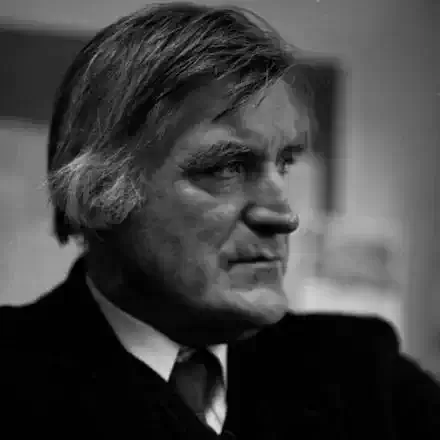
Ted Hughes
September
September
We sit late, watching the dark slowly unfold:
No clock counts this.
When kisses are repeated and the arms hold
There is no telling where time is.
It is midsummer: the leaves hang big and still:
Behind the eye a star,
Under the silk of the wrist a sea, tell
Time is nowhere.
We stand; leaves have not timed the summer.
No clock now needs
Tell we have only what we remember:
Minutes uproaring with our heads
Like an unfortunate King's and his Queen's
When the senseless mob rules;
And quietly the trees casting their crowns
Into the pools.
We sit late, watching the dark slowly unfold:
No clock counts this.
When kisses are repeated and the arms hold
There is no telling where time is.
It is midsummer: the leaves hang big and still:
Behind the eye a star,
Under the silk of the wrist a sea, tell
Time is nowhere.
We stand; leaves have not timed the summer.
No clock now needs
Tell we have only what we remember:
Minutes uproaring with our heads
Like an unfortunate King's and his Queen's
When the senseless mob rules;
And quietly the trees casting their crowns
Into the pools.
430
Ted Hughes
The Minotaur
The Minotaur
The mahogany table-top you smashed
Had been the broad plank top
Of my mother's heirloom sideboard-
Mapped with the scars of my whole life.
That came under the hammer.
That high stool you swung that day
Demented by my being
Twenty minutes late for baby-minding.
'Marvellous!' I shouted, 'Go on,
Smash it into kindling.
That's the stuff you're keeping out of your poems!'
And later, considered and calmer,
'Get that shoulder under your stanzas
And we'll be away.' Deep in the cave of your ear
The goblin snapped his fingers.
So what had I given him?
The bloody end of the skein
That unravelled your marriage,
Left your children echoing
Like tunnels in a labyrinth.
Left your mother a dead-end,
Brought you to the horned, bellowing
Grave of your risen father
And your own corpse in it.
The mahogany table-top you smashed
Had been the broad plank top
Of my mother's heirloom sideboard-
Mapped with the scars of my whole life.
That came under the hammer.
That high stool you swung that day
Demented by my being
Twenty minutes late for baby-minding.
'Marvellous!' I shouted, 'Go on,
Smash it into kindling.
That's the stuff you're keeping out of your poems!'
And later, considered and calmer,
'Get that shoulder under your stanzas
And we'll be away.' Deep in the cave of your ear
The goblin snapped his fingers.
So what had I given him?
The bloody end of the skein
That unravelled your marriage,
Left your children echoing
Like tunnels in a labyrinth.
Left your mother a dead-end,
Brought you to the horned, bellowing
Grave of your risen father
And your own corpse in it.
378