

Poems in this topic
Emotions and Feelings
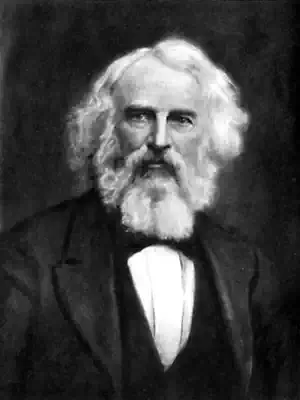
Henry Wadsworth Longfellow
The Golden Legend: IV. The Road To Hirschau
The Golden Legend: IV. The Road To Hirschau
PRINCE HENRY _and_ ELSIE, _with their attendants, on
horseback._
_Elsie._ Onward and onward the highway runs
to the distant city, impatiently bearing
Tidings of human joy and disaster, of love and of
hate, of doing and daring!
_Prince Henry._ This life of ours is a wild aeolian
harp of many a joyous strain,
But under them all there runs a loud perpetual wail,
as of souls in pain.
_Elsie._ Faith alone can interpret life, and the heart
that aches and bleeds with the stigma
Of pain, alone bears the likeness of Christ, and can
comprehend its dark enigma.
_Prince Henry._ Man is selfish, and seeketh pleasure
with little care of what may betide;
Else why am I travelling here beside thee, a demon
that rides by an angel's side?
_Elsie._ All the hedges are white with dust, and
the great dog under the creaking wain
Hangs his head in the lazy heat, while onward the
horses toil and strain
_Prince Henry._ Now they stop at the wayside inn,
and the wagoner laughs with the landlord's daughter,
While out of the dripping trough the horses distend
their leathern sides with water.
_Elsie._ All through life there are wayside inns,
where man may refresh his soul with love;
Even the lowest may quench his thirst at rivulets fed
by springs from above.
_Prince Henry._ Yonder, where rises the cross of
stone, our journey along the highway ends,
And over the fields, by a bridle path, down into the
broad green valley descends.
_Elsie._ I am not sorry to leave behind the beaten
road with its dust and heat;
The air will be sweeter far, and the turf will be softer
under our horses' feet.
(_They turn down a green lane._)
_Elsie._ Sweet is the air with the budding haws,
and the valley stretching for miles below
Is white with blossoming cheery trees, as if just covered
with lightest snow.
_Prince Henry._ Over our heads a white cascade is
gleaming against the distant hill;
We cannot hear it, nor see it move, but it hangs like
a banner when winds are still.
_Elsie._ Damp and cool is this deep ravine, and
cool the sound of the brook by our side!
What is this castle that rises above us, and lords it
over a land so wide?
_Prince Henry._ It is the home of the Counts of
Calva; well have I known these scenes of old,
Well I remember each tower and turret, remember the
brooklet, the wood, and the wold.
_Elsie._ Hark! from the little village below us the
bells of the church are ringing for rain!
Priests and peasants in long procession come forth
and kneel on the arid plain.
_Prince Henry._ They have not long to wait, for I
see in the south uprising a little cloud,
That before the sun shall be set will cover the sky
above us as with a shroud.
(_They pass on._)
* * * * *
THE CONVENT OF HIRSCHAU IN THE BLACK FOREST.
* * * * *
_The Convent cellar._ FRIAR CLAUS _comes in with a
light and a basket of empty flagons._
_Friar Claus._ I always enter this sacred place
With a thoughtful, solemn, and reverent pace,
Pausing long enough on each stair
To breathe an ejaculatory prayer,
And a benediction on the vines
That produce these various sorts of wines!
For my part, I am well content
That we have got through with the tedious Lent!
Fasting is all very well for those
Who have to contend with invisible foes;
But I am quite sure it does not agree
With a quiet, peaceable man like me,
Who am not of that nervous and meagre kind
That are always distressed in body and mind!
And at times it really does me good
To come down among this brotherhood,
Dwelling forever under ground,
Silent, contemplative, round and sound;
Each one old, and brown with mould,
But filled to the lips with the ardor of youth,
With the latent power and love of truth,
And with virtues fervent and manifold.
I have heard it said, that at Easter-tide,
When buds are swelling on every side,
And the sap begins to move in the vine.
Then in all the cellars, far and wide,
The oldest, as well as the newest, wine
Begins to stir itself, and ferment,
With a kind of revolt and discontent
At being so long in darkness pent,
And fain would burst from its sombre tun
To bask on the hillside in the sun;
As in the bosom of us poor friars,
The tumult of half-subdued desires
For the world that we have left behind
Disturbs at times all peace of mind!
And now that we have lived through Lent,
My duty it is, as often before,
To open awhile the prison-door,
And give these restless spirits vent.
Now here is a cask that stands alone,
And has stood a hundred years or more,
Its beard of cobwebs, long and hoar,
Trailing and sweeping along the floor,
Like Barbarossa, who sits in his cave,
Taciturn, sombre, sedate, and grave,
Till his beard has grown through the table of stone!
It is of the quick and not of the dead!
In its veins the blood is hot and red,
And a heart still beats in those ribs of oak
That time may have tamed, but has not broke;
It comes from Bacharach on the Rhine,
Is one of the three best kinds of wine,
And costs some hundred florins the ohm;
But that I do not consider dear,
When I remember that every year
Four butts are sent to the Pope of Rome.
And whenever a goblet thereof I drain,
The old rhyme keeps running in my brain:
At Bacharach on the Rhine,
At Hochheim on the Main,
And at Wuerzburg on the Stein,
Grow the three best kinds of wine!
They are all good wines, and better far
Than those of the Neckar, or those of the Ahr
In particular, Wuerzburg well may boast
Of its blessed wine of the Holy Ghost,
Which of all wines I like the most.
This I shall draw for the Abbot's drinking,
Who seems to be much of my way of thinking.
(_Fills a flagon._)
Ah! how the streamlet laughs and sings!
What a delicious fragrance springs
From the deep flagon, while it fills,
As of hyacinths and daffodils!
Between this cask and the Abbot's lips
Many have been the sips and slips;
Many have been the draughts of wine,
On their way to his, that have stopped at mine;
And many a time my soul has hankered
For a deep draught out of his silver tankard,
When it should have been busy with other affairs,
Less with its longings and more with its prayers.
But now there is no such awkward condition,
No danger of death and eternal perdition;
So here's to the Abbot and Brothers all,
Who dwell in this convent of Peter and Paul!
(_He drinks._)
O cordial delicious! O soother of pain!
It flashes like sunshine into my brain!
A benison rest on the Bishop who sends
Such a fudder of wine as this to his friends!
And now a flagon for such as may ask
A draught from the noble Bacharach cask,
And I will be gone, though I know full well
The cellar's a cheerfuller place than the cell.
Behold where he stands, all sound and good,
Brown and old in his oaken hood;
Silent he seems externally
As any Carthusian monk may be;
But within, what a spirit of deep unrest!
What a seething and simmering in his breast!
As if the heaving of his great heart
Would burst his belt of oak apart!
Let me unloose this button of wood,
And quiet a little his turbulent mood.
(_Sets it running._)
See! how its currents gleam and shine,
As if they had caught the purple hues
Of autumn sunsets on the Rhine,
Descending and mingling with the dews;
Or as if the grapes were stained with the blood
Of the innocent boy, who, some years back,
Was taken and crucified by the Jews,
In that ancient town of Bacharach;
Perdition upon those infidel Jews,
In that ancient town of Bacharach!
The beautiful town, that gives us wine
With the fragrant odor of Muscadine!
I should deem it wrong to let this pass
Without first touching my lips to the glass,
For here in the midst of the current I stand,
Like the stone Pfalz in the midst of the river
Taking toll upon either hand,
And much more grateful to the giver.
(_He drinks._)
Here, now, is a very inferior kind,
Such as in any town you may find,
Such as one might imagine would suit
The rascal who drank wine out of a boot,
And, after all, it was not a crime,
For he won thereby Dorf Hueffelsheim.
A jolly old toper! who at a pull
Could drink a postilion's jack boot full,
And ask with a laugh, when that was done,
If the fellow had left the other one!
This wine is as good as we can afford
To the friars, who sit at the lower board,
And cannot distinguish bad from good,
And are far better off than if they could,
Being rather the rude disciples of beer
Than of anything more refined and dear!
(_Fills the other flagon and departs._)
* * * * *
THE SCRIPTORIUM.
FRIAR PACIFICUS _transcribing and illuminating._
_Friar Pacificus_ It is growing dark! Yet one line more,
And then my work for today is o'er.
I come again to the name of the Lord!
Ere I that awful name record,
That is spoken so lightly among men,
Let me pause awhile, and wash my pen;
Pure from blemish and blot must it be
When it writes that word of mystery!
Thus have I labored on and on,
Nearly through the Gospel of John.
Can it be that from the lips
Of this same gentle Evangelist,
That Christ himself perhaps has kissed,
Came the dread Apocalypse!
It has a very awful look,
As it stands there at the end of the book,
Like the sun in an eclipse.
Ah me! when I think of that vision divine,
Think of writing it, line by line,
I stand in awe of the terrible curse,
Like the trump of doom, in the closing verse!
God forgive me! if ever I
Take aught from the book of that Prophecy,
Lest my part too should be taken away
From the Book of Life on the Judgment Day.
This is well written, though I say it!
I should not be afraid to display it,
In open day, on the selfsame shelf
With the writings of St Thecla herself,
Or of Theodosius, who of old
Wrote the Gospels in letters of gold!
That goodly folio standing yonder,
Without a single blot or blunder,
Would not bear away the palm from mine,
If we should compare them line for line.
There, now, is an initial letter!
King Rene himself never made a better!
Finished down to the leaf and the snail,
Down to the eyes on the peacock's tail!
And now, as I turn the volume over,
And see what lies between cover and cover,
What treasures of art these pages hold,
All ablaze with crimson and gold,
God forgive me! I seem to feel
A certain satisfaction steal
Into my heart, and into my brain,
As if my talent had not lain
Wrapped in a napkin, and all in vain.
Yes, I might almost say to the Lord,
Here is a copy of thy Word,
Written out with much toil and pain;
Take it, O Lord, and let it be
As something I have done for thee!
(_He looks from the window._)
How sweet the air is! How fair the scene!
I wish I had as lovely a green
To paint my landscapes and my leaves!
How the swallows twitter under the eaves!
There, now, there is one in her nest;
I can just catch a glimpse of her head and breast,
And will sketch her thus, in her quiet nook,
In the margin of my Gospel book.
(_He makes a sketch._)
I can see no more. Through the valley yonder
A shower is passing; I hear the thunder
Mutter its curses in the air,
The Devil's own and only prayer!
The dusty road is brown with rain,
And speeding on with might and main,
Hitherward rides a gallant train.
They do not parley, they cannot wait,
But hurry in at the convent gate.
What a fair lady! and beside her
What a handsome, graceful, noble rider!
Now she gives him her hand to alight;
They will beg a shelter for the night.
I will go down to the corridor,
And try to see that face once more;
It will do for the face of some beautiful Saint,
Or for one of the Maries I shall paint.
(_Goes out._)
* * * * *
THE CLOISTERS.
* * * * *
_The_ ABBOT ERNESTUS _pacing to and fro._
_Abbot._ Slowly, slowly up the wall
Steals the sunshine, steals the shade;
Evening damps begin to fall,
Evening shadows are displayed.
Round me, o'er me, everywhere,
All the sky is grand with clouds,
And athwart the evening air
Wheel the swallows home in crowds.
Shafts of sunshine from the west
Paint the dusky windows red;
Darker shadows, deeper rest,
Underneath and overhead.
Darker, darker, and more wan,
In my breast the shadows fall;
Upward steals the life of man,
As the sunshine from the wall.
From the wall into the sky,
From the roof along the spire;
Ah, the souls of those that die
Are but sunbeams lifted higher.
(_Enter_ PRINCE HENRY.)
_Prince Henry._ Christ is arisen!
_Abbot._ Amen! he is arisen!
His peace be with you!
_Prince Henry._ Here it reigns forever!
The peace of God, that passeth understanding,
Reigns in these cloisters and these corridors,
Are you Ernestus, Abbot of the convent?
_Abbot._ I am.
_Prince Henry._ And I Prince Henry of Hoheneck,
Who crave your hospitality to-night.
_Abbot._ You are thrice welcome to our humble walls.
You do us honor; and we shall requite it,
I fear, but poorly, entertaining you
With Paschal eggs, and our poor convent wine,
The remnants of our Easter holidays.
_Prince Henry._ How fares it with the holy monks of Hirschau?
Are all things well with them?
_Abbot._ All things are well.
_Prince Henry._ A noble convent! I have known it long
By the report of travellers. I now see
Their commendations lag behind the truth.
You lie here in the valley of the Nagold
As in a nest: and the still river, gliding
Along its bed, is like an admonition
How all things pass. Your lands are rich and ample,
And your revenues large. God's benediction
Rests on your convent.
_Abbot._ By our charities
We strive to merit it. Our Lord and Master,
When he departed, left us in his will,
As our best legacy on earth, the poor!
These we have always with us; had we not,
Our hearts would grow as hard as are these stones.
_Prince Henry._ If I remember right, the Counts of Calva
Founded your convent.
_Abbot._ Even as you say.
_Prince Henry._ And, if I err not, it is very old.
_Abbot._ Within these cloisters lie already buried
Twelve holy Abbots. Underneath the flags
On which we stand, the Abbot William lies,
Of blessed memory.
_Prince Henry._ And whose tomb is that,
Which bears the brass escutcheon?
_Abbot._ A benefactor's.
Conrad, a Count of Calva, he who stood
Godfather to our bells.
_Prince Henry._ Your monks are learned
And holy men, I trust.
_Abbot._ There are among them
Learned and holy men. Yet in this age
We need another Hildebrand, to shake
And purify us like a mighty wind.
The world is wicked, and sometimes I wonder
God does not lose his patience with it wholly,
And shatter it like glass! Even here, at times,
Within these walls, where all should be at peace,
I have my trials. Time has laid his hand
Upon my heart, gently, not smiting it,
But as a harper lays his open palm
Upon his harp, to deaden its vibrations.
Ashes are on my head, and on my lips
Sackcloth, and in my breast a heaviness
And weariness of life, that makes me ready
To say to the dead Abbots under us,
'Make room for me!' Only I see the dusk
Of evening twilight coming, and have not
Completed half my task; and so at times
The thought of my shortcomings in this life
Falls like a shadow on the life to come.
_Prince Henry._ We must all die, and not the old alone;
The young have no exemption from that doom.
_Abbot._ Ah, yes! the young may die, but the old must!
That is the difference.
_Prince Henry._ I have heard much laud
Of your transcribers. Your Scriptorium
Is famous among all, your manuscripts
Praised for their beauty and their excellence.
_Abbot._ That is indeed our boast. If you desire it,
You shall behold these treasures. And meanwhile
Shall the Refectorarius bestow
Your horses and attendants for the night.
(_They go in. The Vesper-bell rings._)
* * * * *
THE CHAPEL.
* * * * *
_Vespers; after which the monks retire, a chorister
leading an old monk who is blind_.
_Prince Henry._ They are all gone, save one who lingers,
Absorbed in deep and silent prayer.
As if his heart could find no rest,
At times he beats his heaving breast
With clenched and convulsive fingers,
Then lifts them trembling in the air.
A chorister, with golden hair,
Guides hitherward his heavy pace.
Can it be so? Or does my sight
Deceive me in the uncertain light?
Ah no! I recognize that face,
Though Time has touched it in his flight,
And changed the auburn hair to white.
It is Count Hugo of the Rhine,
The deadliest foe of all our race,
And hateful unto me and mine!
_The Blind Monk_. Who is it that doth stand so near
His whispered words I almost hear?
_Prince Henry_. I am Prince Henry of Hoheneck,
And you, Count Hugo of the Rhine!
I know you, and I see the scar,
The brand upon your forehead, shine
And redden like a baleful star!
_The Blind Monk_. Count Hugo once, but now the wreck
Of what I was. O Hoheneck!
The passionate will, the pride, the wrath
That bore me headlong on my path,
Stumbled and staggered into fear,
And failed me in my mad career,
As a tired steed some evil-doer,
Alone upon a desolate moor,
Bewildered, lost, deserted, blind,
And hearing loud and close behind
The o'ertaking steps of his pursuer.
Then suddenly, from the dark there came
A voice that called me by my name,
And said to me, 'Kneel down and pray!'
And so my terror passed away,
Passed utterly away forever.
Contrition, penitence, remorse,
Came on me, with o'erwhelming force;
A hope, a longing, an endeavor,
By days of penance and nights of prayer,
To frustrate and defeat despair!
Calm, deep, and still is now my heart.
With tranquil waters overflowed;
A lake whose unseen fountains start,
Where once the hot volcano glowed.
And you, O Prince of Hoheneck!
Have known me in that earlier time,
A man of violence and crime,
Whose passions brooked no curb nor check.
Behold me now, in gentler mood,
One of this holy brotherhood.
Give me your hand; here let me kneel;
Make your reproaches sharp as steel;
Spurn me, and smite me on each cheek;
No violence can harm the meek,
There is no wound Christ cannot heal!
Yes; lift your princely hand, and take
Revenge, if 't is revenge you seek,
Then pardon me, for Jesus' sake!
_Prince Henry._ Arise, Count Hugo! let there be
No farther strife nor enmity
Between us twain; we both have erred!
Too rash in act, too wroth in word,
From the beginning have we stood
In fierce, defiant attitude,
Each thoughtless of the other's right,
And each reliant on his might.
But now our souls are more subdued;
The hand of God, and not in vain,
Has touched us with the fire of pain.
Let us kneel down, and side by side
Pray, till our souls are purified,
And pardon will not be denied!
(_They kneel._)
* * * * *
THE REFECTORY.
* * * * *
_Gaudiolum of Monks at midnight. LUCIFER disguised
as a Friar._
_Friar Paul (sings)._ Ave! color vini clari,
Dulcis potus, non aman,
Tua nos inebriari
Digneris potentia!
_Friar Cuthbert._ Not so much noise, my worthy freres,
You'll disturb the Abbot at his prayers.
_Friar Paul (sings)._ O! quam placens in colore!
O! quam fragrans in odore!
O! quam sapidum in ore!
Dulce linguse vinculum!
_Friar Cuthbert._ I should think your tongue had
broken its chain!
_Friar Paul (sings)._ Felix venter quern intrabis!
Felix guttur quod rigabis!
Felix os quod tu lavabis!
Et beata labia!
_Friar Cuthbert._ Peace! I say, peace!
Will you never cease!
You will rouse up the Abbot, I tell you again!
_Friar John._ No danger! to-night he will let us alone,
As I happen to know he has guests of his own.
_Friar Cuthbert._ Who are they?
_Friar John._ A German Prince and his train,
Who arrived here just before the rain.
There is with him a damsel fair to see,
As slender and graceful as a reed!
When she alighted from her steed,
It seemed like a blossom blown from a tree.
_Friar Cuthbert._ None of your pale-faced girls for me!
(_Kisses the girl at his side_.)
_Friar John._ Come, old fellow, drink down to your peg!
do not drink any farther, I beg!
_Friar Paul (sings)._ In the days of gold,
The days of old,
Cross of wood
And bishop of gold!
_Friar Cuthbert (to the girl)._ What an infernal racket and din!
No need not blush so, that's no sin.
You look very holy in this disguise,
Though there's something wicked in your eyes!
_Friar Paul (continues.)_ Now we have changed
That law so good,
To cross of gold
And bishop of wood!
_Friar Cuthbert._ I like your sweet face under a hood.
Sister! how came you into this way?
_Girl._ It was you, Friar Cuthbert, who led me astray.
Have you forgotten that day in June,
When the church was so cool in the afternoon,
And I came in to confess my sins?
That is where my ruin begins.
_Friar John._ What is the name of yonder friar,
With an eye that glows like a coal of fire,
And such a black mass of tangled hair?
_Friar Paul._ He who is sitting there,
With a rollicking,
Devil may care,
Free and easy look and air,
As if he were used to such feasting and frollicking?
_Friar John._ The same.
_Friar Paul._ He's a stranger. You had better ask his name,
And where he is going, and whence he came.
_Friar John._ Hallo! Sir Friar!
_Friar Paul._ You must raise your voice a little higher,
He does not seem to hear what you say.
Now, try again! He is looking this way.
_Friar John._ Hallo! Sir Friar,
We wish to inquire
Whence you came, and where you are going,
And anything else that is worth the knowing.
So be so good as to open your head.
_Lucifer._ I am a Frenchman born and bred,
Going on a pilgrimage to Rome.
My home
Is the convent of St. Gildas de Rhuys,
Of which, very like, you never have heard.
_Monks._ Never a word!
_Lucifer._ You must know, then, it is in the diocese
Called the Diocese of Vannes,
In the province of Brittany.
From the gray rocks of Morbihan
It overlooks the angry sea;
The very seashore where,
In his great despair,
Abbot Abelard walked to and fro,
Filling the night with woe,
And wailing aloud to the merciless seas
The name of his sweet Heloise!
Whilst overhead
The convent windows gleamed as red
As the fiery eyes of the monks within,
Who with jovial din
Gave themselves up to all kinds of sin!
Ha! that is a convent! that is an abbey!
Over the doors,
None of your death-heads carved in wood,
None of your Saints looking pious and good,
None of your Patriarchs old and shabby!
But the heads and tusks of boars,
And the cells
Hung all round with the fells
of the fallow-deer,
And then what cheer!
What jolly, fat friars,
Sitting round the great, roaring fires,
Roaring louder than they,
With their strong wines,
And their concubines,
And never a bell,
With its swagger and swell,
Calling you up with a start of affright
In the dead of night,
To send you grumbling down dark stairs,
To mumble your prayers,
But the cheery crow
Of cocks in the yard below,
After daybreak, an hour or so,
And the barking of deep-mouthed hounds,
These are the sounds
That, instead of bells, salute the ear.
And then all day
Up and away
Through the forest, hunting the deer!
Ah, my friends! I'm afraid that here
You are a little too pious, a little too tame,
And the more is the shame,
It is the greatest folly
Not to be jolly;
That's what I think!
Come, drink, drink,
Drink, and die game!
_Monks,_ And your Abbot What's-his-name?
_Lucifer._ Abelard!
_Monks._ Did he drink hard?
_Lucifer._ O, no! Not he!
He was a dry old fellow,
Without juice enough to get thoroughly mellow.
There he stood,
Lowering at us in sullen mood,
As if he had come into Brittany
Just to reform our brotherhood!
(_A roar of laughter_.)
But you see
It never would do!
For some of us knew a thing or two,
In the Abbey of St. Gildas de Rhuys!
For instance, the great ado
With old Fulbert's niece,
The young and lovely Heloise!
_Friar John._ Stop there, if you please,
Till we drink to the fair Heloise.
_All (drinking and shouting)._ Heloise! Heloise!
(_The Chapel-bell tolls_.)
_Lucifer (starting)._ What is that bell for? Are you such asses
As to keep up the fashion of midnight masses?
_Friar Cuthbert._ It is only a poor, unfortunate brother,
Who is gifted with most miraculous powers
Of getting up at all sorts of hours,
And, by way of penance and Christian meekness,
Of creeping silently out of his cell
To take a pull at that hideous bell;
So that all the monks who are lying awake
May murmur some kind of prayer for his sake,
And adapted to his peculiar weakness!
_Friar John._ From frailty and fall-
_All._ Good Lord, deliver us all!
_Friar Cuthbert._ And before the bell for matins sounds,
He takes his lantern, and goes the rounds,
Flashing it into our sleepy eyes,
Merely to say it is time to arise.
But enough of that. Go on, if you please,
With your story about St. Gildas de Rhuys.
_Lucifer._ Well, it finally came to pass
That, half in fun and half in malice,
One Sunday at Mass
We put some poison into the chalice.
But, either by accident or design,
Peter Abelard kept away
From the chapel that day,
And a poor, young friar, who in his stead
Drank the sacramental wine,
Fell on the steps of the altar, dead!
But look! do you see at the window there
That face, with a look of grief and despair,
That ghastly face, as of one in pain?
_Monks._ Who? where?
_Lucifer._ As I spoke, it vanished away again.
_Friar Cuthbert._ It is that nefarious
Siebald the Refectorarius.
That fellow is always playing the scout,
Creeping and peeping and prowling about;
And then he regales
The Abbot with Scandalous tales.
_Lucifer_. A spy in the convent? One of the brothers
Telling scandalous tales of the others?
Out upon him, the lazy loon!
I would put a stop to that pretty soon,
In a way he should rue it.
_Monks_. How shall we do it?
_Lucifer_. Do you, brother Paul,
Creep under the window, close to the wall,
And open it suddenly when I call.
Then seize the villain by the hair,
And hold him there,
And punish him soundly, once for all.
_Friar Cuthbert_. As St. Dustan of old,
We are told,
Once caught the Devil by the nose!
_Lucifer_. Ha! ha! that story is very clever,
But has no foundation whatsoever.
Quick! for I see his face again
Glaring in at the window pane;
Now! now! and do not spare your blows.
(FRIAR PAUL _opens the window suddenly, and seizes_
SIEBALD. _They beat him._)
_Friar Siebald_. Help! help! are you going to slay me?
_Friar Paul_. That will teach you again to betray me!
_Friar Siebald_. Mercy! mercy!
_Friar Paul_ (_shouting and beating_). Rumpas bellorum lorum,
Vim confer amorum
Morum verorum, rorun.
Tu plena polorum!
_Lucifer_. Who stands in the doorway yonder,
Stretching out his trembling hand,
Just as Abelard used to stand,
The flash of his keen, black eyes
Forerunning the thunder?
_The Monks (in confusion)_. The Abbot! the
Abbot!
_Friar Cuthbert (to the girl)_. Put on your disguise!
_Friar Francis_. Hide the great flagon
From the eyes of the dragon!
_Friar Cuthbert_. Pull the brown hood over your face,
Lest you bring me into disgrace!
_Abbot_. What means this revel and carouse?
Is this a tavern and drinking-house?
Are you Christian monks, or heathen devils,
To pollute this convent with your revels?
Were Peter Damian still upon earth,
To be shocked by such ungodly mirth,
He would write your names, with pen of gall,
In his Book of Gomorrah, one and all!
Away, you drunkards! to your cells,
And pray till you hear the matin-bells;
You, Brother Francis, and you, Brother Paul!
And as a penance mark each prayer
With the scourge upon your shoulders bare;
Nothing atones for such a sin
But the blood that follows the discipline.
And you, Brother Cuthbert, come with me
Alone into the sacristy;
You, who should be a guide to your brothers,
And are ten times worse than all the others,
For you I've a draught that has long been brewing
You shall do a penance worth the doing!
Away to your prayers, then, one and all!
I wonder the very, convent wall
Does not crumble and crush you in its fall!
* * * * *
THE NEIGHBORING NUNNERY.
* * * * *
_The_ ABBESS IRMINGARD _sitting with_ ELSIE _in the
moonlight._
_Irmingard_ The night is silent, the wind is still,
The moon is looking from yonder hill
Down upon convent, and grove, and garden;
The clouds have passed away from her face,
Leaving behind them no sorrowful trace,
Only the tender and quiet grace
Of one, whose heart had been healed with pardon!
And such am I. My soul within
Was dark with passion and soiled with sin.
But now its wounds are healed again;
Gone are the anguish, the terror, and pain;
For across that desolate land of woe,
O'er whose burning sands I was forced to go,
A wind from heaven began to blow;
And all my being trembled and shook,
As the leaves of the tree, or the grass of the field,
And I was healed, as the sick are healed,
When fanned by the leaves of the Holy Book!
As thou sittest in the moonlight there,
Its glory flooding thy golden hair,
And the only darkness that which lies
In the haunted chambers of thine eyes,
I feel my soul drawn unto thee,
Strangely, and strongly, and more and more,
As to one I have known and loved before;
For every soul is akin to me
That dwells in the land of mystery!
I am the Lady Irmingard,
Born of a noble race and name!
Many a wandering Suabian bard,
Whose life was dreary, and bleak, and hard,
Has found through me the way to fame.
Brief and bright were those days, and the night
Which followed was full of a lurid light.
Love, that of every woman's heart
Will have the whole, and not a part,
That is to her, in Nature's plan,
More than ambition is to man,
Her light, her life, her very breath,
With no alternative but death,
Found me a maiden soft and young,
Just from the convent's cloistered school,
And seated on my lowly stool,
Attentive while the minstrels sung.
Gallant, graceful, gentle, tall,
Fairest, noblest, best of all,
Was Walter of the Vogelweid,
And, whatsoever may betide,
Still I think of him with pride!
His song was of the summer-time
The very birds sang in his rhyme;
The sunshine, the delicious air,
The fragrance of the flowers, were there,
And I grew restless as I heard,
Restless and buoyant as a bird,
Down soft, aerial currents sailing,
O'er blossomed orchards, and fields in bloom,
And through the momentary gloom
Of shadows o'er the landscape trailing,
Yielding and borne I knew not where,
But feeling resistance unavailing.
And thus, unnoticed and apart,
And more by accident than choice.
I listened to that single voice
Until the chambers of my heart
Were filled with it by night and day,
One night,--it was a night in May,--
Within the garden, unawares,
Under the blossoms in the gloom,
I heard it utter my own name
With protestations and wild prayers;
And it rang through me, and became
Like the archangel's trump of doom,
Which the soul hears, and must obey;
And mine arose as from a tomb.
My former life now seemed to me
Such as hereafter death may be,
When in the great Eternity
We shall awake and find it day.
It was a dream, and would not stay;
A dream, that in a single night
Faded and vanished out of sight.
My father's anger followed fast
This passion, as a freshening blast
Seeks out and fans the fire, whose rage
It may increase, but not assuage.
And he exclaimed: 'No wandering bard
Shall win thy hand, O Irmingard!
For which Prince Henry of Hoheneck
By messenger and letter sues.'
Gently, but firmly, I replied:
'Henry of Hoheneck I discard!
Never the hand of Irmingard
Shall lie in his as the hand of a bride!'
This said I, Walter, for thy sake:
This said I, for I could not choose.
After a pause, my father spake
In that cold and deliberate tone
Which turns the hearer into stone,
And seems itself the act to be
That follows with such dread certainty;
'This, or the cloister and the veil!'
No other words than these he said,
But they were like a funeral wail;
My life was ended, my heart was dead.
That night from the castle-gate went down,
With silent, slow, and stealthy pace,
Two shadows, mounted on shadowy steeds,
Taking the narrow path that leads
Into the forest dense and brown,
In the leafy darkness of the place,
One could not distinguish form nor face,
Only a bulk without a shape,
A darker shadow in the shade;
One scarce could say it moved or stayed,
Thus it was we made our escape!
A foaming brook, with many a bound,
Followed us like a playful hound;
Then leaped before us, and in the hollow
Paused, and waited for us to follow,
And seemed impatient, and afraid
That our tardy flight should be betrayed
By the sound our horses' hoof-beats made,
And when we reached the plain below,
He paused a moment and drew rein
To look back at the castle again;
And we saw the windows all aglow
With lights, that were passing to and fro;
Our hearts with terror ceased to beat;
The brook crept silent to our feet;
We knew what most we feared to know.
Then suddenly horns began to blow;
And we heard a shout, and a heavy tramp,
And our horses snorted in the damp
Night-air of the meadows green and wide,
And in a moment, side by side,
So close, they must have seemed but one,
The shadows across the moonlight run,
And another came, and swept behind,
Like the shadow of clouds before the wind!
How I remember that breathless flight
Across the moors, in the summer night!
How under our feet the long, white road
Backward like a river flowed,
Sweeping with it fences and hedges,
Whilst farther away, and overhead,
Paler than I, with fear and dread,
The moon fled with us, as we fled
Along the forest's jagged edges!
All this I can remember well;
But of what afterward befell
I nothing farther can recall
Than a blind, desperate, headlong fall;
The rest is a blank and darkness all.
When I awoke out of this swoon,
The sun was shining, not the moon,
Making a cross upon the wall
With the bars of my windows narrow and tall;
And I prayed to it, as I had been wont to pray,
From early childhood, day by day,
Each morning, as in bed I lay!
I was lying again in my own room!
And I thanked God, in my fever and pain,
That those shadows on the midnight plain
Were gone, and could not come again!
I struggled no longer with my doom!
This happened many years ago.
I left my father's home to come
Like Catherine to her martyrdom,
For blindly I esteemed it so.
And when I heard the convent door
Behind me close, to ope no more,
I felt it smite me like a blow,
Through all my limbs a shudder ran,
And on my bruised spirit fell
The dampness of my narrow cell
As night-air on a wounded man,
Giving intolerable pain.
But now a better life began,
I felt the agony decrease
By slow degrees, then wholly cease,
Ending in perfect rest and peace!
It was not apathy, nor dulness,
That weighed and pressed upon my brain,
But the same passion I had given
To earth before, now turned to heaven
With all its overflowing fulness.
Alas! the world is full of peril!
The path that runs through the fairest meads,
On the sunniest side of the valley, leads
Into a region bleak and sterile!
Alike in the high-born and the lowly,
The will is feeble, and passion strong.
We cannot sever right from wrong;
Some falsehood mingles with all truth;
Nor is it strange the heart of youth
Should waver and comprehend but slowly
The things that are holy and unholy!
But in this sacred and calm retreat,
We are all well and safely shielded
From winds that blow, and waves that beat,
From the cold, and rain, and blighting heat,
To which the strongest hearts have yielded.
Here we stand as the Virgins Seven,
For our celestial bridegroom yearning;
Our hearts are lamps forever burning,
With a steady and unwavering flame,
Pointing upward, forever the same,
Steadily upward toward the Heaven!
The moon is hidden behind a cloud;
A sudden darkness fills the room,
And thy deep eyes, amid the gloom,
Shine like jewels in a shroud.
On the leaves is a sound of falling rain;
A bird, awakened in its nest,
Gives a faint twitter of unrest,
Then smoothes its plumes and sleeps again.
No other sounds than these I hear;
The hour of midnight must be near.
Thou art o'erspent with the day's fatigue
Of riding many a dusty league;
Sink, then, gently to thy slumber;
Me so many cares encumber,
So many ghosts, and forms of fright,
Have started from their graves to-night,
They have driven sleep from mine eyes away:
I will go down to the chapel and pray.
PRINCE HENRY _and_ ELSIE, _with their attendants, on
horseback._
_Elsie._ Onward and onward the highway runs
to the distant city, impatiently bearing
Tidings of human joy and disaster, of love and of
hate, of doing and daring!
_Prince Henry._ This life of ours is a wild aeolian
harp of many a joyous strain,
But under them all there runs a loud perpetual wail,
as of souls in pain.
_Elsie._ Faith alone can interpret life, and the heart
that aches and bleeds with the stigma
Of pain, alone bears the likeness of Christ, and can
comprehend its dark enigma.
_Prince Henry._ Man is selfish, and seeketh pleasure
with little care of what may betide;
Else why am I travelling here beside thee, a demon
that rides by an angel's side?
_Elsie._ All the hedges are white with dust, and
the great dog under the creaking wain
Hangs his head in the lazy heat, while onward the
horses toil and strain
_Prince Henry._ Now they stop at the wayside inn,
and the wagoner laughs with the landlord's daughter,
While out of the dripping trough the horses distend
their leathern sides with water.
_Elsie._ All through life there are wayside inns,
where man may refresh his soul with love;
Even the lowest may quench his thirst at rivulets fed
by springs from above.
_Prince Henry._ Yonder, where rises the cross of
stone, our journey along the highway ends,
And over the fields, by a bridle path, down into the
broad green valley descends.
_Elsie._ I am not sorry to leave behind the beaten
road with its dust and heat;
The air will be sweeter far, and the turf will be softer
under our horses' feet.
(_They turn down a green lane._)
_Elsie._ Sweet is the air with the budding haws,
and the valley stretching for miles below
Is white with blossoming cheery trees, as if just covered
with lightest snow.
_Prince Henry._ Over our heads a white cascade is
gleaming against the distant hill;
We cannot hear it, nor see it move, but it hangs like
a banner when winds are still.
_Elsie._ Damp and cool is this deep ravine, and
cool the sound of the brook by our side!
What is this castle that rises above us, and lords it
over a land so wide?
_Prince Henry._ It is the home of the Counts of
Calva; well have I known these scenes of old,
Well I remember each tower and turret, remember the
brooklet, the wood, and the wold.
_Elsie._ Hark! from the little village below us the
bells of the church are ringing for rain!
Priests and peasants in long procession come forth
and kneel on the arid plain.
_Prince Henry._ They have not long to wait, for I
see in the south uprising a little cloud,
That before the sun shall be set will cover the sky
above us as with a shroud.
(_They pass on._)
* * * * *
THE CONVENT OF HIRSCHAU IN THE BLACK FOREST.
* * * * *
_The Convent cellar._ FRIAR CLAUS _comes in with a
light and a basket of empty flagons._
_Friar Claus._ I always enter this sacred place
With a thoughtful, solemn, and reverent pace,
Pausing long enough on each stair
To breathe an ejaculatory prayer,
And a benediction on the vines
That produce these various sorts of wines!
For my part, I am well content
That we have got through with the tedious Lent!
Fasting is all very well for those
Who have to contend with invisible foes;
But I am quite sure it does not agree
With a quiet, peaceable man like me,
Who am not of that nervous and meagre kind
That are always distressed in body and mind!
And at times it really does me good
To come down among this brotherhood,
Dwelling forever under ground,
Silent, contemplative, round and sound;
Each one old, and brown with mould,
But filled to the lips with the ardor of youth,
With the latent power and love of truth,
And with virtues fervent and manifold.
I have heard it said, that at Easter-tide,
When buds are swelling on every side,
And the sap begins to move in the vine.
Then in all the cellars, far and wide,
The oldest, as well as the newest, wine
Begins to stir itself, and ferment,
With a kind of revolt and discontent
At being so long in darkness pent,
And fain would burst from its sombre tun
To bask on the hillside in the sun;
As in the bosom of us poor friars,
The tumult of half-subdued desires
For the world that we have left behind
Disturbs at times all peace of mind!
And now that we have lived through Lent,
My duty it is, as often before,
To open awhile the prison-door,
And give these restless spirits vent.
Now here is a cask that stands alone,
And has stood a hundred years or more,
Its beard of cobwebs, long and hoar,
Trailing and sweeping along the floor,
Like Barbarossa, who sits in his cave,
Taciturn, sombre, sedate, and grave,
Till his beard has grown through the table of stone!
It is of the quick and not of the dead!
In its veins the blood is hot and red,
And a heart still beats in those ribs of oak
That time may have tamed, but has not broke;
It comes from Bacharach on the Rhine,
Is one of the three best kinds of wine,
And costs some hundred florins the ohm;
But that I do not consider dear,
When I remember that every year
Four butts are sent to the Pope of Rome.
And whenever a goblet thereof I drain,
The old rhyme keeps running in my brain:
At Bacharach on the Rhine,
At Hochheim on the Main,
And at Wuerzburg on the Stein,
Grow the three best kinds of wine!
They are all good wines, and better far
Than those of the Neckar, or those of the Ahr
In particular, Wuerzburg well may boast
Of its blessed wine of the Holy Ghost,
Which of all wines I like the most.
This I shall draw for the Abbot's drinking,
Who seems to be much of my way of thinking.
(_Fills a flagon._)
Ah! how the streamlet laughs and sings!
What a delicious fragrance springs
From the deep flagon, while it fills,
As of hyacinths and daffodils!
Between this cask and the Abbot's lips
Many have been the sips and slips;
Many have been the draughts of wine,
On their way to his, that have stopped at mine;
And many a time my soul has hankered
For a deep draught out of his silver tankard,
When it should have been busy with other affairs,
Less with its longings and more with its prayers.
But now there is no such awkward condition,
No danger of death and eternal perdition;
So here's to the Abbot and Brothers all,
Who dwell in this convent of Peter and Paul!
(_He drinks._)
O cordial delicious! O soother of pain!
It flashes like sunshine into my brain!
A benison rest on the Bishop who sends
Such a fudder of wine as this to his friends!
And now a flagon for such as may ask
A draught from the noble Bacharach cask,
And I will be gone, though I know full well
The cellar's a cheerfuller place than the cell.
Behold where he stands, all sound and good,
Brown and old in his oaken hood;
Silent he seems externally
As any Carthusian monk may be;
But within, what a spirit of deep unrest!
What a seething and simmering in his breast!
As if the heaving of his great heart
Would burst his belt of oak apart!
Let me unloose this button of wood,
And quiet a little his turbulent mood.
(_Sets it running._)
See! how its currents gleam and shine,
As if they had caught the purple hues
Of autumn sunsets on the Rhine,
Descending and mingling with the dews;
Or as if the grapes were stained with the blood
Of the innocent boy, who, some years back,
Was taken and crucified by the Jews,
In that ancient town of Bacharach;
Perdition upon those infidel Jews,
In that ancient town of Bacharach!
The beautiful town, that gives us wine
With the fragrant odor of Muscadine!
I should deem it wrong to let this pass
Without first touching my lips to the glass,
For here in the midst of the current I stand,
Like the stone Pfalz in the midst of the river
Taking toll upon either hand,
And much more grateful to the giver.
(_He drinks._)
Here, now, is a very inferior kind,
Such as in any town you may find,
Such as one might imagine would suit
The rascal who drank wine out of a boot,
And, after all, it was not a crime,
For he won thereby Dorf Hueffelsheim.
A jolly old toper! who at a pull
Could drink a postilion's jack boot full,
And ask with a laugh, when that was done,
If the fellow had left the other one!
This wine is as good as we can afford
To the friars, who sit at the lower board,
And cannot distinguish bad from good,
And are far better off than if they could,
Being rather the rude disciples of beer
Than of anything more refined and dear!
(_Fills the other flagon and departs._)
* * * * *
THE SCRIPTORIUM.
FRIAR PACIFICUS _transcribing and illuminating._
_Friar Pacificus_ It is growing dark! Yet one line more,
And then my work for today is o'er.
I come again to the name of the Lord!
Ere I that awful name record,
That is spoken so lightly among men,
Let me pause awhile, and wash my pen;
Pure from blemish and blot must it be
When it writes that word of mystery!
Thus have I labored on and on,
Nearly through the Gospel of John.
Can it be that from the lips
Of this same gentle Evangelist,
That Christ himself perhaps has kissed,
Came the dread Apocalypse!
It has a very awful look,
As it stands there at the end of the book,
Like the sun in an eclipse.
Ah me! when I think of that vision divine,
Think of writing it, line by line,
I stand in awe of the terrible curse,
Like the trump of doom, in the closing verse!
God forgive me! if ever I
Take aught from the book of that Prophecy,
Lest my part too should be taken away
From the Book of Life on the Judgment Day.
This is well written, though I say it!
I should not be afraid to display it,
In open day, on the selfsame shelf
With the writings of St Thecla herself,
Or of Theodosius, who of old
Wrote the Gospels in letters of gold!
That goodly folio standing yonder,
Without a single blot or blunder,
Would not bear away the palm from mine,
If we should compare them line for line.
There, now, is an initial letter!
King Rene himself never made a better!
Finished down to the leaf and the snail,
Down to the eyes on the peacock's tail!
And now, as I turn the volume over,
And see what lies between cover and cover,
What treasures of art these pages hold,
All ablaze with crimson and gold,
God forgive me! I seem to feel
A certain satisfaction steal
Into my heart, and into my brain,
As if my talent had not lain
Wrapped in a napkin, and all in vain.
Yes, I might almost say to the Lord,
Here is a copy of thy Word,
Written out with much toil and pain;
Take it, O Lord, and let it be
As something I have done for thee!
(_He looks from the window._)
How sweet the air is! How fair the scene!
I wish I had as lovely a green
To paint my landscapes and my leaves!
How the swallows twitter under the eaves!
There, now, there is one in her nest;
I can just catch a glimpse of her head and breast,
And will sketch her thus, in her quiet nook,
In the margin of my Gospel book.
(_He makes a sketch._)
I can see no more. Through the valley yonder
A shower is passing; I hear the thunder
Mutter its curses in the air,
The Devil's own and only prayer!
The dusty road is brown with rain,
And speeding on with might and main,
Hitherward rides a gallant train.
They do not parley, they cannot wait,
But hurry in at the convent gate.
What a fair lady! and beside her
What a handsome, graceful, noble rider!
Now she gives him her hand to alight;
They will beg a shelter for the night.
I will go down to the corridor,
And try to see that face once more;
It will do for the face of some beautiful Saint,
Or for one of the Maries I shall paint.
(_Goes out._)
* * * * *
THE CLOISTERS.
* * * * *
_The_ ABBOT ERNESTUS _pacing to and fro._
_Abbot._ Slowly, slowly up the wall
Steals the sunshine, steals the shade;
Evening damps begin to fall,
Evening shadows are displayed.
Round me, o'er me, everywhere,
All the sky is grand with clouds,
And athwart the evening air
Wheel the swallows home in crowds.
Shafts of sunshine from the west
Paint the dusky windows red;
Darker shadows, deeper rest,
Underneath and overhead.
Darker, darker, and more wan,
In my breast the shadows fall;
Upward steals the life of man,
As the sunshine from the wall.
From the wall into the sky,
From the roof along the spire;
Ah, the souls of those that die
Are but sunbeams lifted higher.
(_Enter_ PRINCE HENRY.)
_Prince Henry._ Christ is arisen!
_Abbot._ Amen! he is arisen!
His peace be with you!
_Prince Henry._ Here it reigns forever!
The peace of God, that passeth understanding,
Reigns in these cloisters and these corridors,
Are you Ernestus, Abbot of the convent?
_Abbot._ I am.
_Prince Henry._ And I Prince Henry of Hoheneck,
Who crave your hospitality to-night.
_Abbot._ You are thrice welcome to our humble walls.
You do us honor; and we shall requite it,
I fear, but poorly, entertaining you
With Paschal eggs, and our poor convent wine,
The remnants of our Easter holidays.
_Prince Henry._ How fares it with the holy monks of Hirschau?
Are all things well with them?
_Abbot._ All things are well.
_Prince Henry._ A noble convent! I have known it long
By the report of travellers. I now see
Their commendations lag behind the truth.
You lie here in the valley of the Nagold
As in a nest: and the still river, gliding
Along its bed, is like an admonition
How all things pass. Your lands are rich and ample,
And your revenues large. God's benediction
Rests on your convent.
_Abbot._ By our charities
We strive to merit it. Our Lord and Master,
When he departed, left us in his will,
As our best legacy on earth, the poor!
These we have always with us; had we not,
Our hearts would grow as hard as are these stones.
_Prince Henry._ If I remember right, the Counts of Calva
Founded your convent.
_Abbot._ Even as you say.
_Prince Henry._ And, if I err not, it is very old.
_Abbot._ Within these cloisters lie already buried
Twelve holy Abbots. Underneath the flags
On which we stand, the Abbot William lies,
Of blessed memory.
_Prince Henry._ And whose tomb is that,
Which bears the brass escutcheon?
_Abbot._ A benefactor's.
Conrad, a Count of Calva, he who stood
Godfather to our bells.
_Prince Henry._ Your monks are learned
And holy men, I trust.
_Abbot._ There are among them
Learned and holy men. Yet in this age
We need another Hildebrand, to shake
And purify us like a mighty wind.
The world is wicked, and sometimes I wonder
God does not lose his patience with it wholly,
And shatter it like glass! Even here, at times,
Within these walls, where all should be at peace,
I have my trials. Time has laid his hand
Upon my heart, gently, not smiting it,
But as a harper lays his open palm
Upon his harp, to deaden its vibrations.
Ashes are on my head, and on my lips
Sackcloth, and in my breast a heaviness
And weariness of life, that makes me ready
To say to the dead Abbots under us,
'Make room for me!' Only I see the dusk
Of evening twilight coming, and have not
Completed half my task; and so at times
The thought of my shortcomings in this life
Falls like a shadow on the life to come.
_Prince Henry._ We must all die, and not the old alone;
The young have no exemption from that doom.
_Abbot._ Ah, yes! the young may die, but the old must!
That is the difference.
_Prince Henry._ I have heard much laud
Of your transcribers. Your Scriptorium
Is famous among all, your manuscripts
Praised for their beauty and their excellence.
_Abbot._ That is indeed our boast. If you desire it,
You shall behold these treasures. And meanwhile
Shall the Refectorarius bestow
Your horses and attendants for the night.
(_They go in. The Vesper-bell rings._)
* * * * *
THE CHAPEL.
* * * * *
_Vespers; after which the monks retire, a chorister
leading an old monk who is blind_.
_Prince Henry._ They are all gone, save one who lingers,
Absorbed in deep and silent prayer.
As if his heart could find no rest,
At times he beats his heaving breast
With clenched and convulsive fingers,
Then lifts them trembling in the air.
A chorister, with golden hair,
Guides hitherward his heavy pace.
Can it be so? Or does my sight
Deceive me in the uncertain light?
Ah no! I recognize that face,
Though Time has touched it in his flight,
And changed the auburn hair to white.
It is Count Hugo of the Rhine,
The deadliest foe of all our race,
And hateful unto me and mine!
_The Blind Monk_. Who is it that doth stand so near
His whispered words I almost hear?
_Prince Henry_. I am Prince Henry of Hoheneck,
And you, Count Hugo of the Rhine!
I know you, and I see the scar,
The brand upon your forehead, shine
And redden like a baleful star!
_The Blind Monk_. Count Hugo once, but now the wreck
Of what I was. O Hoheneck!
The passionate will, the pride, the wrath
That bore me headlong on my path,
Stumbled and staggered into fear,
And failed me in my mad career,
As a tired steed some evil-doer,
Alone upon a desolate moor,
Bewildered, lost, deserted, blind,
And hearing loud and close behind
The o'ertaking steps of his pursuer.
Then suddenly, from the dark there came
A voice that called me by my name,
And said to me, 'Kneel down and pray!'
And so my terror passed away,
Passed utterly away forever.
Contrition, penitence, remorse,
Came on me, with o'erwhelming force;
A hope, a longing, an endeavor,
By days of penance and nights of prayer,
To frustrate and defeat despair!
Calm, deep, and still is now my heart.
With tranquil waters overflowed;
A lake whose unseen fountains start,
Where once the hot volcano glowed.
And you, O Prince of Hoheneck!
Have known me in that earlier time,
A man of violence and crime,
Whose passions brooked no curb nor check.
Behold me now, in gentler mood,
One of this holy brotherhood.
Give me your hand; here let me kneel;
Make your reproaches sharp as steel;
Spurn me, and smite me on each cheek;
No violence can harm the meek,
There is no wound Christ cannot heal!
Yes; lift your princely hand, and take
Revenge, if 't is revenge you seek,
Then pardon me, for Jesus' sake!
_Prince Henry._ Arise, Count Hugo! let there be
No farther strife nor enmity
Between us twain; we both have erred!
Too rash in act, too wroth in word,
From the beginning have we stood
In fierce, defiant attitude,
Each thoughtless of the other's right,
And each reliant on his might.
But now our souls are more subdued;
The hand of God, and not in vain,
Has touched us with the fire of pain.
Let us kneel down, and side by side
Pray, till our souls are purified,
And pardon will not be denied!
(_They kneel._)
* * * * *
THE REFECTORY.
* * * * *
_Gaudiolum of Monks at midnight. LUCIFER disguised
as a Friar._
_Friar Paul (sings)._ Ave! color vini clari,
Dulcis potus, non aman,
Tua nos inebriari
Digneris potentia!
_Friar Cuthbert._ Not so much noise, my worthy freres,
You'll disturb the Abbot at his prayers.
_Friar Paul (sings)._ O! quam placens in colore!
O! quam fragrans in odore!
O! quam sapidum in ore!
Dulce linguse vinculum!
_Friar Cuthbert._ I should think your tongue had
broken its chain!
_Friar Paul (sings)._ Felix venter quern intrabis!
Felix guttur quod rigabis!
Felix os quod tu lavabis!
Et beata labia!
_Friar Cuthbert._ Peace! I say, peace!
Will you never cease!
You will rouse up the Abbot, I tell you again!
_Friar John._ No danger! to-night he will let us alone,
As I happen to know he has guests of his own.
_Friar Cuthbert._ Who are they?
_Friar John._ A German Prince and his train,
Who arrived here just before the rain.
There is with him a damsel fair to see,
As slender and graceful as a reed!
When she alighted from her steed,
It seemed like a blossom blown from a tree.
_Friar Cuthbert._ None of your pale-faced girls for me!
(_Kisses the girl at his side_.)
_Friar John._ Come, old fellow, drink down to your peg!
do not drink any farther, I beg!
_Friar Paul (sings)._ In the days of gold,
The days of old,
Cross of wood
And bishop of gold!
_Friar Cuthbert (to the girl)._ What an infernal racket and din!
No need not blush so, that's no sin.
You look very holy in this disguise,
Though there's something wicked in your eyes!
_Friar Paul (continues.)_ Now we have changed
That law so good,
To cross of gold
And bishop of wood!
_Friar Cuthbert._ I like your sweet face under a hood.
Sister! how came you into this way?
_Girl._ It was you, Friar Cuthbert, who led me astray.
Have you forgotten that day in June,
When the church was so cool in the afternoon,
And I came in to confess my sins?
That is where my ruin begins.
_Friar John._ What is the name of yonder friar,
With an eye that glows like a coal of fire,
And such a black mass of tangled hair?
_Friar Paul._ He who is sitting there,
With a rollicking,
Devil may care,
Free and easy look and air,
As if he were used to such feasting and frollicking?
_Friar John._ The same.
_Friar Paul._ He's a stranger. You had better ask his name,
And where he is going, and whence he came.
_Friar John._ Hallo! Sir Friar!
_Friar Paul._ You must raise your voice a little higher,
He does not seem to hear what you say.
Now, try again! He is looking this way.
_Friar John._ Hallo! Sir Friar,
We wish to inquire
Whence you came, and where you are going,
And anything else that is worth the knowing.
So be so good as to open your head.
_Lucifer._ I am a Frenchman born and bred,
Going on a pilgrimage to Rome.
My home
Is the convent of St. Gildas de Rhuys,
Of which, very like, you never have heard.
_Monks._ Never a word!
_Lucifer._ You must know, then, it is in the diocese
Called the Diocese of Vannes,
In the province of Brittany.
From the gray rocks of Morbihan
It overlooks the angry sea;
The very seashore where,
In his great despair,
Abbot Abelard walked to and fro,
Filling the night with woe,
And wailing aloud to the merciless seas
The name of his sweet Heloise!
Whilst overhead
The convent windows gleamed as red
As the fiery eyes of the monks within,
Who with jovial din
Gave themselves up to all kinds of sin!
Ha! that is a convent! that is an abbey!
Over the doors,
None of your death-heads carved in wood,
None of your Saints looking pious and good,
None of your Patriarchs old and shabby!
But the heads and tusks of boars,
And the cells
Hung all round with the fells
of the fallow-deer,
And then what cheer!
What jolly, fat friars,
Sitting round the great, roaring fires,
Roaring louder than they,
With their strong wines,
And their concubines,
And never a bell,
With its swagger and swell,
Calling you up with a start of affright
In the dead of night,
To send you grumbling down dark stairs,
To mumble your prayers,
But the cheery crow
Of cocks in the yard below,
After daybreak, an hour or so,
And the barking of deep-mouthed hounds,
These are the sounds
That, instead of bells, salute the ear.
And then all day
Up and away
Through the forest, hunting the deer!
Ah, my friends! I'm afraid that here
You are a little too pious, a little too tame,
And the more is the shame,
It is the greatest folly
Not to be jolly;
That's what I think!
Come, drink, drink,
Drink, and die game!
_Monks,_ And your Abbot What's-his-name?
_Lucifer._ Abelard!
_Monks._ Did he drink hard?
_Lucifer._ O, no! Not he!
He was a dry old fellow,
Without juice enough to get thoroughly mellow.
There he stood,
Lowering at us in sullen mood,
As if he had come into Brittany
Just to reform our brotherhood!
(_A roar of laughter_.)
But you see
It never would do!
For some of us knew a thing or two,
In the Abbey of St. Gildas de Rhuys!
For instance, the great ado
With old Fulbert's niece,
The young and lovely Heloise!
_Friar John._ Stop there, if you please,
Till we drink to the fair Heloise.
_All (drinking and shouting)._ Heloise! Heloise!
(_The Chapel-bell tolls_.)
_Lucifer (starting)._ What is that bell for? Are you such asses
As to keep up the fashion of midnight masses?
_Friar Cuthbert._ It is only a poor, unfortunate brother,
Who is gifted with most miraculous powers
Of getting up at all sorts of hours,
And, by way of penance and Christian meekness,
Of creeping silently out of his cell
To take a pull at that hideous bell;
So that all the monks who are lying awake
May murmur some kind of prayer for his sake,
And adapted to his peculiar weakness!
_Friar John._ From frailty and fall-
_All._ Good Lord, deliver us all!
_Friar Cuthbert._ And before the bell for matins sounds,
He takes his lantern, and goes the rounds,
Flashing it into our sleepy eyes,
Merely to say it is time to arise.
But enough of that. Go on, if you please,
With your story about St. Gildas de Rhuys.
_Lucifer._ Well, it finally came to pass
That, half in fun and half in malice,
One Sunday at Mass
We put some poison into the chalice.
But, either by accident or design,
Peter Abelard kept away
From the chapel that day,
And a poor, young friar, who in his stead
Drank the sacramental wine,
Fell on the steps of the altar, dead!
But look! do you see at the window there
That face, with a look of grief and despair,
That ghastly face, as of one in pain?
_Monks._ Who? where?
_Lucifer._ As I spoke, it vanished away again.
_Friar Cuthbert._ It is that nefarious
Siebald the Refectorarius.
That fellow is always playing the scout,
Creeping and peeping and prowling about;
And then he regales
The Abbot with Scandalous tales.
_Lucifer_. A spy in the convent? One of the brothers
Telling scandalous tales of the others?
Out upon him, the lazy loon!
I would put a stop to that pretty soon,
In a way he should rue it.
_Monks_. How shall we do it?
_Lucifer_. Do you, brother Paul,
Creep under the window, close to the wall,
And open it suddenly when I call.
Then seize the villain by the hair,
And hold him there,
And punish him soundly, once for all.
_Friar Cuthbert_. As St. Dustan of old,
We are told,
Once caught the Devil by the nose!
_Lucifer_. Ha! ha! that story is very clever,
But has no foundation whatsoever.
Quick! for I see his face again
Glaring in at the window pane;
Now! now! and do not spare your blows.
(FRIAR PAUL _opens the window suddenly, and seizes_
SIEBALD. _They beat him._)
_Friar Siebald_. Help! help! are you going to slay me?
_Friar Paul_. That will teach you again to betray me!
_Friar Siebald_. Mercy! mercy!
_Friar Paul_ (_shouting and beating_). Rumpas bellorum lorum,
Vim confer amorum
Morum verorum, rorun.
Tu plena polorum!
_Lucifer_. Who stands in the doorway yonder,
Stretching out his trembling hand,
Just as Abelard used to stand,
The flash of his keen, black eyes
Forerunning the thunder?
_The Monks (in confusion)_. The Abbot! the
Abbot!
_Friar Cuthbert (to the girl)_. Put on your disguise!
_Friar Francis_. Hide the great flagon
From the eyes of the dragon!
_Friar Cuthbert_. Pull the brown hood over your face,
Lest you bring me into disgrace!
_Abbot_. What means this revel and carouse?
Is this a tavern and drinking-house?
Are you Christian monks, or heathen devils,
To pollute this convent with your revels?
Were Peter Damian still upon earth,
To be shocked by such ungodly mirth,
He would write your names, with pen of gall,
In his Book of Gomorrah, one and all!
Away, you drunkards! to your cells,
And pray till you hear the matin-bells;
You, Brother Francis, and you, Brother Paul!
And as a penance mark each prayer
With the scourge upon your shoulders bare;
Nothing atones for such a sin
But the blood that follows the discipline.
And you, Brother Cuthbert, come with me
Alone into the sacristy;
You, who should be a guide to your brothers,
And are ten times worse than all the others,
For you I've a draught that has long been brewing
You shall do a penance worth the doing!
Away to your prayers, then, one and all!
I wonder the very, convent wall
Does not crumble and crush you in its fall!
* * * * *
THE NEIGHBORING NUNNERY.
* * * * *
_The_ ABBESS IRMINGARD _sitting with_ ELSIE _in the
moonlight._
_Irmingard_ The night is silent, the wind is still,
The moon is looking from yonder hill
Down upon convent, and grove, and garden;
The clouds have passed away from her face,
Leaving behind them no sorrowful trace,
Only the tender and quiet grace
Of one, whose heart had been healed with pardon!
And such am I. My soul within
Was dark with passion and soiled with sin.
But now its wounds are healed again;
Gone are the anguish, the terror, and pain;
For across that desolate land of woe,
O'er whose burning sands I was forced to go,
A wind from heaven began to blow;
And all my being trembled and shook,
As the leaves of the tree, or the grass of the field,
And I was healed, as the sick are healed,
When fanned by the leaves of the Holy Book!
As thou sittest in the moonlight there,
Its glory flooding thy golden hair,
And the only darkness that which lies
In the haunted chambers of thine eyes,
I feel my soul drawn unto thee,
Strangely, and strongly, and more and more,
As to one I have known and loved before;
For every soul is akin to me
That dwells in the land of mystery!
I am the Lady Irmingard,
Born of a noble race and name!
Many a wandering Suabian bard,
Whose life was dreary, and bleak, and hard,
Has found through me the way to fame.
Brief and bright were those days, and the night
Which followed was full of a lurid light.
Love, that of every woman's heart
Will have the whole, and not a part,
That is to her, in Nature's plan,
More than ambition is to man,
Her light, her life, her very breath,
With no alternative but death,
Found me a maiden soft and young,
Just from the convent's cloistered school,
And seated on my lowly stool,
Attentive while the minstrels sung.
Gallant, graceful, gentle, tall,
Fairest, noblest, best of all,
Was Walter of the Vogelweid,
And, whatsoever may betide,
Still I think of him with pride!
His song was of the summer-time
The very birds sang in his rhyme;
The sunshine, the delicious air,
The fragrance of the flowers, were there,
And I grew restless as I heard,
Restless and buoyant as a bird,
Down soft, aerial currents sailing,
O'er blossomed orchards, and fields in bloom,
And through the momentary gloom
Of shadows o'er the landscape trailing,
Yielding and borne I knew not where,
But feeling resistance unavailing.
And thus, unnoticed and apart,
And more by accident than choice.
I listened to that single voice
Until the chambers of my heart
Were filled with it by night and day,
One night,--it was a night in May,--
Within the garden, unawares,
Under the blossoms in the gloom,
I heard it utter my own name
With protestations and wild prayers;
And it rang through me, and became
Like the archangel's trump of doom,
Which the soul hears, and must obey;
And mine arose as from a tomb.
My former life now seemed to me
Such as hereafter death may be,
When in the great Eternity
We shall awake and find it day.
It was a dream, and would not stay;
A dream, that in a single night
Faded and vanished out of sight.
My father's anger followed fast
This passion, as a freshening blast
Seeks out and fans the fire, whose rage
It may increase, but not assuage.
And he exclaimed: 'No wandering bard
Shall win thy hand, O Irmingard!
For which Prince Henry of Hoheneck
By messenger and letter sues.'
Gently, but firmly, I replied:
'Henry of Hoheneck I discard!
Never the hand of Irmingard
Shall lie in his as the hand of a bride!'
This said I, Walter, for thy sake:
This said I, for I could not choose.
After a pause, my father spake
In that cold and deliberate tone
Which turns the hearer into stone,
And seems itself the act to be
That follows with such dread certainty;
'This, or the cloister and the veil!'
No other words than these he said,
But they were like a funeral wail;
My life was ended, my heart was dead.
That night from the castle-gate went down,
With silent, slow, and stealthy pace,
Two shadows, mounted on shadowy steeds,
Taking the narrow path that leads
Into the forest dense and brown,
In the leafy darkness of the place,
One could not distinguish form nor face,
Only a bulk without a shape,
A darker shadow in the shade;
One scarce could say it moved or stayed,
Thus it was we made our escape!
A foaming brook, with many a bound,
Followed us like a playful hound;
Then leaped before us, and in the hollow
Paused, and waited for us to follow,
And seemed impatient, and afraid
That our tardy flight should be betrayed
By the sound our horses' hoof-beats made,
And when we reached the plain below,
He paused a moment and drew rein
To look back at the castle again;
And we saw the windows all aglow
With lights, that were passing to and fro;
Our hearts with terror ceased to beat;
The brook crept silent to our feet;
We knew what most we feared to know.
Then suddenly horns began to blow;
And we heard a shout, and a heavy tramp,
And our horses snorted in the damp
Night-air of the meadows green and wide,
And in a moment, side by side,
So close, they must have seemed but one,
The shadows across the moonlight run,
And another came, and swept behind,
Like the shadow of clouds before the wind!
How I remember that breathless flight
Across the moors, in the summer night!
How under our feet the long, white road
Backward like a river flowed,
Sweeping with it fences and hedges,
Whilst farther away, and overhead,
Paler than I, with fear and dread,
The moon fled with us, as we fled
Along the forest's jagged edges!
All this I can remember well;
But of what afterward befell
I nothing farther can recall
Than a blind, desperate, headlong fall;
The rest is a blank and darkness all.
When I awoke out of this swoon,
The sun was shining, not the moon,
Making a cross upon the wall
With the bars of my windows narrow and tall;
And I prayed to it, as I had been wont to pray,
From early childhood, day by day,
Each morning, as in bed I lay!
I was lying again in my own room!
And I thanked God, in my fever and pain,
That those shadows on the midnight plain
Were gone, and could not come again!
I struggled no longer with my doom!
This happened many years ago.
I left my father's home to come
Like Catherine to her martyrdom,
For blindly I esteemed it so.
And when I heard the convent door
Behind me close, to ope no more,
I felt it smite me like a blow,
Through all my limbs a shudder ran,
And on my bruised spirit fell
The dampness of my narrow cell
As night-air on a wounded man,
Giving intolerable pain.
But now a better life began,
I felt the agony decrease
By slow degrees, then wholly cease,
Ending in perfect rest and peace!
It was not apathy, nor dulness,
That weighed and pressed upon my brain,
But the same passion I had given
To earth before, now turned to heaven
With all its overflowing fulness.
Alas! the world is full of peril!
The path that runs through the fairest meads,
On the sunniest side of the valley, leads
Into a region bleak and sterile!
Alike in the high-born and the lowly,
The will is feeble, and passion strong.
We cannot sever right from wrong;
Some falsehood mingles with all truth;
Nor is it strange the heart of youth
Should waver and comprehend but slowly
The things that are holy and unholy!
But in this sacred and calm retreat,
We are all well and safely shielded
From winds that blow, and waves that beat,
From the cold, and rain, and blighting heat,
To which the strongest hearts have yielded.
Here we stand as the Virgins Seven,
For our celestial bridegroom yearning;
Our hearts are lamps forever burning,
With a steady and unwavering flame,
Pointing upward, forever the same,
Steadily upward toward the Heaven!
The moon is hidden behind a cloud;
A sudden darkness fills the room,
And thy deep eyes, amid the gloom,
Shine like jewels in a shroud.
On the leaves is a sound of falling rain;
A bird, awakened in its nest,
Gives a faint twitter of unrest,
Then smoothes its plumes and sleeps again.
No other sounds than these I hear;
The hour of midnight must be near.
Thou art o'erspent with the day's fatigue
Of riding many a dusty league;
Sink, then, gently to thy slumber;
Me so many cares encumber,
So many ghosts, and forms of fright,
Have started from their graves to-night,
They have driven sleep from mine eyes away:
I will go down to the chapel and pray.
317
Henry Wadsworth Longfellow
The Ghosts
The Ghosts
Never stoops the soaring vulture
On his quarry in the desert,
On the sick or wounded bison,
But another vulture, watching
From his high aerial look-out,
Sees the downward plunge, and follows;
And a third pursues the second,
Coming from the invisible ether,
First a speck, and then a vulture,
Till the air is dark with pinions.
So disasters come not singly;
But as if they watched and waited,
Scanning one another's motions,
When the first descends, the others
Follow, follow, gathering flock-wise
Round their victim, sick and wounded,
First a shadow, then a sorrow,
Till the air is dark with anguish.
Now, o'er all the dreary North-land,
Mighty Peboan, the Winter,
Breathing on the lakes and rivers,
Into stone had changed their waters.
From his hair he shook the snow-flakes,
Till the plains were strewn with whiteness,
One uninterrupted level,
As if, stooping, the Creator
With his hand had smoothed them over.
Through the forest, wide and wailing,
Roamed the hunter on his snow-shoes;
In the village worked the women,
Pounded maize, or dressed the deer-skin;
And the young men played together
On the ice the noisy ball-play,
On the plain the dance of snow-shoes.
One dark evening, after sundown,
In her wigwam Laughing Water
Sat with old Nokomis, waiting
For the steps of Hiawatha
Homeward from the hunt returning.
On their faces gleamed the firelight,
Painting them with streaks of crimson,
In the eyes of old Nokomis
Glimmered like the watery moonlight,
In the eyes of Laughing Water
Glistened like the sun in water;
And behind them crouched their shadows
In the corners of the wigwam,
And the smoke In wreaths above them
Climbed and crowded through the smoke-flue.
Then the curtain of the doorway
From without was slowly lifted;
Brighter glowed the fire a moment,
And a moment swerved the smoke-wreath,
As two women entered softly,
Passed the doorway uninvited,
Without word of salutation,
Without sign of recognition,
Sat down in the farthest corner,
Crouching low among the shadows.
From their aspect and their garments,
Strangers seemed they in the village;
Very pale and haggard were they,
As they sat there sad and silent,
Trembling, cowering with the shadows.
Was it the wind above the smoke-flue,
Muttering down into the wigwam?
Was it the owl, the Koko-koho,
Hooting from the dismal forest?
Sure a voice said in the silence:
"These are corpses clad in garments,
These are ghosts that come to haunt you,
From the kingdom of Ponemah,
From the land of the Hereafter!"
Homeward now came Hiawatha
From his hunting in the forest,
With the snow upon his tresses,
And the red deer on his shoulders.
At the feet of Laughing Water
Down he threw his lifeless burden;
Nobler, handsomer she thought him,
Than when first he came to woo her,
First threw down the deer before her,
As a token of his wishes,
As a promise of the future.
Then he turned and saw the strangers,
Cowering, crouching with the shadows;
Said within himself, "Who are they?
What strange guests has Minnehaha?"
But he questioned not the strangers,
Only spake to bid them welcome
To his lodge, his food, his fireside.
When the evening meal was ready,
And the deer had been divided,
Both the pallid guests, the strangers,
Springing from among the shadows,
Seized upon the choicest portions,
Seized the white fat of the roebuck,
Set apart for Laughing Water,
For the wife of Hiawatha;
Without asking, without thanking,
Eagerly devoured the morsels,
Flitted back among the shadows
In the corner of the wigwam.
Not a word spake Hiawatha,
Not a motion made Nokomis,
Not a gesture Laughing Water;
Not a change came o'er their features;
Only Minnehaha softly
Whispered, saying, "They are famished;
Let them do what best delights them;
Let them eat, for they are famished."
Many a daylight dawned and darkened,
Many a night shook off the daylight
As the pine shakes off the snow-flakes
From the midnight of its branches;
Day by day the guests unmoving
Sat there silent in the wigwam;
But by night, in storm or starlight,
Forth they went into the forest,
Bringing fire-wood to the wigwam,
Bringing pine-cones for the burning,
Always sad and always silent.
And whenever Hiawatha
Came from fishing or from hunting,
When the evening meal was ready,
And the food had been divided,
Gliding from their darksome corner,
Came the pallid guests, the strangers,
Seized upon the choicest portions
Set aside for Laughing Water,
And without rebuke or question
Flitted back among the shadows.
Never once had Hiawatha
By a word or look reproved them;
Never once had old Nokomis
Made a gesture of impatience;
Never once had Laughing Water
Shown resentment at the outrage.
All had they endured in silence,
That the rights of guest and stranger,
That the virtue of free-giving,
By a look might not be lessened,
By a word might not be broken.
Once at midnight Hiawatha,
Ever wakeful, ever watchful,
In the wigwam, dimly lighted
By the brands that still were burning,
By the glimmering, flickering firelight
Heard a sighing, oft repeated,
From his couch rose Hiawatha,
From his shaggy hides of bison,
Pushed aside the deer-skin curtain,
Saw the pallid guests, the shadows,
Sitting upright on their couches,
Weeping in the silent midnight.
And he said: "O guests! why is it
That your hearts are so afflicted,
That you sob so in the midnight?
Has perchance the old Nokomis,
Has my wife, my Minnehaha,
Wronged or grieved you by unkindness,
Failed in hospitable duties?"
Then the shadows ceased from weeping,
Ceased from sobbing and lamenting,
And they said, with gentle voices:
"We are ghosts of the departed,
Souls of those who once were with you.
From the realms of Chibiabos
Hither have we come to try you,
Hither have we come to warn you.
"Cries of grief and lamentation
Reach us in the Blessed Islands;
Cries of anguish from the living,
Calling back their friends departed,
Sadden us with useless sorrow.
Therefore have we come to try you;
No one knows us, no one heeds us.
We are but a burden to you,
And we see that the departed
Have no place among the living.
"Think of this, O Hiawatha!
Speak of it to all the people,
That henceforward and forever
They no more with lamentations
Sadden the souls of the departed
In the Islands of the Blessed.
"Do not lay such heavy burdens
In the graves of those you bury,
Not such weight of furs and wampum,
Not such weight of pots and kettles,
For the spirits faint beneath them.
Only give them food to carry,
Only give them fire to light them.
"Four days is the spirit's journey
To the land of ghosts and shadows,
Four its lonely night encampments;
Four times must their fires be lighted.
Therefore, when the dead are buried,
Let a fire, as night approaches,
Four times on the grave be kindled,
That the soul upon its journey
May not lack the cheerful firelight,
May not grope about in darkness.
"Farewell, noble Hiawatha!
We have put you to the trial,
To the proof have put your patience,
By the insult of our presence,
By the outrage of our actions.
We have found you great and noble.
Fail not in the greater trial,
Faint not In the harder struggle."
When they ceased, a sudden darkness
Fell and filled the silent wigwam.
Hiawatha heard a rustle
As of garments trailing by him,
Heard the curtain of the doorway
Lifted by a hand he saw not,
Felt the cold breath of the night air,
For a moment saw the starlight;
But he saw the ghosts no longer,
Saw no more the wandering spirits
From the kingdom of Ponemah,
From the land of the Hereafter.
Never stoops the soaring vulture
On his quarry in the desert,
On the sick or wounded bison,
But another vulture, watching
From his high aerial look-out,
Sees the downward plunge, and follows;
And a third pursues the second,
Coming from the invisible ether,
First a speck, and then a vulture,
Till the air is dark with pinions.
So disasters come not singly;
But as if they watched and waited,
Scanning one another's motions,
When the first descends, the others
Follow, follow, gathering flock-wise
Round their victim, sick and wounded,
First a shadow, then a sorrow,
Till the air is dark with anguish.
Now, o'er all the dreary North-land,
Mighty Peboan, the Winter,
Breathing on the lakes and rivers,
Into stone had changed their waters.
From his hair he shook the snow-flakes,
Till the plains were strewn with whiteness,
One uninterrupted level,
As if, stooping, the Creator
With his hand had smoothed them over.
Through the forest, wide and wailing,
Roamed the hunter on his snow-shoes;
In the village worked the women,
Pounded maize, or dressed the deer-skin;
And the young men played together
On the ice the noisy ball-play,
On the plain the dance of snow-shoes.
One dark evening, after sundown,
In her wigwam Laughing Water
Sat with old Nokomis, waiting
For the steps of Hiawatha
Homeward from the hunt returning.
On their faces gleamed the firelight,
Painting them with streaks of crimson,
In the eyes of old Nokomis
Glimmered like the watery moonlight,
In the eyes of Laughing Water
Glistened like the sun in water;
And behind them crouched their shadows
In the corners of the wigwam,
And the smoke In wreaths above them
Climbed and crowded through the smoke-flue.
Then the curtain of the doorway
From without was slowly lifted;
Brighter glowed the fire a moment,
And a moment swerved the smoke-wreath,
As two women entered softly,
Passed the doorway uninvited,
Without word of salutation,
Without sign of recognition,
Sat down in the farthest corner,
Crouching low among the shadows.
From their aspect and their garments,
Strangers seemed they in the village;
Very pale and haggard were they,
As they sat there sad and silent,
Trembling, cowering with the shadows.
Was it the wind above the smoke-flue,
Muttering down into the wigwam?
Was it the owl, the Koko-koho,
Hooting from the dismal forest?
Sure a voice said in the silence:
"These are corpses clad in garments,
These are ghosts that come to haunt you,
From the kingdom of Ponemah,
From the land of the Hereafter!"
Homeward now came Hiawatha
From his hunting in the forest,
With the snow upon his tresses,
And the red deer on his shoulders.
At the feet of Laughing Water
Down he threw his lifeless burden;
Nobler, handsomer she thought him,
Than when first he came to woo her,
First threw down the deer before her,
As a token of his wishes,
As a promise of the future.
Then he turned and saw the strangers,
Cowering, crouching with the shadows;
Said within himself, "Who are they?
What strange guests has Minnehaha?"
But he questioned not the strangers,
Only spake to bid them welcome
To his lodge, his food, his fireside.
When the evening meal was ready,
And the deer had been divided,
Both the pallid guests, the strangers,
Springing from among the shadows,
Seized upon the choicest portions,
Seized the white fat of the roebuck,
Set apart for Laughing Water,
For the wife of Hiawatha;
Without asking, without thanking,
Eagerly devoured the morsels,
Flitted back among the shadows
In the corner of the wigwam.
Not a word spake Hiawatha,
Not a motion made Nokomis,
Not a gesture Laughing Water;
Not a change came o'er their features;
Only Minnehaha softly
Whispered, saying, "They are famished;
Let them do what best delights them;
Let them eat, for they are famished."
Many a daylight dawned and darkened,
Many a night shook off the daylight
As the pine shakes off the snow-flakes
From the midnight of its branches;
Day by day the guests unmoving
Sat there silent in the wigwam;
But by night, in storm or starlight,
Forth they went into the forest,
Bringing fire-wood to the wigwam,
Bringing pine-cones for the burning,
Always sad and always silent.
And whenever Hiawatha
Came from fishing or from hunting,
When the evening meal was ready,
And the food had been divided,
Gliding from their darksome corner,
Came the pallid guests, the strangers,
Seized upon the choicest portions
Set aside for Laughing Water,
And without rebuke or question
Flitted back among the shadows.
Never once had Hiawatha
By a word or look reproved them;
Never once had old Nokomis
Made a gesture of impatience;
Never once had Laughing Water
Shown resentment at the outrage.
All had they endured in silence,
That the rights of guest and stranger,
That the virtue of free-giving,
By a look might not be lessened,
By a word might not be broken.
Once at midnight Hiawatha,
Ever wakeful, ever watchful,
In the wigwam, dimly lighted
By the brands that still were burning,
By the glimmering, flickering firelight
Heard a sighing, oft repeated,
From his couch rose Hiawatha,
From his shaggy hides of bison,
Pushed aside the deer-skin curtain,
Saw the pallid guests, the shadows,
Sitting upright on their couches,
Weeping in the silent midnight.
And he said: "O guests! why is it
That your hearts are so afflicted,
That you sob so in the midnight?
Has perchance the old Nokomis,
Has my wife, my Minnehaha,
Wronged or grieved you by unkindness,
Failed in hospitable duties?"
Then the shadows ceased from weeping,
Ceased from sobbing and lamenting,
And they said, with gentle voices:
"We are ghosts of the departed,
Souls of those who once were with you.
From the realms of Chibiabos
Hither have we come to try you,
Hither have we come to warn you.
"Cries of grief and lamentation
Reach us in the Blessed Islands;
Cries of anguish from the living,
Calling back their friends departed,
Sadden us with useless sorrow.
Therefore have we come to try you;
No one knows us, no one heeds us.
We are but a burden to you,
And we see that the departed
Have no place among the living.
"Think of this, O Hiawatha!
Speak of it to all the people,
That henceforward and forever
They no more with lamentations
Sadden the souls of the departed
In the Islands of the Blessed.
"Do not lay such heavy burdens
In the graves of those you bury,
Not such weight of furs and wampum,
Not such weight of pots and kettles,
For the spirits faint beneath them.
Only give them food to carry,
Only give them fire to light them.
"Four days is the spirit's journey
To the land of ghosts and shadows,
Four its lonely night encampments;
Four times must their fires be lighted.
Therefore, when the dead are buried,
Let a fire, as night approaches,
Four times on the grave be kindled,
That the soul upon its journey
May not lack the cheerful firelight,
May not grope about in darkness.
"Farewell, noble Hiawatha!
We have put you to the trial,
To the proof have put your patience,
By the insult of our presence,
By the outrage of our actions.
We have found you great and noble.
Fail not in the greater trial,
Faint not In the harder struggle."
When they ceased, a sudden darkness
Fell and filled the silent wigwam.
Hiawatha heard a rustle
As of garments trailing by him,
Heard the curtain of the doorway
Lifted by a hand he saw not,
Felt the cold breath of the night air,
For a moment saw the starlight;
But he saw the ghosts no longer,
Saw no more the wandering spirits
From the kingdom of Ponemah,
From the land of the Hereafter.
376
Henry Wadsworth Longfellow
The Ghosts
The Ghosts
Never stoops the soaring vulture
On his quarry in the desert,
On the sick or wounded bison,
But another vulture, watching
From his high aerial look-out,
Sees the downward plunge, and follows;
And a third pursues the second,
Coming from the invisible ether,
First a speck, and then a vulture,
Till the air is dark with pinions.
So disasters come not singly;
But as if they watched and waited,
Scanning one another's motions,
When the first descends, the others
Follow, follow, gathering flock-wise
Round their victim, sick and wounded,
First a shadow, then a sorrow,
Till the air is dark with anguish.
Now, o'er all the dreary North-land,
Mighty Peboan, the Winter,
Breathing on the lakes and rivers,
Into stone had changed their waters.
From his hair he shook the snow-flakes,
Till the plains were strewn with whiteness,
One uninterrupted level,
As if, stooping, the Creator
With his hand had smoothed them over.
Through the forest, wide and wailing,
Roamed the hunter on his snow-shoes;
In the village worked the women,
Pounded maize, or dressed the deer-skin;
And the young men played together
On the ice the noisy ball-play,
On the plain the dance of snow-shoes.
One dark evening, after sundown,
In her wigwam Laughing Water
Sat with old Nokomis, waiting
For the steps of Hiawatha
Homeward from the hunt returning.
On their faces gleamed the firelight,
Painting them with streaks of crimson,
In the eyes of old Nokomis
Glimmered like the watery moonlight,
In the eyes of Laughing Water
Glistened like the sun in water;
And behind them crouched their shadows
In the corners of the wigwam,
And the smoke In wreaths above them
Climbed and crowded through the smoke-flue.
Then the curtain of the doorway
From without was slowly lifted;
Brighter glowed the fire a moment,
And a moment swerved the smoke-wreath,
As two women entered softly,
Passed the doorway uninvited,
Without word of salutation,
Without sign of recognition,
Sat down in the farthest corner,
Crouching low among the shadows.
From their aspect and their garments,
Strangers seemed they in the village;
Very pale and haggard were they,
As they sat there sad and silent,
Trembling, cowering with the shadows.
Was it the wind above the smoke-flue,
Muttering down into the wigwam?
Was it the owl, the Koko-koho,
Hooting from the dismal forest?
Sure a voice said in the silence:
"These are corpses clad in garments,
These are ghosts that come to haunt you,
From the kingdom of Ponemah,
From the land of the Hereafter!"
Homeward now came Hiawatha
From his hunting in the forest,
With the snow upon his tresses,
And the red deer on his shoulders.
At the feet of Laughing Water
Down he threw his lifeless burden;
Nobler, handsomer she thought him,
Than when first he came to woo her,
First threw down the deer before her,
As a token of his wishes,
As a promise of the future.
Then he turned and saw the strangers,
Cowering, crouching with the shadows;
Said within himself, "Who are they?
What strange guests has Minnehaha?"
But he questioned not the strangers,
Only spake to bid them welcome
To his lodge, his food, his fireside.
When the evening meal was ready,
And the deer had been divided,
Both the pallid guests, the strangers,
Springing from among the shadows,
Seized upon the choicest portions,
Seized the white fat of the roebuck,
Set apart for Laughing Water,
For the wife of Hiawatha;
Without asking, without thanking,
Eagerly devoured the morsels,
Flitted back among the shadows
In the corner of the wigwam.
Not a word spake Hiawatha,
Not a motion made Nokomis,
Not a gesture Laughing Water;
Not a change came o'er their features;
Only Minnehaha softly
Whispered, saying, "They are famished;
Let them do what best delights them;
Let them eat, for they are famished."
Many a daylight dawned and darkened,
Many a night shook off the daylight
As the pine shakes off the snow-flakes
From the midnight of its branches;
Day by day the guests unmoving
Sat there silent in the wigwam;
But by night, in storm or starlight,
Forth they went into the forest,
Bringing fire-wood to the wigwam,
Bringing pine-cones for the burning,
Always sad and always silent.
And whenever Hiawatha
Came from fishing or from hunting,
When the evening meal was ready,
And the food had been divided,
Gliding from their darksome corner,
Came the pallid guests, the strangers,
Seized upon the choicest portions
Set aside for Laughing Water,
And without rebuke or question
Flitted back among the shadows.
Never once had Hiawatha
By a word or look reproved them;
Never once had old Nokomis
Made a gesture of impatience;
Never once had Laughing Water
Shown resentment at the outrage.
All had they endured in silence,
That the rights of guest and stranger,
That the virtue of free-giving,
By a look might not be lessened,
By a word might not be broken.
Once at midnight Hiawatha,
Ever wakeful, ever watchful,
In the wigwam, dimly lighted
By the brands that still were burning,
By the glimmering, flickering firelight
Heard a sighing, oft repeated,
From his couch rose Hiawatha,
From his shaggy hides of bison,
Pushed aside the deer-skin curtain,
Saw the pallid guests, the shadows,
Sitting upright on their couches,
Weeping in the silent midnight.
And he said: "O guests! why is it
That your hearts are so afflicted,
That you sob so in the midnight?
Has perchance the old Nokomis,
Has my wife, my Minnehaha,
Wronged or grieved you by unkindness,
Failed in hospitable duties?"
Then the shadows ceased from weeping,
Ceased from sobbing and lamenting,
And they said, with gentle voices:
"We are ghosts of the departed,
Souls of those who once were with you.
From the realms of Chibiabos
Hither have we come to try you,
Hither have we come to warn you.
"Cries of grief and lamentation
Reach us in the Blessed Islands;
Cries of anguish from the living,
Calling back their friends departed,
Sadden us with useless sorrow.
Therefore have we come to try you;
No one knows us, no one heeds us.
We are but a burden to you,
And we see that the departed
Have no place among the living.
"Think of this, O Hiawatha!
Speak of it to all the people,
That henceforward and forever
They no more with lamentations
Sadden the souls of the departed
In the Islands of the Blessed.
"Do not lay such heavy burdens
In the graves of those you bury,
Not such weight of furs and wampum,
Not such weight of pots and kettles,
For the spirits faint beneath them.
Only give them food to carry,
Only give them fire to light them.
"Four days is the spirit's journey
To the land of ghosts and shadows,
Four its lonely night encampments;
Four times must their fires be lighted.
Therefore, when the dead are buried,
Let a fire, as night approaches,
Four times on the grave be kindled,
That the soul upon its journey
May not lack the cheerful firelight,
May not grope about in darkness.
"Farewell, noble Hiawatha!
We have put you to the trial,
To the proof have put your patience,
By the insult of our presence,
By the outrage of our actions.
We have found you great and noble.
Fail not in the greater trial,
Faint not In the harder struggle."
When they ceased, a sudden darkness
Fell and filled the silent wigwam.
Hiawatha heard a rustle
As of garments trailing by him,
Heard the curtain of the doorway
Lifted by a hand he saw not,
Felt the cold breath of the night air,
For a moment saw the starlight;
But he saw the ghosts no longer,
Saw no more the wandering spirits
From the kingdom of Ponemah,
From the land of the Hereafter.
Never stoops the soaring vulture
On his quarry in the desert,
On the sick or wounded bison,
But another vulture, watching
From his high aerial look-out,
Sees the downward plunge, and follows;
And a third pursues the second,
Coming from the invisible ether,
First a speck, and then a vulture,
Till the air is dark with pinions.
So disasters come not singly;
But as if they watched and waited,
Scanning one another's motions,
When the first descends, the others
Follow, follow, gathering flock-wise
Round their victim, sick and wounded,
First a shadow, then a sorrow,
Till the air is dark with anguish.
Now, o'er all the dreary North-land,
Mighty Peboan, the Winter,
Breathing on the lakes and rivers,
Into stone had changed their waters.
From his hair he shook the snow-flakes,
Till the plains were strewn with whiteness,
One uninterrupted level,
As if, stooping, the Creator
With his hand had smoothed them over.
Through the forest, wide and wailing,
Roamed the hunter on his snow-shoes;
In the village worked the women,
Pounded maize, or dressed the deer-skin;
And the young men played together
On the ice the noisy ball-play,
On the plain the dance of snow-shoes.
One dark evening, after sundown,
In her wigwam Laughing Water
Sat with old Nokomis, waiting
For the steps of Hiawatha
Homeward from the hunt returning.
On their faces gleamed the firelight,
Painting them with streaks of crimson,
In the eyes of old Nokomis
Glimmered like the watery moonlight,
In the eyes of Laughing Water
Glistened like the sun in water;
And behind them crouched their shadows
In the corners of the wigwam,
And the smoke In wreaths above them
Climbed and crowded through the smoke-flue.
Then the curtain of the doorway
From without was slowly lifted;
Brighter glowed the fire a moment,
And a moment swerved the smoke-wreath,
As two women entered softly,
Passed the doorway uninvited,
Without word of salutation,
Without sign of recognition,
Sat down in the farthest corner,
Crouching low among the shadows.
From their aspect and their garments,
Strangers seemed they in the village;
Very pale and haggard were they,
As they sat there sad and silent,
Trembling, cowering with the shadows.
Was it the wind above the smoke-flue,
Muttering down into the wigwam?
Was it the owl, the Koko-koho,
Hooting from the dismal forest?
Sure a voice said in the silence:
"These are corpses clad in garments,
These are ghosts that come to haunt you,
From the kingdom of Ponemah,
From the land of the Hereafter!"
Homeward now came Hiawatha
From his hunting in the forest,
With the snow upon his tresses,
And the red deer on his shoulders.
At the feet of Laughing Water
Down he threw his lifeless burden;
Nobler, handsomer she thought him,
Than when first he came to woo her,
First threw down the deer before her,
As a token of his wishes,
As a promise of the future.
Then he turned and saw the strangers,
Cowering, crouching with the shadows;
Said within himself, "Who are they?
What strange guests has Minnehaha?"
But he questioned not the strangers,
Only spake to bid them welcome
To his lodge, his food, his fireside.
When the evening meal was ready,
And the deer had been divided,
Both the pallid guests, the strangers,
Springing from among the shadows,
Seized upon the choicest portions,
Seized the white fat of the roebuck,
Set apart for Laughing Water,
For the wife of Hiawatha;
Without asking, without thanking,
Eagerly devoured the morsels,
Flitted back among the shadows
In the corner of the wigwam.
Not a word spake Hiawatha,
Not a motion made Nokomis,
Not a gesture Laughing Water;
Not a change came o'er their features;
Only Minnehaha softly
Whispered, saying, "They are famished;
Let them do what best delights them;
Let them eat, for they are famished."
Many a daylight dawned and darkened,
Many a night shook off the daylight
As the pine shakes off the snow-flakes
From the midnight of its branches;
Day by day the guests unmoving
Sat there silent in the wigwam;
But by night, in storm or starlight,
Forth they went into the forest,
Bringing fire-wood to the wigwam,
Bringing pine-cones for the burning,
Always sad and always silent.
And whenever Hiawatha
Came from fishing or from hunting,
When the evening meal was ready,
And the food had been divided,
Gliding from their darksome corner,
Came the pallid guests, the strangers,
Seized upon the choicest portions
Set aside for Laughing Water,
And without rebuke or question
Flitted back among the shadows.
Never once had Hiawatha
By a word or look reproved them;
Never once had old Nokomis
Made a gesture of impatience;
Never once had Laughing Water
Shown resentment at the outrage.
All had they endured in silence,
That the rights of guest and stranger,
That the virtue of free-giving,
By a look might not be lessened,
By a word might not be broken.
Once at midnight Hiawatha,
Ever wakeful, ever watchful,
In the wigwam, dimly lighted
By the brands that still were burning,
By the glimmering, flickering firelight
Heard a sighing, oft repeated,
From his couch rose Hiawatha,
From his shaggy hides of bison,
Pushed aside the deer-skin curtain,
Saw the pallid guests, the shadows,
Sitting upright on their couches,
Weeping in the silent midnight.
And he said: "O guests! why is it
That your hearts are so afflicted,
That you sob so in the midnight?
Has perchance the old Nokomis,
Has my wife, my Minnehaha,
Wronged or grieved you by unkindness,
Failed in hospitable duties?"
Then the shadows ceased from weeping,
Ceased from sobbing and lamenting,
And they said, with gentle voices:
"We are ghosts of the departed,
Souls of those who once were with you.
From the realms of Chibiabos
Hither have we come to try you,
Hither have we come to warn you.
"Cries of grief and lamentation
Reach us in the Blessed Islands;
Cries of anguish from the living,
Calling back their friends departed,
Sadden us with useless sorrow.
Therefore have we come to try you;
No one knows us, no one heeds us.
We are but a burden to you,
And we see that the departed
Have no place among the living.
"Think of this, O Hiawatha!
Speak of it to all the people,
That henceforward and forever
They no more with lamentations
Sadden the souls of the departed
In the Islands of the Blessed.
"Do not lay such heavy burdens
In the graves of those you bury,
Not such weight of furs and wampum,
Not such weight of pots and kettles,
For the spirits faint beneath them.
Only give them food to carry,
Only give them fire to light them.
"Four days is the spirit's journey
To the land of ghosts and shadows,
Four its lonely night encampments;
Four times must their fires be lighted.
Therefore, when the dead are buried,
Let a fire, as night approaches,
Four times on the grave be kindled,
That the soul upon its journey
May not lack the cheerful firelight,
May not grope about in darkness.
"Farewell, noble Hiawatha!
We have put you to the trial,
To the proof have put your patience,
By the insult of our presence,
By the outrage of our actions.
We have found you great and noble.
Fail not in the greater trial,
Faint not In the harder struggle."
When they ceased, a sudden darkness
Fell and filled the silent wigwam.
Hiawatha heard a rustle
As of garments trailing by him,
Heard the curtain of the doorway
Lifted by a hand he saw not,
Felt the cold breath of the night air,
For a moment saw the starlight;
But he saw the ghosts no longer,
Saw no more the wandering spirits
From the kingdom of Ponemah,
From the land of the Hereafter.
376
Henry Wadsworth Longfellow
The Golden Legend: II. A Farm In The Odenwald
The Golden Legend: II. A Farm In The Odenwald
A garden; morning;_ PRINCE HENRY _seated, with a
book_. ELSIE, _at a distance, gathering flowers._
_Prince Henry (reading)._ One morning, all alone,
Out of his convent of gray stone,
Into the forest older, darker, grayer,
His lips moving as if in prayer,
His head sunken upon his breast
As in a dream of rest,
Walked the Monk Felix. All about
The broad, sweet sunshine lay without,
Filling the summer air;
And within the woodlands as he trod,
The twilight was like the Truce of God
With worldly woe and care;
Under him lay the golden moss;
And above him the boughs of hemlock-tree
Waved, and made the sign of the cross,
And whispered their Benedicites;
And from the ground
Rose an odor sweet and fragrant
Of the wild flowers and the vagrant
Vines that wandered,
Seeking the sunshine, round and round.
These he heeded not, but pondered
On the volume in his hand,
A volume of Saint Augustine;
Wherein he read of the unseen
Splendors of God's great town
In the unknown land,
And, with his eyes cast down
In humility, he said:
'I believe, O God,
What herein I have read,
But alas! I do not understand!'
And lo! he heard
The sudden singing of a bird,
A snow-white bird, that from a cloud
Dropped down,
And among the branches brown
Sat singing
So sweet, and clear, and loud,
It seemed a thousand harp strings ringing.
And the Monk Felix closed his book,
And long, long,
With rapturous look,
He listened to the song,
And hardly breathed or stirred,
Until he saw, as in a vision,
The land Elysian,
And in the heavenly city heard
Angelic feet
Fall on the golden flagging of the street.
And he would fain
Have caught the wondrous bird,
But strove in vain;
For it flew away, away,
Far over hill and dell,
And instead of its sweet singing
He heard the convent bell
Suddenly in the silence ringing
For the service of noonday.
And he retraced
His pathway homeward sadly and in haste.
In the convent there was a change!
He looked for each well known face,
But the faces were new and strange;
New figures sat in the oaken stalls,
New voices chaunted in the choir,
Yet the place was the same place,
The same dusky walls
Of cold, gray stone,
The same cloisters and belfry and spire.
A stranger and alone
Among that brotherhood
The Monk Felix stood
'Forty years,' said a Friar.
'Have I been Prior
Of this convent in the wood,
But for that space
Never have I beheld thy face!'
The heart of the Monk Felix fell:
And he answered with submissive tone,
'This morning, after the hour of Prime,
I left my cell,
And wandered forth alone,
Listening all the time
To the melodious singing
Of a beautiful white bird,
Until I heard
The bells of the convent ringing
Noon from their noisy towers,
It was as if I dreamed;
For what to me had seemed
Moments only, had been hours!'
'Years!' said a voice close by.
It was an aged monk who spoke,
From a bench of oak
Fastened against the wall;-
He was the oldest monk of all.
For a whole century
Had he been there,
Serving God in prayer,
The meekest and humblest of his creatures.
He remembered well the features
Of Felix, and he said,
Speaking distinct and slow:
'One hundred years ago,
When I was a novice in this place,
There was here a monk, full of God's grace,
Who bore the name
Of Felix, and this man must be the same.'
And straightway
They brought forth to the light of day
A volume old and brown,
A huge tome, bound
With brass and wild-boar's hide,
Therein were written down
The names of all who had died
In the convent, since it was edified.
And there they found,
Just as the old monk said,
That on a certain day and date,
One hundred years before,
Had gone forth from the convent gate
The Monk Felix, and never more
Had entered that sacred door.
He had been counted among the dead!
And they knew, at last,
That, such had been the power
Of that celestial and immortal song,
A hundred years had passed,
And had not seemed so long
As a single hour!
(ELSIE _comes in with flowers._)
_Elsie._ Here are flowers for you,
But they are not all for you.
Some of them are for the Virgin
And for Saint Cecilia.
_Prince Henry._ As thou standest there,
Thou seemest to me like the angel
That brought the immortal roses
To Saint Cecilia's bridal chamber.
_Elsie._ But these will fade.
_Prince Henry._ Themselves will fade,
But not their memory,
And memory has the power
To re-create them from the dust.
They remind me, too,
Of martyred Dorothea,
Who from celestial gardens sent
Flowers as her witnesses
To him who scoffed and doubted.
_Elsie._ Do you know the story
Of Christ and the Sultan's daughter?
That is the prettiest legend of them all.
_Prince Henry._ Then tell it to me.
But first come hither.
Lay the flowers down beside me.
And put both thy hands in mine.
Now tell me the story.
_Elsie._ Early in the morning
The Sultan's daughter
Walked in her father's garden,
Gathering the bright flowers,
All full of dew.
_Prince Henry._ Just as thou hast been doing
This morning, dearest Elsie.
_Elsie._ And as she gathered them,
She wondered more and more
Who was the Master of the Flowers,
And made them grow
Out of the cold, dark earth.
'In my heart,' she said,
'I love him; and for him
Would leave my father's palace,
To labor in his garden.'
_Prince Henry._ Dear, innocent child!
How sweetly thou recallest
The long-forgotten legend,
That in my early childhood
My mother told me!
Upon my brain
It reappears once more,
As a birth-mark on the forehead
When a hand suddenly
Is laid upon it, and removed!
_Elsie._ And at midnight,
As she lay upon her bed,
She heard a voice
Call to her from the garden,
And, looking forth from her window,
She saw a beautiful youth
Standing among the flowers.
It was the Lord Jesus;
And she went down to him,
And opened the door for him;
And he said to her, 'O maiden!
Thou hast thought of me with love,
And for thy sake
Out of my Father's kingdom
Have I come hither:
I am the Master of the Flowers.
My garden is in Paradise,
And if thou wilt go with me,
Thy bridal garland
Shall be of bright red flowers.'
And then he took from his finger
A golden ring,
And asked the Sultan's daughter
If she would be his bride.
And when she answered him with love,
His wounds began to bleed,
And she said to him,
'O Love! how red thy heart is,
And thy hands are full of roses,'
'For thy sake,' answered he,
'For thy sake is my heart so red,
For thee I bring these roses.
I gathered them at the cross
Whereon I died for thee!
Come, for my Father calls.
Thou art my elected bride!'
And the Sultan's daughter
Followed him to his Father's garden.
_Prince Henry._ Wouldst thou have done so, Elsie?
_Elsie._ Yes, very gladly.
_Prince Henry._ Then the Celestial Bridegroom
Will come for thee also.
Upon thy forehead he will place,
Not his crown of thorns,
But a crown of roses.
In thy bridal chamber,
Like Saint Cecilia,
Thou shall hear sweet music,
And breathe the fragrance
Of flowers immortal!
Go now and place these flowers
Before her picture.
* * * * *
A ROOM IN THE FARM-HOUSE.
* * * * *
_Twilight._ URSULA _spinning._ GOTTLIEB _asleep in his
chair._
_Ursula._ Darker and darker! Hardly a glimmer
Of light comes in at the window-pane;
Or is it my eyes are growing dimmer?
I cannot disentangle this skein,
Nor wind it rightly upon the reel.
Elsie!
_Gottlieb (starting)_. The stopping of thy wheel
Has wakened me out of a pleasant dream.
I thought I was sitting beside a stream,
And heard the grinding of a mill,
When suddenly the wheels stood still,
And a voice cried 'Elsie' in my ear!
It startled me, it seemed so near.
_Ursula._ I was calling her: I want a light.
I cannot see to spin my flax.
Bring the lamp, Elsie. Dost thou hear?
_Elsie (within)._ In a moment!
_Gottlieb._ Where are Bertha and Max?
_Ursula._ They are sitting with Elsie at the door.
She is telling them stories of the wood,
And the Wolf, and Little Red Ridinghood.
_Gottlieb_. And where is the Prince?
_Ursula_. In his room overhead;
I heard him walking across the floor,
As he always does, with a heavy tread.
(ELSIE _comes in with a lamp_. MAX _and_ BERTHA _follow her;
and they all sing the Evening Song on the lighting of the lamps_.)
EVENING SONG.
O gladsome light
Of the Father Immortal,
And of the celestial
Sacred and blessed
Jesus, our Saviour!
Now to the sunset
Again hast thou brought us;
And, seeing the evening
Twilight, we bless thee,
Praise thee, adore thee!
Father omnipotent!
Son, the Life-giver!
Spirit, the Comforter!
Worthy at all times
Of worship and wonder!
_Prince Henry (at the door)_. Amen!
_Ursula_. Who was it said Amen?
_Elsie_. It was the Prince: he stood at the door,
And listened a moment, as we chaunted
The evening song. He is gone again.
I have often seen him there before.
_Ursula_. Poor Prince!
_Gottlieb_. I thought the house was haunted!
Poor Prince, alas! and yet as mild
And patient as the gentlest child!
_Max._ I love him because he is so good,
And makes me such fine bows and arrows,
To shoot at the robins and the sparrows,
And the red squirrels in the wood!
_Bertha._ I love him, too!
_Gottlieb._ Ah, yes! we all
Love him, from the bottom of our hearts;
He gave us the farm, the house, and the grange,
He gave us the horses and the carts,
And the great oxen in the stall,
The vineyard, and the forest range!
We have nothing to give him but our love!
_Bertha._ Did he give us the beautiful stork above
On the chimney-top, with its large, round nest?
_Gottlieb._ No, not the stork; by God in heaven,
As a blessing, the dear, white stork was given;
But the Prince has given us all the rest.
God bless him, and make him well again.
_Elsie._ Would I could do something for his sake,
Something to cure his sorrow and pain!
_Gottlieb._ That no one can; neither thou nor I,
Nor any one else.
_Elsie._ And must he die?
_Ursula._ Yes; if the dear God does not take
Pity upon him, in his distress,
And work a miracle!
_Gottlieb._ Or unless
Some maiden, of her own accord,
Offers her life for that of her lord,
And is willing to die in his stead.
_Elsie._ I will!
_Ursula._ Prithee, thou foolish child, be still!
Thou shouldst not say what thou dost not mean!
_Elsie._ I mean it truly!
_Max._ O father! this morning,
Down by the mill, in the ravine,
Hans killed a wolf, the very same
That in the night to the sheepfold came,
And ate up my lamb, that was left outside.
_Gottlieb._ I am glad he is dead. It will be a warning
To the wolves in the forest, far and wide.
_Max._ And I am going to have his hide!
_Bertha._ I wonder if this is the wolf that ate
Little Red Ridinghood!
_Ursula._ O, no!
That wolf was killed a long while ago.
Come, children, it is growing late.
_Max._ Ah, how I wish I were a man,
As stout as Hans is, and as strong!
I would do nothing else, the whole day long,
But just kill wolves.
_Gottlieb._ Then go to bed,
And grow as fast as a little boy can.
Bertha is half asleep already.
See how she nods her heavy head,
And her sleepy feet are so unsteady
She will hardly be able to creep upstairs.
_Ursula._ Good-night, my children. Here's the light.
And do not forget to say your prayers
Before you sleep.
_Gottlieb._ Good-night!
_Max and Bertha._ Good-night!
(_They go out with_ ELSIE.)
_Ursula, (spinning)._ She is a strange and wayward child,
That Elsie of ours. She looks so old,
And thoughts and fancies weird and wild
Seem of late to have taken hold
Of her heart, that was once so docile and mild!
_Gottlieb._ She is like all girls.
_Ursula._ Ah no, forsooth!
Unlike all I have ever seen.
For she has visions and strange dreams,
And in all her words and ways, she seems
Much older than she is in truth.
Who would think her but fourteen?
And there has been of late such a change!
My heart is heavy with fear and doubt
That she may not live till the year is out.
She is so strange,--so strange,--so strange!
_Gottlieb._ I am not troubled with any such fear!
She will live and thrive for many a year.
* * * * *
ELSIE'S CHAMBER.
* * * * *
_Night._ ELSIE _praying._
_Elsie._ My Redeemer and my Lord,
I beseech thee, I entreat thee,
Guide me in each act and word,
That hereafter I may meet thee,
Watching, waiting, hoping, yearning,
With my lamp well trimmed and burning!
Interceding
With these bleeding
Wounds upon thy hands and side,
For all who have lived and erred
Thou hast suffered, thou hast died,
Scourged, and mocked, and crucified,
And in the grave hast thou been buried!
If my feeble prayer can reach thee,
O my Saviour, I beseech thee,
Even as thou hast died for me,
More sincerely
Let me follow where thou leadest,
Let me, bleeding as thou bleedest,
Die, if dying I may give
Life to one who asks to live,
And more nearly,
Dying thus, resemble thee!
* * * * *
THE CHAMBER OF GOTTLIEB AND URSULA.
* * * * *
_Midnight._ ELSIE _standing by their bedside, weeping._
_Gottlieb._ The wind is roaring; the rushing rain
Is loud upon roof and window-pane,
As if the Wild Huntsman of Rodenstein,
Boding evil to me and mine,
Were abroad to-night with his ghostly train!
In the brief lulls of the tempest wild,
The dogs howl in the yard; and hark!
Some one is sobbing in the dark,
Here in the chamber!
_Elsie._ It is I.
_Ursula._ Elsie! what ails thee, my poor child?
_Elsie._ I am disturbed and much distressed,
In thinking our dear Prince must die,
I cannot close mine eyes, nor rest.
_Gottlieb._ What wouldst thou? In the Power Divine
His healing lies, not in our own;
It is in the hand of God alone.
_Elsie._ Nay, he has put it into mine,
And into my heart!
_Gottlieb._ Thy words are wild!
_Ursula._ What dost thou mean? my child! my child!
_Elsie._ That for our dear Prince Henry's sake
I will myself the offering make,
And give my life to purchase his.
_Ursula_ Am I still dreaming, or awake?
Thou speakest carelessly of death,
And yet thou knowest not what it is.
_Elsie._ 'T is the cessation of our breath.
Silent and motionless we lie;
And no one knoweth more than this.
I saw our little Gertrude die,
She left off breathing, and no more
I smoothed the pillow beneath her head.
She was more beautiful than before.
Like violets faded were her eyes;
By this we knew that she was dead.
Through the open window looked the skies
Into the chamber where she lay,
And the wind was like the sound of wings,
As if angels came to bear her away.
Ah! when I saw and felt these things,
I found it difficult to stay;
I longed to die, as she had died,
And go forth with her, side by side.
The Saints are dead, the Martyrs dead,
And Mary, and our Lord, and I
Would follow in humility
The way by them illumined!
_Ursula._ My child! my child! thou must not die!
_Elsie_ Why should I live? Do I not know
The life of woman is full of woe?
Toiling on and on and on,
With breaking heart, and tearful eyes,
And silent lips, and in the soul
The secret longings that arise,
Which this world never satisfies!
Some more, some less, but of the whole
Not one quite happy, no, not one!
_Ursula._ It is the malediction of Eve!
_Elsie._ In place of it, let me receive
The benediction of Mary, then.
_Gottlieb._ Ah, woe is me! Ah, woe is me!
Most wretched am I among men!
_Ursula._ Alas! that I should live to see
Thy death, beloved, and to stand
Above thy grave! Ah, woe the day!
_Elsie._ Thou wilt not see it. I shall lie
Beneath the flowers of another land,
For at Salerno, far away
Over the mountains, over the sea,
It is appointed me to die!
And it will seem no more to thee
Than if at the village on market-day
I should a little longer stay
Than I am used.
_Ursula._ Even as thou sayest!
And how my heart beats, when thou stayest!
I cannot rest until my sight
Is satisfied with seeing thee.
What, then, if thou wert dead?
_Gottlieb_ Ah me!
Of our old eyes thou art the light!
The joy of our old hearts art thou!
And wilt thou die?
_Ursula._ Not now! not now!
_Elsie_ Christ died for me, and shall not I
Be willing for my Prince to die?
You both are silent; you cannot speak.
This said I, at our Saviour's feast,
After confession, to the priest,
And even he made no reply.
Does he not warn us all to seek
The happier, better land on high,
Where flowers immortal never wither,
And could he forbid me to go thither?
_Gottlieb._ In God's own time, my heart's delight!
When he shall call thee, not before!
_Elsie._ I heard him call. When Christ ascended
Triumphantly, from star to star,
He left the gates of heaven ajar.
I had a vision in the night,
And saw him standing at the door
Of his Father's mansion, vast and splendid,
And beckoning to me from afar.
I cannot stay!
_Gottlieb._ She speaks almost
As if it were the Holy Ghost
Spake through her lips, and in her stead!
What if this were of God?
_Ursula._ Ah, then
Gainsay it dare we not.
_Gottlieb._ Amen!
Elsie! the words that thou hast said
Are strange and new for us to hear,
And fill our hearts with doubt and fear.
Whether it be a dark temptation
Of the Evil One, or God's inspiration,
We in our blindness cannot say.
We must think upon it, and pray;
For evil and good in both resembles.
If it be of God, his will be done!
May he guard us from the Evil One!
How hot thy hand is! how it trembles!
Go to thy bed, and try to sleep.
_Ursula._ Kiss me. Good-night; and do not weep!
(ELSIE _goes out._)
Ah, what an awful thing is this!
I almost shuddered at her kiss.
As if a ghost had touched my cheek,
I am so childish and so weak!
As soon as I see the earliest gray
Of morning glimmer in the east,
I will go over to the priest,
And hear what the good man has to say!
* * * * *
A VILLAGE CHURCH.
* * * * *
_A woman kneeling at the confessional.
The Parish Priest (from within)_. Go, sin no
more! Thy penance o'er,
A new and better life begin!
God maketh thee forever free
From the dominion of thy sin!
Go, sin no more! He will restore
The peace that filled thy heart before,
And pardon thine iniquity!
(_The woman goes out. The Priest comes forth, and
walks slowly up and down the church_.)
O blessed Lord! how much I need
Thy light to guide me on my way!
So many hands, that, without heed,
Still touch thy wounds, and make them bleed!
So many feet, that, day by day,
Still wander from thy fold astray!
Unless thou fill me with thy light,
I cannot lead thy flock aright;
Nor, without thy support, can bear
The burden of so great a care,
But am myself a castaway!
(_A pause_.)
The day is drawing to its close;
And what good deeds, since first it rose,
Have I presented, Lord, to thee,
As offerings of my ministry?
What wrong repressed, what right maintained
What struggle passed, what victory gained,
What good attempted and attained?
Feeble, at best, is my endeavor!
I see, but cannot reach, the height
That lies forever in the light,
And yet forever and forever,
When seeming just within my grasp,
I feel my feeble hands unclasp,
And sink discouraged into night!
For thine own purpose, thou hast sent
The strife and the discouragement!
(_A pause_.)
Why stayest thou, Prince of Hoheneck?
Why keep me pacing to and fro
Amid these aisles of sacred gloom,
Counting my footsteps as I go,
And marking with each step a tomb?
Why should the world for thee make room,
And wait thy leisure and thy beck?
Thou comest in the hope to hear
Some word of comfort and of cheer.
What can I say? I cannot give
The counsel to do this and live;
But rather, firmly to deny
The tempter, though his power is strong,
And, inaccessible to wrong,
Still like a martyr live and die!
(_A pause_.)
The evening air grows dusk and brown;
I must go forth into the town,
To visit beds of pain and death,
Of restless limbs, and quivering breath,
And sorrowing hearts, and patient eyes
That see, through tears, the sun go down,
But never more shall see it rise.
The poor in body and estate,
The sick and the disconsolate.
Must not on man's convenience wait.
(_Goes out. Enter_ LUCIFER, _as a Priest_. LUCIFER,
_with a genuflexion, mocking_.)
This is the Black Pater-noster.
God was my foster,
He fostered me
Under the book of the Palm-tree!
St. Michael was my dame.
He was born at Bethlehem,
He was made of flesh and blood.
God send me my right food,
My right food, and shelter too,
That I may to yon kirk go,
To read upon yon sweet book
Which the mighty God of heaven shook.
Open, open, hell's gates!
Shut, shut, heaven's gates!
All the devils in the air
The stronger be, that hear the Black Prayer!
(_Looking round the church_.)
What a darksome and dismal place!
I wonder that any man has the face
To call such a hole the House of the Lord,
And the Gate of Heaven,--yet such is the word.
Ceiling, and walls, and windows old,
Covered with cobwebs, blackened with mould;
Dust on the pulpit, dust on the stairs,
Dust on the benches, and stalls, and chairs!
The pulpit, from which such ponderous sermons
Have fallen down on the brains of the Germans,
With about as much real edification
As if a great Bible, bound in lead,
Had fallen, and struck them on the head;
And I ought to remember that sensation!
Here stands the holy water stoup!
Holy-water it may be to many,
But to me, the veriest Liquor Gehennae!
It smells like a filthy fast day soup!
Near it stands the box for the poor;
With its iron padlock, safe and sure,
I and the priest of the parish know
Whither all these charities go;
Therefore, to keep up the institution,
I will add my little contribution!
(_He puts in money._)
Underneath this mouldering tomb,
With statue of stone, and scutcheon of brass,
Slumbers a great lord of the village.
All his life was riot and pillage,
But at length, to escape the threatened doom
Of the everlasting, penal fire,
He died in the dress of a mendicant friar,
And bartered his wealth for a daily mass.
But all that afterward came to pass,
And whether he finds it dull or pleasant,
Is kept a secret for the present,
At his own particular desire.
And here, in a corner of the wall,
Shadowy, silent, apart from all,
With its awful portal open wide,
And its latticed windows on either side,
And its step well worn by the bended knees
Of one or two pious centuries,
Stands the village confessional!
Within it, as an honored guest,
I will sit me down awhile and rest!
(_Seats himself in the confessional_.)
Here sits the priest, and faint and low,
Like the sighing of an evening breeze,
Comes through these painted lattices
The ceaseless sound of human woe,
Here, while her bosom aches and throbs
With deep and agonizing sobs,
That half are passion, half contrition,
The luckless daughter of perdition
Slowly confesses her secret shame!
The time, the place, the lover's name!
Here the grim murderer, with a groan,
From his bruised conscience rolls the stone,
Thinking that thus he can atone
For ravages of sword and flame!
Indeed, I marvel, and marvel greatly,
How a priest can sit here so sedately,
Reading, the whole year out and in,
Naught but the catalogue of sin,
And still keep any faith whatever
In human virtue! Never! never!
I cannot repeat a thousandth part
Of the horrors and crimes and sins and woes
That arise, when with palpitating throes
The graveyard in the human heart
Gives up its dead, at the voice of the priest,
As if he were an archangel, at least.
It makes a peculiar atmosphere,
This odor of earthly passions and crimes,
Such as I like to breathe, at times,
And such as often brings me here
In the hottest and most pestilential season.
To-day, I come for another reason;
To foster and ripen an evil thought
In a heart that is almost to madness wrought,
And to make a murderer out of a prince,
A sleight of hand I learned long since!
He comes In the twilight he will not see
the difference between his priest and me!
In the same net was the mother caught!
(_Prince Henry entering and kneeling at the confessional._)
Remorseful, penitent, and lowly,
I come to crave, O Father holy,
Thy benediction on my head.
_Lucifer_. The benediction shall be said
After confession, not before!
'T is a God speed to the parting guest,
Who stands already at the door,
Sandalled with holiness, and dressed
In garments pure from earthly stain.
Meanwhile, hast thou searched well thy breast?
Does the same madness fill thy brain?
Or have thy passion and unrest
Vanished forever from thy mind?
_Prince Henry_. By the same madness still made blind,
By the same passion still possessed,
I come again to the house of prayer,
A man afflicted and distressed!
As in a cloudy atmosphere,
Through unseen sluices of the air,
A sudden and impetuous wind
Strikes the great forest white with fear,
And every branch, and bough, and spray
Points all its quivering leaves one way,
And meadows of grass, and fields of grain,
And the clouds above, and the slanting rain,
And smoke from chimneys of the town,
Yield themselves to it, and bow down,
So does this dreadful purpose press
Onward, with irresistible stress,
And all my thoughts and faculties,
Struck level by the strength of this,
From their true inclination turn,
And all stream forward to Salem!
_Lucifer_. Alas! we are but eddies of dust,
Uplifted by the blast, and whirled
Along the highway of the world
A moment only, then to fall
Back to a common level all,
At the subsiding of the gust!
_Prince Henry_. O holy Father! pardon in me
The oscillation of a mind
Unsteadfast, and that cannot find
Its centre of rest and harmony!
For evermore before mine eyes
This ghastly phantom flits and flies,
And as a madman through a crowd,
With frantic gestures and wild cries,
It hurries onward, and aloud
Repeats its awful prophecies!
Weakness is wretchedness! To be strong
Is to be happy! I am weak,
And cannot find the good I seek,
Because I feel and fear the wrong!
_Lucifer_. Be not alarmed! The Church is kind--
And in her mercy and her meekness
She meets half-way her children's weakness,
Writes their transgressions in the dust!
Though in the Decalogue we find
The mandate written, 'Thou shalt not kill!'
Yet there are cases when we must.
In war, for instance, or from scathe
To guard and keep the one true Faith!
We must look at the Decalogue in the light
Of an ancient statute, that was meant
For a mild and general application,
To be understood with the reservation,
That, in certain instances, the Right
Must yield to the Expedient!
Thou art a Prince. If thou shouldst die,
What hearts and hopes would prostrate he!
What noble deeds, what fair renown,
Into the grave with thee go down!
What acts of valor and courtesy
Remain undone, and die with thee!
Thou art the last of all thy race!
With thee a noble name expires,
And vanishes from the earth's face
The glorious memory of thy sires!
She is a peasant. In her veins
Flows common and plebeian blood;
It is such as daily and hourly stains
The dust and the turf of battle plains,
By vassals shed, in a crimson flood,
Without reserve, and without reward,
At the slightest summons of their lord!
But thine is precious, the fore-appointed
Blood of kings, of God's anointed!
Moreover, what has the world in store
For one like her, but tears and toil?
Daughter of sorrow, serf of the soil,
A peasant's child and a peasant's wife,
And her soul within her sick and sore
With the roughness and barrenness of life!
I marvel not at the heart's recoil
From a fate like this, in one so tender,
Nor at its eagerness to surrender
All the wretchedness, want, and woe
That await it in this world below,
For the unutterable splendor
Of the world of rest beyond the skies.
So the Church sanctions the sacrifice:
Therefore inhale this healing balm,
And breathe this fresh life into thine;
Accept the comfort and the calm
She offers, as a gift divine,
Let her fall down and anoint thy feet
With the ointment costly and most sweet
Of her young blood, and thou shall live.
_Prince Henry._ And will the righteous Heaven forgive?
No action, whether foul or fair,
Is ever done, but it leaves somewhere
A record, written by fingers ghostly,
As a blessing or a curse, and mostly
In the greater weakness or greater strength
Of the acts which follow it, till at length
The wrongs of ages are redressed,
And the justice of God made manifest!
_Lucifer_ In ancient records it is stated
That, whenever an evil deed is done,
Another devil is created
To scourge and torment the offending one!
But evil is only good perverted,
And Lucifer, the Bearer of Light,
But an angel fallen and deserted,
Thrust from his Father's house with a curse
Into the black and endless night.
_Prince Henry._ If justice rules the universe,
From the good actions of good men
Angels of light should be begotten,
And thus the balance restored again.
_Lucifer._ Yes; if the world were not so rotten,
And so given over to the Devil!
_Prince Henry._ But this deed, is it good or evil?
Have I thine absolution free
To do it, and without restriction?
_Lucifer._ Ay; and from whatsoever sin
Lieth around it and within,
From all crimes in which it may involve thee,
I now release thee and absolve thee!
_Prince Henry._ Give me thy holy benediction.
_Lucifer._ (_stretching forth his hand and muttering_),
Maledictione perpetua
Maledicat vos
Pater eternus!
_The Angel_ (_with the aeolian harp_). Take heed! take heed!
Noble art thou in thy birth,
By the good and the great of earth
Hast thou been taught!
Be noble in every thought
And in every deed!
Let not the illusion of thy senses
Betray thee to deadly offences.
Be strong! be good! be pure!
The right only shall endure,
All things else are but false pretences!
I entreat thee, I implore,
Listen no more
To the suggestions of an evil spirit,
That even now is there,
Making the foul seem fair,
And selfishness itself a virtue and a merit!
* * * * *
A ROOM IN THE FARM-HOUSE.
* * * * *
_Gottlieb_. It is decided! For many days,
And nights as many, we have had
A nameless terror in our breast,
Making us timid, and afraid
Of God, and his mysterious ways!
We have been sorrowful and sad;
Much have we suffered, much have prayed
That he would lead us as is best,
And show us what his will required.
It is decided; and we give
Our child, O Prince, that you may live!
_Ursula_. It is of God. He has inspired
This purpose in her; and through pain,
Out of a world of sin and woe,
He takes her to himself again.
The mother's heart resists no longer;
With the Angel of the Lord in vain
It wrestled, for he was the stronger.
_Gottlieb_. As Abraham offered long ago
His son unto the Lord, and even
The Everlasting Father in heaven
Gave his, as a lamb unto the slaughter,
So do I offer up my daughter!
(URSULA _hides her face_.)
_Elsie_. My life is little,
Only a cup of water,
But pure and limpid.
Take it, O my Prince!
Let it refresh you,
Let it restore you.
It is given willingly,
It is given freely;
May God bless the gift!
_Prince Henry._ And the giver!
_Gottlieb._ Amen!
_Prince Henry._ I accept it!
_Gottlieb._ Where are the children?
_Ursula._ They are already asleep.
_Gottlieb._ What if they were dead?
* * * * *
IN THE GARDEN.
* * * * *
_Elsie._ I have one thing to ask of you.
_Prince Henry._ What is it?
It is already granted.
_Elsie._ Promise me,
When we are gone from here, and on our way
Are journeying to Salerno, you will not,
By word or deed, endeavor to dissuade me
And turn me from my purpose, but remember
That as a pilgrim to the Holy City
Walks unmolested, and with thoughts of pardon
Occupied wholly, so would I approach
The gates of Heaven, in this great jubilee,
With my petition, putting off from me
All thoughts of earth, as shoes from off my feet.
Promise me this.
_Prince Henry._ Thy words fall from thy lips
Like roses from the lips of Angelo: and angels
Might stoop to pick them up!
_Elsie._ Will you not promise?
_Prince Henry._ If ever we depart upon this journey,
So long to one or both of us, I promise.
_Elsie._ Shall we not go, then? Have you lifted me
Into the air, only to hurl me back
Wounded upon the ground? and offered me
The waters of eternal life, to bid me
Drink the polluted puddles of this world?
_Prince Henry._ O Elsie! what a lesson thou dost teach me!
The life which is, and that which is to come,
Suspended hang in such nice equipoise
A breath disturbs the balance; and that scale
In which we throw our hearts preponderates,
And the other, like an empty one, flies up,
And is accounted vanity and air!
To me the thought of death is terrible,
Having such hold on life. To thee it is not
So much even as the lifting of a latch;
Only a step into the open air
Out of a tent already luminous
With light that shines through its transparent walls!
O pure in heart! from thy sweet dust shall grow
Lilies, upon whose petals will be written
'Ave Maria' in characters of gold!
A garden; morning;_ PRINCE HENRY _seated, with a
book_. ELSIE, _at a distance, gathering flowers._
_Prince Henry (reading)._ One morning, all alone,
Out of his convent of gray stone,
Into the forest older, darker, grayer,
His lips moving as if in prayer,
His head sunken upon his breast
As in a dream of rest,
Walked the Monk Felix. All about
The broad, sweet sunshine lay without,
Filling the summer air;
And within the woodlands as he trod,
The twilight was like the Truce of God
With worldly woe and care;
Under him lay the golden moss;
And above him the boughs of hemlock-tree
Waved, and made the sign of the cross,
And whispered their Benedicites;
And from the ground
Rose an odor sweet and fragrant
Of the wild flowers and the vagrant
Vines that wandered,
Seeking the sunshine, round and round.
These he heeded not, but pondered
On the volume in his hand,
A volume of Saint Augustine;
Wherein he read of the unseen
Splendors of God's great town
In the unknown land,
And, with his eyes cast down
In humility, he said:
'I believe, O God,
What herein I have read,
But alas! I do not understand!'
And lo! he heard
The sudden singing of a bird,
A snow-white bird, that from a cloud
Dropped down,
And among the branches brown
Sat singing
So sweet, and clear, and loud,
It seemed a thousand harp strings ringing.
And the Monk Felix closed his book,
And long, long,
With rapturous look,
He listened to the song,
And hardly breathed or stirred,
Until he saw, as in a vision,
The land Elysian,
And in the heavenly city heard
Angelic feet
Fall on the golden flagging of the street.
And he would fain
Have caught the wondrous bird,
But strove in vain;
For it flew away, away,
Far over hill and dell,
And instead of its sweet singing
He heard the convent bell
Suddenly in the silence ringing
For the service of noonday.
And he retraced
His pathway homeward sadly and in haste.
In the convent there was a change!
He looked for each well known face,
But the faces were new and strange;
New figures sat in the oaken stalls,
New voices chaunted in the choir,
Yet the place was the same place,
The same dusky walls
Of cold, gray stone,
The same cloisters and belfry and spire.
A stranger and alone
Among that brotherhood
The Monk Felix stood
'Forty years,' said a Friar.
'Have I been Prior
Of this convent in the wood,
But for that space
Never have I beheld thy face!'
The heart of the Monk Felix fell:
And he answered with submissive tone,
'This morning, after the hour of Prime,
I left my cell,
And wandered forth alone,
Listening all the time
To the melodious singing
Of a beautiful white bird,
Until I heard
The bells of the convent ringing
Noon from their noisy towers,
It was as if I dreamed;
For what to me had seemed
Moments only, had been hours!'
'Years!' said a voice close by.
It was an aged monk who spoke,
From a bench of oak
Fastened against the wall;-
He was the oldest monk of all.
For a whole century
Had he been there,
Serving God in prayer,
The meekest and humblest of his creatures.
He remembered well the features
Of Felix, and he said,
Speaking distinct and slow:
'One hundred years ago,
When I was a novice in this place,
There was here a monk, full of God's grace,
Who bore the name
Of Felix, and this man must be the same.'
And straightway
They brought forth to the light of day
A volume old and brown,
A huge tome, bound
With brass and wild-boar's hide,
Therein were written down
The names of all who had died
In the convent, since it was edified.
And there they found,
Just as the old monk said,
That on a certain day and date,
One hundred years before,
Had gone forth from the convent gate
The Monk Felix, and never more
Had entered that sacred door.
He had been counted among the dead!
And they knew, at last,
That, such had been the power
Of that celestial and immortal song,
A hundred years had passed,
And had not seemed so long
As a single hour!
(ELSIE _comes in with flowers._)
_Elsie._ Here are flowers for you,
But they are not all for you.
Some of them are for the Virgin
And for Saint Cecilia.
_Prince Henry._ As thou standest there,
Thou seemest to me like the angel
That brought the immortal roses
To Saint Cecilia's bridal chamber.
_Elsie._ But these will fade.
_Prince Henry._ Themselves will fade,
But not their memory,
And memory has the power
To re-create them from the dust.
They remind me, too,
Of martyred Dorothea,
Who from celestial gardens sent
Flowers as her witnesses
To him who scoffed and doubted.
_Elsie._ Do you know the story
Of Christ and the Sultan's daughter?
That is the prettiest legend of them all.
_Prince Henry._ Then tell it to me.
But first come hither.
Lay the flowers down beside me.
And put both thy hands in mine.
Now tell me the story.
_Elsie._ Early in the morning
The Sultan's daughter
Walked in her father's garden,
Gathering the bright flowers,
All full of dew.
_Prince Henry._ Just as thou hast been doing
This morning, dearest Elsie.
_Elsie._ And as she gathered them,
She wondered more and more
Who was the Master of the Flowers,
And made them grow
Out of the cold, dark earth.
'In my heart,' she said,
'I love him; and for him
Would leave my father's palace,
To labor in his garden.'
_Prince Henry._ Dear, innocent child!
How sweetly thou recallest
The long-forgotten legend,
That in my early childhood
My mother told me!
Upon my brain
It reappears once more,
As a birth-mark on the forehead
When a hand suddenly
Is laid upon it, and removed!
_Elsie._ And at midnight,
As she lay upon her bed,
She heard a voice
Call to her from the garden,
And, looking forth from her window,
She saw a beautiful youth
Standing among the flowers.
It was the Lord Jesus;
And she went down to him,
And opened the door for him;
And he said to her, 'O maiden!
Thou hast thought of me with love,
And for thy sake
Out of my Father's kingdom
Have I come hither:
I am the Master of the Flowers.
My garden is in Paradise,
And if thou wilt go with me,
Thy bridal garland
Shall be of bright red flowers.'
And then he took from his finger
A golden ring,
And asked the Sultan's daughter
If she would be his bride.
And when she answered him with love,
His wounds began to bleed,
And she said to him,
'O Love! how red thy heart is,
And thy hands are full of roses,'
'For thy sake,' answered he,
'For thy sake is my heart so red,
For thee I bring these roses.
I gathered them at the cross
Whereon I died for thee!
Come, for my Father calls.
Thou art my elected bride!'
And the Sultan's daughter
Followed him to his Father's garden.
_Prince Henry._ Wouldst thou have done so, Elsie?
_Elsie._ Yes, very gladly.
_Prince Henry._ Then the Celestial Bridegroom
Will come for thee also.
Upon thy forehead he will place,
Not his crown of thorns,
But a crown of roses.
In thy bridal chamber,
Like Saint Cecilia,
Thou shall hear sweet music,
And breathe the fragrance
Of flowers immortal!
Go now and place these flowers
Before her picture.
* * * * *
A ROOM IN THE FARM-HOUSE.
* * * * *
_Twilight._ URSULA _spinning._ GOTTLIEB _asleep in his
chair._
_Ursula._ Darker and darker! Hardly a glimmer
Of light comes in at the window-pane;
Or is it my eyes are growing dimmer?
I cannot disentangle this skein,
Nor wind it rightly upon the reel.
Elsie!
_Gottlieb (starting)_. The stopping of thy wheel
Has wakened me out of a pleasant dream.
I thought I was sitting beside a stream,
And heard the grinding of a mill,
When suddenly the wheels stood still,
And a voice cried 'Elsie' in my ear!
It startled me, it seemed so near.
_Ursula._ I was calling her: I want a light.
I cannot see to spin my flax.
Bring the lamp, Elsie. Dost thou hear?
_Elsie (within)._ In a moment!
_Gottlieb._ Where are Bertha and Max?
_Ursula._ They are sitting with Elsie at the door.
She is telling them stories of the wood,
And the Wolf, and Little Red Ridinghood.
_Gottlieb_. And where is the Prince?
_Ursula_. In his room overhead;
I heard him walking across the floor,
As he always does, with a heavy tread.
(ELSIE _comes in with a lamp_. MAX _and_ BERTHA _follow her;
and they all sing the Evening Song on the lighting of the lamps_.)
EVENING SONG.
O gladsome light
Of the Father Immortal,
And of the celestial
Sacred and blessed
Jesus, our Saviour!
Now to the sunset
Again hast thou brought us;
And, seeing the evening
Twilight, we bless thee,
Praise thee, adore thee!
Father omnipotent!
Son, the Life-giver!
Spirit, the Comforter!
Worthy at all times
Of worship and wonder!
_Prince Henry (at the door)_. Amen!
_Ursula_. Who was it said Amen?
_Elsie_. It was the Prince: he stood at the door,
And listened a moment, as we chaunted
The evening song. He is gone again.
I have often seen him there before.
_Ursula_. Poor Prince!
_Gottlieb_. I thought the house was haunted!
Poor Prince, alas! and yet as mild
And patient as the gentlest child!
_Max._ I love him because he is so good,
And makes me such fine bows and arrows,
To shoot at the robins and the sparrows,
And the red squirrels in the wood!
_Bertha._ I love him, too!
_Gottlieb._ Ah, yes! we all
Love him, from the bottom of our hearts;
He gave us the farm, the house, and the grange,
He gave us the horses and the carts,
And the great oxen in the stall,
The vineyard, and the forest range!
We have nothing to give him but our love!
_Bertha._ Did he give us the beautiful stork above
On the chimney-top, with its large, round nest?
_Gottlieb._ No, not the stork; by God in heaven,
As a blessing, the dear, white stork was given;
But the Prince has given us all the rest.
God bless him, and make him well again.
_Elsie._ Would I could do something for his sake,
Something to cure his sorrow and pain!
_Gottlieb._ That no one can; neither thou nor I,
Nor any one else.
_Elsie._ And must he die?
_Ursula._ Yes; if the dear God does not take
Pity upon him, in his distress,
And work a miracle!
_Gottlieb._ Or unless
Some maiden, of her own accord,
Offers her life for that of her lord,
And is willing to die in his stead.
_Elsie._ I will!
_Ursula._ Prithee, thou foolish child, be still!
Thou shouldst not say what thou dost not mean!
_Elsie._ I mean it truly!
_Max._ O father! this morning,
Down by the mill, in the ravine,
Hans killed a wolf, the very same
That in the night to the sheepfold came,
And ate up my lamb, that was left outside.
_Gottlieb._ I am glad he is dead. It will be a warning
To the wolves in the forest, far and wide.
_Max._ And I am going to have his hide!
_Bertha._ I wonder if this is the wolf that ate
Little Red Ridinghood!
_Ursula._ O, no!
That wolf was killed a long while ago.
Come, children, it is growing late.
_Max._ Ah, how I wish I were a man,
As stout as Hans is, and as strong!
I would do nothing else, the whole day long,
But just kill wolves.
_Gottlieb._ Then go to bed,
And grow as fast as a little boy can.
Bertha is half asleep already.
See how she nods her heavy head,
And her sleepy feet are so unsteady
She will hardly be able to creep upstairs.
_Ursula._ Good-night, my children. Here's the light.
And do not forget to say your prayers
Before you sleep.
_Gottlieb._ Good-night!
_Max and Bertha._ Good-night!
(_They go out with_ ELSIE.)
_Ursula, (spinning)._ She is a strange and wayward child,
That Elsie of ours. She looks so old,
And thoughts and fancies weird and wild
Seem of late to have taken hold
Of her heart, that was once so docile and mild!
_Gottlieb._ She is like all girls.
_Ursula._ Ah no, forsooth!
Unlike all I have ever seen.
For she has visions and strange dreams,
And in all her words and ways, she seems
Much older than she is in truth.
Who would think her but fourteen?
And there has been of late such a change!
My heart is heavy with fear and doubt
That she may not live till the year is out.
She is so strange,--so strange,--so strange!
_Gottlieb._ I am not troubled with any such fear!
She will live and thrive for many a year.
* * * * *
ELSIE'S CHAMBER.
* * * * *
_Night._ ELSIE _praying._
_Elsie._ My Redeemer and my Lord,
I beseech thee, I entreat thee,
Guide me in each act and word,
That hereafter I may meet thee,
Watching, waiting, hoping, yearning,
With my lamp well trimmed and burning!
Interceding
With these bleeding
Wounds upon thy hands and side,
For all who have lived and erred
Thou hast suffered, thou hast died,
Scourged, and mocked, and crucified,
And in the grave hast thou been buried!
If my feeble prayer can reach thee,
O my Saviour, I beseech thee,
Even as thou hast died for me,
More sincerely
Let me follow where thou leadest,
Let me, bleeding as thou bleedest,
Die, if dying I may give
Life to one who asks to live,
And more nearly,
Dying thus, resemble thee!
* * * * *
THE CHAMBER OF GOTTLIEB AND URSULA.
* * * * *
_Midnight._ ELSIE _standing by their bedside, weeping._
_Gottlieb._ The wind is roaring; the rushing rain
Is loud upon roof and window-pane,
As if the Wild Huntsman of Rodenstein,
Boding evil to me and mine,
Were abroad to-night with his ghostly train!
In the brief lulls of the tempest wild,
The dogs howl in the yard; and hark!
Some one is sobbing in the dark,
Here in the chamber!
_Elsie._ It is I.
_Ursula._ Elsie! what ails thee, my poor child?
_Elsie._ I am disturbed and much distressed,
In thinking our dear Prince must die,
I cannot close mine eyes, nor rest.
_Gottlieb._ What wouldst thou? In the Power Divine
His healing lies, not in our own;
It is in the hand of God alone.
_Elsie._ Nay, he has put it into mine,
And into my heart!
_Gottlieb._ Thy words are wild!
_Ursula._ What dost thou mean? my child! my child!
_Elsie._ That for our dear Prince Henry's sake
I will myself the offering make,
And give my life to purchase his.
_Ursula_ Am I still dreaming, or awake?
Thou speakest carelessly of death,
And yet thou knowest not what it is.
_Elsie._ 'T is the cessation of our breath.
Silent and motionless we lie;
And no one knoweth more than this.
I saw our little Gertrude die,
She left off breathing, and no more
I smoothed the pillow beneath her head.
She was more beautiful than before.
Like violets faded were her eyes;
By this we knew that she was dead.
Through the open window looked the skies
Into the chamber where she lay,
And the wind was like the sound of wings,
As if angels came to bear her away.
Ah! when I saw and felt these things,
I found it difficult to stay;
I longed to die, as she had died,
And go forth with her, side by side.
The Saints are dead, the Martyrs dead,
And Mary, and our Lord, and I
Would follow in humility
The way by them illumined!
_Ursula._ My child! my child! thou must not die!
_Elsie_ Why should I live? Do I not know
The life of woman is full of woe?
Toiling on and on and on,
With breaking heart, and tearful eyes,
And silent lips, and in the soul
The secret longings that arise,
Which this world never satisfies!
Some more, some less, but of the whole
Not one quite happy, no, not one!
_Ursula._ It is the malediction of Eve!
_Elsie._ In place of it, let me receive
The benediction of Mary, then.
_Gottlieb._ Ah, woe is me! Ah, woe is me!
Most wretched am I among men!
_Ursula._ Alas! that I should live to see
Thy death, beloved, and to stand
Above thy grave! Ah, woe the day!
_Elsie._ Thou wilt not see it. I shall lie
Beneath the flowers of another land,
For at Salerno, far away
Over the mountains, over the sea,
It is appointed me to die!
And it will seem no more to thee
Than if at the village on market-day
I should a little longer stay
Than I am used.
_Ursula._ Even as thou sayest!
And how my heart beats, when thou stayest!
I cannot rest until my sight
Is satisfied with seeing thee.
What, then, if thou wert dead?
_Gottlieb_ Ah me!
Of our old eyes thou art the light!
The joy of our old hearts art thou!
And wilt thou die?
_Ursula._ Not now! not now!
_Elsie_ Christ died for me, and shall not I
Be willing for my Prince to die?
You both are silent; you cannot speak.
This said I, at our Saviour's feast,
After confession, to the priest,
And even he made no reply.
Does he not warn us all to seek
The happier, better land on high,
Where flowers immortal never wither,
And could he forbid me to go thither?
_Gottlieb._ In God's own time, my heart's delight!
When he shall call thee, not before!
_Elsie._ I heard him call. When Christ ascended
Triumphantly, from star to star,
He left the gates of heaven ajar.
I had a vision in the night,
And saw him standing at the door
Of his Father's mansion, vast and splendid,
And beckoning to me from afar.
I cannot stay!
_Gottlieb._ She speaks almost
As if it were the Holy Ghost
Spake through her lips, and in her stead!
What if this were of God?
_Ursula._ Ah, then
Gainsay it dare we not.
_Gottlieb._ Amen!
Elsie! the words that thou hast said
Are strange and new for us to hear,
And fill our hearts with doubt and fear.
Whether it be a dark temptation
Of the Evil One, or God's inspiration,
We in our blindness cannot say.
We must think upon it, and pray;
For evil and good in both resembles.
If it be of God, his will be done!
May he guard us from the Evil One!
How hot thy hand is! how it trembles!
Go to thy bed, and try to sleep.
_Ursula._ Kiss me. Good-night; and do not weep!
(ELSIE _goes out._)
Ah, what an awful thing is this!
I almost shuddered at her kiss.
As if a ghost had touched my cheek,
I am so childish and so weak!
As soon as I see the earliest gray
Of morning glimmer in the east,
I will go over to the priest,
And hear what the good man has to say!
* * * * *
A VILLAGE CHURCH.
* * * * *
_A woman kneeling at the confessional.
The Parish Priest (from within)_. Go, sin no
more! Thy penance o'er,
A new and better life begin!
God maketh thee forever free
From the dominion of thy sin!
Go, sin no more! He will restore
The peace that filled thy heart before,
And pardon thine iniquity!
(_The woman goes out. The Priest comes forth, and
walks slowly up and down the church_.)
O blessed Lord! how much I need
Thy light to guide me on my way!
So many hands, that, without heed,
Still touch thy wounds, and make them bleed!
So many feet, that, day by day,
Still wander from thy fold astray!
Unless thou fill me with thy light,
I cannot lead thy flock aright;
Nor, without thy support, can bear
The burden of so great a care,
But am myself a castaway!
(_A pause_.)
The day is drawing to its close;
And what good deeds, since first it rose,
Have I presented, Lord, to thee,
As offerings of my ministry?
What wrong repressed, what right maintained
What struggle passed, what victory gained,
What good attempted and attained?
Feeble, at best, is my endeavor!
I see, but cannot reach, the height
That lies forever in the light,
And yet forever and forever,
When seeming just within my grasp,
I feel my feeble hands unclasp,
And sink discouraged into night!
For thine own purpose, thou hast sent
The strife and the discouragement!
(_A pause_.)
Why stayest thou, Prince of Hoheneck?
Why keep me pacing to and fro
Amid these aisles of sacred gloom,
Counting my footsteps as I go,
And marking with each step a tomb?
Why should the world for thee make room,
And wait thy leisure and thy beck?
Thou comest in the hope to hear
Some word of comfort and of cheer.
What can I say? I cannot give
The counsel to do this and live;
But rather, firmly to deny
The tempter, though his power is strong,
And, inaccessible to wrong,
Still like a martyr live and die!
(_A pause_.)
The evening air grows dusk and brown;
I must go forth into the town,
To visit beds of pain and death,
Of restless limbs, and quivering breath,
And sorrowing hearts, and patient eyes
That see, through tears, the sun go down,
But never more shall see it rise.
The poor in body and estate,
The sick and the disconsolate.
Must not on man's convenience wait.
(_Goes out. Enter_ LUCIFER, _as a Priest_. LUCIFER,
_with a genuflexion, mocking_.)
This is the Black Pater-noster.
God was my foster,
He fostered me
Under the book of the Palm-tree!
St. Michael was my dame.
He was born at Bethlehem,
He was made of flesh and blood.
God send me my right food,
My right food, and shelter too,
That I may to yon kirk go,
To read upon yon sweet book
Which the mighty God of heaven shook.
Open, open, hell's gates!
Shut, shut, heaven's gates!
All the devils in the air
The stronger be, that hear the Black Prayer!
(_Looking round the church_.)
What a darksome and dismal place!
I wonder that any man has the face
To call such a hole the House of the Lord,
And the Gate of Heaven,--yet such is the word.
Ceiling, and walls, and windows old,
Covered with cobwebs, blackened with mould;
Dust on the pulpit, dust on the stairs,
Dust on the benches, and stalls, and chairs!
The pulpit, from which such ponderous sermons
Have fallen down on the brains of the Germans,
With about as much real edification
As if a great Bible, bound in lead,
Had fallen, and struck them on the head;
And I ought to remember that sensation!
Here stands the holy water stoup!
Holy-water it may be to many,
But to me, the veriest Liquor Gehennae!
It smells like a filthy fast day soup!
Near it stands the box for the poor;
With its iron padlock, safe and sure,
I and the priest of the parish know
Whither all these charities go;
Therefore, to keep up the institution,
I will add my little contribution!
(_He puts in money._)
Underneath this mouldering tomb,
With statue of stone, and scutcheon of brass,
Slumbers a great lord of the village.
All his life was riot and pillage,
But at length, to escape the threatened doom
Of the everlasting, penal fire,
He died in the dress of a mendicant friar,
And bartered his wealth for a daily mass.
But all that afterward came to pass,
And whether he finds it dull or pleasant,
Is kept a secret for the present,
At his own particular desire.
And here, in a corner of the wall,
Shadowy, silent, apart from all,
With its awful portal open wide,
And its latticed windows on either side,
And its step well worn by the bended knees
Of one or two pious centuries,
Stands the village confessional!
Within it, as an honored guest,
I will sit me down awhile and rest!
(_Seats himself in the confessional_.)
Here sits the priest, and faint and low,
Like the sighing of an evening breeze,
Comes through these painted lattices
The ceaseless sound of human woe,
Here, while her bosom aches and throbs
With deep and agonizing sobs,
That half are passion, half contrition,
The luckless daughter of perdition
Slowly confesses her secret shame!
The time, the place, the lover's name!
Here the grim murderer, with a groan,
From his bruised conscience rolls the stone,
Thinking that thus he can atone
For ravages of sword and flame!
Indeed, I marvel, and marvel greatly,
How a priest can sit here so sedately,
Reading, the whole year out and in,
Naught but the catalogue of sin,
And still keep any faith whatever
In human virtue! Never! never!
I cannot repeat a thousandth part
Of the horrors and crimes and sins and woes
That arise, when with palpitating throes
The graveyard in the human heart
Gives up its dead, at the voice of the priest,
As if he were an archangel, at least.
It makes a peculiar atmosphere,
This odor of earthly passions and crimes,
Such as I like to breathe, at times,
And such as often brings me here
In the hottest and most pestilential season.
To-day, I come for another reason;
To foster and ripen an evil thought
In a heart that is almost to madness wrought,
And to make a murderer out of a prince,
A sleight of hand I learned long since!
He comes In the twilight he will not see
the difference between his priest and me!
In the same net was the mother caught!
(_Prince Henry entering and kneeling at the confessional._)
Remorseful, penitent, and lowly,
I come to crave, O Father holy,
Thy benediction on my head.
_Lucifer_. The benediction shall be said
After confession, not before!
'T is a God speed to the parting guest,
Who stands already at the door,
Sandalled with holiness, and dressed
In garments pure from earthly stain.
Meanwhile, hast thou searched well thy breast?
Does the same madness fill thy brain?
Or have thy passion and unrest
Vanished forever from thy mind?
_Prince Henry_. By the same madness still made blind,
By the same passion still possessed,
I come again to the house of prayer,
A man afflicted and distressed!
As in a cloudy atmosphere,
Through unseen sluices of the air,
A sudden and impetuous wind
Strikes the great forest white with fear,
And every branch, and bough, and spray
Points all its quivering leaves one way,
And meadows of grass, and fields of grain,
And the clouds above, and the slanting rain,
And smoke from chimneys of the town,
Yield themselves to it, and bow down,
So does this dreadful purpose press
Onward, with irresistible stress,
And all my thoughts and faculties,
Struck level by the strength of this,
From their true inclination turn,
And all stream forward to Salem!
_Lucifer_. Alas! we are but eddies of dust,
Uplifted by the blast, and whirled
Along the highway of the world
A moment only, then to fall
Back to a common level all,
At the subsiding of the gust!
_Prince Henry_. O holy Father! pardon in me
The oscillation of a mind
Unsteadfast, and that cannot find
Its centre of rest and harmony!
For evermore before mine eyes
This ghastly phantom flits and flies,
And as a madman through a crowd,
With frantic gestures and wild cries,
It hurries onward, and aloud
Repeats its awful prophecies!
Weakness is wretchedness! To be strong
Is to be happy! I am weak,
And cannot find the good I seek,
Because I feel and fear the wrong!
_Lucifer_. Be not alarmed! The Church is kind--
And in her mercy and her meekness
She meets half-way her children's weakness,
Writes their transgressions in the dust!
Though in the Decalogue we find
The mandate written, 'Thou shalt not kill!'
Yet there are cases when we must.
In war, for instance, or from scathe
To guard and keep the one true Faith!
We must look at the Decalogue in the light
Of an ancient statute, that was meant
For a mild and general application,
To be understood with the reservation,
That, in certain instances, the Right
Must yield to the Expedient!
Thou art a Prince. If thou shouldst die,
What hearts and hopes would prostrate he!
What noble deeds, what fair renown,
Into the grave with thee go down!
What acts of valor and courtesy
Remain undone, and die with thee!
Thou art the last of all thy race!
With thee a noble name expires,
And vanishes from the earth's face
The glorious memory of thy sires!
She is a peasant. In her veins
Flows common and plebeian blood;
It is such as daily and hourly stains
The dust and the turf of battle plains,
By vassals shed, in a crimson flood,
Without reserve, and without reward,
At the slightest summons of their lord!
But thine is precious, the fore-appointed
Blood of kings, of God's anointed!
Moreover, what has the world in store
For one like her, but tears and toil?
Daughter of sorrow, serf of the soil,
A peasant's child and a peasant's wife,
And her soul within her sick and sore
With the roughness and barrenness of life!
I marvel not at the heart's recoil
From a fate like this, in one so tender,
Nor at its eagerness to surrender
All the wretchedness, want, and woe
That await it in this world below,
For the unutterable splendor
Of the world of rest beyond the skies.
So the Church sanctions the sacrifice:
Therefore inhale this healing balm,
And breathe this fresh life into thine;
Accept the comfort and the calm
She offers, as a gift divine,
Let her fall down and anoint thy feet
With the ointment costly and most sweet
Of her young blood, and thou shall live.
_Prince Henry._ And will the righteous Heaven forgive?
No action, whether foul or fair,
Is ever done, but it leaves somewhere
A record, written by fingers ghostly,
As a blessing or a curse, and mostly
In the greater weakness or greater strength
Of the acts which follow it, till at length
The wrongs of ages are redressed,
And the justice of God made manifest!
_Lucifer_ In ancient records it is stated
That, whenever an evil deed is done,
Another devil is created
To scourge and torment the offending one!
But evil is only good perverted,
And Lucifer, the Bearer of Light,
But an angel fallen and deserted,
Thrust from his Father's house with a curse
Into the black and endless night.
_Prince Henry._ If justice rules the universe,
From the good actions of good men
Angels of light should be begotten,
And thus the balance restored again.
_Lucifer._ Yes; if the world were not so rotten,
And so given over to the Devil!
_Prince Henry._ But this deed, is it good or evil?
Have I thine absolution free
To do it, and without restriction?
_Lucifer._ Ay; and from whatsoever sin
Lieth around it and within,
From all crimes in which it may involve thee,
I now release thee and absolve thee!
_Prince Henry._ Give me thy holy benediction.
_Lucifer._ (_stretching forth his hand and muttering_),
Maledictione perpetua
Maledicat vos
Pater eternus!
_The Angel_ (_with the aeolian harp_). Take heed! take heed!
Noble art thou in thy birth,
By the good and the great of earth
Hast thou been taught!
Be noble in every thought
And in every deed!
Let not the illusion of thy senses
Betray thee to deadly offences.
Be strong! be good! be pure!
The right only shall endure,
All things else are but false pretences!
I entreat thee, I implore,
Listen no more
To the suggestions of an evil spirit,
That even now is there,
Making the foul seem fair,
And selfishness itself a virtue and a merit!
* * * * *
A ROOM IN THE FARM-HOUSE.
* * * * *
_Gottlieb_. It is decided! For many days,
And nights as many, we have had
A nameless terror in our breast,
Making us timid, and afraid
Of God, and his mysterious ways!
We have been sorrowful and sad;
Much have we suffered, much have prayed
That he would lead us as is best,
And show us what his will required.
It is decided; and we give
Our child, O Prince, that you may live!
_Ursula_. It is of God. He has inspired
This purpose in her; and through pain,
Out of a world of sin and woe,
He takes her to himself again.
The mother's heart resists no longer;
With the Angel of the Lord in vain
It wrestled, for he was the stronger.
_Gottlieb_. As Abraham offered long ago
His son unto the Lord, and even
The Everlasting Father in heaven
Gave his, as a lamb unto the slaughter,
So do I offer up my daughter!
(URSULA _hides her face_.)
_Elsie_. My life is little,
Only a cup of water,
But pure and limpid.
Take it, O my Prince!
Let it refresh you,
Let it restore you.
It is given willingly,
It is given freely;
May God bless the gift!
_Prince Henry._ And the giver!
_Gottlieb._ Amen!
_Prince Henry._ I accept it!
_Gottlieb._ Where are the children?
_Ursula._ They are already asleep.
_Gottlieb._ What if they were dead?
* * * * *
IN THE GARDEN.
* * * * *
_Elsie._ I have one thing to ask of you.
_Prince Henry._ What is it?
It is already granted.
_Elsie._ Promise me,
When we are gone from here, and on our way
Are journeying to Salerno, you will not,
By word or deed, endeavor to dissuade me
And turn me from my purpose, but remember
That as a pilgrim to the Holy City
Walks unmolested, and with thoughts of pardon
Occupied wholly, so would I approach
The gates of Heaven, in this great jubilee,
With my petition, putting off from me
All thoughts of earth, as shoes from off my feet.
Promise me this.
_Prince Henry._ Thy words fall from thy lips
Like roses from the lips of Angelo: and angels
Might stoop to pick them up!
_Elsie._ Will you not promise?
_Prince Henry._ If ever we depart upon this journey,
So long to one or both of us, I promise.
_Elsie._ Shall we not go, then? Have you lifted me
Into the air, only to hurl me back
Wounded upon the ground? and offered me
The waters of eternal life, to bid me
Drink the polluted puddles of this world?
_Prince Henry._ O Elsie! what a lesson thou dost teach me!
The life which is, and that which is to come,
Suspended hang in such nice equipoise
A breath disturbs the balance; and that scale
In which we throw our hearts preponderates,
And the other, like an empty one, flies up,
And is accounted vanity and air!
To me the thought of death is terrible,
Having such hold on life. To thee it is not
So much even as the lifting of a latch;
Only a step into the open air
Out of a tent already luminous
With light that shines through its transparent walls!
O pure in heart! from thy sweet dust shall grow
Lilies, upon whose petals will be written
'Ave Maria' in characters of gold!
316
Henry Wadsworth Longfellow
The Golden Legend: II. A Farm In The Odenwald
The Golden Legend: II. A Farm In The Odenwald
A garden; morning;_ PRINCE HENRY _seated, with a
book_. ELSIE, _at a distance, gathering flowers._
_Prince Henry (reading)._ One morning, all alone,
Out of his convent of gray stone,
Into the forest older, darker, grayer,
His lips moving as if in prayer,
His head sunken upon his breast
As in a dream of rest,
Walked the Monk Felix. All about
The broad, sweet sunshine lay without,
Filling the summer air;
And within the woodlands as he trod,
The twilight was like the Truce of God
With worldly woe and care;
Under him lay the golden moss;
And above him the boughs of hemlock-tree
Waved, and made the sign of the cross,
And whispered their Benedicites;
And from the ground
Rose an odor sweet and fragrant
Of the wild flowers and the vagrant
Vines that wandered,
Seeking the sunshine, round and round.
These he heeded not, but pondered
On the volume in his hand,
A volume of Saint Augustine;
Wherein he read of the unseen
Splendors of God's great town
In the unknown land,
And, with his eyes cast down
In humility, he said:
'I believe, O God,
What herein I have read,
But alas! I do not understand!'
And lo! he heard
The sudden singing of a bird,
A snow-white bird, that from a cloud
Dropped down,
And among the branches brown
Sat singing
So sweet, and clear, and loud,
It seemed a thousand harp strings ringing.
And the Monk Felix closed his book,
And long, long,
With rapturous look,
He listened to the song,
And hardly breathed or stirred,
Until he saw, as in a vision,
The land Elysian,
And in the heavenly city heard
Angelic feet
Fall on the golden flagging of the street.
And he would fain
Have caught the wondrous bird,
But strove in vain;
For it flew away, away,
Far over hill and dell,
And instead of its sweet singing
He heard the convent bell
Suddenly in the silence ringing
For the service of noonday.
And he retraced
His pathway homeward sadly and in haste.
In the convent there was a change!
He looked for each well known face,
But the faces were new and strange;
New figures sat in the oaken stalls,
New voices chaunted in the choir,
Yet the place was the same place,
The same dusky walls
Of cold, gray stone,
The same cloisters and belfry and spire.
A stranger and alone
Among that brotherhood
The Monk Felix stood
'Forty years,' said a Friar.
'Have I been Prior
Of this convent in the wood,
But for that space
Never have I beheld thy face!'
The heart of the Monk Felix fell:
And he answered with submissive tone,
'This morning, after the hour of Prime,
I left my cell,
And wandered forth alone,
Listening all the time
To the melodious singing
Of a beautiful white bird,
Until I heard
The bells of the convent ringing
Noon from their noisy towers,
It was as if I dreamed;
For what to me had seemed
Moments only, had been hours!'
'Years!' said a voice close by.
It was an aged monk who spoke,
From a bench of oak
Fastened against the wall;-
He was the oldest monk of all.
For a whole century
Had he been there,
Serving God in prayer,
The meekest and humblest of his creatures.
He remembered well the features
Of Felix, and he said,
Speaking distinct and slow:
'One hundred years ago,
When I was a novice in this place,
There was here a monk, full of God's grace,
Who bore the name
Of Felix, and this man must be the same.'
And straightway
They brought forth to the light of day
A volume old and brown,
A huge tome, bound
With brass and wild-boar's hide,
Therein were written down
The names of all who had died
In the convent, since it was edified.
And there they found,
Just as the old monk said,
That on a certain day and date,
One hundred years before,
Had gone forth from the convent gate
The Monk Felix, and never more
Had entered that sacred door.
He had been counted among the dead!
And they knew, at last,
That, such had been the power
Of that celestial and immortal song,
A hundred years had passed,
And had not seemed so long
As a single hour!
(ELSIE _comes in with flowers._)
_Elsie._ Here are flowers for you,
But they are not all for you.
Some of them are for the Virgin
And for Saint Cecilia.
_Prince Henry._ As thou standest there,
Thou seemest to me like the angel
That brought the immortal roses
To Saint Cecilia's bridal chamber.
_Elsie._ But these will fade.
_Prince Henry._ Themselves will fade,
But not their memory,
And memory has the power
To re-create them from the dust.
They remind me, too,
Of martyred Dorothea,
Who from celestial gardens sent
Flowers as her witnesses
To him who scoffed and doubted.
_Elsie._ Do you know the story
Of Christ and the Sultan's daughter?
That is the prettiest legend of them all.
_Prince Henry._ Then tell it to me.
But first come hither.
Lay the flowers down beside me.
And put both thy hands in mine.
Now tell me the story.
_Elsie._ Early in the morning
The Sultan's daughter
Walked in her father's garden,
Gathering the bright flowers,
All full of dew.
_Prince Henry._ Just as thou hast been doing
This morning, dearest Elsie.
_Elsie._ And as she gathered them,
She wondered more and more
Who was the Master of the Flowers,
And made them grow
Out of the cold, dark earth.
'In my heart,' she said,
'I love him; and for him
Would leave my father's palace,
To labor in his garden.'
_Prince Henry._ Dear, innocent child!
How sweetly thou recallest
The long-forgotten legend,
That in my early childhood
My mother told me!
Upon my brain
It reappears once more,
As a birth-mark on the forehead
When a hand suddenly
Is laid upon it, and removed!
_Elsie._ And at midnight,
As she lay upon her bed,
She heard a voice
Call to her from the garden,
And, looking forth from her window,
She saw a beautiful youth
Standing among the flowers.
It was the Lord Jesus;
And she went down to him,
And opened the door for him;
And he said to her, 'O maiden!
Thou hast thought of me with love,
And for thy sake
Out of my Father's kingdom
Have I come hither:
I am the Master of the Flowers.
My garden is in Paradise,
And if thou wilt go with me,
Thy bridal garland
Shall be of bright red flowers.'
And then he took from his finger
A golden ring,
And asked the Sultan's daughter
If she would be his bride.
And when she answered him with love,
His wounds began to bleed,
And she said to him,
'O Love! how red thy heart is,
And thy hands are full of roses,'
'For thy sake,' answered he,
'For thy sake is my heart so red,
For thee I bring these roses.
I gathered them at the cross
Whereon I died for thee!
Come, for my Father calls.
Thou art my elected bride!'
And the Sultan's daughter
Followed him to his Father's garden.
_Prince Henry._ Wouldst thou have done so, Elsie?
_Elsie._ Yes, very gladly.
_Prince Henry._ Then the Celestial Bridegroom
Will come for thee also.
Upon thy forehead he will place,
Not his crown of thorns,
But a crown of roses.
In thy bridal chamber,
Like Saint Cecilia,
Thou shall hear sweet music,
And breathe the fragrance
Of flowers immortal!
Go now and place these flowers
Before her picture.
* * * * *
A ROOM IN THE FARM-HOUSE.
* * * * *
_Twilight._ URSULA _spinning._ GOTTLIEB _asleep in his
chair._
_Ursula._ Darker and darker! Hardly a glimmer
Of light comes in at the window-pane;
Or is it my eyes are growing dimmer?
I cannot disentangle this skein,
Nor wind it rightly upon the reel.
Elsie!
_Gottlieb (starting)_. The stopping of thy wheel
Has wakened me out of a pleasant dream.
I thought I was sitting beside a stream,
And heard the grinding of a mill,
When suddenly the wheels stood still,
And a voice cried 'Elsie' in my ear!
It startled me, it seemed so near.
_Ursula._ I was calling her: I want a light.
I cannot see to spin my flax.
Bring the lamp, Elsie. Dost thou hear?
_Elsie (within)._ In a moment!
_Gottlieb._ Where are Bertha and Max?
_Ursula._ They are sitting with Elsie at the door.
She is telling them stories of the wood,
And the Wolf, and Little Red Ridinghood.
_Gottlieb_. And where is the Prince?
_Ursula_. In his room overhead;
I heard him walking across the floor,
As he always does, with a heavy tread.
(ELSIE _comes in with a lamp_. MAX _and_ BERTHA _follow her;
and they all sing the Evening Song on the lighting of the lamps_.)
EVENING SONG.
O gladsome light
Of the Father Immortal,
And of the celestial
Sacred and blessed
Jesus, our Saviour!
Now to the sunset
Again hast thou brought us;
And, seeing the evening
Twilight, we bless thee,
Praise thee, adore thee!
Father omnipotent!
Son, the Life-giver!
Spirit, the Comforter!
Worthy at all times
Of worship and wonder!
_Prince Henry (at the door)_. Amen!
_Ursula_. Who was it said Amen?
_Elsie_. It was the Prince: he stood at the door,
And listened a moment, as we chaunted
The evening song. He is gone again.
I have often seen him there before.
_Ursula_. Poor Prince!
_Gottlieb_. I thought the house was haunted!
Poor Prince, alas! and yet as mild
And patient as the gentlest child!
_Max._ I love him because he is so good,
And makes me such fine bows and arrows,
To shoot at the robins and the sparrows,
And the red squirrels in the wood!
_Bertha._ I love him, too!
_Gottlieb._ Ah, yes! we all
Love him, from the bottom of our hearts;
He gave us the farm, the house, and the grange,
He gave us the horses and the carts,
And the great oxen in the stall,
The vineyard, and the forest range!
We have nothing to give him but our love!
_Bertha._ Did he give us the beautiful stork above
On the chimney-top, with its large, round nest?
_Gottlieb._ No, not the stork; by God in heaven,
As a blessing, the dear, white stork was given;
But the Prince has given us all the rest.
God bless him, and make him well again.
_Elsie._ Would I could do something for his sake,
Something to cure his sorrow and pain!
_Gottlieb._ That no one can; neither thou nor I,
Nor any one else.
_Elsie._ And must he die?
_Ursula._ Yes; if the dear God does not take
Pity upon him, in his distress,
And work a miracle!
_Gottlieb._ Or unless
Some maiden, of her own accord,
Offers her life for that of her lord,
And is willing to die in his stead.
_Elsie._ I will!
_Ursula._ Prithee, thou foolish child, be still!
Thou shouldst not say what thou dost not mean!
_Elsie._ I mean it truly!
_Max._ O father! this morning,
Down by the mill, in the ravine,
Hans killed a wolf, the very same
That in the night to the sheepfold came,
And ate up my lamb, that was left outside.
_Gottlieb._ I am glad he is dead. It will be a warning
To the wolves in the forest, far and wide.
_Max._ And I am going to have his hide!
_Bertha._ I wonder if this is the wolf that ate
Little Red Ridinghood!
_Ursula._ O, no!
That wolf was killed a long while ago.
Come, children, it is growing late.
_Max._ Ah, how I wish I were a man,
As stout as Hans is, and as strong!
I would do nothing else, the whole day long,
But just kill wolves.
_Gottlieb._ Then go to bed,
And grow as fast as a little boy can.
Bertha is half asleep already.
See how she nods her heavy head,
And her sleepy feet are so unsteady
She will hardly be able to creep upstairs.
_Ursula._ Good-night, my children. Here's the light.
And do not forget to say your prayers
Before you sleep.
_Gottlieb._ Good-night!
_Max and Bertha._ Good-night!
(_They go out with_ ELSIE.)
_Ursula, (spinning)._ She is a strange and wayward child,
That Elsie of ours. She looks so old,
And thoughts and fancies weird and wild
Seem of late to have taken hold
Of her heart, that was once so docile and mild!
_Gottlieb._ She is like all girls.
_Ursula._ Ah no, forsooth!
Unlike all I have ever seen.
For she has visions and strange dreams,
And in all her words and ways, she seems
Much older than she is in truth.
Who would think her but fourteen?
And there has been of late such a change!
My heart is heavy with fear and doubt
That she may not live till the year is out.
She is so strange,--so strange,--so strange!
_Gottlieb._ I am not troubled with any such fear!
She will live and thrive for many a year.
* * * * *
ELSIE'S CHAMBER.
* * * * *
_Night._ ELSIE _praying._
_Elsie._ My Redeemer and my Lord,
I beseech thee, I entreat thee,
Guide me in each act and word,
That hereafter I may meet thee,
Watching, waiting, hoping, yearning,
With my lamp well trimmed and burning!
Interceding
With these bleeding
Wounds upon thy hands and side,
For all who have lived and erred
Thou hast suffered, thou hast died,
Scourged, and mocked, and crucified,
And in the grave hast thou been buried!
If my feeble prayer can reach thee,
O my Saviour, I beseech thee,
Even as thou hast died for me,
More sincerely
Let me follow where thou leadest,
Let me, bleeding as thou bleedest,
Die, if dying I may give
Life to one who asks to live,
And more nearly,
Dying thus, resemble thee!
* * * * *
THE CHAMBER OF GOTTLIEB AND URSULA.
* * * * *
_Midnight._ ELSIE _standing by their bedside, weeping._
_Gottlieb._ The wind is roaring; the rushing rain
Is loud upon roof and window-pane,
As if the Wild Huntsman of Rodenstein,
Boding evil to me and mine,
Were abroad to-night with his ghostly train!
In the brief lulls of the tempest wild,
The dogs howl in the yard; and hark!
Some one is sobbing in the dark,
Here in the chamber!
_Elsie._ It is I.
_Ursula._ Elsie! what ails thee, my poor child?
_Elsie._ I am disturbed and much distressed,
In thinking our dear Prince must die,
I cannot close mine eyes, nor rest.
_Gottlieb._ What wouldst thou? In the Power Divine
His healing lies, not in our own;
It is in the hand of God alone.
_Elsie._ Nay, he has put it into mine,
And into my heart!
_Gottlieb._ Thy words are wild!
_Ursula._ What dost thou mean? my child! my child!
_Elsie._ That for our dear Prince Henry's sake
I will myself the offering make,
And give my life to purchase his.
_Ursula_ Am I still dreaming, or awake?
Thou speakest carelessly of death,
And yet thou knowest not what it is.
_Elsie._ 'T is the cessation of our breath.
Silent and motionless we lie;
And no one knoweth more than this.
I saw our little Gertrude die,
She left off breathing, and no more
I smoothed the pillow beneath her head.
She was more beautiful than before.
Like violets faded were her eyes;
By this we knew that she was dead.
Through the open window looked the skies
Into the chamber where she lay,
And the wind was like the sound of wings,
As if angels came to bear her away.
Ah! when I saw and felt these things,
I found it difficult to stay;
I longed to die, as she had died,
And go forth with her, side by side.
The Saints are dead, the Martyrs dead,
And Mary, and our Lord, and I
Would follow in humility
The way by them illumined!
_Ursula._ My child! my child! thou must not die!
_Elsie_ Why should I live? Do I not know
The life of woman is full of woe?
Toiling on and on and on,
With breaking heart, and tearful eyes,
And silent lips, and in the soul
The secret longings that arise,
Which this world never satisfies!
Some more, some less, but of the whole
Not one quite happy, no, not one!
_Ursula._ It is the malediction of Eve!
_Elsie._ In place of it, let me receive
The benediction of Mary, then.
_Gottlieb._ Ah, woe is me! Ah, woe is me!
Most wretched am I among men!
_Ursula._ Alas! that I should live to see
Thy death, beloved, and to stand
Above thy grave! Ah, woe the day!
_Elsie._ Thou wilt not see it. I shall lie
Beneath the flowers of another land,
For at Salerno, far away
Over the mountains, over the sea,
It is appointed me to die!
And it will seem no more to thee
Than if at the village on market-day
I should a little longer stay
Than I am used.
_Ursula._ Even as thou sayest!
And how my heart beats, when thou stayest!
I cannot rest until my sight
Is satisfied with seeing thee.
What, then, if thou wert dead?
_Gottlieb_ Ah me!
Of our old eyes thou art the light!
The joy of our old hearts art thou!
And wilt thou die?
_Ursula._ Not now! not now!
_Elsie_ Christ died for me, and shall not I
Be willing for my Prince to die?
You both are silent; you cannot speak.
This said I, at our Saviour's feast,
After confession, to the priest,
And even he made no reply.
Does he not warn us all to seek
The happier, better land on high,
Where flowers immortal never wither,
And could he forbid me to go thither?
_Gottlieb._ In God's own time, my heart's delight!
When he shall call thee, not before!
_Elsie._ I heard him call. When Christ ascended
Triumphantly, from star to star,
He left the gates of heaven ajar.
I had a vision in the night,
And saw him standing at the door
Of his Father's mansion, vast and splendid,
And beckoning to me from afar.
I cannot stay!
_Gottlieb._ She speaks almost
As if it were the Holy Ghost
Spake through her lips, and in her stead!
What if this were of God?
_Ursula._ Ah, then
Gainsay it dare we not.
_Gottlieb._ Amen!
Elsie! the words that thou hast said
Are strange and new for us to hear,
And fill our hearts with doubt and fear.
Whether it be a dark temptation
Of the Evil One, or God's inspiration,
We in our blindness cannot say.
We must think upon it, and pray;
For evil and good in both resembles.
If it be of God, his will be done!
May he guard us from the Evil One!
How hot thy hand is! how it trembles!
Go to thy bed, and try to sleep.
_Ursula._ Kiss me. Good-night; and do not weep!
(ELSIE _goes out._)
Ah, what an awful thing is this!
I almost shuddered at her kiss.
As if a ghost had touched my cheek,
I am so childish and so weak!
As soon as I see the earliest gray
Of morning glimmer in the east,
I will go over to the priest,
And hear what the good man has to say!
* * * * *
A VILLAGE CHURCH.
* * * * *
_A woman kneeling at the confessional.
The Parish Priest (from within)_. Go, sin no
more! Thy penance o'er,
A new and better life begin!
God maketh thee forever free
From the dominion of thy sin!
Go, sin no more! He will restore
The peace that filled thy heart before,
And pardon thine iniquity!
(_The woman goes out. The Priest comes forth, and
walks slowly up and down the church_.)
O blessed Lord! how much I need
Thy light to guide me on my way!
So many hands, that, without heed,
Still touch thy wounds, and make them bleed!
So many feet, that, day by day,
Still wander from thy fold astray!
Unless thou fill me with thy light,
I cannot lead thy flock aright;
Nor, without thy support, can bear
The burden of so great a care,
But am myself a castaway!
(_A pause_.)
The day is drawing to its close;
And what good deeds, since first it rose,
Have I presented, Lord, to thee,
As offerings of my ministry?
What wrong repressed, what right maintained
What struggle passed, what victory gained,
What good attempted and attained?
Feeble, at best, is my endeavor!
I see, but cannot reach, the height
That lies forever in the light,
And yet forever and forever,
When seeming just within my grasp,
I feel my feeble hands unclasp,
And sink discouraged into night!
For thine own purpose, thou hast sent
The strife and the discouragement!
(_A pause_.)
Why stayest thou, Prince of Hoheneck?
Why keep me pacing to and fro
Amid these aisles of sacred gloom,
Counting my footsteps as I go,
And marking with each step a tomb?
Why should the world for thee make room,
And wait thy leisure and thy beck?
Thou comest in the hope to hear
Some word of comfort and of cheer.
What can I say? I cannot give
The counsel to do this and live;
But rather, firmly to deny
The tempter, though his power is strong,
And, inaccessible to wrong,
Still like a martyr live and die!
(_A pause_.)
The evening air grows dusk and brown;
I must go forth into the town,
To visit beds of pain and death,
Of restless limbs, and quivering breath,
And sorrowing hearts, and patient eyes
That see, through tears, the sun go down,
But never more shall see it rise.
The poor in body and estate,
The sick and the disconsolate.
Must not on man's convenience wait.
(_Goes out. Enter_ LUCIFER, _as a Priest_. LUCIFER,
_with a genuflexion, mocking_.)
This is the Black Pater-noster.
God was my foster,
He fostered me
Under the book of the Palm-tree!
St. Michael was my dame.
He was born at Bethlehem,
He was made of flesh and blood.
God send me my right food,
My right food, and shelter too,
That I may to yon kirk go,
To read upon yon sweet book
Which the mighty God of heaven shook.
Open, open, hell's gates!
Shut, shut, heaven's gates!
All the devils in the air
The stronger be, that hear the Black Prayer!
(_Looking round the church_.)
What a darksome and dismal place!
I wonder that any man has the face
To call such a hole the House of the Lord,
And the Gate of Heaven,--yet such is the word.
Ceiling, and walls, and windows old,
Covered with cobwebs, blackened with mould;
Dust on the pulpit, dust on the stairs,
Dust on the benches, and stalls, and chairs!
The pulpit, from which such ponderous sermons
Have fallen down on the brains of the Germans,
With about as much real edification
As if a great Bible, bound in lead,
Had fallen, and struck them on the head;
And I ought to remember that sensation!
Here stands the holy water stoup!
Holy-water it may be to many,
But to me, the veriest Liquor Gehennae!
It smells like a filthy fast day soup!
Near it stands the box for the poor;
With its iron padlock, safe and sure,
I and the priest of the parish know
Whither all these charities go;
Therefore, to keep up the institution,
I will add my little contribution!
(_He puts in money._)
Underneath this mouldering tomb,
With statue of stone, and scutcheon of brass,
Slumbers a great lord of the village.
All his life was riot and pillage,
But at length, to escape the threatened doom
Of the everlasting, penal fire,
He died in the dress of a mendicant friar,
And bartered his wealth for a daily mass.
But all that afterward came to pass,
And whether he finds it dull or pleasant,
Is kept a secret for the present,
At his own particular desire.
And here, in a corner of the wall,
Shadowy, silent, apart from all,
With its awful portal open wide,
And its latticed windows on either side,
And its step well worn by the bended knees
Of one or two pious centuries,
Stands the village confessional!
Within it, as an honored guest,
I will sit me down awhile and rest!
(_Seats himself in the confessional_.)
Here sits the priest, and faint and low,
Like the sighing of an evening breeze,
Comes through these painted lattices
The ceaseless sound of human woe,
Here, while her bosom aches and throbs
With deep and agonizing sobs,
That half are passion, half contrition,
The luckless daughter of perdition
Slowly confesses her secret shame!
The time, the place, the lover's name!
Here the grim murderer, with a groan,
From his bruised conscience rolls the stone,
Thinking that thus he can atone
For ravages of sword and flame!
Indeed, I marvel, and marvel greatly,
How a priest can sit here so sedately,
Reading, the whole year out and in,
Naught but the catalogue of sin,
And still keep any faith whatever
In human virtue! Never! never!
I cannot repeat a thousandth part
Of the horrors and crimes and sins and woes
That arise, when with palpitating throes
The graveyard in the human heart
Gives up its dead, at the voice of the priest,
As if he were an archangel, at least.
It makes a peculiar atmosphere,
This odor of earthly passions and crimes,
Such as I like to breathe, at times,
And such as often brings me here
In the hottest and most pestilential season.
To-day, I come for another reason;
To foster and ripen an evil thought
In a heart that is almost to madness wrought,
And to make a murderer out of a prince,
A sleight of hand I learned long since!
He comes In the twilight he will not see
the difference between his priest and me!
In the same net was the mother caught!
(_Prince Henry entering and kneeling at the confessional._)
Remorseful, penitent, and lowly,
I come to crave, O Father holy,
Thy benediction on my head.
_Lucifer_. The benediction shall be said
After confession, not before!
'T is a God speed to the parting guest,
Who stands already at the door,
Sandalled with holiness, and dressed
In garments pure from earthly stain.
Meanwhile, hast thou searched well thy breast?
Does the same madness fill thy brain?
Or have thy passion and unrest
Vanished forever from thy mind?
_Prince Henry_. By the same madness still made blind,
By the same passion still possessed,
I come again to the house of prayer,
A man afflicted and distressed!
As in a cloudy atmosphere,
Through unseen sluices of the air,
A sudden and impetuous wind
Strikes the great forest white with fear,
And every branch, and bough, and spray
Points all its quivering leaves one way,
And meadows of grass, and fields of grain,
And the clouds above, and the slanting rain,
And smoke from chimneys of the town,
Yield themselves to it, and bow down,
So does this dreadful purpose press
Onward, with irresistible stress,
And all my thoughts and faculties,
Struck level by the strength of this,
From their true inclination turn,
And all stream forward to Salem!
_Lucifer_. Alas! we are but eddies of dust,
Uplifted by the blast, and whirled
Along the highway of the world
A moment only, then to fall
Back to a common level all,
At the subsiding of the gust!
_Prince Henry_. O holy Father! pardon in me
The oscillation of a mind
Unsteadfast, and that cannot find
Its centre of rest and harmony!
For evermore before mine eyes
This ghastly phantom flits and flies,
And as a madman through a crowd,
With frantic gestures and wild cries,
It hurries onward, and aloud
Repeats its awful prophecies!
Weakness is wretchedness! To be strong
Is to be happy! I am weak,
And cannot find the good I seek,
Because I feel and fear the wrong!
_Lucifer_. Be not alarmed! The Church is kind--
And in her mercy and her meekness
She meets half-way her children's weakness,
Writes their transgressions in the dust!
Though in the Decalogue we find
The mandate written, 'Thou shalt not kill!'
Yet there are cases when we must.
In war, for instance, or from scathe
To guard and keep the one true Faith!
We must look at the Decalogue in the light
Of an ancient statute, that was meant
For a mild and general application,
To be understood with the reservation,
That, in certain instances, the Right
Must yield to the Expedient!
Thou art a Prince. If thou shouldst die,
What hearts and hopes would prostrate he!
What noble deeds, what fair renown,
Into the grave with thee go down!
What acts of valor and courtesy
Remain undone, and die with thee!
Thou art the last of all thy race!
With thee a noble name expires,
And vanishes from the earth's face
The glorious memory of thy sires!
She is a peasant. In her veins
Flows common and plebeian blood;
It is such as daily and hourly stains
The dust and the turf of battle plains,
By vassals shed, in a crimson flood,
Without reserve, and without reward,
At the slightest summons of their lord!
But thine is precious, the fore-appointed
Blood of kings, of God's anointed!
Moreover, what has the world in store
For one like her, but tears and toil?
Daughter of sorrow, serf of the soil,
A peasant's child and a peasant's wife,
And her soul within her sick and sore
With the roughness and barrenness of life!
I marvel not at the heart's recoil
From a fate like this, in one so tender,
Nor at its eagerness to surrender
All the wretchedness, want, and woe
That await it in this world below,
For the unutterable splendor
Of the world of rest beyond the skies.
So the Church sanctions the sacrifice:
Therefore inhale this healing balm,
And breathe this fresh life into thine;
Accept the comfort and the calm
She offers, as a gift divine,
Let her fall down and anoint thy feet
With the ointment costly and most sweet
Of her young blood, and thou shall live.
_Prince Henry._ And will the righteous Heaven forgive?
No action, whether foul or fair,
Is ever done, but it leaves somewhere
A record, written by fingers ghostly,
As a blessing or a curse, and mostly
In the greater weakness or greater strength
Of the acts which follow it, till at length
The wrongs of ages are redressed,
And the justice of God made manifest!
_Lucifer_ In ancient records it is stated
That, whenever an evil deed is done,
Another devil is created
To scourge and torment the offending one!
But evil is only good perverted,
And Lucifer, the Bearer of Light,
But an angel fallen and deserted,
Thrust from his Father's house with a curse
Into the black and endless night.
_Prince Henry._ If justice rules the universe,
From the good actions of good men
Angels of light should be begotten,
And thus the balance restored again.
_Lucifer._ Yes; if the world were not so rotten,
And so given over to the Devil!
_Prince Henry._ But this deed, is it good or evil?
Have I thine absolution free
To do it, and without restriction?
_Lucifer._ Ay; and from whatsoever sin
Lieth around it and within,
From all crimes in which it may involve thee,
I now release thee and absolve thee!
_Prince Henry._ Give me thy holy benediction.
_Lucifer._ (_stretching forth his hand and muttering_),
Maledictione perpetua
Maledicat vos
Pater eternus!
_The Angel_ (_with the aeolian harp_). Take heed! take heed!
Noble art thou in thy birth,
By the good and the great of earth
Hast thou been taught!
Be noble in every thought
And in every deed!
Let not the illusion of thy senses
Betray thee to deadly offences.
Be strong! be good! be pure!
The right only shall endure,
All things else are but false pretences!
I entreat thee, I implore,
Listen no more
To the suggestions of an evil spirit,
That even now is there,
Making the foul seem fair,
And selfishness itself a virtue and a merit!
* * * * *
A ROOM IN THE FARM-HOUSE.
* * * * *
_Gottlieb_. It is decided! For many days,
And nights as many, we have had
A nameless terror in our breast,
Making us timid, and afraid
Of God, and his mysterious ways!
We have been sorrowful and sad;
Much have we suffered, much have prayed
That he would lead us as is best,
And show us what his will required.
It is decided; and we give
Our child, O Prince, that you may live!
_Ursula_. It is of God. He has inspired
This purpose in her; and through pain,
Out of a world of sin and woe,
He takes her to himself again.
The mother's heart resists no longer;
With the Angel of the Lord in vain
It wrestled, for he was the stronger.
_Gottlieb_. As Abraham offered long ago
His son unto the Lord, and even
The Everlasting Father in heaven
Gave his, as a lamb unto the slaughter,
So do I offer up my daughter!
(URSULA _hides her face_.)
_Elsie_. My life is little,
Only a cup of water,
But pure and limpid.
Take it, O my Prince!
Let it refresh you,
Let it restore you.
It is given willingly,
It is given freely;
May God bless the gift!
_Prince Henry._ And the giver!
_Gottlieb._ Amen!
_Prince Henry._ I accept it!
_Gottlieb._ Where are the children?
_Ursula._ They are already asleep.
_Gottlieb._ What if they were dead?
* * * * *
IN THE GARDEN.
* * * * *
_Elsie._ I have one thing to ask of you.
_Prince Henry._ What is it?
It is already granted.
_Elsie._ Promise me,
When we are gone from here, and on our way
Are journeying to Salerno, you will not,
By word or deed, endeavor to dissuade me
And turn me from my purpose, but remember
That as a pilgrim to the Holy City
Walks unmolested, and with thoughts of pardon
Occupied wholly, so would I approach
The gates of Heaven, in this great jubilee,
With my petition, putting off from me
All thoughts of earth, as shoes from off my feet.
Promise me this.
_Prince Henry._ Thy words fall from thy lips
Like roses from the lips of Angelo: and angels
Might stoop to pick them up!
_Elsie._ Will you not promise?
_Prince Henry._ If ever we depart upon this journey,
So long to one or both of us, I promise.
_Elsie._ Shall we not go, then? Have you lifted me
Into the air, only to hurl me back
Wounded upon the ground? and offered me
The waters of eternal life, to bid me
Drink the polluted puddles of this world?
_Prince Henry._ O Elsie! what a lesson thou dost teach me!
The life which is, and that which is to come,
Suspended hang in such nice equipoise
A breath disturbs the balance; and that scale
In which we throw our hearts preponderates,
And the other, like an empty one, flies up,
And is accounted vanity and air!
To me the thought of death is terrible,
Having such hold on life. To thee it is not
So much even as the lifting of a latch;
Only a step into the open air
Out of a tent already luminous
With light that shines through its transparent walls!
O pure in heart! from thy sweet dust shall grow
Lilies, upon whose petals will be written
'Ave Maria' in characters of gold!
A garden; morning;_ PRINCE HENRY _seated, with a
book_. ELSIE, _at a distance, gathering flowers._
_Prince Henry (reading)._ One morning, all alone,
Out of his convent of gray stone,
Into the forest older, darker, grayer,
His lips moving as if in prayer,
His head sunken upon his breast
As in a dream of rest,
Walked the Monk Felix. All about
The broad, sweet sunshine lay without,
Filling the summer air;
And within the woodlands as he trod,
The twilight was like the Truce of God
With worldly woe and care;
Under him lay the golden moss;
And above him the boughs of hemlock-tree
Waved, and made the sign of the cross,
And whispered their Benedicites;
And from the ground
Rose an odor sweet and fragrant
Of the wild flowers and the vagrant
Vines that wandered,
Seeking the sunshine, round and round.
These he heeded not, but pondered
On the volume in his hand,
A volume of Saint Augustine;
Wherein he read of the unseen
Splendors of God's great town
In the unknown land,
And, with his eyes cast down
In humility, he said:
'I believe, O God,
What herein I have read,
But alas! I do not understand!'
And lo! he heard
The sudden singing of a bird,
A snow-white bird, that from a cloud
Dropped down,
And among the branches brown
Sat singing
So sweet, and clear, and loud,
It seemed a thousand harp strings ringing.
And the Monk Felix closed his book,
And long, long,
With rapturous look,
He listened to the song,
And hardly breathed or stirred,
Until he saw, as in a vision,
The land Elysian,
And in the heavenly city heard
Angelic feet
Fall on the golden flagging of the street.
And he would fain
Have caught the wondrous bird,
But strove in vain;
For it flew away, away,
Far over hill and dell,
And instead of its sweet singing
He heard the convent bell
Suddenly in the silence ringing
For the service of noonday.
And he retraced
His pathway homeward sadly and in haste.
In the convent there was a change!
He looked for each well known face,
But the faces were new and strange;
New figures sat in the oaken stalls,
New voices chaunted in the choir,
Yet the place was the same place,
The same dusky walls
Of cold, gray stone,
The same cloisters and belfry and spire.
A stranger and alone
Among that brotherhood
The Monk Felix stood
'Forty years,' said a Friar.
'Have I been Prior
Of this convent in the wood,
But for that space
Never have I beheld thy face!'
The heart of the Monk Felix fell:
And he answered with submissive tone,
'This morning, after the hour of Prime,
I left my cell,
And wandered forth alone,
Listening all the time
To the melodious singing
Of a beautiful white bird,
Until I heard
The bells of the convent ringing
Noon from their noisy towers,
It was as if I dreamed;
For what to me had seemed
Moments only, had been hours!'
'Years!' said a voice close by.
It was an aged monk who spoke,
From a bench of oak
Fastened against the wall;-
He was the oldest monk of all.
For a whole century
Had he been there,
Serving God in prayer,
The meekest and humblest of his creatures.
He remembered well the features
Of Felix, and he said,
Speaking distinct and slow:
'One hundred years ago,
When I was a novice in this place,
There was here a monk, full of God's grace,
Who bore the name
Of Felix, and this man must be the same.'
And straightway
They brought forth to the light of day
A volume old and brown,
A huge tome, bound
With brass and wild-boar's hide,
Therein were written down
The names of all who had died
In the convent, since it was edified.
And there they found,
Just as the old monk said,
That on a certain day and date,
One hundred years before,
Had gone forth from the convent gate
The Monk Felix, and never more
Had entered that sacred door.
He had been counted among the dead!
And they knew, at last,
That, such had been the power
Of that celestial and immortal song,
A hundred years had passed,
And had not seemed so long
As a single hour!
(ELSIE _comes in with flowers._)
_Elsie._ Here are flowers for you,
But they are not all for you.
Some of them are for the Virgin
And for Saint Cecilia.
_Prince Henry._ As thou standest there,
Thou seemest to me like the angel
That brought the immortal roses
To Saint Cecilia's bridal chamber.
_Elsie._ But these will fade.
_Prince Henry._ Themselves will fade,
But not their memory,
And memory has the power
To re-create them from the dust.
They remind me, too,
Of martyred Dorothea,
Who from celestial gardens sent
Flowers as her witnesses
To him who scoffed and doubted.
_Elsie._ Do you know the story
Of Christ and the Sultan's daughter?
That is the prettiest legend of them all.
_Prince Henry._ Then tell it to me.
But first come hither.
Lay the flowers down beside me.
And put both thy hands in mine.
Now tell me the story.
_Elsie._ Early in the morning
The Sultan's daughter
Walked in her father's garden,
Gathering the bright flowers,
All full of dew.
_Prince Henry._ Just as thou hast been doing
This morning, dearest Elsie.
_Elsie._ And as she gathered them,
She wondered more and more
Who was the Master of the Flowers,
And made them grow
Out of the cold, dark earth.
'In my heart,' she said,
'I love him; and for him
Would leave my father's palace,
To labor in his garden.'
_Prince Henry._ Dear, innocent child!
How sweetly thou recallest
The long-forgotten legend,
That in my early childhood
My mother told me!
Upon my brain
It reappears once more,
As a birth-mark on the forehead
When a hand suddenly
Is laid upon it, and removed!
_Elsie._ And at midnight,
As she lay upon her bed,
She heard a voice
Call to her from the garden,
And, looking forth from her window,
She saw a beautiful youth
Standing among the flowers.
It was the Lord Jesus;
And she went down to him,
And opened the door for him;
And he said to her, 'O maiden!
Thou hast thought of me with love,
And for thy sake
Out of my Father's kingdom
Have I come hither:
I am the Master of the Flowers.
My garden is in Paradise,
And if thou wilt go with me,
Thy bridal garland
Shall be of bright red flowers.'
And then he took from his finger
A golden ring,
And asked the Sultan's daughter
If she would be his bride.
And when she answered him with love,
His wounds began to bleed,
And she said to him,
'O Love! how red thy heart is,
And thy hands are full of roses,'
'For thy sake,' answered he,
'For thy sake is my heart so red,
For thee I bring these roses.
I gathered them at the cross
Whereon I died for thee!
Come, for my Father calls.
Thou art my elected bride!'
And the Sultan's daughter
Followed him to his Father's garden.
_Prince Henry._ Wouldst thou have done so, Elsie?
_Elsie._ Yes, very gladly.
_Prince Henry._ Then the Celestial Bridegroom
Will come for thee also.
Upon thy forehead he will place,
Not his crown of thorns,
But a crown of roses.
In thy bridal chamber,
Like Saint Cecilia,
Thou shall hear sweet music,
And breathe the fragrance
Of flowers immortal!
Go now and place these flowers
Before her picture.
* * * * *
A ROOM IN THE FARM-HOUSE.
* * * * *
_Twilight._ URSULA _spinning._ GOTTLIEB _asleep in his
chair._
_Ursula._ Darker and darker! Hardly a glimmer
Of light comes in at the window-pane;
Or is it my eyes are growing dimmer?
I cannot disentangle this skein,
Nor wind it rightly upon the reel.
Elsie!
_Gottlieb (starting)_. The stopping of thy wheel
Has wakened me out of a pleasant dream.
I thought I was sitting beside a stream,
And heard the grinding of a mill,
When suddenly the wheels stood still,
And a voice cried 'Elsie' in my ear!
It startled me, it seemed so near.
_Ursula._ I was calling her: I want a light.
I cannot see to spin my flax.
Bring the lamp, Elsie. Dost thou hear?
_Elsie (within)._ In a moment!
_Gottlieb._ Where are Bertha and Max?
_Ursula._ They are sitting with Elsie at the door.
She is telling them stories of the wood,
And the Wolf, and Little Red Ridinghood.
_Gottlieb_. And where is the Prince?
_Ursula_. In his room overhead;
I heard him walking across the floor,
As he always does, with a heavy tread.
(ELSIE _comes in with a lamp_. MAX _and_ BERTHA _follow her;
and they all sing the Evening Song on the lighting of the lamps_.)
EVENING SONG.
O gladsome light
Of the Father Immortal,
And of the celestial
Sacred and blessed
Jesus, our Saviour!
Now to the sunset
Again hast thou brought us;
And, seeing the evening
Twilight, we bless thee,
Praise thee, adore thee!
Father omnipotent!
Son, the Life-giver!
Spirit, the Comforter!
Worthy at all times
Of worship and wonder!
_Prince Henry (at the door)_. Amen!
_Ursula_. Who was it said Amen?
_Elsie_. It was the Prince: he stood at the door,
And listened a moment, as we chaunted
The evening song. He is gone again.
I have often seen him there before.
_Ursula_. Poor Prince!
_Gottlieb_. I thought the house was haunted!
Poor Prince, alas! and yet as mild
And patient as the gentlest child!
_Max._ I love him because he is so good,
And makes me such fine bows and arrows,
To shoot at the robins and the sparrows,
And the red squirrels in the wood!
_Bertha._ I love him, too!
_Gottlieb._ Ah, yes! we all
Love him, from the bottom of our hearts;
He gave us the farm, the house, and the grange,
He gave us the horses and the carts,
And the great oxen in the stall,
The vineyard, and the forest range!
We have nothing to give him but our love!
_Bertha._ Did he give us the beautiful stork above
On the chimney-top, with its large, round nest?
_Gottlieb._ No, not the stork; by God in heaven,
As a blessing, the dear, white stork was given;
But the Prince has given us all the rest.
God bless him, and make him well again.
_Elsie._ Would I could do something for his sake,
Something to cure his sorrow and pain!
_Gottlieb._ That no one can; neither thou nor I,
Nor any one else.
_Elsie._ And must he die?
_Ursula._ Yes; if the dear God does not take
Pity upon him, in his distress,
And work a miracle!
_Gottlieb._ Or unless
Some maiden, of her own accord,
Offers her life for that of her lord,
And is willing to die in his stead.
_Elsie._ I will!
_Ursula._ Prithee, thou foolish child, be still!
Thou shouldst not say what thou dost not mean!
_Elsie._ I mean it truly!
_Max._ O father! this morning,
Down by the mill, in the ravine,
Hans killed a wolf, the very same
That in the night to the sheepfold came,
And ate up my lamb, that was left outside.
_Gottlieb._ I am glad he is dead. It will be a warning
To the wolves in the forest, far and wide.
_Max._ And I am going to have his hide!
_Bertha._ I wonder if this is the wolf that ate
Little Red Ridinghood!
_Ursula._ O, no!
That wolf was killed a long while ago.
Come, children, it is growing late.
_Max._ Ah, how I wish I were a man,
As stout as Hans is, and as strong!
I would do nothing else, the whole day long,
But just kill wolves.
_Gottlieb._ Then go to bed,
And grow as fast as a little boy can.
Bertha is half asleep already.
See how she nods her heavy head,
And her sleepy feet are so unsteady
She will hardly be able to creep upstairs.
_Ursula._ Good-night, my children. Here's the light.
And do not forget to say your prayers
Before you sleep.
_Gottlieb._ Good-night!
_Max and Bertha._ Good-night!
(_They go out with_ ELSIE.)
_Ursula, (spinning)._ She is a strange and wayward child,
That Elsie of ours. She looks so old,
And thoughts and fancies weird and wild
Seem of late to have taken hold
Of her heart, that was once so docile and mild!
_Gottlieb._ She is like all girls.
_Ursula._ Ah no, forsooth!
Unlike all I have ever seen.
For she has visions and strange dreams,
And in all her words and ways, she seems
Much older than she is in truth.
Who would think her but fourteen?
And there has been of late such a change!
My heart is heavy with fear and doubt
That she may not live till the year is out.
She is so strange,--so strange,--so strange!
_Gottlieb._ I am not troubled with any such fear!
She will live and thrive for many a year.
* * * * *
ELSIE'S CHAMBER.
* * * * *
_Night._ ELSIE _praying._
_Elsie._ My Redeemer and my Lord,
I beseech thee, I entreat thee,
Guide me in each act and word,
That hereafter I may meet thee,
Watching, waiting, hoping, yearning,
With my lamp well trimmed and burning!
Interceding
With these bleeding
Wounds upon thy hands and side,
For all who have lived and erred
Thou hast suffered, thou hast died,
Scourged, and mocked, and crucified,
And in the grave hast thou been buried!
If my feeble prayer can reach thee,
O my Saviour, I beseech thee,
Even as thou hast died for me,
More sincerely
Let me follow where thou leadest,
Let me, bleeding as thou bleedest,
Die, if dying I may give
Life to one who asks to live,
And more nearly,
Dying thus, resemble thee!
* * * * *
THE CHAMBER OF GOTTLIEB AND URSULA.
* * * * *
_Midnight._ ELSIE _standing by their bedside, weeping._
_Gottlieb._ The wind is roaring; the rushing rain
Is loud upon roof and window-pane,
As if the Wild Huntsman of Rodenstein,
Boding evil to me and mine,
Were abroad to-night with his ghostly train!
In the brief lulls of the tempest wild,
The dogs howl in the yard; and hark!
Some one is sobbing in the dark,
Here in the chamber!
_Elsie._ It is I.
_Ursula._ Elsie! what ails thee, my poor child?
_Elsie._ I am disturbed and much distressed,
In thinking our dear Prince must die,
I cannot close mine eyes, nor rest.
_Gottlieb._ What wouldst thou? In the Power Divine
His healing lies, not in our own;
It is in the hand of God alone.
_Elsie._ Nay, he has put it into mine,
And into my heart!
_Gottlieb._ Thy words are wild!
_Ursula._ What dost thou mean? my child! my child!
_Elsie._ That for our dear Prince Henry's sake
I will myself the offering make,
And give my life to purchase his.
_Ursula_ Am I still dreaming, or awake?
Thou speakest carelessly of death,
And yet thou knowest not what it is.
_Elsie._ 'T is the cessation of our breath.
Silent and motionless we lie;
And no one knoweth more than this.
I saw our little Gertrude die,
She left off breathing, and no more
I smoothed the pillow beneath her head.
She was more beautiful than before.
Like violets faded were her eyes;
By this we knew that she was dead.
Through the open window looked the skies
Into the chamber where she lay,
And the wind was like the sound of wings,
As if angels came to bear her away.
Ah! when I saw and felt these things,
I found it difficult to stay;
I longed to die, as she had died,
And go forth with her, side by side.
The Saints are dead, the Martyrs dead,
And Mary, and our Lord, and I
Would follow in humility
The way by them illumined!
_Ursula._ My child! my child! thou must not die!
_Elsie_ Why should I live? Do I not know
The life of woman is full of woe?
Toiling on and on and on,
With breaking heart, and tearful eyes,
And silent lips, and in the soul
The secret longings that arise,
Which this world never satisfies!
Some more, some less, but of the whole
Not one quite happy, no, not one!
_Ursula._ It is the malediction of Eve!
_Elsie._ In place of it, let me receive
The benediction of Mary, then.
_Gottlieb._ Ah, woe is me! Ah, woe is me!
Most wretched am I among men!
_Ursula._ Alas! that I should live to see
Thy death, beloved, and to stand
Above thy grave! Ah, woe the day!
_Elsie._ Thou wilt not see it. I shall lie
Beneath the flowers of another land,
For at Salerno, far away
Over the mountains, over the sea,
It is appointed me to die!
And it will seem no more to thee
Than if at the village on market-day
I should a little longer stay
Than I am used.
_Ursula._ Even as thou sayest!
And how my heart beats, when thou stayest!
I cannot rest until my sight
Is satisfied with seeing thee.
What, then, if thou wert dead?
_Gottlieb_ Ah me!
Of our old eyes thou art the light!
The joy of our old hearts art thou!
And wilt thou die?
_Ursula._ Not now! not now!
_Elsie_ Christ died for me, and shall not I
Be willing for my Prince to die?
You both are silent; you cannot speak.
This said I, at our Saviour's feast,
After confession, to the priest,
And even he made no reply.
Does he not warn us all to seek
The happier, better land on high,
Where flowers immortal never wither,
And could he forbid me to go thither?
_Gottlieb._ In God's own time, my heart's delight!
When he shall call thee, not before!
_Elsie._ I heard him call. When Christ ascended
Triumphantly, from star to star,
He left the gates of heaven ajar.
I had a vision in the night,
And saw him standing at the door
Of his Father's mansion, vast and splendid,
And beckoning to me from afar.
I cannot stay!
_Gottlieb._ She speaks almost
As if it were the Holy Ghost
Spake through her lips, and in her stead!
What if this were of God?
_Ursula._ Ah, then
Gainsay it dare we not.
_Gottlieb._ Amen!
Elsie! the words that thou hast said
Are strange and new for us to hear,
And fill our hearts with doubt and fear.
Whether it be a dark temptation
Of the Evil One, or God's inspiration,
We in our blindness cannot say.
We must think upon it, and pray;
For evil and good in both resembles.
If it be of God, his will be done!
May he guard us from the Evil One!
How hot thy hand is! how it trembles!
Go to thy bed, and try to sleep.
_Ursula._ Kiss me. Good-night; and do not weep!
(ELSIE _goes out._)
Ah, what an awful thing is this!
I almost shuddered at her kiss.
As if a ghost had touched my cheek,
I am so childish and so weak!
As soon as I see the earliest gray
Of morning glimmer in the east,
I will go over to the priest,
And hear what the good man has to say!
* * * * *
A VILLAGE CHURCH.
* * * * *
_A woman kneeling at the confessional.
The Parish Priest (from within)_. Go, sin no
more! Thy penance o'er,
A new and better life begin!
God maketh thee forever free
From the dominion of thy sin!
Go, sin no more! He will restore
The peace that filled thy heart before,
And pardon thine iniquity!
(_The woman goes out. The Priest comes forth, and
walks slowly up and down the church_.)
O blessed Lord! how much I need
Thy light to guide me on my way!
So many hands, that, without heed,
Still touch thy wounds, and make them bleed!
So many feet, that, day by day,
Still wander from thy fold astray!
Unless thou fill me with thy light,
I cannot lead thy flock aright;
Nor, without thy support, can bear
The burden of so great a care,
But am myself a castaway!
(_A pause_.)
The day is drawing to its close;
And what good deeds, since first it rose,
Have I presented, Lord, to thee,
As offerings of my ministry?
What wrong repressed, what right maintained
What struggle passed, what victory gained,
What good attempted and attained?
Feeble, at best, is my endeavor!
I see, but cannot reach, the height
That lies forever in the light,
And yet forever and forever,
When seeming just within my grasp,
I feel my feeble hands unclasp,
And sink discouraged into night!
For thine own purpose, thou hast sent
The strife and the discouragement!
(_A pause_.)
Why stayest thou, Prince of Hoheneck?
Why keep me pacing to and fro
Amid these aisles of sacred gloom,
Counting my footsteps as I go,
And marking with each step a tomb?
Why should the world for thee make room,
And wait thy leisure and thy beck?
Thou comest in the hope to hear
Some word of comfort and of cheer.
What can I say? I cannot give
The counsel to do this and live;
But rather, firmly to deny
The tempter, though his power is strong,
And, inaccessible to wrong,
Still like a martyr live and die!
(_A pause_.)
The evening air grows dusk and brown;
I must go forth into the town,
To visit beds of pain and death,
Of restless limbs, and quivering breath,
And sorrowing hearts, and patient eyes
That see, through tears, the sun go down,
But never more shall see it rise.
The poor in body and estate,
The sick and the disconsolate.
Must not on man's convenience wait.
(_Goes out. Enter_ LUCIFER, _as a Priest_. LUCIFER,
_with a genuflexion, mocking_.)
This is the Black Pater-noster.
God was my foster,
He fostered me
Under the book of the Palm-tree!
St. Michael was my dame.
He was born at Bethlehem,
He was made of flesh and blood.
God send me my right food,
My right food, and shelter too,
That I may to yon kirk go,
To read upon yon sweet book
Which the mighty God of heaven shook.
Open, open, hell's gates!
Shut, shut, heaven's gates!
All the devils in the air
The stronger be, that hear the Black Prayer!
(_Looking round the church_.)
What a darksome and dismal place!
I wonder that any man has the face
To call such a hole the House of the Lord,
And the Gate of Heaven,--yet such is the word.
Ceiling, and walls, and windows old,
Covered with cobwebs, blackened with mould;
Dust on the pulpit, dust on the stairs,
Dust on the benches, and stalls, and chairs!
The pulpit, from which such ponderous sermons
Have fallen down on the brains of the Germans,
With about as much real edification
As if a great Bible, bound in lead,
Had fallen, and struck them on the head;
And I ought to remember that sensation!
Here stands the holy water stoup!
Holy-water it may be to many,
But to me, the veriest Liquor Gehennae!
It smells like a filthy fast day soup!
Near it stands the box for the poor;
With its iron padlock, safe and sure,
I and the priest of the parish know
Whither all these charities go;
Therefore, to keep up the institution,
I will add my little contribution!
(_He puts in money._)
Underneath this mouldering tomb,
With statue of stone, and scutcheon of brass,
Slumbers a great lord of the village.
All his life was riot and pillage,
But at length, to escape the threatened doom
Of the everlasting, penal fire,
He died in the dress of a mendicant friar,
And bartered his wealth for a daily mass.
But all that afterward came to pass,
And whether he finds it dull or pleasant,
Is kept a secret for the present,
At his own particular desire.
And here, in a corner of the wall,
Shadowy, silent, apart from all,
With its awful portal open wide,
And its latticed windows on either side,
And its step well worn by the bended knees
Of one or two pious centuries,
Stands the village confessional!
Within it, as an honored guest,
I will sit me down awhile and rest!
(_Seats himself in the confessional_.)
Here sits the priest, and faint and low,
Like the sighing of an evening breeze,
Comes through these painted lattices
The ceaseless sound of human woe,
Here, while her bosom aches and throbs
With deep and agonizing sobs,
That half are passion, half contrition,
The luckless daughter of perdition
Slowly confesses her secret shame!
The time, the place, the lover's name!
Here the grim murderer, with a groan,
From his bruised conscience rolls the stone,
Thinking that thus he can atone
For ravages of sword and flame!
Indeed, I marvel, and marvel greatly,
How a priest can sit here so sedately,
Reading, the whole year out and in,
Naught but the catalogue of sin,
And still keep any faith whatever
In human virtue! Never! never!
I cannot repeat a thousandth part
Of the horrors and crimes and sins and woes
That arise, when with palpitating throes
The graveyard in the human heart
Gives up its dead, at the voice of the priest,
As if he were an archangel, at least.
It makes a peculiar atmosphere,
This odor of earthly passions and crimes,
Such as I like to breathe, at times,
And such as often brings me here
In the hottest and most pestilential season.
To-day, I come for another reason;
To foster and ripen an evil thought
In a heart that is almost to madness wrought,
And to make a murderer out of a prince,
A sleight of hand I learned long since!
He comes In the twilight he will not see
the difference between his priest and me!
In the same net was the mother caught!
(_Prince Henry entering and kneeling at the confessional._)
Remorseful, penitent, and lowly,
I come to crave, O Father holy,
Thy benediction on my head.
_Lucifer_. The benediction shall be said
After confession, not before!
'T is a God speed to the parting guest,
Who stands already at the door,
Sandalled with holiness, and dressed
In garments pure from earthly stain.
Meanwhile, hast thou searched well thy breast?
Does the same madness fill thy brain?
Or have thy passion and unrest
Vanished forever from thy mind?
_Prince Henry_. By the same madness still made blind,
By the same passion still possessed,
I come again to the house of prayer,
A man afflicted and distressed!
As in a cloudy atmosphere,
Through unseen sluices of the air,
A sudden and impetuous wind
Strikes the great forest white with fear,
And every branch, and bough, and spray
Points all its quivering leaves one way,
And meadows of grass, and fields of grain,
And the clouds above, and the slanting rain,
And smoke from chimneys of the town,
Yield themselves to it, and bow down,
So does this dreadful purpose press
Onward, with irresistible stress,
And all my thoughts and faculties,
Struck level by the strength of this,
From their true inclination turn,
And all stream forward to Salem!
_Lucifer_. Alas! we are but eddies of dust,
Uplifted by the blast, and whirled
Along the highway of the world
A moment only, then to fall
Back to a common level all,
At the subsiding of the gust!
_Prince Henry_. O holy Father! pardon in me
The oscillation of a mind
Unsteadfast, and that cannot find
Its centre of rest and harmony!
For evermore before mine eyes
This ghastly phantom flits and flies,
And as a madman through a crowd,
With frantic gestures and wild cries,
It hurries onward, and aloud
Repeats its awful prophecies!
Weakness is wretchedness! To be strong
Is to be happy! I am weak,
And cannot find the good I seek,
Because I feel and fear the wrong!
_Lucifer_. Be not alarmed! The Church is kind--
And in her mercy and her meekness
She meets half-way her children's weakness,
Writes their transgressions in the dust!
Though in the Decalogue we find
The mandate written, 'Thou shalt not kill!'
Yet there are cases when we must.
In war, for instance, or from scathe
To guard and keep the one true Faith!
We must look at the Decalogue in the light
Of an ancient statute, that was meant
For a mild and general application,
To be understood with the reservation,
That, in certain instances, the Right
Must yield to the Expedient!
Thou art a Prince. If thou shouldst die,
What hearts and hopes would prostrate he!
What noble deeds, what fair renown,
Into the grave with thee go down!
What acts of valor and courtesy
Remain undone, and die with thee!
Thou art the last of all thy race!
With thee a noble name expires,
And vanishes from the earth's face
The glorious memory of thy sires!
She is a peasant. In her veins
Flows common and plebeian blood;
It is such as daily and hourly stains
The dust and the turf of battle plains,
By vassals shed, in a crimson flood,
Without reserve, and without reward,
At the slightest summons of their lord!
But thine is precious, the fore-appointed
Blood of kings, of God's anointed!
Moreover, what has the world in store
For one like her, but tears and toil?
Daughter of sorrow, serf of the soil,
A peasant's child and a peasant's wife,
And her soul within her sick and sore
With the roughness and barrenness of life!
I marvel not at the heart's recoil
From a fate like this, in one so tender,
Nor at its eagerness to surrender
All the wretchedness, want, and woe
That await it in this world below,
For the unutterable splendor
Of the world of rest beyond the skies.
So the Church sanctions the sacrifice:
Therefore inhale this healing balm,
And breathe this fresh life into thine;
Accept the comfort and the calm
She offers, as a gift divine,
Let her fall down and anoint thy feet
With the ointment costly and most sweet
Of her young blood, and thou shall live.
_Prince Henry._ And will the righteous Heaven forgive?
No action, whether foul or fair,
Is ever done, but it leaves somewhere
A record, written by fingers ghostly,
As a blessing or a curse, and mostly
In the greater weakness or greater strength
Of the acts which follow it, till at length
The wrongs of ages are redressed,
And the justice of God made manifest!
_Lucifer_ In ancient records it is stated
That, whenever an evil deed is done,
Another devil is created
To scourge and torment the offending one!
But evil is only good perverted,
And Lucifer, the Bearer of Light,
But an angel fallen and deserted,
Thrust from his Father's house with a curse
Into the black and endless night.
_Prince Henry._ If justice rules the universe,
From the good actions of good men
Angels of light should be begotten,
And thus the balance restored again.
_Lucifer._ Yes; if the world were not so rotten,
And so given over to the Devil!
_Prince Henry._ But this deed, is it good or evil?
Have I thine absolution free
To do it, and without restriction?
_Lucifer._ Ay; and from whatsoever sin
Lieth around it and within,
From all crimes in which it may involve thee,
I now release thee and absolve thee!
_Prince Henry._ Give me thy holy benediction.
_Lucifer._ (_stretching forth his hand and muttering_),
Maledictione perpetua
Maledicat vos
Pater eternus!
_The Angel_ (_with the aeolian harp_). Take heed! take heed!
Noble art thou in thy birth,
By the good and the great of earth
Hast thou been taught!
Be noble in every thought
And in every deed!
Let not the illusion of thy senses
Betray thee to deadly offences.
Be strong! be good! be pure!
The right only shall endure,
All things else are but false pretences!
I entreat thee, I implore,
Listen no more
To the suggestions of an evil spirit,
That even now is there,
Making the foul seem fair,
And selfishness itself a virtue and a merit!
* * * * *
A ROOM IN THE FARM-HOUSE.
* * * * *
_Gottlieb_. It is decided! For many days,
And nights as many, we have had
A nameless terror in our breast,
Making us timid, and afraid
Of God, and his mysterious ways!
We have been sorrowful and sad;
Much have we suffered, much have prayed
That he would lead us as is best,
And show us what his will required.
It is decided; and we give
Our child, O Prince, that you may live!
_Ursula_. It is of God. He has inspired
This purpose in her; and through pain,
Out of a world of sin and woe,
He takes her to himself again.
The mother's heart resists no longer;
With the Angel of the Lord in vain
It wrestled, for he was the stronger.
_Gottlieb_. As Abraham offered long ago
His son unto the Lord, and even
The Everlasting Father in heaven
Gave his, as a lamb unto the slaughter,
So do I offer up my daughter!
(URSULA _hides her face_.)
_Elsie_. My life is little,
Only a cup of water,
But pure and limpid.
Take it, O my Prince!
Let it refresh you,
Let it restore you.
It is given willingly,
It is given freely;
May God bless the gift!
_Prince Henry._ And the giver!
_Gottlieb._ Amen!
_Prince Henry._ I accept it!
_Gottlieb._ Where are the children?
_Ursula._ They are already asleep.
_Gottlieb._ What if they were dead?
* * * * *
IN THE GARDEN.
* * * * *
_Elsie._ I have one thing to ask of you.
_Prince Henry._ What is it?
It is already granted.
_Elsie._ Promise me,
When we are gone from here, and on our way
Are journeying to Salerno, you will not,
By word or deed, endeavor to dissuade me
And turn me from my purpose, but remember
That as a pilgrim to the Holy City
Walks unmolested, and with thoughts of pardon
Occupied wholly, so would I approach
The gates of Heaven, in this great jubilee,
With my petition, putting off from me
All thoughts of earth, as shoes from off my feet.
Promise me this.
_Prince Henry._ Thy words fall from thy lips
Like roses from the lips of Angelo: and angels
Might stoop to pick them up!
_Elsie._ Will you not promise?
_Prince Henry._ If ever we depart upon this journey,
So long to one or both of us, I promise.
_Elsie._ Shall we not go, then? Have you lifted me
Into the air, only to hurl me back
Wounded upon the ground? and offered me
The waters of eternal life, to bid me
Drink the polluted puddles of this world?
_Prince Henry._ O Elsie! what a lesson thou dost teach me!
The life which is, and that which is to come,
Suspended hang in such nice equipoise
A breath disturbs the balance; and that scale
In which we throw our hearts preponderates,
And the other, like an empty one, flies up,
And is accounted vanity and air!
To me the thought of death is terrible,
Having such hold on life. To thee it is not
So much even as the lifting of a latch;
Only a step into the open air
Out of a tent already luminous
With light that shines through its transparent walls!
O pure in heart! from thy sweet dust shall grow
Lilies, upon whose petals will be written
'Ave Maria' in characters of gold!
316
Henry Wadsworth Longfellow
The Four Princesses At Wilna. A Photograph
The Four Princesses At Wilna. A Photograph
Sweet faces, that from pictured casements lean
As from a castle window, looking down
On some gay pageant passing through a town,
Yourselves the fairest figures in the scene;
With what a gentle grace, with what serene
Unconsciousness ye wear the triple crown
Of youth and beauty and the fair renown
Of a great name, that ne'er hath tarnished been!
From your soft eyes, so innocent and sweet,
Four spirits, sweet and innocent as they,
Gaze on the world below, the sky above;
Hark! there is some one singing in the street;
'Faith, Hope, and Love! these three,' he seems to say;
'These three; and greatest of the three is Love.'
Sweet faces, that from pictured casements lean
As from a castle window, looking down
On some gay pageant passing through a town,
Yourselves the fairest figures in the scene;
With what a gentle grace, with what serene
Unconsciousness ye wear the triple crown
Of youth and beauty and the fair renown
Of a great name, that ne'er hath tarnished been!
From your soft eyes, so innocent and sweet,
Four spirits, sweet and innocent as they,
Gaze on the world below, the sky above;
Hark! there is some one singing in the street;
'Faith, Hope, and Love! these three,' he seems to say;
'These three; and greatest of the three is Love.'
352
Henry Wadsworth Longfellow
The Fiftieth Birthday Of Agassiz. (Birds Of Passage. Flight The First)
The Fiftieth Birthday Of Agassiz. (Birds Of Passage. Flight The First)
It was fifty years ago
In the pleasant month of May,
In the beautiful Pays de Vaud,
A child in its cradle lay.
And Nature, the old nurse, took
The child upon her knee,
Saying: 'Here is a story-book
Thy Father has written for thee.'
'Come, wander with me,' she said,
'Into regions yet untrod;
And read what is still unread
In the manuscripts of God.'
And he wandered away and away
With Nature, the dear old nurse,
Who sang to him night and day
The rhymes of the universe.
And whenever the way seemed long,
Or his heart began to fail,
She would sing a more wonderful song,
Or tell a more marvellous tale.
So she keeps him still a child,
And will not let him go,
Though at times his heart beats wild
For the beautiful Pays de Vaud;
Though at times he hears in his dreams
The Ranz des Vaches of old,
And the rush of mountain streams
From glaciers clear and cold;
And the mother at home says, 'Hark!
For his voice I listen and yearn;
It is growing late and dark,
And my boy does not return!'
It was fifty years ago
In the pleasant month of May,
In the beautiful Pays de Vaud,
A child in its cradle lay.
And Nature, the old nurse, took
The child upon her knee,
Saying: 'Here is a story-book
Thy Father has written for thee.'
'Come, wander with me,' she said,
'Into regions yet untrod;
And read what is still unread
In the manuscripts of God.'
And he wandered away and away
With Nature, the dear old nurse,
Who sang to him night and day
The rhymes of the universe.
And whenever the way seemed long,
Or his heart began to fail,
She would sing a more wonderful song,
Or tell a more marvellous tale.
So she keeps him still a child,
And will not let him go,
Though at times his heart beats wild
For the beautiful Pays de Vaud;
Though at times he hears in his dreams
The Ranz des Vaches of old,
And the rush of mountain streams
From glaciers clear and cold;
And the mother at home says, 'Hark!
For his voice I listen and yearn;
It is growing late and dark,
And my boy does not return!'
325
Henry Wadsworth Longfellow
The Evening Star
The Evening Star
Lo! in the paintedoriel of the West,
Whose panes the sunken sun incarnadines,
Like a fair lady at her casement, shines
The evening star, the star of love and rest!
And then anon she doth herself divest
Of all her radiant garments, and reclines
Behind the sombre screen of yonder pines,
With slumber and soft dreams of love oppressed.
O my beloved, my sweet Hesperus!
My morning and my evening star of love!
My best and gentlest lady! even thus,
As that fair planet in the sky above,
Dost thou retire unto thy rest at night,
And from thy darkened window fades the light.
Lo! in the paintedoriel of the West,
Whose panes the sunken sun incarnadines,
Like a fair lady at her casement, shines
The evening star, the star of love and rest!
And then anon she doth herself divest
Of all her radiant garments, and reclines
Behind the sombre screen of yonder pines,
With slumber and soft dreams of love oppressed.
O my beloved, my sweet Hesperus!
My morning and my evening star of love!
My best and gentlest lady! even thus,
As that fair planet in the sky above,
Dost thou retire unto thy rest at night,
And from thy darkened window fades the light.
438
Henry Wadsworth Longfellow
The Emperor's Bird's-Nest. (Birds Of Passage. Flight The First)
The Emperor's Bird's-Nest. (Birds Of Passage. Flight The First)
Once the Emperor Charles of Spain,
With his swarthy, grave commanders,
I forget in what campaign,
Long besieged, in mud and rain,
Some old frontier town of Flanders.
Up and down the dreary camp,
In great boots of Spanish leather,
Striding with a measured tramp,
These Hidalgos, dull and damp,
Cursed the Frenchmen, cursed the weather.
Thus as to and fro they went,
Over upland and through hollow,
Giving their impatience vent,
Perched upon the Emperor's tent,
In her nest, they spied a swallow.
Yes, it was a swallow's nest,
Built of clay and hair of horses,
Mane, or tail, or dragoon's crest,
Found on hedge-rows east and west,
After skirmish of the forces.
Then an old Hidalgo said,
As he twirled his gray mustachio,
'Sure this swallow overhead
Thinks the Emperor's tent a shed,
And the Emperor but a Macho!'
Hearing his imperial name
Coupled with those words of malice,
Half in anger, half in shame,
Forth the great campaigner came
Slowly from his canvas palace.
'Let no hand the bird molest,'
Said he solemnly, 'nor hurt her!'
Adding then, by way of jest,
'Golondrina is my guest,
'T is the wife of some deserter!'
Swift as bowstring speeds a shaft,
Through the camp was spread the rumor,
And the soldiers, as they quaffed
Flemish beer at dinner, laughed
At the Emperor's pleasant humor.
So unharmed and unafraid
Sat the swallow still and brooded,
Till the constant cannonade
Through the walls a breach had made,
And the siege was thus concluded.
Then the army, elsewhere bent,
Struck its tents as if disbanding,
Only not the Emperor's tent,
For he ordered, ere he went,
Very curtly, 'Leave it standing!'
So it stood there all alone,
Loosely flapping, torn and tattered,
Till the brood was fledged and flown,
Singing o'er those walls of stone
Which the cannon-shot had shattered.
Once the Emperor Charles of Spain,
With his swarthy, grave commanders,
I forget in what campaign,
Long besieged, in mud and rain,
Some old frontier town of Flanders.
Up and down the dreary camp,
In great boots of Spanish leather,
Striding with a measured tramp,
These Hidalgos, dull and damp,
Cursed the Frenchmen, cursed the weather.
Thus as to and fro they went,
Over upland and through hollow,
Giving their impatience vent,
Perched upon the Emperor's tent,
In her nest, they spied a swallow.
Yes, it was a swallow's nest,
Built of clay and hair of horses,
Mane, or tail, or dragoon's crest,
Found on hedge-rows east and west,
After skirmish of the forces.
Then an old Hidalgo said,
As he twirled his gray mustachio,
'Sure this swallow overhead
Thinks the Emperor's tent a shed,
And the Emperor but a Macho!'
Hearing his imperial name
Coupled with those words of malice,
Half in anger, half in shame,
Forth the great campaigner came
Slowly from his canvas palace.
'Let no hand the bird molest,'
Said he solemnly, 'nor hurt her!'
Adding then, by way of jest,
'Golondrina is my guest,
'T is the wife of some deserter!'
Swift as bowstring speeds a shaft,
Through the camp was spread the rumor,
And the soldiers, as they quaffed
Flemish beer at dinner, laughed
At the Emperor's pleasant humor.
So unharmed and unafraid
Sat the swallow still and brooded,
Till the constant cannonade
Through the walls a breach had made,
And the siege was thus concluded.
Then the army, elsewhere bent,
Struck its tents as if disbanding,
Only not the Emperor's tent,
For he ordered, ere he went,
Very curtly, 'Leave it standing!'
So it stood there all alone,
Loosely flapping, torn and tattered,
Till the brood was fledged and flown,
Singing o'er those walls of stone
Which the cannon-shot had shattered.
506
Henry Wadsworth Longfellow
The Dwarves
The Dwarves
Loke sat and thought, till his dark eyes gleam
With joy at the deed he'd done;
When Sif looked into the crystal stream,
Her courage was wellnigh gone.
For never again her soft amber hair
Shall she braid with her hands of snow;
From the hateful image she turned in despair,
And hot tears began to flow.
In a cavern's mouth, like a crafty fox,
Loke sat 'neath the tall pine's shade,
When sudden a thundering was heard in the rocks,
And fearfully trembled the glade.
Then he knew that the noise good boded him naught,
He knew that 't was Thor who was coming;
He changed himself straight to a salmon trout,
And leaped in a fright in the Glommen.
But Thor changed too, to a huge seagull,
And the salmon trout seized in his beak;
He cried: Thou, traitor, I know thee well,
And dear shalt thou pay thy freak!
Thy caitiff's bones to a meal I'll pound,
As a millstone crusheth the grain.
When Loke that naught booted his magic found,
He took straight his own form again.
And what if thou scatter'st my limbs in air?
He spake, will it mend thy case?
Will it gain back for Sif a single hair?
Thou 'lt still a bald spouse embrace.
But if now thou 'lt pardon my heedless joke,--
For malice sure meant I none,--
I swear to thee here, by root, billow and rock,
By the moss on the Beata-stone,
By Mimer's well, and by Odin's eye,
And by Mjolmer, greatest of all,
That straight to the secret caves I'll hie,
To the dwarfs, my kinsmen small;
And thence for Sif new tresses I'll bring
Of gold ere the daylight's gone,
So that she will liken a field in spring,
With its yellow-flowered garment on.
* * * * * * * * * * *
Loke promised so well with his glozing tongue
That the Asas at length let him go,
And he sank in the earth, the dark rocks among,
Near the cold-fountain, far below.
He crept on his belly, as supple as eel,
The cracks in the hard granite through,
Till he came where the dwarfs stood hammering steel,
By the light of a furnace blue.
I trow 't was a goodly sight to see
The dwarfs, with their aprons on,
A-hammering and smelting so busily
Pure gold from the rough brown stone.
Rock crystals from sand and hard flint they made,
Which, tinged with the rosebud's dye,
They cast into rubies and carbuncles red,
And hid them in cracks hard by.
They took them fresh violets all dripping with dew,
Dwarf women had plucked them, the morn,--
And stained with their juice the clear sapphires blue,
King Dan in his crown since hath worn.
Then for emeralds they searched out the brightest green
Which the young spring meadow wears,
And dropped round pearls, without flaw or stain,
From widows' and maidens' tears.
* * * * * * * * * * *
When Loke to the dwarfs had his errand made known,
In a trice for the work they were ready;
Quoth Dvalin: O Lopter, it now shall be shown
That dwarfs in their friendship are steady.
We both trace our line from the selfsame stock;
What you ask shall be furnished with speed,
For it ne'er shall be said that the sons of the rock
Turned their backs on a kinsman in need.
They took them the skin of a large wild-boar,
The largest that they could find,
And the bellows they blew till the furnace 'gan roar,
And the fire flamed on high for the wind.
And they struck with their sledge-hammers stroke on stroke,
That the sparks from the skin flew on high,
But never a word good or bad spoke Loke,
Though foul malice lurked in his eye.
The thunderer far distant, with sorrow he thought
On all he'd engaged to obtain,
And, as summer-breeze fickle, now anxiously sought
To render the dwarf's labour vain.
Whilst the bellows plied Brok, and Sindre the hammer,
And Thor, that the sparks flew on high,
And the slides of the vaulted cave rang with the clamour,
Loke changed to a huge forest-fly.
And he sat him all swelling with venom and spite,
On Brok, the wrist just below;
But the dwarf's skin was thick, and he recked not the bite,
Nor once ceased the bellows to blow.
And now, strange to say, from the roaring fire
Came the golden-haired Gullinburste,
To serve as a charger the sun-god Frey,
Sure, of all wild-boars this the first.
They took them pure gold from their secret store.
The piece 't was but small in size,
But ere 't had been long n the furnace roar,
'T was a jewel beyond all prize.
A broad red ring all of wroughten gold,
As a snake with its tail in its head,
And a garland of gems did the rim enfold,
Together with rare art laid.
'T was solid and heavy, and wrought with care,
Thrice it passed through the white flames' glow;
A ring to produce, fit for Odin to wear,
No labour they spared, I trow.
They worked it and turned it with wondrous skill,
Till they gave it the virtue rare,
That each thrice third night from its rim there fell
Eight rings, as their parent fair.
* * * * * * * * * * *
Next they laid on the anvil a steel-bar cold,
They needed nor fire nor file;
But their sledge-hammers, following, like thunder rolled,
And Sindre sang runes the while.
When Loke now marked how the steel gat power,
And how warily out 't was beat
--'T was to make a new hammer for Ake-Thor,-He'd
recourse once more to deceit.
In a trice, of a hornet the semblance he took,
Whilst in cadence fell blow on blow,
In the leading dwarf's forehead his barbed sting he stuck,
That the blood in a stream down did flow.
Then the dwarf raised his hand to his brow for the smart,
Ere the iron well out was beat,
And they found that the haft by an inch was too short,
But to alter it then 't was too late.
* * * * * * * * * * *
His object attained, Loke no longer remained
'Neath the earth, but straight hied him to Thor,
Who owned than the hair ne'er, sure, aught more fair
His eyes had e'er looked on before.
The boar Frey bestrode, and away proudly rode,
And Thor took the ringlets and hammer;
To Valhal they hied, where the Asas reside,
'Mid of tilting and wassail the clamour.
At a full solemn ting, Thor gave Odin the ring,
And Loke his foul treachery pardoned;
But the pardon was vain, for his crimes soon again
Must do penance the arch-sinner hardened.
Loke sat and thought, till his dark eyes gleam
With joy at the deed he'd done;
When Sif looked into the crystal stream,
Her courage was wellnigh gone.
For never again her soft amber hair
Shall she braid with her hands of snow;
From the hateful image she turned in despair,
And hot tears began to flow.
In a cavern's mouth, like a crafty fox,
Loke sat 'neath the tall pine's shade,
When sudden a thundering was heard in the rocks,
And fearfully trembled the glade.
Then he knew that the noise good boded him naught,
He knew that 't was Thor who was coming;
He changed himself straight to a salmon trout,
And leaped in a fright in the Glommen.
But Thor changed too, to a huge seagull,
And the salmon trout seized in his beak;
He cried: Thou, traitor, I know thee well,
And dear shalt thou pay thy freak!
Thy caitiff's bones to a meal I'll pound,
As a millstone crusheth the grain.
When Loke that naught booted his magic found,
He took straight his own form again.
And what if thou scatter'st my limbs in air?
He spake, will it mend thy case?
Will it gain back for Sif a single hair?
Thou 'lt still a bald spouse embrace.
But if now thou 'lt pardon my heedless joke,--
For malice sure meant I none,--
I swear to thee here, by root, billow and rock,
By the moss on the Beata-stone,
By Mimer's well, and by Odin's eye,
And by Mjolmer, greatest of all,
That straight to the secret caves I'll hie,
To the dwarfs, my kinsmen small;
And thence for Sif new tresses I'll bring
Of gold ere the daylight's gone,
So that she will liken a field in spring,
With its yellow-flowered garment on.
* * * * * * * * * * *
Loke promised so well with his glozing tongue
That the Asas at length let him go,
And he sank in the earth, the dark rocks among,
Near the cold-fountain, far below.
He crept on his belly, as supple as eel,
The cracks in the hard granite through,
Till he came where the dwarfs stood hammering steel,
By the light of a furnace blue.
I trow 't was a goodly sight to see
The dwarfs, with their aprons on,
A-hammering and smelting so busily
Pure gold from the rough brown stone.
Rock crystals from sand and hard flint they made,
Which, tinged with the rosebud's dye,
They cast into rubies and carbuncles red,
And hid them in cracks hard by.
They took them fresh violets all dripping with dew,
Dwarf women had plucked them, the morn,--
And stained with their juice the clear sapphires blue,
King Dan in his crown since hath worn.
Then for emeralds they searched out the brightest green
Which the young spring meadow wears,
And dropped round pearls, without flaw or stain,
From widows' and maidens' tears.
* * * * * * * * * * *
When Loke to the dwarfs had his errand made known,
In a trice for the work they were ready;
Quoth Dvalin: O Lopter, it now shall be shown
That dwarfs in their friendship are steady.
We both trace our line from the selfsame stock;
What you ask shall be furnished with speed,
For it ne'er shall be said that the sons of the rock
Turned their backs on a kinsman in need.
They took them the skin of a large wild-boar,
The largest that they could find,
And the bellows they blew till the furnace 'gan roar,
And the fire flamed on high for the wind.
And they struck with their sledge-hammers stroke on stroke,
That the sparks from the skin flew on high,
But never a word good or bad spoke Loke,
Though foul malice lurked in his eye.
The thunderer far distant, with sorrow he thought
On all he'd engaged to obtain,
And, as summer-breeze fickle, now anxiously sought
To render the dwarf's labour vain.
Whilst the bellows plied Brok, and Sindre the hammer,
And Thor, that the sparks flew on high,
And the slides of the vaulted cave rang with the clamour,
Loke changed to a huge forest-fly.
And he sat him all swelling with venom and spite,
On Brok, the wrist just below;
But the dwarf's skin was thick, and he recked not the bite,
Nor once ceased the bellows to blow.
And now, strange to say, from the roaring fire
Came the golden-haired Gullinburste,
To serve as a charger the sun-god Frey,
Sure, of all wild-boars this the first.
They took them pure gold from their secret store.
The piece 't was but small in size,
But ere 't had been long n the furnace roar,
'T was a jewel beyond all prize.
A broad red ring all of wroughten gold,
As a snake with its tail in its head,
And a garland of gems did the rim enfold,
Together with rare art laid.
'T was solid and heavy, and wrought with care,
Thrice it passed through the white flames' glow;
A ring to produce, fit for Odin to wear,
No labour they spared, I trow.
They worked it and turned it with wondrous skill,
Till they gave it the virtue rare,
That each thrice third night from its rim there fell
Eight rings, as their parent fair.
* * * * * * * * * * *
Next they laid on the anvil a steel-bar cold,
They needed nor fire nor file;
But their sledge-hammers, following, like thunder rolled,
And Sindre sang runes the while.
When Loke now marked how the steel gat power,
And how warily out 't was beat
--'T was to make a new hammer for Ake-Thor,-He'd
recourse once more to deceit.
In a trice, of a hornet the semblance he took,
Whilst in cadence fell blow on blow,
In the leading dwarf's forehead his barbed sting he stuck,
That the blood in a stream down did flow.
Then the dwarf raised his hand to his brow for the smart,
Ere the iron well out was beat,
And they found that the haft by an inch was too short,
But to alter it then 't was too late.
* * * * * * * * * * *
His object attained, Loke no longer remained
'Neath the earth, but straight hied him to Thor,
Who owned than the hair ne'er, sure, aught more fair
His eyes had e'er looked on before.
The boar Frey bestrode, and away proudly rode,
And Thor took the ringlets and hammer;
To Valhal they hied, where the Asas reside,
'Mid of tilting and wassail the clamour.
At a full solemn ting, Thor gave Odin the ring,
And Loke his foul treachery pardoned;
But the pardon was vain, for his crimes soon again
Must do penance the arch-sinner hardened.
357
Henry Wadsworth Longfellow
The Dwarves
The Dwarves
Loke sat and thought, till his dark eyes gleam
With joy at the deed he'd done;
When Sif looked into the crystal stream,
Her courage was wellnigh gone.
For never again her soft amber hair
Shall she braid with her hands of snow;
From the hateful image she turned in despair,
And hot tears began to flow.
In a cavern's mouth, like a crafty fox,
Loke sat 'neath the tall pine's shade,
When sudden a thundering was heard in the rocks,
And fearfully trembled the glade.
Then he knew that the noise good boded him naught,
He knew that 't was Thor who was coming;
He changed himself straight to a salmon trout,
And leaped in a fright in the Glommen.
But Thor changed too, to a huge seagull,
And the salmon trout seized in his beak;
He cried: Thou, traitor, I know thee well,
And dear shalt thou pay thy freak!
Thy caitiff's bones to a meal I'll pound,
As a millstone crusheth the grain.
When Loke that naught booted his magic found,
He took straight his own form again.
And what if thou scatter'st my limbs in air?
He spake, will it mend thy case?
Will it gain back for Sif a single hair?
Thou 'lt still a bald spouse embrace.
But if now thou 'lt pardon my heedless joke,--
For malice sure meant I none,--
I swear to thee here, by root, billow and rock,
By the moss on the Beata-stone,
By Mimer's well, and by Odin's eye,
And by Mjolmer, greatest of all,
That straight to the secret caves I'll hie,
To the dwarfs, my kinsmen small;
And thence for Sif new tresses I'll bring
Of gold ere the daylight's gone,
So that she will liken a field in spring,
With its yellow-flowered garment on.
* * * * * * * * * * *
Loke promised so well with his glozing tongue
That the Asas at length let him go,
And he sank in the earth, the dark rocks among,
Near the cold-fountain, far below.
He crept on his belly, as supple as eel,
The cracks in the hard granite through,
Till he came where the dwarfs stood hammering steel,
By the light of a furnace blue.
I trow 't was a goodly sight to see
The dwarfs, with their aprons on,
A-hammering and smelting so busily
Pure gold from the rough brown stone.
Rock crystals from sand and hard flint they made,
Which, tinged with the rosebud's dye,
They cast into rubies and carbuncles red,
And hid them in cracks hard by.
They took them fresh violets all dripping with dew,
Dwarf women had plucked them, the morn,--
And stained with their juice the clear sapphires blue,
King Dan in his crown since hath worn.
Then for emeralds they searched out the brightest green
Which the young spring meadow wears,
And dropped round pearls, without flaw or stain,
From widows' and maidens' tears.
* * * * * * * * * * *
When Loke to the dwarfs had his errand made known,
In a trice for the work they were ready;
Quoth Dvalin: O Lopter, it now shall be shown
That dwarfs in their friendship are steady.
We both trace our line from the selfsame stock;
What you ask shall be furnished with speed,
For it ne'er shall be said that the sons of the rock
Turned their backs on a kinsman in need.
They took them the skin of a large wild-boar,
The largest that they could find,
And the bellows they blew till the furnace 'gan roar,
And the fire flamed on high for the wind.
And they struck with their sledge-hammers stroke on stroke,
That the sparks from the skin flew on high,
But never a word good or bad spoke Loke,
Though foul malice lurked in his eye.
The thunderer far distant, with sorrow he thought
On all he'd engaged to obtain,
And, as summer-breeze fickle, now anxiously sought
To render the dwarf's labour vain.
Whilst the bellows plied Brok, and Sindre the hammer,
And Thor, that the sparks flew on high,
And the slides of the vaulted cave rang with the clamour,
Loke changed to a huge forest-fly.
And he sat him all swelling with venom and spite,
On Brok, the wrist just below;
But the dwarf's skin was thick, and he recked not the bite,
Nor once ceased the bellows to blow.
And now, strange to say, from the roaring fire
Came the golden-haired Gullinburste,
To serve as a charger the sun-god Frey,
Sure, of all wild-boars this the first.
They took them pure gold from their secret store.
The piece 't was but small in size,
But ere 't had been long n the furnace roar,
'T was a jewel beyond all prize.
A broad red ring all of wroughten gold,
As a snake with its tail in its head,
And a garland of gems did the rim enfold,
Together with rare art laid.
'T was solid and heavy, and wrought with care,
Thrice it passed through the white flames' glow;
A ring to produce, fit for Odin to wear,
No labour they spared, I trow.
They worked it and turned it with wondrous skill,
Till they gave it the virtue rare,
That each thrice third night from its rim there fell
Eight rings, as their parent fair.
* * * * * * * * * * *
Next they laid on the anvil a steel-bar cold,
They needed nor fire nor file;
But their sledge-hammers, following, like thunder rolled,
And Sindre sang runes the while.
When Loke now marked how the steel gat power,
And how warily out 't was beat
--'T was to make a new hammer for Ake-Thor,-He'd
recourse once more to deceit.
In a trice, of a hornet the semblance he took,
Whilst in cadence fell blow on blow,
In the leading dwarf's forehead his barbed sting he stuck,
That the blood in a stream down did flow.
Then the dwarf raised his hand to his brow for the smart,
Ere the iron well out was beat,
And they found that the haft by an inch was too short,
But to alter it then 't was too late.
* * * * * * * * * * *
His object attained, Loke no longer remained
'Neath the earth, but straight hied him to Thor,
Who owned than the hair ne'er, sure, aught more fair
His eyes had e'er looked on before.
The boar Frey bestrode, and away proudly rode,
And Thor took the ringlets and hammer;
To Valhal they hied, where the Asas reside,
'Mid of tilting and wassail the clamour.
At a full solemn ting, Thor gave Odin the ring,
And Loke his foul treachery pardoned;
But the pardon was vain, for his crimes soon again
Must do penance the arch-sinner hardened.
Loke sat and thought, till his dark eyes gleam
With joy at the deed he'd done;
When Sif looked into the crystal stream,
Her courage was wellnigh gone.
For never again her soft amber hair
Shall she braid with her hands of snow;
From the hateful image she turned in despair,
And hot tears began to flow.
In a cavern's mouth, like a crafty fox,
Loke sat 'neath the tall pine's shade,
When sudden a thundering was heard in the rocks,
And fearfully trembled the glade.
Then he knew that the noise good boded him naught,
He knew that 't was Thor who was coming;
He changed himself straight to a salmon trout,
And leaped in a fright in the Glommen.
But Thor changed too, to a huge seagull,
And the salmon trout seized in his beak;
He cried: Thou, traitor, I know thee well,
And dear shalt thou pay thy freak!
Thy caitiff's bones to a meal I'll pound,
As a millstone crusheth the grain.
When Loke that naught booted his magic found,
He took straight his own form again.
And what if thou scatter'st my limbs in air?
He spake, will it mend thy case?
Will it gain back for Sif a single hair?
Thou 'lt still a bald spouse embrace.
But if now thou 'lt pardon my heedless joke,--
For malice sure meant I none,--
I swear to thee here, by root, billow and rock,
By the moss on the Beata-stone,
By Mimer's well, and by Odin's eye,
And by Mjolmer, greatest of all,
That straight to the secret caves I'll hie,
To the dwarfs, my kinsmen small;
And thence for Sif new tresses I'll bring
Of gold ere the daylight's gone,
So that she will liken a field in spring,
With its yellow-flowered garment on.
* * * * * * * * * * *
Loke promised so well with his glozing tongue
That the Asas at length let him go,
And he sank in the earth, the dark rocks among,
Near the cold-fountain, far below.
He crept on his belly, as supple as eel,
The cracks in the hard granite through,
Till he came where the dwarfs stood hammering steel,
By the light of a furnace blue.
I trow 't was a goodly sight to see
The dwarfs, with their aprons on,
A-hammering and smelting so busily
Pure gold from the rough brown stone.
Rock crystals from sand and hard flint they made,
Which, tinged with the rosebud's dye,
They cast into rubies and carbuncles red,
And hid them in cracks hard by.
They took them fresh violets all dripping with dew,
Dwarf women had plucked them, the morn,--
And stained with their juice the clear sapphires blue,
King Dan in his crown since hath worn.
Then for emeralds they searched out the brightest green
Which the young spring meadow wears,
And dropped round pearls, without flaw or stain,
From widows' and maidens' tears.
* * * * * * * * * * *
When Loke to the dwarfs had his errand made known,
In a trice for the work they were ready;
Quoth Dvalin: O Lopter, it now shall be shown
That dwarfs in their friendship are steady.
We both trace our line from the selfsame stock;
What you ask shall be furnished with speed,
For it ne'er shall be said that the sons of the rock
Turned their backs on a kinsman in need.
They took them the skin of a large wild-boar,
The largest that they could find,
And the bellows they blew till the furnace 'gan roar,
And the fire flamed on high for the wind.
And they struck with their sledge-hammers stroke on stroke,
That the sparks from the skin flew on high,
But never a word good or bad spoke Loke,
Though foul malice lurked in his eye.
The thunderer far distant, with sorrow he thought
On all he'd engaged to obtain,
And, as summer-breeze fickle, now anxiously sought
To render the dwarf's labour vain.
Whilst the bellows plied Brok, and Sindre the hammer,
And Thor, that the sparks flew on high,
And the slides of the vaulted cave rang with the clamour,
Loke changed to a huge forest-fly.
And he sat him all swelling with venom and spite,
On Brok, the wrist just below;
But the dwarf's skin was thick, and he recked not the bite,
Nor once ceased the bellows to blow.
And now, strange to say, from the roaring fire
Came the golden-haired Gullinburste,
To serve as a charger the sun-god Frey,
Sure, of all wild-boars this the first.
They took them pure gold from their secret store.
The piece 't was but small in size,
But ere 't had been long n the furnace roar,
'T was a jewel beyond all prize.
A broad red ring all of wroughten gold,
As a snake with its tail in its head,
And a garland of gems did the rim enfold,
Together with rare art laid.
'T was solid and heavy, and wrought with care,
Thrice it passed through the white flames' glow;
A ring to produce, fit for Odin to wear,
No labour they spared, I trow.
They worked it and turned it with wondrous skill,
Till they gave it the virtue rare,
That each thrice third night from its rim there fell
Eight rings, as their parent fair.
* * * * * * * * * * *
Next they laid on the anvil a steel-bar cold,
They needed nor fire nor file;
But their sledge-hammers, following, like thunder rolled,
And Sindre sang runes the while.
When Loke now marked how the steel gat power,
And how warily out 't was beat
--'T was to make a new hammer for Ake-Thor,-He'd
recourse once more to deceit.
In a trice, of a hornet the semblance he took,
Whilst in cadence fell blow on blow,
In the leading dwarf's forehead his barbed sting he stuck,
That the blood in a stream down did flow.
Then the dwarf raised his hand to his brow for the smart,
Ere the iron well out was beat,
And they found that the haft by an inch was too short,
But to alter it then 't was too late.
* * * * * * * * * * *
His object attained, Loke no longer remained
'Neath the earth, but straight hied him to Thor,
Who owned than the hair ne'er, sure, aught more fair
His eyes had e'er looked on before.
The boar Frey bestrode, and away proudly rode,
And Thor took the ringlets and hammer;
To Valhal they hied, where the Asas reside,
'Mid of tilting and wassail the clamour.
At a full solemn ting, Thor gave Odin the ring,
And Loke his foul treachery pardoned;
But the pardon was vain, for his crimes soon again
Must do penance the arch-sinner hardened.
357
Henry Wadsworth Longfellow
The Demoniac of Gadara
The Demoniac of Gadara
A GADARENE.
He hath escaped, hath plucked his chains asunder,
And broken his fetters; always night and day
Is in the mountains here, and in the tombs,
Crying aloud, and cutting himself with stones,
Exceeding fierce, so that no man can tame him!
THE DEMONIAC from above, unseen.
O Aschmedai! O Aschmedai, have pity!
A GADARENE.
Listen! It is his voice! Go warn the people
Just landing from the lake!
THE DEMONIAC.
O Aschmedai!
Thou angel of the bottomless pit, have pity!
It was enough to hurl King Solomon,
On whom be peace! two hundred leagues away
Into the country, and to make him scullion
In the kitchen of the King of Maschkemen!
Why dost thou hurl me here among these rocks,
And cut me with these stones?
A GADARENE.
He raves and mutters
He knows not what.
THE DEMONIAC, appearing from a tomb among the rocks.
The wild cock Tarnegal
Singeth to me, and bids me to the banquet,
Where all the Jews shall come; for they have slain
Behemoth the great ox, who daily cropped
A thousand hills for food, and at a draught
Drank up the river Jordan, and have slain
The huge Leviathan, and stretched his skin
Upon the high walls of Jerusalem,
And made them shine from one end of the world
Unto the other; and the fowl Barjuchne,
Whose outspread wings eclipse the sun, and make
Midnight at noon o'er all the continents!
And we shall drink the wine of Paradise
From Adam's cellars.
A GADARENE.
O thou unclean spirit!
THE DEMONIAC, hurling down a stone.
This is the wonderful Barjuchne's egg,
That fell out of her nest, and broke to pieces
And swept away three hundred cedar-trees,
And threescore villages!--Rabbi Eliezer,
How thou didst sin there in that seaport town
When thou hadst carried safe thy chest of silver
Over the seven rivers for her sake!
I too have sinned beyond the reach of pardon.
Ye hills and mountains, pray for mercy on me!
Ye stars and planets, pray for mercy on me!
Ye sun and moon, oh pray for mercy on me!
CHRISTUS and his disciples pass.
A GADARENE.
There is a man here of Decapolis,
Who hath an unclean spirit; so that none
Can pass this way. He lives among the tombs
Up there upon the cliffs, and hurls down stones
On those who pass beneath.
CHRISTUS.
Come out of him,
Thou unclean spirit!
THE DEMONIAC.
What have I to do
With thee, thou Son of God? Do not torment us.
CHRISTUS.
What is thy name?
THE DEMONIAC.
Legion; for we are many.
Cain, the first murderer; and the King Belshazzar,
And Evil Merodach of Babylon,
And Admatha, the death-cloud, prince of Persia
And Aschmedai the angel of the pit,
And many other devils. We are Legion.
Send us not forth beyond Decapolis;
Command us not to go into the deep!
There is a herd of swine here in the pastures,
Let us go into them.
CHRISTUS.
Come out of him,
Thou unclean spirit!
A GADARENE.
See how stupefied,
How motionless he stands! He cries no more;
He seems bewildered and in silence stares
As one who, walking in his sleep, awakes
And knows not where he is, and looks about him,
And at his nakedness, and is ashamed.
THE DEMONIAC.
Why am I here alone among the tombs?
What have they done to me, that I am naked?
Ah, woe is me!
CHRISTUS.
Go home unto thy friends
And tell them how great things the Lord hath done
For thee, and how He had compassion on thee!
A SWINEHERD, running.
The herds! the herd! O most unlucky day!
They were all feeding quiet in the sun,
When suddenly they started, and grew savage
As the wild boars of Tabor, and together
Rushed down a precipice into the sea!
They are all drowned!
PETER.
Thus righteously are punished
The apostate Jews, that eat the flesh of swine,
And broth of such abominable things!
GREEKS OF GADARA.
We sacrifice a sow unto Demeter
At the beginning of harvest and another
To Dionysus at the vintage-time.
Therefore we prize our herds of swine, and count them
Not as unclean, but as things consecrate
To the immortal gods. O great magician,
Depart out of our coasts; let us alone,
We are afraid of thee.
PETER.
Let us depart;
For they that sanctify and purify
Themselves in gardens, eating flesh of swine.
And the abomination, and the mouse,
Shall be consumed together, saith the Lord!
A GADARENE.
He hath escaped, hath plucked his chains asunder,
And broken his fetters; always night and day
Is in the mountains here, and in the tombs,
Crying aloud, and cutting himself with stones,
Exceeding fierce, so that no man can tame him!
THE DEMONIAC from above, unseen.
O Aschmedai! O Aschmedai, have pity!
A GADARENE.
Listen! It is his voice! Go warn the people
Just landing from the lake!
THE DEMONIAC.
O Aschmedai!
Thou angel of the bottomless pit, have pity!
It was enough to hurl King Solomon,
On whom be peace! two hundred leagues away
Into the country, and to make him scullion
In the kitchen of the King of Maschkemen!
Why dost thou hurl me here among these rocks,
And cut me with these stones?
A GADARENE.
He raves and mutters
He knows not what.
THE DEMONIAC, appearing from a tomb among the rocks.
The wild cock Tarnegal
Singeth to me, and bids me to the banquet,
Where all the Jews shall come; for they have slain
Behemoth the great ox, who daily cropped
A thousand hills for food, and at a draught
Drank up the river Jordan, and have slain
The huge Leviathan, and stretched his skin
Upon the high walls of Jerusalem,
And made them shine from one end of the world
Unto the other; and the fowl Barjuchne,
Whose outspread wings eclipse the sun, and make
Midnight at noon o'er all the continents!
And we shall drink the wine of Paradise
From Adam's cellars.
A GADARENE.
O thou unclean spirit!
THE DEMONIAC, hurling down a stone.
This is the wonderful Barjuchne's egg,
That fell out of her nest, and broke to pieces
And swept away three hundred cedar-trees,
And threescore villages!--Rabbi Eliezer,
How thou didst sin there in that seaport town
When thou hadst carried safe thy chest of silver
Over the seven rivers for her sake!
I too have sinned beyond the reach of pardon.
Ye hills and mountains, pray for mercy on me!
Ye stars and planets, pray for mercy on me!
Ye sun and moon, oh pray for mercy on me!
CHRISTUS and his disciples pass.
A GADARENE.
There is a man here of Decapolis,
Who hath an unclean spirit; so that none
Can pass this way. He lives among the tombs
Up there upon the cliffs, and hurls down stones
On those who pass beneath.
CHRISTUS.
Come out of him,
Thou unclean spirit!
THE DEMONIAC.
What have I to do
With thee, thou Son of God? Do not torment us.
CHRISTUS.
What is thy name?
THE DEMONIAC.
Legion; for we are many.
Cain, the first murderer; and the King Belshazzar,
And Evil Merodach of Babylon,
And Admatha, the death-cloud, prince of Persia
And Aschmedai the angel of the pit,
And many other devils. We are Legion.
Send us not forth beyond Decapolis;
Command us not to go into the deep!
There is a herd of swine here in the pastures,
Let us go into them.
CHRISTUS.
Come out of him,
Thou unclean spirit!
A GADARENE.
See how stupefied,
How motionless he stands! He cries no more;
He seems bewildered and in silence stares
As one who, walking in his sleep, awakes
And knows not where he is, and looks about him,
And at his nakedness, and is ashamed.
THE DEMONIAC.
Why am I here alone among the tombs?
What have they done to me, that I am naked?
Ah, woe is me!
CHRISTUS.
Go home unto thy friends
And tell them how great things the Lord hath done
For thee, and how He had compassion on thee!
A SWINEHERD, running.
The herds! the herd! O most unlucky day!
They were all feeding quiet in the sun,
When suddenly they started, and grew savage
As the wild boars of Tabor, and together
Rushed down a precipice into the sea!
They are all drowned!
PETER.
Thus righteously are punished
The apostate Jews, that eat the flesh of swine,
And broth of such abominable things!
GREEKS OF GADARA.
We sacrifice a sow unto Demeter
At the beginning of harvest and another
To Dionysus at the vintage-time.
Therefore we prize our herds of swine, and count them
Not as unclean, but as things consecrate
To the immortal gods. O great magician,
Depart out of our coasts; let us alone,
We are afraid of thee.
PETER.
Let us depart;
For they that sanctify and purify
Themselves in gardens, eating flesh of swine.
And the abomination, and the mouse,
Shall be consumed together, saith the Lord!
653
Henry Wadsworth Longfellow
The Courtship of Miles Standish
The Courtship of Miles Standish
I
MILES STANDISH
In the Old Colony days, in Plymouth the land of the Pilgrims
To and fro in a room of his simple and primitive dwelling,
Clad in doublet and hose, and boots of Cordovan leather,
Strode, with a martial air, Miles Standish the Puritan Captain.
Buried in thought he seemed, with his hands behind him, and pausing
Ever and anon to behold his glittering weapons of warfare,
Hanging in shining array along the walls of the chamber, --
Cutlass and corselet of steel, and his trusty sword of Damascus,
Curved at the point and inscribed with its mystical Arabic sentence,
While underneath, in a corner, were fowling-piece, musket, and matchlock.
Short of stature he was, but strongly built and athletic,
Broad in the shoulders, deep-chested, with muscles and sinews of iron;
Brown as a nut was his face, but his russet beard was already
Flaked with patches of snow, as hedges sometimes in November.
Near him was seated John Alden, his friend and household companion,
Writing with diligent speed at a table of pine by the window:
Fair-haired, azure-eyed, with delicate Saxon complexion,
Having the dew of his youth, and the beauty thereof, as the captives
Whom Saint Gregory saw, and exclaimed, "Not Angles, but Angels."
Youngest of all was he of the men who came in the Mayflower.
Suddenly breaking the silence, the diligent scribe interrupting,
Spake, in the pride of his heart, Miles Standish the Captain of Plymouth.
"Look at these arms," he said, "the war-like weapons that hang here
Burnished and bright and clean, as if for parade or inspection!
This is the sword of Damascus I fought with in Flanders; this breastplate,
Well I remember the day! once save my life in a skirmish;
Here in front you can see the very dint of the bullet
Fired point-blank at my heart by a Spanish arcabucero.
Had it not been of sheer steel, the forgotten bones of Miles Standish
Would at this moment be mould, in their grave in the Flemish morasses."
Thereupon answered John Alden, but looked not up from his writing:
"Truly the breath of the Lord hath slackened the speed of the bullet;
He in his mercy preserved you, to be our shield and our weapon!"
Still the Captain continued, unheeding the words of the stripling:
"See, how bright they are burnished, as if in an arsenal hanging;
That is because I have done it myself, and not left it to others.
Serve yourself, would you be well served, is an excellent adage;
So I take care of my arms, as you of your pens and your inkhorn.
Then, too, there are my soldiers, my great, invincible army,
Twelve men, all equipped, having each his rest and his matchlock,
Eighteen shillings a month, together with diet and pillage,
And, like Caesar, I know the name of each of my soldiers!"
This he said with a smile, that danced in his eyes, as the sunbeams
Dance on the waves of the sea, and vanish again in a moment.
Alden laughed as he wrote, and still the Captain continued:
"Look! you can see from this window my brazen howitzer planted
High on the roof of the church, a preacher who speaks to the purpose,
Steady, straightforward, and strong, with irresistible logic,
Orthodox, flashing conviction right into the hearts of the heathen.
Now we are ready, I think, for any assault of the Indians;
Let them come, if they like, and the sooner they try it the better, --
Let them come, if they like, be it sagamore, sachem, or pow-wow,
Aspinet, Samoset, Corbitant, Squanto, or Tokamahamon!"
Long at the window he stood, and wistfully gazed on the landscape,
Washed with a cold gray mist, the vapory breath of the east-wind,
Forest and meadow and hill, and the steel-blue rim of the ocean,
Lying silent and sad, in the afternoon shadows and sunshine.
Over his countenance flitted a shadow like those on the landscape,
Gloom intermingled with light; and his voice was subdued with emotion,
Tenderness, pity, regret, as after a pause he proceeded:
"Yonder there, on the hill by the sea, lies buried Rose Standish;
Beautiful rose of love, that bloomed for me by the wayside!
She was the first to die of all who came in the Mayflower!
Green above her is growing the field of wheat we have sown there,
Better to hide from the Indian scouts the graves of our people,
Lest they should count them and see how many already have perished!"
Sadly his face he averted, and strode up and down, and was thoughtful.
Fixed to the opposite wall was a shelf of books, and among
them Prominent three, distinguished alike for bulk and for binding:
Bariffe's Artillery Guide, and the Commentaries of Caesar
Out of the Latin translated by Arthur Goldinge of London,
And, as if guarded by these, between them was standing the Bible.
Musing a moment before them, Miles Standish paused, as if doubtful
Which of the three he should choose for his consolation and comfort,
Whether the wars of the Hebrews, the famous campaigns of the Romans,
Or the Artillery practice, designed for belligerent Christians.
Finally down from its shelf he dragged the ponderous Roman,
Seated himself at the window, and opened the book and in silence
Turned o'er the well-worn leaves, where thumb-marks thick on the margin,
Like the trample of feet, proclaimed the battle was hottest.
Nothing was heard in the room but the hurrying pen of the stripling,
Busily writing epistles important, to go by the Mayflower,
Ready to sail on the morrow, or next day at latest, God willing!
Homeward bound with the tidings of all that terrible winter,
Letters written by Alden and full of the name of Priscilla!
Full of the name and the fame of the Puritan maiden Priscilla!
II
LOVE AND FRIENDSHIP
Nothing was heard in the room but the hurrying pen of the
stripling, Or an occasional sign from the laboring heart of the Captain,
Reading the marvellous words and achievements of Julius Caesar.
After a while he exclaimed, as he smote with his hand, palm downwards,
Heavily on the page: "A wonderful man was this Caesar!
You are a writer, and I am a fighter, but here is a fellow
Who could both write and fight, and in both was equally skillful!"
Straightway answered and spake John Alden, the comely, the youthful:
"Yes, he was equally skilled, as you say, with his pen and his weapons.
Somewhere have I read, but where I forget, he could dictate
Seven letters at once, at the same time writing his memoirs."
"Truly," continued the Captain, not heeding or hearing the other,
"Truly a wonderful man was Caius Julius Caesar!
Better be first, he said, in a little Iberian village,
Than be second in Rome, and I think he was right when he said it.
Twice was he married before he was twenty, and many times after;
Battles five hundred he fought, and a thousand cities he conquered;
He, too, fought in Flanders, as he himself has recorded;
Finally he was stabbed by his friend, the orator Brutus!
Now, do you know what he did on a certain occasion in Flanders,
When the rear-guard of his army retreated, the front giving way too,
And the immortal Twelfth Legion was crowded so closely together
There was no room for their swords? Why, he seized a shield from a soldier,
Put himself straight at the head of his troops, and commanded the captains,
Calling on each by his name, to order forward the ensigns;
Then to widen the ranks, and give more room for their weapons;
So he won the day, the battle of something-or-other.
That's what I always say; if you wish a thing to be well done,
You must do it yourself, you must not leave it to others!"
All was silent again; the Captain continued his reading.
Nothing was heard in the room but the hurrying pen of the stripling
Writing epistles important to go next day by the Mayflower,
Filled with the name and the fame of the Puritan maiden Priscilla;
Every sentence began or closed with the name of Priscilla,
Till the treacherous pen, to which he confided the secret,
Strove to betray it by singing and shouting the name of Priscilla!
Finally closing his book, with a bang of the ponderous cover,
Sudden and loud as the sound of a soldier grounding his musket,
Thus to the young man spake Miles Standish the Captain of Plymouth:
"When you have finished your work, I have something important to tell you.
Be not however in haste; I can wait; I shall not be impatient!"
Straightway Alden replied, as he folded the last of his letters,
Pushing his papers aside, and giving respectful attention:
"Speak; for whenever you speak, I am always ready to listen,
Always ready to hear whatever pertains to Miles Standish."
Thereupon answered the Captain, embarrassed, and culling his phrases:
" 'T is not good for a man to be alone, say the Scriptures.
This I have said before, and again and again I repeat it;
Every hour in the day, I think it, and feel it, and say it.
Since Rose Standish died, my life has been weary and dreary;
Sick at heart have I been, beyond the healing of friendship;
Oft in my lonely hours have I thought of the maiden Priscilla.
She is alone in the world; her father and mother and brother
Died in the winter together; I saw her going and coming,
Now to the grave of the dead, and now to the bed of the dying,
Patient, courageous, and strong, and said to myself, that if ever
There were angels on earth, as there are angels in heaven,
Two have I seen and known; and the angel whose name is Priscilla
Holds in my desolate life the place which the other abandoned.
Long have I cherished the thought, but never have dared to reveal it,
Being a coward in this though valiant enough for the most part.
Go to the damsel Priscilla, the loveliest maiden of Plymouth,
Say that a blunt old Captain, a man not of words but of actions,
Offers his hand and his heart, the hand and heart of a soldier.
Not in these words, you know, but this in short is my meaning;
I am a maker of war, and not a maker of phrases.
You, who are bred as a scholar, can say it in elegant language,
Such as you read in your books of the pleadings and wooings of lovers,
Such as you think best adapted to win the heart of a maiden."
When he had spoken, John Alden, the fair-haired, taciturn stripling,
All aghast at his words, surprised, embarrassed, bewildered,
Trying to mask his dismay by treating the subject with lightness,
Trying to smile, and yet feeling his heart stand still in his bosom,
Just as a timepiece stops in a house that is stricken by lightning,
Thus made answer and spake, or rather stammered than answered:
"Such a message as that, I am sure I should mangle and mar it;
If you would have it well done, -- I am only repeating your maxim, --
You must do it yourself, you must not leave it to others!"
But with the air of a man whom nothing can turn from his purpose,
Gravely shaking his head, made answer the Captain of Plymouth:
"Truly the maxim is good, and I do not mean to gainsay it;
But we must use it discreetly, and not waste powder for nothing.
Now, as I said before, I was never a maker of phrases.
I can march up to a fortress and summon the place to surrender,
But march up to a woman with such a proposal, I dare not.
I'm not afraid of bullets, nor shot from the mouth of a cannon,
But of a thundering 'No!' point-blank from the mouth of a woman,
That I confess I'm afraid of, nor am I ashamed to confess it!
So you must grant my request, for you are an elegant scholar,
Having the graces of speech, and skill in the turning of phrases."
Taking the hand of his friend, who still was reluctant and doubtful,
Holding it long in his own, and pressing kindly, he added:
"Though I have spoken thus lightly, yet deep is the feeling that prompts me;
Surely you cannot refuse what I ask in the name of our friendship!"
Then made answer John Alden: "The name of friendship is sacred;
What you demand in that name, I have not the power to deny you!"
So the strong will prevailed, subduing and moulding the gentler,
Friendship prevailed over love, and Alden went on his errand.
III
THE LOVER'S ERRAND
So the strong will prevailed, and Alden went on his
errand, Out of the street of the village, and into the paths of the
forest, Into the tranquil woods, where bluebirds and robins were building
Towns in the populous trees, with hanging gardens of verdure,
Peaceful, aerial cities of joy and affection and freedom.
All around him was calm, but within him commotion and conflict,
Love contending with friendship, and self with each generous impulse.
To and fro in his breast his thoughts were heaving and dashing,
As in a foundering ship, with every roll of the vessel,
Washes the bitter sea, the merciless surge of the ocean!
"Must I relinquish it all," he cried with a wild lamentation, -"
Must I relinquish it all, the joy, the hope, the illusion?
Was it for this I have loved, and waited, and worshipped in silence?
Was it for this I have followed the flying feet and the shadow
Over the wintry sea, to the desolate shores of New England?
Truly the heart is deceitful, and out of its depths of corruption
Rise, like an exhalation, the misty phantoms of passion;
Angels of light they seem, but are only delusions of Satan.
All is clear to me now; I feel it, I see it distinctly!
This is the hand of the Lord; it is laid upon me in anger,
For I have followed too much the heart's desires and devices,
Worshipping Astaroth blindly, and impious idols of Baal.
This is the cross I must bear; the sin and the swift retribution."
So through the Plymouth woods John Alden went on his errand;
Crossing the brook at the ford, where it brawled over pebble and shallow,
Gathering still, as he went, the May-flowers blooming around him,
Fragrant, filling the air with a strange and wonderful sweetness,
Children lost in the woods, and covered with leaves in their slumber.
"Puritan flowers," he said, "and the type of Puritan maidens,
Modest and simple and sweet, the very type of Priscilla!
So I will take them to her; to Priscilla the Mayflower of Plymouth,
Modest and simple and sweet, as a parting gift will I take them;
Breathing their silent farewells, as they fade and wither and perish,
Soon to be thrown away as is the heart of the giver,"
So through the Plymouth woods John Alden went on his errand;
Came to an open space, and saw the disk of the ocean,
Sailless, sombre and cold with the comfortless breath of the east-wind;
Saw the new-built house, and people at work in a meadow;
Heard, as he drew near the door, the musical voice of Priscilla
Singing the hundredth Psalm, the grand old Puritan anthem,
Music that Luther sang to the sacred words of the Psalmist,
Full of the breath of the Lord, consoling and comforting many.
Then, as he opened the door, he beheld the form of the maiden
Seated beside her wheel, and the carded wool like a snow-drift
Piled at her knee, white hands feeding the ravenous spindle,
While with her foot on the treadle she guided the wheel in its motion.
Open wide on her lap lay the well-worn psalm-book of Ainsworth,
Printed in Amsterdam, the words and the music together,
Rough-hewn, angular notes, like stones in the wall of a churchyard,
Darkened and overhung by the running vine of the verses.
Such was the book from whose pages she sang the old Puritan anthem,
She, the Puritan girl, in the solitude of the forest,
Making the humble house and the modest apparel of homespun
Beautiful with her beauty, and rich with the wealth of her being!
Over him rushed, like a wind that is keen and cold and relentless,
Thoughts of what might have been, and the weight and woe of his errand:
All the dreams that had faded, and all the hopes that had vanished,
All his life henceforth a dreary and tenant-less mansion,
Haunted by vain regrets, and pallid, sorrowful faces.
Still he said to himself, and almost fiercely he said it,
"Let not him that putteth his hand to the plough look backwards;
Though the ploughshare cut through the flowers of life to its fountains,
Though it pass o'er the graves of the dead and the hearths of the living,
It is the will of the Lord; and his mercy endureth forever!"
So he entered the house: and the hum of the wheel and the singing
Suddenly ceased; for Priscilla, aroused by his step on the threshold,
Rose as he entered, and gave him her hand in signal of welcome,
Saying, "I knew it was you, when I heard your step in the passage;
For I was thinking of you, as I sat there singing and spinning."
Awkward and dumb with delight, that a thought of him had been mingled
Thus in the sacred psalm, that came from the heart of the maiden,
Silent before her he stood, and gave her the flowers for an answer,
Finding no words for his thought. He remembered that day in the winter,
After the first great snow, when he broke a path from the village,
Reeling and plunging along through the drifts that encumbered the doorway,
Stamping the snow from his feet as he entered the house, and Priscilla
Laughed at his snowy locks, and gave him a seat by the fireside,
Grateful and pleased to know he had thought of her in the snow-storm.
Had he but spoken then! perhaps not in vain had he spoken;
Now it was all too late; the golden moment had vanished!
So he stood there abashed, and gave her the flowers for an answer.
Then they sat down and talked of the birds and the beautiful Spring-time,
Talked of their friends at home, and the Mayflower that sailed on the morrow.
"I have been thinking all day," said gently the Puritan maiden,
"Dreaming all night, and thinking all day, of the hedge-rows of England, --
They are in blossom now, and the country is all like a garden:
Thinking of lanes and fields, and the song of the lark and the linnet,
Seeing the village street, and familiar faces of neighbors
Going about as of old, and stopping to gossip together,
And, at the end of the street, the village church, with the ivy
Climbing the old gray tower, and the quiet graves in the churchyard.
Kind are the people I live with, and dear to me my religion;
Still my heart is so sad, that I wish myself back in Old England.
You will say it is wrong, but I cannot help it: I almost
Wish myself back in Old England, I feel so lonely and wretched."
Thereupon answered the youth: "Indeed I do not condemn you;
Stouter hearts that a woman's have quailed in this terrible winter.
Yours is tender and trusting, and needs a stronger to lean on;
So I have come to you now, with an offer and proffer of marriage
Made by a good man and true, Miles Standish the Captain of Plymouth!"
Thus he delivered his message, the dexterous writer of letters, --
Did not embellish the theme, nor array it in beautiful phrases,
But came straight to the point, and blurted it out like a school-boy;
Even the Captain himself could hardly have said it more bluntly.
Mute with amazement and sorrow, Priscilla the Puritan maiden
Looked into Alden's face, her eyes dilated with wonder,
Feeling his words like a blow, that stunned her and rendered her speechless;
Till at length she exclaimed, interrupting the ominous silence:
"If the great Captain of Plymouth is so very eager to wed me,
Why does he not come himself, and take the trouble to woo me"
If I am not worth the wooing, I surely am not worth the winning!"
Then John Alden began explaining and smoothing the matter,
Making it worse as he went, by saying the Captain was busy, --
Had no time for such things -- such things! the words grating harshly
Fell on the ear of Priscilla; and swift as a flash she made answer:
"Has he not time for such things, as you call it, before he is married,
Would he be likely to find it, or make it, after the wedding?
That is the way with you men; you don't understand us, you cannot.
When you have made up your minds, after thinking of this one and that one,
Choosing, selecting, rejecting, comparing one with another,
Then you make known your desire, with abrupt and sudden avowal,
And are offended and hurt, and indignant perhaps, that a woman
Does not respond at once to a love that she never suspected,
Does not attain at a bound the height to which you have been climbing.
This is not right nor just: for surely a woman's affection
Is not a thing to be asked for, and had for only the asking.
When one is truly in love, one not only says it, but shows it.
Had he but waited awhile, had he only showed that he loved me,
Even this Captain of yours -- who knows? -- at last might have won me,
Old and rough as he is; but now it never can happen."
Still John Alden went on, unheeding the words of Priscilla,
Urging the suit of his friend, explaining, persuading, expanding;
Spoke of his courage and skill, and of all his battles in Flanders,
How with the people of God he had chosen to suffer affliction;
How, in return for his zeal, they had made him Captain of Plymouth;
He was a gentleman born, could trace his pedigree plainly
Back to Hugh Standish of Duxbury Hall, in Lancashire, England,
Who was the son of Ralph, and the grandson of Thurston de Standish;
Heir unto vast estates of which he was basely defrauded,
Still bore the family arms, and had for his crest a cock argent,
Combed and wattled gules, and all the rest of the blazon.
He was a man of honor, of noble and generous nature;
Thought he was rough, he was kindly; she knew how during the winter
He had attended the sick, with a hand as gentle as a woman's'
Somewhat hasty and hot, he could not deny it, and headstrong,
Stern as a soldier might be, but hearty, and placable always,
Not to be laughed at and scorned, because he was little of stature;
For he was great of heart, magnanimous, courtly, courageous;
Any woman in Plymouth, nay, any woman in England,
Might be happy and proud to be called the wife of Miles Standish!
But as he warmed and glowed, in his simple and eloquent language,
Quite forgetful of self, and full of the praise of his rival,
Archly the maiden smiled, and, with eyes overrunning with laughter,
Said, in a tremulous voice, "Why don't you speak for yourself, John?"
IV
JOHN ALDEN
Into the open air John Alden, perplexed and bewildered,
Rushed like a man insane, and wandered alone by the sea-side;
Paced up and down the sands, and bared his head to the east-wind,
Cooling his heated brow, and the fire and fever within him.
Slowly as out of the heavens, with apocalyptical splendors,
Sank the City of God, in the vision of John the Apostle,
So, with its cloudy walls of chrysolite, jasper, and sapphire,
Sank the broad red sun, and over its turrets uplifted
Glimmered the golden reed of the angel who measured the city.
"Welcome, O wind of the East!" he exclaimed in his wild exultation,
Welcome, O wind of the East, from the caves of the misty Atlantic!
Blowing o'er fields of dulse, and measureless meadows of sea-grass,
Blowing o'er rocky wastes, and the grottoes and gardens of ocean!
Lay thy cold, moist hand on my burning forehead, and wrap me
Close in thy garments of mist, to allay the fever within me!"
Like an awakened conscience, the sea was moaning and tossing,
Beating remorseful and loud the mutable sands of the sea-shore.
Fierce in his soul was the struggle and tumult of passions contending;
Love triumphant and crowned, and friendship wounded and bleeding,
Passionate cries of desire , and importunate pleadings of duty!
"Is it my fault," he said, "that the maiden has chosen between us?
Is it my fault that he failed, -- my fault that I am the victor?"
Then within him there thundered a voice, like the voice of the Prophet:
"It hath displeased the Lord!" -- and he thought of David's transgressions,
Bathsheba's beautiful face, and his friend in the front of the battle!
Shame and confusion of guilt, and abasement and self-condemnation,
Overwhelmed him at once; and he cried in the deepest contrition:
"It hath displeased the Lord! It is the temptation of Satan!"
Then, uplifting his head, he looked at the sea, and beheld there
Dimly the shadowy form of the Mayflower riding at anchor,
Rocked on the rising tide, and ready to sail on the morrow;
Heard the voices of men through the mist, the rattle of cordage
Thrown on the deck, the shouts of the mate, and the sailors' "Ay, ay, Sir!"
Clear and distinct, but not loud, in the dripping air of the twilight.
Still for a moment he stood and listened, and stared at the vessel,
Then went hurriedly on, as one who, seeing a phantom,
Stops, then quickens his pace, and follows the beckoning shadow.
"Yes, it is plain to me now," he murmured; "the hand of the Lord is
Leading me out of the land of darkness, the bondage of error,
Through the sea, that shall lift the walls of its waters around me,
Hiding me, cutting me off, from the cruel thoughts that pursue me.
Back will I go o'er the ocean, this dreary land will abandon,
Her whom I may not love, and him whom my heart has offended.
Better to be in my grave in the green old churchyard in England,
Close by my mother's side, and among the dust of my kindred;
Better be dead and forgotten, than living in shame and dishonor;
Sacred and safe and unseen, in the dark of the narrow chamber
With me my secret shall lie, like a buried jewel that glimmers
Bright on the hand that is dust, in the chambers of silence and darkness, --
Yes, as the marriage ring of the great espousal hereafter!"
Thus as he spake, he turned, in the strength of his strong resolution,
Leaving behind him the shore, and hurried along in the twilight,
Through the congenial gloom of the forest silent and sombre,
Till he beheld the lights in the seven houses of Plymouth,
Shining like seven stars in the dusk and mist of the evening.
Soon he entered his door, and found the redoubtable Captain
Sitting alone, and absorbed in the martial pages of Caesar,
Fighting some great campaign in Hainault of Brabant or Flanders.
"Long have you been on your errand," he said with a cheery demeanor,
Even as one who is waiting an answer, and fears not the issue.
"Not far off is the house, although the woods are between us;
But you have lingered so long, that while you were going and coming
I have fought ten battles and sacked and demolished a city.
Come, sit down, and in order relate to me all that has happened."
Then John Alden spake, and related the wondrous adventure,
From beginning to end, minutely, just as it happened;
How he had seen Priscilla, and how he had sped in his courtship,
Only smoothing a little, and softening down her refusal.
But when he came at length to the words Priscilla had spoken,
Words so tender and cruel: "Why don't you speak for yourself, John?"
Up leaped the Captain of Plymouth, and stamped on the floor, till his armor
Clanged on the wall, where it hung, with a sound of sinister omen.
All his pent-up wrath burst forth in a sudden explosion,
E'en as a hand-grenade, that scatters destruction around it.
Wildly he shouted, and loud: "John Alden! you have betrayed me!
Me, Miles Standish, your friend! have supplanted, defrauded, betrayed me!
One of my ancestors ran his sword through the heart of Wat Tyler;
Who shall prevent me from running my own through the heart of a traitor?
Yours is the greater treason, for yours is a treason to friendship!
You, who lived under my roof, whom I cherished and loved as a brother;
You, who have fed at my board, and drunk at my cup, to whose keeping
I have intrusted my honor, my thoughts the most sacred and secret, --
You too, Brutus! as woe to the name of friendship hereafter!
Brutus was Caesar's friend, and you were mine, but, henceforward
Let there be nothing between us save war, and implacable hatred!"
So spake the Captain of Plymouth, and strode about in the chamber,
Chafing and choking with rage; like cords were the veins on his temples.
But in the midst of his anger a man appeared at the doorway,
Bringing in uttermost haste a message of urgent importance,
Rumors of danger and war and hostile incursions of Indians!
Straightway the Captain paused, and, without further question or parley,
Took from the nail on the wall his sword with its scabbard of iron,
Buckled the belt round his waist, and, frowning fiercely, departed.
Alden was left alone. He heard the clank of the scabbard
Growing fainter and fainter, and dying away in the distance.
Then he arose from his seat, and looked forth into the darkness,
Felt the cool air blow on his cheek, that was hot with the insult,
Lifted his eyes to the heavens, and, folding his hands as in childhood,
Prayed in the silence of night to the Father who seeth in secret.
Meanwhile the choleric Captain strode wrathful away to the council,
Found it already assembled, impatiently waiting his coming;
Men in the middle of life, austere and grave in deportment,
Only one of them old, the hill that was nearest to heaven,
Covered with snow, but erect, the excellent Elder of Plymouth.
God had sifted three kingdoms to find the wheat for this planting,
Then had sifted the wheat, as the living seed of a nation;
So say the chronicles old, and such is the faith of the people!
Near them was standing an Indian, in attitude stern and defiant,
Naked down to the waist, and grim and ferocious in aspect;
While on the table before them was lying unopened a Bible,
Ponderous, bound in leather, brass-studded, printed in Holland,
And beside it outstretched the skin of a rattlesnake glittered,
Filled, like a quiver, with arrows; a signal and challenge of warfare,
Brought by the Indian, and speaking with arrowy tongues of defiance.
This Miles Standish beheld, as he entered, and heard them debating
What were an answer befitting the hostile message and menace,
Talking of this and of that, contriving, suggesting, objecting;
One voice only for peace, and that the voice of the Elder,
Judging it wise and well that some at least were converted,
Rather than any were slain, for this was but Christian behavior!
Then out spake Miles Standish, the stalwart Captain of Plymouth,
Muttering deep in his throat, for his voice was husky with anger,
"What! do you mean to make war with milk and the water of roses?
Is it to shoot red squirrels you have your howitzer planted
There on the roof of the church, or is it to shoot red devils?
Truly the only tongue that is understood by a savage
Must be the tongue of fire that speaks from the mouth of the cannon!"
Thereupon answered and said the excellent Elder of Plymouth,
Somewhat amazed and alarmed at this irreverent language;
"Not so thought St. Paul, nor yet the other Apostles;
Not from the cannon's mouth were the tongues of fire they spake with!"
But unheeded fell this mild rebuke on the Captain,
Who had advanced to the table, and thus continued discoursing:
"Leave this matter to me, for to me by right it pertaineth.
War is a terrible trade; but in the cause that is righteous,
Sweet is the smell of powder; and thus I answer the challenge!"
Then from the rattlesnake's skin, with a sudden, contemptuous gesture,
Jerking the Indian arrows, he filled it with powder and bullets
Full to the very jaws, and handed it back to the savage,
Saying, in thundering tones: "Here, take it! this is your answer!"
Silently out of the room then glided the glistening savage,
Bearing the serpent's skin, and seeming himself like a serpent,
Winding his sinuous way in the dark to the depths of the forest.
V
THE SAILING OF THE MAYFLOWER
Just in the gray of the dawn, as the mists uprose from the
meadows, There was a stir and a sound in the slumbering village of Plymouth;
Clanging and clicking of arms, and the order imperative, "Forward!"
Given in tone suppressed, a tramp of feet, and then silence.
Figures ten, in the mist, marched slowly out of the village.
Standish the stalwart it was, with eight of his valorous army,
Led by their Indian guide, by Hobomok, friend of the white men,
Northward marching to quell the sudden revolt of the savage.
Giants they seemed in the mist, or the mighty men of King David;
Giants in heart they were, who believed in God and the Bible, --
Ay, who believed in the smiting of Midianites and Philistines.
Over them gleamed far off the crimson banners of morning;
Under them loud on the sands, the serried billows, advancing,
Fired along the line, and in regular order retreated.
Many a mile had they marched, when at length the village of Plymouth
Woke from its sleep and arose, intent on its manifold labors.
Sweet was the air and soft; and slowly the smoke from the chimneys
Rose over roofs of thatch, and pointed steadily eastward;
Men came forth from the doors, and paused and talked of the weather,
Said that the wind had changed, and was blowing fair for the Mayflower;
Talked of their Captain's departure, and all the dangers that menaced,
He being gone, the town, and what should be done in his absence.
Merrily sang the birds, and the tender voices of women
Consecrated with hymns the common cares of the household.
Out of the sea rose the sun, and the billows rejoiced at his coming;
Beautiful were his feet on the purple tops of the mountains;
Beautiful on the sails of the Mayflower riding at anchor,
Battered and blackened and worn by all the storms of the winter.
Loosely against her masts was hanging and flapping her canvas,
Rent by so many gales, and patched by the hands of the sailors.
Suddenly from her side, as the sun rose over the ocean,
Darted a puff of smoke, and floated seaward; anon rang
Loud over field and forest the cannon's roar, and the echoes
Heard and repeated the sound, the signal-gun of departure!
Ah! but with louder echoes replied the hearts of the people!
Meekly, in voices subdued, the chapter was read from the Bible,
Meekly the prayer was begun, but ended in fervent entreaty!
Then from their houses in haste came forth the Pilgrims of Plymouth,
Men and women and children, all hurrying down to the sea-shore,
Eager, with tearful eyes, to say farewell to the Mayflower,
Homeward bound o'er the sea, and leaving them here in the desert.
Foremost among them was Alden. All night he had lain without slumber,
Turning and tossing about in the heat and unrest of his fever.
He had beheld Miles Standish, who came back late from the council,
Stalking into the room, and heard him mutter and murmur;
Sometimes it seemed a prayer, and sometimes it sounded like swearing.
Once he had come to the bed, and stood there a moment in silence;
Then he had turned away, and said: "I will not awake him;
Let him sleep on, it is best; for what is the use of more talking!"
Then he extinguished the light, and threw himself down on his pallet,
Dressed as he was, and ready to start at the break of the morning, --
Covered himself with the cloak he had worn in his campaigns in Flanders, --
Slept as a soldier sleeps in his bivouac, ready for action.
But with the dawn he arose; in the twilight Alden beheld him
Put on his corselet of steel, and all the rest of his armor,
Buckle about his waist his trusty blade of Damascus,
Take from the corner his musket, and so stride out of the chamber.
Often the heart of the youth had burned and yearned to embrace him,
Often his lips had essayed to speak, imploring for pardon;
All the old friendship came back, with its tender and grateful emotions;
But his pride overmastered the nobler nature within him, --
Pride, and the sense of his wrong, and the burning fire of the insult.
So he beheld his friend departing in anger, but spake not,
Saw him go forth to danger, perhaps to death, and he spake not!
Then he arose from his bed, and heard what the people were saying.
Joined in the talk at the door, with Stephen and Richard and Gilbert,
Joined in the morning prayer, and in the reading of Scripture,
And, with the others, in haste went hurrying down to the sea-shore,
Down to the Plymouth Rock, that had been to their feet as a doorstep
Into a world unknown, -- the corner-stone of a nation!
There with his boat was the Master, already a little impatient
Lest he should lose the tide, or the wind might shift to the eastward,
Square-built, hearty, and strong, with an odor of ocean about him,
Speaking with this one and that, and cramming letters and parcels
Into his pockets capacious, and messages mingled together
Into his narrow brain, till at last he was wholly bewildered.
Nearer the boat stood Alden, with one foot placed on the gunwale,
One still firm on the rock, and talking at times with the sailors,
Seated erect on the thwarts, all ready and eager for starting.
He too was eager to go, and thus put an end to his anguish,
Thinking to fly from despair, that swifter than keel is or canvas,
Thinking to drown in the sea the ghost that would rise and pursue him.
But as he gazed on the crowd, he beheld the form of Priscilla
Standing dejected among them, unconscious of all that was passing.
Fixed were her eyes upon his, as if she divined his intention,
Fixed with a look so sad, so reproachful, imploring, and patient,
That with a sudden revulsion his heart recoiled from its purpose,
As from the verge of a crag, where one step more is destruction.
Strange is the heart of man, with its quick, mysterious instincts!
Strange is the life of man, and fatal or fated are moments,
Whereupon turn, as on hinges, the gates of the wall adamantine!
"Here I remain!" he exclaimed, as he looked at the heavens above him,
Thanking the Lord whose breath had scattered the mist and the madness,
Wherein, blind and lost, to death he was staggering headlong.
"Yonder snow-white cloud, that floats in the ether above me,
Seems like a hand that is pointing and beckoning over the ocean.
There is another hand, that is not so spectral and ghost-like,
Holding me, drawing me back, and clasping mine for protection.
Float, O hand of cloud, and vanish away in the ether!
Roll thyself up like a fist, to threaten and daunt me; I heed not
Either your warning or menace, or any omen of evil!
There is no land so sacred, no air so pure and so wholesome
As is the air she breathes, and the soil that is pressed by her footsteps.
Here for her sake will I stay, and like an invisible presence
Hover around her forever, protecting, supporting her weakness;
Yes! as my foot was the first that stepped on this rock at the landing,
So, with the blessing of God, shall it be the last at the leaving!"
Meanwhile the Master alert, but with dignified air and important,
Scanning with watchful eye the tide and the wind and the weather,
Walked about on the sands, and the people crowded around him
Saying a few last words, and enforcing his careful remembrance.
Then, taking each by the hand, as if he were gripping a tiller,
Into the boat he sprang, and in haste shoved off to his vessel,
Glad in his heart to get rid of all this worry and flurry,
Glad to be gone from a land of sand and sickness and sorrow,
Short allowance of victual, and plenty of nothing but Gospel!
Lost in the sound of the oars was the last farewell of the Pilgrims.
O strong hearts and true! not one went back in the Mayflower!
No, not one looked back, who had set his hand to this ploughing!
Soon were heard on board the shouts and songs of the sailors
Heaving the windlass round, and hoisting the ponderous anchor.
Then the yards were braced, and all sails set to the west-wind,
Blowing steady and strong; and the Mayflower sailed from the harbor,
Rounded the point of the Gurnet, and leaving far to the southward
Island and cape of sand, and the Field of the First Encounter,
Took the wind on her quarter, and stood for the open Atlantic,
Borne on the send of the sea, and the swelling hearts of the Pilgrims.
Long in silence they watched the receding sail of the vessel,
Much endeared to them all, as something living and human;
Then, as if filled with the spirit, and wrapt in a vision prophetic,
Baring his hoary head, the excellent Elder of Plymouth
Said, "Let us pray!' and they prayed, and thanked the Lord and took courage.
Mournfully sobbed the waves at the base of the rock, and above them
Bowed and whispered the wheat on the hill of death, and their kindred
Seemed to awake in their graves, and to join in the prayer that they uttered.
Sun-illumined and white, on the eastern verge of the ocean
Gleamed the departing sail, like a marble slab in a graveyard;
Buried beneath it lay forever all hope of escaping.
Lo! as they turned to depart, they saw the form of an Indian,
Watching them from the hill; but while they spake with each other,
Pointing with outstretched hands, and saying, "Look!" he had vanished.
So they returned to their homes; but Alden lingered a little,
Musing alone on the shore, and watching the wash of the billows
Round the base of the rock, and the sparkle and flash of the sunshine,
Like the spirit of God, moving visibly over the waters.
VI
PRISCILLA
Thus for a while he stood, and mused by the shore of the
ocean, Thinking of many things, and most of all of Priscilla;
And as if thought had the power to draw to itself, like the loadstone,
Whatsoever it touches, by subtile laws of its nature,
Lo! as he turned to depart, Priscilla was standing beside him.
"Are you so much offended, you will not speak to me?" said she.
"Am I so much to blame, that yesterday, when you were pleading
Warmly the cause of another, my heart, impulsive and wayward,
Pleaded your own, and spake out, forgetful perhaps of decorum?
Certainly you can forgive me for speaking so frankly, for saying
What I ought not to have said, yet now I can never unsay it;
For there are moments in life, when the heart is so full of emotion,
That if by chance it be shaken, or into its depths like a pebble
Drops some careless word, it overflows, and its secret,
Spilt on the ground like water, can never be gathered together.
Yesterday I was shocked, when I heard you speak of Miles Standish,
Praising his virtues, transforming his very defects into virtues,
Praising his courage and strength, and even his fighting in Flanders,
As if by fighting alone you could win the heart of a woman,
Quite overlooking yourself and the rest, in exalting your hero.
Therefore I spake as I did, by an irresistible impulse.
You will forgive me, I hope, for the sake of the friendship between us,
Which is too true and too sacred to be so easily broken!"
Thereupon answered John Alden, the scholar, the friend of Miles Standish:
"I was not angry with you, with myself alone I was angry.
Seeing how badly I managed the matter I had in my keeping."
"No!" interrupted the maiden, with answer prompt and decisive;
"No; you were angry with me, for speaking so frankly and freely.
It was wrong, I acknowledge; for it is the fate of a woman
Long to be patient and silent, to wait like a ghost that is speechless,
Till some questioning voice dissolves the spell of its silence.
Hence is the inner life of so many suffering women
Sunless and silent and deep, like subterranean rivers
Running through caverns of darkness, unheard, unseen, and unfruitful,
Chafing their channels of stone, with endless and profitless murmurs."
Thereupon answered John Alden, the young man, the lover of women:
"Heaven forbid it, Priscilla: and truly they seem to me always
More like the beautiful rivers that watered the garden of Eden,
More like the river Euphrates, through deserts of Havilah flowing,
Filling the land with delight, and memories sweet of the garden!"
Ah, by these words, I can see," again interrupted the maiden,
"How very little you prize me, or care for what I am saying.
When from the depths of my heart, in pain and with secret misgiving,
Frankly I speak to you, asking for sympathy only and kindness,
Straightway you take up my words, that are plain and direct and in earnest,
Turn them away from their meaning, and answer with flattering phrases.
This is not right, is not just, is not true to the best that is in you;
For I know and esteem you, and feel that your nature is noble,
Lifting mine up to a higher, a more ethereal level.
Therefore I value your friendship, and feel it perhaps the more keenly
If you say aught that implies I am only as one among many,
If you make use of those common and complimentary phrases
Most men think so fine, in dealing and speaking with women,
But which women reject as insipid, if not as insulting."
Mute and amazed was Alden; and listened and looked at Priscilla,
Thinking he never had seen her more fair, more divine in her beauty.
He who but yesterday pleaded so glibly the cause of another,
Stood there embarrassed and silent, and seeking in vain for an answer.
So the maiden went on, and little divined or imagined
What was at work in his heart, that made him so awkward and speechless.
"Let us, then, be what we are, and speak what we think, and in all things
Keep ourselves loyal to truth, and the sacred professions of friendship.
It is no secret I tell you, nor am I ashamed to declare it:
I have liked to be with you, to see you, to speak with you always.
So I was hurt at your words, and a little affronted to hear you
Urge me to marry your friend, though he were the Captain Miles Standish.
For I must tell you the truth: much more to me is your friendship
Than all the love he could give, were he twice the hero you think him."
Then she extended her hand, and Alden, who eagerly grasped it,
Felt all the wounds in his heart, that were aching and bleeding so sorely,
Healed by the touch of that hand, and he said, with a voice full of feeling:
"Yes, we must ever be friends; and of all who offer you friendship
Let me be ever the first, the truest, the nearest and dearest!"
Casting a farewell look at the glimmering sail of the Mayflower,
Distant, but still in sight, and sinking below the horizon,
Homeward together they walked, with a strange, indefinite feeling,
That all the rest had departed and left them alone in the desert.
But, as they went through the fields in the blessing and smile of the sunshine,
Lighter grew their hearts, and Priscilla said very archly:
"Now that our terrible Captain has gone in pursuit of the Indians,
Where he is happier far than he would be commanding a household,
You may speak boldly, and tell me of all that happened between you,
When you returned last night, and said how ungrateful you found me."
Thereupon answered John Alden, and told her the whole of the story, --
Told her his own despair, and the direful wrath of Miles Standish.
Whereat the maiden smiled, and said between laughing and earnest,
"He is a little chimney, and heated hot in a moment!"
But as he gently rebuked her, and told her how he had suffered, --
How he had even determined to sail that day in the Mayflower,
And had remained for her sake, on hearing the dangers that threatened, --
All her manner was changed, and she said with a faltering accent,
"Truly I thank you for this: how good you have been to me always!"
Thus, as a pilgrim devout, who toward Jerusalem journeys,
Taking three steps in advance, and one reluctantly backward,
Urged by importunate zeal, and withheld by pangs of contrition;
Slowly but steadily onward, receding yet ever advancing,
Journeyed this Puritan youth to the Holy Land of his longings,
Urged by the fervor of love, and withheld by remorseful misgivings.
VII
THE MARCH OF MILES STANDISH
Meanwhile the stalwart Miles Standish was marching
steadily northward,
Winding through forest and swamp, and along the trend of the sea-shore,
All day long, with hardly a halt, the fire of his anger
Burning and crackling within, and the sulphurous odor of powder
Seeming more sweet to his nostrils than all the scents of the forest.
Silent and moody he went, and much he revolved his discomfort;
He who was used to success, and to easy victories always,
Thus to be flouted, rejected, and laughed to scorn by a maiden,
Thus to be mocked and betrayed by the friend whom most he had trusted!
Ah! 't was too much to be borne, and he fretted and chafed in his armor!
"I alone am to blame," he muttered, "for mine was the folly.
What has a rough old soldier, grown grim and gray in the harness,
Used to the camp and its ways, to do with the wooing of maidens?
'T was but a dream, -- let it pass, -- let it vanish like so many others!
What I thought was a flower, is only a weed, and is worthless;
Out of my heart will I pluck it, and throw it away, and henceforward
Be but a fighter of battles, a lover and wooer of dangers!"
Thus he revolved in his mind his sorry defeat and discomfort,
While he was marching by day or lying at night in the forest,
Looking up at the trees, and the constellations beyond them.
After a three days' march he came to an Indian encampment
Pitched on the edge of a meadow, between the sea and the forest;
Women at work by the tents, and warriors, horrid with war-paint,
Seated about a fire, and smoking and talking together;
Who, when they saw from afar the sudden approach of the white men,
Saw the flash of the sun on breastplate and sabre and musket,
Straightway leaped to their feet, and two, from among them advancing,
Came to parley with Standish, and offer him furs as a present;
Friendship was in their looks, but in their hearts there was hatred.
Braves of the tribe were these, and brothers, gigantic in stature,
Huge as Goliath of Gath, or the terrible Og, king of Bashan;
One was Pecksuot named, and the other was called Wattwamat.
Round their necks were suspended their knives in scabbards of wampum,
Two-edged, trenchant knives, with points as sharp as a needle.
Other arms had they none, for they were cunning and crafty.
"Welcome, English!" they said, -- these words they had learned from the traders
Touching at times on the coast, to barter and chaffer for peltries.
Then in their native tongue they began to parley with Standish,
Through his guide and interpreter, Hobomok, friend of the white man,
Begging for blankets and knives, but mostly for muskets and powder,
Kept by the white man, they said, concealed, with the plague, in his cellars,
Ready to be let loose, and destroy his brother the red man!
But when Standish refused, and said he would give them the Bible,
Suddenly changing their tone, they began to boast and to bluster.
Then Wattawamat advanced with a stride in front of the other,
And, with a lofty demeanor, thus vauntingly spake to the Captain:
"Now Wattawamat can see, by the fiery eyes of the Captain,
Angry is he in his heart; but the heart of the brave Wattawamat
Is not afraid at the sight. He was not born of a woman,
But on a mountain at night, from an oak-tree riven by lightning,
Forth he sprang at a bound, with all his weapons about him,
Shouting, 'Who is there here to fight with the brave Wattawamat?'"
Then he unsheathed his knife, and, whetting the blade on his left hand,
Held it aloft and displayed a woman's face on the handle;
Saying, with bitter expression and look of sinister meaning:
"I have another at home, with the face of a man on the handle;
By and by they shall marry; and there will be plenty of children!"
Then stood Pecksuot forth, self-vaunting, insulting Miles Standish:
While with his fingers he patted the knife that hung at his bosom,
Drawing it half from its sheath, and plunging it back, as he muttered,
"By and by it shall see; it shall eat; ah, ha! but shall speak not!
This is the mighty Captain the white men have sent to destroy us!
He is a little man; let him go and work with the women!"
Meanwhile Standish had noted the faces and figures of Indians
Peeping and creeping about from bush to tree in the forest,
Feigning to look for game, with arrows set on their bow-strings,
Drawing about him still closer and closer the net of their ambush.
But undaunted he stood, and dissembled and treated them smoothly;
So the old chronicles say, that were writ in the days of the fathers.
But when he heard their defiance, the boast, the taunt, and the insult,
All the hot blood of his race, of Sir Hugh and of Thurston de Standish,
Boiled and beat in his heart, and swelled in the veins of his temples.
Headlong he leaped on the boaster, and, snatching his knife from its scabbard,
Plunged it into his heart, and, reeling backward, the savage
Fell with his face to the sky and a fiend-like fierceness upon it.
Straight there arose from the forest the awful sound of the war-whoop.
And, like a flurry of snow on the whistling wind of December,
Swift and sudden and keen came a flight of feathery arrows.
Then came a cloud of smoke, and out of the cloud came the lightning,
Out of the lightning thunder; and death unseen ran before it.
Frightened the savages fled for shelter in swamp and in thicket,
Hotly pursued and beset; but their sachem, the brave Wattawamat,
Fled not; he was dead. Unswerving and swift had a bullet
Passed through his brain, and he fell with both hands clutching the greensward,
Seeming in death to hold back from his foe the land of his fathers.
There on the flowers of the meadow the warriors lay, and above them
Silent, with folded arms, stood Hobomok, friend of the white man.
Smiling at length he exclaimed to the stalwart Captain of Plymouth: -"
Pecksuot bragged very loud, of his courage, his strength, and his stature, --
Mocked the great Captain, and called him a little man; but I see now
Be enough have you been to lay him speechless before you!"
Thus the first battle was fought and won by the stalwart Miles Standish.
When the tidings thereof were brought to the village of Plymouth,
And as a trophy of war the head of the brave Wattawamat
Scowled from the roof of the fort, which at once was a church and a fortress,
All who beheld it rejoiced, and praised the Lord, and took courage.
Only Priscilla averted her face from this spectre of terror,
Thanking God in her heart that she had not married Miles Standish;
Shrinking, fearing almost, lest, coming home from his battles,
He should lay claim to her hand, as the prize and reward of his valor.
VIII
THE SPINNING-WHEEL
Month after month passed away, and in Autumn the ships
of the merchants
Came with kindred and friends, with cattle and corn for the Pilgrims.
All in the village was peace; the men were intent on their labors,
Busy with hewing and building, with garden-plot and with merestead,
Busy with breaking the glebe, and mowing the grass in the meadows,
Searching the sea for its fish, and hunting the deer in the forest.
All in the village was peace; but at times the rumor of warfare
Filled the air with alarm, and the apprehension of danger.
Bravely the stalwart Standish was scouring the land with his forces,
Waxing valiant in fight and defeating the alien armies,
Till his name had become a sound of fear to the nations.
Anger was still in his heart, but at times the remorse and contrition
Which in all noble natures succeed the passionate outbreak,
Came like a rising tide, that encounters the rush of a river,
Staying its current awhile, but making it bitter and brackish.
Meanwhile Alden at home had built him a new habitation,
Solid, substantial, of timber rough-hewn from the firs of the forest.
Wooden-barred was the door, and the roof was covered with rushes;
Latticed the windows were, and the window-panes were of paper,
Oiled to admit the light, while wind and rain were excluded.
There too he dug a well, and around it planted an orchard:
Still may be seen to this day some trace of the well and the orchard.
Close to the house was the stall, where, safe and secure from annoyance,
Raghorn, the snow-white bull, that had fallen to Alden's allotment
In the division of cattle, might ruminate in the night-time
Over the pastures he cropped, made fragrant by sweet pennyroyal.
Oft when his labor was finished, with eager feet would the dreamer
Follow the pathway that ran through the woods to the house of Priscilla,
Led by illusions romantic and subtile deceptions of fancy,
Pleasure disguised as duty, and love in the semblance of friendship.
Ever of her he thought, when he fashioned the walls of his dwelling;
Ever of her he thought, when he delved in the soil of his garden;
Ever of her he thought, when he read in his Bible on Sunday
Praise of the virtuous woman, as she is described in the Proverbs, --
How the heart of her husband doth safely trust in her always,
How all the days of her life she will do him good, and not evil,
How she seeketh the wool and the flax and worketh with gladness,
How she layeth her hand to the spindle and holdeth the distaff,
How she is not afraid of the snow for herself or her household,
Knowing her household are clothed with the scarlet cloth of her weaving!
So as she sat at her wheel one afternoon in the Autumn,
Alden, who opposite sat, and was watching her dexterous fingers,
As if the thread she was spinning were that of his life and his fortune,
After a pause in their talk, thus spake to the sound of the spindle.
"Truly, Priscilla," he said, "when I see you spinning and spinning,
Never idle a moment, but thrifty and thoughtful of others,
Suddenly you are transformed, are visibly changed in a moment;
You are no longer Priscilla, but Bertha the Beautiful Spinner."
Here the light foot on the treadle grew swifter and swifter; the spindle
Uttered an angry snarl, and the thread snapped short in her fingers;
While the impetuous speaker, not heeding the mischief, continued:
"You are the beautiful Bertha, the spinner, the queen of Helvetia;
She whose story I read at a stall in the streets of Southampton,
Who, as she rode on her palfrey, o'er valley and meadow and mountain,
Ever was spinning her thread from a distaff fixed to her saddle.
She was so thrifty and good, that her name passed into a proverb.
So shall it be with your own, when the spinning-wheel shall no longer
Hum in the house of the farmer, and fill its chambers with music.
Then shall the mothers, reproving, relate how it was in their childhood,
Praising the good old times, and the days of Priscilla the spinner!"
Straight uprose from her wheel the beautiful Puritan maiden,
Pleased with the praise of her thrift from him whose praise was the sweetest,
Drew from the reel on the table a snowy skein of her spinning,
Thus making answer, meanwhile, to the flattering phrases of Alden:
"Come, you must not be idle; if I am a pattern for housewives,
Show yourself equally worthy of being the model of husbands.
Hold this skein on your hands, while I wind it, ready for knitting;
Then who knows but hereafter, when fashions have changed and the manners,
Fathers may talk to their sons of the good old times of John Alden!"
Thus, with a jest and a laugh, the skein on his hands she adjusted,
He sitting awkwardly there, with his arms extended before him,
She standing graceful, erect, and winding the thread from his fingers,
Sometimes chiding a little his clumsy manner of holding,
Sometimes touching his hands, as she disentangled expertly
Twist or knot in the yarn, unawares -- for how could she help it? --
Sending electrical thrills through every nerve in his body.
Lo! in the midst of this scene, a breathless messenger entered,
Bringing in hurry and heat the terrible news from the village.
Yes; Miles Standish was dead! -- an Indian had brought them the tidings, --
Slain by a poisoned arrow, shot down in the front of the battle,
Into an ambush beguiled, cut off with the whole of his forces;
All the town would be burned, and all the people be murdered!
Such were the tidings of evil that burst on the hearts of the hearers.
Silent and statue-like stood Priscilla, her face looking backward
Still at the face of the speaker, her arms uplifted in horror;
But John Alden, upstarting, as if the barb of the arrow
Piercing the heart of his friend had struck his own, and had sundered
Once and forever the bonds that held him bound as a captive,
Wild with excess of sensation, the awful delight of his freedom,
Mingled with pain and regret, unconscious of what he was doing,
Clasped, almost with a groan, the motionless form of Priscilla,
Pressing her close to his heart, as forever his own, and exclaiming:
"Those whom the Lord hath united, let no man put them asunder!"
Even as rivulets twain, from distant and separate sources,
Seeing each other afar, as they leap from the rocks, and pursuing
Each one its devious path, but drawing nearer and nearer,
Rush together at last, at their trysting-place in the forest;
So these lives that had run thus far in separate channels,
Coming in sight of each other, then swerving and flowing asunder,
Parted by barriers strong, but drawing nearer and nearer,
Rushed together at last, and one was lost in the other.
IX
THE WEDDING-DAY
Forth from the curtain of clouds, from the tent of purple
and scarlet, Issued the sun, the great High-Priest, in his garments resplendent,
Holiness unto the Lord, in letters of light, on his forehead,
Round the hem of his robe the golden bells and pomegranates.
Blessing the world he came, and the bars of vapor beneath him
Gleamed like a grate of brass, and the sea at his feet was a laver!
This was the wedding morn of Priscilla the Puritan maiden.
Friends were assembled together; the Elder and Magistrate also
Graced the scene with their presence, and stood like the Law and the Gospel,
One with the sanction of earth and one with the blessing of heaven.
Simple and brief was the wedding, as that of Ruth and of Boaz.
Softly the youth and the maiden repeated the words of betrothal,
Taking each other for husband and wife in the Magistrate's presence,
After the Puritan way, and the laudable custom of Holland.
Fervently then, and devoutly, the excellent Elder of Plymouth
Prayed for the hearth and the home, that were founded that day in affection,
Speaking of life and of death, and imploring Divine benedictions.
Lo! when the service was ended, a form appeared on the threshold,
Clad in armor of steel, a sombre and sorrowful figure!
Why does the bridegroom start and stare at the strange apparition?
Why does the bride turn pale, and hide her face on his shoulder?
Is it a phantom of air, -- a bodiless, spectral illusion?
Is it a ghost from the grave, that has come to forbid the betrothal?
Long had it stood there unseen, a guest uninvited, unwelcomed;
Over its clouded eyes there had passed at times an expression
Softening the gloom and revealing the warm heart hidden beneath them,
As when across the sky the driving rack of the rain-cloud
Grows for a moment thin, and betrays the sun by its brightness.
Once it had lifted its hand, and moved its lips, but was silent,
As if an iron will had mastered the fleeting intention.
But when were ended the troth and the prayer and the last benediction,
Into the room it strode, and the people beheld with amazement
Bodily there in his armor Miles Standish, the Captain of Plymouth!
Grasping the bridegroom's hand, he said with emotion, "Forgive me!
I have been angry and hurt, -- too long have I cherished the feeling;
I have been cruel and hard, but now, thank God! it is ended.
Mine is the same hot blood that leaped in the veins of Hugh Standish,
Sensitive, swift to resent, but as swift in atoning for error.
Never so much as now was Miles Standish the friend of John Alden."
Thereupon answered the bridegroom: "Let all be forgotten between us, --
All save the dear old friendship, and that shall grow older and dearer!"
Then the Captain advanced, and bowing, saluted Priscilla,
Gravely, and after the manner of old-fashioned gentry in England,
Something of camp and of court, of town and of country, commingled,
Wishing her joy of her wedding, and loudly lauding her husband.
Then he said with a smile: "I should have remembered the adage, --
If you would be well served, you must serve yourself; and moreover,
No man can gather cherries in Kent at the season of Christmas!"
Great was the people's amazement, and greater yet their rejoicing,
Thus to behold once more the sunburnt face of their Captain,
Whom they had mourned as dead; and they gathered and crowded about him,
Eager to see him and hear him, forgetful of bride and of bridegroom,
Questioning, answering, laughing, and each interrupting the other,
Till the good Captain declared, being quite overpowered and bewildered,
He had rather by far break into an Indian encampment,
Than come again to a wedding to which he had not been invited.
Meanwhile the bridegroom went forth and stood with the bride at the doorway,
Breathing the perfumed air of that warm and beautiful morning.
Touched with autumnal tints, but lonely and sad in the sunshine.
Lay extended before them the land of toil and privation;
There were the graves of the dead, and the barren waste of the sea-shore,
There the familiar fields, the groves of pine, and the meadows;
But to their eyes transfigured, it seemed as the Garden of Eden,
Filled with the presence of God, whose voice was the sound of the ocean.
Soon was their vision disturbed by the noise and stir of departure,
Friends coming forth from the house, and impatient of longer delaying,
Each with his plan for the day, and the work that was left uncompleted.
Then from a stall near at hand, amid exclamations of wonder,
Alden the thoughtful, the careful, so happy, so proud of Priscilla,
Brought out his snow-white bull, obeying the hand of its master,
Led by a cord that was tied to an iron ring in its nostrils,
Covered with crimson cloth, and a cushion placed for a saddle.
She should not walk, he said, through the dust and heat of the noonday;
Nay, she should ride like a queen, not plod along like a peasant.
Somewhat alarmed at first, but reassured by the others,
Placing her hand on the cushion, her foot in the hand of her husband,
Gayly, with joyous laugh, Priscilla mounted her palfrey.
"Nothing is wanting now," he said with a smile, "but the distaff;
Then you would be in truth my queen, my beautiful Bertha!"
Onward the bridal procession now moved to their new habitation,
Happy husband and wife, and friends conversing together.
Pleasantly murmured the brook, as they crossed the ford in the forest,
Pleased with the image that passed, like a dream of love, through its bosom,
Tremulous, floating in air, o'er the depths of the azure abysses.
Down through the golden leaves the sun was pouring his splendors,
Gleaming on purple grapes, that, from branches above them suspended,
Mingled their odorous breath with the balm of the pine and the fir-tree,
Wild and sweet as the clusters that grew in the valley of Esheol.
Like a picture it seemed of the primitive, pastoral ages,
Fresh with the youth of the world, and recalling Rebecca and Isaac,
Old and yet ever new, and simple and beautiful always,
Love immortal and young in the endless succession of lovers.
So through the Plymouth woods passed onward the bridal procession.
I
MILES STANDISH
In the Old Colony days, in Plymouth the land of the Pilgrims
To and fro in a room of his simple and primitive dwelling,
Clad in doublet and hose, and boots of Cordovan leather,
Strode, with a martial air, Miles Standish the Puritan Captain.
Buried in thought he seemed, with his hands behind him, and pausing
Ever and anon to behold his glittering weapons of warfare,
Hanging in shining array along the walls of the chamber, --
Cutlass and corselet of steel, and his trusty sword of Damascus,
Curved at the point and inscribed with its mystical Arabic sentence,
While underneath, in a corner, were fowling-piece, musket, and matchlock.
Short of stature he was, but strongly built and athletic,
Broad in the shoulders, deep-chested, with muscles and sinews of iron;
Brown as a nut was his face, but his russet beard was already
Flaked with patches of snow, as hedges sometimes in November.
Near him was seated John Alden, his friend and household companion,
Writing with diligent speed at a table of pine by the window:
Fair-haired, azure-eyed, with delicate Saxon complexion,
Having the dew of his youth, and the beauty thereof, as the captives
Whom Saint Gregory saw, and exclaimed, "Not Angles, but Angels."
Youngest of all was he of the men who came in the Mayflower.
Suddenly breaking the silence, the diligent scribe interrupting,
Spake, in the pride of his heart, Miles Standish the Captain of Plymouth.
"Look at these arms," he said, "the war-like weapons that hang here
Burnished and bright and clean, as if for parade or inspection!
This is the sword of Damascus I fought with in Flanders; this breastplate,
Well I remember the day! once save my life in a skirmish;
Here in front you can see the very dint of the bullet
Fired point-blank at my heart by a Spanish arcabucero.
Had it not been of sheer steel, the forgotten bones of Miles Standish
Would at this moment be mould, in their grave in the Flemish morasses."
Thereupon answered John Alden, but looked not up from his writing:
"Truly the breath of the Lord hath slackened the speed of the bullet;
He in his mercy preserved you, to be our shield and our weapon!"
Still the Captain continued, unheeding the words of the stripling:
"See, how bright they are burnished, as if in an arsenal hanging;
That is because I have done it myself, and not left it to others.
Serve yourself, would you be well served, is an excellent adage;
So I take care of my arms, as you of your pens and your inkhorn.
Then, too, there are my soldiers, my great, invincible army,
Twelve men, all equipped, having each his rest and his matchlock,
Eighteen shillings a month, together with diet and pillage,
And, like Caesar, I know the name of each of my soldiers!"
This he said with a smile, that danced in his eyes, as the sunbeams
Dance on the waves of the sea, and vanish again in a moment.
Alden laughed as he wrote, and still the Captain continued:
"Look! you can see from this window my brazen howitzer planted
High on the roof of the church, a preacher who speaks to the purpose,
Steady, straightforward, and strong, with irresistible logic,
Orthodox, flashing conviction right into the hearts of the heathen.
Now we are ready, I think, for any assault of the Indians;
Let them come, if they like, and the sooner they try it the better, --
Let them come, if they like, be it sagamore, sachem, or pow-wow,
Aspinet, Samoset, Corbitant, Squanto, or Tokamahamon!"
Long at the window he stood, and wistfully gazed on the landscape,
Washed with a cold gray mist, the vapory breath of the east-wind,
Forest and meadow and hill, and the steel-blue rim of the ocean,
Lying silent and sad, in the afternoon shadows and sunshine.
Over his countenance flitted a shadow like those on the landscape,
Gloom intermingled with light; and his voice was subdued with emotion,
Tenderness, pity, regret, as after a pause he proceeded:
"Yonder there, on the hill by the sea, lies buried Rose Standish;
Beautiful rose of love, that bloomed for me by the wayside!
She was the first to die of all who came in the Mayflower!
Green above her is growing the field of wheat we have sown there,
Better to hide from the Indian scouts the graves of our people,
Lest they should count them and see how many already have perished!"
Sadly his face he averted, and strode up and down, and was thoughtful.
Fixed to the opposite wall was a shelf of books, and among
them Prominent three, distinguished alike for bulk and for binding:
Bariffe's Artillery Guide, and the Commentaries of Caesar
Out of the Latin translated by Arthur Goldinge of London,
And, as if guarded by these, between them was standing the Bible.
Musing a moment before them, Miles Standish paused, as if doubtful
Which of the three he should choose for his consolation and comfort,
Whether the wars of the Hebrews, the famous campaigns of the Romans,
Or the Artillery practice, designed for belligerent Christians.
Finally down from its shelf he dragged the ponderous Roman,
Seated himself at the window, and opened the book and in silence
Turned o'er the well-worn leaves, where thumb-marks thick on the margin,
Like the trample of feet, proclaimed the battle was hottest.
Nothing was heard in the room but the hurrying pen of the stripling,
Busily writing epistles important, to go by the Mayflower,
Ready to sail on the morrow, or next day at latest, God willing!
Homeward bound with the tidings of all that terrible winter,
Letters written by Alden and full of the name of Priscilla!
Full of the name and the fame of the Puritan maiden Priscilla!
II
LOVE AND FRIENDSHIP
Nothing was heard in the room but the hurrying pen of the
stripling, Or an occasional sign from the laboring heart of the Captain,
Reading the marvellous words and achievements of Julius Caesar.
After a while he exclaimed, as he smote with his hand, palm downwards,
Heavily on the page: "A wonderful man was this Caesar!
You are a writer, and I am a fighter, but here is a fellow
Who could both write and fight, and in both was equally skillful!"
Straightway answered and spake John Alden, the comely, the youthful:
"Yes, he was equally skilled, as you say, with his pen and his weapons.
Somewhere have I read, but where I forget, he could dictate
Seven letters at once, at the same time writing his memoirs."
"Truly," continued the Captain, not heeding or hearing the other,
"Truly a wonderful man was Caius Julius Caesar!
Better be first, he said, in a little Iberian village,
Than be second in Rome, and I think he was right when he said it.
Twice was he married before he was twenty, and many times after;
Battles five hundred he fought, and a thousand cities he conquered;
He, too, fought in Flanders, as he himself has recorded;
Finally he was stabbed by his friend, the orator Brutus!
Now, do you know what he did on a certain occasion in Flanders,
When the rear-guard of his army retreated, the front giving way too,
And the immortal Twelfth Legion was crowded so closely together
There was no room for their swords? Why, he seized a shield from a soldier,
Put himself straight at the head of his troops, and commanded the captains,
Calling on each by his name, to order forward the ensigns;
Then to widen the ranks, and give more room for their weapons;
So he won the day, the battle of something-or-other.
That's what I always say; if you wish a thing to be well done,
You must do it yourself, you must not leave it to others!"
All was silent again; the Captain continued his reading.
Nothing was heard in the room but the hurrying pen of the stripling
Writing epistles important to go next day by the Mayflower,
Filled with the name and the fame of the Puritan maiden Priscilla;
Every sentence began or closed with the name of Priscilla,
Till the treacherous pen, to which he confided the secret,
Strove to betray it by singing and shouting the name of Priscilla!
Finally closing his book, with a bang of the ponderous cover,
Sudden and loud as the sound of a soldier grounding his musket,
Thus to the young man spake Miles Standish the Captain of Plymouth:
"When you have finished your work, I have something important to tell you.
Be not however in haste; I can wait; I shall not be impatient!"
Straightway Alden replied, as he folded the last of his letters,
Pushing his papers aside, and giving respectful attention:
"Speak; for whenever you speak, I am always ready to listen,
Always ready to hear whatever pertains to Miles Standish."
Thereupon answered the Captain, embarrassed, and culling his phrases:
" 'T is not good for a man to be alone, say the Scriptures.
This I have said before, and again and again I repeat it;
Every hour in the day, I think it, and feel it, and say it.
Since Rose Standish died, my life has been weary and dreary;
Sick at heart have I been, beyond the healing of friendship;
Oft in my lonely hours have I thought of the maiden Priscilla.
She is alone in the world; her father and mother and brother
Died in the winter together; I saw her going and coming,
Now to the grave of the dead, and now to the bed of the dying,
Patient, courageous, and strong, and said to myself, that if ever
There were angels on earth, as there are angels in heaven,
Two have I seen and known; and the angel whose name is Priscilla
Holds in my desolate life the place which the other abandoned.
Long have I cherished the thought, but never have dared to reveal it,
Being a coward in this though valiant enough for the most part.
Go to the damsel Priscilla, the loveliest maiden of Plymouth,
Say that a blunt old Captain, a man not of words but of actions,
Offers his hand and his heart, the hand and heart of a soldier.
Not in these words, you know, but this in short is my meaning;
I am a maker of war, and not a maker of phrases.
You, who are bred as a scholar, can say it in elegant language,
Such as you read in your books of the pleadings and wooings of lovers,
Such as you think best adapted to win the heart of a maiden."
When he had spoken, John Alden, the fair-haired, taciturn stripling,
All aghast at his words, surprised, embarrassed, bewildered,
Trying to mask his dismay by treating the subject with lightness,
Trying to smile, and yet feeling his heart stand still in his bosom,
Just as a timepiece stops in a house that is stricken by lightning,
Thus made answer and spake, or rather stammered than answered:
"Such a message as that, I am sure I should mangle and mar it;
If you would have it well done, -- I am only repeating your maxim, --
You must do it yourself, you must not leave it to others!"
But with the air of a man whom nothing can turn from his purpose,
Gravely shaking his head, made answer the Captain of Plymouth:
"Truly the maxim is good, and I do not mean to gainsay it;
But we must use it discreetly, and not waste powder for nothing.
Now, as I said before, I was never a maker of phrases.
I can march up to a fortress and summon the place to surrender,
But march up to a woman with such a proposal, I dare not.
I'm not afraid of bullets, nor shot from the mouth of a cannon,
But of a thundering 'No!' point-blank from the mouth of a woman,
That I confess I'm afraid of, nor am I ashamed to confess it!
So you must grant my request, for you are an elegant scholar,
Having the graces of speech, and skill in the turning of phrases."
Taking the hand of his friend, who still was reluctant and doubtful,
Holding it long in his own, and pressing kindly, he added:
"Though I have spoken thus lightly, yet deep is the feeling that prompts me;
Surely you cannot refuse what I ask in the name of our friendship!"
Then made answer John Alden: "The name of friendship is sacred;
What you demand in that name, I have not the power to deny you!"
So the strong will prevailed, subduing and moulding the gentler,
Friendship prevailed over love, and Alden went on his errand.
III
THE LOVER'S ERRAND
So the strong will prevailed, and Alden went on his
errand, Out of the street of the village, and into the paths of the
forest, Into the tranquil woods, where bluebirds and robins were building
Towns in the populous trees, with hanging gardens of verdure,
Peaceful, aerial cities of joy and affection and freedom.
All around him was calm, but within him commotion and conflict,
Love contending with friendship, and self with each generous impulse.
To and fro in his breast his thoughts were heaving and dashing,
As in a foundering ship, with every roll of the vessel,
Washes the bitter sea, the merciless surge of the ocean!
"Must I relinquish it all," he cried with a wild lamentation, -"
Must I relinquish it all, the joy, the hope, the illusion?
Was it for this I have loved, and waited, and worshipped in silence?
Was it for this I have followed the flying feet and the shadow
Over the wintry sea, to the desolate shores of New England?
Truly the heart is deceitful, and out of its depths of corruption
Rise, like an exhalation, the misty phantoms of passion;
Angels of light they seem, but are only delusions of Satan.
All is clear to me now; I feel it, I see it distinctly!
This is the hand of the Lord; it is laid upon me in anger,
For I have followed too much the heart's desires and devices,
Worshipping Astaroth blindly, and impious idols of Baal.
This is the cross I must bear; the sin and the swift retribution."
So through the Plymouth woods John Alden went on his errand;
Crossing the brook at the ford, where it brawled over pebble and shallow,
Gathering still, as he went, the May-flowers blooming around him,
Fragrant, filling the air with a strange and wonderful sweetness,
Children lost in the woods, and covered with leaves in their slumber.
"Puritan flowers," he said, "and the type of Puritan maidens,
Modest and simple and sweet, the very type of Priscilla!
So I will take them to her; to Priscilla the Mayflower of Plymouth,
Modest and simple and sweet, as a parting gift will I take them;
Breathing their silent farewells, as they fade and wither and perish,
Soon to be thrown away as is the heart of the giver,"
So through the Plymouth woods John Alden went on his errand;
Came to an open space, and saw the disk of the ocean,
Sailless, sombre and cold with the comfortless breath of the east-wind;
Saw the new-built house, and people at work in a meadow;
Heard, as he drew near the door, the musical voice of Priscilla
Singing the hundredth Psalm, the grand old Puritan anthem,
Music that Luther sang to the sacred words of the Psalmist,
Full of the breath of the Lord, consoling and comforting many.
Then, as he opened the door, he beheld the form of the maiden
Seated beside her wheel, and the carded wool like a snow-drift
Piled at her knee, white hands feeding the ravenous spindle,
While with her foot on the treadle she guided the wheel in its motion.
Open wide on her lap lay the well-worn psalm-book of Ainsworth,
Printed in Amsterdam, the words and the music together,
Rough-hewn, angular notes, like stones in the wall of a churchyard,
Darkened and overhung by the running vine of the verses.
Such was the book from whose pages she sang the old Puritan anthem,
She, the Puritan girl, in the solitude of the forest,
Making the humble house and the modest apparel of homespun
Beautiful with her beauty, and rich with the wealth of her being!
Over him rushed, like a wind that is keen and cold and relentless,
Thoughts of what might have been, and the weight and woe of his errand:
All the dreams that had faded, and all the hopes that had vanished,
All his life henceforth a dreary and tenant-less mansion,
Haunted by vain regrets, and pallid, sorrowful faces.
Still he said to himself, and almost fiercely he said it,
"Let not him that putteth his hand to the plough look backwards;
Though the ploughshare cut through the flowers of life to its fountains,
Though it pass o'er the graves of the dead and the hearths of the living,
It is the will of the Lord; and his mercy endureth forever!"
So he entered the house: and the hum of the wheel and the singing
Suddenly ceased; for Priscilla, aroused by his step on the threshold,
Rose as he entered, and gave him her hand in signal of welcome,
Saying, "I knew it was you, when I heard your step in the passage;
For I was thinking of you, as I sat there singing and spinning."
Awkward and dumb with delight, that a thought of him had been mingled
Thus in the sacred psalm, that came from the heart of the maiden,
Silent before her he stood, and gave her the flowers for an answer,
Finding no words for his thought. He remembered that day in the winter,
After the first great snow, when he broke a path from the village,
Reeling and plunging along through the drifts that encumbered the doorway,
Stamping the snow from his feet as he entered the house, and Priscilla
Laughed at his snowy locks, and gave him a seat by the fireside,
Grateful and pleased to know he had thought of her in the snow-storm.
Had he but spoken then! perhaps not in vain had he spoken;
Now it was all too late; the golden moment had vanished!
So he stood there abashed, and gave her the flowers for an answer.
Then they sat down and talked of the birds and the beautiful Spring-time,
Talked of their friends at home, and the Mayflower that sailed on the morrow.
"I have been thinking all day," said gently the Puritan maiden,
"Dreaming all night, and thinking all day, of the hedge-rows of England, --
They are in blossom now, and the country is all like a garden:
Thinking of lanes and fields, and the song of the lark and the linnet,
Seeing the village street, and familiar faces of neighbors
Going about as of old, and stopping to gossip together,
And, at the end of the street, the village church, with the ivy
Climbing the old gray tower, and the quiet graves in the churchyard.
Kind are the people I live with, and dear to me my religion;
Still my heart is so sad, that I wish myself back in Old England.
You will say it is wrong, but I cannot help it: I almost
Wish myself back in Old England, I feel so lonely and wretched."
Thereupon answered the youth: "Indeed I do not condemn you;
Stouter hearts that a woman's have quailed in this terrible winter.
Yours is tender and trusting, and needs a stronger to lean on;
So I have come to you now, with an offer and proffer of marriage
Made by a good man and true, Miles Standish the Captain of Plymouth!"
Thus he delivered his message, the dexterous writer of letters, --
Did not embellish the theme, nor array it in beautiful phrases,
But came straight to the point, and blurted it out like a school-boy;
Even the Captain himself could hardly have said it more bluntly.
Mute with amazement and sorrow, Priscilla the Puritan maiden
Looked into Alden's face, her eyes dilated with wonder,
Feeling his words like a blow, that stunned her and rendered her speechless;
Till at length she exclaimed, interrupting the ominous silence:
"If the great Captain of Plymouth is so very eager to wed me,
Why does he not come himself, and take the trouble to woo me"
If I am not worth the wooing, I surely am not worth the winning!"
Then John Alden began explaining and smoothing the matter,
Making it worse as he went, by saying the Captain was busy, --
Had no time for such things -- such things! the words grating harshly
Fell on the ear of Priscilla; and swift as a flash she made answer:
"Has he not time for such things, as you call it, before he is married,
Would he be likely to find it, or make it, after the wedding?
That is the way with you men; you don't understand us, you cannot.
When you have made up your minds, after thinking of this one and that one,
Choosing, selecting, rejecting, comparing one with another,
Then you make known your desire, with abrupt and sudden avowal,
And are offended and hurt, and indignant perhaps, that a woman
Does not respond at once to a love that she never suspected,
Does not attain at a bound the height to which you have been climbing.
This is not right nor just: for surely a woman's affection
Is not a thing to be asked for, and had for only the asking.
When one is truly in love, one not only says it, but shows it.
Had he but waited awhile, had he only showed that he loved me,
Even this Captain of yours -- who knows? -- at last might have won me,
Old and rough as he is; but now it never can happen."
Still John Alden went on, unheeding the words of Priscilla,
Urging the suit of his friend, explaining, persuading, expanding;
Spoke of his courage and skill, and of all his battles in Flanders,
How with the people of God he had chosen to suffer affliction;
How, in return for his zeal, they had made him Captain of Plymouth;
He was a gentleman born, could trace his pedigree plainly
Back to Hugh Standish of Duxbury Hall, in Lancashire, England,
Who was the son of Ralph, and the grandson of Thurston de Standish;
Heir unto vast estates of which he was basely defrauded,
Still bore the family arms, and had for his crest a cock argent,
Combed and wattled gules, and all the rest of the blazon.
He was a man of honor, of noble and generous nature;
Thought he was rough, he was kindly; she knew how during the winter
He had attended the sick, with a hand as gentle as a woman's'
Somewhat hasty and hot, he could not deny it, and headstrong,
Stern as a soldier might be, but hearty, and placable always,
Not to be laughed at and scorned, because he was little of stature;
For he was great of heart, magnanimous, courtly, courageous;
Any woman in Plymouth, nay, any woman in England,
Might be happy and proud to be called the wife of Miles Standish!
But as he warmed and glowed, in his simple and eloquent language,
Quite forgetful of self, and full of the praise of his rival,
Archly the maiden smiled, and, with eyes overrunning with laughter,
Said, in a tremulous voice, "Why don't you speak for yourself, John?"
IV
JOHN ALDEN
Into the open air John Alden, perplexed and bewildered,
Rushed like a man insane, and wandered alone by the sea-side;
Paced up and down the sands, and bared his head to the east-wind,
Cooling his heated brow, and the fire and fever within him.
Slowly as out of the heavens, with apocalyptical splendors,
Sank the City of God, in the vision of John the Apostle,
So, with its cloudy walls of chrysolite, jasper, and sapphire,
Sank the broad red sun, and over its turrets uplifted
Glimmered the golden reed of the angel who measured the city.
"Welcome, O wind of the East!" he exclaimed in his wild exultation,
Welcome, O wind of the East, from the caves of the misty Atlantic!
Blowing o'er fields of dulse, and measureless meadows of sea-grass,
Blowing o'er rocky wastes, and the grottoes and gardens of ocean!
Lay thy cold, moist hand on my burning forehead, and wrap me
Close in thy garments of mist, to allay the fever within me!"
Like an awakened conscience, the sea was moaning and tossing,
Beating remorseful and loud the mutable sands of the sea-shore.
Fierce in his soul was the struggle and tumult of passions contending;
Love triumphant and crowned, and friendship wounded and bleeding,
Passionate cries of desire , and importunate pleadings of duty!
"Is it my fault," he said, "that the maiden has chosen between us?
Is it my fault that he failed, -- my fault that I am the victor?"
Then within him there thundered a voice, like the voice of the Prophet:
"It hath displeased the Lord!" -- and he thought of David's transgressions,
Bathsheba's beautiful face, and his friend in the front of the battle!
Shame and confusion of guilt, and abasement and self-condemnation,
Overwhelmed him at once; and he cried in the deepest contrition:
"It hath displeased the Lord! It is the temptation of Satan!"
Then, uplifting his head, he looked at the sea, and beheld there
Dimly the shadowy form of the Mayflower riding at anchor,
Rocked on the rising tide, and ready to sail on the morrow;
Heard the voices of men through the mist, the rattle of cordage
Thrown on the deck, the shouts of the mate, and the sailors' "Ay, ay, Sir!"
Clear and distinct, but not loud, in the dripping air of the twilight.
Still for a moment he stood and listened, and stared at the vessel,
Then went hurriedly on, as one who, seeing a phantom,
Stops, then quickens his pace, and follows the beckoning shadow.
"Yes, it is plain to me now," he murmured; "the hand of the Lord is
Leading me out of the land of darkness, the bondage of error,
Through the sea, that shall lift the walls of its waters around me,
Hiding me, cutting me off, from the cruel thoughts that pursue me.
Back will I go o'er the ocean, this dreary land will abandon,
Her whom I may not love, and him whom my heart has offended.
Better to be in my grave in the green old churchyard in England,
Close by my mother's side, and among the dust of my kindred;
Better be dead and forgotten, than living in shame and dishonor;
Sacred and safe and unseen, in the dark of the narrow chamber
With me my secret shall lie, like a buried jewel that glimmers
Bright on the hand that is dust, in the chambers of silence and darkness, --
Yes, as the marriage ring of the great espousal hereafter!"
Thus as he spake, he turned, in the strength of his strong resolution,
Leaving behind him the shore, and hurried along in the twilight,
Through the congenial gloom of the forest silent and sombre,
Till he beheld the lights in the seven houses of Plymouth,
Shining like seven stars in the dusk and mist of the evening.
Soon he entered his door, and found the redoubtable Captain
Sitting alone, and absorbed in the martial pages of Caesar,
Fighting some great campaign in Hainault of Brabant or Flanders.
"Long have you been on your errand," he said with a cheery demeanor,
Even as one who is waiting an answer, and fears not the issue.
"Not far off is the house, although the woods are between us;
But you have lingered so long, that while you were going and coming
I have fought ten battles and sacked and demolished a city.
Come, sit down, and in order relate to me all that has happened."
Then John Alden spake, and related the wondrous adventure,
From beginning to end, minutely, just as it happened;
How he had seen Priscilla, and how he had sped in his courtship,
Only smoothing a little, and softening down her refusal.
But when he came at length to the words Priscilla had spoken,
Words so tender and cruel: "Why don't you speak for yourself, John?"
Up leaped the Captain of Plymouth, and stamped on the floor, till his armor
Clanged on the wall, where it hung, with a sound of sinister omen.
All his pent-up wrath burst forth in a sudden explosion,
E'en as a hand-grenade, that scatters destruction around it.
Wildly he shouted, and loud: "John Alden! you have betrayed me!
Me, Miles Standish, your friend! have supplanted, defrauded, betrayed me!
One of my ancestors ran his sword through the heart of Wat Tyler;
Who shall prevent me from running my own through the heart of a traitor?
Yours is the greater treason, for yours is a treason to friendship!
You, who lived under my roof, whom I cherished and loved as a brother;
You, who have fed at my board, and drunk at my cup, to whose keeping
I have intrusted my honor, my thoughts the most sacred and secret, --
You too, Brutus! as woe to the name of friendship hereafter!
Brutus was Caesar's friend, and you were mine, but, henceforward
Let there be nothing between us save war, and implacable hatred!"
So spake the Captain of Plymouth, and strode about in the chamber,
Chafing and choking with rage; like cords were the veins on his temples.
But in the midst of his anger a man appeared at the doorway,
Bringing in uttermost haste a message of urgent importance,
Rumors of danger and war and hostile incursions of Indians!
Straightway the Captain paused, and, without further question or parley,
Took from the nail on the wall his sword with its scabbard of iron,
Buckled the belt round his waist, and, frowning fiercely, departed.
Alden was left alone. He heard the clank of the scabbard
Growing fainter and fainter, and dying away in the distance.
Then he arose from his seat, and looked forth into the darkness,
Felt the cool air blow on his cheek, that was hot with the insult,
Lifted his eyes to the heavens, and, folding his hands as in childhood,
Prayed in the silence of night to the Father who seeth in secret.
Meanwhile the choleric Captain strode wrathful away to the council,
Found it already assembled, impatiently waiting his coming;
Men in the middle of life, austere and grave in deportment,
Only one of them old, the hill that was nearest to heaven,
Covered with snow, but erect, the excellent Elder of Plymouth.
God had sifted three kingdoms to find the wheat for this planting,
Then had sifted the wheat, as the living seed of a nation;
So say the chronicles old, and such is the faith of the people!
Near them was standing an Indian, in attitude stern and defiant,
Naked down to the waist, and grim and ferocious in aspect;
While on the table before them was lying unopened a Bible,
Ponderous, bound in leather, brass-studded, printed in Holland,
And beside it outstretched the skin of a rattlesnake glittered,
Filled, like a quiver, with arrows; a signal and challenge of warfare,
Brought by the Indian, and speaking with arrowy tongues of defiance.
This Miles Standish beheld, as he entered, and heard them debating
What were an answer befitting the hostile message and menace,
Talking of this and of that, contriving, suggesting, objecting;
One voice only for peace, and that the voice of the Elder,
Judging it wise and well that some at least were converted,
Rather than any were slain, for this was but Christian behavior!
Then out spake Miles Standish, the stalwart Captain of Plymouth,
Muttering deep in his throat, for his voice was husky with anger,
"What! do you mean to make war with milk and the water of roses?
Is it to shoot red squirrels you have your howitzer planted
There on the roof of the church, or is it to shoot red devils?
Truly the only tongue that is understood by a savage
Must be the tongue of fire that speaks from the mouth of the cannon!"
Thereupon answered and said the excellent Elder of Plymouth,
Somewhat amazed and alarmed at this irreverent language;
"Not so thought St. Paul, nor yet the other Apostles;
Not from the cannon's mouth were the tongues of fire they spake with!"
But unheeded fell this mild rebuke on the Captain,
Who had advanced to the table, and thus continued discoursing:
"Leave this matter to me, for to me by right it pertaineth.
War is a terrible trade; but in the cause that is righteous,
Sweet is the smell of powder; and thus I answer the challenge!"
Then from the rattlesnake's skin, with a sudden, contemptuous gesture,
Jerking the Indian arrows, he filled it with powder and bullets
Full to the very jaws, and handed it back to the savage,
Saying, in thundering tones: "Here, take it! this is your answer!"
Silently out of the room then glided the glistening savage,
Bearing the serpent's skin, and seeming himself like a serpent,
Winding his sinuous way in the dark to the depths of the forest.
V
THE SAILING OF THE MAYFLOWER
Just in the gray of the dawn, as the mists uprose from the
meadows, There was a stir and a sound in the slumbering village of Plymouth;
Clanging and clicking of arms, and the order imperative, "Forward!"
Given in tone suppressed, a tramp of feet, and then silence.
Figures ten, in the mist, marched slowly out of the village.
Standish the stalwart it was, with eight of his valorous army,
Led by their Indian guide, by Hobomok, friend of the white men,
Northward marching to quell the sudden revolt of the savage.
Giants they seemed in the mist, or the mighty men of King David;
Giants in heart they were, who believed in God and the Bible, --
Ay, who believed in the smiting of Midianites and Philistines.
Over them gleamed far off the crimson banners of morning;
Under them loud on the sands, the serried billows, advancing,
Fired along the line, and in regular order retreated.
Many a mile had they marched, when at length the village of Plymouth
Woke from its sleep and arose, intent on its manifold labors.
Sweet was the air and soft; and slowly the smoke from the chimneys
Rose over roofs of thatch, and pointed steadily eastward;
Men came forth from the doors, and paused and talked of the weather,
Said that the wind had changed, and was blowing fair for the Mayflower;
Talked of their Captain's departure, and all the dangers that menaced,
He being gone, the town, and what should be done in his absence.
Merrily sang the birds, and the tender voices of women
Consecrated with hymns the common cares of the household.
Out of the sea rose the sun, and the billows rejoiced at his coming;
Beautiful were his feet on the purple tops of the mountains;
Beautiful on the sails of the Mayflower riding at anchor,
Battered and blackened and worn by all the storms of the winter.
Loosely against her masts was hanging and flapping her canvas,
Rent by so many gales, and patched by the hands of the sailors.
Suddenly from her side, as the sun rose over the ocean,
Darted a puff of smoke, and floated seaward; anon rang
Loud over field and forest the cannon's roar, and the echoes
Heard and repeated the sound, the signal-gun of departure!
Ah! but with louder echoes replied the hearts of the people!
Meekly, in voices subdued, the chapter was read from the Bible,
Meekly the prayer was begun, but ended in fervent entreaty!
Then from their houses in haste came forth the Pilgrims of Plymouth,
Men and women and children, all hurrying down to the sea-shore,
Eager, with tearful eyes, to say farewell to the Mayflower,
Homeward bound o'er the sea, and leaving them here in the desert.
Foremost among them was Alden. All night he had lain without slumber,
Turning and tossing about in the heat and unrest of his fever.
He had beheld Miles Standish, who came back late from the council,
Stalking into the room, and heard him mutter and murmur;
Sometimes it seemed a prayer, and sometimes it sounded like swearing.
Once he had come to the bed, and stood there a moment in silence;
Then he had turned away, and said: "I will not awake him;
Let him sleep on, it is best; for what is the use of more talking!"
Then he extinguished the light, and threw himself down on his pallet,
Dressed as he was, and ready to start at the break of the morning, --
Covered himself with the cloak he had worn in his campaigns in Flanders, --
Slept as a soldier sleeps in his bivouac, ready for action.
But with the dawn he arose; in the twilight Alden beheld him
Put on his corselet of steel, and all the rest of his armor,
Buckle about his waist his trusty blade of Damascus,
Take from the corner his musket, and so stride out of the chamber.
Often the heart of the youth had burned and yearned to embrace him,
Often his lips had essayed to speak, imploring for pardon;
All the old friendship came back, with its tender and grateful emotions;
But his pride overmastered the nobler nature within him, --
Pride, and the sense of his wrong, and the burning fire of the insult.
So he beheld his friend departing in anger, but spake not,
Saw him go forth to danger, perhaps to death, and he spake not!
Then he arose from his bed, and heard what the people were saying.
Joined in the talk at the door, with Stephen and Richard and Gilbert,
Joined in the morning prayer, and in the reading of Scripture,
And, with the others, in haste went hurrying down to the sea-shore,
Down to the Plymouth Rock, that had been to their feet as a doorstep
Into a world unknown, -- the corner-stone of a nation!
There with his boat was the Master, already a little impatient
Lest he should lose the tide, or the wind might shift to the eastward,
Square-built, hearty, and strong, with an odor of ocean about him,
Speaking with this one and that, and cramming letters and parcels
Into his pockets capacious, and messages mingled together
Into his narrow brain, till at last he was wholly bewildered.
Nearer the boat stood Alden, with one foot placed on the gunwale,
One still firm on the rock, and talking at times with the sailors,
Seated erect on the thwarts, all ready and eager for starting.
He too was eager to go, and thus put an end to his anguish,
Thinking to fly from despair, that swifter than keel is or canvas,
Thinking to drown in the sea the ghost that would rise and pursue him.
But as he gazed on the crowd, he beheld the form of Priscilla
Standing dejected among them, unconscious of all that was passing.
Fixed were her eyes upon his, as if she divined his intention,
Fixed with a look so sad, so reproachful, imploring, and patient,
That with a sudden revulsion his heart recoiled from its purpose,
As from the verge of a crag, where one step more is destruction.
Strange is the heart of man, with its quick, mysterious instincts!
Strange is the life of man, and fatal or fated are moments,
Whereupon turn, as on hinges, the gates of the wall adamantine!
"Here I remain!" he exclaimed, as he looked at the heavens above him,
Thanking the Lord whose breath had scattered the mist and the madness,
Wherein, blind and lost, to death he was staggering headlong.
"Yonder snow-white cloud, that floats in the ether above me,
Seems like a hand that is pointing and beckoning over the ocean.
There is another hand, that is not so spectral and ghost-like,
Holding me, drawing me back, and clasping mine for protection.
Float, O hand of cloud, and vanish away in the ether!
Roll thyself up like a fist, to threaten and daunt me; I heed not
Either your warning or menace, or any omen of evil!
There is no land so sacred, no air so pure and so wholesome
As is the air she breathes, and the soil that is pressed by her footsteps.
Here for her sake will I stay, and like an invisible presence
Hover around her forever, protecting, supporting her weakness;
Yes! as my foot was the first that stepped on this rock at the landing,
So, with the blessing of God, shall it be the last at the leaving!"
Meanwhile the Master alert, but with dignified air and important,
Scanning with watchful eye the tide and the wind and the weather,
Walked about on the sands, and the people crowded around him
Saying a few last words, and enforcing his careful remembrance.
Then, taking each by the hand, as if he were gripping a tiller,
Into the boat he sprang, and in haste shoved off to his vessel,
Glad in his heart to get rid of all this worry and flurry,
Glad to be gone from a land of sand and sickness and sorrow,
Short allowance of victual, and plenty of nothing but Gospel!
Lost in the sound of the oars was the last farewell of the Pilgrims.
O strong hearts and true! not one went back in the Mayflower!
No, not one looked back, who had set his hand to this ploughing!
Soon were heard on board the shouts and songs of the sailors
Heaving the windlass round, and hoisting the ponderous anchor.
Then the yards were braced, and all sails set to the west-wind,
Blowing steady and strong; and the Mayflower sailed from the harbor,
Rounded the point of the Gurnet, and leaving far to the southward
Island and cape of sand, and the Field of the First Encounter,
Took the wind on her quarter, and stood for the open Atlantic,
Borne on the send of the sea, and the swelling hearts of the Pilgrims.
Long in silence they watched the receding sail of the vessel,
Much endeared to them all, as something living and human;
Then, as if filled with the spirit, and wrapt in a vision prophetic,
Baring his hoary head, the excellent Elder of Plymouth
Said, "Let us pray!' and they prayed, and thanked the Lord and took courage.
Mournfully sobbed the waves at the base of the rock, and above them
Bowed and whispered the wheat on the hill of death, and their kindred
Seemed to awake in their graves, and to join in the prayer that they uttered.
Sun-illumined and white, on the eastern verge of the ocean
Gleamed the departing sail, like a marble slab in a graveyard;
Buried beneath it lay forever all hope of escaping.
Lo! as they turned to depart, they saw the form of an Indian,
Watching them from the hill; but while they spake with each other,
Pointing with outstretched hands, and saying, "Look!" he had vanished.
So they returned to their homes; but Alden lingered a little,
Musing alone on the shore, and watching the wash of the billows
Round the base of the rock, and the sparkle and flash of the sunshine,
Like the spirit of God, moving visibly over the waters.
VI
PRISCILLA
Thus for a while he stood, and mused by the shore of the
ocean, Thinking of many things, and most of all of Priscilla;
And as if thought had the power to draw to itself, like the loadstone,
Whatsoever it touches, by subtile laws of its nature,
Lo! as he turned to depart, Priscilla was standing beside him.
"Are you so much offended, you will not speak to me?" said she.
"Am I so much to blame, that yesterday, when you were pleading
Warmly the cause of another, my heart, impulsive and wayward,
Pleaded your own, and spake out, forgetful perhaps of decorum?
Certainly you can forgive me for speaking so frankly, for saying
What I ought not to have said, yet now I can never unsay it;
For there are moments in life, when the heart is so full of emotion,
That if by chance it be shaken, or into its depths like a pebble
Drops some careless word, it overflows, and its secret,
Spilt on the ground like water, can never be gathered together.
Yesterday I was shocked, when I heard you speak of Miles Standish,
Praising his virtues, transforming his very defects into virtues,
Praising his courage and strength, and even his fighting in Flanders,
As if by fighting alone you could win the heart of a woman,
Quite overlooking yourself and the rest, in exalting your hero.
Therefore I spake as I did, by an irresistible impulse.
You will forgive me, I hope, for the sake of the friendship between us,
Which is too true and too sacred to be so easily broken!"
Thereupon answered John Alden, the scholar, the friend of Miles Standish:
"I was not angry with you, with myself alone I was angry.
Seeing how badly I managed the matter I had in my keeping."
"No!" interrupted the maiden, with answer prompt and decisive;
"No; you were angry with me, for speaking so frankly and freely.
It was wrong, I acknowledge; for it is the fate of a woman
Long to be patient and silent, to wait like a ghost that is speechless,
Till some questioning voice dissolves the spell of its silence.
Hence is the inner life of so many suffering women
Sunless and silent and deep, like subterranean rivers
Running through caverns of darkness, unheard, unseen, and unfruitful,
Chafing their channels of stone, with endless and profitless murmurs."
Thereupon answered John Alden, the young man, the lover of women:
"Heaven forbid it, Priscilla: and truly they seem to me always
More like the beautiful rivers that watered the garden of Eden,
More like the river Euphrates, through deserts of Havilah flowing,
Filling the land with delight, and memories sweet of the garden!"
Ah, by these words, I can see," again interrupted the maiden,
"How very little you prize me, or care for what I am saying.
When from the depths of my heart, in pain and with secret misgiving,
Frankly I speak to you, asking for sympathy only and kindness,
Straightway you take up my words, that are plain and direct and in earnest,
Turn them away from their meaning, and answer with flattering phrases.
This is not right, is not just, is not true to the best that is in you;
For I know and esteem you, and feel that your nature is noble,
Lifting mine up to a higher, a more ethereal level.
Therefore I value your friendship, and feel it perhaps the more keenly
If you say aught that implies I am only as one among many,
If you make use of those common and complimentary phrases
Most men think so fine, in dealing and speaking with women,
But which women reject as insipid, if not as insulting."
Mute and amazed was Alden; and listened and looked at Priscilla,
Thinking he never had seen her more fair, more divine in her beauty.
He who but yesterday pleaded so glibly the cause of another,
Stood there embarrassed and silent, and seeking in vain for an answer.
So the maiden went on, and little divined or imagined
What was at work in his heart, that made him so awkward and speechless.
"Let us, then, be what we are, and speak what we think, and in all things
Keep ourselves loyal to truth, and the sacred professions of friendship.
It is no secret I tell you, nor am I ashamed to declare it:
I have liked to be with you, to see you, to speak with you always.
So I was hurt at your words, and a little affronted to hear you
Urge me to marry your friend, though he were the Captain Miles Standish.
For I must tell you the truth: much more to me is your friendship
Than all the love he could give, were he twice the hero you think him."
Then she extended her hand, and Alden, who eagerly grasped it,
Felt all the wounds in his heart, that were aching and bleeding so sorely,
Healed by the touch of that hand, and he said, with a voice full of feeling:
"Yes, we must ever be friends; and of all who offer you friendship
Let me be ever the first, the truest, the nearest and dearest!"
Casting a farewell look at the glimmering sail of the Mayflower,
Distant, but still in sight, and sinking below the horizon,
Homeward together they walked, with a strange, indefinite feeling,
That all the rest had departed and left them alone in the desert.
But, as they went through the fields in the blessing and smile of the sunshine,
Lighter grew their hearts, and Priscilla said very archly:
"Now that our terrible Captain has gone in pursuit of the Indians,
Where he is happier far than he would be commanding a household,
You may speak boldly, and tell me of all that happened between you,
When you returned last night, and said how ungrateful you found me."
Thereupon answered John Alden, and told her the whole of the story, --
Told her his own despair, and the direful wrath of Miles Standish.
Whereat the maiden smiled, and said between laughing and earnest,
"He is a little chimney, and heated hot in a moment!"
But as he gently rebuked her, and told her how he had suffered, --
How he had even determined to sail that day in the Mayflower,
And had remained for her sake, on hearing the dangers that threatened, --
All her manner was changed, and she said with a faltering accent,
"Truly I thank you for this: how good you have been to me always!"
Thus, as a pilgrim devout, who toward Jerusalem journeys,
Taking three steps in advance, and one reluctantly backward,
Urged by importunate zeal, and withheld by pangs of contrition;
Slowly but steadily onward, receding yet ever advancing,
Journeyed this Puritan youth to the Holy Land of his longings,
Urged by the fervor of love, and withheld by remorseful misgivings.
VII
THE MARCH OF MILES STANDISH
Meanwhile the stalwart Miles Standish was marching
steadily northward,
Winding through forest and swamp, and along the trend of the sea-shore,
All day long, with hardly a halt, the fire of his anger
Burning and crackling within, and the sulphurous odor of powder
Seeming more sweet to his nostrils than all the scents of the forest.
Silent and moody he went, and much he revolved his discomfort;
He who was used to success, and to easy victories always,
Thus to be flouted, rejected, and laughed to scorn by a maiden,
Thus to be mocked and betrayed by the friend whom most he had trusted!
Ah! 't was too much to be borne, and he fretted and chafed in his armor!
"I alone am to blame," he muttered, "for mine was the folly.
What has a rough old soldier, grown grim and gray in the harness,
Used to the camp and its ways, to do with the wooing of maidens?
'T was but a dream, -- let it pass, -- let it vanish like so many others!
What I thought was a flower, is only a weed, and is worthless;
Out of my heart will I pluck it, and throw it away, and henceforward
Be but a fighter of battles, a lover and wooer of dangers!"
Thus he revolved in his mind his sorry defeat and discomfort,
While he was marching by day or lying at night in the forest,
Looking up at the trees, and the constellations beyond them.
After a three days' march he came to an Indian encampment
Pitched on the edge of a meadow, between the sea and the forest;
Women at work by the tents, and warriors, horrid with war-paint,
Seated about a fire, and smoking and talking together;
Who, when they saw from afar the sudden approach of the white men,
Saw the flash of the sun on breastplate and sabre and musket,
Straightway leaped to their feet, and two, from among them advancing,
Came to parley with Standish, and offer him furs as a present;
Friendship was in their looks, but in their hearts there was hatred.
Braves of the tribe were these, and brothers, gigantic in stature,
Huge as Goliath of Gath, or the terrible Og, king of Bashan;
One was Pecksuot named, and the other was called Wattwamat.
Round their necks were suspended their knives in scabbards of wampum,
Two-edged, trenchant knives, with points as sharp as a needle.
Other arms had they none, for they were cunning and crafty.
"Welcome, English!" they said, -- these words they had learned from the traders
Touching at times on the coast, to barter and chaffer for peltries.
Then in their native tongue they began to parley with Standish,
Through his guide and interpreter, Hobomok, friend of the white man,
Begging for blankets and knives, but mostly for muskets and powder,
Kept by the white man, they said, concealed, with the plague, in his cellars,
Ready to be let loose, and destroy his brother the red man!
But when Standish refused, and said he would give them the Bible,
Suddenly changing their tone, they began to boast and to bluster.
Then Wattawamat advanced with a stride in front of the other,
And, with a lofty demeanor, thus vauntingly spake to the Captain:
"Now Wattawamat can see, by the fiery eyes of the Captain,
Angry is he in his heart; but the heart of the brave Wattawamat
Is not afraid at the sight. He was not born of a woman,
But on a mountain at night, from an oak-tree riven by lightning,
Forth he sprang at a bound, with all his weapons about him,
Shouting, 'Who is there here to fight with the brave Wattawamat?'"
Then he unsheathed his knife, and, whetting the blade on his left hand,
Held it aloft and displayed a woman's face on the handle;
Saying, with bitter expression and look of sinister meaning:
"I have another at home, with the face of a man on the handle;
By and by they shall marry; and there will be plenty of children!"
Then stood Pecksuot forth, self-vaunting, insulting Miles Standish:
While with his fingers he patted the knife that hung at his bosom,
Drawing it half from its sheath, and plunging it back, as he muttered,
"By and by it shall see; it shall eat; ah, ha! but shall speak not!
This is the mighty Captain the white men have sent to destroy us!
He is a little man; let him go and work with the women!"
Meanwhile Standish had noted the faces and figures of Indians
Peeping and creeping about from bush to tree in the forest,
Feigning to look for game, with arrows set on their bow-strings,
Drawing about him still closer and closer the net of their ambush.
But undaunted he stood, and dissembled and treated them smoothly;
So the old chronicles say, that were writ in the days of the fathers.
But when he heard their defiance, the boast, the taunt, and the insult,
All the hot blood of his race, of Sir Hugh and of Thurston de Standish,
Boiled and beat in his heart, and swelled in the veins of his temples.
Headlong he leaped on the boaster, and, snatching his knife from its scabbard,
Plunged it into his heart, and, reeling backward, the savage
Fell with his face to the sky and a fiend-like fierceness upon it.
Straight there arose from the forest the awful sound of the war-whoop.
And, like a flurry of snow on the whistling wind of December,
Swift and sudden and keen came a flight of feathery arrows.
Then came a cloud of smoke, and out of the cloud came the lightning,
Out of the lightning thunder; and death unseen ran before it.
Frightened the savages fled for shelter in swamp and in thicket,
Hotly pursued and beset; but their sachem, the brave Wattawamat,
Fled not; he was dead. Unswerving and swift had a bullet
Passed through his brain, and he fell with both hands clutching the greensward,
Seeming in death to hold back from his foe the land of his fathers.
There on the flowers of the meadow the warriors lay, and above them
Silent, with folded arms, stood Hobomok, friend of the white man.
Smiling at length he exclaimed to the stalwart Captain of Plymouth: -"
Pecksuot bragged very loud, of his courage, his strength, and his stature, --
Mocked the great Captain, and called him a little man; but I see now
Be enough have you been to lay him speechless before you!"
Thus the first battle was fought and won by the stalwart Miles Standish.
When the tidings thereof were brought to the village of Plymouth,
And as a trophy of war the head of the brave Wattawamat
Scowled from the roof of the fort, which at once was a church and a fortress,
All who beheld it rejoiced, and praised the Lord, and took courage.
Only Priscilla averted her face from this spectre of terror,
Thanking God in her heart that she had not married Miles Standish;
Shrinking, fearing almost, lest, coming home from his battles,
He should lay claim to her hand, as the prize and reward of his valor.
VIII
THE SPINNING-WHEEL
Month after month passed away, and in Autumn the ships
of the merchants
Came with kindred and friends, with cattle and corn for the Pilgrims.
All in the village was peace; the men were intent on their labors,
Busy with hewing and building, with garden-plot and with merestead,
Busy with breaking the glebe, and mowing the grass in the meadows,
Searching the sea for its fish, and hunting the deer in the forest.
All in the village was peace; but at times the rumor of warfare
Filled the air with alarm, and the apprehension of danger.
Bravely the stalwart Standish was scouring the land with his forces,
Waxing valiant in fight and defeating the alien armies,
Till his name had become a sound of fear to the nations.
Anger was still in his heart, but at times the remorse and contrition
Which in all noble natures succeed the passionate outbreak,
Came like a rising tide, that encounters the rush of a river,
Staying its current awhile, but making it bitter and brackish.
Meanwhile Alden at home had built him a new habitation,
Solid, substantial, of timber rough-hewn from the firs of the forest.
Wooden-barred was the door, and the roof was covered with rushes;
Latticed the windows were, and the window-panes were of paper,
Oiled to admit the light, while wind and rain were excluded.
There too he dug a well, and around it planted an orchard:
Still may be seen to this day some trace of the well and the orchard.
Close to the house was the stall, where, safe and secure from annoyance,
Raghorn, the snow-white bull, that had fallen to Alden's allotment
In the division of cattle, might ruminate in the night-time
Over the pastures he cropped, made fragrant by sweet pennyroyal.
Oft when his labor was finished, with eager feet would the dreamer
Follow the pathway that ran through the woods to the house of Priscilla,
Led by illusions romantic and subtile deceptions of fancy,
Pleasure disguised as duty, and love in the semblance of friendship.
Ever of her he thought, when he fashioned the walls of his dwelling;
Ever of her he thought, when he delved in the soil of his garden;
Ever of her he thought, when he read in his Bible on Sunday
Praise of the virtuous woman, as she is described in the Proverbs, --
How the heart of her husband doth safely trust in her always,
How all the days of her life she will do him good, and not evil,
How she seeketh the wool and the flax and worketh with gladness,
How she layeth her hand to the spindle and holdeth the distaff,
How she is not afraid of the snow for herself or her household,
Knowing her household are clothed with the scarlet cloth of her weaving!
So as she sat at her wheel one afternoon in the Autumn,
Alden, who opposite sat, and was watching her dexterous fingers,
As if the thread she was spinning were that of his life and his fortune,
After a pause in their talk, thus spake to the sound of the spindle.
"Truly, Priscilla," he said, "when I see you spinning and spinning,
Never idle a moment, but thrifty and thoughtful of others,
Suddenly you are transformed, are visibly changed in a moment;
You are no longer Priscilla, but Bertha the Beautiful Spinner."
Here the light foot on the treadle grew swifter and swifter; the spindle
Uttered an angry snarl, and the thread snapped short in her fingers;
While the impetuous speaker, not heeding the mischief, continued:
"You are the beautiful Bertha, the spinner, the queen of Helvetia;
She whose story I read at a stall in the streets of Southampton,
Who, as she rode on her palfrey, o'er valley and meadow and mountain,
Ever was spinning her thread from a distaff fixed to her saddle.
She was so thrifty and good, that her name passed into a proverb.
So shall it be with your own, when the spinning-wheel shall no longer
Hum in the house of the farmer, and fill its chambers with music.
Then shall the mothers, reproving, relate how it was in their childhood,
Praising the good old times, and the days of Priscilla the spinner!"
Straight uprose from her wheel the beautiful Puritan maiden,
Pleased with the praise of her thrift from him whose praise was the sweetest,
Drew from the reel on the table a snowy skein of her spinning,
Thus making answer, meanwhile, to the flattering phrases of Alden:
"Come, you must not be idle; if I am a pattern for housewives,
Show yourself equally worthy of being the model of husbands.
Hold this skein on your hands, while I wind it, ready for knitting;
Then who knows but hereafter, when fashions have changed and the manners,
Fathers may talk to their sons of the good old times of John Alden!"
Thus, with a jest and a laugh, the skein on his hands she adjusted,
He sitting awkwardly there, with his arms extended before him,
She standing graceful, erect, and winding the thread from his fingers,
Sometimes chiding a little his clumsy manner of holding,
Sometimes touching his hands, as she disentangled expertly
Twist or knot in the yarn, unawares -- for how could she help it? --
Sending electrical thrills through every nerve in his body.
Lo! in the midst of this scene, a breathless messenger entered,
Bringing in hurry and heat the terrible news from the village.
Yes; Miles Standish was dead! -- an Indian had brought them the tidings, --
Slain by a poisoned arrow, shot down in the front of the battle,
Into an ambush beguiled, cut off with the whole of his forces;
All the town would be burned, and all the people be murdered!
Such were the tidings of evil that burst on the hearts of the hearers.
Silent and statue-like stood Priscilla, her face looking backward
Still at the face of the speaker, her arms uplifted in horror;
But John Alden, upstarting, as if the barb of the arrow
Piercing the heart of his friend had struck his own, and had sundered
Once and forever the bonds that held him bound as a captive,
Wild with excess of sensation, the awful delight of his freedom,
Mingled with pain and regret, unconscious of what he was doing,
Clasped, almost with a groan, the motionless form of Priscilla,
Pressing her close to his heart, as forever his own, and exclaiming:
"Those whom the Lord hath united, let no man put them asunder!"
Even as rivulets twain, from distant and separate sources,
Seeing each other afar, as they leap from the rocks, and pursuing
Each one its devious path, but drawing nearer and nearer,
Rush together at last, at their trysting-place in the forest;
So these lives that had run thus far in separate channels,
Coming in sight of each other, then swerving and flowing asunder,
Parted by barriers strong, but drawing nearer and nearer,
Rushed together at last, and one was lost in the other.
IX
THE WEDDING-DAY
Forth from the curtain of clouds, from the tent of purple
and scarlet, Issued the sun, the great High-Priest, in his garments resplendent,
Holiness unto the Lord, in letters of light, on his forehead,
Round the hem of his robe the golden bells and pomegranates.
Blessing the world he came, and the bars of vapor beneath him
Gleamed like a grate of brass, and the sea at his feet was a laver!
This was the wedding morn of Priscilla the Puritan maiden.
Friends were assembled together; the Elder and Magistrate also
Graced the scene with their presence, and stood like the Law and the Gospel,
One with the sanction of earth and one with the blessing of heaven.
Simple and brief was the wedding, as that of Ruth and of Boaz.
Softly the youth and the maiden repeated the words of betrothal,
Taking each other for husband and wife in the Magistrate's presence,
After the Puritan way, and the laudable custom of Holland.
Fervently then, and devoutly, the excellent Elder of Plymouth
Prayed for the hearth and the home, that were founded that day in affection,
Speaking of life and of death, and imploring Divine benedictions.
Lo! when the service was ended, a form appeared on the threshold,
Clad in armor of steel, a sombre and sorrowful figure!
Why does the bridegroom start and stare at the strange apparition?
Why does the bride turn pale, and hide her face on his shoulder?
Is it a phantom of air, -- a bodiless, spectral illusion?
Is it a ghost from the grave, that has come to forbid the betrothal?
Long had it stood there unseen, a guest uninvited, unwelcomed;
Over its clouded eyes there had passed at times an expression
Softening the gloom and revealing the warm heart hidden beneath them,
As when across the sky the driving rack of the rain-cloud
Grows for a moment thin, and betrays the sun by its brightness.
Once it had lifted its hand, and moved its lips, but was silent,
As if an iron will had mastered the fleeting intention.
But when were ended the troth and the prayer and the last benediction,
Into the room it strode, and the people beheld with amazement
Bodily there in his armor Miles Standish, the Captain of Plymouth!
Grasping the bridegroom's hand, he said with emotion, "Forgive me!
I have been angry and hurt, -- too long have I cherished the feeling;
I have been cruel and hard, but now, thank God! it is ended.
Mine is the same hot blood that leaped in the veins of Hugh Standish,
Sensitive, swift to resent, but as swift in atoning for error.
Never so much as now was Miles Standish the friend of John Alden."
Thereupon answered the bridegroom: "Let all be forgotten between us, --
All save the dear old friendship, and that shall grow older and dearer!"
Then the Captain advanced, and bowing, saluted Priscilla,
Gravely, and after the manner of old-fashioned gentry in England,
Something of camp and of court, of town and of country, commingled,
Wishing her joy of her wedding, and loudly lauding her husband.
Then he said with a smile: "I should have remembered the adage, --
If you would be well served, you must serve yourself; and moreover,
No man can gather cherries in Kent at the season of Christmas!"
Great was the people's amazement, and greater yet their rejoicing,
Thus to behold once more the sunburnt face of their Captain,
Whom they had mourned as dead; and they gathered and crowded about him,
Eager to see him and hear him, forgetful of bride and of bridegroom,
Questioning, answering, laughing, and each interrupting the other,
Till the good Captain declared, being quite overpowered and bewildered,
He had rather by far break into an Indian encampment,
Than come again to a wedding to which he had not been invited.
Meanwhile the bridegroom went forth and stood with the bride at the doorway,
Breathing the perfumed air of that warm and beautiful morning.
Touched with autumnal tints, but lonely and sad in the sunshine.
Lay extended before them the land of toil and privation;
There were the graves of the dead, and the barren waste of the sea-shore,
There the familiar fields, the groves of pine, and the meadows;
But to their eyes transfigured, it seemed as the Garden of Eden,
Filled with the presence of God, whose voice was the sound of the ocean.
Soon was their vision disturbed by the noise and stir of departure,
Friends coming forth from the house, and impatient of longer delaying,
Each with his plan for the day, and the work that was left uncompleted.
Then from a stall near at hand, amid exclamations of wonder,
Alden the thoughtful, the careful, so happy, so proud of Priscilla,
Brought out his snow-white bull, obeying the hand of its master,
Led by a cord that was tied to an iron ring in its nostrils,
Covered with crimson cloth, and a cushion placed for a saddle.
She should not walk, he said, through the dust and heat of the noonday;
Nay, she should ride like a queen, not plod along like a peasant.
Somewhat alarmed at first, but reassured by the others,
Placing her hand on the cushion, her foot in the hand of her husband,
Gayly, with joyous laugh, Priscilla mounted her palfrey.
"Nothing is wanting now," he said with a smile, "but the distaff;
Then you would be in truth my queen, my beautiful Bertha!"
Onward the bridal procession now moved to their new habitation,
Happy husband and wife, and friends conversing together.
Pleasantly murmured the brook, as they crossed the ford in the forest,
Pleased with the image that passed, like a dream of love, through its bosom,
Tremulous, floating in air, o'er the depths of the azure abysses.
Down through the golden leaves the sun was pouring his splendors,
Gleaming on purple grapes, that, from branches above them suspended,
Mingled their odorous breath with the balm of the pine and the fir-tree,
Wild and sweet as the clusters that grew in the valley of Esheol.
Like a picture it seemed of the primitive, pastoral ages,
Fresh with the youth of the world, and recalling Rebecca and Isaac,
Old and yet ever new, and simple and beautiful always,
Love immortal and young in the endless succession of lovers.
So through the Plymouth woods passed onward the bridal procession.
428
Henry Wadsworth Longfellow
The Courtship of Miles Standish
The Courtship of Miles Standish
I
MILES STANDISH
In the Old Colony days, in Plymouth the land of the Pilgrims
To and fro in a room of his simple and primitive dwelling,
Clad in doublet and hose, and boots of Cordovan leather,
Strode, with a martial air, Miles Standish the Puritan Captain.
Buried in thought he seemed, with his hands behind him, and pausing
Ever and anon to behold his glittering weapons of warfare,
Hanging in shining array along the walls of the chamber, --
Cutlass and corselet of steel, and his trusty sword of Damascus,
Curved at the point and inscribed with its mystical Arabic sentence,
While underneath, in a corner, were fowling-piece, musket, and matchlock.
Short of stature he was, but strongly built and athletic,
Broad in the shoulders, deep-chested, with muscles and sinews of iron;
Brown as a nut was his face, but his russet beard was already
Flaked with patches of snow, as hedges sometimes in November.
Near him was seated John Alden, his friend and household companion,
Writing with diligent speed at a table of pine by the window:
Fair-haired, azure-eyed, with delicate Saxon complexion,
Having the dew of his youth, and the beauty thereof, as the captives
Whom Saint Gregory saw, and exclaimed, "Not Angles, but Angels."
Youngest of all was he of the men who came in the Mayflower.
Suddenly breaking the silence, the diligent scribe interrupting,
Spake, in the pride of his heart, Miles Standish the Captain of Plymouth.
"Look at these arms," he said, "the war-like weapons that hang here
Burnished and bright and clean, as if for parade or inspection!
This is the sword of Damascus I fought with in Flanders; this breastplate,
Well I remember the day! once save my life in a skirmish;
Here in front you can see the very dint of the bullet
Fired point-blank at my heart by a Spanish arcabucero.
Had it not been of sheer steel, the forgotten bones of Miles Standish
Would at this moment be mould, in their grave in the Flemish morasses."
Thereupon answered John Alden, but looked not up from his writing:
"Truly the breath of the Lord hath slackened the speed of the bullet;
He in his mercy preserved you, to be our shield and our weapon!"
Still the Captain continued, unheeding the words of the stripling:
"See, how bright they are burnished, as if in an arsenal hanging;
That is because I have done it myself, and not left it to others.
Serve yourself, would you be well served, is an excellent adage;
So I take care of my arms, as you of your pens and your inkhorn.
Then, too, there are my soldiers, my great, invincible army,
Twelve men, all equipped, having each his rest and his matchlock,
Eighteen shillings a month, together with diet and pillage,
And, like Caesar, I know the name of each of my soldiers!"
This he said with a smile, that danced in his eyes, as the sunbeams
Dance on the waves of the sea, and vanish again in a moment.
Alden laughed as he wrote, and still the Captain continued:
"Look! you can see from this window my brazen howitzer planted
High on the roof of the church, a preacher who speaks to the purpose,
Steady, straightforward, and strong, with irresistible logic,
Orthodox, flashing conviction right into the hearts of the heathen.
Now we are ready, I think, for any assault of the Indians;
Let them come, if they like, and the sooner they try it the better, --
Let them come, if they like, be it sagamore, sachem, or pow-wow,
Aspinet, Samoset, Corbitant, Squanto, or Tokamahamon!"
Long at the window he stood, and wistfully gazed on the landscape,
Washed with a cold gray mist, the vapory breath of the east-wind,
Forest and meadow and hill, and the steel-blue rim of the ocean,
Lying silent and sad, in the afternoon shadows and sunshine.
Over his countenance flitted a shadow like those on the landscape,
Gloom intermingled with light; and his voice was subdued with emotion,
Tenderness, pity, regret, as after a pause he proceeded:
"Yonder there, on the hill by the sea, lies buried Rose Standish;
Beautiful rose of love, that bloomed for me by the wayside!
She was the first to die of all who came in the Mayflower!
Green above her is growing the field of wheat we have sown there,
Better to hide from the Indian scouts the graves of our people,
Lest they should count them and see how many already have perished!"
Sadly his face he averted, and strode up and down, and was thoughtful.
Fixed to the opposite wall was a shelf of books, and among
them Prominent three, distinguished alike for bulk and for binding:
Bariffe's Artillery Guide, and the Commentaries of Caesar
Out of the Latin translated by Arthur Goldinge of London,
And, as if guarded by these, between them was standing the Bible.
Musing a moment before them, Miles Standish paused, as if doubtful
Which of the three he should choose for his consolation and comfort,
Whether the wars of the Hebrews, the famous campaigns of the Romans,
Or the Artillery practice, designed for belligerent Christians.
Finally down from its shelf he dragged the ponderous Roman,
Seated himself at the window, and opened the book and in silence
Turned o'er the well-worn leaves, where thumb-marks thick on the margin,
Like the trample of feet, proclaimed the battle was hottest.
Nothing was heard in the room but the hurrying pen of the stripling,
Busily writing epistles important, to go by the Mayflower,
Ready to sail on the morrow, or next day at latest, God willing!
Homeward bound with the tidings of all that terrible winter,
Letters written by Alden and full of the name of Priscilla!
Full of the name and the fame of the Puritan maiden Priscilla!
II
LOVE AND FRIENDSHIP
Nothing was heard in the room but the hurrying pen of the
stripling, Or an occasional sign from the laboring heart of the Captain,
Reading the marvellous words and achievements of Julius Caesar.
After a while he exclaimed, as he smote with his hand, palm downwards,
Heavily on the page: "A wonderful man was this Caesar!
You are a writer, and I am a fighter, but here is a fellow
Who could both write and fight, and in both was equally skillful!"
Straightway answered and spake John Alden, the comely, the youthful:
"Yes, he was equally skilled, as you say, with his pen and his weapons.
Somewhere have I read, but where I forget, he could dictate
Seven letters at once, at the same time writing his memoirs."
"Truly," continued the Captain, not heeding or hearing the other,
"Truly a wonderful man was Caius Julius Caesar!
Better be first, he said, in a little Iberian village,
Than be second in Rome, and I think he was right when he said it.
Twice was he married before he was twenty, and many times after;
Battles five hundred he fought, and a thousand cities he conquered;
He, too, fought in Flanders, as he himself has recorded;
Finally he was stabbed by his friend, the orator Brutus!
Now, do you know what he did on a certain occasion in Flanders,
When the rear-guard of his army retreated, the front giving way too,
And the immortal Twelfth Legion was crowded so closely together
There was no room for their swords? Why, he seized a shield from a soldier,
Put himself straight at the head of his troops, and commanded the captains,
Calling on each by his name, to order forward the ensigns;
Then to widen the ranks, and give more room for their weapons;
So he won the day, the battle of something-or-other.
That's what I always say; if you wish a thing to be well done,
You must do it yourself, you must not leave it to others!"
All was silent again; the Captain continued his reading.
Nothing was heard in the room but the hurrying pen of the stripling
Writing epistles important to go next day by the Mayflower,
Filled with the name and the fame of the Puritan maiden Priscilla;
Every sentence began or closed with the name of Priscilla,
Till the treacherous pen, to which he confided the secret,
Strove to betray it by singing and shouting the name of Priscilla!
Finally closing his book, with a bang of the ponderous cover,
Sudden and loud as the sound of a soldier grounding his musket,
Thus to the young man spake Miles Standish the Captain of Plymouth:
"When you have finished your work, I have something important to tell you.
Be not however in haste; I can wait; I shall not be impatient!"
Straightway Alden replied, as he folded the last of his letters,
Pushing his papers aside, and giving respectful attention:
"Speak; for whenever you speak, I am always ready to listen,
Always ready to hear whatever pertains to Miles Standish."
Thereupon answered the Captain, embarrassed, and culling his phrases:
" 'T is not good for a man to be alone, say the Scriptures.
This I have said before, and again and again I repeat it;
Every hour in the day, I think it, and feel it, and say it.
Since Rose Standish died, my life has been weary and dreary;
Sick at heart have I been, beyond the healing of friendship;
Oft in my lonely hours have I thought of the maiden Priscilla.
She is alone in the world; her father and mother and brother
Died in the winter together; I saw her going and coming,
Now to the grave of the dead, and now to the bed of the dying,
Patient, courageous, and strong, and said to myself, that if ever
There were angels on earth, as there are angels in heaven,
Two have I seen and known; and the angel whose name is Priscilla
Holds in my desolate life the place which the other abandoned.
Long have I cherished the thought, but never have dared to reveal it,
Being a coward in this though valiant enough for the most part.
Go to the damsel Priscilla, the loveliest maiden of Plymouth,
Say that a blunt old Captain, a man not of words but of actions,
Offers his hand and his heart, the hand and heart of a soldier.
Not in these words, you know, but this in short is my meaning;
I am a maker of war, and not a maker of phrases.
You, who are bred as a scholar, can say it in elegant language,
Such as you read in your books of the pleadings and wooings of lovers,
Such as you think best adapted to win the heart of a maiden."
When he had spoken, John Alden, the fair-haired, taciturn stripling,
All aghast at his words, surprised, embarrassed, bewildered,
Trying to mask his dismay by treating the subject with lightness,
Trying to smile, and yet feeling his heart stand still in his bosom,
Just as a timepiece stops in a house that is stricken by lightning,
Thus made answer and spake, or rather stammered than answered:
"Such a message as that, I am sure I should mangle and mar it;
If you would have it well done, -- I am only repeating your maxim, --
You must do it yourself, you must not leave it to others!"
But with the air of a man whom nothing can turn from his purpose,
Gravely shaking his head, made answer the Captain of Plymouth:
"Truly the maxim is good, and I do not mean to gainsay it;
But we must use it discreetly, and not waste powder for nothing.
Now, as I said before, I was never a maker of phrases.
I can march up to a fortress and summon the place to surrender,
But march up to a woman with such a proposal, I dare not.
I'm not afraid of bullets, nor shot from the mouth of a cannon,
But of a thundering 'No!' point-blank from the mouth of a woman,
That I confess I'm afraid of, nor am I ashamed to confess it!
So you must grant my request, for you are an elegant scholar,
Having the graces of speech, and skill in the turning of phrases."
Taking the hand of his friend, who still was reluctant and doubtful,
Holding it long in his own, and pressing kindly, he added:
"Though I have spoken thus lightly, yet deep is the feeling that prompts me;
Surely you cannot refuse what I ask in the name of our friendship!"
Then made answer John Alden: "The name of friendship is sacred;
What you demand in that name, I have not the power to deny you!"
So the strong will prevailed, subduing and moulding the gentler,
Friendship prevailed over love, and Alden went on his errand.
III
THE LOVER'S ERRAND
So the strong will prevailed, and Alden went on his
errand, Out of the street of the village, and into the paths of the
forest, Into the tranquil woods, where bluebirds and robins were building
Towns in the populous trees, with hanging gardens of verdure,
Peaceful, aerial cities of joy and affection and freedom.
All around him was calm, but within him commotion and conflict,
Love contending with friendship, and self with each generous impulse.
To and fro in his breast his thoughts were heaving and dashing,
As in a foundering ship, with every roll of the vessel,
Washes the bitter sea, the merciless surge of the ocean!
"Must I relinquish it all," he cried with a wild lamentation, -"
Must I relinquish it all, the joy, the hope, the illusion?
Was it for this I have loved, and waited, and worshipped in silence?
Was it for this I have followed the flying feet and the shadow
Over the wintry sea, to the desolate shores of New England?
Truly the heart is deceitful, and out of its depths of corruption
Rise, like an exhalation, the misty phantoms of passion;
Angels of light they seem, but are only delusions of Satan.
All is clear to me now; I feel it, I see it distinctly!
This is the hand of the Lord; it is laid upon me in anger,
For I have followed too much the heart's desires and devices,
Worshipping Astaroth blindly, and impious idols of Baal.
This is the cross I must bear; the sin and the swift retribution."
So through the Plymouth woods John Alden went on his errand;
Crossing the brook at the ford, where it brawled over pebble and shallow,
Gathering still, as he went, the May-flowers blooming around him,
Fragrant, filling the air with a strange and wonderful sweetness,
Children lost in the woods, and covered with leaves in their slumber.
"Puritan flowers," he said, "and the type of Puritan maidens,
Modest and simple and sweet, the very type of Priscilla!
So I will take them to her; to Priscilla the Mayflower of Plymouth,
Modest and simple and sweet, as a parting gift will I take them;
Breathing their silent farewells, as they fade and wither and perish,
Soon to be thrown away as is the heart of the giver,"
So through the Plymouth woods John Alden went on his errand;
Came to an open space, and saw the disk of the ocean,
Sailless, sombre and cold with the comfortless breath of the east-wind;
Saw the new-built house, and people at work in a meadow;
Heard, as he drew near the door, the musical voice of Priscilla
Singing the hundredth Psalm, the grand old Puritan anthem,
Music that Luther sang to the sacred words of the Psalmist,
Full of the breath of the Lord, consoling and comforting many.
Then, as he opened the door, he beheld the form of the maiden
Seated beside her wheel, and the carded wool like a snow-drift
Piled at her knee, white hands feeding the ravenous spindle,
While with her foot on the treadle she guided the wheel in its motion.
Open wide on her lap lay the well-worn psalm-book of Ainsworth,
Printed in Amsterdam, the words and the music together,
Rough-hewn, angular notes, like stones in the wall of a churchyard,
Darkened and overhung by the running vine of the verses.
Such was the book from whose pages she sang the old Puritan anthem,
She, the Puritan girl, in the solitude of the forest,
Making the humble house and the modest apparel of homespun
Beautiful with her beauty, and rich with the wealth of her being!
Over him rushed, like a wind that is keen and cold and relentless,
Thoughts of what might have been, and the weight and woe of his errand:
All the dreams that had faded, and all the hopes that had vanished,
All his life henceforth a dreary and tenant-less mansion,
Haunted by vain regrets, and pallid, sorrowful faces.
Still he said to himself, and almost fiercely he said it,
"Let not him that putteth his hand to the plough look backwards;
Though the ploughshare cut through the flowers of life to its fountains,
Though it pass o'er the graves of the dead and the hearths of the living,
It is the will of the Lord; and his mercy endureth forever!"
So he entered the house: and the hum of the wheel and the singing
Suddenly ceased; for Priscilla, aroused by his step on the threshold,
Rose as he entered, and gave him her hand in signal of welcome,
Saying, "I knew it was you, when I heard your step in the passage;
For I was thinking of you, as I sat there singing and spinning."
Awkward and dumb with delight, that a thought of him had been mingled
Thus in the sacred psalm, that came from the heart of the maiden,
Silent before her he stood, and gave her the flowers for an answer,
Finding no words for his thought. He remembered that day in the winter,
After the first great snow, when he broke a path from the village,
Reeling and plunging along through the drifts that encumbered the doorway,
Stamping the snow from his feet as he entered the house, and Priscilla
Laughed at his snowy locks, and gave him a seat by the fireside,
Grateful and pleased to know he had thought of her in the snow-storm.
Had he but spoken then! perhaps not in vain had he spoken;
Now it was all too late; the golden moment had vanished!
So he stood there abashed, and gave her the flowers for an answer.
Then they sat down and talked of the birds and the beautiful Spring-time,
Talked of their friends at home, and the Mayflower that sailed on the morrow.
"I have been thinking all day," said gently the Puritan maiden,
"Dreaming all night, and thinking all day, of the hedge-rows of England, --
They are in blossom now, and the country is all like a garden:
Thinking of lanes and fields, and the song of the lark and the linnet,
Seeing the village street, and familiar faces of neighbors
Going about as of old, and stopping to gossip together,
And, at the end of the street, the village church, with the ivy
Climbing the old gray tower, and the quiet graves in the churchyard.
Kind are the people I live with, and dear to me my religion;
Still my heart is so sad, that I wish myself back in Old England.
You will say it is wrong, but I cannot help it: I almost
Wish myself back in Old England, I feel so lonely and wretched."
Thereupon answered the youth: "Indeed I do not condemn you;
Stouter hearts that a woman's have quailed in this terrible winter.
Yours is tender and trusting, and needs a stronger to lean on;
So I have come to you now, with an offer and proffer of marriage
Made by a good man and true, Miles Standish the Captain of Plymouth!"
Thus he delivered his message, the dexterous writer of letters, --
Did not embellish the theme, nor array it in beautiful phrases,
But came straight to the point, and blurted it out like a school-boy;
Even the Captain himself could hardly have said it more bluntly.
Mute with amazement and sorrow, Priscilla the Puritan maiden
Looked into Alden's face, her eyes dilated with wonder,
Feeling his words like a blow, that stunned her and rendered her speechless;
Till at length she exclaimed, interrupting the ominous silence:
"If the great Captain of Plymouth is so very eager to wed me,
Why does he not come himself, and take the trouble to woo me"
If I am not worth the wooing, I surely am not worth the winning!"
Then John Alden began explaining and smoothing the matter,
Making it worse as he went, by saying the Captain was busy, --
Had no time for such things -- such things! the words grating harshly
Fell on the ear of Priscilla; and swift as a flash she made answer:
"Has he not time for such things, as you call it, before he is married,
Would he be likely to find it, or make it, after the wedding?
That is the way with you men; you don't understand us, you cannot.
When you have made up your minds, after thinking of this one and that one,
Choosing, selecting, rejecting, comparing one with another,
Then you make known your desire, with abrupt and sudden avowal,
And are offended and hurt, and indignant perhaps, that a woman
Does not respond at once to a love that she never suspected,
Does not attain at a bound the height to which you have been climbing.
This is not right nor just: for surely a woman's affection
Is not a thing to be asked for, and had for only the asking.
When one is truly in love, one not only says it, but shows it.
Had he but waited awhile, had he only showed that he loved me,
Even this Captain of yours -- who knows? -- at last might have won me,
Old and rough as he is; but now it never can happen."
Still John Alden went on, unheeding the words of Priscilla,
Urging the suit of his friend, explaining, persuading, expanding;
Spoke of his courage and skill, and of all his battles in Flanders,
How with the people of God he had chosen to suffer affliction;
How, in return for his zeal, they had made him Captain of Plymouth;
He was a gentleman born, could trace his pedigree plainly
Back to Hugh Standish of Duxbury Hall, in Lancashire, England,
Who was the son of Ralph, and the grandson of Thurston de Standish;
Heir unto vast estates of which he was basely defrauded,
Still bore the family arms, and had for his crest a cock argent,
Combed and wattled gules, and all the rest of the blazon.
He was a man of honor, of noble and generous nature;
Thought he was rough, he was kindly; she knew how during the winter
He had attended the sick, with a hand as gentle as a woman's'
Somewhat hasty and hot, he could not deny it, and headstrong,
Stern as a soldier might be, but hearty, and placable always,
Not to be laughed at and scorned, because he was little of stature;
For he was great of heart, magnanimous, courtly, courageous;
Any woman in Plymouth, nay, any woman in England,
Might be happy and proud to be called the wife of Miles Standish!
But as he warmed and glowed, in his simple and eloquent language,
Quite forgetful of self, and full of the praise of his rival,
Archly the maiden smiled, and, with eyes overrunning with laughter,
Said, in a tremulous voice, "Why don't you speak for yourself, John?"
IV
JOHN ALDEN
Into the open air John Alden, perplexed and bewildered,
Rushed like a man insane, and wandered alone by the sea-side;
Paced up and down the sands, and bared his head to the east-wind,
Cooling his heated brow, and the fire and fever within him.
Slowly as out of the heavens, with apocalyptical splendors,
Sank the City of God, in the vision of John the Apostle,
So, with its cloudy walls of chrysolite, jasper, and sapphire,
Sank the broad red sun, and over its turrets uplifted
Glimmered the golden reed of the angel who measured the city.
"Welcome, O wind of the East!" he exclaimed in his wild exultation,
Welcome, O wind of the East, from the caves of the misty Atlantic!
Blowing o'er fields of dulse, and measureless meadows of sea-grass,
Blowing o'er rocky wastes, and the grottoes and gardens of ocean!
Lay thy cold, moist hand on my burning forehead, and wrap me
Close in thy garments of mist, to allay the fever within me!"
Like an awakened conscience, the sea was moaning and tossing,
Beating remorseful and loud the mutable sands of the sea-shore.
Fierce in his soul was the struggle and tumult of passions contending;
Love triumphant and crowned, and friendship wounded and bleeding,
Passionate cries of desire , and importunate pleadings of duty!
"Is it my fault," he said, "that the maiden has chosen between us?
Is it my fault that he failed, -- my fault that I am the victor?"
Then within him there thundered a voice, like the voice of the Prophet:
"It hath displeased the Lord!" -- and he thought of David's transgressions,
Bathsheba's beautiful face, and his friend in the front of the battle!
Shame and confusion of guilt, and abasement and self-condemnation,
Overwhelmed him at once; and he cried in the deepest contrition:
"It hath displeased the Lord! It is the temptation of Satan!"
Then, uplifting his head, he looked at the sea, and beheld there
Dimly the shadowy form of the Mayflower riding at anchor,
Rocked on the rising tide, and ready to sail on the morrow;
Heard the voices of men through the mist, the rattle of cordage
Thrown on the deck, the shouts of the mate, and the sailors' "Ay, ay, Sir!"
Clear and distinct, but not loud, in the dripping air of the twilight.
Still for a moment he stood and listened, and stared at the vessel,
Then went hurriedly on, as one who, seeing a phantom,
Stops, then quickens his pace, and follows the beckoning shadow.
"Yes, it is plain to me now," he murmured; "the hand of the Lord is
Leading me out of the land of darkness, the bondage of error,
Through the sea, that shall lift the walls of its waters around me,
Hiding me, cutting me off, from the cruel thoughts that pursue me.
Back will I go o'er the ocean, this dreary land will abandon,
Her whom I may not love, and him whom my heart has offended.
Better to be in my grave in the green old churchyard in England,
Close by my mother's side, and among the dust of my kindred;
Better be dead and forgotten, than living in shame and dishonor;
Sacred and safe and unseen, in the dark of the narrow chamber
With me my secret shall lie, like a buried jewel that glimmers
Bright on the hand that is dust, in the chambers of silence and darkness, --
Yes, as the marriage ring of the great espousal hereafter!"
Thus as he spake, he turned, in the strength of his strong resolution,
Leaving behind him the shore, and hurried along in the twilight,
Through the congenial gloom of the forest silent and sombre,
Till he beheld the lights in the seven houses of Plymouth,
Shining like seven stars in the dusk and mist of the evening.
Soon he entered his door, and found the redoubtable Captain
Sitting alone, and absorbed in the martial pages of Caesar,
Fighting some great campaign in Hainault of Brabant or Flanders.
"Long have you been on your errand," he said with a cheery demeanor,
Even as one who is waiting an answer, and fears not the issue.
"Not far off is the house, although the woods are between us;
But you have lingered so long, that while you were going and coming
I have fought ten battles and sacked and demolished a city.
Come, sit down, and in order relate to me all that has happened."
Then John Alden spake, and related the wondrous adventure,
From beginning to end, minutely, just as it happened;
How he had seen Priscilla, and how he had sped in his courtship,
Only smoothing a little, and softening down her refusal.
But when he came at length to the words Priscilla had spoken,
Words so tender and cruel: "Why don't you speak for yourself, John?"
Up leaped the Captain of Plymouth, and stamped on the floor, till his armor
Clanged on the wall, where it hung, with a sound of sinister omen.
All his pent-up wrath burst forth in a sudden explosion,
E'en as a hand-grenade, that scatters destruction around it.
Wildly he shouted, and loud: "John Alden! you have betrayed me!
Me, Miles Standish, your friend! have supplanted, defrauded, betrayed me!
One of my ancestors ran his sword through the heart of Wat Tyler;
Who shall prevent me from running my own through the heart of a traitor?
Yours is the greater treason, for yours is a treason to friendship!
You, who lived under my roof, whom I cherished and loved as a brother;
You, who have fed at my board, and drunk at my cup, to whose keeping
I have intrusted my honor, my thoughts the most sacred and secret, --
You too, Brutus! as woe to the name of friendship hereafter!
Brutus was Caesar's friend, and you were mine, but, henceforward
Let there be nothing between us save war, and implacable hatred!"
So spake the Captain of Plymouth, and strode about in the chamber,
Chafing and choking with rage; like cords were the veins on his temples.
But in the midst of his anger a man appeared at the doorway,
Bringing in uttermost haste a message of urgent importance,
Rumors of danger and war and hostile incursions of Indians!
Straightway the Captain paused, and, without further question or parley,
Took from the nail on the wall his sword with its scabbard of iron,
Buckled the belt round his waist, and, frowning fiercely, departed.
Alden was left alone. He heard the clank of the scabbard
Growing fainter and fainter, and dying away in the distance.
Then he arose from his seat, and looked forth into the darkness,
Felt the cool air blow on his cheek, that was hot with the insult,
Lifted his eyes to the heavens, and, folding his hands as in childhood,
Prayed in the silence of night to the Father who seeth in secret.
Meanwhile the choleric Captain strode wrathful away to the council,
Found it already assembled, impatiently waiting his coming;
Men in the middle of life, austere and grave in deportment,
Only one of them old, the hill that was nearest to heaven,
Covered with snow, but erect, the excellent Elder of Plymouth.
God had sifted three kingdoms to find the wheat for this planting,
Then had sifted the wheat, as the living seed of a nation;
So say the chronicles old, and such is the faith of the people!
Near them was standing an Indian, in attitude stern and defiant,
Naked down to the waist, and grim and ferocious in aspect;
While on the table before them was lying unopened a Bible,
Ponderous, bound in leather, brass-studded, printed in Holland,
And beside it outstretched the skin of a rattlesnake glittered,
Filled, like a quiver, with arrows; a signal and challenge of warfare,
Brought by the Indian, and speaking with arrowy tongues of defiance.
This Miles Standish beheld, as he entered, and heard them debating
What were an answer befitting the hostile message and menace,
Talking of this and of that, contriving, suggesting, objecting;
One voice only for peace, and that the voice of the Elder,
Judging it wise and well that some at least were converted,
Rather than any were slain, for this was but Christian behavior!
Then out spake Miles Standish, the stalwart Captain of Plymouth,
Muttering deep in his throat, for his voice was husky with anger,
"What! do you mean to make war with milk and the water of roses?
Is it to shoot red squirrels you have your howitzer planted
There on the roof of the church, or is it to shoot red devils?
Truly the only tongue that is understood by a savage
Must be the tongue of fire that speaks from the mouth of the cannon!"
Thereupon answered and said the excellent Elder of Plymouth,
Somewhat amazed and alarmed at this irreverent language;
"Not so thought St. Paul, nor yet the other Apostles;
Not from the cannon's mouth were the tongues of fire they spake with!"
But unheeded fell this mild rebuke on the Captain,
Who had advanced to the table, and thus continued discoursing:
"Leave this matter to me, for to me by right it pertaineth.
War is a terrible trade; but in the cause that is righteous,
Sweet is the smell of powder; and thus I answer the challenge!"
Then from the rattlesnake's skin, with a sudden, contemptuous gesture,
Jerking the Indian arrows, he filled it with powder and bullets
Full to the very jaws, and handed it back to the savage,
Saying, in thundering tones: "Here, take it! this is your answer!"
Silently out of the room then glided the glistening savage,
Bearing the serpent's skin, and seeming himself like a serpent,
Winding his sinuous way in the dark to the depths of the forest.
V
THE SAILING OF THE MAYFLOWER
Just in the gray of the dawn, as the mists uprose from the
meadows, There was a stir and a sound in the slumbering village of Plymouth;
Clanging and clicking of arms, and the order imperative, "Forward!"
Given in tone suppressed, a tramp of feet, and then silence.
Figures ten, in the mist, marched slowly out of the village.
Standish the stalwart it was, with eight of his valorous army,
Led by their Indian guide, by Hobomok, friend of the white men,
Northward marching to quell the sudden revolt of the savage.
Giants they seemed in the mist, or the mighty men of King David;
Giants in heart they were, who believed in God and the Bible, --
Ay, who believed in the smiting of Midianites and Philistines.
Over them gleamed far off the crimson banners of morning;
Under them loud on the sands, the serried billows, advancing,
Fired along the line, and in regular order retreated.
Many a mile had they marched, when at length the village of Plymouth
Woke from its sleep and arose, intent on its manifold labors.
Sweet was the air and soft; and slowly the smoke from the chimneys
Rose over roofs of thatch, and pointed steadily eastward;
Men came forth from the doors, and paused and talked of the weather,
Said that the wind had changed, and was blowing fair for the Mayflower;
Talked of their Captain's departure, and all the dangers that menaced,
He being gone, the town, and what should be done in his absence.
Merrily sang the birds, and the tender voices of women
Consecrated with hymns the common cares of the household.
Out of the sea rose the sun, and the billows rejoiced at his coming;
Beautiful were his feet on the purple tops of the mountains;
Beautiful on the sails of the Mayflower riding at anchor,
Battered and blackened and worn by all the storms of the winter.
Loosely against her masts was hanging and flapping her canvas,
Rent by so many gales, and patched by the hands of the sailors.
Suddenly from her side, as the sun rose over the ocean,
Darted a puff of smoke, and floated seaward; anon rang
Loud over field and forest the cannon's roar, and the echoes
Heard and repeated the sound, the signal-gun of departure!
Ah! but with louder echoes replied the hearts of the people!
Meekly, in voices subdued, the chapter was read from the Bible,
Meekly the prayer was begun, but ended in fervent entreaty!
Then from their houses in haste came forth the Pilgrims of Plymouth,
Men and women and children, all hurrying down to the sea-shore,
Eager, with tearful eyes, to say farewell to the Mayflower,
Homeward bound o'er the sea, and leaving them here in the desert.
Foremost among them was Alden. All night he had lain without slumber,
Turning and tossing about in the heat and unrest of his fever.
He had beheld Miles Standish, who came back late from the council,
Stalking into the room, and heard him mutter and murmur;
Sometimes it seemed a prayer, and sometimes it sounded like swearing.
Once he had come to the bed, and stood there a moment in silence;
Then he had turned away, and said: "I will not awake him;
Let him sleep on, it is best; for what is the use of more talking!"
Then he extinguished the light, and threw himself down on his pallet,
Dressed as he was, and ready to start at the break of the morning, --
Covered himself with the cloak he had worn in his campaigns in Flanders, --
Slept as a soldier sleeps in his bivouac, ready for action.
But with the dawn he arose; in the twilight Alden beheld him
Put on his corselet of steel, and all the rest of his armor,
Buckle about his waist his trusty blade of Damascus,
Take from the corner his musket, and so stride out of the chamber.
Often the heart of the youth had burned and yearned to embrace him,
Often his lips had essayed to speak, imploring for pardon;
All the old friendship came back, with its tender and grateful emotions;
But his pride overmastered the nobler nature within him, --
Pride, and the sense of his wrong, and the burning fire of the insult.
So he beheld his friend departing in anger, but spake not,
Saw him go forth to danger, perhaps to death, and he spake not!
Then he arose from his bed, and heard what the people were saying.
Joined in the talk at the door, with Stephen and Richard and Gilbert,
Joined in the morning prayer, and in the reading of Scripture,
And, with the others, in haste went hurrying down to the sea-shore,
Down to the Plymouth Rock, that had been to their feet as a doorstep
Into a world unknown, -- the corner-stone of a nation!
There with his boat was the Master, already a little impatient
Lest he should lose the tide, or the wind might shift to the eastward,
Square-built, hearty, and strong, with an odor of ocean about him,
Speaking with this one and that, and cramming letters and parcels
Into his pockets capacious, and messages mingled together
Into his narrow brain, till at last he was wholly bewildered.
Nearer the boat stood Alden, with one foot placed on the gunwale,
One still firm on the rock, and talking at times with the sailors,
Seated erect on the thwarts, all ready and eager for starting.
He too was eager to go, and thus put an end to his anguish,
Thinking to fly from despair, that swifter than keel is or canvas,
Thinking to drown in the sea the ghost that would rise and pursue him.
But as he gazed on the crowd, he beheld the form of Priscilla
Standing dejected among them, unconscious of all that was passing.
Fixed were her eyes upon his, as if she divined his intention,
Fixed with a look so sad, so reproachful, imploring, and patient,
That with a sudden revulsion his heart recoiled from its purpose,
As from the verge of a crag, where one step more is destruction.
Strange is the heart of man, with its quick, mysterious instincts!
Strange is the life of man, and fatal or fated are moments,
Whereupon turn, as on hinges, the gates of the wall adamantine!
"Here I remain!" he exclaimed, as he looked at the heavens above him,
Thanking the Lord whose breath had scattered the mist and the madness,
Wherein, blind and lost, to death he was staggering headlong.
"Yonder snow-white cloud, that floats in the ether above me,
Seems like a hand that is pointing and beckoning over the ocean.
There is another hand, that is not so spectral and ghost-like,
Holding me, drawing me back, and clasping mine for protection.
Float, O hand of cloud, and vanish away in the ether!
Roll thyself up like a fist, to threaten and daunt me; I heed not
Either your warning or menace, or any omen of evil!
There is no land so sacred, no air so pure and so wholesome
As is the air she breathes, and the soil that is pressed by her footsteps.
Here for her sake will I stay, and like an invisible presence
Hover around her forever, protecting, supporting her weakness;
Yes! as my foot was the first that stepped on this rock at the landing,
So, with the blessing of God, shall it be the last at the leaving!"
Meanwhile the Master alert, but with dignified air and important,
Scanning with watchful eye the tide and the wind and the weather,
Walked about on the sands, and the people crowded around him
Saying a few last words, and enforcing his careful remembrance.
Then, taking each by the hand, as if he were gripping a tiller,
Into the boat he sprang, and in haste shoved off to his vessel,
Glad in his heart to get rid of all this worry and flurry,
Glad to be gone from a land of sand and sickness and sorrow,
Short allowance of victual, and plenty of nothing but Gospel!
Lost in the sound of the oars was the last farewell of the Pilgrims.
O strong hearts and true! not one went back in the Mayflower!
No, not one looked back, who had set his hand to this ploughing!
Soon were heard on board the shouts and songs of the sailors
Heaving the windlass round, and hoisting the ponderous anchor.
Then the yards were braced, and all sails set to the west-wind,
Blowing steady and strong; and the Mayflower sailed from the harbor,
Rounded the point of the Gurnet, and leaving far to the southward
Island and cape of sand, and the Field of the First Encounter,
Took the wind on her quarter, and stood for the open Atlantic,
Borne on the send of the sea, and the swelling hearts of the Pilgrims.
Long in silence they watched the receding sail of the vessel,
Much endeared to them all, as something living and human;
Then, as if filled with the spirit, and wrapt in a vision prophetic,
Baring his hoary head, the excellent Elder of Plymouth
Said, "Let us pray!' and they prayed, and thanked the Lord and took courage.
Mournfully sobbed the waves at the base of the rock, and above them
Bowed and whispered the wheat on the hill of death, and their kindred
Seemed to awake in their graves, and to join in the prayer that they uttered.
Sun-illumined and white, on the eastern verge of the ocean
Gleamed the departing sail, like a marble slab in a graveyard;
Buried beneath it lay forever all hope of escaping.
Lo! as they turned to depart, they saw the form of an Indian,
Watching them from the hill; but while they spake with each other,
Pointing with outstretched hands, and saying, "Look!" he had vanished.
So they returned to their homes; but Alden lingered a little,
Musing alone on the shore, and watching the wash of the billows
Round the base of the rock, and the sparkle and flash of the sunshine,
Like the spirit of God, moving visibly over the waters.
VI
PRISCILLA
Thus for a while he stood, and mused by the shore of the
ocean, Thinking of many things, and most of all of Priscilla;
And as if thought had the power to draw to itself, like the loadstone,
Whatsoever it touches, by subtile laws of its nature,
Lo! as he turned to depart, Priscilla was standing beside him.
"Are you so much offended, you will not speak to me?" said she.
"Am I so much to blame, that yesterday, when you were pleading
Warmly the cause of another, my heart, impulsive and wayward,
Pleaded your own, and spake out, forgetful perhaps of decorum?
Certainly you can forgive me for speaking so frankly, for saying
What I ought not to have said, yet now I can never unsay it;
For there are moments in life, when the heart is so full of emotion,
That if by chance it be shaken, or into its depths like a pebble
Drops some careless word, it overflows, and its secret,
Spilt on the ground like water, can never be gathered together.
Yesterday I was shocked, when I heard you speak of Miles Standish,
Praising his virtues, transforming his very defects into virtues,
Praising his courage and strength, and even his fighting in Flanders,
As if by fighting alone you could win the heart of a woman,
Quite overlooking yourself and the rest, in exalting your hero.
Therefore I spake as I did, by an irresistible impulse.
You will forgive me, I hope, for the sake of the friendship between us,
Which is too true and too sacred to be so easily broken!"
Thereupon answered John Alden, the scholar, the friend of Miles Standish:
"I was not angry with you, with myself alone I was angry.
Seeing how badly I managed the matter I had in my keeping."
"No!" interrupted the maiden, with answer prompt and decisive;
"No; you were angry with me, for speaking so frankly and freely.
It was wrong, I acknowledge; for it is the fate of a woman
Long to be patient and silent, to wait like a ghost that is speechless,
Till some questioning voice dissolves the spell of its silence.
Hence is the inner life of so many suffering women
Sunless and silent and deep, like subterranean rivers
Running through caverns of darkness, unheard, unseen, and unfruitful,
Chafing their channels of stone, with endless and profitless murmurs."
Thereupon answered John Alden, the young man, the lover of women:
"Heaven forbid it, Priscilla: and truly they seem to me always
More like the beautiful rivers that watered the garden of Eden,
More like the river Euphrates, through deserts of Havilah flowing,
Filling the land with delight, and memories sweet of the garden!"
Ah, by these words, I can see," again interrupted the maiden,
"How very little you prize me, or care for what I am saying.
When from the depths of my heart, in pain and with secret misgiving,
Frankly I speak to you, asking for sympathy only and kindness,
Straightway you take up my words, that are plain and direct and in earnest,
Turn them away from their meaning, and answer with flattering phrases.
This is not right, is not just, is not true to the best that is in you;
For I know and esteem you, and feel that your nature is noble,
Lifting mine up to a higher, a more ethereal level.
Therefore I value your friendship, and feel it perhaps the more keenly
If you say aught that implies I am only as one among many,
If you make use of those common and complimentary phrases
Most men think so fine, in dealing and speaking with women,
But which women reject as insipid, if not as insulting."
Mute and amazed was Alden; and listened and looked at Priscilla,
Thinking he never had seen her more fair, more divine in her beauty.
He who but yesterday pleaded so glibly the cause of another,
Stood there embarrassed and silent, and seeking in vain for an answer.
So the maiden went on, and little divined or imagined
What was at work in his heart, that made him so awkward and speechless.
"Let us, then, be what we are, and speak what we think, and in all things
Keep ourselves loyal to truth, and the sacred professions of friendship.
It is no secret I tell you, nor am I ashamed to declare it:
I have liked to be with you, to see you, to speak with you always.
So I was hurt at your words, and a little affronted to hear you
Urge me to marry your friend, though he were the Captain Miles Standish.
For I must tell you the truth: much more to me is your friendship
Than all the love he could give, were he twice the hero you think him."
Then she extended her hand, and Alden, who eagerly grasped it,
Felt all the wounds in his heart, that were aching and bleeding so sorely,
Healed by the touch of that hand, and he said, with a voice full of feeling:
"Yes, we must ever be friends; and of all who offer you friendship
Let me be ever the first, the truest, the nearest and dearest!"
Casting a farewell look at the glimmering sail of the Mayflower,
Distant, but still in sight, and sinking below the horizon,
Homeward together they walked, with a strange, indefinite feeling,
That all the rest had departed and left them alone in the desert.
But, as they went through the fields in the blessing and smile of the sunshine,
Lighter grew their hearts, and Priscilla said very archly:
"Now that our terrible Captain has gone in pursuit of the Indians,
Where he is happier far than he would be commanding a household,
You may speak boldly, and tell me of all that happened between you,
When you returned last night, and said how ungrateful you found me."
Thereupon answered John Alden, and told her the whole of the story, --
Told her his own despair, and the direful wrath of Miles Standish.
Whereat the maiden smiled, and said between laughing and earnest,
"He is a little chimney, and heated hot in a moment!"
But as he gently rebuked her, and told her how he had suffered, --
How he had even determined to sail that day in the Mayflower,
And had remained for her sake, on hearing the dangers that threatened, --
All her manner was changed, and she said with a faltering accent,
"Truly I thank you for this: how good you have been to me always!"
Thus, as a pilgrim devout, who toward Jerusalem journeys,
Taking three steps in advance, and one reluctantly backward,
Urged by importunate zeal, and withheld by pangs of contrition;
Slowly but steadily onward, receding yet ever advancing,
Journeyed this Puritan youth to the Holy Land of his longings,
Urged by the fervor of love, and withheld by remorseful misgivings.
VII
THE MARCH OF MILES STANDISH
Meanwhile the stalwart Miles Standish was marching
steadily northward,
Winding through forest and swamp, and along the trend of the sea-shore,
All day long, with hardly a halt, the fire of his anger
Burning and crackling within, and the sulphurous odor of powder
Seeming more sweet to his nostrils than all the scents of the forest.
Silent and moody he went, and much he revolved his discomfort;
He who was used to success, and to easy victories always,
Thus to be flouted, rejected, and laughed to scorn by a maiden,
Thus to be mocked and betrayed by the friend whom most he had trusted!
Ah! 't was too much to be borne, and he fretted and chafed in his armor!
"I alone am to blame," he muttered, "for mine was the folly.
What has a rough old soldier, grown grim and gray in the harness,
Used to the camp and its ways, to do with the wooing of maidens?
'T was but a dream, -- let it pass, -- let it vanish like so many others!
What I thought was a flower, is only a weed, and is worthless;
Out of my heart will I pluck it, and throw it away, and henceforward
Be but a fighter of battles, a lover and wooer of dangers!"
Thus he revolved in his mind his sorry defeat and discomfort,
While he was marching by day or lying at night in the forest,
Looking up at the trees, and the constellations beyond them.
After a three days' march he came to an Indian encampment
Pitched on the edge of a meadow, between the sea and the forest;
Women at work by the tents, and warriors, horrid with war-paint,
Seated about a fire, and smoking and talking together;
Who, when they saw from afar the sudden approach of the white men,
Saw the flash of the sun on breastplate and sabre and musket,
Straightway leaped to their feet, and two, from among them advancing,
Came to parley with Standish, and offer him furs as a present;
Friendship was in their looks, but in their hearts there was hatred.
Braves of the tribe were these, and brothers, gigantic in stature,
Huge as Goliath of Gath, or the terrible Og, king of Bashan;
One was Pecksuot named, and the other was called Wattwamat.
Round their necks were suspended their knives in scabbards of wampum,
Two-edged, trenchant knives, with points as sharp as a needle.
Other arms had they none, for they were cunning and crafty.
"Welcome, English!" they said, -- these words they had learned from the traders
Touching at times on the coast, to barter and chaffer for peltries.
Then in their native tongue they began to parley with Standish,
Through his guide and interpreter, Hobomok, friend of the white man,
Begging for blankets and knives, but mostly for muskets and powder,
Kept by the white man, they said, concealed, with the plague, in his cellars,
Ready to be let loose, and destroy his brother the red man!
But when Standish refused, and said he would give them the Bible,
Suddenly changing their tone, they began to boast and to bluster.
Then Wattawamat advanced with a stride in front of the other,
And, with a lofty demeanor, thus vauntingly spake to the Captain:
"Now Wattawamat can see, by the fiery eyes of the Captain,
Angry is he in his heart; but the heart of the brave Wattawamat
Is not afraid at the sight. He was not born of a woman,
But on a mountain at night, from an oak-tree riven by lightning,
Forth he sprang at a bound, with all his weapons about him,
Shouting, 'Who is there here to fight with the brave Wattawamat?'"
Then he unsheathed his knife, and, whetting the blade on his left hand,
Held it aloft and displayed a woman's face on the handle;
Saying, with bitter expression and look of sinister meaning:
"I have another at home, with the face of a man on the handle;
By and by they shall marry; and there will be plenty of children!"
Then stood Pecksuot forth, self-vaunting, insulting Miles Standish:
While with his fingers he patted the knife that hung at his bosom,
Drawing it half from its sheath, and plunging it back, as he muttered,
"By and by it shall see; it shall eat; ah, ha! but shall speak not!
This is the mighty Captain the white men have sent to destroy us!
He is a little man; let him go and work with the women!"
Meanwhile Standish had noted the faces and figures of Indians
Peeping and creeping about from bush to tree in the forest,
Feigning to look for game, with arrows set on their bow-strings,
Drawing about him still closer and closer the net of their ambush.
But undaunted he stood, and dissembled and treated them smoothly;
So the old chronicles say, that were writ in the days of the fathers.
But when he heard their defiance, the boast, the taunt, and the insult,
All the hot blood of his race, of Sir Hugh and of Thurston de Standish,
Boiled and beat in his heart, and swelled in the veins of his temples.
Headlong he leaped on the boaster, and, snatching his knife from its scabbard,
Plunged it into his heart, and, reeling backward, the savage
Fell with his face to the sky and a fiend-like fierceness upon it.
Straight there arose from the forest the awful sound of the war-whoop.
And, like a flurry of snow on the whistling wind of December,
Swift and sudden and keen came a flight of feathery arrows.
Then came a cloud of smoke, and out of the cloud came the lightning,
Out of the lightning thunder; and death unseen ran before it.
Frightened the savages fled for shelter in swamp and in thicket,
Hotly pursued and beset; but their sachem, the brave Wattawamat,
Fled not; he was dead. Unswerving and swift had a bullet
Passed through his brain, and he fell with both hands clutching the greensward,
Seeming in death to hold back from his foe the land of his fathers.
There on the flowers of the meadow the warriors lay, and above them
Silent, with folded arms, stood Hobomok, friend of the white man.
Smiling at length he exclaimed to the stalwart Captain of Plymouth: -"
Pecksuot bragged very loud, of his courage, his strength, and his stature, --
Mocked the great Captain, and called him a little man; but I see now
Be enough have you been to lay him speechless before you!"
Thus the first battle was fought and won by the stalwart Miles Standish.
When the tidings thereof were brought to the village of Plymouth,
And as a trophy of war the head of the brave Wattawamat
Scowled from the roof of the fort, which at once was a church and a fortress,
All who beheld it rejoiced, and praised the Lord, and took courage.
Only Priscilla averted her face from this spectre of terror,
Thanking God in her heart that she had not married Miles Standish;
Shrinking, fearing almost, lest, coming home from his battles,
He should lay claim to her hand, as the prize and reward of his valor.
VIII
THE SPINNING-WHEEL
Month after month passed away, and in Autumn the ships
of the merchants
Came with kindred and friends, with cattle and corn for the Pilgrims.
All in the village was peace; the men were intent on their labors,
Busy with hewing and building, with garden-plot and with merestead,
Busy with breaking the glebe, and mowing the grass in the meadows,
Searching the sea for its fish, and hunting the deer in the forest.
All in the village was peace; but at times the rumor of warfare
Filled the air with alarm, and the apprehension of danger.
Bravely the stalwart Standish was scouring the land with his forces,
Waxing valiant in fight and defeating the alien armies,
Till his name had become a sound of fear to the nations.
Anger was still in his heart, but at times the remorse and contrition
Which in all noble natures succeed the passionate outbreak,
Came like a rising tide, that encounters the rush of a river,
Staying its current awhile, but making it bitter and brackish.
Meanwhile Alden at home had built him a new habitation,
Solid, substantial, of timber rough-hewn from the firs of the forest.
Wooden-barred was the door, and the roof was covered with rushes;
Latticed the windows were, and the window-panes were of paper,
Oiled to admit the light, while wind and rain were excluded.
There too he dug a well, and around it planted an orchard:
Still may be seen to this day some trace of the well and the orchard.
Close to the house was the stall, where, safe and secure from annoyance,
Raghorn, the snow-white bull, that had fallen to Alden's allotment
In the division of cattle, might ruminate in the night-time
Over the pastures he cropped, made fragrant by sweet pennyroyal.
Oft when his labor was finished, with eager feet would the dreamer
Follow the pathway that ran through the woods to the house of Priscilla,
Led by illusions romantic and subtile deceptions of fancy,
Pleasure disguised as duty, and love in the semblance of friendship.
Ever of her he thought, when he fashioned the walls of his dwelling;
Ever of her he thought, when he delved in the soil of his garden;
Ever of her he thought, when he read in his Bible on Sunday
Praise of the virtuous woman, as she is described in the Proverbs, --
How the heart of her husband doth safely trust in her always,
How all the days of her life she will do him good, and not evil,
How she seeketh the wool and the flax and worketh with gladness,
How she layeth her hand to the spindle and holdeth the distaff,
How she is not afraid of the snow for herself or her household,
Knowing her household are clothed with the scarlet cloth of her weaving!
So as she sat at her wheel one afternoon in the Autumn,
Alden, who opposite sat, and was watching her dexterous fingers,
As if the thread she was spinning were that of his life and his fortune,
After a pause in their talk, thus spake to the sound of the spindle.
"Truly, Priscilla," he said, "when I see you spinning and spinning,
Never idle a moment, but thrifty and thoughtful of others,
Suddenly you are transformed, are visibly changed in a moment;
You are no longer Priscilla, but Bertha the Beautiful Spinner."
Here the light foot on the treadle grew swifter and swifter; the spindle
Uttered an angry snarl, and the thread snapped short in her fingers;
While the impetuous speaker, not heeding the mischief, continued:
"You are the beautiful Bertha, the spinner, the queen of Helvetia;
She whose story I read at a stall in the streets of Southampton,
Who, as she rode on her palfrey, o'er valley and meadow and mountain,
Ever was spinning her thread from a distaff fixed to her saddle.
She was so thrifty and good, that her name passed into a proverb.
So shall it be with your own, when the spinning-wheel shall no longer
Hum in the house of the farmer, and fill its chambers with music.
Then shall the mothers, reproving, relate how it was in their childhood,
Praising the good old times, and the days of Priscilla the spinner!"
Straight uprose from her wheel the beautiful Puritan maiden,
Pleased with the praise of her thrift from him whose praise was the sweetest,
Drew from the reel on the table a snowy skein of her spinning,
Thus making answer, meanwhile, to the flattering phrases of Alden:
"Come, you must not be idle; if I am a pattern for housewives,
Show yourself equally worthy of being the model of husbands.
Hold this skein on your hands, while I wind it, ready for knitting;
Then who knows but hereafter, when fashions have changed and the manners,
Fathers may talk to their sons of the good old times of John Alden!"
Thus, with a jest and a laugh, the skein on his hands she adjusted,
He sitting awkwardly there, with his arms extended before him,
She standing graceful, erect, and winding the thread from his fingers,
Sometimes chiding a little his clumsy manner of holding,
Sometimes touching his hands, as she disentangled expertly
Twist or knot in the yarn, unawares -- for how could she help it? --
Sending electrical thrills through every nerve in his body.
Lo! in the midst of this scene, a breathless messenger entered,
Bringing in hurry and heat the terrible news from the village.
Yes; Miles Standish was dead! -- an Indian had brought them the tidings, --
Slain by a poisoned arrow, shot down in the front of the battle,
Into an ambush beguiled, cut off with the whole of his forces;
All the town would be burned, and all the people be murdered!
Such were the tidings of evil that burst on the hearts of the hearers.
Silent and statue-like stood Priscilla, her face looking backward
Still at the face of the speaker, her arms uplifted in horror;
But John Alden, upstarting, as if the barb of the arrow
Piercing the heart of his friend had struck his own, and had sundered
Once and forever the bonds that held him bound as a captive,
Wild with excess of sensation, the awful delight of his freedom,
Mingled with pain and regret, unconscious of what he was doing,
Clasped, almost with a groan, the motionless form of Priscilla,
Pressing her close to his heart, as forever his own, and exclaiming:
"Those whom the Lord hath united, let no man put them asunder!"
Even as rivulets twain, from distant and separate sources,
Seeing each other afar, as they leap from the rocks, and pursuing
Each one its devious path, but drawing nearer and nearer,
Rush together at last, at their trysting-place in the forest;
So these lives that had run thus far in separate channels,
Coming in sight of each other, then swerving and flowing asunder,
Parted by barriers strong, but drawing nearer and nearer,
Rushed together at last, and one was lost in the other.
IX
THE WEDDING-DAY
Forth from the curtain of clouds, from the tent of purple
and scarlet, Issued the sun, the great High-Priest, in his garments resplendent,
Holiness unto the Lord, in letters of light, on his forehead,
Round the hem of his robe the golden bells and pomegranates.
Blessing the world he came, and the bars of vapor beneath him
Gleamed like a grate of brass, and the sea at his feet was a laver!
This was the wedding morn of Priscilla the Puritan maiden.
Friends were assembled together; the Elder and Magistrate also
Graced the scene with their presence, and stood like the Law and the Gospel,
One with the sanction of earth and one with the blessing of heaven.
Simple and brief was the wedding, as that of Ruth and of Boaz.
Softly the youth and the maiden repeated the words of betrothal,
Taking each other for husband and wife in the Magistrate's presence,
After the Puritan way, and the laudable custom of Holland.
Fervently then, and devoutly, the excellent Elder of Plymouth
Prayed for the hearth and the home, that were founded that day in affection,
Speaking of life and of death, and imploring Divine benedictions.
Lo! when the service was ended, a form appeared on the threshold,
Clad in armor of steel, a sombre and sorrowful figure!
Why does the bridegroom start and stare at the strange apparition?
Why does the bride turn pale, and hide her face on his shoulder?
Is it a phantom of air, -- a bodiless, spectral illusion?
Is it a ghost from the grave, that has come to forbid the betrothal?
Long had it stood there unseen, a guest uninvited, unwelcomed;
Over its clouded eyes there had passed at times an expression
Softening the gloom and revealing the warm heart hidden beneath them,
As when across the sky the driving rack of the rain-cloud
Grows for a moment thin, and betrays the sun by its brightness.
Once it had lifted its hand, and moved its lips, but was silent,
As if an iron will had mastered the fleeting intention.
But when were ended the troth and the prayer and the last benediction,
Into the room it strode, and the people beheld with amazement
Bodily there in his armor Miles Standish, the Captain of Plymouth!
Grasping the bridegroom's hand, he said with emotion, "Forgive me!
I have been angry and hurt, -- too long have I cherished the feeling;
I have been cruel and hard, but now, thank God! it is ended.
Mine is the same hot blood that leaped in the veins of Hugh Standish,
Sensitive, swift to resent, but as swift in atoning for error.
Never so much as now was Miles Standish the friend of John Alden."
Thereupon answered the bridegroom: "Let all be forgotten between us, --
All save the dear old friendship, and that shall grow older and dearer!"
Then the Captain advanced, and bowing, saluted Priscilla,
Gravely, and after the manner of old-fashioned gentry in England,
Something of camp and of court, of town and of country, commingled,
Wishing her joy of her wedding, and loudly lauding her husband.
Then he said with a smile: "I should have remembered the adage, --
If you would be well served, you must serve yourself; and moreover,
No man can gather cherries in Kent at the season of Christmas!"
Great was the people's amazement, and greater yet their rejoicing,
Thus to behold once more the sunburnt face of their Captain,
Whom they had mourned as dead; and they gathered and crowded about him,
Eager to see him and hear him, forgetful of bride and of bridegroom,
Questioning, answering, laughing, and each interrupting the other,
Till the good Captain declared, being quite overpowered and bewildered,
He had rather by far break into an Indian encampment,
Than come again to a wedding to which he had not been invited.
Meanwhile the bridegroom went forth and stood with the bride at the doorway,
Breathing the perfumed air of that warm and beautiful morning.
Touched with autumnal tints, but lonely and sad in the sunshine.
Lay extended before them the land of toil and privation;
There were the graves of the dead, and the barren waste of the sea-shore,
There the familiar fields, the groves of pine, and the meadows;
But to their eyes transfigured, it seemed as the Garden of Eden,
Filled with the presence of God, whose voice was the sound of the ocean.
Soon was their vision disturbed by the noise and stir of departure,
Friends coming forth from the house, and impatient of longer delaying,
Each with his plan for the day, and the work that was left uncompleted.
Then from a stall near at hand, amid exclamations of wonder,
Alden the thoughtful, the careful, so happy, so proud of Priscilla,
Brought out his snow-white bull, obeying the hand of its master,
Led by a cord that was tied to an iron ring in its nostrils,
Covered with crimson cloth, and a cushion placed for a saddle.
She should not walk, he said, through the dust and heat of the noonday;
Nay, she should ride like a queen, not plod along like a peasant.
Somewhat alarmed at first, but reassured by the others,
Placing her hand on the cushion, her foot in the hand of her husband,
Gayly, with joyous laugh, Priscilla mounted her palfrey.
"Nothing is wanting now," he said with a smile, "but the distaff;
Then you would be in truth my queen, my beautiful Bertha!"
Onward the bridal procession now moved to their new habitation,
Happy husband and wife, and friends conversing together.
Pleasantly murmured the brook, as they crossed the ford in the forest,
Pleased with the image that passed, like a dream of love, through its bosom,
Tremulous, floating in air, o'er the depths of the azure abysses.
Down through the golden leaves the sun was pouring his splendors,
Gleaming on purple grapes, that, from branches above them suspended,
Mingled their odorous breath with the balm of the pine and the fir-tree,
Wild and sweet as the clusters that grew in the valley of Esheol.
Like a picture it seemed of the primitive, pastoral ages,
Fresh with the youth of the world, and recalling Rebecca and Isaac,
Old and yet ever new, and simple and beautiful always,
Love immortal and young in the endless succession of lovers.
So through the Plymouth woods passed onward the bridal procession.
I
MILES STANDISH
In the Old Colony days, in Plymouth the land of the Pilgrims
To and fro in a room of his simple and primitive dwelling,
Clad in doublet and hose, and boots of Cordovan leather,
Strode, with a martial air, Miles Standish the Puritan Captain.
Buried in thought he seemed, with his hands behind him, and pausing
Ever and anon to behold his glittering weapons of warfare,
Hanging in shining array along the walls of the chamber, --
Cutlass and corselet of steel, and his trusty sword of Damascus,
Curved at the point and inscribed with its mystical Arabic sentence,
While underneath, in a corner, were fowling-piece, musket, and matchlock.
Short of stature he was, but strongly built and athletic,
Broad in the shoulders, deep-chested, with muscles and sinews of iron;
Brown as a nut was his face, but his russet beard was already
Flaked with patches of snow, as hedges sometimes in November.
Near him was seated John Alden, his friend and household companion,
Writing with diligent speed at a table of pine by the window:
Fair-haired, azure-eyed, with delicate Saxon complexion,
Having the dew of his youth, and the beauty thereof, as the captives
Whom Saint Gregory saw, and exclaimed, "Not Angles, but Angels."
Youngest of all was he of the men who came in the Mayflower.
Suddenly breaking the silence, the diligent scribe interrupting,
Spake, in the pride of his heart, Miles Standish the Captain of Plymouth.
"Look at these arms," he said, "the war-like weapons that hang here
Burnished and bright and clean, as if for parade or inspection!
This is the sword of Damascus I fought with in Flanders; this breastplate,
Well I remember the day! once save my life in a skirmish;
Here in front you can see the very dint of the bullet
Fired point-blank at my heart by a Spanish arcabucero.
Had it not been of sheer steel, the forgotten bones of Miles Standish
Would at this moment be mould, in their grave in the Flemish morasses."
Thereupon answered John Alden, but looked not up from his writing:
"Truly the breath of the Lord hath slackened the speed of the bullet;
He in his mercy preserved you, to be our shield and our weapon!"
Still the Captain continued, unheeding the words of the stripling:
"See, how bright they are burnished, as if in an arsenal hanging;
That is because I have done it myself, and not left it to others.
Serve yourself, would you be well served, is an excellent adage;
So I take care of my arms, as you of your pens and your inkhorn.
Then, too, there are my soldiers, my great, invincible army,
Twelve men, all equipped, having each his rest and his matchlock,
Eighteen shillings a month, together with diet and pillage,
And, like Caesar, I know the name of each of my soldiers!"
This he said with a smile, that danced in his eyes, as the sunbeams
Dance on the waves of the sea, and vanish again in a moment.
Alden laughed as he wrote, and still the Captain continued:
"Look! you can see from this window my brazen howitzer planted
High on the roof of the church, a preacher who speaks to the purpose,
Steady, straightforward, and strong, with irresistible logic,
Orthodox, flashing conviction right into the hearts of the heathen.
Now we are ready, I think, for any assault of the Indians;
Let them come, if they like, and the sooner they try it the better, --
Let them come, if they like, be it sagamore, sachem, or pow-wow,
Aspinet, Samoset, Corbitant, Squanto, or Tokamahamon!"
Long at the window he stood, and wistfully gazed on the landscape,
Washed with a cold gray mist, the vapory breath of the east-wind,
Forest and meadow and hill, and the steel-blue rim of the ocean,
Lying silent and sad, in the afternoon shadows and sunshine.
Over his countenance flitted a shadow like those on the landscape,
Gloom intermingled with light; and his voice was subdued with emotion,
Tenderness, pity, regret, as after a pause he proceeded:
"Yonder there, on the hill by the sea, lies buried Rose Standish;
Beautiful rose of love, that bloomed for me by the wayside!
She was the first to die of all who came in the Mayflower!
Green above her is growing the field of wheat we have sown there,
Better to hide from the Indian scouts the graves of our people,
Lest they should count them and see how many already have perished!"
Sadly his face he averted, and strode up and down, and was thoughtful.
Fixed to the opposite wall was a shelf of books, and among
them Prominent three, distinguished alike for bulk and for binding:
Bariffe's Artillery Guide, and the Commentaries of Caesar
Out of the Latin translated by Arthur Goldinge of London,
And, as if guarded by these, between them was standing the Bible.
Musing a moment before them, Miles Standish paused, as if doubtful
Which of the three he should choose for his consolation and comfort,
Whether the wars of the Hebrews, the famous campaigns of the Romans,
Or the Artillery practice, designed for belligerent Christians.
Finally down from its shelf he dragged the ponderous Roman,
Seated himself at the window, and opened the book and in silence
Turned o'er the well-worn leaves, where thumb-marks thick on the margin,
Like the trample of feet, proclaimed the battle was hottest.
Nothing was heard in the room but the hurrying pen of the stripling,
Busily writing epistles important, to go by the Mayflower,
Ready to sail on the morrow, or next day at latest, God willing!
Homeward bound with the tidings of all that terrible winter,
Letters written by Alden and full of the name of Priscilla!
Full of the name and the fame of the Puritan maiden Priscilla!
II
LOVE AND FRIENDSHIP
Nothing was heard in the room but the hurrying pen of the
stripling, Or an occasional sign from the laboring heart of the Captain,
Reading the marvellous words and achievements of Julius Caesar.
After a while he exclaimed, as he smote with his hand, palm downwards,
Heavily on the page: "A wonderful man was this Caesar!
You are a writer, and I am a fighter, but here is a fellow
Who could both write and fight, and in both was equally skillful!"
Straightway answered and spake John Alden, the comely, the youthful:
"Yes, he was equally skilled, as you say, with his pen and his weapons.
Somewhere have I read, but where I forget, he could dictate
Seven letters at once, at the same time writing his memoirs."
"Truly," continued the Captain, not heeding or hearing the other,
"Truly a wonderful man was Caius Julius Caesar!
Better be first, he said, in a little Iberian village,
Than be second in Rome, and I think he was right when he said it.
Twice was he married before he was twenty, and many times after;
Battles five hundred he fought, and a thousand cities he conquered;
He, too, fought in Flanders, as he himself has recorded;
Finally he was stabbed by his friend, the orator Brutus!
Now, do you know what he did on a certain occasion in Flanders,
When the rear-guard of his army retreated, the front giving way too,
And the immortal Twelfth Legion was crowded so closely together
There was no room for their swords? Why, he seized a shield from a soldier,
Put himself straight at the head of his troops, and commanded the captains,
Calling on each by his name, to order forward the ensigns;
Then to widen the ranks, and give more room for their weapons;
So he won the day, the battle of something-or-other.
That's what I always say; if you wish a thing to be well done,
You must do it yourself, you must not leave it to others!"
All was silent again; the Captain continued his reading.
Nothing was heard in the room but the hurrying pen of the stripling
Writing epistles important to go next day by the Mayflower,
Filled with the name and the fame of the Puritan maiden Priscilla;
Every sentence began or closed with the name of Priscilla,
Till the treacherous pen, to which he confided the secret,
Strove to betray it by singing and shouting the name of Priscilla!
Finally closing his book, with a bang of the ponderous cover,
Sudden and loud as the sound of a soldier grounding his musket,
Thus to the young man spake Miles Standish the Captain of Plymouth:
"When you have finished your work, I have something important to tell you.
Be not however in haste; I can wait; I shall not be impatient!"
Straightway Alden replied, as he folded the last of his letters,
Pushing his papers aside, and giving respectful attention:
"Speak; for whenever you speak, I am always ready to listen,
Always ready to hear whatever pertains to Miles Standish."
Thereupon answered the Captain, embarrassed, and culling his phrases:
" 'T is not good for a man to be alone, say the Scriptures.
This I have said before, and again and again I repeat it;
Every hour in the day, I think it, and feel it, and say it.
Since Rose Standish died, my life has been weary and dreary;
Sick at heart have I been, beyond the healing of friendship;
Oft in my lonely hours have I thought of the maiden Priscilla.
She is alone in the world; her father and mother and brother
Died in the winter together; I saw her going and coming,
Now to the grave of the dead, and now to the bed of the dying,
Patient, courageous, and strong, and said to myself, that if ever
There were angels on earth, as there are angels in heaven,
Two have I seen and known; and the angel whose name is Priscilla
Holds in my desolate life the place which the other abandoned.
Long have I cherished the thought, but never have dared to reveal it,
Being a coward in this though valiant enough for the most part.
Go to the damsel Priscilla, the loveliest maiden of Plymouth,
Say that a blunt old Captain, a man not of words but of actions,
Offers his hand and his heart, the hand and heart of a soldier.
Not in these words, you know, but this in short is my meaning;
I am a maker of war, and not a maker of phrases.
You, who are bred as a scholar, can say it in elegant language,
Such as you read in your books of the pleadings and wooings of lovers,
Such as you think best adapted to win the heart of a maiden."
When he had spoken, John Alden, the fair-haired, taciturn stripling,
All aghast at his words, surprised, embarrassed, bewildered,
Trying to mask his dismay by treating the subject with lightness,
Trying to smile, and yet feeling his heart stand still in his bosom,
Just as a timepiece stops in a house that is stricken by lightning,
Thus made answer and spake, or rather stammered than answered:
"Such a message as that, I am sure I should mangle and mar it;
If you would have it well done, -- I am only repeating your maxim, --
You must do it yourself, you must not leave it to others!"
But with the air of a man whom nothing can turn from his purpose,
Gravely shaking his head, made answer the Captain of Plymouth:
"Truly the maxim is good, and I do not mean to gainsay it;
But we must use it discreetly, and not waste powder for nothing.
Now, as I said before, I was never a maker of phrases.
I can march up to a fortress and summon the place to surrender,
But march up to a woman with such a proposal, I dare not.
I'm not afraid of bullets, nor shot from the mouth of a cannon,
But of a thundering 'No!' point-blank from the mouth of a woman,
That I confess I'm afraid of, nor am I ashamed to confess it!
So you must grant my request, for you are an elegant scholar,
Having the graces of speech, and skill in the turning of phrases."
Taking the hand of his friend, who still was reluctant and doubtful,
Holding it long in his own, and pressing kindly, he added:
"Though I have spoken thus lightly, yet deep is the feeling that prompts me;
Surely you cannot refuse what I ask in the name of our friendship!"
Then made answer John Alden: "The name of friendship is sacred;
What you demand in that name, I have not the power to deny you!"
So the strong will prevailed, subduing and moulding the gentler,
Friendship prevailed over love, and Alden went on his errand.
III
THE LOVER'S ERRAND
So the strong will prevailed, and Alden went on his
errand, Out of the street of the village, and into the paths of the
forest, Into the tranquil woods, where bluebirds and robins were building
Towns in the populous trees, with hanging gardens of verdure,
Peaceful, aerial cities of joy and affection and freedom.
All around him was calm, but within him commotion and conflict,
Love contending with friendship, and self with each generous impulse.
To and fro in his breast his thoughts were heaving and dashing,
As in a foundering ship, with every roll of the vessel,
Washes the bitter sea, the merciless surge of the ocean!
"Must I relinquish it all," he cried with a wild lamentation, -"
Must I relinquish it all, the joy, the hope, the illusion?
Was it for this I have loved, and waited, and worshipped in silence?
Was it for this I have followed the flying feet and the shadow
Over the wintry sea, to the desolate shores of New England?
Truly the heart is deceitful, and out of its depths of corruption
Rise, like an exhalation, the misty phantoms of passion;
Angels of light they seem, but are only delusions of Satan.
All is clear to me now; I feel it, I see it distinctly!
This is the hand of the Lord; it is laid upon me in anger,
For I have followed too much the heart's desires and devices,
Worshipping Astaroth blindly, and impious idols of Baal.
This is the cross I must bear; the sin and the swift retribution."
So through the Plymouth woods John Alden went on his errand;
Crossing the brook at the ford, where it brawled over pebble and shallow,
Gathering still, as he went, the May-flowers blooming around him,
Fragrant, filling the air with a strange and wonderful sweetness,
Children lost in the woods, and covered with leaves in their slumber.
"Puritan flowers," he said, "and the type of Puritan maidens,
Modest and simple and sweet, the very type of Priscilla!
So I will take them to her; to Priscilla the Mayflower of Plymouth,
Modest and simple and sweet, as a parting gift will I take them;
Breathing their silent farewells, as they fade and wither and perish,
Soon to be thrown away as is the heart of the giver,"
So through the Plymouth woods John Alden went on his errand;
Came to an open space, and saw the disk of the ocean,
Sailless, sombre and cold with the comfortless breath of the east-wind;
Saw the new-built house, and people at work in a meadow;
Heard, as he drew near the door, the musical voice of Priscilla
Singing the hundredth Psalm, the grand old Puritan anthem,
Music that Luther sang to the sacred words of the Psalmist,
Full of the breath of the Lord, consoling and comforting many.
Then, as he opened the door, he beheld the form of the maiden
Seated beside her wheel, and the carded wool like a snow-drift
Piled at her knee, white hands feeding the ravenous spindle,
While with her foot on the treadle she guided the wheel in its motion.
Open wide on her lap lay the well-worn psalm-book of Ainsworth,
Printed in Amsterdam, the words and the music together,
Rough-hewn, angular notes, like stones in the wall of a churchyard,
Darkened and overhung by the running vine of the verses.
Such was the book from whose pages she sang the old Puritan anthem,
She, the Puritan girl, in the solitude of the forest,
Making the humble house and the modest apparel of homespun
Beautiful with her beauty, and rich with the wealth of her being!
Over him rushed, like a wind that is keen and cold and relentless,
Thoughts of what might have been, and the weight and woe of his errand:
All the dreams that had faded, and all the hopes that had vanished,
All his life henceforth a dreary and tenant-less mansion,
Haunted by vain regrets, and pallid, sorrowful faces.
Still he said to himself, and almost fiercely he said it,
"Let not him that putteth his hand to the plough look backwards;
Though the ploughshare cut through the flowers of life to its fountains,
Though it pass o'er the graves of the dead and the hearths of the living,
It is the will of the Lord; and his mercy endureth forever!"
So he entered the house: and the hum of the wheel and the singing
Suddenly ceased; for Priscilla, aroused by his step on the threshold,
Rose as he entered, and gave him her hand in signal of welcome,
Saying, "I knew it was you, when I heard your step in the passage;
For I was thinking of you, as I sat there singing and spinning."
Awkward and dumb with delight, that a thought of him had been mingled
Thus in the sacred psalm, that came from the heart of the maiden,
Silent before her he stood, and gave her the flowers for an answer,
Finding no words for his thought. He remembered that day in the winter,
After the first great snow, when he broke a path from the village,
Reeling and plunging along through the drifts that encumbered the doorway,
Stamping the snow from his feet as he entered the house, and Priscilla
Laughed at his snowy locks, and gave him a seat by the fireside,
Grateful and pleased to know he had thought of her in the snow-storm.
Had he but spoken then! perhaps not in vain had he spoken;
Now it was all too late; the golden moment had vanished!
So he stood there abashed, and gave her the flowers for an answer.
Then they sat down and talked of the birds and the beautiful Spring-time,
Talked of their friends at home, and the Mayflower that sailed on the morrow.
"I have been thinking all day," said gently the Puritan maiden,
"Dreaming all night, and thinking all day, of the hedge-rows of England, --
They are in blossom now, and the country is all like a garden:
Thinking of lanes and fields, and the song of the lark and the linnet,
Seeing the village street, and familiar faces of neighbors
Going about as of old, and stopping to gossip together,
And, at the end of the street, the village church, with the ivy
Climbing the old gray tower, and the quiet graves in the churchyard.
Kind are the people I live with, and dear to me my religion;
Still my heart is so sad, that I wish myself back in Old England.
You will say it is wrong, but I cannot help it: I almost
Wish myself back in Old England, I feel so lonely and wretched."
Thereupon answered the youth: "Indeed I do not condemn you;
Stouter hearts that a woman's have quailed in this terrible winter.
Yours is tender and trusting, and needs a stronger to lean on;
So I have come to you now, with an offer and proffer of marriage
Made by a good man and true, Miles Standish the Captain of Plymouth!"
Thus he delivered his message, the dexterous writer of letters, --
Did not embellish the theme, nor array it in beautiful phrases,
But came straight to the point, and blurted it out like a school-boy;
Even the Captain himself could hardly have said it more bluntly.
Mute with amazement and sorrow, Priscilla the Puritan maiden
Looked into Alden's face, her eyes dilated with wonder,
Feeling his words like a blow, that stunned her and rendered her speechless;
Till at length she exclaimed, interrupting the ominous silence:
"If the great Captain of Plymouth is so very eager to wed me,
Why does he not come himself, and take the trouble to woo me"
If I am not worth the wooing, I surely am not worth the winning!"
Then John Alden began explaining and smoothing the matter,
Making it worse as he went, by saying the Captain was busy, --
Had no time for such things -- such things! the words grating harshly
Fell on the ear of Priscilla; and swift as a flash she made answer:
"Has he not time for such things, as you call it, before he is married,
Would he be likely to find it, or make it, after the wedding?
That is the way with you men; you don't understand us, you cannot.
When you have made up your minds, after thinking of this one and that one,
Choosing, selecting, rejecting, comparing one with another,
Then you make known your desire, with abrupt and sudden avowal,
And are offended and hurt, and indignant perhaps, that a woman
Does not respond at once to a love that she never suspected,
Does not attain at a bound the height to which you have been climbing.
This is not right nor just: for surely a woman's affection
Is not a thing to be asked for, and had for only the asking.
When one is truly in love, one not only says it, but shows it.
Had he but waited awhile, had he only showed that he loved me,
Even this Captain of yours -- who knows? -- at last might have won me,
Old and rough as he is; but now it never can happen."
Still John Alden went on, unheeding the words of Priscilla,
Urging the suit of his friend, explaining, persuading, expanding;
Spoke of his courage and skill, and of all his battles in Flanders,
How with the people of God he had chosen to suffer affliction;
How, in return for his zeal, they had made him Captain of Plymouth;
He was a gentleman born, could trace his pedigree plainly
Back to Hugh Standish of Duxbury Hall, in Lancashire, England,
Who was the son of Ralph, and the grandson of Thurston de Standish;
Heir unto vast estates of which he was basely defrauded,
Still bore the family arms, and had for his crest a cock argent,
Combed and wattled gules, and all the rest of the blazon.
He was a man of honor, of noble and generous nature;
Thought he was rough, he was kindly; she knew how during the winter
He had attended the sick, with a hand as gentle as a woman's'
Somewhat hasty and hot, he could not deny it, and headstrong,
Stern as a soldier might be, but hearty, and placable always,
Not to be laughed at and scorned, because he was little of stature;
For he was great of heart, magnanimous, courtly, courageous;
Any woman in Plymouth, nay, any woman in England,
Might be happy and proud to be called the wife of Miles Standish!
But as he warmed and glowed, in his simple and eloquent language,
Quite forgetful of self, and full of the praise of his rival,
Archly the maiden smiled, and, with eyes overrunning with laughter,
Said, in a tremulous voice, "Why don't you speak for yourself, John?"
IV
JOHN ALDEN
Into the open air John Alden, perplexed and bewildered,
Rushed like a man insane, and wandered alone by the sea-side;
Paced up and down the sands, and bared his head to the east-wind,
Cooling his heated brow, and the fire and fever within him.
Slowly as out of the heavens, with apocalyptical splendors,
Sank the City of God, in the vision of John the Apostle,
So, with its cloudy walls of chrysolite, jasper, and sapphire,
Sank the broad red sun, and over its turrets uplifted
Glimmered the golden reed of the angel who measured the city.
"Welcome, O wind of the East!" he exclaimed in his wild exultation,
Welcome, O wind of the East, from the caves of the misty Atlantic!
Blowing o'er fields of dulse, and measureless meadows of sea-grass,
Blowing o'er rocky wastes, and the grottoes and gardens of ocean!
Lay thy cold, moist hand on my burning forehead, and wrap me
Close in thy garments of mist, to allay the fever within me!"
Like an awakened conscience, the sea was moaning and tossing,
Beating remorseful and loud the mutable sands of the sea-shore.
Fierce in his soul was the struggle and tumult of passions contending;
Love triumphant and crowned, and friendship wounded and bleeding,
Passionate cries of desire , and importunate pleadings of duty!
"Is it my fault," he said, "that the maiden has chosen between us?
Is it my fault that he failed, -- my fault that I am the victor?"
Then within him there thundered a voice, like the voice of the Prophet:
"It hath displeased the Lord!" -- and he thought of David's transgressions,
Bathsheba's beautiful face, and his friend in the front of the battle!
Shame and confusion of guilt, and abasement and self-condemnation,
Overwhelmed him at once; and he cried in the deepest contrition:
"It hath displeased the Lord! It is the temptation of Satan!"
Then, uplifting his head, he looked at the sea, and beheld there
Dimly the shadowy form of the Mayflower riding at anchor,
Rocked on the rising tide, and ready to sail on the morrow;
Heard the voices of men through the mist, the rattle of cordage
Thrown on the deck, the shouts of the mate, and the sailors' "Ay, ay, Sir!"
Clear and distinct, but not loud, in the dripping air of the twilight.
Still for a moment he stood and listened, and stared at the vessel,
Then went hurriedly on, as one who, seeing a phantom,
Stops, then quickens his pace, and follows the beckoning shadow.
"Yes, it is plain to me now," he murmured; "the hand of the Lord is
Leading me out of the land of darkness, the bondage of error,
Through the sea, that shall lift the walls of its waters around me,
Hiding me, cutting me off, from the cruel thoughts that pursue me.
Back will I go o'er the ocean, this dreary land will abandon,
Her whom I may not love, and him whom my heart has offended.
Better to be in my grave in the green old churchyard in England,
Close by my mother's side, and among the dust of my kindred;
Better be dead and forgotten, than living in shame and dishonor;
Sacred and safe and unseen, in the dark of the narrow chamber
With me my secret shall lie, like a buried jewel that glimmers
Bright on the hand that is dust, in the chambers of silence and darkness, --
Yes, as the marriage ring of the great espousal hereafter!"
Thus as he spake, he turned, in the strength of his strong resolution,
Leaving behind him the shore, and hurried along in the twilight,
Through the congenial gloom of the forest silent and sombre,
Till he beheld the lights in the seven houses of Plymouth,
Shining like seven stars in the dusk and mist of the evening.
Soon he entered his door, and found the redoubtable Captain
Sitting alone, and absorbed in the martial pages of Caesar,
Fighting some great campaign in Hainault of Brabant or Flanders.
"Long have you been on your errand," he said with a cheery demeanor,
Even as one who is waiting an answer, and fears not the issue.
"Not far off is the house, although the woods are between us;
But you have lingered so long, that while you were going and coming
I have fought ten battles and sacked and demolished a city.
Come, sit down, and in order relate to me all that has happened."
Then John Alden spake, and related the wondrous adventure,
From beginning to end, minutely, just as it happened;
How he had seen Priscilla, and how he had sped in his courtship,
Only smoothing a little, and softening down her refusal.
But when he came at length to the words Priscilla had spoken,
Words so tender and cruel: "Why don't you speak for yourself, John?"
Up leaped the Captain of Plymouth, and stamped on the floor, till his armor
Clanged on the wall, where it hung, with a sound of sinister omen.
All his pent-up wrath burst forth in a sudden explosion,
E'en as a hand-grenade, that scatters destruction around it.
Wildly he shouted, and loud: "John Alden! you have betrayed me!
Me, Miles Standish, your friend! have supplanted, defrauded, betrayed me!
One of my ancestors ran his sword through the heart of Wat Tyler;
Who shall prevent me from running my own through the heart of a traitor?
Yours is the greater treason, for yours is a treason to friendship!
You, who lived under my roof, whom I cherished and loved as a brother;
You, who have fed at my board, and drunk at my cup, to whose keeping
I have intrusted my honor, my thoughts the most sacred and secret, --
You too, Brutus! as woe to the name of friendship hereafter!
Brutus was Caesar's friend, and you were mine, but, henceforward
Let there be nothing between us save war, and implacable hatred!"
So spake the Captain of Plymouth, and strode about in the chamber,
Chafing and choking with rage; like cords were the veins on his temples.
But in the midst of his anger a man appeared at the doorway,
Bringing in uttermost haste a message of urgent importance,
Rumors of danger and war and hostile incursions of Indians!
Straightway the Captain paused, and, without further question or parley,
Took from the nail on the wall his sword with its scabbard of iron,
Buckled the belt round his waist, and, frowning fiercely, departed.
Alden was left alone. He heard the clank of the scabbard
Growing fainter and fainter, and dying away in the distance.
Then he arose from his seat, and looked forth into the darkness,
Felt the cool air blow on his cheek, that was hot with the insult,
Lifted his eyes to the heavens, and, folding his hands as in childhood,
Prayed in the silence of night to the Father who seeth in secret.
Meanwhile the choleric Captain strode wrathful away to the council,
Found it already assembled, impatiently waiting his coming;
Men in the middle of life, austere and grave in deportment,
Only one of them old, the hill that was nearest to heaven,
Covered with snow, but erect, the excellent Elder of Plymouth.
God had sifted three kingdoms to find the wheat for this planting,
Then had sifted the wheat, as the living seed of a nation;
So say the chronicles old, and such is the faith of the people!
Near them was standing an Indian, in attitude stern and defiant,
Naked down to the waist, and grim and ferocious in aspect;
While on the table before them was lying unopened a Bible,
Ponderous, bound in leather, brass-studded, printed in Holland,
And beside it outstretched the skin of a rattlesnake glittered,
Filled, like a quiver, with arrows; a signal and challenge of warfare,
Brought by the Indian, and speaking with arrowy tongues of defiance.
This Miles Standish beheld, as he entered, and heard them debating
What were an answer befitting the hostile message and menace,
Talking of this and of that, contriving, suggesting, objecting;
One voice only for peace, and that the voice of the Elder,
Judging it wise and well that some at least were converted,
Rather than any were slain, for this was but Christian behavior!
Then out spake Miles Standish, the stalwart Captain of Plymouth,
Muttering deep in his throat, for his voice was husky with anger,
"What! do you mean to make war with milk and the water of roses?
Is it to shoot red squirrels you have your howitzer planted
There on the roof of the church, or is it to shoot red devils?
Truly the only tongue that is understood by a savage
Must be the tongue of fire that speaks from the mouth of the cannon!"
Thereupon answered and said the excellent Elder of Plymouth,
Somewhat amazed and alarmed at this irreverent language;
"Not so thought St. Paul, nor yet the other Apostles;
Not from the cannon's mouth were the tongues of fire they spake with!"
But unheeded fell this mild rebuke on the Captain,
Who had advanced to the table, and thus continued discoursing:
"Leave this matter to me, for to me by right it pertaineth.
War is a terrible trade; but in the cause that is righteous,
Sweet is the smell of powder; and thus I answer the challenge!"
Then from the rattlesnake's skin, with a sudden, contemptuous gesture,
Jerking the Indian arrows, he filled it with powder and bullets
Full to the very jaws, and handed it back to the savage,
Saying, in thundering tones: "Here, take it! this is your answer!"
Silently out of the room then glided the glistening savage,
Bearing the serpent's skin, and seeming himself like a serpent,
Winding his sinuous way in the dark to the depths of the forest.
V
THE SAILING OF THE MAYFLOWER
Just in the gray of the dawn, as the mists uprose from the
meadows, There was a stir and a sound in the slumbering village of Plymouth;
Clanging and clicking of arms, and the order imperative, "Forward!"
Given in tone suppressed, a tramp of feet, and then silence.
Figures ten, in the mist, marched slowly out of the village.
Standish the stalwart it was, with eight of his valorous army,
Led by their Indian guide, by Hobomok, friend of the white men,
Northward marching to quell the sudden revolt of the savage.
Giants they seemed in the mist, or the mighty men of King David;
Giants in heart they were, who believed in God and the Bible, --
Ay, who believed in the smiting of Midianites and Philistines.
Over them gleamed far off the crimson banners of morning;
Under them loud on the sands, the serried billows, advancing,
Fired along the line, and in regular order retreated.
Many a mile had they marched, when at length the village of Plymouth
Woke from its sleep and arose, intent on its manifold labors.
Sweet was the air and soft; and slowly the smoke from the chimneys
Rose over roofs of thatch, and pointed steadily eastward;
Men came forth from the doors, and paused and talked of the weather,
Said that the wind had changed, and was blowing fair for the Mayflower;
Talked of their Captain's departure, and all the dangers that menaced,
He being gone, the town, and what should be done in his absence.
Merrily sang the birds, and the tender voices of women
Consecrated with hymns the common cares of the household.
Out of the sea rose the sun, and the billows rejoiced at his coming;
Beautiful were his feet on the purple tops of the mountains;
Beautiful on the sails of the Mayflower riding at anchor,
Battered and blackened and worn by all the storms of the winter.
Loosely against her masts was hanging and flapping her canvas,
Rent by so many gales, and patched by the hands of the sailors.
Suddenly from her side, as the sun rose over the ocean,
Darted a puff of smoke, and floated seaward; anon rang
Loud over field and forest the cannon's roar, and the echoes
Heard and repeated the sound, the signal-gun of departure!
Ah! but with louder echoes replied the hearts of the people!
Meekly, in voices subdued, the chapter was read from the Bible,
Meekly the prayer was begun, but ended in fervent entreaty!
Then from their houses in haste came forth the Pilgrims of Plymouth,
Men and women and children, all hurrying down to the sea-shore,
Eager, with tearful eyes, to say farewell to the Mayflower,
Homeward bound o'er the sea, and leaving them here in the desert.
Foremost among them was Alden. All night he had lain without slumber,
Turning and tossing about in the heat and unrest of his fever.
He had beheld Miles Standish, who came back late from the council,
Stalking into the room, and heard him mutter and murmur;
Sometimes it seemed a prayer, and sometimes it sounded like swearing.
Once he had come to the bed, and stood there a moment in silence;
Then he had turned away, and said: "I will not awake him;
Let him sleep on, it is best; for what is the use of more talking!"
Then he extinguished the light, and threw himself down on his pallet,
Dressed as he was, and ready to start at the break of the morning, --
Covered himself with the cloak he had worn in his campaigns in Flanders, --
Slept as a soldier sleeps in his bivouac, ready for action.
But with the dawn he arose; in the twilight Alden beheld him
Put on his corselet of steel, and all the rest of his armor,
Buckle about his waist his trusty blade of Damascus,
Take from the corner his musket, and so stride out of the chamber.
Often the heart of the youth had burned and yearned to embrace him,
Often his lips had essayed to speak, imploring for pardon;
All the old friendship came back, with its tender and grateful emotions;
But his pride overmastered the nobler nature within him, --
Pride, and the sense of his wrong, and the burning fire of the insult.
So he beheld his friend departing in anger, but spake not,
Saw him go forth to danger, perhaps to death, and he spake not!
Then he arose from his bed, and heard what the people were saying.
Joined in the talk at the door, with Stephen and Richard and Gilbert,
Joined in the morning prayer, and in the reading of Scripture,
And, with the others, in haste went hurrying down to the sea-shore,
Down to the Plymouth Rock, that had been to their feet as a doorstep
Into a world unknown, -- the corner-stone of a nation!
There with his boat was the Master, already a little impatient
Lest he should lose the tide, or the wind might shift to the eastward,
Square-built, hearty, and strong, with an odor of ocean about him,
Speaking with this one and that, and cramming letters and parcels
Into his pockets capacious, and messages mingled together
Into his narrow brain, till at last he was wholly bewildered.
Nearer the boat stood Alden, with one foot placed on the gunwale,
One still firm on the rock, and talking at times with the sailors,
Seated erect on the thwarts, all ready and eager for starting.
He too was eager to go, and thus put an end to his anguish,
Thinking to fly from despair, that swifter than keel is or canvas,
Thinking to drown in the sea the ghost that would rise and pursue him.
But as he gazed on the crowd, he beheld the form of Priscilla
Standing dejected among them, unconscious of all that was passing.
Fixed were her eyes upon his, as if she divined his intention,
Fixed with a look so sad, so reproachful, imploring, and patient,
That with a sudden revulsion his heart recoiled from its purpose,
As from the verge of a crag, where one step more is destruction.
Strange is the heart of man, with its quick, mysterious instincts!
Strange is the life of man, and fatal or fated are moments,
Whereupon turn, as on hinges, the gates of the wall adamantine!
"Here I remain!" he exclaimed, as he looked at the heavens above him,
Thanking the Lord whose breath had scattered the mist and the madness,
Wherein, blind and lost, to death he was staggering headlong.
"Yonder snow-white cloud, that floats in the ether above me,
Seems like a hand that is pointing and beckoning over the ocean.
There is another hand, that is not so spectral and ghost-like,
Holding me, drawing me back, and clasping mine for protection.
Float, O hand of cloud, and vanish away in the ether!
Roll thyself up like a fist, to threaten and daunt me; I heed not
Either your warning or menace, or any omen of evil!
There is no land so sacred, no air so pure and so wholesome
As is the air she breathes, and the soil that is pressed by her footsteps.
Here for her sake will I stay, and like an invisible presence
Hover around her forever, protecting, supporting her weakness;
Yes! as my foot was the first that stepped on this rock at the landing,
So, with the blessing of God, shall it be the last at the leaving!"
Meanwhile the Master alert, but with dignified air and important,
Scanning with watchful eye the tide and the wind and the weather,
Walked about on the sands, and the people crowded around him
Saying a few last words, and enforcing his careful remembrance.
Then, taking each by the hand, as if he were gripping a tiller,
Into the boat he sprang, and in haste shoved off to his vessel,
Glad in his heart to get rid of all this worry and flurry,
Glad to be gone from a land of sand and sickness and sorrow,
Short allowance of victual, and plenty of nothing but Gospel!
Lost in the sound of the oars was the last farewell of the Pilgrims.
O strong hearts and true! not one went back in the Mayflower!
No, not one looked back, who had set his hand to this ploughing!
Soon were heard on board the shouts and songs of the sailors
Heaving the windlass round, and hoisting the ponderous anchor.
Then the yards were braced, and all sails set to the west-wind,
Blowing steady and strong; and the Mayflower sailed from the harbor,
Rounded the point of the Gurnet, and leaving far to the southward
Island and cape of sand, and the Field of the First Encounter,
Took the wind on her quarter, and stood for the open Atlantic,
Borne on the send of the sea, and the swelling hearts of the Pilgrims.
Long in silence they watched the receding sail of the vessel,
Much endeared to them all, as something living and human;
Then, as if filled with the spirit, and wrapt in a vision prophetic,
Baring his hoary head, the excellent Elder of Plymouth
Said, "Let us pray!' and they prayed, and thanked the Lord and took courage.
Mournfully sobbed the waves at the base of the rock, and above them
Bowed and whispered the wheat on the hill of death, and their kindred
Seemed to awake in their graves, and to join in the prayer that they uttered.
Sun-illumined and white, on the eastern verge of the ocean
Gleamed the departing sail, like a marble slab in a graveyard;
Buried beneath it lay forever all hope of escaping.
Lo! as they turned to depart, they saw the form of an Indian,
Watching them from the hill; but while they spake with each other,
Pointing with outstretched hands, and saying, "Look!" he had vanished.
So they returned to their homes; but Alden lingered a little,
Musing alone on the shore, and watching the wash of the billows
Round the base of the rock, and the sparkle and flash of the sunshine,
Like the spirit of God, moving visibly over the waters.
VI
PRISCILLA
Thus for a while he stood, and mused by the shore of the
ocean, Thinking of many things, and most of all of Priscilla;
And as if thought had the power to draw to itself, like the loadstone,
Whatsoever it touches, by subtile laws of its nature,
Lo! as he turned to depart, Priscilla was standing beside him.
"Are you so much offended, you will not speak to me?" said she.
"Am I so much to blame, that yesterday, when you were pleading
Warmly the cause of another, my heart, impulsive and wayward,
Pleaded your own, and spake out, forgetful perhaps of decorum?
Certainly you can forgive me for speaking so frankly, for saying
What I ought not to have said, yet now I can never unsay it;
For there are moments in life, when the heart is so full of emotion,
That if by chance it be shaken, or into its depths like a pebble
Drops some careless word, it overflows, and its secret,
Spilt on the ground like water, can never be gathered together.
Yesterday I was shocked, when I heard you speak of Miles Standish,
Praising his virtues, transforming his very defects into virtues,
Praising his courage and strength, and even his fighting in Flanders,
As if by fighting alone you could win the heart of a woman,
Quite overlooking yourself and the rest, in exalting your hero.
Therefore I spake as I did, by an irresistible impulse.
You will forgive me, I hope, for the sake of the friendship between us,
Which is too true and too sacred to be so easily broken!"
Thereupon answered John Alden, the scholar, the friend of Miles Standish:
"I was not angry with you, with myself alone I was angry.
Seeing how badly I managed the matter I had in my keeping."
"No!" interrupted the maiden, with answer prompt and decisive;
"No; you were angry with me, for speaking so frankly and freely.
It was wrong, I acknowledge; for it is the fate of a woman
Long to be patient and silent, to wait like a ghost that is speechless,
Till some questioning voice dissolves the spell of its silence.
Hence is the inner life of so many suffering women
Sunless and silent and deep, like subterranean rivers
Running through caverns of darkness, unheard, unseen, and unfruitful,
Chafing their channels of stone, with endless and profitless murmurs."
Thereupon answered John Alden, the young man, the lover of women:
"Heaven forbid it, Priscilla: and truly they seem to me always
More like the beautiful rivers that watered the garden of Eden,
More like the river Euphrates, through deserts of Havilah flowing,
Filling the land with delight, and memories sweet of the garden!"
Ah, by these words, I can see," again interrupted the maiden,
"How very little you prize me, or care for what I am saying.
When from the depths of my heart, in pain and with secret misgiving,
Frankly I speak to you, asking for sympathy only and kindness,
Straightway you take up my words, that are plain and direct and in earnest,
Turn them away from their meaning, and answer with flattering phrases.
This is not right, is not just, is not true to the best that is in you;
For I know and esteem you, and feel that your nature is noble,
Lifting mine up to a higher, a more ethereal level.
Therefore I value your friendship, and feel it perhaps the more keenly
If you say aught that implies I am only as one among many,
If you make use of those common and complimentary phrases
Most men think so fine, in dealing and speaking with women,
But which women reject as insipid, if not as insulting."
Mute and amazed was Alden; and listened and looked at Priscilla,
Thinking he never had seen her more fair, more divine in her beauty.
He who but yesterday pleaded so glibly the cause of another,
Stood there embarrassed and silent, and seeking in vain for an answer.
So the maiden went on, and little divined or imagined
What was at work in his heart, that made him so awkward and speechless.
"Let us, then, be what we are, and speak what we think, and in all things
Keep ourselves loyal to truth, and the sacred professions of friendship.
It is no secret I tell you, nor am I ashamed to declare it:
I have liked to be with you, to see you, to speak with you always.
So I was hurt at your words, and a little affronted to hear you
Urge me to marry your friend, though he were the Captain Miles Standish.
For I must tell you the truth: much more to me is your friendship
Than all the love he could give, were he twice the hero you think him."
Then she extended her hand, and Alden, who eagerly grasped it,
Felt all the wounds in his heart, that were aching and bleeding so sorely,
Healed by the touch of that hand, and he said, with a voice full of feeling:
"Yes, we must ever be friends; and of all who offer you friendship
Let me be ever the first, the truest, the nearest and dearest!"
Casting a farewell look at the glimmering sail of the Mayflower,
Distant, but still in sight, and sinking below the horizon,
Homeward together they walked, with a strange, indefinite feeling,
That all the rest had departed and left them alone in the desert.
But, as they went through the fields in the blessing and smile of the sunshine,
Lighter grew their hearts, and Priscilla said very archly:
"Now that our terrible Captain has gone in pursuit of the Indians,
Where he is happier far than he would be commanding a household,
You may speak boldly, and tell me of all that happened between you,
When you returned last night, and said how ungrateful you found me."
Thereupon answered John Alden, and told her the whole of the story, --
Told her his own despair, and the direful wrath of Miles Standish.
Whereat the maiden smiled, and said between laughing and earnest,
"He is a little chimney, and heated hot in a moment!"
But as he gently rebuked her, and told her how he had suffered, --
How he had even determined to sail that day in the Mayflower,
And had remained for her sake, on hearing the dangers that threatened, --
All her manner was changed, and she said with a faltering accent,
"Truly I thank you for this: how good you have been to me always!"
Thus, as a pilgrim devout, who toward Jerusalem journeys,
Taking three steps in advance, and one reluctantly backward,
Urged by importunate zeal, and withheld by pangs of contrition;
Slowly but steadily onward, receding yet ever advancing,
Journeyed this Puritan youth to the Holy Land of his longings,
Urged by the fervor of love, and withheld by remorseful misgivings.
VII
THE MARCH OF MILES STANDISH
Meanwhile the stalwart Miles Standish was marching
steadily northward,
Winding through forest and swamp, and along the trend of the sea-shore,
All day long, with hardly a halt, the fire of his anger
Burning and crackling within, and the sulphurous odor of powder
Seeming more sweet to his nostrils than all the scents of the forest.
Silent and moody he went, and much he revolved his discomfort;
He who was used to success, and to easy victories always,
Thus to be flouted, rejected, and laughed to scorn by a maiden,
Thus to be mocked and betrayed by the friend whom most he had trusted!
Ah! 't was too much to be borne, and he fretted and chafed in his armor!
"I alone am to blame," he muttered, "for mine was the folly.
What has a rough old soldier, grown grim and gray in the harness,
Used to the camp and its ways, to do with the wooing of maidens?
'T was but a dream, -- let it pass, -- let it vanish like so many others!
What I thought was a flower, is only a weed, and is worthless;
Out of my heart will I pluck it, and throw it away, and henceforward
Be but a fighter of battles, a lover and wooer of dangers!"
Thus he revolved in his mind his sorry defeat and discomfort,
While he was marching by day or lying at night in the forest,
Looking up at the trees, and the constellations beyond them.
After a three days' march he came to an Indian encampment
Pitched on the edge of a meadow, between the sea and the forest;
Women at work by the tents, and warriors, horrid with war-paint,
Seated about a fire, and smoking and talking together;
Who, when they saw from afar the sudden approach of the white men,
Saw the flash of the sun on breastplate and sabre and musket,
Straightway leaped to their feet, and two, from among them advancing,
Came to parley with Standish, and offer him furs as a present;
Friendship was in their looks, but in their hearts there was hatred.
Braves of the tribe were these, and brothers, gigantic in stature,
Huge as Goliath of Gath, or the terrible Og, king of Bashan;
One was Pecksuot named, and the other was called Wattwamat.
Round their necks were suspended their knives in scabbards of wampum,
Two-edged, trenchant knives, with points as sharp as a needle.
Other arms had they none, for they were cunning and crafty.
"Welcome, English!" they said, -- these words they had learned from the traders
Touching at times on the coast, to barter and chaffer for peltries.
Then in their native tongue they began to parley with Standish,
Through his guide and interpreter, Hobomok, friend of the white man,
Begging for blankets and knives, but mostly for muskets and powder,
Kept by the white man, they said, concealed, with the plague, in his cellars,
Ready to be let loose, and destroy his brother the red man!
But when Standish refused, and said he would give them the Bible,
Suddenly changing their tone, they began to boast and to bluster.
Then Wattawamat advanced with a stride in front of the other,
And, with a lofty demeanor, thus vauntingly spake to the Captain:
"Now Wattawamat can see, by the fiery eyes of the Captain,
Angry is he in his heart; but the heart of the brave Wattawamat
Is not afraid at the sight. He was not born of a woman,
But on a mountain at night, from an oak-tree riven by lightning,
Forth he sprang at a bound, with all his weapons about him,
Shouting, 'Who is there here to fight with the brave Wattawamat?'"
Then he unsheathed his knife, and, whetting the blade on his left hand,
Held it aloft and displayed a woman's face on the handle;
Saying, with bitter expression and look of sinister meaning:
"I have another at home, with the face of a man on the handle;
By and by they shall marry; and there will be plenty of children!"
Then stood Pecksuot forth, self-vaunting, insulting Miles Standish:
While with his fingers he patted the knife that hung at his bosom,
Drawing it half from its sheath, and plunging it back, as he muttered,
"By and by it shall see; it shall eat; ah, ha! but shall speak not!
This is the mighty Captain the white men have sent to destroy us!
He is a little man; let him go and work with the women!"
Meanwhile Standish had noted the faces and figures of Indians
Peeping and creeping about from bush to tree in the forest,
Feigning to look for game, with arrows set on their bow-strings,
Drawing about him still closer and closer the net of their ambush.
But undaunted he stood, and dissembled and treated them smoothly;
So the old chronicles say, that were writ in the days of the fathers.
But when he heard their defiance, the boast, the taunt, and the insult,
All the hot blood of his race, of Sir Hugh and of Thurston de Standish,
Boiled and beat in his heart, and swelled in the veins of his temples.
Headlong he leaped on the boaster, and, snatching his knife from its scabbard,
Plunged it into his heart, and, reeling backward, the savage
Fell with his face to the sky and a fiend-like fierceness upon it.
Straight there arose from the forest the awful sound of the war-whoop.
And, like a flurry of snow on the whistling wind of December,
Swift and sudden and keen came a flight of feathery arrows.
Then came a cloud of smoke, and out of the cloud came the lightning,
Out of the lightning thunder; and death unseen ran before it.
Frightened the savages fled for shelter in swamp and in thicket,
Hotly pursued and beset; but their sachem, the brave Wattawamat,
Fled not; he was dead. Unswerving and swift had a bullet
Passed through his brain, and he fell with both hands clutching the greensward,
Seeming in death to hold back from his foe the land of his fathers.
There on the flowers of the meadow the warriors lay, and above them
Silent, with folded arms, stood Hobomok, friend of the white man.
Smiling at length he exclaimed to the stalwart Captain of Plymouth: -"
Pecksuot bragged very loud, of his courage, his strength, and his stature, --
Mocked the great Captain, and called him a little man; but I see now
Be enough have you been to lay him speechless before you!"
Thus the first battle was fought and won by the stalwart Miles Standish.
When the tidings thereof were brought to the village of Plymouth,
And as a trophy of war the head of the brave Wattawamat
Scowled from the roof of the fort, which at once was a church and a fortress,
All who beheld it rejoiced, and praised the Lord, and took courage.
Only Priscilla averted her face from this spectre of terror,
Thanking God in her heart that she had not married Miles Standish;
Shrinking, fearing almost, lest, coming home from his battles,
He should lay claim to her hand, as the prize and reward of his valor.
VIII
THE SPINNING-WHEEL
Month after month passed away, and in Autumn the ships
of the merchants
Came with kindred and friends, with cattle and corn for the Pilgrims.
All in the village was peace; the men were intent on their labors,
Busy with hewing and building, with garden-plot and with merestead,
Busy with breaking the glebe, and mowing the grass in the meadows,
Searching the sea for its fish, and hunting the deer in the forest.
All in the village was peace; but at times the rumor of warfare
Filled the air with alarm, and the apprehension of danger.
Bravely the stalwart Standish was scouring the land with his forces,
Waxing valiant in fight and defeating the alien armies,
Till his name had become a sound of fear to the nations.
Anger was still in his heart, but at times the remorse and contrition
Which in all noble natures succeed the passionate outbreak,
Came like a rising tide, that encounters the rush of a river,
Staying its current awhile, but making it bitter and brackish.
Meanwhile Alden at home had built him a new habitation,
Solid, substantial, of timber rough-hewn from the firs of the forest.
Wooden-barred was the door, and the roof was covered with rushes;
Latticed the windows were, and the window-panes were of paper,
Oiled to admit the light, while wind and rain were excluded.
There too he dug a well, and around it planted an orchard:
Still may be seen to this day some trace of the well and the orchard.
Close to the house was the stall, where, safe and secure from annoyance,
Raghorn, the snow-white bull, that had fallen to Alden's allotment
In the division of cattle, might ruminate in the night-time
Over the pastures he cropped, made fragrant by sweet pennyroyal.
Oft when his labor was finished, with eager feet would the dreamer
Follow the pathway that ran through the woods to the house of Priscilla,
Led by illusions romantic and subtile deceptions of fancy,
Pleasure disguised as duty, and love in the semblance of friendship.
Ever of her he thought, when he fashioned the walls of his dwelling;
Ever of her he thought, when he delved in the soil of his garden;
Ever of her he thought, when he read in his Bible on Sunday
Praise of the virtuous woman, as she is described in the Proverbs, --
How the heart of her husband doth safely trust in her always,
How all the days of her life she will do him good, and not evil,
How she seeketh the wool and the flax and worketh with gladness,
How she layeth her hand to the spindle and holdeth the distaff,
How she is not afraid of the snow for herself or her household,
Knowing her household are clothed with the scarlet cloth of her weaving!
So as she sat at her wheel one afternoon in the Autumn,
Alden, who opposite sat, and was watching her dexterous fingers,
As if the thread she was spinning were that of his life and his fortune,
After a pause in their talk, thus spake to the sound of the spindle.
"Truly, Priscilla," he said, "when I see you spinning and spinning,
Never idle a moment, but thrifty and thoughtful of others,
Suddenly you are transformed, are visibly changed in a moment;
You are no longer Priscilla, but Bertha the Beautiful Spinner."
Here the light foot on the treadle grew swifter and swifter; the spindle
Uttered an angry snarl, and the thread snapped short in her fingers;
While the impetuous speaker, not heeding the mischief, continued:
"You are the beautiful Bertha, the spinner, the queen of Helvetia;
She whose story I read at a stall in the streets of Southampton,
Who, as she rode on her palfrey, o'er valley and meadow and mountain,
Ever was spinning her thread from a distaff fixed to her saddle.
She was so thrifty and good, that her name passed into a proverb.
So shall it be with your own, when the spinning-wheel shall no longer
Hum in the house of the farmer, and fill its chambers with music.
Then shall the mothers, reproving, relate how it was in their childhood,
Praising the good old times, and the days of Priscilla the spinner!"
Straight uprose from her wheel the beautiful Puritan maiden,
Pleased with the praise of her thrift from him whose praise was the sweetest,
Drew from the reel on the table a snowy skein of her spinning,
Thus making answer, meanwhile, to the flattering phrases of Alden:
"Come, you must not be idle; if I am a pattern for housewives,
Show yourself equally worthy of being the model of husbands.
Hold this skein on your hands, while I wind it, ready for knitting;
Then who knows but hereafter, when fashions have changed and the manners,
Fathers may talk to their sons of the good old times of John Alden!"
Thus, with a jest and a laugh, the skein on his hands she adjusted,
He sitting awkwardly there, with his arms extended before him,
She standing graceful, erect, and winding the thread from his fingers,
Sometimes chiding a little his clumsy manner of holding,
Sometimes touching his hands, as she disentangled expertly
Twist or knot in the yarn, unawares -- for how could she help it? --
Sending electrical thrills through every nerve in his body.
Lo! in the midst of this scene, a breathless messenger entered,
Bringing in hurry and heat the terrible news from the village.
Yes; Miles Standish was dead! -- an Indian had brought them the tidings, --
Slain by a poisoned arrow, shot down in the front of the battle,
Into an ambush beguiled, cut off with the whole of his forces;
All the town would be burned, and all the people be murdered!
Such were the tidings of evil that burst on the hearts of the hearers.
Silent and statue-like stood Priscilla, her face looking backward
Still at the face of the speaker, her arms uplifted in horror;
But John Alden, upstarting, as if the barb of the arrow
Piercing the heart of his friend had struck his own, and had sundered
Once and forever the bonds that held him bound as a captive,
Wild with excess of sensation, the awful delight of his freedom,
Mingled with pain and regret, unconscious of what he was doing,
Clasped, almost with a groan, the motionless form of Priscilla,
Pressing her close to his heart, as forever his own, and exclaiming:
"Those whom the Lord hath united, let no man put them asunder!"
Even as rivulets twain, from distant and separate sources,
Seeing each other afar, as they leap from the rocks, and pursuing
Each one its devious path, but drawing nearer and nearer,
Rush together at last, at their trysting-place in the forest;
So these lives that had run thus far in separate channels,
Coming in sight of each other, then swerving and flowing asunder,
Parted by barriers strong, but drawing nearer and nearer,
Rushed together at last, and one was lost in the other.
IX
THE WEDDING-DAY
Forth from the curtain of clouds, from the tent of purple
and scarlet, Issued the sun, the great High-Priest, in his garments resplendent,
Holiness unto the Lord, in letters of light, on his forehead,
Round the hem of his robe the golden bells and pomegranates.
Blessing the world he came, and the bars of vapor beneath him
Gleamed like a grate of brass, and the sea at his feet was a laver!
This was the wedding morn of Priscilla the Puritan maiden.
Friends were assembled together; the Elder and Magistrate also
Graced the scene with their presence, and stood like the Law and the Gospel,
One with the sanction of earth and one with the blessing of heaven.
Simple and brief was the wedding, as that of Ruth and of Boaz.
Softly the youth and the maiden repeated the words of betrothal,
Taking each other for husband and wife in the Magistrate's presence,
After the Puritan way, and the laudable custom of Holland.
Fervently then, and devoutly, the excellent Elder of Plymouth
Prayed for the hearth and the home, that were founded that day in affection,
Speaking of life and of death, and imploring Divine benedictions.
Lo! when the service was ended, a form appeared on the threshold,
Clad in armor of steel, a sombre and sorrowful figure!
Why does the bridegroom start and stare at the strange apparition?
Why does the bride turn pale, and hide her face on his shoulder?
Is it a phantom of air, -- a bodiless, spectral illusion?
Is it a ghost from the grave, that has come to forbid the betrothal?
Long had it stood there unseen, a guest uninvited, unwelcomed;
Over its clouded eyes there had passed at times an expression
Softening the gloom and revealing the warm heart hidden beneath them,
As when across the sky the driving rack of the rain-cloud
Grows for a moment thin, and betrays the sun by its brightness.
Once it had lifted its hand, and moved its lips, but was silent,
As if an iron will had mastered the fleeting intention.
But when were ended the troth and the prayer and the last benediction,
Into the room it strode, and the people beheld with amazement
Bodily there in his armor Miles Standish, the Captain of Plymouth!
Grasping the bridegroom's hand, he said with emotion, "Forgive me!
I have been angry and hurt, -- too long have I cherished the feeling;
I have been cruel and hard, but now, thank God! it is ended.
Mine is the same hot blood that leaped in the veins of Hugh Standish,
Sensitive, swift to resent, but as swift in atoning for error.
Never so much as now was Miles Standish the friend of John Alden."
Thereupon answered the bridegroom: "Let all be forgotten between us, --
All save the dear old friendship, and that shall grow older and dearer!"
Then the Captain advanced, and bowing, saluted Priscilla,
Gravely, and after the manner of old-fashioned gentry in England,
Something of camp and of court, of town and of country, commingled,
Wishing her joy of her wedding, and loudly lauding her husband.
Then he said with a smile: "I should have remembered the adage, --
If you would be well served, you must serve yourself; and moreover,
No man can gather cherries in Kent at the season of Christmas!"
Great was the people's amazement, and greater yet their rejoicing,
Thus to behold once more the sunburnt face of their Captain,
Whom they had mourned as dead; and they gathered and crowded about him,
Eager to see him and hear him, forgetful of bride and of bridegroom,
Questioning, answering, laughing, and each interrupting the other,
Till the good Captain declared, being quite overpowered and bewildered,
He had rather by far break into an Indian encampment,
Than come again to a wedding to which he had not been invited.
Meanwhile the bridegroom went forth and stood with the bride at the doorway,
Breathing the perfumed air of that warm and beautiful morning.
Touched with autumnal tints, but lonely and sad in the sunshine.
Lay extended before them the land of toil and privation;
There were the graves of the dead, and the barren waste of the sea-shore,
There the familiar fields, the groves of pine, and the meadows;
But to their eyes transfigured, it seemed as the Garden of Eden,
Filled with the presence of God, whose voice was the sound of the ocean.
Soon was their vision disturbed by the noise and stir of departure,
Friends coming forth from the house, and impatient of longer delaying,
Each with his plan for the day, and the work that was left uncompleted.
Then from a stall near at hand, amid exclamations of wonder,
Alden the thoughtful, the careful, so happy, so proud of Priscilla,
Brought out his snow-white bull, obeying the hand of its master,
Led by a cord that was tied to an iron ring in its nostrils,
Covered with crimson cloth, and a cushion placed for a saddle.
She should not walk, he said, through the dust and heat of the noonday;
Nay, she should ride like a queen, not plod along like a peasant.
Somewhat alarmed at first, but reassured by the others,
Placing her hand on the cushion, her foot in the hand of her husband,
Gayly, with joyous laugh, Priscilla mounted her palfrey.
"Nothing is wanting now," he said with a smile, "but the distaff;
Then you would be in truth my queen, my beautiful Bertha!"
Onward the bridal procession now moved to their new habitation,
Happy husband and wife, and friends conversing together.
Pleasantly murmured the brook, as they crossed the ford in the forest,
Pleased with the image that passed, like a dream of love, through its bosom,
Tremulous, floating in air, o'er the depths of the azure abysses.
Down through the golden leaves the sun was pouring his splendors,
Gleaming on purple grapes, that, from branches above them suspended,
Mingled their odorous breath with the balm of the pine and the fir-tree,
Wild and sweet as the clusters that grew in the valley of Esheol.
Like a picture it seemed of the primitive, pastoral ages,
Fresh with the youth of the world, and recalling Rebecca and Isaac,
Old and yet ever new, and simple and beautiful always,
Love immortal and young in the endless succession of lovers.
So through the Plymouth woods passed onward the bridal procession.
428
Henry Wadsworth Longfellow
The Cumberland
The Cumberland
At anchor in Hampton Roads we lay,
On board of the Cumberland sloop-of-war;
And at times from the fortress across the bay
The alarum of drums swept past,
Or a bugle blast
From the camp on the shore.
Then far away to the south uprose
A little feather of snow-white smoke,
And we knew that the iron ship of our foes
Was steadily steering its course
To try the force
Of our ribs of oak.
Down upon us heavily runs,
Silent and sullen, the floating fort;
Then comes a puff of smoke from her guns,
And leaps the terrible death,
With fiery breath,
From each open port.
We are not idle, but send her straight
Defiance back in a full broadside!
As hail rebounds from a roof of slate,
Rebounds our heavier hail
From each iron scale
Of the monster's hide.
'Strike your flag!' the rebel cries,
In his arrogant old plantation strain.
'Never!' our gallant Morris replies:
'It is better to sink than to yield!'
And the whole air is pealed
With the cheers of our men.
Then like a kraken huge and black,
She crushed our ribs in her iron grasp!
Down went the Cumberland all awrack,
With a sudden shudder of death,
And the cannon's breath
For her dying gasp.
Next morn, as the sun rose over the bay,
Still floated our flag at the mainmast-head.
Lord, how beautiful was thy day!
Every waft of the air
Was a whisper of prayer,
Or a dirge for the dead.
Ho! brave hearts that went down in the seas!
Ye are at peace in the troubled stream.
Ho! brave land! with hearts like these,
Thy flag, that is rent in twain,
Shall be one again,
And without a seam.
At anchor in Hampton Roads we lay,
On board of the Cumberland sloop-of-war;
And at times from the fortress across the bay
The alarum of drums swept past,
Or a bugle blast
From the camp on the shore.
Then far away to the south uprose
A little feather of snow-white smoke,
And we knew that the iron ship of our foes
Was steadily steering its course
To try the force
Of our ribs of oak.
Down upon us heavily runs,
Silent and sullen, the floating fort;
Then comes a puff of smoke from her guns,
And leaps the terrible death,
With fiery breath,
From each open port.
We are not idle, but send her straight
Defiance back in a full broadside!
As hail rebounds from a roof of slate,
Rebounds our heavier hail
From each iron scale
Of the monster's hide.
'Strike your flag!' the rebel cries,
In his arrogant old plantation strain.
'Never!' our gallant Morris replies:
'It is better to sink than to yield!'
And the whole air is pealed
With the cheers of our men.
Then like a kraken huge and black,
She crushed our ribs in her iron grasp!
Down went the Cumberland all awrack,
With a sudden shudder of death,
And the cannon's breath
For her dying gasp.
Next morn, as the sun rose over the bay,
Still floated our flag at the mainmast-head.
Lord, how beautiful was thy day!
Every waft of the air
Was a whisper of prayer,
Or a dirge for the dead.
Ho! brave hearts that went down in the seas!
Ye are at peace in the troubled stream.
Ho! brave land! with hearts like these,
Thy flag, that is rent in twain,
Shall be one again,
And without a seam.
330
Henry Wadsworth Longfellow
The Chamber Over The Gate
The Chamber Over The Gate
Is it so far from thee
Thou canst no longer see,
In the Chamber over the Gate,
That old man desolate,
Weeping and wailing sore
For his son, who is no more?
O Absalom, my son!
Is it so long ago
That cry of human woe
From the walled city came,
Calling on his dear name,
That it has died away
In the distance of to-day?
O Absalom, my son!
There is no far or near,
There is neither there nor here,
There is neither soon nor late,
In that Chamber over the Gate,
Nor any long ago
To that cry of human woe,
O Absalom, my son!
From the ages that are past
The voice sounds like a blast,
Over seas that wreck and drown,
Over tumult of traffic and town;
And from ages yet to be
Come the echoes back to me,
O Absalom, my son!
Somewhere at every hour
The watchman on the tower
Looks forth, and sees the fleet
Approach of the hurrying feet
Of messengers, that bear
The tidings of despair.
O Absalom, my son!
He goes forth from the door
Who shall return no more.
With him our joy departs;
The light goes out in our hearts;
In the Chamber over the Gate
We sit disconsolate.
O Absalom, my son!
That 't is a common grief
Bringeth but slight relief;
Ours is the bitterest loss,
Ours is the heaviest cross;
And forever the cry will be
'Would God I had died for thee,
O Absalom, my son!'
Is it so far from thee
Thou canst no longer see,
In the Chamber over the Gate,
That old man desolate,
Weeping and wailing sore
For his son, who is no more?
O Absalom, my son!
Is it so long ago
That cry of human woe
From the walled city came,
Calling on his dear name,
That it has died away
In the distance of to-day?
O Absalom, my son!
There is no far or near,
There is neither there nor here,
There is neither soon nor late,
In that Chamber over the Gate,
Nor any long ago
To that cry of human woe,
O Absalom, my son!
From the ages that are past
The voice sounds like a blast,
Over seas that wreck and drown,
Over tumult of traffic and town;
And from ages yet to be
Come the echoes back to me,
O Absalom, my son!
Somewhere at every hour
The watchman on the tower
Looks forth, and sees the fleet
Approach of the hurrying feet
Of messengers, that bear
The tidings of despair.
O Absalom, my son!
He goes forth from the door
Who shall return no more.
With him our joy departs;
The light goes out in our hearts;
In the Chamber over the Gate
We sit disconsolate.
O Absalom, my son!
That 't is a common grief
Bringeth but slight relief;
Ours is the bitterest loss,
Ours is the heaviest cross;
And forever the cry will be
'Would God I had died for thee,
O Absalom, my son!'
300
Henry Wadsworth Longfellow
The Castle-Builder. (Birds Of Passage. Flight The Third)
The Castle-Builder. (Birds Of Passage. Flight The Third)
A gentle boy, with soft and silken locks,
A dreamy boy, with brown and tender eyes,
A castle-builder, with his wooden blocks,
And towers that touch imaginary skies.
A fearless rider on his father's knee,
An eager listener unto stories told
At the Round Table of the nursery,
Of heroes and adventures manifold.
There will be other towers for thee to build;
There will be other steeds for thee to ride;
There will be other legends, and all filled
With greater marvels and more glorified.
Build on, and make thy castles high and fair,
Rising and reaching upward to the skies;
Listen to voices in the upper air,
Nor lose thy simple faith in mysteries.
A gentle boy, with soft and silken locks,
A dreamy boy, with brown and tender eyes,
A castle-builder, with his wooden blocks,
And towers that touch imaginary skies.
A fearless rider on his father's knee,
An eager listener unto stories told
At the Round Table of the nursery,
Of heroes and adventures manifold.
There will be other towers for thee to build;
There will be other steeds for thee to ride;
There will be other legends, and all filled
With greater marvels and more glorified.
Build on, and make thy castles high and fair,
Rising and reaching upward to the skies;
Listen to voices in the upper air,
Nor lose thy simple faith in mysteries.
331
Henry Wadsworth Longfellow
The Castle-Builder. (Birds Of Passage. Flight The Third)
The Castle-Builder. (Birds Of Passage. Flight The Third)
A gentle boy, with soft and silken locks,
A dreamy boy, with brown and tender eyes,
A castle-builder, with his wooden blocks,
And towers that touch imaginary skies.
A fearless rider on his father's knee,
An eager listener unto stories told
At the Round Table of the nursery,
Of heroes and adventures manifold.
There will be other towers for thee to build;
There will be other steeds for thee to ride;
There will be other legends, and all filled
With greater marvels and more glorified.
Build on, and make thy castles high and fair,
Rising and reaching upward to the skies;
Listen to voices in the upper air,
Nor lose thy simple faith in mysteries.
A gentle boy, with soft and silken locks,
A dreamy boy, with brown and tender eyes,
A castle-builder, with his wooden blocks,
And towers that touch imaginary skies.
A fearless rider on his father's knee,
An eager listener unto stories told
At the Round Table of the nursery,
Of heroes and adventures manifold.
There will be other towers for thee to build;
There will be other steeds for thee to ride;
There will be other legends, and all filled
With greater marvels and more glorified.
Build on, and make thy castles high and fair,
Rising and reaching upward to the skies;
Listen to voices in the upper air,
Nor lose thy simple faith in mysteries.
331
Henry Wadsworth Longfellow
The Challenge of Thor
The Challenge of Thor
I am the God Thor,
I am the War God,
I am the Thunderer!
Here in my Northland,
My fastness and fortress,
Reign I forever!
Here amid icebergs
Rule I the nations;
This is my hammer,
Miölner the mighty;
Giants and sorcerers
Cannot withstand it!
These are the gauntlets
Wherewith I wield it,
And hurl it afar off;
This is my girdle;
Whenever I brace it,
Strength is redoubled!
The light thou beholdest
Stream through the heavens,
In flashes of crimson,
Is but my red beard
Blown by the night-wind,
Affrighting the nations!
Jove is my brother;
Mine eyes are the lightning;
The wheels of my chariot
Roll in the thunder,
The blows of my hammer
Ring in the earthquake!
Force rules the world still,
Has ruled it, shall rule it;
Meekness is weakness,
Strength is triumphant,
Over the whole earth
Still is it Thor's Day!
Thou art a God too,
O Galilean!
And thus singled-handed
Unto the combat,
Gauntlet or Gospel,
Here I defy thee!
I am the God Thor,
I am the War God,
I am the Thunderer!
Here in my Northland,
My fastness and fortress,
Reign I forever!
Here amid icebergs
Rule I the nations;
This is my hammer,
Miölner the mighty;
Giants and sorcerers
Cannot withstand it!
These are the gauntlets
Wherewith I wield it,
And hurl it afar off;
This is my girdle;
Whenever I brace it,
Strength is redoubled!
The light thou beholdest
Stream through the heavens,
In flashes of crimson,
Is but my red beard
Blown by the night-wind,
Affrighting the nations!
Jove is my brother;
Mine eyes are the lightning;
The wheels of my chariot
Roll in the thunder,
The blows of my hammer
Ring in the earthquake!
Force rules the world still,
Has ruled it, shall rule it;
Meekness is weakness,
Strength is triumphant,
Over the whole earth
Still is it Thor's Day!
Thou art a God too,
O Galilean!
And thus singled-handed
Unto the combat,
Gauntlet or Gospel,
Here I defy thee!
390
Henry Wadsworth Longfellow
The Broken Oar
The Broken Oar
Once upon Iceland's solitary strand
A poet wandered with his book and pen,
Seeking some final word, some sweet Amen,
Wherewith to close the volume in his hand.
The billows rolled and plunged upon the sand,
The circling sea-gulls swept beyond his ken,
And from the parting cloud-rack now and then
Flashed the red sunset over sea and land.
Then by the billows at his feet was tossed
A broken oar; and carved thereon he read,
'Oft was I weary, when I toiled at thee';
And like a man, who findeth what was lost,
He wrote the words, then lifted up his head,
And flung his useless pen into the sea.
Once upon Iceland's solitary strand
A poet wandered with his book and pen,
Seeking some final word, some sweet Amen,
Wherewith to close the volume in his hand.
The billows rolled and plunged upon the sand,
The circling sea-gulls swept beyond his ken,
And from the parting cloud-rack now and then
Flashed the red sunset over sea and land.
Then by the billows at his feet was tossed
A broken oar; and carved thereon he read,
'Oft was I weary, when I toiled at thee';
And like a man, who findeth what was lost,
He wrote the words, then lifted up his head,
And flung his useless pen into the sea.
491
Henry Wadsworth Longfellow
The Black Knight. (From The German Of Uhland)
The Black Knight. (From The German Of Uhland)
'Twas Pentecost, the Feast of Gladness,
When woods and fields put off all sadness,
Thus began the King and spake:
So from the halls
Of ancient Hofburgh's walls,
A luxuriant Spring shall break.
Drums and trumpets echo loudly,
Wave the crimson banners proudly,
From balcony the King looked on;
In the play of spears,
Fell all the cavaliers,
Before the monarch's stalwart son.
To the barrier of the fight
Rode at last a sable Knight.
Sir Knight! your name and scutcheon say!
Should I speak it here,
Ye would stand aghast with fear;
I am a Prince of mighty sway!
When he rode into the lists,
The arch of heaven grew black with mists,
And the castle 'gan to rock.
At the first blow,
Fell the youth from saddle-bow,
Hardly rises from the shock.
Pipe and viol call the dances,
Torch-light through the high hall glances;
Waves a mighty shadow in;
With manner bland
Doth ask the maiden's hand,
Doth with her the dance begin;
Danced in sable iron sark,
Danced a measure weird and dark,
Coldly clasped her limbs around.
From breast and hair
Down fall from her the fair
Flowerets, faded, to the ground.
To the sumptuous banquet came
Every Knight and every Dame.
'Twixt son and daughter all distraught,
With mournful mind
The ancient King reclined,
Gazed at them in silent thought.
Pale the children both did look,
But the guest a beaker took;
Golden wine will make you whole!
The children drank,
Gave many a courteous thank;
Oh, that draught was very cool!
Each the father's breast embraces,
Son and daughter; and their faces
Colourless grow utterly.
Whichever way
Looks the fear-struck father grey,
He beholds his children die.
Woe! the blessed children both
Takest thou in the joy of youth;
Take me, too, the joyless father!
Spake the grim Guest,
From his hollow, cavernous breast,
Roses in the spring I gather!
'Twas Pentecost, the Feast of Gladness,
When woods and fields put off all sadness,
Thus began the King and spake:
So from the halls
Of ancient Hofburgh's walls,
A luxuriant Spring shall break.
Drums and trumpets echo loudly,
Wave the crimson banners proudly,
From balcony the King looked on;
In the play of spears,
Fell all the cavaliers,
Before the monarch's stalwart son.
To the barrier of the fight
Rode at last a sable Knight.
Sir Knight! your name and scutcheon say!
Should I speak it here,
Ye would stand aghast with fear;
I am a Prince of mighty sway!
When he rode into the lists,
The arch of heaven grew black with mists,
And the castle 'gan to rock.
At the first blow,
Fell the youth from saddle-bow,
Hardly rises from the shock.
Pipe and viol call the dances,
Torch-light through the high hall glances;
Waves a mighty shadow in;
With manner bland
Doth ask the maiden's hand,
Doth with her the dance begin;
Danced in sable iron sark,
Danced a measure weird and dark,
Coldly clasped her limbs around.
From breast and hair
Down fall from her the fair
Flowerets, faded, to the ground.
To the sumptuous banquet came
Every Knight and every Dame.
'Twixt son and daughter all distraught,
With mournful mind
The ancient King reclined,
Gazed at them in silent thought.
Pale the children both did look,
But the guest a beaker took;
Golden wine will make you whole!
The children drank,
Gave many a courteous thank;
Oh, that draught was very cool!
Each the father's breast embraces,
Son and daughter; and their faces
Colourless grow utterly.
Whichever way
Looks the fear-struck father grey,
He beholds his children die.
Woe! the blessed children both
Takest thou in the joy of youth;
Take me, too, the joyless father!
Spake the grim Guest,
From his hollow, cavernous breast,
Roses in the spring I gather!
302
Henry Wadsworth Longfellow
The Arrow and the Song
The Arrow and the Song
I shot an arrow into the air,
It fell to earth, I knew not where;
For, so swiftly it flew, the sight
Could not follow it in its flight.
I breathed a song into the air,
It fell to earth, I knew not where;
For who has sight so keen and strong,
That it can follow the flight of song?
Long, long afterward, in an oak
I found the arrow, still unbroke;
And the song, from beginning to end,
I found again in the heart of a friend.
I shot an arrow into the air,
It fell to earth, I knew not where;
For, so swiftly it flew, the sight
Could not follow it in its flight.
I breathed a song into the air,
It fell to earth, I knew not where;
For who has sight so keen and strong,
That it can follow the flight of song?
Long, long afterward, in an oak
I found the arrow, still unbroke;
And the song, from beginning to end,
I found again in the heart of a friend.
322
Henry Wadsworth Longfellow
The Artist. (Sonnet I.)
The Artist. (Sonnet I.)
Nothing the greatest artist can conceive
That every marble block doth not confine
Within itself; and only its design
The hand that follows intellect can achieve.
The ill I flee, the good that I believe,
In thee, fair lady, lofty and divine,
Thus hidden lie; and so that death be mine
Art, of desired success, doth me bereave.
Love is not guilty, then, nor thy fair face,
Nor fortune, cruelty, nor great disdain,
Of my disgrace, nor chance, nor destiny,
If in thy heart both death and love find place
At the same time, and if my humble brain,
Burning, can nothing draw but death from thee.
Nothing the greatest artist can conceive
That every marble block doth not confine
Within itself; and only its design
The hand that follows intellect can achieve.
The ill I flee, the good that I believe,
In thee, fair lady, lofty and divine,
Thus hidden lie; and so that death be mine
Art, of desired success, doth me bereave.
Love is not guilty, then, nor thy fair face,
Nor fortune, cruelty, nor great disdain,
Of my disgrace, nor chance, nor destiny,
If in thy heart both death and love find place
At the same time, and if my humble brain,
Burning, can nothing draw but death from thee.
281
Henry Wadsworth Longfellow
The Angel And The Child. (From Jean Reboul, The Baker Of Nismes)
The Angel And The Child. (From Jean Reboul, The Baker Of Nismes)
An angel with a radiant face,
Above a cradle bent to look,
Seemed his own image there to trace,
As in the waters of a brook.
'Dear child! who me resemblest so,'
It whispered, 'come, O come with me!
Happy together let us go,
The earth unworthy is of thee!
'Here none to perfect bliss attain;
The soul in pleasure suffering lies;
Joy hath an undertone of pain,
And even the happiest hours their sighs.
'Fear doth at every portal knock;
Never a day serene and pure
From the o'ershadowing tempest's shock
Hath made the morrow's dawn secure.
'What then, shall sorrows and shall fears
Come to disturb so pure a brow?
And with the bitterness of tears
These eyes of azure troubled grow?
'Ah no! into the fields of space,
Away shalt thou escape with me;
And Providence will grant thee grace
Of all the days that were to be.
'Let no one in thy dwelling cower,
In sombre vestments draped and veiled;
But let them welcome thy last hour,
As thy first moments once they hailed.
'Without a cloud be there each brow;
There let the grave no shadow cast;
When one is pure as thou art now,
The fairest day is still the last.'
And waving wide his wings of white,
The angel, at these words, had sped
Towards the eternal realms of light!--
Poor mother! see, thy son is dead!
An angel with a radiant face,
Above a cradle bent to look,
Seemed his own image there to trace,
As in the waters of a brook.
'Dear child! who me resemblest so,'
It whispered, 'come, O come with me!
Happy together let us go,
The earth unworthy is of thee!
'Here none to perfect bliss attain;
The soul in pleasure suffering lies;
Joy hath an undertone of pain,
And even the happiest hours their sighs.
'Fear doth at every portal knock;
Never a day serene and pure
From the o'ershadowing tempest's shock
Hath made the morrow's dawn secure.
'What then, shall sorrows and shall fears
Come to disturb so pure a brow?
And with the bitterness of tears
These eyes of azure troubled grow?
'Ah no! into the fields of space,
Away shalt thou escape with me;
And Providence will grant thee grace
Of all the days that were to be.
'Let no one in thy dwelling cower,
In sombre vestments draped and veiled;
But let them welcome thy last hour,
As thy first moments once they hailed.
'Without a cloud be there each brow;
There let the grave no shadow cast;
When one is pure as thou art now,
The fairest day is still the last.'
And waving wide his wings of white,
The angel, at these words, had sped
Towards the eternal realms of light!--
Poor mother! see, thy son is dead!
375