

Poems in this topic
Emotions and Feelings
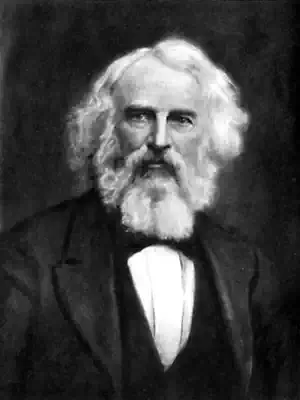
Henry Wadsworth Longfellow
Thangbrand the Priest
Thangbrand the Priest
Short of stature, large of limb,
Burly face and russet beard,
All the women stared at him,
When in Iceland he appeared.
"Look!" they said,
With nodding head,
"There goes Thangbrand, Olaf's Priest."
All the prayers he knew by rote,
He could preach like Chrysostome,
From the Fathers he could quote,
He had even been at Rome.
A learned clerk,
A man of mark,
Was this Thangbrand, Olaf's Priest.
He was quarrelsome and loud,
And impatient of control,
Boisterous in the market crowd,
Boisterous at the wassail-bowl,
Everywhere
Would drink and swear,
Swaggering Thangbrand, Olaf's Priest.
In his house this malcontent
Could the King no longer bear,
So to Iceland he was sent
To convert the heathen there,
And away
One summer day
Sailed this Thangbrand, Olaf's Priest.
There in Iceland, o'er their books
Pored the people day and night,
But he did not like their looks,
Nor the songs they used to write.
All this rhyme
Is waste of time! "
Grumbled Thangbrand, Olaf's Priest.
To the alehouse, where he sat,
Came the Scalds and Saga men;
Is it to be wondered at,
That they quarrelled now and then,
When o'er his beer
Began to leer
Drunken Thangbrand, Olaf's Priest?
All the folk in Altafiord
Boasted of their island grand;
Saying in a single word,
"Iceland is the finest land
That the sun
Doth shine upon!"
Loud laughed Thangbrand, Olaf's Priest.
And he answered: "What's the use
Of this bragging up and down,
When three women and one goose
Make a market in your town! "
Every Scald
Satires scrawled
On poor Thangbrand, Olaf's Priest.
Something worse they did than that!
And what vexed him most of all
Was a figure in shovel hat,
Drawn in charcoal on the wall;
With words that go
Sprawling below,
"This is Thangbrand, Olaf's Priest."
Hardly knowing what he did,
Then he smote them might and main,
Thorvald Veile and Veterlid
Lay there in the alehouse slain.
"To-day we are gold,
To-morrow mould!"
Muttered Thangbrand, Olaf's Priest
Much in fear of axe and rope,
Back to Norway sailed he then.
"O, King Olaf! little hope
Is there of these Iceland men!"
Meekly said,
With bending head,
Pious Thangbrand, Olaf's Priest.
Short of stature, large of limb,
Burly face and russet beard,
All the women stared at him,
When in Iceland he appeared.
"Look!" they said,
With nodding head,
"There goes Thangbrand, Olaf's Priest."
All the prayers he knew by rote,
He could preach like Chrysostome,
From the Fathers he could quote,
He had even been at Rome.
A learned clerk,
A man of mark,
Was this Thangbrand, Olaf's Priest.
He was quarrelsome and loud,
And impatient of control,
Boisterous in the market crowd,
Boisterous at the wassail-bowl,
Everywhere
Would drink and swear,
Swaggering Thangbrand, Olaf's Priest.
In his house this malcontent
Could the King no longer bear,
So to Iceland he was sent
To convert the heathen there,
And away
One summer day
Sailed this Thangbrand, Olaf's Priest.
There in Iceland, o'er their books
Pored the people day and night,
But he did not like their looks,
Nor the songs they used to write.
All this rhyme
Is waste of time! "
Grumbled Thangbrand, Olaf's Priest.
To the alehouse, where he sat,
Came the Scalds and Saga men;
Is it to be wondered at,
That they quarrelled now and then,
When o'er his beer
Began to leer
Drunken Thangbrand, Olaf's Priest?
All the folk in Altafiord
Boasted of their island grand;
Saying in a single word,
"Iceland is the finest land
That the sun
Doth shine upon!"
Loud laughed Thangbrand, Olaf's Priest.
And he answered: "What's the use
Of this bragging up and down,
When three women and one goose
Make a market in your town! "
Every Scald
Satires scrawled
On poor Thangbrand, Olaf's Priest.
Something worse they did than that!
And what vexed him most of all
Was a figure in shovel hat,
Drawn in charcoal on the wall;
With words that go
Sprawling below,
"This is Thangbrand, Olaf's Priest."
Hardly knowing what he did,
Then he smote them might and main,
Thorvald Veile and Veterlid
Lay there in the alehouse slain.
"To-day we are gold,
To-morrow mould!"
Muttered Thangbrand, Olaf's Priest
Much in fear of axe and rope,
Back to Norway sailed he then.
"O, King Olaf! little hope
Is there of these Iceland men!"
Meekly said,
With bending head,
Pious Thangbrand, Olaf's Priest.
399
Henry Wadsworth Longfellow
Tales Of A Wayside Inn : Part 3. The Sicilian's Tale; The Monk of
Tales Of A Wayside Inn : Part 3. The Sicilian's Tale; The Monk of
Casal-Maggiore
Once on a time, some centuries ago,
In the hot sunshine two Franciscan friars
Wended their weary way, with footsteps slow
Back to their convent, whose white walls and spires
Gleamed on the hillside like a patch of snow;
Covered with dust they were, and torn by briers,
And bore like sumpter-mules upon their backs
The badge of poverty, their beggar's sacks.
The first was Brother Anthony, a spare
And silent man, with pallid cheeks and thin,
Much given to vigils, penance, fasting, prayer,
Solemn and gray, and worn with discipline,
As if his body but white ashes were,
Heaped on the living coals that glowed within;
A simple monk, like many of his day,
Whose instinct was to listen and obey.
A different man was Brother Timothy,
Of larger mould and of a coarser paste;
A rubicund and stalwart monk was he,
Broad in the shoulders, broader in the waist,
Who often filled the dull refectory
With noise by which the convent was disgraced,
But to the mass-book gave but little heed,
By reason he had never learned to read.
Now, as they passed the outskirts of a wood,
They saw, with mingled pleasure and surprise,
Fast tethered to a tree an ass, that stood
Lazily winking his large, limpid eyes.
The farmer Gilbert of that neighborhood
His owner was, who, looking for supplies
Of fagots, deeper in the wood had strayed,
Leaving his beast to ponder in the shade.
As soon as Brother Timothy espied
The patient animal, he said: 'Good-lack!
Thus for our needs doth Providence provide;
We'll lay our wallets on the creature's back.'
This being done, he leisurely untied
From head and neck the halter of the jack,
And put it round his own, and to the tree
Stood tethered fast as if the ass were he.
And, bursting forth into a merry laugh,
He cried to Brother Anthony: 'Away!
And drive the ass before you with your staff;
And when you reach the convent you may say
You left me at a farm, half tired and half
Ill with a fever, for a night and day,
And that the farmer lent this ass to bear
Our wallets, that are heavy with good fare.'
Now Brother Anthony, who knew the pranks
Of Brother Timothy, would not persuade
Or reason with him on his quirks and cranks,
But, being obedient, silently obeyed;
And, smiting with his staff the ass's flanks,
Drove him before him over hill and glade,
Safe with his provend to the convent gate,
Leaving poor Brother Timothy to his fate.
Then Gilbert, laden with fagots for his fire,
Forth issued from the wood, and stood aghast
To see the ponderous body of the friar
Standing where he had left his donkey last.
Trembling he stood, and dared not venture nigher,
But stared, and gaped, and crossed himself full fast;
For, being credulous and of little wit,
He thought it was some demon from the pit.
While speechless and bewildered thus he gazed,
And dropped his load of fagots on the ground,
Quoth Brother Timothy: 'Be not amazed
That where you left a donkey should be found
A poor Franciscan friar, half-starved and crazed,
Standing demure and with a halter bound;
But set me free, and hear the piteous story
Of Brother Timothy of Casal-Maggiore.
'I am a sinful man, although you see
I wear the consecrated cowl and cape;
You never owned an ass, but you owned me,
Changed and transformed from my own natural shape
All for the deadly sin of gluttony,
From which I could not otherwise escape,
Than by this penance, dieting on grass,
And being worked and beaten as an ass.
'Think of the ignominy I endured;
Think of the miserable life I led,
The toil and blows to which I was inured,
My wretched lodging in a windy shed,
My scanty fare so grudgingly procured,
The damp and musty straw that formed my bed!
But, having done this penance for my sins,
My life as man and monk again begins.'
The simple Gilbert, hearing words like these,
Was conscience-stricken, and fell down apace
Before the friar upon his bended knees,
And with a suppliant voice implored his grace;
And the good monk, now very much at ease,
Granted him pardon with a smiling face,
Nor could refuse to be that night his guest,
It being late, and he in need of rest.
Upon a hillside, where the olive thrives,
With figures painted on its white-washed walls,
The cottage stood; and near the humming hives
Made murmurs as of far-off waterfalls;
A place where those who love secluded lives
Might live content, and, free from noise and brawls,
Like Claudian's Old Man of Verona here
Measure by fruits the slow-revolving year.
And, coming to this cottage of content
They found his children, and the buxom wench
His wife, Dame Cicely, and his father, bent
With years and labor, seated on a bench,
Repeating over some obscure event
In the old wars of Milanese and French;
All welcomed the Franciscan, with a sense
Of sacred awe and humble reverence.
When Gilbert told them what had come to pass,
How beyond question, cavil, or surmise,
Good Brother Timothy had been their ass,
You should have seen the wonder in their eyes;
You should have heard them cry, 'Alas! alas!
Have heard their lamentations and their sighs!
For all believed the story, and began
To see a saint in this afflicted man.
Forthwith there was prepared a grand repast,
To satisfy the craving of the friar
After so rigid and prolonged a fast;
The bustling housewife stirred the kitchen fire;
Then her two barn-yard fowls, her best and last,
Were put to death, at her express desire,
And served up with a salad in a bowl,
And flasks of country wine to crown the whole.
It would not be believed should I repeat
How hungry Brother Timothy appeared;
It was a pleasure but to see him eat,
His white teeth flashing through his russet beard,
His face aglow and flushed with wine and meat,
His roguish eyes that rolled and laughed and leered!
Lord! how he drank the blood-red country wine
As if the village vintage were divine!
And all the while he talked without surcease,
And told his merry tales with jovial glee
That never flagged, but rather did increase,
And laughed aloud as if insane were he,
And wagged his red beard, matted like a fleece,
And cast such glances at Dame Cicely
That Gilbert now grew angry with his guest,
And thus in words his rising wrath expressed.
'Good father,' said he, 'easily we see
How needful in some persons, and how right,
Mortification of the flesh may be.
The indulgence you have given it to-night,
After long penance, clearly proves to me
Your strength against temptation is but slight,
And shows the dreadful peril you are in
Of a relapse into your deadly sin.
'To-morrow morning, with the rising sun,
Go back unto your convent, nor refrain
From fasting and from scourging, for you run
Great danger to become an ass again,
Since monkish flesh and asinine are one;
Therefore be wise, nor longer here remain,
Unless you wish the scourge should be applied
By other hands, that will not spare your hide.'
When this the monk had heard, his color fled
And then returned, like lightning in the air,
Till he was all one blush from foot to head,
And even the bald spot in his russet hair
Turned from its usual pallor to bright red!
The old man was asleep upon his chair.
Then all retired, and sank into the deep
And helpless imbecility of sleep.
They slept until the dawn of day drew near,
Till the cock should have crowed, but did not crow,
For they had slain the shining chanticleer
And eaten him for supper, as you know.
The monk was up betimes and of good cheer,
And, having breakfasted, made haste to go,
As if he heard the distant matin bell,
And had but little time to say farewell.
Fresh was the morning as the breath of kine;
Odors of herbs commingled with the sweet
Balsamic exhalations of the pine;
A haze was in the air presaging heat;
Uprose the sun above the Apennine,
And all the misty valleys at its feet
Were full of the delirious song of birds,
Voices of men, and bells, and low of herds.
All this to Brother Timothy was naught;
He did not care for scenery, nor here
His busy fancy found the thing it sought;
But when he saw the convent walls appear,
And smoke from kitchen chimneys upward caught
And whirled aloft into the atmosphere,
He quickened his slow footsteps, like a beast
That scents the stable a league off at least.
And as he entered through the convent gate
He saw there in the court the ass, who stood
Twirling his ears about, and seemed to wait,
Just as he found him waiting in the wood;
And told the Prior that, to alleviate
The daily labors of the brotherhood,
The owner, being a man of means and thrift,
Bestowed him on the convent as a gift.
And thereupon the Prior for many days
Revolved this serious matter in his mind,
And turned it over many different ways,
Hoping that some safe issue he might find;
But stood in fear of what the world would say,
If he accepted presents of this kind,
Employing beasts of burden for the packs,
That lazy monks should carry on their backs.
Then, to avoid all scandal of the sort,
And stop the mouth of cavil, he decreed
That he would cut the tedious matter short,
And sell the ass with all convenient speed,
Thus saving the expense of his support,
And hoarding something for a time of need.
So he despatched him to the neighboring Fair,
And freed himself from cumber and from care.
It happened now by chance, as some might say,
Others perhaps would call it destiny,
Gilbert was at the Fair; and heard a bray,
And nearer came, and saw that it was he,
And whispered in his ear, 'Ah, lackaday!
Good father, the rebellious flesh, I see,
Has changed you back into an ass again,
And all my admonitions were in vain.'
The ass, who felt this breathing in his ear,
Did not turn round to look, but shook his head,
As if he were not pleased these words to hear,
And contradicted all that had been said.
And this made Gilbert cry in voice more clear,
'I know you well; your hair is russet-red;
Do not deny it; for you are the same
Franciscan friar, and Timothy by name.'
The ass, though now the secret had come out,
Was obstinate, and shook his head again;
Until a crowd was gathered round about
To hear this dialogue between the twain;
And raised their voices in a noisy shout
When Gilbert tried to make the matter plain,
And flouted him and mocked him all day long
With laughter and with jibes and scraps of song.
'If this be Brother Timothy,' they cried,
'Buy him, and feed him on the tenderest grass;
Thou canst not do too much for one so tried
As to be twice transformed into an ass.'
So simple Gilbert bought him, and untied
His halter, and o'er mountain and morass
He led him homeward, talking as he went
Of good behavior and a mind content.
The children saw them coming, and advanced,
Shouting with joy, and hung about his neck,--
Not Gilbert's, but the ass's,--round him danced,
And wove green garlands where-withal to deck
His sacred person; for again it chanced
Their childish feelings, without rein or check,
Could not discriminate in any way
A donkey from a friar of Orders Gray.
'O Brother Timothy,' the children said,
'You have come back to us just as before;
We were afraid, and thought that you were dead,
And we should never see you any more.'
And then they kissed the white star on his head,
That like a birth-mark or a badge he wore,
And patted him upon the neck and face,
And said a thousand things with childish grace.
Thenceforward and forever he was known
As Brother Timothy, and led always
A life of luxury, till he had grown
Ungrateful being stuffed with corn and hay,
And very vicious. Then in angry tone,
Rousing himself, poor Gilbert said one day
'When simple kindness is misunderstood
A little flagellation may do good.'
His many vices need not here be told;
Among them was a habit that he had
Of flinging up his heels at young and old,
Breaking his halter, running off like mad
O'er pasture-lands and meadow, wood and wold,
And other misdemeanors quite as bad;
But worst of all was breaking from his shed
At night, and ravaging the cabbage-bed.
So Brother Timothy went back once more
To his old life of labor and distress;
Was beaten worse than he had been before.
And now, instead of comfort and caress,
Came labors manifold and trials sore;
And as his toils increased his food grew less,
Until at last the great consoler, Death,
Ended his many sufferings with his breath.
Great was the lamentation when he died;
And mainly that he died impenitent;
Dame Cicely bewailed, the children cried,
The old man still remembered the event
In the French war, and Gilbert magnified
His many virtues, as he came and went,
And said: 'Heaven pardon Brother Timothy,
And keep us from the sin of gluttony.'
Casal-Maggiore
Once on a time, some centuries ago,
In the hot sunshine two Franciscan friars
Wended their weary way, with footsteps slow
Back to their convent, whose white walls and spires
Gleamed on the hillside like a patch of snow;
Covered with dust they were, and torn by briers,
And bore like sumpter-mules upon their backs
The badge of poverty, their beggar's sacks.
The first was Brother Anthony, a spare
And silent man, with pallid cheeks and thin,
Much given to vigils, penance, fasting, prayer,
Solemn and gray, and worn with discipline,
As if his body but white ashes were,
Heaped on the living coals that glowed within;
A simple monk, like many of his day,
Whose instinct was to listen and obey.
A different man was Brother Timothy,
Of larger mould and of a coarser paste;
A rubicund and stalwart monk was he,
Broad in the shoulders, broader in the waist,
Who often filled the dull refectory
With noise by which the convent was disgraced,
But to the mass-book gave but little heed,
By reason he had never learned to read.
Now, as they passed the outskirts of a wood,
They saw, with mingled pleasure and surprise,
Fast tethered to a tree an ass, that stood
Lazily winking his large, limpid eyes.
The farmer Gilbert of that neighborhood
His owner was, who, looking for supplies
Of fagots, deeper in the wood had strayed,
Leaving his beast to ponder in the shade.
As soon as Brother Timothy espied
The patient animal, he said: 'Good-lack!
Thus for our needs doth Providence provide;
We'll lay our wallets on the creature's back.'
This being done, he leisurely untied
From head and neck the halter of the jack,
And put it round his own, and to the tree
Stood tethered fast as if the ass were he.
And, bursting forth into a merry laugh,
He cried to Brother Anthony: 'Away!
And drive the ass before you with your staff;
And when you reach the convent you may say
You left me at a farm, half tired and half
Ill with a fever, for a night and day,
And that the farmer lent this ass to bear
Our wallets, that are heavy with good fare.'
Now Brother Anthony, who knew the pranks
Of Brother Timothy, would not persuade
Or reason with him on his quirks and cranks,
But, being obedient, silently obeyed;
And, smiting with his staff the ass's flanks,
Drove him before him over hill and glade,
Safe with his provend to the convent gate,
Leaving poor Brother Timothy to his fate.
Then Gilbert, laden with fagots for his fire,
Forth issued from the wood, and stood aghast
To see the ponderous body of the friar
Standing where he had left his donkey last.
Trembling he stood, and dared not venture nigher,
But stared, and gaped, and crossed himself full fast;
For, being credulous and of little wit,
He thought it was some demon from the pit.
While speechless and bewildered thus he gazed,
And dropped his load of fagots on the ground,
Quoth Brother Timothy: 'Be not amazed
That where you left a donkey should be found
A poor Franciscan friar, half-starved and crazed,
Standing demure and with a halter bound;
But set me free, and hear the piteous story
Of Brother Timothy of Casal-Maggiore.
'I am a sinful man, although you see
I wear the consecrated cowl and cape;
You never owned an ass, but you owned me,
Changed and transformed from my own natural shape
All for the deadly sin of gluttony,
From which I could not otherwise escape,
Than by this penance, dieting on grass,
And being worked and beaten as an ass.
'Think of the ignominy I endured;
Think of the miserable life I led,
The toil and blows to which I was inured,
My wretched lodging in a windy shed,
My scanty fare so grudgingly procured,
The damp and musty straw that formed my bed!
But, having done this penance for my sins,
My life as man and monk again begins.'
The simple Gilbert, hearing words like these,
Was conscience-stricken, and fell down apace
Before the friar upon his bended knees,
And with a suppliant voice implored his grace;
And the good monk, now very much at ease,
Granted him pardon with a smiling face,
Nor could refuse to be that night his guest,
It being late, and he in need of rest.
Upon a hillside, where the olive thrives,
With figures painted on its white-washed walls,
The cottage stood; and near the humming hives
Made murmurs as of far-off waterfalls;
A place where those who love secluded lives
Might live content, and, free from noise and brawls,
Like Claudian's Old Man of Verona here
Measure by fruits the slow-revolving year.
And, coming to this cottage of content
They found his children, and the buxom wench
His wife, Dame Cicely, and his father, bent
With years and labor, seated on a bench,
Repeating over some obscure event
In the old wars of Milanese and French;
All welcomed the Franciscan, with a sense
Of sacred awe and humble reverence.
When Gilbert told them what had come to pass,
How beyond question, cavil, or surmise,
Good Brother Timothy had been their ass,
You should have seen the wonder in their eyes;
You should have heard them cry, 'Alas! alas!
Have heard their lamentations and their sighs!
For all believed the story, and began
To see a saint in this afflicted man.
Forthwith there was prepared a grand repast,
To satisfy the craving of the friar
After so rigid and prolonged a fast;
The bustling housewife stirred the kitchen fire;
Then her two barn-yard fowls, her best and last,
Were put to death, at her express desire,
And served up with a salad in a bowl,
And flasks of country wine to crown the whole.
It would not be believed should I repeat
How hungry Brother Timothy appeared;
It was a pleasure but to see him eat,
His white teeth flashing through his russet beard,
His face aglow and flushed with wine and meat,
His roguish eyes that rolled and laughed and leered!
Lord! how he drank the blood-red country wine
As if the village vintage were divine!
And all the while he talked without surcease,
And told his merry tales with jovial glee
That never flagged, but rather did increase,
And laughed aloud as if insane were he,
And wagged his red beard, matted like a fleece,
And cast such glances at Dame Cicely
That Gilbert now grew angry with his guest,
And thus in words his rising wrath expressed.
'Good father,' said he, 'easily we see
How needful in some persons, and how right,
Mortification of the flesh may be.
The indulgence you have given it to-night,
After long penance, clearly proves to me
Your strength against temptation is but slight,
And shows the dreadful peril you are in
Of a relapse into your deadly sin.
'To-morrow morning, with the rising sun,
Go back unto your convent, nor refrain
From fasting and from scourging, for you run
Great danger to become an ass again,
Since monkish flesh and asinine are one;
Therefore be wise, nor longer here remain,
Unless you wish the scourge should be applied
By other hands, that will not spare your hide.'
When this the monk had heard, his color fled
And then returned, like lightning in the air,
Till he was all one blush from foot to head,
And even the bald spot in his russet hair
Turned from its usual pallor to bright red!
The old man was asleep upon his chair.
Then all retired, and sank into the deep
And helpless imbecility of sleep.
They slept until the dawn of day drew near,
Till the cock should have crowed, but did not crow,
For they had slain the shining chanticleer
And eaten him for supper, as you know.
The monk was up betimes and of good cheer,
And, having breakfasted, made haste to go,
As if he heard the distant matin bell,
And had but little time to say farewell.
Fresh was the morning as the breath of kine;
Odors of herbs commingled with the sweet
Balsamic exhalations of the pine;
A haze was in the air presaging heat;
Uprose the sun above the Apennine,
And all the misty valleys at its feet
Were full of the delirious song of birds,
Voices of men, and bells, and low of herds.
All this to Brother Timothy was naught;
He did not care for scenery, nor here
His busy fancy found the thing it sought;
But when he saw the convent walls appear,
And smoke from kitchen chimneys upward caught
And whirled aloft into the atmosphere,
He quickened his slow footsteps, like a beast
That scents the stable a league off at least.
And as he entered through the convent gate
He saw there in the court the ass, who stood
Twirling his ears about, and seemed to wait,
Just as he found him waiting in the wood;
And told the Prior that, to alleviate
The daily labors of the brotherhood,
The owner, being a man of means and thrift,
Bestowed him on the convent as a gift.
And thereupon the Prior for many days
Revolved this serious matter in his mind,
And turned it over many different ways,
Hoping that some safe issue he might find;
But stood in fear of what the world would say,
If he accepted presents of this kind,
Employing beasts of burden for the packs,
That lazy monks should carry on their backs.
Then, to avoid all scandal of the sort,
And stop the mouth of cavil, he decreed
That he would cut the tedious matter short,
And sell the ass with all convenient speed,
Thus saving the expense of his support,
And hoarding something for a time of need.
So he despatched him to the neighboring Fair,
And freed himself from cumber and from care.
It happened now by chance, as some might say,
Others perhaps would call it destiny,
Gilbert was at the Fair; and heard a bray,
And nearer came, and saw that it was he,
And whispered in his ear, 'Ah, lackaday!
Good father, the rebellious flesh, I see,
Has changed you back into an ass again,
And all my admonitions were in vain.'
The ass, who felt this breathing in his ear,
Did not turn round to look, but shook his head,
As if he were not pleased these words to hear,
And contradicted all that had been said.
And this made Gilbert cry in voice more clear,
'I know you well; your hair is russet-red;
Do not deny it; for you are the same
Franciscan friar, and Timothy by name.'
The ass, though now the secret had come out,
Was obstinate, and shook his head again;
Until a crowd was gathered round about
To hear this dialogue between the twain;
And raised their voices in a noisy shout
When Gilbert tried to make the matter plain,
And flouted him and mocked him all day long
With laughter and with jibes and scraps of song.
'If this be Brother Timothy,' they cried,
'Buy him, and feed him on the tenderest grass;
Thou canst not do too much for one so tried
As to be twice transformed into an ass.'
So simple Gilbert bought him, and untied
His halter, and o'er mountain and morass
He led him homeward, talking as he went
Of good behavior and a mind content.
The children saw them coming, and advanced,
Shouting with joy, and hung about his neck,--
Not Gilbert's, but the ass's,--round him danced,
And wove green garlands where-withal to deck
His sacred person; for again it chanced
Their childish feelings, without rein or check,
Could not discriminate in any way
A donkey from a friar of Orders Gray.
'O Brother Timothy,' the children said,
'You have come back to us just as before;
We were afraid, and thought that you were dead,
And we should never see you any more.'
And then they kissed the white star on his head,
That like a birth-mark or a badge he wore,
And patted him upon the neck and face,
And said a thousand things with childish grace.
Thenceforward and forever he was known
As Brother Timothy, and led always
A life of luxury, till he had grown
Ungrateful being stuffed with corn and hay,
And very vicious. Then in angry tone,
Rousing himself, poor Gilbert said one day
'When simple kindness is misunderstood
A little flagellation may do good.'
His many vices need not here be told;
Among them was a habit that he had
Of flinging up his heels at young and old,
Breaking his halter, running off like mad
O'er pasture-lands and meadow, wood and wold,
And other misdemeanors quite as bad;
But worst of all was breaking from his shed
At night, and ravaging the cabbage-bed.
So Brother Timothy went back once more
To his old life of labor and distress;
Was beaten worse than he had been before.
And now, instead of comfort and caress,
Came labors manifold and trials sore;
And as his toils increased his food grew less,
Until at last the great consoler, Death,
Ended his many sufferings with his breath.
Great was the lamentation when he died;
And mainly that he died impenitent;
Dame Cicely bewailed, the children cried,
The old man still remembered the event
In the French war, and Gilbert magnified
His many virtues, as he came and went,
And said: 'Heaven pardon Brother Timothy,
And keep us from the sin of gluttony.'
266
Henry Wadsworth Longfellow
Tales Of A Wayside Inn : Part 3. The Sicilian's Tale; The Monk of
Tales Of A Wayside Inn : Part 3. The Sicilian's Tale; The Monk of
Casal-Maggiore
Once on a time, some centuries ago,
In the hot sunshine two Franciscan friars
Wended their weary way, with footsteps slow
Back to their convent, whose white walls and spires
Gleamed on the hillside like a patch of snow;
Covered with dust they were, and torn by briers,
And bore like sumpter-mules upon their backs
The badge of poverty, their beggar's sacks.
The first was Brother Anthony, a spare
And silent man, with pallid cheeks and thin,
Much given to vigils, penance, fasting, prayer,
Solemn and gray, and worn with discipline,
As if his body but white ashes were,
Heaped on the living coals that glowed within;
A simple monk, like many of his day,
Whose instinct was to listen and obey.
A different man was Brother Timothy,
Of larger mould and of a coarser paste;
A rubicund and stalwart monk was he,
Broad in the shoulders, broader in the waist,
Who often filled the dull refectory
With noise by which the convent was disgraced,
But to the mass-book gave but little heed,
By reason he had never learned to read.
Now, as they passed the outskirts of a wood,
They saw, with mingled pleasure and surprise,
Fast tethered to a tree an ass, that stood
Lazily winking his large, limpid eyes.
The farmer Gilbert of that neighborhood
His owner was, who, looking for supplies
Of fagots, deeper in the wood had strayed,
Leaving his beast to ponder in the shade.
As soon as Brother Timothy espied
The patient animal, he said: 'Good-lack!
Thus for our needs doth Providence provide;
We'll lay our wallets on the creature's back.'
This being done, he leisurely untied
From head and neck the halter of the jack,
And put it round his own, and to the tree
Stood tethered fast as if the ass were he.
And, bursting forth into a merry laugh,
He cried to Brother Anthony: 'Away!
And drive the ass before you with your staff;
And when you reach the convent you may say
You left me at a farm, half tired and half
Ill with a fever, for a night and day,
And that the farmer lent this ass to bear
Our wallets, that are heavy with good fare.'
Now Brother Anthony, who knew the pranks
Of Brother Timothy, would not persuade
Or reason with him on his quirks and cranks,
But, being obedient, silently obeyed;
And, smiting with his staff the ass's flanks,
Drove him before him over hill and glade,
Safe with his provend to the convent gate,
Leaving poor Brother Timothy to his fate.
Then Gilbert, laden with fagots for his fire,
Forth issued from the wood, and stood aghast
To see the ponderous body of the friar
Standing where he had left his donkey last.
Trembling he stood, and dared not venture nigher,
But stared, and gaped, and crossed himself full fast;
For, being credulous and of little wit,
He thought it was some demon from the pit.
While speechless and bewildered thus he gazed,
And dropped his load of fagots on the ground,
Quoth Brother Timothy: 'Be not amazed
That where you left a donkey should be found
A poor Franciscan friar, half-starved and crazed,
Standing demure and with a halter bound;
But set me free, and hear the piteous story
Of Brother Timothy of Casal-Maggiore.
'I am a sinful man, although you see
I wear the consecrated cowl and cape;
You never owned an ass, but you owned me,
Changed and transformed from my own natural shape
All for the deadly sin of gluttony,
From which I could not otherwise escape,
Than by this penance, dieting on grass,
And being worked and beaten as an ass.
'Think of the ignominy I endured;
Think of the miserable life I led,
The toil and blows to which I was inured,
My wretched lodging in a windy shed,
My scanty fare so grudgingly procured,
The damp and musty straw that formed my bed!
But, having done this penance for my sins,
My life as man and monk again begins.'
The simple Gilbert, hearing words like these,
Was conscience-stricken, and fell down apace
Before the friar upon his bended knees,
And with a suppliant voice implored his grace;
And the good monk, now very much at ease,
Granted him pardon with a smiling face,
Nor could refuse to be that night his guest,
It being late, and he in need of rest.
Upon a hillside, where the olive thrives,
With figures painted on its white-washed walls,
The cottage stood; and near the humming hives
Made murmurs as of far-off waterfalls;
A place where those who love secluded lives
Might live content, and, free from noise and brawls,
Like Claudian's Old Man of Verona here
Measure by fruits the slow-revolving year.
And, coming to this cottage of content
They found his children, and the buxom wench
His wife, Dame Cicely, and his father, bent
With years and labor, seated on a bench,
Repeating over some obscure event
In the old wars of Milanese and French;
All welcomed the Franciscan, with a sense
Of sacred awe and humble reverence.
When Gilbert told them what had come to pass,
How beyond question, cavil, or surmise,
Good Brother Timothy had been their ass,
You should have seen the wonder in their eyes;
You should have heard them cry, 'Alas! alas!
Have heard their lamentations and their sighs!
For all believed the story, and began
To see a saint in this afflicted man.
Forthwith there was prepared a grand repast,
To satisfy the craving of the friar
After so rigid and prolonged a fast;
The bustling housewife stirred the kitchen fire;
Then her two barn-yard fowls, her best and last,
Were put to death, at her express desire,
And served up with a salad in a bowl,
And flasks of country wine to crown the whole.
It would not be believed should I repeat
How hungry Brother Timothy appeared;
It was a pleasure but to see him eat,
His white teeth flashing through his russet beard,
His face aglow and flushed with wine and meat,
His roguish eyes that rolled and laughed and leered!
Lord! how he drank the blood-red country wine
As if the village vintage were divine!
And all the while he talked without surcease,
And told his merry tales with jovial glee
That never flagged, but rather did increase,
And laughed aloud as if insane were he,
And wagged his red beard, matted like a fleece,
And cast such glances at Dame Cicely
That Gilbert now grew angry with his guest,
And thus in words his rising wrath expressed.
'Good father,' said he, 'easily we see
How needful in some persons, and how right,
Mortification of the flesh may be.
The indulgence you have given it to-night,
After long penance, clearly proves to me
Your strength against temptation is but slight,
And shows the dreadful peril you are in
Of a relapse into your deadly sin.
'To-morrow morning, with the rising sun,
Go back unto your convent, nor refrain
From fasting and from scourging, for you run
Great danger to become an ass again,
Since monkish flesh and asinine are one;
Therefore be wise, nor longer here remain,
Unless you wish the scourge should be applied
By other hands, that will not spare your hide.'
When this the monk had heard, his color fled
And then returned, like lightning in the air,
Till he was all one blush from foot to head,
And even the bald spot in his russet hair
Turned from its usual pallor to bright red!
The old man was asleep upon his chair.
Then all retired, and sank into the deep
And helpless imbecility of sleep.
They slept until the dawn of day drew near,
Till the cock should have crowed, but did not crow,
For they had slain the shining chanticleer
And eaten him for supper, as you know.
The monk was up betimes and of good cheer,
And, having breakfasted, made haste to go,
As if he heard the distant matin bell,
And had but little time to say farewell.
Fresh was the morning as the breath of kine;
Odors of herbs commingled with the sweet
Balsamic exhalations of the pine;
A haze was in the air presaging heat;
Uprose the sun above the Apennine,
And all the misty valleys at its feet
Were full of the delirious song of birds,
Voices of men, and bells, and low of herds.
All this to Brother Timothy was naught;
He did not care for scenery, nor here
His busy fancy found the thing it sought;
But when he saw the convent walls appear,
And smoke from kitchen chimneys upward caught
And whirled aloft into the atmosphere,
He quickened his slow footsteps, like a beast
That scents the stable a league off at least.
And as he entered through the convent gate
He saw there in the court the ass, who stood
Twirling his ears about, and seemed to wait,
Just as he found him waiting in the wood;
And told the Prior that, to alleviate
The daily labors of the brotherhood,
The owner, being a man of means and thrift,
Bestowed him on the convent as a gift.
And thereupon the Prior for many days
Revolved this serious matter in his mind,
And turned it over many different ways,
Hoping that some safe issue he might find;
But stood in fear of what the world would say,
If he accepted presents of this kind,
Employing beasts of burden for the packs,
That lazy monks should carry on their backs.
Then, to avoid all scandal of the sort,
And stop the mouth of cavil, he decreed
That he would cut the tedious matter short,
And sell the ass with all convenient speed,
Thus saving the expense of his support,
And hoarding something for a time of need.
So he despatched him to the neighboring Fair,
And freed himself from cumber and from care.
It happened now by chance, as some might say,
Others perhaps would call it destiny,
Gilbert was at the Fair; and heard a bray,
And nearer came, and saw that it was he,
And whispered in his ear, 'Ah, lackaday!
Good father, the rebellious flesh, I see,
Has changed you back into an ass again,
And all my admonitions were in vain.'
The ass, who felt this breathing in his ear,
Did not turn round to look, but shook his head,
As if he were not pleased these words to hear,
And contradicted all that had been said.
And this made Gilbert cry in voice more clear,
'I know you well; your hair is russet-red;
Do not deny it; for you are the same
Franciscan friar, and Timothy by name.'
The ass, though now the secret had come out,
Was obstinate, and shook his head again;
Until a crowd was gathered round about
To hear this dialogue between the twain;
And raised their voices in a noisy shout
When Gilbert tried to make the matter plain,
And flouted him and mocked him all day long
With laughter and with jibes and scraps of song.
'If this be Brother Timothy,' they cried,
'Buy him, and feed him on the tenderest grass;
Thou canst not do too much for one so tried
As to be twice transformed into an ass.'
So simple Gilbert bought him, and untied
His halter, and o'er mountain and morass
He led him homeward, talking as he went
Of good behavior and a mind content.
The children saw them coming, and advanced,
Shouting with joy, and hung about his neck,--
Not Gilbert's, but the ass's,--round him danced,
And wove green garlands where-withal to deck
His sacred person; for again it chanced
Their childish feelings, without rein or check,
Could not discriminate in any way
A donkey from a friar of Orders Gray.
'O Brother Timothy,' the children said,
'You have come back to us just as before;
We were afraid, and thought that you were dead,
And we should never see you any more.'
And then they kissed the white star on his head,
That like a birth-mark or a badge he wore,
And patted him upon the neck and face,
And said a thousand things with childish grace.
Thenceforward and forever he was known
As Brother Timothy, and led always
A life of luxury, till he had grown
Ungrateful being stuffed with corn and hay,
And very vicious. Then in angry tone,
Rousing himself, poor Gilbert said one day
'When simple kindness is misunderstood
A little flagellation may do good.'
His many vices need not here be told;
Among them was a habit that he had
Of flinging up his heels at young and old,
Breaking his halter, running off like mad
O'er pasture-lands and meadow, wood and wold,
And other misdemeanors quite as bad;
But worst of all was breaking from his shed
At night, and ravaging the cabbage-bed.
So Brother Timothy went back once more
To his old life of labor and distress;
Was beaten worse than he had been before.
And now, instead of comfort and caress,
Came labors manifold and trials sore;
And as his toils increased his food grew less,
Until at last the great consoler, Death,
Ended his many sufferings with his breath.
Great was the lamentation when he died;
And mainly that he died impenitent;
Dame Cicely bewailed, the children cried,
The old man still remembered the event
In the French war, and Gilbert magnified
His many virtues, as he came and went,
And said: 'Heaven pardon Brother Timothy,
And keep us from the sin of gluttony.'
Casal-Maggiore
Once on a time, some centuries ago,
In the hot sunshine two Franciscan friars
Wended their weary way, with footsteps slow
Back to their convent, whose white walls and spires
Gleamed on the hillside like a patch of snow;
Covered with dust they were, and torn by briers,
And bore like sumpter-mules upon their backs
The badge of poverty, their beggar's sacks.
The first was Brother Anthony, a spare
And silent man, with pallid cheeks and thin,
Much given to vigils, penance, fasting, prayer,
Solemn and gray, and worn with discipline,
As if his body but white ashes were,
Heaped on the living coals that glowed within;
A simple monk, like many of his day,
Whose instinct was to listen and obey.
A different man was Brother Timothy,
Of larger mould and of a coarser paste;
A rubicund and stalwart monk was he,
Broad in the shoulders, broader in the waist,
Who often filled the dull refectory
With noise by which the convent was disgraced,
But to the mass-book gave but little heed,
By reason he had never learned to read.
Now, as they passed the outskirts of a wood,
They saw, with mingled pleasure and surprise,
Fast tethered to a tree an ass, that stood
Lazily winking his large, limpid eyes.
The farmer Gilbert of that neighborhood
His owner was, who, looking for supplies
Of fagots, deeper in the wood had strayed,
Leaving his beast to ponder in the shade.
As soon as Brother Timothy espied
The patient animal, he said: 'Good-lack!
Thus for our needs doth Providence provide;
We'll lay our wallets on the creature's back.'
This being done, he leisurely untied
From head and neck the halter of the jack,
And put it round his own, and to the tree
Stood tethered fast as if the ass were he.
And, bursting forth into a merry laugh,
He cried to Brother Anthony: 'Away!
And drive the ass before you with your staff;
And when you reach the convent you may say
You left me at a farm, half tired and half
Ill with a fever, for a night and day,
And that the farmer lent this ass to bear
Our wallets, that are heavy with good fare.'
Now Brother Anthony, who knew the pranks
Of Brother Timothy, would not persuade
Or reason with him on his quirks and cranks,
But, being obedient, silently obeyed;
And, smiting with his staff the ass's flanks,
Drove him before him over hill and glade,
Safe with his provend to the convent gate,
Leaving poor Brother Timothy to his fate.
Then Gilbert, laden with fagots for his fire,
Forth issued from the wood, and stood aghast
To see the ponderous body of the friar
Standing where he had left his donkey last.
Trembling he stood, and dared not venture nigher,
But stared, and gaped, and crossed himself full fast;
For, being credulous and of little wit,
He thought it was some demon from the pit.
While speechless and bewildered thus he gazed,
And dropped his load of fagots on the ground,
Quoth Brother Timothy: 'Be not amazed
That where you left a donkey should be found
A poor Franciscan friar, half-starved and crazed,
Standing demure and with a halter bound;
But set me free, and hear the piteous story
Of Brother Timothy of Casal-Maggiore.
'I am a sinful man, although you see
I wear the consecrated cowl and cape;
You never owned an ass, but you owned me,
Changed and transformed from my own natural shape
All for the deadly sin of gluttony,
From which I could not otherwise escape,
Than by this penance, dieting on grass,
And being worked and beaten as an ass.
'Think of the ignominy I endured;
Think of the miserable life I led,
The toil and blows to which I was inured,
My wretched lodging in a windy shed,
My scanty fare so grudgingly procured,
The damp and musty straw that formed my bed!
But, having done this penance for my sins,
My life as man and monk again begins.'
The simple Gilbert, hearing words like these,
Was conscience-stricken, and fell down apace
Before the friar upon his bended knees,
And with a suppliant voice implored his grace;
And the good monk, now very much at ease,
Granted him pardon with a smiling face,
Nor could refuse to be that night his guest,
It being late, and he in need of rest.
Upon a hillside, where the olive thrives,
With figures painted on its white-washed walls,
The cottage stood; and near the humming hives
Made murmurs as of far-off waterfalls;
A place where those who love secluded lives
Might live content, and, free from noise and brawls,
Like Claudian's Old Man of Verona here
Measure by fruits the slow-revolving year.
And, coming to this cottage of content
They found his children, and the buxom wench
His wife, Dame Cicely, and his father, bent
With years and labor, seated on a bench,
Repeating over some obscure event
In the old wars of Milanese and French;
All welcomed the Franciscan, with a sense
Of sacred awe and humble reverence.
When Gilbert told them what had come to pass,
How beyond question, cavil, or surmise,
Good Brother Timothy had been their ass,
You should have seen the wonder in their eyes;
You should have heard them cry, 'Alas! alas!
Have heard their lamentations and their sighs!
For all believed the story, and began
To see a saint in this afflicted man.
Forthwith there was prepared a grand repast,
To satisfy the craving of the friar
After so rigid and prolonged a fast;
The bustling housewife stirred the kitchen fire;
Then her two barn-yard fowls, her best and last,
Were put to death, at her express desire,
And served up with a salad in a bowl,
And flasks of country wine to crown the whole.
It would not be believed should I repeat
How hungry Brother Timothy appeared;
It was a pleasure but to see him eat,
His white teeth flashing through his russet beard,
His face aglow and flushed with wine and meat,
His roguish eyes that rolled and laughed and leered!
Lord! how he drank the blood-red country wine
As if the village vintage were divine!
And all the while he talked without surcease,
And told his merry tales with jovial glee
That never flagged, but rather did increase,
And laughed aloud as if insane were he,
And wagged his red beard, matted like a fleece,
And cast such glances at Dame Cicely
That Gilbert now grew angry with his guest,
And thus in words his rising wrath expressed.
'Good father,' said he, 'easily we see
How needful in some persons, and how right,
Mortification of the flesh may be.
The indulgence you have given it to-night,
After long penance, clearly proves to me
Your strength against temptation is but slight,
And shows the dreadful peril you are in
Of a relapse into your deadly sin.
'To-morrow morning, with the rising sun,
Go back unto your convent, nor refrain
From fasting and from scourging, for you run
Great danger to become an ass again,
Since monkish flesh and asinine are one;
Therefore be wise, nor longer here remain,
Unless you wish the scourge should be applied
By other hands, that will not spare your hide.'
When this the monk had heard, his color fled
And then returned, like lightning in the air,
Till he was all one blush from foot to head,
And even the bald spot in his russet hair
Turned from its usual pallor to bright red!
The old man was asleep upon his chair.
Then all retired, and sank into the deep
And helpless imbecility of sleep.
They slept until the dawn of day drew near,
Till the cock should have crowed, but did not crow,
For they had slain the shining chanticleer
And eaten him for supper, as you know.
The monk was up betimes and of good cheer,
And, having breakfasted, made haste to go,
As if he heard the distant matin bell,
And had but little time to say farewell.
Fresh was the morning as the breath of kine;
Odors of herbs commingled with the sweet
Balsamic exhalations of the pine;
A haze was in the air presaging heat;
Uprose the sun above the Apennine,
And all the misty valleys at its feet
Were full of the delirious song of birds,
Voices of men, and bells, and low of herds.
All this to Brother Timothy was naught;
He did not care for scenery, nor here
His busy fancy found the thing it sought;
But when he saw the convent walls appear,
And smoke from kitchen chimneys upward caught
And whirled aloft into the atmosphere,
He quickened his slow footsteps, like a beast
That scents the stable a league off at least.
And as he entered through the convent gate
He saw there in the court the ass, who stood
Twirling his ears about, and seemed to wait,
Just as he found him waiting in the wood;
And told the Prior that, to alleviate
The daily labors of the brotherhood,
The owner, being a man of means and thrift,
Bestowed him on the convent as a gift.
And thereupon the Prior for many days
Revolved this serious matter in his mind,
And turned it over many different ways,
Hoping that some safe issue he might find;
But stood in fear of what the world would say,
If he accepted presents of this kind,
Employing beasts of burden for the packs,
That lazy monks should carry on their backs.
Then, to avoid all scandal of the sort,
And stop the mouth of cavil, he decreed
That he would cut the tedious matter short,
And sell the ass with all convenient speed,
Thus saving the expense of his support,
And hoarding something for a time of need.
So he despatched him to the neighboring Fair,
And freed himself from cumber and from care.
It happened now by chance, as some might say,
Others perhaps would call it destiny,
Gilbert was at the Fair; and heard a bray,
And nearer came, and saw that it was he,
And whispered in his ear, 'Ah, lackaday!
Good father, the rebellious flesh, I see,
Has changed you back into an ass again,
And all my admonitions were in vain.'
The ass, who felt this breathing in his ear,
Did not turn round to look, but shook his head,
As if he were not pleased these words to hear,
And contradicted all that had been said.
And this made Gilbert cry in voice more clear,
'I know you well; your hair is russet-red;
Do not deny it; for you are the same
Franciscan friar, and Timothy by name.'
The ass, though now the secret had come out,
Was obstinate, and shook his head again;
Until a crowd was gathered round about
To hear this dialogue between the twain;
And raised their voices in a noisy shout
When Gilbert tried to make the matter plain,
And flouted him and mocked him all day long
With laughter and with jibes and scraps of song.
'If this be Brother Timothy,' they cried,
'Buy him, and feed him on the tenderest grass;
Thou canst not do too much for one so tried
As to be twice transformed into an ass.'
So simple Gilbert bought him, and untied
His halter, and o'er mountain and morass
He led him homeward, talking as he went
Of good behavior and a mind content.
The children saw them coming, and advanced,
Shouting with joy, and hung about his neck,--
Not Gilbert's, but the ass's,--round him danced,
And wove green garlands where-withal to deck
His sacred person; for again it chanced
Their childish feelings, without rein or check,
Could not discriminate in any way
A donkey from a friar of Orders Gray.
'O Brother Timothy,' the children said,
'You have come back to us just as before;
We were afraid, and thought that you were dead,
And we should never see you any more.'
And then they kissed the white star on his head,
That like a birth-mark or a badge he wore,
And patted him upon the neck and face,
And said a thousand things with childish grace.
Thenceforward and forever he was known
As Brother Timothy, and led always
A life of luxury, till he had grown
Ungrateful being stuffed with corn and hay,
And very vicious. Then in angry tone,
Rousing himself, poor Gilbert said one day
'When simple kindness is misunderstood
A little flagellation may do good.'
His many vices need not here be told;
Among them was a habit that he had
Of flinging up his heels at young and old,
Breaking his halter, running off like mad
O'er pasture-lands and meadow, wood and wold,
And other misdemeanors quite as bad;
But worst of all was breaking from his shed
At night, and ravaging the cabbage-bed.
So Brother Timothy went back once more
To his old life of labor and distress;
Was beaten worse than he had been before.
And now, instead of comfort and caress,
Came labors manifold and trials sore;
And as his toils increased his food grew less,
Until at last the great consoler, Death,
Ended his many sufferings with his breath.
Great was the lamentation when he died;
And mainly that he died impenitent;
Dame Cicely bewailed, the children cried,
The old man still remembered the event
In the French war, and Gilbert magnified
His many virtues, as he came and went,
And said: 'Heaven pardon Brother Timothy,
And keep us from the sin of gluttony.'
266
Henry Wadsworth Longfellow
Tales Of A Wayside Inn : Part 3. The Musician's Tale; The Mother's Ghost
Tales Of A Wayside Inn : Part 3. The Musician's Tale; The Mother's Ghost
Svend Dyring he rideth adown the glade;
I myself was young!
There he hath wooed him so winsome a maid;
Fair words gladden so many a heart.
Together were they for seven years,
And together children six were theirs.
Then came Death abroad through the land,
And blighted the beautiful lily-wand.
Svend Dyring he rideth adown the glade,
And again hath he wooed him another maid,
He hath wooed him a maid and brought home a bride,
But she was bitter and full of pride.
When she came driving into the yard,
There stood the six children weeping so hard.
There stood the small children with sorrowful heart;
From before her feet she thrust them apart.
She gave to them neither ale nor bread;
'Ye shall suffer hunger and hate,' she said.
She took from them their quilts of blue,
And said: 'Ye shall lie on the straw we strew.'
She took from them the great waxlight;
'Now ye shall lie in the dark at night.'
In the evening late they cried with cold;
The mother heard it under the mould.
The woman heard it the earth below:
'To my little children I must go.'
She standeth before the Lord of all:
'And may I go to my children small?'
She prayed him so long, and would not cease,
Until he bade her depart in peace.
'At cock-crow thou shalt return again;
Longer thou shalt not there remain!'
She girded up her sorrowful bones,
And rifted the walls and the marble stones.
As through the village she flitted by,
The watch-dogs howled aloud to the sky.
When she came to the castle gate,
There stood her eldest daughter in wait.
'Why standest thou here, dear daughter mine?
How fares it with brothers and sisters thine?'
'Never art thou mother of mine,
For my mother was both fair and fine.
'My mother was white, with cheeks of red,
But thou art pale, and like to the dead.'
'How should I be fair and fine?
I have been dead; pale cheeks are mine.
'How should I be white and red,
So long, so long have I been dead?'
When she came in at the chamber door,
There stood the small children weeping sore.
One she braided, another she brushed,
The third she lifted, the fourth she hushed.
The fifth she took on her lap and pressed,
As if she would suckle it at her breast.
Then to her eldest daughter said she,
'Do thou bid Svend Dyring come hither to me.'
Into the chamber when he came
She spake to him in anger and shame.
'I left behind me both ale and bread;
My children hunger and are not fed.
'I left behind me quilts of blue;
My children lie on the straw ye strew.
'I left behind me the great waxlight;
My children lie in the dark at night.
'If I come again unto your hall,
As cruel a fate shall you befall!
'Now crows the cock with feathers red;
Back to the earth must all the dead.
'Now crows the cock with feathers swart;
The gates of heaven fly wide apart.
'Now crows the cock with feathers white;
I can abide no longer to-night.'
Whenever they heard the watch-dogs wail,
They gave the children bread and ale.
Whenever they heard the watch-dogs bay,
They feared lest the dead were on their way.
Whenever they heard the watch-dogs bark;
I myself was young!
They feared the dead out there in the dark.
Fair words gladden so many a heart.
Svend Dyring he rideth adown the glade;
I myself was young!
There he hath wooed him so winsome a maid;
Fair words gladden so many a heart.
Together were they for seven years,
And together children six were theirs.
Then came Death abroad through the land,
And blighted the beautiful lily-wand.
Svend Dyring he rideth adown the glade,
And again hath he wooed him another maid,
He hath wooed him a maid and brought home a bride,
But she was bitter and full of pride.
When she came driving into the yard,
There stood the six children weeping so hard.
There stood the small children with sorrowful heart;
From before her feet she thrust them apart.
She gave to them neither ale nor bread;
'Ye shall suffer hunger and hate,' she said.
She took from them their quilts of blue,
And said: 'Ye shall lie on the straw we strew.'
She took from them the great waxlight;
'Now ye shall lie in the dark at night.'
In the evening late they cried with cold;
The mother heard it under the mould.
The woman heard it the earth below:
'To my little children I must go.'
She standeth before the Lord of all:
'And may I go to my children small?'
She prayed him so long, and would not cease,
Until he bade her depart in peace.
'At cock-crow thou shalt return again;
Longer thou shalt not there remain!'
She girded up her sorrowful bones,
And rifted the walls and the marble stones.
As through the village she flitted by,
The watch-dogs howled aloud to the sky.
When she came to the castle gate,
There stood her eldest daughter in wait.
'Why standest thou here, dear daughter mine?
How fares it with brothers and sisters thine?'
'Never art thou mother of mine,
For my mother was both fair and fine.
'My mother was white, with cheeks of red,
But thou art pale, and like to the dead.'
'How should I be fair and fine?
I have been dead; pale cheeks are mine.
'How should I be white and red,
So long, so long have I been dead?'
When she came in at the chamber door,
There stood the small children weeping sore.
One she braided, another she brushed,
The third she lifted, the fourth she hushed.
The fifth she took on her lap and pressed,
As if she would suckle it at her breast.
Then to her eldest daughter said she,
'Do thou bid Svend Dyring come hither to me.'
Into the chamber when he came
She spake to him in anger and shame.
'I left behind me both ale and bread;
My children hunger and are not fed.
'I left behind me quilts of blue;
My children lie on the straw ye strew.
'I left behind me the great waxlight;
My children lie in the dark at night.
'If I come again unto your hall,
As cruel a fate shall you befall!
'Now crows the cock with feathers red;
Back to the earth must all the dead.
'Now crows the cock with feathers swart;
The gates of heaven fly wide apart.
'Now crows the cock with feathers white;
I can abide no longer to-night.'
Whenever they heard the watch-dogs wail,
They gave the children bread and ale.
Whenever they heard the watch-dogs bay,
They feared lest the dead were on their way.
Whenever they heard the watch-dogs bark;
I myself was young!
They feared the dead out there in the dark.
Fair words gladden so many a heart.
289
Henry Wadsworth Longfellow
Tales Of A Wayside Inn : Part 3. Interlude VI.
Tales Of A Wayside Inn : Part 3. Interlude VI.
'Now that is after my own heart,'
The Poet cried; 'one understands
Your swarthy hero Scanderbeg,
Gauntlet on hand and boot on leg,
And skilled in every warlike art,
Riding through his Albanian lands,
And following the auspicious star
That shone for him o'er Ak-Hissar.'
The Theologian added here
His word of praise not less sincere,
Although he ended with a jibe;
'The hero of romance and song
Was born,' he said, 'to right the wrong;
And I approve; but all the same
That bit of treason with the Scribe
Adds nothing to your hero's fame.'
The Student praised the good old times,
And liked the canter of the rhymes,
That had a hoofbeat in their sound;
But longed some further word to hear
Of the old chronicler Ben Meir,
And where his volume might he found.
The tall Musician walked the room
With folded arms and gleaming eyes,
As if he saw the Vikings rise,
Gigantic shadows in the gloom;
And much he talked of their emprise
And meteors seen in Northern skies,
And Heimdal's horn, and day of doom.
But the Sicilian laughed again;
'This is the time to laugh,' he said,
For the whole story he well knew
Was an invention of the Jew,
Spun from the cobwebs in his brain,
And of the same bright scarlet thread
As was the Tale of Kambalu.
Only the Landlord spake no word;
'T was doubtful whether he had heard
The tale at all, so full of care
Was he of his impending fate,
That, like the sword of Damocles,
Above his head hung blank and bare,
Suspended by a single hair,
So that he could not sit at ease,
But sighed and looked disconsolate,
And shifted restless in his chair,
Revolving how he might evade
The blow of the descending blade.
The Student came to his relief
By saying in his easy way
To the Musician: 'Calm your grief,
My fair Apollo of the North,
Balder the Beautiful and so forth;
Although your magic lyre or lute
With broken strings is lying mute,
Still you can tell some doleful tale
Of shipwreck in a midnight gale,
Or something of the kind to suit
The mood that we are in to-night
For what is marvellous and strange;
So give your nimble fancy range,
And we will follow in its flight.'
But the Musician shook his head;
'No tale I tell to-night,' he said,
'While my poor instrument lies there,
Even as a child with vacant stare
Lies in its little coffin dead.'
Yet, being urged, he said at last:
'There comes to me out of the Past
A voice, whose tones are sweet and wild,
Singing a song almost divine,
And with a tear in every line;
An ancient ballad, that my nurse
Sang to me when I was a child,
In accents tender as the verse;
And sometimes wept, and sometimes smiled
While singing it, to see arise
The look of wonder in my eyes,
And feel my heart with terror beat.
This simple ballad I retain
Clearly imprinted on my brain,
And as a tale will now repeat.'
'Now that is after my own heart,'
The Poet cried; 'one understands
Your swarthy hero Scanderbeg,
Gauntlet on hand and boot on leg,
And skilled in every warlike art,
Riding through his Albanian lands,
And following the auspicious star
That shone for him o'er Ak-Hissar.'
The Theologian added here
His word of praise not less sincere,
Although he ended with a jibe;
'The hero of romance and song
Was born,' he said, 'to right the wrong;
And I approve; but all the same
That bit of treason with the Scribe
Adds nothing to your hero's fame.'
The Student praised the good old times,
And liked the canter of the rhymes,
That had a hoofbeat in their sound;
But longed some further word to hear
Of the old chronicler Ben Meir,
And where his volume might he found.
The tall Musician walked the room
With folded arms and gleaming eyes,
As if he saw the Vikings rise,
Gigantic shadows in the gloom;
And much he talked of their emprise
And meteors seen in Northern skies,
And Heimdal's horn, and day of doom.
But the Sicilian laughed again;
'This is the time to laugh,' he said,
For the whole story he well knew
Was an invention of the Jew,
Spun from the cobwebs in his brain,
And of the same bright scarlet thread
As was the Tale of Kambalu.
Only the Landlord spake no word;
'T was doubtful whether he had heard
The tale at all, so full of care
Was he of his impending fate,
That, like the sword of Damocles,
Above his head hung blank and bare,
Suspended by a single hair,
So that he could not sit at ease,
But sighed and looked disconsolate,
And shifted restless in his chair,
Revolving how he might evade
The blow of the descending blade.
The Student came to his relief
By saying in his easy way
To the Musician: 'Calm your grief,
My fair Apollo of the North,
Balder the Beautiful and so forth;
Although your magic lyre or lute
With broken strings is lying mute,
Still you can tell some doleful tale
Of shipwreck in a midnight gale,
Or something of the kind to suit
The mood that we are in to-night
For what is marvellous and strange;
So give your nimble fancy range,
And we will follow in its flight.'
But the Musician shook his head;
'No tale I tell to-night,' he said,
'While my poor instrument lies there,
Even as a child with vacant stare
Lies in its little coffin dead.'
Yet, being urged, he said at last:
'There comes to me out of the Past
A voice, whose tones are sweet and wild,
Singing a song almost divine,
And with a tear in every line;
An ancient ballad, that my nurse
Sang to me when I was a child,
In accents tender as the verse;
And sometimes wept, and sometimes smiled
While singing it, to see arise
The look of wonder in my eyes,
And feel my heart with terror beat.
This simple ballad I retain
Clearly imprinted on my brain,
And as a tale will now repeat.'
290
Henry Wadsworth Longfellow
Tales Of A Wayside Inn : Part 3. Finale
Tales Of A Wayside Inn : Part 3. Finale
These are the tales those merry guests
Told to each other, well or ill;
Like summer birds that lift their crests
Above the borders of their nests
And twitter, and again are still.
These are the tales, or new or old,
In idle moments idly told;
Flowers of the field with petals thin,
Lilies that neither toil nor spin,
And tufts of wayside weeds and gorse
Hung in the parlor of the inn
Beneath the sign of the Red Horse.
And still, reluctant to retire,
The friends sat talking by the fire
And watched the smouldering embers burn
To ashes, and flash up again
Into a momentary glow,
Lingering like them when forced to go,
And going when they would remain;
For on the morrow they must turn
Their faces homeward, and the pain
Of parting touched with its unrest
A tender nerve in every breast.
But sleep at last the victory won;
They must be stirring with the sun,
And drowsily good night they said,
And went still gossiping to bed,
And left the parlor wrapped in gloom,
The only live thing in the room
Was the old clock, that in its pace
Kept time with the revolving spheres
And constellations in their flight,
And struck with its uplifted mace
The dark, unconscious hours of night,
To senseless and unlistening ears.
Uprose the sun; and every guest,
Uprisen, was soon equipped and dressed
For journeying home and city-ward;
The old stage-coach was at the door,
With horses harnessed, long before
The sunshine reached the withered sward
Beneath the oaks, whose branches hoar
Murmured: ?Farewell forevermore.?
?Farewell!? the portly Landlord cried;
?Farewell!? the parting guests replied,
But little thought that nevermore
Their feet would pass that thershold o?er;
That nevermore together there
Would they assemble, free from care,
To hear the oaks? mysterious roar,
And breathe the wholesome country air.
Where are they now? What lands and skies
Paint pictures in their friendly eyes?
What hope deludes, what promise cheers,
What pleasant voices fill their ears?
Two are beyond the salt sea waves,
And three already in their graves.
Perchance the living still may look
Into the pages of this book,
And see the days of long ago
Floating and fleeting to and fro,
As in the well-remembered brook
They saw the inverted landscape gleam,
And their own faces like a dream
Look up upon them from below.
These are the tales those merry guests
Told to each other, well or ill;
Like summer birds that lift their crests
Above the borders of their nests
And twitter, and again are still.
These are the tales, or new or old,
In idle moments idly told;
Flowers of the field with petals thin,
Lilies that neither toil nor spin,
And tufts of wayside weeds and gorse
Hung in the parlor of the inn
Beneath the sign of the Red Horse.
And still, reluctant to retire,
The friends sat talking by the fire
And watched the smouldering embers burn
To ashes, and flash up again
Into a momentary glow,
Lingering like them when forced to go,
And going when they would remain;
For on the morrow they must turn
Their faces homeward, and the pain
Of parting touched with its unrest
A tender nerve in every breast.
But sleep at last the victory won;
They must be stirring with the sun,
And drowsily good night they said,
And went still gossiping to bed,
And left the parlor wrapped in gloom,
The only live thing in the room
Was the old clock, that in its pace
Kept time with the revolving spheres
And constellations in their flight,
And struck with its uplifted mace
The dark, unconscious hours of night,
To senseless and unlistening ears.
Uprose the sun; and every guest,
Uprisen, was soon equipped and dressed
For journeying home and city-ward;
The old stage-coach was at the door,
With horses harnessed, long before
The sunshine reached the withered sward
Beneath the oaks, whose branches hoar
Murmured: ?Farewell forevermore.?
?Farewell!? the portly Landlord cried;
?Farewell!? the parting guests replied,
But little thought that nevermore
Their feet would pass that thershold o?er;
That nevermore together there
Would they assemble, free from care,
To hear the oaks? mysterious roar,
And breathe the wholesome country air.
Where are they now? What lands and skies
Paint pictures in their friendly eyes?
What hope deludes, what promise cheers,
What pleasant voices fill their ears?
Two are beyond the salt sea waves,
And three already in their graves.
Perchance the living still may look
Into the pages of this book,
And see the days of long ago
Floating and fleeting to and fro,
As in the well-remembered brook
They saw the inverted landscape gleam,
And their own faces like a dream
Look up upon them from below.
295
Henry Wadsworth Longfellow
Tales Of A Wayside Inn : Part 3. Finale
Tales Of A Wayside Inn : Part 3. Finale
These are the tales those merry guests
Told to each other, well or ill;
Like summer birds that lift their crests
Above the borders of their nests
And twitter, and again are still.
These are the tales, or new or old,
In idle moments idly told;
Flowers of the field with petals thin,
Lilies that neither toil nor spin,
And tufts of wayside weeds and gorse
Hung in the parlor of the inn
Beneath the sign of the Red Horse.
And still, reluctant to retire,
The friends sat talking by the fire
And watched the smouldering embers burn
To ashes, and flash up again
Into a momentary glow,
Lingering like them when forced to go,
And going when they would remain;
For on the morrow they must turn
Their faces homeward, and the pain
Of parting touched with its unrest
A tender nerve in every breast.
But sleep at last the victory won;
They must be stirring with the sun,
And drowsily good night they said,
And went still gossiping to bed,
And left the parlor wrapped in gloom,
The only live thing in the room
Was the old clock, that in its pace
Kept time with the revolving spheres
And constellations in their flight,
And struck with its uplifted mace
The dark, unconscious hours of night,
To senseless and unlistening ears.
Uprose the sun; and every guest,
Uprisen, was soon equipped and dressed
For journeying home and city-ward;
The old stage-coach was at the door,
With horses harnessed, long before
The sunshine reached the withered sward
Beneath the oaks, whose branches hoar
Murmured: ?Farewell forevermore.?
?Farewell!? the portly Landlord cried;
?Farewell!? the parting guests replied,
But little thought that nevermore
Their feet would pass that thershold o?er;
That nevermore together there
Would they assemble, free from care,
To hear the oaks? mysterious roar,
And breathe the wholesome country air.
Where are they now? What lands and skies
Paint pictures in their friendly eyes?
What hope deludes, what promise cheers,
What pleasant voices fill their ears?
Two are beyond the salt sea waves,
And three already in their graves.
Perchance the living still may look
Into the pages of this book,
And see the days of long ago
Floating and fleeting to and fro,
As in the well-remembered brook
They saw the inverted landscape gleam,
And their own faces like a dream
Look up upon them from below.
These are the tales those merry guests
Told to each other, well or ill;
Like summer birds that lift their crests
Above the borders of their nests
And twitter, and again are still.
These are the tales, or new or old,
In idle moments idly told;
Flowers of the field with petals thin,
Lilies that neither toil nor spin,
And tufts of wayside weeds and gorse
Hung in the parlor of the inn
Beneath the sign of the Red Horse.
And still, reluctant to retire,
The friends sat talking by the fire
And watched the smouldering embers burn
To ashes, and flash up again
Into a momentary glow,
Lingering like them when forced to go,
And going when they would remain;
For on the morrow they must turn
Their faces homeward, and the pain
Of parting touched with its unrest
A tender nerve in every breast.
But sleep at last the victory won;
They must be stirring with the sun,
And drowsily good night they said,
And went still gossiping to bed,
And left the parlor wrapped in gloom,
The only live thing in the room
Was the old clock, that in its pace
Kept time with the revolving spheres
And constellations in their flight,
And struck with its uplifted mace
The dark, unconscious hours of night,
To senseless and unlistening ears.
Uprose the sun; and every guest,
Uprisen, was soon equipped and dressed
For journeying home and city-ward;
The old stage-coach was at the door,
With horses harnessed, long before
The sunshine reached the withered sward
Beneath the oaks, whose branches hoar
Murmured: ?Farewell forevermore.?
?Farewell!? the portly Landlord cried;
?Farewell!? the parting guests replied,
But little thought that nevermore
Their feet would pass that thershold o?er;
That nevermore together there
Would they assemble, free from care,
To hear the oaks? mysterious roar,
And breathe the wholesome country air.
Where are they now? What lands and skies
Paint pictures in their friendly eyes?
What hope deludes, what promise cheers,
What pleasant voices fill their ears?
Two are beyond the salt sea waves,
And three already in their graves.
Perchance the living still may look
Into the pages of this book,
And see the days of long ago
Floating and fleeting to and fro,
As in the well-remembered brook
They saw the inverted landscape gleam,
And their own faces like a dream
Look up upon them from below.
295
Henry Wadsworth Longfellow
Tales Of A Wayside Inn : Part 2. The Student's Second Tale; The Baron of St.
Tales Of A Wayside Inn : Part 2. The Student's Second Tale; The Baron of St.
Castine
Baron Castine of St. Castine
Has left his château in the Pyrenees,
And sailed across the western seas.
When he went away from his fair demesne
The birds were building, the woods were green;
And now the winds of winter blow
Round the turrets of the old château,
The birds are silent and unseen,
The leaves lie dead in the ravine,
And the Pyrenees are white with snow.
His father, lonely, old, and gray,
Sits by the fireside day by day,
Thinking ever one thought of care;
Through the southern windows, narrow and tall,
The sun shines into the ancient hall,
And makes a glory round his hair.
The house-dog, stretched beneath his chair,
Groans in his sleep as if in pain,
Then wakes, and yawns, and sleeps again,
So silent is it everywhere,--
So silent you can hear the mouse
Run and rummage along the beams
Behind the wainscot of the wall;
And the old man rouses from his dreams,
And wanders restless through the house,
As if he heard strange voices call.
His footsteps echo along the floor
Of a distant passage, and pause awhile;
He is standing by an open door
Looking long, with a sad, sweet smile,
Into the room of his absent son.
There is the bed on which he lay,
There are the pictures bright and gay,
Horses and hounds and sun-lit seas;
There are his powder-flask and gun,
And his hunting-knives in shape of a fan;
The chair by the window where he sat,
With the clouded tiger-skin for a mat,
Looking out on the Pyrenees,
Looking out on Mount Marboré
And the Seven Valleys of Lavedan.
Ah me! he turns away and sighs;
There is a mist before his eyes.
At night whatever the weather be,
Wind or rain or starry heaven,
Just as the clock is striking seven,
Those who look from the windows see
The village Curate, with lantern and maid,
Come through the gateway from the park
And cross the courtyard damp and dark,--
A ring of light in a ring of shade.
And now at the old man's side he stands,
His voice is cheery, his heart expands,
He gossips pleasantly, by the blaze
Of the fire of fagots, about old days,
And Cardinal Mazarin and the Fronde,
And the Cardinal's nieces fair and fond,
And what they did, and what they said,
When they heard his Eminence was dead.
And after a pause the old man says,
His mind still coming back again
To the one sad thought that haunts his brain,
'Are there any tidings from over sea?
Ah, why has that wild boy gone from me?'
And the Curate answers, looking down,
Harmless and docile as a lamb,
'Young blood! young blood! It must so be!'
And draws from the pocket of his gown
A handkerchief like an oriflamb,
And wipes his spectacles, and they play
Their little game of lansquenet
In silence for an hour or so,
Till the clock at nine strikes loud and clear
From the village lying asleep below,
And across the courtyard, into the dark
Of the winding pathway in the park,
Curate and lantern disappear,
And darkness reigns in the old château .
The ship has come back from over sea,
She has been signalled from below,
And into the harbor of Bordeaux
She sails with her gallant company.
But among them is nowhere seen
The brave young Baron of St. Castine;
He hath tarried behind, I ween,
In the beautiful land of Acadie!
And the father paces to and fro
Through the chambers of the old château ,
Waiting, waiting to hear the hum
Of wheels on the road that runs below,
Of servants hurrying here and there,
The voice in the courtyard, the step on the stair,
Waiting for some one who doth not come!
But letters there are, which the old man reads
To the Curate, when he comes at night
Word by word, as an acolyte
Repeats his prayers and tells his beads;
Letters full of the rolling sea,
Full of a young man's joy to be
Abroad in the world, alone and free;
Full of adventures and wonderful scenes
Of hunting the deer through forests vast
In the royal grant of Pierre du Gast;
Of nights in the tents of the Tarratines;
Of Madocawando the Indian chief,
And his daughters, glorious as queens,
And beautiful beyond belief;
And so soft the tones of their native tongue,
The words are not spoken, they are sung!
And the Curate listens, and smiling says:
'Ah yes, dear friend! in our young days
We should have liked to hunt the deer
All day amid those forest scenes,
And to sleep in the tents of the Tarratines;
But now it is better sitting here
Within four walls, and without the fear
Of losing our hearts to Indian queens;
For man is fire and woman is tow,
And the Somebody comes and begins to blow.'
Then a gleam of distrust and vague surmise
Shines in the father's gentle eyes,
As fire-light on a window-pane
Glimmers and vanishes again;
But naught he answers; he only sighs,
And for a moment bows his head;
Then, as their custom is, they play
Their little game of lansquenet,
And another day is with the dead.
Another day, and many a day
And many a week and month depart,
When a fatal letter wings its way
Across the sea, like a bird of prey,
And strikes and tears the old man's heart.
Lo! the young Baron of St. Castine,
Swift as the wind is, and as wild,
Has married a dusky Tarratine,
Has married Madocawando's child!
The letter drops from the father's hand;
Though the sinews of his heart are wrung,
He utters no cry, he breathes no prayer,
No malediction falls from his tongue;
But his stately figure, erect and grand,
Bends and sinks like a column of sand
In the whirlwind of his great despair.
Dying, yes, dying! His latest breath
Of parley at the door of death
Is a blessing on his wayward son.
Lower and lower on his breast
Sinks his gray head; he is at rest;
No longer he waits for any one.
For many a year the old château
Lies tenantless and desolate;
Rank grasses in the courtyard grow,
About its gables caws the crow;
Only the porter at the gate
Is left to guard it, and to wait
The coming of the rightful heir;
No other life or sound is there;
No more the Curate comes at night,
No more is seen the unsteady light,
Threading the alleys of the park;
The windows of the hall are dark,
The chambers dreary, cold, and bare!
At length, at last, when the winter is past,
And birds are building, and woods are green,
With flying skirts is the Curate seen
Speeding along the woodland way,
Humming gayly, 'No day is so long
But it comes at last to vesper-song.'
He stops at the porter's lodge to say
That at last the Baron of St. Castine
Is coming home with his Indian queen,
Is coming without a week's delay;
And all the house must be swept and clean,
And all things set in good array!
And the solemn porter shakes his head;
And the answer he makes is: 'Lackaday!
We will see, as the blind man said!'
Alert since first the day began,
The cock upon the village church
Looks northward from his airy perch,
As if beyond the ken of man
To see the ships come sailing on,
And pass the isle of Oléron,
And pass the Tower of Cordouan.
In the church below is cold in clay
The heart that would have leaped for joy?
O tender heart of truth and trust!?
To see the coming of that day;
In the church below the lips are dust;
Dust are the hands, and dust the feet,
That would have been so swift to meet
The coming of that wayward boy.
At night the front of the old château
Is a blaze of light above and below;
There's a sound of wheels and hoofs in the street,
A cracking of whips, and scamper of feet,
Bells are ringing, and horns are blown,
And the Baron hath come again to his own.
The Curate is waiting in the hall,
Most eager and alive of all
To welcome the Baron and Baroness;
But his mind is full of vague distress,
For he hath read in Jesuit books
Of those children of the wilderness,
And now, good, simple man! he looks
To see a painted savage stride
Into the room, with shoulders bare,
And eagle feathers in her hair,
And around her a robe of panther's hide.
Instead, he beholds with secret shame
A form of beauty undefined,
A loveliness with out a name,
Not of degree, but more of kind;
Nor bold nor shy, nor short nor tall,
But a new mingling of them all.
Yes, beautiful beyond belief,
Transfigured and transfused, he sees
The lady of the Pyrenees,
The daughter of the Indian chief.
Beneath the shadow of her hair
The gold-bronze color of the skin
Seems lighted by a fire within,
As when a burst of sunlight shines
Beneath a sombre grove of pines,--
A dusky splendor in the air.
The two small hands, that now are pressed
In his, seem made to be caressed,
They lie so warm and soft and still,
Like birds half hidden in a nest,
Trustful, and innocent of ill.
And ah! he cannot believe his ears
When her melodious voice he hears
Speaking his native Gascon tongue;
The words she utters seem to be
Part of some poem of Goudouli,
They are not spoken, they are sung!
And the Baron smiles, and says, 'You see,
I told you but the simple truth;
Ah, you may trust the eyes of youth!'
Down in the village day by day
The people gossip in their way,
And stared to see the Baroness pass
On Sunday morning to early Mass;
And when she kneeleth down to pray,
They wonder, and whisper together, and say,
'Surely this is no heathen lass!'
And in course of time they learn to bless
The Baron and the Baroness.
And in course of time the Curate learns
A secret so dreadful, that by turns
He is ice and fire, he freezes and burns.
The Baron at confession hath said,
That though this woman be his wife,
He hath wed her as the Indians wed,
He hath bought her for a gun and a knife!
And the Curate replies: 'O profligate,
O Prodigal Son! return once more
To the open arms and the open door
Of the Church, or ever it be too late.
Thank God, thy father did not live
To see what he could not forgive;
On thee, so reckless and perverse,
He left his blessing, not his curse.
But the nearer the dawn the darker the night,
And by going wrong all things come right;
Things have been mended that were worse,
And the worse, the nearer they are to mend.
For the sake of the living and the dead,
Thou shalt be wed as Christians wed,
And all things come to a happy end.'
O sun, that followest the night,
In yon blue sky, serene and pure,
And pourest thine impartial light
Alike on mountain and on moor,
Pause for a moment in thy course,
And bless the bridegroom and the bride!
O Gave, that from thy hidden source
In yon mysterious mountain-side
Pursuest thy wandering way alone,
And leaping down its steps of stone,
Along the meadow-lands demure
Stealest away to the Adour,
Pause for a moment in thy course
To bless the bridegroom and the bride!
The choir is singing the matin song,
The doors of the church are opened wide,
The people crowd, and press, and throng
To see the bridegroom and the bride.
They enter and pass along the nave;
They stand upon the father's grave;
The bells are ringing soft and slow;
The living above and the dead below
Give their blessing on one and twain;
The warm wind blows from the hills of Spain,
The birds are building, the leaves are green,
And Baron Castine of St. Castine
Hath come at last to his own again.
Castine
Baron Castine of St. Castine
Has left his château in the Pyrenees,
And sailed across the western seas.
When he went away from his fair demesne
The birds were building, the woods were green;
And now the winds of winter blow
Round the turrets of the old château,
The birds are silent and unseen,
The leaves lie dead in the ravine,
And the Pyrenees are white with snow.
His father, lonely, old, and gray,
Sits by the fireside day by day,
Thinking ever one thought of care;
Through the southern windows, narrow and tall,
The sun shines into the ancient hall,
And makes a glory round his hair.
The house-dog, stretched beneath his chair,
Groans in his sleep as if in pain,
Then wakes, and yawns, and sleeps again,
So silent is it everywhere,--
So silent you can hear the mouse
Run and rummage along the beams
Behind the wainscot of the wall;
And the old man rouses from his dreams,
And wanders restless through the house,
As if he heard strange voices call.
His footsteps echo along the floor
Of a distant passage, and pause awhile;
He is standing by an open door
Looking long, with a sad, sweet smile,
Into the room of his absent son.
There is the bed on which he lay,
There are the pictures bright and gay,
Horses and hounds and sun-lit seas;
There are his powder-flask and gun,
And his hunting-knives in shape of a fan;
The chair by the window where he sat,
With the clouded tiger-skin for a mat,
Looking out on the Pyrenees,
Looking out on Mount Marboré
And the Seven Valleys of Lavedan.
Ah me! he turns away and sighs;
There is a mist before his eyes.
At night whatever the weather be,
Wind or rain or starry heaven,
Just as the clock is striking seven,
Those who look from the windows see
The village Curate, with lantern and maid,
Come through the gateway from the park
And cross the courtyard damp and dark,--
A ring of light in a ring of shade.
And now at the old man's side he stands,
His voice is cheery, his heart expands,
He gossips pleasantly, by the blaze
Of the fire of fagots, about old days,
And Cardinal Mazarin and the Fronde,
And the Cardinal's nieces fair and fond,
And what they did, and what they said,
When they heard his Eminence was dead.
And after a pause the old man says,
His mind still coming back again
To the one sad thought that haunts his brain,
'Are there any tidings from over sea?
Ah, why has that wild boy gone from me?'
And the Curate answers, looking down,
Harmless and docile as a lamb,
'Young blood! young blood! It must so be!'
And draws from the pocket of his gown
A handkerchief like an oriflamb,
And wipes his spectacles, and they play
Their little game of lansquenet
In silence for an hour or so,
Till the clock at nine strikes loud and clear
From the village lying asleep below,
And across the courtyard, into the dark
Of the winding pathway in the park,
Curate and lantern disappear,
And darkness reigns in the old château .
The ship has come back from over sea,
She has been signalled from below,
And into the harbor of Bordeaux
She sails with her gallant company.
But among them is nowhere seen
The brave young Baron of St. Castine;
He hath tarried behind, I ween,
In the beautiful land of Acadie!
And the father paces to and fro
Through the chambers of the old château ,
Waiting, waiting to hear the hum
Of wheels on the road that runs below,
Of servants hurrying here and there,
The voice in the courtyard, the step on the stair,
Waiting for some one who doth not come!
But letters there are, which the old man reads
To the Curate, when he comes at night
Word by word, as an acolyte
Repeats his prayers and tells his beads;
Letters full of the rolling sea,
Full of a young man's joy to be
Abroad in the world, alone and free;
Full of adventures and wonderful scenes
Of hunting the deer through forests vast
In the royal grant of Pierre du Gast;
Of nights in the tents of the Tarratines;
Of Madocawando the Indian chief,
And his daughters, glorious as queens,
And beautiful beyond belief;
And so soft the tones of their native tongue,
The words are not spoken, they are sung!
And the Curate listens, and smiling says:
'Ah yes, dear friend! in our young days
We should have liked to hunt the deer
All day amid those forest scenes,
And to sleep in the tents of the Tarratines;
But now it is better sitting here
Within four walls, and without the fear
Of losing our hearts to Indian queens;
For man is fire and woman is tow,
And the Somebody comes and begins to blow.'
Then a gleam of distrust and vague surmise
Shines in the father's gentle eyes,
As fire-light on a window-pane
Glimmers and vanishes again;
But naught he answers; he only sighs,
And for a moment bows his head;
Then, as their custom is, they play
Their little game of lansquenet,
And another day is with the dead.
Another day, and many a day
And many a week and month depart,
When a fatal letter wings its way
Across the sea, like a bird of prey,
And strikes and tears the old man's heart.
Lo! the young Baron of St. Castine,
Swift as the wind is, and as wild,
Has married a dusky Tarratine,
Has married Madocawando's child!
The letter drops from the father's hand;
Though the sinews of his heart are wrung,
He utters no cry, he breathes no prayer,
No malediction falls from his tongue;
But his stately figure, erect and grand,
Bends and sinks like a column of sand
In the whirlwind of his great despair.
Dying, yes, dying! His latest breath
Of parley at the door of death
Is a blessing on his wayward son.
Lower and lower on his breast
Sinks his gray head; he is at rest;
No longer he waits for any one.
For many a year the old château
Lies tenantless and desolate;
Rank grasses in the courtyard grow,
About its gables caws the crow;
Only the porter at the gate
Is left to guard it, and to wait
The coming of the rightful heir;
No other life or sound is there;
No more the Curate comes at night,
No more is seen the unsteady light,
Threading the alleys of the park;
The windows of the hall are dark,
The chambers dreary, cold, and bare!
At length, at last, when the winter is past,
And birds are building, and woods are green,
With flying skirts is the Curate seen
Speeding along the woodland way,
Humming gayly, 'No day is so long
But it comes at last to vesper-song.'
He stops at the porter's lodge to say
That at last the Baron of St. Castine
Is coming home with his Indian queen,
Is coming without a week's delay;
And all the house must be swept and clean,
And all things set in good array!
And the solemn porter shakes his head;
And the answer he makes is: 'Lackaday!
We will see, as the blind man said!'
Alert since first the day began,
The cock upon the village church
Looks northward from his airy perch,
As if beyond the ken of man
To see the ships come sailing on,
And pass the isle of Oléron,
And pass the Tower of Cordouan.
In the church below is cold in clay
The heart that would have leaped for joy?
O tender heart of truth and trust!?
To see the coming of that day;
In the church below the lips are dust;
Dust are the hands, and dust the feet,
That would have been so swift to meet
The coming of that wayward boy.
At night the front of the old château
Is a blaze of light above and below;
There's a sound of wheels and hoofs in the street,
A cracking of whips, and scamper of feet,
Bells are ringing, and horns are blown,
And the Baron hath come again to his own.
The Curate is waiting in the hall,
Most eager and alive of all
To welcome the Baron and Baroness;
But his mind is full of vague distress,
For he hath read in Jesuit books
Of those children of the wilderness,
And now, good, simple man! he looks
To see a painted savage stride
Into the room, with shoulders bare,
And eagle feathers in her hair,
And around her a robe of panther's hide.
Instead, he beholds with secret shame
A form of beauty undefined,
A loveliness with out a name,
Not of degree, but more of kind;
Nor bold nor shy, nor short nor tall,
But a new mingling of them all.
Yes, beautiful beyond belief,
Transfigured and transfused, he sees
The lady of the Pyrenees,
The daughter of the Indian chief.
Beneath the shadow of her hair
The gold-bronze color of the skin
Seems lighted by a fire within,
As when a burst of sunlight shines
Beneath a sombre grove of pines,--
A dusky splendor in the air.
The two small hands, that now are pressed
In his, seem made to be caressed,
They lie so warm and soft and still,
Like birds half hidden in a nest,
Trustful, and innocent of ill.
And ah! he cannot believe his ears
When her melodious voice he hears
Speaking his native Gascon tongue;
The words she utters seem to be
Part of some poem of Goudouli,
They are not spoken, they are sung!
And the Baron smiles, and says, 'You see,
I told you but the simple truth;
Ah, you may trust the eyes of youth!'
Down in the village day by day
The people gossip in their way,
And stared to see the Baroness pass
On Sunday morning to early Mass;
And when she kneeleth down to pray,
They wonder, and whisper together, and say,
'Surely this is no heathen lass!'
And in course of time they learn to bless
The Baron and the Baroness.
And in course of time the Curate learns
A secret so dreadful, that by turns
He is ice and fire, he freezes and burns.
The Baron at confession hath said,
That though this woman be his wife,
He hath wed her as the Indians wed,
He hath bought her for a gun and a knife!
And the Curate replies: 'O profligate,
O Prodigal Son! return once more
To the open arms and the open door
Of the Church, or ever it be too late.
Thank God, thy father did not live
To see what he could not forgive;
On thee, so reckless and perverse,
He left his blessing, not his curse.
But the nearer the dawn the darker the night,
And by going wrong all things come right;
Things have been mended that were worse,
And the worse, the nearer they are to mend.
For the sake of the living and the dead,
Thou shalt be wed as Christians wed,
And all things come to a happy end.'
O sun, that followest the night,
In yon blue sky, serene and pure,
And pourest thine impartial light
Alike on mountain and on moor,
Pause for a moment in thy course,
And bless the bridegroom and the bride!
O Gave, that from thy hidden source
In yon mysterious mountain-side
Pursuest thy wandering way alone,
And leaping down its steps of stone,
Along the meadow-lands demure
Stealest away to the Adour,
Pause for a moment in thy course
To bless the bridegroom and the bride!
The choir is singing the matin song,
The doors of the church are opened wide,
The people crowd, and press, and throng
To see the bridegroom and the bride.
They enter and pass along the nave;
They stand upon the father's grave;
The bells are ringing soft and slow;
The living above and the dead below
Give their blessing on one and twain;
The warm wind blows from the hills of Spain,
The birds are building, the leaves are green,
And Baron Castine of St. Castine
Hath come at last to his own again.
362
Henry Wadsworth Longfellow
Tales Of A Wayside Inn : Part 2. The Student's Second Tale; The Baron of St.
Tales Of A Wayside Inn : Part 2. The Student's Second Tale; The Baron of St.
Castine
Baron Castine of St. Castine
Has left his château in the Pyrenees,
And sailed across the western seas.
When he went away from his fair demesne
The birds were building, the woods were green;
And now the winds of winter blow
Round the turrets of the old château,
The birds are silent and unseen,
The leaves lie dead in the ravine,
And the Pyrenees are white with snow.
His father, lonely, old, and gray,
Sits by the fireside day by day,
Thinking ever one thought of care;
Through the southern windows, narrow and tall,
The sun shines into the ancient hall,
And makes a glory round his hair.
The house-dog, stretched beneath his chair,
Groans in his sleep as if in pain,
Then wakes, and yawns, and sleeps again,
So silent is it everywhere,--
So silent you can hear the mouse
Run and rummage along the beams
Behind the wainscot of the wall;
And the old man rouses from his dreams,
And wanders restless through the house,
As if he heard strange voices call.
His footsteps echo along the floor
Of a distant passage, and pause awhile;
He is standing by an open door
Looking long, with a sad, sweet smile,
Into the room of his absent son.
There is the bed on which he lay,
There are the pictures bright and gay,
Horses and hounds and sun-lit seas;
There are his powder-flask and gun,
And his hunting-knives in shape of a fan;
The chair by the window where he sat,
With the clouded tiger-skin for a mat,
Looking out on the Pyrenees,
Looking out on Mount Marboré
And the Seven Valleys of Lavedan.
Ah me! he turns away and sighs;
There is a mist before his eyes.
At night whatever the weather be,
Wind or rain or starry heaven,
Just as the clock is striking seven,
Those who look from the windows see
The village Curate, with lantern and maid,
Come through the gateway from the park
And cross the courtyard damp and dark,--
A ring of light in a ring of shade.
And now at the old man's side he stands,
His voice is cheery, his heart expands,
He gossips pleasantly, by the blaze
Of the fire of fagots, about old days,
And Cardinal Mazarin and the Fronde,
And the Cardinal's nieces fair and fond,
And what they did, and what they said,
When they heard his Eminence was dead.
And after a pause the old man says,
His mind still coming back again
To the one sad thought that haunts his brain,
'Are there any tidings from over sea?
Ah, why has that wild boy gone from me?'
And the Curate answers, looking down,
Harmless and docile as a lamb,
'Young blood! young blood! It must so be!'
And draws from the pocket of his gown
A handkerchief like an oriflamb,
And wipes his spectacles, and they play
Their little game of lansquenet
In silence for an hour or so,
Till the clock at nine strikes loud and clear
From the village lying asleep below,
And across the courtyard, into the dark
Of the winding pathway in the park,
Curate and lantern disappear,
And darkness reigns in the old château .
The ship has come back from over sea,
She has been signalled from below,
And into the harbor of Bordeaux
She sails with her gallant company.
But among them is nowhere seen
The brave young Baron of St. Castine;
He hath tarried behind, I ween,
In the beautiful land of Acadie!
And the father paces to and fro
Through the chambers of the old château ,
Waiting, waiting to hear the hum
Of wheels on the road that runs below,
Of servants hurrying here and there,
The voice in the courtyard, the step on the stair,
Waiting for some one who doth not come!
But letters there are, which the old man reads
To the Curate, when he comes at night
Word by word, as an acolyte
Repeats his prayers and tells his beads;
Letters full of the rolling sea,
Full of a young man's joy to be
Abroad in the world, alone and free;
Full of adventures and wonderful scenes
Of hunting the deer through forests vast
In the royal grant of Pierre du Gast;
Of nights in the tents of the Tarratines;
Of Madocawando the Indian chief,
And his daughters, glorious as queens,
And beautiful beyond belief;
And so soft the tones of their native tongue,
The words are not spoken, they are sung!
And the Curate listens, and smiling says:
'Ah yes, dear friend! in our young days
We should have liked to hunt the deer
All day amid those forest scenes,
And to sleep in the tents of the Tarratines;
But now it is better sitting here
Within four walls, and without the fear
Of losing our hearts to Indian queens;
For man is fire and woman is tow,
And the Somebody comes and begins to blow.'
Then a gleam of distrust and vague surmise
Shines in the father's gentle eyes,
As fire-light on a window-pane
Glimmers and vanishes again;
But naught he answers; he only sighs,
And for a moment bows his head;
Then, as their custom is, they play
Their little game of lansquenet,
And another day is with the dead.
Another day, and many a day
And many a week and month depart,
When a fatal letter wings its way
Across the sea, like a bird of prey,
And strikes and tears the old man's heart.
Lo! the young Baron of St. Castine,
Swift as the wind is, and as wild,
Has married a dusky Tarratine,
Has married Madocawando's child!
The letter drops from the father's hand;
Though the sinews of his heart are wrung,
He utters no cry, he breathes no prayer,
No malediction falls from his tongue;
But his stately figure, erect and grand,
Bends and sinks like a column of sand
In the whirlwind of his great despair.
Dying, yes, dying! His latest breath
Of parley at the door of death
Is a blessing on his wayward son.
Lower and lower on his breast
Sinks his gray head; he is at rest;
No longer he waits for any one.
For many a year the old château
Lies tenantless and desolate;
Rank grasses in the courtyard grow,
About its gables caws the crow;
Only the porter at the gate
Is left to guard it, and to wait
The coming of the rightful heir;
No other life or sound is there;
No more the Curate comes at night,
No more is seen the unsteady light,
Threading the alleys of the park;
The windows of the hall are dark,
The chambers dreary, cold, and bare!
At length, at last, when the winter is past,
And birds are building, and woods are green,
With flying skirts is the Curate seen
Speeding along the woodland way,
Humming gayly, 'No day is so long
But it comes at last to vesper-song.'
He stops at the porter's lodge to say
That at last the Baron of St. Castine
Is coming home with his Indian queen,
Is coming without a week's delay;
And all the house must be swept and clean,
And all things set in good array!
And the solemn porter shakes his head;
And the answer he makes is: 'Lackaday!
We will see, as the blind man said!'
Alert since first the day began,
The cock upon the village church
Looks northward from his airy perch,
As if beyond the ken of man
To see the ships come sailing on,
And pass the isle of Oléron,
And pass the Tower of Cordouan.
In the church below is cold in clay
The heart that would have leaped for joy?
O tender heart of truth and trust!?
To see the coming of that day;
In the church below the lips are dust;
Dust are the hands, and dust the feet,
That would have been so swift to meet
The coming of that wayward boy.
At night the front of the old château
Is a blaze of light above and below;
There's a sound of wheels and hoofs in the street,
A cracking of whips, and scamper of feet,
Bells are ringing, and horns are blown,
And the Baron hath come again to his own.
The Curate is waiting in the hall,
Most eager and alive of all
To welcome the Baron and Baroness;
But his mind is full of vague distress,
For he hath read in Jesuit books
Of those children of the wilderness,
And now, good, simple man! he looks
To see a painted savage stride
Into the room, with shoulders bare,
And eagle feathers in her hair,
And around her a robe of panther's hide.
Instead, he beholds with secret shame
A form of beauty undefined,
A loveliness with out a name,
Not of degree, but more of kind;
Nor bold nor shy, nor short nor tall,
But a new mingling of them all.
Yes, beautiful beyond belief,
Transfigured and transfused, he sees
The lady of the Pyrenees,
The daughter of the Indian chief.
Beneath the shadow of her hair
The gold-bronze color of the skin
Seems lighted by a fire within,
As when a burst of sunlight shines
Beneath a sombre grove of pines,--
A dusky splendor in the air.
The two small hands, that now are pressed
In his, seem made to be caressed,
They lie so warm and soft and still,
Like birds half hidden in a nest,
Trustful, and innocent of ill.
And ah! he cannot believe his ears
When her melodious voice he hears
Speaking his native Gascon tongue;
The words she utters seem to be
Part of some poem of Goudouli,
They are not spoken, they are sung!
And the Baron smiles, and says, 'You see,
I told you but the simple truth;
Ah, you may trust the eyes of youth!'
Down in the village day by day
The people gossip in their way,
And stared to see the Baroness pass
On Sunday morning to early Mass;
And when she kneeleth down to pray,
They wonder, and whisper together, and say,
'Surely this is no heathen lass!'
And in course of time they learn to bless
The Baron and the Baroness.
And in course of time the Curate learns
A secret so dreadful, that by turns
He is ice and fire, he freezes and burns.
The Baron at confession hath said,
That though this woman be his wife,
He hath wed her as the Indians wed,
He hath bought her for a gun and a knife!
And the Curate replies: 'O profligate,
O Prodigal Son! return once more
To the open arms and the open door
Of the Church, or ever it be too late.
Thank God, thy father did not live
To see what he could not forgive;
On thee, so reckless and perverse,
He left his blessing, not his curse.
But the nearer the dawn the darker the night,
And by going wrong all things come right;
Things have been mended that were worse,
And the worse, the nearer they are to mend.
For the sake of the living and the dead,
Thou shalt be wed as Christians wed,
And all things come to a happy end.'
O sun, that followest the night,
In yon blue sky, serene and pure,
And pourest thine impartial light
Alike on mountain and on moor,
Pause for a moment in thy course,
And bless the bridegroom and the bride!
O Gave, that from thy hidden source
In yon mysterious mountain-side
Pursuest thy wandering way alone,
And leaping down its steps of stone,
Along the meadow-lands demure
Stealest away to the Adour,
Pause for a moment in thy course
To bless the bridegroom and the bride!
The choir is singing the matin song,
The doors of the church are opened wide,
The people crowd, and press, and throng
To see the bridegroom and the bride.
They enter and pass along the nave;
They stand upon the father's grave;
The bells are ringing soft and slow;
The living above and the dead below
Give their blessing on one and twain;
The warm wind blows from the hills of Spain,
The birds are building, the leaves are green,
And Baron Castine of St. Castine
Hath come at last to his own again.
Castine
Baron Castine of St. Castine
Has left his château in the Pyrenees,
And sailed across the western seas.
When he went away from his fair demesne
The birds were building, the woods were green;
And now the winds of winter blow
Round the turrets of the old château,
The birds are silent and unseen,
The leaves lie dead in the ravine,
And the Pyrenees are white with snow.
His father, lonely, old, and gray,
Sits by the fireside day by day,
Thinking ever one thought of care;
Through the southern windows, narrow and tall,
The sun shines into the ancient hall,
And makes a glory round his hair.
The house-dog, stretched beneath his chair,
Groans in his sleep as if in pain,
Then wakes, and yawns, and sleeps again,
So silent is it everywhere,--
So silent you can hear the mouse
Run and rummage along the beams
Behind the wainscot of the wall;
And the old man rouses from his dreams,
And wanders restless through the house,
As if he heard strange voices call.
His footsteps echo along the floor
Of a distant passage, and pause awhile;
He is standing by an open door
Looking long, with a sad, sweet smile,
Into the room of his absent son.
There is the bed on which he lay,
There are the pictures bright and gay,
Horses and hounds and sun-lit seas;
There are his powder-flask and gun,
And his hunting-knives in shape of a fan;
The chair by the window where he sat,
With the clouded tiger-skin for a mat,
Looking out on the Pyrenees,
Looking out on Mount Marboré
And the Seven Valleys of Lavedan.
Ah me! he turns away and sighs;
There is a mist before his eyes.
At night whatever the weather be,
Wind or rain or starry heaven,
Just as the clock is striking seven,
Those who look from the windows see
The village Curate, with lantern and maid,
Come through the gateway from the park
And cross the courtyard damp and dark,--
A ring of light in a ring of shade.
And now at the old man's side he stands,
His voice is cheery, his heart expands,
He gossips pleasantly, by the blaze
Of the fire of fagots, about old days,
And Cardinal Mazarin and the Fronde,
And the Cardinal's nieces fair and fond,
And what they did, and what they said,
When they heard his Eminence was dead.
And after a pause the old man says,
His mind still coming back again
To the one sad thought that haunts his brain,
'Are there any tidings from over sea?
Ah, why has that wild boy gone from me?'
And the Curate answers, looking down,
Harmless and docile as a lamb,
'Young blood! young blood! It must so be!'
And draws from the pocket of his gown
A handkerchief like an oriflamb,
And wipes his spectacles, and they play
Their little game of lansquenet
In silence for an hour or so,
Till the clock at nine strikes loud and clear
From the village lying asleep below,
And across the courtyard, into the dark
Of the winding pathway in the park,
Curate and lantern disappear,
And darkness reigns in the old château .
The ship has come back from over sea,
She has been signalled from below,
And into the harbor of Bordeaux
She sails with her gallant company.
But among them is nowhere seen
The brave young Baron of St. Castine;
He hath tarried behind, I ween,
In the beautiful land of Acadie!
And the father paces to and fro
Through the chambers of the old château ,
Waiting, waiting to hear the hum
Of wheels on the road that runs below,
Of servants hurrying here and there,
The voice in the courtyard, the step on the stair,
Waiting for some one who doth not come!
But letters there are, which the old man reads
To the Curate, when he comes at night
Word by word, as an acolyte
Repeats his prayers and tells his beads;
Letters full of the rolling sea,
Full of a young man's joy to be
Abroad in the world, alone and free;
Full of adventures and wonderful scenes
Of hunting the deer through forests vast
In the royal grant of Pierre du Gast;
Of nights in the tents of the Tarratines;
Of Madocawando the Indian chief,
And his daughters, glorious as queens,
And beautiful beyond belief;
And so soft the tones of their native tongue,
The words are not spoken, they are sung!
And the Curate listens, and smiling says:
'Ah yes, dear friend! in our young days
We should have liked to hunt the deer
All day amid those forest scenes,
And to sleep in the tents of the Tarratines;
But now it is better sitting here
Within four walls, and without the fear
Of losing our hearts to Indian queens;
For man is fire and woman is tow,
And the Somebody comes and begins to blow.'
Then a gleam of distrust and vague surmise
Shines in the father's gentle eyes,
As fire-light on a window-pane
Glimmers and vanishes again;
But naught he answers; he only sighs,
And for a moment bows his head;
Then, as their custom is, they play
Their little game of lansquenet,
And another day is with the dead.
Another day, and many a day
And many a week and month depart,
When a fatal letter wings its way
Across the sea, like a bird of prey,
And strikes and tears the old man's heart.
Lo! the young Baron of St. Castine,
Swift as the wind is, and as wild,
Has married a dusky Tarratine,
Has married Madocawando's child!
The letter drops from the father's hand;
Though the sinews of his heart are wrung,
He utters no cry, he breathes no prayer,
No malediction falls from his tongue;
But his stately figure, erect and grand,
Bends and sinks like a column of sand
In the whirlwind of his great despair.
Dying, yes, dying! His latest breath
Of parley at the door of death
Is a blessing on his wayward son.
Lower and lower on his breast
Sinks his gray head; he is at rest;
No longer he waits for any one.
For many a year the old château
Lies tenantless and desolate;
Rank grasses in the courtyard grow,
About its gables caws the crow;
Only the porter at the gate
Is left to guard it, and to wait
The coming of the rightful heir;
No other life or sound is there;
No more the Curate comes at night,
No more is seen the unsteady light,
Threading the alleys of the park;
The windows of the hall are dark,
The chambers dreary, cold, and bare!
At length, at last, when the winter is past,
And birds are building, and woods are green,
With flying skirts is the Curate seen
Speeding along the woodland way,
Humming gayly, 'No day is so long
But it comes at last to vesper-song.'
He stops at the porter's lodge to say
That at last the Baron of St. Castine
Is coming home with his Indian queen,
Is coming without a week's delay;
And all the house must be swept and clean,
And all things set in good array!
And the solemn porter shakes his head;
And the answer he makes is: 'Lackaday!
We will see, as the blind man said!'
Alert since first the day began,
The cock upon the village church
Looks northward from his airy perch,
As if beyond the ken of man
To see the ships come sailing on,
And pass the isle of Oléron,
And pass the Tower of Cordouan.
In the church below is cold in clay
The heart that would have leaped for joy?
O tender heart of truth and trust!?
To see the coming of that day;
In the church below the lips are dust;
Dust are the hands, and dust the feet,
That would have been so swift to meet
The coming of that wayward boy.
At night the front of the old château
Is a blaze of light above and below;
There's a sound of wheels and hoofs in the street,
A cracking of whips, and scamper of feet,
Bells are ringing, and horns are blown,
And the Baron hath come again to his own.
The Curate is waiting in the hall,
Most eager and alive of all
To welcome the Baron and Baroness;
But his mind is full of vague distress,
For he hath read in Jesuit books
Of those children of the wilderness,
And now, good, simple man! he looks
To see a painted savage stride
Into the room, with shoulders bare,
And eagle feathers in her hair,
And around her a robe of panther's hide.
Instead, he beholds with secret shame
A form of beauty undefined,
A loveliness with out a name,
Not of degree, but more of kind;
Nor bold nor shy, nor short nor tall,
But a new mingling of them all.
Yes, beautiful beyond belief,
Transfigured and transfused, he sees
The lady of the Pyrenees,
The daughter of the Indian chief.
Beneath the shadow of her hair
The gold-bronze color of the skin
Seems lighted by a fire within,
As when a burst of sunlight shines
Beneath a sombre grove of pines,--
A dusky splendor in the air.
The two small hands, that now are pressed
In his, seem made to be caressed,
They lie so warm and soft and still,
Like birds half hidden in a nest,
Trustful, and innocent of ill.
And ah! he cannot believe his ears
When her melodious voice he hears
Speaking his native Gascon tongue;
The words she utters seem to be
Part of some poem of Goudouli,
They are not spoken, they are sung!
And the Baron smiles, and says, 'You see,
I told you but the simple truth;
Ah, you may trust the eyes of youth!'
Down in the village day by day
The people gossip in their way,
And stared to see the Baroness pass
On Sunday morning to early Mass;
And when she kneeleth down to pray,
They wonder, and whisper together, and say,
'Surely this is no heathen lass!'
And in course of time they learn to bless
The Baron and the Baroness.
And in course of time the Curate learns
A secret so dreadful, that by turns
He is ice and fire, he freezes and burns.
The Baron at confession hath said,
That though this woman be his wife,
He hath wed her as the Indians wed,
He hath bought her for a gun and a knife!
And the Curate replies: 'O profligate,
O Prodigal Son! return once more
To the open arms and the open door
Of the Church, or ever it be too late.
Thank God, thy father did not live
To see what he could not forgive;
On thee, so reckless and perverse,
He left his blessing, not his curse.
But the nearer the dawn the darker the night,
And by going wrong all things come right;
Things have been mended that were worse,
And the worse, the nearer they are to mend.
For the sake of the living and the dead,
Thou shalt be wed as Christians wed,
And all things come to a happy end.'
O sun, that followest the night,
In yon blue sky, serene and pure,
And pourest thine impartial light
Alike on mountain and on moor,
Pause for a moment in thy course,
And bless the bridegroom and the bride!
O Gave, that from thy hidden source
In yon mysterious mountain-side
Pursuest thy wandering way alone,
And leaping down its steps of stone,
Along the meadow-lands demure
Stealest away to the Adour,
Pause for a moment in thy course
To bless the bridegroom and the bride!
The choir is singing the matin song,
The doors of the church are opened wide,
The people crowd, and press, and throng
To see the bridegroom and the bride.
They enter and pass along the nave;
They stand upon the father's grave;
The bells are ringing soft and slow;
The living above and the dead below
Give their blessing on one and twain;
The warm wind blows from the hills of Spain,
The birds are building, the leaves are green,
And Baron Castine of St. Castine
Hath come at last to his own again.
362
Henry Wadsworth Longfellow
Tales Of A Wayside Inn : Part 2. The Musician's Tale; The Ballad of Carmilhan -
Tales Of A Wayside Inn : Part 2. The Musician's Tale; The Ballad of Carmilhan -
IV.
And now along the horizon's edge
Mountains of cloud uprose,
Black as with forests underneath,
Above their sharp and jagged teeth
Were white as drifted snows.
Unseen behind them sank the sun,
But flushed each snowy peak
A little while with rosy light
That faded slowly from the sight
As blushes from the cheek.
Black grew the sky,--all black, all black;
The clouds were everywhere;
There was a feeling of suspense
In nature, a mysterious sense
Of terror in the air.
And all on board the Valdemar
Was still as still could be;
Save when the dismal ship-bell tolled,
As ever and anon she rolled,
And lurched into the sea.
The captain up and down the deck
Went striding to and fro;
Now watched the compass at the wheel,
Now lifted up his hand to feel
Which way the wind might blow.
And now he looked up at the sails,
And now upon the deep;
In every fibre of his frame
He felt the storm before it came,
He had no thought of sleep.
Eight bells! and suddenly abaft,
With a great rush of rain,
Making the ocean white with spume,
In darkness like the day of doom,
On came the hurricane.
The lightning flashed from cloud to cloud,
And rent the sky in two;
A jagged flame, a single jet
Of white fire, like a bayonet_
That pierced the eyeballs through.
Then all around was dark again,
And blacker than before;
But in that single flash of light
He had beheld a fearful sight,
And thought of the oath he swore.
For right ahead lay the Ship of the Dead,
The ghostly Carmilhan!
Her masts were stripped, her yards were bare,
And on her bowsprit, poised in air,
Sat the Klaboterman.
Her crew of ghosts was all on deck
Or clambering up the shrouds;
The boatswain's whistle, the captain's hail,
Were like the piping of the gale,
And thunder in the clouds.
And close behind the Carmilhan
There rose up from the sea,
As from a foundered ship of stone,
Three bare and splintered masts alone:
They were the Chimneys Three.
And onward dashed the Valdemar
And leaped into the dark;
A denser mist, a colder blast,
A little shudder, and she had passed
Right through the Phantom Bark.
She cleft in twain the shadowy hulk,
But cleft it unaware;
As when, careering to her nest,
The sea-gull severs with her breast
The unresisting air.
Again the lightning flashed; again
They saw the Carmilhan,
Whole as before in hull and spar;
But now on board of the Valdemar
Stood the Klaboterman.
And they all knew their doom was sealed;
They knew that death was near;
Some prayed who never prayed before,
And some they wept, and some they swore,
And some were mute with fear.
Then suddenly there came a shock,
And louder than wind or sea
A cry burst from the crew on deck,
As she dashed and crashed, a hopeless wreck,
Upon the Chimneys Three.
The storm and night were passed, the light
To streak the east began;
The cabin-boy, picked up at sea,
Survived the wreck, and only he,
To tell of the Carmilhan.
IV.
And now along the horizon's edge
Mountains of cloud uprose,
Black as with forests underneath,
Above their sharp and jagged teeth
Were white as drifted snows.
Unseen behind them sank the sun,
But flushed each snowy peak
A little while with rosy light
That faded slowly from the sight
As blushes from the cheek.
Black grew the sky,--all black, all black;
The clouds were everywhere;
There was a feeling of suspense
In nature, a mysterious sense
Of terror in the air.
And all on board the Valdemar
Was still as still could be;
Save when the dismal ship-bell tolled,
As ever and anon she rolled,
And lurched into the sea.
The captain up and down the deck
Went striding to and fro;
Now watched the compass at the wheel,
Now lifted up his hand to feel
Which way the wind might blow.
And now he looked up at the sails,
And now upon the deep;
In every fibre of his frame
He felt the storm before it came,
He had no thought of sleep.
Eight bells! and suddenly abaft,
With a great rush of rain,
Making the ocean white with spume,
In darkness like the day of doom,
On came the hurricane.
The lightning flashed from cloud to cloud,
And rent the sky in two;
A jagged flame, a single jet
Of white fire, like a bayonet_
That pierced the eyeballs through.
Then all around was dark again,
And blacker than before;
But in that single flash of light
He had beheld a fearful sight,
And thought of the oath he swore.
For right ahead lay the Ship of the Dead,
The ghostly Carmilhan!
Her masts were stripped, her yards were bare,
And on her bowsprit, poised in air,
Sat the Klaboterman.
Her crew of ghosts was all on deck
Or clambering up the shrouds;
The boatswain's whistle, the captain's hail,
Were like the piping of the gale,
And thunder in the clouds.
And close behind the Carmilhan
There rose up from the sea,
As from a foundered ship of stone,
Three bare and splintered masts alone:
They were the Chimneys Three.
And onward dashed the Valdemar
And leaped into the dark;
A denser mist, a colder blast,
A little shudder, and she had passed
Right through the Phantom Bark.
She cleft in twain the shadowy hulk,
But cleft it unaware;
As when, careering to her nest,
The sea-gull severs with her breast
The unresisting air.
Again the lightning flashed; again
They saw the Carmilhan,
Whole as before in hull and spar;
But now on board of the Valdemar
Stood the Klaboterman.
And they all knew their doom was sealed;
They knew that death was near;
Some prayed who never prayed before,
And some they wept, and some they swore,
And some were mute with fear.
Then suddenly there came a shock,
And louder than wind or sea
A cry burst from the crew on deck,
As she dashed and crashed, a hopeless wreck,
Upon the Chimneys Three.
The storm and night were passed, the light
To streak the east began;
The cabin-boy, picked up at sea,
Survived the wreck, and only he,
To tell of the Carmilhan.
300
Henry Wadsworth Longfellow
Tales Of A Wayside Inn : Part 2. The Musician's Tale; The Ballad of Carmilhan -
Tales Of A Wayside Inn : Part 2. The Musician's Tale; The Ballad of Carmilhan -
II.
The jolly skipper paused awhile,
And then again began;
'There is a Spectre Ship,' quoth he,
'A ship of the Dead that sails the sea,
And is called the Carmilhan.
'A ghostly ship, with a ghostly crew,
In tempests she appears;
And before the gale, or against the gale,
She sails without a rag of sail,
Without a helmsman steers.
'She haunts the Atlantic north and south,
But mostly the mid-sea,
Where three great rocks rise bleak and bare
Like furnace-chimneys in the air,
And are called the Chimneys Three.
'And ill betide the luckless ship
That meets the Carmilhan;
Over her decks the seas will leap,
She must go down into the deep,
And perish mouse and man.'
The captain of the Valdemar
Laughed loud with merry heart.
'I should like to see this ship,' said he;
'I should like to find these Chimneys Three,
That are marked down in the chart.
'I have sailed right over the spot,' he said
'With a good stiff breeze behind,
When the sea was blue, and the sky was clear,--
You can follow my course by these pinholes here,--
And never a rock could find.'
And then he swore a dreadful oath,
He swore by the Kingdoms Three,
That, should he meet the Carmilhan,
He would run her down, although he ran
Right into Eternity!
All this, while passing to and fro,
The cabin-boy had heard;
He lingered at the door to hear,
And drank in all with greedy ear,
And pondered every word.
He was a simple country lad,
But of a roving mind.
'Oh, it must be like heaven,' thought he,
'Those far-off foreign lands to see,
And fortune seek and find!'
But in the fo'castle, when he heard
The mariners blaspheme,
He thought of home, he thought of God,
And his mother under the churchyard sod,
And wished it were a dream.
One friend on board that ship had he;
T was the Klaboterman,
Who saw the Bible in his chest,
And made a sign upon his breast,
All evil things to ban.
II.
The jolly skipper paused awhile,
And then again began;
'There is a Spectre Ship,' quoth he,
'A ship of the Dead that sails the sea,
And is called the Carmilhan.
'A ghostly ship, with a ghostly crew,
In tempests she appears;
And before the gale, or against the gale,
She sails without a rag of sail,
Without a helmsman steers.
'She haunts the Atlantic north and south,
But mostly the mid-sea,
Where three great rocks rise bleak and bare
Like furnace-chimneys in the air,
And are called the Chimneys Three.
'And ill betide the luckless ship
That meets the Carmilhan;
Over her decks the seas will leap,
She must go down into the deep,
And perish mouse and man.'
The captain of the Valdemar
Laughed loud with merry heart.
'I should like to see this ship,' said he;
'I should like to find these Chimneys Three,
That are marked down in the chart.
'I have sailed right over the spot,' he said
'With a good stiff breeze behind,
When the sea was blue, and the sky was clear,--
You can follow my course by these pinholes here,--
And never a rock could find.'
And then he swore a dreadful oath,
He swore by the Kingdoms Three,
That, should he meet the Carmilhan,
He would run her down, although he ran
Right into Eternity!
All this, while passing to and fro,
The cabin-boy had heard;
He lingered at the door to hear,
And drank in all with greedy ear,
And pondered every word.
He was a simple country lad,
But of a roving mind.
'Oh, it must be like heaven,' thought he,
'Those far-off foreign lands to see,
And fortune seek and find!'
But in the fo'castle, when he heard
The mariners blaspheme,
He thought of home, he thought of God,
And his mother under the churchyard sod,
And wished it were a dream.
One friend on board that ship had he;
T was the Klaboterman,
Who saw the Bible in his chest,
And made a sign upon his breast,
All evil things to ban.
348
Henry Wadsworth Longfellow
Tales Of A Wayside Inn : Part 2. The Musician's Tale; The Ballad of Carmilhan -
Tales Of A Wayside Inn : Part 2. The Musician's Tale; The Ballad of Carmilhan -
II.
The jolly skipper paused awhile,
And then again began;
'There is a Spectre Ship,' quoth he,
'A ship of the Dead that sails the sea,
And is called the Carmilhan.
'A ghostly ship, with a ghostly crew,
In tempests she appears;
And before the gale, or against the gale,
She sails without a rag of sail,
Without a helmsman steers.
'She haunts the Atlantic north and south,
But mostly the mid-sea,
Where three great rocks rise bleak and bare
Like furnace-chimneys in the air,
And are called the Chimneys Three.
'And ill betide the luckless ship
That meets the Carmilhan;
Over her decks the seas will leap,
She must go down into the deep,
And perish mouse and man.'
The captain of the Valdemar
Laughed loud with merry heart.
'I should like to see this ship,' said he;
'I should like to find these Chimneys Three,
That are marked down in the chart.
'I have sailed right over the spot,' he said
'With a good stiff breeze behind,
When the sea was blue, and the sky was clear,--
You can follow my course by these pinholes here,--
And never a rock could find.'
And then he swore a dreadful oath,
He swore by the Kingdoms Three,
That, should he meet the Carmilhan,
He would run her down, although he ran
Right into Eternity!
All this, while passing to and fro,
The cabin-boy had heard;
He lingered at the door to hear,
And drank in all with greedy ear,
And pondered every word.
He was a simple country lad,
But of a roving mind.
'Oh, it must be like heaven,' thought he,
'Those far-off foreign lands to see,
And fortune seek and find!'
But in the fo'castle, when he heard
The mariners blaspheme,
He thought of home, he thought of God,
And his mother under the churchyard sod,
And wished it were a dream.
One friend on board that ship had he;
T was the Klaboterman,
Who saw the Bible in his chest,
And made a sign upon his breast,
All evil things to ban.
II.
The jolly skipper paused awhile,
And then again began;
'There is a Spectre Ship,' quoth he,
'A ship of the Dead that sails the sea,
And is called the Carmilhan.
'A ghostly ship, with a ghostly crew,
In tempests she appears;
And before the gale, or against the gale,
She sails without a rag of sail,
Without a helmsman steers.
'She haunts the Atlantic north and south,
But mostly the mid-sea,
Where three great rocks rise bleak and bare
Like furnace-chimneys in the air,
And are called the Chimneys Three.
'And ill betide the luckless ship
That meets the Carmilhan;
Over her decks the seas will leap,
She must go down into the deep,
And perish mouse and man.'
The captain of the Valdemar
Laughed loud with merry heart.
'I should like to see this ship,' said he;
'I should like to find these Chimneys Three,
That are marked down in the chart.
'I have sailed right over the spot,' he said
'With a good stiff breeze behind,
When the sea was blue, and the sky was clear,--
You can follow my course by these pinholes here,--
And never a rock could find.'
And then he swore a dreadful oath,
He swore by the Kingdoms Three,
That, should he meet the Carmilhan,
He would run her down, although he ran
Right into Eternity!
All this, while passing to and fro,
The cabin-boy had heard;
He lingered at the door to hear,
And drank in all with greedy ear,
And pondered every word.
He was a simple country lad,
But of a roving mind.
'Oh, it must be like heaven,' thought he,
'Those far-off foreign lands to see,
And fortune seek and find!'
But in the fo'castle, when he heard
The mariners blaspheme,
He thought of home, he thought of God,
And his mother under the churchyard sod,
And wished it were a dream.
One friend on board that ship had he;
T was the Klaboterman,
Who saw the Bible in his chest,
And made a sign upon his breast,
All evil things to ban.
348
Henry Wadsworth Longfellow
Tales Of A Wayside Inn : Part 2. Interlude V.
Tales Of A Wayside Inn : Part 2. Interlude V.
Well pleased the audience heard the tale.
The Theologian said: 'Indeed,
To praise you there is little need;
One almost hears the farmers flail
Thresh out your wheat, nor does there fail
A certain freshness, as you said,
And sweetness as of home-made bread.
But not less sweet and not less fresh
Are many legends that I know,
Writ by the monks of long-ago,
Who loved to mortify the flesh,
So that the soul might purer grow,
And rise to a diviner state;
And one of these--perhaps of all
Most beautiful--I now recall,
And with permission will narrate;
Hoping thereby to make amends
For that grim tragedy of mine,
As strong and black as Spanish wine,
I told last night, and wish almost
It had remained untold, my friends;
For Torquemada's awful ghost
Came to me in the dreams I dreamed,
And in the darkness glared and gleamed
Like a great lighthouse on the coast.'
The Student laughing said: 'Far more
Like to some dismal fire of bale
Flaring portentous on a hill;
Or torches lighted on a shore
By wreckers in a midnight gale.
No matter; be it as you will,
Only go forward with your tale.'
Well pleased the audience heard the tale.
The Theologian said: 'Indeed,
To praise you there is little need;
One almost hears the farmers flail
Thresh out your wheat, nor does there fail
A certain freshness, as you said,
And sweetness as of home-made bread.
But not less sweet and not less fresh
Are many legends that I know,
Writ by the monks of long-ago,
Who loved to mortify the flesh,
So that the soul might purer grow,
And rise to a diviner state;
And one of these--perhaps of all
Most beautiful--I now recall,
And with permission will narrate;
Hoping thereby to make amends
For that grim tragedy of mine,
As strong and black as Spanish wine,
I told last night, and wish almost
It had remained untold, my friends;
For Torquemada's awful ghost
Came to me in the dreams I dreamed,
And in the darkness glared and gleamed
Like a great lighthouse on the coast.'
The Student laughing said: 'Far more
Like to some dismal fire of bale
Flaring portentous on a hill;
Or torches lighted on a shore
By wreckers in a midnight gale.
No matter; be it as you will,
Only go forward with your tale.'
283
Henry Wadsworth Longfellow
Tales Of A Wayside Inn : Part 2. Interlude V.
Tales Of A Wayside Inn : Part 2. Interlude V.
Well pleased the audience heard the tale.
The Theologian said: 'Indeed,
To praise you there is little need;
One almost hears the farmers flail
Thresh out your wheat, nor does there fail
A certain freshness, as you said,
And sweetness as of home-made bread.
But not less sweet and not less fresh
Are many legends that I know,
Writ by the monks of long-ago,
Who loved to mortify the flesh,
So that the soul might purer grow,
And rise to a diviner state;
And one of these--perhaps of all
Most beautiful--I now recall,
And with permission will narrate;
Hoping thereby to make amends
For that grim tragedy of mine,
As strong and black as Spanish wine,
I told last night, and wish almost
It had remained untold, my friends;
For Torquemada's awful ghost
Came to me in the dreams I dreamed,
And in the darkness glared and gleamed
Like a great lighthouse on the coast.'
The Student laughing said: 'Far more
Like to some dismal fire of bale
Flaring portentous on a hill;
Or torches lighted on a shore
By wreckers in a midnight gale.
No matter; be it as you will,
Only go forward with your tale.'
Well pleased the audience heard the tale.
The Theologian said: 'Indeed,
To praise you there is little need;
One almost hears the farmers flail
Thresh out your wheat, nor does there fail
A certain freshness, as you said,
And sweetness as of home-made bread.
But not less sweet and not less fresh
Are many legends that I know,
Writ by the monks of long-ago,
Who loved to mortify the flesh,
So that the soul might purer grow,
And rise to a diviner state;
And one of these--perhaps of all
Most beautiful--I now recall,
And with permission will narrate;
Hoping thereby to make amends
For that grim tragedy of mine,
As strong and black as Spanish wine,
I told last night, and wish almost
It had remained untold, my friends;
For Torquemada's awful ghost
Came to me in the dreams I dreamed,
And in the darkness glared and gleamed
Like a great lighthouse on the coast.'
The Student laughing said: 'Far more
Like to some dismal fire of bale
Flaring portentous on a hill;
Or torches lighted on a shore
By wreckers in a midnight gale.
No matter; be it as you will,
Only go forward with your tale.'
283
Henry Wadsworth Longfellow
Tales Of A Wayside Inn : Part 2. Interlude V.
Tales Of A Wayside Inn : Part 2. Interlude V.
Well pleased the audience heard the tale.
The Theologian said: 'Indeed,
To praise you there is little need;
One almost hears the farmers flail
Thresh out your wheat, nor does there fail
A certain freshness, as you said,
And sweetness as of home-made bread.
But not less sweet and not less fresh
Are many legends that I know,
Writ by the monks of long-ago,
Who loved to mortify the flesh,
So that the soul might purer grow,
And rise to a diviner state;
And one of these--perhaps of all
Most beautiful--I now recall,
And with permission will narrate;
Hoping thereby to make amends
For that grim tragedy of mine,
As strong and black as Spanish wine,
I told last night, and wish almost
It had remained untold, my friends;
For Torquemada's awful ghost
Came to me in the dreams I dreamed,
And in the darkness glared and gleamed
Like a great lighthouse on the coast.'
The Student laughing said: 'Far more
Like to some dismal fire of bale
Flaring portentous on a hill;
Or torches lighted on a shore
By wreckers in a midnight gale.
No matter; be it as you will,
Only go forward with your tale.'
Well pleased the audience heard the tale.
The Theologian said: 'Indeed,
To praise you there is little need;
One almost hears the farmers flail
Thresh out your wheat, nor does there fail
A certain freshness, as you said,
And sweetness as of home-made bread.
But not less sweet and not less fresh
Are many legends that I know,
Writ by the monks of long-ago,
Who loved to mortify the flesh,
So that the soul might purer grow,
And rise to a diviner state;
And one of these--perhaps of all
Most beautiful--I now recall,
And with permission will narrate;
Hoping thereby to make amends
For that grim tragedy of mine,
As strong and black as Spanish wine,
I told last night, and wish almost
It had remained untold, my friends;
For Torquemada's awful ghost
Came to me in the dreams I dreamed,
And in the darkness glared and gleamed
Like a great lighthouse on the coast.'
The Student laughing said: 'Far more
Like to some dismal fire of bale
Flaring portentous on a hill;
Or torches lighted on a shore
By wreckers in a midnight gale.
No matter; be it as you will,
Only go forward with your tale.'
283
Henry Wadsworth Longfellow
Tales Of A Wayside Inn : Part 1. The Student's Tale; The Falcon of Ser
Tales Of A Wayside Inn : Part 1. The Student's Tale; The Falcon of Ser
Federigo
One summer morning, when the sun was hot,
Weary with labor in his garden-plot,
On a rude bench beneath his cottage eaves,
Ser Federigo sat among the leaves
Of a huge vine, that, with its arms outspread,
Hung its delicious clusters overhead.
Below him, through the lovely valley flowed
The river Arno, like a winding road,
And from its banks were lifted high in air
The spires and roofs of Florence called the Fair;
To him a marble tomb, that rose above
His wasted fortunes and his buried love.
For there, in banquet and in tournament,
His wealth had lavished been, his substance spent,
To woo and lose, since ill his wooing sped,
Monna Giovanna, who his rival wed,
Yet ever in his fancy reigned supreme,
The ideal woman of a young man's dream.
Then he withdrew, in poverty and pain,
To this small farm, the last of his domain,
His only comfort and his only care
To prune his vines, and plant the fig and pear;
His only forester and only guest
His falcon, faithful to him, when the rest,
Whose willing hands had found so light of yore
The brazen knocker of his palace door,
Had now no strength to lift the wooden latch,
That entrance gave beneath a roof of thatch.
Companion of his solitary ways,
Purveyor of his feasts on holidays,
On him this melancholy man bestowed
The love with which his nature overflowed.
And so the empty-handed years went round,
Vacant, though voiceful with prophetic sound,
And so, that summer morn, he sat and mused
With folded, patient hands, as he was used,
And dreamily before his half-closed sight
Floated the vision of his lost delight.
Beside him, motionless, the drowsy bird
Dreamed of the chase, and in his slumber heard
The sudden, scythe-like sweep of wings, that dare
The headlong plunge through eddying gulfs of air,
Then, starting broad awake upon his perch,
Tinkled his bells, like mass-bells in a church,
And, looking at his master, seemed to say,
'Ser Federigo, shall we hunt to-day?'
Ser Federigo thought not of the chase;
The tender vision of her lovely face,
I will not say he seems to see, he sees
In the leaf-shadows of the trellises,
Herself, yet not herself; a lovely child
With flowing tresses, and eyes wide and wild,
Coming undaunted up the garden walk,
And looking not at him, but at the hawk.
'Beautiful falcon!' said he, 'would that I
Might hold thee on my wrist, or see thee fly!'
The voice was hers, and made strange echoes start
Through all the haunted chambers of his heart,
As an aeolian harp through gusty doors
Of some old ruin its wild music pours.
'Who is thy mother, my fair boy?' he said,
His hand laid softly on that shining head.
'Monna Giovanna. Will you let me stay
A little while, and with your falcon play?
We live there, just beyond your garden wall,
In the great house behind the poplars tall.'
So he spake on; and Federigo heard
As from afar each softly uttered word,
And drifted onward through the golden gleams
And shadows of the misty sea of dreams,
As mariners becalmed through vapors drift,
And feel the sea beneath them sink and lift,
And hear far off the mournful breakers roar,
And voices calling faintly from the shore!
Then, waking from his pleasant reveries
He took the little boy upon his knees,
And told him stories of his gallant bird,
Till in their friendship he became a third.
Monna Giovanna, widowed in her prime,
Had come with friends to pass the summer time
In her grand villa, half-way up the hill,
O'erlooking Florence, but retired and still;
With iron gates, that opened through long lines
Of sacred ilex and centennial pines,
And terraced gardens, and broad steps of stone,
And sylvan deities, with moss o'ergrown,
And fountains palpitating in the heat,
And all Val d'Arno stretched beneath its feet.
Here in seclusion, as a widow may,
The lovely lady whiled the hours away,
Pacing in sable robes the statued hall,
Herself the stateliest statue among all,
And seeing more and more, with secret joy,
Her husband risen and living in her boy,
Till the lost sense of life returned again,
Not as delight, but as relief from pain.
Meanwhile the boy, rejoicing in his strength,
Stormed down the terraces from length to length;
The screaming peacock chased in hot pursuit,
And climbed the garden trellises for fruit.
But his chief pastime was to watch the flight
Of a gerfalcon, soaring into sight,
Beyond the trees that fringed the garden wall,
Then downward stooping at some distant call;
And as he gazed full often wondered he
Who might the master of the falcon be,
Until that happy morning, when he found
Master and falcon in the cottage ground.
And now a shadow and a terror fell
On the great house, as if a passing-bell
Tolled from the tower, and filled each spacious room
With secret awe, and preternatural gloom;
The petted boy grew ill, and day by day
Pined with mysterious malady away.
The mother's heart would not be comforted;
Her darling seemed to her already dead,
And often, sitting by the sufferer's side,
'What can I do to comfort thee?' she cried.
At first the silent lips made no reply,
But moved at length by her importunate cry,
'Give me,' he answered, with imploring tone,
'Ser Federigo's falcon for my own!'
No answer could the astonished mother make;
How could she ask, e'en for her darling's sake,
Such favor at a luckless lover's hand,
Well knowing that to ask was to command?
Well knowing, what all falconers confessed,
In all the land that falcon was the best,
The master's pride and passion and delight,
And the sole pursuivant of this poor knight.
But yet, for her child's sake, she could no less
Than give assent to soothe his restlessness,
So promised, and then promising to keep
Her promise sacred, saw him fall asleep.
The morrow was a bright September morn;
The earth was beautiful as if new-born;
There was that nameless splendor everywhere,
That wild exhilaration in the air,
Which makes the passers in the city street
Congratulate each other as they meet.
Two lovely ladies, clothed in cloak and hood,
Passed through the garden gate into the wood,
Under the lustrous leaves, and through the sheen
Of dewy sunshine showering down between.
The one, close-hooded, had the attractive grace
Which sorrow sometimes lends a woman's face;
Her dark eyes moistened with the mists that roll
From the gulf-stream of passion in the soul;
The other with her hood thrown back, her hair
Making a golden glory in the air,
Her cheeks suffused with an auroral blush,
Her young heart singing louder than the thrush.
So walked, that morn, through mingled light and shade,
Each by the other's presence lovelier made,
Monna Giovanna and her bosom friend,
Intent upon their errand and its end.
They found Ser Federigo at his toil,
Like banished Adam, delving in the soil;
And when he looked and these fair women spied,
The garden suddenly was glorified;
His long-lost Eden was restored again,
And the strange river winding through the plain
No longer was the Arno to his eyes,
But the Euphrates watering Paradise!
Monna Giovanna raised her stately head,
And with fair words of salutation said:
'Ser Federigo, we come here as friends,
Hoping in this to make some poor amends
For past unkindness. I who ne'er before
Would even cross the threshold of your door,
I who in happier days such pride maintained,
Refused your banquets, and your gifts disdained,
This morning come, a self-invited guest,
To put your generous nature to the test,
And breakfast with you under your own vine.'
To which he answered: 'Poor desert of mine,
Not your unkindness call it, for if aught
Is good in me of feeling or of thought,
From you it comes, and this last grace outweighs
All sorrows, all regrets of other days.'
And after further compliment and talk,
Among the asters in the garden walk
He left his guests; and to his cottage turned,
And as he entered for a moment yearned
For the lost splendors of the days of old,
The ruby glass, the silver and the gold,
And felt how piercing is the sting of pride,
By want embittered and intensified.
He looked about him for some means or way
To keep this unexpected holiday;
Searched every cupboard, and then searched again,
Summoned the maid, who came, but came in vain;
'The Signor did not hunt to-day,' she said,
'There's nothing in the house but wine and bread.'
Then suddenly the drowsy falcon shook
His little bells, with that sagacious look,
Which said, as plain as language to the ear,
'If anything is wanting, I am here!'
Yes, everything is wanting, gallant bird!
The master seized thee without further word.
Like thine own lure, he whirled thee round; ah me!
The pomp and flutter of brave falconry,
The bells, the jesses, the bright scarlet hood,
The flight and the pursuit o'er field and wood,
All these forevermore are ended now;
No longer victor, but the victim thou!
Then on the board a snow-white cloth he spread,
Laid on its wooden dish the loaf of bread,
Brought purple grapes with autumn sunshine hot,
The fragrant peach, the juicy bergamot;
Then in the midst a flask of wine he placed,
And with autumnal flowers the banquet graced.
Ser Federigo, would not these suffice
Without thy falcon stuffed with cloves and spice?
When all was ready, and the courtly dame
With her companion to the cottage came,
Upon Ser Federigo's brain there fell
The wild enchantment of a magic spell!
The room they entered, mean and low and small,
Was changed into a sumptuous banquet-hall,
With fanfares by aerial trumpets blown;
The rustic chair she sat on was a throne;
He ate celestial food, and a divine
Flavor was given to his country wine,
And the poor falcon, fragrant with his spice,
A peacock was, or bird of paradise!
When the repast was ended, they arose
And passed again into the garden-close.
Then said the lady, 'Far too well I know,
Remembering still the days of long ago,
Though you betray it not with what surprise
You see me here in this familiar wise.
You have no children, and you cannot guess
What anguish, what unspeakable distress
A mother feels, whose child is lying ill,
Nor how her heart anticipates his will.
And yet for this, you see me lay aside
All womanly reserve and check of pride,
And ask the thing most precious in your sight,
Your falcon, your sole comfort and delight,
Which if you find it in your heart to give,
My poor, unhappy boy perchance may live.'
Ser Federigo listens, and replies,
With tears of love and pity in his eyes:
'Alas, dear lady! there can be no task
So sweet to me, as giving when you ask.
One little hour ago, if I had known
This wish of yours, it would have been my own.
But thinking in what manner I could best
Do honor to the presence of my guest,
I deemed that nothing worthier could be
Than what most dear and precious was to me,
And so my gallant falcon breathed his last
To furnish forth this morning our repast.'
In mute contrition, mingled with dismay,
The gentle lady turned her eyes away,
Grieving that he such sacrifice should make,
And kill his falcon for a woman's sake,
Yet feeling in her heart a woman's pride,
That nothing she could ask for was denied;
Then took her leave, and passed out at the gate
With footstep slow and soul disconsolate.
Three days went by, and lo! a passing-bell
Tolled from the little chapel in the dell;
Ten strokes Ser Federigo heard, and said,
Breathing a prayer, 'Alas! her child is dead!'
Three months went by; and lo! a merrier chime
Rang from the chapel bells at Christmas-time;
The cottage was deserted, and no more
Ser Federigo sat beside its door,
But now, with servitors to do his will,
In the grand villa, half-way up the hill,
Sat at the Christmas feast, and at his side
Monna Giovanna, his beloved bride,
Never so beautiful, so kind, so fair,
Enthroned once more in the old rustic chair,
High-perched upon the back of which there stood
The image of a falcon carved in wood,
And underneath the inscription, with date,
'All things come round to him who will but wait.'
Federigo
One summer morning, when the sun was hot,
Weary with labor in his garden-plot,
On a rude bench beneath his cottage eaves,
Ser Federigo sat among the leaves
Of a huge vine, that, with its arms outspread,
Hung its delicious clusters overhead.
Below him, through the lovely valley flowed
The river Arno, like a winding road,
And from its banks were lifted high in air
The spires and roofs of Florence called the Fair;
To him a marble tomb, that rose above
His wasted fortunes and his buried love.
For there, in banquet and in tournament,
His wealth had lavished been, his substance spent,
To woo and lose, since ill his wooing sped,
Monna Giovanna, who his rival wed,
Yet ever in his fancy reigned supreme,
The ideal woman of a young man's dream.
Then he withdrew, in poverty and pain,
To this small farm, the last of his domain,
His only comfort and his only care
To prune his vines, and plant the fig and pear;
His only forester and only guest
His falcon, faithful to him, when the rest,
Whose willing hands had found so light of yore
The brazen knocker of his palace door,
Had now no strength to lift the wooden latch,
That entrance gave beneath a roof of thatch.
Companion of his solitary ways,
Purveyor of his feasts on holidays,
On him this melancholy man bestowed
The love with which his nature overflowed.
And so the empty-handed years went round,
Vacant, though voiceful with prophetic sound,
And so, that summer morn, he sat and mused
With folded, patient hands, as he was used,
And dreamily before his half-closed sight
Floated the vision of his lost delight.
Beside him, motionless, the drowsy bird
Dreamed of the chase, and in his slumber heard
The sudden, scythe-like sweep of wings, that dare
The headlong plunge through eddying gulfs of air,
Then, starting broad awake upon his perch,
Tinkled his bells, like mass-bells in a church,
And, looking at his master, seemed to say,
'Ser Federigo, shall we hunt to-day?'
Ser Federigo thought not of the chase;
The tender vision of her lovely face,
I will not say he seems to see, he sees
In the leaf-shadows of the trellises,
Herself, yet not herself; a lovely child
With flowing tresses, and eyes wide and wild,
Coming undaunted up the garden walk,
And looking not at him, but at the hawk.
'Beautiful falcon!' said he, 'would that I
Might hold thee on my wrist, or see thee fly!'
The voice was hers, and made strange echoes start
Through all the haunted chambers of his heart,
As an aeolian harp through gusty doors
Of some old ruin its wild music pours.
'Who is thy mother, my fair boy?' he said,
His hand laid softly on that shining head.
'Monna Giovanna. Will you let me stay
A little while, and with your falcon play?
We live there, just beyond your garden wall,
In the great house behind the poplars tall.'
So he spake on; and Federigo heard
As from afar each softly uttered word,
And drifted onward through the golden gleams
And shadows of the misty sea of dreams,
As mariners becalmed through vapors drift,
And feel the sea beneath them sink and lift,
And hear far off the mournful breakers roar,
And voices calling faintly from the shore!
Then, waking from his pleasant reveries
He took the little boy upon his knees,
And told him stories of his gallant bird,
Till in their friendship he became a third.
Monna Giovanna, widowed in her prime,
Had come with friends to pass the summer time
In her grand villa, half-way up the hill,
O'erlooking Florence, but retired and still;
With iron gates, that opened through long lines
Of sacred ilex and centennial pines,
And terraced gardens, and broad steps of stone,
And sylvan deities, with moss o'ergrown,
And fountains palpitating in the heat,
And all Val d'Arno stretched beneath its feet.
Here in seclusion, as a widow may,
The lovely lady whiled the hours away,
Pacing in sable robes the statued hall,
Herself the stateliest statue among all,
And seeing more and more, with secret joy,
Her husband risen and living in her boy,
Till the lost sense of life returned again,
Not as delight, but as relief from pain.
Meanwhile the boy, rejoicing in his strength,
Stormed down the terraces from length to length;
The screaming peacock chased in hot pursuit,
And climbed the garden trellises for fruit.
But his chief pastime was to watch the flight
Of a gerfalcon, soaring into sight,
Beyond the trees that fringed the garden wall,
Then downward stooping at some distant call;
And as he gazed full often wondered he
Who might the master of the falcon be,
Until that happy morning, when he found
Master and falcon in the cottage ground.
And now a shadow and a terror fell
On the great house, as if a passing-bell
Tolled from the tower, and filled each spacious room
With secret awe, and preternatural gloom;
The petted boy grew ill, and day by day
Pined with mysterious malady away.
The mother's heart would not be comforted;
Her darling seemed to her already dead,
And often, sitting by the sufferer's side,
'What can I do to comfort thee?' she cried.
At first the silent lips made no reply,
But moved at length by her importunate cry,
'Give me,' he answered, with imploring tone,
'Ser Federigo's falcon for my own!'
No answer could the astonished mother make;
How could she ask, e'en for her darling's sake,
Such favor at a luckless lover's hand,
Well knowing that to ask was to command?
Well knowing, what all falconers confessed,
In all the land that falcon was the best,
The master's pride and passion and delight,
And the sole pursuivant of this poor knight.
But yet, for her child's sake, she could no less
Than give assent to soothe his restlessness,
So promised, and then promising to keep
Her promise sacred, saw him fall asleep.
The morrow was a bright September morn;
The earth was beautiful as if new-born;
There was that nameless splendor everywhere,
That wild exhilaration in the air,
Which makes the passers in the city street
Congratulate each other as they meet.
Two lovely ladies, clothed in cloak and hood,
Passed through the garden gate into the wood,
Under the lustrous leaves, and through the sheen
Of dewy sunshine showering down between.
The one, close-hooded, had the attractive grace
Which sorrow sometimes lends a woman's face;
Her dark eyes moistened with the mists that roll
From the gulf-stream of passion in the soul;
The other with her hood thrown back, her hair
Making a golden glory in the air,
Her cheeks suffused with an auroral blush,
Her young heart singing louder than the thrush.
So walked, that morn, through mingled light and shade,
Each by the other's presence lovelier made,
Monna Giovanna and her bosom friend,
Intent upon their errand and its end.
They found Ser Federigo at his toil,
Like banished Adam, delving in the soil;
And when he looked and these fair women spied,
The garden suddenly was glorified;
His long-lost Eden was restored again,
And the strange river winding through the plain
No longer was the Arno to his eyes,
But the Euphrates watering Paradise!
Monna Giovanna raised her stately head,
And with fair words of salutation said:
'Ser Federigo, we come here as friends,
Hoping in this to make some poor amends
For past unkindness. I who ne'er before
Would even cross the threshold of your door,
I who in happier days such pride maintained,
Refused your banquets, and your gifts disdained,
This morning come, a self-invited guest,
To put your generous nature to the test,
And breakfast with you under your own vine.'
To which he answered: 'Poor desert of mine,
Not your unkindness call it, for if aught
Is good in me of feeling or of thought,
From you it comes, and this last grace outweighs
All sorrows, all regrets of other days.'
And after further compliment and talk,
Among the asters in the garden walk
He left his guests; and to his cottage turned,
And as he entered for a moment yearned
For the lost splendors of the days of old,
The ruby glass, the silver and the gold,
And felt how piercing is the sting of pride,
By want embittered and intensified.
He looked about him for some means or way
To keep this unexpected holiday;
Searched every cupboard, and then searched again,
Summoned the maid, who came, but came in vain;
'The Signor did not hunt to-day,' she said,
'There's nothing in the house but wine and bread.'
Then suddenly the drowsy falcon shook
His little bells, with that sagacious look,
Which said, as plain as language to the ear,
'If anything is wanting, I am here!'
Yes, everything is wanting, gallant bird!
The master seized thee without further word.
Like thine own lure, he whirled thee round; ah me!
The pomp and flutter of brave falconry,
The bells, the jesses, the bright scarlet hood,
The flight and the pursuit o'er field and wood,
All these forevermore are ended now;
No longer victor, but the victim thou!
Then on the board a snow-white cloth he spread,
Laid on its wooden dish the loaf of bread,
Brought purple grapes with autumn sunshine hot,
The fragrant peach, the juicy bergamot;
Then in the midst a flask of wine he placed,
And with autumnal flowers the banquet graced.
Ser Federigo, would not these suffice
Without thy falcon stuffed with cloves and spice?
When all was ready, and the courtly dame
With her companion to the cottage came,
Upon Ser Federigo's brain there fell
The wild enchantment of a magic spell!
The room they entered, mean and low and small,
Was changed into a sumptuous banquet-hall,
With fanfares by aerial trumpets blown;
The rustic chair she sat on was a throne;
He ate celestial food, and a divine
Flavor was given to his country wine,
And the poor falcon, fragrant with his spice,
A peacock was, or bird of paradise!
When the repast was ended, they arose
And passed again into the garden-close.
Then said the lady, 'Far too well I know,
Remembering still the days of long ago,
Though you betray it not with what surprise
You see me here in this familiar wise.
You have no children, and you cannot guess
What anguish, what unspeakable distress
A mother feels, whose child is lying ill,
Nor how her heart anticipates his will.
And yet for this, you see me lay aside
All womanly reserve and check of pride,
And ask the thing most precious in your sight,
Your falcon, your sole comfort and delight,
Which if you find it in your heart to give,
My poor, unhappy boy perchance may live.'
Ser Federigo listens, and replies,
With tears of love and pity in his eyes:
'Alas, dear lady! there can be no task
So sweet to me, as giving when you ask.
One little hour ago, if I had known
This wish of yours, it would have been my own.
But thinking in what manner I could best
Do honor to the presence of my guest,
I deemed that nothing worthier could be
Than what most dear and precious was to me,
And so my gallant falcon breathed his last
To furnish forth this morning our repast.'
In mute contrition, mingled with dismay,
The gentle lady turned her eyes away,
Grieving that he such sacrifice should make,
And kill his falcon for a woman's sake,
Yet feeling in her heart a woman's pride,
That nothing she could ask for was denied;
Then took her leave, and passed out at the gate
With footstep slow and soul disconsolate.
Three days went by, and lo! a passing-bell
Tolled from the little chapel in the dell;
Ten strokes Ser Federigo heard, and said,
Breathing a prayer, 'Alas! her child is dead!'
Three months went by; and lo! a merrier chime
Rang from the chapel bells at Christmas-time;
The cottage was deserted, and no more
Ser Federigo sat beside its door,
But now, with servitors to do his will,
In the grand villa, half-way up the hill,
Sat at the Christmas feast, and at his side
Monna Giovanna, his beloved bride,
Never so beautiful, so kind, so fair,
Enthroned once more in the old rustic chair,
High-perched upon the back of which there stood
The image of a falcon carved in wood,
And underneath the inscription, with date,
'All things come round to him who will but wait.'
283
Henry Wadsworth Longfellow
Tales Of A Wayside Inn : Part 1. The Sicilian's Tale; King Robert of Sicily
Tales Of A Wayside Inn : Part 1. The Sicilian's Tale; King Robert of Sicily
Robert of Sicily, brother of Pope Urbane
And Valmond, Emperor of Allemaine,
Apparelled in magnificent attire,
With retinue of many a knight and squire,
On St. John's eve, at vespers, proudly sat
And heard the priests chant the Magnificat,
And as he listened, o'er and o'er again
Repeated, like a burden or refrain,
He caught the words, 'Deposuit potentes
De sede, et exaltavit humiles;'
And slowly lifting up his kingly head
He to a learned clerk beside him said,
'What mean these words?' The clerk made answer meet,
'He has put down the mighty from their seat,
And has exalted them of low degree.'
Thereat King Robert muttered scornfully,
''T is well that such seditious words are sung
Only by priests and in the Latin tongue;
For unto priests and people be it known,
There is no power can push me from my throne!'
And leaning back, he yawned and fell asleep,
Lulled by the chant monotonous and deep.
When he awoke, it was already night;
The church was empty, and there was no light,
Save where the lamps, that glimmered few and faint,
Lighted a little space before some saint.
He started from his seat and gazed around,
But saw no living thing and heard no sound.
He groped towards the door, but it was locked;
He cried aloud, and listened, and then knocked,
And uttered awful threatenings and complaints,
And imprecations upon men and saints.
The sounds reëchoed from the roof and walls
As if dead priests were laughing in their stalls.
At length the sexton, hearing from without
The tumult of the knocking and the shout,
And thinking thieves were in the house of prayer,
Came with his lantern, asking, 'Who is there?'
Half choked with rage, King Robert fiercely said,
'Open: 't is I, the King! Art thou afraid?'
The frightened sexton, muttering, with a curse,
'This is some drunken vagabond, or worse!'
Turned the great key and flung the portal wide;
A man rushed by him at a single stride,
Haggard, half naked, without hat or cloak,
Who neither turned, nor looked at him, nor spoke,
But leaped into the blackness of the night,
And vanished like a spectre from his sight.
Robert of Sicily, brother of Pope Urbane
And Valmond, Emperor of Allemaine,
Despoiled of his magnificent attire,
Bareheaded, breathless, and besprent with mire,
With sense of wrong and outrage desperate,
Strode on and thundered at the palace gate;
Rushed through the courtyard, thrusting in his rage
To right and left each seneschal and page,
And hurried up the broad and sounding stair,
His white face ghastly in the torches' glare.
From hall to hall he passed with breathless speed;
Voices and cries he heard, but did not heed,
Until at last he reached the banquet-room,
Blazing with light, and breathing with perfume.
There on the dais sat another king,
Wearing his robes, his crown, his signet-ring,
King Robert's self in features, form, and height,
But all transfigured with angelic light!
It was an Angel; and his presence there
With a divine effulgence filled the air,
An exaltation, piercing the disguise,
Though none the hidden Angel recognize.
A moment speechless, motionless, amazed,
The throneless monarch on the Angel gazed,
Who met his look of anger and surprise
With the divine compassion of his eyes;
Then said, 'Who art thou? and why com'st thou here?'
To which King Robert answered, with a sneer,
'I am the King, and come to claim my own
From an impostor, who usurps my throne!'
And suddenly, at these audacious words,
Up sprang the angry guests, and drew their swords;
The Angel answered, with unruffled brow,
'Nay, not the King, but the King's Jester, thou
Henceforth shall wear the bells and scalloped cape,
And for thy counsellor shalt lead an ape;
Thou shalt obey my servants when they call,
And wait upon my henchmen in the hall!'
Deaf to King Robert's threats and cries and prayers,
They thrust him from the hall and down the stairs;
A group of tittering pages ran before,
And as they opened wide the folding-door,
His heart failed, for he heard, with strange alarms,
The boisterous laughter of the men-at-arms,
And all the vaulted chamber roar and ring
With the mock plaudits of 'Long live the King!'
Next morning, waking with the day's first beam,
He said within himself, 'It was a dream!'
But the straw rustled as he turned his head,
There were the cap and bells beside his bed,
Around him rose the bare, discolored walls,
Close by, the steeds were champing in their stalls,
And in the corner, a revolting shape,
Shivering and chattering sat the wretched ape.
It was no dream; the world he loved so much
Had turned to dust and ashes at his touch!
Days came and went; and now returned again
To Sicily the old Saturnian reign;
Under the Angel's governance benign
The happy island danced with corn and wine,
And deep within the mountain's burning breast
Enceladus, the giant, was at rest.
Meanwhile King Robert yielded to his fate,
Sullen and silent and disconsolate.
Dressed in the motley garb that Jesters wear,
With look bewildered and a vacant stare,
Close shaven above the ears, as monks are shorn,
By courtiers mocked, by pages laughed to scorn,
His only friend the ape, his only food
What others left,--he still was unsubdued.
And when the Angel met him on his way,
And half in earnest, half in jest, would say,
Sternly, though tenderly, that he might feel
The velvet scabbard held a sword of steel,
'Art thou the King?' the passion of his woe
Burst from him in resistless overflow,
And, lifting high his forehead, he would fling
The haughty answer back, 'I am, I am the King!'
Almost three years were ended; when there came
Ambassadors of great repute and name
From Valmond, Emperor of Allemaine,
Unto King Robert, saying that Pope Urbane
By letter summoned them forthwith to come
On Holy Thursday to his city of Rome.
The Angel with great joy received his guests,
And gave them presents of embroidered vests,
And velvet mantles with rich ermine lined,
And rings and jewels of the rarest kind.
Then he departed with them o'er the sea
Into the lovely land of Italy,
Whose loveliness was more resplendent made
By the mere passing of that cavalcade,
With plumes, and cloaks, and housings, and the stir
Of jewelled bridle and of golden spur.
And lo! among the menials, in mock state,
Upon a piebald steed, with shambling gait,
His cloak of fox-tails flapping in the wind,
The solemn ape demurely perched behind,
King Robert rode, making huge merriment
In all the country towns through which they went.
The Pope received them with great pomp and blare
Of bannered trumpets, on Saint Peter's square,
Giving his benediction and embrace,
Fervent, and full of apostolic grace.
While with congratulations and with prayers
He entertained the Angel unawares,
Robert, the Jester, bursting through the crowd,
Into their presence rushed, and cried aloud,
'I am the King! Look, and behold in me
Robert, your brother, King of Sicily!
This man, who wears my semblance to your eyes,
Is an impostor in a king's disguise.
Do you not know me? does no voice within
Answer my cry, and say we are akin?'
The Pope in silence, but with troubled mien,
Gazed at the Angel's countenance serene;
The Emperor, laughing, said, 'It is strange sport
To keep a madman for thy Fool at court!'
And the poor, baffled Jester in disgrace
Was hustled back among the populace.
In solemn state the Holy Week went by,
And Easter Sunday gleamed upon the sky;
The presence of the Angel, with its light,
Before the sun rose, made the city bright,
And with new fervor filled the hearts of men,
Who felt that Christ indeed had risen again.
Even the Jester, on his bed of straw,
With haggard eyes the unwonted splendor saw,
He felt within a power unfelt before,
And, kneeling humbly on his chamber floor,
He heard the rushing garments of the Lord
Sweep through the silent air, ascending heavenward.
And now the visit ending, and once more
Valmond returning to the Danube's shore,
Homeward the Angel journeyed, and again
The land was made resplendent with his train,
Flashing along the towns of Italy
Unto Salerno, and from thence by sea.
And when once more within Palermo's wall,
And, seated on the throne in his great hall,
He heard the Angelus from convent towers,
As if the better world conversed with ours,
He beckoned to King Robert to draw nigher,
And with a gesture bade the rest retire;
And when they were alone, the Angel said,
'Art thou the King?' Then, bowing down his head,
King Robert crossed both hands upon his breast,
And meekly answered him: 'Thou knowest best!
My sins as scarlet are; let me go hence,
And in some cloister's school of penitence,
Across those stones, that pave the way to heaven,
Walk barefoot, till my guilty soul be shriven!'
The Angel smiled, and from his radiant face
A holy light illumined all the place,
And through the open window, loud and clear,
They heard the monks chant in the chapel near,
Above the stir and tumult of the street:
'He has put down the mighty from their seat,
And has exalted them of low degree!'
And through the chant a second melody
Rose like the throbbing of a single string:
'I am an Angel, and thou art the King!'
King Robert, who was standing near the throne,
Lifted his eyes, and lo! he was alone!
But all apparelled as in days of old,
With ermined mantle and with cloth of gold;
And when his courtiers came, they found him there
Kneeling upon the floor, absorbed in silent prayer.
Robert of Sicily, brother of Pope Urbane
And Valmond, Emperor of Allemaine,
Apparelled in magnificent attire,
With retinue of many a knight and squire,
On St. John's eve, at vespers, proudly sat
And heard the priests chant the Magnificat,
And as he listened, o'er and o'er again
Repeated, like a burden or refrain,
He caught the words, 'Deposuit potentes
De sede, et exaltavit humiles;'
And slowly lifting up his kingly head
He to a learned clerk beside him said,
'What mean these words?' The clerk made answer meet,
'He has put down the mighty from their seat,
And has exalted them of low degree.'
Thereat King Robert muttered scornfully,
''T is well that such seditious words are sung
Only by priests and in the Latin tongue;
For unto priests and people be it known,
There is no power can push me from my throne!'
And leaning back, he yawned and fell asleep,
Lulled by the chant monotonous and deep.
When he awoke, it was already night;
The church was empty, and there was no light,
Save where the lamps, that glimmered few and faint,
Lighted a little space before some saint.
He started from his seat and gazed around,
But saw no living thing and heard no sound.
He groped towards the door, but it was locked;
He cried aloud, and listened, and then knocked,
And uttered awful threatenings and complaints,
And imprecations upon men and saints.
The sounds reëchoed from the roof and walls
As if dead priests were laughing in their stalls.
At length the sexton, hearing from without
The tumult of the knocking and the shout,
And thinking thieves were in the house of prayer,
Came with his lantern, asking, 'Who is there?'
Half choked with rage, King Robert fiercely said,
'Open: 't is I, the King! Art thou afraid?'
The frightened sexton, muttering, with a curse,
'This is some drunken vagabond, or worse!'
Turned the great key and flung the portal wide;
A man rushed by him at a single stride,
Haggard, half naked, without hat or cloak,
Who neither turned, nor looked at him, nor spoke,
But leaped into the blackness of the night,
And vanished like a spectre from his sight.
Robert of Sicily, brother of Pope Urbane
And Valmond, Emperor of Allemaine,
Despoiled of his magnificent attire,
Bareheaded, breathless, and besprent with mire,
With sense of wrong and outrage desperate,
Strode on and thundered at the palace gate;
Rushed through the courtyard, thrusting in his rage
To right and left each seneschal and page,
And hurried up the broad and sounding stair,
His white face ghastly in the torches' glare.
From hall to hall he passed with breathless speed;
Voices and cries he heard, but did not heed,
Until at last he reached the banquet-room,
Blazing with light, and breathing with perfume.
There on the dais sat another king,
Wearing his robes, his crown, his signet-ring,
King Robert's self in features, form, and height,
But all transfigured with angelic light!
It was an Angel; and his presence there
With a divine effulgence filled the air,
An exaltation, piercing the disguise,
Though none the hidden Angel recognize.
A moment speechless, motionless, amazed,
The throneless monarch on the Angel gazed,
Who met his look of anger and surprise
With the divine compassion of his eyes;
Then said, 'Who art thou? and why com'st thou here?'
To which King Robert answered, with a sneer,
'I am the King, and come to claim my own
From an impostor, who usurps my throne!'
And suddenly, at these audacious words,
Up sprang the angry guests, and drew their swords;
The Angel answered, with unruffled brow,
'Nay, not the King, but the King's Jester, thou
Henceforth shall wear the bells and scalloped cape,
And for thy counsellor shalt lead an ape;
Thou shalt obey my servants when they call,
And wait upon my henchmen in the hall!'
Deaf to King Robert's threats and cries and prayers,
They thrust him from the hall and down the stairs;
A group of tittering pages ran before,
And as they opened wide the folding-door,
His heart failed, for he heard, with strange alarms,
The boisterous laughter of the men-at-arms,
And all the vaulted chamber roar and ring
With the mock plaudits of 'Long live the King!'
Next morning, waking with the day's first beam,
He said within himself, 'It was a dream!'
But the straw rustled as he turned his head,
There were the cap and bells beside his bed,
Around him rose the bare, discolored walls,
Close by, the steeds were champing in their stalls,
And in the corner, a revolting shape,
Shivering and chattering sat the wretched ape.
It was no dream; the world he loved so much
Had turned to dust and ashes at his touch!
Days came and went; and now returned again
To Sicily the old Saturnian reign;
Under the Angel's governance benign
The happy island danced with corn and wine,
And deep within the mountain's burning breast
Enceladus, the giant, was at rest.
Meanwhile King Robert yielded to his fate,
Sullen and silent and disconsolate.
Dressed in the motley garb that Jesters wear,
With look bewildered and a vacant stare,
Close shaven above the ears, as monks are shorn,
By courtiers mocked, by pages laughed to scorn,
His only friend the ape, his only food
What others left,--he still was unsubdued.
And when the Angel met him on his way,
And half in earnest, half in jest, would say,
Sternly, though tenderly, that he might feel
The velvet scabbard held a sword of steel,
'Art thou the King?' the passion of his woe
Burst from him in resistless overflow,
And, lifting high his forehead, he would fling
The haughty answer back, 'I am, I am the King!'
Almost three years were ended; when there came
Ambassadors of great repute and name
From Valmond, Emperor of Allemaine,
Unto King Robert, saying that Pope Urbane
By letter summoned them forthwith to come
On Holy Thursday to his city of Rome.
The Angel with great joy received his guests,
And gave them presents of embroidered vests,
And velvet mantles with rich ermine lined,
And rings and jewels of the rarest kind.
Then he departed with them o'er the sea
Into the lovely land of Italy,
Whose loveliness was more resplendent made
By the mere passing of that cavalcade,
With plumes, and cloaks, and housings, and the stir
Of jewelled bridle and of golden spur.
And lo! among the menials, in mock state,
Upon a piebald steed, with shambling gait,
His cloak of fox-tails flapping in the wind,
The solemn ape demurely perched behind,
King Robert rode, making huge merriment
In all the country towns through which they went.
The Pope received them with great pomp and blare
Of bannered trumpets, on Saint Peter's square,
Giving his benediction and embrace,
Fervent, and full of apostolic grace.
While with congratulations and with prayers
He entertained the Angel unawares,
Robert, the Jester, bursting through the crowd,
Into their presence rushed, and cried aloud,
'I am the King! Look, and behold in me
Robert, your brother, King of Sicily!
This man, who wears my semblance to your eyes,
Is an impostor in a king's disguise.
Do you not know me? does no voice within
Answer my cry, and say we are akin?'
The Pope in silence, but with troubled mien,
Gazed at the Angel's countenance serene;
The Emperor, laughing, said, 'It is strange sport
To keep a madman for thy Fool at court!'
And the poor, baffled Jester in disgrace
Was hustled back among the populace.
In solemn state the Holy Week went by,
And Easter Sunday gleamed upon the sky;
The presence of the Angel, with its light,
Before the sun rose, made the city bright,
And with new fervor filled the hearts of men,
Who felt that Christ indeed had risen again.
Even the Jester, on his bed of straw,
With haggard eyes the unwonted splendor saw,
He felt within a power unfelt before,
And, kneeling humbly on his chamber floor,
He heard the rushing garments of the Lord
Sweep through the silent air, ascending heavenward.
And now the visit ending, and once more
Valmond returning to the Danube's shore,
Homeward the Angel journeyed, and again
The land was made resplendent with his train,
Flashing along the towns of Italy
Unto Salerno, and from thence by sea.
And when once more within Palermo's wall,
And, seated on the throne in his great hall,
He heard the Angelus from convent towers,
As if the better world conversed with ours,
He beckoned to King Robert to draw nigher,
And with a gesture bade the rest retire;
And when they were alone, the Angel said,
'Art thou the King?' Then, bowing down his head,
King Robert crossed both hands upon his breast,
And meekly answered him: 'Thou knowest best!
My sins as scarlet are; let me go hence,
And in some cloister's school of penitence,
Across those stones, that pave the way to heaven,
Walk barefoot, till my guilty soul be shriven!'
The Angel smiled, and from his radiant face
A holy light illumined all the place,
And through the open window, loud and clear,
They heard the monks chant in the chapel near,
Above the stir and tumult of the street:
'He has put down the mighty from their seat,
And has exalted them of low degree!'
And through the chant a second melody
Rose like the throbbing of a single string:
'I am an Angel, and thou art the King!'
King Robert, who was standing near the throne,
Lifted his eyes, and lo! he was alone!
But all apparelled as in days of old,
With ermined mantle and with cloth of gold;
And when his courtiers came, they found him there
Kneeling upon the floor, absorbed in silent prayer.
242
Henry Wadsworth Longfellow
Tales Of A Wayside Inn : Part 1. The Musician's Tale; The Saga of King Olaf
Tales Of A Wayside Inn : Part 1. The Musician's Tale; The Saga of King Olaf
XXII. -- The Nun Of Nidaros
In the convent of Drontheim,
Alone in her chamber
Knelt Astrid the Abbess,
At midnight, adoring,
Beseeching, entreating
The Virgin and Mother.
She heard in the silence
The voice of one speaking,
Without in the darkness,
In gusts of the night-wind,
Now louder, now nearer,
Now lost in the distance.
The voice of a stranger
It seemed as she listened,
Of some one who answered,
Beseeching, imploring,
A cry from afar off
She could not distinguish.
The voice of Saint John,
The beloved disciple,
Who wandered and waited
The Master's appearance,
Alone in the darkness,
Unsheltered and friendless.
'It is accepted
The angry defiance,
The challenge of battle!
It is accepted,
But not with the weapons
Of war that thou wieldest!
'Cross against corselet,
Love against hatred,
Peace-cry for war-cry!
Patience is powerful;
He that o'ercometh
Hath power o'er the nations!
'As torrents in summer,
Half dried in their channels,
Suddenly rise, though the
Sky is still cloudless,
For rain has been falling
Far off at their fountains;
So hearts that are fainting
Grow full to o'erflowing,
And they that behold it
Marvel, and know not
That God at their fountains
Far off has been raining!
'Stronger than steel
Is the sword of the Spirit;
Swifter than arrows
The light of the truth is,
Greater than anger
Is love, and subdueth!
'Thou art a phantom,
A shape of the sea-mist,
A shape of the brumal
Rain, and the darkness
Fearful and formless;
Day dawns and thou art not!
'The dawn is not distant,
Nor is the night starless;
Love is eternal!
God is still God, and
His faith shall not fail us;
Christ is eternal!'
XXII. -- The Nun Of Nidaros
In the convent of Drontheim,
Alone in her chamber
Knelt Astrid the Abbess,
At midnight, adoring,
Beseeching, entreating
The Virgin and Mother.
She heard in the silence
The voice of one speaking,
Without in the darkness,
In gusts of the night-wind,
Now louder, now nearer,
Now lost in the distance.
The voice of a stranger
It seemed as she listened,
Of some one who answered,
Beseeching, imploring,
A cry from afar off
She could not distinguish.
The voice of Saint John,
The beloved disciple,
Who wandered and waited
The Master's appearance,
Alone in the darkness,
Unsheltered and friendless.
'It is accepted
The angry defiance,
The challenge of battle!
It is accepted,
But not with the weapons
Of war that thou wieldest!
'Cross against corselet,
Love against hatred,
Peace-cry for war-cry!
Patience is powerful;
He that o'ercometh
Hath power o'er the nations!
'As torrents in summer,
Half dried in their channels,
Suddenly rise, though the
Sky is still cloudless,
For rain has been falling
Far off at their fountains;
So hearts that are fainting
Grow full to o'erflowing,
And they that behold it
Marvel, and know not
That God at their fountains
Far off has been raining!
'Stronger than steel
Is the sword of the Spirit;
Swifter than arrows
The light of the truth is,
Greater than anger
Is love, and subdueth!
'Thou art a phantom,
A shape of the sea-mist,
A shape of the brumal
Rain, and the darkness
Fearful and formless;
Day dawns and thou art not!
'The dawn is not distant,
Nor is the night starless;
Love is eternal!
God is still God, and
His faith shall not fail us;
Christ is eternal!'
217
Henry Wadsworth Longfellow
Tales Of A Wayside Inn : Part 1. The Musician's Tale; The Saga of King Olaf
Tales Of A Wayside Inn : Part 1. The Musician's Tale; The Saga of King Olaf
XXII. -- The Nun Of Nidaros
In the convent of Drontheim,
Alone in her chamber
Knelt Astrid the Abbess,
At midnight, adoring,
Beseeching, entreating
The Virgin and Mother.
She heard in the silence
The voice of one speaking,
Without in the darkness,
In gusts of the night-wind,
Now louder, now nearer,
Now lost in the distance.
The voice of a stranger
It seemed as she listened,
Of some one who answered,
Beseeching, imploring,
A cry from afar off
She could not distinguish.
The voice of Saint John,
The beloved disciple,
Who wandered and waited
The Master's appearance,
Alone in the darkness,
Unsheltered and friendless.
'It is accepted
The angry defiance,
The challenge of battle!
It is accepted,
But not with the weapons
Of war that thou wieldest!
'Cross against corselet,
Love against hatred,
Peace-cry for war-cry!
Patience is powerful;
He that o'ercometh
Hath power o'er the nations!
'As torrents in summer,
Half dried in their channels,
Suddenly rise, though the
Sky is still cloudless,
For rain has been falling
Far off at their fountains;
So hearts that are fainting
Grow full to o'erflowing,
And they that behold it
Marvel, and know not
That God at their fountains
Far off has been raining!
'Stronger than steel
Is the sword of the Spirit;
Swifter than arrows
The light of the truth is,
Greater than anger
Is love, and subdueth!
'Thou art a phantom,
A shape of the sea-mist,
A shape of the brumal
Rain, and the darkness
Fearful and formless;
Day dawns and thou art not!
'The dawn is not distant,
Nor is the night starless;
Love is eternal!
God is still God, and
His faith shall not fail us;
Christ is eternal!'
XXII. -- The Nun Of Nidaros
In the convent of Drontheim,
Alone in her chamber
Knelt Astrid the Abbess,
At midnight, adoring,
Beseeching, entreating
The Virgin and Mother.
She heard in the silence
The voice of one speaking,
Without in the darkness,
In gusts of the night-wind,
Now louder, now nearer,
Now lost in the distance.
The voice of a stranger
It seemed as she listened,
Of some one who answered,
Beseeching, imploring,
A cry from afar off
She could not distinguish.
The voice of Saint John,
The beloved disciple,
Who wandered and waited
The Master's appearance,
Alone in the darkness,
Unsheltered and friendless.
'It is accepted
The angry defiance,
The challenge of battle!
It is accepted,
But not with the weapons
Of war that thou wieldest!
'Cross against corselet,
Love against hatred,
Peace-cry for war-cry!
Patience is powerful;
He that o'ercometh
Hath power o'er the nations!
'As torrents in summer,
Half dried in their channels,
Suddenly rise, though the
Sky is still cloudless,
For rain has been falling
Far off at their fountains;
So hearts that are fainting
Grow full to o'erflowing,
And they that behold it
Marvel, and know not
That God at their fountains
Far off has been raining!
'Stronger than steel
Is the sword of the Spirit;
Swifter than arrows
The light of the truth is,
Greater than anger
Is love, and subdueth!
'Thou art a phantom,
A shape of the sea-mist,
A shape of the brumal
Rain, and the darkness
Fearful and formless;
Day dawns and thou art not!
'The dawn is not distant,
Nor is the night starless;
Love is eternal!
God is still God, and
His faith shall not fail us;
Christ is eternal!'
217
Henry Wadsworth Longfellow
Tales Of A Wayside Inn : Part 1. The Musician's Tale; The Saga of King Olaf
Tales Of A Wayside Inn : Part 1. The Musician's Tale; The Saga of King Olaf
XVI. -- Queen Thuri And The Angelica Stalks
Northward over Drontheim,
Flew the clamorous sea-gulls,
Sang the lark and linnet
From the meadows green;
Weeping in her chamber,
Lonely and unhappy,
Sat the Drottning Thyri,
Sat King Olaf's Queen.
In at all the windows
Streamed the pleasant sunshine,
On the roof above her
Softly cooed the dove;
But the sound she heard not,
Nor the sunshine heeded,
For the thoughts of Thyri
Were not thoughts of love,
Then King Olaf entered,
Beautiful as morning,
Like the sun at Easter
Shone his happy face;
In his hand he carried
Angelicas uprooted,
With delicious fragrance
Filling all the place.
Like a rainy midnight
Sat the Drottning Thyri,
Even the smile of Olaf
Could not cheer her gloom;
Nor the stalks he gave her
With a gracious gesture,
And with words as pleasant
As their own perfume.
In her hands he placed them,
And her jewelled fingers
Through the green leaves glistened
Like the dews of morn;
But she cast them from her,
Haughty and indignant,
On the floor she threw them
With a look of scorn.
'Richer presents,' said she,
'Gave King Harald Gormson
To the Queen, my mother,
Than such worthless weeds;
'When he ravaged Norway,
Laying waste the kingdom,
Seizing scatt and treasure
For her royal needs.
'But thou darest not venture
Through the Sound to Vendland,
My domains to rescue
From King Burislaf;
'Lest King Svend of Denmark,
Forked Beard, my brother,
Scatter all thy vessels
As the wind the chaff.'
Then up sprang King Olaf,
Like a reindeer bounding,
With an oath he answered
Thus the luckless Queen:
'Never yet did Olaf
Fear King Svend of Denmark;
This right hand shall hale him
By his forked chin!'
Then he left the chamber,
Thundering through the doorway,
Loud his steps resounded
Down the outer stair.
Smarting with the insult,
Through the streets of Drontheim
Strode he red and wrathful,
With his stately air.
All his ships he gathered,
Summoned all his forces,
Making his war levy
In the region round;
Down the coast of Norway,
Like a flock of sea-gulls,
Sailed the fleet of Olaf
Through the Danish Sound.
With his own hand fearless,
Steered he the Long Serpent,
Strained the creaking cordage,
Bent each boom and gaff;
Till in Venland landing,
The domains of Thyri
He redeemed and rescued
From King Burislaf.
Then said Olaf, laughing,
'Not ten yoke of oxen
Have the power to draw us
Like a woman's hair!
'Now will I confess it,
Better things are jewels
Than angelica stalks are
For a Queen to wear.'
XVI. -- Queen Thuri And The Angelica Stalks
Northward over Drontheim,
Flew the clamorous sea-gulls,
Sang the lark and linnet
From the meadows green;
Weeping in her chamber,
Lonely and unhappy,
Sat the Drottning Thyri,
Sat King Olaf's Queen.
In at all the windows
Streamed the pleasant sunshine,
On the roof above her
Softly cooed the dove;
But the sound she heard not,
Nor the sunshine heeded,
For the thoughts of Thyri
Were not thoughts of love,
Then King Olaf entered,
Beautiful as morning,
Like the sun at Easter
Shone his happy face;
In his hand he carried
Angelicas uprooted,
With delicious fragrance
Filling all the place.
Like a rainy midnight
Sat the Drottning Thyri,
Even the smile of Olaf
Could not cheer her gloom;
Nor the stalks he gave her
With a gracious gesture,
And with words as pleasant
As their own perfume.
In her hands he placed them,
And her jewelled fingers
Through the green leaves glistened
Like the dews of morn;
But she cast them from her,
Haughty and indignant,
On the floor she threw them
With a look of scorn.
'Richer presents,' said she,
'Gave King Harald Gormson
To the Queen, my mother,
Than such worthless weeds;
'When he ravaged Norway,
Laying waste the kingdom,
Seizing scatt and treasure
For her royal needs.
'But thou darest not venture
Through the Sound to Vendland,
My domains to rescue
From King Burislaf;
'Lest King Svend of Denmark,
Forked Beard, my brother,
Scatter all thy vessels
As the wind the chaff.'
Then up sprang King Olaf,
Like a reindeer bounding,
With an oath he answered
Thus the luckless Queen:
'Never yet did Olaf
Fear King Svend of Denmark;
This right hand shall hale him
By his forked chin!'
Then he left the chamber,
Thundering through the doorway,
Loud his steps resounded
Down the outer stair.
Smarting with the insult,
Through the streets of Drontheim
Strode he red and wrathful,
With his stately air.
All his ships he gathered,
Summoned all his forces,
Making his war levy
In the region round;
Down the coast of Norway,
Like a flock of sea-gulls,
Sailed the fleet of Olaf
Through the Danish Sound.
With his own hand fearless,
Steered he the Long Serpent,
Strained the creaking cordage,
Bent each boom and gaff;
Till in Venland landing,
The domains of Thyri
He redeemed and rescued
From King Burislaf.
Then said Olaf, laughing,
'Not ten yoke of oxen
Have the power to draw us
Like a woman's hair!
'Now will I confess it,
Better things are jewels
Than angelica stalks are
For a Queen to wear.'
366
Henry Wadsworth Longfellow
Tales Of A Wayside Inn : Part 1. The Musician's Tale; The Saga of King Olaf
Tales Of A Wayside Inn : Part 1. The Musician's Tale; The Saga of King Olaf
XVI. -- Queen Thuri And The Angelica Stalks
Northward over Drontheim,
Flew the clamorous sea-gulls,
Sang the lark and linnet
From the meadows green;
Weeping in her chamber,
Lonely and unhappy,
Sat the Drottning Thyri,
Sat King Olaf's Queen.
In at all the windows
Streamed the pleasant sunshine,
On the roof above her
Softly cooed the dove;
But the sound she heard not,
Nor the sunshine heeded,
For the thoughts of Thyri
Were not thoughts of love,
Then King Olaf entered,
Beautiful as morning,
Like the sun at Easter
Shone his happy face;
In his hand he carried
Angelicas uprooted,
With delicious fragrance
Filling all the place.
Like a rainy midnight
Sat the Drottning Thyri,
Even the smile of Olaf
Could not cheer her gloom;
Nor the stalks he gave her
With a gracious gesture,
And with words as pleasant
As their own perfume.
In her hands he placed them,
And her jewelled fingers
Through the green leaves glistened
Like the dews of morn;
But she cast them from her,
Haughty and indignant,
On the floor she threw them
With a look of scorn.
'Richer presents,' said she,
'Gave King Harald Gormson
To the Queen, my mother,
Than such worthless weeds;
'When he ravaged Norway,
Laying waste the kingdom,
Seizing scatt and treasure
For her royal needs.
'But thou darest not venture
Through the Sound to Vendland,
My domains to rescue
From King Burislaf;
'Lest King Svend of Denmark,
Forked Beard, my brother,
Scatter all thy vessels
As the wind the chaff.'
Then up sprang King Olaf,
Like a reindeer bounding,
With an oath he answered
Thus the luckless Queen:
'Never yet did Olaf
Fear King Svend of Denmark;
This right hand shall hale him
By his forked chin!'
Then he left the chamber,
Thundering through the doorway,
Loud his steps resounded
Down the outer stair.
Smarting with the insult,
Through the streets of Drontheim
Strode he red and wrathful,
With his stately air.
All his ships he gathered,
Summoned all his forces,
Making his war levy
In the region round;
Down the coast of Norway,
Like a flock of sea-gulls,
Sailed the fleet of Olaf
Through the Danish Sound.
With his own hand fearless,
Steered he the Long Serpent,
Strained the creaking cordage,
Bent each boom and gaff;
Till in Venland landing,
The domains of Thyri
He redeemed and rescued
From King Burislaf.
Then said Olaf, laughing,
'Not ten yoke of oxen
Have the power to draw us
Like a woman's hair!
'Now will I confess it,
Better things are jewels
Than angelica stalks are
For a Queen to wear.'
XVI. -- Queen Thuri And The Angelica Stalks
Northward over Drontheim,
Flew the clamorous sea-gulls,
Sang the lark and linnet
From the meadows green;
Weeping in her chamber,
Lonely and unhappy,
Sat the Drottning Thyri,
Sat King Olaf's Queen.
In at all the windows
Streamed the pleasant sunshine,
On the roof above her
Softly cooed the dove;
But the sound she heard not,
Nor the sunshine heeded,
For the thoughts of Thyri
Were not thoughts of love,
Then King Olaf entered,
Beautiful as morning,
Like the sun at Easter
Shone his happy face;
In his hand he carried
Angelicas uprooted,
With delicious fragrance
Filling all the place.
Like a rainy midnight
Sat the Drottning Thyri,
Even the smile of Olaf
Could not cheer her gloom;
Nor the stalks he gave her
With a gracious gesture,
And with words as pleasant
As their own perfume.
In her hands he placed them,
And her jewelled fingers
Through the green leaves glistened
Like the dews of morn;
But she cast them from her,
Haughty and indignant,
On the floor she threw them
With a look of scorn.
'Richer presents,' said she,
'Gave King Harald Gormson
To the Queen, my mother,
Than such worthless weeds;
'When he ravaged Norway,
Laying waste the kingdom,
Seizing scatt and treasure
For her royal needs.
'But thou darest not venture
Through the Sound to Vendland,
My domains to rescue
From King Burislaf;
'Lest King Svend of Denmark,
Forked Beard, my brother,
Scatter all thy vessels
As the wind the chaff.'
Then up sprang King Olaf,
Like a reindeer bounding,
With an oath he answered
Thus the luckless Queen:
'Never yet did Olaf
Fear King Svend of Denmark;
This right hand shall hale him
By his forked chin!'
Then he left the chamber,
Thundering through the doorway,
Loud his steps resounded
Down the outer stair.
Smarting with the insult,
Through the streets of Drontheim
Strode he red and wrathful,
With his stately air.
All his ships he gathered,
Summoned all his forces,
Making his war levy
In the region round;
Down the coast of Norway,
Like a flock of sea-gulls,
Sailed the fleet of Olaf
Through the Danish Sound.
With his own hand fearless,
Steered he the Long Serpent,
Strained the creaking cordage,
Bent each boom and gaff;
Till in Venland landing,
The domains of Thyri
He redeemed and rescued
From King Burislaf.
Then said Olaf, laughing,
'Not ten yoke of oxen
Have the power to draw us
Like a woman's hair!
'Now will I confess it,
Better things are jewels
Than angelica stalks are
For a Queen to wear.'
366
Henry Wadsworth Longfellow
Tales Of A Wayside Inn : Part 1. The Musician's Tale; The Saga of King Olaf
Tales Of A Wayside Inn : Part 1. The Musician's Tale; The Saga of King Olaf
XIX. -- King Olaf's War-Horns
'Strike the sails!' King Olaf said;
'Never shall men of mine take flight;
Never away from battle I fled,
Never away from my foes!
Let God dispose
Of my life in the fight!'
'Sound the horns!' said Olaf the King;
And suddenly through the drifting brume
The blare of the horns began to ring,
Like the terrible trumpet shock
Of Regnarock,
On the Day of Doom!
Louder and louder the war-horns sang
Over the level floor of the flood;
All the sails came down with a clang,
And there in the mist overhead
The sun hung red
As a drop of blood.
Drifting down on the Danish fleet
Three together the ships were lashed,
So that neither should turn and retreat;
In the midst, but in front of the rest
The burnished crest
Of the Serpent flashed.
King Olaf stood on the quarter-deck,
With bow of ash and arrows of oak,
His gilded shield was without a fleck,
His helmet inlaid with gold,
And in many a fold
Hung his crimson cloak.
On the forecastle Ulf the Red
Watched the lashing of the ships;
'If the Serpent lie so far ahead,
We shall have hard work of it here,'
Said he with a sneer
On his bearded lips.
King Olaf laid an arrow on string,
'Have I a coward on board?' said he.
'Shoot it another way, O King!'
Sullenly answered Ulf,
The old sea-wolf;
'You have need of me!'
In front came Svend, the King of the Danes,
Sweeping down with his fifty rowers;
To the right, the Swedish king with his thanes;
And on board of the Iron Beard
Earl Eric steered
To the left with his oars.
'These soft Danes and Swedes,' said the King,
'At home with their wives had better stay,
Than come within reach of my Serpent's sting:
But where Eric the Norseman leads
Heroic deeds
Will be done to-day!'
Then as together the vessels crashed,
Eric severed the cables of hide,
With which King Olaf's ships were lashed,
And left them to drive and drift
With the currents swift
Of the outward tide.
Louder the war-horns growl and snarl,
Sharper the dragons bite and sting!
Eric the son of Hakon Jarl
A death-drink salt as the sea
Pledges to thee,
Olaf the King!
XIX. -- King Olaf's War-Horns
'Strike the sails!' King Olaf said;
'Never shall men of mine take flight;
Never away from battle I fled,
Never away from my foes!
Let God dispose
Of my life in the fight!'
'Sound the horns!' said Olaf the King;
And suddenly through the drifting brume
The blare of the horns began to ring,
Like the terrible trumpet shock
Of Regnarock,
On the Day of Doom!
Louder and louder the war-horns sang
Over the level floor of the flood;
All the sails came down with a clang,
And there in the mist overhead
The sun hung red
As a drop of blood.
Drifting down on the Danish fleet
Three together the ships were lashed,
So that neither should turn and retreat;
In the midst, but in front of the rest
The burnished crest
Of the Serpent flashed.
King Olaf stood on the quarter-deck,
With bow of ash and arrows of oak,
His gilded shield was without a fleck,
His helmet inlaid with gold,
And in many a fold
Hung his crimson cloak.
On the forecastle Ulf the Red
Watched the lashing of the ships;
'If the Serpent lie so far ahead,
We shall have hard work of it here,'
Said he with a sneer
On his bearded lips.
King Olaf laid an arrow on string,
'Have I a coward on board?' said he.
'Shoot it another way, O King!'
Sullenly answered Ulf,
The old sea-wolf;
'You have need of me!'
In front came Svend, the King of the Danes,
Sweeping down with his fifty rowers;
To the right, the Swedish king with his thanes;
And on board of the Iron Beard
Earl Eric steered
To the left with his oars.
'These soft Danes and Swedes,' said the King,
'At home with their wives had better stay,
Than come within reach of my Serpent's sting:
But where Eric the Norseman leads
Heroic deeds
Will be done to-day!'
Then as together the vessels crashed,
Eric severed the cables of hide,
With which King Olaf's ships were lashed,
And left them to drive and drift
With the currents swift
Of the outward tide.
Louder the war-horns growl and snarl,
Sharper the dragons bite and sting!
Eric the son of Hakon Jarl
A death-drink salt as the sea
Pledges to thee,
Olaf the King!
282
Henry Wadsworth Longfellow
Tales Of A Wayside Inn : Part 1. The Musician's Tale; The Saga of King Olaf
Tales Of A Wayside Inn : Part 1. The Musician's Tale; The Saga of King Olaf
XIII. -- The Building Of The Long Serpent
Thorberg Skafting, master-builder,
In his ship-yard by the sea,
Whistling, said, 'It would bewilder
Any man but Thorberg Skafting,
Any man but me!'
Near him lay the Dragon stranded,
Built of old by Raud the Strong,
And King Olaf had commanded
He should build another Dragon,
Twice as large and long.
Therefore whistled Thorberg Skafting,
As he sat with half-closed eyes,
And his head turned sideways, drafting
That new vessel for King Olaf
Twice the Dragon's size.
Round him busily hewed and hammered
Mallet huge and heavy axe;
Workmen laughed and sang and clamored;
Whirred the wheels, that into rigging
Spun the shining flax!
All this tumult heard the master,--
It was music to his ear;
Fancy whispered all the faster,
'Men shall hear of Thorberg Skafting
For a hundred year!'
Workmen sweating at the forges
Fashioned iron bolt and bar,
Like a warlock's midnight orgies
Smoked and bubbled the black caldron
With the boiling tar.
Did the warlocks mingle in it,
Thorberg Skafting, any curse?
Could you not be gone a minute
But some mischief must be doing,
Turning bad to worse?
'T was an ill wind that came wafting,
From his homestead words of woe;
To his farm went Thorberg Skafting,
Oft repeating to his workmen,
Build ye thus and so.
After long delays returning
Came the master back by night;
To his ship-yard longing, yearning,
Hurried he, and did not leave it
Till the morning's light.
'Come and see my ship, my darling!?
On the morrow said the King;
'Finished now from keel to carling;
Never yet was seen in Norway
Such a wondrous thing!'
In the ship-yard, idly talking,
At the ship the workmen stared:
Some one, all their labor balking,
Down her sides had cut deep gashes,
Not a plank was spared!
'Death be to the evil-doer!'
With an oath King Olaf spoke;
'But rewards to his pursuer!?
And with wrath his face grew redder
Than his scarlet cloak.
Straight the master-builder, smiling,
Answered thus the angry King:
'Cease blaspheming and reviling,
Olaf, it was Thorberg Skafting
Who has done this thing!'
Then he chipped and smoothed the planking,
Till the King, delighted, swore,
With much lauding and much thanking,
'Handsomer is now my Dragon
Than she was before!'
Seventy ells and four extended
On the grass the vessel's keel;
High above it, gilt and splendid,
Rose the figure-head ferocious
With its crest of steel.
Then they launched her from the tressels,
In the ship-yard by the sea;
She was the grandest of all vessels,
Never ship was built in Norway
Half so fine as she!
The Long Serpent was she christened,
'Mid the roar of cheer on cheer!
They who to the Saga listened
Heard the name of Thorberg Skafting
For a hundred year!
XIII. -- The Building Of The Long Serpent
Thorberg Skafting, master-builder,
In his ship-yard by the sea,
Whistling, said, 'It would bewilder
Any man but Thorberg Skafting,
Any man but me!'
Near him lay the Dragon stranded,
Built of old by Raud the Strong,
And King Olaf had commanded
He should build another Dragon,
Twice as large and long.
Therefore whistled Thorberg Skafting,
As he sat with half-closed eyes,
And his head turned sideways, drafting
That new vessel for King Olaf
Twice the Dragon's size.
Round him busily hewed and hammered
Mallet huge and heavy axe;
Workmen laughed and sang and clamored;
Whirred the wheels, that into rigging
Spun the shining flax!
All this tumult heard the master,--
It was music to his ear;
Fancy whispered all the faster,
'Men shall hear of Thorberg Skafting
For a hundred year!'
Workmen sweating at the forges
Fashioned iron bolt and bar,
Like a warlock's midnight orgies
Smoked and bubbled the black caldron
With the boiling tar.
Did the warlocks mingle in it,
Thorberg Skafting, any curse?
Could you not be gone a minute
But some mischief must be doing,
Turning bad to worse?
'T was an ill wind that came wafting,
From his homestead words of woe;
To his farm went Thorberg Skafting,
Oft repeating to his workmen,
Build ye thus and so.
After long delays returning
Came the master back by night;
To his ship-yard longing, yearning,
Hurried he, and did not leave it
Till the morning's light.
'Come and see my ship, my darling!?
On the morrow said the King;
'Finished now from keel to carling;
Never yet was seen in Norway
Such a wondrous thing!'
In the ship-yard, idly talking,
At the ship the workmen stared:
Some one, all their labor balking,
Down her sides had cut deep gashes,
Not a plank was spared!
'Death be to the evil-doer!'
With an oath King Olaf spoke;
'But rewards to his pursuer!?
And with wrath his face grew redder
Than his scarlet cloak.
Straight the master-builder, smiling,
Answered thus the angry King:
'Cease blaspheming and reviling,
Olaf, it was Thorberg Skafting
Who has done this thing!'
Then he chipped and smoothed the planking,
Till the King, delighted, swore,
With much lauding and much thanking,
'Handsomer is now my Dragon
Than she was before!'
Seventy ells and four extended
On the grass the vessel's keel;
High above it, gilt and splendid,
Rose the figure-head ferocious
With its crest of steel.
Then they launched her from the tressels,
In the ship-yard by the sea;
She was the grandest of all vessels,
Never ship was built in Norway
Half so fine as she!
The Long Serpent was she christened,
'Mid the roar of cheer on cheer!
They who to the Saga listened
Heard the name of Thorberg Skafting
For a hundred year!
351
Henry Wadsworth Longfellow
Tales Of A Wayside Inn : Part 1. The Musician's Tale; The Saga of King Olaf IX.
Tales Of A Wayside Inn : Part 1. The Musician's Tale; The Saga of King Olaf IX.
-- Thangbrand The Priest
Short of stature, large of limb,
Burly face and russet beard,
All the women stared at him,
When in Iceland he appeared.
'Look!' they said,
With nodding head,
'There goes Thangbrand, Olaf's Priest.'
All the prayers he knew by rote,
He could preach like Chrysostome,
From the Fathers he could quote,
He had even been at Rome,
A learned clerk,
A man of mark,
Was this Thangbrand, Olaf's Priest.
He was quarrelsome and loud,
And impatient of control,
Boisterous in the market crowd,
Boisterous at the wassail-bowl,
Everywhere
Would drink and swear,
Swaggering Thangbrand, Olaf's Priest
In his house this malcontent
Could the King no longer bear,
So to Iceland he was sent
To convert the heathen there,
And away
One summer day
Sailed this Thangbrand, Olaf's Priest.
There in Iceland, o'er their books
Pored the people day and night,
But he did not like their looks,
Nor the songs they used to write.
'All this rhyme
Is waste of time!'
Grumbled Thangbrand, Olaf's Priest.
To the alehouse, where he sat
Came the Scalds and Saga-men;
Is it to be wondered at,
That they quarrelled now and then,
When o'er his beer
Began to leer
Drunken Thangbrand, Olaf's Priest?
All the folk in Altafiord
Boasted of their island grand;
Saying in a single word,
'Iceland is the finest land
That the sun
Doth shine upon!'
Loud laughed Thangbrand, Olaf's Priest.
And he answered: 'What's the use
Of this bragging up and down,
When three women and one goose
Make a market in your town!'
Every Scald
Satires drawled
On poor Thangbrand, Olaf's Priest.
Something worse they did than that;
And what vexed him most of all
Was a figure in shovel hat,
Drawn in charcoal on the wall;
With words that go
Sprawling below,
'This is Thangbrand, Olaf's Priest.'
Hardly knowing what he did,
Then he smote them might and main,
Thorvald Veile and Veterlid
Lay there in the alehouse slain.
'To-day we are gold,
To-morrow mould!'
Muttered Thangbrand, Olaf's Priest.
Much in fear of axe and rope,
Back to Norway sailed he then.
'O King Olaf! little hope
Is there of these Iceland men!'
Meekly said,
With bending head,
Pious Thangbrand, Olaf's Priest.
-- Thangbrand The Priest
Short of stature, large of limb,
Burly face and russet beard,
All the women stared at him,
When in Iceland he appeared.
'Look!' they said,
With nodding head,
'There goes Thangbrand, Olaf's Priest.'
All the prayers he knew by rote,
He could preach like Chrysostome,
From the Fathers he could quote,
He had even been at Rome,
A learned clerk,
A man of mark,
Was this Thangbrand, Olaf's Priest.
He was quarrelsome and loud,
And impatient of control,
Boisterous in the market crowd,
Boisterous at the wassail-bowl,
Everywhere
Would drink and swear,
Swaggering Thangbrand, Olaf's Priest
In his house this malcontent
Could the King no longer bear,
So to Iceland he was sent
To convert the heathen there,
And away
One summer day
Sailed this Thangbrand, Olaf's Priest.
There in Iceland, o'er their books
Pored the people day and night,
But he did not like their looks,
Nor the songs they used to write.
'All this rhyme
Is waste of time!'
Grumbled Thangbrand, Olaf's Priest.
To the alehouse, where he sat
Came the Scalds and Saga-men;
Is it to be wondered at,
That they quarrelled now and then,
When o'er his beer
Began to leer
Drunken Thangbrand, Olaf's Priest?
All the folk in Altafiord
Boasted of their island grand;
Saying in a single word,
'Iceland is the finest land
That the sun
Doth shine upon!'
Loud laughed Thangbrand, Olaf's Priest.
And he answered: 'What's the use
Of this bragging up and down,
When three women and one goose
Make a market in your town!'
Every Scald
Satires drawled
On poor Thangbrand, Olaf's Priest.
Something worse they did than that;
And what vexed him most of all
Was a figure in shovel hat,
Drawn in charcoal on the wall;
With words that go
Sprawling below,
'This is Thangbrand, Olaf's Priest.'
Hardly knowing what he did,
Then he smote them might and main,
Thorvald Veile and Veterlid
Lay there in the alehouse slain.
'To-day we are gold,
To-morrow mould!'
Muttered Thangbrand, Olaf's Priest.
Much in fear of axe and rope,
Back to Norway sailed he then.
'O King Olaf! little hope
Is there of these Iceland men!'
Meekly said,
With bending head,
Pious Thangbrand, Olaf's Priest.
338