

Poems in this topic
Emotions and Feelings
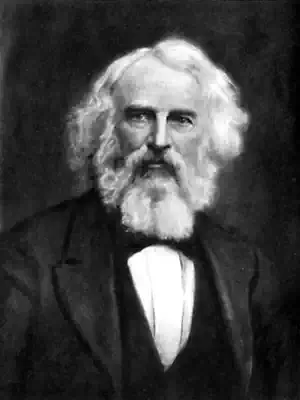
Henry Wadsworth Longfellow
Tales Of A Wayside Inn : Part 1. Prelude; The Wayside Inn
Tales Of A Wayside Inn : Part 1. Prelude; The Wayside Inn
One Autumn night, in Sudbury town,
Across the meadows bare and brown,
The windows of the wayside inn
Gleamed red with fire-light through the leaves
Of woodbine, hanging from the eaves
Their crimson curtains rent and thin.
As ancient is this hostelry
As any in the land may be,
Built in the old Colonial day,
When men lived in a grander way,
With ampler hospitality;
A kind of old Hobgoblin Hall,
Now somewhat fallen to decay,
With weather-stains upon the wall,
And stairways worn, and crazy doors,
And creaking and uneven floors,
And chimneys huge, and tiled and tall.
A region of repose it seems,
A place of slumber and of dreams,
Remote among the wooded hills!
For there no noisy railway speeds,
Its torch-race scattering smoke and gleeds;
But noon and night, the panting teams
Stop under the great oaks, that throw
Tangles of light and shade below,
On roofs and doors and window-sills.
Across the road the barns display
Their lines of stalls, their mows of hay,
Through the wide doors the breezes blow,
The wattled cocks strut to and fro,
And, half effaced by rain and shine,
The Red Horse prances on the sign.
Round this old-fashioned, quaint abode
Deep silence reigned, save when a gust
Went rushing down the county road,
And skeletons of leaves, and dust,
A moment quickened by its breath,
Shuddered and danced their dance of death,
And through the ancient oaks o'erhead
Mysterious voices moaned and fled.
But from the parlor of the inn
A pleasant murmur smote the ear,
Like water rushing through a weir:
Oft interrupted by the din
Of laughter and of loud applause,
And, in each intervening pause,
The music of a violin.
The fire-light, shedding over all
The splendor of its ruddy glow,
Filled the whole parlor large and low;
It gleamed on wainscot and on wall,
It touched with more than wonted grace
Fair Princess Mary's pictured face;
It bronzed the rafters overhead,
On the old spinet's ivory keys
It played inaudible melodies,
It crowned the sombre clock with flame,
The hands, the hours, the maker's name,
And painted with a livelier red
The Landlord's coat-of-arms again;
And, flashing on the window-pane,
Emblazoned with its light and shade
The jovial rhymes, that still remain,
Writ near a century ago,
By the great Major Molineaux,
Whom Hawthorne has immortal made.
Before the blazing fire of wood
Erect the rapt musician stood;
And ever and anon he bent
His head upon his instrument,
And seemed to listen, till he caught
Confessions of its secret thought,--
The joy, the triumph, the lament,
The exultation and the pain;
Then, by the magic of his art,
He soothed the throbbings of its heart,
And lulled it into peace again.
Around the fireside at their ease
There sat a group of friends, entranced
With the delicious melodies
Who from the far-off noisy town
Had to the wayside inn come down,
To rest beneath its old oak-trees.
The fire-light on their faces glanced,
Their shadows on the wainscot danced,
And, though of different lands and speech,
Each had his tale to tell, and each
Was anxious to be pleased and please.
And while the sweet musician plays,
Let me in outline sketch them all,
Perchance uncouthly as the blaze
With its uncertain touch portrays
Their shadowy semblance on the wall.
But first the Landlord will I trace;
Grave in his aspect and attire;
A man of ancient pedigree,
A Justice of the Peace was he,
Known in all Sudbury as 'The Squire.'
Proud was he of his name and race,
Of old Sir William and Sir Hugh,
And in the parlor, full in view,
His coat-of-arms, well framed and glazed,
Upon the wall in colors blazed;
He beareth gules upon his shield,
A chevron argent in the field,
With three wolf's-heads, and for the crest
A Wyvern part-per-pale addressed
Upon a helmet barred; below
The scroll reads, 'By the name of Howe.'
And over this, no longer bright,
Though glimmering with a latent light,
Was hung the sword his grandsire bore
In the rebellious days of yore,
Down there at Concord in the fight.
A youth was there, of quiet ways,
A Student of old books and days,
To whom all tongues and lands were known,
And yet a lover of his own;
With many a social virtue graced,
And yet a friend of solitude;
A man of such a genial mood
The heart of all things he embraced,
And yet of such fastidious taste,
He never found the best too good.
Books were his passion and delight,
And in his upper room at home
Stood many a rare and sumptuous tome,
In vellum bound, with gold bedight,
Great volumes garmented in white,
Recalling Florence, Pisa, Rome.
He loved the twilight that surrounds
The border-land of old romance;
Where glitter hauberk, helm, and lance,
And banner waves, and trumpet sounds,
And ladies ride with hawk on wrist,
And mighty warriors sweep along,
Magnified by the purple mist,
The dusk of centuries and of song.
The chronicles of Charlemagne,
Of Merlin and the Mort d'Arthure,
Mingled together in his brain
With tales of Flores and Blanchefleur,
Sir Ferumbras, Sir Eglamour,
Sir Launcelot, Sir Morgadour,
Sir Guy, Sir Bevis, Sir Gawain.
A young Sicilian, too, was there;
In sight of Etna born and bred,
Some breath of its volcanic air
Was glowing in his heart and brain,
And, being rebellious to his liege,
After Palermo's fatal siege,
Across the western seas he fled,
In good King Bomba's happy reign.
His face was like a summer night,
All flooded with a dusky light;
His hands were small; his teeth shone white
As sea-shells, when he smiled or spoke;
His sinews supple and strong as oak;
Clean shaven was he as a priest,
Who at the mass on Sunday sings,
Save that upon his upper lip
His beard, a good palm's length least,
Level and pointed at the tip,
Shot sideways, like a swallow's wings.
The poets read he o'er and o'er,
And most of all the Immortal Four
Of Italy; and next to those,
The story-telling bard of prose,
Who wrote the joyous Tuscan tales
Of the Decameron, that make
Fiesole's green hills and vales
Remembered for Boccaccio's sake.
Much too of music was his thought;
The melodies and measures fraught
With sunshine and the open air,
Of vineyards and the singing sea
Of his beloved Sicily;
And much it pleased him to peruse
The songs of the Sicilian muse,--
Bucolic songs by Meli sung
In the familiar peasant tongue,
That made men say, 'Behold! once more
The pitying gods to earth restore
Theocritus of Syracuse!'
A Spanish Jew from Alicant
With aspect grand and grave was there;
Vender of silks and fabrics rare,
And attar of rose from the Levant.
Like an old Patriarch he appeared,
Abraham or Isaac, or at least
Some later Prophet or High-Priest;
With lustrous eyes, and olive skin,
And, wildly tossed from cheeks and chin,
The tumbling cataract of his beard.
His garments breathed a spicy scent
Of cinnamon and sandal blent,
Like the soft aromatic gales
That meet the mariner, who sails
Through the Moluccas, and the seas
That wash the shores of Celebes.
All stories that recorded are
By Pierre Alphonse he knew by heart,
And it was rumored he could say
The Parables of Sandabar,
And all the Fables of Pilpay,
Or if not all, the greater part!
Well versed was he in Hebrew books,
Talmud and Targum, and the lore
Of Kabala; and evermore
There was a mystery in his looks;
His eyes seemed gazing far away,
As if in vision or in trance
He heard the solemn sackbut play,
And saw the Jewish maidens dance.
A Theologian, from the school
Of Cambridge on the Charles, was there;
Skilful alike with tongue and pen,
He preached to all men everywhere
The Gospel of the Golden Rule,
The New Commandment given to men,
Thinking the deed, and not the creed,
Would help us in our utmost need.
With reverent feet the earth he trod,
Nor banished nature from his plan,
But studied still with deep research
To build the Universal Church,
Lofty as in the love of God,
And ample as the wants of man.
A Poet, too, was there, whose verse
Was tender, musical, and terse;
The inspiration, the delight,
The gleam, the glory, the swift flight,
Of thoughts so sudden, that they seem
The revelations of a dream,
All these were his; but with them came
No envy of another's fame;
He did not find his sleep less sweet,
For music in some neighboring street
Nor rustling hear in every breeze
The laurels of Miltiades.
Honor and blessings on his head
While living, good report when dead,
Who, not too eager for renown,
Accepts, but does not clutch, the crown!
Last the Musician, as he stood
Illumined by that fire of wood;
Fair-haired, blue-eyed, his aspect blithe,
His figure tall and straight and lithe,
And every feature of his face
Revealing his Norwegian race;
A radiance, streaming from within,
Around his eyes and forehead beamed,
The Angel with the violin,
Painted by Raphael, he seemed.
He lived in that ideal world
Whose language is not speech, but song;
Around him evermore the throng
Of elves and sprites their dances whirled;
The Strömkarl sang, the cataract hurled
Its headlong waters from the height;
And mingled in the wild delight
The scream of sea-birds in their flight,
The rumor of the forest trees,
The plunge of the implacable seas,
The tumult of the wind at night,
Voices of eld, like trumpets blowing,
Old ballads, and wild melodies
Through mist and darkness pouring forth,
Like Elivagar's river flowing
Out of the glaciers of the North.
The instrument on which he played
Was in Cremona's workshops made,
By a great master of the past,
Ere yet was lost the art divine;
Fashioned of maple and of pine,
That in Tyrolean forests vast
Had rocked and wrestled with the blast;
Exquisite was it in design,
Perfect in each minutest part,
A marvel of the lutist's art;
And in its hollow chamber, thus,
The maker from whose hands it came
Had written his unrivalled name,-'
Antonius Stradivarius.'
And when he played, the atmosphere
Was filled with magic, and the ear
Caught echoes of that Harp of Gold,
Whose music had so weird a sound,
The hunted stag forgot to bound,
The leaping rivulet backward rolled,
The birds came down from bush and tree,
The dead came from beneath the sea,
The maiden to the harper's knee!
The music ceased; the applause was loud,
The pleased musician smiled and bowed;
The wood-fire clapped its hands of flame,
The shadows on the wainscot stirred,
And from the harpsichord there came
A ghostly murmur of acclaim,
A sound like that sent down at night
By birds of passage in their flight,
From the remotest distance heard.
Then silence followed; then began
A clamor for the Landlord's tale,--
The story promised them of old,
They said, but always left untold;
And he, although a bashful man,
And all his courage seemed to fail,
Finding excuse of no avail,
Yielded; and thus the story ran.
One Autumn night, in Sudbury town,
Across the meadows bare and brown,
The windows of the wayside inn
Gleamed red with fire-light through the leaves
Of woodbine, hanging from the eaves
Their crimson curtains rent and thin.
As ancient is this hostelry
As any in the land may be,
Built in the old Colonial day,
When men lived in a grander way,
With ampler hospitality;
A kind of old Hobgoblin Hall,
Now somewhat fallen to decay,
With weather-stains upon the wall,
And stairways worn, and crazy doors,
And creaking and uneven floors,
And chimneys huge, and tiled and tall.
A region of repose it seems,
A place of slumber and of dreams,
Remote among the wooded hills!
For there no noisy railway speeds,
Its torch-race scattering smoke and gleeds;
But noon and night, the panting teams
Stop under the great oaks, that throw
Tangles of light and shade below,
On roofs and doors and window-sills.
Across the road the barns display
Their lines of stalls, their mows of hay,
Through the wide doors the breezes blow,
The wattled cocks strut to and fro,
And, half effaced by rain and shine,
The Red Horse prances on the sign.
Round this old-fashioned, quaint abode
Deep silence reigned, save when a gust
Went rushing down the county road,
And skeletons of leaves, and dust,
A moment quickened by its breath,
Shuddered and danced their dance of death,
And through the ancient oaks o'erhead
Mysterious voices moaned and fled.
But from the parlor of the inn
A pleasant murmur smote the ear,
Like water rushing through a weir:
Oft interrupted by the din
Of laughter and of loud applause,
And, in each intervening pause,
The music of a violin.
The fire-light, shedding over all
The splendor of its ruddy glow,
Filled the whole parlor large and low;
It gleamed on wainscot and on wall,
It touched with more than wonted grace
Fair Princess Mary's pictured face;
It bronzed the rafters overhead,
On the old spinet's ivory keys
It played inaudible melodies,
It crowned the sombre clock with flame,
The hands, the hours, the maker's name,
And painted with a livelier red
The Landlord's coat-of-arms again;
And, flashing on the window-pane,
Emblazoned with its light and shade
The jovial rhymes, that still remain,
Writ near a century ago,
By the great Major Molineaux,
Whom Hawthorne has immortal made.
Before the blazing fire of wood
Erect the rapt musician stood;
And ever and anon he bent
His head upon his instrument,
And seemed to listen, till he caught
Confessions of its secret thought,--
The joy, the triumph, the lament,
The exultation and the pain;
Then, by the magic of his art,
He soothed the throbbings of its heart,
And lulled it into peace again.
Around the fireside at their ease
There sat a group of friends, entranced
With the delicious melodies
Who from the far-off noisy town
Had to the wayside inn come down,
To rest beneath its old oak-trees.
The fire-light on their faces glanced,
Their shadows on the wainscot danced,
And, though of different lands and speech,
Each had his tale to tell, and each
Was anxious to be pleased and please.
And while the sweet musician plays,
Let me in outline sketch them all,
Perchance uncouthly as the blaze
With its uncertain touch portrays
Their shadowy semblance on the wall.
But first the Landlord will I trace;
Grave in his aspect and attire;
A man of ancient pedigree,
A Justice of the Peace was he,
Known in all Sudbury as 'The Squire.'
Proud was he of his name and race,
Of old Sir William and Sir Hugh,
And in the parlor, full in view,
His coat-of-arms, well framed and glazed,
Upon the wall in colors blazed;
He beareth gules upon his shield,
A chevron argent in the field,
With three wolf's-heads, and for the crest
A Wyvern part-per-pale addressed
Upon a helmet barred; below
The scroll reads, 'By the name of Howe.'
And over this, no longer bright,
Though glimmering with a latent light,
Was hung the sword his grandsire bore
In the rebellious days of yore,
Down there at Concord in the fight.
A youth was there, of quiet ways,
A Student of old books and days,
To whom all tongues and lands were known,
And yet a lover of his own;
With many a social virtue graced,
And yet a friend of solitude;
A man of such a genial mood
The heart of all things he embraced,
And yet of such fastidious taste,
He never found the best too good.
Books were his passion and delight,
And in his upper room at home
Stood many a rare and sumptuous tome,
In vellum bound, with gold bedight,
Great volumes garmented in white,
Recalling Florence, Pisa, Rome.
He loved the twilight that surrounds
The border-land of old romance;
Where glitter hauberk, helm, and lance,
And banner waves, and trumpet sounds,
And ladies ride with hawk on wrist,
And mighty warriors sweep along,
Magnified by the purple mist,
The dusk of centuries and of song.
The chronicles of Charlemagne,
Of Merlin and the Mort d'Arthure,
Mingled together in his brain
With tales of Flores and Blanchefleur,
Sir Ferumbras, Sir Eglamour,
Sir Launcelot, Sir Morgadour,
Sir Guy, Sir Bevis, Sir Gawain.
A young Sicilian, too, was there;
In sight of Etna born and bred,
Some breath of its volcanic air
Was glowing in his heart and brain,
And, being rebellious to his liege,
After Palermo's fatal siege,
Across the western seas he fled,
In good King Bomba's happy reign.
His face was like a summer night,
All flooded with a dusky light;
His hands were small; his teeth shone white
As sea-shells, when he smiled or spoke;
His sinews supple and strong as oak;
Clean shaven was he as a priest,
Who at the mass on Sunday sings,
Save that upon his upper lip
His beard, a good palm's length least,
Level and pointed at the tip,
Shot sideways, like a swallow's wings.
The poets read he o'er and o'er,
And most of all the Immortal Four
Of Italy; and next to those,
The story-telling bard of prose,
Who wrote the joyous Tuscan tales
Of the Decameron, that make
Fiesole's green hills and vales
Remembered for Boccaccio's sake.
Much too of music was his thought;
The melodies and measures fraught
With sunshine and the open air,
Of vineyards and the singing sea
Of his beloved Sicily;
And much it pleased him to peruse
The songs of the Sicilian muse,--
Bucolic songs by Meli sung
In the familiar peasant tongue,
That made men say, 'Behold! once more
The pitying gods to earth restore
Theocritus of Syracuse!'
A Spanish Jew from Alicant
With aspect grand and grave was there;
Vender of silks and fabrics rare,
And attar of rose from the Levant.
Like an old Patriarch he appeared,
Abraham or Isaac, or at least
Some later Prophet or High-Priest;
With lustrous eyes, and olive skin,
And, wildly tossed from cheeks and chin,
The tumbling cataract of his beard.
His garments breathed a spicy scent
Of cinnamon and sandal blent,
Like the soft aromatic gales
That meet the mariner, who sails
Through the Moluccas, and the seas
That wash the shores of Celebes.
All stories that recorded are
By Pierre Alphonse he knew by heart,
And it was rumored he could say
The Parables of Sandabar,
And all the Fables of Pilpay,
Or if not all, the greater part!
Well versed was he in Hebrew books,
Talmud and Targum, and the lore
Of Kabala; and evermore
There was a mystery in his looks;
His eyes seemed gazing far away,
As if in vision or in trance
He heard the solemn sackbut play,
And saw the Jewish maidens dance.
A Theologian, from the school
Of Cambridge on the Charles, was there;
Skilful alike with tongue and pen,
He preached to all men everywhere
The Gospel of the Golden Rule,
The New Commandment given to men,
Thinking the deed, and not the creed,
Would help us in our utmost need.
With reverent feet the earth he trod,
Nor banished nature from his plan,
But studied still with deep research
To build the Universal Church,
Lofty as in the love of God,
And ample as the wants of man.
A Poet, too, was there, whose verse
Was tender, musical, and terse;
The inspiration, the delight,
The gleam, the glory, the swift flight,
Of thoughts so sudden, that they seem
The revelations of a dream,
All these were his; but with them came
No envy of another's fame;
He did not find his sleep less sweet,
For music in some neighboring street
Nor rustling hear in every breeze
The laurels of Miltiades.
Honor and blessings on his head
While living, good report when dead,
Who, not too eager for renown,
Accepts, but does not clutch, the crown!
Last the Musician, as he stood
Illumined by that fire of wood;
Fair-haired, blue-eyed, his aspect blithe,
His figure tall and straight and lithe,
And every feature of his face
Revealing his Norwegian race;
A radiance, streaming from within,
Around his eyes and forehead beamed,
The Angel with the violin,
Painted by Raphael, he seemed.
He lived in that ideal world
Whose language is not speech, but song;
Around him evermore the throng
Of elves and sprites their dances whirled;
The Strömkarl sang, the cataract hurled
Its headlong waters from the height;
And mingled in the wild delight
The scream of sea-birds in their flight,
The rumor of the forest trees,
The plunge of the implacable seas,
The tumult of the wind at night,
Voices of eld, like trumpets blowing,
Old ballads, and wild melodies
Through mist and darkness pouring forth,
Like Elivagar's river flowing
Out of the glaciers of the North.
The instrument on which he played
Was in Cremona's workshops made,
By a great master of the past,
Ere yet was lost the art divine;
Fashioned of maple and of pine,
That in Tyrolean forests vast
Had rocked and wrestled with the blast;
Exquisite was it in design,
Perfect in each minutest part,
A marvel of the lutist's art;
And in its hollow chamber, thus,
The maker from whose hands it came
Had written his unrivalled name,-'
Antonius Stradivarius.'
And when he played, the atmosphere
Was filled with magic, and the ear
Caught echoes of that Harp of Gold,
Whose music had so weird a sound,
The hunted stag forgot to bound,
The leaping rivulet backward rolled,
The birds came down from bush and tree,
The dead came from beneath the sea,
The maiden to the harper's knee!
The music ceased; the applause was loud,
The pleased musician smiled and bowed;
The wood-fire clapped its hands of flame,
The shadows on the wainscot stirred,
And from the harpsichord there came
A ghostly murmur of acclaim,
A sound like that sent down at night
By birds of passage in their flight,
From the remotest distance heard.
Then silence followed; then began
A clamor for the Landlord's tale,--
The story promised them of old,
They said, but always left untold;
And he, although a bashful man,
And all his courage seemed to fail,
Finding excuse of no avail,
Yielded; and thus the story ran.
436
Henry Wadsworth Longfellow
Tales Of A Wayside Inn : Part 1. The Musician's Tale; The Saga of King Olaf I.
Tales Of A Wayside Inn : Part 1. The Musician's Tale; The Saga of King Olaf I.
-- The Challenge Of Thor
I am the God Thor,
I am the War God,
I am the Thunderer!
Here in my Northland,
My fastness and fortress,
Reign I forever!
Here amid icebergs
Rule I the nations;
This is my hammer,
Miölner the mighty;
Giants and sorcerers
Cannot withstand it!
These are the gauntlets
Wherewith I wield it,
And hurl it afar off;
This is my girdle;
Whenever I brace it,
Strength is redoubled!
The light thou beholdest
Stream through the heavens,
In flashes of crimson,
Is but my red beard
Blown by the night-wind,
Affrighting the nations!
Jove is my brother;
Mine eyes are the lightning;
The wheels of my chariot
Roll in the thunder,
The blows of my hammer
Ring in the earthquake!
Force rules the world still,
Has ruled it, shall rule it;
Meekness is weakness,
Strength is triumphant,
Over the whole earth
Still is it Thor's-Day!
Thou art a God too,
O Galilean!
And thus single-handed
Unto the combat,
Gauntlet or Gospel,
Here I defy thee!
-- The Challenge Of Thor
I am the God Thor,
I am the War God,
I am the Thunderer!
Here in my Northland,
My fastness and fortress,
Reign I forever!
Here amid icebergs
Rule I the nations;
This is my hammer,
Miölner the mighty;
Giants and sorcerers
Cannot withstand it!
These are the gauntlets
Wherewith I wield it,
And hurl it afar off;
This is my girdle;
Whenever I brace it,
Strength is redoubled!
The light thou beholdest
Stream through the heavens,
In flashes of crimson,
Is but my red beard
Blown by the night-wind,
Affrighting the nations!
Jove is my brother;
Mine eyes are the lightning;
The wheels of my chariot
Roll in the thunder,
The blows of my hammer
Ring in the earthquake!
Force rules the world still,
Has ruled it, shall rule it;
Meekness is weakness,
Strength is triumphant,
Over the whole earth
Still is it Thor's-Day!
Thou art a God too,
O Galilean!
And thus single-handed
Unto the combat,
Gauntlet or Gospel,
Here I defy thee!
282
Henry Wadsworth Longfellow
Tales Of A Wayside Inn : Part 1. Interlude V.
Tales Of A Wayside Inn : Part 1. Interlude V.
A strain of music closed the tale,
A low, monotonous, funeral wail,
That with its cadence, wild and sweet,
Made the long Saga more complete.
'Thank God,' the Theologian said,
'The reign of violence is dead,
Or dying surely from the world;
While Love triumphant reigns instead,
And in a brighter sky o'erhead
His blessed banners are unfurled.
And most of all thank God for this:
The war and waste of clashing creeds
Now end in words, and not in deeds,
And no one suffers loss, or bleeds,
For thoughts that men call heresies.
'I stand without here in the porch,
I hear the bell's melodious din,
I hear the organ peal within,
I hear the prayer, with words that scorch
Like sparks from an inverted torch,
I hear the sermon upon sin,
With threatenings of the last account.
And all, translated in the air,
Reach me but as our dear Lord's Prayer,
And as the Sermon on the Mount.
'Must it be Calvin, and not Christ?
Must it be Athanasian creeds,
Or holy water, books, and beads?
Must struggling souls remain content
With councils and decrees of Trent?
And can it be enough for these
The Christian Church the year embalms
With evergreens and boughs of palms,
And fills the air with litanies?
'I know that yonder Pharisee
Thanks God that he is not like me;
In my humiliation dressed,
I only stand and beat my breast,
And pray for human charity.
'Not to one church alone, but seven,
The voice prophetic spake from heaven;
And unto each the promise came,
Diversified, but still the same;
For him that overcometh are
The new name written on the stone,
The raiment white, the crown, the throne,
And I will give him the Morning Star!
'Ah! to how many Faith has been
No evidence of things unseen,
But a dim shadow, that recasts
The creed of the Phantasiasts,
For whom no Man of Sorrows died,
For whom the Tragedy Divine
Was but a symbol and a sign,
And Christ a phantom crucified!
'For others a diviner creed
Is living in the life they lead.
The passing of their beautiful feet
Blesses the pavement of the street
And all their looks and words repeat
Old Fuller's saying, wise and sweet,
Not as a vulture, but a dove,
The Holy Ghost came from above.
'And this brings back to me a tale
So sad the hearer well may quail,
And question if such things can be;
Yet in the chronicles of Spain
Down the dark pages runs this stain,
And naught can wash them white again,
So fearful is the tragedy.'
A strain of music closed the tale,
A low, monotonous, funeral wail,
That with its cadence, wild and sweet,
Made the long Saga more complete.
'Thank God,' the Theologian said,
'The reign of violence is dead,
Or dying surely from the world;
While Love triumphant reigns instead,
And in a brighter sky o'erhead
His blessed banners are unfurled.
And most of all thank God for this:
The war and waste of clashing creeds
Now end in words, and not in deeds,
And no one suffers loss, or bleeds,
For thoughts that men call heresies.
'I stand without here in the porch,
I hear the bell's melodious din,
I hear the organ peal within,
I hear the prayer, with words that scorch
Like sparks from an inverted torch,
I hear the sermon upon sin,
With threatenings of the last account.
And all, translated in the air,
Reach me but as our dear Lord's Prayer,
And as the Sermon on the Mount.
'Must it be Calvin, and not Christ?
Must it be Athanasian creeds,
Or holy water, books, and beads?
Must struggling souls remain content
With councils and decrees of Trent?
And can it be enough for these
The Christian Church the year embalms
With evergreens and boughs of palms,
And fills the air with litanies?
'I know that yonder Pharisee
Thanks God that he is not like me;
In my humiliation dressed,
I only stand and beat my breast,
And pray for human charity.
'Not to one church alone, but seven,
The voice prophetic spake from heaven;
And unto each the promise came,
Diversified, but still the same;
For him that overcometh are
The new name written on the stone,
The raiment white, the crown, the throne,
And I will give him the Morning Star!
'Ah! to how many Faith has been
No evidence of things unseen,
But a dim shadow, that recasts
The creed of the Phantasiasts,
For whom no Man of Sorrows died,
For whom the Tragedy Divine
Was but a symbol and a sign,
And Christ a phantom crucified!
'For others a diviner creed
Is living in the life they lead.
The passing of their beautiful feet
Blesses the pavement of the street
And all their looks and words repeat
Old Fuller's saying, wise and sweet,
Not as a vulture, but a dove,
The Holy Ghost came from above.
'And this brings back to me a tale
So sad the hearer well may quail,
And question if such things can be;
Yet in the chronicles of Spain
Down the dark pages runs this stain,
And naught can wash them white again,
So fearful is the tragedy.'
290
Henry Wadsworth Longfellow
Spring. (From The French Of Charles D'Orleans. XV. Century)
Spring. (From The French Of Charles D'Orleans. XV. Century)
Gentle Spring! in sunshine clad,
Well dost thou thy power display!
For Winter maketh the light heart sad,
And thou, thou makest the sad heart gay,
He sees thee, and calls to his gloomy train,
The sleet, and the snow, and the wind, and the rain;
And they shrink away, and they flee in fear,
When thy merry step draws near.
Winter giveth the fields and the trees, so old,
Their beards of icicles and snow;
And the rain, it raineth so fast and cold,
We must cower over the embers low;
And, snugly housed from the wind and weather,
Mope like birds that are changing feather.
But the storm retires, and the sky grows clear,
When thy merry step draws near.
Winter maketh the sun in the gloomy sky
Wrap him round with a mantle of cloud;
But, Heaven be praised, thy step is nigh;
Thou tearest away the mournful shroud,
And the earth looks bright, and Winter surly,
Who has toiled for nought both late and early,
Is banished afar by the new-born year,
When thy merry step draws near.
Gentle Spring! in sunshine clad,
Well dost thou thy power display!
For Winter maketh the light heart sad,
And thou, thou makest the sad heart gay,
He sees thee, and calls to his gloomy train,
The sleet, and the snow, and the wind, and the rain;
And they shrink away, and they flee in fear,
When thy merry step draws near.
Winter giveth the fields and the trees, so old,
Their beards of icicles and snow;
And the rain, it raineth so fast and cold,
We must cower over the embers low;
And, snugly housed from the wind and weather,
Mope like birds that are changing feather.
But the storm retires, and the sky grows clear,
When thy merry step draws near.
Winter maketh the sun in the gloomy sky
Wrap him round with a mantle of cloud;
But, Heaven be praised, thy step is nigh;
Thou tearest away the mournful shroud,
And the earth looks bright, and Winter surly,
Who has toiled for nought both late and early,
Is banished afar by the new-born year,
When thy merry step draws near.
275
Henry Wadsworth Longfellow
Sundown
Sundown
The summer sun is sinking low;
Only the tree-tops redden and glow:
Only the weathercock on the spire
Of the neighboring church is a flame of fire;
All is in shadow below.
O beautiful, awful summer day,
What hast thou given, what taken away?
Life and death, and love and hate,
Homes made happy or desolate,
Hearts made sad or gay!
On the road of life one mile-stone more!
In the book of life one leaf turned o'er!
Like a red seal is the setting sun
On the good and the evil men have done,--
Naught can to-day restore!
The summer sun is sinking low;
Only the tree-tops redden and glow:
Only the weathercock on the spire
Of the neighboring church is a flame of fire;
All is in shadow below.
O beautiful, awful summer day,
What hast thou given, what taken away?
Life and death, and love and hate,
Homes made happy or desolate,
Hearts made sad or gay!
On the road of life one mile-stone more!
In the book of life one leaf turned o'er!
Like a red seal is the setting sun
On the good and the evil men have done,--
Naught can to-day restore!
282
Henry Wadsworth Longfellow
Sundown
Sundown
The summer sun is sinking low;
Only the tree-tops redden and glow:
Only the weathercock on the spire
Of the neighboring church is a flame of fire;
All is in shadow below.
O beautiful, awful summer day,
What hast thou given, what taken away?
Life and death, and love and hate,
Homes made happy or desolate,
Hearts made sad or gay!
On the road of life one mile-stone more!
In the book of life one leaf turned o'er!
Like a red seal is the setting sun
On the good and the evil men have done,--
Naught can to-day restore!
The summer sun is sinking low;
Only the tree-tops redden and glow:
Only the weathercock on the spire
Of the neighboring church is a flame of fire;
All is in shadow below.
O beautiful, awful summer day,
What hast thou given, what taken away?
Life and death, and love and hate,
Homes made happy or desolate,
Hearts made sad or gay!
On the road of life one mile-stone more!
In the book of life one leaf turned o'er!
Like a red seal is the setting sun
On the good and the evil men have done,--
Naught can to-day restore!
282
Henry Wadsworth Longfellow
Songo River. (Birds Of Passage. Flight The Fourth)
Songo River. (Birds Of Passage. Flight The Fourth)
Nowhere such a devious stream,
Save in fancy or in dream,
Winding slow through bush and brake,
Links together lake and lake.
Walled with woods or sandy shelf,
Ever doubling on itself
Flows the stream, so still and slow
That it hardly seems to flow.
Never errant knight of old,
Lost in woodland or on wold,
Such a winding path pursued
Through the sylvan solitude.
Never school-boy, in his quest
After hazel-nut or nest,
Through the forest in and out
Wandered loitering thus about.
In the mirror of its tide
Tangled thickets on each side
Hang inverted, and between
Floating cloud or sky serene.
Swift or swallow on the wing
Seems the only living thing,
Or the loon, that laughs and flies
Down to those reflected skies.
Silent stream! thy Indian name
Unfamiliar is to fame;
For thou hidest here alone,
Well content to be unknown.
But thy tranquil waters teach
Wisdom deep as human speech,
Moving without haste or noise
In unbroken equipoise.
Though thou turnest no busy mill,
And art ever calm and still,
Even thy silence seems to say
To the traveller on his way:-
'Traveller, hurrying from the heat
Of the city, stay thy feet!
Rest awhile, nor longer waste
Life with inconsiderate haste!
'Be not like a stream that brawls
Loud with shallow waterfalls,
But in quiet self-control
Link together soul and soul.'
Nowhere such a devious stream,
Save in fancy or in dream,
Winding slow through bush and brake,
Links together lake and lake.
Walled with woods or sandy shelf,
Ever doubling on itself
Flows the stream, so still and slow
That it hardly seems to flow.
Never errant knight of old,
Lost in woodland or on wold,
Such a winding path pursued
Through the sylvan solitude.
Never school-boy, in his quest
After hazel-nut or nest,
Through the forest in and out
Wandered loitering thus about.
In the mirror of its tide
Tangled thickets on each side
Hang inverted, and between
Floating cloud or sky serene.
Swift or swallow on the wing
Seems the only living thing,
Or the loon, that laughs and flies
Down to those reflected skies.
Silent stream! thy Indian name
Unfamiliar is to fame;
For thou hidest here alone,
Well content to be unknown.
But thy tranquil waters teach
Wisdom deep as human speech,
Moving without haste or noise
In unbroken equipoise.
Though thou turnest no busy mill,
And art ever calm and still,
Even thy silence seems to say
To the traveller on his way:-
'Traveller, hurrying from the heat
Of the city, stay thy feet!
Rest awhile, nor longer waste
Life with inconsiderate haste!
'Be not like a stream that brawls
Loud with shallow waterfalls,
But in quiet self-control
Link together soul and soul.'
355
Henry Wadsworth Longfellow
Song Of The Silent Land. (From The German Of Salis)
Song Of The Silent Land. (From The German Of Salis)
Into the Silent Land!
Ah! who shall lead us thither?
Clouds in the evening sky more darkly gather,
And shattered wrecks lie thicker on the strand.
Who leads us with a gentle hand
Thither, O thither,
Into the Silent Land?
Into the Silent Land!
To you, ye boundless regions
Of all perfection! Tender morning-visions
Of beauteous souls! The Future's pledge and band!
Who in Life's battle firm doth stand,
Shall bear Hope's tender blossoms
Into the Silent Land!
O Land! O Land!
For all the broken-hearted
The mildest herald by our faith allotted,
Beckons, and with inverted torch doth stand
To lead us with a gentle hand
Into the land of the great Departed,
Into the Silent Land!
Into the Silent Land!
Ah! who shall lead us thither?
Clouds in the evening sky more darkly gather,
And shattered wrecks lie thicker on the strand.
Who leads us with a gentle hand
Thither, O thither,
Into the Silent Land?
Into the Silent Land!
To you, ye boundless regions
Of all perfection! Tender morning-visions
Of beauteous souls! The Future's pledge and band!
Who in Life's battle firm doth stand,
Shall bear Hope's tender blossoms
Into the Silent Land!
O Land! O Land!
For all the broken-hearted
The mildest herald by our faith allotted,
Beckons, and with inverted torch doth stand
To lead us with a gentle hand
Into the land of the great Departed,
Into the Silent Land!
321
Henry Wadsworth Longfellow
Song Of The Silent Land. (From The German Of Salis)
Song Of The Silent Land. (From The German Of Salis)
Into the Silent Land!
Ah! who shall lead us thither?
Clouds in the evening sky more darkly gather,
And shattered wrecks lie thicker on the strand.
Who leads us with a gentle hand
Thither, O thither,
Into the Silent Land?
Into the Silent Land!
To you, ye boundless regions
Of all perfection! Tender morning-visions
Of beauteous souls! The Future's pledge and band!
Who in Life's battle firm doth stand,
Shall bear Hope's tender blossoms
Into the Silent Land!
O Land! O Land!
For all the broken-hearted
The mildest herald by our faith allotted,
Beckons, and with inverted torch doth stand
To lead us with a gentle hand
Into the land of the great Departed,
Into the Silent Land!
Into the Silent Land!
Ah! who shall lead us thither?
Clouds in the evening sky more darkly gather,
And shattered wrecks lie thicker on the strand.
Who leads us with a gentle hand
Thither, O thither,
Into the Silent Land?
Into the Silent Land!
To you, ye boundless regions
Of all perfection! Tender morning-visions
Of beauteous souls! The Future's pledge and band!
Who in Life's battle firm doth stand,
Shall bear Hope's tender blossoms
Into the Silent Land!
O Land! O Land!
For all the broken-hearted
The mildest herald by our faith allotted,
Beckons, and with inverted torch doth stand
To lead us with a gentle hand
Into the land of the great Departed,
Into the Silent Land!
321
Henry Wadsworth Longfellow
Something Left Undone
Something Left Undone
Labor with what zeal we will,
Something still remains undone,
Something uncompleted still
Waits the rising of the sun.
By the bedside, on the stair,
At the threshhold, near the gates,
With its menace or its prayer,
Like a medicant it waits;
Waits, and will not go away;
Waits, and will not be gainsaid;
By the cares of yesterday
Each to-day is heavier made;
Till at length the burden seems
Greater than our strength can bear,
Heavy as the weight of dreams
Pressing on us everywhere.
And we stand from day to day,
Like the dwarfs of times gone by,
Who, as Northern legends say,
On their shoulders held the sky.
Labor with what zeal we will,
Something still remains undone,
Something uncompleted still
Waits the rising of the sun.
By the bedside, on the stair,
At the threshhold, near the gates,
With its menace or its prayer,
Like a medicant it waits;
Waits, and will not go away;
Waits, and will not be gainsaid;
By the cares of yesterday
Each to-day is heavier made;
Till at length the burden seems
Greater than our strength can bear,
Heavy as the weight of dreams
Pressing on us everywhere.
And we stand from day to day,
Like the dwarfs of times gone by,
Who, as Northern legends say,
On their shoulders held the sky.
300
Henry Wadsworth Longfellow
Sleep
Sleep
Lull me to sleep, ye winds, whose fitful sound
Seems from some faint Aeolian harp-string caught;
Seal up the hundred wakeful eyes of thought
As Hermes with his lyre in sleep profound
The hundred wakeful eyes of Argus bound;
For I am weary, and am overwrought
With too much toil, with too much care distraught,
And with the iron crown of anguish crowned.
Lay thy soft hand upon my brow and cheek,
O peaceful Sleep! until from pain released
I breathe again uninterrupted breath!
Ah, with what subtle meaning did the Greek
Call thee the lesser mystery at the feast
Whereof the greater mystery is death!
Lull me to sleep, ye winds, whose fitful sound
Seems from some faint Aeolian harp-string caught;
Seal up the hundred wakeful eyes of thought
As Hermes with his lyre in sleep profound
The hundred wakeful eyes of Argus bound;
For I am weary, and am overwrought
With too much toil, with too much care distraught,
And with the iron crown of anguish crowned.
Lay thy soft hand upon my brow and cheek,
O peaceful Sleep! until from pain released
I breathe again uninterrupted breath!
Ah, with what subtle meaning did the Greek
Call thee the lesser mystery at the feast
Whereof the greater mystery is death!
366
Henry Wadsworth Longfellow
Sleep
Sleep
Lull me to sleep, ye winds, whose fitful sound
Seems from some faint Aeolian harp-string caught;
Seal up the hundred wakeful eyes of thought
As Hermes with his lyre in sleep profound
The hundred wakeful eyes of Argus bound;
For I am weary, and am overwrought
With too much toil, with too much care distraught,
And with the iron crown of anguish crowned.
Lay thy soft hand upon my brow and cheek,
O peaceful Sleep! until from pain released
I breathe again uninterrupted breath!
Ah, with what subtle meaning did the Greek
Call thee the lesser mystery at the feast
Whereof the greater mystery is death!
Lull me to sleep, ye winds, whose fitful sound
Seems from some faint Aeolian harp-string caught;
Seal up the hundred wakeful eyes of thought
As Hermes with his lyre in sleep profound
The hundred wakeful eyes of Argus bound;
For I am weary, and am overwrought
With too much toil, with too much care distraught,
And with the iron crown of anguish crowned.
Lay thy soft hand upon my brow and cheek,
O peaceful Sleep! until from pain released
I breathe again uninterrupted breath!
Ah, with what subtle meaning did the Greek
Call thee the lesser mystery at the feast
Whereof the greater mystery is death!
366
Henry Wadsworth Longfellow
Santa Teresa's Bookmark. (From The Spanish Of Santa Teresa)
Santa Teresa's Bookmark. (From The Spanish Of Santa Teresa)
Let nothing disturb thee,
Nothing affright thee
All things are passing;
God never changeth;
Patient endurance
Attaineth to all things;
Who God possesseth
In nothing is wanting;
Alone God sufficeth.
Let nothing disturb thee,
Nothing affright thee
All things are passing;
God never changeth;
Patient endurance
Attaineth to all things;
Who God possesseth
In nothing is wanting;
Alone God sufficeth.
269
Henry Wadsworth Longfellow
Sandalphon. (Birds Of Passage. Flight The First)
Sandalphon. (Birds Of Passage. Flight The First)
Have you read in the Talmud of old,
In the Legends the Rabbins have told
Of the limitless realms of the air,--
Have you read it,--the marvellous story
Of Sandalphon, the Angel of Glory,
Sandalphon, the Angel of Prayer?
How, erect, at the outermost gates
Of the City Celestial he waits,
With his feet on the ladder of light,
That, crowded with angels unnumbered,
By Jacob was seen, as he slumbered
Alone in the desert at night?
The Angels of Wind and of Fire
Chant only one hymn, and expire
With the song's irresistible stress;
Expire in their rapture and wonder,
As harp-strings are broken asunder
By music they throb to express.
But serene in the rapturous throng,
Unmoved by the rush of the song,
With eyes unimpassioned and slow,
Among the dead angels, the deathless
Sandalphon stands listening breathless
To sounds that ascend from below;--
From the spirits on earth that adore,
From the souls that entreat and implore
In the fervor and passion of prayer;
From the hearts that are broken with losses,
And weary with dragging the crosses
Too heavy for mortals to bear.
And he gathers the prayers as he stands,
And they change into flowers in his hands,
Into garlands of purple and red;
And beneath the great arch of the portal,
Through the streets of the City Immortal
Is wafted the fragrance they shed.
It is but a legend, I know,--
A fable, a phantom, a show,
Of the ancient Rabbinical lore;
Yet the old mediaeval tradition,
The beautiful, strange superstition,
But haunts me and holds me the more.
When I look from my window at night,
And the welkin above is all white,
All throbbing and panting with stars,
Among them majestic is standing
Sandalphon the angel, expanding
His pinions in nebulous bars.
And the legend, I feel, is a part
Of the hunger and thirst of the heart,
The frenzy and fire of the brain,
That grasps at the fruitage forbidden,
The golden pomegranates of Eden,
To quiet its fever and pain.
Have you read in the Talmud of old,
In the Legends the Rabbins have told
Of the limitless realms of the air,--
Have you read it,--the marvellous story
Of Sandalphon, the Angel of Glory,
Sandalphon, the Angel of Prayer?
How, erect, at the outermost gates
Of the City Celestial he waits,
With his feet on the ladder of light,
That, crowded with angels unnumbered,
By Jacob was seen, as he slumbered
Alone in the desert at night?
The Angels of Wind and of Fire
Chant only one hymn, and expire
With the song's irresistible stress;
Expire in their rapture and wonder,
As harp-strings are broken asunder
By music they throb to express.
But serene in the rapturous throng,
Unmoved by the rush of the song,
With eyes unimpassioned and slow,
Among the dead angels, the deathless
Sandalphon stands listening breathless
To sounds that ascend from below;--
From the spirits on earth that adore,
From the souls that entreat and implore
In the fervor and passion of prayer;
From the hearts that are broken with losses,
And weary with dragging the crosses
Too heavy for mortals to bear.
And he gathers the prayers as he stands,
And they change into flowers in his hands,
Into garlands of purple and red;
And beneath the great arch of the portal,
Through the streets of the City Immortal
Is wafted the fragrance they shed.
It is but a legend, I know,--
A fable, a phantom, a show,
Of the ancient Rabbinical lore;
Yet the old mediaeval tradition,
The beautiful, strange superstition,
But haunts me and holds me the more.
When I look from my window at night,
And the welkin above is all white,
All throbbing and panting with stars,
Among them majestic is standing
Sandalphon the angel, expanding
His pinions in nebulous bars.
And the legend, I feel, is a part
Of the hunger and thirst of the heart,
The frenzy and fire of the brain,
That grasps at the fruitage forbidden,
The golden pomegranates of Eden,
To quiet its fever and pain.
374
Henry Wadsworth Longfellow
Sandalphon. (Birds Of Passage. Flight The First)
Sandalphon. (Birds Of Passage. Flight The First)
Have you read in the Talmud of old,
In the Legends the Rabbins have told
Of the limitless realms of the air,--
Have you read it,--the marvellous story
Of Sandalphon, the Angel of Glory,
Sandalphon, the Angel of Prayer?
How, erect, at the outermost gates
Of the City Celestial he waits,
With his feet on the ladder of light,
That, crowded with angels unnumbered,
By Jacob was seen, as he slumbered
Alone in the desert at night?
The Angels of Wind and of Fire
Chant only one hymn, and expire
With the song's irresistible stress;
Expire in their rapture and wonder,
As harp-strings are broken asunder
By music they throb to express.
But serene in the rapturous throng,
Unmoved by the rush of the song,
With eyes unimpassioned and slow,
Among the dead angels, the deathless
Sandalphon stands listening breathless
To sounds that ascend from below;--
From the spirits on earth that adore,
From the souls that entreat and implore
In the fervor and passion of prayer;
From the hearts that are broken with losses,
And weary with dragging the crosses
Too heavy for mortals to bear.
And he gathers the prayers as he stands,
And they change into flowers in his hands,
Into garlands of purple and red;
And beneath the great arch of the portal,
Through the streets of the City Immortal
Is wafted the fragrance they shed.
It is but a legend, I know,--
A fable, a phantom, a show,
Of the ancient Rabbinical lore;
Yet the old mediaeval tradition,
The beautiful, strange superstition,
But haunts me and holds me the more.
When I look from my window at night,
And the welkin above is all white,
All throbbing and panting with stars,
Among them majestic is standing
Sandalphon the angel, expanding
His pinions in nebulous bars.
And the legend, I feel, is a part
Of the hunger and thirst of the heart,
The frenzy and fire of the brain,
That grasps at the fruitage forbidden,
The golden pomegranates of Eden,
To quiet its fever and pain.
Have you read in the Talmud of old,
In the Legends the Rabbins have told
Of the limitless realms of the air,--
Have you read it,--the marvellous story
Of Sandalphon, the Angel of Glory,
Sandalphon, the Angel of Prayer?
How, erect, at the outermost gates
Of the City Celestial he waits,
With his feet on the ladder of light,
That, crowded with angels unnumbered,
By Jacob was seen, as he slumbered
Alone in the desert at night?
The Angels of Wind and of Fire
Chant only one hymn, and expire
With the song's irresistible stress;
Expire in their rapture and wonder,
As harp-strings are broken asunder
By music they throb to express.
But serene in the rapturous throng,
Unmoved by the rush of the song,
With eyes unimpassioned and slow,
Among the dead angels, the deathless
Sandalphon stands listening breathless
To sounds that ascend from below;--
From the spirits on earth that adore,
From the souls that entreat and implore
In the fervor and passion of prayer;
From the hearts that are broken with losses,
And weary with dragging the crosses
Too heavy for mortals to bear.
And he gathers the prayers as he stands,
And they change into flowers in his hands,
Into garlands of purple and red;
And beneath the great arch of the portal,
Through the streets of the City Immortal
Is wafted the fragrance they shed.
It is but a legend, I know,--
A fable, a phantom, a show,
Of the ancient Rabbinical lore;
Yet the old mediaeval tradition,
The beautiful, strange superstition,
But haunts me and holds me the more.
When I look from my window at night,
And the welkin above is all white,
All throbbing and panting with stars,
Among them majestic is standing
Sandalphon the angel, expanding
His pinions in nebulous bars.
And the legend, I feel, is a part
Of the hunger and thirst of the heart,
The frenzy and fire of the brain,
That grasps at the fruitage forbidden,
The golden pomegranates of Eden,
To quiet its fever and pain.
374
Henry Wadsworth Longfellow
Rondel. (From Froissart)
Rondel. (From Froissart)
Love, love, what wilt thou with this heart of mine?
Naught see I fixed or sure in thee!
I do not know thee,--nor what deeds are thine:
Love, love, what wilt thou with this heart of mine?
Naught see I fixed or sure in thee!
Shall I be mute, or vows with prayers combine?
Ye who are blessed in loving, tell it me:
Love, love, what wilt thou with this heart of mine?
Naught see I permanent or sure in thee!
Love, love, what wilt thou with this heart of mine?
Naught see I fixed or sure in thee!
I do not know thee,--nor what deeds are thine:
Love, love, what wilt thou with this heart of mine?
Naught see I fixed or sure in thee!
Shall I be mute, or vows with prayers combine?
Ye who are blessed in loving, tell it me:
Love, love, what wilt thou with this heart of mine?
Naught see I permanent or sure in thee!
338
Henry Wadsworth Longfellow
Remorse. (From August Von Platen)
Remorse. (From August Von Platen)
How I started up in the night, in the night,
Drawn on without rest or reprieval!
The streets, with their watchmen, were lost to my sight,
As I wandered so light
In the night, in the night,
Through the gate with the arch mediaeval.
The mill-brook rushed from the rocky height,
I leaned o'er the bridge in my yearning;
Deep under me watched I the waves in their flight,
As they glided so light
In the night, in the night,
Yet backward not one was returning.
O'erhead were revolving, so countless and bright,
The stars in melodious existence;
And with them the moon, more serenely bedight;--
They sparkled so light
In the night, in the night,
Through the magical, measureless distance.
And upward I gazed in the night, in the night,
And again on the waves in their fleeting;
Ah woe! thou hast wasted thy days in delight,
Now silence thou light,
In the night, in the night,
The remorse in thy heart that is beating.
How I started up in the night, in the night,
Drawn on without rest or reprieval!
The streets, with their watchmen, were lost to my sight,
As I wandered so light
In the night, in the night,
Through the gate with the arch mediaeval.
The mill-brook rushed from the rocky height,
I leaned o'er the bridge in my yearning;
Deep under me watched I the waves in their flight,
As they glided so light
In the night, in the night,
Yet backward not one was returning.
O'erhead were revolving, so countless and bright,
The stars in melodious existence;
And with them the moon, more serenely bedight;--
They sparkled so light
In the night, in the night,
Through the magical, measureless distance.
And upward I gazed in the night, in the night,
And again on the waves in their fleeting;
Ah woe! thou hast wasted thy days in delight,
Now silence thou light,
In the night, in the night,
The remorse in thy heart that is beating.
341
Henry Wadsworth Longfellow
Prometheus, Or, The Poet's Forethought. (Birds Of Passage. Flight The First)
Prometheus, Or, The Poet's Forethought. (Birds Of Passage. Flight The First)
Of Prometheus, how undaunted
On Olympus' shining bastions
His audacious foot he planted,
Myths are told and songs are chanted,
Full of promptings and suggestions.
Beautiful is the tradition
Of that flight through heavenly portals,
The old classic superstition
Of the theft and the transmission
Of the fire of the Immortals!
First the deed of noble daring,
Born of heavenward aspiration,
Then the fire with mortals sharing,
Then the vulture,--the despairing
Cry of pain on crags Caucasian.
All is but a symbol painted
Of the Poet, Prophet, Seer;
Only those are crowned and sainted
Who with grief have been acquainted,
Making nations nobler, freer.
In their feverish exultations,
In their triumph and their yearning,
In their passionate pulsations,
In their words among the nations,
The Promethean fire is burning.
Shall it, then, be unavailing,
All this toil for human culture?
Through the cloud-rack, dark and trailing,
Must they see above them sailing
O'er life's barren crags the vulture?
Such a fate as this was Dante's,
By defeat and exile maddened;
Thus were Milton and Cervantes,
Nature's priests and Corybantes,
By affliction touched and saddened.
But the glories so transcendent
That around their memories cluster,
And, on all their steps attendant,
Make their darkened lives resplendent
With such gleams of inward lustre!
All the melodies mysterious,
Through the dreary darkness chanted;
Thoughts in attitudes imperious,
Voices soft, and deep, and serious,
Words that whispered, songs that haunted!
All the soul in rapt suspension,
All the quivering, palpitating
Chords of life in utmost tension,
With the fervor of invention,
With the rapture of creating!
Ah, Prometheus! heaven-scaling!
In such hours of exultation
Even the faintest heart, unquailing,
Might behold the vulture sailing
Round the cloudy crags Caucasian!
Though to all there is not given
Strength for such sublime endeavor,
Thus to scale the walls of heaven,
And to leaven with fiery leaven
All the hearts of men forever;
Yet all bards, whose hearts unblighted
Honor and believe the presage,
Hold aloft their torches lighted,
Gleaming through the realms benighted,
As they onward bear the message!
Of Prometheus, how undaunted
On Olympus' shining bastions
His audacious foot he planted,
Myths are told and songs are chanted,
Full of promptings and suggestions.
Beautiful is the tradition
Of that flight through heavenly portals,
The old classic superstition
Of the theft and the transmission
Of the fire of the Immortals!
First the deed of noble daring,
Born of heavenward aspiration,
Then the fire with mortals sharing,
Then the vulture,--the despairing
Cry of pain on crags Caucasian.
All is but a symbol painted
Of the Poet, Prophet, Seer;
Only those are crowned and sainted
Who with grief have been acquainted,
Making nations nobler, freer.
In their feverish exultations,
In their triumph and their yearning,
In their passionate pulsations,
In their words among the nations,
The Promethean fire is burning.
Shall it, then, be unavailing,
All this toil for human culture?
Through the cloud-rack, dark and trailing,
Must they see above them sailing
O'er life's barren crags the vulture?
Such a fate as this was Dante's,
By defeat and exile maddened;
Thus were Milton and Cervantes,
Nature's priests and Corybantes,
By affliction touched and saddened.
But the glories so transcendent
That around their memories cluster,
And, on all their steps attendant,
Make their darkened lives resplendent
With such gleams of inward lustre!
All the melodies mysterious,
Through the dreary darkness chanted;
Thoughts in attitudes imperious,
Voices soft, and deep, and serious,
Words that whispered, songs that haunted!
All the soul in rapt suspension,
All the quivering, palpitating
Chords of life in utmost tension,
With the fervor of invention,
With the rapture of creating!
Ah, Prometheus! heaven-scaling!
In such hours of exultation
Even the faintest heart, unquailing,
Might behold the vulture sailing
Round the cloudy crags Caucasian!
Though to all there is not given
Strength for such sublime endeavor,
Thus to scale the walls of heaven,
And to leaven with fiery leaven
All the hearts of men forever;
Yet all bards, whose hearts unblighted
Honor and believe the presage,
Hold aloft their torches lighted,
Gleaming through the realms benighted,
As they onward bear the message!
281
Henry Wadsworth Longfellow
Ovid In Exile, At Tomis, In Bessarabia, Near The Mouths Of The Danube
Ovid In Exile, At Tomis, In Bessarabia, Near The Mouths Of The Danube
(Tristia, Book III. Elegy X.)
Should any one there in Rome remember Ovid the exile,
And, without me, my name still in the city survive;
Tell him that under stars which never set in the ocean
I am existing still, here in a barbarous land.
Fierce Sarmatians encompass me round, and the Bessi and Getae;
Names how unworthy to be sung by a genius like mine!
Yet when the air is warm, intervening Ister defends us:
He, as he flows, repels inroads of war with his waves.
But when the dismal winter reveals its hideous aspect,
When all the earth becomes white with a marble-like frost;
And when Boreas is loosed, and the snow hurled under Arcturus,
Then these nations, in sooth, shudder and shiver with cold.
Deep lies the snow, and neither the sun nor the rain can dissolve
it;
Boreas hardens it still, makes it forever remain.
Hence, ere the first ha-s melted away, another succeeds it,
And two years it is wont, in many places, to lie.
And so great is the power of the Northwind awakened, it levels
Lofty towers with the ground, roofs uplifted bears off.
Wrapped in skins, and with trousers sewed, they contend with the
weather,
And their faces alone of the whole body are seen.
Often their tresses, when shaken, with pendent icicles tinkle,
And their whitened beards shine with the gathering frost.
Wines consolidate stand, preserving the form of the vessels;
No more draughts of wine,--pieces presented they drink.
Why should I tell you how all the rivers are frozen and solid,
And from out of the lake frangible water is dug?
Ister,--no narrower stream than the river that bears the
papyrus,--
Which through its many mouths mingles its waves with the deep;
Ister, with hardening winds, congeals its cerulean waters,
Under a roof of ice, winding its way to the sea.
There where ships have sailed, men go on foot; and the billows,
Solid made by the frost, hoof-beats of horses indent.
Over unwonted bridges, with water gliding beneath them,
The Sarmatian steers drag their barbarian carts.
Scarcely shall I be believed; yet when naught is gained by a
falsehood,
Absolute credence then should to a witness be given.
I have beheld the vast Black Sea of ice all compacted,
And a slippery crust pressing its motionless tides.
'Tis not enough to have seen, I have trodden this indurate
ocean;
Dry shod passed my foot over its uppermost wave.
If thou hadst had of old such a sea as this is, Leander!
Then thy death had not been charged as a crime to the Strait.
Nor can the curved dolphins uplift themselves from the water;
All their struggles to rise merciless winter prevents;
And though Boreas sound with roar of wings in commotion,
In the blockaded gulf never a wave will there be;
And the ships will stand hemmed in by the frost, as in marble,
Nor will the oar have power through the stiff waters to cleave.
Fast-bound in the ice have I seen the fishes adhering,
Yet notwithstanding this some of them still were alive.
Hence, if the savage strength of omnipotent Boreas freezes
Whether the salt-sea wave, whether the refluent stream,-
Straightway,--the Ister made level by arid blasts of the North-wind,--
Comes the barbaric foe borne on his swift-footed steed;
Foe, that powerful made by his steed and his far-flying arrows,
All the neighboring land void of inhabitants makes.
Some take flight, and none being left to defend their possessions,
Unprotected, their goods pillage and plunder become;
Cattle and creaking carts, the little wealth of the country,
And what riches beside indigent peasants possess.
Some as captives are driven along, their hands bound behind them,
Looking backward in vain toward their Lares and lands.
Others, transfixed with barbed arrows, in agony perish,
For the swift arrow-heads all have in poison been dipped.
What they cannot carry or lead away they demolish,
And the hostile flames burn up the innocent cots.
Even when there is peace, the fear of war is impending;
None, with the ploughshare pressed, furrows the soil any more.
Either this region sees, or fears a foe that it sees not,
And the sluggish land slumbers in utter neglect.
No sweet grape lies hidden here in the shade of its vine-leaves,
No fermenting must fills and o'erflows the deep vats.
Apples the region denies; nor would Acontius have found here
Aught upon which to write words for his mistress to read.
Naked and barren plains without leaves or trees we behold here,--
Places, alas! unto which no happy man would repair.
Since then this mighty orb lies open so wide upon all sides,
Has this region been found only my prison to be?
(Tristia, Book III. Elegy XII.)
Now the zephyrs diminish the cold, and the year being ended,
Winter Maeotian seems longer than ever before;
And the Ram that bore unsafely the burden of Helle,
Now makes the hours of the day equal with those of the night.
Now the boys and the laughing girls the violet gather,
Which the fields bring forth, nobody sowing the seed.
Now the meadows are blooming with flowers of various colors,
And with untaught throats carol the garrulous birds.
Now the swallow, to shun the crime of her merciless mother,
Under the rafters builds cradles and dear little homes;
And the blade that lay hid, covered up in the furrows of Ceres,
Now from the tepid ground raises its delicate head.
Where there is ever a vine, the bud shoots forth from the tendrils,
But from the Getic shore distant afar is the vine!
Where there is ever a tree, on the tree the branches are swelling,
But from the Getic land distant afar is the tree!
Now it is holiday there in Rome, and to games in due order
Give place the windy wars of the vociferous bar.
Now they are riding the horses; with light arms now they are playing,
Now with the ball, and now round rolls the swift-flying hoop:
Now, when the young athlete with flowing oil is anointed,
He in the Virgin's Fount bathes, over-wearied, his limbs.
Thrives the stage; and applause, with voices at variance, thunders,
And the Theatres three for the three Forums resound.
Four times happy is he, and times without number is happy,
Who the city of Rome, uninterdicted, enjoys.
But all I see is the snow in the vernal sunshine dissolving,
And the waters no more delved from the indurate lake.
Nor is the sea now frozen, nor as before o'er the Ister
Comes the Sarmatian boor driving his stridulous cart.
Hitherward, nevertheless, some keels already are steering,
And on this Pontic shore alien vessels will be.
Eagerly shall I run to the sailor, and, having saluted,
Who he may be, I shall ask; wherefore and whence he hath come.
Strange indeed will it be, if he come not from regions adjacent,
And incautious unless ploughing the neighboring sea.
Rarely a mariner over the deep from Italy passes,
Rarely he comes to these shores, wholly of harbors devoid.
Whether he knoweth Greek, or whether in Latin he speaketh,
Surely on this account he the more welcome will be.
Also perchance from the mouth of the Strait and the waters Propontic,
Unto the steady South-wind, some one is spreading his sails.
Whosoever he is, the news he can faithfully tell me,
Which may become a part and an approach to the truth.
He, I pray, may he able to tell me the triumphs of Caesar,
Which he has heard of, and vows paid to the Latian Jove;
And that thy sorrowful head, Germania, thou, the rebellious,
Under the feet, at last, of the Great Captain hast laid.
Whoso shall tell me these things, that not to have seen will afflict me,
Forthwith unto my house welcomed as guest shall he be.
Woe is me! Is the house of Ovid in Scythian lands now?
And doth punishment now give me its place for a home?
Grant, ye gods, that Caesar make this not my house and my homestead,
But decree it to be only the inn of my pain.
(Tristia, Book III. Elegy X.)
Should any one there in Rome remember Ovid the exile,
And, without me, my name still in the city survive;
Tell him that under stars which never set in the ocean
I am existing still, here in a barbarous land.
Fierce Sarmatians encompass me round, and the Bessi and Getae;
Names how unworthy to be sung by a genius like mine!
Yet when the air is warm, intervening Ister defends us:
He, as he flows, repels inroads of war with his waves.
But when the dismal winter reveals its hideous aspect,
When all the earth becomes white with a marble-like frost;
And when Boreas is loosed, and the snow hurled under Arcturus,
Then these nations, in sooth, shudder and shiver with cold.
Deep lies the snow, and neither the sun nor the rain can dissolve
it;
Boreas hardens it still, makes it forever remain.
Hence, ere the first ha-s melted away, another succeeds it,
And two years it is wont, in many places, to lie.
And so great is the power of the Northwind awakened, it levels
Lofty towers with the ground, roofs uplifted bears off.
Wrapped in skins, and with trousers sewed, they contend with the
weather,
And their faces alone of the whole body are seen.
Often their tresses, when shaken, with pendent icicles tinkle,
And their whitened beards shine with the gathering frost.
Wines consolidate stand, preserving the form of the vessels;
No more draughts of wine,--pieces presented they drink.
Why should I tell you how all the rivers are frozen and solid,
And from out of the lake frangible water is dug?
Ister,--no narrower stream than the river that bears the
papyrus,--
Which through its many mouths mingles its waves with the deep;
Ister, with hardening winds, congeals its cerulean waters,
Under a roof of ice, winding its way to the sea.
There where ships have sailed, men go on foot; and the billows,
Solid made by the frost, hoof-beats of horses indent.
Over unwonted bridges, with water gliding beneath them,
The Sarmatian steers drag their barbarian carts.
Scarcely shall I be believed; yet when naught is gained by a
falsehood,
Absolute credence then should to a witness be given.
I have beheld the vast Black Sea of ice all compacted,
And a slippery crust pressing its motionless tides.
'Tis not enough to have seen, I have trodden this indurate
ocean;
Dry shod passed my foot over its uppermost wave.
If thou hadst had of old such a sea as this is, Leander!
Then thy death had not been charged as a crime to the Strait.
Nor can the curved dolphins uplift themselves from the water;
All their struggles to rise merciless winter prevents;
And though Boreas sound with roar of wings in commotion,
In the blockaded gulf never a wave will there be;
And the ships will stand hemmed in by the frost, as in marble,
Nor will the oar have power through the stiff waters to cleave.
Fast-bound in the ice have I seen the fishes adhering,
Yet notwithstanding this some of them still were alive.
Hence, if the savage strength of omnipotent Boreas freezes
Whether the salt-sea wave, whether the refluent stream,-
Straightway,--the Ister made level by arid blasts of the North-wind,--
Comes the barbaric foe borne on his swift-footed steed;
Foe, that powerful made by his steed and his far-flying arrows,
All the neighboring land void of inhabitants makes.
Some take flight, and none being left to defend their possessions,
Unprotected, their goods pillage and plunder become;
Cattle and creaking carts, the little wealth of the country,
And what riches beside indigent peasants possess.
Some as captives are driven along, their hands bound behind them,
Looking backward in vain toward their Lares and lands.
Others, transfixed with barbed arrows, in agony perish,
For the swift arrow-heads all have in poison been dipped.
What they cannot carry or lead away they demolish,
And the hostile flames burn up the innocent cots.
Even when there is peace, the fear of war is impending;
None, with the ploughshare pressed, furrows the soil any more.
Either this region sees, or fears a foe that it sees not,
And the sluggish land slumbers in utter neglect.
No sweet grape lies hidden here in the shade of its vine-leaves,
No fermenting must fills and o'erflows the deep vats.
Apples the region denies; nor would Acontius have found here
Aught upon which to write words for his mistress to read.
Naked and barren plains without leaves or trees we behold here,--
Places, alas! unto which no happy man would repair.
Since then this mighty orb lies open so wide upon all sides,
Has this region been found only my prison to be?
(Tristia, Book III. Elegy XII.)
Now the zephyrs diminish the cold, and the year being ended,
Winter Maeotian seems longer than ever before;
And the Ram that bore unsafely the burden of Helle,
Now makes the hours of the day equal with those of the night.
Now the boys and the laughing girls the violet gather,
Which the fields bring forth, nobody sowing the seed.
Now the meadows are blooming with flowers of various colors,
And with untaught throats carol the garrulous birds.
Now the swallow, to shun the crime of her merciless mother,
Under the rafters builds cradles and dear little homes;
And the blade that lay hid, covered up in the furrows of Ceres,
Now from the tepid ground raises its delicate head.
Where there is ever a vine, the bud shoots forth from the tendrils,
But from the Getic shore distant afar is the vine!
Where there is ever a tree, on the tree the branches are swelling,
But from the Getic land distant afar is the tree!
Now it is holiday there in Rome, and to games in due order
Give place the windy wars of the vociferous bar.
Now they are riding the horses; with light arms now they are playing,
Now with the ball, and now round rolls the swift-flying hoop:
Now, when the young athlete with flowing oil is anointed,
He in the Virgin's Fount bathes, over-wearied, his limbs.
Thrives the stage; and applause, with voices at variance, thunders,
And the Theatres three for the three Forums resound.
Four times happy is he, and times without number is happy,
Who the city of Rome, uninterdicted, enjoys.
But all I see is the snow in the vernal sunshine dissolving,
And the waters no more delved from the indurate lake.
Nor is the sea now frozen, nor as before o'er the Ister
Comes the Sarmatian boor driving his stridulous cart.
Hitherward, nevertheless, some keels already are steering,
And on this Pontic shore alien vessels will be.
Eagerly shall I run to the sailor, and, having saluted,
Who he may be, I shall ask; wherefore and whence he hath come.
Strange indeed will it be, if he come not from regions adjacent,
And incautious unless ploughing the neighboring sea.
Rarely a mariner over the deep from Italy passes,
Rarely he comes to these shores, wholly of harbors devoid.
Whether he knoweth Greek, or whether in Latin he speaketh,
Surely on this account he the more welcome will be.
Also perchance from the mouth of the Strait and the waters Propontic,
Unto the steady South-wind, some one is spreading his sails.
Whosoever he is, the news he can faithfully tell me,
Which may become a part and an approach to the truth.
He, I pray, may he able to tell me the triumphs of Caesar,
Which he has heard of, and vows paid to the Latian Jove;
And that thy sorrowful head, Germania, thou, the rebellious,
Under the feet, at last, of the Great Captain hast laid.
Whoso shall tell me these things, that not to have seen will afflict me,
Forthwith unto my house welcomed as guest shall he be.
Woe is me! Is the house of Ovid in Scythian lands now?
And doth punishment now give me its place for a home?
Grant, ye gods, that Caesar make this not my house and my homestead,
But decree it to be only the inn of my pain.
272
Henry Wadsworth Longfellow
Ovid In Exile, At Tomis, In Bessarabia, Near The Mouths Of The Danube
Ovid In Exile, At Tomis, In Bessarabia, Near The Mouths Of The Danube
(Tristia, Book III. Elegy X.)
Should any one there in Rome remember Ovid the exile,
And, without me, my name still in the city survive;
Tell him that under stars which never set in the ocean
I am existing still, here in a barbarous land.
Fierce Sarmatians encompass me round, and the Bessi and Getae;
Names how unworthy to be sung by a genius like mine!
Yet when the air is warm, intervening Ister defends us:
He, as he flows, repels inroads of war with his waves.
But when the dismal winter reveals its hideous aspect,
When all the earth becomes white with a marble-like frost;
And when Boreas is loosed, and the snow hurled under Arcturus,
Then these nations, in sooth, shudder and shiver with cold.
Deep lies the snow, and neither the sun nor the rain can dissolve
it;
Boreas hardens it still, makes it forever remain.
Hence, ere the first ha-s melted away, another succeeds it,
And two years it is wont, in many places, to lie.
And so great is the power of the Northwind awakened, it levels
Lofty towers with the ground, roofs uplifted bears off.
Wrapped in skins, and with trousers sewed, they contend with the
weather,
And their faces alone of the whole body are seen.
Often their tresses, when shaken, with pendent icicles tinkle,
And their whitened beards shine with the gathering frost.
Wines consolidate stand, preserving the form of the vessels;
No more draughts of wine,--pieces presented they drink.
Why should I tell you how all the rivers are frozen and solid,
And from out of the lake frangible water is dug?
Ister,--no narrower stream than the river that bears the
papyrus,--
Which through its many mouths mingles its waves with the deep;
Ister, with hardening winds, congeals its cerulean waters,
Under a roof of ice, winding its way to the sea.
There where ships have sailed, men go on foot; and the billows,
Solid made by the frost, hoof-beats of horses indent.
Over unwonted bridges, with water gliding beneath them,
The Sarmatian steers drag their barbarian carts.
Scarcely shall I be believed; yet when naught is gained by a
falsehood,
Absolute credence then should to a witness be given.
I have beheld the vast Black Sea of ice all compacted,
And a slippery crust pressing its motionless tides.
'Tis not enough to have seen, I have trodden this indurate
ocean;
Dry shod passed my foot over its uppermost wave.
If thou hadst had of old such a sea as this is, Leander!
Then thy death had not been charged as a crime to the Strait.
Nor can the curved dolphins uplift themselves from the water;
All their struggles to rise merciless winter prevents;
And though Boreas sound with roar of wings in commotion,
In the blockaded gulf never a wave will there be;
And the ships will stand hemmed in by the frost, as in marble,
Nor will the oar have power through the stiff waters to cleave.
Fast-bound in the ice have I seen the fishes adhering,
Yet notwithstanding this some of them still were alive.
Hence, if the savage strength of omnipotent Boreas freezes
Whether the salt-sea wave, whether the refluent stream,-
Straightway,--the Ister made level by arid blasts of the North-wind,--
Comes the barbaric foe borne on his swift-footed steed;
Foe, that powerful made by his steed and his far-flying arrows,
All the neighboring land void of inhabitants makes.
Some take flight, and none being left to defend their possessions,
Unprotected, their goods pillage and plunder become;
Cattle and creaking carts, the little wealth of the country,
And what riches beside indigent peasants possess.
Some as captives are driven along, their hands bound behind them,
Looking backward in vain toward their Lares and lands.
Others, transfixed with barbed arrows, in agony perish,
For the swift arrow-heads all have in poison been dipped.
What they cannot carry or lead away they demolish,
And the hostile flames burn up the innocent cots.
Even when there is peace, the fear of war is impending;
None, with the ploughshare pressed, furrows the soil any more.
Either this region sees, or fears a foe that it sees not,
And the sluggish land slumbers in utter neglect.
No sweet grape lies hidden here in the shade of its vine-leaves,
No fermenting must fills and o'erflows the deep vats.
Apples the region denies; nor would Acontius have found here
Aught upon which to write words for his mistress to read.
Naked and barren plains without leaves or trees we behold here,--
Places, alas! unto which no happy man would repair.
Since then this mighty orb lies open so wide upon all sides,
Has this region been found only my prison to be?
(Tristia, Book III. Elegy XII.)
Now the zephyrs diminish the cold, and the year being ended,
Winter Maeotian seems longer than ever before;
And the Ram that bore unsafely the burden of Helle,
Now makes the hours of the day equal with those of the night.
Now the boys and the laughing girls the violet gather,
Which the fields bring forth, nobody sowing the seed.
Now the meadows are blooming with flowers of various colors,
And with untaught throats carol the garrulous birds.
Now the swallow, to shun the crime of her merciless mother,
Under the rafters builds cradles and dear little homes;
And the blade that lay hid, covered up in the furrows of Ceres,
Now from the tepid ground raises its delicate head.
Where there is ever a vine, the bud shoots forth from the tendrils,
But from the Getic shore distant afar is the vine!
Where there is ever a tree, on the tree the branches are swelling,
But from the Getic land distant afar is the tree!
Now it is holiday there in Rome, and to games in due order
Give place the windy wars of the vociferous bar.
Now they are riding the horses; with light arms now they are playing,
Now with the ball, and now round rolls the swift-flying hoop:
Now, when the young athlete with flowing oil is anointed,
He in the Virgin's Fount bathes, over-wearied, his limbs.
Thrives the stage; and applause, with voices at variance, thunders,
And the Theatres three for the three Forums resound.
Four times happy is he, and times without number is happy,
Who the city of Rome, uninterdicted, enjoys.
But all I see is the snow in the vernal sunshine dissolving,
And the waters no more delved from the indurate lake.
Nor is the sea now frozen, nor as before o'er the Ister
Comes the Sarmatian boor driving his stridulous cart.
Hitherward, nevertheless, some keels already are steering,
And on this Pontic shore alien vessels will be.
Eagerly shall I run to the sailor, and, having saluted,
Who he may be, I shall ask; wherefore and whence he hath come.
Strange indeed will it be, if he come not from regions adjacent,
And incautious unless ploughing the neighboring sea.
Rarely a mariner over the deep from Italy passes,
Rarely he comes to these shores, wholly of harbors devoid.
Whether he knoweth Greek, or whether in Latin he speaketh,
Surely on this account he the more welcome will be.
Also perchance from the mouth of the Strait and the waters Propontic,
Unto the steady South-wind, some one is spreading his sails.
Whosoever he is, the news he can faithfully tell me,
Which may become a part and an approach to the truth.
He, I pray, may he able to tell me the triumphs of Caesar,
Which he has heard of, and vows paid to the Latian Jove;
And that thy sorrowful head, Germania, thou, the rebellious,
Under the feet, at last, of the Great Captain hast laid.
Whoso shall tell me these things, that not to have seen will afflict me,
Forthwith unto my house welcomed as guest shall he be.
Woe is me! Is the house of Ovid in Scythian lands now?
And doth punishment now give me its place for a home?
Grant, ye gods, that Caesar make this not my house and my homestead,
But decree it to be only the inn of my pain.
(Tristia, Book III. Elegy X.)
Should any one there in Rome remember Ovid the exile,
And, without me, my name still in the city survive;
Tell him that under stars which never set in the ocean
I am existing still, here in a barbarous land.
Fierce Sarmatians encompass me round, and the Bessi and Getae;
Names how unworthy to be sung by a genius like mine!
Yet when the air is warm, intervening Ister defends us:
He, as he flows, repels inroads of war with his waves.
But when the dismal winter reveals its hideous aspect,
When all the earth becomes white with a marble-like frost;
And when Boreas is loosed, and the snow hurled under Arcturus,
Then these nations, in sooth, shudder and shiver with cold.
Deep lies the snow, and neither the sun nor the rain can dissolve
it;
Boreas hardens it still, makes it forever remain.
Hence, ere the first ha-s melted away, another succeeds it,
And two years it is wont, in many places, to lie.
And so great is the power of the Northwind awakened, it levels
Lofty towers with the ground, roofs uplifted bears off.
Wrapped in skins, and with trousers sewed, they contend with the
weather,
And their faces alone of the whole body are seen.
Often their tresses, when shaken, with pendent icicles tinkle,
And their whitened beards shine with the gathering frost.
Wines consolidate stand, preserving the form of the vessels;
No more draughts of wine,--pieces presented they drink.
Why should I tell you how all the rivers are frozen and solid,
And from out of the lake frangible water is dug?
Ister,--no narrower stream than the river that bears the
papyrus,--
Which through its many mouths mingles its waves with the deep;
Ister, with hardening winds, congeals its cerulean waters,
Under a roof of ice, winding its way to the sea.
There where ships have sailed, men go on foot; and the billows,
Solid made by the frost, hoof-beats of horses indent.
Over unwonted bridges, with water gliding beneath them,
The Sarmatian steers drag their barbarian carts.
Scarcely shall I be believed; yet when naught is gained by a
falsehood,
Absolute credence then should to a witness be given.
I have beheld the vast Black Sea of ice all compacted,
And a slippery crust pressing its motionless tides.
'Tis not enough to have seen, I have trodden this indurate
ocean;
Dry shod passed my foot over its uppermost wave.
If thou hadst had of old such a sea as this is, Leander!
Then thy death had not been charged as a crime to the Strait.
Nor can the curved dolphins uplift themselves from the water;
All their struggles to rise merciless winter prevents;
And though Boreas sound with roar of wings in commotion,
In the blockaded gulf never a wave will there be;
And the ships will stand hemmed in by the frost, as in marble,
Nor will the oar have power through the stiff waters to cleave.
Fast-bound in the ice have I seen the fishes adhering,
Yet notwithstanding this some of them still were alive.
Hence, if the savage strength of omnipotent Boreas freezes
Whether the salt-sea wave, whether the refluent stream,-
Straightway,--the Ister made level by arid blasts of the North-wind,--
Comes the barbaric foe borne on his swift-footed steed;
Foe, that powerful made by his steed and his far-flying arrows,
All the neighboring land void of inhabitants makes.
Some take flight, and none being left to defend their possessions,
Unprotected, their goods pillage and plunder become;
Cattle and creaking carts, the little wealth of the country,
And what riches beside indigent peasants possess.
Some as captives are driven along, their hands bound behind them,
Looking backward in vain toward their Lares and lands.
Others, transfixed with barbed arrows, in agony perish,
For the swift arrow-heads all have in poison been dipped.
What they cannot carry or lead away they demolish,
And the hostile flames burn up the innocent cots.
Even when there is peace, the fear of war is impending;
None, with the ploughshare pressed, furrows the soil any more.
Either this region sees, or fears a foe that it sees not,
And the sluggish land slumbers in utter neglect.
No sweet grape lies hidden here in the shade of its vine-leaves,
No fermenting must fills and o'erflows the deep vats.
Apples the region denies; nor would Acontius have found here
Aught upon which to write words for his mistress to read.
Naked and barren plains without leaves or trees we behold here,--
Places, alas! unto which no happy man would repair.
Since then this mighty orb lies open so wide upon all sides,
Has this region been found only my prison to be?
(Tristia, Book III. Elegy XII.)
Now the zephyrs diminish the cold, and the year being ended,
Winter Maeotian seems longer than ever before;
And the Ram that bore unsafely the burden of Helle,
Now makes the hours of the day equal with those of the night.
Now the boys and the laughing girls the violet gather,
Which the fields bring forth, nobody sowing the seed.
Now the meadows are blooming with flowers of various colors,
And with untaught throats carol the garrulous birds.
Now the swallow, to shun the crime of her merciless mother,
Under the rafters builds cradles and dear little homes;
And the blade that lay hid, covered up in the furrows of Ceres,
Now from the tepid ground raises its delicate head.
Where there is ever a vine, the bud shoots forth from the tendrils,
But from the Getic shore distant afar is the vine!
Where there is ever a tree, on the tree the branches are swelling,
But from the Getic land distant afar is the tree!
Now it is holiday there in Rome, and to games in due order
Give place the windy wars of the vociferous bar.
Now they are riding the horses; with light arms now they are playing,
Now with the ball, and now round rolls the swift-flying hoop:
Now, when the young athlete with flowing oil is anointed,
He in the Virgin's Fount bathes, over-wearied, his limbs.
Thrives the stage; and applause, with voices at variance, thunders,
And the Theatres three for the three Forums resound.
Four times happy is he, and times without number is happy,
Who the city of Rome, uninterdicted, enjoys.
But all I see is the snow in the vernal sunshine dissolving,
And the waters no more delved from the indurate lake.
Nor is the sea now frozen, nor as before o'er the Ister
Comes the Sarmatian boor driving his stridulous cart.
Hitherward, nevertheless, some keels already are steering,
And on this Pontic shore alien vessels will be.
Eagerly shall I run to the sailor, and, having saluted,
Who he may be, I shall ask; wherefore and whence he hath come.
Strange indeed will it be, if he come not from regions adjacent,
And incautious unless ploughing the neighboring sea.
Rarely a mariner over the deep from Italy passes,
Rarely he comes to these shores, wholly of harbors devoid.
Whether he knoweth Greek, or whether in Latin he speaketh,
Surely on this account he the more welcome will be.
Also perchance from the mouth of the Strait and the waters Propontic,
Unto the steady South-wind, some one is spreading his sails.
Whosoever he is, the news he can faithfully tell me,
Which may become a part and an approach to the truth.
He, I pray, may he able to tell me the triumphs of Caesar,
Which he has heard of, and vows paid to the Latian Jove;
And that thy sorrowful head, Germania, thou, the rebellious,
Under the feet, at last, of the Great Captain hast laid.
Whoso shall tell me these things, that not to have seen will afflict me,
Forthwith unto my house welcomed as guest shall he be.
Woe is me! Is the house of Ovid in Scythian lands now?
And doth punishment now give me its place for a home?
Grant, ye gods, that Caesar make this not my house and my homestead,
But decree it to be only the inn of my pain.
272
Henry Wadsworth Longfellow
Paul Revere's Ride (The Landlord's Tale)
Paul Revere's Ride (The Landlord's Tale)
Listen, my children, and you shall hear
Of the midnight ride of Paul Revere,
On the eighteenth of April, in 'Seventy-five;
Hardly a man is now alive
Who remembers that famous day and year.
He said to his friend, "If the British march
By land or sea from the town to-night,
Hang a lantern aloft in the belfry arch
Of the North Church tower as a signal light, --
One, if by land, and two, if by sea;
And I on the opposite shore will be,
Ready to ride and spread the alarm
Through every Middlesex village and farm,
For the country folk to be up and to arm."
Then he said, "Good night!" and with muffled oar
Silently rowed to the Charlestown shore,
Just as the moon rose over the bay,
Where swinging wide at her moorings lay
The somerset, British man-of-war;
A phantom ship, with each mast and spar
Across the moon like a prison bar,
And a huge black hulk, that was magnified
By its own reflection in the tide.
Meanwhile, his friend, through alley and street,
Wanders and watches with eager ears,
Till in the silence around him he hears
The muster of men at the barrack door,
The sound of arms, and the tramp of feet,
And the measured tread of the grenadiers,
Marching down to their boats on the shore.
Then he climbed the tower of the Old North Church
By the wooden stairs, with stealthy tread,
To the belfry-chamber overhead,
And startled the pigeons from their perch
On the sombre rafters, that round him made
Masses and moving shapes of shade, --
By the trembling ladder, steep and tall,
To the highest window in the wall,
Where he paused to listen and look down
A moment on the roofs of the town,
And the moonlight flowing over all.
Beneath, in the churchyard, lay the dead,
In their night-encampment on the hill,
Wrapped in silence so deep and still
That he could hear, like a sentinel's tread,
The watchful night-wind, as it went
Creeping along from tent to tent,
And seeming to whisper, "All is well!"
A moment only he feels the spell
Of the place and the hour, and the secret dread
Of the lonely belfry and the dead;
For suddenly all his thoughts are bent
On a shadowy something far away,
Where the river widens to meet the bay, --
A line of black that bends and floats
On the rising tide, like a bridge of boats.
Meanwhile, impatient to mount and ride,
Booted and spurred, with a heavy stride,
On the opposite shore walked Paul Revere.
Now he patted his horse's side,
Now gazed at the landscape far and near,
Then, impetuous, stamped the earth,
And turned and tightened his saddle-girth;
But mostly he watched with eager search
The belfry-tower of the Old North Church,
As it rose above the graves on the hill,
Lonely and spectral and sombre and still.
And lo! As he looks, on the belfry's height
A glimmer, and then a gleam of light!
He springs to the saddle, the bridle he turns,
But lingers and gazes, till full on his sight
A second lamp in the belfry burns!
A hurry of hoofs in a village street,
A shape in the moonlight, a bulk in the dark,
And beneath, from the pebbles, in passing, a spark
Struck out by a steed flying fearless and fleet:
That was all! And yet, through the gloom and the light,
The fate of a nation was riding that night;
And the spark struck out by that steed, in his flight,
Kindled the land into flame with its heat.
He has left the village and mounted the steep,
And beneath him, tranquil and broad and deep,
Is the Mystic, meeting the ocean tides;
And under the alders, that skirt its edge,
Now soft on the sand, now loud on the ledge,
Is heard the tramp of his steed as he rides.
It was twelve by the village clock
When he crossed the bridge into Medford town.
He heard the crowing of the cock,
And the barking of the farmer's dog,
And felt the damp of the river fog,
That rises after the sun goes down.
It was one by the village clock
When he galloped into Lexington.
He saw the gilded weathercock
Swim in the moonlight as he passed,
And the meeting-house windows, blank and bare,
Gaze at him with a spectral glare,
As if they already stood aghast
At the bloody work they would look upon.
It was two by the village clock
When he came to the bridge in Concord town.
He heard the bleating of the flock,
And the twitter of birds among the trees,
And felt the breath of the morning breeze
Blowing over the meadows brown.
And one was safe and asleep in his bed
Who at the bridge would be first to fall,
Who that day would be lying dead,
Pierced by a British musket-ball.
You know the rest. In the books you have read,
How the British Regulars fired and fled, --
How the farmers gave them ball for ball,
From behind each fence and farm-yard wall,
Chasing the redcoats down the lane,
Then crossing the fields to emerge again
Under the trees at the turn of the road,
And only pausing to fire and load.
So through the night rode Paul Revere;
And so through the night went his cry of alarm
To every Middlesex village and farm, --
A cry of defiance and not of fear,
A voice in the darkness, a knock at the door,
And a word that shall echo forevermore!
For borne on the night-wind of the Past,
Through all our history, to the last,
In the hour of darkness and peril and need,
The people will waken and listen to hear
The hurrying hoof-beats of that steed
And the midnight message of Paul Revere.
Listen, my children, and you shall hear
Of the midnight ride of Paul Revere,
On the eighteenth of April, in 'Seventy-five;
Hardly a man is now alive
Who remembers that famous day and year.
He said to his friend, "If the British march
By land or sea from the town to-night,
Hang a lantern aloft in the belfry arch
Of the North Church tower as a signal light, --
One, if by land, and two, if by sea;
And I on the opposite shore will be,
Ready to ride and spread the alarm
Through every Middlesex village and farm,
For the country folk to be up and to arm."
Then he said, "Good night!" and with muffled oar
Silently rowed to the Charlestown shore,
Just as the moon rose over the bay,
Where swinging wide at her moorings lay
The somerset, British man-of-war;
A phantom ship, with each mast and spar
Across the moon like a prison bar,
And a huge black hulk, that was magnified
By its own reflection in the tide.
Meanwhile, his friend, through alley and street,
Wanders and watches with eager ears,
Till in the silence around him he hears
The muster of men at the barrack door,
The sound of arms, and the tramp of feet,
And the measured tread of the grenadiers,
Marching down to their boats on the shore.
Then he climbed the tower of the Old North Church
By the wooden stairs, with stealthy tread,
To the belfry-chamber overhead,
And startled the pigeons from their perch
On the sombre rafters, that round him made
Masses and moving shapes of shade, --
By the trembling ladder, steep and tall,
To the highest window in the wall,
Where he paused to listen and look down
A moment on the roofs of the town,
And the moonlight flowing over all.
Beneath, in the churchyard, lay the dead,
In their night-encampment on the hill,
Wrapped in silence so deep and still
That he could hear, like a sentinel's tread,
The watchful night-wind, as it went
Creeping along from tent to tent,
And seeming to whisper, "All is well!"
A moment only he feels the spell
Of the place and the hour, and the secret dread
Of the lonely belfry and the dead;
For suddenly all his thoughts are bent
On a shadowy something far away,
Where the river widens to meet the bay, --
A line of black that bends and floats
On the rising tide, like a bridge of boats.
Meanwhile, impatient to mount and ride,
Booted and spurred, with a heavy stride,
On the opposite shore walked Paul Revere.
Now he patted his horse's side,
Now gazed at the landscape far and near,
Then, impetuous, stamped the earth,
And turned and tightened his saddle-girth;
But mostly he watched with eager search
The belfry-tower of the Old North Church,
As it rose above the graves on the hill,
Lonely and spectral and sombre and still.
And lo! As he looks, on the belfry's height
A glimmer, and then a gleam of light!
He springs to the saddle, the bridle he turns,
But lingers and gazes, till full on his sight
A second lamp in the belfry burns!
A hurry of hoofs in a village street,
A shape in the moonlight, a bulk in the dark,
And beneath, from the pebbles, in passing, a spark
Struck out by a steed flying fearless and fleet:
That was all! And yet, through the gloom and the light,
The fate of a nation was riding that night;
And the spark struck out by that steed, in his flight,
Kindled the land into flame with its heat.
He has left the village and mounted the steep,
And beneath him, tranquil and broad and deep,
Is the Mystic, meeting the ocean tides;
And under the alders, that skirt its edge,
Now soft on the sand, now loud on the ledge,
Is heard the tramp of his steed as he rides.
It was twelve by the village clock
When he crossed the bridge into Medford town.
He heard the crowing of the cock,
And the barking of the farmer's dog,
And felt the damp of the river fog,
That rises after the sun goes down.
It was one by the village clock
When he galloped into Lexington.
He saw the gilded weathercock
Swim in the moonlight as he passed,
And the meeting-house windows, blank and bare,
Gaze at him with a spectral glare,
As if they already stood aghast
At the bloody work they would look upon.
It was two by the village clock
When he came to the bridge in Concord town.
He heard the bleating of the flock,
And the twitter of birds among the trees,
And felt the breath of the morning breeze
Blowing over the meadows brown.
And one was safe and asleep in his bed
Who at the bridge would be first to fall,
Who that day would be lying dead,
Pierced by a British musket-ball.
You know the rest. In the books you have read,
How the British Regulars fired and fled, --
How the farmers gave them ball for ball,
From behind each fence and farm-yard wall,
Chasing the redcoats down the lane,
Then crossing the fields to emerge again
Under the trees at the turn of the road,
And only pausing to fire and load.
So through the night rode Paul Revere;
And so through the night went his cry of alarm
To every Middlesex village and farm, --
A cry of defiance and not of fear,
A voice in the darkness, a knock at the door,
And a word that shall echo forevermore!
For borne on the night-wind of the Past,
Through all our history, to the last,
In the hour of darkness and peril and need,
The people will waken and listen to hear
The hurrying hoof-beats of that steed
And the midnight message of Paul Revere.
388
Henry Wadsworth Longfellow
Old Age. (Sonnet IV.)
Old Age. (Sonnet IV.)
The course of my long life hath reached at last,
In fragile bark o'er a tempestuous sea,
The common harbor, where must rendered be
Account of all the actions of the past.
The impassioned phantasy, that, vague and vast,
Made art an idol and a king to me,
Was an illusion, and but vanity
Were the desires that lured me and harassed.
The dreams of love, that were so sweet of yore,
What are they now, when two deaths may be mine,--
One sure, and one forecasting its alarms?
Painting and sculpture satisfy no more
The soul now turning to the Love Divine,
That oped, to embrace us, on the cross its arms.
The course of my long life hath reached at last,
In fragile bark o'er a tempestuous sea,
The common harbor, where must rendered be
Account of all the actions of the past.
The impassioned phantasy, that, vague and vast,
Made art an idol and a king to me,
Was an illusion, and but vanity
Were the desires that lured me and harassed.
The dreams of love, that were so sweet of yore,
What are they now, when two deaths may be mine,--
One sure, and one forecasting its alarms?
Painting and sculpture satisfy no more
The soul now turning to the Love Divine,
That oped, to embrace us, on the cross its arms.
439
Henry Wadsworth Longfellow
Oliver Basselin. (Birds Of Passage. Flight The First)
Oliver Basselin. (Birds Of Passage. Flight The First)
In the Valley of the Vire
Still is seen an ancient mill,
With its gables quaint and queer,
And beneath the window-sill,
On the stone,
These words alone:
'Oliver Basselin lived here.'
Far above it, on the steep,
Ruined stands the old Chateau;
Nothing but the donjon-keep
Left for shelter or for show.
Its vacant eyes
Stare at the skies,
Stare at the valley green and deep.
Once a convent, old and brown,
Looked, but ah! it looks no more,
From the neighboring hillside down
On the rushing and the roar
Of the stream
Whose sunny gleam
Cheers the little Norman town.
In that darksome mill of stone,
To the water's dash and din,
Careless, humble, and unknown,
Sang the poet Basselin
Songs that fill
That ancient mill
With a splendor of its own.
Never feeling of unrest
Broke the pleasant dream he dreamed;
Only made to be his nest,
All the lovely valley seemed;
No desire
Of soaring higher
Stirred or fluttered in his breast.
True, his songs were not divine;
Were not songs of that high art,
Which, as winds do in the pine,
Find an answer in each heart;
But the mirth
Of this green earth
Laughed and revelled in his line.
From the alehouse and the inn,
Opening on the narrow street,
Came the loud, convivial din,
Singing and applause of feet,
The laughing lays
That in those days
Sang the poet Basselin.
In the castle, cased in steel,
Knights, who fought at Agincourt,
Watched and waited, spur on heel;
But the poet sang for sport
Songs that rang
Another clang,
Songs that lowlier hearts could feel.
In the convent, clad in gray,
Sat the monks in lonely cells,
Paced the cloisters, knelt to pray,
And the poet heard their bells;
But his rhymes
Found other chimes,
Nearer to the earth than they.
Gone are all the barons bold,
Gone are all the knights and squires,
Gone the abbot stern and cold,
And the brotherhood of friars;
Not a name
Remains to fame,
From those mouldering days of old!
But the poet's memory here
Of the landscape makes a part;
Like the river, swift and clear,
Flows his song through many a heart;
Haunting still
That ancient mill,
In the Valley of the Vire.
In the Valley of the Vire
Still is seen an ancient mill,
With its gables quaint and queer,
And beneath the window-sill,
On the stone,
These words alone:
'Oliver Basselin lived here.'
Far above it, on the steep,
Ruined stands the old Chateau;
Nothing but the donjon-keep
Left for shelter or for show.
Its vacant eyes
Stare at the skies,
Stare at the valley green and deep.
Once a convent, old and brown,
Looked, but ah! it looks no more,
From the neighboring hillside down
On the rushing and the roar
Of the stream
Whose sunny gleam
Cheers the little Norman town.
In that darksome mill of stone,
To the water's dash and din,
Careless, humble, and unknown,
Sang the poet Basselin
Songs that fill
That ancient mill
With a splendor of its own.
Never feeling of unrest
Broke the pleasant dream he dreamed;
Only made to be his nest,
All the lovely valley seemed;
No desire
Of soaring higher
Stirred or fluttered in his breast.
True, his songs were not divine;
Were not songs of that high art,
Which, as winds do in the pine,
Find an answer in each heart;
But the mirth
Of this green earth
Laughed and revelled in his line.
From the alehouse and the inn,
Opening on the narrow street,
Came the loud, convivial din,
Singing and applause of feet,
The laughing lays
That in those days
Sang the poet Basselin.
In the castle, cased in steel,
Knights, who fought at Agincourt,
Watched and waited, spur on heel;
But the poet sang for sport
Songs that rang
Another clang,
Songs that lowlier hearts could feel.
In the convent, clad in gray,
Sat the monks in lonely cells,
Paced the cloisters, knelt to pray,
And the poet heard their bells;
But his rhymes
Found other chimes,
Nearer to the earth than they.
Gone are all the barons bold,
Gone are all the knights and squires,
Gone the abbot stern and cold,
And the brotherhood of friars;
Not a name
Remains to fame,
From those mouldering days of old!
But the poet's memory here
Of the landscape makes a part;
Like the river, swift and clear,
Flows his song through many a heart;
Haunting still
That ancient mill,
In the Valley of the Vire.
277
Henry Wadsworth Longfellow
O Ship of State
O Ship of State
Thou, too, sail on, O Ship of State!
Sail on, O Union, strong and great!
Humanity with all its fears,
With all the hopes of future years,
Is hanging breathless on thy fate!
We know what Master laid thy keel,
What Workmen wrought thy ribs of steel,
Who made each mast, and sail, and rope,
What anvils rang, what hammers beat,
In what a forge and what a heat
Were shaped the anchors of thy hope!
Fear not each sudden sound and shock,
'Tis of the wave and not the rock;
'Tis but the flapping of the sail,
And not a rent made by the gale!
In spite of rock and tempest's roar,
In spite of false lights on the shore,
Sail on, nor fear to breast the sea!
Our hearts, our hopes, are all with thee.
Our hearts, our hopes, our prayers, our tears,
Our faith triumphant o'er our fears,
Are all with thee, -are all with thee!
Thou, too, sail on, O Ship of State!
Sail on, O Union, strong and great!
Humanity with all its fears,
With all the hopes of future years,
Is hanging breathless on thy fate!
We know what Master laid thy keel,
What Workmen wrought thy ribs of steel,
Who made each mast, and sail, and rope,
What anvils rang, what hammers beat,
In what a forge and what a heat
Were shaped the anchors of thy hope!
Fear not each sudden sound and shock,
'Tis of the wave and not the rock;
'Tis but the flapping of the sail,
And not a rent made by the gale!
In spite of rock and tempest's roar,
In spite of false lights on the shore,
Sail on, nor fear to breast the sea!
Our hearts, our hopes, are all with thee.
Our hearts, our hopes, our prayers, our tears,
Our faith triumphant o'er our fears,
Are all with thee, -are all with thee!
364