

Poems in this topic
Emotions and Feelings
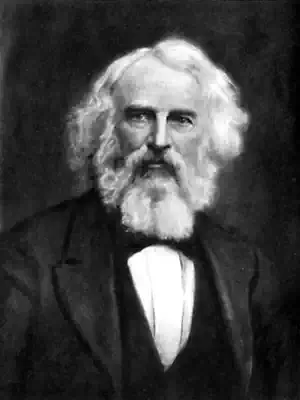
Henry Wadsworth Longfellow
Flower-De-Luce: Hawthorne
Flower-De-Luce: Hawthorne
How beautiful it was, that one bright day
In the long week of rain!
Though all its splendor could not chase away
The omnipresent pain.
The lovely town was white with apple-blooms,
And the great elms o'erhead
Dark shadows wove on their aerial looms
Shot through with golden thread.
Across the meadows, by the gray old manse,
The historic river flowed:
I was as one who wanders in a trance,
Unconscious of his road.
The faces of familiar friends seemed strange;
Their voices I could hear,
And yet the words they uttered seemed to change
Their meaning to my ear.
For the one face I looked for was not there,
The one low voice was mute;
Only an unseen presence filled the air,
And baffled my pursuit.
Now I look back, and meadow, manse, and stream
Dimly my thought defines;
I only see--a dream within a dream--
The hill-top hearsed with pines.
I only hear above his place of rest
Their tender undertone,
The infinite longings of a troubled breast,
The voice so like his own.
There in seclusion and remote from men
The wizard hand lies cold,
Which at its topmost speed let fall the pen,
And left the tale half told.
Ah! who shall lift that wand of magic power,
And the lost clew regain?
The unfinished window in Aladdin's tower
Unfinished must remain!
How beautiful it was, that one bright day
In the long week of rain!
Though all its splendor could not chase away
The omnipresent pain.
The lovely town was white with apple-blooms,
And the great elms o'erhead
Dark shadows wove on their aerial looms
Shot through with golden thread.
Across the meadows, by the gray old manse,
The historic river flowed:
I was as one who wanders in a trance,
Unconscious of his road.
The faces of familiar friends seemed strange;
Their voices I could hear,
And yet the words they uttered seemed to change
Their meaning to my ear.
For the one face I looked for was not there,
The one low voice was mute;
Only an unseen presence filled the air,
And baffled my pursuit.
Now I look back, and meadow, manse, and stream
Dimly my thought defines;
I only see--a dream within a dream--
The hill-top hearsed with pines.
I only hear above his place of rest
Their tender undertone,
The infinite longings of a troubled breast,
The voice so like his own.
There in seclusion and remote from men
The wizard hand lies cold,
Which at its topmost speed let fall the pen,
And left the tale half told.
Ah! who shall lift that wand of magic power,
And the lost clew regain?
The unfinished window in Aladdin's tower
Unfinished must remain!
387
Henry Wadsworth Longfellow
Flower-De-Luce: Divina Commedia
Flower-De-Luce: Divina Commedia
I.
Oft have I seen at some cathedral door
A laborer, pausing in the dust and heat,
Lay down his burden, and with reverent feet
Enter, and cross himself, and on the floor
Kneel to repeat his paternoster o'er;
Far off the noises of the world retreat;
The loud vociferations of the street
Become an undistinguishable roar.
So, as I enter here from day to day,
And leave my burden at this minster gate,
Kneeling in prayer, and not ashamed to pray,
The tumult of the time disconsolate
To inarticulate murmurs dies away,
While the eternal ages watch and wait.
II.
How strange the sculptures that adorn these towers!
This crowd of statues, in whose folded sleeves
Birds build their nests; while canopied with leaves
Parvis and portal bloom like trellised bowers,
And the vast minster seems a cross of flowers!
But fiends and dragons on the gargoyled eaves
Watch the dead Christ between the living thieves,
And, underneath, the traitor Judas lowers!
Ah! from what agonies of heart and brain,
What exultations trampling on despair,
What tenderness, what tears, what hate of wrong,
What passionate outcry of a soul in pain,
Uprose this poem of the earth and air,
This medieval miracle of song!
III.
I enter, and I see thee in the gloom
Of the long aisles, O poet saturnine!
And strive to make my steps keep pace with thine.
The air is filled with some unknown perfume;
The congregation of the dead make room
For thee to pass; the votive tapers shine;
Like rooks that haunt Ravenna's groves of pine
The hovering echoes fly from tomb to tomb.
From the confessionals I hear arise
Rehearsals of forgotten tragedies,
And lamentations from the crypts below;
And then a voice celestial, that begins
With the pathetic words, 'Although your sins
As scarlet be,' and ends with 'as the snow.'
IV.
With snow-white veil and garments as of flame,
She stands before thee, who so long ago
Filled thy young heart with passion and the woe
From which thy song and all its splendors came;
And while with stern rebuke she speaks thy name,
The ice about thy heart melts as the snow
On mountain height; and in swift overflow
Comes gushing from thy lips in sobs of shame.
Thou makest full confession; and a gleam,
As of the dawn on some dark forest cast,
Seems on thy lifted forehead to increase;
Lethe and Eunoe--the remembered dream
And the forgotten sorrow--bring at last
That perfect pardon which is perfect peace.
V.
I lift mine eyes, and all the windows blaze
With forms of saints and holy men who died,
Here martyred and hereafter glorified;
And the great Rose upon its leaves displays
Christ's Triumph, and the angelic roundelays,
With splendor upon splendor multiplied;
And Beatrice again at Dante's side
No more rebukes, but smiles her words of praise.
And then the organ sounds, and unseen choirs
Sing the old Latin hymns of peace and love,
And benedictions of the Holy Ghost;
And the melodious bells among the spires
O'er all the house-tops and through heaven above
Proclaim the elevation of the Host!
VI.
O star of morning and of liberty!
O bringer of the light, whose splendor shines
Above the darkness of the Apennines,
Forerunner of the day that is to be!
The voices of the city and the sea,
The voices of the mountains and the pines,
Repeat thy song, till the familiar lines
Are footpaths for the thought of Italy!
Thy fame is blown abroad from all the heights,
Through all the nations, and a sound is heard,
As of a mighty wind, and men devout,
Strangers of Rome, and the new proselytes,
In their own language hear thy wondrous word,
And many are amazed and many doubt.
I.
Oft have I seen at some cathedral door
A laborer, pausing in the dust and heat,
Lay down his burden, and with reverent feet
Enter, and cross himself, and on the floor
Kneel to repeat his paternoster o'er;
Far off the noises of the world retreat;
The loud vociferations of the street
Become an undistinguishable roar.
So, as I enter here from day to day,
And leave my burden at this minster gate,
Kneeling in prayer, and not ashamed to pray,
The tumult of the time disconsolate
To inarticulate murmurs dies away,
While the eternal ages watch and wait.
II.
How strange the sculptures that adorn these towers!
This crowd of statues, in whose folded sleeves
Birds build their nests; while canopied with leaves
Parvis and portal bloom like trellised bowers,
And the vast minster seems a cross of flowers!
But fiends and dragons on the gargoyled eaves
Watch the dead Christ between the living thieves,
And, underneath, the traitor Judas lowers!
Ah! from what agonies of heart and brain,
What exultations trampling on despair,
What tenderness, what tears, what hate of wrong,
What passionate outcry of a soul in pain,
Uprose this poem of the earth and air,
This medieval miracle of song!
III.
I enter, and I see thee in the gloom
Of the long aisles, O poet saturnine!
And strive to make my steps keep pace with thine.
The air is filled with some unknown perfume;
The congregation of the dead make room
For thee to pass; the votive tapers shine;
Like rooks that haunt Ravenna's groves of pine
The hovering echoes fly from tomb to tomb.
From the confessionals I hear arise
Rehearsals of forgotten tragedies,
And lamentations from the crypts below;
And then a voice celestial, that begins
With the pathetic words, 'Although your sins
As scarlet be,' and ends with 'as the snow.'
IV.
With snow-white veil and garments as of flame,
She stands before thee, who so long ago
Filled thy young heart with passion and the woe
From which thy song and all its splendors came;
And while with stern rebuke she speaks thy name,
The ice about thy heart melts as the snow
On mountain height; and in swift overflow
Comes gushing from thy lips in sobs of shame.
Thou makest full confession; and a gleam,
As of the dawn on some dark forest cast,
Seems on thy lifted forehead to increase;
Lethe and Eunoe--the remembered dream
And the forgotten sorrow--bring at last
That perfect pardon which is perfect peace.
V.
I lift mine eyes, and all the windows blaze
With forms of saints and holy men who died,
Here martyred and hereafter glorified;
And the great Rose upon its leaves displays
Christ's Triumph, and the angelic roundelays,
With splendor upon splendor multiplied;
And Beatrice again at Dante's side
No more rebukes, but smiles her words of praise.
And then the organ sounds, and unseen choirs
Sing the old Latin hymns of peace and love,
And benedictions of the Holy Ghost;
And the melodious bells among the spires
O'er all the house-tops and through heaven above
Proclaim the elevation of the Host!
VI.
O star of morning and of liberty!
O bringer of the light, whose splendor shines
Above the darkness of the Apennines,
Forerunner of the day that is to be!
The voices of the city and the sea,
The voices of the mountains and the pines,
Repeat thy song, till the familiar lines
Are footpaths for the thought of Italy!
Thy fame is blown abroad from all the heights,
Through all the nations, and a sound is heard,
As of a mighty wind, and men devout,
Strangers of Rome, and the new proselytes,
In their own language hear thy wondrous word,
And many are amazed and many doubt.
286
Henry Wadsworth Longfellow
Evening Star, The
Evening Star, The
Lo! in the painted oriel of the West,
Whose panes the sunken sun incarnadines,
Like a fair lady at her casement, shines
The evening star, the star of love and rest!
And then anon she doth herself divest
Of all her radiant garments, and reclines
Behind the sombre screen of yonder pines,
With slumber and soft dreams of love oppressed.
O my beloved, my sweet Hesperus!
My morning and my evening star of love!
My best and gentlest lady! even thus,
As that fair planet in the sky above,
Dost thou retire unto thy rest at night,
And from thy darkened window fades the light.
Lo! in the painted oriel of the West,
Whose panes the sunken sun incarnadines,
Like a fair lady at her casement, shines
The evening star, the star of love and rest!
And then anon she doth herself divest
Of all her radiant garments, and reclines
Behind the sombre screen of yonder pines,
With slumber and soft dreams of love oppressed.
O my beloved, my sweet Hesperus!
My morning and my evening star of love!
My best and gentlest lady! even thus,
As that fair planet in the sky above,
Dost thou retire unto thy rest at night,
And from thy darkened window fades the light.
417
Henry Wadsworth Longfellow
Evangeline: Part The Second. V.
Evangeline: Part The Second. V.
IN that delightful land, which is washed by the Delaware's waters,
Guarding in sylvan shades the name of Penn the apostle.
Stands on the banks of its beautiful stream the city he founded.
There all the air is balm, and the peach is the emblem of beauty,
And the streets still re-echo the names of the trees of the forest,
As if they fain would appease the Dryads whose haunts they molested.
There from the troubled sea had Evangeline landed, an exile,
Finding among the children of Penn a home and a country.
There old René Leblanc had died; and when he departed,
Saw at his side only one of all his hundred descendants.
Something at least there was in the friendly streets of the city,
Something that spake to her heart, and made her no longer a stranger;
And her ear was pleased with the Thee and Thou of the Quakers,
For it recalled the past, the old Acadian country,
Where all men were equal, and all were brothers and sisters.
So, when the fruitless search, the disappointed endeavor,
Ended, to recommence no more upon earth, uncomplaining,
Thither, as leaves to the light, were turned her thoughts and her footsteps.
As from a mountain's top the rainy mists of the morning
Roll away, and afar we behold the landscape below us,
Sun-illumined, with shining rivers and cities and hamlets,
So fell the mists from her mind, and she saw the world far below her,
Dark no longer, but all illumined with love; and the pathway
Which she had climbed so far, lying smooth and fair in the distance.
Gabriel was not forgotten. Within her heart was his image,
Clothed in the beauty of love and youth, as last she beheld him,
Only more beautiful made by his deathlike silence and absence.
Into her thoughts of him time entered not, for it was not.
Over him years had no power; he was not changed, but transfigured;
He had become to her heart as one who is dead, and not absent;
Patience and abnegation of self, and devotion to others,
This was the lesson a life of trial and sorrow had taught her.
So was her love diffused, but, like to some odorous spices,
Suffered no waste nor loss, though filling the air with aroma.
Other hope had she none, nor wish in life, but to follow
Meekly, with reverent steps, the sacred feet of her Saviour.
Thus many years she lived as a Sister of Mercy; frequenting
Lonely and wretched roofs in the crowded lanes of the city,
Where distress and want concealed themselves from the sunlight,
Where disease and sorrow in garrets languished neglected.
Night after night, when the world was asleep, as the watchman repeated
Loud, through the gusty streets, that all was well in the city,
High at some lonely window he saw the light of her taper.
Day after day, in the gray of the dawn, as slow through the suburbs
Plodded the German farmer, with flowers and fruits for the market,
Met he that meek, pale face, returning home from its watchings.
Then it came to pass that a pestilence fell on the city,
Presaged by wondrous signs, and mostly by flocks of wild pigeons,
Darkening the sun in their flight, with naught in their craws but an acorn.
And, as the tides of the sea arise in the month of September,
Flooding some silver stream, till it spreads to a lake in the meadow,
So death flooded life, and, o'erflowing its natural margin,
Spread to a brackish lake, the silver stream of existence.
Wealth had no power to bribe, nor beauty to charm, the oppressor;
But all perished alike beneath the scourge of his anger;-
Only, alas! the poor, who had neither friends nor attendants,
Crept away to die in the almshouse, home of the homeless.
Then in the suburbs it stood, in the midst of meadows and woodlands;-
Now the city surrounds it; but still, with its gateway and wicket
Meek, in the midst of splendor, its humble walls seem to echo
Softly the words of the Lord:-'The poor ye always have with you.'
Thither, by night and by day, came the Sister of Mercy. The dying
Looked up into her face, and thought, indeed, to behold there
Gleams of celestial light encircle her forehead with splendor,
Such as the artist paints o'er the brows of saints and apostles,
Or such as hangs by night o'er a city seen at a distance.
Unto their eyes it seemed the lamps of the city celestial,
Into whose shining gates erelong their spirits would enter.
Thus, on a Sabbath morn, through the streets, deserted and silent,
Wending her quiet way, she entered the door of the almshouse.
Sweet on the summer air was the odor of flowers in the garden;
And she paused on her way to gather the fairest among them,
That the dying once more might rejoice in their fragrance and beauty.
Then, as she mounted the stairs to the corridors, cooled by the east wind,
Distant and soft on her ear fell the chimes from the belfry of Christ Church,
While, intermingled with these, across the meadows were wafted
Sounds of psalms, that were sung by the Swedes in their church at Wicaco.
Soft as descending wings fell the calm of the hour on her spirit;
Something within her said, 'At length thy trials are ended';
And, with light in her looks, she entered the chambers of sickness.
Noiselessly moved about the assiduous, careful attendants,
Moistening the feverish lip, and the aching brow, and in silence
Closing the sightless eyes of the dead, and concealing their faces,
Where on their pallets they lay, like drifts of snow by the roadside.
Many a languid head, upraised as Evangeline entered,
Turned on its pillow of pain to gaze while she passed, for her presence
Fell on their hearts like a ray of the sun on the walls of a prison.
And, as she looked around, she saw how Death, the consoler,
Laying his hand upon many a heart, had healed it forever.
Many familiar forms had disappeared in the night-time;
Vacant their places were, or filled already by strangers.
Suddenly, as if arrested by fear or a feeling of wonder,
Still she stood, with her colorless lips apart, while a shudder
Ran through her frame, and, forgotten, the flowerets dropped from her fingers,
And from her eyes and cheeks the light and bloom of the morning.
Then there escaped from her lips a cry of such terrible anguish,
That the dying heard it, and started up from their pillows.
On the pallet before her was stretched the form of an old man.
Long, and thin, and gray were the locks that shaded his temples;
But, as he lay in the morning light, his face for a moment
Seemed to assume once more the forms of its earlier manhood;
So are wont to be changed the faces of those who are dying.
Hot and red on his lips still burned the flush of the fever,
As if life, like the Hebrew, with blood had besprinkled its portals,
That the Angel of Death might see the sign, and pass over.
Motionless, senseless, dying, he lay, and his spirit exhausted
Seemed to be sinking down through infinite depths in the darkness,
Darkness of slumber and death, forever sinking and sinking.
Then through those realms of shade, in multiplied reverberations,
Heard he that cry of pain, and through the hush that succeeded
Whispered a gentle voice, in accents tender and saint-like,
'Gabriel! O my beloved!' and died away into silence.
Then he beheld, in a dream, once more the home of his childhood;
Green Acadian meadows, with sylvan rivers among them,
Village, and mountain, and woodlands; and, walking under their shadow,
As in the days of her youth, Evangeline rose in his vision.
Tears came into his eyes; and as slowly he lifted his eyelids,
Vanished the vision away, but Evangeline knelt by his bedside.
Vainly he strove to whisper her name, for the accents unuttered
Died on his lips, and their motion revealed what his tongue would have spoken.
Vainly he strove to rise; and Evangeline, kneeling beside him,
Kissed his dying lips, and laid his head on her bosom.
Sweet was the light of his eyes; but it suddenly sank into darkness,
As when a lamp is blown out by a gust of wind at a casement.
All was ended now, the hope, and the fear, and the sorrow,
All the aching of heart, the restless, unsatisfied longing,
All the dull, deep pain, and constant anguish of patience!
And, as she pressed once more the lifeless head to her bosom,
Meekly she bowed her own, and murmured, 'Father, I thank thee!'
STILL stands the forest primeval; but far away from its shadow,
Side by side, in their nameless graves, the lovers are sleeping.
Under the humble walls of the little Catholic churchyard,
In the heart of the city, they lie, unknown and unnoticed.
Daily the tides of life go ebbing and flowing beside them,
Thousands of throbbing hearts, where theirs are at rest and forever,
Thousands of aching brains, where theirs no longer are busy,
Thousands of toiling hands, where theirs have ceased from their labors,
Thousands of weary feet, where theirs have completed their journey!
Still stands the forest primeval; but under the shade of its branches
Dwells another race, with other customs and language.
Only along the shore of the mournful and misty Atlantic
Linger a few Acadian peasants, whose fathers from exile
Wandered back to their native land to die in its bosom.
In the fisherman's cot the wheel and the loom are still busy;
Maidens still wear their Norman caps and their kirtles of homespun,
And by the evening fire repeat Evangeline's story.
While from its rocky caverns the deep-voiced, neighboring ocean
Speaks, and in accents disconsolate answers the wail of the forest.
IN that delightful land, which is washed by the Delaware's waters,
Guarding in sylvan shades the name of Penn the apostle.
Stands on the banks of its beautiful stream the city he founded.
There all the air is balm, and the peach is the emblem of beauty,
And the streets still re-echo the names of the trees of the forest,
As if they fain would appease the Dryads whose haunts they molested.
There from the troubled sea had Evangeline landed, an exile,
Finding among the children of Penn a home and a country.
There old René Leblanc had died; and when he departed,
Saw at his side only one of all his hundred descendants.
Something at least there was in the friendly streets of the city,
Something that spake to her heart, and made her no longer a stranger;
And her ear was pleased with the Thee and Thou of the Quakers,
For it recalled the past, the old Acadian country,
Where all men were equal, and all were brothers and sisters.
So, when the fruitless search, the disappointed endeavor,
Ended, to recommence no more upon earth, uncomplaining,
Thither, as leaves to the light, were turned her thoughts and her footsteps.
As from a mountain's top the rainy mists of the morning
Roll away, and afar we behold the landscape below us,
Sun-illumined, with shining rivers and cities and hamlets,
So fell the mists from her mind, and she saw the world far below her,
Dark no longer, but all illumined with love; and the pathway
Which she had climbed so far, lying smooth and fair in the distance.
Gabriel was not forgotten. Within her heart was his image,
Clothed in the beauty of love and youth, as last she beheld him,
Only more beautiful made by his deathlike silence and absence.
Into her thoughts of him time entered not, for it was not.
Over him years had no power; he was not changed, but transfigured;
He had become to her heart as one who is dead, and not absent;
Patience and abnegation of self, and devotion to others,
This was the lesson a life of trial and sorrow had taught her.
So was her love diffused, but, like to some odorous spices,
Suffered no waste nor loss, though filling the air with aroma.
Other hope had she none, nor wish in life, but to follow
Meekly, with reverent steps, the sacred feet of her Saviour.
Thus many years she lived as a Sister of Mercy; frequenting
Lonely and wretched roofs in the crowded lanes of the city,
Where distress and want concealed themselves from the sunlight,
Where disease and sorrow in garrets languished neglected.
Night after night, when the world was asleep, as the watchman repeated
Loud, through the gusty streets, that all was well in the city,
High at some lonely window he saw the light of her taper.
Day after day, in the gray of the dawn, as slow through the suburbs
Plodded the German farmer, with flowers and fruits for the market,
Met he that meek, pale face, returning home from its watchings.
Then it came to pass that a pestilence fell on the city,
Presaged by wondrous signs, and mostly by flocks of wild pigeons,
Darkening the sun in their flight, with naught in their craws but an acorn.
And, as the tides of the sea arise in the month of September,
Flooding some silver stream, till it spreads to a lake in the meadow,
So death flooded life, and, o'erflowing its natural margin,
Spread to a brackish lake, the silver stream of existence.
Wealth had no power to bribe, nor beauty to charm, the oppressor;
But all perished alike beneath the scourge of his anger;-
Only, alas! the poor, who had neither friends nor attendants,
Crept away to die in the almshouse, home of the homeless.
Then in the suburbs it stood, in the midst of meadows and woodlands;-
Now the city surrounds it; but still, with its gateway and wicket
Meek, in the midst of splendor, its humble walls seem to echo
Softly the words of the Lord:-'The poor ye always have with you.'
Thither, by night and by day, came the Sister of Mercy. The dying
Looked up into her face, and thought, indeed, to behold there
Gleams of celestial light encircle her forehead with splendor,
Such as the artist paints o'er the brows of saints and apostles,
Or such as hangs by night o'er a city seen at a distance.
Unto their eyes it seemed the lamps of the city celestial,
Into whose shining gates erelong their spirits would enter.
Thus, on a Sabbath morn, through the streets, deserted and silent,
Wending her quiet way, she entered the door of the almshouse.
Sweet on the summer air was the odor of flowers in the garden;
And she paused on her way to gather the fairest among them,
That the dying once more might rejoice in their fragrance and beauty.
Then, as she mounted the stairs to the corridors, cooled by the east wind,
Distant and soft on her ear fell the chimes from the belfry of Christ Church,
While, intermingled with these, across the meadows were wafted
Sounds of psalms, that were sung by the Swedes in their church at Wicaco.
Soft as descending wings fell the calm of the hour on her spirit;
Something within her said, 'At length thy trials are ended';
And, with light in her looks, she entered the chambers of sickness.
Noiselessly moved about the assiduous, careful attendants,
Moistening the feverish lip, and the aching brow, and in silence
Closing the sightless eyes of the dead, and concealing their faces,
Where on their pallets they lay, like drifts of snow by the roadside.
Many a languid head, upraised as Evangeline entered,
Turned on its pillow of pain to gaze while she passed, for her presence
Fell on their hearts like a ray of the sun on the walls of a prison.
And, as she looked around, she saw how Death, the consoler,
Laying his hand upon many a heart, had healed it forever.
Many familiar forms had disappeared in the night-time;
Vacant their places were, or filled already by strangers.
Suddenly, as if arrested by fear or a feeling of wonder,
Still she stood, with her colorless lips apart, while a shudder
Ran through her frame, and, forgotten, the flowerets dropped from her fingers,
And from her eyes and cheeks the light and bloom of the morning.
Then there escaped from her lips a cry of such terrible anguish,
That the dying heard it, and started up from their pillows.
On the pallet before her was stretched the form of an old man.
Long, and thin, and gray were the locks that shaded his temples;
But, as he lay in the morning light, his face for a moment
Seemed to assume once more the forms of its earlier manhood;
So are wont to be changed the faces of those who are dying.
Hot and red on his lips still burned the flush of the fever,
As if life, like the Hebrew, with blood had besprinkled its portals,
That the Angel of Death might see the sign, and pass over.
Motionless, senseless, dying, he lay, and his spirit exhausted
Seemed to be sinking down through infinite depths in the darkness,
Darkness of slumber and death, forever sinking and sinking.
Then through those realms of shade, in multiplied reverberations,
Heard he that cry of pain, and through the hush that succeeded
Whispered a gentle voice, in accents tender and saint-like,
'Gabriel! O my beloved!' and died away into silence.
Then he beheld, in a dream, once more the home of his childhood;
Green Acadian meadows, with sylvan rivers among them,
Village, and mountain, and woodlands; and, walking under their shadow,
As in the days of her youth, Evangeline rose in his vision.
Tears came into his eyes; and as slowly he lifted his eyelids,
Vanished the vision away, but Evangeline knelt by his bedside.
Vainly he strove to whisper her name, for the accents unuttered
Died on his lips, and their motion revealed what his tongue would have spoken.
Vainly he strove to rise; and Evangeline, kneeling beside him,
Kissed his dying lips, and laid his head on her bosom.
Sweet was the light of his eyes; but it suddenly sank into darkness,
As when a lamp is blown out by a gust of wind at a casement.
All was ended now, the hope, and the fear, and the sorrow,
All the aching of heart, the restless, unsatisfied longing,
All the dull, deep pain, and constant anguish of patience!
And, as she pressed once more the lifeless head to her bosom,
Meekly she bowed her own, and murmured, 'Father, I thank thee!'
STILL stands the forest primeval; but far away from its shadow,
Side by side, in their nameless graves, the lovers are sleeping.
Under the humble walls of the little Catholic churchyard,
In the heart of the city, they lie, unknown and unnoticed.
Daily the tides of life go ebbing and flowing beside them,
Thousands of throbbing hearts, where theirs are at rest and forever,
Thousands of aching brains, where theirs no longer are busy,
Thousands of toiling hands, where theirs have ceased from their labors,
Thousands of weary feet, where theirs have completed their journey!
Still stands the forest primeval; but under the shade of its branches
Dwells another race, with other customs and language.
Only along the shore of the mournful and misty Atlantic
Linger a few Acadian peasants, whose fathers from exile
Wandered back to their native land to die in its bosom.
In the fisherman's cot the wheel and the loom are still busy;
Maidens still wear their Norman caps and their kirtles of homespun,
And by the evening fire repeat Evangeline's story.
While from its rocky caverns the deep-voiced, neighboring ocean
Speaks, and in accents disconsolate answers the wail of the forest.
326
Henry Wadsworth Longfellow
Evangeline: Part The Second. V.
Evangeline: Part The Second. V.
IN that delightful land, which is washed by the Delaware's waters,
Guarding in sylvan shades the name of Penn the apostle.
Stands on the banks of its beautiful stream the city he founded.
There all the air is balm, and the peach is the emblem of beauty,
And the streets still re-echo the names of the trees of the forest,
As if they fain would appease the Dryads whose haunts they molested.
There from the troubled sea had Evangeline landed, an exile,
Finding among the children of Penn a home and a country.
There old René Leblanc had died; and when he departed,
Saw at his side only one of all his hundred descendants.
Something at least there was in the friendly streets of the city,
Something that spake to her heart, and made her no longer a stranger;
And her ear was pleased with the Thee and Thou of the Quakers,
For it recalled the past, the old Acadian country,
Where all men were equal, and all were brothers and sisters.
So, when the fruitless search, the disappointed endeavor,
Ended, to recommence no more upon earth, uncomplaining,
Thither, as leaves to the light, were turned her thoughts and her footsteps.
As from a mountain's top the rainy mists of the morning
Roll away, and afar we behold the landscape below us,
Sun-illumined, with shining rivers and cities and hamlets,
So fell the mists from her mind, and she saw the world far below her,
Dark no longer, but all illumined with love; and the pathway
Which she had climbed so far, lying smooth and fair in the distance.
Gabriel was not forgotten. Within her heart was his image,
Clothed in the beauty of love and youth, as last she beheld him,
Only more beautiful made by his deathlike silence and absence.
Into her thoughts of him time entered not, for it was not.
Over him years had no power; he was not changed, but transfigured;
He had become to her heart as one who is dead, and not absent;
Patience and abnegation of self, and devotion to others,
This was the lesson a life of trial and sorrow had taught her.
So was her love diffused, but, like to some odorous spices,
Suffered no waste nor loss, though filling the air with aroma.
Other hope had she none, nor wish in life, but to follow
Meekly, with reverent steps, the sacred feet of her Saviour.
Thus many years she lived as a Sister of Mercy; frequenting
Lonely and wretched roofs in the crowded lanes of the city,
Where distress and want concealed themselves from the sunlight,
Where disease and sorrow in garrets languished neglected.
Night after night, when the world was asleep, as the watchman repeated
Loud, through the gusty streets, that all was well in the city,
High at some lonely window he saw the light of her taper.
Day after day, in the gray of the dawn, as slow through the suburbs
Plodded the German farmer, with flowers and fruits for the market,
Met he that meek, pale face, returning home from its watchings.
Then it came to pass that a pestilence fell on the city,
Presaged by wondrous signs, and mostly by flocks of wild pigeons,
Darkening the sun in their flight, with naught in their craws but an acorn.
And, as the tides of the sea arise in the month of September,
Flooding some silver stream, till it spreads to a lake in the meadow,
So death flooded life, and, o'erflowing its natural margin,
Spread to a brackish lake, the silver stream of existence.
Wealth had no power to bribe, nor beauty to charm, the oppressor;
But all perished alike beneath the scourge of his anger;-
Only, alas! the poor, who had neither friends nor attendants,
Crept away to die in the almshouse, home of the homeless.
Then in the suburbs it stood, in the midst of meadows and woodlands;-
Now the city surrounds it; but still, with its gateway and wicket
Meek, in the midst of splendor, its humble walls seem to echo
Softly the words of the Lord:-'The poor ye always have with you.'
Thither, by night and by day, came the Sister of Mercy. The dying
Looked up into her face, and thought, indeed, to behold there
Gleams of celestial light encircle her forehead with splendor,
Such as the artist paints o'er the brows of saints and apostles,
Or such as hangs by night o'er a city seen at a distance.
Unto their eyes it seemed the lamps of the city celestial,
Into whose shining gates erelong their spirits would enter.
Thus, on a Sabbath morn, through the streets, deserted and silent,
Wending her quiet way, she entered the door of the almshouse.
Sweet on the summer air was the odor of flowers in the garden;
And she paused on her way to gather the fairest among them,
That the dying once more might rejoice in their fragrance and beauty.
Then, as she mounted the stairs to the corridors, cooled by the east wind,
Distant and soft on her ear fell the chimes from the belfry of Christ Church,
While, intermingled with these, across the meadows were wafted
Sounds of psalms, that were sung by the Swedes in their church at Wicaco.
Soft as descending wings fell the calm of the hour on her spirit;
Something within her said, 'At length thy trials are ended';
And, with light in her looks, she entered the chambers of sickness.
Noiselessly moved about the assiduous, careful attendants,
Moistening the feverish lip, and the aching brow, and in silence
Closing the sightless eyes of the dead, and concealing their faces,
Where on their pallets they lay, like drifts of snow by the roadside.
Many a languid head, upraised as Evangeline entered,
Turned on its pillow of pain to gaze while she passed, for her presence
Fell on their hearts like a ray of the sun on the walls of a prison.
And, as she looked around, she saw how Death, the consoler,
Laying his hand upon many a heart, had healed it forever.
Many familiar forms had disappeared in the night-time;
Vacant their places were, or filled already by strangers.
Suddenly, as if arrested by fear or a feeling of wonder,
Still she stood, with her colorless lips apart, while a shudder
Ran through her frame, and, forgotten, the flowerets dropped from her fingers,
And from her eyes and cheeks the light and bloom of the morning.
Then there escaped from her lips a cry of such terrible anguish,
That the dying heard it, and started up from their pillows.
On the pallet before her was stretched the form of an old man.
Long, and thin, and gray were the locks that shaded his temples;
But, as he lay in the morning light, his face for a moment
Seemed to assume once more the forms of its earlier manhood;
So are wont to be changed the faces of those who are dying.
Hot and red on his lips still burned the flush of the fever,
As if life, like the Hebrew, with blood had besprinkled its portals,
That the Angel of Death might see the sign, and pass over.
Motionless, senseless, dying, he lay, and his spirit exhausted
Seemed to be sinking down through infinite depths in the darkness,
Darkness of slumber and death, forever sinking and sinking.
Then through those realms of shade, in multiplied reverberations,
Heard he that cry of pain, and through the hush that succeeded
Whispered a gentle voice, in accents tender and saint-like,
'Gabriel! O my beloved!' and died away into silence.
Then he beheld, in a dream, once more the home of his childhood;
Green Acadian meadows, with sylvan rivers among them,
Village, and mountain, and woodlands; and, walking under their shadow,
As in the days of her youth, Evangeline rose in his vision.
Tears came into his eyes; and as slowly he lifted his eyelids,
Vanished the vision away, but Evangeline knelt by his bedside.
Vainly he strove to whisper her name, for the accents unuttered
Died on his lips, and their motion revealed what his tongue would have spoken.
Vainly he strove to rise; and Evangeline, kneeling beside him,
Kissed his dying lips, and laid his head on her bosom.
Sweet was the light of his eyes; but it suddenly sank into darkness,
As when a lamp is blown out by a gust of wind at a casement.
All was ended now, the hope, and the fear, and the sorrow,
All the aching of heart, the restless, unsatisfied longing,
All the dull, deep pain, and constant anguish of patience!
And, as she pressed once more the lifeless head to her bosom,
Meekly she bowed her own, and murmured, 'Father, I thank thee!'
STILL stands the forest primeval; but far away from its shadow,
Side by side, in their nameless graves, the lovers are sleeping.
Under the humble walls of the little Catholic churchyard,
In the heart of the city, they lie, unknown and unnoticed.
Daily the tides of life go ebbing and flowing beside them,
Thousands of throbbing hearts, where theirs are at rest and forever,
Thousands of aching brains, where theirs no longer are busy,
Thousands of toiling hands, where theirs have ceased from their labors,
Thousands of weary feet, where theirs have completed their journey!
Still stands the forest primeval; but under the shade of its branches
Dwells another race, with other customs and language.
Only along the shore of the mournful and misty Atlantic
Linger a few Acadian peasants, whose fathers from exile
Wandered back to their native land to die in its bosom.
In the fisherman's cot the wheel and the loom are still busy;
Maidens still wear their Norman caps and their kirtles of homespun,
And by the evening fire repeat Evangeline's story.
While from its rocky caverns the deep-voiced, neighboring ocean
Speaks, and in accents disconsolate answers the wail of the forest.
IN that delightful land, which is washed by the Delaware's waters,
Guarding in sylvan shades the name of Penn the apostle.
Stands on the banks of its beautiful stream the city he founded.
There all the air is balm, and the peach is the emblem of beauty,
And the streets still re-echo the names of the trees of the forest,
As if they fain would appease the Dryads whose haunts they molested.
There from the troubled sea had Evangeline landed, an exile,
Finding among the children of Penn a home and a country.
There old René Leblanc had died; and when he departed,
Saw at his side only one of all his hundred descendants.
Something at least there was in the friendly streets of the city,
Something that spake to her heart, and made her no longer a stranger;
And her ear was pleased with the Thee and Thou of the Quakers,
For it recalled the past, the old Acadian country,
Where all men were equal, and all were brothers and sisters.
So, when the fruitless search, the disappointed endeavor,
Ended, to recommence no more upon earth, uncomplaining,
Thither, as leaves to the light, were turned her thoughts and her footsteps.
As from a mountain's top the rainy mists of the morning
Roll away, and afar we behold the landscape below us,
Sun-illumined, with shining rivers and cities and hamlets,
So fell the mists from her mind, and she saw the world far below her,
Dark no longer, but all illumined with love; and the pathway
Which she had climbed so far, lying smooth and fair in the distance.
Gabriel was not forgotten. Within her heart was his image,
Clothed in the beauty of love and youth, as last she beheld him,
Only more beautiful made by his deathlike silence and absence.
Into her thoughts of him time entered not, for it was not.
Over him years had no power; he was not changed, but transfigured;
He had become to her heart as one who is dead, and not absent;
Patience and abnegation of self, and devotion to others,
This was the lesson a life of trial and sorrow had taught her.
So was her love diffused, but, like to some odorous spices,
Suffered no waste nor loss, though filling the air with aroma.
Other hope had she none, nor wish in life, but to follow
Meekly, with reverent steps, the sacred feet of her Saviour.
Thus many years she lived as a Sister of Mercy; frequenting
Lonely and wretched roofs in the crowded lanes of the city,
Where distress and want concealed themselves from the sunlight,
Where disease and sorrow in garrets languished neglected.
Night after night, when the world was asleep, as the watchman repeated
Loud, through the gusty streets, that all was well in the city,
High at some lonely window he saw the light of her taper.
Day after day, in the gray of the dawn, as slow through the suburbs
Plodded the German farmer, with flowers and fruits for the market,
Met he that meek, pale face, returning home from its watchings.
Then it came to pass that a pestilence fell on the city,
Presaged by wondrous signs, and mostly by flocks of wild pigeons,
Darkening the sun in their flight, with naught in their craws but an acorn.
And, as the tides of the sea arise in the month of September,
Flooding some silver stream, till it spreads to a lake in the meadow,
So death flooded life, and, o'erflowing its natural margin,
Spread to a brackish lake, the silver stream of existence.
Wealth had no power to bribe, nor beauty to charm, the oppressor;
But all perished alike beneath the scourge of his anger;-
Only, alas! the poor, who had neither friends nor attendants,
Crept away to die in the almshouse, home of the homeless.
Then in the suburbs it stood, in the midst of meadows and woodlands;-
Now the city surrounds it; but still, with its gateway and wicket
Meek, in the midst of splendor, its humble walls seem to echo
Softly the words of the Lord:-'The poor ye always have with you.'
Thither, by night and by day, came the Sister of Mercy. The dying
Looked up into her face, and thought, indeed, to behold there
Gleams of celestial light encircle her forehead with splendor,
Such as the artist paints o'er the brows of saints and apostles,
Or such as hangs by night o'er a city seen at a distance.
Unto their eyes it seemed the lamps of the city celestial,
Into whose shining gates erelong their spirits would enter.
Thus, on a Sabbath morn, through the streets, deserted and silent,
Wending her quiet way, she entered the door of the almshouse.
Sweet on the summer air was the odor of flowers in the garden;
And she paused on her way to gather the fairest among them,
That the dying once more might rejoice in their fragrance and beauty.
Then, as she mounted the stairs to the corridors, cooled by the east wind,
Distant and soft on her ear fell the chimes from the belfry of Christ Church,
While, intermingled with these, across the meadows were wafted
Sounds of psalms, that were sung by the Swedes in their church at Wicaco.
Soft as descending wings fell the calm of the hour on her spirit;
Something within her said, 'At length thy trials are ended';
And, with light in her looks, she entered the chambers of sickness.
Noiselessly moved about the assiduous, careful attendants,
Moistening the feverish lip, and the aching brow, and in silence
Closing the sightless eyes of the dead, and concealing their faces,
Where on their pallets they lay, like drifts of snow by the roadside.
Many a languid head, upraised as Evangeline entered,
Turned on its pillow of pain to gaze while she passed, for her presence
Fell on their hearts like a ray of the sun on the walls of a prison.
And, as she looked around, she saw how Death, the consoler,
Laying his hand upon many a heart, had healed it forever.
Many familiar forms had disappeared in the night-time;
Vacant their places were, or filled already by strangers.
Suddenly, as if arrested by fear or a feeling of wonder,
Still she stood, with her colorless lips apart, while a shudder
Ran through her frame, and, forgotten, the flowerets dropped from her fingers,
And from her eyes and cheeks the light and bloom of the morning.
Then there escaped from her lips a cry of such terrible anguish,
That the dying heard it, and started up from their pillows.
On the pallet before her was stretched the form of an old man.
Long, and thin, and gray were the locks that shaded his temples;
But, as he lay in the morning light, his face for a moment
Seemed to assume once more the forms of its earlier manhood;
So are wont to be changed the faces of those who are dying.
Hot and red on his lips still burned the flush of the fever,
As if life, like the Hebrew, with blood had besprinkled its portals,
That the Angel of Death might see the sign, and pass over.
Motionless, senseless, dying, he lay, and his spirit exhausted
Seemed to be sinking down through infinite depths in the darkness,
Darkness of slumber and death, forever sinking and sinking.
Then through those realms of shade, in multiplied reverberations,
Heard he that cry of pain, and through the hush that succeeded
Whispered a gentle voice, in accents tender and saint-like,
'Gabriel! O my beloved!' and died away into silence.
Then he beheld, in a dream, once more the home of his childhood;
Green Acadian meadows, with sylvan rivers among them,
Village, and mountain, and woodlands; and, walking under their shadow,
As in the days of her youth, Evangeline rose in his vision.
Tears came into his eyes; and as slowly he lifted his eyelids,
Vanished the vision away, but Evangeline knelt by his bedside.
Vainly he strove to whisper her name, for the accents unuttered
Died on his lips, and their motion revealed what his tongue would have spoken.
Vainly he strove to rise; and Evangeline, kneeling beside him,
Kissed his dying lips, and laid his head on her bosom.
Sweet was the light of his eyes; but it suddenly sank into darkness,
As when a lamp is blown out by a gust of wind at a casement.
All was ended now, the hope, and the fear, and the sorrow,
All the aching of heart, the restless, unsatisfied longing,
All the dull, deep pain, and constant anguish of patience!
And, as she pressed once more the lifeless head to her bosom,
Meekly she bowed her own, and murmured, 'Father, I thank thee!'
STILL stands the forest primeval; but far away from its shadow,
Side by side, in their nameless graves, the lovers are sleeping.
Under the humble walls of the little Catholic churchyard,
In the heart of the city, they lie, unknown and unnoticed.
Daily the tides of life go ebbing and flowing beside them,
Thousands of throbbing hearts, where theirs are at rest and forever,
Thousands of aching brains, where theirs no longer are busy,
Thousands of toiling hands, where theirs have ceased from their labors,
Thousands of weary feet, where theirs have completed their journey!
Still stands the forest primeval; but under the shade of its branches
Dwells another race, with other customs and language.
Only along the shore of the mournful and misty Atlantic
Linger a few Acadian peasants, whose fathers from exile
Wandered back to their native land to die in its bosom.
In the fisherman's cot the wheel and the loom are still busy;
Maidens still wear their Norman caps and their kirtles of homespun,
And by the evening fire repeat Evangeline's story.
While from its rocky caverns the deep-voiced, neighboring ocean
Speaks, and in accents disconsolate answers the wail of the forest.
326
Henry Wadsworth Longfellow
Evangeline: Part The Second. I.
Evangeline: Part The Second. I.
MANY a weary year had passed since the burning of Grand-Pré,
When on the falling tide the freighted vessels departed,
Bearing a nation, with all its household gods, into exile,
Exile without an end, and without an example in story.
Far asunder, on separate coasts, the Acadians landed;
Scattered were they, like flakes of snow, when the wind from the northeast
Strikes aslant through the fogs that darken the Banks of Newfoundland.
Friendless, homeless, hopeless, they wandered from city to city,
From the cold lakes of the North to sultry Southern savannas,-
From the bleak shores of the sea to the lands where the Father of Waters
Seizes the hills in his hands, and drags them down to the ocean,
Deep in their sands to bury the scattered bones of the mammoth.
Friends they sought and homes; and many, despairing, heart-broken,
Asked of the earth but a grave, and no longer a friend nor a fireside.
Written their history stands on tablets of stone in the churchyards.
Long among them was seen a maiden who waited and wandered,
Lowly and meek in spirit, and patiently suffering all things.
Fair was she and young; but, alas! before her extended,
Dreary and vast and silent, the desert of life, with its pathway
Marked by the graves of those who had sorrowed and suffered before her,
Passions long extinguished, and hopes long dead and abandoned,
As the emigrant's way o'er the Western desert is marked by
Camp-fires long consumed, and bones that bleach in the sunshine.
Something there was in her life incomplete, imperfect, unfinished;
As if a morning of June, with all its music and sunshine,
Suddenly paused in the sky, and, fading, slowly descended
Into the east again, from whence it late had arisen.
Sometimes she lingered in towns, till, urged by the fever within her,
Urged by a restless longing, the hunger and thirst of the spirit,
She would commence again her endless search and endeavor;
Sometimes in churchyards strayed, and gazed on the crosses and tombstones,
Sat by some nameless grave, and thought that perhaps in its bosom
He was already at rest, and she longed to slumber beside him.
Sometimes a rumor, a hearsay, an inarticulate whisper,
Came with its airy hand to point and beckon her forward.
Sometimes she spake with those who had seen her beloved and known him,
But it was long ago, in some far-off place or forgotten.
'Gabriel Lajeunesse!' they said; 'O yes! we have seen him.
He was with Basil the blacksmith, and both have gone to the prairies;
Coureurs-des-Bois are they, and famous hunters and trappers,'
'Gabriel Lajeunesse!' said others; 'O yes! we have seen him.
He is a Voyageur in the lowlands of Louisiana.'
Then would they say: 'Dear child! why dream and wait for him longer?
Are there not other youths as fair as Gabriel? others
Who have hearts as tender and true, and spirits as loyal?
Here is Baptiste Leblanc, the notary's son, who has loved thee
Many a tedious year; come, give him thy hand and be happy!
Thou art too fair to be left to braid St. Catherine's tresses.'
Then would Evangeline answer, serenely but sadly, 'I cannot!
Whither my heart has gone, there follows my hand, and not elsewhere.
For when the heart goes before, like a lamp, and illumines the pathway,
Many things are made clear, that else lie hidden in darkness.'
Thereupon the priest, her friend and father-confessor,
Said, with a smile, 'O daughter! thy God thus speaketh within thee!
Talk not of wasted affection, affection never was wasted;
If it enrich not the heart of another, its waters, returning
Back to their springs, like the rain, shall fill them full of refreshment;
That which the fountain sends forth returns again to the fountain.
Patience; accomplish thy labor; accomplish thy work of affection!
Sorrow and silence are strong, and patient endurance is godlike.
Therefore accomplish thy labor of love, till the heart is made godlike,
Purified, strengthened, perfected, and rendered more worthy of heaven!'
Cheered by the good man's words, Evangeline labored and waited.
Still in her heart she heard the funeral dirge of the ocean,
But with its sound there was mingled a voice that whispered, 'Despair not!'
Thus did that poor soul wander in want and cheerless discomfort,
Bleeding, barefooted, over the shards and thorns of existence.
Let me essay, O Muse! to follow the wanderer's footsteps;-
Not through each devious path, each changeful year of existence;
But as a traveller follows a streamlet's course through the valley:
Far from its margin at times, and seeing the gleam of its water
Here and there, in some open space, and at intervals only;
Then drawing nearer its banks, through sylvan glooms that conceal it,
Though he behold it not, he can hear its continuous murmur;
Happy, at length, if he find the spot where it reaches an outlet.
MANY a weary year had passed since the burning of Grand-Pré,
When on the falling tide the freighted vessels departed,
Bearing a nation, with all its household gods, into exile,
Exile without an end, and without an example in story.
Far asunder, on separate coasts, the Acadians landed;
Scattered were they, like flakes of snow, when the wind from the northeast
Strikes aslant through the fogs that darken the Banks of Newfoundland.
Friendless, homeless, hopeless, they wandered from city to city,
From the cold lakes of the North to sultry Southern savannas,-
From the bleak shores of the sea to the lands where the Father of Waters
Seizes the hills in his hands, and drags them down to the ocean,
Deep in their sands to bury the scattered bones of the mammoth.
Friends they sought and homes; and many, despairing, heart-broken,
Asked of the earth but a grave, and no longer a friend nor a fireside.
Written their history stands on tablets of stone in the churchyards.
Long among them was seen a maiden who waited and wandered,
Lowly and meek in spirit, and patiently suffering all things.
Fair was she and young; but, alas! before her extended,
Dreary and vast and silent, the desert of life, with its pathway
Marked by the graves of those who had sorrowed and suffered before her,
Passions long extinguished, and hopes long dead and abandoned,
As the emigrant's way o'er the Western desert is marked by
Camp-fires long consumed, and bones that bleach in the sunshine.
Something there was in her life incomplete, imperfect, unfinished;
As if a morning of June, with all its music and sunshine,
Suddenly paused in the sky, and, fading, slowly descended
Into the east again, from whence it late had arisen.
Sometimes she lingered in towns, till, urged by the fever within her,
Urged by a restless longing, the hunger and thirst of the spirit,
She would commence again her endless search and endeavor;
Sometimes in churchyards strayed, and gazed on the crosses and tombstones,
Sat by some nameless grave, and thought that perhaps in its bosom
He was already at rest, and she longed to slumber beside him.
Sometimes a rumor, a hearsay, an inarticulate whisper,
Came with its airy hand to point and beckon her forward.
Sometimes she spake with those who had seen her beloved and known him,
But it was long ago, in some far-off place or forgotten.
'Gabriel Lajeunesse!' they said; 'O yes! we have seen him.
He was with Basil the blacksmith, and both have gone to the prairies;
Coureurs-des-Bois are they, and famous hunters and trappers,'
'Gabriel Lajeunesse!' said others; 'O yes! we have seen him.
He is a Voyageur in the lowlands of Louisiana.'
Then would they say: 'Dear child! why dream and wait for him longer?
Are there not other youths as fair as Gabriel? others
Who have hearts as tender and true, and spirits as loyal?
Here is Baptiste Leblanc, the notary's son, who has loved thee
Many a tedious year; come, give him thy hand and be happy!
Thou art too fair to be left to braid St. Catherine's tresses.'
Then would Evangeline answer, serenely but sadly, 'I cannot!
Whither my heart has gone, there follows my hand, and not elsewhere.
For when the heart goes before, like a lamp, and illumines the pathway,
Many things are made clear, that else lie hidden in darkness.'
Thereupon the priest, her friend and father-confessor,
Said, with a smile, 'O daughter! thy God thus speaketh within thee!
Talk not of wasted affection, affection never was wasted;
If it enrich not the heart of another, its waters, returning
Back to their springs, like the rain, shall fill them full of refreshment;
That which the fountain sends forth returns again to the fountain.
Patience; accomplish thy labor; accomplish thy work of affection!
Sorrow and silence are strong, and patient endurance is godlike.
Therefore accomplish thy labor of love, till the heart is made godlike,
Purified, strengthened, perfected, and rendered more worthy of heaven!'
Cheered by the good man's words, Evangeline labored and waited.
Still in her heart she heard the funeral dirge of the ocean,
But with its sound there was mingled a voice that whispered, 'Despair not!'
Thus did that poor soul wander in want and cheerless discomfort,
Bleeding, barefooted, over the shards and thorns of existence.
Let me essay, O Muse! to follow the wanderer's footsteps;-
Not through each devious path, each changeful year of existence;
But as a traveller follows a streamlet's course through the valley:
Far from its margin at times, and seeing the gleam of its water
Here and there, in some open space, and at intervals only;
Then drawing nearer its banks, through sylvan glooms that conceal it,
Though he behold it not, he can hear its continuous murmur;
Happy, at length, if he find the spot where it reaches an outlet.
309
Henry Wadsworth Longfellow
Endymion
Endymion
The rising moon has hid the stars;
Her level rays, like golden bars,
Lie on the landscape green,
With shadows brown between.
And silver white the river gleams,
As if Diana, in her dreams,
Had dropt her silver bow
Upon the meadows low.
On such a tranquil night as this,
She woke Endymion with a kiss,
When, sleeping in the grove,
He dreamed not of her love.
Like Dian's kiss, unasked, unsought,
Love gives itself, but is not bought;
Nor voice, nor sound betrays
Its deep, impassioned gaze.
It comes,--the beautiful, the free,
The crown of all humanity,-In
silence and alone
To seek the elected one.
It lifts the boughs, whose shadows deep
Are Life's oblivion, the soul's sleep,
And kisses the closed eyes
Of him, who slumbering lies.
O weary hearts! O slumbering eyes!
O drooping souls, whose destinies
Are fraught with fear and pain,
Ye shall be loved again!
No one is so accursed by fate,
No one so utterly desolate,
But some heart, though unknown,
Responds unto his own.
Responds,--as if with unseen wings,
An angel touched its quivering strings;
And whispers, in its song,
"'Where hast thou stayed so long?"
The rising moon has hid the stars;
Her level rays, like golden bars,
Lie on the landscape green,
With shadows brown between.
And silver white the river gleams,
As if Diana, in her dreams,
Had dropt her silver bow
Upon the meadows low.
On such a tranquil night as this,
She woke Endymion with a kiss,
When, sleeping in the grove,
He dreamed not of her love.
Like Dian's kiss, unasked, unsought,
Love gives itself, but is not bought;
Nor voice, nor sound betrays
Its deep, impassioned gaze.
It comes,--the beautiful, the free,
The crown of all humanity,-In
silence and alone
To seek the elected one.
It lifts the boughs, whose shadows deep
Are Life's oblivion, the soul's sleep,
And kisses the closed eyes
Of him, who slumbering lies.
O weary hearts! O slumbering eyes!
O drooping souls, whose destinies
Are fraught with fear and pain,
Ye shall be loved again!
No one is so accursed by fate,
No one so utterly desolate,
But some heart, though unknown,
Responds unto his own.
Responds,--as if with unseen wings,
An angel touched its quivering strings;
And whispers, in its song,
"'Where hast thou stayed so long?"
418
Henry Wadsworth Longfellow
Earlier Poems : Hymn Of The Moravian Nuns Of Bethlehem
Earlier Poems : Hymn Of The Moravian Nuns Of Bethlehem
At The Consecration Of Pulaski's Banner.
When the dying flame of day
Through the chancel shot its ray,
Far the glimmering tapers shed
Faint light on the cowléd head;
And the censer burning swung,
Where, before the altar, hung
The crimson banner, that with prayer
Had been consecrated there.
And the nuns' sweet hymn was heard the while,
Sung low, in the dim, mysterious aisle.
'Take thy banner! May it wave
Proudly o'er the good and brave;
When the battle's distant wail
Breaks the sabbath of our vale.
When the clarion's music thrills
To the hearts of these lone hills,
When the spear in conflict shakes,
And the strong lance shivering breaks.
'Take thy banner! and, beneath
The battle-cloud's encircling wreath,
Guard it, till our homes are free!
Guard it! God will prosper thee!
In the dark and trying hour,
In the breaking forth of power,
In the rush of steeds and men,
His right hand will shield thee then.
'Take thy banner! But when night
Closes round the ghastly fight,
If the vanquished warrior bow,
Spare him! By our holy vow,
By our prayers and many tears,
By the mercy that endears,
Spare him! he our love hath shared!
Spare him! as thou wouldst be spared!
'Take thy banner! and if e'er
Thou shouldst press the soldier's bier,
And the muffled drum should beat
To the tread of mournful feet,
Then this crimson flag shall be
Martial cloak and shroud for thee.'
The warrior took that banner proud,
And it was his martial cloak and shroud!
At The Consecration Of Pulaski's Banner.
When the dying flame of day
Through the chancel shot its ray,
Far the glimmering tapers shed
Faint light on the cowléd head;
And the censer burning swung,
Where, before the altar, hung
The crimson banner, that with prayer
Had been consecrated there.
And the nuns' sweet hymn was heard the while,
Sung low, in the dim, mysterious aisle.
'Take thy banner! May it wave
Proudly o'er the good and brave;
When the battle's distant wail
Breaks the sabbath of our vale.
When the clarion's music thrills
To the hearts of these lone hills,
When the spear in conflict shakes,
And the strong lance shivering breaks.
'Take thy banner! and, beneath
The battle-cloud's encircling wreath,
Guard it, till our homes are free!
Guard it! God will prosper thee!
In the dark and trying hour,
In the breaking forth of power,
In the rush of steeds and men,
His right hand will shield thee then.
'Take thy banner! But when night
Closes round the ghastly fight,
If the vanquished warrior bow,
Spare him! By our holy vow,
By our prayers and many tears,
By the mercy that endears,
Spare him! he our love hath shared!
Spare him! as thou wouldst be spared!
'Take thy banner! and if e'er
Thou shouldst press the soldier's bier,
And the muffled drum should beat
To the tread of mournful feet,
Then this crimson flag shall be
Martial cloak and shroud for thee.'
The warrior took that banner proud,
And it was his martial cloak and shroud!
696
Henry Wadsworth Longfellow
Drinking Song
Drinking Song
INSCRIPTION FOR AN ANTIQUE PITCHER,
Come, old friend! sit down and listen!
From the pitcher, placed between us,
How the waters laugh and glisten
In the head of old Silenus!
Old Silenus, bloated, drunken,
Led by his inebriate Satyrs;
On his breast his head is sunken,
Vacantly he leers and chatters.
Fauns with youthful Bacchus follow;
Ivy crowns that brow supernal
As the forehead of Apollo,
And possessing youth eternal.
Round about him, fair Bacchantes,
Bearing cymbals, flutes, and thyrses,
Wild from Naxian groves, or Zante's
Vineyards, sing delirious verses.
Thus he won, through all the nations,
Bloodless victories, and the farmer
Bore, as trophies and oblations,
Vines for banners, ploughs for armor.
Judged by no o'erzealous rigor,
Much this mystic throng expresses:
Bacchus was the type of vigor,
And Silenus of excesses.
These are ancient ethnic revels,
Of a faith long since forsaken;
Now the Satyrs, changed to devils,
Frighten mortals wine-o'ertaken.
Now to rivulets from the mountains
Point the rods of fortune-tellers;
Youth perpetual dwells in fountains;
Not in flasks, and casks, and cellars.
Claudius, though he sang of flagons
And huge tankards filled with Rhenish,
From that fiery blood of dragons
Never would his own replenish.
Even Redi, though he chaunted
Bacchus in the Tuscan valleys,
Never drank the wine he vaunted
In his dithyrambic sallies.
Then with water fill the pitcher
Wreathed about with classic fables,
Ne'er Falernian threw a richer
Light upon Lucullus' tables.
Come, old friend, sit down and listen!
As it passes thus between us,
How its wavelets laugh and glisten
In the head of old Silenus!
INSCRIPTION FOR AN ANTIQUE PITCHER,
Come, old friend! sit down and listen!
From the pitcher, placed between us,
How the waters laugh and glisten
In the head of old Silenus!
Old Silenus, bloated, drunken,
Led by his inebriate Satyrs;
On his breast his head is sunken,
Vacantly he leers and chatters.
Fauns with youthful Bacchus follow;
Ivy crowns that brow supernal
As the forehead of Apollo,
And possessing youth eternal.
Round about him, fair Bacchantes,
Bearing cymbals, flutes, and thyrses,
Wild from Naxian groves, or Zante's
Vineyards, sing delirious verses.
Thus he won, through all the nations,
Bloodless victories, and the farmer
Bore, as trophies and oblations,
Vines for banners, ploughs for armor.
Judged by no o'erzealous rigor,
Much this mystic throng expresses:
Bacchus was the type of vigor,
And Silenus of excesses.
These are ancient ethnic revels,
Of a faith long since forsaken;
Now the Satyrs, changed to devils,
Frighten mortals wine-o'ertaken.
Now to rivulets from the mountains
Point the rods of fortune-tellers;
Youth perpetual dwells in fountains;
Not in flasks, and casks, and cellars.
Claudius, though he sang of flagons
And huge tankards filled with Rhenish,
From that fiery blood of dragons
Never would his own replenish.
Even Redi, though he chaunted
Bacchus in the Tuscan valleys,
Never drank the wine he vaunted
In his dithyrambic sallies.
Then with water fill the pitcher
Wreathed about with classic fables,
Ne'er Falernian threw a richer
Light upon Lucullus' tables.
Come, old friend, sit down and listen!
As it passes thus between us,
How its wavelets laugh and glisten
In the head of old Silenus!
350
Henry Wadsworth Longfellow
Courtship of Miles Standish, The
Courtship of Miles Standish, The
I
MILES STANDISH
In the Old Colony days, in Plymouth the land of the Pilgrims
To and fro in a room of his simple and primitive dwelling,
Clad in doublet and hose, and boots of Cordovan leather,
Strode, with a martial air, Miles Standish the Puritan Captain.
Buried in thought he seemed, with his hands behind him, and pausing
Ever and anon to behold his glittering weapons of warfare,
Hanging in shining array along the walls of the chamber, --
Cutlass and corselet of steel, and his trusty sword of Damascus,
Curved at the point and inscribed with its mystical Arabic sentence,
While underneath, in a corner, were fowling-piece, musket, and matchlock.
Short of stature he was, but strongly built and athletic,
Broad in the shoulders, deep-chested, with muscles and sinews of iron;
Brown as a nut was his face, but his russet beard was already
Flaked with patches of snow, as hedges sometimes in November.
Near him was seated John Alden, his friend and household companion,
Writing with diligent speed at a table of pine by the window:
Fair-haired, azure-eyed, with delicate Saxon complexion,
Having the dew of his youth, and the beauty thereof, as the captives
Whom Saint Gregory saw, and exclaimed, "Not Angles, but Angels."
Youngest of all was he of the men who came in the Mayflower.
Suddenly breaking the silence, the diligent scribe interrupting,
Spake, in the pride of his heart, Miles Standish the Captain of Plymouth.
"Look at these arms," he said, "the war-like weapons that hang here
Burnished and bright and clean, as if for parade or inspection!
This is the sword of Damascus I fought with in Flanders; this breastplate,
Well I remember the day! once save my life in a skirmish;
Here in front you can see the very dint of the bullet
Fired point-blank at my heart by a Spanish arcabucero.
Had it not been of sheer steel, the forgotten bones of Miles Standish
Would at this moment be mould, in their grave in the Flemish morasses."
Thereupon answered John Alden, but looked not up from his writing:
"Truly the breath of the Lord hath slackened the speed of the bullet;
He in his mercy preserved you, to be our shield and our weapon!"
Still the Captain continued, unheeding the words of the stripling:
"See, how bright they are burnished, as if in an arsenal hanging;
That is because I have done it myself, and not left it to others.
Serve yourself, would you be well served, is an excellent adage;
So I take care of my arms, as you of your pens and your inkhorn.
Then, too, there are my soldiers, my great, invincible army,
Twelve men, all equipped, having each his rest and his matchlock,
Eighteen shillings a month, together with diet and pillage,
And, like Caesar, I know the name of each of my soldiers!"
This he said with a smile, that danced in his eyes, as the sunbeams
Dance on the waves of the sea, and vanish again in a moment.
Alden laughed as he wrote, and still the Captain continued:
"Look! you can see from this window my brazen howitzer planted
High on the roof of the church, a preacher who speaks to the purpose,
Steady, straightforward, and strong, with irresistible logic,
Orthodox, flashing conviction right into the hearts of the heathen.
Now we are ready, I think, for any assault of the Indians;
Let them come, if they like, and the sooner they try it the better, --
Let them come, if they like, be it sagamore, sachem, or pow-wow,
Aspinet, Samoset, Corbitant, Squanto, or Tokamahamon!"
Long at the window he stood, and wistfully gazed on the landscape,
Washed with a cold gray mist, the vapory breath of the east-wind,
Forest and meadow and hill, and the steel-blue rim of the ocean,
Lying silent and sad, in the afternoon shadows and sunshine.
Over his countenance flitted a shadow like those on the landscape,
Gloom intermingled with light; and his voice was subdued with emotion,
Tenderness, pity, regret, as after a pause he proceeded:
"Yonder there, on the hill by the sea, lies buried Rose Standish;
Beautiful rose of love, that bloomed for me by the wayside!
She was the first to die of all who came in the Mayflower!
Green above her is growing the field of wheat we have sown there,
Better to hide from the Indian scouts the graves of our people,
Lest they should count them and see how many already have perished!"
Sadly his face he averted, and strode up and down, and was thoughtful.
Fixed to the opposite wall was a shelf of books, and among
them Prominent three, distinguished alike for bulk and for binding:
Bariffe's Artillery Guide, and the Commentaries of Caesar
Out of the Latin translated by Arthur Goldinge of London,
And, as if guarded by these, between them was standing the Bible.
Musing a moment before them, Miles Standish paused, as if doubtful
Which of the three he should choose for his consolation and comfort,
Whether the wars of the Hebrews, the famous campaigns of the Romans,
Or the Artillery practice, designed for belligerent Christians.
Finally down from its shelf he dragged the ponderous Roman,
Seated himself at the window, and opened the book and in silence
Turned o'er the well-worn leaves, where thumb-marks thick on the margin,
Like the trample of feet, proclaimed the battle was hottest.
Nothing was heard in the room but the hurrying pen of the stripling,
Busily writing epistles important, to go by the Mayflower,
Ready to sail on the morrow, or next day at latest, God willing!
Homeward bound with the tidings of all that terrible winter,
Letters written by Alden and full of the name of Priscilla!
Full of the name and the fame of the Puritan maiden Priscilla!
II
LOVE AND FRIENDSHIP
Nothing was heard in the room but the hurrying pen of the
stripling, Or an occasional sign from the laboring heart of the Captain,
Reading the marvellous words and achievements of Julius Caesar.
After a while he exclaimed, as he smote with his hand, palm downwards,
Heavily on the page: "A wonderful man was this Caesar!
You are a writer, and I am a fighter, but here is a fellow
Who could both write and fight, and in both was equally skillful!"
Straightway answered and spake John Alden, the comely, the youthful:
"Yes, he was equally skilled, as you say, with his pen and his weapons.
Somewhere have I read, but where I forget, he could dictate
Seven letters at once, at the same time writing his memoirs."
"Truly," continued the Captain, not heeding or hearing the other,
"Truly a wonderful man was Caius Julius Caesar!
Better be first, he said, in a little Iberian village,
Than be second in Rome, and I think he was right when he said it.
Twice was he married before he was twenty, and many times after;
Battles five hundred he fought, and a thousand cities he conquered;
He, too, fought in Flanders, as he himself has recorded;
Finally he was stabbed by his friend, the orator Brutus!
Now, do you know what he did on a certain occasion in Flanders,
When the rear-guard of his army retreated, the front giving way too,
And the immortal Twelfth Legion was crowded so closely together
There was no room for their swords? Why, he seized a shield from a soldier,
Put himself straight at the head of his troops, and commanded the captains,
Calling on each by his name, to order forward the ensigns;
Then to widen the ranks, and give more room for their weapons;
So he won the day, the battle of something-or-other.
That's what I always say; if you wish a thing to be well done,
You must do it yourself, you must not leave it to others!"
All was silent again; the Captain continued his reading.
Nothing was heard in the room but the hurrying pen of the stripling
Writing epistles important to go next day by the Mayflower,
Filled with the name and the fame of the Puritan maiden Priscilla;
Every sentence began or closed with the name of Priscilla,
Till the treacherous pen, to which he confided the secret,
Strove to betray it by singing and shouting the name of Priscilla!
Finally closing his book, with a bang of the ponderous cover,
Sudden and loud as the sound of a soldier grounding his musket,
Thus to the young man spake Miles Standish the Captain of Plymouth:
"When you have finished your work, I have something important to tell you.
Be not however in haste; I can wait; I shall not be impatient!"
Straightway Alden replied, as he folded the last of his letters,
Pushing his papers aside, and giving respectful attention:
"Speak; for whenever you speak, I am always ready to listen,
Always ready to hear whatever pertains to Miles Standish."
Thereupon answered the Captain, embarrassed, and culling his phrases:
" 'T is not good for a man to be alone, say the Scriptures.
This I have said before, and again and again I repeat it;
Every hour in the day, I think it, and feel it, and say it.
Since Rose Standish died, my life has been weary and dreary;
Sick at heart have I been, beyond the healing of friendship;
Oft in my lonely hours have I thought of the maiden Priscilla.
She is alone in the world; her father and mother and brother
Died in the winter together; I saw her going and coming,
Now to the grave of the dead, and now to the bed of the dying,
Patient, courageous, and strong, and said to myself, that if ever
There were angels on earth, as there are angels in heaven,
Two have I seen and known; and the angel whose name is Priscilla
Holds in my desolate life the place which the other abandoned.
Long have I cherished the thought, but never have dared to reveal it,
Being a coward in this though valiant enough for the most part.
Go to the damsel Priscilla, the loveliest maiden of Plymouth,
Say that a blunt old Captain, a man not of words but of actions,
Offers his hand and his heart, the hand and heart of a soldier.
Not in these words, you know, but this in short is my meaning;
I am a maker of war, and not a maker of phrases.
You, who are bred as a scholar, can say it in elegant language,
Such as you read in your books of the pleadings and wooings of lovers,
Such as you think best adapted to win the heart of a maiden."
When he had spoken, John Alden, the fair-haired, taciturn stripling,
All aghast at his words, surprised, embarrassed, bewildered,
Trying to mask his dismay by treating the subject with lightness,
Trying to smile, and yet feeling his heart stand still in his bosom,
Just as a timepiece stops in a house that is stricken by lightning,
Thus made answer and spake, or rather stammered than answered:
"Such a message as that, I am sure I should mangle and mar it;
If you would have it well done, -- I am only repeating your maxim, --
You must do it yourself, you must not leave it to others!"
But with the air of a man whom nothing can turn from his purpose,
Gravely shaking his head, made answer the Captain of Plymouth:
"Truly the maxim is good, and I do not mean to gainsay it;
But we must use it discreetly, and not waste powder for nothing.
Now, as I said before, I was never a maker of phrases.
I can march up to a fortress and summon the place to surrender,
But march up to a woman with such a proposal, I dare not.
I'm not afraid of bullets, nor shot from the mouth of a cannon,
But of a thundering 'No!' point-blank from the mouth of a woman,
That I confess I'm afraid of, nor am I ashamed to confess it!
So you must grant my request, for you are an elegant scholar,
Having the graces of speech, and skill in the turning of phrases."
Taking the hand of his friend, who still was reluctant and doubtful,
Holding it long in his own, and pressing kindly, he added:
"Though I have spoken thus lightly, yet deep is the feeling that prompts me;
Surely you cannot refuse what I ask in the name of our friendship!"
Then made answer John Alden: "The name of friendship is sacred;
What you demand in that name, I have not the power to deny you!"
So the strong will prevailed, subduing and moulding the gentler,
Friendship prevailed over love, and Alden went on his errand.
III
THE LOVER'S ERRAND
So the strong will prevailed, and Alden went on his
errand, Out of the street of the village, and into the paths of the
forest, Into the tranquil woods, where bluebirds and robins were building
Towns in the populous trees, with hanging gardens of verdure,
Peaceful, aerial cities of joy and affection and freedom.
All around him was calm, but within him commotion and conflict,
Love contending with friendship, and self with each generous impulse.
To and fro in his breast his thoughts were heaving and dashing,
As in a foundering ship, with every roll of the vessel,
Washes the bitter sea, the merciless surge of the ocean!
"Must I relinquish it all," he cried with a wild lamentation, -"
Must I relinquish it all, the joy, the hope, the illusion?
Was it for this I have loved, and waited, and worshipped in silence?
Was it for this I have followed the flying feet and the shadow
Over the wintry sea, to the desolate shores of New England?
Truly the heart is deceitful, and out of its depths of corruption
Rise, like an exhalation, the misty phantoms of passion;
Angels of light they seem, but are only delusions of Satan.
All is clear to me now; I feel it, I see it distinctly!
This is the hand of the Lord; it is laid upon me in anger,
For I have followed too much the heart's desires and devices,
Worshipping Astaroth blindly, and impious idols of Baal.
This is the cross I must bear; the sin and the swift retribution."
So through the Plymouth woods John Alden went on his errand;
Crossing the brook at the ford, where it brawled over pebble and shallow,
Gathering still, as he went, the May-flowers blooming around him,
Fragrant, filling the air with a strange and wonderful sweetness,
Children lost in the woods, and covered with leaves in their slumber.
"Puritan flowers," he said, "and the type of Puritan maidens,
Modest and simple and sweet, the very type of Priscilla!
So I will take them to her; to Priscilla the Mayflower of Plymouth,
Modest and simple and sweet, as a parting gift will I take them;
Breathing their silent farewells, as they fade and wither and perish,
Soon to be thrown away as is the heart of the giver,"
So through the Plymouth woods John Alden went on his errand;
Came to an open space, and saw the disk of the ocean,
Sailless, sombre and cold with the comfortless breath of the east-wind;
Saw the new-built house, and people at work in a meadow;
Heard, as he drew near the door, the musical voice of Priscilla
Singing the hundredth Psalm, the grand old Puritan anthem,
Music that Luther sang to the sacred words of the Psalmist,
Full of the breath of the Lord, consoling and comforting many.
Then, as he opened the door, he beheld the form of the maiden
Seated beside her wheel, and the carded wool like a snow-drift
Piled at her knee, white hands feeding the ravenous spindle,
While with her foot on the treadle she guided the wheel in its motion.
Open wide on her lap lay the well-worn psalm-book of Ainsworth,
Printed in Amsterdam, the words and the music together,
Rough-hewn, angular notes, like stones in the wall of a churchyard,
Darkened and overhung by the running vine of the verses.
Such was the book from whose pages she sang the old Puritan anthem,
She, the Puritan girl, in the solitude of the forest,
Making the humble house and the modest apparel of homespun
Beautiful with her beauty, and rich with the wealth of her being!
Over him rushed, like a wind that is keen and cold and relentless,
Thoughts of what might have been, and the weight and woe of his errand:
All the dreams that had faded, and all the hopes that had vanished,
All his life henceforth a dreary and tenant-less mansion,
Haunted by vain regrets, and pallid, sorrowful faces.
Still he said to himself, and almost fiercely he said it,
"Let not him that putteth his hand to the plough look backwards;
Though the ploughshare cut through the flowers of life to its fountains,
Though it pass o'er the graves of the dead and the hearths of the living,
It is the will of the Lord; and his mercy endureth forever!"
So he entered the house: and the hum of the wheel and the singing
Suddenly ceased; for Priscilla, aroused by his step on the threshold,
Rose as he entered, and gave him her hand in signal of welcome,
Saying, "I knew it was you, when I heard your step in the passage;
For I was thinking of you, as I sat there singing and spinning."
Awkward and dumb with delight, that a thought of him had been mingled
Thus in the sacred psalm, that came from the heart of the maiden,
Silent before her he stood, and gave her the flowers for an answer,
Finding no words for his thought. He remembered that day in the winter,
After the first great snow, when he broke a path from the village,
Reeling and plunging along through the drifts that encumbered the doorway,
Stamping the snow from his feet as he entered the house, and Priscilla
Laughed at his snowy locks, and gave him a seat by the fireside,
Grateful and pleased to know he had thought of her in the snow-storm.
Had he but spoken then! perhaps not in vain had he spoken;
Now it was all too late; the golden moment had vanished!
So he stood there abashed, and gave her the flowers for an answer.
Then they sat down and talked of the birds and the beautiful Spring-time,
Talked of their friends at home, and the Mayflower that sailed on the morrow.
"I have been thinking all day," said gently the Puritan maiden,
"Dreaming all night, and thinking all day, of the hedge-rows of England, --
They are in blossom now, and the country is all like a garden:
Thinking of lanes and fields, and the song of the lark and the linnet,
Seeing the village street, and familiar faces of neighbors
Going about as of old, and stopping to gossip together,
And, at the end of the street, the village church, with the ivy
Climbing the old gray tower, and the quiet graves in the churchyard.
Kind are the people I live with, and dear to me my religion;
Still my heart is so sad, that I wish myself back in Old England.
You will say it is wrong, but I cannot help it: I almost
Wish myself back in Old England, I feel so lonely and wretched."
Thereupon answered the youth: "Indeed I do not condemn you;
Stouter hearts that a woman's have quailed in this terrible winter.
Yours is tender and trusting, and needs a stronger to lean on;
So I have come to you now, with an offer and proffer of marriage
Made by a good man and true, Miles Standish the Captain of Plymouth!"
Thus he delivered his message, the dexterous writer of letters, --
Did not embellish the theme, nor array it in beautiful phrases,
But came straight to the point, and blurted it out like a school-boy;
Even the Captain himself could hardly have said it more bluntly.
Mute with amazement and sorrow, Priscilla the Puritan maiden
Looked into Alden's face, her eyes dilated with wonder,
Feeling his words like a blow, that stunned her and rendered her speechless;
Till at length she exclaimed, interrupting the ominous silence:
"If the great Captain of Plymouth is so very eager to wed me,
Why does he not come himself, and take the trouble to woo me"
If I am not worth the wooing, I surely am not worth the winning!"
Then John Alden began explaining and smoothing the matter,
Making it worse as he went, by saying the Captain was busy, --
Had no time for such things -- such things! the words grating harshly
Fell on the ear of Priscilla; and swift as a flash she made answer:
"Has he not time for such things, as you call it, before he is married,
Would he be likely to find it, or make it, after the wedding?
That is the way with you men; you don't understand us, you cannot.
When you have made up your minds, after thinking of this one and that one,
Choosing, selecting, rejecting, comparing one with another,
Then you make known your desire, with abrupt and sudden avowal,
And are offended and hurt, and indignant perhaps, that a woman
Does not respond at once to a love that she never suspected,
Does not attain at a bound the height to which you have been climbing.
This is not right nor just: for surely a woman's affection
Is not a thing to be asked for, and had for only the asking.
When one is truly in love, one not only says it, but shows it.
Had he but waited awhile, had he only showed that he loved me,
Even this Captain of yours -- who knows? -- at last might have won me,
Old and rough as he is; but now it never can happen."
Still John Alden went on, unheeding the words of Priscilla,
Urging the suit of his friend, explaining, persuading, expanding;
Spoke of his courage and skill, and of all his battles in Flanders,
How with the people of God he had chosen to suffer affliction;
How, in return for his zeal, they had made him Captain of Plymouth;
He was a gentleman born, could trace his pedigree plainly
Back to Hugh Standish of Duxbury Hall, in Lancashire, England,
Who was the son of Ralph, and the grandson of Thurston de Standish;
Heir unto vast estates of which he was basely defrauded,
Still bore the family arms, and had for his crest a cock argent,
Combed and wattled gules, and all the rest of the blazon.
He was a man of honor, of noble and generous nature;
Thought he was rough, he was kindly; she knew how during the winter
He had attended the sick, with a hand as gentle as a woman's'
Somewhat hasty and hot, he could not deny it, and headstrong,
Stern as a soldier might be, but hearty, and placable always,
Not to be laughed at and scorned, because he was little of stature;
For he was great of heart, magnanimous, courtly, courageous;
Any woman in Plymouth, nay, any woman in England,
Might be happy and proud to be called the wife of Miles Standish!
But as he warmed and glowed, in his simple and eloquent language,
Quite forgetful of self, and full of the praise of his rival,
Archly the maiden smiled, and, with eyes overrunning with laughter,
Said, in a tremulous voice, "Why don't you speak for yourself, John?"
IV
JOHN ALDEN
Into the open air John Alden, perplexed and bewildered,
Rushed like a man insane, and wandered alone by the sea-side;
Paced up and down the sands, and bared his head to the east-wind,
Cooling his heated brow, and the fire and fever within him.
Slowly as out of the heavens, with apocalyptical splendors,
Sank the City of God, in the vision of John the Apostle,
So, with its cloudy walls of chrysolite, jasper, and sapphire,
Sank the broad red sun, and over its turrets uplifted
Glimmered the golden reed of the angel who measured the city.
"Welcome, O wind of the East!" he exclaimed in his wild exultation,
Welcome, O wind of the East, from the caves of the misty Atlantic!
Blowing o'er fields of dulse, and measureless meadows of sea-grass,
Blowing o'er rocky wastes, and the grottoes and gardens of ocean!
Lay thy cold, moist hand on my burning forehead, and wrap me
Close in thy garments of mist, to allay the fever within me!"
Like an awakened conscience, the sea was moaning and tossing,
Beating remorseful and loud the mutable sands of the sea-shore.
Fierce in his soul was the struggle and tumult of passions contending;
Love triumphant and crowned, and friendship wounded and bleeding,
Passionate cries of desire , and importunate pleadings of duty!
"Is it my fault," he said, "that the maiden has chosen between us?
Is it my fault that he failed, -- my fault that I am the victor?"
Then within him there thundered a voice, like the voice of the Prophet:
"It hath displeased the Lord!" -- and he thought of David's transgressions,
Bathsheba's beautiful face, and his friend in the front of the battle!
Shame and confusion of guilt, and abasement and self-condemnation,
Overwhelmed him at once; and he cried in the deepest contrition:
"It hath displeased the Lord! It is the temptation of Satan!"
Then, uplifting his head, he looked at the sea, and beheld there
Dimly the shadowy form of the Mayflower riding at anchor,
Rocked on the rising tide, and ready to sail on the morrow;
Heard the voices of men through the mist, the rattle of cordage
Thrown on the deck, the shouts of the mate, and the sailors' "Ay, ay, Sir!"
Clear and distinct, but not loud, in the dripping air of the twilight.
Still for a moment he stood and listened, and stared at the vessel,
Then went hurriedly on, as one who, seeing a phantom,
Stops, then quickens his pace, and follows the beckoning shadow.
"Yes, it is plain to me now," he murmured; "the hand of the Lord is
Leading me out of the land of darkness, the bondage of error,
Through the sea, that shall lift the walls of its waters around me,
Hiding me, cutting me off, from the cruel thoughts that pursue me.
Back will I go o'er the ocean, this dreary land will abandon,
Her whom I may not love, and him whom my heart has offended.
Better to be in my grave in the green old churchyard in England,
Close by my mother's side, and among the dust of my kindred;
Better be dead and forgotten, than living in shame and dishonor;
Sacred and safe and unseen, in the dark of the narrow chamber
With me my secret shall lie, like a buried jewel that glimmers
Bright on the hand that is dust, in the chambers of silence and darkness, --
Yes, as the marriage ring of the great espousal hereafter!"
Thus as he spake, he turned, in the strength of his strong resolution,
Leaving behind him the shore, and hurried along in the twilight,
Through the congenial gloom of the forest silent and sombre,
Till he beheld the lights in the seven houses of Plymouth,
Shining like seven stars in the dusk and mist of the evening.
Soon he entered his door, and found the redoubtable Captain
Sitting alone, and absorbed in the martial pages of Caesar,
Fighting some great campaign in Hainault of Brabant or Flanders.
"Long have you been on your errand," he said with a cheery demeanor,
Even as one who is waiting an answer, and fears not the issue.
"Not far off is the house, although the woods are between us;
But you have lingered so long, that while you were going and coming
I have fought ten battles and sacked and demolished a city.
Come, sit down, and in order relate to me all that has happened."
Then John Alden spake, and related the wondrous adventure,
From beginning to end, minutely, just as it happened;
How he had seen Priscilla, and how he had sped in his courtship,
Only smoothing a little, and softening down her refusal.
But when he came at length to the words Priscilla had spoken,
Words so tender and cruel: "Why don't you speak for yourself, John?"
Up leaped the Captain of Plymouth, and stamped on the floor, till his armor
Clanged on the wall, where it hung, with a sound of sinister omen.
All his pent-up wrath burst forth in a sudden explosion,
E'en as a hand-grenade, that scatters destruction around it.
Wildly he shouted, and loud: "John Alden! you have betrayed me!
Me, Miles Standish, your friend! have supplanted, defrauded, betrayed me!
One of my ancestors ran his sword through the heart of Wat Tyler;
Who shall prevent me from running my own through the heart of a traitor?
Yours is the greater treason, for yours is a treason to friendship!
You, who lived under my roof, whom I cherished and loved as a brother;
You, who have fed at my board, and drunk at my cup, to whose keeping
I have intrusted my honor, my thoughts the most sacred and secret, --
You too, Brutus! as woe to the name of friendship hereafter!
Brutus was Caesar's friend, and you were mine, but, henceforward
Let there be nothing between us save war, and implacable hatred!"
So spake the Captain of Plymouth, and strode about in the chamber,
Chafing and choking with rage; like cords were the veins on his temples.
But in the midst of his anger a man appeared at the doorway,
Bringing in uttermost haste a message of urgent importance,
Rumors of danger and war and hostile incursions of Indians!
Straightway the Captain paused, and, without further question or parley,
Took from the nail on the wall his sword with its scabbard of iron,
Buckled the belt round his waist, and, frowning fiercely, departed.
Alden was left alone. He heard the clank of the scabbard
Growing fainter and fainter, and dying away in the distance.
Then he arose from his seat, and looked forth into the darkness,
Felt the cool air blow on his cheek, that was hot with the insult,
Lifted his eyes to the heavens, and, folding his hands as in childhood,
Prayed in the silence of night to the Father who seeth in secret.
Meanwhile the choleric Captain strode wrathful away to the council,
Found it already assembled, impatiently waiting his coming;
Men in the middle of life, austere and grave in deportment,
Only one of them old, the hill that was nearest to heaven,
Covered with snow, but erect, the excellent Elder of Plymouth.
God had sifted three kingdoms to find the wheat for this planting,
Then had sifted the wheat, as the living seed of a nation;
So say the chronicles old, and such is the faith of the people!
Near them was standing an Indian, in attitude stern and defiant,
Naked down to the waist, and grim and ferocious in aspect;
While on the table before them was lying unopened a Bible,
Ponderous, bound in leather, brass-studded, printed in Holland,
And beside it outstretched the skin of a rattlesnake glittered,
Filled, like a quiver, with arrows; a signal and challenge of warfare,
Brought by the Indian, and speaking with arrowy tongues of defiance.
This Miles Standish beheld, as he entered, and heard them debating
What were an answer befitting the hostile message and menace,
Talking of this and of that, contriving, suggesting, objecting;
One voice only for peace, and that the voice of the Elder,
Judging it wise and well that some at least were converted,
Rather than any were slain, for this was but Christian behavior!
Then out spake Miles Standish, the stalwart Captain of Plymouth,
Muttering deep in his throat, for his voice was husky with anger,
"What! do you mean to make war with milk and the water of roses?
Is it to shoot red squirrels you have your howitzer planted
There on the roof of the church, or is it to shoot red devils?
Truly the only tongue that is understood by a savage
Must be the tongue of fire that speaks from the mouth of the cannon!"
Thereupon answered and said the excellent Elder of Plymouth,
Somewhat amazed and alarmed at this irreverent language;
"Not so thought St. Paul, nor yet the other Apostles;
Not from the cannon's mouth were the tongues of fire they spake with!"
But unheeded fell this mild rebuke on the Captain,
Who had advanced to the table, and thus continued discoursing:
"Leave this matter to me, for to me by right it pertaineth.
War is a terrible trade; but in the cause that is righteous,
Sweet is the smell of powder; and thus I answer the challenge!"
Then from the rattlesnake's skin, with a sudden, contemptuous gesture,
Jerking the Indian arrows, he filled it with powder and bullets
Full to the very jaws, and handed it back to the savage,
Saying, in thundering tones: "Here, take it! this is your answer!"
Silently out of the room then glided the glistening savage,
Bearing the serpent's skin, and seeming himself like a serpent,
Winding his sinuous way in the dark to the depths of the forest.
V
THE SAILING OF THE MAYFLOWER
Just in the gray of the dawn, as the mists uprose from the
meadows, There was a stir and a sound in the slumbering village of Plymouth;
Clanging and clicking of arms, and the order imperative, "Forward!"
Given in tone suppressed, a tramp of feet, and then silence.
Figures ten, in the mist, marched slowly out of the village.
Standish the stalwart it was, with eight of his valorous army,
Led by their Indian guide, by Hobomok, friend of the white men,
Northward marching to quell the sudden revolt of the savage.
Giants they seemed in the mist, or the mighty men of King David;
Giants in heart they were, who believed in God and the Bible, --
Ay, who believed in the smiting of Midianites and Philistines.
Over them gleamed far off the crimson banners of morning;
Under them loud on the sands, the serried billows, advancing,
Fired along the line, and in regular order retreated.
Many a mile had they marched, when at length the village of Plymouth
Woke from its sleep and arose, intent on its manifold labors.
Sweet was the air and soft; and slowly the smoke from the chimneys
Rose over roofs of thatch, and pointed steadily eastward;
Men came forth from the doors, and paused and talked of the weather,
Said that the wind had changed, and was blowing fair for the Mayflower;
Talked of their Captain's departure, and all the dangers that menaced,
He being gone, the town, and what should be done in his absence.
Merrily sang the birds, and the tender voices of women
Consecrated with hymns the common cares of the household.
Out of the sea rose the sun, and the billows rejoiced at his coming;
Beautiful were his feet on the purple tops of the mountains;
Beautiful on the sails of the Mayflower riding at anchor,
Battered and blackened and worn by all the storms of the winter.
Loosely against her masts was hanging and flapping her canvas,
Rent by so many gales, and patched by the hands of the sailors.
Suddenly from her side, as the sun rose over the ocean,
Darted a puff of smoke, and floated seaward; anon rang
Loud over field and forest the cannon's roar, and the echoes
Heard and repeated the sound, the signal-gun of departure!
Ah! but with louder echoes replied the hearts of the people!
Meekly, in voices subdued, the chapter was read from the Bible,
Meekly the prayer was begun, but ended in fervent entreaty!
Then from their houses in haste came forth the Pilgrims of Plymouth,
Men and women and children, all hurrying down to the sea-shore,
Eager, with tearful eyes, to say farewell to the Mayflower,
Homeward bound o'er the sea, and leaving them here in the desert.
Foremost among them was Alden. All night he had lain without slumber,
Turning and tossing about in the heat and unrest of his fever.
He had beheld Miles Standish, who came back late from the council,
Stalking into the room, and heard him mutter and murmur;
Sometimes it seemed a prayer, and sometimes it sounded like swearing.
Once he had come to the bed, and stood there a moment in silence;
Then he had turned away, and said: "I will not awake him;
Let him sleep on, it is best; for what is the use of more talking!"
Then he extinguished the light, and threw himself down on his pallet,
Dressed as he was, and ready to start at the break of the morning, --
Covered himself with the cloak he had worn in his campaigns in Flanders, --
Slept as a soldier sleeps in his bivouac, ready for action.
But with the dawn he arose; in the twilight Alden beheld him
Put on his corselet of steel, and all the rest of his armor,
Buckle about his waist his trusty blade of Damascus,
Take from the corner his musket, and so stride out of the chamber.
Often the heart of the youth had burned and yearned to embrace him,
Often his lips had essayed to speak, imploring for pardon;
All the old friendship came back, with its tender and grateful emotions;
But his pride overmastered the nobler nature within him, --
Pride, and the sense of his wrong, and the burning fire of the insult.
So he beheld his friend departing in anger, but spake not,
Saw him go forth to danger, perhaps to death, and he spake not!
Then he arose from his bed, and heard what the people were saying.
Joined in the talk at the door, with Stephen and Richard and Gilbert,
Joined in the morning prayer, and in the reading of Scripture,
And, with the others, in haste went hurrying down to the sea-shore,
Down to the Plymouth Rock, that had been to their feet as a doorstep
Into a world unknown, -- the corner-stone of a nation!
There with his boat was the Master, already a little impatient
Lest he should lose the tide, or the wind might shift to the eastward,
Square-built, hearty, and strong, with an odor of ocean about him,
Speaking with this one and that, and cramming letters and parcels
Into his pockets capacious, and messages mingled together
Into his narrow brain, till at last he was wholly bewildered.
Nearer the boat stood Alden, with one foot placed on the gunwale,
One still firm on the rock, and talking at times with the sailors,
Seated erect on the thwarts, all ready and eager for starting.
He too was eager to go, and thus put an end to his anguish,
Thinking to fly from despair, that swifter than keel is or canvas,
Thinking to drown in the sea the ghost that would rise and pursue him.
But as he gazed on the crowd, he beheld the form of Priscilla
Standing dejected among them, unconscious of all that was passing.
Fixed were her eyes upon his, as if she divined his intention,
Fixed with a look so sad, so reproachful, imploring, and patient,
That with a sudden revulsion his heart recoiled from its purpose,
As from the verge of a crag, where one step more is destruction.
Strange is the heart of man, with its quick, mysterious instincts!
Strange is the life of man, and fatal or fated are moments,
Whereupon turn, as on hinges, the gates of the wall adamantine!
"Here I remain!" he exclaimed, as he looked at the heavens above him,
Thanking the Lord whose breath had scattered the mist and the madness,
Wherein, blind and lost, to death he was staggering headlong.
"Yonder snow-white cloud, that floats in the ether above me,
Seems like a hand that is pointing and beckoning over the ocean.
There is another hand, that is not so spectral and ghost-like,
Holding me, drawing me back, and clasping mine for protection.
Float, O hand of cloud, and vanish away in the ether!
Roll thyself up like a fist, to threaten and daunt me; I heed not
Either your warning or menace, or any omen of evil!
There is no land so sacred, no air so pure and so wholesome
As is the air she breathes, and the soil that is pressed by her footsteps.
Here for her sake will I stay, and like an invisible presence
Hover around her forever, protecting, supporting her weakness;
Yes! as my foot was the first that stepped on this rock at the landing,
So, with the blessing of God, shall it be the last at the leaving!"
Meanwhile the Master alert, but with dignified air and important,
Scanning with watchful eye the tide and the wind and the weather,
Walked about on the sands, and the people crowded around him
Saying a few last words, and enforcing his careful remembrance.
Then, taking each by the hand, as if he were gripping a tiller,
Into the boat he sprang, and in haste shoved off to his vessel,
Glad in his heart to get rid of all this worry and flurry,
Glad to be gone from a land of sand and sickness and sorrow,
Short allowance of victual, and plenty of nothing but Gospel!
Lost in the sound of the oars was the last farewell of the Pilgrims.
O strong hearts and true! not one went back in the Mayflower!
No, not one looked back, who had set his hand to this ploughing!
Soon were heard on board the shouts and songs of the sailors
Heaving the windlass round, and hoisting the ponderous anchor.
Then the yards were braced, and all sails set to the west-wind,
Blowing steady and strong; and the Mayflower sailed from the harbor,
Rounded the point of the Gurnet, and leaving far to the southward
Island and cape of sand, and the Field of the First Encounter,
Took the wind on her quarter, and stood for the open Atlantic,
Borne on the send of the sea, and the swelling hearts of the Pilgrims.
Long in silence they watched the receding sail of the vessel,
Much endeared to them all, as something living and human;
Then, as if filled with the spirit, and wrapt in a vision prophetic,
Baring his hoary head, the excellent Elder of Plymouth
Said, "Let us pray!' and they prayed, and thanked the Lord and took courage.
Mournfully sobbed the waves at the base of the rock, and above them
Bowed and whispered the wheat on the hill of death, and their kindred
Seemed to awake in their graves, and to join in the prayer that they uttered.
Sun-illumined and white, on the eastern verge of the ocean
Gleamed the departing sail, like a marble slab in a graveyard;
Buried beneath it lay forever all hope of escaping.
Lo! as they turned to depart, they saw the form of an Indian,
Watching them from the hill; but while they spake with each other,
Pointing with outstretched hands, and saying, "Look!" he had vanished.
So they returned to their homes; but Alden lingered a little,
Musing alone on the shore, and watching the wash of the billows
Round the base of the rock, and the sparkle and flash of the sunshine,
Like the spirit of God, moving visibly over the waters.
VI
PRISCILLA
Thus for a while he stood, and mused by the shore of the
ocean, Thinking of many things, and most of all of Priscilla;
And as if thought had the power to draw to itself, like the loadstone,
Whatsoever it touches, by subtile laws of its nature,
Lo! as he turned to depart, Priscilla was standing beside him.
"Are you so much offended, you will not speak to me?" said she.
"Am I so much to blame, that yesterday, when you were pleading
Warmly the cause of another, my heart, impulsive and wayward,
Pleaded your own, and spake out, forgetful perhaps of decorum?
Certainly you can forgive me for speaking so frankly, for saying
What I ought not to have said, yet now I can never unsay it;
For there are moments in life, when the heart is so full of emotion,
That if by chance it be shaken, or into its depths like a pebble
Drops some careless word, it overflows, and its secret,
Spilt on the ground like water, can never be gathered together.
Yesterday I was shocked, when I heard you speak of Miles Standish,
Praising his virtues, transforming his very defects into virtues,
Praising his courage and strength, and even his fighting in Flanders,
As if by fighting alone you could win the heart of a woman,
Quite overlooking yourself and the rest, in exalting your hero.
Therefore I spake as I did, by an irresistible impulse.
You will forgive me, I hope, for the sake of the friendship between us,
Which is too true and too sacred to be so easily broken!"
Thereupon answered John Alden, the scholar, the friend of Miles Standish:
"I was not angry with you, with myself alone I was angry.
Seeing how badly I managed the matter I had in my keeping."
"No!" interrupted the maiden, with answer prompt and decisive;
"No; you were angry with me, for speaking so frankly and freely.
It was wrong, I acknowledge; for it is the fate of a woman
Long to be patient and silent, to wait like a ghost that is speechless,
Till some questioning voice dissolves the spell of its silence.
Hence is the inner life of so many suffering women
Sunless and silent and deep, like subterranean rivers
Running through caverns of darkness, unheard, unseen, and unfruitful,
Chafing their channels of stone, with endless and profitless murmurs."
Thereupon answered John Alden, the young man, the lover of women:
"Heaven forbid it, Priscilla: and truly they seem to me always
More like the beautiful rivers that watered the garden of Eden,
More like the river Euphrates, through deserts of Havilah flowing,
Filling the land with delight, and memories sweet of the garden!"
Ah, by these words, I can see," again interrupted the maiden,
"How very little you prize me, or care for what I am saying.
When from the depths of my heart, in pain and with secret misgiving,
Frankly I speak to you, asking for sympathy only and kindness,
Straightway you take up my words, that are plain and direct and in earnest,
Turn them away from their meaning, and answer with flattering phrases.
This is not right, is not just, is not true to the best that is in you;
For I know and esteem you, and feel that your nature is noble,
Lifting mine up to a higher, a more ethereal level.
Therefore I value your friendship, and feel it perhaps the more keenly
If you say aught that implies I am only as one among many,
If you make use of those common and complimentary phrases
Most men think so fine, in dealing and speaking with women,
But which women reject as insipid, if not as insulting."
Mute and amazed was Alden; and listened and looked at Priscilla,
Thinking he never had seen her more fair, more divine in her beauty.
He who but yesterday pleaded so glibly the cause of another,
Stood there embarrassed and silent, and seeking in vain for an answer.
So the maiden went on, and little divined or imagined
What was at work in his heart, that made him so awkward and speechless.
"Let us, then, be what we are, and speak what we think, and in all things
Keep ourselves loyal to truth, and the sacred professions of friendship.
It is no secret I tell you, nor am I ashamed to declare it:
I have liked to be with you, to see you, to speak with you always.
So I was hurt at your words, and a little affronted to hear you
Urge me to marry your friend, though he were the Captain Miles Standish.
For I must tell you the truth: much more to me is your friendship
Than all the love he could give, were he twice the hero you think him."
Then she extended her hand, and Alden, who eagerly grasped it,
Felt all the wounds in his heart, that were aching and bleeding so sorely,
Healed by the touch of that hand, and he said, with a voice full of feeling:
"Yes, we must ever be friends; and of all who offer you friendship
Let me be ever the first, the truest, the nearest and dearest!"
Casting a farewell look at the glimmering sail of the Mayflower,
Distant, but still in sight, and sinking below the horizon,
Homeward together they walked, with a strange, indefinite feeling,
That all the rest had departed and left them alone in the desert.
But, as they went through the fields in the blessing and smile of the sunshine,
Lighter grew their hearts, and Priscilla said very archly:
"Now that our terrible Captain has gone in pursuit of the Indians,
Where he is happier far than he would be commanding a household,
You may speak boldly, and tell me of all that happened between you,
When you returned last night, and said how ungrateful you found me."
Thereupon answered John Alden, and told her the whole of the story, --
Told her his own despair, and the direful wrath of Miles Standish.
Whereat the maiden smiled, and said between laughing and earnest,
"He is a little chimney, and heated hot in a moment!"
But as he gently rebuked her, and told her how he had suffered, --
How he had even determined to sail that day in the Mayflower,
And had remained for her sake, on hearing the dangers that threatened, --
All her manner was changed, and she said with a faltering accent,
"Truly I thank you for this: how good you have been to me always!"
Thus, as a pilgrim devout, who toward Jerusalem journeys,
Taking three steps in advance, and one reluctantly backward,
Urged by importunate zeal, and withheld by pangs of contrition;
Slowly but steadily onward, receding yet ever advancing,
Journeyed this Puritan youth to the Holy Land of his longings,
Urged by the fervor of love, and withheld by remorseful misgivings.
VII
THE MARCH OF MILES STANDISH
Meanwhile the stalwart Miles Standish was marching
steadily northward,
Winding through forest and swamp, and along the trend of the sea-shore,
All day long, with hardly a halt, the fire of his anger
Burning and crackling within, and the sulphurous odor of powder
Seeming more sweet to his nostrils than all the scents of the forest.
Silent and moody he went, and much he revolved his discomfort;
He who was used to success, and to easy victories always,
Thus to be flouted, rejected, and laughed to scorn by a maiden,
Thus to be mocked and betrayed by the friend whom most he had trusted!
Ah! 't was too much to be borne, and he fretted and chafed in his armor!
"I alone am to blame," he muttered, "for mine was the folly.
What has a rough old soldier, grown grim and gray in the harness,
Used to the camp and its ways, to do with the wooing of maidens?
'T was but a dream, -- let it pass, -- let it vanish like so many others!
What I thought was a flower, is only a weed, and is worthless;
Out of my heart will I pluck it, and throw it away, and henceforward
Be but a fighter of battles, a lover and wooer of dangers!"
Thus he revolved in his mind his sorry defeat and discomfort,
While he was marching by day or lying at night in the forest,
Looking up at the trees, and the constellations beyond them.
After a three days' march he came to an Indian encampment
Pitched on the edge of a meadow, between the sea and the forest;
Women at work by the tents, and warriors, horrid with war-paint,
Seated about a fire, and smoking and talking together;
Who, when they saw from afar the sudden approach of the white meong the trend of
the sea-shore,
All day long, with hardly a halt, the fire of his anger
Burning and crackling within, and the sulphurous odor of powder
Seeming more sweet to his nostrils than all the scents of the forest.
Silent and moody he went, and much he revolved his discomfort;
He who was used to success, and to easy victories always,
Thus to be flouted, rejected, and laughed to scorn by a maiden,
Thus to be mocked and betrayed by the friend whom most he had trusted!
Ah! 't was too much to be borne, and he fretted and chafed in his armor!
"I alone am to blame," he muttered, "for mine was the folly.
What has a rough old soldier, grown grim and gray in the harness,
Used to the camp and its ways, to do with the wooing of maidens?
'T was but a dream, -- let it pass, -- let it vanish like so many others!
What I thought was a flower, is only a weed, and is worthless;
Out of my heart will I pluck it, and throw it away, and henceforward
Be but a fighter of battles, a lover and wooer of dangers!"
Thus he revolved in his mind his sorry defeat and discomfort,
While he was marching by day or lying at night in the forest,
Looking up at the trees, and the constellations beyond them.
After a three days' march he came to an Indian encampment
Pitched on the edge of a meadow, between the sea and the forest;
Women at work by the tents, and warriors, horrid with war-paint,
Seated about a fire, and smoking and talking together;
Who, when they saw from afar the sudden approach of the white men,
Saw the flash of the sun on breastplate and sabre and musket,
Straightway leaped to their feet, and two, from among them advancing,
Came to parley with Standish, and offer him furs as a present;
Friendship was in their looks, but in their hearts there was hatred.
Braves of the tribe were these, and brothers, gigantic in stature,
Huge as Goliath of Gath, or the terrible Og, king of Bashan;
One was Pecksuot named, and the other was called Wattwamat.
Round their necks were suspended their knives in scabbards of wampum,
Two-edged, trenchant knives, with points as sharp as a needle.
Other arms had they none, for they were cunning and crafty.
"Welcome, English!" they said, -- these words they had learned from the traders
Touching at times on the coast, to barter and chaffer for peltries.
Then in their native tongue they began to parley with Standish,
Through his guide and interpreter, Hobomok, friend of the white man,
Begging for blankets and knives, but mostly for muskets and powder,
Kept by the white man, they said, concealed, with the plague, in his cellars,
Ready to be let loose, and destroy his brother the red man!
But when Standish refused, and said he would give them the Bible,
Suddenly changing their tone, they began to boast and to bluster.
Then Wattawamat advanced with a stride in front of the other,
And, with a lofty demeanor, thus vauntingly spake to the Captain:
"Now Wattawamat can see, by the fiery eyes of the Captain,
Angry is he in his heart; but the heart of the brave Wattawamat
Is not afraid at the sight. He was not born of a woman,
But on a mountain at night, from an oak-tree riven by lightning,
Forth he sprang at a bound, with all his weapons about him,
Shouting, 'Who is there here to fight with the brave Wattawamat?'"
Then he unsheathed his knife, and, whetting the blade on his left hand,
Held it aloft and displayed a woman's face on the handle;
Saying, with bitter expression and look of sinister meaning:
"I have another at home, with the face of a man on the handle;
By and by they shall marry; and there will be plenty of children!"
Then stood Pecksuot forth, self-vaunting, insulting Miles Standish:
While with his fingers he patted the knife that hung at his bosom,
Drawing it half from its sheath, and plunging it back, as he muttered,
"By and by it shall see; it shall eat; ah, ha! but shall speak not!
This is the mighty Captain the white men have sent to destroy us!
He is a little man; let him go and work with the women!"
Meanwhile Standish had noted the faces and figures of Indians
Peeping and creeping about from bush to tree in the forest,
Feigning to look for game, with arrows set on their bow-strings,
Drawing about him still closer and closer the net of their ambush.
But undaunted he stood, and dissembled and treated them smoothly;
So the old chronicles say, that were writ in the days of the fathers.
But when he heard their defiance, the boast, the taunt, and the insult,
All the hot blood of his race, of Sir Hugh and of Thurston de Standish,
Boiled and beat in his heart, and swelled in the veins of his temples.
Headlong he leaped on the boaster, and, snatching his knife from its scabbard,
Plunged it into his heart, and, reeling backward, the savage
Fell with his face to the sky and a fiend-like fierceness upon it.
Straight there arose from the forest the awful sound of the war-whoop.
And, like a flurry of snow on the whistling wind of December,
Swift and sudden and keen came a flight of feathery arrows.
Then came a cloud of smoke, and out of the cloud came the lightning,
Out of the lightning thunder; and death unseen ran before it.
Frightened the savages fled for shelter in swamp and in thicket,
Hotly pursued and beset; but their sachem, the brave Wattawamat,
Fled not; he was dead. Unswerving and swift had a bullet
Passed through his brain, and he fell with both hands clutching the greensward,
Seeming in death to hold back from his foe the land of his fathers.
There on the flowers of the meadow the warriors lay, and above them
Silent, with folded arms, stood Hobomok, friend of the white man.
Smiling at length he exclaimed to the stalwart Captain of Plymouth: -"
Pecksuot bragged very loud, of his courage, his strength, and his stature, --
Mocked the great Captain, and called him a little man; but I see now
Be enough have you been to lay him speechless before you!"
Thus the first battle was fought and won by the stalwart Miles Standish.
When the tidings thereof were brought to the village of Plymouth,
And as a trophy of war the head of the brave Wattawamat
Scowled from the roof of the fort, which at once was a church and a fortress,
All who beheld it rejoiced, and praised the Lord, and took courage.
Only Priscilla averted her face from this spectre of terror,
Thanking God in her heart that she had not married Miles Standish;
Shrinking, fearing almost, lest, coming home from his battles,
He should lay claim to her hand, as the prize and reward of his valor.
VIII
THE SPINNING-WHEEL
Month after me bull, that had fallen to Alden's allotment
In the division of cattle, might ruminate in the night-time
Over the pastures he cropped, made fragrant by sweet pennyroyal.
Oft when his labor was finished, with eager feet would the dreamer
Follow the pathway that ran through the woods to the house of Priscilla,
Led by illusions romantic and subtile deceptions of fancy,
Pleasure disguised as duty, and love in the semblance of friendship.
Ever of her he thought, when he fashioned the walls of his dwelling;
Ever of her he thought, when he delved in the soil of his garden;
Ever of her he thought, when he read in his Bible on Sunday
Praise of the virtuous woman, as she is described in the Proverbs, --
How the heart of her husband doth safely trust in her always,
How all the days of her life she will do him good, and not evil,
How she seeketh the wool and the flax and worketh with gladness,
How she layeth her hand to the spindle and holdeth the distaff,
How she is not afraid of the snow for herself or her household,
Knowing her household are clothed with the scarlet cloth of her weaving!
So as she sat at her wheel one afternoon in the Autumn,
Alden, who opposite sat, and was watching her dexterous fingers,
As if the thread she was spinning were that of his life and his fortune,
After a pause in their talk, thus spake to the sound of the spindle.
"Truly, Priscilla," he said, "when I see you spinning and spinning,
Never idle a moment, but thrifty and thoughtful of others,
Suddenly you are transformed, are visibly changed in a moment;
You are no longer Priscilla, but Bertha the Beautiful Spinner."
Here the light foot on the treadle grew swifter and swifter; the spindle
Uttered an angry snarl, and the thread snapped short in her fingers;
While the impetuous speaker, not heeding the mischief, continued:
"You are the beautiful Bertha, the spinner, the queen of Helvetia;
She whose story I read at a stall in the streets of Southampton,
Who, as she rode on her palfrey, o'er valley and meadow and mountain,
Ever was spinning her thread from a distaff fixed to her saddle.
She was so thrifty and good, that her name passed into a proverb.
So shall it be with your own, when the spinning-wheel shall no longer
Hum in the house of the farmer, and fill its chambers with music.
Then shall the mothers, reproving, relate how it was in their childhood,
Praising the good old times, and the days of Priscilla the spinner!"
Straight uprose from her wheel the beautiful Puritan maiden,
Pleased with the praise of her thrift from him whose praise was the sweetest,
Drew from the reel on the table a snowy skein of her spinning,
Thus making answer, meanwhile, to the flattering phrases of Alden:
"Come, you must not be idle; if I am a pattern for housewives,
Show yourself equally worthy of being the model of husbands.
Hold this skein on your hands, while I wind it, ready for knitting;
Then who knows but hereafter, when fashions have changed and the manners,
Fathers may talk to their sons of the good old times of John Alden!"
Thus, with a jest and a laugh, the skein on his hands she adjusted,
He sitting awkwardly there, with his arms extended before him,
She standing graceful, erect, and winding the thread from his fingers,
Sometimes chiding a little his clumsy manner of holding,
Sometimes touching his hands, as she disentangled expertly
Twist or knot in the yarn, unawares -- for how could she help it? --
Sending electrical thrills through every nerve in his body.
Lo! in the midst of this scene, a breathless messenger entered,
Bringing in hurry and heat the terrible news from the village.
Yes; Miles Standish was dead! -- an Indian had brought them the tidings, --
Slain by a poisoned arrow, shot down in the front of the battle,
Into an ambush beguiled, cut off with the whole of his forces;
All the town would be burned, and all the people be murdered!
Such were the tidings of evil that burst on the hearts of the hearers.
Silent and statue-like stood Priscilla, her face looking backward
Still at the face of the speaker, her arms uplifted in horror;
But John Alden, upstarting, as if the barb of the arrow
Piercing the heart of his friend had struck his own, and had sundered
Once and forever the bonds that held him bound as a captive,
Wild with excess of sensation, the awful delight of his freedom,
Mingled with pain and regret, unconscious of what he was doing,
Clasped, almost with a groan, the motionless form of Priscilla,
Pressing her close to his heart, as forever his own, and exclaiming:
"Those whom the Lord hath united, let no man put them asunder!"
Even as rivulets twain, from distant and separate sources,
Seeing each other afar, as they leap from the rocks, and pursuing
Each one its devious path, but drawing nearer and nearer,
Rush together at last, at their trysting-place in the forest;
So these lives that had run thus far in separate channels,
Coming in sight of each other, then swerving and flowing asunder,
Parted by barriers strong, but drawing nearer and nearer,
Rushed together at last, and one was lost in the other.
IX
THE WEDDING-DAY
Forth from the curtain of clouds, from the tent of purple
and scarlet, Issued the sun, the great High-Priest, in his garments resplendent,
Holiness unto the Lord, in letters of light, on his forehead,
Round the hem of his robe the golden bells and pomegranates.
Blessing the world he came, and the bars of vapor beneath him
Gleamed like a grate of brass, and the sea at his feet was a laver!
This was the wedding morn of Priscilla the Puritan maiden.
Friends were assembled together; the Elder and Magistrate also
Graced the scene with their presence, and stood like the Law and the Gospel,
One with the sanction of earth and one with the blessing of heaven.
Simple and brief was the wedding, as that of Ruth and of Boaz.
Softly the youth and the maiden repeated the words of betrothal,
Taking each other for husband and wife in the Magistrate's presence,
After the Puritan way, and the laudable custom of Holland.
Fervently then, and devoutly, the excellent Elder of Plymouth
Prayed for the hearth and the home, that were founded that day in affection,
Speaking of life and of death, and imploring Divine benedictions.
Lo! when the service was ended, a form appeared on the threshold,
Clad in armor of steel, a sombre and sorrowful figure!
Why does the bridegroom start and stare at the strange apparition?
Why does the bride turn pale, and hide her face on his shoulder?
Is it a phantom of air, -- a bodiless, spectral illusion?
Is it a ghost from the grave, that has come to forbid the betrothal?
Long had it stood there unseen, a guest uninvited, unwelcomed;
Over its clouded eyes there had passed at times an expression
Softening the gloom and revealing the warm heart hidden beneath them,
As when across the sky the driving rack of the rain-cloud
Grows for a moment thin, and betrays the sun by its brightness.
Once it had lifted its hand, and moved its lips, but was silent,
As if an iron will had mastered the fleeting intention.
But when were ended the troth and the prayer and the last benediction,
Into the room it strode, and the people beheld with amazement
Bodily there in his armor Miles Standish, the Captain of Plymouth!
Grasping the bridegroom's hand, he said with emotion, "Forgive me!
I have been angry and hurt, -- too long have I cherished the feeling;
I have been cruel and hard, but now, thank God! it is ended.
Mine is the same hot blood that leaped in the veins of Hugh Standish,
Sensitive, swift to resent, but as swift in atoning for error.
Never so much as now was Miles Standish the friend of John Alden."
Thereupon answered the bridegroom: "Let all be forgotten between us, --
All save the dear old friendship, and that shall grow older and dearer!"
Then the Captain advanced, and bowing, saluted Priscilla,
Gravely, and after the manner of old-fashioned gentry in England,
Something of camp and of court, of town and of country, commingled,
Wishing her joy of her wedding, and loudly lauding her husband.
Then he said with a smile: "I should have remembered the adage, --
If you would be well served, you must serve yourself; and moreover,
No man can gather cherries in Kent at the season of Christmas!"
Great was the people's amazement, and greater yet their rejoicing,
Thus to behold once more the sunburnt face of their Captain,
Whom they had mourned as dead; and they gathered and crowded about him,
Eager to see him and hear him, forgetful of bride and of bridegroom,
Questioning, answering, laughing, and each interrupting the other,
Till the good Captain declared, being quite overpowered and bewildered,
He had rather by far break into an Indian encampment,
Than come again to a wedding to which he had not been invited.
Meanwhile the bridegroom went forth and stood with the bride at the doorway,
Breathing the perfumed air of that warm and beautiful morning.
Touched with autumnal tints, but lonely and sad in the sunshine.
Lay extended before them the land of toil and privation;
There were the graves of the dead, and the barren waste of the sea-shore,
There the familiar fields, the groves of pine, and the meadows;
But to their eyes transfigured, it seemed as the Garden of Eden,
Filled with the presence of God, whose voice was the sound of the ocean.
Soon was their vision disturbed by the noise and stir of departure,
Friends coming forth from the house, and impatient of longer delaying,
Each with his plan for the day, and the work that was left uncompleted.
Then from a stall near at hand, amid exclamations of wonder,
Alden the thoughtful, the careful, so happy, so proud of Priscilla,
Brought out his snow-white bull, obeying the hand of its master,
Led by a cord that was tied to an iron ring in its nostrils,
Covered with crimson cloth, and a cushion placed for a saddle.
She should not walk, he said, through the dust and heat of the noonday;
Nay, she should ride like a queen, not plod along like a peasant.
Somewhat alarmed at first, but reassured by the others,
Placing her hand on the cushion, her foot in the hand of her husband,
Gayly, with joyous laugh, Priscilla mounted her palfrey.
"Nothing is wanting now," he said with a smile, "but the distaff;
Then you would be in truth my queen, my beautiful Bertha!"
Onward the bridal procession now moved to their new habitation,
Happy husband and wife, and friends conversing together.
Pleasantly murmured the brook, as they crossed the ford in the forest,
Pleased with the image that passed, like a dream of love, through its bosom,
Tremulous, floating in air, o'er the depths of the azure abysses.
Down through the golden leaves the sun was pouring his splendors,
Gleaming on purple grapes, that, from branches above them suspended,
Mingled their odorous breath with the balm of the pine and the fir-tree,
Wild and sweet as the clusters that grew in the valley of Esheol.
Like a picture it seemed of the primitive, pastoral ages,
Fresh with the youth of the world, and recalling Rebecca and Isaac,
Old and yet ever new, and simple and beautiful always,
Love immortal and young in the endless succession of lovers.
So through the Plymouth woods passed onward the bridal procession.
I
MILES STANDISH
In the Old Colony days, in Plymouth the land of the Pilgrims
To and fro in a room of his simple and primitive dwelling,
Clad in doublet and hose, and boots of Cordovan leather,
Strode, with a martial air, Miles Standish the Puritan Captain.
Buried in thought he seemed, with his hands behind him, and pausing
Ever and anon to behold his glittering weapons of warfare,
Hanging in shining array along the walls of the chamber, --
Cutlass and corselet of steel, and his trusty sword of Damascus,
Curved at the point and inscribed with its mystical Arabic sentence,
While underneath, in a corner, were fowling-piece, musket, and matchlock.
Short of stature he was, but strongly built and athletic,
Broad in the shoulders, deep-chested, with muscles and sinews of iron;
Brown as a nut was his face, but his russet beard was already
Flaked with patches of snow, as hedges sometimes in November.
Near him was seated John Alden, his friend and household companion,
Writing with diligent speed at a table of pine by the window:
Fair-haired, azure-eyed, with delicate Saxon complexion,
Having the dew of his youth, and the beauty thereof, as the captives
Whom Saint Gregory saw, and exclaimed, "Not Angles, but Angels."
Youngest of all was he of the men who came in the Mayflower.
Suddenly breaking the silence, the diligent scribe interrupting,
Spake, in the pride of his heart, Miles Standish the Captain of Plymouth.
"Look at these arms," he said, "the war-like weapons that hang here
Burnished and bright and clean, as if for parade or inspection!
This is the sword of Damascus I fought with in Flanders; this breastplate,
Well I remember the day! once save my life in a skirmish;
Here in front you can see the very dint of the bullet
Fired point-blank at my heart by a Spanish arcabucero.
Had it not been of sheer steel, the forgotten bones of Miles Standish
Would at this moment be mould, in their grave in the Flemish morasses."
Thereupon answered John Alden, but looked not up from his writing:
"Truly the breath of the Lord hath slackened the speed of the bullet;
He in his mercy preserved you, to be our shield and our weapon!"
Still the Captain continued, unheeding the words of the stripling:
"See, how bright they are burnished, as if in an arsenal hanging;
That is because I have done it myself, and not left it to others.
Serve yourself, would you be well served, is an excellent adage;
So I take care of my arms, as you of your pens and your inkhorn.
Then, too, there are my soldiers, my great, invincible army,
Twelve men, all equipped, having each his rest and his matchlock,
Eighteen shillings a month, together with diet and pillage,
And, like Caesar, I know the name of each of my soldiers!"
This he said with a smile, that danced in his eyes, as the sunbeams
Dance on the waves of the sea, and vanish again in a moment.
Alden laughed as he wrote, and still the Captain continued:
"Look! you can see from this window my brazen howitzer planted
High on the roof of the church, a preacher who speaks to the purpose,
Steady, straightforward, and strong, with irresistible logic,
Orthodox, flashing conviction right into the hearts of the heathen.
Now we are ready, I think, for any assault of the Indians;
Let them come, if they like, and the sooner they try it the better, --
Let them come, if they like, be it sagamore, sachem, or pow-wow,
Aspinet, Samoset, Corbitant, Squanto, or Tokamahamon!"
Long at the window he stood, and wistfully gazed on the landscape,
Washed with a cold gray mist, the vapory breath of the east-wind,
Forest and meadow and hill, and the steel-blue rim of the ocean,
Lying silent and sad, in the afternoon shadows and sunshine.
Over his countenance flitted a shadow like those on the landscape,
Gloom intermingled with light; and his voice was subdued with emotion,
Tenderness, pity, regret, as after a pause he proceeded:
"Yonder there, on the hill by the sea, lies buried Rose Standish;
Beautiful rose of love, that bloomed for me by the wayside!
She was the first to die of all who came in the Mayflower!
Green above her is growing the field of wheat we have sown there,
Better to hide from the Indian scouts the graves of our people,
Lest they should count them and see how many already have perished!"
Sadly his face he averted, and strode up and down, and was thoughtful.
Fixed to the opposite wall was a shelf of books, and among
them Prominent three, distinguished alike for bulk and for binding:
Bariffe's Artillery Guide, and the Commentaries of Caesar
Out of the Latin translated by Arthur Goldinge of London,
And, as if guarded by these, between them was standing the Bible.
Musing a moment before them, Miles Standish paused, as if doubtful
Which of the three he should choose for his consolation and comfort,
Whether the wars of the Hebrews, the famous campaigns of the Romans,
Or the Artillery practice, designed for belligerent Christians.
Finally down from its shelf he dragged the ponderous Roman,
Seated himself at the window, and opened the book and in silence
Turned o'er the well-worn leaves, where thumb-marks thick on the margin,
Like the trample of feet, proclaimed the battle was hottest.
Nothing was heard in the room but the hurrying pen of the stripling,
Busily writing epistles important, to go by the Mayflower,
Ready to sail on the morrow, or next day at latest, God willing!
Homeward bound with the tidings of all that terrible winter,
Letters written by Alden and full of the name of Priscilla!
Full of the name and the fame of the Puritan maiden Priscilla!
II
LOVE AND FRIENDSHIP
Nothing was heard in the room but the hurrying pen of the
stripling, Or an occasional sign from the laboring heart of the Captain,
Reading the marvellous words and achievements of Julius Caesar.
After a while he exclaimed, as he smote with his hand, palm downwards,
Heavily on the page: "A wonderful man was this Caesar!
You are a writer, and I am a fighter, but here is a fellow
Who could both write and fight, and in both was equally skillful!"
Straightway answered and spake John Alden, the comely, the youthful:
"Yes, he was equally skilled, as you say, with his pen and his weapons.
Somewhere have I read, but where I forget, he could dictate
Seven letters at once, at the same time writing his memoirs."
"Truly," continued the Captain, not heeding or hearing the other,
"Truly a wonderful man was Caius Julius Caesar!
Better be first, he said, in a little Iberian village,
Than be second in Rome, and I think he was right when he said it.
Twice was he married before he was twenty, and many times after;
Battles five hundred he fought, and a thousand cities he conquered;
He, too, fought in Flanders, as he himself has recorded;
Finally he was stabbed by his friend, the orator Brutus!
Now, do you know what he did on a certain occasion in Flanders,
When the rear-guard of his army retreated, the front giving way too,
And the immortal Twelfth Legion was crowded so closely together
There was no room for their swords? Why, he seized a shield from a soldier,
Put himself straight at the head of his troops, and commanded the captains,
Calling on each by his name, to order forward the ensigns;
Then to widen the ranks, and give more room for their weapons;
So he won the day, the battle of something-or-other.
That's what I always say; if you wish a thing to be well done,
You must do it yourself, you must not leave it to others!"
All was silent again; the Captain continued his reading.
Nothing was heard in the room but the hurrying pen of the stripling
Writing epistles important to go next day by the Mayflower,
Filled with the name and the fame of the Puritan maiden Priscilla;
Every sentence began or closed with the name of Priscilla,
Till the treacherous pen, to which he confided the secret,
Strove to betray it by singing and shouting the name of Priscilla!
Finally closing his book, with a bang of the ponderous cover,
Sudden and loud as the sound of a soldier grounding his musket,
Thus to the young man spake Miles Standish the Captain of Plymouth:
"When you have finished your work, I have something important to tell you.
Be not however in haste; I can wait; I shall not be impatient!"
Straightway Alden replied, as he folded the last of his letters,
Pushing his papers aside, and giving respectful attention:
"Speak; for whenever you speak, I am always ready to listen,
Always ready to hear whatever pertains to Miles Standish."
Thereupon answered the Captain, embarrassed, and culling his phrases:
" 'T is not good for a man to be alone, say the Scriptures.
This I have said before, and again and again I repeat it;
Every hour in the day, I think it, and feel it, and say it.
Since Rose Standish died, my life has been weary and dreary;
Sick at heart have I been, beyond the healing of friendship;
Oft in my lonely hours have I thought of the maiden Priscilla.
She is alone in the world; her father and mother and brother
Died in the winter together; I saw her going and coming,
Now to the grave of the dead, and now to the bed of the dying,
Patient, courageous, and strong, and said to myself, that if ever
There were angels on earth, as there are angels in heaven,
Two have I seen and known; and the angel whose name is Priscilla
Holds in my desolate life the place which the other abandoned.
Long have I cherished the thought, but never have dared to reveal it,
Being a coward in this though valiant enough for the most part.
Go to the damsel Priscilla, the loveliest maiden of Plymouth,
Say that a blunt old Captain, a man not of words but of actions,
Offers his hand and his heart, the hand and heart of a soldier.
Not in these words, you know, but this in short is my meaning;
I am a maker of war, and not a maker of phrases.
You, who are bred as a scholar, can say it in elegant language,
Such as you read in your books of the pleadings and wooings of lovers,
Such as you think best adapted to win the heart of a maiden."
When he had spoken, John Alden, the fair-haired, taciturn stripling,
All aghast at his words, surprised, embarrassed, bewildered,
Trying to mask his dismay by treating the subject with lightness,
Trying to smile, and yet feeling his heart stand still in his bosom,
Just as a timepiece stops in a house that is stricken by lightning,
Thus made answer and spake, or rather stammered than answered:
"Such a message as that, I am sure I should mangle and mar it;
If you would have it well done, -- I am only repeating your maxim, --
You must do it yourself, you must not leave it to others!"
But with the air of a man whom nothing can turn from his purpose,
Gravely shaking his head, made answer the Captain of Plymouth:
"Truly the maxim is good, and I do not mean to gainsay it;
But we must use it discreetly, and not waste powder for nothing.
Now, as I said before, I was never a maker of phrases.
I can march up to a fortress and summon the place to surrender,
But march up to a woman with such a proposal, I dare not.
I'm not afraid of bullets, nor shot from the mouth of a cannon,
But of a thundering 'No!' point-blank from the mouth of a woman,
That I confess I'm afraid of, nor am I ashamed to confess it!
So you must grant my request, for you are an elegant scholar,
Having the graces of speech, and skill in the turning of phrases."
Taking the hand of his friend, who still was reluctant and doubtful,
Holding it long in his own, and pressing kindly, he added:
"Though I have spoken thus lightly, yet deep is the feeling that prompts me;
Surely you cannot refuse what I ask in the name of our friendship!"
Then made answer John Alden: "The name of friendship is sacred;
What you demand in that name, I have not the power to deny you!"
So the strong will prevailed, subduing and moulding the gentler,
Friendship prevailed over love, and Alden went on his errand.
III
THE LOVER'S ERRAND
So the strong will prevailed, and Alden went on his
errand, Out of the street of the village, and into the paths of the
forest, Into the tranquil woods, where bluebirds and robins were building
Towns in the populous trees, with hanging gardens of verdure,
Peaceful, aerial cities of joy and affection and freedom.
All around him was calm, but within him commotion and conflict,
Love contending with friendship, and self with each generous impulse.
To and fro in his breast his thoughts were heaving and dashing,
As in a foundering ship, with every roll of the vessel,
Washes the bitter sea, the merciless surge of the ocean!
"Must I relinquish it all," he cried with a wild lamentation, -"
Must I relinquish it all, the joy, the hope, the illusion?
Was it for this I have loved, and waited, and worshipped in silence?
Was it for this I have followed the flying feet and the shadow
Over the wintry sea, to the desolate shores of New England?
Truly the heart is deceitful, and out of its depths of corruption
Rise, like an exhalation, the misty phantoms of passion;
Angels of light they seem, but are only delusions of Satan.
All is clear to me now; I feel it, I see it distinctly!
This is the hand of the Lord; it is laid upon me in anger,
For I have followed too much the heart's desires and devices,
Worshipping Astaroth blindly, and impious idols of Baal.
This is the cross I must bear; the sin and the swift retribution."
So through the Plymouth woods John Alden went on his errand;
Crossing the brook at the ford, where it brawled over pebble and shallow,
Gathering still, as he went, the May-flowers blooming around him,
Fragrant, filling the air with a strange and wonderful sweetness,
Children lost in the woods, and covered with leaves in their slumber.
"Puritan flowers," he said, "and the type of Puritan maidens,
Modest and simple and sweet, the very type of Priscilla!
So I will take them to her; to Priscilla the Mayflower of Plymouth,
Modest and simple and sweet, as a parting gift will I take them;
Breathing their silent farewells, as they fade and wither and perish,
Soon to be thrown away as is the heart of the giver,"
So through the Plymouth woods John Alden went on his errand;
Came to an open space, and saw the disk of the ocean,
Sailless, sombre and cold with the comfortless breath of the east-wind;
Saw the new-built house, and people at work in a meadow;
Heard, as he drew near the door, the musical voice of Priscilla
Singing the hundredth Psalm, the grand old Puritan anthem,
Music that Luther sang to the sacred words of the Psalmist,
Full of the breath of the Lord, consoling and comforting many.
Then, as he opened the door, he beheld the form of the maiden
Seated beside her wheel, and the carded wool like a snow-drift
Piled at her knee, white hands feeding the ravenous spindle,
While with her foot on the treadle she guided the wheel in its motion.
Open wide on her lap lay the well-worn psalm-book of Ainsworth,
Printed in Amsterdam, the words and the music together,
Rough-hewn, angular notes, like stones in the wall of a churchyard,
Darkened and overhung by the running vine of the verses.
Such was the book from whose pages she sang the old Puritan anthem,
She, the Puritan girl, in the solitude of the forest,
Making the humble house and the modest apparel of homespun
Beautiful with her beauty, and rich with the wealth of her being!
Over him rushed, like a wind that is keen and cold and relentless,
Thoughts of what might have been, and the weight and woe of his errand:
All the dreams that had faded, and all the hopes that had vanished,
All his life henceforth a dreary and tenant-less mansion,
Haunted by vain regrets, and pallid, sorrowful faces.
Still he said to himself, and almost fiercely he said it,
"Let not him that putteth his hand to the plough look backwards;
Though the ploughshare cut through the flowers of life to its fountains,
Though it pass o'er the graves of the dead and the hearths of the living,
It is the will of the Lord; and his mercy endureth forever!"
So he entered the house: and the hum of the wheel and the singing
Suddenly ceased; for Priscilla, aroused by his step on the threshold,
Rose as he entered, and gave him her hand in signal of welcome,
Saying, "I knew it was you, when I heard your step in the passage;
For I was thinking of you, as I sat there singing and spinning."
Awkward and dumb with delight, that a thought of him had been mingled
Thus in the sacred psalm, that came from the heart of the maiden,
Silent before her he stood, and gave her the flowers for an answer,
Finding no words for his thought. He remembered that day in the winter,
After the first great snow, when he broke a path from the village,
Reeling and plunging along through the drifts that encumbered the doorway,
Stamping the snow from his feet as he entered the house, and Priscilla
Laughed at his snowy locks, and gave him a seat by the fireside,
Grateful and pleased to know he had thought of her in the snow-storm.
Had he but spoken then! perhaps not in vain had he spoken;
Now it was all too late; the golden moment had vanished!
So he stood there abashed, and gave her the flowers for an answer.
Then they sat down and talked of the birds and the beautiful Spring-time,
Talked of their friends at home, and the Mayflower that sailed on the morrow.
"I have been thinking all day," said gently the Puritan maiden,
"Dreaming all night, and thinking all day, of the hedge-rows of England, --
They are in blossom now, and the country is all like a garden:
Thinking of lanes and fields, and the song of the lark and the linnet,
Seeing the village street, and familiar faces of neighbors
Going about as of old, and stopping to gossip together,
And, at the end of the street, the village church, with the ivy
Climbing the old gray tower, and the quiet graves in the churchyard.
Kind are the people I live with, and dear to me my religion;
Still my heart is so sad, that I wish myself back in Old England.
You will say it is wrong, but I cannot help it: I almost
Wish myself back in Old England, I feel so lonely and wretched."
Thereupon answered the youth: "Indeed I do not condemn you;
Stouter hearts that a woman's have quailed in this terrible winter.
Yours is tender and trusting, and needs a stronger to lean on;
So I have come to you now, with an offer and proffer of marriage
Made by a good man and true, Miles Standish the Captain of Plymouth!"
Thus he delivered his message, the dexterous writer of letters, --
Did not embellish the theme, nor array it in beautiful phrases,
But came straight to the point, and blurted it out like a school-boy;
Even the Captain himself could hardly have said it more bluntly.
Mute with amazement and sorrow, Priscilla the Puritan maiden
Looked into Alden's face, her eyes dilated with wonder,
Feeling his words like a blow, that stunned her and rendered her speechless;
Till at length she exclaimed, interrupting the ominous silence:
"If the great Captain of Plymouth is so very eager to wed me,
Why does he not come himself, and take the trouble to woo me"
If I am not worth the wooing, I surely am not worth the winning!"
Then John Alden began explaining and smoothing the matter,
Making it worse as he went, by saying the Captain was busy, --
Had no time for such things -- such things! the words grating harshly
Fell on the ear of Priscilla; and swift as a flash she made answer:
"Has he not time for such things, as you call it, before he is married,
Would he be likely to find it, or make it, after the wedding?
That is the way with you men; you don't understand us, you cannot.
When you have made up your minds, after thinking of this one and that one,
Choosing, selecting, rejecting, comparing one with another,
Then you make known your desire, with abrupt and sudden avowal,
And are offended and hurt, and indignant perhaps, that a woman
Does not respond at once to a love that she never suspected,
Does not attain at a bound the height to which you have been climbing.
This is not right nor just: for surely a woman's affection
Is not a thing to be asked for, and had for only the asking.
When one is truly in love, one not only says it, but shows it.
Had he but waited awhile, had he only showed that he loved me,
Even this Captain of yours -- who knows? -- at last might have won me,
Old and rough as he is; but now it never can happen."
Still John Alden went on, unheeding the words of Priscilla,
Urging the suit of his friend, explaining, persuading, expanding;
Spoke of his courage and skill, and of all his battles in Flanders,
How with the people of God he had chosen to suffer affliction;
How, in return for his zeal, they had made him Captain of Plymouth;
He was a gentleman born, could trace his pedigree plainly
Back to Hugh Standish of Duxbury Hall, in Lancashire, England,
Who was the son of Ralph, and the grandson of Thurston de Standish;
Heir unto vast estates of which he was basely defrauded,
Still bore the family arms, and had for his crest a cock argent,
Combed and wattled gules, and all the rest of the blazon.
He was a man of honor, of noble and generous nature;
Thought he was rough, he was kindly; she knew how during the winter
He had attended the sick, with a hand as gentle as a woman's'
Somewhat hasty and hot, he could not deny it, and headstrong,
Stern as a soldier might be, but hearty, and placable always,
Not to be laughed at and scorned, because he was little of stature;
For he was great of heart, magnanimous, courtly, courageous;
Any woman in Plymouth, nay, any woman in England,
Might be happy and proud to be called the wife of Miles Standish!
But as he warmed and glowed, in his simple and eloquent language,
Quite forgetful of self, and full of the praise of his rival,
Archly the maiden smiled, and, with eyes overrunning with laughter,
Said, in a tremulous voice, "Why don't you speak for yourself, John?"
IV
JOHN ALDEN
Into the open air John Alden, perplexed and bewildered,
Rushed like a man insane, and wandered alone by the sea-side;
Paced up and down the sands, and bared his head to the east-wind,
Cooling his heated brow, and the fire and fever within him.
Slowly as out of the heavens, with apocalyptical splendors,
Sank the City of God, in the vision of John the Apostle,
So, with its cloudy walls of chrysolite, jasper, and sapphire,
Sank the broad red sun, and over its turrets uplifted
Glimmered the golden reed of the angel who measured the city.
"Welcome, O wind of the East!" he exclaimed in his wild exultation,
Welcome, O wind of the East, from the caves of the misty Atlantic!
Blowing o'er fields of dulse, and measureless meadows of sea-grass,
Blowing o'er rocky wastes, and the grottoes and gardens of ocean!
Lay thy cold, moist hand on my burning forehead, and wrap me
Close in thy garments of mist, to allay the fever within me!"
Like an awakened conscience, the sea was moaning and tossing,
Beating remorseful and loud the mutable sands of the sea-shore.
Fierce in his soul was the struggle and tumult of passions contending;
Love triumphant and crowned, and friendship wounded and bleeding,
Passionate cries of desire , and importunate pleadings of duty!
"Is it my fault," he said, "that the maiden has chosen between us?
Is it my fault that he failed, -- my fault that I am the victor?"
Then within him there thundered a voice, like the voice of the Prophet:
"It hath displeased the Lord!" -- and he thought of David's transgressions,
Bathsheba's beautiful face, and his friend in the front of the battle!
Shame and confusion of guilt, and abasement and self-condemnation,
Overwhelmed him at once; and he cried in the deepest contrition:
"It hath displeased the Lord! It is the temptation of Satan!"
Then, uplifting his head, he looked at the sea, and beheld there
Dimly the shadowy form of the Mayflower riding at anchor,
Rocked on the rising tide, and ready to sail on the morrow;
Heard the voices of men through the mist, the rattle of cordage
Thrown on the deck, the shouts of the mate, and the sailors' "Ay, ay, Sir!"
Clear and distinct, but not loud, in the dripping air of the twilight.
Still for a moment he stood and listened, and stared at the vessel,
Then went hurriedly on, as one who, seeing a phantom,
Stops, then quickens his pace, and follows the beckoning shadow.
"Yes, it is plain to me now," he murmured; "the hand of the Lord is
Leading me out of the land of darkness, the bondage of error,
Through the sea, that shall lift the walls of its waters around me,
Hiding me, cutting me off, from the cruel thoughts that pursue me.
Back will I go o'er the ocean, this dreary land will abandon,
Her whom I may not love, and him whom my heart has offended.
Better to be in my grave in the green old churchyard in England,
Close by my mother's side, and among the dust of my kindred;
Better be dead and forgotten, than living in shame and dishonor;
Sacred and safe and unseen, in the dark of the narrow chamber
With me my secret shall lie, like a buried jewel that glimmers
Bright on the hand that is dust, in the chambers of silence and darkness, --
Yes, as the marriage ring of the great espousal hereafter!"
Thus as he spake, he turned, in the strength of his strong resolution,
Leaving behind him the shore, and hurried along in the twilight,
Through the congenial gloom of the forest silent and sombre,
Till he beheld the lights in the seven houses of Plymouth,
Shining like seven stars in the dusk and mist of the evening.
Soon he entered his door, and found the redoubtable Captain
Sitting alone, and absorbed in the martial pages of Caesar,
Fighting some great campaign in Hainault of Brabant or Flanders.
"Long have you been on your errand," he said with a cheery demeanor,
Even as one who is waiting an answer, and fears not the issue.
"Not far off is the house, although the woods are between us;
But you have lingered so long, that while you were going and coming
I have fought ten battles and sacked and demolished a city.
Come, sit down, and in order relate to me all that has happened."
Then John Alden spake, and related the wondrous adventure,
From beginning to end, minutely, just as it happened;
How he had seen Priscilla, and how he had sped in his courtship,
Only smoothing a little, and softening down her refusal.
But when he came at length to the words Priscilla had spoken,
Words so tender and cruel: "Why don't you speak for yourself, John?"
Up leaped the Captain of Plymouth, and stamped on the floor, till his armor
Clanged on the wall, where it hung, with a sound of sinister omen.
All his pent-up wrath burst forth in a sudden explosion,
E'en as a hand-grenade, that scatters destruction around it.
Wildly he shouted, and loud: "John Alden! you have betrayed me!
Me, Miles Standish, your friend! have supplanted, defrauded, betrayed me!
One of my ancestors ran his sword through the heart of Wat Tyler;
Who shall prevent me from running my own through the heart of a traitor?
Yours is the greater treason, for yours is a treason to friendship!
You, who lived under my roof, whom I cherished and loved as a brother;
You, who have fed at my board, and drunk at my cup, to whose keeping
I have intrusted my honor, my thoughts the most sacred and secret, --
You too, Brutus! as woe to the name of friendship hereafter!
Brutus was Caesar's friend, and you were mine, but, henceforward
Let there be nothing between us save war, and implacable hatred!"
So spake the Captain of Plymouth, and strode about in the chamber,
Chafing and choking with rage; like cords were the veins on his temples.
But in the midst of his anger a man appeared at the doorway,
Bringing in uttermost haste a message of urgent importance,
Rumors of danger and war and hostile incursions of Indians!
Straightway the Captain paused, and, without further question or parley,
Took from the nail on the wall his sword with its scabbard of iron,
Buckled the belt round his waist, and, frowning fiercely, departed.
Alden was left alone. He heard the clank of the scabbard
Growing fainter and fainter, and dying away in the distance.
Then he arose from his seat, and looked forth into the darkness,
Felt the cool air blow on his cheek, that was hot with the insult,
Lifted his eyes to the heavens, and, folding his hands as in childhood,
Prayed in the silence of night to the Father who seeth in secret.
Meanwhile the choleric Captain strode wrathful away to the council,
Found it already assembled, impatiently waiting his coming;
Men in the middle of life, austere and grave in deportment,
Only one of them old, the hill that was nearest to heaven,
Covered with snow, but erect, the excellent Elder of Plymouth.
God had sifted three kingdoms to find the wheat for this planting,
Then had sifted the wheat, as the living seed of a nation;
So say the chronicles old, and such is the faith of the people!
Near them was standing an Indian, in attitude stern and defiant,
Naked down to the waist, and grim and ferocious in aspect;
While on the table before them was lying unopened a Bible,
Ponderous, bound in leather, brass-studded, printed in Holland,
And beside it outstretched the skin of a rattlesnake glittered,
Filled, like a quiver, with arrows; a signal and challenge of warfare,
Brought by the Indian, and speaking with arrowy tongues of defiance.
This Miles Standish beheld, as he entered, and heard them debating
What were an answer befitting the hostile message and menace,
Talking of this and of that, contriving, suggesting, objecting;
One voice only for peace, and that the voice of the Elder,
Judging it wise and well that some at least were converted,
Rather than any were slain, for this was but Christian behavior!
Then out spake Miles Standish, the stalwart Captain of Plymouth,
Muttering deep in his throat, for his voice was husky with anger,
"What! do you mean to make war with milk and the water of roses?
Is it to shoot red squirrels you have your howitzer planted
There on the roof of the church, or is it to shoot red devils?
Truly the only tongue that is understood by a savage
Must be the tongue of fire that speaks from the mouth of the cannon!"
Thereupon answered and said the excellent Elder of Plymouth,
Somewhat amazed and alarmed at this irreverent language;
"Not so thought St. Paul, nor yet the other Apostles;
Not from the cannon's mouth were the tongues of fire they spake with!"
But unheeded fell this mild rebuke on the Captain,
Who had advanced to the table, and thus continued discoursing:
"Leave this matter to me, for to me by right it pertaineth.
War is a terrible trade; but in the cause that is righteous,
Sweet is the smell of powder; and thus I answer the challenge!"
Then from the rattlesnake's skin, with a sudden, contemptuous gesture,
Jerking the Indian arrows, he filled it with powder and bullets
Full to the very jaws, and handed it back to the savage,
Saying, in thundering tones: "Here, take it! this is your answer!"
Silently out of the room then glided the glistening savage,
Bearing the serpent's skin, and seeming himself like a serpent,
Winding his sinuous way in the dark to the depths of the forest.
V
THE SAILING OF THE MAYFLOWER
Just in the gray of the dawn, as the mists uprose from the
meadows, There was a stir and a sound in the slumbering village of Plymouth;
Clanging and clicking of arms, and the order imperative, "Forward!"
Given in tone suppressed, a tramp of feet, and then silence.
Figures ten, in the mist, marched slowly out of the village.
Standish the stalwart it was, with eight of his valorous army,
Led by their Indian guide, by Hobomok, friend of the white men,
Northward marching to quell the sudden revolt of the savage.
Giants they seemed in the mist, or the mighty men of King David;
Giants in heart they were, who believed in God and the Bible, --
Ay, who believed in the smiting of Midianites and Philistines.
Over them gleamed far off the crimson banners of morning;
Under them loud on the sands, the serried billows, advancing,
Fired along the line, and in regular order retreated.
Many a mile had they marched, when at length the village of Plymouth
Woke from its sleep and arose, intent on its manifold labors.
Sweet was the air and soft; and slowly the smoke from the chimneys
Rose over roofs of thatch, and pointed steadily eastward;
Men came forth from the doors, and paused and talked of the weather,
Said that the wind had changed, and was blowing fair for the Mayflower;
Talked of their Captain's departure, and all the dangers that menaced,
He being gone, the town, and what should be done in his absence.
Merrily sang the birds, and the tender voices of women
Consecrated with hymns the common cares of the household.
Out of the sea rose the sun, and the billows rejoiced at his coming;
Beautiful were his feet on the purple tops of the mountains;
Beautiful on the sails of the Mayflower riding at anchor,
Battered and blackened and worn by all the storms of the winter.
Loosely against her masts was hanging and flapping her canvas,
Rent by so many gales, and patched by the hands of the sailors.
Suddenly from her side, as the sun rose over the ocean,
Darted a puff of smoke, and floated seaward; anon rang
Loud over field and forest the cannon's roar, and the echoes
Heard and repeated the sound, the signal-gun of departure!
Ah! but with louder echoes replied the hearts of the people!
Meekly, in voices subdued, the chapter was read from the Bible,
Meekly the prayer was begun, but ended in fervent entreaty!
Then from their houses in haste came forth the Pilgrims of Plymouth,
Men and women and children, all hurrying down to the sea-shore,
Eager, with tearful eyes, to say farewell to the Mayflower,
Homeward bound o'er the sea, and leaving them here in the desert.
Foremost among them was Alden. All night he had lain without slumber,
Turning and tossing about in the heat and unrest of his fever.
He had beheld Miles Standish, who came back late from the council,
Stalking into the room, and heard him mutter and murmur;
Sometimes it seemed a prayer, and sometimes it sounded like swearing.
Once he had come to the bed, and stood there a moment in silence;
Then he had turned away, and said: "I will not awake him;
Let him sleep on, it is best; for what is the use of more talking!"
Then he extinguished the light, and threw himself down on his pallet,
Dressed as he was, and ready to start at the break of the morning, --
Covered himself with the cloak he had worn in his campaigns in Flanders, --
Slept as a soldier sleeps in his bivouac, ready for action.
But with the dawn he arose; in the twilight Alden beheld him
Put on his corselet of steel, and all the rest of his armor,
Buckle about his waist his trusty blade of Damascus,
Take from the corner his musket, and so stride out of the chamber.
Often the heart of the youth had burned and yearned to embrace him,
Often his lips had essayed to speak, imploring for pardon;
All the old friendship came back, with its tender and grateful emotions;
But his pride overmastered the nobler nature within him, --
Pride, and the sense of his wrong, and the burning fire of the insult.
So he beheld his friend departing in anger, but spake not,
Saw him go forth to danger, perhaps to death, and he spake not!
Then he arose from his bed, and heard what the people were saying.
Joined in the talk at the door, with Stephen and Richard and Gilbert,
Joined in the morning prayer, and in the reading of Scripture,
And, with the others, in haste went hurrying down to the sea-shore,
Down to the Plymouth Rock, that had been to their feet as a doorstep
Into a world unknown, -- the corner-stone of a nation!
There with his boat was the Master, already a little impatient
Lest he should lose the tide, or the wind might shift to the eastward,
Square-built, hearty, and strong, with an odor of ocean about him,
Speaking with this one and that, and cramming letters and parcels
Into his pockets capacious, and messages mingled together
Into his narrow brain, till at last he was wholly bewildered.
Nearer the boat stood Alden, with one foot placed on the gunwale,
One still firm on the rock, and talking at times with the sailors,
Seated erect on the thwarts, all ready and eager for starting.
He too was eager to go, and thus put an end to his anguish,
Thinking to fly from despair, that swifter than keel is or canvas,
Thinking to drown in the sea the ghost that would rise and pursue him.
But as he gazed on the crowd, he beheld the form of Priscilla
Standing dejected among them, unconscious of all that was passing.
Fixed were her eyes upon his, as if she divined his intention,
Fixed with a look so sad, so reproachful, imploring, and patient,
That with a sudden revulsion his heart recoiled from its purpose,
As from the verge of a crag, where one step more is destruction.
Strange is the heart of man, with its quick, mysterious instincts!
Strange is the life of man, and fatal or fated are moments,
Whereupon turn, as on hinges, the gates of the wall adamantine!
"Here I remain!" he exclaimed, as he looked at the heavens above him,
Thanking the Lord whose breath had scattered the mist and the madness,
Wherein, blind and lost, to death he was staggering headlong.
"Yonder snow-white cloud, that floats in the ether above me,
Seems like a hand that is pointing and beckoning over the ocean.
There is another hand, that is not so spectral and ghost-like,
Holding me, drawing me back, and clasping mine for protection.
Float, O hand of cloud, and vanish away in the ether!
Roll thyself up like a fist, to threaten and daunt me; I heed not
Either your warning or menace, or any omen of evil!
There is no land so sacred, no air so pure and so wholesome
As is the air she breathes, and the soil that is pressed by her footsteps.
Here for her sake will I stay, and like an invisible presence
Hover around her forever, protecting, supporting her weakness;
Yes! as my foot was the first that stepped on this rock at the landing,
So, with the blessing of God, shall it be the last at the leaving!"
Meanwhile the Master alert, but with dignified air and important,
Scanning with watchful eye the tide and the wind and the weather,
Walked about on the sands, and the people crowded around him
Saying a few last words, and enforcing his careful remembrance.
Then, taking each by the hand, as if he were gripping a tiller,
Into the boat he sprang, and in haste shoved off to his vessel,
Glad in his heart to get rid of all this worry and flurry,
Glad to be gone from a land of sand and sickness and sorrow,
Short allowance of victual, and plenty of nothing but Gospel!
Lost in the sound of the oars was the last farewell of the Pilgrims.
O strong hearts and true! not one went back in the Mayflower!
No, not one looked back, who had set his hand to this ploughing!
Soon were heard on board the shouts and songs of the sailors
Heaving the windlass round, and hoisting the ponderous anchor.
Then the yards were braced, and all sails set to the west-wind,
Blowing steady and strong; and the Mayflower sailed from the harbor,
Rounded the point of the Gurnet, and leaving far to the southward
Island and cape of sand, and the Field of the First Encounter,
Took the wind on her quarter, and stood for the open Atlantic,
Borne on the send of the sea, and the swelling hearts of the Pilgrims.
Long in silence they watched the receding sail of the vessel,
Much endeared to them all, as something living and human;
Then, as if filled with the spirit, and wrapt in a vision prophetic,
Baring his hoary head, the excellent Elder of Plymouth
Said, "Let us pray!' and they prayed, and thanked the Lord and took courage.
Mournfully sobbed the waves at the base of the rock, and above them
Bowed and whispered the wheat on the hill of death, and their kindred
Seemed to awake in their graves, and to join in the prayer that they uttered.
Sun-illumined and white, on the eastern verge of the ocean
Gleamed the departing sail, like a marble slab in a graveyard;
Buried beneath it lay forever all hope of escaping.
Lo! as they turned to depart, they saw the form of an Indian,
Watching them from the hill; but while they spake with each other,
Pointing with outstretched hands, and saying, "Look!" he had vanished.
So they returned to their homes; but Alden lingered a little,
Musing alone on the shore, and watching the wash of the billows
Round the base of the rock, and the sparkle and flash of the sunshine,
Like the spirit of God, moving visibly over the waters.
VI
PRISCILLA
Thus for a while he stood, and mused by the shore of the
ocean, Thinking of many things, and most of all of Priscilla;
And as if thought had the power to draw to itself, like the loadstone,
Whatsoever it touches, by subtile laws of its nature,
Lo! as he turned to depart, Priscilla was standing beside him.
"Are you so much offended, you will not speak to me?" said she.
"Am I so much to blame, that yesterday, when you were pleading
Warmly the cause of another, my heart, impulsive and wayward,
Pleaded your own, and spake out, forgetful perhaps of decorum?
Certainly you can forgive me for speaking so frankly, for saying
What I ought not to have said, yet now I can never unsay it;
For there are moments in life, when the heart is so full of emotion,
That if by chance it be shaken, or into its depths like a pebble
Drops some careless word, it overflows, and its secret,
Spilt on the ground like water, can never be gathered together.
Yesterday I was shocked, when I heard you speak of Miles Standish,
Praising his virtues, transforming his very defects into virtues,
Praising his courage and strength, and even his fighting in Flanders,
As if by fighting alone you could win the heart of a woman,
Quite overlooking yourself and the rest, in exalting your hero.
Therefore I spake as I did, by an irresistible impulse.
You will forgive me, I hope, for the sake of the friendship between us,
Which is too true and too sacred to be so easily broken!"
Thereupon answered John Alden, the scholar, the friend of Miles Standish:
"I was not angry with you, with myself alone I was angry.
Seeing how badly I managed the matter I had in my keeping."
"No!" interrupted the maiden, with answer prompt and decisive;
"No; you were angry with me, for speaking so frankly and freely.
It was wrong, I acknowledge; for it is the fate of a woman
Long to be patient and silent, to wait like a ghost that is speechless,
Till some questioning voice dissolves the spell of its silence.
Hence is the inner life of so many suffering women
Sunless and silent and deep, like subterranean rivers
Running through caverns of darkness, unheard, unseen, and unfruitful,
Chafing their channels of stone, with endless and profitless murmurs."
Thereupon answered John Alden, the young man, the lover of women:
"Heaven forbid it, Priscilla: and truly they seem to me always
More like the beautiful rivers that watered the garden of Eden,
More like the river Euphrates, through deserts of Havilah flowing,
Filling the land with delight, and memories sweet of the garden!"
Ah, by these words, I can see," again interrupted the maiden,
"How very little you prize me, or care for what I am saying.
When from the depths of my heart, in pain and with secret misgiving,
Frankly I speak to you, asking for sympathy only and kindness,
Straightway you take up my words, that are plain and direct and in earnest,
Turn them away from their meaning, and answer with flattering phrases.
This is not right, is not just, is not true to the best that is in you;
For I know and esteem you, and feel that your nature is noble,
Lifting mine up to a higher, a more ethereal level.
Therefore I value your friendship, and feel it perhaps the more keenly
If you say aught that implies I am only as one among many,
If you make use of those common and complimentary phrases
Most men think so fine, in dealing and speaking with women,
But which women reject as insipid, if not as insulting."
Mute and amazed was Alden; and listened and looked at Priscilla,
Thinking he never had seen her more fair, more divine in her beauty.
He who but yesterday pleaded so glibly the cause of another,
Stood there embarrassed and silent, and seeking in vain for an answer.
So the maiden went on, and little divined or imagined
What was at work in his heart, that made him so awkward and speechless.
"Let us, then, be what we are, and speak what we think, and in all things
Keep ourselves loyal to truth, and the sacred professions of friendship.
It is no secret I tell you, nor am I ashamed to declare it:
I have liked to be with you, to see you, to speak with you always.
So I was hurt at your words, and a little affronted to hear you
Urge me to marry your friend, though he were the Captain Miles Standish.
For I must tell you the truth: much more to me is your friendship
Than all the love he could give, were he twice the hero you think him."
Then she extended her hand, and Alden, who eagerly grasped it,
Felt all the wounds in his heart, that were aching and bleeding so sorely,
Healed by the touch of that hand, and he said, with a voice full of feeling:
"Yes, we must ever be friends; and of all who offer you friendship
Let me be ever the first, the truest, the nearest and dearest!"
Casting a farewell look at the glimmering sail of the Mayflower,
Distant, but still in sight, and sinking below the horizon,
Homeward together they walked, with a strange, indefinite feeling,
That all the rest had departed and left them alone in the desert.
But, as they went through the fields in the blessing and smile of the sunshine,
Lighter grew their hearts, and Priscilla said very archly:
"Now that our terrible Captain has gone in pursuit of the Indians,
Where he is happier far than he would be commanding a household,
You may speak boldly, and tell me of all that happened between you,
When you returned last night, and said how ungrateful you found me."
Thereupon answered John Alden, and told her the whole of the story, --
Told her his own despair, and the direful wrath of Miles Standish.
Whereat the maiden smiled, and said between laughing and earnest,
"He is a little chimney, and heated hot in a moment!"
But as he gently rebuked her, and told her how he had suffered, --
How he had even determined to sail that day in the Mayflower,
And had remained for her sake, on hearing the dangers that threatened, --
All her manner was changed, and she said with a faltering accent,
"Truly I thank you for this: how good you have been to me always!"
Thus, as a pilgrim devout, who toward Jerusalem journeys,
Taking three steps in advance, and one reluctantly backward,
Urged by importunate zeal, and withheld by pangs of contrition;
Slowly but steadily onward, receding yet ever advancing,
Journeyed this Puritan youth to the Holy Land of his longings,
Urged by the fervor of love, and withheld by remorseful misgivings.
VII
THE MARCH OF MILES STANDISH
Meanwhile the stalwart Miles Standish was marching
steadily northward,
Winding through forest and swamp, and along the trend of the sea-shore,
All day long, with hardly a halt, the fire of his anger
Burning and crackling within, and the sulphurous odor of powder
Seeming more sweet to his nostrils than all the scents of the forest.
Silent and moody he went, and much he revolved his discomfort;
He who was used to success, and to easy victories always,
Thus to be flouted, rejected, and laughed to scorn by a maiden,
Thus to be mocked and betrayed by the friend whom most he had trusted!
Ah! 't was too much to be borne, and he fretted and chafed in his armor!
"I alone am to blame," he muttered, "for mine was the folly.
What has a rough old soldier, grown grim and gray in the harness,
Used to the camp and its ways, to do with the wooing of maidens?
'T was but a dream, -- let it pass, -- let it vanish like so many others!
What I thought was a flower, is only a weed, and is worthless;
Out of my heart will I pluck it, and throw it away, and henceforward
Be but a fighter of battles, a lover and wooer of dangers!"
Thus he revolved in his mind his sorry defeat and discomfort,
While he was marching by day or lying at night in the forest,
Looking up at the trees, and the constellations beyond them.
After a three days' march he came to an Indian encampment
Pitched on the edge of a meadow, between the sea and the forest;
Women at work by the tents, and warriors, horrid with war-paint,
Seated about a fire, and smoking and talking together;
Who, when they saw from afar the sudden approach of the white meong the trend of
the sea-shore,
All day long, with hardly a halt, the fire of his anger
Burning and crackling within, and the sulphurous odor of powder
Seeming more sweet to his nostrils than all the scents of the forest.
Silent and moody he went, and much he revolved his discomfort;
He who was used to success, and to easy victories always,
Thus to be flouted, rejected, and laughed to scorn by a maiden,
Thus to be mocked and betrayed by the friend whom most he had trusted!
Ah! 't was too much to be borne, and he fretted and chafed in his armor!
"I alone am to blame," he muttered, "for mine was the folly.
What has a rough old soldier, grown grim and gray in the harness,
Used to the camp and its ways, to do with the wooing of maidens?
'T was but a dream, -- let it pass, -- let it vanish like so many others!
What I thought was a flower, is only a weed, and is worthless;
Out of my heart will I pluck it, and throw it away, and henceforward
Be but a fighter of battles, a lover and wooer of dangers!"
Thus he revolved in his mind his sorry defeat and discomfort,
While he was marching by day or lying at night in the forest,
Looking up at the trees, and the constellations beyond them.
After a three days' march he came to an Indian encampment
Pitched on the edge of a meadow, between the sea and the forest;
Women at work by the tents, and warriors, horrid with war-paint,
Seated about a fire, and smoking and talking together;
Who, when they saw from afar the sudden approach of the white men,
Saw the flash of the sun on breastplate and sabre and musket,
Straightway leaped to their feet, and two, from among them advancing,
Came to parley with Standish, and offer him furs as a present;
Friendship was in their looks, but in their hearts there was hatred.
Braves of the tribe were these, and brothers, gigantic in stature,
Huge as Goliath of Gath, or the terrible Og, king of Bashan;
One was Pecksuot named, and the other was called Wattwamat.
Round their necks were suspended their knives in scabbards of wampum,
Two-edged, trenchant knives, with points as sharp as a needle.
Other arms had they none, for they were cunning and crafty.
"Welcome, English!" they said, -- these words they had learned from the traders
Touching at times on the coast, to barter and chaffer for peltries.
Then in their native tongue they began to parley with Standish,
Through his guide and interpreter, Hobomok, friend of the white man,
Begging for blankets and knives, but mostly for muskets and powder,
Kept by the white man, they said, concealed, with the plague, in his cellars,
Ready to be let loose, and destroy his brother the red man!
But when Standish refused, and said he would give them the Bible,
Suddenly changing their tone, they began to boast and to bluster.
Then Wattawamat advanced with a stride in front of the other,
And, with a lofty demeanor, thus vauntingly spake to the Captain:
"Now Wattawamat can see, by the fiery eyes of the Captain,
Angry is he in his heart; but the heart of the brave Wattawamat
Is not afraid at the sight. He was not born of a woman,
But on a mountain at night, from an oak-tree riven by lightning,
Forth he sprang at a bound, with all his weapons about him,
Shouting, 'Who is there here to fight with the brave Wattawamat?'"
Then he unsheathed his knife, and, whetting the blade on his left hand,
Held it aloft and displayed a woman's face on the handle;
Saying, with bitter expression and look of sinister meaning:
"I have another at home, with the face of a man on the handle;
By and by they shall marry; and there will be plenty of children!"
Then stood Pecksuot forth, self-vaunting, insulting Miles Standish:
While with his fingers he patted the knife that hung at his bosom,
Drawing it half from its sheath, and plunging it back, as he muttered,
"By and by it shall see; it shall eat; ah, ha! but shall speak not!
This is the mighty Captain the white men have sent to destroy us!
He is a little man; let him go and work with the women!"
Meanwhile Standish had noted the faces and figures of Indians
Peeping and creeping about from bush to tree in the forest,
Feigning to look for game, with arrows set on their bow-strings,
Drawing about him still closer and closer the net of their ambush.
But undaunted he stood, and dissembled and treated them smoothly;
So the old chronicles say, that were writ in the days of the fathers.
But when he heard their defiance, the boast, the taunt, and the insult,
All the hot blood of his race, of Sir Hugh and of Thurston de Standish,
Boiled and beat in his heart, and swelled in the veins of his temples.
Headlong he leaped on the boaster, and, snatching his knife from its scabbard,
Plunged it into his heart, and, reeling backward, the savage
Fell with his face to the sky and a fiend-like fierceness upon it.
Straight there arose from the forest the awful sound of the war-whoop.
And, like a flurry of snow on the whistling wind of December,
Swift and sudden and keen came a flight of feathery arrows.
Then came a cloud of smoke, and out of the cloud came the lightning,
Out of the lightning thunder; and death unseen ran before it.
Frightened the savages fled for shelter in swamp and in thicket,
Hotly pursued and beset; but their sachem, the brave Wattawamat,
Fled not; he was dead. Unswerving and swift had a bullet
Passed through his brain, and he fell with both hands clutching the greensward,
Seeming in death to hold back from his foe the land of his fathers.
There on the flowers of the meadow the warriors lay, and above them
Silent, with folded arms, stood Hobomok, friend of the white man.
Smiling at length he exclaimed to the stalwart Captain of Plymouth: -"
Pecksuot bragged very loud, of his courage, his strength, and his stature, --
Mocked the great Captain, and called him a little man; but I see now
Be enough have you been to lay him speechless before you!"
Thus the first battle was fought and won by the stalwart Miles Standish.
When the tidings thereof were brought to the village of Plymouth,
And as a trophy of war the head of the brave Wattawamat
Scowled from the roof of the fort, which at once was a church and a fortress,
All who beheld it rejoiced, and praised the Lord, and took courage.
Only Priscilla averted her face from this spectre of terror,
Thanking God in her heart that she had not married Miles Standish;
Shrinking, fearing almost, lest, coming home from his battles,
He should lay claim to her hand, as the prize and reward of his valor.
VIII
THE SPINNING-WHEEL
Month after me bull, that had fallen to Alden's allotment
In the division of cattle, might ruminate in the night-time
Over the pastures he cropped, made fragrant by sweet pennyroyal.
Oft when his labor was finished, with eager feet would the dreamer
Follow the pathway that ran through the woods to the house of Priscilla,
Led by illusions romantic and subtile deceptions of fancy,
Pleasure disguised as duty, and love in the semblance of friendship.
Ever of her he thought, when he fashioned the walls of his dwelling;
Ever of her he thought, when he delved in the soil of his garden;
Ever of her he thought, when he read in his Bible on Sunday
Praise of the virtuous woman, as she is described in the Proverbs, --
How the heart of her husband doth safely trust in her always,
How all the days of her life she will do him good, and not evil,
How she seeketh the wool and the flax and worketh with gladness,
How she layeth her hand to the spindle and holdeth the distaff,
How she is not afraid of the snow for herself or her household,
Knowing her household are clothed with the scarlet cloth of her weaving!
So as she sat at her wheel one afternoon in the Autumn,
Alden, who opposite sat, and was watching her dexterous fingers,
As if the thread she was spinning were that of his life and his fortune,
After a pause in their talk, thus spake to the sound of the spindle.
"Truly, Priscilla," he said, "when I see you spinning and spinning,
Never idle a moment, but thrifty and thoughtful of others,
Suddenly you are transformed, are visibly changed in a moment;
You are no longer Priscilla, but Bertha the Beautiful Spinner."
Here the light foot on the treadle grew swifter and swifter; the spindle
Uttered an angry snarl, and the thread snapped short in her fingers;
While the impetuous speaker, not heeding the mischief, continued:
"You are the beautiful Bertha, the spinner, the queen of Helvetia;
She whose story I read at a stall in the streets of Southampton,
Who, as she rode on her palfrey, o'er valley and meadow and mountain,
Ever was spinning her thread from a distaff fixed to her saddle.
She was so thrifty and good, that her name passed into a proverb.
So shall it be with your own, when the spinning-wheel shall no longer
Hum in the house of the farmer, and fill its chambers with music.
Then shall the mothers, reproving, relate how it was in their childhood,
Praising the good old times, and the days of Priscilla the spinner!"
Straight uprose from her wheel the beautiful Puritan maiden,
Pleased with the praise of her thrift from him whose praise was the sweetest,
Drew from the reel on the table a snowy skein of her spinning,
Thus making answer, meanwhile, to the flattering phrases of Alden:
"Come, you must not be idle; if I am a pattern for housewives,
Show yourself equally worthy of being the model of husbands.
Hold this skein on your hands, while I wind it, ready for knitting;
Then who knows but hereafter, when fashions have changed and the manners,
Fathers may talk to their sons of the good old times of John Alden!"
Thus, with a jest and a laugh, the skein on his hands she adjusted,
He sitting awkwardly there, with his arms extended before him,
She standing graceful, erect, and winding the thread from his fingers,
Sometimes chiding a little his clumsy manner of holding,
Sometimes touching his hands, as she disentangled expertly
Twist or knot in the yarn, unawares -- for how could she help it? --
Sending electrical thrills through every nerve in his body.
Lo! in the midst of this scene, a breathless messenger entered,
Bringing in hurry and heat the terrible news from the village.
Yes; Miles Standish was dead! -- an Indian had brought them the tidings, --
Slain by a poisoned arrow, shot down in the front of the battle,
Into an ambush beguiled, cut off with the whole of his forces;
All the town would be burned, and all the people be murdered!
Such were the tidings of evil that burst on the hearts of the hearers.
Silent and statue-like stood Priscilla, her face looking backward
Still at the face of the speaker, her arms uplifted in horror;
But John Alden, upstarting, as if the barb of the arrow
Piercing the heart of his friend had struck his own, and had sundered
Once and forever the bonds that held him bound as a captive,
Wild with excess of sensation, the awful delight of his freedom,
Mingled with pain and regret, unconscious of what he was doing,
Clasped, almost with a groan, the motionless form of Priscilla,
Pressing her close to his heart, as forever his own, and exclaiming:
"Those whom the Lord hath united, let no man put them asunder!"
Even as rivulets twain, from distant and separate sources,
Seeing each other afar, as they leap from the rocks, and pursuing
Each one its devious path, but drawing nearer and nearer,
Rush together at last, at their trysting-place in the forest;
So these lives that had run thus far in separate channels,
Coming in sight of each other, then swerving and flowing asunder,
Parted by barriers strong, but drawing nearer and nearer,
Rushed together at last, and one was lost in the other.
IX
THE WEDDING-DAY
Forth from the curtain of clouds, from the tent of purple
and scarlet, Issued the sun, the great High-Priest, in his garments resplendent,
Holiness unto the Lord, in letters of light, on his forehead,
Round the hem of his robe the golden bells and pomegranates.
Blessing the world he came, and the bars of vapor beneath him
Gleamed like a grate of brass, and the sea at his feet was a laver!
This was the wedding morn of Priscilla the Puritan maiden.
Friends were assembled together; the Elder and Magistrate also
Graced the scene with their presence, and stood like the Law and the Gospel,
One with the sanction of earth and one with the blessing of heaven.
Simple and brief was the wedding, as that of Ruth and of Boaz.
Softly the youth and the maiden repeated the words of betrothal,
Taking each other for husband and wife in the Magistrate's presence,
After the Puritan way, and the laudable custom of Holland.
Fervently then, and devoutly, the excellent Elder of Plymouth
Prayed for the hearth and the home, that were founded that day in affection,
Speaking of life and of death, and imploring Divine benedictions.
Lo! when the service was ended, a form appeared on the threshold,
Clad in armor of steel, a sombre and sorrowful figure!
Why does the bridegroom start and stare at the strange apparition?
Why does the bride turn pale, and hide her face on his shoulder?
Is it a phantom of air, -- a bodiless, spectral illusion?
Is it a ghost from the grave, that has come to forbid the betrothal?
Long had it stood there unseen, a guest uninvited, unwelcomed;
Over its clouded eyes there had passed at times an expression
Softening the gloom and revealing the warm heart hidden beneath them,
As when across the sky the driving rack of the rain-cloud
Grows for a moment thin, and betrays the sun by its brightness.
Once it had lifted its hand, and moved its lips, but was silent,
As if an iron will had mastered the fleeting intention.
But when were ended the troth and the prayer and the last benediction,
Into the room it strode, and the people beheld with amazement
Bodily there in his armor Miles Standish, the Captain of Plymouth!
Grasping the bridegroom's hand, he said with emotion, "Forgive me!
I have been angry and hurt, -- too long have I cherished the feeling;
I have been cruel and hard, but now, thank God! it is ended.
Mine is the same hot blood that leaped in the veins of Hugh Standish,
Sensitive, swift to resent, but as swift in atoning for error.
Never so much as now was Miles Standish the friend of John Alden."
Thereupon answered the bridegroom: "Let all be forgotten between us, --
All save the dear old friendship, and that shall grow older and dearer!"
Then the Captain advanced, and bowing, saluted Priscilla,
Gravely, and after the manner of old-fashioned gentry in England,
Something of camp and of court, of town and of country, commingled,
Wishing her joy of her wedding, and loudly lauding her husband.
Then he said with a smile: "I should have remembered the adage, --
If you would be well served, you must serve yourself; and moreover,
No man can gather cherries in Kent at the season of Christmas!"
Great was the people's amazement, and greater yet their rejoicing,
Thus to behold once more the sunburnt face of their Captain,
Whom they had mourned as dead; and they gathered and crowded about him,
Eager to see him and hear him, forgetful of bride and of bridegroom,
Questioning, answering, laughing, and each interrupting the other,
Till the good Captain declared, being quite overpowered and bewildered,
He had rather by far break into an Indian encampment,
Than come again to a wedding to which he had not been invited.
Meanwhile the bridegroom went forth and stood with the bride at the doorway,
Breathing the perfumed air of that warm and beautiful morning.
Touched with autumnal tints, but lonely and sad in the sunshine.
Lay extended before them the land of toil and privation;
There were the graves of the dead, and the barren waste of the sea-shore,
There the familiar fields, the groves of pine, and the meadows;
But to their eyes transfigured, it seemed as the Garden of Eden,
Filled with the presence of God, whose voice was the sound of the ocean.
Soon was their vision disturbed by the noise and stir of departure,
Friends coming forth from the house, and impatient of longer delaying,
Each with his plan for the day, and the work that was left uncompleted.
Then from a stall near at hand, amid exclamations of wonder,
Alden the thoughtful, the careful, so happy, so proud of Priscilla,
Brought out his snow-white bull, obeying the hand of its master,
Led by a cord that was tied to an iron ring in its nostrils,
Covered with crimson cloth, and a cushion placed for a saddle.
She should not walk, he said, through the dust and heat of the noonday;
Nay, she should ride like a queen, not plod along like a peasant.
Somewhat alarmed at first, but reassured by the others,
Placing her hand on the cushion, her foot in the hand of her husband,
Gayly, with joyous laugh, Priscilla mounted her palfrey.
"Nothing is wanting now," he said with a smile, "but the distaff;
Then you would be in truth my queen, my beautiful Bertha!"
Onward the bridal procession now moved to their new habitation,
Happy husband and wife, and friends conversing together.
Pleasantly murmured the brook, as they crossed the ford in the forest,
Pleased with the image that passed, like a dream of love, through its bosom,
Tremulous, floating in air, o'er the depths of the azure abysses.
Down through the golden leaves the sun was pouring his splendors,
Gleaming on purple grapes, that, from branches above them suspended,
Mingled their odorous breath with the balm of the pine and the fir-tree,
Wild and sweet as the clusters that grew in the valley of Esheol.
Like a picture it seemed of the primitive, pastoral ages,
Fresh with the youth of the world, and recalling Rebecca and Isaac,
Old and yet ever new, and simple and beautiful always,
Love immortal and young in the endless succession of lovers.
So through the Plymouth woods passed onward the bridal procession.
424
Henry Wadsworth Longfellow
Courtship of Miles Standish, The
Courtship of Miles Standish, The
I
MILES STANDISH
In the Old Colony days, in Plymouth the land of the Pilgrims
To and fro in a room of his simple and primitive dwelling,
Clad in doublet and hose, and boots of Cordovan leather,
Strode, with a martial air, Miles Standish the Puritan Captain.
Buried in thought he seemed, with his hands behind him, and pausing
Ever and anon to behold his glittering weapons of warfare,
Hanging in shining array along the walls of the chamber, --
Cutlass and corselet of steel, and his trusty sword of Damascus,
Curved at the point and inscribed with its mystical Arabic sentence,
While underneath, in a corner, were fowling-piece, musket, and matchlock.
Short of stature he was, but strongly built and athletic,
Broad in the shoulders, deep-chested, with muscles and sinews of iron;
Brown as a nut was his face, but his russet beard was already
Flaked with patches of snow, as hedges sometimes in November.
Near him was seated John Alden, his friend and household companion,
Writing with diligent speed at a table of pine by the window:
Fair-haired, azure-eyed, with delicate Saxon complexion,
Having the dew of his youth, and the beauty thereof, as the captives
Whom Saint Gregory saw, and exclaimed, "Not Angles, but Angels."
Youngest of all was he of the men who came in the Mayflower.
Suddenly breaking the silence, the diligent scribe interrupting,
Spake, in the pride of his heart, Miles Standish the Captain of Plymouth.
"Look at these arms," he said, "the war-like weapons that hang here
Burnished and bright and clean, as if for parade or inspection!
This is the sword of Damascus I fought with in Flanders; this breastplate,
Well I remember the day! once save my life in a skirmish;
Here in front you can see the very dint of the bullet
Fired point-blank at my heart by a Spanish arcabucero.
Had it not been of sheer steel, the forgotten bones of Miles Standish
Would at this moment be mould, in their grave in the Flemish morasses."
Thereupon answered John Alden, but looked not up from his writing:
"Truly the breath of the Lord hath slackened the speed of the bullet;
He in his mercy preserved you, to be our shield and our weapon!"
Still the Captain continued, unheeding the words of the stripling:
"See, how bright they are burnished, as if in an arsenal hanging;
That is because I have done it myself, and not left it to others.
Serve yourself, would you be well served, is an excellent adage;
So I take care of my arms, as you of your pens and your inkhorn.
Then, too, there are my soldiers, my great, invincible army,
Twelve men, all equipped, having each his rest and his matchlock,
Eighteen shillings a month, together with diet and pillage,
And, like Caesar, I know the name of each of my soldiers!"
This he said with a smile, that danced in his eyes, as the sunbeams
Dance on the waves of the sea, and vanish again in a moment.
Alden laughed as he wrote, and still the Captain continued:
"Look! you can see from this window my brazen howitzer planted
High on the roof of the church, a preacher who speaks to the purpose,
Steady, straightforward, and strong, with irresistible logic,
Orthodox, flashing conviction right into the hearts of the heathen.
Now we are ready, I think, for any assault of the Indians;
Let them come, if they like, and the sooner they try it the better, --
Let them come, if they like, be it sagamore, sachem, or pow-wow,
Aspinet, Samoset, Corbitant, Squanto, or Tokamahamon!"
Long at the window he stood, and wistfully gazed on the landscape,
Washed with a cold gray mist, the vapory breath of the east-wind,
Forest and meadow and hill, and the steel-blue rim of the ocean,
Lying silent and sad, in the afternoon shadows and sunshine.
Over his countenance flitted a shadow like those on the landscape,
Gloom intermingled with light; and his voice was subdued with emotion,
Tenderness, pity, regret, as after a pause he proceeded:
"Yonder there, on the hill by the sea, lies buried Rose Standish;
Beautiful rose of love, that bloomed for me by the wayside!
She was the first to die of all who came in the Mayflower!
Green above her is growing the field of wheat we have sown there,
Better to hide from the Indian scouts the graves of our people,
Lest they should count them and see how many already have perished!"
Sadly his face he averted, and strode up and down, and was thoughtful.
Fixed to the opposite wall was a shelf of books, and among
them Prominent three, distinguished alike for bulk and for binding:
Bariffe's Artillery Guide, and the Commentaries of Caesar
Out of the Latin translated by Arthur Goldinge of London,
And, as if guarded by these, between them was standing the Bible.
Musing a moment before them, Miles Standish paused, as if doubtful
Which of the three he should choose for his consolation and comfort,
Whether the wars of the Hebrews, the famous campaigns of the Romans,
Or the Artillery practice, designed for belligerent Christians.
Finally down from its shelf he dragged the ponderous Roman,
Seated himself at the window, and opened the book and in silence
Turned o'er the well-worn leaves, where thumb-marks thick on the margin,
Like the trample of feet, proclaimed the battle was hottest.
Nothing was heard in the room but the hurrying pen of the stripling,
Busily writing epistles important, to go by the Mayflower,
Ready to sail on the morrow, or next day at latest, God willing!
Homeward bound with the tidings of all that terrible winter,
Letters written by Alden and full of the name of Priscilla!
Full of the name and the fame of the Puritan maiden Priscilla!
II
LOVE AND FRIENDSHIP
Nothing was heard in the room but the hurrying pen of the
stripling, Or an occasional sign from the laboring heart of the Captain,
Reading the marvellous words and achievements of Julius Caesar.
After a while he exclaimed, as he smote with his hand, palm downwards,
Heavily on the page: "A wonderful man was this Caesar!
You are a writer, and I am a fighter, but here is a fellow
Who could both write and fight, and in both was equally skillful!"
Straightway answered and spake John Alden, the comely, the youthful:
"Yes, he was equally skilled, as you say, with his pen and his weapons.
Somewhere have I read, but where I forget, he could dictate
Seven letters at once, at the same time writing his memoirs."
"Truly," continued the Captain, not heeding or hearing the other,
"Truly a wonderful man was Caius Julius Caesar!
Better be first, he said, in a little Iberian village,
Than be second in Rome, and I think he was right when he said it.
Twice was he married before he was twenty, and many times after;
Battles five hundred he fought, and a thousand cities he conquered;
He, too, fought in Flanders, as he himself has recorded;
Finally he was stabbed by his friend, the orator Brutus!
Now, do you know what he did on a certain occasion in Flanders,
When the rear-guard of his army retreated, the front giving way too,
And the immortal Twelfth Legion was crowded so closely together
There was no room for their swords? Why, he seized a shield from a soldier,
Put himself straight at the head of his troops, and commanded the captains,
Calling on each by his name, to order forward the ensigns;
Then to widen the ranks, and give more room for their weapons;
So he won the day, the battle of something-or-other.
That's what I always say; if you wish a thing to be well done,
You must do it yourself, you must not leave it to others!"
All was silent again; the Captain continued his reading.
Nothing was heard in the room but the hurrying pen of the stripling
Writing epistles important to go next day by the Mayflower,
Filled with the name and the fame of the Puritan maiden Priscilla;
Every sentence began or closed with the name of Priscilla,
Till the treacherous pen, to which he confided the secret,
Strove to betray it by singing and shouting the name of Priscilla!
Finally closing his book, with a bang of the ponderous cover,
Sudden and loud as the sound of a soldier grounding his musket,
Thus to the young man spake Miles Standish the Captain of Plymouth:
"When you have finished your work, I have something important to tell you.
Be not however in haste; I can wait; I shall not be impatient!"
Straightway Alden replied, as he folded the last of his letters,
Pushing his papers aside, and giving respectful attention:
"Speak; for whenever you speak, I am always ready to listen,
Always ready to hear whatever pertains to Miles Standish."
Thereupon answered the Captain, embarrassed, and culling his phrases:
" 'T is not good for a man to be alone, say the Scriptures.
This I have said before, and again and again I repeat it;
Every hour in the day, I think it, and feel it, and say it.
Since Rose Standish died, my life has been weary and dreary;
Sick at heart have I been, beyond the healing of friendship;
Oft in my lonely hours have I thought of the maiden Priscilla.
She is alone in the world; her father and mother and brother
Died in the winter together; I saw her going and coming,
Now to the grave of the dead, and now to the bed of the dying,
Patient, courageous, and strong, and said to myself, that if ever
There were angels on earth, as there are angels in heaven,
Two have I seen and known; and the angel whose name is Priscilla
Holds in my desolate life the place which the other abandoned.
Long have I cherished the thought, but never have dared to reveal it,
Being a coward in this though valiant enough for the most part.
Go to the damsel Priscilla, the loveliest maiden of Plymouth,
Say that a blunt old Captain, a man not of words but of actions,
Offers his hand and his heart, the hand and heart of a soldier.
Not in these words, you know, but this in short is my meaning;
I am a maker of war, and not a maker of phrases.
You, who are bred as a scholar, can say it in elegant language,
Such as you read in your books of the pleadings and wooings of lovers,
Such as you think best adapted to win the heart of a maiden."
When he had spoken, John Alden, the fair-haired, taciturn stripling,
All aghast at his words, surprised, embarrassed, bewildered,
Trying to mask his dismay by treating the subject with lightness,
Trying to smile, and yet feeling his heart stand still in his bosom,
Just as a timepiece stops in a house that is stricken by lightning,
Thus made answer and spake, or rather stammered than answered:
"Such a message as that, I am sure I should mangle and mar it;
If you would have it well done, -- I am only repeating your maxim, --
You must do it yourself, you must not leave it to others!"
But with the air of a man whom nothing can turn from his purpose,
Gravely shaking his head, made answer the Captain of Plymouth:
"Truly the maxim is good, and I do not mean to gainsay it;
But we must use it discreetly, and not waste powder for nothing.
Now, as I said before, I was never a maker of phrases.
I can march up to a fortress and summon the place to surrender,
But march up to a woman with such a proposal, I dare not.
I'm not afraid of bullets, nor shot from the mouth of a cannon,
But of a thundering 'No!' point-blank from the mouth of a woman,
That I confess I'm afraid of, nor am I ashamed to confess it!
So you must grant my request, for you are an elegant scholar,
Having the graces of speech, and skill in the turning of phrases."
Taking the hand of his friend, who still was reluctant and doubtful,
Holding it long in his own, and pressing kindly, he added:
"Though I have spoken thus lightly, yet deep is the feeling that prompts me;
Surely you cannot refuse what I ask in the name of our friendship!"
Then made answer John Alden: "The name of friendship is sacred;
What you demand in that name, I have not the power to deny you!"
So the strong will prevailed, subduing and moulding the gentler,
Friendship prevailed over love, and Alden went on his errand.
III
THE LOVER'S ERRAND
So the strong will prevailed, and Alden went on his
errand, Out of the street of the village, and into the paths of the
forest, Into the tranquil woods, where bluebirds and robins were building
Towns in the populous trees, with hanging gardens of verdure,
Peaceful, aerial cities of joy and affection and freedom.
All around him was calm, but within him commotion and conflict,
Love contending with friendship, and self with each generous impulse.
To and fro in his breast his thoughts were heaving and dashing,
As in a foundering ship, with every roll of the vessel,
Washes the bitter sea, the merciless surge of the ocean!
"Must I relinquish it all," he cried with a wild lamentation, -"
Must I relinquish it all, the joy, the hope, the illusion?
Was it for this I have loved, and waited, and worshipped in silence?
Was it for this I have followed the flying feet and the shadow
Over the wintry sea, to the desolate shores of New England?
Truly the heart is deceitful, and out of its depths of corruption
Rise, like an exhalation, the misty phantoms of passion;
Angels of light they seem, but are only delusions of Satan.
All is clear to me now; I feel it, I see it distinctly!
This is the hand of the Lord; it is laid upon me in anger,
For I have followed too much the heart's desires and devices,
Worshipping Astaroth blindly, and impious idols of Baal.
This is the cross I must bear; the sin and the swift retribution."
So through the Plymouth woods John Alden went on his errand;
Crossing the brook at the ford, where it brawled over pebble and shallow,
Gathering still, as he went, the May-flowers blooming around him,
Fragrant, filling the air with a strange and wonderful sweetness,
Children lost in the woods, and covered with leaves in their slumber.
"Puritan flowers," he said, "and the type of Puritan maidens,
Modest and simple and sweet, the very type of Priscilla!
So I will take them to her; to Priscilla the Mayflower of Plymouth,
Modest and simple and sweet, as a parting gift will I take them;
Breathing their silent farewells, as they fade and wither and perish,
Soon to be thrown away as is the heart of the giver,"
So through the Plymouth woods John Alden went on his errand;
Came to an open space, and saw the disk of the ocean,
Sailless, sombre and cold with the comfortless breath of the east-wind;
Saw the new-built house, and people at work in a meadow;
Heard, as he drew near the door, the musical voice of Priscilla
Singing the hundredth Psalm, the grand old Puritan anthem,
Music that Luther sang to the sacred words of the Psalmist,
Full of the breath of the Lord, consoling and comforting many.
Then, as he opened the door, he beheld the form of the maiden
Seated beside her wheel, and the carded wool like a snow-drift
Piled at her knee, white hands feeding the ravenous spindle,
While with her foot on the treadle she guided the wheel in its motion.
Open wide on her lap lay the well-worn psalm-book of Ainsworth,
Printed in Amsterdam, the words and the music together,
Rough-hewn, angular notes, like stones in the wall of a churchyard,
Darkened and overhung by the running vine of the verses.
Such was the book from whose pages she sang the old Puritan anthem,
She, the Puritan girl, in the solitude of the forest,
Making the humble house and the modest apparel of homespun
Beautiful with her beauty, and rich with the wealth of her being!
Over him rushed, like a wind that is keen and cold and relentless,
Thoughts of what might have been, and the weight and woe of his errand:
All the dreams that had faded, and all the hopes that had vanished,
All his life henceforth a dreary and tenant-less mansion,
Haunted by vain regrets, and pallid, sorrowful faces.
Still he said to himself, and almost fiercely he said it,
"Let not him that putteth his hand to the plough look backwards;
Though the ploughshare cut through the flowers of life to its fountains,
Though it pass o'er the graves of the dead and the hearths of the living,
It is the will of the Lord; and his mercy endureth forever!"
So he entered the house: and the hum of the wheel and the singing
Suddenly ceased; for Priscilla, aroused by his step on the threshold,
Rose as he entered, and gave him her hand in signal of welcome,
Saying, "I knew it was you, when I heard your step in the passage;
For I was thinking of you, as I sat there singing and spinning."
Awkward and dumb with delight, that a thought of him had been mingled
Thus in the sacred psalm, that came from the heart of the maiden,
Silent before her he stood, and gave her the flowers for an answer,
Finding no words for his thought. He remembered that day in the winter,
After the first great snow, when he broke a path from the village,
Reeling and plunging along through the drifts that encumbered the doorway,
Stamping the snow from his feet as he entered the house, and Priscilla
Laughed at his snowy locks, and gave him a seat by the fireside,
Grateful and pleased to know he had thought of her in the snow-storm.
Had he but spoken then! perhaps not in vain had he spoken;
Now it was all too late; the golden moment had vanished!
So he stood there abashed, and gave her the flowers for an answer.
Then they sat down and talked of the birds and the beautiful Spring-time,
Talked of their friends at home, and the Mayflower that sailed on the morrow.
"I have been thinking all day," said gently the Puritan maiden,
"Dreaming all night, and thinking all day, of the hedge-rows of England, --
They are in blossom now, and the country is all like a garden:
Thinking of lanes and fields, and the song of the lark and the linnet,
Seeing the village street, and familiar faces of neighbors
Going about as of old, and stopping to gossip together,
And, at the end of the street, the village church, with the ivy
Climbing the old gray tower, and the quiet graves in the churchyard.
Kind are the people I live with, and dear to me my religion;
Still my heart is so sad, that I wish myself back in Old England.
You will say it is wrong, but I cannot help it: I almost
Wish myself back in Old England, I feel so lonely and wretched."
Thereupon answered the youth: "Indeed I do not condemn you;
Stouter hearts that a woman's have quailed in this terrible winter.
Yours is tender and trusting, and needs a stronger to lean on;
So I have come to you now, with an offer and proffer of marriage
Made by a good man and true, Miles Standish the Captain of Plymouth!"
Thus he delivered his message, the dexterous writer of letters, --
Did not embellish the theme, nor array it in beautiful phrases,
But came straight to the point, and blurted it out like a school-boy;
Even the Captain himself could hardly have said it more bluntly.
Mute with amazement and sorrow, Priscilla the Puritan maiden
Looked into Alden's face, her eyes dilated with wonder,
Feeling his words like a blow, that stunned her and rendered her speechless;
Till at length she exclaimed, interrupting the ominous silence:
"If the great Captain of Plymouth is so very eager to wed me,
Why does he not come himself, and take the trouble to woo me"
If I am not worth the wooing, I surely am not worth the winning!"
Then John Alden began explaining and smoothing the matter,
Making it worse as he went, by saying the Captain was busy, --
Had no time for such things -- such things! the words grating harshly
Fell on the ear of Priscilla; and swift as a flash she made answer:
"Has he not time for such things, as you call it, before he is married,
Would he be likely to find it, or make it, after the wedding?
That is the way with you men; you don't understand us, you cannot.
When you have made up your minds, after thinking of this one and that one,
Choosing, selecting, rejecting, comparing one with another,
Then you make known your desire, with abrupt and sudden avowal,
And are offended and hurt, and indignant perhaps, that a woman
Does not respond at once to a love that she never suspected,
Does not attain at a bound the height to which you have been climbing.
This is not right nor just: for surely a woman's affection
Is not a thing to be asked for, and had for only the asking.
When one is truly in love, one not only says it, but shows it.
Had he but waited awhile, had he only showed that he loved me,
Even this Captain of yours -- who knows? -- at last might have won me,
Old and rough as he is; but now it never can happen."
Still John Alden went on, unheeding the words of Priscilla,
Urging the suit of his friend, explaining, persuading, expanding;
Spoke of his courage and skill, and of all his battles in Flanders,
How with the people of God he had chosen to suffer affliction;
How, in return for his zeal, they had made him Captain of Plymouth;
He was a gentleman born, could trace his pedigree plainly
Back to Hugh Standish of Duxbury Hall, in Lancashire, England,
Who was the son of Ralph, and the grandson of Thurston de Standish;
Heir unto vast estates of which he was basely defrauded,
Still bore the family arms, and had for his crest a cock argent,
Combed and wattled gules, and all the rest of the blazon.
He was a man of honor, of noble and generous nature;
Thought he was rough, he was kindly; she knew how during the winter
He had attended the sick, with a hand as gentle as a woman's'
Somewhat hasty and hot, he could not deny it, and headstrong,
Stern as a soldier might be, but hearty, and placable always,
Not to be laughed at and scorned, because he was little of stature;
For he was great of heart, magnanimous, courtly, courageous;
Any woman in Plymouth, nay, any woman in England,
Might be happy and proud to be called the wife of Miles Standish!
But as he warmed and glowed, in his simple and eloquent language,
Quite forgetful of self, and full of the praise of his rival,
Archly the maiden smiled, and, with eyes overrunning with laughter,
Said, in a tremulous voice, "Why don't you speak for yourself, John?"
IV
JOHN ALDEN
Into the open air John Alden, perplexed and bewildered,
Rushed like a man insane, and wandered alone by the sea-side;
Paced up and down the sands, and bared his head to the east-wind,
Cooling his heated brow, and the fire and fever within him.
Slowly as out of the heavens, with apocalyptical splendors,
Sank the City of God, in the vision of John the Apostle,
So, with its cloudy walls of chrysolite, jasper, and sapphire,
Sank the broad red sun, and over its turrets uplifted
Glimmered the golden reed of the angel who measured the city.
"Welcome, O wind of the East!" he exclaimed in his wild exultation,
Welcome, O wind of the East, from the caves of the misty Atlantic!
Blowing o'er fields of dulse, and measureless meadows of sea-grass,
Blowing o'er rocky wastes, and the grottoes and gardens of ocean!
Lay thy cold, moist hand on my burning forehead, and wrap me
Close in thy garments of mist, to allay the fever within me!"
Like an awakened conscience, the sea was moaning and tossing,
Beating remorseful and loud the mutable sands of the sea-shore.
Fierce in his soul was the struggle and tumult of passions contending;
Love triumphant and crowned, and friendship wounded and bleeding,
Passionate cries of desire , and importunate pleadings of duty!
"Is it my fault," he said, "that the maiden has chosen between us?
Is it my fault that he failed, -- my fault that I am the victor?"
Then within him there thundered a voice, like the voice of the Prophet:
"It hath displeased the Lord!" -- and he thought of David's transgressions,
Bathsheba's beautiful face, and his friend in the front of the battle!
Shame and confusion of guilt, and abasement and self-condemnation,
Overwhelmed him at once; and he cried in the deepest contrition:
"It hath displeased the Lord! It is the temptation of Satan!"
Then, uplifting his head, he looked at the sea, and beheld there
Dimly the shadowy form of the Mayflower riding at anchor,
Rocked on the rising tide, and ready to sail on the morrow;
Heard the voices of men through the mist, the rattle of cordage
Thrown on the deck, the shouts of the mate, and the sailors' "Ay, ay, Sir!"
Clear and distinct, but not loud, in the dripping air of the twilight.
Still for a moment he stood and listened, and stared at the vessel,
Then went hurriedly on, as one who, seeing a phantom,
Stops, then quickens his pace, and follows the beckoning shadow.
"Yes, it is plain to me now," he murmured; "the hand of the Lord is
Leading me out of the land of darkness, the bondage of error,
Through the sea, that shall lift the walls of its waters around me,
Hiding me, cutting me off, from the cruel thoughts that pursue me.
Back will I go o'er the ocean, this dreary land will abandon,
Her whom I may not love, and him whom my heart has offended.
Better to be in my grave in the green old churchyard in England,
Close by my mother's side, and among the dust of my kindred;
Better be dead and forgotten, than living in shame and dishonor;
Sacred and safe and unseen, in the dark of the narrow chamber
With me my secret shall lie, like a buried jewel that glimmers
Bright on the hand that is dust, in the chambers of silence and darkness, --
Yes, as the marriage ring of the great espousal hereafter!"
Thus as he spake, he turned, in the strength of his strong resolution,
Leaving behind him the shore, and hurried along in the twilight,
Through the congenial gloom of the forest silent and sombre,
Till he beheld the lights in the seven houses of Plymouth,
Shining like seven stars in the dusk and mist of the evening.
Soon he entered his door, and found the redoubtable Captain
Sitting alone, and absorbed in the martial pages of Caesar,
Fighting some great campaign in Hainault of Brabant or Flanders.
"Long have you been on your errand," he said with a cheery demeanor,
Even as one who is waiting an answer, and fears not the issue.
"Not far off is the house, although the woods are between us;
But you have lingered so long, that while you were going and coming
I have fought ten battles and sacked and demolished a city.
Come, sit down, and in order relate to me all that has happened."
Then John Alden spake, and related the wondrous adventure,
From beginning to end, minutely, just as it happened;
How he had seen Priscilla, and how he had sped in his courtship,
Only smoothing a little, and softening down her refusal.
But when he came at length to the words Priscilla had spoken,
Words so tender and cruel: "Why don't you speak for yourself, John?"
Up leaped the Captain of Plymouth, and stamped on the floor, till his armor
Clanged on the wall, where it hung, with a sound of sinister omen.
All his pent-up wrath burst forth in a sudden explosion,
E'en as a hand-grenade, that scatters destruction around it.
Wildly he shouted, and loud: "John Alden! you have betrayed me!
Me, Miles Standish, your friend! have supplanted, defrauded, betrayed me!
One of my ancestors ran his sword through the heart of Wat Tyler;
Who shall prevent me from running my own through the heart of a traitor?
Yours is the greater treason, for yours is a treason to friendship!
You, who lived under my roof, whom I cherished and loved as a brother;
You, who have fed at my board, and drunk at my cup, to whose keeping
I have intrusted my honor, my thoughts the most sacred and secret, --
You too, Brutus! as woe to the name of friendship hereafter!
Brutus was Caesar's friend, and you were mine, but, henceforward
Let there be nothing between us save war, and implacable hatred!"
So spake the Captain of Plymouth, and strode about in the chamber,
Chafing and choking with rage; like cords were the veins on his temples.
But in the midst of his anger a man appeared at the doorway,
Bringing in uttermost haste a message of urgent importance,
Rumors of danger and war and hostile incursions of Indians!
Straightway the Captain paused, and, without further question or parley,
Took from the nail on the wall his sword with its scabbard of iron,
Buckled the belt round his waist, and, frowning fiercely, departed.
Alden was left alone. He heard the clank of the scabbard
Growing fainter and fainter, and dying away in the distance.
Then he arose from his seat, and looked forth into the darkness,
Felt the cool air blow on his cheek, that was hot with the insult,
Lifted his eyes to the heavens, and, folding his hands as in childhood,
Prayed in the silence of night to the Father who seeth in secret.
Meanwhile the choleric Captain strode wrathful away to the council,
Found it already assembled, impatiently waiting his coming;
Men in the middle of life, austere and grave in deportment,
Only one of them old, the hill that was nearest to heaven,
Covered with snow, but erect, the excellent Elder of Plymouth.
God had sifted three kingdoms to find the wheat for this planting,
Then had sifted the wheat, as the living seed of a nation;
So say the chronicles old, and such is the faith of the people!
Near them was standing an Indian, in attitude stern and defiant,
Naked down to the waist, and grim and ferocious in aspect;
While on the table before them was lying unopened a Bible,
Ponderous, bound in leather, brass-studded, printed in Holland,
And beside it outstretched the skin of a rattlesnake glittered,
Filled, like a quiver, with arrows; a signal and challenge of warfare,
Brought by the Indian, and speaking with arrowy tongues of defiance.
This Miles Standish beheld, as he entered, and heard them debating
What were an answer befitting the hostile message and menace,
Talking of this and of that, contriving, suggesting, objecting;
One voice only for peace, and that the voice of the Elder,
Judging it wise and well that some at least were converted,
Rather than any were slain, for this was but Christian behavior!
Then out spake Miles Standish, the stalwart Captain of Plymouth,
Muttering deep in his throat, for his voice was husky with anger,
"What! do you mean to make war with milk and the water of roses?
Is it to shoot red squirrels you have your howitzer planted
There on the roof of the church, or is it to shoot red devils?
Truly the only tongue that is understood by a savage
Must be the tongue of fire that speaks from the mouth of the cannon!"
Thereupon answered and said the excellent Elder of Plymouth,
Somewhat amazed and alarmed at this irreverent language;
"Not so thought St. Paul, nor yet the other Apostles;
Not from the cannon's mouth were the tongues of fire they spake with!"
But unheeded fell this mild rebuke on the Captain,
Who had advanced to the table, and thus continued discoursing:
"Leave this matter to me, for to me by right it pertaineth.
War is a terrible trade; but in the cause that is righteous,
Sweet is the smell of powder; and thus I answer the challenge!"
Then from the rattlesnake's skin, with a sudden, contemptuous gesture,
Jerking the Indian arrows, he filled it with powder and bullets
Full to the very jaws, and handed it back to the savage,
Saying, in thundering tones: "Here, take it! this is your answer!"
Silently out of the room then glided the glistening savage,
Bearing the serpent's skin, and seeming himself like a serpent,
Winding his sinuous way in the dark to the depths of the forest.
V
THE SAILING OF THE MAYFLOWER
Just in the gray of the dawn, as the mists uprose from the
meadows, There was a stir and a sound in the slumbering village of Plymouth;
Clanging and clicking of arms, and the order imperative, "Forward!"
Given in tone suppressed, a tramp of feet, and then silence.
Figures ten, in the mist, marched slowly out of the village.
Standish the stalwart it was, with eight of his valorous army,
Led by their Indian guide, by Hobomok, friend of the white men,
Northward marching to quell the sudden revolt of the savage.
Giants they seemed in the mist, or the mighty men of King David;
Giants in heart they were, who believed in God and the Bible, --
Ay, who believed in the smiting of Midianites and Philistines.
Over them gleamed far off the crimson banners of morning;
Under them loud on the sands, the serried billows, advancing,
Fired along the line, and in regular order retreated.
Many a mile had they marched, when at length the village of Plymouth
Woke from its sleep and arose, intent on its manifold labors.
Sweet was the air and soft; and slowly the smoke from the chimneys
Rose over roofs of thatch, and pointed steadily eastward;
Men came forth from the doors, and paused and talked of the weather,
Said that the wind had changed, and was blowing fair for the Mayflower;
Talked of their Captain's departure, and all the dangers that menaced,
He being gone, the town, and what should be done in his absence.
Merrily sang the birds, and the tender voices of women
Consecrated with hymns the common cares of the household.
Out of the sea rose the sun, and the billows rejoiced at his coming;
Beautiful were his feet on the purple tops of the mountains;
Beautiful on the sails of the Mayflower riding at anchor,
Battered and blackened and worn by all the storms of the winter.
Loosely against her masts was hanging and flapping her canvas,
Rent by so many gales, and patched by the hands of the sailors.
Suddenly from her side, as the sun rose over the ocean,
Darted a puff of smoke, and floated seaward; anon rang
Loud over field and forest the cannon's roar, and the echoes
Heard and repeated the sound, the signal-gun of departure!
Ah! but with louder echoes replied the hearts of the people!
Meekly, in voices subdued, the chapter was read from the Bible,
Meekly the prayer was begun, but ended in fervent entreaty!
Then from their houses in haste came forth the Pilgrims of Plymouth,
Men and women and children, all hurrying down to the sea-shore,
Eager, with tearful eyes, to say farewell to the Mayflower,
Homeward bound o'er the sea, and leaving them here in the desert.
Foremost among them was Alden. All night he had lain without slumber,
Turning and tossing about in the heat and unrest of his fever.
He had beheld Miles Standish, who came back late from the council,
Stalking into the room, and heard him mutter and murmur;
Sometimes it seemed a prayer, and sometimes it sounded like swearing.
Once he had come to the bed, and stood there a moment in silence;
Then he had turned away, and said: "I will not awake him;
Let him sleep on, it is best; for what is the use of more talking!"
Then he extinguished the light, and threw himself down on his pallet,
Dressed as he was, and ready to start at the break of the morning, --
Covered himself with the cloak he had worn in his campaigns in Flanders, --
Slept as a soldier sleeps in his bivouac, ready for action.
But with the dawn he arose; in the twilight Alden beheld him
Put on his corselet of steel, and all the rest of his armor,
Buckle about his waist his trusty blade of Damascus,
Take from the corner his musket, and so stride out of the chamber.
Often the heart of the youth had burned and yearned to embrace him,
Often his lips had essayed to speak, imploring for pardon;
All the old friendship came back, with its tender and grateful emotions;
But his pride overmastered the nobler nature within him, --
Pride, and the sense of his wrong, and the burning fire of the insult.
So he beheld his friend departing in anger, but spake not,
Saw him go forth to danger, perhaps to death, and he spake not!
Then he arose from his bed, and heard what the people were saying.
Joined in the talk at the door, with Stephen and Richard and Gilbert,
Joined in the morning prayer, and in the reading of Scripture,
And, with the others, in haste went hurrying down to the sea-shore,
Down to the Plymouth Rock, that had been to their feet as a doorstep
Into a world unknown, -- the corner-stone of a nation!
There with his boat was the Master, already a little impatient
Lest he should lose the tide, or the wind might shift to the eastward,
Square-built, hearty, and strong, with an odor of ocean about him,
Speaking with this one and that, and cramming letters and parcels
Into his pockets capacious, and messages mingled together
Into his narrow brain, till at last he was wholly bewildered.
Nearer the boat stood Alden, with one foot placed on the gunwale,
One still firm on the rock, and talking at times with the sailors,
Seated erect on the thwarts, all ready and eager for starting.
He too was eager to go, and thus put an end to his anguish,
Thinking to fly from despair, that swifter than keel is or canvas,
Thinking to drown in the sea the ghost that would rise and pursue him.
But as he gazed on the crowd, he beheld the form of Priscilla
Standing dejected among them, unconscious of all that was passing.
Fixed were her eyes upon his, as if she divined his intention,
Fixed with a look so sad, so reproachful, imploring, and patient,
That with a sudden revulsion his heart recoiled from its purpose,
As from the verge of a crag, where one step more is destruction.
Strange is the heart of man, with its quick, mysterious instincts!
Strange is the life of man, and fatal or fated are moments,
Whereupon turn, as on hinges, the gates of the wall adamantine!
"Here I remain!" he exclaimed, as he looked at the heavens above him,
Thanking the Lord whose breath had scattered the mist and the madness,
Wherein, blind and lost, to death he was staggering headlong.
"Yonder snow-white cloud, that floats in the ether above me,
Seems like a hand that is pointing and beckoning over the ocean.
There is another hand, that is not so spectral and ghost-like,
Holding me, drawing me back, and clasping mine for protection.
Float, O hand of cloud, and vanish away in the ether!
Roll thyself up like a fist, to threaten and daunt me; I heed not
Either your warning or menace, or any omen of evil!
There is no land so sacred, no air so pure and so wholesome
As is the air she breathes, and the soil that is pressed by her footsteps.
Here for her sake will I stay, and like an invisible presence
Hover around her forever, protecting, supporting her weakness;
Yes! as my foot was the first that stepped on this rock at the landing,
So, with the blessing of God, shall it be the last at the leaving!"
Meanwhile the Master alert, but with dignified air and important,
Scanning with watchful eye the tide and the wind and the weather,
Walked about on the sands, and the people crowded around him
Saying a few last words, and enforcing his careful remembrance.
Then, taking each by the hand, as if he were gripping a tiller,
Into the boat he sprang, and in haste shoved off to his vessel,
Glad in his heart to get rid of all this worry and flurry,
Glad to be gone from a land of sand and sickness and sorrow,
Short allowance of victual, and plenty of nothing but Gospel!
Lost in the sound of the oars was the last farewell of the Pilgrims.
O strong hearts and true! not one went back in the Mayflower!
No, not one looked back, who had set his hand to this ploughing!
Soon were heard on board the shouts and songs of the sailors
Heaving the windlass round, and hoisting the ponderous anchor.
Then the yards were braced, and all sails set to the west-wind,
Blowing steady and strong; and the Mayflower sailed from the harbor,
Rounded the point of the Gurnet, and leaving far to the southward
Island and cape of sand, and the Field of the First Encounter,
Took the wind on her quarter, and stood for the open Atlantic,
Borne on the send of the sea, and the swelling hearts of the Pilgrims.
Long in silence they watched the receding sail of the vessel,
Much endeared to them all, as something living and human;
Then, as if filled with the spirit, and wrapt in a vision prophetic,
Baring his hoary head, the excellent Elder of Plymouth
Said, "Let us pray!' and they prayed, and thanked the Lord and took courage.
Mournfully sobbed the waves at the base of the rock, and above them
Bowed and whispered the wheat on the hill of death, and their kindred
Seemed to awake in their graves, and to join in the prayer that they uttered.
Sun-illumined and white, on the eastern verge of the ocean
Gleamed the departing sail, like a marble slab in a graveyard;
Buried beneath it lay forever all hope of escaping.
Lo! as they turned to depart, they saw the form of an Indian,
Watching them from the hill; but while they spake with each other,
Pointing with outstretched hands, and saying, "Look!" he had vanished.
So they returned to their homes; but Alden lingered a little,
Musing alone on the shore, and watching the wash of the billows
Round the base of the rock, and the sparkle and flash of the sunshine,
Like the spirit of God, moving visibly over the waters.
VI
PRISCILLA
Thus for a while he stood, and mused by the shore of the
ocean, Thinking of many things, and most of all of Priscilla;
And as if thought had the power to draw to itself, like the loadstone,
Whatsoever it touches, by subtile laws of its nature,
Lo! as he turned to depart, Priscilla was standing beside him.
"Are you so much offended, you will not speak to me?" said she.
"Am I so much to blame, that yesterday, when you were pleading
Warmly the cause of another, my heart, impulsive and wayward,
Pleaded your own, and spake out, forgetful perhaps of decorum?
Certainly you can forgive me for speaking so frankly, for saying
What I ought not to have said, yet now I can never unsay it;
For there are moments in life, when the heart is so full of emotion,
That if by chance it be shaken, or into its depths like a pebble
Drops some careless word, it overflows, and its secret,
Spilt on the ground like water, can never be gathered together.
Yesterday I was shocked, when I heard you speak of Miles Standish,
Praising his virtues, transforming his very defects into virtues,
Praising his courage and strength, and even his fighting in Flanders,
As if by fighting alone you could win the heart of a woman,
Quite overlooking yourself and the rest, in exalting your hero.
Therefore I spake as I did, by an irresistible impulse.
You will forgive me, I hope, for the sake of the friendship between us,
Which is too true and too sacred to be so easily broken!"
Thereupon answered John Alden, the scholar, the friend of Miles Standish:
"I was not angry with you, with myself alone I was angry.
Seeing how badly I managed the matter I had in my keeping."
"No!" interrupted the maiden, with answer prompt and decisive;
"No; you were angry with me, for speaking so frankly and freely.
It was wrong, I acknowledge; for it is the fate of a woman
Long to be patient and silent, to wait like a ghost that is speechless,
Till some questioning voice dissolves the spell of its silence.
Hence is the inner life of so many suffering women
Sunless and silent and deep, like subterranean rivers
Running through caverns of darkness, unheard, unseen, and unfruitful,
Chafing their channels of stone, with endless and profitless murmurs."
Thereupon answered John Alden, the young man, the lover of women:
"Heaven forbid it, Priscilla: and truly they seem to me always
More like the beautiful rivers that watered the garden of Eden,
More like the river Euphrates, through deserts of Havilah flowing,
Filling the land with delight, and memories sweet of the garden!"
Ah, by these words, I can see," again interrupted the maiden,
"How very little you prize me, or care for what I am saying.
When from the depths of my heart, in pain and with secret misgiving,
Frankly I speak to you, asking for sympathy only and kindness,
Straightway you take up my words, that are plain and direct and in earnest,
Turn them away from their meaning, and answer with flattering phrases.
This is not right, is not just, is not true to the best that is in you;
For I know and esteem you, and feel that your nature is noble,
Lifting mine up to a higher, a more ethereal level.
Therefore I value your friendship, and feel it perhaps the more keenly
If you say aught that implies I am only as one among many,
If you make use of those common and complimentary phrases
Most men think so fine, in dealing and speaking with women,
But which women reject as insipid, if not as insulting."
Mute and amazed was Alden; and listened and looked at Priscilla,
Thinking he never had seen her more fair, more divine in her beauty.
He who but yesterday pleaded so glibly the cause of another,
Stood there embarrassed and silent, and seeking in vain for an answer.
So the maiden went on, and little divined or imagined
What was at work in his heart, that made him so awkward and speechless.
"Let us, then, be what we are, and speak what we think, and in all things
Keep ourselves loyal to truth, and the sacred professions of friendship.
It is no secret I tell you, nor am I ashamed to declare it:
I have liked to be with you, to see you, to speak with you always.
So I was hurt at your words, and a little affronted to hear you
Urge me to marry your friend, though he were the Captain Miles Standish.
For I must tell you the truth: much more to me is your friendship
Than all the love he could give, were he twice the hero you think him."
Then she extended her hand, and Alden, who eagerly grasped it,
Felt all the wounds in his heart, that were aching and bleeding so sorely,
Healed by the touch of that hand, and he said, with a voice full of feeling:
"Yes, we must ever be friends; and of all who offer you friendship
Let me be ever the first, the truest, the nearest and dearest!"
Casting a farewell look at the glimmering sail of the Mayflower,
Distant, but still in sight, and sinking below the horizon,
Homeward together they walked, with a strange, indefinite feeling,
That all the rest had departed and left them alone in the desert.
But, as they went through the fields in the blessing and smile of the sunshine,
Lighter grew their hearts, and Priscilla said very archly:
"Now that our terrible Captain has gone in pursuit of the Indians,
Where he is happier far than he would be commanding a household,
You may speak boldly, and tell me of all that happened between you,
When you returned last night, and said how ungrateful you found me."
Thereupon answered John Alden, and told her the whole of the story, --
Told her his own despair, and the direful wrath of Miles Standish.
Whereat the maiden smiled, and said between laughing and earnest,
"He is a little chimney, and heated hot in a moment!"
But as he gently rebuked her, and told her how he had suffered, --
How he had even determined to sail that day in the Mayflower,
And had remained for her sake, on hearing the dangers that threatened, --
All her manner was changed, and she said with a faltering accent,
"Truly I thank you for this: how good you have been to me always!"
Thus, as a pilgrim devout, who toward Jerusalem journeys,
Taking three steps in advance, and one reluctantly backward,
Urged by importunate zeal, and withheld by pangs of contrition;
Slowly but steadily onward, receding yet ever advancing,
Journeyed this Puritan youth to the Holy Land of his longings,
Urged by the fervor of love, and withheld by remorseful misgivings.
VII
THE MARCH OF MILES STANDISH
Meanwhile the stalwart Miles Standish was marching
steadily northward,
Winding through forest and swamp, and along the trend of the sea-shore,
All day long, with hardly a halt, the fire of his anger
Burning and crackling within, and the sulphurous odor of powder
Seeming more sweet to his nostrils than all the scents of the forest.
Silent and moody he went, and much he revolved his discomfort;
He who was used to success, and to easy victories always,
Thus to be flouted, rejected, and laughed to scorn by a maiden,
Thus to be mocked and betrayed by the friend whom most he had trusted!
Ah! 't was too much to be borne, and he fretted and chafed in his armor!
"I alone am to blame," he muttered, "for mine was the folly.
What has a rough old soldier, grown grim and gray in the harness,
Used to the camp and its ways, to do with the wooing of maidens?
'T was but a dream, -- let it pass, -- let it vanish like so many others!
What I thought was a flower, is only a weed, and is worthless;
Out of my heart will I pluck it, and throw it away, and henceforward
Be but a fighter of battles, a lover and wooer of dangers!"
Thus he revolved in his mind his sorry defeat and discomfort,
While he was marching by day or lying at night in the forest,
Looking up at the trees, and the constellations beyond them.
After a three days' march he came to an Indian encampment
Pitched on the edge of a meadow, between the sea and the forest;
Women at work by the tents, and warriors, horrid with war-paint,
Seated about a fire, and smoking and talking together;
Who, when they saw from afar the sudden approach of the white meong the trend of
the sea-shore,
All day long, with hardly a halt, the fire of his anger
Burning and crackling within, and the sulphurous odor of powder
Seeming more sweet to his nostrils than all the scents of the forest.
Silent and moody he went, and much he revolved his discomfort;
He who was used to success, and to easy victories always,
Thus to be flouted, rejected, and laughed to scorn by a maiden,
Thus to be mocked and betrayed by the friend whom most he had trusted!
Ah! 't was too much to be borne, and he fretted and chafed in his armor!
"I alone am to blame," he muttered, "for mine was the folly.
What has a rough old soldier, grown grim and gray in the harness,
Used to the camp and its ways, to do with the wooing of maidens?
'T was but a dream, -- let it pass, -- let it vanish like so many others!
What I thought was a flower, is only a weed, and is worthless;
Out of my heart will I pluck it, and throw it away, and henceforward
Be but a fighter of battles, a lover and wooer of dangers!"
Thus he revolved in his mind his sorry defeat and discomfort,
While he was marching by day or lying at night in the forest,
Looking up at the trees, and the constellations beyond them.
After a three days' march he came to an Indian encampment
Pitched on the edge of a meadow, between the sea and the forest;
Women at work by the tents, and warriors, horrid with war-paint,
Seated about a fire, and smoking and talking together;
Who, when they saw from afar the sudden approach of the white men,
Saw the flash of the sun on breastplate and sabre and musket,
Straightway leaped to their feet, and two, from among them advancing,
Came to parley with Standish, and offer him furs as a present;
Friendship was in their looks, but in their hearts there was hatred.
Braves of the tribe were these, and brothers, gigantic in stature,
Huge as Goliath of Gath, or the terrible Og, king of Bashan;
One was Pecksuot named, and the other was called Wattwamat.
Round their necks were suspended their knives in scabbards of wampum,
Two-edged, trenchant knives, with points as sharp as a needle.
Other arms had they none, for they were cunning and crafty.
"Welcome, English!" they said, -- these words they had learned from the traders
Touching at times on the coast, to barter and chaffer for peltries.
Then in their native tongue they began to parley with Standish,
Through his guide and interpreter, Hobomok, friend of the white man,
Begging for blankets and knives, but mostly for muskets and powder,
Kept by the white man, they said, concealed, with the plague, in his cellars,
Ready to be let loose, and destroy his brother the red man!
But when Standish refused, and said he would give them the Bible,
Suddenly changing their tone, they began to boast and to bluster.
Then Wattawamat advanced with a stride in front of the other,
And, with a lofty demeanor, thus vauntingly spake to the Captain:
"Now Wattawamat can see, by the fiery eyes of the Captain,
Angry is he in his heart; but the heart of the brave Wattawamat
Is not afraid at the sight. He was not born of a woman,
But on a mountain at night, from an oak-tree riven by lightning,
Forth he sprang at a bound, with all his weapons about him,
Shouting, 'Who is there here to fight with the brave Wattawamat?'"
Then he unsheathed his knife, and, whetting the blade on his left hand,
Held it aloft and displayed a woman's face on the handle;
Saying, with bitter expression and look of sinister meaning:
"I have another at home, with the face of a man on the handle;
By and by they shall marry; and there will be plenty of children!"
Then stood Pecksuot forth, self-vaunting, insulting Miles Standish:
While with his fingers he patted the knife that hung at his bosom,
Drawing it half from its sheath, and plunging it back, as he muttered,
"By and by it shall see; it shall eat; ah, ha! but shall speak not!
This is the mighty Captain the white men have sent to destroy us!
He is a little man; let him go and work with the women!"
Meanwhile Standish had noted the faces and figures of Indians
Peeping and creeping about from bush to tree in the forest,
Feigning to look for game, with arrows set on their bow-strings,
Drawing about him still closer and closer the net of their ambush.
But undaunted he stood, and dissembled and treated them smoothly;
So the old chronicles say, that were writ in the days of the fathers.
But when he heard their defiance, the boast, the taunt, and the insult,
All the hot blood of his race, of Sir Hugh and of Thurston de Standish,
Boiled and beat in his heart, and swelled in the veins of his temples.
Headlong he leaped on the boaster, and, snatching his knife from its scabbard,
Plunged it into his heart, and, reeling backward, the savage
Fell with his face to the sky and a fiend-like fierceness upon it.
Straight there arose from the forest the awful sound of the war-whoop.
And, like a flurry of snow on the whistling wind of December,
Swift and sudden and keen came a flight of feathery arrows.
Then came a cloud of smoke, and out of the cloud came the lightning,
Out of the lightning thunder; and death unseen ran before it.
Frightened the savages fled for shelter in swamp and in thicket,
Hotly pursued and beset; but their sachem, the brave Wattawamat,
Fled not; he was dead. Unswerving and swift had a bullet
Passed through his brain, and he fell with both hands clutching the greensward,
Seeming in death to hold back from his foe the land of his fathers.
There on the flowers of the meadow the warriors lay, and above them
Silent, with folded arms, stood Hobomok, friend of the white man.
Smiling at length he exclaimed to the stalwart Captain of Plymouth: -"
Pecksuot bragged very loud, of his courage, his strength, and his stature, --
Mocked the great Captain, and called him a little man; but I see now
Be enough have you been to lay him speechless before you!"
Thus the first battle was fought and won by the stalwart Miles Standish.
When the tidings thereof were brought to the village of Plymouth,
And as a trophy of war the head of the brave Wattawamat
Scowled from the roof of the fort, which at once was a church and a fortress,
All who beheld it rejoiced, and praised the Lord, and took courage.
Only Priscilla averted her face from this spectre of terror,
Thanking God in her heart that she had not married Miles Standish;
Shrinking, fearing almost, lest, coming home from his battles,
He should lay claim to her hand, as the prize and reward of his valor.
VIII
THE SPINNING-WHEEL
Month after me bull, that had fallen to Alden's allotment
In the division of cattle, might ruminate in the night-time
Over the pastures he cropped, made fragrant by sweet pennyroyal.
Oft when his labor was finished, with eager feet would the dreamer
Follow the pathway that ran through the woods to the house of Priscilla,
Led by illusions romantic and subtile deceptions of fancy,
Pleasure disguised as duty, and love in the semblance of friendship.
Ever of her he thought, when he fashioned the walls of his dwelling;
Ever of her he thought, when he delved in the soil of his garden;
Ever of her he thought, when he read in his Bible on Sunday
Praise of the virtuous woman, as she is described in the Proverbs, --
How the heart of her husband doth safely trust in her always,
How all the days of her life she will do him good, and not evil,
How she seeketh the wool and the flax and worketh with gladness,
How she layeth her hand to the spindle and holdeth the distaff,
How she is not afraid of the snow for herself or her household,
Knowing her household are clothed with the scarlet cloth of her weaving!
So as she sat at her wheel one afternoon in the Autumn,
Alden, who opposite sat, and was watching her dexterous fingers,
As if the thread she was spinning were that of his life and his fortune,
After a pause in their talk, thus spake to the sound of the spindle.
"Truly, Priscilla," he said, "when I see you spinning and spinning,
Never idle a moment, but thrifty and thoughtful of others,
Suddenly you are transformed, are visibly changed in a moment;
You are no longer Priscilla, but Bertha the Beautiful Spinner."
Here the light foot on the treadle grew swifter and swifter; the spindle
Uttered an angry snarl, and the thread snapped short in her fingers;
While the impetuous speaker, not heeding the mischief, continued:
"You are the beautiful Bertha, the spinner, the queen of Helvetia;
She whose story I read at a stall in the streets of Southampton,
Who, as she rode on her palfrey, o'er valley and meadow and mountain,
Ever was spinning her thread from a distaff fixed to her saddle.
She was so thrifty and good, that her name passed into a proverb.
So shall it be with your own, when the spinning-wheel shall no longer
Hum in the house of the farmer, and fill its chambers with music.
Then shall the mothers, reproving, relate how it was in their childhood,
Praising the good old times, and the days of Priscilla the spinner!"
Straight uprose from her wheel the beautiful Puritan maiden,
Pleased with the praise of her thrift from him whose praise was the sweetest,
Drew from the reel on the table a snowy skein of her spinning,
Thus making answer, meanwhile, to the flattering phrases of Alden:
"Come, you must not be idle; if I am a pattern for housewives,
Show yourself equally worthy of being the model of husbands.
Hold this skein on your hands, while I wind it, ready for knitting;
Then who knows but hereafter, when fashions have changed and the manners,
Fathers may talk to their sons of the good old times of John Alden!"
Thus, with a jest and a laugh, the skein on his hands she adjusted,
He sitting awkwardly there, with his arms extended before him,
She standing graceful, erect, and winding the thread from his fingers,
Sometimes chiding a little his clumsy manner of holding,
Sometimes touching his hands, as she disentangled expertly
Twist or knot in the yarn, unawares -- for how could she help it? --
Sending electrical thrills through every nerve in his body.
Lo! in the midst of this scene, a breathless messenger entered,
Bringing in hurry and heat the terrible news from the village.
Yes; Miles Standish was dead! -- an Indian had brought them the tidings, --
Slain by a poisoned arrow, shot down in the front of the battle,
Into an ambush beguiled, cut off with the whole of his forces;
All the town would be burned, and all the people be murdered!
Such were the tidings of evil that burst on the hearts of the hearers.
Silent and statue-like stood Priscilla, her face looking backward
Still at the face of the speaker, her arms uplifted in horror;
But John Alden, upstarting, as if the barb of the arrow
Piercing the heart of his friend had struck his own, and had sundered
Once and forever the bonds that held him bound as a captive,
Wild with excess of sensation, the awful delight of his freedom,
Mingled with pain and regret, unconscious of what he was doing,
Clasped, almost with a groan, the motionless form of Priscilla,
Pressing her close to his heart, as forever his own, and exclaiming:
"Those whom the Lord hath united, let no man put them asunder!"
Even as rivulets twain, from distant and separate sources,
Seeing each other afar, as they leap from the rocks, and pursuing
Each one its devious path, but drawing nearer and nearer,
Rush together at last, at their trysting-place in the forest;
So these lives that had run thus far in separate channels,
Coming in sight of each other, then swerving and flowing asunder,
Parted by barriers strong, but drawing nearer and nearer,
Rushed together at last, and one was lost in the other.
IX
THE WEDDING-DAY
Forth from the curtain of clouds, from the tent of purple
and scarlet, Issued the sun, the great High-Priest, in his garments resplendent,
Holiness unto the Lord, in letters of light, on his forehead,
Round the hem of his robe the golden bells and pomegranates.
Blessing the world he came, and the bars of vapor beneath him
Gleamed like a grate of brass, and the sea at his feet was a laver!
This was the wedding morn of Priscilla the Puritan maiden.
Friends were assembled together; the Elder and Magistrate also
Graced the scene with their presence, and stood like the Law and the Gospel,
One with the sanction of earth and one with the blessing of heaven.
Simple and brief was the wedding, as that of Ruth and of Boaz.
Softly the youth and the maiden repeated the words of betrothal,
Taking each other for husband and wife in the Magistrate's presence,
After the Puritan way, and the laudable custom of Holland.
Fervently then, and devoutly, the excellent Elder of Plymouth
Prayed for the hearth and the home, that were founded that day in affection,
Speaking of life and of death, and imploring Divine benedictions.
Lo! when the service was ended, a form appeared on the threshold,
Clad in armor of steel, a sombre and sorrowful figure!
Why does the bridegroom start and stare at the strange apparition?
Why does the bride turn pale, and hide her face on his shoulder?
Is it a phantom of air, -- a bodiless, spectral illusion?
Is it a ghost from the grave, that has come to forbid the betrothal?
Long had it stood there unseen, a guest uninvited, unwelcomed;
Over its clouded eyes there had passed at times an expression
Softening the gloom and revealing the warm heart hidden beneath them,
As when across the sky the driving rack of the rain-cloud
Grows for a moment thin, and betrays the sun by its brightness.
Once it had lifted its hand, and moved its lips, but was silent,
As if an iron will had mastered the fleeting intention.
But when were ended the troth and the prayer and the last benediction,
Into the room it strode, and the people beheld with amazement
Bodily there in his armor Miles Standish, the Captain of Plymouth!
Grasping the bridegroom's hand, he said with emotion, "Forgive me!
I have been angry and hurt, -- too long have I cherished the feeling;
I have been cruel and hard, but now, thank God! it is ended.
Mine is the same hot blood that leaped in the veins of Hugh Standish,
Sensitive, swift to resent, but as swift in atoning for error.
Never so much as now was Miles Standish the friend of John Alden."
Thereupon answered the bridegroom: "Let all be forgotten between us, --
All save the dear old friendship, and that shall grow older and dearer!"
Then the Captain advanced, and bowing, saluted Priscilla,
Gravely, and after the manner of old-fashioned gentry in England,
Something of camp and of court, of town and of country, commingled,
Wishing her joy of her wedding, and loudly lauding her husband.
Then he said with a smile: "I should have remembered the adage, --
If you would be well served, you must serve yourself; and moreover,
No man can gather cherries in Kent at the season of Christmas!"
Great was the people's amazement, and greater yet their rejoicing,
Thus to behold once more the sunburnt face of their Captain,
Whom they had mourned as dead; and they gathered and crowded about him,
Eager to see him and hear him, forgetful of bride and of bridegroom,
Questioning, answering, laughing, and each interrupting the other,
Till the good Captain declared, being quite overpowered and bewildered,
He had rather by far break into an Indian encampment,
Than come again to a wedding to which he had not been invited.
Meanwhile the bridegroom went forth and stood with the bride at the doorway,
Breathing the perfumed air of that warm and beautiful morning.
Touched with autumnal tints, but lonely and sad in the sunshine.
Lay extended before them the land of toil and privation;
There were the graves of the dead, and the barren waste of the sea-shore,
There the familiar fields, the groves of pine, and the meadows;
But to their eyes transfigured, it seemed as the Garden of Eden,
Filled with the presence of God, whose voice was the sound of the ocean.
Soon was their vision disturbed by the noise and stir of departure,
Friends coming forth from the house, and impatient of longer delaying,
Each with his plan for the day, and the work that was left uncompleted.
Then from a stall near at hand, amid exclamations of wonder,
Alden the thoughtful, the careful, so happy, so proud of Priscilla,
Brought out his snow-white bull, obeying the hand of its master,
Led by a cord that was tied to an iron ring in its nostrils,
Covered with crimson cloth, and a cushion placed for a saddle.
She should not walk, he said, through the dust and heat of the noonday;
Nay, she should ride like a queen, not plod along like a peasant.
Somewhat alarmed at first, but reassured by the others,
Placing her hand on the cushion, her foot in the hand of her husband,
Gayly, with joyous laugh, Priscilla mounted her palfrey.
"Nothing is wanting now," he said with a smile, "but the distaff;
Then you would be in truth my queen, my beautiful Bertha!"
Onward the bridal procession now moved to their new habitation,
Happy husband and wife, and friends conversing together.
Pleasantly murmured the brook, as they crossed the ford in the forest,
Pleased with the image that passed, like a dream of love, through its bosom,
Tremulous, floating in air, o'er the depths of the azure abysses.
Down through the golden leaves the sun was pouring his splendors,
Gleaming on purple grapes, that, from branches above them suspended,
Mingled their odorous breath with the balm of the pine and the fir-tree,
Wild and sweet as the clusters that grew in the valley of Esheol.
Like a picture it seemed of the primitive, pastoral ages,
Fresh with the youth of the world, and recalling Rebecca and Isaac,
Old and yet ever new, and simple and beautiful always,
Love immortal and young in the endless succession of lovers.
So through the Plymouth woods passed onward the bridal procession.
I
MILES STANDISH
In the Old Colony days, in Plymouth the land of the Pilgrims
To and fro in a room of his simple and primitive dwelling,
Clad in doublet and hose, and boots of Cordovan leather,
Strode, with a martial air, Miles Standish the Puritan Captain.
Buried in thought he seemed, with his hands behind him, and pausing
Ever and anon to behold his glittering weapons of warfare,
Hanging in shining array along the walls of the chamber, --
Cutlass and corselet of steel, and his trusty sword of Damascus,
Curved at the point and inscribed with its mystical Arabic sentence,
While underneath, in a corner, were fowling-piece, musket, and matchlock.
Short of stature he was, but strongly built and athletic,
Broad in the shoulders, deep-chested, with muscles and sinews of iron;
Brown as a nut was his face, but his russet beard was already
Flaked with patches of snow, as hedges sometimes in November.
Near him was seated John Alden, his friend and household companion,
Writing with diligent speed at a table of pine by the window:
Fair-haired, azure-eyed, with delicate Saxon complexion,
Having the dew of his youth, and the beauty thereof, as the captives
Whom Saint Gregory saw, and exclaimed, "Not Angles, but Angels."
Youngest of all was he of the men who came in the Mayflower.
Suddenly breaking the silence, the diligent scribe interrupting,
Spake, in the pride of his heart, Miles Standish the Captain of Plymouth.
"Look at these arms," he said, "the war-like weapons that hang here
Burnished and bright and clean, as if for parade or inspection!
This is the sword of Damascus I fought with in Flanders; this breastplate,
Well I remember the day! once save my life in a skirmish;
Here in front you can see the very dint of the bullet
Fired point-blank at my heart by a Spanish arcabucero.
Had it not been of sheer steel, the forgotten bones of Miles Standish
Would at this moment be mould, in their grave in the Flemish morasses."
Thereupon answered John Alden, but looked not up from his writing:
"Truly the breath of the Lord hath slackened the speed of the bullet;
He in his mercy preserved you, to be our shield and our weapon!"
Still the Captain continued, unheeding the words of the stripling:
"See, how bright they are burnished, as if in an arsenal hanging;
That is because I have done it myself, and not left it to others.
Serve yourself, would you be well served, is an excellent adage;
So I take care of my arms, as you of your pens and your inkhorn.
Then, too, there are my soldiers, my great, invincible army,
Twelve men, all equipped, having each his rest and his matchlock,
Eighteen shillings a month, together with diet and pillage,
And, like Caesar, I know the name of each of my soldiers!"
This he said with a smile, that danced in his eyes, as the sunbeams
Dance on the waves of the sea, and vanish again in a moment.
Alden laughed as he wrote, and still the Captain continued:
"Look! you can see from this window my brazen howitzer planted
High on the roof of the church, a preacher who speaks to the purpose,
Steady, straightforward, and strong, with irresistible logic,
Orthodox, flashing conviction right into the hearts of the heathen.
Now we are ready, I think, for any assault of the Indians;
Let them come, if they like, and the sooner they try it the better, --
Let them come, if they like, be it sagamore, sachem, or pow-wow,
Aspinet, Samoset, Corbitant, Squanto, or Tokamahamon!"
Long at the window he stood, and wistfully gazed on the landscape,
Washed with a cold gray mist, the vapory breath of the east-wind,
Forest and meadow and hill, and the steel-blue rim of the ocean,
Lying silent and sad, in the afternoon shadows and sunshine.
Over his countenance flitted a shadow like those on the landscape,
Gloom intermingled with light; and his voice was subdued with emotion,
Tenderness, pity, regret, as after a pause he proceeded:
"Yonder there, on the hill by the sea, lies buried Rose Standish;
Beautiful rose of love, that bloomed for me by the wayside!
She was the first to die of all who came in the Mayflower!
Green above her is growing the field of wheat we have sown there,
Better to hide from the Indian scouts the graves of our people,
Lest they should count them and see how many already have perished!"
Sadly his face he averted, and strode up and down, and was thoughtful.
Fixed to the opposite wall was a shelf of books, and among
them Prominent three, distinguished alike for bulk and for binding:
Bariffe's Artillery Guide, and the Commentaries of Caesar
Out of the Latin translated by Arthur Goldinge of London,
And, as if guarded by these, between them was standing the Bible.
Musing a moment before them, Miles Standish paused, as if doubtful
Which of the three he should choose for his consolation and comfort,
Whether the wars of the Hebrews, the famous campaigns of the Romans,
Or the Artillery practice, designed for belligerent Christians.
Finally down from its shelf he dragged the ponderous Roman,
Seated himself at the window, and opened the book and in silence
Turned o'er the well-worn leaves, where thumb-marks thick on the margin,
Like the trample of feet, proclaimed the battle was hottest.
Nothing was heard in the room but the hurrying pen of the stripling,
Busily writing epistles important, to go by the Mayflower,
Ready to sail on the morrow, or next day at latest, God willing!
Homeward bound with the tidings of all that terrible winter,
Letters written by Alden and full of the name of Priscilla!
Full of the name and the fame of the Puritan maiden Priscilla!
II
LOVE AND FRIENDSHIP
Nothing was heard in the room but the hurrying pen of the
stripling, Or an occasional sign from the laboring heart of the Captain,
Reading the marvellous words and achievements of Julius Caesar.
After a while he exclaimed, as he smote with his hand, palm downwards,
Heavily on the page: "A wonderful man was this Caesar!
You are a writer, and I am a fighter, but here is a fellow
Who could both write and fight, and in both was equally skillful!"
Straightway answered and spake John Alden, the comely, the youthful:
"Yes, he was equally skilled, as you say, with his pen and his weapons.
Somewhere have I read, but where I forget, he could dictate
Seven letters at once, at the same time writing his memoirs."
"Truly," continued the Captain, not heeding or hearing the other,
"Truly a wonderful man was Caius Julius Caesar!
Better be first, he said, in a little Iberian village,
Than be second in Rome, and I think he was right when he said it.
Twice was he married before he was twenty, and many times after;
Battles five hundred he fought, and a thousand cities he conquered;
He, too, fought in Flanders, as he himself has recorded;
Finally he was stabbed by his friend, the orator Brutus!
Now, do you know what he did on a certain occasion in Flanders,
When the rear-guard of his army retreated, the front giving way too,
And the immortal Twelfth Legion was crowded so closely together
There was no room for their swords? Why, he seized a shield from a soldier,
Put himself straight at the head of his troops, and commanded the captains,
Calling on each by his name, to order forward the ensigns;
Then to widen the ranks, and give more room for their weapons;
So he won the day, the battle of something-or-other.
That's what I always say; if you wish a thing to be well done,
You must do it yourself, you must not leave it to others!"
All was silent again; the Captain continued his reading.
Nothing was heard in the room but the hurrying pen of the stripling
Writing epistles important to go next day by the Mayflower,
Filled with the name and the fame of the Puritan maiden Priscilla;
Every sentence began or closed with the name of Priscilla,
Till the treacherous pen, to which he confided the secret,
Strove to betray it by singing and shouting the name of Priscilla!
Finally closing his book, with a bang of the ponderous cover,
Sudden and loud as the sound of a soldier grounding his musket,
Thus to the young man spake Miles Standish the Captain of Plymouth:
"When you have finished your work, I have something important to tell you.
Be not however in haste; I can wait; I shall not be impatient!"
Straightway Alden replied, as he folded the last of his letters,
Pushing his papers aside, and giving respectful attention:
"Speak; for whenever you speak, I am always ready to listen,
Always ready to hear whatever pertains to Miles Standish."
Thereupon answered the Captain, embarrassed, and culling his phrases:
" 'T is not good for a man to be alone, say the Scriptures.
This I have said before, and again and again I repeat it;
Every hour in the day, I think it, and feel it, and say it.
Since Rose Standish died, my life has been weary and dreary;
Sick at heart have I been, beyond the healing of friendship;
Oft in my lonely hours have I thought of the maiden Priscilla.
She is alone in the world; her father and mother and brother
Died in the winter together; I saw her going and coming,
Now to the grave of the dead, and now to the bed of the dying,
Patient, courageous, and strong, and said to myself, that if ever
There were angels on earth, as there are angels in heaven,
Two have I seen and known; and the angel whose name is Priscilla
Holds in my desolate life the place which the other abandoned.
Long have I cherished the thought, but never have dared to reveal it,
Being a coward in this though valiant enough for the most part.
Go to the damsel Priscilla, the loveliest maiden of Plymouth,
Say that a blunt old Captain, a man not of words but of actions,
Offers his hand and his heart, the hand and heart of a soldier.
Not in these words, you know, but this in short is my meaning;
I am a maker of war, and not a maker of phrases.
You, who are bred as a scholar, can say it in elegant language,
Such as you read in your books of the pleadings and wooings of lovers,
Such as you think best adapted to win the heart of a maiden."
When he had spoken, John Alden, the fair-haired, taciturn stripling,
All aghast at his words, surprised, embarrassed, bewildered,
Trying to mask his dismay by treating the subject with lightness,
Trying to smile, and yet feeling his heart stand still in his bosom,
Just as a timepiece stops in a house that is stricken by lightning,
Thus made answer and spake, or rather stammered than answered:
"Such a message as that, I am sure I should mangle and mar it;
If you would have it well done, -- I am only repeating your maxim, --
You must do it yourself, you must not leave it to others!"
But with the air of a man whom nothing can turn from his purpose,
Gravely shaking his head, made answer the Captain of Plymouth:
"Truly the maxim is good, and I do not mean to gainsay it;
But we must use it discreetly, and not waste powder for nothing.
Now, as I said before, I was never a maker of phrases.
I can march up to a fortress and summon the place to surrender,
But march up to a woman with such a proposal, I dare not.
I'm not afraid of bullets, nor shot from the mouth of a cannon,
But of a thundering 'No!' point-blank from the mouth of a woman,
That I confess I'm afraid of, nor am I ashamed to confess it!
So you must grant my request, for you are an elegant scholar,
Having the graces of speech, and skill in the turning of phrases."
Taking the hand of his friend, who still was reluctant and doubtful,
Holding it long in his own, and pressing kindly, he added:
"Though I have spoken thus lightly, yet deep is the feeling that prompts me;
Surely you cannot refuse what I ask in the name of our friendship!"
Then made answer John Alden: "The name of friendship is sacred;
What you demand in that name, I have not the power to deny you!"
So the strong will prevailed, subduing and moulding the gentler,
Friendship prevailed over love, and Alden went on his errand.
III
THE LOVER'S ERRAND
So the strong will prevailed, and Alden went on his
errand, Out of the street of the village, and into the paths of the
forest, Into the tranquil woods, where bluebirds and robins were building
Towns in the populous trees, with hanging gardens of verdure,
Peaceful, aerial cities of joy and affection and freedom.
All around him was calm, but within him commotion and conflict,
Love contending with friendship, and self with each generous impulse.
To and fro in his breast his thoughts were heaving and dashing,
As in a foundering ship, with every roll of the vessel,
Washes the bitter sea, the merciless surge of the ocean!
"Must I relinquish it all," he cried with a wild lamentation, -"
Must I relinquish it all, the joy, the hope, the illusion?
Was it for this I have loved, and waited, and worshipped in silence?
Was it for this I have followed the flying feet and the shadow
Over the wintry sea, to the desolate shores of New England?
Truly the heart is deceitful, and out of its depths of corruption
Rise, like an exhalation, the misty phantoms of passion;
Angels of light they seem, but are only delusions of Satan.
All is clear to me now; I feel it, I see it distinctly!
This is the hand of the Lord; it is laid upon me in anger,
For I have followed too much the heart's desires and devices,
Worshipping Astaroth blindly, and impious idols of Baal.
This is the cross I must bear; the sin and the swift retribution."
So through the Plymouth woods John Alden went on his errand;
Crossing the brook at the ford, where it brawled over pebble and shallow,
Gathering still, as he went, the May-flowers blooming around him,
Fragrant, filling the air with a strange and wonderful sweetness,
Children lost in the woods, and covered with leaves in their slumber.
"Puritan flowers," he said, "and the type of Puritan maidens,
Modest and simple and sweet, the very type of Priscilla!
So I will take them to her; to Priscilla the Mayflower of Plymouth,
Modest and simple and sweet, as a parting gift will I take them;
Breathing their silent farewells, as they fade and wither and perish,
Soon to be thrown away as is the heart of the giver,"
So through the Plymouth woods John Alden went on his errand;
Came to an open space, and saw the disk of the ocean,
Sailless, sombre and cold with the comfortless breath of the east-wind;
Saw the new-built house, and people at work in a meadow;
Heard, as he drew near the door, the musical voice of Priscilla
Singing the hundredth Psalm, the grand old Puritan anthem,
Music that Luther sang to the sacred words of the Psalmist,
Full of the breath of the Lord, consoling and comforting many.
Then, as he opened the door, he beheld the form of the maiden
Seated beside her wheel, and the carded wool like a snow-drift
Piled at her knee, white hands feeding the ravenous spindle,
While with her foot on the treadle she guided the wheel in its motion.
Open wide on her lap lay the well-worn psalm-book of Ainsworth,
Printed in Amsterdam, the words and the music together,
Rough-hewn, angular notes, like stones in the wall of a churchyard,
Darkened and overhung by the running vine of the verses.
Such was the book from whose pages she sang the old Puritan anthem,
She, the Puritan girl, in the solitude of the forest,
Making the humble house and the modest apparel of homespun
Beautiful with her beauty, and rich with the wealth of her being!
Over him rushed, like a wind that is keen and cold and relentless,
Thoughts of what might have been, and the weight and woe of his errand:
All the dreams that had faded, and all the hopes that had vanished,
All his life henceforth a dreary and tenant-less mansion,
Haunted by vain regrets, and pallid, sorrowful faces.
Still he said to himself, and almost fiercely he said it,
"Let not him that putteth his hand to the plough look backwards;
Though the ploughshare cut through the flowers of life to its fountains,
Though it pass o'er the graves of the dead and the hearths of the living,
It is the will of the Lord; and his mercy endureth forever!"
So he entered the house: and the hum of the wheel and the singing
Suddenly ceased; for Priscilla, aroused by his step on the threshold,
Rose as he entered, and gave him her hand in signal of welcome,
Saying, "I knew it was you, when I heard your step in the passage;
For I was thinking of you, as I sat there singing and spinning."
Awkward and dumb with delight, that a thought of him had been mingled
Thus in the sacred psalm, that came from the heart of the maiden,
Silent before her he stood, and gave her the flowers for an answer,
Finding no words for his thought. He remembered that day in the winter,
After the first great snow, when he broke a path from the village,
Reeling and plunging along through the drifts that encumbered the doorway,
Stamping the snow from his feet as he entered the house, and Priscilla
Laughed at his snowy locks, and gave him a seat by the fireside,
Grateful and pleased to know he had thought of her in the snow-storm.
Had he but spoken then! perhaps not in vain had he spoken;
Now it was all too late; the golden moment had vanished!
So he stood there abashed, and gave her the flowers for an answer.
Then they sat down and talked of the birds and the beautiful Spring-time,
Talked of their friends at home, and the Mayflower that sailed on the morrow.
"I have been thinking all day," said gently the Puritan maiden,
"Dreaming all night, and thinking all day, of the hedge-rows of England, --
They are in blossom now, and the country is all like a garden:
Thinking of lanes and fields, and the song of the lark and the linnet,
Seeing the village street, and familiar faces of neighbors
Going about as of old, and stopping to gossip together,
And, at the end of the street, the village church, with the ivy
Climbing the old gray tower, and the quiet graves in the churchyard.
Kind are the people I live with, and dear to me my religion;
Still my heart is so sad, that I wish myself back in Old England.
You will say it is wrong, but I cannot help it: I almost
Wish myself back in Old England, I feel so lonely and wretched."
Thereupon answered the youth: "Indeed I do not condemn you;
Stouter hearts that a woman's have quailed in this terrible winter.
Yours is tender and trusting, and needs a stronger to lean on;
So I have come to you now, with an offer and proffer of marriage
Made by a good man and true, Miles Standish the Captain of Plymouth!"
Thus he delivered his message, the dexterous writer of letters, --
Did not embellish the theme, nor array it in beautiful phrases,
But came straight to the point, and blurted it out like a school-boy;
Even the Captain himself could hardly have said it more bluntly.
Mute with amazement and sorrow, Priscilla the Puritan maiden
Looked into Alden's face, her eyes dilated with wonder,
Feeling his words like a blow, that stunned her and rendered her speechless;
Till at length she exclaimed, interrupting the ominous silence:
"If the great Captain of Plymouth is so very eager to wed me,
Why does he not come himself, and take the trouble to woo me"
If I am not worth the wooing, I surely am not worth the winning!"
Then John Alden began explaining and smoothing the matter,
Making it worse as he went, by saying the Captain was busy, --
Had no time for such things -- such things! the words grating harshly
Fell on the ear of Priscilla; and swift as a flash she made answer:
"Has he not time for such things, as you call it, before he is married,
Would he be likely to find it, or make it, after the wedding?
That is the way with you men; you don't understand us, you cannot.
When you have made up your minds, after thinking of this one and that one,
Choosing, selecting, rejecting, comparing one with another,
Then you make known your desire, with abrupt and sudden avowal,
And are offended and hurt, and indignant perhaps, that a woman
Does not respond at once to a love that she never suspected,
Does not attain at a bound the height to which you have been climbing.
This is not right nor just: for surely a woman's affection
Is not a thing to be asked for, and had for only the asking.
When one is truly in love, one not only says it, but shows it.
Had he but waited awhile, had he only showed that he loved me,
Even this Captain of yours -- who knows? -- at last might have won me,
Old and rough as he is; but now it never can happen."
Still John Alden went on, unheeding the words of Priscilla,
Urging the suit of his friend, explaining, persuading, expanding;
Spoke of his courage and skill, and of all his battles in Flanders,
How with the people of God he had chosen to suffer affliction;
How, in return for his zeal, they had made him Captain of Plymouth;
He was a gentleman born, could trace his pedigree plainly
Back to Hugh Standish of Duxbury Hall, in Lancashire, England,
Who was the son of Ralph, and the grandson of Thurston de Standish;
Heir unto vast estates of which he was basely defrauded,
Still bore the family arms, and had for his crest a cock argent,
Combed and wattled gules, and all the rest of the blazon.
He was a man of honor, of noble and generous nature;
Thought he was rough, he was kindly; she knew how during the winter
He had attended the sick, with a hand as gentle as a woman's'
Somewhat hasty and hot, he could not deny it, and headstrong,
Stern as a soldier might be, but hearty, and placable always,
Not to be laughed at and scorned, because he was little of stature;
For he was great of heart, magnanimous, courtly, courageous;
Any woman in Plymouth, nay, any woman in England,
Might be happy and proud to be called the wife of Miles Standish!
But as he warmed and glowed, in his simple and eloquent language,
Quite forgetful of self, and full of the praise of his rival,
Archly the maiden smiled, and, with eyes overrunning with laughter,
Said, in a tremulous voice, "Why don't you speak for yourself, John?"
IV
JOHN ALDEN
Into the open air John Alden, perplexed and bewildered,
Rushed like a man insane, and wandered alone by the sea-side;
Paced up and down the sands, and bared his head to the east-wind,
Cooling his heated brow, and the fire and fever within him.
Slowly as out of the heavens, with apocalyptical splendors,
Sank the City of God, in the vision of John the Apostle,
So, with its cloudy walls of chrysolite, jasper, and sapphire,
Sank the broad red sun, and over its turrets uplifted
Glimmered the golden reed of the angel who measured the city.
"Welcome, O wind of the East!" he exclaimed in his wild exultation,
Welcome, O wind of the East, from the caves of the misty Atlantic!
Blowing o'er fields of dulse, and measureless meadows of sea-grass,
Blowing o'er rocky wastes, and the grottoes and gardens of ocean!
Lay thy cold, moist hand on my burning forehead, and wrap me
Close in thy garments of mist, to allay the fever within me!"
Like an awakened conscience, the sea was moaning and tossing,
Beating remorseful and loud the mutable sands of the sea-shore.
Fierce in his soul was the struggle and tumult of passions contending;
Love triumphant and crowned, and friendship wounded and bleeding,
Passionate cries of desire , and importunate pleadings of duty!
"Is it my fault," he said, "that the maiden has chosen between us?
Is it my fault that he failed, -- my fault that I am the victor?"
Then within him there thundered a voice, like the voice of the Prophet:
"It hath displeased the Lord!" -- and he thought of David's transgressions,
Bathsheba's beautiful face, and his friend in the front of the battle!
Shame and confusion of guilt, and abasement and self-condemnation,
Overwhelmed him at once; and he cried in the deepest contrition:
"It hath displeased the Lord! It is the temptation of Satan!"
Then, uplifting his head, he looked at the sea, and beheld there
Dimly the shadowy form of the Mayflower riding at anchor,
Rocked on the rising tide, and ready to sail on the morrow;
Heard the voices of men through the mist, the rattle of cordage
Thrown on the deck, the shouts of the mate, and the sailors' "Ay, ay, Sir!"
Clear and distinct, but not loud, in the dripping air of the twilight.
Still for a moment he stood and listened, and stared at the vessel,
Then went hurriedly on, as one who, seeing a phantom,
Stops, then quickens his pace, and follows the beckoning shadow.
"Yes, it is plain to me now," he murmured; "the hand of the Lord is
Leading me out of the land of darkness, the bondage of error,
Through the sea, that shall lift the walls of its waters around me,
Hiding me, cutting me off, from the cruel thoughts that pursue me.
Back will I go o'er the ocean, this dreary land will abandon,
Her whom I may not love, and him whom my heart has offended.
Better to be in my grave in the green old churchyard in England,
Close by my mother's side, and among the dust of my kindred;
Better be dead and forgotten, than living in shame and dishonor;
Sacred and safe and unseen, in the dark of the narrow chamber
With me my secret shall lie, like a buried jewel that glimmers
Bright on the hand that is dust, in the chambers of silence and darkness, --
Yes, as the marriage ring of the great espousal hereafter!"
Thus as he spake, he turned, in the strength of his strong resolution,
Leaving behind him the shore, and hurried along in the twilight,
Through the congenial gloom of the forest silent and sombre,
Till he beheld the lights in the seven houses of Plymouth,
Shining like seven stars in the dusk and mist of the evening.
Soon he entered his door, and found the redoubtable Captain
Sitting alone, and absorbed in the martial pages of Caesar,
Fighting some great campaign in Hainault of Brabant or Flanders.
"Long have you been on your errand," he said with a cheery demeanor,
Even as one who is waiting an answer, and fears not the issue.
"Not far off is the house, although the woods are between us;
But you have lingered so long, that while you were going and coming
I have fought ten battles and sacked and demolished a city.
Come, sit down, and in order relate to me all that has happened."
Then John Alden spake, and related the wondrous adventure,
From beginning to end, minutely, just as it happened;
How he had seen Priscilla, and how he had sped in his courtship,
Only smoothing a little, and softening down her refusal.
But when he came at length to the words Priscilla had spoken,
Words so tender and cruel: "Why don't you speak for yourself, John?"
Up leaped the Captain of Plymouth, and stamped on the floor, till his armor
Clanged on the wall, where it hung, with a sound of sinister omen.
All his pent-up wrath burst forth in a sudden explosion,
E'en as a hand-grenade, that scatters destruction around it.
Wildly he shouted, and loud: "John Alden! you have betrayed me!
Me, Miles Standish, your friend! have supplanted, defrauded, betrayed me!
One of my ancestors ran his sword through the heart of Wat Tyler;
Who shall prevent me from running my own through the heart of a traitor?
Yours is the greater treason, for yours is a treason to friendship!
You, who lived under my roof, whom I cherished and loved as a brother;
You, who have fed at my board, and drunk at my cup, to whose keeping
I have intrusted my honor, my thoughts the most sacred and secret, --
You too, Brutus! as woe to the name of friendship hereafter!
Brutus was Caesar's friend, and you were mine, but, henceforward
Let there be nothing between us save war, and implacable hatred!"
So spake the Captain of Plymouth, and strode about in the chamber,
Chafing and choking with rage; like cords were the veins on his temples.
But in the midst of his anger a man appeared at the doorway,
Bringing in uttermost haste a message of urgent importance,
Rumors of danger and war and hostile incursions of Indians!
Straightway the Captain paused, and, without further question or parley,
Took from the nail on the wall his sword with its scabbard of iron,
Buckled the belt round his waist, and, frowning fiercely, departed.
Alden was left alone. He heard the clank of the scabbard
Growing fainter and fainter, and dying away in the distance.
Then he arose from his seat, and looked forth into the darkness,
Felt the cool air blow on his cheek, that was hot with the insult,
Lifted his eyes to the heavens, and, folding his hands as in childhood,
Prayed in the silence of night to the Father who seeth in secret.
Meanwhile the choleric Captain strode wrathful away to the council,
Found it already assembled, impatiently waiting his coming;
Men in the middle of life, austere and grave in deportment,
Only one of them old, the hill that was nearest to heaven,
Covered with snow, but erect, the excellent Elder of Plymouth.
God had sifted three kingdoms to find the wheat for this planting,
Then had sifted the wheat, as the living seed of a nation;
So say the chronicles old, and such is the faith of the people!
Near them was standing an Indian, in attitude stern and defiant,
Naked down to the waist, and grim and ferocious in aspect;
While on the table before them was lying unopened a Bible,
Ponderous, bound in leather, brass-studded, printed in Holland,
And beside it outstretched the skin of a rattlesnake glittered,
Filled, like a quiver, with arrows; a signal and challenge of warfare,
Brought by the Indian, and speaking with arrowy tongues of defiance.
This Miles Standish beheld, as he entered, and heard them debating
What were an answer befitting the hostile message and menace,
Talking of this and of that, contriving, suggesting, objecting;
One voice only for peace, and that the voice of the Elder,
Judging it wise and well that some at least were converted,
Rather than any were slain, for this was but Christian behavior!
Then out spake Miles Standish, the stalwart Captain of Plymouth,
Muttering deep in his throat, for his voice was husky with anger,
"What! do you mean to make war with milk and the water of roses?
Is it to shoot red squirrels you have your howitzer planted
There on the roof of the church, or is it to shoot red devils?
Truly the only tongue that is understood by a savage
Must be the tongue of fire that speaks from the mouth of the cannon!"
Thereupon answered and said the excellent Elder of Plymouth,
Somewhat amazed and alarmed at this irreverent language;
"Not so thought St. Paul, nor yet the other Apostles;
Not from the cannon's mouth were the tongues of fire they spake with!"
But unheeded fell this mild rebuke on the Captain,
Who had advanced to the table, and thus continued discoursing:
"Leave this matter to me, for to me by right it pertaineth.
War is a terrible trade; but in the cause that is righteous,
Sweet is the smell of powder; and thus I answer the challenge!"
Then from the rattlesnake's skin, with a sudden, contemptuous gesture,
Jerking the Indian arrows, he filled it with powder and bullets
Full to the very jaws, and handed it back to the savage,
Saying, in thundering tones: "Here, take it! this is your answer!"
Silently out of the room then glided the glistening savage,
Bearing the serpent's skin, and seeming himself like a serpent,
Winding his sinuous way in the dark to the depths of the forest.
V
THE SAILING OF THE MAYFLOWER
Just in the gray of the dawn, as the mists uprose from the
meadows, There was a stir and a sound in the slumbering village of Plymouth;
Clanging and clicking of arms, and the order imperative, "Forward!"
Given in tone suppressed, a tramp of feet, and then silence.
Figures ten, in the mist, marched slowly out of the village.
Standish the stalwart it was, with eight of his valorous army,
Led by their Indian guide, by Hobomok, friend of the white men,
Northward marching to quell the sudden revolt of the savage.
Giants they seemed in the mist, or the mighty men of King David;
Giants in heart they were, who believed in God and the Bible, --
Ay, who believed in the smiting of Midianites and Philistines.
Over them gleamed far off the crimson banners of morning;
Under them loud on the sands, the serried billows, advancing,
Fired along the line, and in regular order retreated.
Many a mile had they marched, when at length the village of Plymouth
Woke from its sleep and arose, intent on its manifold labors.
Sweet was the air and soft; and slowly the smoke from the chimneys
Rose over roofs of thatch, and pointed steadily eastward;
Men came forth from the doors, and paused and talked of the weather,
Said that the wind had changed, and was blowing fair for the Mayflower;
Talked of their Captain's departure, and all the dangers that menaced,
He being gone, the town, and what should be done in his absence.
Merrily sang the birds, and the tender voices of women
Consecrated with hymns the common cares of the household.
Out of the sea rose the sun, and the billows rejoiced at his coming;
Beautiful were his feet on the purple tops of the mountains;
Beautiful on the sails of the Mayflower riding at anchor,
Battered and blackened and worn by all the storms of the winter.
Loosely against her masts was hanging and flapping her canvas,
Rent by so many gales, and patched by the hands of the sailors.
Suddenly from her side, as the sun rose over the ocean,
Darted a puff of smoke, and floated seaward; anon rang
Loud over field and forest the cannon's roar, and the echoes
Heard and repeated the sound, the signal-gun of departure!
Ah! but with louder echoes replied the hearts of the people!
Meekly, in voices subdued, the chapter was read from the Bible,
Meekly the prayer was begun, but ended in fervent entreaty!
Then from their houses in haste came forth the Pilgrims of Plymouth,
Men and women and children, all hurrying down to the sea-shore,
Eager, with tearful eyes, to say farewell to the Mayflower,
Homeward bound o'er the sea, and leaving them here in the desert.
Foremost among them was Alden. All night he had lain without slumber,
Turning and tossing about in the heat and unrest of his fever.
He had beheld Miles Standish, who came back late from the council,
Stalking into the room, and heard him mutter and murmur;
Sometimes it seemed a prayer, and sometimes it sounded like swearing.
Once he had come to the bed, and stood there a moment in silence;
Then he had turned away, and said: "I will not awake him;
Let him sleep on, it is best; for what is the use of more talking!"
Then he extinguished the light, and threw himself down on his pallet,
Dressed as he was, and ready to start at the break of the morning, --
Covered himself with the cloak he had worn in his campaigns in Flanders, --
Slept as a soldier sleeps in his bivouac, ready for action.
But with the dawn he arose; in the twilight Alden beheld him
Put on his corselet of steel, and all the rest of his armor,
Buckle about his waist his trusty blade of Damascus,
Take from the corner his musket, and so stride out of the chamber.
Often the heart of the youth had burned and yearned to embrace him,
Often his lips had essayed to speak, imploring for pardon;
All the old friendship came back, with its tender and grateful emotions;
But his pride overmastered the nobler nature within him, --
Pride, and the sense of his wrong, and the burning fire of the insult.
So he beheld his friend departing in anger, but spake not,
Saw him go forth to danger, perhaps to death, and he spake not!
Then he arose from his bed, and heard what the people were saying.
Joined in the talk at the door, with Stephen and Richard and Gilbert,
Joined in the morning prayer, and in the reading of Scripture,
And, with the others, in haste went hurrying down to the sea-shore,
Down to the Plymouth Rock, that had been to their feet as a doorstep
Into a world unknown, -- the corner-stone of a nation!
There with his boat was the Master, already a little impatient
Lest he should lose the tide, or the wind might shift to the eastward,
Square-built, hearty, and strong, with an odor of ocean about him,
Speaking with this one and that, and cramming letters and parcels
Into his pockets capacious, and messages mingled together
Into his narrow brain, till at last he was wholly bewildered.
Nearer the boat stood Alden, with one foot placed on the gunwale,
One still firm on the rock, and talking at times with the sailors,
Seated erect on the thwarts, all ready and eager for starting.
He too was eager to go, and thus put an end to his anguish,
Thinking to fly from despair, that swifter than keel is or canvas,
Thinking to drown in the sea the ghost that would rise and pursue him.
But as he gazed on the crowd, he beheld the form of Priscilla
Standing dejected among them, unconscious of all that was passing.
Fixed were her eyes upon his, as if she divined his intention,
Fixed with a look so sad, so reproachful, imploring, and patient,
That with a sudden revulsion his heart recoiled from its purpose,
As from the verge of a crag, where one step more is destruction.
Strange is the heart of man, with its quick, mysterious instincts!
Strange is the life of man, and fatal or fated are moments,
Whereupon turn, as on hinges, the gates of the wall adamantine!
"Here I remain!" he exclaimed, as he looked at the heavens above him,
Thanking the Lord whose breath had scattered the mist and the madness,
Wherein, blind and lost, to death he was staggering headlong.
"Yonder snow-white cloud, that floats in the ether above me,
Seems like a hand that is pointing and beckoning over the ocean.
There is another hand, that is not so spectral and ghost-like,
Holding me, drawing me back, and clasping mine for protection.
Float, O hand of cloud, and vanish away in the ether!
Roll thyself up like a fist, to threaten and daunt me; I heed not
Either your warning or menace, or any omen of evil!
There is no land so sacred, no air so pure and so wholesome
As is the air she breathes, and the soil that is pressed by her footsteps.
Here for her sake will I stay, and like an invisible presence
Hover around her forever, protecting, supporting her weakness;
Yes! as my foot was the first that stepped on this rock at the landing,
So, with the blessing of God, shall it be the last at the leaving!"
Meanwhile the Master alert, but with dignified air and important,
Scanning with watchful eye the tide and the wind and the weather,
Walked about on the sands, and the people crowded around him
Saying a few last words, and enforcing his careful remembrance.
Then, taking each by the hand, as if he were gripping a tiller,
Into the boat he sprang, and in haste shoved off to his vessel,
Glad in his heart to get rid of all this worry and flurry,
Glad to be gone from a land of sand and sickness and sorrow,
Short allowance of victual, and plenty of nothing but Gospel!
Lost in the sound of the oars was the last farewell of the Pilgrims.
O strong hearts and true! not one went back in the Mayflower!
No, not one looked back, who had set his hand to this ploughing!
Soon were heard on board the shouts and songs of the sailors
Heaving the windlass round, and hoisting the ponderous anchor.
Then the yards were braced, and all sails set to the west-wind,
Blowing steady and strong; and the Mayflower sailed from the harbor,
Rounded the point of the Gurnet, and leaving far to the southward
Island and cape of sand, and the Field of the First Encounter,
Took the wind on her quarter, and stood for the open Atlantic,
Borne on the send of the sea, and the swelling hearts of the Pilgrims.
Long in silence they watched the receding sail of the vessel,
Much endeared to them all, as something living and human;
Then, as if filled with the spirit, and wrapt in a vision prophetic,
Baring his hoary head, the excellent Elder of Plymouth
Said, "Let us pray!' and they prayed, and thanked the Lord and took courage.
Mournfully sobbed the waves at the base of the rock, and above them
Bowed and whispered the wheat on the hill of death, and their kindred
Seemed to awake in their graves, and to join in the prayer that they uttered.
Sun-illumined and white, on the eastern verge of the ocean
Gleamed the departing sail, like a marble slab in a graveyard;
Buried beneath it lay forever all hope of escaping.
Lo! as they turned to depart, they saw the form of an Indian,
Watching them from the hill; but while they spake with each other,
Pointing with outstretched hands, and saying, "Look!" he had vanished.
So they returned to their homes; but Alden lingered a little,
Musing alone on the shore, and watching the wash of the billows
Round the base of the rock, and the sparkle and flash of the sunshine,
Like the spirit of God, moving visibly over the waters.
VI
PRISCILLA
Thus for a while he stood, and mused by the shore of the
ocean, Thinking of many things, and most of all of Priscilla;
And as if thought had the power to draw to itself, like the loadstone,
Whatsoever it touches, by subtile laws of its nature,
Lo! as he turned to depart, Priscilla was standing beside him.
"Are you so much offended, you will not speak to me?" said she.
"Am I so much to blame, that yesterday, when you were pleading
Warmly the cause of another, my heart, impulsive and wayward,
Pleaded your own, and spake out, forgetful perhaps of decorum?
Certainly you can forgive me for speaking so frankly, for saying
What I ought not to have said, yet now I can never unsay it;
For there are moments in life, when the heart is so full of emotion,
That if by chance it be shaken, or into its depths like a pebble
Drops some careless word, it overflows, and its secret,
Spilt on the ground like water, can never be gathered together.
Yesterday I was shocked, when I heard you speak of Miles Standish,
Praising his virtues, transforming his very defects into virtues,
Praising his courage and strength, and even his fighting in Flanders,
As if by fighting alone you could win the heart of a woman,
Quite overlooking yourself and the rest, in exalting your hero.
Therefore I spake as I did, by an irresistible impulse.
You will forgive me, I hope, for the sake of the friendship between us,
Which is too true and too sacred to be so easily broken!"
Thereupon answered John Alden, the scholar, the friend of Miles Standish:
"I was not angry with you, with myself alone I was angry.
Seeing how badly I managed the matter I had in my keeping."
"No!" interrupted the maiden, with answer prompt and decisive;
"No; you were angry with me, for speaking so frankly and freely.
It was wrong, I acknowledge; for it is the fate of a woman
Long to be patient and silent, to wait like a ghost that is speechless,
Till some questioning voice dissolves the spell of its silence.
Hence is the inner life of so many suffering women
Sunless and silent and deep, like subterranean rivers
Running through caverns of darkness, unheard, unseen, and unfruitful,
Chafing their channels of stone, with endless and profitless murmurs."
Thereupon answered John Alden, the young man, the lover of women:
"Heaven forbid it, Priscilla: and truly they seem to me always
More like the beautiful rivers that watered the garden of Eden,
More like the river Euphrates, through deserts of Havilah flowing,
Filling the land with delight, and memories sweet of the garden!"
Ah, by these words, I can see," again interrupted the maiden,
"How very little you prize me, or care for what I am saying.
When from the depths of my heart, in pain and with secret misgiving,
Frankly I speak to you, asking for sympathy only and kindness,
Straightway you take up my words, that are plain and direct and in earnest,
Turn them away from their meaning, and answer with flattering phrases.
This is not right, is not just, is not true to the best that is in you;
For I know and esteem you, and feel that your nature is noble,
Lifting mine up to a higher, a more ethereal level.
Therefore I value your friendship, and feel it perhaps the more keenly
If you say aught that implies I am only as one among many,
If you make use of those common and complimentary phrases
Most men think so fine, in dealing and speaking with women,
But which women reject as insipid, if not as insulting."
Mute and amazed was Alden; and listened and looked at Priscilla,
Thinking he never had seen her more fair, more divine in her beauty.
He who but yesterday pleaded so glibly the cause of another,
Stood there embarrassed and silent, and seeking in vain for an answer.
So the maiden went on, and little divined or imagined
What was at work in his heart, that made him so awkward and speechless.
"Let us, then, be what we are, and speak what we think, and in all things
Keep ourselves loyal to truth, and the sacred professions of friendship.
It is no secret I tell you, nor am I ashamed to declare it:
I have liked to be with you, to see you, to speak with you always.
So I was hurt at your words, and a little affronted to hear you
Urge me to marry your friend, though he were the Captain Miles Standish.
For I must tell you the truth: much more to me is your friendship
Than all the love he could give, were he twice the hero you think him."
Then she extended her hand, and Alden, who eagerly grasped it,
Felt all the wounds in his heart, that were aching and bleeding so sorely,
Healed by the touch of that hand, and he said, with a voice full of feeling:
"Yes, we must ever be friends; and of all who offer you friendship
Let me be ever the first, the truest, the nearest and dearest!"
Casting a farewell look at the glimmering sail of the Mayflower,
Distant, but still in sight, and sinking below the horizon,
Homeward together they walked, with a strange, indefinite feeling,
That all the rest had departed and left them alone in the desert.
But, as they went through the fields in the blessing and smile of the sunshine,
Lighter grew their hearts, and Priscilla said very archly:
"Now that our terrible Captain has gone in pursuit of the Indians,
Where he is happier far than he would be commanding a household,
You may speak boldly, and tell me of all that happened between you,
When you returned last night, and said how ungrateful you found me."
Thereupon answered John Alden, and told her the whole of the story, --
Told her his own despair, and the direful wrath of Miles Standish.
Whereat the maiden smiled, and said between laughing and earnest,
"He is a little chimney, and heated hot in a moment!"
But as he gently rebuked her, and told her how he had suffered, --
How he had even determined to sail that day in the Mayflower,
And had remained for her sake, on hearing the dangers that threatened, --
All her manner was changed, and she said with a faltering accent,
"Truly I thank you for this: how good you have been to me always!"
Thus, as a pilgrim devout, who toward Jerusalem journeys,
Taking three steps in advance, and one reluctantly backward,
Urged by importunate zeal, and withheld by pangs of contrition;
Slowly but steadily onward, receding yet ever advancing,
Journeyed this Puritan youth to the Holy Land of his longings,
Urged by the fervor of love, and withheld by remorseful misgivings.
VII
THE MARCH OF MILES STANDISH
Meanwhile the stalwart Miles Standish was marching
steadily northward,
Winding through forest and swamp, and along the trend of the sea-shore,
All day long, with hardly a halt, the fire of his anger
Burning and crackling within, and the sulphurous odor of powder
Seeming more sweet to his nostrils than all the scents of the forest.
Silent and moody he went, and much he revolved his discomfort;
He who was used to success, and to easy victories always,
Thus to be flouted, rejected, and laughed to scorn by a maiden,
Thus to be mocked and betrayed by the friend whom most he had trusted!
Ah! 't was too much to be borne, and he fretted and chafed in his armor!
"I alone am to blame," he muttered, "for mine was the folly.
What has a rough old soldier, grown grim and gray in the harness,
Used to the camp and its ways, to do with the wooing of maidens?
'T was but a dream, -- let it pass, -- let it vanish like so many others!
What I thought was a flower, is only a weed, and is worthless;
Out of my heart will I pluck it, and throw it away, and henceforward
Be but a fighter of battles, a lover and wooer of dangers!"
Thus he revolved in his mind his sorry defeat and discomfort,
While he was marching by day or lying at night in the forest,
Looking up at the trees, and the constellations beyond them.
After a three days' march he came to an Indian encampment
Pitched on the edge of a meadow, between the sea and the forest;
Women at work by the tents, and warriors, horrid with war-paint,
Seated about a fire, and smoking and talking together;
Who, when they saw from afar the sudden approach of the white meong the trend of
the sea-shore,
All day long, with hardly a halt, the fire of his anger
Burning and crackling within, and the sulphurous odor of powder
Seeming more sweet to his nostrils than all the scents of the forest.
Silent and moody he went, and much he revolved his discomfort;
He who was used to success, and to easy victories always,
Thus to be flouted, rejected, and laughed to scorn by a maiden,
Thus to be mocked and betrayed by the friend whom most he had trusted!
Ah! 't was too much to be borne, and he fretted and chafed in his armor!
"I alone am to blame," he muttered, "for mine was the folly.
What has a rough old soldier, grown grim and gray in the harness,
Used to the camp and its ways, to do with the wooing of maidens?
'T was but a dream, -- let it pass, -- let it vanish like so many others!
What I thought was a flower, is only a weed, and is worthless;
Out of my heart will I pluck it, and throw it away, and henceforward
Be but a fighter of battles, a lover and wooer of dangers!"
Thus he revolved in his mind his sorry defeat and discomfort,
While he was marching by day or lying at night in the forest,
Looking up at the trees, and the constellations beyond them.
After a three days' march he came to an Indian encampment
Pitched on the edge of a meadow, between the sea and the forest;
Women at work by the tents, and warriors, horrid with war-paint,
Seated about a fire, and smoking and talking together;
Who, when they saw from afar the sudden approach of the white men,
Saw the flash of the sun on breastplate and sabre and musket,
Straightway leaped to their feet, and two, from among them advancing,
Came to parley with Standish, and offer him furs as a present;
Friendship was in their looks, but in their hearts there was hatred.
Braves of the tribe were these, and brothers, gigantic in stature,
Huge as Goliath of Gath, or the terrible Og, king of Bashan;
One was Pecksuot named, and the other was called Wattwamat.
Round their necks were suspended their knives in scabbards of wampum,
Two-edged, trenchant knives, with points as sharp as a needle.
Other arms had they none, for they were cunning and crafty.
"Welcome, English!" they said, -- these words they had learned from the traders
Touching at times on the coast, to barter and chaffer for peltries.
Then in their native tongue they began to parley with Standish,
Through his guide and interpreter, Hobomok, friend of the white man,
Begging for blankets and knives, but mostly for muskets and powder,
Kept by the white man, they said, concealed, with the plague, in his cellars,
Ready to be let loose, and destroy his brother the red man!
But when Standish refused, and said he would give them the Bible,
Suddenly changing their tone, they began to boast and to bluster.
Then Wattawamat advanced with a stride in front of the other,
And, with a lofty demeanor, thus vauntingly spake to the Captain:
"Now Wattawamat can see, by the fiery eyes of the Captain,
Angry is he in his heart; but the heart of the brave Wattawamat
Is not afraid at the sight. He was not born of a woman,
But on a mountain at night, from an oak-tree riven by lightning,
Forth he sprang at a bound, with all his weapons about him,
Shouting, 'Who is there here to fight with the brave Wattawamat?'"
Then he unsheathed his knife, and, whetting the blade on his left hand,
Held it aloft and displayed a woman's face on the handle;
Saying, with bitter expression and look of sinister meaning:
"I have another at home, with the face of a man on the handle;
By and by they shall marry; and there will be plenty of children!"
Then stood Pecksuot forth, self-vaunting, insulting Miles Standish:
While with his fingers he patted the knife that hung at his bosom,
Drawing it half from its sheath, and plunging it back, as he muttered,
"By and by it shall see; it shall eat; ah, ha! but shall speak not!
This is the mighty Captain the white men have sent to destroy us!
He is a little man; let him go and work with the women!"
Meanwhile Standish had noted the faces and figures of Indians
Peeping and creeping about from bush to tree in the forest,
Feigning to look for game, with arrows set on their bow-strings,
Drawing about him still closer and closer the net of their ambush.
But undaunted he stood, and dissembled and treated them smoothly;
So the old chronicles say, that were writ in the days of the fathers.
But when he heard their defiance, the boast, the taunt, and the insult,
All the hot blood of his race, of Sir Hugh and of Thurston de Standish,
Boiled and beat in his heart, and swelled in the veins of his temples.
Headlong he leaped on the boaster, and, snatching his knife from its scabbard,
Plunged it into his heart, and, reeling backward, the savage
Fell with his face to the sky and a fiend-like fierceness upon it.
Straight there arose from the forest the awful sound of the war-whoop.
And, like a flurry of snow on the whistling wind of December,
Swift and sudden and keen came a flight of feathery arrows.
Then came a cloud of smoke, and out of the cloud came the lightning,
Out of the lightning thunder; and death unseen ran before it.
Frightened the savages fled for shelter in swamp and in thicket,
Hotly pursued and beset; but their sachem, the brave Wattawamat,
Fled not; he was dead. Unswerving and swift had a bullet
Passed through his brain, and he fell with both hands clutching the greensward,
Seeming in death to hold back from his foe the land of his fathers.
There on the flowers of the meadow the warriors lay, and above them
Silent, with folded arms, stood Hobomok, friend of the white man.
Smiling at length he exclaimed to the stalwart Captain of Plymouth: -"
Pecksuot bragged very loud, of his courage, his strength, and his stature, --
Mocked the great Captain, and called him a little man; but I see now
Be enough have you been to lay him speechless before you!"
Thus the first battle was fought and won by the stalwart Miles Standish.
When the tidings thereof were brought to the village of Plymouth,
And as a trophy of war the head of the brave Wattawamat
Scowled from the roof of the fort, which at once was a church and a fortress,
All who beheld it rejoiced, and praised the Lord, and took courage.
Only Priscilla averted her face from this spectre of terror,
Thanking God in her heart that she had not married Miles Standish;
Shrinking, fearing almost, lest, coming home from his battles,
He should lay claim to her hand, as the prize and reward of his valor.
VIII
THE SPINNING-WHEEL
Month after me bull, that had fallen to Alden's allotment
In the division of cattle, might ruminate in the night-time
Over the pastures he cropped, made fragrant by sweet pennyroyal.
Oft when his labor was finished, with eager feet would the dreamer
Follow the pathway that ran through the woods to the house of Priscilla,
Led by illusions romantic and subtile deceptions of fancy,
Pleasure disguised as duty, and love in the semblance of friendship.
Ever of her he thought, when he fashioned the walls of his dwelling;
Ever of her he thought, when he delved in the soil of his garden;
Ever of her he thought, when he read in his Bible on Sunday
Praise of the virtuous woman, as she is described in the Proverbs, --
How the heart of her husband doth safely trust in her always,
How all the days of her life she will do him good, and not evil,
How she seeketh the wool and the flax and worketh with gladness,
How she layeth her hand to the spindle and holdeth the distaff,
How she is not afraid of the snow for herself or her household,
Knowing her household are clothed with the scarlet cloth of her weaving!
So as she sat at her wheel one afternoon in the Autumn,
Alden, who opposite sat, and was watching her dexterous fingers,
As if the thread she was spinning were that of his life and his fortune,
After a pause in their talk, thus spake to the sound of the spindle.
"Truly, Priscilla," he said, "when I see you spinning and spinning,
Never idle a moment, but thrifty and thoughtful of others,
Suddenly you are transformed, are visibly changed in a moment;
You are no longer Priscilla, but Bertha the Beautiful Spinner."
Here the light foot on the treadle grew swifter and swifter; the spindle
Uttered an angry snarl, and the thread snapped short in her fingers;
While the impetuous speaker, not heeding the mischief, continued:
"You are the beautiful Bertha, the spinner, the queen of Helvetia;
She whose story I read at a stall in the streets of Southampton,
Who, as she rode on her palfrey, o'er valley and meadow and mountain,
Ever was spinning her thread from a distaff fixed to her saddle.
She was so thrifty and good, that her name passed into a proverb.
So shall it be with your own, when the spinning-wheel shall no longer
Hum in the house of the farmer, and fill its chambers with music.
Then shall the mothers, reproving, relate how it was in their childhood,
Praising the good old times, and the days of Priscilla the spinner!"
Straight uprose from her wheel the beautiful Puritan maiden,
Pleased with the praise of her thrift from him whose praise was the sweetest,
Drew from the reel on the table a snowy skein of her spinning,
Thus making answer, meanwhile, to the flattering phrases of Alden:
"Come, you must not be idle; if I am a pattern for housewives,
Show yourself equally worthy of being the model of husbands.
Hold this skein on your hands, while I wind it, ready for knitting;
Then who knows but hereafter, when fashions have changed and the manners,
Fathers may talk to their sons of the good old times of John Alden!"
Thus, with a jest and a laugh, the skein on his hands she adjusted,
He sitting awkwardly there, with his arms extended before him,
She standing graceful, erect, and winding the thread from his fingers,
Sometimes chiding a little his clumsy manner of holding,
Sometimes touching his hands, as she disentangled expertly
Twist or knot in the yarn, unawares -- for how could she help it? --
Sending electrical thrills through every nerve in his body.
Lo! in the midst of this scene, a breathless messenger entered,
Bringing in hurry and heat the terrible news from the village.
Yes; Miles Standish was dead! -- an Indian had brought them the tidings, --
Slain by a poisoned arrow, shot down in the front of the battle,
Into an ambush beguiled, cut off with the whole of his forces;
All the town would be burned, and all the people be murdered!
Such were the tidings of evil that burst on the hearts of the hearers.
Silent and statue-like stood Priscilla, her face looking backward
Still at the face of the speaker, her arms uplifted in horror;
But John Alden, upstarting, as if the barb of the arrow
Piercing the heart of his friend had struck his own, and had sundered
Once and forever the bonds that held him bound as a captive,
Wild with excess of sensation, the awful delight of his freedom,
Mingled with pain and regret, unconscious of what he was doing,
Clasped, almost with a groan, the motionless form of Priscilla,
Pressing her close to his heart, as forever his own, and exclaiming:
"Those whom the Lord hath united, let no man put them asunder!"
Even as rivulets twain, from distant and separate sources,
Seeing each other afar, as they leap from the rocks, and pursuing
Each one its devious path, but drawing nearer and nearer,
Rush together at last, at their trysting-place in the forest;
So these lives that had run thus far in separate channels,
Coming in sight of each other, then swerving and flowing asunder,
Parted by barriers strong, but drawing nearer and nearer,
Rushed together at last, and one was lost in the other.
IX
THE WEDDING-DAY
Forth from the curtain of clouds, from the tent of purple
and scarlet, Issued the sun, the great High-Priest, in his garments resplendent,
Holiness unto the Lord, in letters of light, on his forehead,
Round the hem of his robe the golden bells and pomegranates.
Blessing the world he came, and the bars of vapor beneath him
Gleamed like a grate of brass, and the sea at his feet was a laver!
This was the wedding morn of Priscilla the Puritan maiden.
Friends were assembled together; the Elder and Magistrate also
Graced the scene with their presence, and stood like the Law and the Gospel,
One with the sanction of earth and one with the blessing of heaven.
Simple and brief was the wedding, as that of Ruth and of Boaz.
Softly the youth and the maiden repeated the words of betrothal,
Taking each other for husband and wife in the Magistrate's presence,
After the Puritan way, and the laudable custom of Holland.
Fervently then, and devoutly, the excellent Elder of Plymouth
Prayed for the hearth and the home, that were founded that day in affection,
Speaking of life and of death, and imploring Divine benedictions.
Lo! when the service was ended, a form appeared on the threshold,
Clad in armor of steel, a sombre and sorrowful figure!
Why does the bridegroom start and stare at the strange apparition?
Why does the bride turn pale, and hide her face on his shoulder?
Is it a phantom of air, -- a bodiless, spectral illusion?
Is it a ghost from the grave, that has come to forbid the betrothal?
Long had it stood there unseen, a guest uninvited, unwelcomed;
Over its clouded eyes there had passed at times an expression
Softening the gloom and revealing the warm heart hidden beneath them,
As when across the sky the driving rack of the rain-cloud
Grows for a moment thin, and betrays the sun by its brightness.
Once it had lifted its hand, and moved its lips, but was silent,
As if an iron will had mastered the fleeting intention.
But when were ended the troth and the prayer and the last benediction,
Into the room it strode, and the people beheld with amazement
Bodily there in his armor Miles Standish, the Captain of Plymouth!
Grasping the bridegroom's hand, he said with emotion, "Forgive me!
I have been angry and hurt, -- too long have I cherished the feeling;
I have been cruel and hard, but now, thank God! it is ended.
Mine is the same hot blood that leaped in the veins of Hugh Standish,
Sensitive, swift to resent, but as swift in atoning for error.
Never so much as now was Miles Standish the friend of John Alden."
Thereupon answered the bridegroom: "Let all be forgotten between us, --
All save the dear old friendship, and that shall grow older and dearer!"
Then the Captain advanced, and bowing, saluted Priscilla,
Gravely, and after the manner of old-fashioned gentry in England,
Something of camp and of court, of town and of country, commingled,
Wishing her joy of her wedding, and loudly lauding her husband.
Then he said with a smile: "I should have remembered the adage, --
If you would be well served, you must serve yourself; and moreover,
No man can gather cherries in Kent at the season of Christmas!"
Great was the people's amazement, and greater yet their rejoicing,
Thus to behold once more the sunburnt face of their Captain,
Whom they had mourned as dead; and they gathered and crowded about him,
Eager to see him and hear him, forgetful of bride and of bridegroom,
Questioning, answering, laughing, and each interrupting the other,
Till the good Captain declared, being quite overpowered and bewildered,
He had rather by far break into an Indian encampment,
Than come again to a wedding to which he had not been invited.
Meanwhile the bridegroom went forth and stood with the bride at the doorway,
Breathing the perfumed air of that warm and beautiful morning.
Touched with autumnal tints, but lonely and sad in the sunshine.
Lay extended before them the land of toil and privation;
There were the graves of the dead, and the barren waste of the sea-shore,
There the familiar fields, the groves of pine, and the meadows;
But to their eyes transfigured, it seemed as the Garden of Eden,
Filled with the presence of God, whose voice was the sound of the ocean.
Soon was their vision disturbed by the noise and stir of departure,
Friends coming forth from the house, and impatient of longer delaying,
Each with his plan for the day, and the work that was left uncompleted.
Then from a stall near at hand, amid exclamations of wonder,
Alden the thoughtful, the careful, so happy, so proud of Priscilla,
Brought out his snow-white bull, obeying the hand of its master,
Led by a cord that was tied to an iron ring in its nostrils,
Covered with crimson cloth, and a cushion placed for a saddle.
She should not walk, he said, through the dust and heat of the noonday;
Nay, she should ride like a queen, not plod along like a peasant.
Somewhat alarmed at first, but reassured by the others,
Placing her hand on the cushion, her foot in the hand of her husband,
Gayly, with joyous laugh, Priscilla mounted her palfrey.
"Nothing is wanting now," he said with a smile, "but the distaff;
Then you would be in truth my queen, my beautiful Bertha!"
Onward the bridal procession now moved to their new habitation,
Happy husband and wife, and friends conversing together.
Pleasantly murmured the brook, as they crossed the ford in the forest,
Pleased with the image that passed, like a dream of love, through its bosom,
Tremulous, floating in air, o'er the depths of the azure abysses.
Down through the golden leaves the sun was pouring his splendors,
Gleaming on purple grapes, that, from branches above them suspended,
Mingled their odorous breath with the balm of the pine and the fir-tree,
Wild and sweet as the clusters that grew in the valley of Esheol.
Like a picture it seemed of the primitive, pastoral ages,
Fresh with the youth of the world, and recalling Rebecca and Isaac,
Old and yet ever new, and simple and beautiful always,
Love immortal and young in the endless succession of lovers.
So through the Plymouth woods passed onward the bridal procession.
424
Henry Wadsworth Longfellow
Consolation. (To M. Duperrier, Gentleman Of Aix In Provence, On The Death Of
Consolation. (To M. Duperrier, Gentleman Of Aix In Provence, On The Death Of
His Daughter)
Will then, Duperrier, thy sorrow be eternal?
And shall the sad discourse
Whispered within thy heart, by tenderness paternal,
Only augment its force?
Thy daughter's mournful fate, into the tomb descending
By death's frequented ways,
Has it become to thee a labyrinth never ending,
Where thy lost reason strays?
I know the charms that made her youth a benediction:
Nor should I be content,
As a censorious friend, to solace thine affliction
By her disparagement.
But she was of the world, which fairest things exposes
To fates the most forlorn;
A rose, she too hath lived as long as live the roses,
The space of one brief morn.
* * * * *
Death has his rigorous laws, unparalleled, unfeeling;
All prayers to him are vain;
Cruel, he stops his ears, and, deaf to our appealing,
He leaves us to complain.
The poor man in his hut, with only thatch for cover,
Unto these laws must bend;
The sentinel that guards the barriers of the Louvre
Cannot our kings defend.
To murmur against death, in petulant defiance,
Is never for the best;
To will what God doth will, that is the only science
That gives us any rest.
His Daughter)
Will then, Duperrier, thy sorrow be eternal?
And shall the sad discourse
Whispered within thy heart, by tenderness paternal,
Only augment its force?
Thy daughter's mournful fate, into the tomb descending
By death's frequented ways,
Has it become to thee a labyrinth never ending,
Where thy lost reason strays?
I know the charms that made her youth a benediction:
Nor should I be content,
As a censorious friend, to solace thine affliction
By her disparagement.
But she was of the world, which fairest things exposes
To fates the most forlorn;
A rose, she too hath lived as long as live the roses,
The space of one brief morn.
* * * * *
Death has his rigorous laws, unparalleled, unfeeling;
All prayers to him are vain;
Cruel, he stops his ears, and, deaf to our appealing,
He leaves us to complain.
The poor man in his hut, with only thatch for cover,
Unto these laws must bend;
The sentinel that guards the barriers of the Louvre
Cannot our kings defend.
To murmur against death, in petulant defiance,
Is never for the best;
To will what God doth will, that is the only science
That gives us any rest.
284
Henry Wadsworth Longfellow
Christmas Bells
Christmas Bells
"I heard the bells on Christmas Day
Their old familiar carols play,
And wild and sweet
The words repeat
Of peace on earth, good-will to men!
And thought how, as the day had come,
The belfries of all Christendom
Had rolled along
The unbroken song
Of peace on earth, good-will to men!
Till, ringing, singing on its way,
The world revolved from night to day,
A voice, a chime
A chant sublime
Of peace on earth, good-will to men!
Then from each black accursed mouth
The cannon thundered in the South,
And with the sound
The carols drowned
Of peace on earth, good-will to men!
It was as if an earthquake rent
The hearth-stones of a continent,
And made forlorn
The households born
Of peace on earth, good-will to men!
And in despair I bowed my head;
"There is no peace on earth," I said;
"For hate is strong,
And mocks the song
Of peace on earth, good-will to men!"
Then pealed the bells more loud and deep:
"God is not dead; nor doth he sleep!
The Wrong shall fail,
The Right prevail,
With peace on earth, good-will to men!"
"I heard the bells on Christmas Day
Their old familiar carols play,
And wild and sweet
The words repeat
Of peace on earth, good-will to men!
And thought how, as the day had come,
The belfries of all Christendom
Had rolled along
The unbroken song
Of peace on earth, good-will to men!
Till, ringing, singing on its way,
The world revolved from night to day,
A voice, a chime
A chant sublime
Of peace on earth, good-will to men!
Then from each black accursed mouth
The cannon thundered in the South,
And with the sound
The carols drowned
Of peace on earth, good-will to men!
It was as if an earthquake rent
The hearth-stones of a continent,
And made forlorn
The households born
Of peace on earth, good-will to men!
And in despair I bowed my head;
"There is no peace on earth," I said;
"For hate is strong,
And mocks the song
Of peace on earth, good-will to men!"
Then pealed the bells more loud and deep:
"God is not dead; nor doth he sleep!
The Wrong shall fail,
The Right prevail,
With peace on earth, good-will to men!"
336
Henry Wadsworth Longfellow
Childhood. (From The Danish)
Childhood. (From The Danish)
There was a time when I was very small,
When my whole frame was but an ell in height;
Sweetly, as I recall it, tears do fall,
And therefore I recall it with delight.
I sported in my tender mother's arms,
And rode a-horseback on best father's knee;
Alike were sorrows, passions and alarms,
And gold, and Greek, and love, unknown to me,
Then seemed to me this world far less in size,
Likewise it seemed to me less wicked far;
Like points in heaven, I saw the stars arise,
And longed for wings that I might catch a star.
I saw the moon behind the island fade,
And thought, 'Oh, were I on that island there,
I could find out of what the moon is made,
Find out how large it is, how round, how fair!'
Wondering, I saw God's sun, through western skies,
Sink in the ocean's golden lap at night,
And yet upon the morrow early rise,
And paint the eastern heaven with crimson light;
And thought of God, the gracious Heavenly Father,
Who made me, and that lovely sun on high,
And all those pearls of heaven thick-strung together,
Dropped, clustering, from his hand o'er all the sky.
With childish reverence, my young lips did say
The prayer my pious mother taught to me:
'O gentle God! oh, let me strive alway
Still to be wise, and good, and follow Thee!'
So prayed I for my father and my mother,
And for my sister, and for all the town;
The king I knew not, and the beggar-brother,
Who, bent with age, went, sighing, up and down.
They perished, the blithe days of boyhood perished,
And all the gladness, all the peace I knew!
Now have I but their memory, fondly cherished;--
God! may I never lose that too!
There was a time when I was very small,
When my whole frame was but an ell in height;
Sweetly, as I recall it, tears do fall,
And therefore I recall it with delight.
I sported in my tender mother's arms,
And rode a-horseback on best father's knee;
Alike were sorrows, passions and alarms,
And gold, and Greek, and love, unknown to me,
Then seemed to me this world far less in size,
Likewise it seemed to me less wicked far;
Like points in heaven, I saw the stars arise,
And longed for wings that I might catch a star.
I saw the moon behind the island fade,
And thought, 'Oh, were I on that island there,
I could find out of what the moon is made,
Find out how large it is, how round, how fair!'
Wondering, I saw God's sun, through western skies,
Sink in the ocean's golden lap at night,
And yet upon the morrow early rise,
And paint the eastern heaven with crimson light;
And thought of God, the gracious Heavenly Father,
Who made me, and that lovely sun on high,
And all those pearls of heaven thick-strung together,
Dropped, clustering, from his hand o'er all the sky.
With childish reverence, my young lips did say
The prayer my pious mother taught to me:
'O gentle God! oh, let me strive alway
Still to be wise, and good, and follow Thee!'
So prayed I for my father and my mother,
And for my sister, and for all the town;
The king I knew not, and the beggar-brother,
Who, bent with age, went, sighing, up and down.
They perished, the blithe days of boyhood perished,
And all the gladness, all the peace I knew!
Now have I but their memory, fondly cherished;--
God! may I never lose that too!
396
Henry Wadsworth Longfellow
Charles Sumner. (Birds Of Passage. Flight The Fourth)
Charles Sumner. (Birds Of Passage. Flight The Fourth)
Garlands upon his grave
And flowers upon his hearse,
And to the tender heart and brave
The tribute of this verse.
His was the troubled life,
The conflict and the pain,
The grief, the bitterness of strife,
The honor without stain.
Like Winkelried, he took
Into his manly breast
The sheaf of hostile spears, and broke
A path for the oppressed.
Then from the fatal field
Upon a nation's heart
Borne like a warrior on his shield!--
So should the brave depart.
Death takes us by surprise,
And stays our hurrying feet;
The great design unfinished lies,
Our lives are incomplete.
But in the dark unknown
Perfect their circles seem,
Even as a bridge's arch of stone
Is rounded in the stream.
Alike are life and death,
When life in death survives,
And the uninterrupted breath
Inspires a thousand lives.
Were a star quenched on high,
For ages would its light,
Still travelling downward from the sky,
Shine on our mortal sight.
So when a great man dies,
For years beyond our ken,
The light he leaves behind him lies
Upon the paths of men.
Garlands upon his grave
And flowers upon his hearse,
And to the tender heart and brave
The tribute of this verse.
His was the troubled life,
The conflict and the pain,
The grief, the bitterness of strife,
The honor without stain.
Like Winkelried, he took
Into his manly breast
The sheaf of hostile spears, and broke
A path for the oppressed.
Then from the fatal field
Upon a nation's heart
Borne like a warrior on his shield!--
So should the brave depart.
Death takes us by surprise,
And stays our hurrying feet;
The great design unfinished lies,
Our lives are incomplete.
But in the dark unknown
Perfect their circles seem,
Even as a bridge's arch of stone
Is rounded in the stream.
Alike are life and death,
When life in death survives,
And the uninterrupted breath
Inspires a thousand lives.
Were a star quenched on high,
For ages would its light,
Still travelling downward from the sky,
Shine on our mortal sight.
So when a great man dies,
For years beyond our ken,
The light he leaves behind him lies
Upon the paths of men.
230
Henry Wadsworth Longfellow
Charles Sumner. (Birds Of Passage. Flight The Fourth)
Charles Sumner. (Birds Of Passage. Flight The Fourth)
Garlands upon his grave
And flowers upon his hearse,
And to the tender heart and brave
The tribute of this verse.
His was the troubled life,
The conflict and the pain,
The grief, the bitterness of strife,
The honor without stain.
Like Winkelried, he took
Into his manly breast
The sheaf of hostile spears, and broke
A path for the oppressed.
Then from the fatal field
Upon a nation's heart
Borne like a warrior on his shield!--
So should the brave depart.
Death takes us by surprise,
And stays our hurrying feet;
The great design unfinished lies,
Our lives are incomplete.
But in the dark unknown
Perfect their circles seem,
Even as a bridge's arch of stone
Is rounded in the stream.
Alike are life and death,
When life in death survives,
And the uninterrupted breath
Inspires a thousand lives.
Were a star quenched on high,
For ages would its light,
Still travelling downward from the sky,
Shine on our mortal sight.
So when a great man dies,
For years beyond our ken,
The light he leaves behind him lies
Upon the paths of men.
Garlands upon his grave
And flowers upon his hearse,
And to the tender heart and brave
The tribute of this verse.
His was the troubled life,
The conflict and the pain,
The grief, the bitterness of strife,
The honor without stain.
Like Winkelried, he took
Into his manly breast
The sheaf of hostile spears, and broke
A path for the oppressed.
Then from the fatal field
Upon a nation's heart
Borne like a warrior on his shield!--
So should the brave depart.
Death takes us by surprise,
And stays our hurrying feet;
The great design unfinished lies,
Our lives are incomplete.
But in the dark unknown
Perfect their circles seem,
Even as a bridge's arch of stone
Is rounded in the stream.
Alike are life and death,
When life in death survives,
And the uninterrupted breath
Inspires a thousand lives.
Were a star quenched on high,
For ages would its light,
Still travelling downward from the sky,
Shine on our mortal sight.
So when a great man dies,
For years beyond our ken,
The light he leaves behind him lies
Upon the paths of men.
230
Henry Wadsworth Longfellow
Carillon
Carillon
In the ancient town of Bruges,
In the quaint old Flemish city,
As the evening shades descended,
Low and loud and sweetly blended,
Low at times and loud at times,
And changing like a poet's rhymes,
Rang the beautiful wild chimes
From the Belfry in the market
Of the ancient town of Bruges.
Then, with deep sonorous clangor
Calmly answering their sweet anger,
When the wrangling bells had ended,
Slowly struck the clock eleven,
And, from out the silent heaven,
Silence on the town descended.
Silence, silence everywhere,
On the earth and in the air,
Save that footsteps here and there
Of some burgher home returning,
By the street lamps faintly burning,
For a moment woke the echoes
Of the ancient town of Bruges.
But amid my broken slumbers
Still I heard those magic numbers,
As they loud proclaimed the flight
And stolen marches of the night;
Till their chimes in sweet collision
Mingled with each wandering vision,
Mingled with the fortune-telling
Gypsy-bands of dreams and fancies,
Which amid the waste expanses
Of the silent land of trances
Have their solitary dwelling;
All else seemed asleep in Bruges,
In the quaint old Flemish city.
And I thought how like these chimes
Are the poet's airy rhymes,
All his rhymes and roundelays,
His conceits, and songs, and ditties,
From the belfry of his brain,
Scattered downward, though in vain,
On the roofs and stones of cities!
For by night the drowsy ear
Under its curtains cannot hear,
And by day men go their ways,
Hearing the music as they pass,
But deeming it no more, alas!
Than the hollow sound of brass.
Yet perchance a sleepless wight,
Lodging at some humble inn
In the narrow lanes of life,
When the dusk and hush of night
Shut out the incessant din
Of daylight and its toil and strife,
May listen with a calm delight
To the poet's melodies,
Till he hears, or dreams he hears,
Intermingled with the song,
Thoughts that he has cherished long;
Hears amid the chime and singing
The bells of his own village ringing,
And wakes, and finds his slumberous eyes
Wet with most delicious tears.
Thus dreamed I, as by night I lay
In Bruges, at the Fleur-de-Ble,
Listening with a wild delight
To the chimes that, through the night
Bang their changes from the Belfry
Of that quaint old Flemish city.
In the ancient town of Bruges,
In the quaint old Flemish city,
As the evening shades descended,
Low and loud and sweetly blended,
Low at times and loud at times,
And changing like a poet's rhymes,
Rang the beautiful wild chimes
From the Belfry in the market
Of the ancient town of Bruges.
Then, with deep sonorous clangor
Calmly answering their sweet anger,
When the wrangling bells had ended,
Slowly struck the clock eleven,
And, from out the silent heaven,
Silence on the town descended.
Silence, silence everywhere,
On the earth and in the air,
Save that footsteps here and there
Of some burgher home returning,
By the street lamps faintly burning,
For a moment woke the echoes
Of the ancient town of Bruges.
But amid my broken slumbers
Still I heard those magic numbers,
As they loud proclaimed the flight
And stolen marches of the night;
Till their chimes in sweet collision
Mingled with each wandering vision,
Mingled with the fortune-telling
Gypsy-bands of dreams and fancies,
Which amid the waste expanses
Of the silent land of trances
Have their solitary dwelling;
All else seemed asleep in Bruges,
In the quaint old Flemish city.
And I thought how like these chimes
Are the poet's airy rhymes,
All his rhymes and roundelays,
His conceits, and songs, and ditties,
From the belfry of his brain,
Scattered downward, though in vain,
On the roofs and stones of cities!
For by night the drowsy ear
Under its curtains cannot hear,
And by day men go their ways,
Hearing the music as they pass,
But deeming it no more, alas!
Than the hollow sound of brass.
Yet perchance a sleepless wight,
Lodging at some humble inn
In the narrow lanes of life,
When the dusk and hush of night
Shut out the incessant din
Of daylight and its toil and strife,
May listen with a calm delight
To the poet's melodies,
Till he hears, or dreams he hears,
Intermingled with the song,
Thoughts that he has cherished long;
Hears amid the chime and singing
The bells of his own village ringing,
And wakes, and finds his slumberous eyes
Wet with most delicious tears.
Thus dreamed I, as by night I lay
In Bruges, at the Fleur-de-Ble,
Listening with a wild delight
To the chimes that, through the night
Bang their changes from the Belfry
Of that quaint old Flemish city.
330
Henry Wadsworth Longfellow
Cantos From Dante's Paradiso
Cantos From Dante's Paradiso
(Canto XXIII.)
Even as a bird, 'mid the beloved leaves,
Quiet upon the nest of her sweet brood
Throughout the night, that hideth all things from us,
Who, that she may behold their longed-for looks
And find the nourishment wherewith to feed them,
In which, to her, grave labors grateful are,
Anticipates the time on open spray
And with an ardent longing waits the sun,
Gazing intent, as soon as breaks the dawn:
Even thus my Lady standing was, erect
And vigilant, turned round towards the zone
Underneath which the sun displays least haste;
So that beholding her distraught and eager,
Such I became as he is, who desiring
For something yearns, and hoping is appeased.
But brief the space from one When to the other;
From my awaiting, say I, to the seeing
The welkin grow resplendent more and more.
And Beatrice exclaimed: 'Behold the hosts
Of the triumphant Christ, and all the fruit
Harvested by the rolling of these spheres!'
It seemed to me her face was all on flame;
And eyes she had so full of ecstasy
That I must needs pass on without describing.
As when in nights serene of the full moon
Smiles Trivia among the nymphs eternal
Who paint the heaven through all its hollow cope,
Saw I, above the myriads of lamps,
A sun that one and all of them enkindled,
E'en as our own does the supernal stars.
And through the living light transparent shone
The lucent substance so intensely clear
Into my sight, that I could not sustain it.
O Beatrice, my gentle guide and dear!
She said to me: 'That which o'ermasters thee
A virtue is which no one can resist.
There are the wisdom and omnipotence
That oped the thoroughfares 'twixt heaven and earth,
For which there erst had been so long a yearning.'
As fire from out a cloud itself discharges,
Dilating so it finds not room therein,
And down, against its nature, falls to earth,
So did my mind, among those aliments
Becoming larger, issue from itself,
And what became of it cannot remember.
'Open thine eyes, and look at what I am:
Thou hast beheld such things, that strong enough
Hast thou become to tolerate my smile.'
I was as one who still retains the feeling
Of a forgotten dream, and who endeavors
In vain to bring it back into his mind,
When I this invitation heard, deserving
Of so much gratitude, it never fades
Out of the book that chronicles the past.
It at this moment sounded all the tongues
That Polyhymnia and her sisters made
Most lubrical with their delicious milk,
To aid me, to a thousandth of the truth
It would not reach, singing the holy smile,
And how the holy aspect it illumed.
And therefore, representing Paradise,
The sacred poem must perforce leap over,
Even as a man who finds his way cut off.
But whoso thinketh of the ponderous theme,
And of the mortal shoulder that sustains it,
Should blame it not, if under this it trembles.
It is no passage for a little boat
This which goes cleaving the audacious prow,
Nor for a pilot who would spare himself.
'Why does my face so much enamor thee,
That to the garden fair thou turnest not,
Which under the rays of Christ is blossoming?
There is the rose in which the Word Divine
Became incarnate; there the lilies are
By whose perfume the good way was selected.'
Thus Beatrice; and I, who to her counsels
Was wholly ready, once again betook me
Unto the battle of the feeble brows.
As in a sunbeam, that unbroken passes
Through fractured cloud, ere now a meadow of flowers
Mine eyes with shadow covered have beheld,
So I beheld the multitudinous splendors
Refulgent from above with burning rays,
Beholding not the source of the effulgence.
O thou benignant power that so imprint'st them!
Thou didst exalt thyself to give more scope
There to the eyes, that were not strong enough.
The name of that fair flower I e'er invoke
Morning and evening utterly enthralled
My soul to gaze upon the greater fire.
And when in both mine eyes depicted were
The glory and greatness of the living star
Which conquers there, and here below it conquered,
Athwart the heavens descended a bright sheen
Formed in a circle like a coronal,
And cinctured it, and whirled itself about it.
Whatever melody most sweetly soundeth
On earth, and to itself most draws the soul,
Would seem a cloud that, rent asunder, thunders,
Compared unto the sounding of that lyre
Wherewith was crowned the sapphire beautiful,
Which gives the clearest heaven its sapphire hue.
'I am Angelic Love, that circle round
The joy sublime which breathes from out the bosom
That was the hostelry of our Desire;
And I shall circle, Lady of Heaven, while
Thou followest thy Son, and mak'st diviner
The sphere supreme, because thou enterest it.'
Thus did the circulated melody
Seal itself up; and all the other lights
Were making resonant the name of Mary.
The regal mantle of the volumes all
Of that world, which most fervid is and living
With breath of God and with his works and ways,
Extended over us its inner curve,
So very distant, that its outward show,
There where I was, not yet appeared to me.
Therefore mine eyes did not possess the power
Of following the incoronated flame,
Which had ascended near to its own seed.
And as a little child, that toward its mother
Extends its arms, when it the milk has taken,
Through impulse kindled into outward flame,
Each of those gleams of white did upward stretch
So with its summit, that the deep affection
They had for Mary was revealed to me.
Thereafter they remained there in my sight,
Regina coeli singing with such sweetness,
That ne'er from me has the delight departed.
Oh, what exuberance is garnered up
In those resplendent coffers, which had been
For sowing here below good husbandmen!
There they enjoy and live upon the treasure
Which was acquired while weeping in the exile
Of Babylon, wherein the gold was left.
There triumpheth beneath the exalted Son
Of God and Mary, in his victory,
Both with the ancient council and the new,
He who doth keep the keys of such a glory.
(Canto XXIV.)
'O company elect to the great supper
Of the Lamb benedight, who feedeth you
So that for ever full is your desire,
If by the grace of God this man foretaste
Something of that which falleth from your table,
Or ever death prescribe to him the time,
Direct your mind to his immense desire,
And him somewhat bedew; ye drinking are
For ever at the fount whence comes his thought.'
Thus Beatrice; and those souls beatified
Transformed themselves to spheres on steadfast poles,
Flaming intensely in the guise of comets.
And as the wheels in works of horologes
Revolve so that the first to the beholder
Motionless seems, and the last one to fly,
So in like manner did those carols, dancing
In different measure, of their affluence
Give me the gauge, as they were swift or slow.
From that one which I noted of most beauty
Beheld I issue forth a fire so happy
That none it left there of a greater brightness;
And around Beatrice three several times
It whirled itself with so divine a song,
My fantasy repeats it not to me;
Therefore the pen skips, and I write it not,
Since our imagination for such folds,
Much more our speech, is of a tint too glaring.
'O holy sister mine, who us implorest
With such devotion, by thine ardent love
Thou dost unbind me from that beautiful sphere!'
Thereafter, having stopped, the blessed fire
Unto my Lady did direct its breath,
Which spake in fashion as I here have said.
And she: 'O light eterne of the great man
To whom our Lord delivered up the keys
He carried down of this miraculous joy,
This one examine on points light and grave,
As good beseemeth thee, about the Faith
By means of which thou on the sea didst walk.
If he love well, and hope well, and believe,
From thee 'tis hid not; for thou hast thy sight
There where depicted everything is seen.
But since this kingdom has made citizens
By means of the true Faith, to glorify it
'Tis well he have the chance to speak thereof.'
As baccalaureate arms himself, and speaks not
Until the master doth propose the question,
To argue it, and not to terminate it,
So did I arm myself with every reason,
While she was speaking, that I might be ready
For such a questioner and such profession.
'Say, thou good Christian; manifest thyself;
What is the Faith?' Whereat I raised my brow
Unto that light wherefrom was this breathed forth.
Then turned I round to Beatrice, and she
Prompt signals made to me that I should pour
The water forth from my internal fountain.
'May grace, that suffers me to make confession,'
Began I, 'to the great centurion,
Cause my conceptions all to be explicit!'
And I continued: 'As the truthful pen,
Father, of thy dear brother wrote of it,
Who put with thee Rome into the good way,
Faith is the substance of the things we hope for,
And evidence of those that are not seen;
And this appears to me its quiddity.'
Then heard I: 'Very rightly thou perceivest,
If well thou understandest why he placed it
With substances and then with evidences.'
And I thereafterward: 'The things profound,
That here vouchsafe to me their apparition,
Unto all eyes below are so concealed,
That they exist there only in belief,
Upon the which is founded the high hope,
And hence it takes the nature of a substance.
And it behoveth us from this belief
To reason without having other sight,
And hence it has the nature of evidence.'
Then heard I: 'If whatever is acquired
Below by doctrine were thus understood,
No sophist's subtlety would there find place.'
Thus was breathed forth from that enkindled love;
Then added: 'Very well has been gone over
Already of this coin the alloy and weight;
But tell me if thou hast it in thy purse?'
And I: 'Yes, both so shining and so round
That in its stamp there is no peradventure.'
Thereafter issued from the light profound
That there resplendent was: 'This precious jewel,
Upon the which is every virtue founded,
Whence hadst thou it?' And I: 'The large outpouring
Of Holy Spirit, which has been diffused
Upon the ancient parchments and the new,
A syllogism is, which proved it to me
With such acuteness, that, compared therewith,
All demonstration seems to me obtuse.'
And then I heard: 'The ancient and the new
Postulates, that to thee are so conclusive,
Why dost thou take them for the word divine?'
And I: 'The proofs, which show the truth to me,
Are the works subsequent, whereunto Nature
Ne'er heated iron yet, nor anvil beat.'
'Twas answered me: 'Say, who assureth thee
That those works ever were? the thing itself
That must be proved, nought else to thee affirms it.'
'Were the world to Christianity converted,'
I said, 'withouten miracles, this one
Is such, the rest are not its hundredth part;
Because that poor and fasting thou didst enter
Into the field to sow there the good plant,
Which was a vine and has become a thorn!'
This being finished, the high, holy Court
Resounded through the spheres, 'One God we praise!'
In melody that there above is chanted.
And then that Baron, who from branch to branch,
Examining, had thus conducted me,
Till the extremest leaves we were approaching,
Again began: 'The Grace that dallying
Plays with thine intellect thy mouth has opened,
Up to this point, as it should opened be,
So that I do approve what forth emerged;
But now thou must express what thou believest,
And whence to thy belief it was presented.'
'O holy father, spirit who beholdest
What thou believedst so that thou o'ercamest,
Towards the sepulchre, more youthful feet,'
Began I, 'thou dost wish me in this place
The form to manifest of my prompt belief,
And likewise thou the cause thereof demandest.
And I respond: In one God I believe,
Sole and eterne, who moveth all the heavens
With love and with desire, himself unmoved;
And of such faith not only have I proofs
Physical and metaphysical, but gives them
Likewise the truth that from this place rains down
Through Moses, through the Prophets and the Psalms,
Through the Evangel, and through you, who wrote
After the fiery Spirit sanctified you;
In Persons three eterne believe, and these
One essence I believe, so one and trine
They bear conjunction both with 'sunt' and 'est.'
With the profound condition and divine
Which now I touch upon, doth stamp my mind
Ofttimes the doctrine evangelical.
This the beginning is, this is the spark
Which afterwards dilates to vivid flame,
And, like a star in heaven, is sparkling in me.'
Even as a lord who hears what pleaseth him
His servant straight embraces, gratulating
For the good news as soon as he is silent;
So, giving me its benediction, singing,
Three times encircled me, when I was silent,
The apostolic light, at whose command
I spoken had, in speaking I so pleased him.
(Canto XXV.)
If e'er it happen that the Poem Sacred,
To which both heaven and earth have set their hand,
So that it many a year hath made me lean,
O'ercome the cruelty that bars me out
From the fair sheepfold, where a lamb I slumbered,
An enemy to the wolves that war upon it,
With other voice forthwith, with other fleece
Poet will I return, and at my font
Baptismal will I take the laurel crown;
Because into the Faith that maketh known
All souls to God there entered I, and then
Peter for her sake thus my brow encircled.
Thereafterward towards us moved a light
Out of that band whence issued the first-fruits
Which of his vicars Christ behind him left,
And then my Lady, full of ecstasy,
Said unto me: 'Look, look! behold the Baron
For whom below Galicia is frequented.'
In the same way as, when a dove alights
Near his companion, both of them pour forth,
Circling about and murmuring, their affection,
So one beheld I by the other grand
Prince glorified to be with welcome greeted,
Lauding the food that there above is eaten.
But when their gratulations were complete,
Silently 'coram me' each one stood still,
So incandescent it o'ercame my sight.
Smiling thereafterwards, said Beatrice:
'Illustrious life, by whom the benefactions
Of our Basilica have been described,
Make Hope resound within this altitude;
Thou knowest as oft thou dost personify it
As Jesus to the three gave greater clearness.'-'
Lift up thy head, and make thyself assured;
For what comes hither from the mortal world
Must needs be ripened in our radiance.'
This comfort came to me from the second fire;
Wherefore mine eyes I lifted to the hills,
Which bent them down before with too great weight.
'Since, through his grace, our Emperor wills that thou
Shouldst find thee face to face, before thy death,
In the most secret chamber, with his Counts,
So that, the truth beholden of this court,
Hope, which below there rightfully enamours,
Thereby thou strengthen in thyself and others,
Say what it is, and how is flowering with it
Thy mind, and say from whence it came to thee.'
Thus did the second light again continue.
And the Compassionate, who piloted
The plumage of my wings in such high flight,
Did in reply anticipate me thus:
'No child whatever the Church Militant
Of greater hope possesses, as is written
In that Sun which irradiates all our band;
Therefore it is conceded him from Egypt
To come into Jerusalem to see,
Or ever yet his warfare be completed.
The two remaining points, that not for knowledge
Have been demanded, but that he report
How much this virtue unto thee is pleasing,
To him I leave; for hard he will not find them,
Nor of self-praise; and let him answer them;
And may the grace of God in this assist him!'
As a disciple, who his teacher follows,
Ready and willing, where he is expert,
That his proficiency may be displayed,
'Hope,' said I, 'is the certain expectation
Of future glory, which is the effect
Of grace divine and merit precedent.
From many stars this light comes unto me;
But he instilled it first into my heart
Who was chief singer unto the chief captain.
'
Sperent in te
,' in the high Theody
He sayeth, 'those who know thy name;' and who
Knoweth it not, if he my faith possess?
Thou didst instil me, then, with his instilling
In the Epistle, so that I am full,
And upon others rain again your rain.'
While I was speaking, in the living bosom
Of that combustion quivered an effulgence,
Sudden and frequent, in the guise of lightning;
Then breathed: 'The love wherewith I am inflamed
Towards the virtue still which followed me
Unto the palm and issue of the field,
Wills that I breathe to thee that thou delight
In her; and grateful to me is thy telling
Whatever things Hope promises to thee.'
And I: 'The ancient Scriptures and the new
The mark establish, and this shows it me,
Of all the souls whom God hath made his friends.
Isaiah saith, that each one garmented
In his own land shall be with twofold garments,
And his own land is this delightful life.
Thy brother, too, far more explicitly,
There where he treateth of the robes of white,
This revelation manifests to us.'
And first, and near the ending of these words,
'
Sperent in te
' from over us was heard,
To which responsive answered all the carols.
Thereafterward a light among them brightened,
So that, if Cancer one such crystal had,
Winter would have a month of one sole day.
And as uprises, goes, and enters the dance
A winsome maiden, only to do honour
To the new bride, and not from any failing,
Even thus did I behold the brightened splendour
Approach the two, who in a wheel revolved
As was beseeming to their ardent love.
Into the song and music there it entered;
And fixed on them my Lady kept her look,
Even as a bride silent and motionless.
'This is the one who lay upon the breast
Of him our Pelican; and this is he
To the great office from the cross elected.'
My Lady thus; but therefore none the more
Did move her sight from its attentive gaze
Before or afterward these words of hers.
Even as a man who gazes, and endeavours
To see the eclipsing of the sun a little,
And who, by seeing, sightless doth become,
So I became before that latest fire,
While it was said, 'Why dost thou daze thyself
To see a thing which here hath no existence?
Earth in the earth my body is, and shall be
With all the others there, until our number
With the eternal proposition tallies.
With the two garments in the blessed cloister
Are the two lights alone that have ascended:
And this shalt thou take back into your world.'
And at this utterance the flaming circle
Grew quiet, with the dulcet intermingling
Of sound that by the trinal breath was made,
As to escape from danger or fatigue
The oars that erst were in the water beaten
Are all suspended at a whistle's sound.
Ah, how much in my mind was I disturbed,
When I turned round to look on Beatrice,
That her I could not see, although I was
Close at her side and in the Happy World!
(Canto XXIII.)
Even as a bird, 'mid the beloved leaves,
Quiet upon the nest of her sweet brood
Throughout the night, that hideth all things from us,
Who, that she may behold their longed-for looks
And find the nourishment wherewith to feed them,
In which, to her, grave labors grateful are,
Anticipates the time on open spray
And with an ardent longing waits the sun,
Gazing intent, as soon as breaks the dawn:
Even thus my Lady standing was, erect
And vigilant, turned round towards the zone
Underneath which the sun displays least haste;
So that beholding her distraught and eager,
Such I became as he is, who desiring
For something yearns, and hoping is appeased.
But brief the space from one When to the other;
From my awaiting, say I, to the seeing
The welkin grow resplendent more and more.
And Beatrice exclaimed: 'Behold the hosts
Of the triumphant Christ, and all the fruit
Harvested by the rolling of these spheres!'
It seemed to me her face was all on flame;
And eyes she had so full of ecstasy
That I must needs pass on without describing.
As when in nights serene of the full moon
Smiles Trivia among the nymphs eternal
Who paint the heaven through all its hollow cope,
Saw I, above the myriads of lamps,
A sun that one and all of them enkindled,
E'en as our own does the supernal stars.
And through the living light transparent shone
The lucent substance so intensely clear
Into my sight, that I could not sustain it.
O Beatrice, my gentle guide and dear!
She said to me: 'That which o'ermasters thee
A virtue is which no one can resist.
There are the wisdom and omnipotence
That oped the thoroughfares 'twixt heaven and earth,
For which there erst had been so long a yearning.'
As fire from out a cloud itself discharges,
Dilating so it finds not room therein,
And down, against its nature, falls to earth,
So did my mind, among those aliments
Becoming larger, issue from itself,
And what became of it cannot remember.
'Open thine eyes, and look at what I am:
Thou hast beheld such things, that strong enough
Hast thou become to tolerate my smile.'
I was as one who still retains the feeling
Of a forgotten dream, and who endeavors
In vain to bring it back into his mind,
When I this invitation heard, deserving
Of so much gratitude, it never fades
Out of the book that chronicles the past.
It at this moment sounded all the tongues
That Polyhymnia and her sisters made
Most lubrical with their delicious milk,
To aid me, to a thousandth of the truth
It would not reach, singing the holy smile,
And how the holy aspect it illumed.
And therefore, representing Paradise,
The sacred poem must perforce leap over,
Even as a man who finds his way cut off.
But whoso thinketh of the ponderous theme,
And of the mortal shoulder that sustains it,
Should blame it not, if under this it trembles.
It is no passage for a little boat
This which goes cleaving the audacious prow,
Nor for a pilot who would spare himself.
'Why does my face so much enamor thee,
That to the garden fair thou turnest not,
Which under the rays of Christ is blossoming?
There is the rose in which the Word Divine
Became incarnate; there the lilies are
By whose perfume the good way was selected.'
Thus Beatrice; and I, who to her counsels
Was wholly ready, once again betook me
Unto the battle of the feeble brows.
As in a sunbeam, that unbroken passes
Through fractured cloud, ere now a meadow of flowers
Mine eyes with shadow covered have beheld,
So I beheld the multitudinous splendors
Refulgent from above with burning rays,
Beholding not the source of the effulgence.
O thou benignant power that so imprint'st them!
Thou didst exalt thyself to give more scope
There to the eyes, that were not strong enough.
The name of that fair flower I e'er invoke
Morning and evening utterly enthralled
My soul to gaze upon the greater fire.
And when in both mine eyes depicted were
The glory and greatness of the living star
Which conquers there, and here below it conquered,
Athwart the heavens descended a bright sheen
Formed in a circle like a coronal,
And cinctured it, and whirled itself about it.
Whatever melody most sweetly soundeth
On earth, and to itself most draws the soul,
Would seem a cloud that, rent asunder, thunders,
Compared unto the sounding of that lyre
Wherewith was crowned the sapphire beautiful,
Which gives the clearest heaven its sapphire hue.
'I am Angelic Love, that circle round
The joy sublime which breathes from out the bosom
That was the hostelry of our Desire;
And I shall circle, Lady of Heaven, while
Thou followest thy Son, and mak'st diviner
The sphere supreme, because thou enterest it.'
Thus did the circulated melody
Seal itself up; and all the other lights
Were making resonant the name of Mary.
The regal mantle of the volumes all
Of that world, which most fervid is and living
With breath of God and with his works and ways,
Extended over us its inner curve,
So very distant, that its outward show,
There where I was, not yet appeared to me.
Therefore mine eyes did not possess the power
Of following the incoronated flame,
Which had ascended near to its own seed.
And as a little child, that toward its mother
Extends its arms, when it the milk has taken,
Through impulse kindled into outward flame,
Each of those gleams of white did upward stretch
So with its summit, that the deep affection
They had for Mary was revealed to me.
Thereafter they remained there in my sight,
Regina coeli singing with such sweetness,
That ne'er from me has the delight departed.
Oh, what exuberance is garnered up
In those resplendent coffers, which had been
For sowing here below good husbandmen!
There they enjoy and live upon the treasure
Which was acquired while weeping in the exile
Of Babylon, wherein the gold was left.
There triumpheth beneath the exalted Son
Of God and Mary, in his victory,
Both with the ancient council and the new,
He who doth keep the keys of such a glory.
(Canto XXIV.)
'O company elect to the great supper
Of the Lamb benedight, who feedeth you
So that for ever full is your desire,
If by the grace of God this man foretaste
Something of that which falleth from your table,
Or ever death prescribe to him the time,
Direct your mind to his immense desire,
And him somewhat bedew; ye drinking are
For ever at the fount whence comes his thought.'
Thus Beatrice; and those souls beatified
Transformed themselves to spheres on steadfast poles,
Flaming intensely in the guise of comets.
And as the wheels in works of horologes
Revolve so that the first to the beholder
Motionless seems, and the last one to fly,
So in like manner did those carols, dancing
In different measure, of their affluence
Give me the gauge, as they were swift or slow.
From that one which I noted of most beauty
Beheld I issue forth a fire so happy
That none it left there of a greater brightness;
And around Beatrice three several times
It whirled itself with so divine a song,
My fantasy repeats it not to me;
Therefore the pen skips, and I write it not,
Since our imagination for such folds,
Much more our speech, is of a tint too glaring.
'O holy sister mine, who us implorest
With such devotion, by thine ardent love
Thou dost unbind me from that beautiful sphere!'
Thereafter, having stopped, the blessed fire
Unto my Lady did direct its breath,
Which spake in fashion as I here have said.
And she: 'O light eterne of the great man
To whom our Lord delivered up the keys
He carried down of this miraculous joy,
This one examine on points light and grave,
As good beseemeth thee, about the Faith
By means of which thou on the sea didst walk.
If he love well, and hope well, and believe,
From thee 'tis hid not; for thou hast thy sight
There where depicted everything is seen.
But since this kingdom has made citizens
By means of the true Faith, to glorify it
'Tis well he have the chance to speak thereof.'
As baccalaureate arms himself, and speaks not
Until the master doth propose the question,
To argue it, and not to terminate it,
So did I arm myself with every reason,
While she was speaking, that I might be ready
For such a questioner and such profession.
'Say, thou good Christian; manifest thyself;
What is the Faith?' Whereat I raised my brow
Unto that light wherefrom was this breathed forth.
Then turned I round to Beatrice, and she
Prompt signals made to me that I should pour
The water forth from my internal fountain.
'May grace, that suffers me to make confession,'
Began I, 'to the great centurion,
Cause my conceptions all to be explicit!'
And I continued: 'As the truthful pen,
Father, of thy dear brother wrote of it,
Who put with thee Rome into the good way,
Faith is the substance of the things we hope for,
And evidence of those that are not seen;
And this appears to me its quiddity.'
Then heard I: 'Very rightly thou perceivest,
If well thou understandest why he placed it
With substances and then with evidences.'
And I thereafterward: 'The things profound,
That here vouchsafe to me their apparition,
Unto all eyes below are so concealed,
That they exist there only in belief,
Upon the which is founded the high hope,
And hence it takes the nature of a substance.
And it behoveth us from this belief
To reason without having other sight,
And hence it has the nature of evidence.'
Then heard I: 'If whatever is acquired
Below by doctrine were thus understood,
No sophist's subtlety would there find place.'
Thus was breathed forth from that enkindled love;
Then added: 'Very well has been gone over
Already of this coin the alloy and weight;
But tell me if thou hast it in thy purse?'
And I: 'Yes, both so shining and so round
That in its stamp there is no peradventure.'
Thereafter issued from the light profound
That there resplendent was: 'This precious jewel,
Upon the which is every virtue founded,
Whence hadst thou it?' And I: 'The large outpouring
Of Holy Spirit, which has been diffused
Upon the ancient parchments and the new,
A syllogism is, which proved it to me
With such acuteness, that, compared therewith,
All demonstration seems to me obtuse.'
And then I heard: 'The ancient and the new
Postulates, that to thee are so conclusive,
Why dost thou take them for the word divine?'
And I: 'The proofs, which show the truth to me,
Are the works subsequent, whereunto Nature
Ne'er heated iron yet, nor anvil beat.'
'Twas answered me: 'Say, who assureth thee
That those works ever were? the thing itself
That must be proved, nought else to thee affirms it.'
'Were the world to Christianity converted,'
I said, 'withouten miracles, this one
Is such, the rest are not its hundredth part;
Because that poor and fasting thou didst enter
Into the field to sow there the good plant,
Which was a vine and has become a thorn!'
This being finished, the high, holy Court
Resounded through the spheres, 'One God we praise!'
In melody that there above is chanted.
And then that Baron, who from branch to branch,
Examining, had thus conducted me,
Till the extremest leaves we were approaching,
Again began: 'The Grace that dallying
Plays with thine intellect thy mouth has opened,
Up to this point, as it should opened be,
So that I do approve what forth emerged;
But now thou must express what thou believest,
And whence to thy belief it was presented.'
'O holy father, spirit who beholdest
What thou believedst so that thou o'ercamest,
Towards the sepulchre, more youthful feet,'
Began I, 'thou dost wish me in this place
The form to manifest of my prompt belief,
And likewise thou the cause thereof demandest.
And I respond: In one God I believe,
Sole and eterne, who moveth all the heavens
With love and with desire, himself unmoved;
And of such faith not only have I proofs
Physical and metaphysical, but gives them
Likewise the truth that from this place rains down
Through Moses, through the Prophets and the Psalms,
Through the Evangel, and through you, who wrote
After the fiery Spirit sanctified you;
In Persons three eterne believe, and these
One essence I believe, so one and trine
They bear conjunction both with 'sunt' and 'est.'
With the profound condition and divine
Which now I touch upon, doth stamp my mind
Ofttimes the doctrine evangelical.
This the beginning is, this is the spark
Which afterwards dilates to vivid flame,
And, like a star in heaven, is sparkling in me.'
Even as a lord who hears what pleaseth him
His servant straight embraces, gratulating
For the good news as soon as he is silent;
So, giving me its benediction, singing,
Three times encircled me, when I was silent,
The apostolic light, at whose command
I spoken had, in speaking I so pleased him.
(Canto XXV.)
If e'er it happen that the Poem Sacred,
To which both heaven and earth have set their hand,
So that it many a year hath made me lean,
O'ercome the cruelty that bars me out
From the fair sheepfold, where a lamb I slumbered,
An enemy to the wolves that war upon it,
With other voice forthwith, with other fleece
Poet will I return, and at my font
Baptismal will I take the laurel crown;
Because into the Faith that maketh known
All souls to God there entered I, and then
Peter for her sake thus my brow encircled.
Thereafterward towards us moved a light
Out of that band whence issued the first-fruits
Which of his vicars Christ behind him left,
And then my Lady, full of ecstasy,
Said unto me: 'Look, look! behold the Baron
For whom below Galicia is frequented.'
In the same way as, when a dove alights
Near his companion, both of them pour forth,
Circling about and murmuring, their affection,
So one beheld I by the other grand
Prince glorified to be with welcome greeted,
Lauding the food that there above is eaten.
But when their gratulations were complete,
Silently 'coram me' each one stood still,
So incandescent it o'ercame my sight.
Smiling thereafterwards, said Beatrice:
'Illustrious life, by whom the benefactions
Of our Basilica have been described,
Make Hope resound within this altitude;
Thou knowest as oft thou dost personify it
As Jesus to the three gave greater clearness.'-'
Lift up thy head, and make thyself assured;
For what comes hither from the mortal world
Must needs be ripened in our radiance.'
This comfort came to me from the second fire;
Wherefore mine eyes I lifted to the hills,
Which bent them down before with too great weight.
'Since, through his grace, our Emperor wills that thou
Shouldst find thee face to face, before thy death,
In the most secret chamber, with his Counts,
So that, the truth beholden of this court,
Hope, which below there rightfully enamours,
Thereby thou strengthen in thyself and others,
Say what it is, and how is flowering with it
Thy mind, and say from whence it came to thee.'
Thus did the second light again continue.
And the Compassionate, who piloted
The plumage of my wings in such high flight,
Did in reply anticipate me thus:
'No child whatever the Church Militant
Of greater hope possesses, as is written
In that Sun which irradiates all our band;
Therefore it is conceded him from Egypt
To come into Jerusalem to see,
Or ever yet his warfare be completed.
The two remaining points, that not for knowledge
Have been demanded, but that he report
How much this virtue unto thee is pleasing,
To him I leave; for hard he will not find them,
Nor of self-praise; and let him answer them;
And may the grace of God in this assist him!'
As a disciple, who his teacher follows,
Ready and willing, where he is expert,
That his proficiency may be displayed,
'Hope,' said I, 'is the certain expectation
Of future glory, which is the effect
Of grace divine and merit precedent.
From many stars this light comes unto me;
But he instilled it first into my heart
Who was chief singer unto the chief captain.
'
Sperent in te
,' in the high Theody
He sayeth, 'those who know thy name;' and who
Knoweth it not, if he my faith possess?
Thou didst instil me, then, with his instilling
In the Epistle, so that I am full,
And upon others rain again your rain.'
While I was speaking, in the living bosom
Of that combustion quivered an effulgence,
Sudden and frequent, in the guise of lightning;
Then breathed: 'The love wherewith I am inflamed
Towards the virtue still which followed me
Unto the palm and issue of the field,
Wills that I breathe to thee that thou delight
In her; and grateful to me is thy telling
Whatever things Hope promises to thee.'
And I: 'The ancient Scriptures and the new
The mark establish, and this shows it me,
Of all the souls whom God hath made his friends.
Isaiah saith, that each one garmented
In his own land shall be with twofold garments,
And his own land is this delightful life.
Thy brother, too, far more explicitly,
There where he treateth of the robes of white,
This revelation manifests to us.'
And first, and near the ending of these words,
'
Sperent in te
' from over us was heard,
To which responsive answered all the carols.
Thereafterward a light among them brightened,
So that, if Cancer one such crystal had,
Winter would have a month of one sole day.
And as uprises, goes, and enters the dance
A winsome maiden, only to do honour
To the new bride, and not from any failing,
Even thus did I behold the brightened splendour
Approach the two, who in a wheel revolved
As was beseeming to their ardent love.
Into the song and music there it entered;
And fixed on them my Lady kept her look,
Even as a bride silent and motionless.
'This is the one who lay upon the breast
Of him our Pelican; and this is he
To the great office from the cross elected.'
My Lady thus; but therefore none the more
Did move her sight from its attentive gaze
Before or afterward these words of hers.
Even as a man who gazes, and endeavours
To see the eclipsing of the sun a little,
And who, by seeing, sightless doth become,
So I became before that latest fire,
While it was said, 'Why dost thou daze thyself
To see a thing which here hath no existence?
Earth in the earth my body is, and shall be
With all the others there, until our number
With the eternal proposition tallies.
With the two garments in the blessed cloister
Are the two lights alone that have ascended:
And this shalt thou take back into your world.'
And at this utterance the flaming circle
Grew quiet, with the dulcet intermingling
Of sound that by the trinal breath was made,
As to escape from danger or fatigue
The oars that erst were in the water beaten
Are all suspended at a whistle's sound.
Ah, how much in my mind was I disturbed,
When I turned round to look on Beatrice,
That her I could not see, although I was
Close at her side and in the Happy World!
392
Henry Wadsworth Longfellow
By The Seaside : Twilight
By The Seaside : Twilight
The twilight is sad and cloudy,
The wind blows wild and free,
And like the wings of sea-birds
Flash the white caps of the sea.
But in the fisherman's cottage
There shines a ruddier light,
And a little face at the window
Peers out into the night.
Close, close it is pressed to the window,
As if those childish eyes
Were looking into the darkness,
To see some form arise.
And a woman's waving shadow
Is passing to and fro,
Now rising to the ceiling,
Now bowing and bending low.
What tale do the roaring ocean,
And the night-wind, bleak and wild,
As they beat at the crazy casement,
Tell to that little child?
And why do the roaring ocean,
And the night-wind, wild and bleak,
As they beat at the heart of the mother,
Drive the color from her cheek?
The twilight is sad and cloudy,
The wind blows wild and free,
And like the wings of sea-birds
Flash the white caps of the sea.
But in the fisherman's cottage
There shines a ruddier light,
And a little face at the window
Peers out into the night.
Close, close it is pressed to the window,
As if those childish eyes
Were looking into the darkness,
To see some form arise.
And a woman's waving shadow
Is passing to and fro,
Now rising to the ceiling,
Now bowing and bending low.
What tale do the roaring ocean,
And the night-wind, bleak and wild,
As they beat at the crazy casement,
Tell to that little child?
And why do the roaring ocean,
And the night-wind, wild and bleak,
As they beat at the heart of the mother,
Drive the color from her cheek?
368
Henry Wadsworth Longfellow
By The Fireside : The Open Window
By The Fireside : The Open Window
The old house by the lindens
Stood silent in the shade,
And on the gravelled pathway
The light and shadow played.
I saw the nursery windows
Wide open to the air;
But the faces of the children,
They were no longer there.
The large Newfoundland house-dog
Was standing by the door;
He looked for his little playmates,
Who would return no more.
They walked not under the lindens,
They played not in the hall;
But shadow, and silence, and sadness
Were hanging over all.
The birds sang in the branches,
With sweet, familiar tone;
But the voices of the children
Will be heard in dreams alone!
And the boy that walked beside me,
He could not understand
Why closer in mine, ah! closer,
I pressed his warm, soft hand!
The old house by the lindens
Stood silent in the shade,
And on the gravelled pathway
The light and shadow played.
I saw the nursery windows
Wide open to the air;
But the faces of the children,
They were no longer there.
The large Newfoundland house-dog
Was standing by the door;
He looked for his little playmates,
Who would return no more.
They walked not under the lindens,
They played not in the hall;
But shadow, and silence, and sadness
Were hanging over all.
The birds sang in the branches,
With sweet, familiar tone;
But the voices of the children
Will be heard in dreams alone!
And the boy that walked beside me,
He could not understand
Why closer in mine, ah! closer,
I pressed his warm, soft hand!
305
Henry Wadsworth Longfellow
By The Fireside : Tegner's Death (Tegner's Drapa)
By The Fireside : Tegner's Death (Tegner's Drapa)
I heard a voice, that cried,
'Balder the Beautiful
Is dead, is dead!'
And through the misty air
Passed like the mournful cry
Of sunward sailing cranes.
I saw the pallid corpse
Of the dead sun
Borne through the Northern sky.
Blasts from Niffelheim
Lifted the sheeted mists
Around him as he passed.
And the voice forever cried,
'Balder the Beautiful
Is dead, is dead!'
And died away
Through the dreary night,
In accents of despair.
Balder the Beautiful,
God of the summer sun,
Fairest of all the Gods!
Light from his forehead beamed,
Runes were upon his tongue,
As on the warrior's sword.
All things in earth and air
Bound were by magic spell
Never to do him harm;
Even the plants and stones;
All save the mistletoe,
The sacred mistletoe!
Hoeder, the blind old God,
Whose feet are shod with silence,
Pierced through that gentle breast
With his sharp spear, by fraud
Made of the mistletoe,
The accursed mistletoe!
They laid him in his ship,
With horse and harness,
As on a funeral pyre.
Odin placed
A ring upon his finger,
And whispered in his ear.
They launched the burning ship!
It floated far away
Over the misty sea,
Till like the sun it seemed,
Sinking beneath the waves.
Balder returned no more!
So perish the old Gods!
But out of the sea of Time
Rises a new land of song,
Fairer than the old.
Over its meadows green
Walk the young bards and sing.
Build it again,
O ye bards,
Fairer than before!
Ye fathers of the new race,
Feed upon morning dew,
Sing the new Song of Love!
The law of force is dead!
The law of love prevails!
Thor, the thunderer,
Shall rule the earth no more,
No more, with threats,
Challenge the meek Christ.
Sing no more,
O ye bards of the North,
Of Vikings and of Jarls!
Of the days of Eld
Preserve the freedom only,
Not the deeds of blood!
I heard a voice, that cried,
'Balder the Beautiful
Is dead, is dead!'
And through the misty air
Passed like the mournful cry
Of sunward sailing cranes.
I saw the pallid corpse
Of the dead sun
Borne through the Northern sky.
Blasts from Niffelheim
Lifted the sheeted mists
Around him as he passed.
And the voice forever cried,
'Balder the Beautiful
Is dead, is dead!'
And died away
Through the dreary night,
In accents of despair.
Balder the Beautiful,
God of the summer sun,
Fairest of all the Gods!
Light from his forehead beamed,
Runes were upon his tongue,
As on the warrior's sword.
All things in earth and air
Bound were by magic spell
Never to do him harm;
Even the plants and stones;
All save the mistletoe,
The sacred mistletoe!
Hoeder, the blind old God,
Whose feet are shod with silence,
Pierced through that gentle breast
With his sharp spear, by fraud
Made of the mistletoe,
The accursed mistletoe!
They laid him in his ship,
With horse and harness,
As on a funeral pyre.
Odin placed
A ring upon his finger,
And whispered in his ear.
They launched the burning ship!
It floated far away
Over the misty sea,
Till like the sun it seemed,
Sinking beneath the waves.
Balder returned no more!
So perish the old Gods!
But out of the sea of Time
Rises a new land of song,
Fairer than the old.
Over its meadows green
Walk the young bards and sing.
Build it again,
O ye bards,
Fairer than before!
Ye fathers of the new race,
Feed upon morning dew,
Sing the new Song of Love!
The law of force is dead!
The law of love prevails!
Thor, the thunderer,
Shall rule the earth no more,
No more, with threats,
Challenge the meek Christ.
Sing no more,
O ye bards of the North,
Of Vikings and of Jarls!
Of the days of Eld
Preserve the freedom only,
Not the deeds of blood!
357
Henry Wadsworth Longfellow
By The Fireside : Resignation
By The Fireside : Resignation
There is no flock, however watched and tended,
But one dead lamb is there!
There is no fireside, howsoe'er defended,
But has one vacant chair!
The air is full of farewells to the dying,
And mournings for the dead;
The heart of Rachel, for her children crying,
Will not be comforted!
Let us be patient! These severe afflictions
Not from the ground arise,
But oftentimes celestial benedictions
Assume this dark disguise.
We see but dimly through the mists and vapors;
Amid these earthly damps
What seem to us but sad, funereal tapers
May be heaven's distant lamps.
There is no Death! What seems so is transition;
This life of mortal breath
Is but a suburb of the life elysian,
Whose portal we call Death.
She is not dead,--the child of our affection,--
But gone unto that school
Where she no longer needs our poor protection,
And Christ himself doth rule.
In that great cloister's stillness and seclusion,
By guardian angels led,
Safe from temptation, safe from sin's pollution,
She lives, whom we call dead.
Day after day we think what she is doing
In those bright realms of air;
Year after year, her tender steps pursuing,
Behold her grown more fair.
Thus do we walk with her, and keep unbroken
The bond which nature gives,
Thinking that our remembrance, though unspoken,
May reach her where she lives.
Not as a child shall we again behold her;
For when with raptures wild
In our embraces we again enfold her,
She will not be a child;
But a fair maiden, in her Father's mansion,
Clothed with celestial grace;
And beautiful with all the soul's expansion
Shall we behold her face.
And though at times impetuous with emotion
And anguish long suppressed,
The swelling heart heaves moaning like the ocean,
That cannot be at rest,--
We will be patient, and assuage the feeling
We may not wholly stay;
By silence sanctifying, not concealing,
The grief that must have way.
There is no flock, however watched and tended,
But one dead lamb is there!
There is no fireside, howsoe'er defended,
But has one vacant chair!
The air is full of farewells to the dying,
And mournings for the dead;
The heart of Rachel, for her children crying,
Will not be comforted!
Let us be patient! These severe afflictions
Not from the ground arise,
But oftentimes celestial benedictions
Assume this dark disguise.
We see but dimly through the mists and vapors;
Amid these earthly damps
What seem to us but sad, funereal tapers
May be heaven's distant lamps.
There is no Death! What seems so is transition;
This life of mortal breath
Is but a suburb of the life elysian,
Whose portal we call Death.
She is not dead,--the child of our affection,--
But gone unto that school
Where she no longer needs our poor protection,
And Christ himself doth rule.
In that great cloister's stillness and seclusion,
By guardian angels led,
Safe from temptation, safe from sin's pollution,
She lives, whom we call dead.
Day after day we think what she is doing
In those bright realms of air;
Year after year, her tender steps pursuing,
Behold her grown more fair.
Thus do we walk with her, and keep unbroken
The bond which nature gives,
Thinking that our remembrance, though unspoken,
May reach her where she lives.
Not as a child shall we again behold her;
For when with raptures wild
In our embraces we again enfold her,
She will not be a child;
But a fair maiden, in her Father's mansion,
Clothed with celestial grace;
And beautiful with all the soul's expansion
Shall we behold her face.
And though at times impetuous with emotion
And anguish long suppressed,
The swelling heart heaves moaning like the ocean,
That cannot be at rest,--
We will be patient, and assuage the feeling
We may not wholly stay;
By silence sanctifying, not concealing,
The grief that must have way.
359
Henry Wadsworth Longfellow
Birds Of Passage
Birds Of Passage
Black shadows fall
From the lindens tall,
That lift aloft their massive wall
Against the southern sky;
And from the realms
Of the shadowy elms
A tide-like darkness overwhelm
The fields that round us lie.
But the night is fair,
And everywhere
A warm, soft vapor fills the air,
And distant sounds seem near;
And above, in the light
Of the star-lit night,
Swift birds of passage wing their flight
Through the dewy atmosphere.
I hear the beat
Of their pinions fleet,
As from the land of snow and sleet
They seek a southern lea.
I hear the cry
Of their voices high
Falling dreamily through the sky,
But their forms I cannot see.
Oh, say not so!
Those sounds that flow
In murmurs of delight and woe
Come not from wings of birds.
They are the throngs
Of the poet's songs,
Murmurs of pleasures, and pains, and wrongs,
The sound of winged words.
This is the cry
Of souls, that high
On toiling, beating pinions, fly,
Seeking a warmer clime.
From their distant flight
Through realms of light
It falls into our world of night,
With the murmuring sound of rhyme.
Black shadows fall
From the lindens tall,
That lift aloft their massive wall
Against the southern sky;
And from the realms
Of the shadowy elms
A tide-like darkness overwhelm
The fields that round us lie.
But the night is fair,
And everywhere
A warm, soft vapor fills the air,
And distant sounds seem near;
And above, in the light
Of the star-lit night,
Swift birds of passage wing their flight
Through the dewy atmosphere.
I hear the beat
Of their pinions fleet,
As from the land of snow and sleet
They seek a southern lea.
I hear the cry
Of their voices high
Falling dreamily through the sky,
But their forms I cannot see.
Oh, say not so!
Those sounds that flow
In murmurs of delight and woe
Come not from wings of birds.
They are the throngs
Of the poet's songs,
Murmurs of pleasures, and pains, and wrongs,
The sound of winged words.
This is the cry
Of souls, that high
On toiling, beating pinions, fly,
Seeking a warmer clime.
From their distant flight
Through realms of light
It falls into our world of night,
With the murmuring sound of rhyme.
369
Henry Wadsworth Longfellow
Birds Of Passage
Birds Of Passage
Black shadows fall
From the lindens tall,
That lift aloft their massive wall
Against the southern sky;
And from the realms
Of the shadowy elms
A tide-like darkness overwhelm
The fields that round us lie.
But the night is fair,
And everywhere
A warm, soft vapor fills the air,
And distant sounds seem near;
And above, in the light
Of the star-lit night,
Swift birds of passage wing their flight
Through the dewy atmosphere.
I hear the beat
Of their pinions fleet,
As from the land of snow and sleet
They seek a southern lea.
I hear the cry
Of their voices high
Falling dreamily through the sky,
But their forms I cannot see.
Oh, say not so!
Those sounds that flow
In murmurs of delight and woe
Come not from wings of birds.
They are the throngs
Of the poet's songs,
Murmurs of pleasures, and pains, and wrongs,
The sound of winged words.
This is the cry
Of souls, that high
On toiling, beating pinions, fly,
Seeking a warmer clime.
From their distant flight
Through realms of light
It falls into our world of night,
With the murmuring sound of rhyme.
Black shadows fall
From the lindens tall,
That lift aloft their massive wall
Against the southern sky;
And from the realms
Of the shadowy elms
A tide-like darkness overwhelm
The fields that round us lie.
But the night is fair,
And everywhere
A warm, soft vapor fills the air,
And distant sounds seem near;
And above, in the light
Of the star-lit night,
Swift birds of passage wing their flight
Through the dewy atmosphere.
I hear the beat
Of their pinions fleet,
As from the land of snow and sleet
They seek a southern lea.
I hear the cry
Of their voices high
Falling dreamily through the sky,
But their forms I cannot see.
Oh, say not so!
Those sounds that flow
In murmurs of delight and woe
Come not from wings of birds.
They are the throngs
Of the poet's songs,
Murmurs of pleasures, and pains, and wrongs,
The sound of winged words.
This is the cry
Of souls, that high
On toiling, beating pinions, fly,
Seeking a warmer clime.
From their distant flight
Through realms of light
It falls into our world of night,
With the murmuring sound of rhyme.
369