

Poems in this topic
Life and Existence
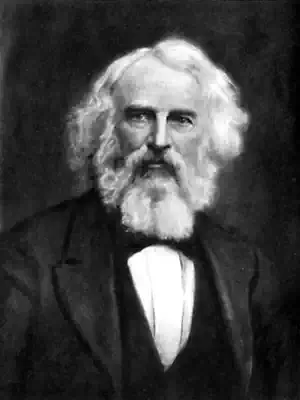
Henry Wadsworth Longfellow
Morituri Salutamus: Poem for the Fiftieth Anniversary of th
Morituri Salutamus: Poem for the Fiftieth Anniversary of th
Tempora labuntur, tacitisque senescimus annis,
Et fugiunt freno non remorante dies.
Ovid, Fastorum, Lib. vi.
"O Cæsar, we who are about to die
Salute you!" was the gladiators' cry
In the arena, standing face to face
With death and with the Roman populace.
O ye familiar scenes,--ye groves of pine,
That once were mine and are no longer mine,-Thou
river, widening through the meadows green
To the vast sea, so near and yet unseen,-Ye
halls, in whose seclusion and repose
Phantoms of fame, like exhalations, rose
And vanished,--we who are about to die,
Salute you; earth and air and sea and sky,
And the Imperial Sun that scatters down
His sovereign splendors upon grove and town.
Ye do not answer us! ye do not hear!
We are forgotten; and in your austere
And calm indifference, ye little care
Whether we come or go, or whence or where.
What passing generations fill these halls,
What passing voices echo from these walls,
Ye heed not; we are only as the blast,
A moment heard, and then forever past.
Not so the teachers who in earlier days
Led our bewildered feet through learning's maze;
They answer us--alas! what have I said?
What greetings come there from the voiceless dead?
What salutation, welcome, or reply?
What pressure from the hands that lifeless lie?
They are no longer here; they all are gone
Into the land of shadows,--all save one.
Honor and reverence, and the good repute
That follows faithful service as its fruit,
Be unto him, whom living we salute.
The great Italian poet, when he made
His dreadful journey to the realms of shade,
Met there the old instructor of his youth,
And cried in tones of pity and of ruth:
"Oh, never from the memory of my heart
Your dear, paternal image shall depart,
Who while on earth, ere yet by death surprised,
Taught me how mortals are immortalized;
How grateful am I for that patient care
All my life long my language shall declare."
To-day we make the poet's words our own,
And utter them in plaintive undertone;
Nor to the living only be they said,
But to the other living called the dead,
Whose dear, paternal images appear
Not wrapped in gloom, but robed in sunshine here;
Whose simple lives, complete and without flaw,
Were part and parcel of great Nature's law;
Who said not to their Lord, as if afraid,
"Here is thy talent in a napkin laid,"
But labored in their sphere, as men who live
In the delight that work alone can give.
Peace be to them; eternal peace and rest,
And the fulfilment of the great behest:
"Ye have been faithful over a few things,
Over ten cities shall ye reign as kings."
And ye who fill the places we once filled,
And follow in the furrows that we tilled,
Young men, whose generous hearts are beating high,
We who are old, and are about to die,
Salute you; hail you; take your hands in ours,
And crown you with our welcome as with flowers!
How beautiful is youth! how bright it gleams
With its illusions, aspirations, dreams!
Book of Beginnings, Story without End,
Each maid a heroine, and each man a friend!
Aladdin's Lamp, and Fortunatus' Purse,
That holds the treasures of the universe!
All possibilities are in its hands,
No danger daunts it, and no foe withstands;
In its sublime audacity of faith,
"Be thou removed!" it to the mountain saith,
And with ambitious feet, secure and proud,
Ascends the ladder leaning on the cloud!
As ancient Priam at the Scæan gate
Sat on the walls of Troy in regal state
With the old men, too old and weak to fight,
Chirping like grasshoppers in their delight
To see the embattled hosts, with spear and shield,
Of Trojans and Achaians in the field;
So from the snowy summits of our years
We see you in the plain, as each appears,
And question of you; asking, "Who is he
That towers above the others? Which may be
Atreides, Menelaus, Odysseus,
Ajax the great, or bold Idomeneus?"
Let him not boast who puts his armor on
As he who puts it off, the battle done.
Study yourselves; and most of all note well
Wherein kind Nature meant you to excel.
Not every blossom ripens into fruit;
Minerva, the inventress of the flute,
Flung it aside, when she her face surveyed
Distorted in a fountain as she played;
The unlucky Marsyas found it, and his fate
Was one to make the bravest hesitate.
Write on your doors the saying wise and old,
"Be bold! be bold!" and everywhere, "Be bold;
Be not too bold!" Yet better the excess
Than the defect; better the more than less;
Better like Hector in the field to die,
Than like a perfumed Paris turn and fly.
And now, my classmates; ye remaining few
That number not the half of those we knew,
Ye, against whose familiar names not yet
The fatal asterisk of death is set,
Ye I salute! The horologe of Time
Strikes the half-century with a solemn chime,
And summons us together once again,
The joy of meeting not unmixed with pain.
Where are the others? Voices from the deep
Caverns of darkness answer me: "They sleep!"
I name no names; instinctively I feel
Each at some well-remembered grave will kneel,
And from the inscription wipe the weeds and moss,
For every heart best knoweth its own loss.
I see their scattered gravestones gleaming white
Through the pale dusk of the impending night;
O'er all alike the impartial sunset throws
Its golden lilies mingled with the rose;
We give to each a tender thought, and pass
Out of the graveyards with their tangled grass,
Unto these scenes frequented by our feet
When we were young, and life was fresh and sweet.
What shall I say to you? What can I say
Better than silence is? When I survey
This throng of faces turned to meet my own,
Friendly and fair, and yet to me unknown,
Transformed the very landscape seems to be;
It is the same, yet not the same to me.
So many memories crowd upon my brain,
So many ghosts are in the wooded plain,
I fain would steal away, with noiseless tread,
As from a house where some one lieth dead.
I cannot go;--I pause;--I hesitate;
My feet reluctant linger at the gate;
As one who struggles in a troubled dream
To speak and cannot, to myself I seem.
Vanish the dream! Vanish the idle fears!
Vanish the rolling mists of fifty years!
Whatever time or space may intervene,
I will not be a stranger in this scene.
Here every doubt, all indecision, ends;
Hail, my companions, comrades, classmates, friends!
Ah me! the fifty years since last we met
Seem to me fifty folios bound and set
By Time, the great transcriber, on his shelves,
Wherein are written the histories of ourselves.
What tragedies, what comedies, are there;
What joy and grief, what rapture and despair!
What chronicles of triumph and defeat,
Of struggle, and temptation, and retreat!
What records of regrets, and doubts, and fears!
What pages blotted, blistered by our tears!
What lovely landscapes on the margin shine,
What sweet, angelic faces, what divine
And holy images of love and trust,
Undimmed by age, unsoiled by damp or dust!
Whose hand shall dare to open and explore
These volumes, closed and clasped forevermore?
Not mine. With reverential feet I pass;
I hear a voice that cries, "Alas! alas!
Whatever hath been written shall remain,
Nor be erased nor written o'er again;
The unwritten only still belongs to thee:
Take heed, and ponder well what that shall be."
As children frightened by a thunder-cloud
Are reassured if some one reads aloud
A tale of wonder, with enchantment fraught,
Or wild adventure, that diverts their thought,
Let me endeavor with a tale to chase
The gathering shadows of the time and place,
And banish what we all too deeply feel
Wholly to say, or wholly to conceal.
In mediæval Rome, I know not where,
There stood an image with its arm in air,
And on its lifted finger, shining clear,
A golden ring with the device, "Strike here!"
Greatly the people wondered, though none guessed
The meaning that these words but half expressed,
Until a learned clerk, who at noonday
With downcast eyes was passing on his way,
Paused, and observed the spot, and marked it well,
Whereon the shadow of the finger fell;
And, coming back at midnight, delved, and found
A secret stairway leading underground.
Down this he passed into a spacious hall,
Lit by a flaming jewel on the wall;
And opposite, in threatening attitude,
With bow and shaft a brazen statue stood.
Upon its forehead, like a coronet,
Were these mysterious words of menace set:
"That which I am, I am; my fatal aim
None can escape, not even yon luminous flame!"
Midway the hall was a fair table placed,
With cloth of gold, and golden cups enchased
With rubies, and the plates and knives were gold,
And gold the bread and viands manifold.
Around it, silent, motionless, and sad,
Were seated gallant knights in armor clad,
And ladies beautiful with plume and zone,
But they were stone, their hearts within were stone;
And the vast hall was filled in every part
With silent crowds, stony in face and heart.
Long at the scene, bewildered and amazed
The trembling clerk in speechless wonder gazed;
Then from the table, by his greed made bold,
He seized a goblet and a knife of gold,
And suddenly from their seats the guests upsprang,
The vaulted ceiling with loud clamors rang,
The archer sped his arrow, at their call,
Shattering the lambent jewel on the wall,
And all was dark around and overhead;-Stark
on the floor the luckless clerk lay dead!
The writer of this legend then records
Its ghostly application in these words:
The image is the Adversary old,
Whose beckoning finger points to realms of gold;
Our lusts and passions are the downward stair
That leads the soul from a diviner air;
The archer, Death; the flaming jewel, Life;
Terrestrial goods, the goblet and the knife;
The knights and ladies, all whose flesh and bone
By avarice have been hardened into stone;
The clerk, the scholar whom the love of pelf
Tempts from his books and from his nobler self.
The scholar and the world! The endless strife,
The discord in the harmonies of life!
The love of learning, the sequestered nooks,
And all the sweet serenity of books;
The market-place, the eager love of gain,
Whose aim is vanity, and whose end is pain!
But why, you ask me, should this tale be told
To men grown old, or who are growing old?
It is too late! Ah, nothing is too late
Till the tired heart shall cease to palpitate.
Cato learned Greek at eighty; Sophocles
Wrote his grand Oedipus, and Simonides
Bore off the prize of verse from his compeers,
When each had numbered more than fourscore years,
And Theophrastus, at fourscore and ten,
Had but begun his "Characters of Men."
Chaucer, at Woodstock with the nightingales,
At sixty wrote the Canterbury Tales;
Goethe at Weimar, toiling to the last,
Completed Faust when eighty years were past.
These are indeed exceptions; but they show
How far the gulf-stream of our youth may flow
Into the arctic regions of our lives,
Where little else than life itself survives.
As the barometer foretells the storm
While still the skies are clear, the weather warm
So something in us, as old age draws near,
Betrays the pressure of the atmosphere.
The nimble mercury, ere we are aware,
Descends the elastic ladder of the air;
The telltale blood in artery and vein
Sinks from its higher levels in the brain;
Whatever poet, orator, or sage
May say of it, old age is still old age.
It is the waning, not the crescent moon;
The dusk of evening, not the blaze of noon;
It is not strength, but weakness; not desire,
But its surcease; not the fierce heat of fire,
The burning and consuming element,
But that of ashes and of embers spent,
In which some living sparks we still discern,
Enough to warm, but not enough to burn.
What then? Shall we sit idly down and say
The night hath come; it is no longer day?
The night hath not yet come; we are not quite
Cut off from labor by the failing light;
Something remains for us to do or dare;
Even the oldest tree some fruit may bear;
Not Oedipus Coloneus, or Greek Ode,
Or tales of pilgrims that one morning rode
Out of the gateway of the Tabard Inn,
But other something, would we but begin;
For age is opportunity no less
Than youth itself, though in another dress,
And as the evening twilight fades away
The sky is filled with stars, invisible by day.
Tempora labuntur, tacitisque senescimus annis,
Et fugiunt freno non remorante dies.
Ovid, Fastorum, Lib. vi.
"O Cæsar, we who are about to die
Salute you!" was the gladiators' cry
In the arena, standing face to face
With death and with the Roman populace.
O ye familiar scenes,--ye groves of pine,
That once were mine and are no longer mine,-Thou
river, widening through the meadows green
To the vast sea, so near and yet unseen,-Ye
halls, in whose seclusion and repose
Phantoms of fame, like exhalations, rose
And vanished,--we who are about to die,
Salute you; earth and air and sea and sky,
And the Imperial Sun that scatters down
His sovereign splendors upon grove and town.
Ye do not answer us! ye do not hear!
We are forgotten; and in your austere
And calm indifference, ye little care
Whether we come or go, or whence or where.
What passing generations fill these halls,
What passing voices echo from these walls,
Ye heed not; we are only as the blast,
A moment heard, and then forever past.
Not so the teachers who in earlier days
Led our bewildered feet through learning's maze;
They answer us--alas! what have I said?
What greetings come there from the voiceless dead?
What salutation, welcome, or reply?
What pressure from the hands that lifeless lie?
They are no longer here; they all are gone
Into the land of shadows,--all save one.
Honor and reverence, and the good repute
That follows faithful service as its fruit,
Be unto him, whom living we salute.
The great Italian poet, when he made
His dreadful journey to the realms of shade,
Met there the old instructor of his youth,
And cried in tones of pity and of ruth:
"Oh, never from the memory of my heart
Your dear, paternal image shall depart,
Who while on earth, ere yet by death surprised,
Taught me how mortals are immortalized;
How grateful am I for that patient care
All my life long my language shall declare."
To-day we make the poet's words our own,
And utter them in plaintive undertone;
Nor to the living only be they said,
But to the other living called the dead,
Whose dear, paternal images appear
Not wrapped in gloom, but robed in sunshine here;
Whose simple lives, complete and without flaw,
Were part and parcel of great Nature's law;
Who said not to their Lord, as if afraid,
"Here is thy talent in a napkin laid,"
But labored in their sphere, as men who live
In the delight that work alone can give.
Peace be to them; eternal peace and rest,
And the fulfilment of the great behest:
"Ye have been faithful over a few things,
Over ten cities shall ye reign as kings."
And ye who fill the places we once filled,
And follow in the furrows that we tilled,
Young men, whose generous hearts are beating high,
We who are old, and are about to die,
Salute you; hail you; take your hands in ours,
And crown you with our welcome as with flowers!
How beautiful is youth! how bright it gleams
With its illusions, aspirations, dreams!
Book of Beginnings, Story without End,
Each maid a heroine, and each man a friend!
Aladdin's Lamp, and Fortunatus' Purse,
That holds the treasures of the universe!
All possibilities are in its hands,
No danger daunts it, and no foe withstands;
In its sublime audacity of faith,
"Be thou removed!" it to the mountain saith,
And with ambitious feet, secure and proud,
Ascends the ladder leaning on the cloud!
As ancient Priam at the Scæan gate
Sat on the walls of Troy in regal state
With the old men, too old and weak to fight,
Chirping like grasshoppers in their delight
To see the embattled hosts, with spear and shield,
Of Trojans and Achaians in the field;
So from the snowy summits of our years
We see you in the plain, as each appears,
And question of you; asking, "Who is he
That towers above the others? Which may be
Atreides, Menelaus, Odysseus,
Ajax the great, or bold Idomeneus?"
Let him not boast who puts his armor on
As he who puts it off, the battle done.
Study yourselves; and most of all note well
Wherein kind Nature meant you to excel.
Not every blossom ripens into fruit;
Minerva, the inventress of the flute,
Flung it aside, when she her face surveyed
Distorted in a fountain as she played;
The unlucky Marsyas found it, and his fate
Was one to make the bravest hesitate.
Write on your doors the saying wise and old,
"Be bold! be bold!" and everywhere, "Be bold;
Be not too bold!" Yet better the excess
Than the defect; better the more than less;
Better like Hector in the field to die,
Than like a perfumed Paris turn and fly.
And now, my classmates; ye remaining few
That number not the half of those we knew,
Ye, against whose familiar names not yet
The fatal asterisk of death is set,
Ye I salute! The horologe of Time
Strikes the half-century with a solemn chime,
And summons us together once again,
The joy of meeting not unmixed with pain.
Where are the others? Voices from the deep
Caverns of darkness answer me: "They sleep!"
I name no names; instinctively I feel
Each at some well-remembered grave will kneel,
And from the inscription wipe the weeds and moss,
For every heart best knoweth its own loss.
I see their scattered gravestones gleaming white
Through the pale dusk of the impending night;
O'er all alike the impartial sunset throws
Its golden lilies mingled with the rose;
We give to each a tender thought, and pass
Out of the graveyards with their tangled grass,
Unto these scenes frequented by our feet
When we were young, and life was fresh and sweet.
What shall I say to you? What can I say
Better than silence is? When I survey
This throng of faces turned to meet my own,
Friendly and fair, and yet to me unknown,
Transformed the very landscape seems to be;
It is the same, yet not the same to me.
So many memories crowd upon my brain,
So many ghosts are in the wooded plain,
I fain would steal away, with noiseless tread,
As from a house where some one lieth dead.
I cannot go;--I pause;--I hesitate;
My feet reluctant linger at the gate;
As one who struggles in a troubled dream
To speak and cannot, to myself I seem.
Vanish the dream! Vanish the idle fears!
Vanish the rolling mists of fifty years!
Whatever time or space may intervene,
I will not be a stranger in this scene.
Here every doubt, all indecision, ends;
Hail, my companions, comrades, classmates, friends!
Ah me! the fifty years since last we met
Seem to me fifty folios bound and set
By Time, the great transcriber, on his shelves,
Wherein are written the histories of ourselves.
What tragedies, what comedies, are there;
What joy and grief, what rapture and despair!
What chronicles of triumph and defeat,
Of struggle, and temptation, and retreat!
What records of regrets, and doubts, and fears!
What pages blotted, blistered by our tears!
What lovely landscapes on the margin shine,
What sweet, angelic faces, what divine
And holy images of love and trust,
Undimmed by age, unsoiled by damp or dust!
Whose hand shall dare to open and explore
These volumes, closed and clasped forevermore?
Not mine. With reverential feet I pass;
I hear a voice that cries, "Alas! alas!
Whatever hath been written shall remain,
Nor be erased nor written o'er again;
The unwritten only still belongs to thee:
Take heed, and ponder well what that shall be."
As children frightened by a thunder-cloud
Are reassured if some one reads aloud
A tale of wonder, with enchantment fraught,
Or wild adventure, that diverts their thought,
Let me endeavor with a tale to chase
The gathering shadows of the time and place,
And banish what we all too deeply feel
Wholly to say, or wholly to conceal.
In mediæval Rome, I know not where,
There stood an image with its arm in air,
And on its lifted finger, shining clear,
A golden ring with the device, "Strike here!"
Greatly the people wondered, though none guessed
The meaning that these words but half expressed,
Until a learned clerk, who at noonday
With downcast eyes was passing on his way,
Paused, and observed the spot, and marked it well,
Whereon the shadow of the finger fell;
And, coming back at midnight, delved, and found
A secret stairway leading underground.
Down this he passed into a spacious hall,
Lit by a flaming jewel on the wall;
And opposite, in threatening attitude,
With bow and shaft a brazen statue stood.
Upon its forehead, like a coronet,
Were these mysterious words of menace set:
"That which I am, I am; my fatal aim
None can escape, not even yon luminous flame!"
Midway the hall was a fair table placed,
With cloth of gold, and golden cups enchased
With rubies, and the plates and knives were gold,
And gold the bread and viands manifold.
Around it, silent, motionless, and sad,
Were seated gallant knights in armor clad,
And ladies beautiful with plume and zone,
But they were stone, their hearts within were stone;
And the vast hall was filled in every part
With silent crowds, stony in face and heart.
Long at the scene, bewildered and amazed
The trembling clerk in speechless wonder gazed;
Then from the table, by his greed made bold,
He seized a goblet and a knife of gold,
And suddenly from their seats the guests upsprang,
The vaulted ceiling with loud clamors rang,
The archer sped his arrow, at their call,
Shattering the lambent jewel on the wall,
And all was dark around and overhead;-Stark
on the floor the luckless clerk lay dead!
The writer of this legend then records
Its ghostly application in these words:
The image is the Adversary old,
Whose beckoning finger points to realms of gold;
Our lusts and passions are the downward stair
That leads the soul from a diviner air;
The archer, Death; the flaming jewel, Life;
Terrestrial goods, the goblet and the knife;
The knights and ladies, all whose flesh and bone
By avarice have been hardened into stone;
The clerk, the scholar whom the love of pelf
Tempts from his books and from his nobler self.
The scholar and the world! The endless strife,
The discord in the harmonies of life!
The love of learning, the sequestered nooks,
And all the sweet serenity of books;
The market-place, the eager love of gain,
Whose aim is vanity, and whose end is pain!
But why, you ask me, should this tale be told
To men grown old, or who are growing old?
It is too late! Ah, nothing is too late
Till the tired heart shall cease to palpitate.
Cato learned Greek at eighty; Sophocles
Wrote his grand Oedipus, and Simonides
Bore off the prize of verse from his compeers,
When each had numbered more than fourscore years,
And Theophrastus, at fourscore and ten,
Had but begun his "Characters of Men."
Chaucer, at Woodstock with the nightingales,
At sixty wrote the Canterbury Tales;
Goethe at Weimar, toiling to the last,
Completed Faust when eighty years were past.
These are indeed exceptions; but they show
How far the gulf-stream of our youth may flow
Into the arctic regions of our lives,
Where little else than life itself survives.
As the barometer foretells the storm
While still the skies are clear, the weather warm
So something in us, as old age draws near,
Betrays the pressure of the atmosphere.
The nimble mercury, ere we are aware,
Descends the elastic ladder of the air;
The telltale blood in artery and vein
Sinks from its higher levels in the brain;
Whatever poet, orator, or sage
May say of it, old age is still old age.
It is the waning, not the crescent moon;
The dusk of evening, not the blaze of noon;
It is not strength, but weakness; not desire,
But its surcease; not the fierce heat of fire,
The burning and consuming element,
But that of ashes and of embers spent,
In which some living sparks we still discern,
Enough to warm, but not enough to burn.
What then? Shall we sit idly down and say
The night hath come; it is no longer day?
The night hath not yet come; we are not quite
Cut off from labor by the failing light;
Something remains for us to do or dare;
Even the oldest tree some fruit may bear;
Not Oedipus Coloneus, or Greek Ode,
Or tales of pilgrims that one morning rode
Out of the gateway of the Tabard Inn,
But other something, would we but begin;
For age is opportunity no less
Than youth itself, though in another dress,
And as the evening twilight fades away
The sky is filled with stars, invisible by day.
362
Henry Wadsworth Longfellow
Morituri Salutamus: Poem for the Fiftieth Anniversary of th
Morituri Salutamus: Poem for the Fiftieth Anniversary of th
Tempora labuntur, tacitisque senescimus annis,
Et fugiunt freno non remorante dies.
Ovid, Fastorum, Lib. vi.
"O Cæsar, we who are about to die
Salute you!" was the gladiators' cry
In the arena, standing face to face
With death and with the Roman populace.
O ye familiar scenes,--ye groves of pine,
That once were mine and are no longer mine,-Thou
river, widening through the meadows green
To the vast sea, so near and yet unseen,-Ye
halls, in whose seclusion and repose
Phantoms of fame, like exhalations, rose
And vanished,--we who are about to die,
Salute you; earth and air and sea and sky,
And the Imperial Sun that scatters down
His sovereign splendors upon grove and town.
Ye do not answer us! ye do not hear!
We are forgotten; and in your austere
And calm indifference, ye little care
Whether we come or go, or whence or where.
What passing generations fill these halls,
What passing voices echo from these walls,
Ye heed not; we are only as the blast,
A moment heard, and then forever past.
Not so the teachers who in earlier days
Led our bewildered feet through learning's maze;
They answer us--alas! what have I said?
What greetings come there from the voiceless dead?
What salutation, welcome, or reply?
What pressure from the hands that lifeless lie?
They are no longer here; they all are gone
Into the land of shadows,--all save one.
Honor and reverence, and the good repute
That follows faithful service as its fruit,
Be unto him, whom living we salute.
The great Italian poet, when he made
His dreadful journey to the realms of shade,
Met there the old instructor of his youth,
And cried in tones of pity and of ruth:
"Oh, never from the memory of my heart
Your dear, paternal image shall depart,
Who while on earth, ere yet by death surprised,
Taught me how mortals are immortalized;
How grateful am I for that patient care
All my life long my language shall declare."
To-day we make the poet's words our own,
And utter them in plaintive undertone;
Nor to the living only be they said,
But to the other living called the dead,
Whose dear, paternal images appear
Not wrapped in gloom, but robed in sunshine here;
Whose simple lives, complete and without flaw,
Were part and parcel of great Nature's law;
Who said not to their Lord, as if afraid,
"Here is thy talent in a napkin laid,"
But labored in their sphere, as men who live
In the delight that work alone can give.
Peace be to them; eternal peace and rest,
And the fulfilment of the great behest:
"Ye have been faithful over a few things,
Over ten cities shall ye reign as kings."
And ye who fill the places we once filled,
And follow in the furrows that we tilled,
Young men, whose generous hearts are beating high,
We who are old, and are about to die,
Salute you; hail you; take your hands in ours,
And crown you with our welcome as with flowers!
How beautiful is youth! how bright it gleams
With its illusions, aspirations, dreams!
Book of Beginnings, Story without End,
Each maid a heroine, and each man a friend!
Aladdin's Lamp, and Fortunatus' Purse,
That holds the treasures of the universe!
All possibilities are in its hands,
No danger daunts it, and no foe withstands;
In its sublime audacity of faith,
"Be thou removed!" it to the mountain saith,
And with ambitious feet, secure and proud,
Ascends the ladder leaning on the cloud!
As ancient Priam at the Scæan gate
Sat on the walls of Troy in regal state
With the old men, too old and weak to fight,
Chirping like grasshoppers in their delight
To see the embattled hosts, with spear and shield,
Of Trojans and Achaians in the field;
So from the snowy summits of our years
We see you in the plain, as each appears,
And question of you; asking, "Who is he
That towers above the others? Which may be
Atreides, Menelaus, Odysseus,
Ajax the great, or bold Idomeneus?"
Let him not boast who puts his armor on
As he who puts it off, the battle done.
Study yourselves; and most of all note well
Wherein kind Nature meant you to excel.
Not every blossom ripens into fruit;
Minerva, the inventress of the flute,
Flung it aside, when she her face surveyed
Distorted in a fountain as she played;
The unlucky Marsyas found it, and his fate
Was one to make the bravest hesitate.
Write on your doors the saying wise and old,
"Be bold! be bold!" and everywhere, "Be bold;
Be not too bold!" Yet better the excess
Than the defect; better the more than less;
Better like Hector in the field to die,
Than like a perfumed Paris turn and fly.
And now, my classmates; ye remaining few
That number not the half of those we knew,
Ye, against whose familiar names not yet
The fatal asterisk of death is set,
Ye I salute! The horologe of Time
Strikes the half-century with a solemn chime,
And summons us together once again,
The joy of meeting not unmixed with pain.
Where are the others? Voices from the deep
Caverns of darkness answer me: "They sleep!"
I name no names; instinctively I feel
Each at some well-remembered grave will kneel,
And from the inscription wipe the weeds and moss,
For every heart best knoweth its own loss.
I see their scattered gravestones gleaming white
Through the pale dusk of the impending night;
O'er all alike the impartial sunset throws
Its golden lilies mingled with the rose;
We give to each a tender thought, and pass
Out of the graveyards with their tangled grass,
Unto these scenes frequented by our feet
When we were young, and life was fresh and sweet.
What shall I say to you? What can I say
Better than silence is? When I survey
This throng of faces turned to meet my own,
Friendly and fair, and yet to me unknown,
Transformed the very landscape seems to be;
It is the same, yet not the same to me.
So many memories crowd upon my brain,
So many ghosts are in the wooded plain,
I fain would steal away, with noiseless tread,
As from a house where some one lieth dead.
I cannot go;--I pause;--I hesitate;
My feet reluctant linger at the gate;
As one who struggles in a troubled dream
To speak and cannot, to myself I seem.
Vanish the dream! Vanish the idle fears!
Vanish the rolling mists of fifty years!
Whatever time or space may intervene,
I will not be a stranger in this scene.
Here every doubt, all indecision, ends;
Hail, my companions, comrades, classmates, friends!
Ah me! the fifty years since last we met
Seem to me fifty folios bound and set
By Time, the great transcriber, on his shelves,
Wherein are written the histories of ourselves.
What tragedies, what comedies, are there;
What joy and grief, what rapture and despair!
What chronicles of triumph and defeat,
Of struggle, and temptation, and retreat!
What records of regrets, and doubts, and fears!
What pages blotted, blistered by our tears!
What lovely landscapes on the margin shine,
What sweet, angelic faces, what divine
And holy images of love and trust,
Undimmed by age, unsoiled by damp or dust!
Whose hand shall dare to open and explore
These volumes, closed and clasped forevermore?
Not mine. With reverential feet I pass;
I hear a voice that cries, "Alas! alas!
Whatever hath been written shall remain,
Nor be erased nor written o'er again;
The unwritten only still belongs to thee:
Take heed, and ponder well what that shall be."
As children frightened by a thunder-cloud
Are reassured if some one reads aloud
A tale of wonder, with enchantment fraught,
Or wild adventure, that diverts their thought,
Let me endeavor with a tale to chase
The gathering shadows of the time and place,
And banish what we all too deeply feel
Wholly to say, or wholly to conceal.
In mediæval Rome, I know not where,
There stood an image with its arm in air,
And on its lifted finger, shining clear,
A golden ring with the device, "Strike here!"
Greatly the people wondered, though none guessed
The meaning that these words but half expressed,
Until a learned clerk, who at noonday
With downcast eyes was passing on his way,
Paused, and observed the spot, and marked it well,
Whereon the shadow of the finger fell;
And, coming back at midnight, delved, and found
A secret stairway leading underground.
Down this he passed into a spacious hall,
Lit by a flaming jewel on the wall;
And opposite, in threatening attitude,
With bow and shaft a brazen statue stood.
Upon its forehead, like a coronet,
Were these mysterious words of menace set:
"That which I am, I am; my fatal aim
None can escape, not even yon luminous flame!"
Midway the hall was a fair table placed,
With cloth of gold, and golden cups enchased
With rubies, and the plates and knives were gold,
And gold the bread and viands manifold.
Around it, silent, motionless, and sad,
Were seated gallant knights in armor clad,
And ladies beautiful with plume and zone,
But they were stone, their hearts within were stone;
And the vast hall was filled in every part
With silent crowds, stony in face and heart.
Long at the scene, bewildered and amazed
The trembling clerk in speechless wonder gazed;
Then from the table, by his greed made bold,
He seized a goblet and a knife of gold,
And suddenly from their seats the guests upsprang,
The vaulted ceiling with loud clamors rang,
The archer sped his arrow, at their call,
Shattering the lambent jewel on the wall,
And all was dark around and overhead;-Stark
on the floor the luckless clerk lay dead!
The writer of this legend then records
Its ghostly application in these words:
The image is the Adversary old,
Whose beckoning finger points to realms of gold;
Our lusts and passions are the downward stair
That leads the soul from a diviner air;
The archer, Death; the flaming jewel, Life;
Terrestrial goods, the goblet and the knife;
The knights and ladies, all whose flesh and bone
By avarice have been hardened into stone;
The clerk, the scholar whom the love of pelf
Tempts from his books and from his nobler self.
The scholar and the world! The endless strife,
The discord in the harmonies of life!
The love of learning, the sequestered nooks,
And all the sweet serenity of books;
The market-place, the eager love of gain,
Whose aim is vanity, and whose end is pain!
But why, you ask me, should this tale be told
To men grown old, or who are growing old?
It is too late! Ah, nothing is too late
Till the tired heart shall cease to palpitate.
Cato learned Greek at eighty; Sophocles
Wrote his grand Oedipus, and Simonides
Bore off the prize of verse from his compeers,
When each had numbered more than fourscore years,
And Theophrastus, at fourscore and ten,
Had but begun his "Characters of Men."
Chaucer, at Woodstock with the nightingales,
At sixty wrote the Canterbury Tales;
Goethe at Weimar, toiling to the last,
Completed Faust when eighty years were past.
These are indeed exceptions; but they show
How far the gulf-stream of our youth may flow
Into the arctic regions of our lives,
Where little else than life itself survives.
As the barometer foretells the storm
While still the skies are clear, the weather warm
So something in us, as old age draws near,
Betrays the pressure of the atmosphere.
The nimble mercury, ere we are aware,
Descends the elastic ladder of the air;
The telltale blood in artery and vein
Sinks from its higher levels in the brain;
Whatever poet, orator, or sage
May say of it, old age is still old age.
It is the waning, not the crescent moon;
The dusk of evening, not the blaze of noon;
It is not strength, but weakness; not desire,
But its surcease; not the fierce heat of fire,
The burning and consuming element,
But that of ashes and of embers spent,
In which some living sparks we still discern,
Enough to warm, but not enough to burn.
What then? Shall we sit idly down and say
The night hath come; it is no longer day?
The night hath not yet come; we are not quite
Cut off from labor by the failing light;
Something remains for us to do or dare;
Even the oldest tree some fruit may bear;
Not Oedipus Coloneus, or Greek Ode,
Or tales of pilgrims that one morning rode
Out of the gateway of the Tabard Inn,
But other something, would we but begin;
For age is opportunity no less
Than youth itself, though in another dress,
And as the evening twilight fades away
The sky is filled with stars, invisible by day.
Tempora labuntur, tacitisque senescimus annis,
Et fugiunt freno non remorante dies.
Ovid, Fastorum, Lib. vi.
"O Cæsar, we who are about to die
Salute you!" was the gladiators' cry
In the arena, standing face to face
With death and with the Roman populace.
O ye familiar scenes,--ye groves of pine,
That once were mine and are no longer mine,-Thou
river, widening through the meadows green
To the vast sea, so near and yet unseen,-Ye
halls, in whose seclusion and repose
Phantoms of fame, like exhalations, rose
And vanished,--we who are about to die,
Salute you; earth and air and sea and sky,
And the Imperial Sun that scatters down
His sovereign splendors upon grove and town.
Ye do not answer us! ye do not hear!
We are forgotten; and in your austere
And calm indifference, ye little care
Whether we come or go, or whence or where.
What passing generations fill these halls,
What passing voices echo from these walls,
Ye heed not; we are only as the blast,
A moment heard, and then forever past.
Not so the teachers who in earlier days
Led our bewildered feet through learning's maze;
They answer us--alas! what have I said?
What greetings come there from the voiceless dead?
What salutation, welcome, or reply?
What pressure from the hands that lifeless lie?
They are no longer here; they all are gone
Into the land of shadows,--all save one.
Honor and reverence, and the good repute
That follows faithful service as its fruit,
Be unto him, whom living we salute.
The great Italian poet, when he made
His dreadful journey to the realms of shade,
Met there the old instructor of his youth,
And cried in tones of pity and of ruth:
"Oh, never from the memory of my heart
Your dear, paternal image shall depart,
Who while on earth, ere yet by death surprised,
Taught me how mortals are immortalized;
How grateful am I for that patient care
All my life long my language shall declare."
To-day we make the poet's words our own,
And utter them in plaintive undertone;
Nor to the living only be they said,
But to the other living called the dead,
Whose dear, paternal images appear
Not wrapped in gloom, but robed in sunshine here;
Whose simple lives, complete and without flaw,
Were part and parcel of great Nature's law;
Who said not to their Lord, as if afraid,
"Here is thy talent in a napkin laid,"
But labored in their sphere, as men who live
In the delight that work alone can give.
Peace be to them; eternal peace and rest,
And the fulfilment of the great behest:
"Ye have been faithful over a few things,
Over ten cities shall ye reign as kings."
And ye who fill the places we once filled,
And follow in the furrows that we tilled,
Young men, whose generous hearts are beating high,
We who are old, and are about to die,
Salute you; hail you; take your hands in ours,
And crown you with our welcome as with flowers!
How beautiful is youth! how bright it gleams
With its illusions, aspirations, dreams!
Book of Beginnings, Story without End,
Each maid a heroine, and each man a friend!
Aladdin's Lamp, and Fortunatus' Purse,
That holds the treasures of the universe!
All possibilities are in its hands,
No danger daunts it, and no foe withstands;
In its sublime audacity of faith,
"Be thou removed!" it to the mountain saith,
And with ambitious feet, secure and proud,
Ascends the ladder leaning on the cloud!
As ancient Priam at the Scæan gate
Sat on the walls of Troy in regal state
With the old men, too old and weak to fight,
Chirping like grasshoppers in their delight
To see the embattled hosts, with spear and shield,
Of Trojans and Achaians in the field;
So from the snowy summits of our years
We see you in the plain, as each appears,
And question of you; asking, "Who is he
That towers above the others? Which may be
Atreides, Menelaus, Odysseus,
Ajax the great, or bold Idomeneus?"
Let him not boast who puts his armor on
As he who puts it off, the battle done.
Study yourselves; and most of all note well
Wherein kind Nature meant you to excel.
Not every blossom ripens into fruit;
Minerva, the inventress of the flute,
Flung it aside, when she her face surveyed
Distorted in a fountain as she played;
The unlucky Marsyas found it, and his fate
Was one to make the bravest hesitate.
Write on your doors the saying wise and old,
"Be bold! be bold!" and everywhere, "Be bold;
Be not too bold!" Yet better the excess
Than the defect; better the more than less;
Better like Hector in the field to die,
Than like a perfumed Paris turn and fly.
And now, my classmates; ye remaining few
That number not the half of those we knew,
Ye, against whose familiar names not yet
The fatal asterisk of death is set,
Ye I salute! The horologe of Time
Strikes the half-century with a solemn chime,
And summons us together once again,
The joy of meeting not unmixed with pain.
Where are the others? Voices from the deep
Caverns of darkness answer me: "They sleep!"
I name no names; instinctively I feel
Each at some well-remembered grave will kneel,
And from the inscription wipe the weeds and moss,
For every heart best knoweth its own loss.
I see their scattered gravestones gleaming white
Through the pale dusk of the impending night;
O'er all alike the impartial sunset throws
Its golden lilies mingled with the rose;
We give to each a tender thought, and pass
Out of the graveyards with their tangled grass,
Unto these scenes frequented by our feet
When we were young, and life was fresh and sweet.
What shall I say to you? What can I say
Better than silence is? When I survey
This throng of faces turned to meet my own,
Friendly and fair, and yet to me unknown,
Transformed the very landscape seems to be;
It is the same, yet not the same to me.
So many memories crowd upon my brain,
So many ghosts are in the wooded plain,
I fain would steal away, with noiseless tread,
As from a house where some one lieth dead.
I cannot go;--I pause;--I hesitate;
My feet reluctant linger at the gate;
As one who struggles in a troubled dream
To speak and cannot, to myself I seem.
Vanish the dream! Vanish the idle fears!
Vanish the rolling mists of fifty years!
Whatever time or space may intervene,
I will not be a stranger in this scene.
Here every doubt, all indecision, ends;
Hail, my companions, comrades, classmates, friends!
Ah me! the fifty years since last we met
Seem to me fifty folios bound and set
By Time, the great transcriber, on his shelves,
Wherein are written the histories of ourselves.
What tragedies, what comedies, are there;
What joy and grief, what rapture and despair!
What chronicles of triumph and defeat,
Of struggle, and temptation, and retreat!
What records of regrets, and doubts, and fears!
What pages blotted, blistered by our tears!
What lovely landscapes on the margin shine,
What sweet, angelic faces, what divine
And holy images of love and trust,
Undimmed by age, unsoiled by damp or dust!
Whose hand shall dare to open and explore
These volumes, closed and clasped forevermore?
Not mine. With reverential feet I pass;
I hear a voice that cries, "Alas! alas!
Whatever hath been written shall remain,
Nor be erased nor written o'er again;
The unwritten only still belongs to thee:
Take heed, and ponder well what that shall be."
As children frightened by a thunder-cloud
Are reassured if some one reads aloud
A tale of wonder, with enchantment fraught,
Or wild adventure, that diverts their thought,
Let me endeavor with a tale to chase
The gathering shadows of the time and place,
And banish what we all too deeply feel
Wholly to say, or wholly to conceal.
In mediæval Rome, I know not where,
There stood an image with its arm in air,
And on its lifted finger, shining clear,
A golden ring with the device, "Strike here!"
Greatly the people wondered, though none guessed
The meaning that these words but half expressed,
Until a learned clerk, who at noonday
With downcast eyes was passing on his way,
Paused, and observed the spot, and marked it well,
Whereon the shadow of the finger fell;
And, coming back at midnight, delved, and found
A secret stairway leading underground.
Down this he passed into a spacious hall,
Lit by a flaming jewel on the wall;
And opposite, in threatening attitude,
With bow and shaft a brazen statue stood.
Upon its forehead, like a coronet,
Were these mysterious words of menace set:
"That which I am, I am; my fatal aim
None can escape, not even yon luminous flame!"
Midway the hall was a fair table placed,
With cloth of gold, and golden cups enchased
With rubies, and the plates and knives were gold,
And gold the bread and viands manifold.
Around it, silent, motionless, and sad,
Were seated gallant knights in armor clad,
And ladies beautiful with plume and zone,
But they were stone, their hearts within were stone;
And the vast hall was filled in every part
With silent crowds, stony in face and heart.
Long at the scene, bewildered and amazed
The trembling clerk in speechless wonder gazed;
Then from the table, by his greed made bold,
He seized a goblet and a knife of gold,
And suddenly from their seats the guests upsprang,
The vaulted ceiling with loud clamors rang,
The archer sped his arrow, at their call,
Shattering the lambent jewel on the wall,
And all was dark around and overhead;-Stark
on the floor the luckless clerk lay dead!
The writer of this legend then records
Its ghostly application in these words:
The image is the Adversary old,
Whose beckoning finger points to realms of gold;
Our lusts and passions are the downward stair
That leads the soul from a diviner air;
The archer, Death; the flaming jewel, Life;
Terrestrial goods, the goblet and the knife;
The knights and ladies, all whose flesh and bone
By avarice have been hardened into stone;
The clerk, the scholar whom the love of pelf
Tempts from his books and from his nobler self.
The scholar and the world! The endless strife,
The discord in the harmonies of life!
The love of learning, the sequestered nooks,
And all the sweet serenity of books;
The market-place, the eager love of gain,
Whose aim is vanity, and whose end is pain!
But why, you ask me, should this tale be told
To men grown old, or who are growing old?
It is too late! Ah, nothing is too late
Till the tired heart shall cease to palpitate.
Cato learned Greek at eighty; Sophocles
Wrote his grand Oedipus, and Simonides
Bore off the prize of verse from his compeers,
When each had numbered more than fourscore years,
And Theophrastus, at fourscore and ten,
Had but begun his "Characters of Men."
Chaucer, at Woodstock with the nightingales,
At sixty wrote the Canterbury Tales;
Goethe at Weimar, toiling to the last,
Completed Faust when eighty years were past.
These are indeed exceptions; but they show
How far the gulf-stream of our youth may flow
Into the arctic regions of our lives,
Where little else than life itself survives.
As the barometer foretells the storm
While still the skies are clear, the weather warm
So something in us, as old age draws near,
Betrays the pressure of the atmosphere.
The nimble mercury, ere we are aware,
Descends the elastic ladder of the air;
The telltale blood in artery and vein
Sinks from its higher levels in the brain;
Whatever poet, orator, or sage
May say of it, old age is still old age.
It is the waning, not the crescent moon;
The dusk of evening, not the blaze of noon;
It is not strength, but weakness; not desire,
But its surcease; not the fierce heat of fire,
The burning and consuming element,
But that of ashes and of embers spent,
In which some living sparks we still discern,
Enough to warm, but not enough to burn.
What then? Shall we sit idly down and say
The night hath come; it is no longer day?
The night hath not yet come; we are not quite
Cut off from labor by the failing light;
Something remains for us to do or dare;
Even the oldest tree some fruit may bear;
Not Oedipus Coloneus, or Greek Ode,
Or tales of pilgrims that one morning rode
Out of the gateway of the Tabard Inn,
But other something, would we but begin;
For age is opportunity no less
Than youth itself, though in another dress,
And as the evening twilight fades away
The sky is filled with stars, invisible by day.
362
Henry Wadsworth Longfellow
Mezzo Cammin
Mezzo Cammin
Half of my life is gone, and I have let
The years slip from me and have not fulfilled
The aspiration of my youth, to build
Some tower of song with lofty parapet.
Not indolence, nor pleasure, nor the fret
Of restless passions chat would not be stilled,
But sorrow, and a care that almost killed,
Kept me from what I may accomplish yet;
Though, half way up the hill, I see the Past
Lying beneath me with its sounds and sights,-A
city in the twilight dim and vast,
With smoking roofs, soft bells, and gleaming lights.-And
hear above me on the autumnal blast
The cataract of Death far thundering from the heights.
Half of my life is gone, and I have let
The years slip from me and have not fulfilled
The aspiration of my youth, to build
Some tower of song with lofty parapet.
Not indolence, nor pleasure, nor the fret
Of restless passions chat would not be stilled,
But sorrow, and a care that almost killed,
Kept me from what I may accomplish yet;
Though, half way up the hill, I see the Past
Lying beneath me with its sounds and sights,-A
city in the twilight dim and vast,
With smoking roofs, soft bells, and gleaming lights.-And
hear above me on the autumnal blast
The cataract of Death far thundering from the heights.
359
Henry Wadsworth Longfellow
Mezzo Cammin
Mezzo Cammin
Half of my life is gone, and I have let
The years slip from me and have not fulfilled
The aspiration of my youth, to build
Some tower of song with lofty parapet.
Not indolence, nor pleasure, nor the fret
Of restless passions chat would not be stilled,
But sorrow, and a care that almost killed,
Kept me from what I may accomplish yet;
Though, half way up the hill, I see the Past
Lying beneath me with its sounds and sights,-A
city in the twilight dim and vast,
With smoking roofs, soft bells, and gleaming lights.-And
hear above me on the autumnal blast
The cataract of Death far thundering from the heights.
Half of my life is gone, and I have let
The years slip from me and have not fulfilled
The aspiration of my youth, to build
Some tower of song with lofty parapet.
Not indolence, nor pleasure, nor the fret
Of restless passions chat would not be stilled,
But sorrow, and a care that almost killed,
Kept me from what I may accomplish yet;
Though, half way up the hill, I see the Past
Lying beneath me with its sounds and sights,-A
city in the twilight dim and vast,
With smoking roofs, soft bells, and gleaming lights.-And
hear above me on the autumnal blast
The cataract of Death far thundering from the heights.
359
Henry Wadsworth Longfellow
Mezzo Cammin
Mezzo Cammin
Half of my life is gone, and I have let
The years slip from me and have not fulfilled
The aspiration of my youth, to build
Some tower of song with lofty parapet.
Not indolence, nor pleasure, nor the fret
Of restless passions chat would not be stilled,
But sorrow, and a care that almost killed,
Kept me from what I may accomplish yet;
Though, half way up the hill, I see the Past
Lying beneath me with its sounds and sights,-A
city in the twilight dim and vast,
With smoking roofs, soft bells, and gleaming lights.-And
hear above me on the autumnal blast
The cataract of Death far thundering from the heights.
Half of my life is gone, and I have let
The years slip from me and have not fulfilled
The aspiration of my youth, to build
Some tower of song with lofty parapet.
Not indolence, nor pleasure, nor the fret
Of restless passions chat would not be stilled,
But sorrow, and a care that almost killed,
Kept me from what I may accomplish yet;
Though, half way up the hill, I see the Past
Lying beneath me with its sounds and sights,-A
city in the twilight dim and vast,
With smoking roofs, soft bells, and gleaming lights.-And
hear above me on the autumnal blast
The cataract of Death far thundering from the heights.
359
Henry Wadsworth Longfellow
Maidenhood
Maidenhood
Maiden! with the meek, brown eyes,
In whose orbs a shadow lies
Like the dusk in evening skies!
Thou whose locks outshine the sun,
Golden tresses, wreathed in one,
As the braided streamlets run!
Standing, with reluctant feet,
Where the brook and river meet,
Womanhood and childhood fleet!
Gazing, with a timid glance,
On the brooklet's swift advance,
On the river's broad expanse!
Deep and still, that gliding stream
Beautiful to thee must seem,
As the river of a dream.
Then why pause with indecision,
When bright angels in thy vision
Beckon thee to fields Elysian?
Seest thou shadows sailing by,
As the dove, with startled eye,
Sees the falcon's shadow fly?
Hearest thou voices on the shore,
That our ears perceive no more,
Deafened by the cataract's roar?
O, thou child of many prayers!
Life hath quickeands,--Life hath snares
Care and age come unawares!
Like the swell of some sweet tune,
Morning rises into noon,
May glides onward into June.
Childhood is the bough, where slumbered
Birds and blossoms many-numbered;--
Age, that bough with snows encumbered.
Gather, then, each flower that grows,
When the young heart overflows,
To embalm that tent of snows.
Bear a lily in thy hand;
Gates of brass cannot withstand
One touch of that magic wand.
Bear through sorrow, wrong, and ruth,
In thy heart the dew of youth,
On thy lips the smile of truth1
O, that dew, like balm, shall steal
Into wounds that cannot heal,
Even as sleep our eyes doth seal;
And that smile, like sunshine, dart
Into many a sunless heart,
For a smile of God thou art.
Maiden! with the meek, brown eyes,
In whose orbs a shadow lies
Like the dusk in evening skies!
Thou whose locks outshine the sun,
Golden tresses, wreathed in one,
As the braided streamlets run!
Standing, with reluctant feet,
Where the brook and river meet,
Womanhood and childhood fleet!
Gazing, with a timid glance,
On the brooklet's swift advance,
On the river's broad expanse!
Deep and still, that gliding stream
Beautiful to thee must seem,
As the river of a dream.
Then why pause with indecision,
When bright angels in thy vision
Beckon thee to fields Elysian?
Seest thou shadows sailing by,
As the dove, with startled eye,
Sees the falcon's shadow fly?
Hearest thou voices on the shore,
That our ears perceive no more,
Deafened by the cataract's roar?
O, thou child of many prayers!
Life hath quickeands,--Life hath snares
Care and age come unawares!
Like the swell of some sweet tune,
Morning rises into noon,
May glides onward into June.
Childhood is the bough, where slumbered
Birds and blossoms many-numbered;--
Age, that bough with snows encumbered.
Gather, then, each flower that grows,
When the young heart overflows,
To embalm that tent of snows.
Bear a lily in thy hand;
Gates of brass cannot withstand
One touch of that magic wand.
Bear through sorrow, wrong, and ruth,
In thy heart the dew of youth,
On thy lips the smile of truth1
O, that dew, like balm, shall steal
Into wounds that cannot heal,
Even as sleep our eyes doth seal;
And that smile, like sunshine, dart
Into many a sunless heart,
For a smile of God thou art.
361
Henry Wadsworth Longfellow
Maidenhood
Maidenhood
Maiden! with the meek, brown eyes,
In whose orbs a shadow lies
Like the dusk in evening skies!
Thou whose locks outshine the sun,
Golden tresses, wreathed in one,
As the braided streamlets run!
Standing, with reluctant feet,
Where the brook and river meet,
Womanhood and childhood fleet!
Gazing, with a timid glance,
On the brooklet's swift advance,
On the river's broad expanse!
Deep and still, that gliding stream
Beautiful to thee must seem,
As the river of a dream.
Then why pause with indecision,
When bright angels in thy vision
Beckon thee to fields Elysian?
Seest thou shadows sailing by,
As the dove, with startled eye,
Sees the falcon's shadow fly?
Hearest thou voices on the shore,
That our ears perceive no more,
Deafened by the cataract's roar?
O, thou child of many prayers!
Life hath quickeands,--Life hath snares
Care and age come unawares!
Like the swell of some sweet tune,
Morning rises into noon,
May glides onward into June.
Childhood is the bough, where slumbered
Birds and blossoms many-numbered;--
Age, that bough with snows encumbered.
Gather, then, each flower that grows,
When the young heart overflows,
To embalm that tent of snows.
Bear a lily in thy hand;
Gates of brass cannot withstand
One touch of that magic wand.
Bear through sorrow, wrong, and ruth,
In thy heart the dew of youth,
On thy lips the smile of truth1
O, that dew, like balm, shall steal
Into wounds that cannot heal,
Even as sleep our eyes doth seal;
And that smile, like sunshine, dart
Into many a sunless heart,
For a smile of God thou art.
Maiden! with the meek, brown eyes,
In whose orbs a shadow lies
Like the dusk in evening skies!
Thou whose locks outshine the sun,
Golden tresses, wreathed in one,
As the braided streamlets run!
Standing, with reluctant feet,
Where the brook and river meet,
Womanhood and childhood fleet!
Gazing, with a timid glance,
On the brooklet's swift advance,
On the river's broad expanse!
Deep and still, that gliding stream
Beautiful to thee must seem,
As the river of a dream.
Then why pause with indecision,
When bright angels in thy vision
Beckon thee to fields Elysian?
Seest thou shadows sailing by,
As the dove, with startled eye,
Sees the falcon's shadow fly?
Hearest thou voices on the shore,
That our ears perceive no more,
Deafened by the cataract's roar?
O, thou child of many prayers!
Life hath quickeands,--Life hath snares
Care and age come unawares!
Like the swell of some sweet tune,
Morning rises into noon,
May glides onward into June.
Childhood is the bough, where slumbered
Birds and blossoms many-numbered;--
Age, that bough with snows encumbered.
Gather, then, each flower that grows,
When the young heart overflows,
To embalm that tent of snows.
Bear a lily in thy hand;
Gates of brass cannot withstand
One touch of that magic wand.
Bear through sorrow, wrong, and ruth,
In thy heart the dew of youth,
On thy lips the smile of truth1
O, that dew, like balm, shall steal
Into wounds that cannot heal,
Even as sleep our eyes doth seal;
And that smile, like sunshine, dart
Into many a sunless heart,
For a smile of God thou art.
361
Henry Wadsworth Longfellow
Loss And Gain
Loss And Gain
When I compare
What I have lost with what I have gained,
What I have missed with what attained,
Little room do I find for pride.
I am aware
How many days have been idly spent;
How like an arrow the good intent
Has fallen short or been turned aside.
But who shall dare
To measure loss and gain in this wise?
Defeat may be victory in disguise;
The lowest ebb is the turn of the tide.
When I compare
What I have lost with what I have gained,
What I have missed with what attained,
Little room do I find for pride.
I am aware
How many days have been idly spent;
How like an arrow the good intent
Has fallen short or been turned aside.
But who shall dare
To measure loss and gain in this wise?
Defeat may be victory in disguise;
The lowest ebb is the turn of the tide.
451
Henry Wadsworth Longfellow
L'Envoi
L'Envoi
Ye voices, that arose
After the Evening's close,
And whispered to my restless heart repose!
Go, breathe it in the ear
Of all who doubt and fear,
And say to them, "Be of good cheer!"
Ye sounds, so low and calm,
That in the groves of balm
Seemed to me like an angel's psalm!
Go, mingle yet once more
With the perpetual roar
Of the pine forest dark and hoar!
Tongues of the dead, not lost
But speaking from deaths frost,
Like fiery tongues at Pentecost!
Glimmer, as funeral lamps,
Amid the chills and darn ps
Of the vast plain where Death encamps!
Ye voices, that arose
After the Evening's close,
And whispered to my restless heart repose!
Go, breathe it in the ear
Of all who doubt and fear,
And say to them, "Be of good cheer!"
Ye sounds, so low and calm,
That in the groves of balm
Seemed to me like an angel's psalm!
Go, mingle yet once more
With the perpetual roar
Of the pine forest dark and hoar!
Tongues of the dead, not lost
But speaking from deaths frost,
Like fiery tongues at Pentecost!
Glimmer, as funeral lamps,
Amid the chills and darn ps
Of the vast plain where Death encamps!
329
Henry Wadsworth Longfellow
King Trisanku
King Trisanku
Viswamitra the Magician,
By his spells and incantations,
Up to Indra's realms elysian
Raised Trisanku, king of nations.
Indra and the gods offended
Hurled him downward, and descending
In the air he hung suspended,
With these equal powers contending.
Thus by aspirations lifted,
By misgivings downward driven,
Human hearts are tossed and drifted
Midway between earth and heaven.
Viswamitra the Magician,
By his spells and incantations,
Up to Indra's realms elysian
Raised Trisanku, king of nations.
Indra and the gods offended
Hurled him downward, and descending
In the air he hung suspended,
With these equal powers contending.
Thus by aspirations lifted,
By misgivings downward driven,
Human hearts are tossed and drifted
Midway between earth and heaven.
357
Henry Wadsworth Longfellow
Jugurtha
Jugurtha
How cold are thy baths, Apollo!
Cried the African monarch, the splendid,
As down to his death in the hollow
Dark dungeons of Rome he descended,
Uncrowned, unthroned, unattended;
How cold are thy baths, Apollo!
How cold are thy baths, Apollo!
Cried the Poet, unknown, unbefriended,
As the vision, that lured him to follow,
With the mist and the darkness blended,
And the dream of his life was ended;
How cold are thy baths, Apollo!
How cold are thy baths, Apollo!
Cried the African monarch, the splendid,
As down to his death in the hollow
Dark dungeons of Rome he descended,
Uncrowned, unthroned, unattended;
How cold are thy baths, Apollo!
How cold are thy baths, Apollo!
Cried the Poet, unknown, unbefriended,
As the vision, that lured him to follow,
With the mist and the darkness blended,
And the dream of his life was ended;
How cold are thy baths, Apollo!
406
Henry Wadsworth Longfellow
Kéramos
Kéramos
Turn, turn, my wheel? Turn round and round
Without a pause, without a sound:
So spins the flying world away!
This clay, well mixed with marl and sand,
Follows the motion of my hand;
Far some must follow, and some command,
Though all are made of clay!
Thus sang the Potter at his task
Beneath the blossoming hawthorn-tree,
While o'er his features, like a mask,
The quilted sunshine and leaf-shade
Moved, as the boughs above him swayed,
And clothed him, till he seemed to be
A figure woven in tapestry,
So sumptuously was he arrayed
In that magnificent attire
Of sable tissue flaked with fire.
Like a magician he appeared,
A conjurer without book or beard;
And while he plied his magic art--
For it was magical to me--
I stood in silence and apart,
And wondered more and more to see
That shapeless, lifeless mass of clay
Rise up to meet the master's hand,
And now contract and now expand,
And even his slightest touch obey;
While ever in a thoughtful mood
He sang his ditty, and at times
Whistled a tune between the rhymes,
As a melodious interlude.
Turn, turn, my wheel! All things must change
To something new, to something strange;
Nothing that is can pause or stay;
The moon will wax, the moon will wane,
The mist and cloud will turn to rain,
The rain to mist and cloud again,
To-morrow be to-day.
Thus still the Potter sang, and still,
By some unconscious act of will,
The melody and even the words
Were intermingled with my thought
As bits of colored thread are caught
And woven into nests of birds.
And thus to regions far remote,
Beyond the ocean's vast expanse,
This wizard in the motley coat
Transported me on wings of song,
And by the northern shores of France
Bore me with restless speed along.
What land is this that seems to be
A mingling of the land and sea?
This land of sluices, dikes, and dunes?
This water-net, that tessellates
The landscape? this unending maze
Of gardens, through whose latticed gates
The imprisoned pinks and tulips gaze;
Where in long summer afternoons
The sunshine, softened by the haze,
Comes streaming down as through a screen;
Where over fields and pastures green
The painted ships float high in air,
And over all and everywhere
The sails of windmills sink and soar
Like wings of sea-gulls on the shore?
What land is this? Yon pretty town
Is Delft, with all its wares displayed;
The pride, the market-place, the crown
And centre of the Potter's trade.
See! every house and room is bright
With glimmers of reflected light
From plates that on the dresser shine;
Flagons to foam with Flemish beer,
Or sparkle with the Rhenish wine,
And pilgrim flasks with fleurs-de-lis,
And ships upon a rolling sea,
And tankards pewter topped, and queer
With comic mask and musketeer!
Each hospitable chimney smiles
A welcome from its painted tiles;
The parlor walls, the chamber floors,
The stairways and the corridors,
The borders of the garden walks,
Are beautiful with fadeless flowers,
That never droop in winds or showers,
And never wither on their stalks.
Turn, turn, my wheel! All life is brief;
What now is bud wilt soon be leaf,
What now is leaf will soon decay;
The wind blows east, the wind blows west;
The blue eyes in the robin's nest
Will soon have wings and beak and breast,
And flutter and fly away.
Now southward through the air I glide,
The song my only pursuivant,
And see across the landscape wide
The blue Charente, upon whose tide
The belfries and the spires of Saintes
Ripple and rock from side to side,
As, when an earthquake rends its walls,
A crumbling city reels and falls.
Who is it in the suburbs here,
This Potter, working with such cheer,
In this mean house, this mean attire,
His manly features bronzed with fire,
Whose figulines and rustic wares
Scarce find him bread from day to day?
This madman, as the people say,
Who breaks his tables and his chairs
To feed his furnace fires, nor cares
Who goes unfed if they are fed,
Nor who may live if they are dead?
This alchemist with hollow cheeks
And sunken, searching eyes, who seeks,
By mingled earths and ores combined
With potency of fire, to find
Some new enamel, hard and bright,
His dream, his passion, his delight?
O Palissy! within thy breast
Burned the hot fever of unrest;
Thine was the prophets vision, thine
The exultation, the divine
Insanity of noble minds,
That never falters nor abates,
But labors and endures and waits,
Till all that it foresees it finds,
Or what it cannot find creates!
Turn, turn, my wheel! This earthen jar
A touch can make, a touch can mar;
And shall it to the Potter say,
What makest thou. Thou hast no hand?
As men who think to understand
A world by their Creator planned,
Who wiser is than they.
Still guided by the dreamy song,
As in a trance I float along
Above the Pyrenean chain,
Above the fields and farms of Spain,
Above the bright Majorcan isle,
That lends its softened name to art,--
A spot, a dot upon the chart,
Whose little towns, red-roofed with tile,
Are ruby-lustred with the light
Of blazing furnaces by night,
And crowned by day with wreaths of smoke.
Then eastward, wafted in my flight
On my enchanter's magic cloak,
I sail across the Tyrrhene Sea
Into the land of Italy,
And o'er the windy Apennines,
Mantled and musical with pines.
The palaces, the princely halls,
The doors of houses and the walls
Of churches and of belfry towers,
Cloister and castle, street and mart,
Are garlanded and gay with flowers
That blossom in the fields of art.
Here Gubbio's workshops gleam and glow
With brilliant, iridescent dyes,
The dazzling whiteness of the snow,
The cobalt blue of summer skies;
And vase and scutcheon, cup and plate,
In perfect finish emulate
Faenza, Florence, Pesaro.
Forth from Urbino's gate there came
A youth with the angelic name
Of Raphael, in form and face
Himself angelic, and divine
In arts of color and design.
From him Francesco Xanto caught
Something of his transcendent grace,
And into fictile fabrics wrought
Suggestions of the master's thought.
Nor less Maestro Giorgio shines
With madre-perl and golden lines
Of arabesques, and interweaves
His birds and fruits and flowers and leaves
About some landscape, shaded brown,
With olive tints on rock and town.
Behold this cup within whose bowl,
Upon a ground of deepest blue
With yellow-lustred stars o'erlaid,
Colors of every tint and hue
Mingle in one harmonious whole!
With large blue eyes and steadfast gaze,
Her yellow hair in net and braid,
Necklace and ear-rings all ablaze
With golden lustre o'er the glaze,
A woman's portrait; on the scroll,
Cana, the Beautiful! A name
Forgotten save for such brief fame
As this memorial can bestow,--
A gift some lover long ago
Gave with his heart to this fair dame.
A nobler title to renown
Is thine, O pleasant Tuscan town,
Seated beside the Arno's stream;
For Lucca della Robbia there
Created forms so wondrous fair,
They made thy sovereignty supreme.
These choristers with lips of stone,
Whose music is not heard, but seen,
Still chant, as from their organ-screen,
Their Maker's praise; nor these alone,
But the more fragile forms of clay,
Hardly less beautiful than they,
These saints and angels that adorn
The walls of hospitals, and tell
The story of good deeds so well
That poverty seems less forlorn,
And life more like a holiday.
Here in this old neglected church,
That long eludes the traveller's search,
Lies the dead bishop on his tomb;
Earth upon earth he slumbering lies,
Life-like and death-like in the gloom;
Garlands of fruit and flowers in bloom
And foliage deck his resting place;
A shadow in the sightless eyes,
A pallor on the patient face,
Made perfect by the furnace heat;
All earthly passions and desires
Burnt out by purgatorial fires;
Seeming to say, 'Our years are fleet,
And to the weary death is sweet.'
But the most wonderful of all
The ornaments on tomb or wall
That grace the fair Ausonian shores
Are those the faithful earth restores,
Near some Apulian town concealed,
In vineyard or in harvest field,--
Vases and urns and bas-reliefs,
Memorials of forgotten griefs,
Or records of heroic deeds
Of demigods and mighty chiefs:
Figures that almost move and speak,
And, buried amid mould and weeds,
Still in their attitudes attest
The presence of the graceful Greek,--
Achilles in his armor dressed,
Alcides with the Cretan bull,
And Aphrodite with her boy,
Or lovely Helena of Troy,
Still living and still beautiful.
Turn, turn, my wheel! 'T is nature's plan
The child should grow into the man,
The man grow wrinkled, old, and gray;
In youth the heart exults and sings,
The pulses leap, the feet have wings;
In age the cricket chirps, and brings
The harvest home of day.
And now the winds that southward blow,
And cool the hot Sicilian isle,
Bear me away. I see below
The long line of the Libyan Nile,
Flooding and feeding the parched land
With annual ebb and overflow,
A fallen palm whose branches lie
Beneath the Abyssinian sky,
Whose roots are in Egyptian sands,
On either bank huge water-wheels,
Belted with jars and dripping weeds,
Send forth their melancholy moans,
As if, in their gray mantles hid,
Dead anchorites of the Thebaid
Knelt on the shore and told their beads,
Beating their breasts with loud appeals
And penitential tears and groans.
This city, walled and thickly set
With glittering mosque and minaret,
Is Cairo, in whose gay bazaars
The dreaming traveller first inhales
The perfume of Arabian gales,
And sees the fabulous earthen jars,
Huge as were those wherein the maid
Morgiana found the Forty Thieves
Concealed in midnight ambuscade;
And seeing, more than half believes
The fascinating tales that run
Through all the Thousand Nights and One,
Told by the fair Scheherezade.
More strange and wonderful than these
Are the Egyptian deities,
Ammonn, and Emeth, and the grand
Osiris, holding in his hand
The lotus; Isis, crowned and veiled;
The sacred Ibis, and the Sphinx;
Bracelets with blue enamelled links;
The Scarabee in emerald mailed,
Or spreading wide his funeral wings;
Lamps that perchance their night-watch kept
O'er Cleopatra while she slept,--
All plundered from the tombs of kings.
Turn, turn, my wheel! The human race,
Of every tongue, of every place,
Caucasian, Coptic, or Malay,
All that inhabit this great earth,
Whatever be their rank or worth,
Are kindred and allied by birth,
And made of the same clay.
O'er desert sands, o'er gulf and bay,
O'er Ganges and o'er Himalay,
Bird-like I fly, and flying sing,
To flowery kingdoms of Cathay,
And bird-like poise on balanced wing
Above the town of King-te-tching,
A burning town, or seeming so,--
Three thousand furnaces that glow
Incessantly, and fill the air
With smoke uprising, gyre on gyre
And painted by the lurid glare,
Of jets and flashes of red fire.
As leaves that in the autumn fall,
Spotted and veined with various hues,
Are swept along the avenues,
And lie in heaps by hedge and wall,
So from this grove of chimneys whirled
To all the markets of the world,
These porcelain leaves are wafted on,--
Light yellow leaves with spots and stains
Of violet and of crimson dye,
Or tender azure of a sky
Just washed by gentle April rains,
And beautiful with celadon.
Nor less the coarser household wares,--
The willow pattern, that we knew
In childhood, with its bridge of blue
Leading to unknown thoroughfares;
The solitary man who stares
At the white river flowing through
Its arches, the fantastic trees
And wild perspective of the view;
And intermingled among these
The tiles that in our nurseries
Filled us with wonder and delight,
Or haunted us in dreams at night.
And yonder by Nankin, behold!
The Tower of Porcelain, strange and old,
Uplifting to the astonished skies
Its ninefold painted balconies,
With balustrades of twining leaves,
And roofs of tile, beneath whose eaves
Hang porcelain bells that all the time
Ring with a soft, melodious chime;
While the whole fabric is ablaze
With varied tints, all fused in one
Great mass of color, like a maze
Of flowers illumined by the sun.
Turn, turn, my wheel! What is begun
At daybreak must at dark be done,
To-morrow will be another day;
To-morrow the hot furnace flame
Will search the heart and try the frame,
And stamp with honor or with shame
These vessels made of clay.
Cradled and rocked in Eastern seas,
The islands of the Japanese
Beneath me lie; o'er lake and plain
The stork, the heron, and the crane
Through the clear realms of azure drift,
And on the hillside I can see
The villages of Imari,
Whose thronged and flaming workshops lift
Their twisted columns of smoke on high,
Cloud cloisters that in ruins lie,
With sunshine streaming through each rift,
And broken arches of blue sky.
All the bright flowers that fill the land,
Ripple of waves on rock or sand,
The snow on Fusiyama's cone,
The midnight heaven so thickly sown
With constellations of bright stars,
The leaves that rustle, the reeds that make
A whisper by each stream and lake,
The saffron dawn, the sunset red,
Are painted on these lovely jars;
Again the skylark sings, again
The stork, the heron, and the crane
Float through the azure overhead,
The counterfeit and counterpart
Of Nature reproduced in Art.
Art is the child of Nature; yes,
Her darling child, in whom we trace
The features of the mother's face,
Her aspect and her attitude,
All her majestic loveliness
Chastened and softened and subdued
Into a more attractive grace,
And with a human sense imbued.
He is the greatest artist, then,
Whether of pencil or of pen,
Who follows Nature. Never man,
As artist or as artisan,
Pursuing his own fantasies,
Can touch the human heart, or please,
Or satisfy our nobler needs,
As he who sets his willing feet
In Nature's footprints, light and fleet,
And follows fearless where she leads.
Thus mused I on that morn in May,
Wrapped in my visions like the Seer,
Whose eyes behold not what is near,
But only what is far away,
When, suddenly sounding peal on peal,
The church-bell from the neighboring town
Proclaimed the welcome hour of noon.
The Potter heard, and stopped his wheel,
His apron on the grass threw down,
Whistled his quiet little tune,
Not overloud nor overlong,
And ended thus his simple song:
Stop, stop, my wheel! Too soon, too soon
The noon will be the afternoon,
Too soon to-day be yesterday;
Behind us in our path we cast
The broken potsherds of the past,
And all are ground to dust a last,
And trodden into clay!
Turn, turn, my wheel? Turn round and round
Without a pause, without a sound:
So spins the flying world away!
This clay, well mixed with marl and sand,
Follows the motion of my hand;
Far some must follow, and some command,
Though all are made of clay!
Thus sang the Potter at his task
Beneath the blossoming hawthorn-tree,
While o'er his features, like a mask,
The quilted sunshine and leaf-shade
Moved, as the boughs above him swayed,
And clothed him, till he seemed to be
A figure woven in tapestry,
So sumptuously was he arrayed
In that magnificent attire
Of sable tissue flaked with fire.
Like a magician he appeared,
A conjurer without book or beard;
And while he plied his magic art--
For it was magical to me--
I stood in silence and apart,
And wondered more and more to see
That shapeless, lifeless mass of clay
Rise up to meet the master's hand,
And now contract and now expand,
And even his slightest touch obey;
While ever in a thoughtful mood
He sang his ditty, and at times
Whistled a tune between the rhymes,
As a melodious interlude.
Turn, turn, my wheel! All things must change
To something new, to something strange;
Nothing that is can pause or stay;
The moon will wax, the moon will wane,
The mist and cloud will turn to rain,
The rain to mist and cloud again,
To-morrow be to-day.
Thus still the Potter sang, and still,
By some unconscious act of will,
The melody and even the words
Were intermingled with my thought
As bits of colored thread are caught
And woven into nests of birds.
And thus to regions far remote,
Beyond the ocean's vast expanse,
This wizard in the motley coat
Transported me on wings of song,
And by the northern shores of France
Bore me with restless speed along.
What land is this that seems to be
A mingling of the land and sea?
This land of sluices, dikes, and dunes?
This water-net, that tessellates
The landscape? this unending maze
Of gardens, through whose latticed gates
The imprisoned pinks and tulips gaze;
Where in long summer afternoons
The sunshine, softened by the haze,
Comes streaming down as through a screen;
Where over fields and pastures green
The painted ships float high in air,
And over all and everywhere
The sails of windmills sink and soar
Like wings of sea-gulls on the shore?
What land is this? Yon pretty town
Is Delft, with all its wares displayed;
The pride, the market-place, the crown
And centre of the Potter's trade.
See! every house and room is bright
With glimmers of reflected light
From plates that on the dresser shine;
Flagons to foam with Flemish beer,
Or sparkle with the Rhenish wine,
And pilgrim flasks with fleurs-de-lis,
And ships upon a rolling sea,
And tankards pewter topped, and queer
With comic mask and musketeer!
Each hospitable chimney smiles
A welcome from its painted tiles;
The parlor walls, the chamber floors,
The stairways and the corridors,
The borders of the garden walks,
Are beautiful with fadeless flowers,
That never droop in winds or showers,
And never wither on their stalks.
Turn, turn, my wheel! All life is brief;
What now is bud wilt soon be leaf,
What now is leaf will soon decay;
The wind blows east, the wind blows west;
The blue eyes in the robin's nest
Will soon have wings and beak and breast,
And flutter and fly away.
Now southward through the air I glide,
The song my only pursuivant,
And see across the landscape wide
The blue Charente, upon whose tide
The belfries and the spires of Saintes
Ripple and rock from side to side,
As, when an earthquake rends its walls,
A crumbling city reels and falls.
Who is it in the suburbs here,
This Potter, working with such cheer,
In this mean house, this mean attire,
His manly features bronzed with fire,
Whose figulines and rustic wares
Scarce find him bread from day to day?
This madman, as the people say,
Who breaks his tables and his chairs
To feed his furnace fires, nor cares
Who goes unfed if they are fed,
Nor who may live if they are dead?
This alchemist with hollow cheeks
And sunken, searching eyes, who seeks,
By mingled earths and ores combined
With potency of fire, to find
Some new enamel, hard and bright,
His dream, his passion, his delight?
O Palissy! within thy breast
Burned the hot fever of unrest;
Thine was the prophets vision, thine
The exultation, the divine
Insanity of noble minds,
That never falters nor abates,
But labors and endures and waits,
Till all that it foresees it finds,
Or what it cannot find creates!
Turn, turn, my wheel! This earthen jar
A touch can make, a touch can mar;
And shall it to the Potter say,
What makest thou. Thou hast no hand?
As men who think to understand
A world by their Creator planned,
Who wiser is than they.
Still guided by the dreamy song,
As in a trance I float along
Above the Pyrenean chain,
Above the fields and farms of Spain,
Above the bright Majorcan isle,
That lends its softened name to art,--
A spot, a dot upon the chart,
Whose little towns, red-roofed with tile,
Are ruby-lustred with the light
Of blazing furnaces by night,
And crowned by day with wreaths of smoke.
Then eastward, wafted in my flight
On my enchanter's magic cloak,
I sail across the Tyrrhene Sea
Into the land of Italy,
And o'er the windy Apennines,
Mantled and musical with pines.
The palaces, the princely halls,
The doors of houses and the walls
Of churches and of belfry towers,
Cloister and castle, street and mart,
Are garlanded and gay with flowers
That blossom in the fields of art.
Here Gubbio's workshops gleam and glow
With brilliant, iridescent dyes,
The dazzling whiteness of the snow,
The cobalt blue of summer skies;
And vase and scutcheon, cup and plate,
In perfect finish emulate
Faenza, Florence, Pesaro.
Forth from Urbino's gate there came
A youth with the angelic name
Of Raphael, in form and face
Himself angelic, and divine
In arts of color and design.
From him Francesco Xanto caught
Something of his transcendent grace,
And into fictile fabrics wrought
Suggestions of the master's thought.
Nor less Maestro Giorgio shines
With madre-perl and golden lines
Of arabesques, and interweaves
His birds and fruits and flowers and leaves
About some landscape, shaded brown,
With olive tints on rock and town.
Behold this cup within whose bowl,
Upon a ground of deepest blue
With yellow-lustred stars o'erlaid,
Colors of every tint and hue
Mingle in one harmonious whole!
With large blue eyes and steadfast gaze,
Her yellow hair in net and braid,
Necklace and ear-rings all ablaze
With golden lustre o'er the glaze,
A woman's portrait; on the scroll,
Cana, the Beautiful! A name
Forgotten save for such brief fame
As this memorial can bestow,--
A gift some lover long ago
Gave with his heart to this fair dame.
A nobler title to renown
Is thine, O pleasant Tuscan town,
Seated beside the Arno's stream;
For Lucca della Robbia there
Created forms so wondrous fair,
They made thy sovereignty supreme.
These choristers with lips of stone,
Whose music is not heard, but seen,
Still chant, as from their organ-screen,
Their Maker's praise; nor these alone,
But the more fragile forms of clay,
Hardly less beautiful than they,
These saints and angels that adorn
The walls of hospitals, and tell
The story of good deeds so well
That poverty seems less forlorn,
And life more like a holiday.
Here in this old neglected church,
That long eludes the traveller's search,
Lies the dead bishop on his tomb;
Earth upon earth he slumbering lies,
Life-like and death-like in the gloom;
Garlands of fruit and flowers in bloom
And foliage deck his resting place;
A shadow in the sightless eyes,
A pallor on the patient face,
Made perfect by the furnace heat;
All earthly passions and desires
Burnt out by purgatorial fires;
Seeming to say, 'Our years are fleet,
And to the weary death is sweet.'
But the most wonderful of all
The ornaments on tomb or wall
That grace the fair Ausonian shores
Are those the faithful earth restores,
Near some Apulian town concealed,
In vineyard or in harvest field,--
Vases and urns and bas-reliefs,
Memorials of forgotten griefs,
Or records of heroic deeds
Of demigods and mighty chiefs:
Figures that almost move and speak,
And, buried amid mould and weeds,
Still in their attitudes attest
The presence of the graceful Greek,--
Achilles in his armor dressed,
Alcides with the Cretan bull,
And Aphrodite with her boy,
Or lovely Helena of Troy,
Still living and still beautiful.
Turn, turn, my wheel! 'T is nature's plan
The child should grow into the man,
The man grow wrinkled, old, and gray;
In youth the heart exults and sings,
The pulses leap, the feet have wings;
In age the cricket chirps, and brings
The harvest home of day.
And now the winds that southward blow,
And cool the hot Sicilian isle,
Bear me away. I see below
The long line of the Libyan Nile,
Flooding and feeding the parched land
With annual ebb and overflow,
A fallen palm whose branches lie
Beneath the Abyssinian sky,
Whose roots are in Egyptian sands,
On either bank huge water-wheels,
Belted with jars and dripping weeds,
Send forth their melancholy moans,
As if, in their gray mantles hid,
Dead anchorites of the Thebaid
Knelt on the shore and told their beads,
Beating their breasts with loud appeals
And penitential tears and groans.
This city, walled and thickly set
With glittering mosque and minaret,
Is Cairo, in whose gay bazaars
The dreaming traveller first inhales
The perfume of Arabian gales,
And sees the fabulous earthen jars,
Huge as were those wherein the maid
Morgiana found the Forty Thieves
Concealed in midnight ambuscade;
And seeing, more than half believes
The fascinating tales that run
Through all the Thousand Nights and One,
Told by the fair Scheherezade.
More strange and wonderful than these
Are the Egyptian deities,
Ammonn, and Emeth, and the grand
Osiris, holding in his hand
The lotus; Isis, crowned and veiled;
The sacred Ibis, and the Sphinx;
Bracelets with blue enamelled links;
The Scarabee in emerald mailed,
Or spreading wide his funeral wings;
Lamps that perchance their night-watch kept
O'er Cleopatra while she slept,--
All plundered from the tombs of kings.
Turn, turn, my wheel! The human race,
Of every tongue, of every place,
Caucasian, Coptic, or Malay,
All that inhabit this great earth,
Whatever be their rank or worth,
Are kindred and allied by birth,
And made of the same clay.
O'er desert sands, o'er gulf and bay,
O'er Ganges and o'er Himalay,
Bird-like I fly, and flying sing,
To flowery kingdoms of Cathay,
And bird-like poise on balanced wing
Above the town of King-te-tching,
A burning town, or seeming so,--
Three thousand furnaces that glow
Incessantly, and fill the air
With smoke uprising, gyre on gyre
And painted by the lurid glare,
Of jets and flashes of red fire.
As leaves that in the autumn fall,
Spotted and veined with various hues,
Are swept along the avenues,
And lie in heaps by hedge and wall,
So from this grove of chimneys whirled
To all the markets of the world,
These porcelain leaves are wafted on,--
Light yellow leaves with spots and stains
Of violet and of crimson dye,
Or tender azure of a sky
Just washed by gentle April rains,
And beautiful with celadon.
Nor less the coarser household wares,--
The willow pattern, that we knew
In childhood, with its bridge of blue
Leading to unknown thoroughfares;
The solitary man who stares
At the white river flowing through
Its arches, the fantastic trees
And wild perspective of the view;
And intermingled among these
The tiles that in our nurseries
Filled us with wonder and delight,
Or haunted us in dreams at night.
And yonder by Nankin, behold!
The Tower of Porcelain, strange and old,
Uplifting to the astonished skies
Its ninefold painted balconies,
With balustrades of twining leaves,
And roofs of tile, beneath whose eaves
Hang porcelain bells that all the time
Ring with a soft, melodious chime;
While the whole fabric is ablaze
With varied tints, all fused in one
Great mass of color, like a maze
Of flowers illumined by the sun.
Turn, turn, my wheel! What is begun
At daybreak must at dark be done,
To-morrow will be another day;
To-morrow the hot furnace flame
Will search the heart and try the frame,
And stamp with honor or with shame
These vessels made of clay.
Cradled and rocked in Eastern seas,
The islands of the Japanese
Beneath me lie; o'er lake and plain
The stork, the heron, and the crane
Through the clear realms of azure drift,
And on the hillside I can see
The villages of Imari,
Whose thronged and flaming workshops lift
Their twisted columns of smoke on high,
Cloud cloisters that in ruins lie,
With sunshine streaming through each rift,
And broken arches of blue sky.
All the bright flowers that fill the land,
Ripple of waves on rock or sand,
The snow on Fusiyama's cone,
The midnight heaven so thickly sown
With constellations of bright stars,
The leaves that rustle, the reeds that make
A whisper by each stream and lake,
The saffron dawn, the sunset red,
Are painted on these lovely jars;
Again the skylark sings, again
The stork, the heron, and the crane
Float through the azure overhead,
The counterfeit and counterpart
Of Nature reproduced in Art.
Art is the child of Nature; yes,
Her darling child, in whom we trace
The features of the mother's face,
Her aspect and her attitude,
All her majestic loveliness
Chastened and softened and subdued
Into a more attractive grace,
And with a human sense imbued.
He is the greatest artist, then,
Whether of pencil or of pen,
Who follows Nature. Never man,
As artist or as artisan,
Pursuing his own fantasies,
Can touch the human heart, or please,
Or satisfy our nobler needs,
As he who sets his willing feet
In Nature's footprints, light and fleet,
And follows fearless where she leads.
Thus mused I on that morn in May,
Wrapped in my visions like the Seer,
Whose eyes behold not what is near,
But only what is far away,
When, suddenly sounding peal on peal,
The church-bell from the neighboring town
Proclaimed the welcome hour of noon.
The Potter heard, and stopped his wheel,
His apron on the grass threw down,
Whistled his quiet little tune,
Not overloud nor overlong,
And ended thus his simple song:
Stop, stop, my wheel! Too soon, too soon
The noon will be the afternoon,
Too soon to-day be yesterday;
Behind us in our path we cast
The broken potsherds of the past,
And all are ground to dust a last,
And trodden into clay!
358
Henry Wadsworth Longfellow
In The Harbour: The Poet's Calendar
In The Harbour: The Poet's Calendar
JANUARY
Janus am I; oldest of potentates;
Forward I look, and backward, and below
I count, as god of avenues and gates,
The years that through my portals come and go.
I block the roads, and drift the fields with snow;
I chase the wild-fowl from the frozen fen;
My frosts congeal the rivers in their flow,
My fires light up the hearths and hearts of men.
FEBRUARY
I am lustration, and the sea is mine!
I wash the sands and headlands with my tide;
My brow is crowned with branches of the pine;
Before my chariot-wheels the fishes glide.
By me all things unclean are purified,
By me the souls of men washed white again;
E'en the unlovely tombs of those who died
Without a dirge, I cleanse from every stain.
MARCH
I Martius am! Once first, and now the third!
To lead the Year was my appointed place;
A mortal dispossessed me by a word,
And set there Janus with the double face.
Hence I make war on all the human race;
I shake the cities with my hurricanes;
I flood the rivers and their banks efface,
And drown the farms and hamlets with my rains.
APRIL
I open wide the portals of the Spring
To welcome the procession of the flowers,
With their gay banners, and the birds that sing
Their song of songs from their aerial towers.
I soften with my sunshine and my showers
The heart of earth; with thoughts of love I glide
Into the hearts of men; and with the Hours
Upon the Bull with wreathed horns I ride.
MAY
Hark! The sea-faring wild-fowl loud proclaim
My coming, and the swarming of the bees.
These are my heralds, and behold! my name
Is written in blossoms on the hawthorn-trees.
I tell the mariner when to sail the seas;
I waft o'er all the land from far away
The breath and bloom of the Hesperides,
My birthplace. I am Maia. I am May.
JUNE
Mine is the Month of Roses; yes, and mine
The Month of Marriages! All pleasant sights
And scents, the fragrance of the blossoming vine,
The foliage of the valleys and the heights.
Mine are the longest days, the loveliest nights;
The mower's scythe makes music to my ear;
I am the mother of all dear delights;
I am the fairest daughter of the year.
JULY
My emblem is the Lion, and I breathe
The breath of Libyan deserts o'er the land;
My sickle as a sabre I unsheathe,
And bent before me the pale harvests stand.
The lakes and rivers shrink at my command,
And there is thirst and fever in the air;
The sky is changed to brass, the earth to sand;
I am the Emperor whose name I bear.
AUGUST
The Emperor Octavian, called the August,
I being his favorite, bestowed his name
Upon me, and I hold it still in trust,
In memory of him and of his fame.
I am the Virgin, and my vestal flame
Burns less intensely than the Lion's rage;
Sheaves are my only garlands, and I claim
The golden Harvests as my heritage.
SEPTEMBER
I bear the Scales, where hang in equipoise
The night and day; and when unto my lips
I put my trumpet, with its stress and noise
Fly the white clouds like tattered sails of ships;
The tree-tops lash the air with sounding whips;
Southward the clamorous sea-fowl wing their flight;
The hedges are all red with haws and hips,
The Hunter's Moon reigns empress of the night.
OCTOBER
My ornaments are fruits; my garments leaves,
Woven like cloth of gold, and crimson dyed;
I do not boast the harvesting of sheaves,
O'er orchards and o'er vineyards I preside.
Though on the frigid Scorpion I ride,
The dreamy air is full, and overflows
With tender memories of the summer-tide,
And mingled voices of the doves and crows.
NOVEMBER
The Centaur, Sagittarius, am I,
Born of Ixion's and the cloud's embrace;
With sounding hoofs across the earth I fly,
A steed Thessalian with a human face.
Sharp winds the arrows are with which I chase
The leaves, half dead already with affright;
I shroud myself in gloom; and to the race
Of mortals bring nor comfort nor delight.
DECEMBER
Riding upon the Goat, with snow-white hair,
I come, the last of all. This crown of mine
Is of the holly; in my hand I bear
The thyrsus, tipped with fragrant cones of pine.
I celebrate the birth of the Divine,
And the return of the Saturnian reign;--
My songs are carols sung at every shrine.
Proclaiming 'Peace on earth, good will to men.'
JANUARY
Janus am I; oldest of potentates;
Forward I look, and backward, and below
I count, as god of avenues and gates,
The years that through my portals come and go.
I block the roads, and drift the fields with snow;
I chase the wild-fowl from the frozen fen;
My frosts congeal the rivers in their flow,
My fires light up the hearths and hearts of men.
FEBRUARY
I am lustration, and the sea is mine!
I wash the sands and headlands with my tide;
My brow is crowned with branches of the pine;
Before my chariot-wheels the fishes glide.
By me all things unclean are purified,
By me the souls of men washed white again;
E'en the unlovely tombs of those who died
Without a dirge, I cleanse from every stain.
MARCH
I Martius am! Once first, and now the third!
To lead the Year was my appointed place;
A mortal dispossessed me by a word,
And set there Janus with the double face.
Hence I make war on all the human race;
I shake the cities with my hurricanes;
I flood the rivers and their banks efface,
And drown the farms and hamlets with my rains.
APRIL
I open wide the portals of the Spring
To welcome the procession of the flowers,
With their gay banners, and the birds that sing
Their song of songs from their aerial towers.
I soften with my sunshine and my showers
The heart of earth; with thoughts of love I glide
Into the hearts of men; and with the Hours
Upon the Bull with wreathed horns I ride.
MAY
Hark! The sea-faring wild-fowl loud proclaim
My coming, and the swarming of the bees.
These are my heralds, and behold! my name
Is written in blossoms on the hawthorn-trees.
I tell the mariner when to sail the seas;
I waft o'er all the land from far away
The breath and bloom of the Hesperides,
My birthplace. I am Maia. I am May.
JUNE
Mine is the Month of Roses; yes, and mine
The Month of Marriages! All pleasant sights
And scents, the fragrance of the blossoming vine,
The foliage of the valleys and the heights.
Mine are the longest days, the loveliest nights;
The mower's scythe makes music to my ear;
I am the mother of all dear delights;
I am the fairest daughter of the year.
JULY
My emblem is the Lion, and I breathe
The breath of Libyan deserts o'er the land;
My sickle as a sabre I unsheathe,
And bent before me the pale harvests stand.
The lakes and rivers shrink at my command,
And there is thirst and fever in the air;
The sky is changed to brass, the earth to sand;
I am the Emperor whose name I bear.
AUGUST
The Emperor Octavian, called the August,
I being his favorite, bestowed his name
Upon me, and I hold it still in trust,
In memory of him and of his fame.
I am the Virgin, and my vestal flame
Burns less intensely than the Lion's rage;
Sheaves are my only garlands, and I claim
The golden Harvests as my heritage.
SEPTEMBER
I bear the Scales, where hang in equipoise
The night and day; and when unto my lips
I put my trumpet, with its stress and noise
Fly the white clouds like tattered sails of ships;
The tree-tops lash the air with sounding whips;
Southward the clamorous sea-fowl wing their flight;
The hedges are all red with haws and hips,
The Hunter's Moon reigns empress of the night.
OCTOBER
My ornaments are fruits; my garments leaves,
Woven like cloth of gold, and crimson dyed;
I do not boast the harvesting of sheaves,
O'er orchards and o'er vineyards I preside.
Though on the frigid Scorpion I ride,
The dreamy air is full, and overflows
With tender memories of the summer-tide,
And mingled voices of the doves and crows.
NOVEMBER
The Centaur, Sagittarius, am I,
Born of Ixion's and the cloud's embrace;
With sounding hoofs across the earth I fly,
A steed Thessalian with a human face.
Sharp winds the arrows are with which I chase
The leaves, half dead already with affright;
I shroud myself in gloom; and to the race
Of mortals bring nor comfort nor delight.
DECEMBER
Riding upon the Goat, with snow-white hair,
I come, the last of all. This crown of mine
Is of the holly; in my hand I bear
The thyrsus, tipped with fragrant cones of pine.
I celebrate the birth of the Divine,
And the return of the Saturnian reign;--
My songs are carols sung at every shrine.
Proclaiming 'Peace on earth, good will to men.'
265
Henry Wadsworth Longfellow
In The Harbour: To The Avon
In The Harbour: To The Avon
Flow on, sweet river! like his verse
Who lies beneath this sculptured hearse;
Nor wait beside the churchyard wall
For him who cannot hear thy call.
Thy playmate once; I see him now
A boy with sunshine on his brow,
And hear in Stratford's quiet street
The patter of his little feet.
I see him by thy shallow edge
Wading knee-deep amid the sedge;
And lost in thought, as if thy stream
Were the swift river of a dream.
He wonders whitherward it flows;
And fain would follow where it goes,
To the wide world, that shall erelong
Be filled with his melodious song.
Flow on, fair stream! That dream is o'er;
He stands upon another shore;
A vaster river near him flows,
And still he follows where it goes.
Flow on, sweet river! like his verse
Who lies beneath this sculptured hearse;
Nor wait beside the churchyard wall
For him who cannot hear thy call.
Thy playmate once; I see him now
A boy with sunshine on his brow,
And hear in Stratford's quiet street
The patter of his little feet.
I see him by thy shallow edge
Wading knee-deep amid the sedge;
And lost in thought, as if thy stream
Were the swift river of a dream.
He wonders whitherward it flows;
And fain would follow where it goes,
To the wide world, that shall erelong
Be filled with his melodious song.
Flow on, fair stream! That dream is o'er;
He stands upon another shore;
A vaster river near him flows,
And still he follows where it goes.
358
Henry Wadsworth Longfellow
In The Harbour: Sundown
In The Harbour: Sundown
The summer sun is sinking low;
Only the tree-tops redden and glow:
Only the weathercock on the spire
Of the neighboring church is a flame of fire;
All is in shadow below.
O beautiful, awful summer day,
What hast thou given, what taken away?
Life and death, and love and hate,
Homes made happy or desolate,
Hearts made sad or gay!
On the road of life one mile-stone more!
In the book of life one leaf turned o'er!
Like a red seal is the setting sun
On the good and the evil men have done,--
Naught can to-day restore!
The summer sun is sinking low;
Only the tree-tops redden and glow:
Only the weathercock on the spire
Of the neighboring church is a flame of fire;
All is in shadow below.
O beautiful, awful summer day,
What hast thou given, what taken away?
Life and death, and love and hate,
Homes made happy or desolate,
Hearts made sad or gay!
On the road of life one mile-stone more!
In the book of life one leaf turned o'er!
Like a red seal is the setting sun
On the good and the evil men have done,--
Naught can to-day restore!
306
Henry Wadsworth Longfellow
In The Harbour: Sundown
In The Harbour: Sundown
The summer sun is sinking low;
Only the tree-tops redden and glow:
Only the weathercock on the spire
Of the neighboring church is a flame of fire;
All is in shadow below.
O beautiful, awful summer day,
What hast thou given, what taken away?
Life and death, and love and hate,
Homes made happy or desolate,
Hearts made sad or gay!
On the road of life one mile-stone more!
In the book of life one leaf turned o'er!
Like a red seal is the setting sun
On the good and the evil men have done,--
Naught can to-day restore!
The summer sun is sinking low;
Only the tree-tops redden and glow:
Only the weathercock on the spire
Of the neighboring church is a flame of fire;
All is in shadow below.
O beautiful, awful summer day,
What hast thou given, what taken away?
Life and death, and love and hate,
Homes made happy or desolate,
Hearts made sad or gay!
On the road of life one mile-stone more!
In the book of life one leaf turned o'er!
Like a red seal is the setting sun
On the good and the evil men have done,--
Naught can to-day restore!
306
Henry Wadsworth Longfellow
In The Harbour: Sundown
In The Harbour: Sundown
The summer sun is sinking low;
Only the tree-tops redden and glow:
Only the weathercock on the spire
Of the neighboring church is a flame of fire;
All is in shadow below.
O beautiful, awful summer day,
What hast thou given, what taken away?
Life and death, and love and hate,
Homes made happy or desolate,
Hearts made sad or gay!
On the road of life one mile-stone more!
In the book of life one leaf turned o'er!
Like a red seal is the setting sun
On the good and the evil men have done,--
Naught can to-day restore!
The summer sun is sinking low;
Only the tree-tops redden and glow:
Only the weathercock on the spire
Of the neighboring church is a flame of fire;
All is in shadow below.
O beautiful, awful summer day,
What hast thou given, what taken away?
Life and death, and love and hate,
Homes made happy or desolate,
Hearts made sad or gay!
On the road of life one mile-stone more!
In the book of life one leaf turned o'er!
Like a red seal is the setting sun
On the good and the evil men have done,--
Naught can to-day restore!
306
Henry Wadsworth Longfellow
In The Harbour: Memories
In The Harbour: Memories
Oft I remember those I have known
In other days, to whom my heart was lead
As by a magnet, and who are not dead,
But absent, and their memories overgrown
With other thoughts and troubles of my own,
As graves with grasses are, and at their head
The stone with moss and lichens so o'er spread,
Nothing is legible but the name alone.
And is it so with them? After long years.
Do they remember me in the same way,
And is the memory pleasant as to me?
I fear to ask; yet wherefore are my fears?
Pleasures, like flowers, may wither and decay,
And yet the root perennial may be.
Oft I remember those I have known
In other days, to whom my heart was lead
As by a magnet, and who are not dead,
But absent, and their memories overgrown
With other thoughts and troubles of my own,
As graves with grasses are, and at their head
The stone with moss and lichens so o'er spread,
Nothing is legible but the name alone.
And is it so with them? After long years.
Do they remember me in the same way,
And is the memory pleasant as to me?
I fear to ask; yet wherefore are my fears?
Pleasures, like flowers, may wither and decay,
And yet the root perennial may be.
421
Henry Wadsworth Longfellow
In The Harbour: Elegiac Verse
In The Harbour: Elegiac Verse
I.
Peradventure of old, some bard in Ionian Islands,
Walking alone by the sea, hearing the wash of the waves,
Learned the secret from them of the beautiful verse elegiac,
Breathing into his song motion and sound of the sea.
For as the wave of the sea, upheaving in long undulations,
Plunges loud on the sands, pauses, and turns, and retreats,
So the Hexameter, rising and singing, with cadence sonorous,
Falls; and in refluent rhythm back the Pentameter flows.
II.
Not in his youth alone, but in age, may the heart of the poet
Bloom into song, as the gorse blossoms in autumn and spring.
III.
Not in tenderness wanting, yet rough are the rhymes of our poet;
Though it be Jacob's voice, Esau's, alas! are the hands.
IV.
Let us be grateful to writers for what is left in the inkstand;
When to leave off is an art only attained by the few.
V.
How can the Three be One? you ask me; I answer by asking,
Hail and snow and rain, are they not three, and yet one?
VI.
By the mirage uplifted, the land floats vague in the ether,
Ships and the shadows of ships hang in the motionless air;
So by the art of the poet our common life is uplifted,
So, transfigured, the world floats in a luminous haze.
VII.
Like a French poem is Life; being only perfect in structure
When with the masculine rhymes mingled the feminine are.
VIII.
Down from the mountain descends the brooklet, rejoicing in
freedom;
Little it dreams of the mill hid in the valley below;
Glad with the joy of existence, the child goes singing and
laughing,
Little dreaming what toils lie in the future concealed.
IX.
As the ink from our pen, so flow our thoughts and our feelings
When we begin to write, however sluggish before.
X.
Like the Kingdom of Heaven, the Fountain of Youth is within us;
If we seek it elsewhere, old shall we grow in the search.
XI.
If you would hit the mark, you must aim a little above it;
Every arrow that flies feels the attraction of earth.
XII.
Wisely the Hebrews admit no Present tense in their language;
While we are speaking the word, it is is already the Past.
XIII.
In the twilight of age all things seem strange and phantasmal,
As between daylight and dark ghost-like the landscape appears.
XIV.
Great is the art of beginning, but greater the art is of ending;
Many a poem is marred by a superfluous verse.
I.
Peradventure of old, some bard in Ionian Islands,
Walking alone by the sea, hearing the wash of the waves,
Learned the secret from them of the beautiful verse elegiac,
Breathing into his song motion and sound of the sea.
For as the wave of the sea, upheaving in long undulations,
Plunges loud on the sands, pauses, and turns, and retreats,
So the Hexameter, rising and singing, with cadence sonorous,
Falls; and in refluent rhythm back the Pentameter flows.
II.
Not in his youth alone, but in age, may the heart of the poet
Bloom into song, as the gorse blossoms in autumn and spring.
III.
Not in tenderness wanting, yet rough are the rhymes of our poet;
Though it be Jacob's voice, Esau's, alas! are the hands.
IV.
Let us be grateful to writers for what is left in the inkstand;
When to leave off is an art only attained by the few.
V.
How can the Three be One? you ask me; I answer by asking,
Hail and snow and rain, are they not three, and yet one?
VI.
By the mirage uplifted, the land floats vague in the ether,
Ships and the shadows of ships hang in the motionless air;
So by the art of the poet our common life is uplifted,
So, transfigured, the world floats in a luminous haze.
VII.
Like a French poem is Life; being only perfect in structure
When with the masculine rhymes mingled the feminine are.
VIII.
Down from the mountain descends the brooklet, rejoicing in
freedom;
Little it dreams of the mill hid in the valley below;
Glad with the joy of existence, the child goes singing and
laughing,
Little dreaming what toils lie in the future concealed.
IX.
As the ink from our pen, so flow our thoughts and our feelings
When we begin to write, however sluggish before.
X.
Like the Kingdom of Heaven, the Fountain of Youth is within us;
If we seek it elsewhere, old shall we grow in the search.
XI.
If you would hit the mark, you must aim a little above it;
Every arrow that flies feels the attraction of earth.
XII.
Wisely the Hebrews admit no Present tense in their language;
While we are speaking the word, it is is already the Past.
XIII.
In the twilight of age all things seem strange and phantasmal,
As between daylight and dark ghost-like the landscape appears.
XIV.
Great is the art of beginning, but greater the art is of ending;
Many a poem is marred by a superfluous verse.
409
Henry Wadsworth Longfellow
In The Harbour: Elegiac Verse
In The Harbour: Elegiac Verse
I.
Peradventure of old, some bard in Ionian Islands,
Walking alone by the sea, hearing the wash of the waves,
Learned the secret from them of the beautiful verse elegiac,
Breathing into his song motion and sound of the sea.
For as the wave of the sea, upheaving in long undulations,
Plunges loud on the sands, pauses, and turns, and retreats,
So the Hexameter, rising and singing, with cadence sonorous,
Falls; and in refluent rhythm back the Pentameter flows.
II.
Not in his youth alone, but in age, may the heart of the poet
Bloom into song, as the gorse blossoms in autumn and spring.
III.
Not in tenderness wanting, yet rough are the rhymes of our poet;
Though it be Jacob's voice, Esau's, alas! are the hands.
IV.
Let us be grateful to writers for what is left in the inkstand;
When to leave off is an art only attained by the few.
V.
How can the Three be One? you ask me; I answer by asking,
Hail and snow and rain, are they not three, and yet one?
VI.
By the mirage uplifted, the land floats vague in the ether,
Ships and the shadows of ships hang in the motionless air;
So by the art of the poet our common life is uplifted,
So, transfigured, the world floats in a luminous haze.
VII.
Like a French poem is Life; being only perfect in structure
When with the masculine rhymes mingled the feminine are.
VIII.
Down from the mountain descends the brooklet, rejoicing in
freedom;
Little it dreams of the mill hid in the valley below;
Glad with the joy of existence, the child goes singing and
laughing,
Little dreaming what toils lie in the future concealed.
IX.
As the ink from our pen, so flow our thoughts and our feelings
When we begin to write, however sluggish before.
X.
Like the Kingdom of Heaven, the Fountain of Youth is within us;
If we seek it elsewhere, old shall we grow in the search.
XI.
If you would hit the mark, you must aim a little above it;
Every arrow that flies feels the attraction of earth.
XII.
Wisely the Hebrews admit no Present tense in their language;
While we are speaking the word, it is is already the Past.
XIII.
In the twilight of age all things seem strange and phantasmal,
As between daylight and dark ghost-like the landscape appears.
XIV.
Great is the art of beginning, but greater the art is of ending;
Many a poem is marred by a superfluous verse.
I.
Peradventure of old, some bard in Ionian Islands,
Walking alone by the sea, hearing the wash of the waves,
Learned the secret from them of the beautiful verse elegiac,
Breathing into his song motion and sound of the sea.
For as the wave of the sea, upheaving in long undulations,
Plunges loud on the sands, pauses, and turns, and retreats,
So the Hexameter, rising and singing, with cadence sonorous,
Falls; and in refluent rhythm back the Pentameter flows.
II.
Not in his youth alone, but in age, may the heart of the poet
Bloom into song, as the gorse blossoms in autumn and spring.
III.
Not in tenderness wanting, yet rough are the rhymes of our poet;
Though it be Jacob's voice, Esau's, alas! are the hands.
IV.
Let us be grateful to writers for what is left in the inkstand;
When to leave off is an art only attained by the few.
V.
How can the Three be One? you ask me; I answer by asking,
Hail and snow and rain, are they not three, and yet one?
VI.
By the mirage uplifted, the land floats vague in the ether,
Ships and the shadows of ships hang in the motionless air;
So by the art of the poet our common life is uplifted,
So, transfigured, the world floats in a luminous haze.
VII.
Like a French poem is Life; being only perfect in structure
When with the masculine rhymes mingled the feminine are.
VIII.
Down from the mountain descends the brooklet, rejoicing in
freedom;
Little it dreams of the mill hid in the valley below;
Glad with the joy of existence, the child goes singing and
laughing,
Little dreaming what toils lie in the future concealed.
IX.
As the ink from our pen, so flow our thoughts and our feelings
When we begin to write, however sluggish before.
X.
Like the Kingdom of Heaven, the Fountain of Youth is within us;
If we seek it elsewhere, old shall we grow in the search.
XI.
If you would hit the mark, you must aim a little above it;
Every arrow that flies feels the attraction of earth.
XII.
Wisely the Hebrews admit no Present tense in their language;
While we are speaking the word, it is is already the Past.
XIII.
In the twilight of age all things seem strange and phantasmal,
As between daylight and dark ghost-like the landscape appears.
XIV.
Great is the art of beginning, but greater the art is of ending;
Many a poem is marred by a superfluous verse.
409
Henry Wadsworth Longfellow
In The Harbour: From The French
In The Harbour: From The French
Will ever the dear days come back again,
Those days of June, when lilacs were in bloom,
And bluebirds sang their sonnets in the gloom
Of leaves that roofed them in from sun or rain?
I know not; but a presence will remain
For ever and for ever in this room,
Formless, diffused in air, like a perfume,--
A phantom of the heart, and not the brain.
Delicious days! when every spoken word
Was like a foot-fall nearer and more near
And a mysterious knocking at the gate
Of the heart's secret places, and we heard
In the sweet tumult of delight and fear
A voice that whispered, 'Open, I cannot wait!'
Will ever the dear days come back again,
Those days of June, when lilacs were in bloom,
And bluebirds sang their sonnets in the gloom
Of leaves that roofed them in from sun or rain?
I know not; but a presence will remain
For ever and for ever in this room,
Formless, diffused in air, like a perfume,--
A phantom of the heart, and not the brain.
Delicious days! when every spoken word
Was like a foot-fall nearer and more near
And a mysterious knocking at the gate
Of the heart's secret places, and we heard
In the sweet tumult of delight and fear
A voice that whispered, 'Open, I cannot wait!'
301
Henry Wadsworth Longfellow
In The Harbour: Chimes
In The Harbour: Chimes
Sweet chimes! that in the loneliness of night
Salute the passing hour, and in the dark
And silent chambers of the household mark
The movements of the myriad orbs of light!
Through my closed eyelids, by the inner sight,
I see the constellations in the arc
Of their great circles moving on, and hark!
I almost hear them singing in their flight.
Better than sleep it is to lie awake,
O'er-canopied by the vast starry dome
Of the immeasurable sky; to feel
The slumbering world sink under us, and make
Hardly an eddy,--a mere rush of foam
On the great sea beneath a sinking keel.
Sweet chimes! that in the loneliness of night
Salute the passing hour, and in the dark
And silent chambers of the household mark
The movements of the myriad orbs of light!
Through my closed eyelids, by the inner sight,
I see the constellations in the arc
Of their great circles moving on, and hark!
I almost hear them singing in their flight.
Better than sleep it is to lie awake,
O'er-canopied by the vast starry dome
Of the immeasurable sky; to feel
The slumbering world sink under us, and make
Hardly an eddy,--a mere rush of foam
On the great sea beneath a sinking keel.
275
Henry Wadsworth Longfellow
In The Harbour: Autumn Within
In The Harbour: Autumn Within
It is autumn; not without
But within me is the cold.
Youth and spring are all about;
It is I that have grown old.
Birds are darting through the air,
Singing, building without rest;
Life is stirring everywhere,
Save within my lonely breast.
There is silence: the dead leaves
Fall and rustle and are still;
Beats no flail upon the sheaves,
Comes no murmur from the mill.
It is autumn; not without
But within me is the cold.
Youth and spring are all about;
It is I that have grown old.
Birds are darting through the air,
Singing, building without rest;
Life is stirring everywhere,
Save within my lonely breast.
There is silence: the dead leaves
Fall and rustle and are still;
Beats no flail upon the sheaves,
Comes no murmur from the mill.
386
Henry Wadsworth Longfellow
In The Harbour: A Fragment
In The Harbour: A Fragment
Awake! arise! the hour is late!
Angels are knocking at thy door!
They are in haste and cannot wait,
And once departed come no more.
Awake! arise! the athlete's arm
Loses its strength by too much rest;
The fallow land, the untilled farm
Produces only weeds at best.
Awake! arise! the hour is late!
Angels are knocking at thy door!
They are in haste and cannot wait,
And once departed come no more.
Awake! arise! the athlete's arm
Loses its strength by too much rest;
The fallow land, the untilled farm
Produces only weeds at best.
344