

Poems in this topic
Life and Existence

Christina Rossetti
A Portrait
A Portrait
I
She gave up beauty in her tender youth,
Gave all her hope and joy and pleasant ways;
She covered up her eyes lest they should gaze
On vanity, and chose the bitter truth.
Harsh towards herself, towards others full of ruth,
Servant of servants, little known to praise,
Long prayers and fasts trenched on her nights and days:
She schooled herself to sights and sounds uncouth
That with the poor and stricken she might make
A home, until the least of all sufficed
Her wants; her own self learned she to forsake,
Counting all earthly gain but hurt and loss.
So with calm will she chose and bore the cross
And hated all for love of Jesus Christ.
II
They knelt in silent anguish by her bed,
And could not weep; but calmly there she lay.
All pain had left her; and the sun's last ray
Shone through upon her, warming into red
The shady curtains. In her heart she said:
'Heaven opens; I leave these and go away;
The Bridegroom calls,—shall the Bride seek to stay?'
Then low upon her breast she bowed her head.
O lily flower, O gem of priceless worth,
O dove with patient voice and patient eyes,
O fruitful vine amid a land of dearth,
O maid replete with loving purities,
Thou bowedst down thy head with friends on earth
To raise it with the saints in Paradise.
I
She gave up beauty in her tender youth,
Gave all her hope and joy and pleasant ways;
She covered up her eyes lest they should gaze
On vanity, and chose the bitter truth.
Harsh towards herself, towards others full of ruth,
Servant of servants, little known to praise,
Long prayers and fasts trenched on her nights and days:
She schooled herself to sights and sounds uncouth
That with the poor and stricken she might make
A home, until the least of all sufficed
Her wants; her own self learned she to forsake,
Counting all earthly gain but hurt and loss.
So with calm will she chose and bore the cross
And hated all for love of Jesus Christ.
II
They knelt in silent anguish by her bed,
And could not weep; but calmly there she lay.
All pain had left her; and the sun's last ray
Shone through upon her, warming into red
The shady curtains. In her heart she said:
'Heaven opens; I leave these and go away;
The Bridegroom calls,—shall the Bride seek to stay?'
Then low upon her breast she bowed her head.
O lily flower, O gem of priceless worth,
O dove with patient voice and patient eyes,
O fruitful vine amid a land of dearth,
O maid replete with loving purities,
Thou bowedst down thy head with friends on earth
To raise it with the saints in Paradise.
209
Christina Rossetti
A Ring Upon Her Finger
A Ring Upon Her Finger
A ring upon her finger,
Walks the bride,
With the bridegroom tall and handsome
At her side.
A veil upon her forehead
Walks the bride,
With the bridegroom proud and merry
At her side.
Fling flowers beneath the footsteps
Of the bride;
Fling flowers before the bridegroom
At her side.
A ring upon her finger,
Walks the bride,
With the bridegroom tall and handsome
At her side.
A veil upon her forehead
Walks the bride,
With the bridegroom proud and merry
At her side.
Fling flowers beneath the footsteps
Of the bride;
Fling flowers before the bridegroom
At her side.
234
Christina Rossetti
A Dream
A Dream
Once in a dream (for once I dreamed of you)
We stood together in an open field;
Above our heads two swift-winged pigeons wheeled,
Sporting at ease and courting full in view.
When loftier still a broadening darkness flew,
Down-swooping, and a ravenous hawk revealed;
Too weak to fight, too fond to fly, they yield;
So farewell life and love and pleasures new.
Then as their plumes fell fluttering to the ground,
Their snow-white plumage flecked with crimson drops,
I wept, and thought I turned towards you to weep:
But you were gone; while rustling hedgerow tops
Bent in a wind which bore to me a sound
Of far-off piteous bleat of lambs and sheep.
Once in a dream (for once I dreamed of you)
We stood together in an open field;
Above our heads two swift-winged pigeons wheeled,
Sporting at ease and courting full in view.
When loftier still a broadening darkness flew,
Down-swooping, and a ravenous hawk revealed;
Too weak to fight, too fond to fly, they yield;
So farewell life and love and pleasures new.
Then as their plumes fell fluttering to the ground,
Their snow-white plumage flecked with crimson drops,
I wept, and thought I turned towards you to weep:
But you were gone; while rustling hedgerow tops
Bent in a wind which bore to me a sound
Of far-off piteous bleat of lambs and sheep.
265
Christina Rossetti
A Diamond Or A Coal?
A Diamond Or A Coal?
A diamond or a coal?
A diamond, if you please:
Who cares about a clumsy coal
Beneath the summer trees?
A diamond or a coal?
A coal, sir, if you please:
One comes to care about the coal
What time the waters freeze.
A diamond or a coal?
A diamond, if you please:
Who cares about a clumsy coal
Beneath the summer trees?
A diamond or a coal?
A coal, sir, if you please:
One comes to care about the coal
What time the waters freeze.
220
Christina Rossetti
A Better Ressurection
A Better Ressurection
I have no wit, no words, no tears;
My heart within me like a stone
Is numbed too much for hopes or fears.
Look right, look left, I dwell alone;
I lift mine eyes, but dimmed with grief
No everlasting hills I see;
My life is in the falling leaf:
O Jesus, quicken me.
My life is like a faded leaf,
My harvest dwindled to a husk:
Truly my life is void and brief
And tedious in the barren dusk;
My life is like a frozen thing,
No bud nor greenness can I see:
Yet rise it shall--the sap of spring;
O Jesus, rise in me.
My life is like a broken bowl,
A broken bowl that cannot hold
One drop of water for my soul
Or cordial in the searching cold;
Cast in the fire the perished thing;
Melt and remould it, till it be
A royal cup for Him, my King:
O Jesus, drink of me.
I have no wit, no words, no tears;
My heart within me like a stone
Is numbed too much for hopes or fears.
Look right, look left, I dwell alone;
I lift mine eyes, but dimmed with grief
No everlasting hills I see;
My life is in the falling leaf:
O Jesus, quicken me.
My life is like a faded leaf,
My harvest dwindled to a husk:
Truly my life is void and brief
And tedious in the barren dusk;
My life is like a frozen thing,
No bud nor greenness can I see:
Yet rise it shall--the sap of spring;
O Jesus, rise in me.
My life is like a broken bowl,
A broken bowl that cannot hold
One drop of water for my soul
Or cordial in the searching cold;
Cast in the fire the perished thing;
Melt and remould it, till it be
A royal cup for Him, my King:
O Jesus, drink of me.
213
Christina Rossetti
A Better Ressurection
A Better Ressurection
I have no wit, no words, no tears;
My heart within me like a stone
Is numbed too much for hopes or fears.
Look right, look left, I dwell alone;
I lift mine eyes, but dimmed with grief
No everlasting hills I see;
My life is in the falling leaf:
O Jesus, quicken me.
My life is like a faded leaf,
My harvest dwindled to a husk:
Truly my life is void and brief
And tedious in the barren dusk;
My life is like a frozen thing,
No bud nor greenness can I see:
Yet rise it shall--the sap of spring;
O Jesus, rise in me.
My life is like a broken bowl,
A broken bowl that cannot hold
One drop of water for my soul
Or cordial in the searching cold;
Cast in the fire the perished thing;
Melt and remould it, till it be
A royal cup for Him, my King:
O Jesus, drink of me.
I have no wit, no words, no tears;
My heart within me like a stone
Is numbed too much for hopes or fears.
Look right, look left, I dwell alone;
I lift mine eyes, but dimmed with grief
No everlasting hills I see;
My life is in the falling leaf:
O Jesus, quicken me.
My life is like a faded leaf,
My harvest dwindled to a husk:
Truly my life is void and brief
And tedious in the barren dusk;
My life is like a frozen thing,
No bud nor greenness can I see:
Yet rise it shall--the sap of spring;
O Jesus, rise in me.
My life is like a broken bowl,
A broken bowl that cannot hold
One drop of water for my soul
Or cordial in the searching cold;
Cast in the fire the perished thing;
Melt and remould it, till it be
A royal cup for Him, my King:
O Jesus, drink of me.
213
Christina Rossetti
A Baby's Cradle With No Baby In It
A Baby's Cradle With No Baby In It
A baby's cradle with no baby in it,
A baby's grave where autumn leaves drop sere;
The sweet soul gathered home to Paradise,
The body waiting here.
A baby's cradle with no baby in it,
A baby's grave where autumn leaves drop sere;
The sweet soul gathered home to Paradise,
The body waiting here.
191

Charlotte Brontë
The Letter
The Letter
WHAT is she writing ? Watch her now,
How fast her fingers move !
How eagerly her youthful brow
Is bent in thought above !
Her long curls, drooping, shade the light,
She puts them quick aside,
Nor knows, that band of crystals bright,
Her hasty touch untied.
It slips adown her silken dress,
Falls glittering at her feet;
Unmarked it falls, for she no less
Pursues her labour sweet.
The very loveliest hour that shines,
Is in that deep blue sky;
The golden sun of June declines,
It has not caught her eye.
The cheerful lawn, and unclosed gate,
The white road, far away,
In vain for her light footsteps wait,
She comes not forth today.
There is an open door of glass
Close by that lady's chair,
From thence, to slopes of mossy grass,
Descends a marble stair.
Tall plants of bright and spicy bloom
Around the threshold grow;
Their leaves and blossoms shade the room,
From that sun's deepening glow.
Why does she not a moment glance
Between the clustering flowers,
And mark in heaven the radiant dance
Of evening's rosy hours ?
O look again ! Still fixed her eye,
Unsmiling, earnest, still,
And fast her pen and fingers fly,
Urged by her eager will.
Her soul is in th' absorbing task;
To whom, then, doth she write ?
Nay, watch her still more closely, ask
Her own eyes' serious light;
Where do they turn, as now her pen
Hangs o'er th' unfinished line ?
Whence fell the tearful gleam that then
Did in their dark spheres shine ?
The summerparlour
looks so dark,
When from that sky you turn,
And from th' expanse of that green park,
You scarce may aught discern.
Yet o'er the piles of porcelain rare,
O'er flowerstand,
couch, and vase,
Sloped, as if leaning on the air,
One picture meets the gaze.
'Tis there she turns; you may not see
Distinct, what form defines
The clouded mass of mystery
Yon broad gold frame confines.
But look again; inured to shade
Your eyes now faintly trace
A stalwart form, a massive head,
A firm, determined face.
Black Spanish locks, a sunburnt cheek,
A brow high, broad, and white,
Where every furrow seems to speak
Of mind and moral might.
Is that her god ? I cannot tell;
Her eye a moment met
Th' impending picture, then it fell
Darkened and dimmed and wet.
A moment more, her task is done,
And sealed the letter lies;
And now, towards the setting sun
She turns her tearful eyes.
Those tears flow over, wonder not,
For by the inscription, see
In what a strange and distant spot
Her heart of hearts must be !
Three seas and many a league of land
That letter must pass o'er,
E'er read by him to whose loved hand
'Tis sent from England's shore.
Remote colonial wilds detain
Her husband, loved though stern;
She, 'mid that smiling English scene,
Weeps for his wished return.
WHAT is she writing ? Watch her now,
How fast her fingers move !
How eagerly her youthful brow
Is bent in thought above !
Her long curls, drooping, shade the light,
She puts them quick aside,
Nor knows, that band of crystals bright,
Her hasty touch untied.
It slips adown her silken dress,
Falls glittering at her feet;
Unmarked it falls, for she no less
Pursues her labour sweet.
The very loveliest hour that shines,
Is in that deep blue sky;
The golden sun of June declines,
It has not caught her eye.
The cheerful lawn, and unclosed gate,
The white road, far away,
In vain for her light footsteps wait,
She comes not forth today.
There is an open door of glass
Close by that lady's chair,
From thence, to slopes of mossy grass,
Descends a marble stair.
Tall plants of bright and spicy bloom
Around the threshold grow;
Their leaves and blossoms shade the room,
From that sun's deepening glow.
Why does she not a moment glance
Between the clustering flowers,
And mark in heaven the radiant dance
Of evening's rosy hours ?
O look again ! Still fixed her eye,
Unsmiling, earnest, still,
And fast her pen and fingers fly,
Urged by her eager will.
Her soul is in th' absorbing task;
To whom, then, doth she write ?
Nay, watch her still more closely, ask
Her own eyes' serious light;
Where do they turn, as now her pen
Hangs o'er th' unfinished line ?
Whence fell the tearful gleam that then
Did in their dark spheres shine ?
The summerparlour
looks so dark,
When from that sky you turn,
And from th' expanse of that green park,
You scarce may aught discern.
Yet o'er the piles of porcelain rare,
O'er flowerstand,
couch, and vase,
Sloped, as if leaning on the air,
One picture meets the gaze.
'Tis there she turns; you may not see
Distinct, what form defines
The clouded mass of mystery
Yon broad gold frame confines.
But look again; inured to shade
Your eyes now faintly trace
A stalwart form, a massive head,
A firm, determined face.
Black Spanish locks, a sunburnt cheek,
A brow high, broad, and white,
Where every furrow seems to speak
Of mind and moral might.
Is that her god ? I cannot tell;
Her eye a moment met
Th' impending picture, then it fell
Darkened and dimmed and wet.
A moment more, her task is done,
And sealed the letter lies;
And now, towards the setting sun
She turns her tearful eyes.
Those tears flow over, wonder not,
For by the inscription, see
In what a strange and distant spot
Her heart of hearts must be !
Three seas and many a league of land
That letter must pass o'er,
E'er read by him to whose loved hand
'Tis sent from England's shore.
Remote colonial wilds detain
Her husband, loved though stern;
She, 'mid that smiling English scene,
Weeps for his wished return.
256
Charlotte Brontë
The Teacher's Monologue
The Teacher's Monologue
THE room is quiet, thoughts alone
People its mute tranquillity;
The yoke put on, the long task done,I
am, as it is bliss to be,
Still and untroubled. Now, I see,
For the first time, how soft the day
O'er waveless water, stirless tree,
Silent and sunny, wings its way.
Now, as I watch that distant hill,
So faint, so blue, so far removed,
Sweet dreams of home my heart may fill,
That home where I am known and loved:
It lies beyond; yon azure brow
Parts me from all Earth holds for me;
And, morn and eve, my yearnings flow
Thitherward tending, changelessly.
My happiest hours, aye ! all the time,
I love to keep in memory,
Lapsed among moors, ere life's first prime
Decayed to dark anxiety.
Sometimes, I think a narrow heart
Makes me thus mourn those far away,
And keeps my love so far apart
From friends and friendships of today;
Sometimes, I think 'tis but a dream
I measure up so jealously,
All the sweet thoughts I live on seem
To vanish into vacancy:
And then, this strange, coarse world around
Seems all that's palpable and true;
And every sight, and every sound,
Combines my spirit to subdue
To aching grief, so void and lone
Is Life and Earthso
worse than vain,
The hopes that, in my own heart sown,
And cherished by such sun and rain
As Joy and transient Sorrow shed,
Have ripened to a harvest there:
Alas ! methinks I hear it said,
'Thy golden sheaves are empty air.'
All fades away; my very home
I think will soon be desolate;
I hear, at times, a warning come
Of bitter partings at its gate;
And, if I should return and see
The hearthfire
quenched, the vacant chair;
And hear it whispered mournfully,
That farewells have been spoken there,
What shall I do, and whither turn ?
Where look for peace ? When cease to mourn ?
'Tis not the air I wished to play,
The strain I wished to sing;
My wilful spirit slipped away
And struck another string.
I neither wanted smile nor tear,
Bright joy nor bitter woe,
But just a song that sweet and clear,
Though haply sad, might flow.
A quiet song, to solace me
When sleep refused to come;
A strain to chase despondency,
When sorrowful for home.
In vain I try; I cannot sing;
All feels so cold and dead;
No wild distress, no gushing spring
Of tears in anguish shed;
But all the impatient gloom of one
Who waits a distant day,
When, some great task of suffering done,
Repose shall toil repay.
For youth departs, and pleasure flies,
And life consumes away,
And youth's rejoicing ardour dies
Beneath this drear delay;
And Patience, weary with her yoke,
Is yielding to despair,
And Health's elastic spring is broke
Beneath the strain of care.
Life will be gone ere I have lived;
Where now is Life's first prime ?
I've worked and studied, longed and grieved,
Through all that rosy time.
To toil, to think, to long, to grieve,Is
such my future fate ?
The morn was dreary, must the eve
Be also desolate ?
Well, such a life at least makes Death
A welcome, wishedfor
friend;
Then, aid me, Reason, Patience, Faith,
To suffer to the end !
THE room is quiet, thoughts alone
People its mute tranquillity;
The yoke put on, the long task done,I
am, as it is bliss to be,
Still and untroubled. Now, I see,
For the first time, how soft the day
O'er waveless water, stirless tree,
Silent and sunny, wings its way.
Now, as I watch that distant hill,
So faint, so blue, so far removed,
Sweet dreams of home my heart may fill,
That home where I am known and loved:
It lies beyond; yon azure brow
Parts me from all Earth holds for me;
And, morn and eve, my yearnings flow
Thitherward tending, changelessly.
My happiest hours, aye ! all the time,
I love to keep in memory,
Lapsed among moors, ere life's first prime
Decayed to dark anxiety.
Sometimes, I think a narrow heart
Makes me thus mourn those far away,
And keeps my love so far apart
From friends and friendships of today;
Sometimes, I think 'tis but a dream
I measure up so jealously,
All the sweet thoughts I live on seem
To vanish into vacancy:
And then, this strange, coarse world around
Seems all that's palpable and true;
And every sight, and every sound,
Combines my spirit to subdue
To aching grief, so void and lone
Is Life and Earthso
worse than vain,
The hopes that, in my own heart sown,
And cherished by such sun and rain
As Joy and transient Sorrow shed,
Have ripened to a harvest there:
Alas ! methinks I hear it said,
'Thy golden sheaves are empty air.'
All fades away; my very home
I think will soon be desolate;
I hear, at times, a warning come
Of bitter partings at its gate;
And, if I should return and see
The hearthfire
quenched, the vacant chair;
And hear it whispered mournfully,
That farewells have been spoken there,
What shall I do, and whither turn ?
Where look for peace ? When cease to mourn ?
'Tis not the air I wished to play,
The strain I wished to sing;
My wilful spirit slipped away
And struck another string.
I neither wanted smile nor tear,
Bright joy nor bitter woe,
But just a song that sweet and clear,
Though haply sad, might flow.
A quiet song, to solace me
When sleep refused to come;
A strain to chase despondency,
When sorrowful for home.
In vain I try; I cannot sing;
All feels so cold and dead;
No wild distress, no gushing spring
Of tears in anguish shed;
But all the impatient gloom of one
Who waits a distant day,
When, some great task of suffering done,
Repose shall toil repay.
For youth departs, and pleasure flies,
And life consumes away,
And youth's rejoicing ardour dies
Beneath this drear delay;
And Patience, weary with her yoke,
Is yielding to despair,
And Health's elastic spring is broke
Beneath the strain of care.
Life will be gone ere I have lived;
Where now is Life's first prime ?
I've worked and studied, longed and grieved,
Through all that rosy time.
To toil, to think, to long, to grieve,Is
such my future fate ?
The morn was dreary, must the eve
Be also desolate ?
Well, such a life at least makes Death
A welcome, wishedfor
friend;
Then, aid me, Reason, Patience, Faith,
To suffer to the end !
281
Charlotte Brontë
Mementos
Mementos
ARRANGING longlocked
drawers and shelves
Of cabinets, shut up for years,
What a strange task we've set ourselves !
How still the lonely room appears !
How strange this mass of ancient treasures,
Mementos of past pains and pleasures;
These volumes, clasped with costly stone,
With print all faded, gilding gone;
These fans of leaves, from Indian treesThese
crimson shells, from Indian seasThese
tiny portraits, set in ringsOnce,
doubtless, deemed such precious things;
Keepsakes bestowed by Love on Faith,
And worn till the receiver's death,
Now stored with cameos, china, shells,
In this old closet's dusty cells.
I scarcely think, for ten long years,
A hand has touched these relics old;
And, coating each, slowformed,
appears,
The growth of green and antique mould.
All in this house is mossing over;
All is unused, and dim, and damp;
Nor light, nor warmth, the rooms discoverBereft
for years of fire and lamp.
The sun, sometimes in summer, enters
The casements, with reviving ray;
But the long rains of many winters
Moulder the very walls away.
And outside all is ivy, clinging
To chimney, lattice, gable grey;
Scarcely one little red rose springing
Through the green moss can force its way.
Unscared, the daw, and starling nestle,
Where the tall turret rises high,
And winds alone come near to rustle
The thick leaves where their cradles lie.
I sometimes think, when late at even
I climb the stair reluctantly,
Some shape that should be well in heaven,
Or ill elsewhere, will pass by me.
I fear to see the very faces,
Familiar thirty years ago,
Even in the old accustomed places
Which look so cold and gloomy now.
I've come, to close the window, hither,
At twilight, when the sun was down,
And Fear, my very soul would wither,
Lest something should be dimly shown.
Too much the buried form resembling,
Of her who once was mistress here;
Lest doubtful shade, or moonbeam trembling,
Might take her aspect, once so dear.
Hers was this chamber; in her time
It seemed to me a pleasant room,
For then no cloud of grief or crime
Had cursed it with a settled gloom;
I had not seen death's image laid
In shroud and sheet, on yonder bed.
Before she married, she was blestBlest
in her youth, blest in her worth;
Her mind was calm, its sunny rest
Shone in her eyes more clear than mirth.
And when attired in rich array,
Light, lustrous hair about her brow,
She yonder sata
kind of day
Lit upwhat
seems so gloomy now.
These grim oak walls, even then were grim;
That old carved chair, was then antique;
But what around looked dusk and dim
Served as a foil to her fresh cheek;
Her neck, and arms, of hue so fair,
Eyes of unclouded, smiling, light;
Her soft, and curled, and floating hair,
Gems and attire, as rainbow bright.
Reclined in yonder deep recess,
Ofttimes she would, at evening, lie
Watching the sun; she seemed to bless
With happy glance the glorious sky.
She loved such scenes, and as she gazed,
Her face evinced her spirit's mood;
Beauty or grandeur ever raised
In her, a deepfelt
gratitude.
But of all lovely things, she loved
A cloudless moon, on summer night;
Full oft have I impatience proved
To see how long, her still delight
Would find a theme in reverie.
Out on the lawn, or where the trees
Let in the lustre fitfully,
As their boughs parted momently,
To the soft, languid, summer breeze.
Alas ! that she should e'er have flung
Those pure, though lonely joys awayDeceived
by false and guileful tongue,
She gave her hand, then suffered wrong;
Oppressed, illused,
she faded young,
And died of grief by slow decay.
Open that casketlook
how bright
Those jewels flash upon the sight;
The brilliants have not lost a ray
Of lustre, since her wedding day.
But seeupon
that pearly chainHow
dim lies time's discolouring stain !
I've seen that by her daughter worn:
For, e'er she died, a child was born;
A child that ne'er its mother knew,
That lone, and almost friendless grew;
For, ever, when its step drew nigh,
Averted was the father's eye;
And then, a life impure and wild
Made him a stranger to his child;
Absorbed in vice, he little cared
On what she did, or how she fared.
The love withheld, she never sought,
She grew uncherishedlearnt
untaught;
To her the inward life of thought
Full soon was open laid.
I know not if her friendlessness
Did sometimes on her spirit press,
But plaint she never made.
The bookshelves
were her darling treasure,
She rarely seemed the time to measure
While she could read alone.
And she too loved the twilight wood,
And often, in her mother's mood,
Away to yonder hill would hie,
Like her, to watch the setting sun,
Or see the stars born, one by one,
Out of the darkening sky.
Nor would she leave that hill till night
Trembled from pole to pole with light;
Even then, upon her homeward way,
Longlong
her wandering steps delayed
To quit the sombre forest shade,
Through which her eerie pathway lay.
You ask if she had beauty's grace ?
I know notbut
a nobler face
My eyes have seldom seen;
A keen and fine intelligence,
And, better still, the truest sense
Were in her speaking mien.
But bloom or lustre was there none,
Only at moments, fitful shone
An ardour in her eye,
That kindled on her cheek a flush,
Warm as a red sky's passing blush
And quick with energy.
Her speech, too, was not common speech,
No wish to shine, or aim to teach,
Was in her words displayed:
She still began with quiet sense,
But oft the force of eloquence
Came to her lips in aid;
Language and voice unconscious changed,
And thoughts, in other words arranged,
Her fervid soul transfused
Into the hearts of those who heard,
And transient strength and ardour stirred,
In minds to strength unused.
Yet in gay crowd or festal glare,
Grave and retiring was her air;
'Twas seldom, save with me alone,
That fire of feeling freely shone;
She loved not awe's nor wonder's gaze,
Nor even exaggerated praise,
Nor even notice, if too keen
The curious gazer searched her mien.
Nature's own green expanse revealed
The world, the pleasures, she could prize;
On free hillside,
in sunny field,
In quiet spots by woods concealed,
Grew wild and fresh her chosen joys,
Yet Nature's feelings deeply lay
In that endowed and youthful frame;
Shrined in her heart and hid from day,
They burned unseen with silent flame;
In youth's first search for mental light,
She lived but to reflect and learn,
But soon her mind's maturer might
For stronger task did pant and yearn;
And stronger task did fate assign,
Task that a giant's strength might strain;
To suffer long and ne'er repine,
Be calm in frenzy, smile at pain.
Pale with the secret war of feeling,
Sustained with courage, mute, yet high;
The wounds at which she bled, revealing
Only by altered cheek and eye;
She bore in silencebut
when passion
Surged in her soul with ceaseless foam,
The storm at last brought desolation,
And drove her exiled from her home.
And silent still, she straight assembled
The wrecks of strength her soul retained;
For though the wasted body trembled,
The unconquered mind, to quail, disdained.
She crossed the seanow
lone she wanders
By Seine's, or Rhine's, or Arno's flow;
Fain would I know if distance renders
Relief or comfort to her woe.
Fain would I know if, henceforth, ever,
These eyes shall read in hers again,
That light of love which faded never,
Though dimmed so long with secret pain.
She will return, but cold and altered,
Like all whose hopes too soon depart;
Like all on whom have beat, unsheltered,
The bitter blasts that blight the heart.
No more shall I behold her lying
Calm on a pillow, smoothed by me;
No more that spirit, worn with sighing,
Will know the rest of infancy.
If still the paths of lore she follow,
'Twill be with tired and goaded will;
She'll only toil, the aching hollow,
The joyless blank of life to fill.
And oh ! full oft, quite spent and weary,
Her hand will pause, her head decline;
That labour seems so hard and dreary,
On which no ray of hope may shine.
Thus the pale blight of time and sorrow
Will shade with grey her soft, dark hair
Then comes the day that knows no morrow,
And death succeeds to long despair.
So speaks experience, sage and hoary;
I see it plainly, know it well,
Like one who, having read a story,
Each incident therein can tell.
Touch not that ring, 'twas his, the sire
Of that forsaken child;
And nought his relics can inspire
Save memories, sindefiled.
I, who sat by his wife's deathbed,
I, who his daughter loved,
Could almost curse the guilty dead,
For woes, the guiltless proved.
And heaven did cursethey
found him laid,
When crime for wrath was rife,
Coldwith
the suicidal blade
Clutched in his desperate gripe.
'Twas near that long deserted hut,
Which in the wood decays,
Death's axe, selfwielded,
struck his root,
And lopped his desperate days.
You know the spot, where three black trees,
Lift up their branches fell,
And moaning, ceaseless as the seas,
Still seem, in every passing breeze,
The deed of blood to tell.
They named him mad, and laid his bones
Where holier ashes lie;
Yet doubt not that his spirit groans,
In hell's eternity.
But, lo ! night, closing o'er the earth,
Infects our thoughts with gloom;
Come, let us strive to rally mirth,
Where glows a clear and tranquil hearth
In some more cheerful room.
ARRANGING longlocked
drawers and shelves
Of cabinets, shut up for years,
What a strange task we've set ourselves !
How still the lonely room appears !
How strange this mass of ancient treasures,
Mementos of past pains and pleasures;
These volumes, clasped with costly stone,
With print all faded, gilding gone;
These fans of leaves, from Indian treesThese
crimson shells, from Indian seasThese
tiny portraits, set in ringsOnce,
doubtless, deemed such precious things;
Keepsakes bestowed by Love on Faith,
And worn till the receiver's death,
Now stored with cameos, china, shells,
In this old closet's dusty cells.
I scarcely think, for ten long years,
A hand has touched these relics old;
And, coating each, slowformed,
appears,
The growth of green and antique mould.
All in this house is mossing over;
All is unused, and dim, and damp;
Nor light, nor warmth, the rooms discoverBereft
for years of fire and lamp.
The sun, sometimes in summer, enters
The casements, with reviving ray;
But the long rains of many winters
Moulder the very walls away.
And outside all is ivy, clinging
To chimney, lattice, gable grey;
Scarcely one little red rose springing
Through the green moss can force its way.
Unscared, the daw, and starling nestle,
Where the tall turret rises high,
And winds alone come near to rustle
The thick leaves where their cradles lie.
I sometimes think, when late at even
I climb the stair reluctantly,
Some shape that should be well in heaven,
Or ill elsewhere, will pass by me.
I fear to see the very faces,
Familiar thirty years ago,
Even in the old accustomed places
Which look so cold and gloomy now.
I've come, to close the window, hither,
At twilight, when the sun was down,
And Fear, my very soul would wither,
Lest something should be dimly shown.
Too much the buried form resembling,
Of her who once was mistress here;
Lest doubtful shade, or moonbeam trembling,
Might take her aspect, once so dear.
Hers was this chamber; in her time
It seemed to me a pleasant room,
For then no cloud of grief or crime
Had cursed it with a settled gloom;
I had not seen death's image laid
In shroud and sheet, on yonder bed.
Before she married, she was blestBlest
in her youth, blest in her worth;
Her mind was calm, its sunny rest
Shone in her eyes more clear than mirth.
And when attired in rich array,
Light, lustrous hair about her brow,
She yonder sata
kind of day
Lit upwhat
seems so gloomy now.
These grim oak walls, even then were grim;
That old carved chair, was then antique;
But what around looked dusk and dim
Served as a foil to her fresh cheek;
Her neck, and arms, of hue so fair,
Eyes of unclouded, smiling, light;
Her soft, and curled, and floating hair,
Gems and attire, as rainbow bright.
Reclined in yonder deep recess,
Ofttimes she would, at evening, lie
Watching the sun; she seemed to bless
With happy glance the glorious sky.
She loved such scenes, and as she gazed,
Her face evinced her spirit's mood;
Beauty or grandeur ever raised
In her, a deepfelt
gratitude.
But of all lovely things, she loved
A cloudless moon, on summer night;
Full oft have I impatience proved
To see how long, her still delight
Would find a theme in reverie.
Out on the lawn, or where the trees
Let in the lustre fitfully,
As their boughs parted momently,
To the soft, languid, summer breeze.
Alas ! that she should e'er have flung
Those pure, though lonely joys awayDeceived
by false and guileful tongue,
She gave her hand, then suffered wrong;
Oppressed, illused,
she faded young,
And died of grief by slow decay.
Open that casketlook
how bright
Those jewels flash upon the sight;
The brilliants have not lost a ray
Of lustre, since her wedding day.
But seeupon
that pearly chainHow
dim lies time's discolouring stain !
I've seen that by her daughter worn:
For, e'er she died, a child was born;
A child that ne'er its mother knew,
That lone, and almost friendless grew;
For, ever, when its step drew nigh,
Averted was the father's eye;
And then, a life impure and wild
Made him a stranger to his child;
Absorbed in vice, he little cared
On what she did, or how she fared.
The love withheld, she never sought,
She grew uncherishedlearnt
untaught;
To her the inward life of thought
Full soon was open laid.
I know not if her friendlessness
Did sometimes on her spirit press,
But plaint she never made.
The bookshelves
were her darling treasure,
She rarely seemed the time to measure
While she could read alone.
And she too loved the twilight wood,
And often, in her mother's mood,
Away to yonder hill would hie,
Like her, to watch the setting sun,
Or see the stars born, one by one,
Out of the darkening sky.
Nor would she leave that hill till night
Trembled from pole to pole with light;
Even then, upon her homeward way,
Longlong
her wandering steps delayed
To quit the sombre forest shade,
Through which her eerie pathway lay.
You ask if she had beauty's grace ?
I know notbut
a nobler face
My eyes have seldom seen;
A keen and fine intelligence,
And, better still, the truest sense
Were in her speaking mien.
But bloom or lustre was there none,
Only at moments, fitful shone
An ardour in her eye,
That kindled on her cheek a flush,
Warm as a red sky's passing blush
And quick with energy.
Her speech, too, was not common speech,
No wish to shine, or aim to teach,
Was in her words displayed:
She still began with quiet sense,
But oft the force of eloquence
Came to her lips in aid;
Language and voice unconscious changed,
And thoughts, in other words arranged,
Her fervid soul transfused
Into the hearts of those who heard,
And transient strength and ardour stirred,
In minds to strength unused.
Yet in gay crowd or festal glare,
Grave and retiring was her air;
'Twas seldom, save with me alone,
That fire of feeling freely shone;
She loved not awe's nor wonder's gaze,
Nor even exaggerated praise,
Nor even notice, if too keen
The curious gazer searched her mien.
Nature's own green expanse revealed
The world, the pleasures, she could prize;
On free hillside,
in sunny field,
In quiet spots by woods concealed,
Grew wild and fresh her chosen joys,
Yet Nature's feelings deeply lay
In that endowed and youthful frame;
Shrined in her heart and hid from day,
They burned unseen with silent flame;
In youth's first search for mental light,
She lived but to reflect and learn,
But soon her mind's maturer might
For stronger task did pant and yearn;
And stronger task did fate assign,
Task that a giant's strength might strain;
To suffer long and ne'er repine,
Be calm in frenzy, smile at pain.
Pale with the secret war of feeling,
Sustained with courage, mute, yet high;
The wounds at which she bled, revealing
Only by altered cheek and eye;
She bore in silencebut
when passion
Surged in her soul with ceaseless foam,
The storm at last brought desolation,
And drove her exiled from her home.
And silent still, she straight assembled
The wrecks of strength her soul retained;
For though the wasted body trembled,
The unconquered mind, to quail, disdained.
She crossed the seanow
lone she wanders
By Seine's, or Rhine's, or Arno's flow;
Fain would I know if distance renders
Relief or comfort to her woe.
Fain would I know if, henceforth, ever,
These eyes shall read in hers again,
That light of love which faded never,
Though dimmed so long with secret pain.
She will return, but cold and altered,
Like all whose hopes too soon depart;
Like all on whom have beat, unsheltered,
The bitter blasts that blight the heart.
No more shall I behold her lying
Calm on a pillow, smoothed by me;
No more that spirit, worn with sighing,
Will know the rest of infancy.
If still the paths of lore she follow,
'Twill be with tired and goaded will;
She'll only toil, the aching hollow,
The joyless blank of life to fill.
And oh ! full oft, quite spent and weary,
Her hand will pause, her head decline;
That labour seems so hard and dreary,
On which no ray of hope may shine.
Thus the pale blight of time and sorrow
Will shade with grey her soft, dark hair
Then comes the day that knows no morrow,
And death succeeds to long despair.
So speaks experience, sage and hoary;
I see it plainly, know it well,
Like one who, having read a story,
Each incident therein can tell.
Touch not that ring, 'twas his, the sire
Of that forsaken child;
And nought his relics can inspire
Save memories, sindefiled.
I, who sat by his wife's deathbed,
I, who his daughter loved,
Could almost curse the guilty dead,
For woes, the guiltless proved.
And heaven did cursethey
found him laid,
When crime for wrath was rife,
Coldwith
the suicidal blade
Clutched in his desperate gripe.
'Twas near that long deserted hut,
Which in the wood decays,
Death's axe, selfwielded,
struck his root,
And lopped his desperate days.
You know the spot, where three black trees,
Lift up their branches fell,
And moaning, ceaseless as the seas,
Still seem, in every passing breeze,
The deed of blood to tell.
They named him mad, and laid his bones
Where holier ashes lie;
Yet doubt not that his spirit groans,
In hell's eternity.
But, lo ! night, closing o'er the earth,
Infects our thoughts with gloom;
Come, let us strive to rally mirth,
Where glows a clear and tranquil hearth
In some more cheerful room.
307
Charlotte Brontë
Mementos
Mementos
ARRANGING longlocked
drawers and shelves
Of cabinets, shut up for years,
What a strange task we've set ourselves !
How still the lonely room appears !
How strange this mass of ancient treasures,
Mementos of past pains and pleasures;
These volumes, clasped with costly stone,
With print all faded, gilding gone;
These fans of leaves, from Indian treesThese
crimson shells, from Indian seasThese
tiny portraits, set in ringsOnce,
doubtless, deemed such precious things;
Keepsakes bestowed by Love on Faith,
And worn till the receiver's death,
Now stored with cameos, china, shells,
In this old closet's dusty cells.
I scarcely think, for ten long years,
A hand has touched these relics old;
And, coating each, slowformed,
appears,
The growth of green and antique mould.
All in this house is mossing over;
All is unused, and dim, and damp;
Nor light, nor warmth, the rooms discoverBereft
for years of fire and lamp.
The sun, sometimes in summer, enters
The casements, with reviving ray;
But the long rains of many winters
Moulder the very walls away.
And outside all is ivy, clinging
To chimney, lattice, gable grey;
Scarcely one little red rose springing
Through the green moss can force its way.
Unscared, the daw, and starling nestle,
Where the tall turret rises high,
And winds alone come near to rustle
The thick leaves where their cradles lie.
I sometimes think, when late at even
I climb the stair reluctantly,
Some shape that should be well in heaven,
Or ill elsewhere, will pass by me.
I fear to see the very faces,
Familiar thirty years ago,
Even in the old accustomed places
Which look so cold and gloomy now.
I've come, to close the window, hither,
At twilight, when the sun was down,
And Fear, my very soul would wither,
Lest something should be dimly shown.
Too much the buried form resembling,
Of her who once was mistress here;
Lest doubtful shade, or moonbeam trembling,
Might take her aspect, once so dear.
Hers was this chamber; in her time
It seemed to me a pleasant room,
For then no cloud of grief or crime
Had cursed it with a settled gloom;
I had not seen death's image laid
In shroud and sheet, on yonder bed.
Before she married, she was blestBlest
in her youth, blest in her worth;
Her mind was calm, its sunny rest
Shone in her eyes more clear than mirth.
And when attired in rich array,
Light, lustrous hair about her brow,
She yonder sata
kind of day
Lit upwhat
seems so gloomy now.
These grim oak walls, even then were grim;
That old carved chair, was then antique;
But what around looked dusk and dim
Served as a foil to her fresh cheek;
Her neck, and arms, of hue so fair,
Eyes of unclouded, smiling, light;
Her soft, and curled, and floating hair,
Gems and attire, as rainbow bright.
Reclined in yonder deep recess,
Ofttimes she would, at evening, lie
Watching the sun; she seemed to bless
With happy glance the glorious sky.
She loved such scenes, and as she gazed,
Her face evinced her spirit's mood;
Beauty or grandeur ever raised
In her, a deepfelt
gratitude.
But of all lovely things, she loved
A cloudless moon, on summer night;
Full oft have I impatience proved
To see how long, her still delight
Would find a theme in reverie.
Out on the lawn, or where the trees
Let in the lustre fitfully,
As their boughs parted momently,
To the soft, languid, summer breeze.
Alas ! that she should e'er have flung
Those pure, though lonely joys awayDeceived
by false and guileful tongue,
She gave her hand, then suffered wrong;
Oppressed, illused,
she faded young,
And died of grief by slow decay.
Open that casketlook
how bright
Those jewels flash upon the sight;
The brilliants have not lost a ray
Of lustre, since her wedding day.
But seeupon
that pearly chainHow
dim lies time's discolouring stain !
I've seen that by her daughter worn:
For, e'er she died, a child was born;
A child that ne'er its mother knew,
That lone, and almost friendless grew;
For, ever, when its step drew nigh,
Averted was the father's eye;
And then, a life impure and wild
Made him a stranger to his child;
Absorbed in vice, he little cared
On what she did, or how she fared.
The love withheld, she never sought,
She grew uncherishedlearnt
untaught;
To her the inward life of thought
Full soon was open laid.
I know not if her friendlessness
Did sometimes on her spirit press,
But plaint she never made.
The bookshelves
were her darling treasure,
She rarely seemed the time to measure
While she could read alone.
And she too loved the twilight wood,
And often, in her mother's mood,
Away to yonder hill would hie,
Like her, to watch the setting sun,
Or see the stars born, one by one,
Out of the darkening sky.
Nor would she leave that hill till night
Trembled from pole to pole with light;
Even then, upon her homeward way,
Longlong
her wandering steps delayed
To quit the sombre forest shade,
Through which her eerie pathway lay.
You ask if she had beauty's grace ?
I know notbut
a nobler face
My eyes have seldom seen;
A keen and fine intelligence,
And, better still, the truest sense
Were in her speaking mien.
But bloom or lustre was there none,
Only at moments, fitful shone
An ardour in her eye,
That kindled on her cheek a flush,
Warm as a red sky's passing blush
And quick with energy.
Her speech, too, was not common speech,
No wish to shine, or aim to teach,
Was in her words displayed:
She still began with quiet sense,
But oft the force of eloquence
Came to her lips in aid;
Language and voice unconscious changed,
And thoughts, in other words arranged,
Her fervid soul transfused
Into the hearts of those who heard,
And transient strength and ardour stirred,
In minds to strength unused.
Yet in gay crowd or festal glare,
Grave and retiring was her air;
'Twas seldom, save with me alone,
That fire of feeling freely shone;
She loved not awe's nor wonder's gaze,
Nor even exaggerated praise,
Nor even notice, if too keen
The curious gazer searched her mien.
Nature's own green expanse revealed
The world, the pleasures, she could prize;
On free hillside,
in sunny field,
In quiet spots by woods concealed,
Grew wild and fresh her chosen joys,
Yet Nature's feelings deeply lay
In that endowed and youthful frame;
Shrined in her heart and hid from day,
They burned unseen with silent flame;
In youth's first search for mental light,
She lived but to reflect and learn,
But soon her mind's maturer might
For stronger task did pant and yearn;
And stronger task did fate assign,
Task that a giant's strength might strain;
To suffer long and ne'er repine,
Be calm in frenzy, smile at pain.
Pale with the secret war of feeling,
Sustained with courage, mute, yet high;
The wounds at which she bled, revealing
Only by altered cheek and eye;
She bore in silencebut
when passion
Surged in her soul with ceaseless foam,
The storm at last brought desolation,
And drove her exiled from her home.
And silent still, she straight assembled
The wrecks of strength her soul retained;
For though the wasted body trembled,
The unconquered mind, to quail, disdained.
She crossed the seanow
lone she wanders
By Seine's, or Rhine's, or Arno's flow;
Fain would I know if distance renders
Relief or comfort to her woe.
Fain would I know if, henceforth, ever,
These eyes shall read in hers again,
That light of love which faded never,
Though dimmed so long with secret pain.
She will return, but cold and altered,
Like all whose hopes too soon depart;
Like all on whom have beat, unsheltered,
The bitter blasts that blight the heart.
No more shall I behold her lying
Calm on a pillow, smoothed by me;
No more that spirit, worn with sighing,
Will know the rest of infancy.
If still the paths of lore she follow,
'Twill be with tired and goaded will;
She'll only toil, the aching hollow,
The joyless blank of life to fill.
And oh ! full oft, quite spent and weary,
Her hand will pause, her head decline;
That labour seems so hard and dreary,
On which no ray of hope may shine.
Thus the pale blight of time and sorrow
Will shade with grey her soft, dark hair
Then comes the day that knows no morrow,
And death succeeds to long despair.
So speaks experience, sage and hoary;
I see it plainly, know it well,
Like one who, having read a story,
Each incident therein can tell.
Touch not that ring, 'twas his, the sire
Of that forsaken child;
And nought his relics can inspire
Save memories, sindefiled.
I, who sat by his wife's deathbed,
I, who his daughter loved,
Could almost curse the guilty dead,
For woes, the guiltless proved.
And heaven did cursethey
found him laid,
When crime for wrath was rife,
Coldwith
the suicidal blade
Clutched in his desperate gripe.
'Twas near that long deserted hut,
Which in the wood decays,
Death's axe, selfwielded,
struck his root,
And lopped his desperate days.
You know the spot, where three black trees,
Lift up their branches fell,
And moaning, ceaseless as the seas,
Still seem, in every passing breeze,
The deed of blood to tell.
They named him mad, and laid his bones
Where holier ashes lie;
Yet doubt not that his spirit groans,
In hell's eternity.
But, lo ! night, closing o'er the earth,
Infects our thoughts with gloom;
Come, let us strive to rally mirth,
Where glows a clear and tranquil hearth
In some more cheerful room.
ARRANGING longlocked
drawers and shelves
Of cabinets, shut up for years,
What a strange task we've set ourselves !
How still the lonely room appears !
How strange this mass of ancient treasures,
Mementos of past pains and pleasures;
These volumes, clasped with costly stone,
With print all faded, gilding gone;
These fans of leaves, from Indian treesThese
crimson shells, from Indian seasThese
tiny portraits, set in ringsOnce,
doubtless, deemed such precious things;
Keepsakes bestowed by Love on Faith,
And worn till the receiver's death,
Now stored with cameos, china, shells,
In this old closet's dusty cells.
I scarcely think, for ten long years,
A hand has touched these relics old;
And, coating each, slowformed,
appears,
The growth of green and antique mould.
All in this house is mossing over;
All is unused, and dim, and damp;
Nor light, nor warmth, the rooms discoverBereft
for years of fire and lamp.
The sun, sometimes in summer, enters
The casements, with reviving ray;
But the long rains of many winters
Moulder the very walls away.
And outside all is ivy, clinging
To chimney, lattice, gable grey;
Scarcely one little red rose springing
Through the green moss can force its way.
Unscared, the daw, and starling nestle,
Where the tall turret rises high,
And winds alone come near to rustle
The thick leaves where their cradles lie.
I sometimes think, when late at even
I climb the stair reluctantly,
Some shape that should be well in heaven,
Or ill elsewhere, will pass by me.
I fear to see the very faces,
Familiar thirty years ago,
Even in the old accustomed places
Which look so cold and gloomy now.
I've come, to close the window, hither,
At twilight, when the sun was down,
And Fear, my very soul would wither,
Lest something should be dimly shown.
Too much the buried form resembling,
Of her who once was mistress here;
Lest doubtful shade, or moonbeam trembling,
Might take her aspect, once so dear.
Hers was this chamber; in her time
It seemed to me a pleasant room,
For then no cloud of grief or crime
Had cursed it with a settled gloom;
I had not seen death's image laid
In shroud and sheet, on yonder bed.
Before she married, she was blestBlest
in her youth, blest in her worth;
Her mind was calm, its sunny rest
Shone in her eyes more clear than mirth.
And when attired in rich array,
Light, lustrous hair about her brow,
She yonder sata
kind of day
Lit upwhat
seems so gloomy now.
These grim oak walls, even then were grim;
That old carved chair, was then antique;
But what around looked dusk and dim
Served as a foil to her fresh cheek;
Her neck, and arms, of hue so fair,
Eyes of unclouded, smiling, light;
Her soft, and curled, and floating hair,
Gems and attire, as rainbow bright.
Reclined in yonder deep recess,
Ofttimes she would, at evening, lie
Watching the sun; she seemed to bless
With happy glance the glorious sky.
She loved such scenes, and as she gazed,
Her face evinced her spirit's mood;
Beauty or grandeur ever raised
In her, a deepfelt
gratitude.
But of all lovely things, she loved
A cloudless moon, on summer night;
Full oft have I impatience proved
To see how long, her still delight
Would find a theme in reverie.
Out on the lawn, or where the trees
Let in the lustre fitfully,
As their boughs parted momently,
To the soft, languid, summer breeze.
Alas ! that she should e'er have flung
Those pure, though lonely joys awayDeceived
by false and guileful tongue,
She gave her hand, then suffered wrong;
Oppressed, illused,
she faded young,
And died of grief by slow decay.
Open that casketlook
how bright
Those jewels flash upon the sight;
The brilliants have not lost a ray
Of lustre, since her wedding day.
But seeupon
that pearly chainHow
dim lies time's discolouring stain !
I've seen that by her daughter worn:
For, e'er she died, a child was born;
A child that ne'er its mother knew,
That lone, and almost friendless grew;
For, ever, when its step drew nigh,
Averted was the father's eye;
And then, a life impure and wild
Made him a stranger to his child;
Absorbed in vice, he little cared
On what she did, or how she fared.
The love withheld, she never sought,
She grew uncherishedlearnt
untaught;
To her the inward life of thought
Full soon was open laid.
I know not if her friendlessness
Did sometimes on her spirit press,
But plaint she never made.
The bookshelves
were her darling treasure,
She rarely seemed the time to measure
While she could read alone.
And she too loved the twilight wood,
And often, in her mother's mood,
Away to yonder hill would hie,
Like her, to watch the setting sun,
Or see the stars born, one by one,
Out of the darkening sky.
Nor would she leave that hill till night
Trembled from pole to pole with light;
Even then, upon her homeward way,
Longlong
her wandering steps delayed
To quit the sombre forest shade,
Through which her eerie pathway lay.
You ask if she had beauty's grace ?
I know notbut
a nobler face
My eyes have seldom seen;
A keen and fine intelligence,
And, better still, the truest sense
Were in her speaking mien.
But bloom or lustre was there none,
Only at moments, fitful shone
An ardour in her eye,
That kindled on her cheek a flush,
Warm as a red sky's passing blush
And quick with energy.
Her speech, too, was not common speech,
No wish to shine, or aim to teach,
Was in her words displayed:
She still began with quiet sense,
But oft the force of eloquence
Came to her lips in aid;
Language and voice unconscious changed,
And thoughts, in other words arranged,
Her fervid soul transfused
Into the hearts of those who heard,
And transient strength and ardour stirred,
In minds to strength unused.
Yet in gay crowd or festal glare,
Grave and retiring was her air;
'Twas seldom, save with me alone,
That fire of feeling freely shone;
She loved not awe's nor wonder's gaze,
Nor even exaggerated praise,
Nor even notice, if too keen
The curious gazer searched her mien.
Nature's own green expanse revealed
The world, the pleasures, she could prize;
On free hillside,
in sunny field,
In quiet spots by woods concealed,
Grew wild and fresh her chosen joys,
Yet Nature's feelings deeply lay
In that endowed and youthful frame;
Shrined in her heart and hid from day,
They burned unseen with silent flame;
In youth's first search for mental light,
She lived but to reflect and learn,
But soon her mind's maturer might
For stronger task did pant and yearn;
And stronger task did fate assign,
Task that a giant's strength might strain;
To suffer long and ne'er repine,
Be calm in frenzy, smile at pain.
Pale with the secret war of feeling,
Sustained with courage, mute, yet high;
The wounds at which she bled, revealing
Only by altered cheek and eye;
She bore in silencebut
when passion
Surged in her soul with ceaseless foam,
The storm at last brought desolation,
And drove her exiled from her home.
And silent still, she straight assembled
The wrecks of strength her soul retained;
For though the wasted body trembled,
The unconquered mind, to quail, disdained.
She crossed the seanow
lone she wanders
By Seine's, or Rhine's, or Arno's flow;
Fain would I know if distance renders
Relief or comfort to her woe.
Fain would I know if, henceforth, ever,
These eyes shall read in hers again,
That light of love which faded never,
Though dimmed so long with secret pain.
She will return, but cold and altered,
Like all whose hopes too soon depart;
Like all on whom have beat, unsheltered,
The bitter blasts that blight the heart.
No more shall I behold her lying
Calm on a pillow, smoothed by me;
No more that spirit, worn with sighing,
Will know the rest of infancy.
If still the paths of lore she follow,
'Twill be with tired and goaded will;
She'll only toil, the aching hollow,
The joyless blank of life to fill.
And oh ! full oft, quite spent and weary,
Her hand will pause, her head decline;
That labour seems so hard and dreary,
On which no ray of hope may shine.
Thus the pale blight of time and sorrow
Will shade with grey her soft, dark hair
Then comes the day that knows no morrow,
And death succeeds to long despair.
So speaks experience, sage and hoary;
I see it plainly, know it well,
Like one who, having read a story,
Each incident therein can tell.
Touch not that ring, 'twas his, the sire
Of that forsaken child;
And nought his relics can inspire
Save memories, sindefiled.
I, who sat by his wife's deathbed,
I, who his daughter loved,
Could almost curse the guilty dead,
For woes, the guiltless proved.
And heaven did cursethey
found him laid,
When crime for wrath was rife,
Coldwith
the suicidal blade
Clutched in his desperate gripe.
'Twas near that long deserted hut,
Which in the wood decays,
Death's axe, selfwielded,
struck his root,
And lopped his desperate days.
You know the spot, where three black trees,
Lift up their branches fell,
And moaning, ceaseless as the seas,
Still seem, in every passing breeze,
The deed of blood to tell.
They named him mad, and laid his bones
Where holier ashes lie;
Yet doubt not that his spirit groans,
In hell's eternity.
But, lo ! night, closing o'er the earth,
Infects our thoughts with gloom;
Come, let us strive to rally mirth,
Where glows a clear and tranquil hearth
In some more cheerful room.
307
Charlotte Brontë
As some red planet's gleam.
As some red planet's gleam.
Talk not of thy Last Sacrament,
Tell not thy beads for me;
Both rite and prayer are vainly spent,
As dews upon the sea.
Speak not one word of Heaven above,
Rave not of Hell's alarms;
Give me but back my Walter's love,
Restore me to his arms !
Then will the bliss of Heaven be won;
Then will Hell shrink away,
As I have seen night's terrors shun
The conquering steps of day.
'Tis my religion thus to love,
My creed thus fixed to be;
Not Death shall shake, nor Priestcraft break
My rocklike
constancy !
Now go; for at the door there waits
Another stranger guest:
He callsI
comemy
pulse scarce beats,
My heart fails in my breast.
Again that voicehow
far away,
How dreary sounds that tone !
And I, methinks, am gone astray
In trackless wastes and lone.
I fain would rest a little while:
Where can I find a stay,
Till dawn upon the hills shall smile,
And show some trodden way ?
' I come ! I come !' in haste she said,
' 'Twas Walter's voice I heard !'
Then up she sprangbut
fell back, dead,
His name her latest word.
Talk not of thy Last Sacrament,
Tell not thy beads for me;
Both rite and prayer are vainly spent,
As dews upon the sea.
Speak not one word of Heaven above,
Rave not of Hell's alarms;
Give me but back my Walter's love,
Restore me to his arms !
Then will the bliss of Heaven be won;
Then will Hell shrink away,
As I have seen night's terrors shun
The conquering steps of day.
'Tis my religion thus to love,
My creed thus fixed to be;
Not Death shall shake, nor Priestcraft break
My rocklike
constancy !
Now go; for at the door there waits
Another stranger guest:
He callsI
comemy
pulse scarce beats,
My heart fails in my breast.
Again that voicehow
far away,
How dreary sounds that tone !
And I, methinks, am gone astray
In trackless wastes and lone.
I fain would rest a little while:
Where can I find a stay,
Till dawn upon the hills shall smile,
And show some trodden way ?
' I come ! I come !' in haste she said,
' 'Twas Walter's voice I heard !'
Then up she sprangbut
fell back, dead,
His name her latest word.
246
Charlotte Brontë
Evening Solace
Evening Solace
THE human heart has hidden treasures,
In secret kept, in silence sealed;The
thoughts, the hopes, the dreams, the pleasures,
Whose charms were broken if revealed.
And days may pass in gay confusion,
And nights in rosy riot fly,
While, lost in Fame's or Wealth's illusion,
The memory of the Past may die.
But, there are hours of lonely musing,
Such as in evening silence come,
When, soft as birds their pinions closing,
The heart's best feelings gather home.
Then in our souls there seems to languish
A tender grief that is not woe;
And thoughts that once wrung groans of anguish,
Now cause but some mild tears to flow.
And feelings, once as strong as passions,
Float softly backa
faded dream;
Our own sharp griefs and wild sensations,
The tale of others' sufferings seem.
Oh ! when the heart is freshly bleeding,
How longs it for that time to be,
When, through the mist of years receding,
Its woes but live in reverie !
And it can dwell on moonlight glimmer,
On evening shade and loneliness;
And, while the sky grows dim and dimmer,
Feel no untold and strange distressOnly
a deeper impulse given
By lonely hour and darkened room,
To solemn thoughts that soar to heaven,
Seeking a life and world to come.
THE human heart has hidden treasures,
In secret kept, in silence sealed;The
thoughts, the hopes, the dreams, the pleasures,
Whose charms were broken if revealed.
And days may pass in gay confusion,
And nights in rosy riot fly,
While, lost in Fame's or Wealth's illusion,
The memory of the Past may die.
But, there are hours of lonely musing,
Such as in evening silence come,
When, soft as birds their pinions closing,
The heart's best feelings gather home.
Then in our souls there seems to languish
A tender grief that is not woe;
And thoughts that once wrung groans of anguish,
Now cause but some mild tears to flow.
And feelings, once as strong as passions,
Float softly backa
faded dream;
Our own sharp griefs and wild sensations,
The tale of others' sufferings seem.
Oh ! when the heart is freshly bleeding,
How longs it for that time to be,
When, through the mist of years receding,
Its woes but live in reverie !
And it can dwell on moonlight glimmer,
On evening shade and loneliness;
And, while the sky grows dim and dimmer,
Feel no untold and strange distressOnly
a deeper impulse given
By lonely hour and darkened room,
To solemn thoughts that soar to heaven,
Seeking a life and world to come.
250
Charlotte Brontë
Evening Solace
Evening Solace
THE human heart has hidden treasures,
In secret kept, in silence sealed;The
thoughts, the hopes, the dreams, the pleasures,
Whose charms were broken if revealed.
And days may pass in gay confusion,
And nights in rosy riot fly,
While, lost in Fame's or Wealth's illusion,
The memory of the Past may die.
But, there are hours of lonely musing,
Such as in evening silence come,
When, soft as birds their pinions closing,
The heart's best feelings gather home.
Then in our souls there seems to languish
A tender grief that is not woe;
And thoughts that once wrung groans of anguish,
Now cause but some mild tears to flow.
And feelings, once as strong as passions,
Float softly backa
faded dream;
Our own sharp griefs and wild sensations,
The tale of others' sufferings seem.
Oh ! when the heart is freshly bleeding,
How longs it for that time to be,
When, through the mist of years receding,
Its woes but live in reverie !
And it can dwell on moonlight glimmer,
On evening shade and loneliness;
And, while the sky grows dim and dimmer,
Feel no untold and strange distressOnly
a deeper impulse given
By lonely hour and darkened room,
To solemn thoughts that soar to heaven,
Seeking a life and world to come.
THE human heart has hidden treasures,
In secret kept, in silence sealed;The
thoughts, the hopes, the dreams, the pleasures,
Whose charms were broken if revealed.
And days may pass in gay confusion,
And nights in rosy riot fly,
While, lost in Fame's or Wealth's illusion,
The memory of the Past may die.
But, there are hours of lonely musing,
Such as in evening silence come,
When, soft as birds their pinions closing,
The heart's best feelings gather home.
Then in our souls there seems to languish
A tender grief that is not woe;
And thoughts that once wrung groans of anguish,
Now cause but some mild tears to flow.
And feelings, once as strong as passions,
Float softly backa
faded dream;
Our own sharp griefs and wild sensations,
The tale of others' sufferings seem.
Oh ! when the heart is freshly bleeding,
How longs it for that time to be,
When, through the mist of years receding,
Its woes but live in reverie !
And it can dwell on moonlight glimmer,
On evening shade and loneliness;
And, while the sky grows dim and dimmer,
Feel no untold and strange distressOnly
a deeper impulse given
By lonely hour and darkened room,
To solemn thoughts that soar to heaven,
Seeking a life and world to come.
250
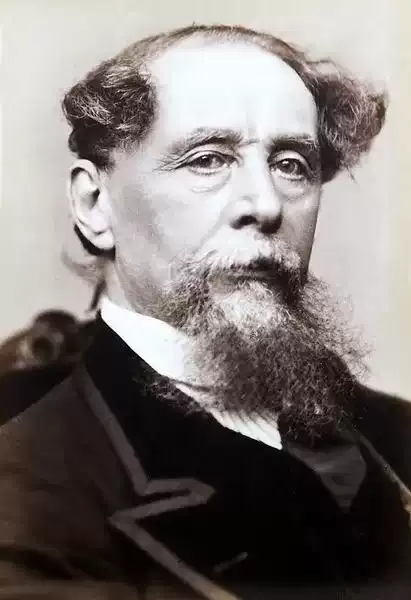
Charles Dickens
The Hymn Of The Wiltshire Laborers
The Hymn Of The Wiltshire Laborers
O God! who by Thy prophet's hand
Didst smite the rocky brake,
Whence water came, at Thy command,
Thy people's thirst to slake;
Strike, now, upon this granite wall,
Stern, obdurate, and high;
And let some drops of pity fall
For us who starve and die!
The God who took a little child
And set him in the midst,
And promised him His mercy mild,
As, by Thy Son, Thou didst:
Look down upon our children dear,
So gaunt, so cold, so spare,
And let their images appear
Where lords and gentry are!
O God! teach them to feel how we,
When our poor infants droop,
Are weakened in our trust in Thee,
And how our spirits stoop;
For, in Thy rest, so bright and fair,
All tears and sorrows sleep:
And their young looks, so full of care,
Would make Thine angels weep!
The God who with His finger drew
The judgment coming on,
Write, for these men, what must ensue,
Ere many years be gone!
O God! whose bow is in the sky,
Let them not brave and dare,
Until they look (too late) on high,
And see an Arrow there!
O God, remind them! In the bread
They break upon the knee,
These sacred words may yet be read,
'In memory of Me!'
O God! remind them of His sweet
Compassion for the poor,
And how He gave them Bread to eat,
And went from door to door!
O God! who by Thy prophet's hand
Didst smite the rocky brake,
Whence water came, at Thy command,
Thy people's thirst to slake;
Strike, now, upon this granite wall,
Stern, obdurate, and high;
And let some drops of pity fall
For us who starve and die!
The God who took a little child
And set him in the midst,
And promised him His mercy mild,
As, by Thy Son, Thou didst:
Look down upon our children dear,
So gaunt, so cold, so spare,
And let their images appear
Where lords and gentry are!
O God! teach them to feel how we,
When our poor infants droop,
Are weakened in our trust in Thee,
And how our spirits stoop;
For, in Thy rest, so bright and fair,
All tears and sorrows sleep:
And their young looks, so full of care,
Would make Thine angels weep!
The God who with His finger drew
The judgment coming on,
Write, for these men, what must ensue,
Ere many years be gone!
O God! whose bow is in the sky,
Let them not brave and dare,
Until they look (too late) on high,
And see an Arrow there!
O God, remind them! In the bread
They break upon the knee,
These sacred words may yet be read,
'In memory of Me!'
O God! remind them of His sweet
Compassion for the poor,
And how He gave them Bread to eat,
And went from door to door!
286
Charles Dickens
The Song Of The Wreck
The Song Of The Wreck
The wind blew high, the waters raved,
A ship drove on the land,
A hundred human creatures saved
Kneel'd down upon the sand.
Threescore were drown'd, threescore were thrown
Upon the black rocks wild,
And thus among them, left alone,
They found one helpless child.
A seaman rough, to shipwreck bred,
Stood out from all the rest,
And gently laid the lonely head
Upon his honest breast.
And travelling o'er the desert wide
It was a solemn joy,
To see them, ever side by side,
The sailor and the boy.
In famine, sickness, hunger, thirst,
The two were still but one,
Until the strong man droop'd the first
And felt his labors done.
Then to a trusty friend he spake,
'Across the desert wide,
Oh, take this poor boy for my sake!'
And kiss'd the child and died.
Toiling along in weary plight
Through heavy jungle, mire,
These two came later every night
To warm them at the fire.
Until the captain said one day
'O seaman, good and kind,
To save thyself now come away,
And leave the boy behind!'
The child was slumbering near the blaze:
'O captain, let him rest
Until it sinks, when God's own ways
Shall teach us what is best!'
They watch'd the whiten'd, ashy heap,
They touch'd the child in vain;
They did not leave him there asleep,
He never woke again.
The wind blew high, the waters raved,
A ship drove on the land,
A hundred human creatures saved
Kneel'd down upon the sand.
Threescore were drown'd, threescore were thrown
Upon the black rocks wild,
And thus among them, left alone,
They found one helpless child.
A seaman rough, to shipwreck bred,
Stood out from all the rest,
And gently laid the lonely head
Upon his honest breast.
And travelling o'er the desert wide
It was a solemn joy,
To see them, ever side by side,
The sailor and the boy.
In famine, sickness, hunger, thirst,
The two were still but one,
Until the strong man droop'd the first
And felt his labors done.
Then to a trusty friend he spake,
'Across the desert wide,
Oh, take this poor boy for my sake!'
And kiss'd the child and died.
Toiling along in weary plight
Through heavy jungle, mire,
These two came later every night
To warm them at the fire.
Until the captain said one day
'O seaman, good and kind,
To save thyself now come away,
And leave the boy behind!'
The child was slumbering near the blaze:
'O captain, let him rest
Until it sinks, when God's own ways
Shall teach us what is best!'
They watch'd the whiten'd, ashy heap,
They touch'd the child in vain;
They did not leave him there asleep,
He never woke again.
414
Charles Dickens
A Child's Hymn
A Child's Hymn
Hear my prayer, O heavenly Father,
Ere I lay me down to sleep;
Bid Thy angels, pure and holy,
Round my bed their vigil keep.
My sins are heavy, but Thy mercy
Far outweighs them, every one;
Down before Thy cross I cast them,
Trusting in Thy help alone.
Keep me through this night of peril
Underneath its boundless shade;
Take me to Thy rest, I pray Thee,
When my pilgrimage is made.
None shall measure out Thy patience
By the span of human thought;
None shall bound the tender mercies
Which Thy Holy Son has bought.
Pardon all my past transgressions,
Give me strength for days to come;
Guide and guard me with Thy blessing
Till Thy angels bid me home.
Hear my prayer, O heavenly Father,
Ere I lay me down to sleep;
Bid Thy angels, pure and holy,
Round my bed their vigil keep.
My sins are heavy, but Thy mercy
Far outweighs them, every one;
Down before Thy cross I cast them,
Trusting in Thy help alone.
Keep me through this night of peril
Underneath its boundless shade;
Take me to Thy rest, I pray Thee,
When my pilgrimage is made.
None shall measure out Thy patience
By the span of human thought;
None shall bound the tender mercies
Which Thy Holy Son has bought.
Pardon all my past transgressions,
Give me strength for days to come;
Guide and guard me with Thy blessing
Till Thy angels bid me home.
435
Charles Baudelaire
Voyage to Cythera
Voyage to Cythera
Free as a bird and joyfully my heart
Soared up among the rigging, in and out;
Under a cloudless sky the ship rolled on
Like an angel drunk with brilliant sun.
"That dark, grim island there--which would that be?"
"Cythera," we're told, "the legendary isle
Old bachelors tell stories of and smile.
There's really not much to it, you can see."
O place of many a mystic sacrament!
Archaic Aphrodite's splendid shade
Lingers above your waters like a scent
Infusing spirits with an amorous mood.
Worshipped from of old by every nation,
Myrtle-green isle, where each new bud discloses
Sighs of souls in loving adoration
Breathing like incense from a bank of roses
Or like a dove roo-cooing endlessly . . .
No; Cythera was a poor infertile rock,
A stony desert harrowed by the shriek
Of gulls. And yet there was something to see:
This was no temple deep in flowers and trees
With a young priestess moving to and fro,
Her body heated by a secret glow,
Her robe half-opening to every breeze;
But coasting nearer, close enough to land
To scatter flocks of birds as we passed by,
We saw a tall cypress-shaped thing at hand--
A triple gibbet black against the sky.
Ferocious birds, each perched on its own meal,
Were madly tearing at the thing that hung
And ripened; each, its filthy beak a drill,
Made little bleeding holes to root among.
The eyes were hollowed. Heavy guts cascading
Flowed like water halfway down the thighs;
The torturers, though gorged on these vile joys,
Had also put their beaks to use castrating
The corpse. A pack of dogs beneath its feet,
Their muzzles lifted, whirled and snapped and gnawed;
One bigger beast amidst this jealous lot
Looked like an executioner with his guard.
O Cytherean, child of this fair clime,
Silently you suffered these attacks,
Paying the penalty for whatever acts
Of infamy had kept you from a tomb.
Grotesquely dangling, somehow you brought on--
Violent as vomit rising from the chest,
Strong as a river bilious to taste--
A flow of sufferings I'd thought long gone.
Confronted with such dear remembered freight,
Poor devil, now it was my turn to feel
A panther's slavering jaws, a beak's cruel drill--
Once it was my flesh they loved to eat.
The sky was lovely, and the sea divine,
but something thick and binding like a shroud
Wrapped my heart in layers of black and blood;
Henceforth this allegory would be mine.
O Venus! On your isle what did I see
But my own image on the gallows tree?
O God, give me the strength to contemplate
My own heart, my own body without hate!
Free as a bird and joyfully my heart
Soared up among the rigging, in and out;
Under a cloudless sky the ship rolled on
Like an angel drunk with brilliant sun.
"That dark, grim island there--which would that be?"
"Cythera," we're told, "the legendary isle
Old bachelors tell stories of and smile.
There's really not much to it, you can see."
O place of many a mystic sacrament!
Archaic Aphrodite's splendid shade
Lingers above your waters like a scent
Infusing spirits with an amorous mood.
Worshipped from of old by every nation,
Myrtle-green isle, where each new bud discloses
Sighs of souls in loving adoration
Breathing like incense from a bank of roses
Or like a dove roo-cooing endlessly . . .
No; Cythera was a poor infertile rock,
A stony desert harrowed by the shriek
Of gulls. And yet there was something to see:
This was no temple deep in flowers and trees
With a young priestess moving to and fro,
Her body heated by a secret glow,
Her robe half-opening to every breeze;
But coasting nearer, close enough to land
To scatter flocks of birds as we passed by,
We saw a tall cypress-shaped thing at hand--
A triple gibbet black against the sky.
Ferocious birds, each perched on its own meal,
Were madly tearing at the thing that hung
And ripened; each, its filthy beak a drill,
Made little bleeding holes to root among.
The eyes were hollowed. Heavy guts cascading
Flowed like water halfway down the thighs;
The torturers, though gorged on these vile joys,
Had also put their beaks to use castrating
The corpse. A pack of dogs beneath its feet,
Their muzzles lifted, whirled and snapped and gnawed;
One bigger beast amidst this jealous lot
Looked like an executioner with his guard.
O Cytherean, child of this fair clime,
Silently you suffered these attacks,
Paying the penalty for whatever acts
Of infamy had kept you from a tomb.
Grotesquely dangling, somehow you brought on--
Violent as vomit rising from the chest,
Strong as a river bilious to taste--
A flow of sufferings I'd thought long gone.
Confronted with such dear remembered freight,
Poor devil, now it was my turn to feel
A panther's slavering jaws, a beak's cruel drill--
Once it was my flesh they loved to eat.
The sky was lovely, and the sea divine,
but something thick and binding like a shroud
Wrapped my heart in layers of black and blood;
Henceforth this allegory would be mine.
O Venus! On your isle what did I see
But my own image on the gallows tree?
O God, give me the strength to contemplate
My own heart, my own body without hate!
700
Charles Baudelaire
Travelling Bohemians
Travelling Bohemians
The prophetic tribe of the ardent eyes
Yesterday they took the road, holding their babies
On their backs, delivering to fierce appetites
The always ready treasure of pendulous breasts.
The men stick their feet out, waving their guns
Alongside the caravan where they tremble together,
Scanning the sky their eyes are weighted down
In mourning for absent chimeras.
At the bottom of his sandy retreat, a cricket
Watched passing, redoubles his song,
Cybele, who loves, adds more flower,
Makes fountains out of rock and blossoms from desert
Opening up before these travelers in a yawn—
A familiar empire, the inscrutable future.
Translated by William A. Sigler
Submitted by Ryan McGuire
The prophetic tribe of the ardent eyes
Yesterday they took the road, holding their babies
On their backs, delivering to fierce appetites
The always ready treasure of pendulous breasts.
The men stick their feet out, waving their guns
Alongside the caravan where they tremble together,
Scanning the sky their eyes are weighted down
In mourning for absent chimeras.
At the bottom of his sandy retreat, a cricket
Watched passing, redoubles his song,
Cybele, who loves, adds more flower,
Makes fountains out of rock and blossoms from desert
Opening up before these travelers in a yawn—
A familiar empire, the inscrutable future.
Translated by William A. Sigler
Submitted by Ryan McGuire
470
Charles Baudelaire
Travelling Bohemians
Travelling Bohemians
The prophetic tribe of the ardent eyes
Yesterday they took the road, holding their babies
On their backs, delivering to fierce appetites
The always ready treasure of pendulous breasts.
The men stick their feet out, waving their guns
Alongside the caravan where they tremble together,
Scanning the sky their eyes are weighted down
In mourning for absent chimeras.
At the bottom of his sandy retreat, a cricket
Watched passing, redoubles his song,
Cybele, who loves, adds more flower,
Makes fountains out of rock and blossoms from desert
Opening up before these travelers in a yawn—
A familiar empire, the inscrutable future.
Translated by William A. Sigler
Submitted by Ryan McGuire
The prophetic tribe of the ardent eyes
Yesterday they took the road, holding their babies
On their backs, delivering to fierce appetites
The always ready treasure of pendulous breasts.
The men stick their feet out, waving their guns
Alongside the caravan where they tremble together,
Scanning the sky their eyes are weighted down
In mourning for absent chimeras.
At the bottom of his sandy retreat, a cricket
Watched passing, redoubles his song,
Cybele, who loves, adds more flower,
Makes fountains out of rock and blossoms from desert
Opening up before these travelers in a yawn—
A familiar empire, the inscrutable future.
Translated by William A. Sigler
Submitted by Ryan McGuire
470
Charles Baudelaire
The Living Torch
The Living Torch
Those lit eyes go before me, in full view,
(Some cunning angel magnetised their light) -
Heavenly twins, yet my own brothers too,
Shaking their diamond blaze into my sight.
My steps from every trap or sin to save,
In the strait road of Beauty they conduct me,
They are my servants, and I am their slave,
Obedient in whatever they instruct me.
Delightful eyes, you burn with mystic rays
Like candles in broad day; red suns may blaze,
But cannot quench their still, fantastic light.
Those candles burn for death, but you for waking :
You sing the dawn that in my soul is breaking,
Stars which no sun could ever put to flight!
Those lit eyes go before me, in full view,
(Some cunning angel magnetised their light) -
Heavenly twins, yet my own brothers too,
Shaking their diamond blaze into my sight.
My steps from every trap or sin to save,
In the strait road of Beauty they conduct me,
They are my servants, and I am their slave,
Obedient in whatever they instruct me.
Delightful eyes, you burn with mystic rays
Like candles in broad day; red suns may blaze,
But cannot quench their still, fantastic light.
Those candles burn for death, but you for waking :
You sing the dawn that in my soul is breaking,
Stars which no sun could ever put to flight!
571
Charles Baudelaire
The Enemy
The Enemy
My youth was nothing but a black storm
Crossed now and then by brilliant suns.
The thunder and the rain so ravage the shores
Nothing's left of the fruit my garden held once.
I should employ the rake and the plow,
Having reached the autumn of ideas,
To restore this inundated ground
Where the deep grooves of water form tombs in the lees.
And who knows if the new flowers you dreamed
Will find in a soil stripped and cleaned
The mystic nourishment that fortifies?
—O Sorrow—O Sorrow—Time consumes Life,
And the obscure enemy that gnaws at my heart
Uses the blood that I lose to play my part.
Translated by William A. Sigler
Submitted by Ryan McGuire
My youth was nothing but a black storm
Crossed now and then by brilliant suns.
The thunder and the rain so ravage the shores
Nothing's left of the fruit my garden held once.
I should employ the rake and the plow,
Having reached the autumn of ideas,
To restore this inundated ground
Where the deep grooves of water form tombs in the lees.
And who knows if the new flowers you dreamed
Will find in a soil stripped and cleaned
The mystic nourishment that fortifies?
—O Sorrow—O Sorrow—Time consumes Life,
And the obscure enemy that gnaws at my heart
Uses the blood that I lose to play my part.
Translated by William A. Sigler
Submitted by Ryan McGuire
1,042
Charles Baudelaire
The Carcass
The Carcass
Remember that object we saw, dear soul,
In the sweetness of a summer morn:
At a bend of the path a loathsome carrion
On a bed with pebbles strewn,
With legs raised like a lustful woman,
Burning and sweating poisons,
It spread open, nonchalant and scornful,
Its belly, ripe with exhalations.
The sun shone onto the rotting heap,
As if to bring it to the boil,
And tender a hundredfold to vast Nature
All that together she had joined;
And the sky watched that superb carcass
Like a flower blossom out.
The stench was so strong that on the grass
You thought you would pass out.
Flies hummed upon the putrid belly,
Whence larvae in black battalions spread
And like a heavy liquid flowed
Along the tatters deliquescing.
All together it unfurled, and rose like a wave
And bubbling it sprang forth;
One might have believed that, with a faint breath filled,
The body, multiplying, lived.
And this world gave out a strange music
Like of running water and of wind,
Or of grain in a winnow
Rhythmically shaken and tossed.
Form was erased and all but a vision,
A sketch slow to take shape
On a forgotten canvas, which the artist finishes
From memory alone.
Behind the rocks a fretting bitch
Looked at us with fierce mien
Anxious to retrieve from the corpse
A morsel that she had dropped.
Yet to this rot you shall be like,
To this horrid corruption,
Star of my eyes, sun of desire,
You, my angel and my passion!
Yes, such you shall be, you, queen of all graces,
After the last sacraments,
When you go beneath the grass and waxy flowers,
To mold among the skeletons.
Then, oh my beauty! You must tell the vermin,
As it eats you up with kisses,
That I have preserved the form and essence divine
Of my decayed loves.
Remember that object we saw, dear soul,
In the sweetness of a summer morn:
At a bend of the path a loathsome carrion
On a bed with pebbles strewn,
With legs raised like a lustful woman,
Burning and sweating poisons,
It spread open, nonchalant and scornful,
Its belly, ripe with exhalations.
The sun shone onto the rotting heap,
As if to bring it to the boil,
And tender a hundredfold to vast Nature
All that together she had joined;
And the sky watched that superb carcass
Like a flower blossom out.
The stench was so strong that on the grass
You thought you would pass out.
Flies hummed upon the putrid belly,
Whence larvae in black battalions spread
And like a heavy liquid flowed
Along the tatters deliquescing.
All together it unfurled, and rose like a wave
And bubbling it sprang forth;
One might have believed that, with a faint breath filled,
The body, multiplying, lived.
And this world gave out a strange music
Like of running water and of wind,
Or of grain in a winnow
Rhythmically shaken and tossed.
Form was erased and all but a vision,
A sketch slow to take shape
On a forgotten canvas, which the artist finishes
From memory alone.
Behind the rocks a fretting bitch
Looked at us with fierce mien
Anxious to retrieve from the corpse
A morsel that she had dropped.
Yet to this rot you shall be like,
To this horrid corruption,
Star of my eyes, sun of desire,
You, my angel and my passion!
Yes, such you shall be, you, queen of all graces,
After the last sacraments,
When you go beneath the grass and waxy flowers,
To mold among the skeletons.
Then, oh my beauty! You must tell the vermin,
As it eats you up with kisses,
That I have preserved the form and essence divine
Of my decayed loves.
944
Charles Baudelaire
The Balcony
The Balcony
Mother of memories, mistress of mistresses,
O you, all my pleasures! O you, all my learning!
You will remember the joy of caresses,
the sweetness of home and the beauty of evening,
Mother of memories, mistress of mistresses!
On evenings lit by the glow of the ashes
and on the balcony, veiled, rose-coloured, misted,
how gentle your breast was, how good your heart to me!
We have said things meant for eternity,
on evenings lit by the glow of the ashes.
How lovely the light is on sultry evenings!
How deep the void grows! How powerful the heart is!
As I leaned towards you, queen of adored ones
I thought I breathed perfume from your blood’s kiss.
How lovely the light is on sultry evenings!
The night it was thickening and closing around us,
and my eyes in the dark were divining your glance,
and I drank your nectar. Oh sweetness! Oh poison!
your feet held, here, in these fraternal hands.
The night it was thickening and closing around us.
I know how to summon up happiest moments,
and relive my past, there, curled, touching your knees.
What good to search for your languorous beauties
but in your dear body, and your heart so sweet?
I know how to summon up happiest moments!
Those vows, those perfumes, those infinite kisses,
will they be reborn, from gulfs beyond soundings,
as the suns that are young again climb in the sky,
after they’ve passed through the deepest of drownings?
-O vows! O perfumes! O infinite kisses
Mother of memories, mistress of mistresses,
O you, all my pleasures! O you, all my learning!
You will remember the joy of caresses,
the sweetness of home and the beauty of evening,
Mother of memories, mistress of mistresses!
On evenings lit by the glow of the ashes
and on the balcony, veiled, rose-coloured, misted,
how gentle your breast was, how good your heart to me!
We have said things meant for eternity,
on evenings lit by the glow of the ashes.
How lovely the light is on sultry evenings!
How deep the void grows! How powerful the heart is!
As I leaned towards you, queen of adored ones
I thought I breathed perfume from your blood’s kiss.
How lovely the light is on sultry evenings!
The night it was thickening and closing around us,
and my eyes in the dark were divining your glance,
and I drank your nectar. Oh sweetness! Oh poison!
your feet held, here, in these fraternal hands.
The night it was thickening and closing around us.
I know how to summon up happiest moments,
and relive my past, there, curled, touching your knees.
What good to search for your languorous beauties
but in your dear body, and your heart so sweet?
I know how to summon up happiest moments!
Those vows, those perfumes, those infinite kisses,
will they be reborn, from gulfs beyond soundings,
as the suns that are young again climb in the sky,
after they’ve passed through the deepest of drownings?
-O vows! O perfumes! O infinite kisses
584