

Poems in this topic
Society and the World
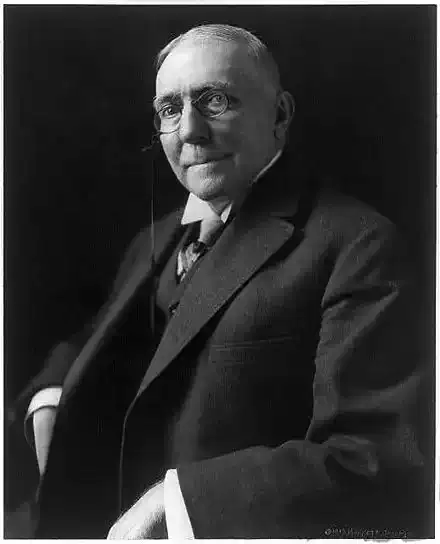
James Whitcomb Riley
The Drum
The Drum
O the drum!
There is some
Intonation in thy grum
Monotony of utterance that strikes the spirit dumb,
As we hear
Through the clear
And unclouded atmosphere,
Thy palpitating syllables roll in upon the car!
There's a part
Of the art
Of thy music-throbbing heart
That thrills a something in us that awakens with a start,
And in rhyme
With the chime
And exactitude of time,
Goes marching on to glory to thy melody sublime.
And the guest
Of the breast
That thy rolling robs of rest
Is a patriotic spirit as a Continental dressed;
And he looms
From the glooms
Of a century of tombs,
And the blood he spilled at Lexington in living beauty blooms.
And his eyes
Wear the guise
Of a purpose pure and wise,
As the love of them is lifted to a something in the skies
That is bright
Red and white,
With a blur of starry light,
As it laughs in silken ripples to the breezes day and night.
There are deep
Hushes creep
O'er the pulses as they leap,
As thy tumult, fainter growing, on the silence falls asleep,
While the prayer
Rising there
Wills the sea and earth and air
As a heritage to Freedom's sons and daughters everywhere.
Then, with sound
As profound
As the thunderings resound,
Come thy wild reverberations in a throe that shakes the ground,
And a cry
Flung on high,
Like the flag it flutters by,
Wings rapturously upward till it nestles in the sky.
O the drum!
There is some
Intonation in thy grum
Monotony of utterance that strikes the spirit dumb,
As we hear
Through the clear
And unclouded atmosphere,
Thy palpitating syllables roll in upon the ear!
O the drum!
There is some
Intonation in thy grum
Monotony of utterance that strikes the spirit dumb,
As we hear
Through the clear
And unclouded atmosphere,
Thy palpitating syllables roll in upon the car!
There's a part
Of the art
Of thy music-throbbing heart
That thrills a something in us that awakens with a start,
And in rhyme
With the chime
And exactitude of time,
Goes marching on to glory to thy melody sublime.
And the guest
Of the breast
That thy rolling robs of rest
Is a patriotic spirit as a Continental dressed;
And he looms
From the glooms
Of a century of tombs,
And the blood he spilled at Lexington in living beauty blooms.
And his eyes
Wear the guise
Of a purpose pure and wise,
As the love of them is lifted to a something in the skies
That is bright
Red and white,
With a blur of starry light,
As it laughs in silken ripples to the breezes day and night.
There are deep
Hushes creep
O'er the pulses as they leap,
As thy tumult, fainter growing, on the silence falls asleep,
While the prayer
Rising there
Wills the sea and earth and air
As a heritage to Freedom's sons and daughters everywhere.
Then, with sound
As profound
As the thunderings resound,
Come thy wild reverberations in a throe that shakes the ground,
And a cry
Flung on high,
Like the flag it flutters by,
Wings rapturously upward till it nestles in the sky.
O the drum!
There is some
Intonation in thy grum
Monotony of utterance that strikes the spirit dumb,
As we hear
Through the clear
And unclouded atmosphere,
Thy palpitating syllables roll in upon the ear!
276
James Whitcomb Riley
The Curse Of The Wandering Foot
The Curse Of The Wandering Foot
All hope of rest withdrawn me?--
What dread command hath put
This awful curse upon me--
The curse of the wandering foot!
Forward and backward and thither,
And hither and yon again--
Wandering ever! And whither?
Answer them, God! Amen.
The blue skies are far o'er me---
The bleak fields near below:
Where the mother that bore me?--
Where her grave in the snow?--
Glad in her trough of a coffin--
The sad eyes frozen shut
That wept so often, often,
The curse of the wandering foot!
Here in your marts I care not
Whatsoever ye think.
Good folk many who dare not
Give me to eat and drink:
Give me to sup of your pity--
Feast me on prayers!--O ye,
Met I your Christ in the city
He would fare forth with me--
Forward and onward and thither,
And hither again and yon,
With milk for our drink together
And honey to feed upon--
Nor hope of rest withdrawn us,
Since the one Father put
The blessed curse upon us--
The curse of the wandering foot.
All hope of rest withdrawn me?--
What dread command hath put
This awful curse upon me--
The curse of the wandering foot!
Forward and backward and thither,
And hither and yon again--
Wandering ever! And whither?
Answer them, God! Amen.
The blue skies are far o'er me---
The bleak fields near below:
Where the mother that bore me?--
Where her grave in the snow?--
Glad in her trough of a coffin--
The sad eyes frozen shut
That wept so often, often,
The curse of the wandering foot!
Here in your marts I care not
Whatsoever ye think.
Good folk many who dare not
Give me to eat and drink:
Give me to sup of your pity--
Feast me on prayers!--O ye,
Met I your Christ in the city
He would fare forth with me--
Forward and onward and thither,
And hither again and yon,
With milk for our drink together
And honey to feed upon--
Nor hope of rest withdrawn us,
Since the one Father put
The blessed curse upon us--
The curse of the wandering foot.
266
James Whitcomb Riley
The Chant Of The Cross-Bearing Child
The Chant Of The Cross-Bearing Child
I bear dis cross dis many a mile.
O de cross-bearin' chile--
De cross-bearin' chile!
I bear dis cross 'long many a road
Wha' de pink ain't bloom' an' de grass done mowed.
O de cross-bearin' chile--
De cross-bearin' chile!
Hits on my conscience all dese days
Fo' ter bear de cross ut de good Lord lays
On my po' soul, an' ter lif my praise.
O de cross-bearin' chile--
De cross-bearin' chile!
I 's nigh-'bout weak ez I mos' kin be,
Yit de Marstah call an' He say,--'You 's free
Fo' ter 'cept dis cross, an' ter cringe yo' knee
To no n'er man in de worl' but me!'
O de cross-bearin' chile--
De cross-bearin' chile!
Says you guess wrong, ef I let you guess--
Says you 'spec' mo', an'-a you git less:--
Says you go eas', says you go wes',
An' whense you fine de road ut you like bes'
You betteh take ch'ice er any er de res'!
O de cross-bearin' chile--
De cross-bearin' chile!
He build my feet, an' He fix de signs
Dat de shoe hit pinch an' de shoe hit bines
Ef I on'y w'ah eights an-a wanter w'ah nines;
I hone fo' de rain, an' de sun hit shines,
An' whilse I hunt de sun, hits de rain I fines.-O-
a trim my lamp, an-a gyrd my lines!
O de cross-bearin' chile--
De cross-bearin' chile!
I wade de wet, an' I walk de dry:
I done tromp long, an' I done clim high;
An' I pilgrim on ter de jasper sky,
An' I taken de resk fo' ter cas' my eye
Wha' de Gate swing wide an' de Lord draw nigh,
An' de Trump hit blow, an' I hear de cry,-'
You lay dat cross down by an' by!--
O de Cross-bearin' Chile--
Do Cross-bearin' Chile!'
I bear dis cross dis many a mile.
O de cross-bearin' chile--
De cross-bearin' chile!
I bear dis cross 'long many a road
Wha' de pink ain't bloom' an' de grass done mowed.
O de cross-bearin' chile--
De cross-bearin' chile!
Hits on my conscience all dese days
Fo' ter bear de cross ut de good Lord lays
On my po' soul, an' ter lif my praise.
O de cross-bearin' chile--
De cross-bearin' chile!
I 's nigh-'bout weak ez I mos' kin be,
Yit de Marstah call an' He say,--'You 's free
Fo' ter 'cept dis cross, an' ter cringe yo' knee
To no n'er man in de worl' but me!'
O de cross-bearin' chile--
De cross-bearin' chile!
Says you guess wrong, ef I let you guess--
Says you 'spec' mo', an'-a you git less:--
Says you go eas', says you go wes',
An' whense you fine de road ut you like bes'
You betteh take ch'ice er any er de res'!
O de cross-bearin' chile--
De cross-bearin' chile!
He build my feet, an' He fix de signs
Dat de shoe hit pinch an' de shoe hit bines
Ef I on'y w'ah eights an-a wanter w'ah nines;
I hone fo' de rain, an' de sun hit shines,
An' whilse I hunt de sun, hits de rain I fines.-O-
a trim my lamp, an-a gyrd my lines!
O de cross-bearin' chile--
De cross-bearin' chile!
I wade de wet, an' I walk de dry:
I done tromp long, an' I done clim high;
An' I pilgrim on ter de jasper sky,
An' I taken de resk fo' ter cas' my eye
Wha' de Gate swing wide an' de Lord draw nigh,
An' de Trump hit blow, an' I hear de cry,-'
You lay dat cross down by an' by!--
O de Cross-bearin' Chile--
Do Cross-bearin' Chile!'
237
James Whitcomb Riley
The Boy Lives On Our Farm
The Boy Lives On Our Farm
The boy lives on our Farm, he's not
Afeard o' horses none!
An' he can make 'em lope, er trot,
Er rack, er pace, er run.
Sometimes he drives two horses, when
He comes to town an' brings
A wagon-full o' 'taters nen,
An' roastin'-ears an' things.
Two horses is 'a team,' he says,
An' when you drive er hitch,
The right-un's a 'near-horse,' I guess
Er 'off'--I don't know which--
The Boy lives on our Farm, he told
Me, too, 'at he can see,
By lookin' at their teeth, how old
A horse is, to a T!
I'd be the gladdest boy alive
Ef I knowed much as that,
An' could stand up like him an' drive,
An' ist push back my hat,
Like he comes skallyhootin' through
Our alley, with one arm
A-wavin' Fare-ye-well! to you--
The Boy lives on our Farm!
The boy lives on our Farm, he's not
Afeard o' horses none!
An' he can make 'em lope, er trot,
Er rack, er pace, er run.
Sometimes he drives two horses, when
He comes to town an' brings
A wagon-full o' 'taters nen,
An' roastin'-ears an' things.
Two horses is 'a team,' he says,
An' when you drive er hitch,
The right-un's a 'near-horse,' I guess
Er 'off'--I don't know which--
The Boy lives on our Farm, he told
Me, too, 'at he can see,
By lookin' at their teeth, how old
A horse is, to a T!
I'd be the gladdest boy alive
Ef I knowed much as that,
An' could stand up like him an' drive,
An' ist push back my hat,
Like he comes skallyhootin' through
Our alley, with one arm
A-wavin' Fare-ye-well! to you--
The Boy lives on our Farm!
309
James Whitcomb Riley
Song
Song
'Why do I sing--Tra-la-la-la-la!
Glad as a King?--Tra-la-la-la-la!
Well, since you ask,--
I have such a pleasant task,
I can not help but sing!
'Why do I smile--Tra-la-la-la-la!
Working the while?--Tra-la-la-la-la!
Work like this is play,--
So I'm playing all the day--
I can not help but smile!
'So, If you please--Tra-la-la-la-la!
Live at your ease!--Tra-la-la-la-la!
You've only got to turn,
And, you see, its bound to churn--
I can not help but please!'
The farmer pondered and scratched his head,
Reading over each mystic word.-'
Some o' the Dreamer's work!' he said-'
Ah, here's more--and name and date
In his hand-write'!'--And the good man read,-''
Patent applied for, July third,
Eighteen hundred and forty-eight'!'
The fragment fell from his nerveless grasp--
His awed lips thrilled with the joyous gasp:
'I see the p'int to the whole concern,-He's
studied out a patent churn!'
'Why do I sing--Tra-la-la-la-la!
Glad as a King?--Tra-la-la-la-la!
Well, since you ask,--
I have such a pleasant task,
I can not help but sing!
'Why do I smile--Tra-la-la-la-la!
Working the while?--Tra-la-la-la-la!
Work like this is play,--
So I'm playing all the day--
I can not help but smile!
'So, If you please--Tra-la-la-la-la!
Live at your ease!--Tra-la-la-la-la!
You've only got to turn,
And, you see, its bound to churn--
I can not help but please!'
The farmer pondered and scratched his head,
Reading over each mystic word.-'
Some o' the Dreamer's work!' he said-'
Ah, here's more--and name and date
In his hand-write'!'--And the good man read,-''
Patent applied for, July third,
Eighteen hundred and forty-eight'!'
The fragment fell from his nerveless grasp--
His awed lips thrilled with the joyous gasp:
'I see the p'int to the whole concern,-He's
studied out a patent churn!'
250
James Whitcomb Riley
Some Scattering Remarks Of Bub's
Some Scattering Remarks Of Bub's
Wunst I looked our pepper-box lid
An' cut little pie-dough biscuits, I did,
And cooked 'em on our stove one day
When our hired girl she said I may.
_Honey's_ the goodest thing--Oo-_ooh_!
And blackberry-pies is goodest, too!
But wite hot biscuits, ist soakin'-wet
Wiv tree-mullasus, is goodest yet!
Miss Maimie she's my Ma's friend,--an'
She's purtiest girl in all the lan'!--
An' sweetest smile an' voice an' face--
An' eyes ist looks like p'serves tas'e'!
I _ruther_ go to the Circus-show;
But, 'cause my _parunts_ told me so,
I ruther go to the Sund'y School,
'Cause there I learn the goldun rule.
Say, Pa,--what _is_ the goldun rule
'At's allus at the Sund'y School?
Wunst I looked our pepper-box lid
An' cut little pie-dough biscuits, I did,
And cooked 'em on our stove one day
When our hired girl she said I may.
_Honey's_ the goodest thing--Oo-_ooh_!
And blackberry-pies is goodest, too!
But wite hot biscuits, ist soakin'-wet
Wiv tree-mullasus, is goodest yet!
Miss Maimie she's my Ma's friend,--an'
She's purtiest girl in all the lan'!--
An' sweetest smile an' voice an' face--
An' eyes ist looks like p'serves tas'e'!
I _ruther_ go to the Circus-show;
But, 'cause my _parunts_ told me so,
I ruther go to the Sund'y School,
'Cause there I learn the goldun rule.
Say, Pa,--what _is_ the goldun rule
'At's allus at the Sund'y School?
262
James Whitcomb Riley
Plain Sermons
Plain Sermons
I saw a man--and envied him beside--
Because of this world's goods he had great store;
But even as I envied him, he died,
And left me envious of him no more.
I saw another man--and envied still--
Because he was content with frugal lot;
But as I envied him, the rich man's will
Bequeathed him all, and envy I forgot.
Yet still another man I saw, and he
I envied for a calm and tranquil mind
That nothing fretted in the least degree--
Until, alas! I found that he was blind.
What vanity is envy! for I find
I have been rich in dross of thought, and poor
In that I was a fool, and lastly blind
For never having seen myself before!
I saw a man--and envied him beside--
Because of this world's goods he had great store;
But even as I envied him, he died,
And left me envious of him no more.
I saw another man--and envied still--
Because he was content with frugal lot;
But as I envied him, the rich man's will
Bequeathed him all, and envy I forgot.
Yet still another man I saw, and he
I envied for a calm and tranquil mind
That nothing fretted in the least degree--
Until, alas! I found that he was blind.
What vanity is envy! for I find
I have been rich in dross of thought, and poor
In that I was a fool, and lastly blind
For never having seen myself before!
329
James Whitcomb Riley
Philiper Flash
Philiper Flash
Young Philiper Flash was a promising lad,
His intentions were good--but oh, how sad
For a person to think
How the veriest pink
And bloom of perfection may turn out bad.
Old Flash himself was a moral man,
And prided himself on a moral plan,
Of a maxim as old
As the calf of gold,
Of making that boy do what he was told.
And such a good mother had Philiper Flash;
Her voice was as soft as the creamy plash
Of the milky wave
With its musical lave
That gushed through the holes of her patent churn-dash;--
And the excellent woman loved Philiper so,
She could cry sometimes when he stumped his toe,--
And she stroked his hair
With such motherly care
When the dear little angel learned to swear.
Old Flash himself would sometimes say
That his wife had 'such a ridiculous way,-She'd,
humor that child
Till he'd soon be sp'iled,
And then there'd be the devil to pay!'
And the excellent wife, with a martyr's look,
Would tell old Flash himself 'he took
No notice at all
Of the bright-eyed doll
Unless when he spanked him for getting a fall!'
Young Philiper Flash, as time passed by,
Grew into 'a boy with a roguish eye':
He could smoke a cigar,
And seemed by far
The most promising youth.--'He's powerful sly,
Old Flash himself once told a friend,
'Every copper he gets he's sure to spend--
And,' said he, 'don't you know
If he keeps on so
What a crop of wild oats the boy will grow!'
But his dear good mother knew Philiper's ways
So--well, she managed the money to raise;
And old Flash himself
Was 'laid on the shelf,'
(In the manner of speaking we have nowadays).
For 'gracious knows, her darling child,
If he went without money he'd soon grow wild.'
So Philiper Flash
With a regular dash
'Swung on to the reins,' and went 'slingin' the cash.'
As old Flash himself, in his office one day,
Was shaving notes in a barberous way,
At the hour of four
Death entered the door
And shaved the note on his life, they say.
And he had for his grave a magnificent tomb,
Though the venturous finger that pointed 'Gone Home,'
Looked white and cold
From being so bold,
As it feared that a popular lie was told.
Young Philiper Flash was a man of style
When he first began unpacking the pile
Of the dollars and dimes
Whose jingling chimes
Had clinked to the tune of his father's smile;
And he strewed his wealth with such lavish hand,
His rakish ways were the talk of the land,
And gossipers wise
Sat winking their eyes
(A certain foreboding of fresh surprise).
A 'fast young man' was Philiper Flash,
And wore 'loud clothes' and a weak mustache,
And 'done the Park,'
For an 'afternoon lark,'
With a very fast horse of 'remarkable dash.'
And Philiper handled a billiard-cue
About as well as the best he knew,
And used to say
'He could make it pay
By playing two or three games a day.'
And Philiper Flash was his mother's joy,
He seemed to her the magic alloy
That made her glad,
When her heart was sad,
With the thought that 'she lived for her darling boy.'
His dear good mother wasn't aware
How her darling boy relished a 'tare.'--
She said 'one night
He gave her a fright
By coming home late and ACTING tight.'
Young Philiper Flash, on a winterish day,
Was published a bankrupt, so they say--
And as far as I know
I suppose it was so,
For matters went on in a singular way;
His excellent mother, I think I was told,
Died from exposure and want and cold;
And Philiper Flash,
With a horrible slash,
Whacked his jugular open and went to smash.
Young Philiper Flash was a promising lad,
His intentions were good--but oh, how sad
For a person to think
How the veriest pink
And bloom of perfection may turn out bad.
Old Flash himself was a moral man,
And prided himself on a moral plan,
Of a maxim as old
As the calf of gold,
Of making that boy do what he was told.
And such a good mother had Philiper Flash;
Her voice was as soft as the creamy plash
Of the milky wave
With its musical lave
That gushed through the holes of her patent churn-dash;--
And the excellent woman loved Philiper so,
She could cry sometimes when he stumped his toe,--
And she stroked his hair
With such motherly care
When the dear little angel learned to swear.
Old Flash himself would sometimes say
That his wife had 'such a ridiculous way,-She'd,
humor that child
Till he'd soon be sp'iled,
And then there'd be the devil to pay!'
And the excellent wife, with a martyr's look,
Would tell old Flash himself 'he took
No notice at all
Of the bright-eyed doll
Unless when he spanked him for getting a fall!'
Young Philiper Flash, as time passed by,
Grew into 'a boy with a roguish eye':
He could smoke a cigar,
And seemed by far
The most promising youth.--'He's powerful sly,
Old Flash himself once told a friend,
'Every copper he gets he's sure to spend--
And,' said he, 'don't you know
If he keeps on so
What a crop of wild oats the boy will grow!'
But his dear good mother knew Philiper's ways
So--well, she managed the money to raise;
And old Flash himself
Was 'laid on the shelf,'
(In the manner of speaking we have nowadays).
For 'gracious knows, her darling child,
If he went without money he'd soon grow wild.'
So Philiper Flash
With a regular dash
'Swung on to the reins,' and went 'slingin' the cash.'
As old Flash himself, in his office one day,
Was shaving notes in a barberous way,
At the hour of four
Death entered the door
And shaved the note on his life, they say.
And he had for his grave a magnificent tomb,
Though the venturous finger that pointed 'Gone Home,'
Looked white and cold
From being so bold,
As it feared that a popular lie was told.
Young Philiper Flash was a man of style
When he first began unpacking the pile
Of the dollars and dimes
Whose jingling chimes
Had clinked to the tune of his father's smile;
And he strewed his wealth with such lavish hand,
His rakish ways were the talk of the land,
And gossipers wise
Sat winking their eyes
(A certain foreboding of fresh surprise).
A 'fast young man' was Philiper Flash,
And wore 'loud clothes' and a weak mustache,
And 'done the Park,'
For an 'afternoon lark,'
With a very fast horse of 'remarkable dash.'
And Philiper handled a billiard-cue
About as well as the best he knew,
And used to say
'He could make it pay
By playing two or three games a day.'
And Philiper Flash was his mother's joy,
He seemed to her the magic alloy
That made her glad,
When her heart was sad,
With the thought that 'she lived for her darling boy.'
His dear good mother wasn't aware
How her darling boy relished a 'tare.'--
She said 'one night
He gave her a fright
By coming home late and ACTING tight.'
Young Philiper Flash, on a winterish day,
Was published a bankrupt, so they say--
And as far as I know
I suppose it was so,
For matters went on in a singular way;
His excellent mother, I think I was told,
Died from exposure and want and cold;
And Philiper Flash,
With a horrible slash,
Whacked his jugular open and went to smash.
294
James Whitcomb Riley
Philiper Flash
Philiper Flash
Young Philiper Flash was a promising lad,
His intentions were good--but oh, how sad
For a person to think
How the veriest pink
And bloom of perfection may turn out bad.
Old Flash himself was a moral man,
And prided himself on a moral plan,
Of a maxim as old
As the calf of gold,
Of making that boy do what he was told.
And such a good mother had Philiper Flash;
Her voice was as soft as the creamy plash
Of the milky wave
With its musical lave
That gushed through the holes of her patent churn-dash;--
And the excellent woman loved Philiper so,
She could cry sometimes when he stumped his toe,--
And she stroked his hair
With such motherly care
When the dear little angel learned to swear.
Old Flash himself would sometimes say
That his wife had 'such a ridiculous way,-She'd,
humor that child
Till he'd soon be sp'iled,
And then there'd be the devil to pay!'
And the excellent wife, with a martyr's look,
Would tell old Flash himself 'he took
No notice at all
Of the bright-eyed doll
Unless when he spanked him for getting a fall!'
Young Philiper Flash, as time passed by,
Grew into 'a boy with a roguish eye':
He could smoke a cigar,
And seemed by far
The most promising youth.--'He's powerful sly,
Old Flash himself once told a friend,
'Every copper he gets he's sure to spend--
And,' said he, 'don't you know
If he keeps on so
What a crop of wild oats the boy will grow!'
But his dear good mother knew Philiper's ways
So--well, she managed the money to raise;
And old Flash himself
Was 'laid on the shelf,'
(In the manner of speaking we have nowadays).
For 'gracious knows, her darling child,
If he went without money he'd soon grow wild.'
So Philiper Flash
With a regular dash
'Swung on to the reins,' and went 'slingin' the cash.'
As old Flash himself, in his office one day,
Was shaving notes in a barberous way,
At the hour of four
Death entered the door
And shaved the note on his life, they say.
And he had for his grave a magnificent tomb,
Though the venturous finger that pointed 'Gone Home,'
Looked white and cold
From being so bold,
As it feared that a popular lie was told.
Young Philiper Flash was a man of style
When he first began unpacking the pile
Of the dollars and dimes
Whose jingling chimes
Had clinked to the tune of his father's smile;
And he strewed his wealth with such lavish hand,
His rakish ways were the talk of the land,
And gossipers wise
Sat winking their eyes
(A certain foreboding of fresh surprise).
A 'fast young man' was Philiper Flash,
And wore 'loud clothes' and a weak mustache,
And 'done the Park,'
For an 'afternoon lark,'
With a very fast horse of 'remarkable dash.'
And Philiper handled a billiard-cue
About as well as the best he knew,
And used to say
'He could make it pay
By playing two or three games a day.'
And Philiper Flash was his mother's joy,
He seemed to her the magic alloy
That made her glad,
When her heart was sad,
With the thought that 'she lived for her darling boy.'
His dear good mother wasn't aware
How her darling boy relished a 'tare.'--
She said 'one night
He gave her a fright
By coming home late and ACTING tight.'
Young Philiper Flash, on a winterish day,
Was published a bankrupt, so they say--
And as far as I know
I suppose it was so,
For matters went on in a singular way;
His excellent mother, I think I was told,
Died from exposure and want and cold;
And Philiper Flash,
With a horrible slash,
Whacked his jugular open and went to smash.
Young Philiper Flash was a promising lad,
His intentions were good--but oh, how sad
For a person to think
How the veriest pink
And bloom of perfection may turn out bad.
Old Flash himself was a moral man,
And prided himself on a moral plan,
Of a maxim as old
As the calf of gold,
Of making that boy do what he was told.
And such a good mother had Philiper Flash;
Her voice was as soft as the creamy plash
Of the milky wave
With its musical lave
That gushed through the holes of her patent churn-dash;--
And the excellent woman loved Philiper so,
She could cry sometimes when he stumped his toe,--
And she stroked his hair
With such motherly care
When the dear little angel learned to swear.
Old Flash himself would sometimes say
That his wife had 'such a ridiculous way,-She'd,
humor that child
Till he'd soon be sp'iled,
And then there'd be the devil to pay!'
And the excellent wife, with a martyr's look,
Would tell old Flash himself 'he took
No notice at all
Of the bright-eyed doll
Unless when he spanked him for getting a fall!'
Young Philiper Flash, as time passed by,
Grew into 'a boy with a roguish eye':
He could smoke a cigar,
And seemed by far
The most promising youth.--'He's powerful sly,
Old Flash himself once told a friend,
'Every copper he gets he's sure to spend--
And,' said he, 'don't you know
If he keeps on so
What a crop of wild oats the boy will grow!'
But his dear good mother knew Philiper's ways
So--well, she managed the money to raise;
And old Flash himself
Was 'laid on the shelf,'
(In the manner of speaking we have nowadays).
For 'gracious knows, her darling child,
If he went without money he'd soon grow wild.'
So Philiper Flash
With a regular dash
'Swung on to the reins,' and went 'slingin' the cash.'
As old Flash himself, in his office one day,
Was shaving notes in a barberous way,
At the hour of four
Death entered the door
And shaved the note on his life, they say.
And he had for his grave a magnificent tomb,
Though the venturous finger that pointed 'Gone Home,'
Looked white and cold
From being so bold,
As it feared that a popular lie was told.
Young Philiper Flash was a man of style
When he first began unpacking the pile
Of the dollars and dimes
Whose jingling chimes
Had clinked to the tune of his father's smile;
And he strewed his wealth with such lavish hand,
His rakish ways were the talk of the land,
And gossipers wise
Sat winking their eyes
(A certain foreboding of fresh surprise).
A 'fast young man' was Philiper Flash,
And wore 'loud clothes' and a weak mustache,
And 'done the Park,'
For an 'afternoon lark,'
With a very fast horse of 'remarkable dash.'
And Philiper handled a billiard-cue
About as well as the best he knew,
And used to say
'He could make it pay
By playing two or three games a day.'
And Philiper Flash was his mother's joy,
He seemed to her the magic alloy
That made her glad,
When her heart was sad,
With the thought that 'she lived for her darling boy.'
His dear good mother wasn't aware
How her darling boy relished a 'tare.'--
She said 'one night
He gave her a fright
By coming home late and ACTING tight.'
Young Philiper Flash, on a winterish day,
Was published a bankrupt, so they say--
And as far as I know
I suppose it was so,
For matters went on in a singular way;
His excellent mother, I think I was told,
Died from exposure and want and cold;
And Philiper Flash,
With a horrible slash,
Whacked his jugular open and went to smash.
294
James Whitcomb Riley
Philiper Flash
Philiper Flash
Young Philiper Flash was a promising lad,
His intentions were good--but oh, how sad
For a person to think
How the veriest pink
And bloom of perfection may turn out bad.
Old Flash himself was a moral man,
And prided himself on a moral plan,
Of a maxim as old
As the calf of gold,
Of making that boy do what he was told.
And such a good mother had Philiper Flash;
Her voice was as soft as the creamy plash
Of the milky wave
With its musical lave
That gushed through the holes of her patent churn-dash;--
And the excellent woman loved Philiper so,
She could cry sometimes when he stumped his toe,--
And she stroked his hair
With such motherly care
When the dear little angel learned to swear.
Old Flash himself would sometimes say
That his wife had 'such a ridiculous way,-She'd,
humor that child
Till he'd soon be sp'iled,
And then there'd be the devil to pay!'
And the excellent wife, with a martyr's look,
Would tell old Flash himself 'he took
No notice at all
Of the bright-eyed doll
Unless when he spanked him for getting a fall!'
Young Philiper Flash, as time passed by,
Grew into 'a boy with a roguish eye':
He could smoke a cigar,
And seemed by far
The most promising youth.--'He's powerful sly,
Old Flash himself once told a friend,
'Every copper he gets he's sure to spend--
And,' said he, 'don't you know
If he keeps on so
What a crop of wild oats the boy will grow!'
But his dear good mother knew Philiper's ways
So--well, she managed the money to raise;
And old Flash himself
Was 'laid on the shelf,'
(In the manner of speaking we have nowadays).
For 'gracious knows, her darling child,
If he went without money he'd soon grow wild.'
So Philiper Flash
With a regular dash
'Swung on to the reins,' and went 'slingin' the cash.'
As old Flash himself, in his office one day,
Was shaving notes in a barberous way,
At the hour of four
Death entered the door
And shaved the note on his life, they say.
And he had for his grave a magnificent tomb,
Though the venturous finger that pointed 'Gone Home,'
Looked white and cold
From being so bold,
As it feared that a popular lie was told.
Young Philiper Flash was a man of style
When he first began unpacking the pile
Of the dollars and dimes
Whose jingling chimes
Had clinked to the tune of his father's smile;
And he strewed his wealth with such lavish hand,
His rakish ways were the talk of the land,
And gossipers wise
Sat winking their eyes
(A certain foreboding of fresh surprise).
A 'fast young man' was Philiper Flash,
And wore 'loud clothes' and a weak mustache,
And 'done the Park,'
For an 'afternoon lark,'
With a very fast horse of 'remarkable dash.'
And Philiper handled a billiard-cue
About as well as the best he knew,
And used to say
'He could make it pay
By playing two or three games a day.'
And Philiper Flash was his mother's joy,
He seemed to her the magic alloy
That made her glad,
When her heart was sad,
With the thought that 'she lived for her darling boy.'
His dear good mother wasn't aware
How her darling boy relished a 'tare.'--
She said 'one night
He gave her a fright
By coming home late and ACTING tight.'
Young Philiper Flash, on a winterish day,
Was published a bankrupt, so they say--
And as far as I know
I suppose it was so,
For matters went on in a singular way;
His excellent mother, I think I was told,
Died from exposure and want and cold;
And Philiper Flash,
With a horrible slash,
Whacked his jugular open and went to smash.
Young Philiper Flash was a promising lad,
His intentions were good--but oh, how sad
For a person to think
How the veriest pink
And bloom of perfection may turn out bad.
Old Flash himself was a moral man,
And prided himself on a moral plan,
Of a maxim as old
As the calf of gold,
Of making that boy do what he was told.
And such a good mother had Philiper Flash;
Her voice was as soft as the creamy plash
Of the milky wave
With its musical lave
That gushed through the holes of her patent churn-dash;--
And the excellent woman loved Philiper so,
She could cry sometimes when he stumped his toe,--
And she stroked his hair
With such motherly care
When the dear little angel learned to swear.
Old Flash himself would sometimes say
That his wife had 'such a ridiculous way,-She'd,
humor that child
Till he'd soon be sp'iled,
And then there'd be the devil to pay!'
And the excellent wife, with a martyr's look,
Would tell old Flash himself 'he took
No notice at all
Of the bright-eyed doll
Unless when he spanked him for getting a fall!'
Young Philiper Flash, as time passed by,
Grew into 'a boy with a roguish eye':
He could smoke a cigar,
And seemed by far
The most promising youth.--'He's powerful sly,
Old Flash himself once told a friend,
'Every copper he gets he's sure to spend--
And,' said he, 'don't you know
If he keeps on so
What a crop of wild oats the boy will grow!'
But his dear good mother knew Philiper's ways
So--well, she managed the money to raise;
And old Flash himself
Was 'laid on the shelf,'
(In the manner of speaking we have nowadays).
For 'gracious knows, her darling child,
If he went without money he'd soon grow wild.'
So Philiper Flash
With a regular dash
'Swung on to the reins,' and went 'slingin' the cash.'
As old Flash himself, in his office one day,
Was shaving notes in a barberous way,
At the hour of four
Death entered the door
And shaved the note on his life, they say.
And he had for his grave a magnificent tomb,
Though the venturous finger that pointed 'Gone Home,'
Looked white and cold
From being so bold,
As it feared that a popular lie was told.
Young Philiper Flash was a man of style
When he first began unpacking the pile
Of the dollars and dimes
Whose jingling chimes
Had clinked to the tune of his father's smile;
And he strewed his wealth with such lavish hand,
His rakish ways were the talk of the land,
And gossipers wise
Sat winking their eyes
(A certain foreboding of fresh surprise).
A 'fast young man' was Philiper Flash,
And wore 'loud clothes' and a weak mustache,
And 'done the Park,'
For an 'afternoon lark,'
With a very fast horse of 'remarkable dash.'
And Philiper handled a billiard-cue
About as well as the best he knew,
And used to say
'He could make it pay
By playing two or three games a day.'
And Philiper Flash was his mother's joy,
He seemed to her the magic alloy
That made her glad,
When her heart was sad,
With the thought that 'she lived for her darling boy.'
His dear good mother wasn't aware
How her darling boy relished a 'tare.'--
She said 'one night
He gave her a fright
By coming home late and ACTING tight.'
Young Philiper Flash, on a winterish day,
Was published a bankrupt, so they say--
And as far as I know
I suppose it was so,
For matters went on in a singular way;
His excellent mother, I think I was told,
Died from exposure and want and cold;
And Philiper Flash,
With a horrible slash,
Whacked his jugular open and went to smash.
294
James Whitcomb Riley
Out Of Nazareth
Out Of Nazareth
'He shall sleep unscathed of thieves
Who loves Allah and believes.'
Thus heard one who shared the tent,
In the far-off Orient,
Of the Bedouin ben Ahrzz--
Nobler never loved the stars
Through the palm-leaves nigh the dim
Dawn his courser neighed to him!
He said: 'Let the sands be swarmed
With such thieves as I, and thou
Shalt at morning rise unharmed,
Light as eyelash to the brow
Of thy camel amber-eyed,
Ever munching either side,
Striding still, with nestled knees,
Through the midnight's oases.'
'Who can rob thee an thou hast
More than this that thou hast cast
At my feet-- this dust of gold?
Simply this and that, all told!
Hast thou not a treasure of
Such a thing as men call love?'
'Can the dusky band I lead
Rob thee of thy daily need
Of a whiter soul, or steal
What thy lordly prayers reveal?
Who could be enriched of thee
By such hoard of poverty
As thy niggard hand pretends
To dole me-- thy worst of friends?
Therefore shouldst thou pause to bless
One indeed who blesses thee:
Robbing thee, I dispossess
But myself--. Pray thou for me!'
He shall sleep unscathed of thieves
Who loves Allah and believes.
'He shall sleep unscathed of thieves
Who loves Allah and believes.'
Thus heard one who shared the tent,
In the far-off Orient,
Of the Bedouin ben Ahrzz--
Nobler never loved the stars
Through the palm-leaves nigh the dim
Dawn his courser neighed to him!
He said: 'Let the sands be swarmed
With such thieves as I, and thou
Shalt at morning rise unharmed,
Light as eyelash to the brow
Of thy camel amber-eyed,
Ever munching either side,
Striding still, with nestled knees,
Through the midnight's oases.'
'Who can rob thee an thou hast
More than this that thou hast cast
At my feet-- this dust of gold?
Simply this and that, all told!
Hast thou not a treasure of
Such a thing as men call love?'
'Can the dusky band I lead
Rob thee of thy daily need
Of a whiter soul, or steal
What thy lordly prayers reveal?
Who could be enriched of thee
By such hoard of poverty
As thy niggard hand pretends
To dole me-- thy worst of friends?
Therefore shouldst thou pause to bless
One indeed who blesses thee:
Robbing thee, I dispossess
But myself--. Pray thou for me!'
He shall sleep unscathed of thieves
Who loves Allah and believes.
253
James Whitcomb Riley
Out Of Nazareth
Out Of Nazareth
'He shall sleep unscathed of thieves
Who loves Allah and believes.'
Thus heard one who shared the tent,
In the far-off Orient,
Of the Bedouin ben Ahrzz--
Nobler never loved the stars
Through the palm-leaves nigh the dim
Dawn his courser neighed to him!
He said: 'Let the sands be swarmed
With such thieves as I, and thou
Shalt at morning rise unharmed,
Light as eyelash to the brow
Of thy camel amber-eyed,
Ever munching either side,
Striding still, with nestled knees,
Through the midnight's oases.'
'Who can rob thee an thou hast
More than this that thou hast cast
At my feet-- this dust of gold?
Simply this and that, all told!
Hast thou not a treasure of
Such a thing as men call love?'
'Can the dusky band I lead
Rob thee of thy daily need
Of a whiter soul, or steal
What thy lordly prayers reveal?
Who could be enriched of thee
By such hoard of poverty
As thy niggard hand pretends
To dole me-- thy worst of friends?
Therefore shouldst thou pause to bless
One indeed who blesses thee:
Robbing thee, I dispossess
But myself--. Pray thou for me!'
He shall sleep unscathed of thieves
Who loves Allah and believes.
'He shall sleep unscathed of thieves
Who loves Allah and believes.'
Thus heard one who shared the tent,
In the far-off Orient,
Of the Bedouin ben Ahrzz--
Nobler never loved the stars
Through the palm-leaves nigh the dim
Dawn his courser neighed to him!
He said: 'Let the sands be swarmed
With such thieves as I, and thou
Shalt at morning rise unharmed,
Light as eyelash to the brow
Of thy camel amber-eyed,
Ever munching either side,
Striding still, with nestled knees,
Through the midnight's oases.'
'Who can rob thee an thou hast
More than this that thou hast cast
At my feet-- this dust of gold?
Simply this and that, all told!
Hast thou not a treasure of
Such a thing as men call love?'
'Can the dusky band I lead
Rob thee of thy daily need
Of a whiter soul, or steal
What thy lordly prayers reveal?
Who could be enriched of thee
By such hoard of poverty
As thy niggard hand pretends
To dole me-- thy worst of friends?
Therefore shouldst thou pause to bless
One indeed who blesses thee:
Robbing thee, I dispossess
But myself--. Pray thou for me!'
He shall sleep unscathed of thieves
Who loves Allah and believes.
253
James Whitcomb Riley
Our Hired Girl
Our Hired Girl
1
2
3
4
6
7
8
9
11
12
13
14
Our hired girl, she's 'Lizabuth Ann;
An' she can cook best things to eat!
She ist puts dough in our pie-pan,
An' pours in somepin' 'at's good an' sweet;
An' nen she salts it all on top
With cinnamon; an' nen she'll stop
An' stoop an' slide it, ist as slow,
In th' old cook-stove, so's 'twon't slop
An' git all spilled; nen bakes it, so
It's custard-pie, first thing you know!
An' nen she'll say,
"Clear out o' my way!
They's time fer work, an' time fer play!
Take yer dough, an' run, child, run!
Er I cain't git no cookin' done!"
16
17
18
19
21
22
23
24
26
27
28
29
When our hired girl 'tends like she's mad,
An' says folks got to walk the chalk
When she's around, er wisht they had!
I play out on our porch an' talk
To Th' Raggedy Man 'at mows our lawn;
An' he says, "Whew!" an' nen leans on
His old crook-scythe, and blinks his eyes,
An' sniffs all 'round an' says, "I swawn!
Ef my old nose don't tell me lies,
It 'pears like I smell custard-pies!"
An' nen he'll say,
"Clear out o' my way!
They's time fer work, an' time fer play!
Take yer dough, an' run, child, run!
Er she cain't git no cookin' done!"
31
32
33
34
Wunst our hired girl, when she
Got the supper, an' we all et,
An' it wuz night, an' Ma an' me
An' Pa went wher' the "Social" met, --
An' nen when we come home, an' see
36
37
38
A light in the kitchen door, an' we
Heerd a maccordeun, Pa says, "Lan'O'-
Gracious! who can her beau be?"
39 An' I marched in, an' 'Lizabuth Ann
41
42
43
44
Wuz parchin' corn fer The Raggedy Man!
Better say,
"Clear out o' the way!
They's time fer work, an' time fer play!
Take the hint, an' run, child, run!
Er we cain't git no courtin' done!"
1
2
3
4
6
7
8
9
11
12
13
14
Our hired girl, she's 'Lizabuth Ann;
An' she can cook best things to eat!
She ist puts dough in our pie-pan,
An' pours in somepin' 'at's good an' sweet;
An' nen she salts it all on top
With cinnamon; an' nen she'll stop
An' stoop an' slide it, ist as slow,
In th' old cook-stove, so's 'twon't slop
An' git all spilled; nen bakes it, so
It's custard-pie, first thing you know!
An' nen she'll say,
"Clear out o' my way!
They's time fer work, an' time fer play!
Take yer dough, an' run, child, run!
Er I cain't git no cookin' done!"
16
17
18
19
21
22
23
24
26
27
28
29
When our hired girl 'tends like she's mad,
An' says folks got to walk the chalk
When she's around, er wisht they had!
I play out on our porch an' talk
To Th' Raggedy Man 'at mows our lawn;
An' he says, "Whew!" an' nen leans on
His old crook-scythe, and blinks his eyes,
An' sniffs all 'round an' says, "I swawn!
Ef my old nose don't tell me lies,
It 'pears like I smell custard-pies!"
An' nen he'll say,
"Clear out o' my way!
They's time fer work, an' time fer play!
Take yer dough, an' run, child, run!
Er she cain't git no cookin' done!"
31
32
33
34
Wunst our hired girl, when she
Got the supper, an' we all et,
An' it wuz night, an' Ma an' me
An' Pa went wher' the "Social" met, --
An' nen when we come home, an' see
36
37
38
A light in the kitchen door, an' we
Heerd a maccordeun, Pa says, "Lan'O'-
Gracious! who can her beau be?"
39 An' I marched in, an' 'Lizabuth Ann
41
42
43
44
Wuz parchin' corn fer The Raggedy Man!
Better say,
"Clear out o' the way!
They's time fer work, an' time fer play!
Take the hint, an' run, child, run!
Er we cain't git no courtin' done!"
314
James Whitcomb Riley
Mylo Jones's Wife
Mylo Jones's Wife
'Mylo Jones's wife' was all
I heerd, mighty near, last Fall--
Visitun relations down
T'other side of Morgantown!
Mylo Jones's wife she does
This and that, and 'those' and 'thus'!-Can't
'bide babies in her sight--
Ner no childern, day and night,
Whoopin' round the premises--
NER NO NOTHIN' ELSE, I guess!
Mylo Jones's wife she 'lows
She's the boss of her own house!-Mylo--
consequences is--
Stays whare things seem SOME like HIS,--
Uses, mostly, with the stock--
Coaxin' 'Old Kate' not to balk,
Ner kick hoss-flies' branes out, ner
Act, I s'pose, so much like HER!
Yit the wimmern-folks tells you
She's PERFECTION.--Yes they do!
Mylo's wife she says she's found
Home hain't home with MEN-FOLKS round
When they's work like HERN to do-
Picklin' pears and BUTCHERN, too,
And a-rendern lard, and then
Cookin' fer a pack of men
To come trackin' up the flore
SHE'S scrubbed TEL she'll scrub no MORE!--
Yit she'd keep things clean ef they
Made her scrub tel Jedgmunt Day!
Mylo Jones's wife she sews
Carpet-rags and patches clothes
Jest year IN and OUT!--and yit
Whare's the livin' use of it?
She asts Mylo that.--And he
Gits back whare he'd ruther be,
With his team;--jest PLOWS--and don't
Never sware--like some folks won't!
Think ef HE'D CUT LOOSE, I gum!
'D he'p his heavenly chances some!
Mylo's wife don't see no use,
Ner no reason ner excuse
Fer his pore relations to
Hang round like they allus do!
Thare 'bout onc't a year--and SHE--
She jest GA'NTS 'em, folks tells me,
On spiced pears!--Pass Mylo one,
He says 'No, he don't chuse none!'
Workin'men like Mylo they
'D ort to have MEAT ev'ry day!
Dad-burn Mylo Jones's wife!
Ruther rake a blame caseknife
'Crost my wizzen than to see
Sich a womern rulin' ME!--
Ruther take and turn in and
Raise a fool mule-colt by hand'
MYLO, though--od-rot the man!--
Jest keeps ca'm--like some folks CAN--
And 'lows sich as her, I s'pose,
Is MAN'S HE'PMEET'--Mercy knows!
'Mylo Jones's wife' was all
I heerd, mighty near, last Fall--
Visitun relations down
T'other side of Morgantown!
Mylo Jones's wife she does
This and that, and 'those' and 'thus'!-Can't
'bide babies in her sight--
Ner no childern, day and night,
Whoopin' round the premises--
NER NO NOTHIN' ELSE, I guess!
Mylo Jones's wife she 'lows
She's the boss of her own house!-Mylo--
consequences is--
Stays whare things seem SOME like HIS,--
Uses, mostly, with the stock--
Coaxin' 'Old Kate' not to balk,
Ner kick hoss-flies' branes out, ner
Act, I s'pose, so much like HER!
Yit the wimmern-folks tells you
She's PERFECTION.--Yes they do!
Mylo's wife she says she's found
Home hain't home with MEN-FOLKS round
When they's work like HERN to do-
Picklin' pears and BUTCHERN, too,
And a-rendern lard, and then
Cookin' fer a pack of men
To come trackin' up the flore
SHE'S scrubbed TEL she'll scrub no MORE!--
Yit she'd keep things clean ef they
Made her scrub tel Jedgmunt Day!
Mylo Jones's wife she sews
Carpet-rags and patches clothes
Jest year IN and OUT!--and yit
Whare's the livin' use of it?
She asts Mylo that.--And he
Gits back whare he'd ruther be,
With his team;--jest PLOWS--and don't
Never sware--like some folks won't!
Think ef HE'D CUT LOOSE, I gum!
'D he'p his heavenly chances some!
Mylo's wife don't see no use,
Ner no reason ner excuse
Fer his pore relations to
Hang round like they allus do!
Thare 'bout onc't a year--and SHE--
She jest GA'NTS 'em, folks tells me,
On spiced pears!--Pass Mylo one,
He says 'No, he don't chuse none!'
Workin'men like Mylo they
'D ort to have MEAT ev'ry day!
Dad-burn Mylo Jones's wife!
Ruther rake a blame caseknife
'Crost my wizzen than to see
Sich a womern rulin' ME!--
Ruther take and turn in and
Raise a fool mule-colt by hand'
MYLO, though--od-rot the man!--
Jest keeps ca'm--like some folks CAN--
And 'lows sich as her, I s'pose,
Is MAN'S HE'PMEET'--Mercy knows!
303
James Whitcomb Riley
Mylo Jones's Wife
Mylo Jones's Wife
'Mylo Jones's wife' was all
I heerd, mighty near, last Fall--
Visitun relations down
T'other side of Morgantown!
Mylo Jones's wife she does
This and that, and 'those' and 'thus'!-Can't
'bide babies in her sight--
Ner no childern, day and night,
Whoopin' round the premises--
NER NO NOTHIN' ELSE, I guess!
Mylo Jones's wife she 'lows
She's the boss of her own house!-Mylo--
consequences is--
Stays whare things seem SOME like HIS,--
Uses, mostly, with the stock--
Coaxin' 'Old Kate' not to balk,
Ner kick hoss-flies' branes out, ner
Act, I s'pose, so much like HER!
Yit the wimmern-folks tells you
She's PERFECTION.--Yes they do!
Mylo's wife she says she's found
Home hain't home with MEN-FOLKS round
When they's work like HERN to do-
Picklin' pears and BUTCHERN, too,
And a-rendern lard, and then
Cookin' fer a pack of men
To come trackin' up the flore
SHE'S scrubbed TEL she'll scrub no MORE!--
Yit she'd keep things clean ef they
Made her scrub tel Jedgmunt Day!
Mylo Jones's wife she sews
Carpet-rags and patches clothes
Jest year IN and OUT!--and yit
Whare's the livin' use of it?
She asts Mylo that.--And he
Gits back whare he'd ruther be,
With his team;--jest PLOWS--and don't
Never sware--like some folks won't!
Think ef HE'D CUT LOOSE, I gum!
'D he'p his heavenly chances some!
Mylo's wife don't see no use,
Ner no reason ner excuse
Fer his pore relations to
Hang round like they allus do!
Thare 'bout onc't a year--and SHE--
She jest GA'NTS 'em, folks tells me,
On spiced pears!--Pass Mylo one,
He says 'No, he don't chuse none!'
Workin'men like Mylo they
'D ort to have MEAT ev'ry day!
Dad-burn Mylo Jones's wife!
Ruther rake a blame caseknife
'Crost my wizzen than to see
Sich a womern rulin' ME!--
Ruther take and turn in and
Raise a fool mule-colt by hand'
MYLO, though--od-rot the man!--
Jest keeps ca'm--like some folks CAN--
And 'lows sich as her, I s'pose,
Is MAN'S HE'PMEET'--Mercy knows!
'Mylo Jones's wife' was all
I heerd, mighty near, last Fall--
Visitun relations down
T'other side of Morgantown!
Mylo Jones's wife she does
This and that, and 'those' and 'thus'!-Can't
'bide babies in her sight--
Ner no childern, day and night,
Whoopin' round the premises--
NER NO NOTHIN' ELSE, I guess!
Mylo Jones's wife she 'lows
She's the boss of her own house!-Mylo--
consequences is--
Stays whare things seem SOME like HIS,--
Uses, mostly, with the stock--
Coaxin' 'Old Kate' not to balk,
Ner kick hoss-flies' branes out, ner
Act, I s'pose, so much like HER!
Yit the wimmern-folks tells you
She's PERFECTION.--Yes they do!
Mylo's wife she says she's found
Home hain't home with MEN-FOLKS round
When they's work like HERN to do-
Picklin' pears and BUTCHERN, too,
And a-rendern lard, and then
Cookin' fer a pack of men
To come trackin' up the flore
SHE'S scrubbed TEL she'll scrub no MORE!--
Yit she'd keep things clean ef they
Made her scrub tel Jedgmunt Day!
Mylo Jones's wife she sews
Carpet-rags and patches clothes
Jest year IN and OUT!--and yit
Whare's the livin' use of it?
She asts Mylo that.--And he
Gits back whare he'd ruther be,
With his team;--jest PLOWS--and don't
Never sware--like some folks won't!
Think ef HE'D CUT LOOSE, I gum!
'D he'p his heavenly chances some!
Mylo's wife don't see no use,
Ner no reason ner excuse
Fer his pore relations to
Hang round like they allus do!
Thare 'bout onc't a year--and SHE--
She jest GA'NTS 'em, folks tells me,
On spiced pears!--Pass Mylo one,
He says 'No, he don't chuse none!'
Workin'men like Mylo they
'D ort to have MEAT ev'ry day!
Dad-burn Mylo Jones's wife!
Ruther rake a blame caseknife
'Crost my wizzen than to see
Sich a womern rulin' ME!--
Ruther take and turn in and
Raise a fool mule-colt by hand'
MYLO, though--od-rot the man!--
Jest keeps ca'm--like some folks CAN--
And 'lows sich as her, I s'pose,
Is MAN'S HE'PMEET'--Mercy knows!
303
James Whitcomb Riley
Man's Devotion
Man's Devotion
A lover said, 'O Maiden, love me well,
For I must go away:
And should ANOTHER ever come to tell
Of love--What WILL you say?'
And she let fall a royal robe of hair
That folded on his arm
And made a golden pillow for her there;
Her face--as bright a charm
As ever setting held in kingly crown--
Made answer with a look,
And reading it, the lover bended down,
And, trusting, 'kissed the book.'
He took a fond farewell and went away.
And slow the time went by--
So weary--dreary was it, day by day
To love, and wait, and sigh.
She kissed his pictured face sometimes, and said:
'O Lips, so cold and dumb,
I would that you would tell me, if not dead,
Why, why do you not come?'
The picture, smiling, stared her in the face
Unmoved--e'en with the touch
Of tear-drops--HERS--bejeweling the case-'
Twas plain--she loved him much.
And, thus she grew to think of him as gay
And joyous all the while,
And SHE was sorrowing--'Ah, welladay!'
But pictures ALWAYS smile!
And years--dull years--in dull monotony
As ever went and came,
Still weaving changes on unceasingly,
And changing, changed her name.
Was she untrue?--She oftentimes was glad
And happy as a wife;
But ONE remembrance oftentimes made sad
Her matrimonial life.--
Though its few years were hardly noted, when
Again her path was strown
With thorns--the roses swept away again,
And she again alone!
And then--alas! ah THEN!--her lover came:
'I come to claim you now-
My Darling, for I know you are the same,
And I have kept my vow
Through these long, long, long years, and now no more
Shall we asundered be!'
She staggered back and, sinking to the floor,
Cried in her agony:
'I have been false!' she moaned, '_I_ am not true--
I am not worthy now,
Nor ever can I be a wife to YOU--
For I have broke my vow!'
And as she kneeled there, sobbing at his feet,
He calmly spoke--no sign
Betrayed his inward agony--'I count you meet
To be a wife of mine!'
And raised her up forgiven, though untrue;
As fond he gazed on her,
She sighed,--'SO HAPPY!' And she never knew
HE was a WIDOWER.
A lover said, 'O Maiden, love me well,
For I must go away:
And should ANOTHER ever come to tell
Of love--What WILL you say?'
And she let fall a royal robe of hair
That folded on his arm
And made a golden pillow for her there;
Her face--as bright a charm
As ever setting held in kingly crown--
Made answer with a look,
And reading it, the lover bended down,
And, trusting, 'kissed the book.'
He took a fond farewell and went away.
And slow the time went by--
So weary--dreary was it, day by day
To love, and wait, and sigh.
She kissed his pictured face sometimes, and said:
'O Lips, so cold and dumb,
I would that you would tell me, if not dead,
Why, why do you not come?'
The picture, smiling, stared her in the face
Unmoved--e'en with the touch
Of tear-drops--HERS--bejeweling the case-'
Twas plain--she loved him much.
And, thus she grew to think of him as gay
And joyous all the while,
And SHE was sorrowing--'Ah, welladay!'
But pictures ALWAYS smile!
And years--dull years--in dull monotony
As ever went and came,
Still weaving changes on unceasingly,
And changing, changed her name.
Was she untrue?--She oftentimes was glad
And happy as a wife;
But ONE remembrance oftentimes made sad
Her matrimonial life.--
Though its few years were hardly noted, when
Again her path was strown
With thorns--the roses swept away again,
And she again alone!
And then--alas! ah THEN!--her lover came:
'I come to claim you now-
My Darling, for I know you are the same,
And I have kept my vow
Through these long, long, long years, and now no more
Shall we asundered be!'
She staggered back and, sinking to the floor,
Cried in her agony:
'I have been false!' she moaned, '_I_ am not true--
I am not worthy now,
Nor ever can I be a wife to YOU--
For I have broke my vow!'
And as she kneeled there, sobbing at his feet,
He calmly spoke--no sign
Betrayed his inward agony--'I count you meet
To be a wife of mine!'
And raised her up forgiven, though untrue;
As fond he gazed on her,
She sighed,--'SO HAPPY!' And she never knew
HE was a WIDOWER.
326
James Whitcomb Riley
Lockerbie Street
Lockerbie Street
Such a dear little street it is, nestled away
From the noise of the city and heat of the day,
In cool shady coverts of whispering trees,
With their leaves lifted up to shake hands with the breeze
Which in all its wide wanderings never may meet
With a resting-place fairer than Lockerbie street!
There is such a relief, from the clangor and din
Of the heart of the town, to go loitering in
Through the dim, narrow walks, with the sheltering shade
Of the trees waving over the long promenade,
And littering lightly the ways of our feet
With the gold of the sunshine of Lockerbie street.
And the nights that come down the dark pathways of dusk,
With the stars in their tresses, and odors of musk
In their moon-woven raiments, bespangled with dews,
And looped up with lilies for lovers to use
In the songs that they sing to the tinkle and beat
Of their sweet serenadings through Lockerbie street.
O my Lockerbie street! You are fair to be seen--
Be it noon of the day, or the rare and serene
Afternoon of the night-- you are one to my heart,
And I love you above all the phrases of art,
For no language could frame and no lips could repeat
My rhyme-haunted raptures of Lockerbie street.
Such a dear little street it is, nestled away
From the noise of the city and heat of the day,
In cool shady coverts of whispering trees,
With their leaves lifted up to shake hands with the breeze
Which in all its wide wanderings never may meet
With a resting-place fairer than Lockerbie street!
There is such a relief, from the clangor and din
Of the heart of the town, to go loitering in
Through the dim, narrow walks, with the sheltering shade
Of the trees waving over the long promenade,
And littering lightly the ways of our feet
With the gold of the sunshine of Lockerbie street.
And the nights that come down the dark pathways of dusk,
With the stars in their tresses, and odors of musk
In their moon-woven raiments, bespangled with dews,
And looped up with lilies for lovers to use
In the songs that they sing to the tinkle and beat
Of their sweet serenadings through Lockerbie street.
O my Lockerbie street! You are fair to be seen--
Be it noon of the day, or the rare and serene
Afternoon of the night-- you are one to my heart,
And I love you above all the phrases of art,
For no language could frame and no lips could repeat
My rhyme-haunted raptures of Lockerbie street.
333
James Whitcomb Riley
Little Orphant Annie
Little Orphant Annie
To all the little children: -- The happy ones; and sad ones;
The sober and the silent ones; the boisterous and glad ones;
The good ones -- Yes, the good ones, too; and all the lovely bad ones.
Little Orphant Annie's come to our house to stay,
An' wash the cups an' saucers up, an' brush the crumbs away,
An' shoo the chickens off the porch, an' dust the hearth, an' sweep,
An' make the fire, an' bake the bread, an' earn her board-an'-keep;
An' all us other childern, when the supper-things is done,
We set around the kitchen fire an' has the mostest fun
A-list'nin' to the witch-tales 'at Annie tells about,
An' the Gobble-uns 'at gits you
Ef you
Don't
Watch
Out!
Wunst they wuz a little boy wouldn't say his prayers,--
An' when he went to bed at night, away up-stairs,
His Mammy heerd him holler, an' his Daddy heerd him bawl,
An' when they turn't the kivvers down, he wuzn't there at all!
An' they seeked him in the rafter-room, an' cubby-hole, an' press,
An' seeked him up the chimbly-flue, an' ever'-wheres, I guess;
But all they ever found wuz thist his pants an' roundabout:--
An' the Gobble-uns 'll git you
Ef you
Don't
Watch
Out!
An' one time a little girl 'ud allus laugh an' grin,
An' make fun of ever' one, an' all her blood-an'-kin;
An' wunst, when they was 'company,' an' ole folks wuz there,
She mocked 'em an' shocked 'em, an' said she didn't care!
An' thist as she kicked her heels, an' turn't to run an' hide,
They wuz two great big Black Things a-standin' by her side,
An' they snatched her through the ceilin' 'fore she knowed what she's about!
An' the Gobble-uns 'll git you
Ef you
Don't
Watch
Out!
An' little Orphant Annie says, when the blaze is blue,
An' the lamp-wick sputters, an' the wind goes woo-oo!
An' you hear the crickets quit, an' the moon is gray,
An' the lightnin'-bugs in dew is all squenched away,--
You better mind yer parunts, an' yer teachurs fond an' dear,
An' churish them 'at loves you, an' dry the orphant's tear,
An' he'p the pore an' needy ones 'at clusters all about,
Er the Gobble-uns 'll git you
Ef you
Don't
Watch
Out!
To all the little children: -- The happy ones; and sad ones;
The sober and the silent ones; the boisterous and glad ones;
The good ones -- Yes, the good ones, too; and all the lovely bad ones.
Little Orphant Annie's come to our house to stay,
An' wash the cups an' saucers up, an' brush the crumbs away,
An' shoo the chickens off the porch, an' dust the hearth, an' sweep,
An' make the fire, an' bake the bread, an' earn her board-an'-keep;
An' all us other childern, when the supper-things is done,
We set around the kitchen fire an' has the mostest fun
A-list'nin' to the witch-tales 'at Annie tells about,
An' the Gobble-uns 'at gits you
Ef you
Don't
Watch
Out!
Wunst they wuz a little boy wouldn't say his prayers,--
An' when he went to bed at night, away up-stairs,
His Mammy heerd him holler, an' his Daddy heerd him bawl,
An' when they turn't the kivvers down, he wuzn't there at all!
An' they seeked him in the rafter-room, an' cubby-hole, an' press,
An' seeked him up the chimbly-flue, an' ever'-wheres, I guess;
But all they ever found wuz thist his pants an' roundabout:--
An' the Gobble-uns 'll git you
Ef you
Don't
Watch
Out!
An' one time a little girl 'ud allus laugh an' grin,
An' make fun of ever' one, an' all her blood-an'-kin;
An' wunst, when they was 'company,' an' ole folks wuz there,
She mocked 'em an' shocked 'em, an' said she didn't care!
An' thist as she kicked her heels, an' turn't to run an' hide,
They wuz two great big Black Things a-standin' by her side,
An' they snatched her through the ceilin' 'fore she knowed what she's about!
An' the Gobble-uns 'll git you
Ef you
Don't
Watch
Out!
An' little Orphant Annie says, when the blaze is blue,
An' the lamp-wick sputters, an' the wind goes woo-oo!
An' you hear the crickets quit, an' the moon is gray,
An' the lightnin'-bugs in dew is all squenched away,--
You better mind yer parunts, an' yer teachurs fond an' dear,
An' churish them 'at loves you, an' dry the orphant's tear,
An' he'p the pore an' needy ones 'at clusters all about,
Er the Gobble-uns 'll git you
Ef you
Don't
Watch
Out!
315
James Whitcomb Riley
Limitations Of Genius
Limitations Of Genius
The audience entire seemed pleased--indeed
_Extremely_ pleased. And little Maymie, freed
From her task of instructing, ran to show
Her wondrous colored picture to and fro
Among the company.
'And how comes it,' said
Some one to Mr. Hammond, 'that, instead
Of the inventor's life you did not choose
The _artist's?_--since the world can better lose
A cutting-box or reaper than it can
A noble picture painted by a man
Endowed with gifts this drawing would suggest'--
Holding the picture up to show the rest.
'_There now!_' chimed in the wife, her pale face lit
Like winter snow with sunrise over it,-'
That's what _I'm_ always asking him.--But _he_-_
Well_, as he's answering _you_, he answers _me_,--
With that same silent, suffocating smile
He's wearing now!'
For quite a little while
No further speech from anyone, although
All looked at Mr. Hammond and that slow,
Immutable, mild smile of his. And then
The encouraged querist asked him yet again
_Why was it_, and etcetera--with all
The rest, expectant, waiting 'round the wall,--
Until the gentle Mr. Hammond said
He'd answer with a '_parable_,' instead--
About 'a dreamer' that he used to know-'
An artist'--'master'--_all_--in _embryo_.
The audience entire seemed pleased--indeed
_Extremely_ pleased. And little Maymie, freed
From her task of instructing, ran to show
Her wondrous colored picture to and fro
Among the company.
'And how comes it,' said
Some one to Mr. Hammond, 'that, instead
Of the inventor's life you did not choose
The _artist's?_--since the world can better lose
A cutting-box or reaper than it can
A noble picture painted by a man
Endowed with gifts this drawing would suggest'--
Holding the picture up to show the rest.
'_There now!_' chimed in the wife, her pale face lit
Like winter snow with sunrise over it,-'
That's what _I'm_ always asking him.--But _he_-_
Well_, as he's answering _you_, he answers _me_,--
With that same silent, suffocating smile
He's wearing now!'
For quite a little while
No further speech from anyone, although
All looked at Mr. Hammond and that slow,
Immutable, mild smile of his. And then
The encouraged querist asked him yet again
_Why was it_, and etcetera--with all
The rest, expectant, waiting 'round the wall,--
Until the gentle Mr. Hammond said
He'd answer with a '_parable_,' instead--
About 'a dreamer' that he used to know-'
An artist'--'master'--_all_--in _embryo_.
288
James Whitcomb Riley
Leedle Dutch Baby
Leedle Dutch Baby
Leedle Dutch baby haff come ter town!
Jabber und jump till der day gone down--
Jabber und sphlutter und sphlit hees jaws--
Vot a Dutch baby dees Londsmon vas!
I dink dose mout' vas leedle too vide
Ober he laugh fon dot altso-side!
Haff got blenty off deemple und vrown--?
Hey! Leedle Dutchman come ter town!
Leedle Dutch baby, I dink me proud
Ober your fader can schquall dot loud
Ven he vas leedle Dutch baby like you
Und yoost don't gare, like he alvays do--!
Guess ven dey vean him on beer, you bet
Dot's der because dot he aind veaned yet--!
Vot you said off he dringk you down--?
Hey! Leedle Dutchman come ter town!
Leedle Dutch baby, yoost schquall avay--
Schquall fon preakfast till gisterday!
Better you all time gry und shout
Dan shmile me vonce fon der coffin out!
Vot I gare off you keek my nose
Downside-up mit your heels und toes--
Downside, oder der oopside-down--?
Hey! Leedle Dutchman come ter town!
Leedle Dutch baby haff come ter town!
Jabber und jump till der day gone down--
Jabber und sphlutter und sphlit hees jaws--
Vot a Dutch baby dees Londsmon vas!
I dink dose mout' vas leedle too vide
Ober he laugh fon dot altso-side!
Haff got blenty off deemple und vrown--?
Hey! Leedle Dutchman come ter town!
Leedle Dutch baby, I dink me proud
Ober your fader can schquall dot loud
Ven he vas leedle Dutch baby like you
Und yoost don't gare, like he alvays do--!
Guess ven dey vean him on beer, you bet
Dot's der because dot he aind veaned yet--!
Vot you said off he dringk you down--?
Hey! Leedle Dutchman come ter town!
Leedle Dutch baby, yoost schquall avay--
Schquall fon preakfast till gisterday!
Better you all time gry und shout
Dan shmile me vonce fon der coffin out!
Vot I gare off you keek my nose
Downside-up mit your heels und toes--
Downside, oder der oopside-down--?
Hey! Leedle Dutchman come ter town!
225
James Whitcomb Riley
Let Us Forget
Let Us Forget
Let us forget. What matters it that we
Once reigned o'er happy realms of long-ago,
And talked of love, and let our voices low,
And ruled for some brief sessions royally?
What if we sung, or laughed, or wept maybe?
It has availed not anything, and so
Let it go by that we may better know
How poor a thing is lost to you and me.
But yesterday I kissed your lips, and yet
Did thrill you not enough to shake the dew
From your drenched lids--and missed, with no regret,
Your kiss shot back, with sharp breaths failing you;
And so, to-day, while our worn eyes are wet
With all this waste of tears, let us forget!
Let us forget. What matters it that we
Once reigned o'er happy realms of long-ago,
And talked of love, and let our voices low,
And ruled for some brief sessions royally?
What if we sung, or laughed, or wept maybe?
It has availed not anything, and so
Let it go by that we may better know
How poor a thing is lost to you and me.
But yesterday I kissed your lips, and yet
Did thrill you not enough to shake the dew
From your drenched lids--and missed, with no regret,
Your kiss shot back, with sharp breaths failing you;
And so, to-day, while our worn eyes are wet
With all this waste of tears, let us forget!
293
James Whitcomb Riley
Johnson's Boy
Johnson's Boy
The world is turned ag'in' me,
And people says, 'They guess
That nothin' else is in me
But pure maliciousness!'
I git the blame for doin'
What other chaps destroy,
And I'm a-goin' to ruin
Because I'm 'Johnson's boy.'
THAT ain't my name--I'd ruther
They'd call me IKE or PAT--
But they've forgot the other--
And so have _I_, for that!
I reckon it's as handy,
When Nibsy breaks his toy,
Or some one steals his candy,
To say 'twas 'JOHNSON'S BOY!'
You can't git any water
At the pump, and find the spout
So durn chuck-full o' mortar
That you have to bore it out;
You tackle any scholar
In Wisdom's wise employ,
And I'll bet you half a dollar
He'll say it's 'Johnson's boy!'
Folks don't know how I suffer
In my uncomplainin' way--
They think I'm gittin' tougher
And tougher every day.
Last Sunday night, when Flinder
Was a-shoutin' out for joy,
And some one shook the winder,
He prayed for 'Johnson's boy.'
I'm tired of bein' follered
By farmers every day,
And then o' bein' collared
For coaxin' hounds away;
Hounds always plays me double-It's
a trick they all enjoy--
To git me into trouble,
Because I'm 'Johnson's boy.'
But if I git to Heaven,
I hope the Lord'll see
SOME boy has been perfect,
And lay it on to me;
I'll swell the song sonorous,
And clap my wings for joy,
And sail off on the chorus-
'Hurrah for 'Johnson's boy!''
The world is turned ag'in' me,
And people says, 'They guess
That nothin' else is in me
But pure maliciousness!'
I git the blame for doin'
What other chaps destroy,
And I'm a-goin' to ruin
Because I'm 'Johnson's boy.'
THAT ain't my name--I'd ruther
They'd call me IKE or PAT--
But they've forgot the other--
And so have _I_, for that!
I reckon it's as handy,
When Nibsy breaks his toy,
Or some one steals his candy,
To say 'twas 'JOHNSON'S BOY!'
You can't git any water
At the pump, and find the spout
So durn chuck-full o' mortar
That you have to bore it out;
You tackle any scholar
In Wisdom's wise employ,
And I'll bet you half a dollar
He'll say it's 'Johnson's boy!'
Folks don't know how I suffer
In my uncomplainin' way--
They think I'm gittin' tougher
And tougher every day.
Last Sunday night, when Flinder
Was a-shoutin' out for joy,
And some one shook the winder,
He prayed for 'Johnson's boy.'
I'm tired of bein' follered
By farmers every day,
And then o' bein' collared
For coaxin' hounds away;
Hounds always plays me double-It's
a trick they all enjoy--
To git me into trouble,
Because I'm 'Johnson's boy.'
But if I git to Heaven,
I hope the Lord'll see
SOME boy has been perfect,
And lay it on to me;
I'll swell the song sonorous,
And clap my wings for joy,
And sail off on the chorus-
'Hurrah for 'Johnson's boy!''
301
James Whitcomb Riley
John McKeen
John McKeen
John McKeen, in his rusty dress,
His loosened collar, and swarthy throat,
His face unshaven, and none the less,
His hearty laugh and his wholesomeness,
And the wealth of a workman's vote!
Bring him, O Memory, here once more,
And tilt him back in his Windsor chair
By the kitchen stove, when the day is o'er
And the light of the hearth is across the floor,
And the crickets everywhere!
And let their voices be gladly blent
With a watery jingle of pans and spoons,
And a motherly chirrup of sweet content,
And neighborly gossip and merriment,
And old-time fiddle-tunes!
Tick the clock with a wooden sound,
And fill the hearing with childish glee
Of rhyming riddle, or story found
In the Robinson Crusoe, leather-bound
Old book of the Used-to-be!
John McKeen of the Past! Ah John,
To have grown ambitious in worldly ways--!
To have rolled your shirt-sleeves down, to don
A broadcloth suit, and forgetful, gone
Out on election days!
John ah, John! Did it prove your worth
To yield you the office you still maintain--?
To fill your pockets, but leave the dearth
Of all the happier things on earth
To the hunger of heart and brain?
Under the dusk of your villa trees,
Edging the drives where your blooded span
Paw the pebbles and wait your ease--,
Where are the children about your knees,
And the mirth, and the happy man?
The blinds of your mansion are battened to;
Your faded wife is a close recluse;
And your 'finished' daughters will doubtless do
Dutifully all that is willed of you,
And marry as you shall choose--!
But O for the old-home voices, blent
With the watery jingle of pans and spoons,
And the motherly chirrup of glad content,
And neighborly gossip and merriment,
And the old-time fiddle-tunes!
John McKeen, in his rusty dress,
His loosened collar, and swarthy throat,
His face unshaven, and none the less,
His hearty laugh and his wholesomeness,
And the wealth of a workman's vote!
Bring him, O Memory, here once more,
And tilt him back in his Windsor chair
By the kitchen stove, when the day is o'er
And the light of the hearth is across the floor,
And the crickets everywhere!
And let their voices be gladly blent
With a watery jingle of pans and spoons,
And a motherly chirrup of sweet content,
And neighborly gossip and merriment,
And old-time fiddle-tunes!
Tick the clock with a wooden sound,
And fill the hearing with childish glee
Of rhyming riddle, or story found
In the Robinson Crusoe, leather-bound
Old book of the Used-to-be!
John McKeen of the Past! Ah John,
To have grown ambitious in worldly ways--!
To have rolled your shirt-sleeves down, to don
A broadcloth suit, and forgetful, gone
Out on election days!
John ah, John! Did it prove your worth
To yield you the office you still maintain--?
To fill your pockets, but leave the dearth
Of all the happier things on earth
To the hunger of heart and brain?
Under the dusk of your villa trees,
Edging the drives where your blooded span
Paw the pebbles and wait your ease--,
Where are the children about your knees,
And the mirth, and the happy man?
The blinds of your mansion are battened to;
Your faded wife is a close recluse;
And your 'finished' daughters will doubtless do
Dutifully all that is willed of you,
And marry as you shall choose--!
But O for the old-home voices, blent
With the watery jingle of pans and spoons,
And the motherly chirrup of glad content,
And neighborly gossip and merriment,
And the old-time fiddle-tunes!
266
James Whitcomb Riley
John McKeen
John McKeen
John McKeen, in his rusty dress,
His loosened collar, and swarthy throat,
His face unshaven, and none the less,
His hearty laugh and his wholesomeness,
And the wealth of a workman's vote!
Bring him, O Memory, here once more,
And tilt him back in his Windsor chair
By the kitchen stove, when the day is o'er
And the light of the hearth is across the floor,
And the crickets everywhere!
And let their voices be gladly blent
With a watery jingle of pans and spoons,
And a motherly chirrup of sweet content,
And neighborly gossip and merriment,
And old-time fiddle-tunes!
Tick the clock with a wooden sound,
And fill the hearing with childish glee
Of rhyming riddle, or story found
In the Robinson Crusoe, leather-bound
Old book of the Used-to-be!
John McKeen of the Past! Ah John,
To have grown ambitious in worldly ways--!
To have rolled your shirt-sleeves down, to don
A broadcloth suit, and forgetful, gone
Out on election days!
John ah, John! Did it prove your worth
To yield you the office you still maintain--?
To fill your pockets, but leave the dearth
Of all the happier things on earth
To the hunger of heart and brain?
Under the dusk of your villa trees,
Edging the drives where your blooded span
Paw the pebbles and wait your ease--,
Where are the children about your knees,
And the mirth, and the happy man?
The blinds of your mansion are battened to;
Your faded wife is a close recluse;
And your 'finished' daughters will doubtless do
Dutifully all that is willed of you,
And marry as you shall choose--!
But O for the old-home voices, blent
With the watery jingle of pans and spoons,
And the motherly chirrup of glad content,
And neighborly gossip and merriment,
And the old-time fiddle-tunes!
John McKeen, in his rusty dress,
His loosened collar, and swarthy throat,
His face unshaven, and none the less,
His hearty laugh and his wholesomeness,
And the wealth of a workman's vote!
Bring him, O Memory, here once more,
And tilt him back in his Windsor chair
By the kitchen stove, when the day is o'er
And the light of the hearth is across the floor,
And the crickets everywhere!
And let their voices be gladly blent
With a watery jingle of pans and spoons,
And a motherly chirrup of sweet content,
And neighborly gossip and merriment,
And old-time fiddle-tunes!
Tick the clock with a wooden sound,
And fill the hearing with childish glee
Of rhyming riddle, or story found
In the Robinson Crusoe, leather-bound
Old book of the Used-to-be!
John McKeen of the Past! Ah John,
To have grown ambitious in worldly ways--!
To have rolled your shirt-sleeves down, to don
A broadcloth suit, and forgetful, gone
Out on election days!
John ah, John! Did it prove your worth
To yield you the office you still maintain--?
To fill your pockets, but leave the dearth
Of all the happier things on earth
To the hunger of heart and brain?
Under the dusk of your villa trees,
Edging the drives where your blooded span
Paw the pebbles and wait your ease--,
Where are the children about your knees,
And the mirth, and the happy man?
The blinds of your mansion are battened to;
Your faded wife is a close recluse;
And your 'finished' daughters will doubtless do
Dutifully all that is willed of you,
And marry as you shall choose--!
But O for the old-home voices, blent
With the watery jingle of pans and spoons,
And the motherly chirrup of glad content,
And neighborly gossip and merriment,
And the old-time fiddle-tunes!
266