

Poems in this topic
Society and the World
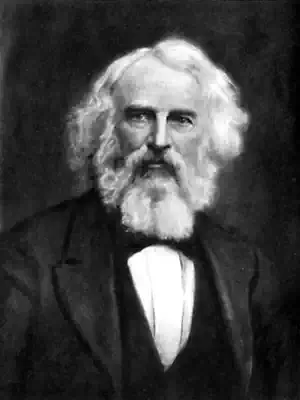
Henry Wadsworth Longfellow
Morituri Salutamus: Poem for the Fiftieth Anniversary of th
Morituri Salutamus: Poem for the Fiftieth Anniversary of th
Tempora labuntur, tacitisque senescimus annis,
Et fugiunt freno non remorante dies.
Ovid, Fastorum, Lib. vi.
"O Cæsar, we who are about to die
Salute you!" was the gladiators' cry
In the arena, standing face to face
With death and with the Roman populace.
O ye familiar scenes,--ye groves of pine,
That once were mine and are no longer mine,-Thou
river, widening through the meadows green
To the vast sea, so near and yet unseen,-Ye
halls, in whose seclusion and repose
Phantoms of fame, like exhalations, rose
And vanished,--we who are about to die,
Salute you; earth and air and sea and sky,
And the Imperial Sun that scatters down
His sovereign splendors upon grove and town.
Ye do not answer us! ye do not hear!
We are forgotten; and in your austere
And calm indifference, ye little care
Whether we come or go, or whence or where.
What passing generations fill these halls,
What passing voices echo from these walls,
Ye heed not; we are only as the blast,
A moment heard, and then forever past.
Not so the teachers who in earlier days
Led our bewildered feet through learning's maze;
They answer us--alas! what have I said?
What greetings come there from the voiceless dead?
What salutation, welcome, or reply?
What pressure from the hands that lifeless lie?
They are no longer here; they all are gone
Into the land of shadows,--all save one.
Honor and reverence, and the good repute
That follows faithful service as its fruit,
Be unto him, whom living we salute.
The great Italian poet, when he made
His dreadful journey to the realms of shade,
Met there the old instructor of his youth,
And cried in tones of pity and of ruth:
"Oh, never from the memory of my heart
Your dear, paternal image shall depart,
Who while on earth, ere yet by death surprised,
Taught me how mortals are immortalized;
How grateful am I for that patient care
All my life long my language shall declare."
To-day we make the poet's words our own,
And utter them in plaintive undertone;
Nor to the living only be they said,
But to the other living called the dead,
Whose dear, paternal images appear
Not wrapped in gloom, but robed in sunshine here;
Whose simple lives, complete and without flaw,
Were part and parcel of great Nature's law;
Who said not to their Lord, as if afraid,
"Here is thy talent in a napkin laid,"
But labored in their sphere, as men who live
In the delight that work alone can give.
Peace be to them; eternal peace and rest,
And the fulfilment of the great behest:
"Ye have been faithful over a few things,
Over ten cities shall ye reign as kings."
And ye who fill the places we once filled,
And follow in the furrows that we tilled,
Young men, whose generous hearts are beating high,
We who are old, and are about to die,
Salute you; hail you; take your hands in ours,
And crown you with our welcome as with flowers!
How beautiful is youth! how bright it gleams
With its illusions, aspirations, dreams!
Book of Beginnings, Story without End,
Each maid a heroine, and each man a friend!
Aladdin's Lamp, and Fortunatus' Purse,
That holds the treasures of the universe!
All possibilities are in its hands,
No danger daunts it, and no foe withstands;
In its sublime audacity of faith,
"Be thou removed!" it to the mountain saith,
And with ambitious feet, secure and proud,
Ascends the ladder leaning on the cloud!
As ancient Priam at the Scæan gate
Sat on the walls of Troy in regal state
With the old men, too old and weak to fight,
Chirping like grasshoppers in their delight
To see the embattled hosts, with spear and shield,
Of Trojans and Achaians in the field;
So from the snowy summits of our years
We see you in the plain, as each appears,
And question of you; asking, "Who is he
That towers above the others? Which may be
Atreides, Menelaus, Odysseus,
Ajax the great, or bold Idomeneus?"
Let him not boast who puts his armor on
As he who puts it off, the battle done.
Study yourselves; and most of all note well
Wherein kind Nature meant you to excel.
Not every blossom ripens into fruit;
Minerva, the inventress of the flute,
Flung it aside, when she her face surveyed
Distorted in a fountain as she played;
The unlucky Marsyas found it, and his fate
Was one to make the bravest hesitate.
Write on your doors the saying wise and old,
"Be bold! be bold!" and everywhere, "Be bold;
Be not too bold!" Yet better the excess
Than the defect; better the more than less;
Better like Hector in the field to die,
Than like a perfumed Paris turn and fly.
And now, my classmates; ye remaining few
That number not the half of those we knew,
Ye, against whose familiar names not yet
The fatal asterisk of death is set,
Ye I salute! The horologe of Time
Strikes the half-century with a solemn chime,
And summons us together once again,
The joy of meeting not unmixed with pain.
Where are the others? Voices from the deep
Caverns of darkness answer me: "They sleep!"
I name no names; instinctively I feel
Each at some well-remembered grave will kneel,
And from the inscription wipe the weeds and moss,
For every heart best knoweth its own loss.
I see their scattered gravestones gleaming white
Through the pale dusk of the impending night;
O'er all alike the impartial sunset throws
Its golden lilies mingled with the rose;
We give to each a tender thought, and pass
Out of the graveyards with their tangled grass,
Unto these scenes frequented by our feet
When we were young, and life was fresh and sweet.
What shall I say to you? What can I say
Better than silence is? When I survey
This throng of faces turned to meet my own,
Friendly and fair, and yet to me unknown,
Transformed the very landscape seems to be;
It is the same, yet not the same to me.
So many memories crowd upon my brain,
So many ghosts are in the wooded plain,
I fain would steal away, with noiseless tread,
As from a house where some one lieth dead.
I cannot go;--I pause;--I hesitate;
My feet reluctant linger at the gate;
As one who struggles in a troubled dream
To speak and cannot, to myself I seem.
Vanish the dream! Vanish the idle fears!
Vanish the rolling mists of fifty years!
Whatever time or space may intervene,
I will not be a stranger in this scene.
Here every doubt, all indecision, ends;
Hail, my companions, comrades, classmates, friends!
Ah me! the fifty years since last we met
Seem to me fifty folios bound and set
By Time, the great transcriber, on his shelves,
Wherein are written the histories of ourselves.
What tragedies, what comedies, are there;
What joy and grief, what rapture and despair!
What chronicles of triumph and defeat,
Of struggle, and temptation, and retreat!
What records of regrets, and doubts, and fears!
What pages blotted, blistered by our tears!
What lovely landscapes on the margin shine,
What sweet, angelic faces, what divine
And holy images of love and trust,
Undimmed by age, unsoiled by damp or dust!
Whose hand shall dare to open and explore
These volumes, closed and clasped forevermore?
Not mine. With reverential feet I pass;
I hear a voice that cries, "Alas! alas!
Whatever hath been written shall remain,
Nor be erased nor written o'er again;
The unwritten only still belongs to thee:
Take heed, and ponder well what that shall be."
As children frightened by a thunder-cloud
Are reassured if some one reads aloud
A tale of wonder, with enchantment fraught,
Or wild adventure, that diverts their thought,
Let me endeavor with a tale to chase
The gathering shadows of the time and place,
And banish what we all too deeply feel
Wholly to say, or wholly to conceal.
In mediæval Rome, I know not where,
There stood an image with its arm in air,
And on its lifted finger, shining clear,
A golden ring with the device, "Strike here!"
Greatly the people wondered, though none guessed
The meaning that these words but half expressed,
Until a learned clerk, who at noonday
With downcast eyes was passing on his way,
Paused, and observed the spot, and marked it well,
Whereon the shadow of the finger fell;
And, coming back at midnight, delved, and found
A secret stairway leading underground.
Down this he passed into a spacious hall,
Lit by a flaming jewel on the wall;
And opposite, in threatening attitude,
With bow and shaft a brazen statue stood.
Upon its forehead, like a coronet,
Were these mysterious words of menace set:
"That which I am, I am; my fatal aim
None can escape, not even yon luminous flame!"
Midway the hall was a fair table placed,
With cloth of gold, and golden cups enchased
With rubies, and the plates and knives were gold,
And gold the bread and viands manifold.
Around it, silent, motionless, and sad,
Were seated gallant knights in armor clad,
And ladies beautiful with plume and zone,
But they were stone, their hearts within were stone;
And the vast hall was filled in every part
With silent crowds, stony in face and heart.
Long at the scene, bewildered and amazed
The trembling clerk in speechless wonder gazed;
Then from the table, by his greed made bold,
He seized a goblet and a knife of gold,
And suddenly from their seats the guests upsprang,
The vaulted ceiling with loud clamors rang,
The archer sped his arrow, at their call,
Shattering the lambent jewel on the wall,
And all was dark around and overhead;-Stark
on the floor the luckless clerk lay dead!
The writer of this legend then records
Its ghostly application in these words:
The image is the Adversary old,
Whose beckoning finger points to realms of gold;
Our lusts and passions are the downward stair
That leads the soul from a diviner air;
The archer, Death; the flaming jewel, Life;
Terrestrial goods, the goblet and the knife;
The knights and ladies, all whose flesh and bone
By avarice have been hardened into stone;
The clerk, the scholar whom the love of pelf
Tempts from his books and from his nobler self.
The scholar and the world! The endless strife,
The discord in the harmonies of life!
The love of learning, the sequestered nooks,
And all the sweet serenity of books;
The market-place, the eager love of gain,
Whose aim is vanity, and whose end is pain!
But why, you ask me, should this tale be told
To men grown old, or who are growing old?
It is too late! Ah, nothing is too late
Till the tired heart shall cease to palpitate.
Cato learned Greek at eighty; Sophocles
Wrote his grand Oedipus, and Simonides
Bore off the prize of verse from his compeers,
When each had numbered more than fourscore years,
And Theophrastus, at fourscore and ten,
Had but begun his "Characters of Men."
Chaucer, at Woodstock with the nightingales,
At sixty wrote the Canterbury Tales;
Goethe at Weimar, toiling to the last,
Completed Faust when eighty years were past.
These are indeed exceptions; but they show
How far the gulf-stream of our youth may flow
Into the arctic regions of our lives,
Where little else than life itself survives.
As the barometer foretells the storm
While still the skies are clear, the weather warm
So something in us, as old age draws near,
Betrays the pressure of the atmosphere.
The nimble mercury, ere we are aware,
Descends the elastic ladder of the air;
The telltale blood in artery and vein
Sinks from its higher levels in the brain;
Whatever poet, orator, or sage
May say of it, old age is still old age.
It is the waning, not the crescent moon;
The dusk of evening, not the blaze of noon;
It is not strength, but weakness; not desire,
But its surcease; not the fierce heat of fire,
The burning and consuming element,
But that of ashes and of embers spent,
In which some living sparks we still discern,
Enough to warm, but not enough to burn.
What then? Shall we sit idly down and say
The night hath come; it is no longer day?
The night hath not yet come; we are not quite
Cut off from labor by the failing light;
Something remains for us to do or dare;
Even the oldest tree some fruit may bear;
Not Oedipus Coloneus, or Greek Ode,
Or tales of pilgrims that one morning rode
Out of the gateway of the Tabard Inn,
But other something, would we but begin;
For age is opportunity no less
Than youth itself, though in another dress,
And as the evening twilight fades away
The sky is filled with stars, invisible by day.
Tempora labuntur, tacitisque senescimus annis,
Et fugiunt freno non remorante dies.
Ovid, Fastorum, Lib. vi.
"O Cæsar, we who are about to die
Salute you!" was the gladiators' cry
In the arena, standing face to face
With death and with the Roman populace.
O ye familiar scenes,--ye groves of pine,
That once were mine and are no longer mine,-Thou
river, widening through the meadows green
To the vast sea, so near and yet unseen,-Ye
halls, in whose seclusion and repose
Phantoms of fame, like exhalations, rose
And vanished,--we who are about to die,
Salute you; earth and air and sea and sky,
And the Imperial Sun that scatters down
His sovereign splendors upon grove and town.
Ye do not answer us! ye do not hear!
We are forgotten; and in your austere
And calm indifference, ye little care
Whether we come or go, or whence or where.
What passing generations fill these halls,
What passing voices echo from these walls,
Ye heed not; we are only as the blast,
A moment heard, and then forever past.
Not so the teachers who in earlier days
Led our bewildered feet through learning's maze;
They answer us--alas! what have I said?
What greetings come there from the voiceless dead?
What salutation, welcome, or reply?
What pressure from the hands that lifeless lie?
They are no longer here; they all are gone
Into the land of shadows,--all save one.
Honor and reverence, and the good repute
That follows faithful service as its fruit,
Be unto him, whom living we salute.
The great Italian poet, when he made
His dreadful journey to the realms of shade,
Met there the old instructor of his youth,
And cried in tones of pity and of ruth:
"Oh, never from the memory of my heart
Your dear, paternal image shall depart,
Who while on earth, ere yet by death surprised,
Taught me how mortals are immortalized;
How grateful am I for that patient care
All my life long my language shall declare."
To-day we make the poet's words our own,
And utter them in plaintive undertone;
Nor to the living only be they said,
But to the other living called the dead,
Whose dear, paternal images appear
Not wrapped in gloom, but robed in sunshine here;
Whose simple lives, complete and without flaw,
Were part and parcel of great Nature's law;
Who said not to their Lord, as if afraid,
"Here is thy talent in a napkin laid,"
But labored in their sphere, as men who live
In the delight that work alone can give.
Peace be to them; eternal peace and rest,
And the fulfilment of the great behest:
"Ye have been faithful over a few things,
Over ten cities shall ye reign as kings."
And ye who fill the places we once filled,
And follow in the furrows that we tilled,
Young men, whose generous hearts are beating high,
We who are old, and are about to die,
Salute you; hail you; take your hands in ours,
And crown you with our welcome as with flowers!
How beautiful is youth! how bright it gleams
With its illusions, aspirations, dreams!
Book of Beginnings, Story without End,
Each maid a heroine, and each man a friend!
Aladdin's Lamp, and Fortunatus' Purse,
That holds the treasures of the universe!
All possibilities are in its hands,
No danger daunts it, and no foe withstands;
In its sublime audacity of faith,
"Be thou removed!" it to the mountain saith,
And with ambitious feet, secure and proud,
Ascends the ladder leaning on the cloud!
As ancient Priam at the Scæan gate
Sat on the walls of Troy in regal state
With the old men, too old and weak to fight,
Chirping like grasshoppers in their delight
To see the embattled hosts, with spear and shield,
Of Trojans and Achaians in the field;
So from the snowy summits of our years
We see you in the plain, as each appears,
And question of you; asking, "Who is he
That towers above the others? Which may be
Atreides, Menelaus, Odysseus,
Ajax the great, or bold Idomeneus?"
Let him not boast who puts his armor on
As he who puts it off, the battle done.
Study yourselves; and most of all note well
Wherein kind Nature meant you to excel.
Not every blossom ripens into fruit;
Minerva, the inventress of the flute,
Flung it aside, when she her face surveyed
Distorted in a fountain as she played;
The unlucky Marsyas found it, and his fate
Was one to make the bravest hesitate.
Write on your doors the saying wise and old,
"Be bold! be bold!" and everywhere, "Be bold;
Be not too bold!" Yet better the excess
Than the defect; better the more than less;
Better like Hector in the field to die,
Than like a perfumed Paris turn and fly.
And now, my classmates; ye remaining few
That number not the half of those we knew,
Ye, against whose familiar names not yet
The fatal asterisk of death is set,
Ye I salute! The horologe of Time
Strikes the half-century with a solemn chime,
And summons us together once again,
The joy of meeting not unmixed with pain.
Where are the others? Voices from the deep
Caverns of darkness answer me: "They sleep!"
I name no names; instinctively I feel
Each at some well-remembered grave will kneel,
And from the inscription wipe the weeds and moss,
For every heart best knoweth its own loss.
I see their scattered gravestones gleaming white
Through the pale dusk of the impending night;
O'er all alike the impartial sunset throws
Its golden lilies mingled with the rose;
We give to each a tender thought, and pass
Out of the graveyards with their tangled grass,
Unto these scenes frequented by our feet
When we were young, and life was fresh and sweet.
What shall I say to you? What can I say
Better than silence is? When I survey
This throng of faces turned to meet my own,
Friendly and fair, and yet to me unknown,
Transformed the very landscape seems to be;
It is the same, yet not the same to me.
So many memories crowd upon my brain,
So many ghosts are in the wooded plain,
I fain would steal away, with noiseless tread,
As from a house where some one lieth dead.
I cannot go;--I pause;--I hesitate;
My feet reluctant linger at the gate;
As one who struggles in a troubled dream
To speak and cannot, to myself I seem.
Vanish the dream! Vanish the idle fears!
Vanish the rolling mists of fifty years!
Whatever time or space may intervene,
I will not be a stranger in this scene.
Here every doubt, all indecision, ends;
Hail, my companions, comrades, classmates, friends!
Ah me! the fifty years since last we met
Seem to me fifty folios bound and set
By Time, the great transcriber, on his shelves,
Wherein are written the histories of ourselves.
What tragedies, what comedies, are there;
What joy and grief, what rapture and despair!
What chronicles of triumph and defeat,
Of struggle, and temptation, and retreat!
What records of regrets, and doubts, and fears!
What pages blotted, blistered by our tears!
What lovely landscapes on the margin shine,
What sweet, angelic faces, what divine
And holy images of love and trust,
Undimmed by age, unsoiled by damp or dust!
Whose hand shall dare to open and explore
These volumes, closed and clasped forevermore?
Not mine. With reverential feet I pass;
I hear a voice that cries, "Alas! alas!
Whatever hath been written shall remain,
Nor be erased nor written o'er again;
The unwritten only still belongs to thee:
Take heed, and ponder well what that shall be."
As children frightened by a thunder-cloud
Are reassured if some one reads aloud
A tale of wonder, with enchantment fraught,
Or wild adventure, that diverts their thought,
Let me endeavor with a tale to chase
The gathering shadows of the time and place,
And banish what we all too deeply feel
Wholly to say, or wholly to conceal.
In mediæval Rome, I know not where,
There stood an image with its arm in air,
And on its lifted finger, shining clear,
A golden ring with the device, "Strike here!"
Greatly the people wondered, though none guessed
The meaning that these words but half expressed,
Until a learned clerk, who at noonday
With downcast eyes was passing on his way,
Paused, and observed the spot, and marked it well,
Whereon the shadow of the finger fell;
And, coming back at midnight, delved, and found
A secret stairway leading underground.
Down this he passed into a spacious hall,
Lit by a flaming jewel on the wall;
And opposite, in threatening attitude,
With bow and shaft a brazen statue stood.
Upon its forehead, like a coronet,
Were these mysterious words of menace set:
"That which I am, I am; my fatal aim
None can escape, not even yon luminous flame!"
Midway the hall was a fair table placed,
With cloth of gold, and golden cups enchased
With rubies, and the plates and knives were gold,
And gold the bread and viands manifold.
Around it, silent, motionless, and sad,
Were seated gallant knights in armor clad,
And ladies beautiful with plume and zone,
But they were stone, their hearts within were stone;
And the vast hall was filled in every part
With silent crowds, stony in face and heart.
Long at the scene, bewildered and amazed
The trembling clerk in speechless wonder gazed;
Then from the table, by his greed made bold,
He seized a goblet and a knife of gold,
And suddenly from their seats the guests upsprang,
The vaulted ceiling with loud clamors rang,
The archer sped his arrow, at their call,
Shattering the lambent jewel on the wall,
And all was dark around and overhead;-Stark
on the floor the luckless clerk lay dead!
The writer of this legend then records
Its ghostly application in these words:
The image is the Adversary old,
Whose beckoning finger points to realms of gold;
Our lusts and passions are the downward stair
That leads the soul from a diviner air;
The archer, Death; the flaming jewel, Life;
Terrestrial goods, the goblet and the knife;
The knights and ladies, all whose flesh and bone
By avarice have been hardened into stone;
The clerk, the scholar whom the love of pelf
Tempts from his books and from his nobler self.
The scholar and the world! The endless strife,
The discord in the harmonies of life!
The love of learning, the sequestered nooks,
And all the sweet serenity of books;
The market-place, the eager love of gain,
Whose aim is vanity, and whose end is pain!
But why, you ask me, should this tale be told
To men grown old, or who are growing old?
It is too late! Ah, nothing is too late
Till the tired heart shall cease to palpitate.
Cato learned Greek at eighty; Sophocles
Wrote his grand Oedipus, and Simonides
Bore off the prize of verse from his compeers,
When each had numbered more than fourscore years,
And Theophrastus, at fourscore and ten,
Had but begun his "Characters of Men."
Chaucer, at Woodstock with the nightingales,
At sixty wrote the Canterbury Tales;
Goethe at Weimar, toiling to the last,
Completed Faust when eighty years were past.
These are indeed exceptions; but they show
How far the gulf-stream of our youth may flow
Into the arctic regions of our lives,
Where little else than life itself survives.
As the barometer foretells the storm
While still the skies are clear, the weather warm
So something in us, as old age draws near,
Betrays the pressure of the atmosphere.
The nimble mercury, ere we are aware,
Descends the elastic ladder of the air;
The telltale blood in artery and vein
Sinks from its higher levels in the brain;
Whatever poet, orator, or sage
May say of it, old age is still old age.
It is the waning, not the crescent moon;
The dusk of evening, not the blaze of noon;
It is not strength, but weakness; not desire,
But its surcease; not the fierce heat of fire,
The burning and consuming element,
But that of ashes and of embers spent,
In which some living sparks we still discern,
Enough to warm, but not enough to burn.
What then? Shall we sit idly down and say
The night hath come; it is no longer day?
The night hath not yet come; we are not quite
Cut off from labor by the failing light;
Something remains for us to do or dare;
Even the oldest tree some fruit may bear;
Not Oedipus Coloneus, or Greek Ode,
Or tales of pilgrims that one morning rode
Out of the gateway of the Tabard Inn,
But other something, would we but begin;
For age is opportunity no less
Than youth itself, though in another dress,
And as the evening twilight fades away
The sky is filled with stars, invisible by day.
362
Henry Wadsworth Longfellow
Loss And Gain
Loss And Gain
When I compare
What I have lost with what I have gained,
What I have missed with what attained,
Little room do I find for pride.
I am aware
How many days have been idly spent;
How like an arrow the good intent
Has fallen short or been turned aside.
But who shall dare
To measure loss and gain in this wise?
Defeat may be victory in disguise;
The lowest ebb is the turn of the tide.
When I compare
What I have lost with what I have gained,
What I have missed with what attained,
Little room do I find for pride.
I am aware
How many days have been idly spent;
How like an arrow the good intent
Has fallen short or been turned aside.
But who shall dare
To measure loss and gain in this wise?
Defeat may be victory in disguise;
The lowest ebb is the turn of the tide.
451
Henry Wadsworth Longfellow
Loss And Gain
Loss And Gain
When I compare
What I have lost with what I have gained,
What I have missed with what attained,
Little room do I find for pride.
I am aware
How many days have been idly spent;
How like an arrow the good intent
Has fallen short or been turned aside.
But who shall dare
To measure loss and gain in this wise?
Defeat may be victory in disguise;
The lowest ebb is the turn of the tide.
When I compare
What I have lost with what I have gained,
What I have missed with what attained,
Little room do I find for pride.
I am aware
How many days have been idly spent;
How like an arrow the good intent
Has fallen short or been turned aside.
But who shall dare
To measure loss and gain in this wise?
Defeat may be victory in disguise;
The lowest ebb is the turn of the tide.
451
Henry Wadsworth Longfellow
Introduction To The Song Of Hiawatha
Introduction To The Song Of Hiawatha
Should you ask me,
whence these stories?
Whence these legends and traditions,
With the odors of the forest
With the dew and damp of meadows,
With the curling smoke of wigwams,
With the rushing of great rivers,
With their frequent repetitions,
And their wild reverberations
As of thunder in the mountains?
I should answer, I should tell you,
"From the forests and the prairies,
From the great lakes of the Northland,
From the land of the Ojibways,
From the land of the Dacotahs,
From the mountains, moors, and fen-lands
Where the heron, the Shuh-shuh-gah,
Feeds among the reeds and rushes.
I repeat them as I heard them
From the lips of Nawadaha,
The musician, the sweet singer."
Should you ask where Nawadaha
Found these songs so wild and wayward,
Found these legends and traditions,
I should answer, I should tell you,
"In the bird's-nests of the forest,
In the lodges of the beaver,
In the hoofprint of the bison,
In the eyry of the eagle!
"All the wild-fowl sang them to him,
In the moorlands and the fen-lands,
In the melancholy marshes;
Chetowaik, the plover, sang them,
Mahng, the loon, the wild-goose, Wawa,
The blue heron, the Shuh-shuh-gah,
And the grouse, the Mushkodasa!"
If still further you should ask me,
Saying, "Who was Nawadaha?
Tell us of this Nawadaha,"
I should answer your inquiries
Straightway in such words as follow.
"In the vale of Tawasentha,
In the green and silent valley,
By the pleasant water-courses,
Dwelt the singer Nawadaha.
Round about the Indian village
Spread the meadows and the corn-fields,
And beyond them stood the forest,
Stood the groves of singing pine-trees,
Green in Summer, white in Winter,
Ever sighing, ever singing.
"And the pleasant water-courses,
You could trace them through the valley,
By the rushing in the Spring-time,
By the alders in the Summer,
By the white fog in the Autumn,
By the black line in the Winter;
And beside them dwelt the singer,
In the vale of Tawasentha,
In the green and silent valley.
"There he sang of Hiawatha,
Sang the Song of Hiawatha,
Sang his wondrous birth and being,
How he prayed and how be fasted,
How he lived, and toiled, and suffered,
That the tribes of men might prosper,
That he might advance his people!"
Ye who love the haunts of Nature,
Love the sunshine of the meadow,
Love the shadow of the forest,
Love the wind among the branches,
And the rain-shower and the snow-storm,
And the rushing of great rivers
Through their palisades of pine-trees,
And the thunder in the mountains,
Whose innumerable echoes
Flap like eagles in their eyries;-
Listen to these wild traditions,
To this Song of Hiawatha!
Ye who love a nation's legends,
Love the ballads of a people,
That like voices from afar off
Call to us to pause and listen,
Speak in tones so plain and childlike,
Scarcely can the ear distinguish
Whether they are sung or spoken;-
Listen to this Indian Legend,
To this Song of Hiawatha!
Ye whose hearts are fresh and simple,
Who have faith in God and Nature,
Who believe that in all ages
Every human heart is human,
That in even savage bosoms
There are longings, yearnings, strivings
For the good they comprehend not,
That the feeble hands and helpless,
Groping blindly in the darkness,
Touch God's right hand in that darkness
And are lifted up and strengthened;-
Listen to this simple story,
To this Song of Hiawatha!
Ye, who sometimes, in your rambles
Through the green lanes of the country,
Where the tangled barberry-bushes
Hang their tufts of crimson berries
Over stone walls gray with mosses,
Pause by some neglected graveyard,
For a while to muse, and ponder
On a half-effaced inscription,
Written with little skill of song-craft,
Homely phrases, but each letter
Full of hope and yet of heart-break,
Full of all the tender pathos
Of the Here and the Hereafter;
Stay and read this rude inscription,
Read this Song of Hiawatha!
Should you ask me,
whence these stories?
Whence these legends and traditions,
With the odors of the forest
With the dew and damp of meadows,
With the curling smoke of wigwams,
With the rushing of great rivers,
With their frequent repetitions,
And their wild reverberations
As of thunder in the mountains?
I should answer, I should tell you,
"From the forests and the prairies,
From the great lakes of the Northland,
From the land of the Ojibways,
From the land of the Dacotahs,
From the mountains, moors, and fen-lands
Where the heron, the Shuh-shuh-gah,
Feeds among the reeds and rushes.
I repeat them as I heard them
From the lips of Nawadaha,
The musician, the sweet singer."
Should you ask where Nawadaha
Found these songs so wild and wayward,
Found these legends and traditions,
I should answer, I should tell you,
"In the bird's-nests of the forest,
In the lodges of the beaver,
In the hoofprint of the bison,
In the eyry of the eagle!
"All the wild-fowl sang them to him,
In the moorlands and the fen-lands,
In the melancholy marshes;
Chetowaik, the plover, sang them,
Mahng, the loon, the wild-goose, Wawa,
The blue heron, the Shuh-shuh-gah,
And the grouse, the Mushkodasa!"
If still further you should ask me,
Saying, "Who was Nawadaha?
Tell us of this Nawadaha,"
I should answer your inquiries
Straightway in such words as follow.
"In the vale of Tawasentha,
In the green and silent valley,
By the pleasant water-courses,
Dwelt the singer Nawadaha.
Round about the Indian village
Spread the meadows and the corn-fields,
And beyond them stood the forest,
Stood the groves of singing pine-trees,
Green in Summer, white in Winter,
Ever sighing, ever singing.
"And the pleasant water-courses,
You could trace them through the valley,
By the rushing in the Spring-time,
By the alders in the Summer,
By the white fog in the Autumn,
By the black line in the Winter;
And beside them dwelt the singer,
In the vale of Tawasentha,
In the green and silent valley.
"There he sang of Hiawatha,
Sang the Song of Hiawatha,
Sang his wondrous birth and being,
How he prayed and how be fasted,
How he lived, and toiled, and suffered,
That the tribes of men might prosper,
That he might advance his people!"
Ye who love the haunts of Nature,
Love the sunshine of the meadow,
Love the shadow of the forest,
Love the wind among the branches,
And the rain-shower and the snow-storm,
And the rushing of great rivers
Through their palisades of pine-trees,
And the thunder in the mountains,
Whose innumerable echoes
Flap like eagles in their eyries;-
Listen to these wild traditions,
To this Song of Hiawatha!
Ye who love a nation's legends,
Love the ballads of a people,
That like voices from afar off
Call to us to pause and listen,
Speak in tones so plain and childlike,
Scarcely can the ear distinguish
Whether they are sung or spoken;-
Listen to this Indian Legend,
To this Song of Hiawatha!
Ye whose hearts are fresh and simple,
Who have faith in God and Nature,
Who believe that in all ages
Every human heart is human,
That in even savage bosoms
There are longings, yearnings, strivings
For the good they comprehend not,
That the feeble hands and helpless,
Groping blindly in the darkness,
Touch God's right hand in that darkness
And are lifted up and strengthened;-
Listen to this simple story,
To this Song of Hiawatha!
Ye, who sometimes, in your rambles
Through the green lanes of the country,
Where the tangled barberry-bushes
Hang their tufts of crimson berries
Over stone walls gray with mosses,
Pause by some neglected graveyard,
For a while to muse, and ponder
On a half-effaced inscription,
Written with little skill of song-craft,
Homely phrases, but each letter
Full of hope and yet of heart-break,
Full of all the tender pathos
Of the Here and the Hereafter;
Stay and read this rude inscription,
Read this Song of Hiawatha!
438
Henry Wadsworth Longfellow
Introduction To The Song Of Hiawatha
Introduction To The Song Of Hiawatha
Should you ask me,
whence these stories?
Whence these legends and traditions,
With the odors of the forest
With the dew and damp of meadows,
With the curling smoke of wigwams,
With the rushing of great rivers,
With their frequent repetitions,
And their wild reverberations
As of thunder in the mountains?
I should answer, I should tell you,
"From the forests and the prairies,
From the great lakes of the Northland,
From the land of the Ojibways,
From the land of the Dacotahs,
From the mountains, moors, and fen-lands
Where the heron, the Shuh-shuh-gah,
Feeds among the reeds and rushes.
I repeat them as I heard them
From the lips of Nawadaha,
The musician, the sweet singer."
Should you ask where Nawadaha
Found these songs so wild and wayward,
Found these legends and traditions,
I should answer, I should tell you,
"In the bird's-nests of the forest,
In the lodges of the beaver,
In the hoofprint of the bison,
In the eyry of the eagle!
"All the wild-fowl sang them to him,
In the moorlands and the fen-lands,
In the melancholy marshes;
Chetowaik, the plover, sang them,
Mahng, the loon, the wild-goose, Wawa,
The blue heron, the Shuh-shuh-gah,
And the grouse, the Mushkodasa!"
If still further you should ask me,
Saying, "Who was Nawadaha?
Tell us of this Nawadaha,"
I should answer your inquiries
Straightway in such words as follow.
"In the vale of Tawasentha,
In the green and silent valley,
By the pleasant water-courses,
Dwelt the singer Nawadaha.
Round about the Indian village
Spread the meadows and the corn-fields,
And beyond them stood the forest,
Stood the groves of singing pine-trees,
Green in Summer, white in Winter,
Ever sighing, ever singing.
"And the pleasant water-courses,
You could trace them through the valley,
By the rushing in the Spring-time,
By the alders in the Summer,
By the white fog in the Autumn,
By the black line in the Winter;
And beside them dwelt the singer,
In the vale of Tawasentha,
In the green and silent valley.
"There he sang of Hiawatha,
Sang the Song of Hiawatha,
Sang his wondrous birth and being,
How he prayed and how be fasted,
How he lived, and toiled, and suffered,
That the tribes of men might prosper,
That he might advance his people!"
Ye who love the haunts of Nature,
Love the sunshine of the meadow,
Love the shadow of the forest,
Love the wind among the branches,
And the rain-shower and the snow-storm,
And the rushing of great rivers
Through their palisades of pine-trees,
And the thunder in the mountains,
Whose innumerable echoes
Flap like eagles in their eyries;-
Listen to these wild traditions,
To this Song of Hiawatha!
Ye who love a nation's legends,
Love the ballads of a people,
That like voices from afar off
Call to us to pause and listen,
Speak in tones so plain and childlike,
Scarcely can the ear distinguish
Whether they are sung or spoken;-
Listen to this Indian Legend,
To this Song of Hiawatha!
Ye whose hearts are fresh and simple,
Who have faith in God and Nature,
Who believe that in all ages
Every human heart is human,
That in even savage bosoms
There are longings, yearnings, strivings
For the good they comprehend not,
That the feeble hands and helpless,
Groping blindly in the darkness,
Touch God's right hand in that darkness
And are lifted up and strengthened;-
Listen to this simple story,
To this Song of Hiawatha!
Ye, who sometimes, in your rambles
Through the green lanes of the country,
Where the tangled barberry-bushes
Hang their tufts of crimson berries
Over stone walls gray with mosses,
Pause by some neglected graveyard,
For a while to muse, and ponder
On a half-effaced inscription,
Written with little skill of song-craft,
Homely phrases, but each letter
Full of hope and yet of heart-break,
Full of all the tender pathos
Of the Here and the Hereafter;
Stay and read this rude inscription,
Read this Song of Hiawatha!
Should you ask me,
whence these stories?
Whence these legends and traditions,
With the odors of the forest
With the dew and damp of meadows,
With the curling smoke of wigwams,
With the rushing of great rivers,
With their frequent repetitions,
And their wild reverberations
As of thunder in the mountains?
I should answer, I should tell you,
"From the forests and the prairies,
From the great lakes of the Northland,
From the land of the Ojibways,
From the land of the Dacotahs,
From the mountains, moors, and fen-lands
Where the heron, the Shuh-shuh-gah,
Feeds among the reeds and rushes.
I repeat them as I heard them
From the lips of Nawadaha,
The musician, the sweet singer."
Should you ask where Nawadaha
Found these songs so wild and wayward,
Found these legends and traditions,
I should answer, I should tell you,
"In the bird's-nests of the forest,
In the lodges of the beaver,
In the hoofprint of the bison,
In the eyry of the eagle!
"All the wild-fowl sang them to him,
In the moorlands and the fen-lands,
In the melancholy marshes;
Chetowaik, the plover, sang them,
Mahng, the loon, the wild-goose, Wawa,
The blue heron, the Shuh-shuh-gah,
And the grouse, the Mushkodasa!"
If still further you should ask me,
Saying, "Who was Nawadaha?
Tell us of this Nawadaha,"
I should answer your inquiries
Straightway in such words as follow.
"In the vale of Tawasentha,
In the green and silent valley,
By the pleasant water-courses,
Dwelt the singer Nawadaha.
Round about the Indian village
Spread the meadows and the corn-fields,
And beyond them stood the forest,
Stood the groves of singing pine-trees,
Green in Summer, white in Winter,
Ever sighing, ever singing.
"And the pleasant water-courses,
You could trace them through the valley,
By the rushing in the Spring-time,
By the alders in the Summer,
By the white fog in the Autumn,
By the black line in the Winter;
And beside them dwelt the singer,
In the vale of Tawasentha,
In the green and silent valley.
"There he sang of Hiawatha,
Sang the Song of Hiawatha,
Sang his wondrous birth and being,
How he prayed and how be fasted,
How he lived, and toiled, and suffered,
That the tribes of men might prosper,
That he might advance his people!"
Ye who love the haunts of Nature,
Love the sunshine of the meadow,
Love the shadow of the forest,
Love the wind among the branches,
And the rain-shower and the snow-storm,
And the rushing of great rivers
Through their palisades of pine-trees,
And the thunder in the mountains,
Whose innumerable echoes
Flap like eagles in their eyries;-
Listen to these wild traditions,
To this Song of Hiawatha!
Ye who love a nation's legends,
Love the ballads of a people,
That like voices from afar off
Call to us to pause and listen,
Speak in tones so plain and childlike,
Scarcely can the ear distinguish
Whether they are sung or spoken;-
Listen to this Indian Legend,
To this Song of Hiawatha!
Ye whose hearts are fresh and simple,
Who have faith in God and Nature,
Who believe that in all ages
Every human heart is human,
That in even savage bosoms
There are longings, yearnings, strivings
For the good they comprehend not,
That the feeble hands and helpless,
Groping blindly in the darkness,
Touch God's right hand in that darkness
And are lifted up and strengthened;-
Listen to this simple story,
To this Song of Hiawatha!
Ye, who sometimes, in your rambles
Through the green lanes of the country,
Where the tangled barberry-bushes
Hang their tufts of crimson berries
Over stone walls gray with mosses,
Pause by some neglected graveyard,
For a while to muse, and ponder
On a half-effaced inscription,
Written with little skill of song-craft,
Homely phrases, but each letter
Full of hope and yet of heart-break,
Full of all the tender pathos
Of the Here and the Hereafter;
Stay and read this rude inscription,
Read this Song of Hiawatha!
438
Henry Wadsworth Longfellow
In The Harbour: Sundown
In The Harbour: Sundown
The summer sun is sinking low;
Only the tree-tops redden and glow:
Only the weathercock on the spire
Of the neighboring church is a flame of fire;
All is in shadow below.
O beautiful, awful summer day,
What hast thou given, what taken away?
Life and death, and love and hate,
Homes made happy or desolate,
Hearts made sad or gay!
On the road of life one mile-stone more!
In the book of life one leaf turned o'er!
Like a red seal is the setting sun
On the good and the evil men have done,--
Naught can to-day restore!
The summer sun is sinking low;
Only the tree-tops redden and glow:
Only the weathercock on the spire
Of the neighboring church is a flame of fire;
All is in shadow below.
O beautiful, awful summer day,
What hast thou given, what taken away?
Life and death, and love and hate,
Homes made happy or desolate,
Hearts made sad or gay!
On the road of life one mile-stone more!
In the book of life one leaf turned o'er!
Like a red seal is the setting sun
On the good and the evil men have done,--
Naught can to-day restore!
306
Henry Wadsworth Longfellow
Hymn For My Brother's Ordination
Hymn For My Brother's Ordination
Christ to the young man said: 'Yet one thing more;
If thou wouldst perfect be,
Sell all thou hast and give it to the poor,
And come and follow me!'
Within this temple Christ again, unseen,
Those sacred words hath said,
And his invisible hands to-day have been
Laid on a young man's head.
And evermore beside him on his way
The unseen Christ shall move,
That he may lean upon his arm and say,
'Dost thou, dear Lord, approve?'
Beside him at the marriage feast shall be,
To make the scene more fair;
Beside him in the dark Gethsemane
Of pain and midnight prayer.
O holy trust! O endless sense of rest!
Like the beloved John
To lay his head upon the Saviour's breast,
And thus to journey on!
Christ to the young man said: 'Yet one thing more;
If thou wouldst perfect be,
Sell all thou hast and give it to the poor,
And come and follow me!'
Within this temple Christ again, unseen,
Those sacred words hath said,
And his invisible hands to-day have been
Laid on a young man's head.
And evermore beside him on his way
The unseen Christ shall move,
That he may lean upon his arm and say,
'Dost thou, dear Lord, approve?'
Beside him at the marriage feast shall be,
To make the scene more fair;
Beside him in the dark Gethsemane
Of pain and midnight prayer.
O holy trust! O endless sense of rest!
Like the beloved John
To lay his head upon the Saviour's breast,
And thus to journey on!
345
Henry Wadsworth Longfellow
Hymn For My Brother's Ordination
Hymn For My Brother's Ordination
Christ to the young man said: 'Yet one thing more;
If thou wouldst perfect be,
Sell all thou hast and give it to the poor,
And come and follow me!'
Within this temple Christ again, unseen,
Those sacred words hath said,
And his invisible hands to-day have been
Laid on a young man's head.
And evermore beside him on his way
The unseen Christ shall move,
That he may lean upon his arm and say,
'Dost thou, dear Lord, approve?'
Beside him at the marriage feast shall be,
To make the scene more fair;
Beside him in the dark Gethsemane
Of pain and midnight prayer.
O holy trust! O endless sense of rest!
Like the beloved John
To lay his head upon the Saviour's breast,
And thus to journey on!
Christ to the young man said: 'Yet one thing more;
If thou wouldst perfect be,
Sell all thou hast and give it to the poor,
And come and follow me!'
Within this temple Christ again, unseen,
Those sacred words hath said,
And his invisible hands to-day have been
Laid on a young man's head.
And evermore beside him on his way
The unseen Christ shall move,
That he may lean upon his arm and say,
'Dost thou, dear Lord, approve?'
Beside him at the marriage feast shall be,
To make the scene more fair;
Beside him in the dark Gethsemane
Of pain and midnight prayer.
O holy trust! O endless sense of rest!
Like the beloved John
To lay his head upon the Saviour's breast,
And thus to journey on!
345
Henry Wadsworth Longfellow
Hiawatha's Wedding-Feast
Hiawatha's Wedding-Feast
You shall hear how Pau-Puk-Keewis,
How the handsome Yenadizze
Danced at Hiawatha's wedding;
How the gentle Chibiabos,
He the sweetest of musicians,
Sang his songs of love and longing;
How Iagoo, the great boaster,
He the marvellous story-teller,
Told his tales of strange adventure,
That the feast might be more joyous,
That the time might pass more gayly,
And the guests be more contented.
Sumptuous was the feast Nokomis
Made at Hiawatha's wedding;
All the bowls were made of bass-wood,
White and polished very smoothly,
All the spoons of horn of bison,
Black and polished very smoothly.
She had sent through all the village
Messengers with wands of willow,
As a sign of invitation,
As a token of the feasting;
And the wedding guests assembled,
Clad in all their richest raiment,
Robes of fur and belts of wampum,
Splendid with their paint and plumage,
Beautiful with beads and tassels.
First they ate the sturgeon, Nahma,
And the pike, the Maskenozha,
Caught and cooked by old Nokomis;
Then on pemican they feasted,
Pemican and buffalo marrow,
Haunch of deer and hump of bison,
Yellow cakes of the Mondamin,
And the wild rice of the river.
But the gracious Hiawatha,
And the lovely Laughing Water,
And the careful old Nokomis,
Tasted not the food before them,
Only waited on the others
Only served their guests in silence.
And when all the guests had finished,
Old Nokomis, brisk and busy,
From an ample pouch of otter,
Filled the red-stone pipes for smoking
With tobacco from the South-land,
Mixed with bark of the red willow,
And with herbs and leaves of fragrance.
Then she said, "O Pau-Puk-Keewis,
Dance for us your merry dances,
Dance the Beggar's Dance to please us,
That the feast may be more joyous,
That the time may pass more gayly,
And our guests be more contented!"
Then the handsome Pau-Puk-Keewis,
He the idle Yenadizze,
He the merry mischief-maker,
Whom the people called the Storm-Fool,
Rose among the guests assembled.
Skilled was he in sports and pastimes,
In the merry dance of snow-shoes,
In the play of quoits and ball-play;
Skilled was he in games of hazard,
In all games of skill and hazard,
Pugasaing, the Bowl and Counters,
Kuntassoo, the Game of Plum-stones.
Though the warriors called him Faint-Heart,
Called him coward, Shaugodaya,
Idler, gambler, Yenadizze,
Little heeded he their jesting,
Little cared he for their insults,
For the women and the maidens
Loved the handsome Pau-Puk-Keewis.
He was dressed in shirt of doeskin,
White and soft, and fringed with ermine,
All inwrought with beads of wampum;
He was dressed in deer-skin leggings,
Fringed with hedgehog quills and ermine,
And in moccasins of buck-skin,
Thick with quills and beads embroidered.
On his head were plumes of swan's down,
On his heels were tails of foxes,
In one hand a fan of feathers,
And a pipe was in the other.
Barred with streaks of red and yellow,
Streaks of blue and bright vermilion,
Shone the face of Pau-Puk-Keewis.
From his forehead fell his tresses,
Smooth, and parted like a woman's,
Shining bright with oil, and plaited,
Hung with braids of scented grasses,
As among the guests assembled,
To the sound of flutes and singing,
To the sound of drums and voices,
Rose the handsome Pau-Puk-Keewis,
And began his mystic dances.
First he danced a solemn measure,
Very slow in step and gesture,
In and out among the pine-trees,
Through the shadows and the sunshine,
Treading softly like a panther.
Then more swiftly and still swifter,
Whirling, spinning round in circles,
Leaping o'er the guests assembled,
Eddying round and round the wigwam,
Till the leaves went whirling with him,
Till the dust and wind together
Swept in eddies round about him.
Then along the sandy margin
Of the lake, the Big-Sea-Water,
On he sped with frenzied gestures,
Stamped upon the sand, and tossed it
Wildly in the air around him;
Till the wind became a whirlwind,
Till the sand was blown and sifted
Like great snowdrifts o'er the landscape,
Heaping all the shores with Sand Dunes,
Sand Hills of the Nagow Wudjoo!
Thus the merry Pau-Puk-Keewis
Danced his Beggar's Dance to please them,
And, returning, sat down laughing
There among the guests assembled,
Sat and fanned himself serenely
With his fan of turkey-feathers.
Then they said to Chibiabos,
To the friend of Hiawatha,
To the sweetest of all singers,
To the best of all musicians,
"Sing to us, O Chibiabos!
Songs of love and songs of longing,
That the feast may be more joyous,
That the time may pass more gayly,
And our guests be more contented!"
And the gentle Chibiabos
Sang in accents sweet and tender,
Sang in tones of deep emotion,
Songs of love and songs of longing;
Looking still at Hiawatha,
Looking at fair Laughing Water,
Sang he softly, sang in this wise:
"Onaway! Awake, beloved!
Thou the wild-flower of the forest!
Thou the wild-bird of the prairie!
Thou with eyes so soft and fawn-like!
"If thou only lookest at me,
I am happy, I am happy,
As the lilies of the prairie,
When they feel the dew upon them!
"Sweet thy breath is as the fragrance
Of the wild-flowers in the morning,
As their fragrance is at evening,
In the Moon when leaves are falling.
"Does not all the blood within me
Leap to meet thee, leap to meet thee,
As the springs to meet the sunshine,
In the Moon when nights are brightest?
"Onaway! my heart sings to thee,
Sings with joy when thou art near me,
As the sighing, singing branches
In the pleasant Moon of Strawberries!
"When thou art not pleased, beloved,
Then my heart is sad and darkened,
As the shining river darkens
When the clouds drop shadows on it!
"When thou smilest, my beloved,
Then my troubled heart is brightened,
As in sunshine gleam the ripples
That the cold wind makes in rivers.
"Smiles the earth, and smile the waters,
Smile the cloudless skies above us,
But I lose the way of smiling
When thou art no longer near me!
"I myself, myself! behold me!
Blood of my beating heart, behold me!
Oh awake, awake, beloved!
Onaway! awake, beloved!"
Thus the gentle Chibiabos
Sang his song of love and longing;
And Iagoo, the great boaster,
He the marvellous story-teller,
He the friend of old Nokomis,
Jealous of the sweet musician,
Jealous of the applause they gave him,
Saw in all the eyes around him,
Saw in all their looks and gestures,
That the wedding guests assembled
Longed to hear his pleasant stories,
His immeasurable falsehoods.
Very boastful was Iagoo;
Never heard he an adventure
But himself had met a greater;
Never any deed of daring
But himself had done a bolder;
Never any marvellous story
But himself could tell a stranger.
Would you listen to his boasting,
Would you only give him credence,
No one ever shot an arrow
Half so far and high as he had;
Ever caught so many fishes,
Ever killed so many reindeer,
Ever trapped so many beaver!
None could run so fast as he could,
None could dive so deep as he could,
None could swim so far as he could;
None had made so many journeys,
None had seen so many wonders,
As this wonderful Iagoo,
As this marvellous story-teller!
Thus his name became a by-word
And a jest among the people;
And whene'er a boastful hunter
Praised his own address too highly,
Or a warrior, home returning,
Talked too much of his achievements,
All his hearers cried, "Iagoo!
Here's Iagoo come among us!"
He it was who carved the cradle
Of the little Hiawatha,
Carved its framework out of linden,
Bound it strong with reindeer sinews;
He it was who taught him later
How to make his bows and arrows,
How to make the bows of ash-tree,
And the arrows of the oak-tree.
So among the guests assembled
At my Hiawatha's wedding
Sat Iagoo, old and ugly,
Sat the marvellous story-teller.
And they said, "O good Iagoo,
Tell us now a tale of wonder,
Tell us of some strange adventure,
That the feast may be more joyous,
That the time may pass more gayly,
And our guests be more contented!"
And Iagoo answered straightway,
"You shall hear a tale of wonder,
You shall hear the strange adventures
Of Osseo, the Magician,
From the Evening Star descending."
You shall hear how Pau-Puk-Keewis,
How the handsome Yenadizze
Danced at Hiawatha's wedding;
How the gentle Chibiabos,
He the sweetest of musicians,
Sang his songs of love and longing;
How Iagoo, the great boaster,
He the marvellous story-teller,
Told his tales of strange adventure,
That the feast might be more joyous,
That the time might pass more gayly,
And the guests be more contented.
Sumptuous was the feast Nokomis
Made at Hiawatha's wedding;
All the bowls were made of bass-wood,
White and polished very smoothly,
All the spoons of horn of bison,
Black and polished very smoothly.
She had sent through all the village
Messengers with wands of willow,
As a sign of invitation,
As a token of the feasting;
And the wedding guests assembled,
Clad in all their richest raiment,
Robes of fur and belts of wampum,
Splendid with their paint and plumage,
Beautiful with beads and tassels.
First they ate the sturgeon, Nahma,
And the pike, the Maskenozha,
Caught and cooked by old Nokomis;
Then on pemican they feasted,
Pemican and buffalo marrow,
Haunch of deer and hump of bison,
Yellow cakes of the Mondamin,
And the wild rice of the river.
But the gracious Hiawatha,
And the lovely Laughing Water,
And the careful old Nokomis,
Tasted not the food before them,
Only waited on the others
Only served their guests in silence.
And when all the guests had finished,
Old Nokomis, brisk and busy,
From an ample pouch of otter,
Filled the red-stone pipes for smoking
With tobacco from the South-land,
Mixed with bark of the red willow,
And with herbs and leaves of fragrance.
Then she said, "O Pau-Puk-Keewis,
Dance for us your merry dances,
Dance the Beggar's Dance to please us,
That the feast may be more joyous,
That the time may pass more gayly,
And our guests be more contented!"
Then the handsome Pau-Puk-Keewis,
He the idle Yenadizze,
He the merry mischief-maker,
Whom the people called the Storm-Fool,
Rose among the guests assembled.
Skilled was he in sports and pastimes,
In the merry dance of snow-shoes,
In the play of quoits and ball-play;
Skilled was he in games of hazard,
In all games of skill and hazard,
Pugasaing, the Bowl and Counters,
Kuntassoo, the Game of Plum-stones.
Though the warriors called him Faint-Heart,
Called him coward, Shaugodaya,
Idler, gambler, Yenadizze,
Little heeded he their jesting,
Little cared he for their insults,
For the women and the maidens
Loved the handsome Pau-Puk-Keewis.
He was dressed in shirt of doeskin,
White and soft, and fringed with ermine,
All inwrought with beads of wampum;
He was dressed in deer-skin leggings,
Fringed with hedgehog quills and ermine,
And in moccasins of buck-skin,
Thick with quills and beads embroidered.
On his head were plumes of swan's down,
On his heels were tails of foxes,
In one hand a fan of feathers,
And a pipe was in the other.
Barred with streaks of red and yellow,
Streaks of blue and bright vermilion,
Shone the face of Pau-Puk-Keewis.
From his forehead fell his tresses,
Smooth, and parted like a woman's,
Shining bright with oil, and plaited,
Hung with braids of scented grasses,
As among the guests assembled,
To the sound of flutes and singing,
To the sound of drums and voices,
Rose the handsome Pau-Puk-Keewis,
And began his mystic dances.
First he danced a solemn measure,
Very slow in step and gesture,
In and out among the pine-trees,
Through the shadows and the sunshine,
Treading softly like a panther.
Then more swiftly and still swifter,
Whirling, spinning round in circles,
Leaping o'er the guests assembled,
Eddying round and round the wigwam,
Till the leaves went whirling with him,
Till the dust and wind together
Swept in eddies round about him.
Then along the sandy margin
Of the lake, the Big-Sea-Water,
On he sped with frenzied gestures,
Stamped upon the sand, and tossed it
Wildly in the air around him;
Till the wind became a whirlwind,
Till the sand was blown and sifted
Like great snowdrifts o'er the landscape,
Heaping all the shores with Sand Dunes,
Sand Hills of the Nagow Wudjoo!
Thus the merry Pau-Puk-Keewis
Danced his Beggar's Dance to please them,
And, returning, sat down laughing
There among the guests assembled,
Sat and fanned himself serenely
With his fan of turkey-feathers.
Then they said to Chibiabos,
To the friend of Hiawatha,
To the sweetest of all singers,
To the best of all musicians,
"Sing to us, O Chibiabos!
Songs of love and songs of longing,
That the feast may be more joyous,
That the time may pass more gayly,
And our guests be more contented!"
And the gentle Chibiabos
Sang in accents sweet and tender,
Sang in tones of deep emotion,
Songs of love and songs of longing;
Looking still at Hiawatha,
Looking at fair Laughing Water,
Sang he softly, sang in this wise:
"Onaway! Awake, beloved!
Thou the wild-flower of the forest!
Thou the wild-bird of the prairie!
Thou with eyes so soft and fawn-like!
"If thou only lookest at me,
I am happy, I am happy,
As the lilies of the prairie,
When they feel the dew upon them!
"Sweet thy breath is as the fragrance
Of the wild-flowers in the morning,
As their fragrance is at evening,
In the Moon when leaves are falling.
"Does not all the blood within me
Leap to meet thee, leap to meet thee,
As the springs to meet the sunshine,
In the Moon when nights are brightest?
"Onaway! my heart sings to thee,
Sings with joy when thou art near me,
As the sighing, singing branches
In the pleasant Moon of Strawberries!
"When thou art not pleased, beloved,
Then my heart is sad and darkened,
As the shining river darkens
When the clouds drop shadows on it!
"When thou smilest, my beloved,
Then my troubled heart is brightened,
As in sunshine gleam the ripples
That the cold wind makes in rivers.
"Smiles the earth, and smile the waters,
Smile the cloudless skies above us,
But I lose the way of smiling
When thou art no longer near me!
"I myself, myself! behold me!
Blood of my beating heart, behold me!
Oh awake, awake, beloved!
Onaway! awake, beloved!"
Thus the gentle Chibiabos
Sang his song of love and longing;
And Iagoo, the great boaster,
He the marvellous story-teller,
He the friend of old Nokomis,
Jealous of the sweet musician,
Jealous of the applause they gave him,
Saw in all the eyes around him,
Saw in all their looks and gestures,
That the wedding guests assembled
Longed to hear his pleasant stories,
His immeasurable falsehoods.
Very boastful was Iagoo;
Never heard he an adventure
But himself had met a greater;
Never any deed of daring
But himself had done a bolder;
Never any marvellous story
But himself could tell a stranger.
Would you listen to his boasting,
Would you only give him credence,
No one ever shot an arrow
Half so far and high as he had;
Ever caught so many fishes,
Ever killed so many reindeer,
Ever trapped so many beaver!
None could run so fast as he could,
None could dive so deep as he could,
None could swim so far as he could;
None had made so many journeys,
None had seen so many wonders,
As this wonderful Iagoo,
As this marvellous story-teller!
Thus his name became a by-word
And a jest among the people;
And whene'er a boastful hunter
Praised his own address too highly,
Or a warrior, home returning,
Talked too much of his achievements,
All his hearers cried, "Iagoo!
Here's Iagoo come among us!"
He it was who carved the cradle
Of the little Hiawatha,
Carved its framework out of linden,
Bound it strong with reindeer sinews;
He it was who taught him later
How to make his bows and arrows,
How to make the bows of ash-tree,
And the arrows of the oak-tree.
So among the guests assembled
At my Hiawatha's wedding
Sat Iagoo, old and ugly,
Sat the marvellous story-teller.
And they said, "O good Iagoo,
Tell us now a tale of wonder,
Tell us of some strange adventure,
That the feast may be more joyous,
That the time may pass more gayly,
And our guests be more contented!"
And Iagoo answered straightway,
"You shall hear a tale of wonder,
You shall hear the strange adventures
Of Osseo, the Magician,
From the Evening Star descending."
363
Henry Wadsworth Longfellow
Hiawatha's Fishing
Hiawatha's Fishing
Forth upon the Gitche Gumee,
On the shining Big-Sea-Water,
With his fishing-line of cedar,
Of the twisted bark of cedar,
Forth to catch the sturgeon Nahma,
Mishe-Nahma, King of Fishes,
In his birch canoe exulting
All alone went Hiawatha.
Through the clear, transparent water
He could see the fishes swimming
Far down in the depths below him;
See the yellow perch, the Sahwa,
Like a sunbeam in the water,
See the Shawgashee, the craw-fish,
Like a spider on the bottom,
On the white and sandy bottom.
At the stern sat Hiawatha,
With his fishing-line of cedar;
In his plumes the breeze of morning
Played as in the hemlock branches;
On the bows, with tail erected,
Sat the squirrel, Adjidaumo;
In his fur the breeze of morning
Played as in the prairie grasses.
On the white sand of the bottom
Lay the monster Mishe-Nahma,
Lay the sturgeon, King of Fishes;
Through his gills he breathed the water,
With his fins he fanned and winnowed,
With his tail he swept the sand-floor.
There he lay in all his armor;
On each side a shield to guard him,
Plates of bone upon his forehead,
Down his sides and back and shoulders
Plates of bone with spines projecting
Painted was he with his war-paints,
Stripes of yellow, red, and azure,
Spots of brown and spots of sable;
And he lay there on the bottom,
Fanning with his fins of purple,
As above him Hiawatha
In his birch canoe came sailing,
With his fishing-line of cedar.
"Take my bait," cried Hiawatha,
Dawn into the depths beneath him,
"Take my bait, O Sturgeon, Nahma!
Come up from below the water,
Let us see which is the stronger!"
And he dropped his line of cedar
Through the clear, transparent water,
Waited vainly for an answer,
Long sat waiting for an answer,
And repeating loud and louder,
"Take my bait, O King of Fishes!"
Quiet lay the sturgeon, Nahma,
Fanning slowly in the water,
Looking up at Hiawatha,
Listening to his call and clamor,
His unnecessary tumult,
Till he wearied of the shouting;
And he said to the Kenozha,
To the pike, the Maskenozha,
"Take the bait of this rude fellow,
Break the line of Hiawatha!"
In his fingers Hiawatha
Felt the loose line jerk and tighten,
As he drew it in, it tugged so
That the birch canoe stood endwise,
Like a birch log in the water,
With the squirrel, Adjidaumo,
Perched and frisking on the summit.
Full of scorn was Hiawatha
When he saw the fish rise upward,
Saw the pike, the Maskenozha,
Coming nearer, nearer to him,
And he shouted through the water,
"Esa! esa! shame upon you!
You are but the pike, Kenozha,
You are not the fish I wanted,
You are not the King of Fishes!"
Reeling downward to the bottom
Sank the pike in great confusion,
And the mighty sturgeon, Nahma,
Said to Ugudwash, the sun-fish,
To the bream, with scales of crimson,
"Take the bait of this great boaster,
Break the line of Hiawatha!"
Slowly upward, wavering, gleaming,
Rose the Ugudwash, the sun-fish,
Seized the line of Hiawatha,
Swung with all his weight upon it,
Made a whirlpool in the water,
Whirled the birch canoe in circles,
Round and round in gurgling eddies,
Till the circles in the water
Reached the far-off sandy beaches,
Till the water-flags and rushes
Nodded on the distant margins.
But when Hiawatha saw him
Slowly rising through the water,
Lifting up his disk refulgent,
Loud he shouted in derision,
"Esa! esa! shame upon you!
You are Ugudwash, the sun-fish,
You are not the fish I wanted,
You are not the King of Fishes!"
Slowly downward, wavering, gleaming,
Sank the Ugudwash, the sun-fish,
And again the sturgeon, Nahma,
Heard the shout of Hiawatha,
Heard his challenge of defiance,
The unnecessary tumult,
Ringing far across the water.
From the white sand of the bottom
Up he rose with angry gesture,
Quivering in each nerve and fibre,
Clashing all his plates of armor,
Gleaming bright with all his war-paint;
In his wrath he darted upward,
Flashing leaped into the sunshine,
Opened his great jaws, and swallowed
Both canoe and Hiawatha.
Down into that darksome cavern
Plunged the headlong Hiawatha,
As a log on some black river
Shoots and plunges down the rapids,
Found himself in utter darkness,
Groped about in helpless wonder,
Till he felt a great heart beating,
Throbbing in that utter darkness.
And he smote it in his anger,
With his fist, the heart of Nahma,
Felt the mighty King of Fishes
Shudder through each nerve and fibre,
Heard the water gurgle round him
As he leaped and staggered through it,
Sick at heart, and faint and weary.
Crosswise then did Hiawatha
Drag his birch-canoe for safety,
Lest from out the jaws of Nahma,
In the turmoil and confusion,
Forth he might be hurled and perish.
And the squirrel, Adjidaumo,
Frisked and chatted very gayly,
Toiled and tugged with Hiawatha
Till the labor was completed.
Then said Hiawatha to him,
"O my little friend, the squirrel,
Bravely have you toiled to help me;
Take the thanks of Hiawatha,
And the name which now he gives you;
For hereafter and forever
Boys shall call you Adjidaumo,
Tail-in-air the boys shall call you!"
And again the sturgeon, Nahma,
Gasped and quivered in the water,
Then was still, and drifted landward
Till he grated on the pebbles,
Till the listening Hiawatha
Heard him grate upon the margin,
Felt him strand upon the pebbles,
Knew that Nahma, King of Fishes,
Lay there dead upon the margin.
Then he heard a clang and flapping,
As of many wings assembling,
Heard a screaming and confusion,
As of birds of prey contending,
Saw a gleam of light above him,
Shining through the ribs of Nahma,
Saw the glittering eyes of sea-gulls,
Of Kayoshk, the sea-gulls, peering,
Gazing at him through the opening,
Heard them saying to each other,
"'T is our brother, Hiawatha!"
And he shouted from below them,
Cried exulting from the caverns:
"O ye sea-gulls! O my brothers!
I have slain the sturgeon, Nahma;
Make the rifts a little larger,
With your claws the openings widen,
Set me free from this dark prison,
And henceforward and forever
Men shall speak of your achievements,
Calling you Kayoshk, the sea-gulls,
Yes, Kayoshk, the Noble Scratchers!"
And the wild and clamorous sea-gulls
Toiled with beak and claws together,
Made the rifts and openings wider
In the mighty ribs of Nahma,
And from peril and from prison,
From the body of the sturgeon,
From the peril of the water,
They released my Hiawatha.
He was standing near his wigwam,
On the margin of the water,
And he called to old Nokomis,
Called and beckoned to Nokomis,
Pointed to the sturgeon, Nahma,
Lying lifeless on the pebbles,
With the sea-gulls feeding on him.
"I have slain the Mishe-Nahma,
Slain the King of Fishes!" said he'
"Look! the sea-gulls feed upon him,
Yes, my friends Kayoshk, the sea-gulls;
Drive them not away, Nokomis,
They have saved me from great peril
In the body of the sturgeon,
Wait until their meal is ended,
Till their craws are full with feasting,
Till they homeward fly, at sunset,
To their nests among the marshes;
Then bring all your pots and kettles,
And make oil for us in Winter."
And she waited till the sun set,
Till the pallid moon, the Night-sun,
Rose above the tranquil water,
Till Kayoshk, the sated sea-gulls,
From their banquet rose with clamor,
And across the fiery sunset
Winged their way to far-off islands,
To their nests among the rushes.
To his sleep went Hiawatha,
And Nokomis to her labor,
Toiling patient in the moonlight,
Till the sun and moon changed places,
Till the sky was red with sunrise,
And Kayoshk, the hungry sea-gulls,
Came back from the reedy islands,
Clamorous for their morning banquet.
Three whole days and nights alternate
Old Nokomis and the sea-gulls
Stripped the oily flesh of Nahma,
Till the waves washed through the rib-bones,
Till the sea-gulls came no longer,
And upon the sands lay nothing
But the skeleton of Nahma.
Forth upon the Gitche Gumee,
On the shining Big-Sea-Water,
With his fishing-line of cedar,
Of the twisted bark of cedar,
Forth to catch the sturgeon Nahma,
Mishe-Nahma, King of Fishes,
In his birch canoe exulting
All alone went Hiawatha.
Through the clear, transparent water
He could see the fishes swimming
Far down in the depths below him;
See the yellow perch, the Sahwa,
Like a sunbeam in the water,
See the Shawgashee, the craw-fish,
Like a spider on the bottom,
On the white and sandy bottom.
At the stern sat Hiawatha,
With his fishing-line of cedar;
In his plumes the breeze of morning
Played as in the hemlock branches;
On the bows, with tail erected,
Sat the squirrel, Adjidaumo;
In his fur the breeze of morning
Played as in the prairie grasses.
On the white sand of the bottom
Lay the monster Mishe-Nahma,
Lay the sturgeon, King of Fishes;
Through his gills he breathed the water,
With his fins he fanned and winnowed,
With his tail he swept the sand-floor.
There he lay in all his armor;
On each side a shield to guard him,
Plates of bone upon his forehead,
Down his sides and back and shoulders
Plates of bone with spines projecting
Painted was he with his war-paints,
Stripes of yellow, red, and azure,
Spots of brown and spots of sable;
And he lay there on the bottom,
Fanning with his fins of purple,
As above him Hiawatha
In his birch canoe came sailing,
With his fishing-line of cedar.
"Take my bait," cried Hiawatha,
Dawn into the depths beneath him,
"Take my bait, O Sturgeon, Nahma!
Come up from below the water,
Let us see which is the stronger!"
And he dropped his line of cedar
Through the clear, transparent water,
Waited vainly for an answer,
Long sat waiting for an answer,
And repeating loud and louder,
"Take my bait, O King of Fishes!"
Quiet lay the sturgeon, Nahma,
Fanning slowly in the water,
Looking up at Hiawatha,
Listening to his call and clamor,
His unnecessary tumult,
Till he wearied of the shouting;
And he said to the Kenozha,
To the pike, the Maskenozha,
"Take the bait of this rude fellow,
Break the line of Hiawatha!"
In his fingers Hiawatha
Felt the loose line jerk and tighten,
As he drew it in, it tugged so
That the birch canoe stood endwise,
Like a birch log in the water,
With the squirrel, Adjidaumo,
Perched and frisking on the summit.
Full of scorn was Hiawatha
When he saw the fish rise upward,
Saw the pike, the Maskenozha,
Coming nearer, nearer to him,
And he shouted through the water,
"Esa! esa! shame upon you!
You are but the pike, Kenozha,
You are not the fish I wanted,
You are not the King of Fishes!"
Reeling downward to the bottom
Sank the pike in great confusion,
And the mighty sturgeon, Nahma,
Said to Ugudwash, the sun-fish,
To the bream, with scales of crimson,
"Take the bait of this great boaster,
Break the line of Hiawatha!"
Slowly upward, wavering, gleaming,
Rose the Ugudwash, the sun-fish,
Seized the line of Hiawatha,
Swung with all his weight upon it,
Made a whirlpool in the water,
Whirled the birch canoe in circles,
Round and round in gurgling eddies,
Till the circles in the water
Reached the far-off sandy beaches,
Till the water-flags and rushes
Nodded on the distant margins.
But when Hiawatha saw him
Slowly rising through the water,
Lifting up his disk refulgent,
Loud he shouted in derision,
"Esa! esa! shame upon you!
You are Ugudwash, the sun-fish,
You are not the fish I wanted,
You are not the King of Fishes!"
Slowly downward, wavering, gleaming,
Sank the Ugudwash, the sun-fish,
And again the sturgeon, Nahma,
Heard the shout of Hiawatha,
Heard his challenge of defiance,
The unnecessary tumult,
Ringing far across the water.
From the white sand of the bottom
Up he rose with angry gesture,
Quivering in each nerve and fibre,
Clashing all his plates of armor,
Gleaming bright with all his war-paint;
In his wrath he darted upward,
Flashing leaped into the sunshine,
Opened his great jaws, and swallowed
Both canoe and Hiawatha.
Down into that darksome cavern
Plunged the headlong Hiawatha,
As a log on some black river
Shoots and plunges down the rapids,
Found himself in utter darkness,
Groped about in helpless wonder,
Till he felt a great heart beating,
Throbbing in that utter darkness.
And he smote it in his anger,
With his fist, the heart of Nahma,
Felt the mighty King of Fishes
Shudder through each nerve and fibre,
Heard the water gurgle round him
As he leaped and staggered through it,
Sick at heart, and faint and weary.
Crosswise then did Hiawatha
Drag his birch-canoe for safety,
Lest from out the jaws of Nahma,
In the turmoil and confusion,
Forth he might be hurled and perish.
And the squirrel, Adjidaumo,
Frisked and chatted very gayly,
Toiled and tugged with Hiawatha
Till the labor was completed.
Then said Hiawatha to him,
"O my little friend, the squirrel,
Bravely have you toiled to help me;
Take the thanks of Hiawatha,
And the name which now he gives you;
For hereafter and forever
Boys shall call you Adjidaumo,
Tail-in-air the boys shall call you!"
And again the sturgeon, Nahma,
Gasped and quivered in the water,
Then was still, and drifted landward
Till he grated on the pebbles,
Till the listening Hiawatha
Heard him grate upon the margin,
Felt him strand upon the pebbles,
Knew that Nahma, King of Fishes,
Lay there dead upon the margin.
Then he heard a clang and flapping,
As of many wings assembling,
Heard a screaming and confusion,
As of birds of prey contending,
Saw a gleam of light above him,
Shining through the ribs of Nahma,
Saw the glittering eyes of sea-gulls,
Of Kayoshk, the sea-gulls, peering,
Gazing at him through the opening,
Heard them saying to each other,
"'T is our brother, Hiawatha!"
And he shouted from below them,
Cried exulting from the caverns:
"O ye sea-gulls! O my brothers!
I have slain the sturgeon, Nahma;
Make the rifts a little larger,
With your claws the openings widen,
Set me free from this dark prison,
And henceforward and forever
Men shall speak of your achievements,
Calling you Kayoshk, the sea-gulls,
Yes, Kayoshk, the Noble Scratchers!"
And the wild and clamorous sea-gulls
Toiled with beak and claws together,
Made the rifts and openings wider
In the mighty ribs of Nahma,
And from peril and from prison,
From the body of the sturgeon,
From the peril of the water,
They released my Hiawatha.
He was standing near his wigwam,
On the margin of the water,
And he called to old Nokomis,
Called and beckoned to Nokomis,
Pointed to the sturgeon, Nahma,
Lying lifeless on the pebbles,
With the sea-gulls feeding on him.
"I have slain the Mishe-Nahma,
Slain the King of Fishes!" said he'
"Look! the sea-gulls feed upon him,
Yes, my friends Kayoshk, the sea-gulls;
Drive them not away, Nokomis,
They have saved me from great peril
In the body of the sturgeon,
Wait until their meal is ended,
Till their craws are full with feasting,
Till they homeward fly, at sunset,
To their nests among the marshes;
Then bring all your pots and kettles,
And make oil for us in Winter."
And she waited till the sun set,
Till the pallid moon, the Night-sun,
Rose above the tranquil water,
Till Kayoshk, the sated sea-gulls,
From their banquet rose with clamor,
And across the fiery sunset
Winged their way to far-off islands,
To their nests among the rushes.
To his sleep went Hiawatha,
And Nokomis to her labor,
Toiling patient in the moonlight,
Till the sun and moon changed places,
Till the sky was red with sunrise,
And Kayoshk, the hungry sea-gulls,
Came back from the reedy islands,
Clamorous for their morning banquet.
Three whole days and nights alternate
Old Nokomis and the sea-gulls
Stripped the oily flesh of Nahma,
Till the waves washed through the rib-bones,
Till the sea-gulls came no longer,
And upon the sands lay nothing
But the skeleton of Nahma.
397
Henry Wadsworth Longfellow
Hiawatha And The Pearl-Feather
Hiawatha And The Pearl-Feather
On the shores of Gitche Gumee,
Of the shining Big-Sea-Water,
Stood Nokomis, the old woman,
Pointing with her finger westward,
O'er the water pointing westward,
To the purple clouds of sunset.
Fiercely the red sun descending
Burned his way along the heavens,
Set the sky on fire behind him,
As war-parties, when retreating,
Burn the prairies on their war-trail;
And the moon, the Night-sun, eastward,
Suddenly starting from his ambush,
Followed fast those bloody footprints,
Followed in that fiery war-trail,
With its glare upon his features.
And Nokomis, the old woman,
Pointing with her finger westward,
Spake these words to Hiawatha:
"Yonder dwells the great Pearl-Feather,
Megissogwon, the Magician,
Manito of Wealth and Wampum,
Guarded by his fiery serpents,
Guarded by the black pitch-water.
You can see his fiery serpents,
The Kenabeek, the great serpents,
Coiling, playing in the water;
You can see the black pitch-water
Stretching far away beyond them,
To the purple clouds of sunset!
"He it was who slew my father,
By his wicked wiles and cunning,
When he from the moon descended,
When he came on earth to seek me.
He, the mightiest of Magicians,
Sends the fever from the marshes,
Sends the pestilential vapors,
Sends the poisonous exhalations,
Sends the white fog from the fen-lands,
Sends disease and death among us!
"Take your bow, O Hiawatha,
Take your arrows, jasper-headed,
Take your war-club, Puggawaugun,
And your mittens, Minjekahwun,
And your birch-canoe for sailing,
And the oil of Mishe-Nahma,
So to smear its sides, that swiftly
You may pass the black pitch-water;
Slay this merciless magician,
Save the people from the fever
That he breathes across the fen-lands,
And avenge my father's murder!"
Straightway then my Hiawatha
Armed himself with all his war-gear,
Launched his birch-canoe for sailing;
With his palm its sides he patted,
Said with glee, "Cheemaun, my darling,
O my Birch-canoe! leap forward,
Where you see the fiery serpents,
Where you see the black pitch-water!"
Forward leaped Cheemaun exulting,
And the noble Hiawatha
Sang his war-song wild and woful,
And above him the war-eagle,
The Keneu, the great war-eagle,
Master of all fowls with feathers,
Screamed and hurtled through the heavens.
Soon he reached the fiery serpents,
The Kenabeek, the great serpents,
Lying huge upon the water,
Sparkling, rippling in the water,
Lying coiled across the passage,
With their blazing crests uplifted,
Breathing fiery fogs and vapors,
So that none could pass beyond them.
But the fearless Hiawatha
Cried aloud, and spake in this wise,
"Let me pass my way, Kenabeek,
Let me go upon my journey!"
And they answered, hissing fiercely,
With their fiery breath made answer:
"Back, go back! O Shaugodaya!
Back to old Nokomis, Faint-heart!"
Then the angry Hiawatha
Raised his mighty bow of ash-tree,
Seized his arrows, jasper-headed,
Shot them fast among the serpents;
Every twanging of the bow-string
Was a war-cry and a death-cry,
Every whizzing of an arrow
Was a death-song of Kenabeek.
Weltering in the bloody water,
Dead lay all the fiery serpents,
And among them Hiawatha
Harmless sailed, and cried exulting:
"Onward, O Cheemaun, my darling!
Onward to the black pitch-water!"
Then he took the oil of Nahma,
And the bows and sides anointed,
Smeared them well with oil, that swiftly
He might pass the black pitch-water.
All night long he sailed upon it,
Sailed upon that sluggish water,
Covered with its mould of ages,
Black with rotting water-rushes,
Rank with flags and leaves of lilies,
Stagnant, lifeless, dreary, dismal,
Lighted by the shimmering moonlight,
And by will-o'-the-wisps illumined,
Fires by ghosts of dead men kindled,
In their weary night-encampments.
All the air was white with moonlight,
All the water black with shadow,
And around him the Suggema,
The mosquito, sang his war-song,
And the fire-flies, Wah-wah-taysee,
Waved their torches to mislead him;
And the bull-frog, the Dahinda,
Thrust his head into the moonlight,
Fixed his yellow eyes upon him,
Sobbed and sank beneath the surface;
And anon a thousand whistles,
Answered over all the fen-lands,
And the heron, the Shuh-shuh-gah,
Far off on the reedy margin,
Heralded the hero's coming.
Westward thus fared Hiawatha,
Toward the realm of Megissogwon,
Toward the land of the Pearl-Feather,
Till the level moon stared at him
In his face stared pale and haggard,
Till the sun was hot behind him,
Till it burned upon his shoulders,
And before him on the upland
He could see the Shining Wigwam
Of the Manito of Wampum,
Of the mightiest of Magicians.
Then once more Cheemaun he patted,
To his birch-canoe said, "Onward!"
And it stirred in all its fibres,
And with one great bound of triumph
Leaped across the water-lilies,
Leaped through tangled flags and rushes,
And upon the beach beyond them
Dry-shod landed Hiawatha.
Straight he took his bow of ash-tree,
On the sand one end he rested,
With his knee he pressed the middle,
Stretched the faithful bow-string tighter,
Took an arrow, jasperheaded,
Shot it at the Shining Wigwam,
Sent it singing as a herald,
As a bearer of his message,
Of his challenge loud and lofty:
"Come forth from your lodge, Pearl-Feather!
Hiawatha waits your coming!"
Straightway from the Shining Wigwam
Came the mighty Megissogwon,
Tall of stature, broad of shoulder,
Dark and terrible in aspect,
Clad from head to foot in wampum,
Armed with all his warlike weapons,
Painted like the sky of morning,
Streaked with crimson, blue, and yellow,
Crested with great eagle-feathers,
Streaming upward, streaming outward.
"Well I know you, Hiawatha!"
Cried he in a voice of thunder,
In a tone of loud derision.
"Hasten back, O Shaugodaya!
Hasten back among the women,
Back to old Nokomis, Faint-heart!
I will slay you as you stand there,
As of old I slew her father!"
But my Hiawatha answered,
Nothing daunted, fearing nothing:
"Big words do not smite like war-clubs,
Boastful breath is not a bow-string,
Taunts are not so sharp as arrows,
Deeds are better things than words are,
Actions mightier than boastings!"
Then began the greatest battle
That the sun had ever looked on,
That the war-birds ever witnessed.
All a Summer's day it lasted,
From the sunrise to the sunset;
For the shafts of Hiawatha
Harmless hit the shirt of wampum,
Harmless fell the blows he dealt it
With his mittens, Minjekahwun,
Harmless fell the heavy war-club;
It could dash the rocks asunder,
But it could not break the meshes
Of that magic shirt of wampum.
Till at sunset Hiawatha,
Leaning on his bow of ash-tree,
Wounded, weary, and desponding,
With his mighty war-club broken,
With his mittens torn and tattered,
And three useless arrows only,
Paused to rest beneath a pine-tree,
From whose branches trailed the mosses,
And whose trunk was coated over
With the Dead-man's Moccasin-leather,
With the fungus white and yellow.
Suddenly from the boughs above him
Sang the Mama, the woodpecker:
"Aim your arrows, Hiawatha,
At the head of Megissogwon,
Strike the tuft of hair upon it,
At their roots the long black tresses;
There alone can he be wounded!"
Winged with feathers, tipped with jasper,
Swift flew Hiawatha's arrow,
Just as Megissogwon, stooping,
Raised a heavy stone to throw it.
Full upon the crown it struck him,
At the roots of his long tresses,
And he reeled and staggered forward,
Plunging like a wounded bison,
Yes, like Pezhekee, the bison,
When the snow is on the prairie.
Swifter flew the second arrow,
In the pathway of the other,
Piercing deeper than the other,
Wounding sorer than the other;
And the knees of Megissogwon
Shook like windy reeds beneath him,
Bent and trembled like the rushes.
But the third and latest arrow
Swiftest flew, and wounded sorest,
And the mighty Megissogwon
Saw the fiery eyes of Pauguk,
Saw the eyes of Death glare at him,
Heard his voice call in the darkness;
At the feet of Hiawatha
Lifeless lay the great Pearl-Feather,
Lay the mightiest of Magicians.
Then the grateful Hiawatha
Called the Mama, the woodpecker,
From his perch among the branches
Of the melancholy pine-tree,
And, in honor of his service,
Stained with blood the tuft of feathers
On the little head of Mama;
Even to this day he wears it,
Wears the tuft of crimson feathers,
As a symbol of his service.
Then he stripped the shirt of wampum
From the back of Megissogwon,
As a trophy of the battle,
As a signal of his conquest.
On the shore he left the body,
Half on land and half in water,
In the sand his feet were buried,
And his face was in the water.
And above him, wheeled and clamored
The Keneu, the great war-eagle,
Sailing round in narrower circles,
Hovering nearer, nearer, nearer.
From the wigwam Hiawatha
Bore the wealth of Megissogwon,
All his wealth of skins and wampum,
Furs of bison and of beaver,
Furs of sable and of ermine,
Wampum belts and strings and pouches,
Quivers wrought with beads of wampum,
Filled with arrows, silver-headed.
Homeward then he sailed exulting,
Homeward through the black pitch-water,
Homeward through the weltering serpents,
With the trophies of the battle,
With a shout and song of triumph.
On the shore stood old Nokomis,
On the shore stood Chibiabos,
And the very strong man, Kwasind,
Waiting for the hero's coming,
Listening to his songs of triumph.
And the people of the village
Welcomed him with songs and dances,
Made a joyous feast, and shouted:
'Honor be to Hiawatha!
He has slain the great Pearl-Feather,
Slain the mightiest of Magicians,
Him, who sent the fiery fever,
Sent the white fog from the fen-lands,
Sent disease and death among us!"
Ever dear to Hiawatha
Was the memory of Mama!
And in token of his friendship,
As a mark of his remembrance,
He adorned and decked his pipe-stem
With the crimson tuft of feathers,
With the blood-red crest of Mama.
But the wealth of Megissogwon,
All the trophies of the battle,
He divided with his people,
Shared it equally among them.
On the shores of Gitche Gumee,
Of the shining Big-Sea-Water,
Stood Nokomis, the old woman,
Pointing with her finger westward,
O'er the water pointing westward,
To the purple clouds of sunset.
Fiercely the red sun descending
Burned his way along the heavens,
Set the sky on fire behind him,
As war-parties, when retreating,
Burn the prairies on their war-trail;
And the moon, the Night-sun, eastward,
Suddenly starting from his ambush,
Followed fast those bloody footprints,
Followed in that fiery war-trail,
With its glare upon his features.
And Nokomis, the old woman,
Pointing with her finger westward,
Spake these words to Hiawatha:
"Yonder dwells the great Pearl-Feather,
Megissogwon, the Magician,
Manito of Wealth and Wampum,
Guarded by his fiery serpents,
Guarded by the black pitch-water.
You can see his fiery serpents,
The Kenabeek, the great serpents,
Coiling, playing in the water;
You can see the black pitch-water
Stretching far away beyond them,
To the purple clouds of sunset!
"He it was who slew my father,
By his wicked wiles and cunning,
When he from the moon descended,
When he came on earth to seek me.
He, the mightiest of Magicians,
Sends the fever from the marshes,
Sends the pestilential vapors,
Sends the poisonous exhalations,
Sends the white fog from the fen-lands,
Sends disease and death among us!
"Take your bow, O Hiawatha,
Take your arrows, jasper-headed,
Take your war-club, Puggawaugun,
And your mittens, Minjekahwun,
And your birch-canoe for sailing,
And the oil of Mishe-Nahma,
So to smear its sides, that swiftly
You may pass the black pitch-water;
Slay this merciless magician,
Save the people from the fever
That he breathes across the fen-lands,
And avenge my father's murder!"
Straightway then my Hiawatha
Armed himself with all his war-gear,
Launched his birch-canoe for sailing;
With his palm its sides he patted,
Said with glee, "Cheemaun, my darling,
O my Birch-canoe! leap forward,
Where you see the fiery serpents,
Where you see the black pitch-water!"
Forward leaped Cheemaun exulting,
And the noble Hiawatha
Sang his war-song wild and woful,
And above him the war-eagle,
The Keneu, the great war-eagle,
Master of all fowls with feathers,
Screamed and hurtled through the heavens.
Soon he reached the fiery serpents,
The Kenabeek, the great serpents,
Lying huge upon the water,
Sparkling, rippling in the water,
Lying coiled across the passage,
With their blazing crests uplifted,
Breathing fiery fogs and vapors,
So that none could pass beyond them.
But the fearless Hiawatha
Cried aloud, and spake in this wise,
"Let me pass my way, Kenabeek,
Let me go upon my journey!"
And they answered, hissing fiercely,
With their fiery breath made answer:
"Back, go back! O Shaugodaya!
Back to old Nokomis, Faint-heart!"
Then the angry Hiawatha
Raised his mighty bow of ash-tree,
Seized his arrows, jasper-headed,
Shot them fast among the serpents;
Every twanging of the bow-string
Was a war-cry and a death-cry,
Every whizzing of an arrow
Was a death-song of Kenabeek.
Weltering in the bloody water,
Dead lay all the fiery serpents,
And among them Hiawatha
Harmless sailed, and cried exulting:
"Onward, O Cheemaun, my darling!
Onward to the black pitch-water!"
Then he took the oil of Nahma,
And the bows and sides anointed,
Smeared them well with oil, that swiftly
He might pass the black pitch-water.
All night long he sailed upon it,
Sailed upon that sluggish water,
Covered with its mould of ages,
Black with rotting water-rushes,
Rank with flags and leaves of lilies,
Stagnant, lifeless, dreary, dismal,
Lighted by the shimmering moonlight,
And by will-o'-the-wisps illumined,
Fires by ghosts of dead men kindled,
In their weary night-encampments.
All the air was white with moonlight,
All the water black with shadow,
And around him the Suggema,
The mosquito, sang his war-song,
And the fire-flies, Wah-wah-taysee,
Waved their torches to mislead him;
And the bull-frog, the Dahinda,
Thrust his head into the moonlight,
Fixed his yellow eyes upon him,
Sobbed and sank beneath the surface;
And anon a thousand whistles,
Answered over all the fen-lands,
And the heron, the Shuh-shuh-gah,
Far off on the reedy margin,
Heralded the hero's coming.
Westward thus fared Hiawatha,
Toward the realm of Megissogwon,
Toward the land of the Pearl-Feather,
Till the level moon stared at him
In his face stared pale and haggard,
Till the sun was hot behind him,
Till it burned upon his shoulders,
And before him on the upland
He could see the Shining Wigwam
Of the Manito of Wampum,
Of the mightiest of Magicians.
Then once more Cheemaun he patted,
To his birch-canoe said, "Onward!"
And it stirred in all its fibres,
And with one great bound of triumph
Leaped across the water-lilies,
Leaped through tangled flags and rushes,
And upon the beach beyond them
Dry-shod landed Hiawatha.
Straight he took his bow of ash-tree,
On the sand one end he rested,
With his knee he pressed the middle,
Stretched the faithful bow-string tighter,
Took an arrow, jasperheaded,
Shot it at the Shining Wigwam,
Sent it singing as a herald,
As a bearer of his message,
Of his challenge loud and lofty:
"Come forth from your lodge, Pearl-Feather!
Hiawatha waits your coming!"
Straightway from the Shining Wigwam
Came the mighty Megissogwon,
Tall of stature, broad of shoulder,
Dark and terrible in aspect,
Clad from head to foot in wampum,
Armed with all his warlike weapons,
Painted like the sky of morning,
Streaked with crimson, blue, and yellow,
Crested with great eagle-feathers,
Streaming upward, streaming outward.
"Well I know you, Hiawatha!"
Cried he in a voice of thunder,
In a tone of loud derision.
"Hasten back, O Shaugodaya!
Hasten back among the women,
Back to old Nokomis, Faint-heart!
I will slay you as you stand there,
As of old I slew her father!"
But my Hiawatha answered,
Nothing daunted, fearing nothing:
"Big words do not smite like war-clubs,
Boastful breath is not a bow-string,
Taunts are not so sharp as arrows,
Deeds are better things than words are,
Actions mightier than boastings!"
Then began the greatest battle
That the sun had ever looked on,
That the war-birds ever witnessed.
All a Summer's day it lasted,
From the sunrise to the sunset;
For the shafts of Hiawatha
Harmless hit the shirt of wampum,
Harmless fell the blows he dealt it
With his mittens, Minjekahwun,
Harmless fell the heavy war-club;
It could dash the rocks asunder,
But it could not break the meshes
Of that magic shirt of wampum.
Till at sunset Hiawatha,
Leaning on his bow of ash-tree,
Wounded, weary, and desponding,
With his mighty war-club broken,
With his mittens torn and tattered,
And three useless arrows only,
Paused to rest beneath a pine-tree,
From whose branches trailed the mosses,
And whose trunk was coated over
With the Dead-man's Moccasin-leather,
With the fungus white and yellow.
Suddenly from the boughs above him
Sang the Mama, the woodpecker:
"Aim your arrows, Hiawatha,
At the head of Megissogwon,
Strike the tuft of hair upon it,
At their roots the long black tresses;
There alone can he be wounded!"
Winged with feathers, tipped with jasper,
Swift flew Hiawatha's arrow,
Just as Megissogwon, stooping,
Raised a heavy stone to throw it.
Full upon the crown it struck him,
At the roots of his long tresses,
And he reeled and staggered forward,
Plunging like a wounded bison,
Yes, like Pezhekee, the bison,
When the snow is on the prairie.
Swifter flew the second arrow,
In the pathway of the other,
Piercing deeper than the other,
Wounding sorer than the other;
And the knees of Megissogwon
Shook like windy reeds beneath him,
Bent and trembled like the rushes.
But the third and latest arrow
Swiftest flew, and wounded sorest,
And the mighty Megissogwon
Saw the fiery eyes of Pauguk,
Saw the eyes of Death glare at him,
Heard his voice call in the darkness;
At the feet of Hiawatha
Lifeless lay the great Pearl-Feather,
Lay the mightiest of Magicians.
Then the grateful Hiawatha
Called the Mama, the woodpecker,
From his perch among the branches
Of the melancholy pine-tree,
And, in honor of his service,
Stained with blood the tuft of feathers
On the little head of Mama;
Even to this day he wears it,
Wears the tuft of crimson feathers,
As a symbol of his service.
Then he stripped the shirt of wampum
From the back of Megissogwon,
As a trophy of the battle,
As a signal of his conquest.
On the shore he left the body,
Half on land and half in water,
In the sand his feet were buried,
And his face was in the water.
And above him, wheeled and clamored
The Keneu, the great war-eagle,
Sailing round in narrower circles,
Hovering nearer, nearer, nearer.
From the wigwam Hiawatha
Bore the wealth of Megissogwon,
All his wealth of skins and wampum,
Furs of bison and of beaver,
Furs of sable and of ermine,
Wampum belts and strings and pouches,
Quivers wrought with beads of wampum,
Filled with arrows, silver-headed.
Homeward then he sailed exulting,
Homeward through the black pitch-water,
Homeward through the weltering serpents,
With the trophies of the battle,
With a shout and song of triumph.
On the shore stood old Nokomis,
On the shore stood Chibiabos,
And the very strong man, Kwasind,
Waiting for the hero's coming,
Listening to his songs of triumph.
And the people of the village
Welcomed him with songs and dances,
Made a joyous feast, and shouted:
'Honor be to Hiawatha!
He has slain the great Pearl-Feather,
Slain the mightiest of Magicians,
Him, who sent the fiery fever,
Sent the white fog from the fen-lands,
Sent disease and death among us!"
Ever dear to Hiawatha
Was the memory of Mama!
And in token of his friendship,
As a mark of his remembrance,
He adorned and decked his pipe-stem
With the crimson tuft of feathers,
With the blood-red crest of Mama.
But the wealth of Megissogwon,
All the trophies of the battle,
He divided with his people,
Shared it equally among them.
419
Henry Wadsworth Longfellow
Good Part, That Shall Not Be Taken Away, The
Good Part, That Shall Not Be Taken Away, The
She dwells by Great Kenhawa's side,
In valleys green and cool;
And all her hope and all her pride
Are in the village school.
Her soul, like the transparent air
That robes the hills above,
Though not of earth, encircles there
All things with arms of love.
And thus she walks among her girls
With praise and mild rebukes;
Subduing e'en rude village churls
By her angelic looks.
She reads to them at eventide
Of One who came to save;
To cast the captive's chains aside
And liberate the slave.
And oft the blessed time foretells
When all men shall be free;
And musical, as silver bells,
Their falling chains shall be.
And following her beloved Lord,
In decent poverty,
She makes her life one sweet record
And deed of charity.
For she was rich, and gave up all
To break the iron bands
Of those who waited in her hall,
And labored in her lands.
Long since beyond the Southern Sea
Their outbound sails have sped,
While she, in meek humility,
Now earns her daily bread.
It is their prayers, which never cease,
That clothe her with such grace;
Their blessing is the light of peace
That shines upon her face.
She dwells by Great Kenhawa's side,
In valleys green and cool;
And all her hope and all her pride
Are in the village school.
Her soul, like the transparent air
That robes the hills above,
Though not of earth, encircles there
All things with arms of love.
And thus she walks among her girls
With praise and mild rebukes;
Subduing e'en rude village churls
By her angelic looks.
She reads to them at eventide
Of One who came to save;
To cast the captive's chains aside
And liberate the slave.
And oft the blessed time foretells
When all men shall be free;
And musical, as silver bells,
Their falling chains shall be.
And following her beloved Lord,
In decent poverty,
She makes her life one sweet record
And deed of charity.
For she was rich, and gave up all
To break the iron bands
Of those who waited in her hall,
And labored in her lands.
Long since beyond the Southern Sea
Their outbound sails have sped,
While she, in meek humility,
Now earns her daily bread.
It is their prayers, which never cease,
That clothe her with such grace;
Their blessing is the light of peace
That shines upon her face.
346
Henry Wadsworth Longfellow
Good Part, That Shall Not Be Taken Away, The
Good Part, That Shall Not Be Taken Away, The
She dwells by Great Kenhawa's side,
In valleys green and cool;
And all her hope and all her pride
Are in the village school.
Her soul, like the transparent air
That robes the hills above,
Though not of earth, encircles there
All things with arms of love.
And thus she walks among her girls
With praise and mild rebukes;
Subduing e'en rude village churls
By her angelic looks.
She reads to them at eventide
Of One who came to save;
To cast the captive's chains aside
And liberate the slave.
And oft the blessed time foretells
When all men shall be free;
And musical, as silver bells,
Their falling chains shall be.
And following her beloved Lord,
In decent poverty,
She makes her life one sweet record
And deed of charity.
For she was rich, and gave up all
To break the iron bands
Of those who waited in her hall,
And labored in her lands.
Long since beyond the Southern Sea
Their outbound sails have sped,
While she, in meek humility,
Now earns her daily bread.
It is their prayers, which never cease,
That clothe her with such grace;
Their blessing is the light of peace
That shines upon her face.
She dwells by Great Kenhawa's side,
In valleys green and cool;
And all her hope and all her pride
Are in the village school.
Her soul, like the transparent air
That robes the hills above,
Though not of earth, encircles there
All things with arms of love.
And thus she walks among her girls
With praise and mild rebukes;
Subduing e'en rude village churls
By her angelic looks.
She reads to them at eventide
Of One who came to save;
To cast the captive's chains aside
And liberate the slave.
And oft the blessed time foretells
When all men shall be free;
And musical, as silver bells,
Their falling chains shall be.
And following her beloved Lord,
In decent poverty,
She makes her life one sweet record
And deed of charity.
For she was rich, and gave up all
To break the iron bands
Of those who waited in her hall,
And labored in her lands.
Long since beyond the Southern Sea
Their outbound sails have sped,
While she, in meek humility,
Now earns her daily bread.
It is their prayers, which never cease,
That clothe her with such grace;
Their blessing is the light of peace
That shines upon her face.
346
Henry Wadsworth Longfellow
Frithiof's Temptation. (From The Swedish)
Frithiof's Temptation. (From The Swedish)
Spring is coming, birds are twittering, forests leaf, and smiles the sun,
And the loosened torrents downward, singing, to the ocean run;
Glowing like the cheek of Freya, peeping rosebuds 'gin to ope,
And in human hearts awaken love of life, and joy, and hope.
Now will hunt the ancient monarch, and the queen shall join the sport:
Swarming in its gorgeous splendor, is assembled all the Court;
Bows ring loud, and quivers rattle, stallions paw the ground alway,
And, with hoods upon their eyelids, scream the falcons for their prey.
See, the Queen of the Chase advances! Frithiof, gaze not at the sight!
Like a star upon a spring-cloud sits she on her palfrey white.
Half of Freya, half of Rota, yet more beauteous than these two,
And from her light hat of purple wave aloft the feathers blue.
Gaze not at her eyes' blue heaven, gaze not at her golden hair!
Oh beware! her waist is slender, full her bosom is, beware!
Look not at the rose and lily on her cheek that shifting play,
List not to the voice beloved, whispering like the wind of May.
Now the huntsman's band is ready. Hurrah! over hill and dale!
Horns ring, and the hawks right upward to the hall of Odin sail.
All the dwellers in the forest seek in fear their cavern homes,
But, with spear outstretched before her, after them the Valkyr comes.
. . . . . . . . . .
Then threw Frithiof down his mantle, and upon the greensward spread,
And the ancient king so trustful laid on Frithiof's knee his head,
Slept as calmly as the hero sleepeth, after war's alarm,
On his shield, or as an infant sleeps upon its mother's arm.
As he slumbers, hark! there sings a coal-black bird upon the bough;
'Hasten, Frithiof, slay the old man, end your quarrel at a blow:
Take his queen, for she is thine, and once the bridal kiss she gave,
Now no human eye beholds thee, deep and silent is the grave,'
Frithiof listens; hark! there sings a snow-white bird upon the bough:
'Though no human eye beholds thee, Odin's eye beholds thee now.
Coward! wilt thou murder sleep, and a defenceless old man slay!
Whatsoe'er thou winn'st, thou canst not win a hero's fame this way.'
Thus the two wood-birds did warble: Frithiof took his war-sword good,
With a shudder hurled it from him, far into the gloomy wood.
Coal-black bird flies down to Nastrand, but on light, unfolded wings,
Like the tone of harps, the other, sounding towards the sun, upsprings.
Straight the ancient king awakens. 'Sweet has been my sleep,' he said;
'Pleasantly sleeps one in the shadow, guarded by a brave man's blade.
But where is thy sword, O stranger? Lightning's brother, where is he?
Who thus parts you, who should never from each other parted be?'
'It avails not,' Frithiof answered; 'in the North are other swords:
Sharp, O monarch! is the sword's tongue, and it speaks not peaceful words;
Murky spirits dwell in steel blades, spirits from the Niffelhem;
Slumber is not safe before them, silver locks but anger them.'
Spring is coming, birds are twittering, forests leaf, and smiles the sun,
And the loosened torrents downward, singing, to the ocean run;
Glowing like the cheek of Freya, peeping rosebuds 'gin to ope,
And in human hearts awaken love of life, and joy, and hope.
Now will hunt the ancient monarch, and the queen shall join the sport:
Swarming in its gorgeous splendor, is assembled all the Court;
Bows ring loud, and quivers rattle, stallions paw the ground alway,
And, with hoods upon their eyelids, scream the falcons for their prey.
See, the Queen of the Chase advances! Frithiof, gaze not at the sight!
Like a star upon a spring-cloud sits she on her palfrey white.
Half of Freya, half of Rota, yet more beauteous than these two,
And from her light hat of purple wave aloft the feathers blue.
Gaze not at her eyes' blue heaven, gaze not at her golden hair!
Oh beware! her waist is slender, full her bosom is, beware!
Look not at the rose and lily on her cheek that shifting play,
List not to the voice beloved, whispering like the wind of May.
Now the huntsman's band is ready. Hurrah! over hill and dale!
Horns ring, and the hawks right upward to the hall of Odin sail.
All the dwellers in the forest seek in fear their cavern homes,
But, with spear outstretched before her, after them the Valkyr comes.
. . . . . . . . . .
Then threw Frithiof down his mantle, and upon the greensward spread,
And the ancient king so trustful laid on Frithiof's knee his head,
Slept as calmly as the hero sleepeth, after war's alarm,
On his shield, or as an infant sleeps upon its mother's arm.
As he slumbers, hark! there sings a coal-black bird upon the bough;
'Hasten, Frithiof, slay the old man, end your quarrel at a blow:
Take his queen, for she is thine, and once the bridal kiss she gave,
Now no human eye beholds thee, deep and silent is the grave,'
Frithiof listens; hark! there sings a snow-white bird upon the bough:
'Though no human eye beholds thee, Odin's eye beholds thee now.
Coward! wilt thou murder sleep, and a defenceless old man slay!
Whatsoe'er thou winn'st, thou canst not win a hero's fame this way.'
Thus the two wood-birds did warble: Frithiof took his war-sword good,
With a shudder hurled it from him, far into the gloomy wood.
Coal-black bird flies down to Nastrand, but on light, unfolded wings,
Like the tone of harps, the other, sounding towards the sun, upsprings.
Straight the ancient king awakens. 'Sweet has been my sleep,' he said;
'Pleasantly sleeps one in the shadow, guarded by a brave man's blade.
But where is thy sword, O stranger? Lightning's brother, where is he?
Who thus parts you, who should never from each other parted be?'
'It avails not,' Frithiof answered; 'in the North are other swords:
Sharp, O monarch! is the sword's tongue, and it speaks not peaceful words;
Murky spirits dwell in steel blades, spirits from the Niffelhem;
Slumber is not safe before them, silver locks but anger them.'
285
Henry Wadsworth Longfellow
Friar Lubin. (From The French)
Friar Lubin. (From The French)
To gallop off to town post-haste,
So oft, the times I cannot tell;
To do vile deed, nor feel disgraced,--
Friar Lubin will do it well.
But a sober life to lead,
To honor virtue, and pursue it,
That's a pious, Christian deed,--
Friar Lubin can not do it.
To mingle, with a knowing smile,
The goods of others with his own,
And leave you without cross or pile,
Friar Lubin stands alone.
To say 't is yours is all in vain,
If once he lays his finger to it;
For as to giving back again,
Friar Lubin cannot do it.
With flattering words and gentle tone,
To woo and win some guileless maid,
Cunning pander need you none,--
Friar Lubin knows the trade.
Loud preacheth he sobriety,
But as for water, doth eschew it;
Your dog may drink it,--but not he;
Friar Lubin cannot do it.
ENVOY
When an evil deed 's to do
Friar Lubin is stout and true;
Glimmers a ray of goodness through it,
Friar Lubin cannot do it.
To gallop off to town post-haste,
So oft, the times I cannot tell;
To do vile deed, nor feel disgraced,--
Friar Lubin will do it well.
But a sober life to lead,
To honor virtue, and pursue it,
That's a pious, Christian deed,--
Friar Lubin can not do it.
To mingle, with a knowing smile,
The goods of others with his own,
And leave you without cross or pile,
Friar Lubin stands alone.
To say 't is yours is all in vain,
If once he lays his finger to it;
For as to giving back again,
Friar Lubin cannot do it.
With flattering words and gentle tone,
To woo and win some guileless maid,
Cunning pander need you none,--
Friar Lubin knows the trade.
Loud preacheth he sobriety,
But as for water, doth eschew it;
Your dog may drink it,--but not he;
Friar Lubin cannot do it.
ENVOY
When an evil deed 's to do
Friar Lubin is stout and true;
Glimmers a ray of goodness through it,
Friar Lubin cannot do it.
353
Henry Wadsworth Longfellow
Flowers-De-Luce: Noël
Flowers-De-Luce: Noël
Quand les astres de Noël
Brillaient, palpitaient au ciel,
Six gaillards, et chacun ivre,
Chantaient gaiment dans le givre,
'Bons amis,
Allons donc chez Agassiz!'
Ces illustres Pelerins
D'Outre-Mer adroits et fins,
Se donnant des airs de pretre,
A l'envi se vantaient d'etre
'Bons amis,
De Jean Rudolphe Agassiz!'
Oeil-de-Perdrix, grand farceur,
Sans reproche et sans pudeur,
Dans son patois de Bourgogne,
Bredouillait comme un ivrogne,
'Bons amis,
J'ai danse chez Agassiz!'
Verzenay le Champenois,
Bon Francais, point New-Yorquois,
Mais des environs d'Avize,
Fredonne a mainte reprise,
'Bons amis,
J'ai chante chez Agassiz!'
A cote marchait un vieux
Hidalgo, mais non mousseux;
Dans le temps de Charlemagne
Fut son pere Grand d'Espagne!
'Bons amis,
J'ai dine chez Agassiz!'
Derriere eux un Bordelais,
Gascon, s'il en fut jamais,
Parfume de poesie
Riait, chantait, plein de vie,
'Bons amis,
J'ai soupe chez Agassiz!'
Avec ce beau cadet roux,
Bras dessus et bras dessous,
Mine altiere et couleur terne,
Vint le Sire de Sauterne;
'Bons amis,
J'ai couche chez Agassiz!'
Mais le dernier de ces preux,
Etait un pauvre Chartreux,
Qui disait, d'un ton robuste,
'Benedictions sur le Juste!
Bons amis,
Benissons Pere Agassiz!'
Ils arrivent trois a trois,
Montent l'escalier de bois
Clopin-clopant! quel gendarme
Peut permettre ce vacarme,
Bons amis,
A la porte d'Agassiz!
'Ouvrer donc, mon bon Seigneur,
Ouvrez vite et n'ayez peur;
Ouvrez, ouvrez, car nous sommes
Gens de bien et gentilshommes,
Bons amis
De la famille Agassiz!'
Chut, ganaches! taisez-vous!
C'en est trop de vos glouglous;
Epargnez aux Philosophes
Vos abominables strophes!
Bons amis,
Respectez mon Agassiz!
Quand les astres de Noël
Brillaient, palpitaient au ciel,
Six gaillards, et chacun ivre,
Chantaient gaiment dans le givre,
'Bons amis,
Allons donc chez Agassiz!'
Ces illustres Pelerins
D'Outre-Mer adroits et fins,
Se donnant des airs de pretre,
A l'envi se vantaient d'etre
'Bons amis,
De Jean Rudolphe Agassiz!'
Oeil-de-Perdrix, grand farceur,
Sans reproche et sans pudeur,
Dans son patois de Bourgogne,
Bredouillait comme un ivrogne,
'Bons amis,
J'ai danse chez Agassiz!'
Verzenay le Champenois,
Bon Francais, point New-Yorquois,
Mais des environs d'Avize,
Fredonne a mainte reprise,
'Bons amis,
J'ai chante chez Agassiz!'
A cote marchait un vieux
Hidalgo, mais non mousseux;
Dans le temps de Charlemagne
Fut son pere Grand d'Espagne!
'Bons amis,
J'ai dine chez Agassiz!'
Derriere eux un Bordelais,
Gascon, s'il en fut jamais,
Parfume de poesie
Riait, chantait, plein de vie,
'Bons amis,
J'ai soupe chez Agassiz!'
Avec ce beau cadet roux,
Bras dessus et bras dessous,
Mine altiere et couleur terne,
Vint le Sire de Sauterne;
'Bons amis,
J'ai couche chez Agassiz!'
Mais le dernier de ces preux,
Etait un pauvre Chartreux,
Qui disait, d'un ton robuste,
'Benedictions sur le Juste!
Bons amis,
Benissons Pere Agassiz!'
Ils arrivent trois a trois,
Montent l'escalier de bois
Clopin-clopant! quel gendarme
Peut permettre ce vacarme,
Bons amis,
A la porte d'Agassiz!
'Ouvrer donc, mon bon Seigneur,
Ouvrez vite et n'ayez peur;
Ouvrez, ouvrez, car nous sommes
Gens de bien et gentilshommes,
Bons amis
De la famille Agassiz!'
Chut, ganaches! taisez-vous!
C'en est trop de vos glouglous;
Epargnez aux Philosophes
Vos abominables strophes!
Bons amis,
Respectez mon Agassiz!
245
Henry Wadsworth Longfellow
Flower-De-Luce: To-Morrow
Flower-De-Luce: To-Morrow
'Tis late at night, and in the realm of sleep
My little lambs are folded like the flocks;
From room to room I hear the wakeful clocks
Challenge the passing hour, like guards that keep
Their solitary watch on tower and steep;
Far off I hear the crowing of the cocks,
And through the opening door that time unlocks
Feel the fresh breathing of To-morrow creep.
To-morrow! the mysterious, unknown guest,
Who cries to me: 'Remember Barmecide,
And tremble to be happy with the rest.'
And I make answer: 'I am satisfied;
I dare not ask; I know not what is best;
God hath already said what shall betide.'
'Tis late at night, and in the realm of sleep
My little lambs are folded like the flocks;
From room to room I hear the wakeful clocks
Challenge the passing hour, like guards that keep
Their solitary watch on tower and steep;
Far off I hear the crowing of the cocks,
And through the opening door that time unlocks
Feel the fresh breathing of To-morrow creep.
To-morrow! the mysterious, unknown guest,
Who cries to me: 'Remember Barmecide,
And tremble to be happy with the rest.'
And I make answer: 'I am satisfied;
I dare not ask; I know not what is best;
God hath already said what shall betide.'
346
Henry Wadsworth Longfellow
Famine, The
Famine, The
Oh the long and dreary Winter!
Oh the cold and cruel Winter!
Ever thicker, thicker, thicker
Froze the ice on lake and river,
Ever deeper, deeper, deeper
Fell the snow o'er all the landscape,
Fell the covering snow, and drifted
Through the forest, round the village.
Hardly from his buried wigwam
Could the hunter force a passage;
With his mittens and his snow-shoes
Vainly walked he through the forest,
Sought for bird or beast and found none,
Saw no track of deer or rabbit,
In the snow beheld no footprints,
In the ghastly, gleaming forest
Fell, and could not rise from weakness,
Perished there from cold and hunger.
Oh the famine and the fever!
Oh the wasting of the famine!
Oh the blasting of the fever!
Oh the wailing of the children!
Oh the anguish of the women!
All the earth was sick and famished;
Hungry was the air around them,
Hungry was the sky above them,
And the hungry stars in heaven
Like the eyes of wolves glared at them!
Into Hiawatha's wigwam
Came two other guests, as silent
As the ghosts were, and as gloomy,
Waited not to be invited
Did not parley at the doorway
Sat there without word of welcome
In the seat of Laughing Water;
Looked with haggard eyes and hollow
At the face of Laughing Water.
And the foremost said: "Behold me!
I am Famine, Bukadawin!"
And the other said: "Behold me!
I am Fever, Ahkosewin!"
And the lovely Minnehaha
Shuddered as they looked upon her,
Shuddered at the words they uttered,
Lay down on her bed in silence,
Hid her face, but made no answer;
Lay there trembling, freezing, burning
At the looks they cast upon her,
At the fearful words they uttered.
Forth into the empty forest
Rushed the maddened Hiawatha;
In his heart was deadly sorrow,
In his face a stony firmness;
On his brow the sweat of anguish
Started, but it froze and fell not.
Wrapped in furs and armed for hunting,
With his mighty bow of ash-tree,
With his quiver full of arrows,
With his mittens, Minjekahwun,
Into the vast and vacant forest
On his snow-shoes strode he forward.
"Gitche Manito, the Mighty!"
Cried he with his face uplifted
In that bitter hour of anguish,
"Give your children food, O father!
Give us food, or we must perish!
Give me food for Minnehaha,
For my dying Minnehaha!"
Through the far-resounding forest,
Through the forest vast and vacant
Rang that cry of desolation,
But there came no other answer
Than the echo of his crying,
Than the echo of the woodlands,
"Minnehaha! Minnehaha!"
All day long roved Hiawatha
In that melancholy forest,
Through the shadow of whose thickets,
In the pleasant days of Summer,
Of that ne'er forgotten Summer,
He had brought his young wife homeward
From the land of the Dacotahs;
When the birds sang in the thickets,
And the streamlets laughed and glistened,
And the air was full of fragrance,
And the lovely Laughing Water
Said with voice that did not tremble,
"I will follow you, my husband!"
In the wigwam with Nokomis,
With those gloomy guests that watched her,
With the Famine and the Fever,
She was lying, the Beloved,
She, the dying Minnehaha.
"Hark!" she said; "I hear a rushing,
Hear a roaring and a rushing,
Hear the Falls of Minnehaha
Calling to me from a distance!"
"No, my child!" said old Nokomis,
"`T is the night-wind in the pine-trees!"
"Look!" she said; "I see my father
Standing lonely at his doorway,
Beckoning to me from his wigwam
In the land of the Dacotahs!"
"No, my child!" said old Nokomis.
"`T is the smoke, that waves and beckons!"
"Ah!" said she, "the eyes of Pauguk
Glare upon me in the darkness,
I can feel his icy fingers
Clasping mine amid the darkness!
Hiawatha! Hiawatha!"
And the desolate Hiawatha,
Far away amid the forest,
Miles away among the mountains,
Heard that sudden cry of anguish,
Heard the voice of Minnehaha
Calling to him in the darkness,
"Hiawatha! Hiawatha!"
Over snow-fields waste and pathless,
Under snow-encumbered branches,
Homeward hurried Hiawatha,
Empty-handed, heavy-hearted,
Heard Nokomis moaning, wailing:
"Wahonowin! Wahonowin!
Would that I had perished for you,
Would that I were dead as you are!
Wahonowin!. Wahonowin!"
And he rushed into the wigwam,
Saw the old Nokomis slowly
Rocking to and fro and moaning,
Saw his lovely Minnehaha
Lying dead and cold before him,
And his bursting heart within him
Uttered such a cry of anguish,
That the forest moaned and shuddered,
That the very stars in heaven
Shook and trembled with his anguish.
Then he sat down, still and speechless,
On the bed of Minnehaha,
At the feet of Laughing Water,
At those willing feet, that never
More would lightly run to meet him,
Never more would lightly follow.
With both hands his face he covered,
Seven long days and nights he sat there,
As if in a swoon he sat there,
Speechless, motionless, unconscious
Of the daylight or the darkness.
Then they buried Minnehaha;
In the snow a grave they made her
In the forest deep and darksome
Underneath the moaning hemlocks;
Clothed her in her richest garments
Wrapped her in her robes of ermine,
Covered her with snow, like ermine;
Thus they buried Minnehaha.
And at night a fire was lighted,
On her grave four times was kindled,
For her soul upon its journey
To the Islands of the Blessed.
From his doorway Hiawatha
Saw it burning In the forest,
Lighting up the gloomy hemlocks;
From his sleepless bed uprising,
From the bed of Minnehaha,
Stood and watched it at the doorway,
That it might not be extinguished,
Might not leave her in the darkness.
"Farewell!" said he, "Minnehaha!
Farewell, O my Laughing Water!
All my heart is buried with you,
All my thoughts go onward with you!
Come not back again to labor,
Come not back again to suffer,
Where the Famine and the Fever
Wear the heart and waste the body.
Soon my task will be completed,
Soon your footsteps I shall follow
To the Islands of the Blessed,
To the Kingdom of Ponemah,
To the Land of the Hereafter!"
Oh the long and dreary Winter!
Oh the cold and cruel Winter!
Ever thicker, thicker, thicker
Froze the ice on lake and river,
Ever deeper, deeper, deeper
Fell the snow o'er all the landscape,
Fell the covering snow, and drifted
Through the forest, round the village.
Hardly from his buried wigwam
Could the hunter force a passage;
With his mittens and his snow-shoes
Vainly walked he through the forest,
Sought for bird or beast and found none,
Saw no track of deer or rabbit,
In the snow beheld no footprints,
In the ghastly, gleaming forest
Fell, and could not rise from weakness,
Perished there from cold and hunger.
Oh the famine and the fever!
Oh the wasting of the famine!
Oh the blasting of the fever!
Oh the wailing of the children!
Oh the anguish of the women!
All the earth was sick and famished;
Hungry was the air around them,
Hungry was the sky above them,
And the hungry stars in heaven
Like the eyes of wolves glared at them!
Into Hiawatha's wigwam
Came two other guests, as silent
As the ghosts were, and as gloomy,
Waited not to be invited
Did not parley at the doorway
Sat there without word of welcome
In the seat of Laughing Water;
Looked with haggard eyes and hollow
At the face of Laughing Water.
And the foremost said: "Behold me!
I am Famine, Bukadawin!"
And the other said: "Behold me!
I am Fever, Ahkosewin!"
And the lovely Minnehaha
Shuddered as they looked upon her,
Shuddered at the words they uttered,
Lay down on her bed in silence,
Hid her face, but made no answer;
Lay there trembling, freezing, burning
At the looks they cast upon her,
At the fearful words they uttered.
Forth into the empty forest
Rushed the maddened Hiawatha;
In his heart was deadly sorrow,
In his face a stony firmness;
On his brow the sweat of anguish
Started, but it froze and fell not.
Wrapped in furs and armed for hunting,
With his mighty bow of ash-tree,
With his quiver full of arrows,
With his mittens, Minjekahwun,
Into the vast and vacant forest
On his snow-shoes strode he forward.
"Gitche Manito, the Mighty!"
Cried he with his face uplifted
In that bitter hour of anguish,
"Give your children food, O father!
Give us food, or we must perish!
Give me food for Minnehaha,
For my dying Minnehaha!"
Through the far-resounding forest,
Through the forest vast and vacant
Rang that cry of desolation,
But there came no other answer
Than the echo of his crying,
Than the echo of the woodlands,
"Minnehaha! Minnehaha!"
All day long roved Hiawatha
In that melancholy forest,
Through the shadow of whose thickets,
In the pleasant days of Summer,
Of that ne'er forgotten Summer,
He had brought his young wife homeward
From the land of the Dacotahs;
When the birds sang in the thickets,
And the streamlets laughed and glistened,
And the air was full of fragrance,
And the lovely Laughing Water
Said with voice that did not tremble,
"I will follow you, my husband!"
In the wigwam with Nokomis,
With those gloomy guests that watched her,
With the Famine and the Fever,
She was lying, the Beloved,
She, the dying Minnehaha.
"Hark!" she said; "I hear a rushing,
Hear a roaring and a rushing,
Hear the Falls of Minnehaha
Calling to me from a distance!"
"No, my child!" said old Nokomis,
"`T is the night-wind in the pine-trees!"
"Look!" she said; "I see my father
Standing lonely at his doorway,
Beckoning to me from his wigwam
In the land of the Dacotahs!"
"No, my child!" said old Nokomis.
"`T is the smoke, that waves and beckons!"
"Ah!" said she, "the eyes of Pauguk
Glare upon me in the darkness,
I can feel his icy fingers
Clasping mine amid the darkness!
Hiawatha! Hiawatha!"
And the desolate Hiawatha,
Far away amid the forest,
Miles away among the mountains,
Heard that sudden cry of anguish,
Heard the voice of Minnehaha
Calling to him in the darkness,
"Hiawatha! Hiawatha!"
Over snow-fields waste and pathless,
Under snow-encumbered branches,
Homeward hurried Hiawatha,
Empty-handed, heavy-hearted,
Heard Nokomis moaning, wailing:
"Wahonowin! Wahonowin!
Would that I had perished for you,
Would that I were dead as you are!
Wahonowin!. Wahonowin!"
And he rushed into the wigwam,
Saw the old Nokomis slowly
Rocking to and fro and moaning,
Saw his lovely Minnehaha
Lying dead and cold before him,
And his bursting heart within him
Uttered such a cry of anguish,
That the forest moaned and shuddered,
That the very stars in heaven
Shook and trembled with his anguish.
Then he sat down, still and speechless,
On the bed of Minnehaha,
At the feet of Laughing Water,
At those willing feet, that never
More would lightly run to meet him,
Never more would lightly follow.
With both hands his face he covered,
Seven long days and nights he sat there,
As if in a swoon he sat there,
Speechless, motionless, unconscious
Of the daylight or the darkness.
Then they buried Minnehaha;
In the snow a grave they made her
In the forest deep and darksome
Underneath the moaning hemlocks;
Clothed her in her richest garments
Wrapped her in her robes of ermine,
Covered her with snow, like ermine;
Thus they buried Minnehaha.
And at night a fire was lighted,
On her grave four times was kindled,
For her soul upon its journey
To the Islands of the Blessed.
From his doorway Hiawatha
Saw it burning In the forest,
Lighting up the gloomy hemlocks;
From his sleepless bed uprising,
From the bed of Minnehaha,
Stood and watched it at the doorway,
That it might not be extinguished,
Might not leave her in the darkness.
"Farewell!" said he, "Minnehaha!
Farewell, O my Laughing Water!
All my heart is buried with you,
All my thoughts go onward with you!
Come not back again to labor,
Come not back again to suffer,
Where the Famine and the Fever
Wear the heart and waste the body.
Soon my task will be completed,
Soon your footsteps I shall follow
To the Islands of the Blessed,
To the Kingdom of Ponemah,
To the Land of the Hereafter!"
422
Henry Wadsworth Longfellow
Evangeline: Part The First. IV.
Evangeline: Part The First. IV.
PLEASANTLY rose next morn the sun on the village of Grand-Pré.
Pleasantly gleamed in the soft, sweet air the Basin of Minas,
Where the ships, with their wavering shadows, were riding at anchor.
Life had long been astir in the village, and clamorous labor
Knocked with its hundred hands at the golden gates of the morning.
Now from the country around, from the farms and neighboring hamlets,
Came in their holiday dresses the blithe Acadian peasants.
Many a glad good morrow and jocund laugh from the young folk
Made the bright air brighter, as up from the numerous meadows,
Where no path could be seen but the track of wheels in the greensward,
Group after group appeared, and joined, or passed on the highway.
Long ere noon, in the village all sounds of labor were silenced.
Thronged were the streets with people; and noisy groups at the house-doors
Sat in the cheerful sun, and rejoiced and gossiped together,
Every house was an inn, where all were welcomed and feasted;
For with this simple people, who lived like brothers together,
All things were held in common, and what one had was another's.
Yet under Benedict's roof hospitality seemed more abundant:
For Evangeline stood among the guests of her father;
Bright was her face with smiles, and words of welcome and gladness
Fell from her beautiful lips, and blessed the cup as she gave it.
Under the open sky, in the odorous air of the orchard,
Bending with golden fruit, was spread the feast of betrothal.
There in the shade of the porch were the priest and the notary seated;
There good Benedict sat, and sturdy Basil the blacksmith.
Not far withdrawn from these, by the cider-press and the beehives,
Michael the fiddler was placed, with the gayest of hearts and of waistcoats.
Shadow and light from the leaves alternately played on his snow-white
Hair, as it waved in the wind; and the jolly face of the fiddler
Glowed like a living coal when the ashes are blown from the embers.
Gayly the old man sang to the vibrant sound of his fiddle,
Tous les Bourgeois de Chartres, and Le Carillon de Dunkerque,
And anon with his wooden shoes beat time to the music.
Merrily, merrily whirled the wheels of the dizzying dances
Under the orchard-trees and down the path to the meadows;
Old folk and young together, and children mingled among them.
Fairest of all the maids was Evangeline, Benedict's daughter!
Noblest of all the youths was Gabriel, son of the blacksmith!
So passed the morning away. And lo! with a summons sonorous
Sounded the bell from its tower, and over the meadows a drum beat.
Thronged erelong was the church with men. Without, in the churchyard,
Waited the women. They stood by the graves, and hung on the headstones
Garlands of autumn-leaves and evergreens fresh from the forest.
Then came the guard from the ships, and marching proudly among them
Entered the sacred portal. With loud and dissonant clangor
Echoed the sound of their brazen drums from ceiling and casement,-
Echoed a moment only, and slowly the ponderous portal
Closed, and in silence the crowd awaited the will of the soldiers.
Then uprose their commander, and spake from the steps of the altar,
Holding aloft in his hands, with its seals, the royal commission.
'You are convened this day,' he said, 'by his Majesty's orders.
Clement and kind has he been; but how you have answered his kindness,
Let your own hearts reply! To my natural make and my temper
Painful the task is I do, which to you I know must be grievous.
Yet must I bow and obey, and deliver the will of our monarch;
Namely, that all your lands, and dwellings, and cattle of all kinds
Forfeited be to the crown; and that you yourselves from this province
Be transported to other lands. God grant you may dwell there
Ever as faithful subjects, a happy and peaceable people!
Prisoners now I declare you; for such is his Majesty's pleasure!'
As, when the air is serene in the sultry solstice of summer,
Suddenly gathers a storm, and the deadly sling of the hailstones
Beats down the farmer's corn in the field and shatters his windows,
Hiding the sun, and strewing the ground with thatch from the house-roofs,
Bellowing fly the herds, and seek to break their enclosures;
So on the hearts of the people descended the words of the speaker.
Silent a moment they stood in speechless wonder, and then rose
Louder and ever louder a wail of sorrow and anger,
And, by one impulse moved, they madly rushed to the door-way.
Vain was the hope of escape; and cries and fierce imprecations
Rang through the house of prayer; and high o'er the heads of the others
Rose, with his arms uplifted, the figure of Basil the blacksmith,
As, on a stormy sea, a spar is tossed by the billows.
Flushed was his face and distorted with passion; and wildly he shouted,'
Down with the tyrants of England! we never have sworn them allegiance!
Death to these foreign soldiers, who seize on our homes and our harvests!'
More he fain would have said, but the merciless hand of a soldier
Smote him upon the mouth, and dragged him down to the pavement.
In the midst of the strife and tumult of angry contention,
Lo! the door of the chancel opened, and Father Felician
Entered, with serious mien, and ascended the steps of the altar.
Raising his reverend hand, with a gesture he awed into silence
All that clamorous throng; and thus he spake to his people;
Deep were his tones and solemn; in accents measured and mournful
Spake he, as, after the tocsin's alarum, distinctly the clock strikes.
'What is this that ye do, my children? what madness has seized you?
Forty years of my life have I labored among you, and taught you,
Not in word alone, but in deed, to love one another!
Is this the fruit of my toils, of my vigils and prayers and privations?
Have you so soon forgotten all lessons of love and forgiveness?
This is the house of the Prince of Peace, and would you profane it
Thus with violent deeds and hearts overflowing with hatred?
Lo! where the crucified Christ from his cross is gazing upon you!
See! in those sorrowful eyes what meekness and holy compassion!
Hark! how those lips still repeat the prayer, `O Father, forgive them!'
Let us repeat that prayer in the hour when the wicked assail us,
Let us repeat it now, and say, `O Father, forgive them!' '
Few were his words of rebuke, but deep in the hearts of his people
Sank they, and sobs of contrition succeeded the passionate outbreak,
And they repeated his prayer, and said, 'O Father, forgive them!'
Then came the evening service. The tapers gleamed from the altar.
Fervent and deep was the voice of the priest, and the people responded,
Not with their lips alone, but their hearts; and the Ave Maria
Sang they, and fell on their knees, and their souls, with devotion translated,
Rose on the ardor of prayer, like Elijah ascending to heaven.
Meanwhile had spread in the village the tidings of ill, and on all sides
Wandered, wailing, from house to house the women and children.
Long at her father's door Evangeline stood, with her right hand
Shielding her eyes from the level rays of the sun, that, descending,
Lighted the village street with mysterious splendor, and roofed each
Peasant's cottage with golden thatch, and emblazoned its windows.
Long within had been spread the snow-white cloth on the table;
There stood the wheaten loaf, and the honey fragrant with wild-flowers;
There stood the tankard of ale, and the cheese fresh brought from the dairy,
And, at the head of the board, the great arm-chair of the farmer.
Thus did Evangeline wait at her father's door, as the sunset
Threw the long shadows of trees o'er the broad ambrosial meadows.
Ah! on her spirit within a deeper shadow had fallen,
And from the fields of her soul a fragrance celestial ascended,-
Charity, meekness, love, and hope, and forgiveness, and patience!
Then, all-forgetful of self, she wandered into the village,
Cheering with looks and words the disconsolate hearts of the women,
As o'er the darkening fields with lingering steps they departed,
Urged by their household cares, and the weary feet of their children.
Down sank the great red sun, and in golden, glimmering vapors
Veiled the light of his face, like the Prophet descending from Sinai.
Sweetly over the village the bell of the Angelus sounded.
Meanwhile, amid the gloom, by the church Evangeline lingered.
All was silent within; and in vain at the door and the windows
Stood she, and listened and looked, till, overcome by emotion,
'Gabriel!' cried she aloud with tremulous voice; but no answer
Came from the graves of the dead, nor the gloomier grave of the living.
Slowly at length she returned to the tenantless house of her father.
Smouldered the fire on the hearth, on the board stood the supper untasted,
Empty and drear was each room, and haunted with phantoms of terror.
Sadly echoed her step on the stair and the floor of her chamber.
In the dead of the night she heard the whispering rain fall
Loud on the withered leaves of the sycamore-tree by the window.
Keenly the lightning flashed; and the voice of the echoing thunder
Told her that God was in heaven, and governed the world he created!
Then she remembered the tale she had heard of the justice of Heaven;
Soothed was her troubled soul, and she peacefully slumbered till morning.
PLEASANTLY rose next morn the sun on the village of Grand-Pré.
Pleasantly gleamed in the soft, sweet air the Basin of Minas,
Where the ships, with their wavering shadows, were riding at anchor.
Life had long been astir in the village, and clamorous labor
Knocked with its hundred hands at the golden gates of the morning.
Now from the country around, from the farms and neighboring hamlets,
Came in their holiday dresses the blithe Acadian peasants.
Many a glad good morrow and jocund laugh from the young folk
Made the bright air brighter, as up from the numerous meadows,
Where no path could be seen but the track of wheels in the greensward,
Group after group appeared, and joined, or passed on the highway.
Long ere noon, in the village all sounds of labor were silenced.
Thronged were the streets with people; and noisy groups at the house-doors
Sat in the cheerful sun, and rejoiced and gossiped together,
Every house was an inn, where all were welcomed and feasted;
For with this simple people, who lived like brothers together,
All things were held in common, and what one had was another's.
Yet under Benedict's roof hospitality seemed more abundant:
For Evangeline stood among the guests of her father;
Bright was her face with smiles, and words of welcome and gladness
Fell from her beautiful lips, and blessed the cup as she gave it.
Under the open sky, in the odorous air of the orchard,
Bending with golden fruit, was spread the feast of betrothal.
There in the shade of the porch were the priest and the notary seated;
There good Benedict sat, and sturdy Basil the blacksmith.
Not far withdrawn from these, by the cider-press and the beehives,
Michael the fiddler was placed, with the gayest of hearts and of waistcoats.
Shadow and light from the leaves alternately played on his snow-white
Hair, as it waved in the wind; and the jolly face of the fiddler
Glowed like a living coal when the ashes are blown from the embers.
Gayly the old man sang to the vibrant sound of his fiddle,
Tous les Bourgeois de Chartres, and Le Carillon de Dunkerque,
And anon with his wooden shoes beat time to the music.
Merrily, merrily whirled the wheels of the dizzying dances
Under the orchard-trees and down the path to the meadows;
Old folk and young together, and children mingled among them.
Fairest of all the maids was Evangeline, Benedict's daughter!
Noblest of all the youths was Gabriel, son of the blacksmith!
So passed the morning away. And lo! with a summons sonorous
Sounded the bell from its tower, and over the meadows a drum beat.
Thronged erelong was the church with men. Without, in the churchyard,
Waited the women. They stood by the graves, and hung on the headstones
Garlands of autumn-leaves and evergreens fresh from the forest.
Then came the guard from the ships, and marching proudly among them
Entered the sacred portal. With loud and dissonant clangor
Echoed the sound of their brazen drums from ceiling and casement,-
Echoed a moment only, and slowly the ponderous portal
Closed, and in silence the crowd awaited the will of the soldiers.
Then uprose their commander, and spake from the steps of the altar,
Holding aloft in his hands, with its seals, the royal commission.
'You are convened this day,' he said, 'by his Majesty's orders.
Clement and kind has he been; but how you have answered his kindness,
Let your own hearts reply! To my natural make and my temper
Painful the task is I do, which to you I know must be grievous.
Yet must I bow and obey, and deliver the will of our monarch;
Namely, that all your lands, and dwellings, and cattle of all kinds
Forfeited be to the crown; and that you yourselves from this province
Be transported to other lands. God grant you may dwell there
Ever as faithful subjects, a happy and peaceable people!
Prisoners now I declare you; for such is his Majesty's pleasure!'
As, when the air is serene in the sultry solstice of summer,
Suddenly gathers a storm, and the deadly sling of the hailstones
Beats down the farmer's corn in the field and shatters his windows,
Hiding the sun, and strewing the ground with thatch from the house-roofs,
Bellowing fly the herds, and seek to break their enclosures;
So on the hearts of the people descended the words of the speaker.
Silent a moment they stood in speechless wonder, and then rose
Louder and ever louder a wail of sorrow and anger,
And, by one impulse moved, they madly rushed to the door-way.
Vain was the hope of escape; and cries and fierce imprecations
Rang through the house of prayer; and high o'er the heads of the others
Rose, with his arms uplifted, the figure of Basil the blacksmith,
As, on a stormy sea, a spar is tossed by the billows.
Flushed was his face and distorted with passion; and wildly he shouted,'
Down with the tyrants of England! we never have sworn them allegiance!
Death to these foreign soldiers, who seize on our homes and our harvests!'
More he fain would have said, but the merciless hand of a soldier
Smote him upon the mouth, and dragged him down to the pavement.
In the midst of the strife and tumult of angry contention,
Lo! the door of the chancel opened, and Father Felician
Entered, with serious mien, and ascended the steps of the altar.
Raising his reverend hand, with a gesture he awed into silence
All that clamorous throng; and thus he spake to his people;
Deep were his tones and solemn; in accents measured and mournful
Spake he, as, after the tocsin's alarum, distinctly the clock strikes.
'What is this that ye do, my children? what madness has seized you?
Forty years of my life have I labored among you, and taught you,
Not in word alone, but in deed, to love one another!
Is this the fruit of my toils, of my vigils and prayers and privations?
Have you so soon forgotten all lessons of love and forgiveness?
This is the house of the Prince of Peace, and would you profane it
Thus with violent deeds and hearts overflowing with hatred?
Lo! where the crucified Christ from his cross is gazing upon you!
See! in those sorrowful eyes what meekness and holy compassion!
Hark! how those lips still repeat the prayer, `O Father, forgive them!'
Let us repeat that prayer in the hour when the wicked assail us,
Let us repeat it now, and say, `O Father, forgive them!' '
Few were his words of rebuke, but deep in the hearts of his people
Sank they, and sobs of contrition succeeded the passionate outbreak,
And they repeated his prayer, and said, 'O Father, forgive them!'
Then came the evening service. The tapers gleamed from the altar.
Fervent and deep was the voice of the priest, and the people responded,
Not with their lips alone, but their hearts; and the Ave Maria
Sang they, and fell on their knees, and their souls, with devotion translated,
Rose on the ardor of prayer, like Elijah ascending to heaven.
Meanwhile had spread in the village the tidings of ill, and on all sides
Wandered, wailing, from house to house the women and children.
Long at her father's door Evangeline stood, with her right hand
Shielding her eyes from the level rays of the sun, that, descending,
Lighted the village street with mysterious splendor, and roofed each
Peasant's cottage with golden thatch, and emblazoned its windows.
Long within had been spread the snow-white cloth on the table;
There stood the wheaten loaf, and the honey fragrant with wild-flowers;
There stood the tankard of ale, and the cheese fresh brought from the dairy,
And, at the head of the board, the great arm-chair of the farmer.
Thus did Evangeline wait at her father's door, as the sunset
Threw the long shadows of trees o'er the broad ambrosial meadows.
Ah! on her spirit within a deeper shadow had fallen,
And from the fields of her soul a fragrance celestial ascended,-
Charity, meekness, love, and hope, and forgiveness, and patience!
Then, all-forgetful of self, she wandered into the village,
Cheering with looks and words the disconsolate hearts of the women,
As o'er the darkening fields with lingering steps they departed,
Urged by their household cares, and the weary feet of their children.
Down sank the great red sun, and in golden, glimmering vapors
Veiled the light of his face, like the Prophet descending from Sinai.
Sweetly over the village the bell of the Angelus sounded.
Meanwhile, amid the gloom, by the church Evangeline lingered.
All was silent within; and in vain at the door and the windows
Stood she, and listened and looked, till, overcome by emotion,
'Gabriel!' cried she aloud with tremulous voice; but no answer
Came from the graves of the dead, nor the gloomier grave of the living.
Slowly at length she returned to the tenantless house of her father.
Smouldered the fire on the hearth, on the board stood the supper untasted,
Empty and drear was each room, and haunted with phantoms of terror.
Sadly echoed her step on the stair and the floor of her chamber.
In the dead of the night she heard the whispering rain fall
Loud on the withered leaves of the sycamore-tree by the window.
Keenly the lightning flashed; and the voice of the echoing thunder
Told her that God was in heaven, and governed the world he created!
Then she remembered the tale she had heard of the justice of Heaven;
Soothed was her troubled soul, and she peacefully slumbered till morning.
376
Henry Wadsworth Longfellow
Evangeline: Part The First. IV.
Evangeline: Part The First. IV.
PLEASANTLY rose next morn the sun on the village of Grand-Pré.
Pleasantly gleamed in the soft, sweet air the Basin of Minas,
Where the ships, with their wavering shadows, were riding at anchor.
Life had long been astir in the village, and clamorous labor
Knocked with its hundred hands at the golden gates of the morning.
Now from the country around, from the farms and neighboring hamlets,
Came in their holiday dresses the blithe Acadian peasants.
Many a glad good morrow and jocund laugh from the young folk
Made the bright air brighter, as up from the numerous meadows,
Where no path could be seen but the track of wheels in the greensward,
Group after group appeared, and joined, or passed on the highway.
Long ere noon, in the village all sounds of labor were silenced.
Thronged were the streets with people; and noisy groups at the house-doors
Sat in the cheerful sun, and rejoiced and gossiped together,
Every house was an inn, where all were welcomed and feasted;
For with this simple people, who lived like brothers together,
All things were held in common, and what one had was another's.
Yet under Benedict's roof hospitality seemed more abundant:
For Evangeline stood among the guests of her father;
Bright was her face with smiles, and words of welcome and gladness
Fell from her beautiful lips, and blessed the cup as she gave it.
Under the open sky, in the odorous air of the orchard,
Bending with golden fruit, was spread the feast of betrothal.
There in the shade of the porch were the priest and the notary seated;
There good Benedict sat, and sturdy Basil the blacksmith.
Not far withdrawn from these, by the cider-press and the beehives,
Michael the fiddler was placed, with the gayest of hearts and of waistcoats.
Shadow and light from the leaves alternately played on his snow-white
Hair, as it waved in the wind; and the jolly face of the fiddler
Glowed like a living coal when the ashes are blown from the embers.
Gayly the old man sang to the vibrant sound of his fiddle,
Tous les Bourgeois de Chartres, and Le Carillon de Dunkerque,
And anon with his wooden shoes beat time to the music.
Merrily, merrily whirled the wheels of the dizzying dances
Under the orchard-trees and down the path to the meadows;
Old folk and young together, and children mingled among them.
Fairest of all the maids was Evangeline, Benedict's daughter!
Noblest of all the youths was Gabriel, son of the blacksmith!
So passed the morning away. And lo! with a summons sonorous
Sounded the bell from its tower, and over the meadows a drum beat.
Thronged erelong was the church with men. Without, in the churchyard,
Waited the women. They stood by the graves, and hung on the headstones
Garlands of autumn-leaves and evergreens fresh from the forest.
Then came the guard from the ships, and marching proudly among them
Entered the sacred portal. With loud and dissonant clangor
Echoed the sound of their brazen drums from ceiling and casement,-
Echoed a moment only, and slowly the ponderous portal
Closed, and in silence the crowd awaited the will of the soldiers.
Then uprose their commander, and spake from the steps of the altar,
Holding aloft in his hands, with its seals, the royal commission.
'You are convened this day,' he said, 'by his Majesty's orders.
Clement and kind has he been; but how you have answered his kindness,
Let your own hearts reply! To my natural make and my temper
Painful the task is I do, which to you I know must be grievous.
Yet must I bow and obey, and deliver the will of our monarch;
Namely, that all your lands, and dwellings, and cattle of all kinds
Forfeited be to the crown; and that you yourselves from this province
Be transported to other lands. God grant you may dwell there
Ever as faithful subjects, a happy and peaceable people!
Prisoners now I declare you; for such is his Majesty's pleasure!'
As, when the air is serene in the sultry solstice of summer,
Suddenly gathers a storm, and the deadly sling of the hailstones
Beats down the farmer's corn in the field and shatters his windows,
Hiding the sun, and strewing the ground with thatch from the house-roofs,
Bellowing fly the herds, and seek to break their enclosures;
So on the hearts of the people descended the words of the speaker.
Silent a moment they stood in speechless wonder, and then rose
Louder and ever louder a wail of sorrow and anger,
And, by one impulse moved, they madly rushed to the door-way.
Vain was the hope of escape; and cries and fierce imprecations
Rang through the house of prayer; and high o'er the heads of the others
Rose, with his arms uplifted, the figure of Basil the blacksmith,
As, on a stormy sea, a spar is tossed by the billows.
Flushed was his face and distorted with passion; and wildly he shouted,'
Down with the tyrants of England! we never have sworn them allegiance!
Death to these foreign soldiers, who seize on our homes and our harvests!'
More he fain would have said, but the merciless hand of a soldier
Smote him upon the mouth, and dragged him down to the pavement.
In the midst of the strife and tumult of angry contention,
Lo! the door of the chancel opened, and Father Felician
Entered, with serious mien, and ascended the steps of the altar.
Raising his reverend hand, with a gesture he awed into silence
All that clamorous throng; and thus he spake to his people;
Deep were his tones and solemn; in accents measured and mournful
Spake he, as, after the tocsin's alarum, distinctly the clock strikes.
'What is this that ye do, my children? what madness has seized you?
Forty years of my life have I labored among you, and taught you,
Not in word alone, but in deed, to love one another!
Is this the fruit of my toils, of my vigils and prayers and privations?
Have you so soon forgotten all lessons of love and forgiveness?
This is the house of the Prince of Peace, and would you profane it
Thus with violent deeds and hearts overflowing with hatred?
Lo! where the crucified Christ from his cross is gazing upon you!
See! in those sorrowful eyes what meekness and holy compassion!
Hark! how those lips still repeat the prayer, `O Father, forgive them!'
Let us repeat that prayer in the hour when the wicked assail us,
Let us repeat it now, and say, `O Father, forgive them!' '
Few were his words of rebuke, but deep in the hearts of his people
Sank they, and sobs of contrition succeeded the passionate outbreak,
And they repeated his prayer, and said, 'O Father, forgive them!'
Then came the evening service. The tapers gleamed from the altar.
Fervent and deep was the voice of the priest, and the people responded,
Not with their lips alone, but their hearts; and the Ave Maria
Sang they, and fell on their knees, and their souls, with devotion translated,
Rose on the ardor of prayer, like Elijah ascending to heaven.
Meanwhile had spread in the village the tidings of ill, and on all sides
Wandered, wailing, from house to house the women and children.
Long at her father's door Evangeline stood, with her right hand
Shielding her eyes from the level rays of the sun, that, descending,
Lighted the village street with mysterious splendor, and roofed each
Peasant's cottage with golden thatch, and emblazoned its windows.
Long within had been spread the snow-white cloth on the table;
There stood the wheaten loaf, and the honey fragrant with wild-flowers;
There stood the tankard of ale, and the cheese fresh brought from the dairy,
And, at the head of the board, the great arm-chair of the farmer.
Thus did Evangeline wait at her father's door, as the sunset
Threw the long shadows of trees o'er the broad ambrosial meadows.
Ah! on her spirit within a deeper shadow had fallen,
And from the fields of her soul a fragrance celestial ascended,-
Charity, meekness, love, and hope, and forgiveness, and patience!
Then, all-forgetful of self, she wandered into the village,
Cheering with looks and words the disconsolate hearts of the women,
As o'er the darkening fields with lingering steps they departed,
Urged by their household cares, and the weary feet of their children.
Down sank the great red sun, and in golden, glimmering vapors
Veiled the light of his face, like the Prophet descending from Sinai.
Sweetly over the village the bell of the Angelus sounded.
Meanwhile, amid the gloom, by the church Evangeline lingered.
All was silent within; and in vain at the door and the windows
Stood she, and listened and looked, till, overcome by emotion,
'Gabriel!' cried she aloud with tremulous voice; but no answer
Came from the graves of the dead, nor the gloomier grave of the living.
Slowly at length she returned to the tenantless house of her father.
Smouldered the fire on the hearth, on the board stood the supper untasted,
Empty and drear was each room, and haunted with phantoms of terror.
Sadly echoed her step on the stair and the floor of her chamber.
In the dead of the night she heard the whispering rain fall
Loud on the withered leaves of the sycamore-tree by the window.
Keenly the lightning flashed; and the voice of the echoing thunder
Told her that God was in heaven, and governed the world he created!
Then she remembered the tale she had heard of the justice of Heaven;
Soothed was her troubled soul, and she peacefully slumbered till morning.
PLEASANTLY rose next morn the sun on the village of Grand-Pré.
Pleasantly gleamed in the soft, sweet air the Basin of Minas,
Where the ships, with their wavering shadows, were riding at anchor.
Life had long been astir in the village, and clamorous labor
Knocked with its hundred hands at the golden gates of the morning.
Now from the country around, from the farms and neighboring hamlets,
Came in their holiday dresses the blithe Acadian peasants.
Many a glad good morrow and jocund laugh from the young folk
Made the bright air brighter, as up from the numerous meadows,
Where no path could be seen but the track of wheels in the greensward,
Group after group appeared, and joined, or passed on the highway.
Long ere noon, in the village all sounds of labor were silenced.
Thronged were the streets with people; and noisy groups at the house-doors
Sat in the cheerful sun, and rejoiced and gossiped together,
Every house was an inn, where all were welcomed and feasted;
For with this simple people, who lived like brothers together,
All things were held in common, and what one had was another's.
Yet under Benedict's roof hospitality seemed more abundant:
For Evangeline stood among the guests of her father;
Bright was her face with smiles, and words of welcome and gladness
Fell from her beautiful lips, and blessed the cup as she gave it.
Under the open sky, in the odorous air of the orchard,
Bending with golden fruit, was spread the feast of betrothal.
There in the shade of the porch were the priest and the notary seated;
There good Benedict sat, and sturdy Basil the blacksmith.
Not far withdrawn from these, by the cider-press and the beehives,
Michael the fiddler was placed, with the gayest of hearts and of waistcoats.
Shadow and light from the leaves alternately played on his snow-white
Hair, as it waved in the wind; and the jolly face of the fiddler
Glowed like a living coal when the ashes are blown from the embers.
Gayly the old man sang to the vibrant sound of his fiddle,
Tous les Bourgeois de Chartres, and Le Carillon de Dunkerque,
And anon with his wooden shoes beat time to the music.
Merrily, merrily whirled the wheels of the dizzying dances
Under the orchard-trees and down the path to the meadows;
Old folk and young together, and children mingled among them.
Fairest of all the maids was Evangeline, Benedict's daughter!
Noblest of all the youths was Gabriel, son of the blacksmith!
So passed the morning away. And lo! with a summons sonorous
Sounded the bell from its tower, and over the meadows a drum beat.
Thronged erelong was the church with men. Without, in the churchyard,
Waited the women. They stood by the graves, and hung on the headstones
Garlands of autumn-leaves and evergreens fresh from the forest.
Then came the guard from the ships, and marching proudly among them
Entered the sacred portal. With loud and dissonant clangor
Echoed the sound of their brazen drums from ceiling and casement,-
Echoed a moment only, and slowly the ponderous portal
Closed, and in silence the crowd awaited the will of the soldiers.
Then uprose their commander, and spake from the steps of the altar,
Holding aloft in his hands, with its seals, the royal commission.
'You are convened this day,' he said, 'by his Majesty's orders.
Clement and kind has he been; but how you have answered his kindness,
Let your own hearts reply! To my natural make and my temper
Painful the task is I do, which to you I know must be grievous.
Yet must I bow and obey, and deliver the will of our monarch;
Namely, that all your lands, and dwellings, and cattle of all kinds
Forfeited be to the crown; and that you yourselves from this province
Be transported to other lands. God grant you may dwell there
Ever as faithful subjects, a happy and peaceable people!
Prisoners now I declare you; for such is his Majesty's pleasure!'
As, when the air is serene in the sultry solstice of summer,
Suddenly gathers a storm, and the deadly sling of the hailstones
Beats down the farmer's corn in the field and shatters his windows,
Hiding the sun, and strewing the ground with thatch from the house-roofs,
Bellowing fly the herds, and seek to break their enclosures;
So on the hearts of the people descended the words of the speaker.
Silent a moment they stood in speechless wonder, and then rose
Louder and ever louder a wail of sorrow and anger,
And, by one impulse moved, they madly rushed to the door-way.
Vain was the hope of escape; and cries and fierce imprecations
Rang through the house of prayer; and high o'er the heads of the others
Rose, with his arms uplifted, the figure of Basil the blacksmith,
As, on a stormy sea, a spar is tossed by the billows.
Flushed was his face and distorted with passion; and wildly he shouted,'
Down with the tyrants of England! we never have sworn them allegiance!
Death to these foreign soldiers, who seize on our homes and our harvests!'
More he fain would have said, but the merciless hand of a soldier
Smote him upon the mouth, and dragged him down to the pavement.
In the midst of the strife and tumult of angry contention,
Lo! the door of the chancel opened, and Father Felician
Entered, with serious mien, and ascended the steps of the altar.
Raising his reverend hand, with a gesture he awed into silence
All that clamorous throng; and thus he spake to his people;
Deep were his tones and solemn; in accents measured and mournful
Spake he, as, after the tocsin's alarum, distinctly the clock strikes.
'What is this that ye do, my children? what madness has seized you?
Forty years of my life have I labored among you, and taught you,
Not in word alone, but in deed, to love one another!
Is this the fruit of my toils, of my vigils and prayers and privations?
Have you so soon forgotten all lessons of love and forgiveness?
This is the house of the Prince of Peace, and would you profane it
Thus with violent deeds and hearts overflowing with hatred?
Lo! where the crucified Christ from his cross is gazing upon you!
See! in those sorrowful eyes what meekness and holy compassion!
Hark! how those lips still repeat the prayer, `O Father, forgive them!'
Let us repeat that prayer in the hour when the wicked assail us,
Let us repeat it now, and say, `O Father, forgive them!' '
Few were his words of rebuke, but deep in the hearts of his people
Sank they, and sobs of contrition succeeded the passionate outbreak,
And they repeated his prayer, and said, 'O Father, forgive them!'
Then came the evening service. The tapers gleamed from the altar.
Fervent and deep was the voice of the priest, and the people responded,
Not with their lips alone, but their hearts; and the Ave Maria
Sang they, and fell on their knees, and their souls, with devotion translated,
Rose on the ardor of prayer, like Elijah ascending to heaven.
Meanwhile had spread in the village the tidings of ill, and on all sides
Wandered, wailing, from house to house the women and children.
Long at her father's door Evangeline stood, with her right hand
Shielding her eyes from the level rays of the sun, that, descending,
Lighted the village street with mysterious splendor, and roofed each
Peasant's cottage with golden thatch, and emblazoned its windows.
Long within had been spread the snow-white cloth on the table;
There stood the wheaten loaf, and the honey fragrant with wild-flowers;
There stood the tankard of ale, and the cheese fresh brought from the dairy,
And, at the head of the board, the great arm-chair of the farmer.
Thus did Evangeline wait at her father's door, as the sunset
Threw the long shadows of trees o'er the broad ambrosial meadows.
Ah! on her spirit within a deeper shadow had fallen,
And from the fields of her soul a fragrance celestial ascended,-
Charity, meekness, love, and hope, and forgiveness, and patience!
Then, all-forgetful of self, she wandered into the village,
Cheering with looks and words the disconsolate hearts of the women,
As o'er the darkening fields with lingering steps they departed,
Urged by their household cares, and the weary feet of their children.
Down sank the great red sun, and in golden, glimmering vapors
Veiled the light of his face, like the Prophet descending from Sinai.
Sweetly over the village the bell of the Angelus sounded.
Meanwhile, amid the gloom, by the church Evangeline lingered.
All was silent within; and in vain at the door and the windows
Stood she, and listened and looked, till, overcome by emotion,
'Gabriel!' cried she aloud with tremulous voice; but no answer
Came from the graves of the dead, nor the gloomier grave of the living.
Slowly at length she returned to the tenantless house of her father.
Smouldered the fire on the hearth, on the board stood the supper untasted,
Empty and drear was each room, and haunted with phantoms of terror.
Sadly echoed her step on the stair and the floor of her chamber.
In the dead of the night she heard the whispering rain fall
Loud on the withered leaves of the sycamore-tree by the window.
Keenly the lightning flashed; and the voice of the echoing thunder
Told her that God was in heaven, and governed the world he created!
Then she remembered the tale she had heard of the justice of Heaven;
Soothed was her troubled soul, and she peacefully slumbered till morning.
376
Henry Wadsworth Longfellow
Elliot's Oak
Elliot's Oak
Thou ancient oak! whose myriad leaves are loud
With sounds of unintelligible speech,
Sounds as of surges on a shingly beach,
Or multitudinous murmurs of a crowd;
With some mysterious gift of tongues endowed,
Thou speakest a different dialect to each;
To me a language that no man can teach,
Of a lost race, long vanished like a cloud.
For underneath thy shade, in days remote,
Seated like Abraham at eventide
Beneath the oaks of Mamre, the unknown
Apostle of the Indians, Eliot, wrote
His Bible in a language that hath died
And is forgotten, save by thee alone.
Thou ancient oak! whose myriad leaves are loud
With sounds of unintelligible speech,
Sounds as of surges on a shingly beach,
Or multitudinous murmurs of a crowd;
With some mysterious gift of tongues endowed,
Thou speakest a different dialect to each;
To me a language that no man can teach,
Of a lost race, long vanished like a cloud.
For underneath thy shade, in days remote,
Seated like Abraham at eventide
Beneath the oaks of Mamre, the unknown
Apostle of the Indians, Eliot, wrote
His Bible in a language that hath died
And is forgotten, save by thee alone.
315
Henry Wadsworth Longfellow
Earlier Poems : Hymn Of The Moravian Nuns Of Bethlehem
Earlier Poems : Hymn Of The Moravian Nuns Of Bethlehem
At The Consecration Of Pulaski's Banner.
When the dying flame of day
Through the chancel shot its ray,
Far the glimmering tapers shed
Faint light on the cowléd head;
And the censer burning swung,
Where, before the altar, hung
The crimson banner, that with prayer
Had been consecrated there.
And the nuns' sweet hymn was heard the while,
Sung low, in the dim, mysterious aisle.
'Take thy banner! May it wave
Proudly o'er the good and brave;
When the battle's distant wail
Breaks the sabbath of our vale.
When the clarion's music thrills
To the hearts of these lone hills,
When the spear in conflict shakes,
And the strong lance shivering breaks.
'Take thy banner! and, beneath
The battle-cloud's encircling wreath,
Guard it, till our homes are free!
Guard it! God will prosper thee!
In the dark and trying hour,
In the breaking forth of power,
In the rush of steeds and men,
His right hand will shield thee then.
'Take thy banner! But when night
Closes round the ghastly fight,
If the vanquished warrior bow,
Spare him! By our holy vow,
By our prayers and many tears,
By the mercy that endears,
Spare him! he our love hath shared!
Spare him! as thou wouldst be spared!
'Take thy banner! and if e'er
Thou shouldst press the soldier's bier,
And the muffled drum should beat
To the tread of mournful feet,
Then this crimson flag shall be
Martial cloak and shroud for thee.'
The warrior took that banner proud,
And it was his martial cloak and shroud!
At The Consecration Of Pulaski's Banner.
When the dying flame of day
Through the chancel shot its ray,
Far the glimmering tapers shed
Faint light on the cowléd head;
And the censer burning swung,
Where, before the altar, hung
The crimson banner, that with prayer
Had been consecrated there.
And the nuns' sweet hymn was heard the while,
Sung low, in the dim, mysterious aisle.
'Take thy banner! May it wave
Proudly o'er the good and brave;
When the battle's distant wail
Breaks the sabbath of our vale.
When the clarion's music thrills
To the hearts of these lone hills,
When the spear in conflict shakes,
And the strong lance shivering breaks.
'Take thy banner! and, beneath
The battle-cloud's encircling wreath,
Guard it, till our homes are free!
Guard it! God will prosper thee!
In the dark and trying hour,
In the breaking forth of power,
In the rush of steeds and men,
His right hand will shield thee then.
'Take thy banner! But when night
Closes round the ghastly fight,
If the vanquished warrior bow,
Spare him! By our holy vow,
By our prayers and many tears,
By the mercy that endears,
Spare him! he our love hath shared!
Spare him! as thou wouldst be spared!
'Take thy banner! and if e'er
Thou shouldst press the soldier's bier,
And the muffled drum should beat
To the tread of mournful feet,
Then this crimson flag shall be
Martial cloak and shroud for thee.'
The warrior took that banner proud,
And it was his martial cloak and shroud!
695
Henry Wadsworth Longfellow
Earlier Poems : Hymn Of The Moravian Nuns Of Bethlehem
Earlier Poems : Hymn Of The Moravian Nuns Of Bethlehem
At The Consecration Of Pulaski's Banner.
When the dying flame of day
Through the chancel shot its ray,
Far the glimmering tapers shed
Faint light on the cowléd head;
And the censer burning swung,
Where, before the altar, hung
The crimson banner, that with prayer
Had been consecrated there.
And the nuns' sweet hymn was heard the while,
Sung low, in the dim, mysterious aisle.
'Take thy banner! May it wave
Proudly o'er the good and brave;
When the battle's distant wail
Breaks the sabbath of our vale.
When the clarion's music thrills
To the hearts of these lone hills,
When the spear in conflict shakes,
And the strong lance shivering breaks.
'Take thy banner! and, beneath
The battle-cloud's encircling wreath,
Guard it, till our homes are free!
Guard it! God will prosper thee!
In the dark and trying hour,
In the breaking forth of power,
In the rush of steeds and men,
His right hand will shield thee then.
'Take thy banner! But when night
Closes round the ghastly fight,
If the vanquished warrior bow,
Spare him! By our holy vow,
By our prayers and many tears,
By the mercy that endears,
Spare him! he our love hath shared!
Spare him! as thou wouldst be spared!
'Take thy banner! and if e'er
Thou shouldst press the soldier's bier,
And the muffled drum should beat
To the tread of mournful feet,
Then this crimson flag shall be
Martial cloak and shroud for thee.'
The warrior took that banner proud,
And it was his martial cloak and shroud!
At The Consecration Of Pulaski's Banner.
When the dying flame of day
Through the chancel shot its ray,
Far the glimmering tapers shed
Faint light on the cowléd head;
And the censer burning swung,
Where, before the altar, hung
The crimson banner, that with prayer
Had been consecrated there.
And the nuns' sweet hymn was heard the while,
Sung low, in the dim, mysterious aisle.
'Take thy banner! May it wave
Proudly o'er the good and brave;
When the battle's distant wail
Breaks the sabbath of our vale.
When the clarion's music thrills
To the hearts of these lone hills,
When the spear in conflict shakes,
And the strong lance shivering breaks.
'Take thy banner! and, beneath
The battle-cloud's encircling wreath,
Guard it, till our homes are free!
Guard it! God will prosper thee!
In the dark and trying hour,
In the breaking forth of power,
In the rush of steeds and men,
His right hand will shield thee then.
'Take thy banner! But when night
Closes round the ghastly fight,
If the vanquished warrior bow,
Spare him! By our holy vow,
By our prayers and many tears,
By the mercy that endears,
Spare him! he our love hath shared!
Spare him! as thou wouldst be spared!
'Take thy banner! and if e'er
Thou shouldst press the soldier's bier,
And the muffled drum should beat
To the tread of mournful feet,
Then this crimson flag shall be
Martial cloak and shroud for thee.'
The warrior took that banner proud,
And it was his martial cloak and shroud!
695
Henry Wadsworth Longfellow
Discoverer Of The North Cape. A Leaf From King Alfred's Orosius. (Birds Of
Discoverer Of The North Cape. A Leaf From King Alfred's Orosius. (Birds Of
Passage. Flight The First)
Othere, the old sea-captain,
Who dwelt in Helgoland,
To King Alfred, the Lover of Truth,
Brought a snow-white walrus-tooth,
Which he held in his brown right hand.
His figure was tall and stately,
Like a boy's his eye appeared;
His hair was yellow as hay,
But threads of a silvery gray
Gleamed in his tawny beard.
Hearty and hale was Othere,
His cheek had the color of oak;
With a kind of laugh in his speech,
Like the sea-tide on a beach,
As unto the King he spoke.
And Alfred, King of the Saxons,
Had a book upon his knees,
And wrote down the wondrous tale
Of him who was first to sail
Into the Arctic seas.
'So far I live to the northward,
No man lives north of me;
To the east are wild mountain-chains;
And beyond them meres and plains;
To the westward all is sea.
'So far I live to the northward,
From the harbor of Skeringes-hale,
If you only sailed by day,
With a fair wind all the way,
More than a month would you sail.
'I own six hundred reindeer,
With sheep and swine beside;
I have tribute from the Finns,
Whalebone and reindeer-skins,
And ropes of walrus-hide.
'I ploughed the land with horses,
But my heart was ill at ease,
For the old seafaring men
Came to me now and then,
With their sagas of the seas;-
'Of Iceland and of Greenland,
And the stormy Hebrides,
And the undiscovered deep;--
Oh I could not eat nor sleep
For thinking of those seas.
'To the northward stretched the desert,
How far I fain would know;
So at last I sallied forth,
And three days sailed due north,
As far as the whale-ships go.
'To the west of me was the ocean,
To the right the desolate shore,
But I did not slacken sail
For the walrus or the whale,
Till after three days more.
'The days grew longer and longer,
Till they became as one,
And northward through the haze
I saw the sullen blaze
Of the red midnight sun.
'And then uprose before me,
Upon the water's edge,
The huge and haggard shape
Of that unknown North Cape,
Whose form is like a wedge.
'The sea was rough and stormy,
The tempest howled and wailed,
And the sea-fog, like a ghost,
Haunted that dreary coast,
But onward still I sailed.
'Four days I steered to eastward,
Four days without a night:
Round in a fiery ring
Went the great sun, O King,
With red and lurid light.'
Here Alfred, King of the Saxons,
Ceased writing for a while;
And raised his eyes from his book,
With a strange and puzzled look,
And an incredulous smile.
But Othere, the old sea-captain,
He neither paused nor stirred,
Till the King listened, and then
Once more took up his pen,
And wrote down every word.
'And now the land,' said Othere,
'Bent southward suddenly,
And I followed the curving shore
And ever southward bore
Into a nameless sea.
'And there we hunted the walrus,
The narwhale, and the seal;
Ha! 't was a noble game!
And like the lightning's flame
Flew our harpoons of steel.
'There were six of us all together,
Norsemen of Helgoland;
In two days and no more
We killed of them threescore,
And dragged them to the strand!'
Here Alfred the Truth-Teller
Suddenly closed his book,
And lifted his blue eyes,
With doubt and strange surmise
Depicted in their look.
And Othere the old sea-captain
Stared at him wild and weird,
Then smiled, till his shining teeth
Gleamed white from underneath
His tawny, quivering beard.
And to the King of the Saxons,
In witness of the truth,
Raising his noble head,
He stretched his brown hand, and said,
'Behold this walrus-tooth!'
Passage. Flight The First)
Othere, the old sea-captain,
Who dwelt in Helgoland,
To King Alfred, the Lover of Truth,
Brought a snow-white walrus-tooth,
Which he held in his brown right hand.
His figure was tall and stately,
Like a boy's his eye appeared;
His hair was yellow as hay,
But threads of a silvery gray
Gleamed in his tawny beard.
Hearty and hale was Othere,
His cheek had the color of oak;
With a kind of laugh in his speech,
Like the sea-tide on a beach,
As unto the King he spoke.
And Alfred, King of the Saxons,
Had a book upon his knees,
And wrote down the wondrous tale
Of him who was first to sail
Into the Arctic seas.
'So far I live to the northward,
No man lives north of me;
To the east are wild mountain-chains;
And beyond them meres and plains;
To the westward all is sea.
'So far I live to the northward,
From the harbor of Skeringes-hale,
If you only sailed by day,
With a fair wind all the way,
More than a month would you sail.
'I own six hundred reindeer,
With sheep and swine beside;
I have tribute from the Finns,
Whalebone and reindeer-skins,
And ropes of walrus-hide.
'I ploughed the land with horses,
But my heart was ill at ease,
For the old seafaring men
Came to me now and then,
With their sagas of the seas;-
'Of Iceland and of Greenland,
And the stormy Hebrides,
And the undiscovered deep;--
Oh I could not eat nor sleep
For thinking of those seas.
'To the northward stretched the desert,
How far I fain would know;
So at last I sallied forth,
And three days sailed due north,
As far as the whale-ships go.
'To the west of me was the ocean,
To the right the desolate shore,
But I did not slacken sail
For the walrus or the whale,
Till after three days more.
'The days grew longer and longer,
Till they became as one,
And northward through the haze
I saw the sullen blaze
Of the red midnight sun.
'And then uprose before me,
Upon the water's edge,
The huge and haggard shape
Of that unknown North Cape,
Whose form is like a wedge.
'The sea was rough and stormy,
The tempest howled and wailed,
And the sea-fog, like a ghost,
Haunted that dreary coast,
But onward still I sailed.
'Four days I steered to eastward,
Four days without a night:
Round in a fiery ring
Went the great sun, O King,
With red and lurid light.'
Here Alfred, King of the Saxons,
Ceased writing for a while;
And raised his eyes from his book,
With a strange and puzzled look,
And an incredulous smile.
But Othere, the old sea-captain,
He neither paused nor stirred,
Till the King listened, and then
Once more took up his pen,
And wrote down every word.
'And now the land,' said Othere,
'Bent southward suddenly,
And I followed the curving shore
And ever southward bore
Into a nameless sea.
'And there we hunted the walrus,
The narwhale, and the seal;
Ha! 't was a noble game!
And like the lightning's flame
Flew our harpoons of steel.
'There were six of us all together,
Norsemen of Helgoland;
In two days and no more
We killed of them threescore,
And dragged them to the strand!'
Here Alfred the Truth-Teller
Suddenly closed his book,
And lifted his blue eyes,
With doubt and strange surmise
Depicted in their look.
And Othere the old sea-captain
Stared at him wild and weird,
Then smiled, till his shining teeth
Gleamed white from underneath
His tawny, quivering beard.
And to the King of the Saxons,
In witness of the truth,
Raising his noble head,
He stretched his brown hand, and said,
'Behold this walrus-tooth!'
323