

Poems in this topic
Society and the World
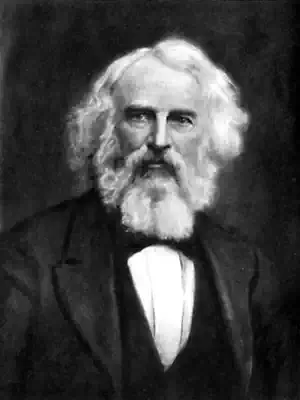
Henry Wadsworth Longfellow
Discoverer Of The North Cape. A Leaf From King Alfred's Orosius. (Birds Of
Discoverer Of The North Cape. A Leaf From King Alfred's Orosius. (Birds Of
Passage. Flight The First)
Othere, the old sea-captain,
Who dwelt in Helgoland,
To King Alfred, the Lover of Truth,
Brought a snow-white walrus-tooth,
Which he held in his brown right hand.
His figure was tall and stately,
Like a boy's his eye appeared;
His hair was yellow as hay,
But threads of a silvery gray
Gleamed in his tawny beard.
Hearty and hale was Othere,
His cheek had the color of oak;
With a kind of laugh in his speech,
Like the sea-tide on a beach,
As unto the King he spoke.
And Alfred, King of the Saxons,
Had a book upon his knees,
And wrote down the wondrous tale
Of him who was first to sail
Into the Arctic seas.
'So far I live to the northward,
No man lives north of me;
To the east are wild mountain-chains;
And beyond them meres and plains;
To the westward all is sea.
'So far I live to the northward,
From the harbor of Skeringes-hale,
If you only sailed by day,
With a fair wind all the way,
More than a month would you sail.
'I own six hundred reindeer,
With sheep and swine beside;
I have tribute from the Finns,
Whalebone and reindeer-skins,
And ropes of walrus-hide.
'I ploughed the land with horses,
But my heart was ill at ease,
For the old seafaring men
Came to me now and then,
With their sagas of the seas;-
'Of Iceland and of Greenland,
And the stormy Hebrides,
And the undiscovered deep;--
Oh I could not eat nor sleep
For thinking of those seas.
'To the northward stretched the desert,
How far I fain would know;
So at last I sallied forth,
And three days sailed due north,
As far as the whale-ships go.
'To the west of me was the ocean,
To the right the desolate shore,
But I did not slacken sail
For the walrus or the whale,
Till after three days more.
'The days grew longer and longer,
Till they became as one,
And northward through the haze
I saw the sullen blaze
Of the red midnight sun.
'And then uprose before me,
Upon the water's edge,
The huge and haggard shape
Of that unknown North Cape,
Whose form is like a wedge.
'The sea was rough and stormy,
The tempest howled and wailed,
And the sea-fog, like a ghost,
Haunted that dreary coast,
But onward still I sailed.
'Four days I steered to eastward,
Four days without a night:
Round in a fiery ring
Went the great sun, O King,
With red and lurid light.'
Here Alfred, King of the Saxons,
Ceased writing for a while;
And raised his eyes from his book,
With a strange and puzzled look,
And an incredulous smile.
But Othere, the old sea-captain,
He neither paused nor stirred,
Till the King listened, and then
Once more took up his pen,
And wrote down every word.
'And now the land,' said Othere,
'Bent southward suddenly,
And I followed the curving shore
And ever southward bore
Into a nameless sea.
'And there we hunted the walrus,
The narwhale, and the seal;
Ha! 't was a noble game!
And like the lightning's flame
Flew our harpoons of steel.
'There were six of us all together,
Norsemen of Helgoland;
In two days and no more
We killed of them threescore,
And dragged them to the strand!'
Here Alfred the Truth-Teller
Suddenly closed his book,
And lifted his blue eyes,
With doubt and strange surmise
Depicted in their look.
And Othere the old sea-captain
Stared at him wild and weird,
Then smiled, till his shining teeth
Gleamed white from underneath
His tawny, quivering beard.
And to the King of the Saxons,
In witness of the truth,
Raising his noble head,
He stretched his brown hand, and said,
'Behold this walrus-tooth!'
Passage. Flight The First)
Othere, the old sea-captain,
Who dwelt in Helgoland,
To King Alfred, the Lover of Truth,
Brought a snow-white walrus-tooth,
Which he held in his brown right hand.
His figure was tall and stately,
Like a boy's his eye appeared;
His hair was yellow as hay,
But threads of a silvery gray
Gleamed in his tawny beard.
Hearty and hale was Othere,
His cheek had the color of oak;
With a kind of laugh in his speech,
Like the sea-tide on a beach,
As unto the King he spoke.
And Alfred, King of the Saxons,
Had a book upon his knees,
And wrote down the wondrous tale
Of him who was first to sail
Into the Arctic seas.
'So far I live to the northward,
No man lives north of me;
To the east are wild mountain-chains;
And beyond them meres and plains;
To the westward all is sea.
'So far I live to the northward,
From the harbor of Skeringes-hale,
If you only sailed by day,
With a fair wind all the way,
More than a month would you sail.
'I own six hundred reindeer,
With sheep and swine beside;
I have tribute from the Finns,
Whalebone and reindeer-skins,
And ropes of walrus-hide.
'I ploughed the land with horses,
But my heart was ill at ease,
For the old seafaring men
Came to me now and then,
With their sagas of the seas;-
'Of Iceland and of Greenland,
And the stormy Hebrides,
And the undiscovered deep;--
Oh I could not eat nor sleep
For thinking of those seas.
'To the northward stretched the desert,
How far I fain would know;
So at last I sallied forth,
And three days sailed due north,
As far as the whale-ships go.
'To the west of me was the ocean,
To the right the desolate shore,
But I did not slacken sail
For the walrus or the whale,
Till after three days more.
'The days grew longer and longer,
Till they became as one,
And northward through the haze
I saw the sullen blaze
Of the red midnight sun.
'And then uprose before me,
Upon the water's edge,
The huge and haggard shape
Of that unknown North Cape,
Whose form is like a wedge.
'The sea was rough and stormy,
The tempest howled and wailed,
And the sea-fog, like a ghost,
Haunted that dreary coast,
But onward still I sailed.
'Four days I steered to eastward,
Four days without a night:
Round in a fiery ring
Went the great sun, O King,
With red and lurid light.'
Here Alfred, King of the Saxons,
Ceased writing for a while;
And raised his eyes from his book,
With a strange and puzzled look,
And an incredulous smile.
But Othere, the old sea-captain,
He neither paused nor stirred,
Till the King listened, and then
Once more took up his pen,
And wrote down every word.
'And now the land,' said Othere,
'Bent southward suddenly,
And I followed the curving shore
And ever southward bore
Into a nameless sea.
'And there we hunted the walrus,
The narwhale, and the seal;
Ha! 't was a noble game!
And like the lightning's flame
Flew our harpoons of steel.
'There were six of us all together,
Norsemen of Helgoland;
In two days and no more
We killed of them threescore,
And dragged them to the strand!'
Here Alfred the Truth-Teller
Suddenly closed his book,
And lifted his blue eyes,
With doubt and strange surmise
Depicted in their look.
And Othere the old sea-captain
Stared at him wild and weird,
Then smiled, till his shining teeth
Gleamed white from underneath
His tawny, quivering beard.
And to the King of the Saxons,
In witness of the truth,
Raising his noble head,
He stretched his brown hand, and said,
'Behold this walrus-tooth!'
323
Henry Wadsworth Longfellow
Death Of Archbishop Turpin. (From The French)
Death Of Archbishop Turpin. (From The French)
The Archbishop, whom God loved in high degree,
Beheld his wounds all bleeding fresh and free;
And then his cheek more ghastly grew and wan,
And a faint shudder through his members ran.
Upon the battle-field his knee was bent;
Brave Roland saw, and to his succor went,
Straightway his helmet from his brow unlaced,
And tore the shining hauberk from his breast.
Then raising in his arms the man of God,
Gently he laid him on the verdant sod.
Rest, Sire,' he cried,--'for rest thy suffering needs.'
The priest replied, 'Think but of warlike deeds!
The field is ours; well may we boast this strife!
But death steals on,--there is no hope of life;
In paradise, where Almoners live again,
There are our couches spread, there shall we rest from pain.
Sore Roland grieved; nor marvel I, alas!
That thrice he swooned upon the thick green grass.
When he revived, with a loud voice cried he,
'O Heavenly Father! Holy Saint Marie!
Why lingers death to lay me in my grave!
Beloved France! how have the good and brave
Been torn from thee, and left thee weak and poor!'
Then thoughts of Aude, his lady-love, came o'er
His spirit, and he whispered soft and slow,
'My gentle friend!--what parting full of woe!
Never so true a liegeman shalt thou see;-Whate'er
my fate, Christ's benison on thee!
Christ, who did save from realms of woe beneath,
The Hebrew Prophets from the second death.'
Then to the Paladins, whom well he knew,
He went, and one by one unaided drew
To Turpin's side, well skilled in ghostly lore;--
No heart had he to smile, but, weeping sore,
He blessed them in God's name, with faith that He
Would soon vouchsafe to them a glad eternity.
The Archbishop, then, on whom God's benison rest,
Exhausted, bowed his head upon his breast;--
His mouth was full of dust and clotted gore,
And many a wound his swollen visage bore.
Slow beats his heart, his panting bosom heaves,
Death comes apace,--no hope of cure relieves.
Towards heaven he raised his dying hands and prayed
That God, who for our sins was mortal made,
Born of the Virgin, scorned and crucified,
In paradise would place him by His side.
Then Turpin died in service of Charlon,
In battle great and eke great orison;-'
Gainst Pagan host alway strong champion;
God grant to him His holy benison.
The Archbishop, whom God loved in high degree,
Beheld his wounds all bleeding fresh and free;
And then his cheek more ghastly grew and wan,
And a faint shudder through his members ran.
Upon the battle-field his knee was bent;
Brave Roland saw, and to his succor went,
Straightway his helmet from his brow unlaced,
And tore the shining hauberk from his breast.
Then raising in his arms the man of God,
Gently he laid him on the verdant sod.
Rest, Sire,' he cried,--'for rest thy suffering needs.'
The priest replied, 'Think but of warlike deeds!
The field is ours; well may we boast this strife!
But death steals on,--there is no hope of life;
In paradise, where Almoners live again,
There are our couches spread, there shall we rest from pain.
Sore Roland grieved; nor marvel I, alas!
That thrice he swooned upon the thick green grass.
When he revived, with a loud voice cried he,
'O Heavenly Father! Holy Saint Marie!
Why lingers death to lay me in my grave!
Beloved France! how have the good and brave
Been torn from thee, and left thee weak and poor!'
Then thoughts of Aude, his lady-love, came o'er
His spirit, and he whispered soft and slow,
'My gentle friend!--what parting full of woe!
Never so true a liegeman shalt thou see;-Whate'er
my fate, Christ's benison on thee!
Christ, who did save from realms of woe beneath,
The Hebrew Prophets from the second death.'
Then to the Paladins, whom well he knew,
He went, and one by one unaided drew
To Turpin's side, well skilled in ghostly lore;--
No heart had he to smile, but, weeping sore,
He blessed them in God's name, with faith that He
Would soon vouchsafe to them a glad eternity.
The Archbishop, then, on whom God's benison rest,
Exhausted, bowed his head upon his breast;--
His mouth was full of dust and clotted gore,
And many a wound his swollen visage bore.
Slow beats his heart, his panting bosom heaves,
Death comes apace,--no hope of cure relieves.
Towards heaven he raised his dying hands and prayed
That God, who for our sins was mortal made,
Born of the Virgin, scorned and crucified,
In paradise would place him by His side.
Then Turpin died in service of Charlon,
In battle great and eke great orison;-'
Gainst Pagan host alway strong champion;
God grant to him His holy benison.
286
Henry Wadsworth Longfellow
Christmas Bells
Christmas Bells
"I heard the bells on Christmas Day
Their old familiar carols play,
And wild and sweet
The words repeat
Of peace on earth, good-will to men!
And thought how, as the day had come,
The belfries of all Christendom
Had rolled along
The unbroken song
Of peace on earth, good-will to men!
Till, ringing, singing on its way,
The world revolved from night to day,
A voice, a chime
A chant sublime
Of peace on earth, good-will to men!
Then from each black accursed mouth
The cannon thundered in the South,
And with the sound
The carols drowned
Of peace on earth, good-will to men!
It was as if an earthquake rent
The hearth-stones of a continent,
And made forlorn
The households born
Of peace on earth, good-will to men!
And in despair I bowed my head;
"There is no peace on earth," I said;
"For hate is strong,
And mocks the song
Of peace on earth, good-will to men!"
Then pealed the bells more loud and deep:
"God is not dead; nor doth he sleep!
The Wrong shall fail,
The Right prevail,
With peace on earth, good-will to men!"
"I heard the bells on Christmas Day
Their old familiar carols play,
And wild and sweet
The words repeat
Of peace on earth, good-will to men!
And thought how, as the day had come,
The belfries of all Christendom
Had rolled along
The unbroken song
Of peace on earth, good-will to men!
Till, ringing, singing on its way,
The world revolved from night to day,
A voice, a chime
A chant sublime
Of peace on earth, good-will to men!
Then from each black accursed mouth
The cannon thundered in the South,
And with the sound
The carols drowned
Of peace on earth, good-will to men!
It was as if an earthquake rent
The hearth-stones of a continent,
And made forlorn
The households born
Of peace on earth, good-will to men!
And in despair I bowed my head;
"There is no peace on earth," I said;
"For hate is strong,
And mocks the song
Of peace on earth, good-will to men!"
Then pealed the bells more loud and deep:
"God is not dead; nor doth he sleep!
The Wrong shall fail,
The Right prevail,
With peace on earth, good-will to men!"
335
Henry Wadsworth Longfellow
Christmas Bells
Christmas Bells
"I heard the bells on Christmas Day
Their old familiar carols play,
And wild and sweet
The words repeat
Of peace on earth, good-will to men!
And thought how, as the day had come,
The belfries of all Christendom
Had rolled along
The unbroken song
Of peace on earth, good-will to men!
Till, ringing, singing on its way,
The world revolved from night to day,
A voice, a chime
A chant sublime
Of peace on earth, good-will to men!
Then from each black accursed mouth
The cannon thundered in the South,
And with the sound
The carols drowned
Of peace on earth, good-will to men!
It was as if an earthquake rent
The hearth-stones of a continent,
And made forlorn
The households born
Of peace on earth, good-will to men!
And in despair I bowed my head;
"There is no peace on earth," I said;
"For hate is strong,
And mocks the song
Of peace on earth, good-will to men!"
Then pealed the bells more loud and deep:
"God is not dead; nor doth he sleep!
The Wrong shall fail,
The Right prevail,
With peace on earth, good-will to men!"
"I heard the bells on Christmas Day
Their old familiar carols play,
And wild and sweet
The words repeat
Of peace on earth, good-will to men!
And thought how, as the day had come,
The belfries of all Christendom
Had rolled along
The unbroken song
Of peace on earth, good-will to men!
Till, ringing, singing on its way,
The world revolved from night to day,
A voice, a chime
A chant sublime
Of peace on earth, good-will to men!
Then from each black accursed mouth
The cannon thundered in the South,
And with the sound
The carols drowned
Of peace on earth, good-will to men!
It was as if an earthquake rent
The hearth-stones of a continent,
And made forlorn
The households born
Of peace on earth, good-will to men!
And in despair I bowed my head;
"There is no peace on earth," I said;
"For hate is strong,
And mocks the song
Of peace on earth, good-will to men!"
Then pealed the bells more loud and deep:
"God is not dead; nor doth he sleep!
The Wrong shall fail,
The Right prevail,
With peace on earth, good-will to men!"
335
Henry Wadsworth Longfellow
Consolation. (To M. Duperrier, Gentleman Of Aix In Provence, On The Death Of
Consolation. (To M. Duperrier, Gentleman Of Aix In Provence, On The Death Of
His Daughter)
Will then, Duperrier, thy sorrow be eternal?
And shall the sad discourse
Whispered within thy heart, by tenderness paternal,
Only augment its force?
Thy daughter's mournful fate, into the tomb descending
By death's frequented ways,
Has it become to thee a labyrinth never ending,
Where thy lost reason strays?
I know the charms that made her youth a benediction:
Nor should I be content,
As a censorious friend, to solace thine affliction
By her disparagement.
But she was of the world, which fairest things exposes
To fates the most forlorn;
A rose, she too hath lived as long as live the roses,
The space of one brief morn.
* * * * *
Death has his rigorous laws, unparalleled, unfeeling;
All prayers to him are vain;
Cruel, he stops his ears, and, deaf to our appealing,
He leaves us to complain.
The poor man in his hut, with only thatch for cover,
Unto these laws must bend;
The sentinel that guards the barriers of the Louvre
Cannot our kings defend.
To murmur against death, in petulant defiance,
Is never for the best;
To will what God doth will, that is the only science
That gives us any rest.
His Daughter)
Will then, Duperrier, thy sorrow be eternal?
And shall the sad discourse
Whispered within thy heart, by tenderness paternal,
Only augment its force?
Thy daughter's mournful fate, into the tomb descending
By death's frequented ways,
Has it become to thee a labyrinth never ending,
Where thy lost reason strays?
I know the charms that made her youth a benediction:
Nor should I be content,
As a censorious friend, to solace thine affliction
By her disparagement.
But she was of the world, which fairest things exposes
To fates the most forlorn;
A rose, she too hath lived as long as live the roses,
The space of one brief morn.
* * * * *
Death has his rigorous laws, unparalleled, unfeeling;
All prayers to him are vain;
Cruel, he stops his ears, and, deaf to our appealing,
He leaves us to complain.
The poor man in his hut, with only thatch for cover,
Unto these laws must bend;
The sentinel that guards the barriers of the Louvre
Cannot our kings defend.
To murmur against death, in petulant defiance,
Is never for the best;
To will what God doth will, that is the only science
That gives us any rest.
283
Henry Wadsworth Longfellow
Charles Sumner. (Birds Of Passage. Flight The Fourth)
Charles Sumner. (Birds Of Passage. Flight The Fourth)
Garlands upon his grave
And flowers upon his hearse,
And to the tender heart and brave
The tribute of this verse.
His was the troubled life,
The conflict and the pain,
The grief, the bitterness of strife,
The honor without stain.
Like Winkelried, he took
Into his manly breast
The sheaf of hostile spears, and broke
A path for the oppressed.
Then from the fatal field
Upon a nation's heart
Borne like a warrior on his shield!--
So should the brave depart.
Death takes us by surprise,
And stays our hurrying feet;
The great design unfinished lies,
Our lives are incomplete.
But in the dark unknown
Perfect their circles seem,
Even as a bridge's arch of stone
Is rounded in the stream.
Alike are life and death,
When life in death survives,
And the uninterrupted breath
Inspires a thousand lives.
Were a star quenched on high,
For ages would its light,
Still travelling downward from the sky,
Shine on our mortal sight.
So when a great man dies,
For years beyond our ken,
The light he leaves behind him lies
Upon the paths of men.
Garlands upon his grave
And flowers upon his hearse,
And to the tender heart and brave
The tribute of this verse.
His was the troubled life,
The conflict and the pain,
The grief, the bitterness of strife,
The honor without stain.
Like Winkelried, he took
Into his manly breast
The sheaf of hostile spears, and broke
A path for the oppressed.
Then from the fatal field
Upon a nation's heart
Borne like a warrior on his shield!--
So should the brave depart.
Death takes us by surprise,
And stays our hurrying feet;
The great design unfinished lies,
Our lives are incomplete.
But in the dark unknown
Perfect their circles seem,
Even as a bridge's arch of stone
Is rounded in the stream.
Alike are life and death,
When life in death survives,
And the uninterrupted breath
Inspires a thousand lives.
Were a star quenched on high,
For ages would its light,
Still travelling downward from the sky,
Shine on our mortal sight.
So when a great man dies,
For years beyond our ken,
The light he leaves behind him lies
Upon the paths of men.
229
Henry Wadsworth Longfellow
Catawba Wine. (Birds Of Passage. Flight The First)
Catawba Wine. (Birds Of Passage. Flight The First)
This song of mine
Is a Song of the Vine,
To be sung by the glowing embers
Of wayside inns,
When the rain begins
To darken the drear Novembers.
It is not a song
Of the Scuppernong,
From warm Carolinian valleys,
Nor the Isabel
And the Muscadel
That bask in our garden alleys.
Nor the red Mustang,
Whose clusters hang
O'er the waves of the Colorado,
And the fiery flood
Of whose purple blood
Has a dash of Spanish bravado.
For richest and best
Is the wine of the West,
That grows by the Beautiful River;
Whose sweet perfume
Fills all the room
With a benison on the giver.
And as hollow trees
Are the haunts of bees,
Forever going and coming;
So this crystal hive
Is all alive
With a swarming and buzzing and humming.
Very good in its way
Is the Verzenay,
Or the Sillery soft and creamy;
But Catawba wine
Has a taste more divine,
More dulcet, delicious, and dreamy.
There grows no vine
By the haunted Rhine,
By Danube or Guadalquivir,
Nor on island or cape,
That bears such a grape
As grows by the Beautiful River.
Drugged is their juice
For foreign use,
When shipped o'er the reeling Atlantic,
To rack our brains
With the fever pains,
That have driven the Old World frantic.
To the sewers and sinks
With all such drinks,
And after them tumble the mixer;
For a poison malign
Is such Borgia wine,
Or at best but a Devil's Elixir.
While pure as a spring
Is the wine I sing,
And to praise it, one needs but name it;
For Catawba wine
Has need of no sign,
No tavern-bush to proclaim it.
And this Song of the Vine,
This greeting of mine,
The winds and the birds shall deliver
To the Queen of the West,
In her garlands dressed,
On the banks of the Beautiful River.
This song of mine
Is a Song of the Vine,
To be sung by the glowing embers
Of wayside inns,
When the rain begins
To darken the drear Novembers.
It is not a song
Of the Scuppernong,
From warm Carolinian valleys,
Nor the Isabel
And the Muscadel
That bask in our garden alleys.
Nor the red Mustang,
Whose clusters hang
O'er the waves of the Colorado,
And the fiery flood
Of whose purple blood
Has a dash of Spanish bravado.
For richest and best
Is the wine of the West,
That grows by the Beautiful River;
Whose sweet perfume
Fills all the room
With a benison on the giver.
And as hollow trees
Are the haunts of bees,
Forever going and coming;
So this crystal hive
Is all alive
With a swarming and buzzing and humming.
Very good in its way
Is the Verzenay,
Or the Sillery soft and creamy;
But Catawba wine
Has a taste more divine,
More dulcet, delicious, and dreamy.
There grows no vine
By the haunted Rhine,
By Danube or Guadalquivir,
Nor on island or cape,
That bears such a grape
As grows by the Beautiful River.
Drugged is their juice
For foreign use,
When shipped o'er the reeling Atlantic,
To rack our brains
With the fever pains,
That have driven the Old World frantic.
To the sewers and sinks
With all such drinks,
And after them tumble the mixer;
For a poison malign
Is such Borgia wine,
Or at best but a Devil's Elixir.
While pure as a spring
Is the wine I sing,
And to praise it, one needs but name it;
For Catawba wine
Has need of no sign,
No tavern-bush to proclaim it.
And this Song of the Vine,
This greeting of mine,
The winds and the birds shall deliver
To the Queen of the West,
In her garlands dressed,
On the banks of the Beautiful River.
263
Henry Wadsworth Longfellow
By The Seaside : The Lighthouse
By The Seaside : The Lighthouse
The rocky ledge runs far into the sea,
And on its outer point, some miles away,
The Lighthouse lifts its massive masonry,
A pillar of fire by night, of cloud by day.
Even at this distance I can see the tides,
Upheaving, break unheard along its base,
A speechless wrath, that rises and subsides
In the white lip and tremor of the face.
And as the evening darkens, lo! how bright,
Through the deep purple of the twilight air,
Beams forth the sudden radiance of its light
With strange, unearthly splendor in the glare!
Not one alone; from each projecting cape
And perilous reef along the ocean's verge,
Starts into life a dim, gigantic shape,
Holding its lantern o'er the restless surge.
Like the great giant Christopher it stands
Upon the brink of the tempestuous wave,
Wading far out among the rocks and sands,
The night-o'ertaken mariner to save.
And the great ships sail outward and return,
Bending and bowing o'er the billowy swells,
And ever joyful, as they see it burn,
They wave their silent welcomes and farewells.
They come forth from the darkness, and their sails
Gleam for a moment only in the blaze,
And eager faces, as the light unveils,
Gaze at the tower, and vanish while they gaze.
The mariner remembers when a child,
On his first voyage, he saw it fade and sink;
And when, returning from adventures wild,
He saw it rise again o'er ocean's brink.
Steadfast, serene, immovable, the same
Year after year, through all the silent night
Burns on forevermore that quenchless flame,
Shines on that inextinguishable light!
It sees the ocean to its bosom clasp
The rocks and sea-sand with the kiss of peace;
It sees the wild winds lift it in their grasp,
And hold it up, and shake it like a fleece.
The startled waves leap over it; the storm
Smites it with all the scourges of the rain,
And steadily against its solid form
Press the great shoulders of the hurricane.
The sea-bird wheeling round it, with the din
Of wings and winds and solitary cries,
Blinded and maddened by the light within,
Dashes himself against the glare, and dies.
A new Prometheus, chained upon the rock,
Still grasping in his hand the fire of Jove,
It does not hear the cry, nor heed the shock,
But hails the mariner with words of love.
'Sail on!' it says, 'sail on, ye stately ships!
And with your floating bridge the ocean span;
Be mine to guard this light from all eclipse,
Be yours to bring man nearer unto man!'
The rocky ledge runs far into the sea,
And on its outer point, some miles away,
The Lighthouse lifts its massive masonry,
A pillar of fire by night, of cloud by day.
Even at this distance I can see the tides,
Upheaving, break unheard along its base,
A speechless wrath, that rises and subsides
In the white lip and tremor of the face.
And as the evening darkens, lo! how bright,
Through the deep purple of the twilight air,
Beams forth the sudden radiance of its light
With strange, unearthly splendor in the glare!
Not one alone; from each projecting cape
And perilous reef along the ocean's verge,
Starts into life a dim, gigantic shape,
Holding its lantern o'er the restless surge.
Like the great giant Christopher it stands
Upon the brink of the tempestuous wave,
Wading far out among the rocks and sands,
The night-o'ertaken mariner to save.
And the great ships sail outward and return,
Bending and bowing o'er the billowy swells,
And ever joyful, as they see it burn,
They wave their silent welcomes and farewells.
They come forth from the darkness, and their sails
Gleam for a moment only in the blaze,
And eager faces, as the light unveils,
Gaze at the tower, and vanish while they gaze.
The mariner remembers when a child,
On his first voyage, he saw it fade and sink;
And when, returning from adventures wild,
He saw it rise again o'er ocean's brink.
Steadfast, serene, immovable, the same
Year after year, through all the silent night
Burns on forevermore that quenchless flame,
Shines on that inextinguishable light!
It sees the ocean to its bosom clasp
The rocks and sea-sand with the kiss of peace;
It sees the wild winds lift it in their grasp,
And hold it up, and shake it like a fleece.
The startled waves leap over it; the storm
Smites it with all the scourges of the rain,
And steadily against its solid form
Press the great shoulders of the hurricane.
The sea-bird wheeling round it, with the din
Of wings and winds and solitary cries,
Blinded and maddened by the light within,
Dashes himself against the glare, and dies.
A new Prometheus, chained upon the rock,
Still grasping in his hand the fire of Jove,
It does not hear the cry, nor heed the shock,
But hails the mariner with words of love.
'Sail on!' it says, 'sail on, ye stately ships!
And with your floating bridge the ocean span;
Be mine to guard this light from all eclipse,
Be yours to bring man nearer unto man!'
398
Henry Wadsworth Longfellow
By The Seaside : Sir Humphrey Gilbert
By The Seaside : Sir Humphrey Gilbert
Southward with fleet of ice
Sailed the corsair Death;
Wild and gast blew the blast,
And the east-wind was his breath.
His lordly ships of ice
Glisten in the sun;
On each side, like pennons wide,
Flashing crystal streamlets run.
His sails of white sea-mist
Dripped with silver rain;
But where he passed there were cast
Leaden shadows o'er the main.
Eastward from Campobello
Sir Humphrey Gilbert sailed;
Three days or more seaward he bore,
Then, alas! the land-wind failed.
Alas! the land-wind failed,
And ice-cold grew the night;
And nevermore, on sea or shore,
Should Sir Humphrey see the light.
He sat upon the deck,
The Book was in his hand;
'Do not fear! Heaven is as near,'
He said, 'by water as by land!'
In the first watch of the night,
Without a signal's sound,
Out of the sea, mysteriously,
The fleet of Death rose all around.
The moon and the evening star
Were hanging in the shrouds;
Every mast, as it passed,
Seemed to rake the passing clouds.
They grappled with their prize,
At midnight black and cold!
As of a rock was the shock;
Heavily the ground-swell rolled.
Southward through day and dark,
They drift in cold embrace,
With mist and rain, o'er the open main;
Yet there seems no change of place.
Southward, forever southward,
They drift through dark and day;
And like a dream, in the Gulf-Stream
Sinking, vanish all away.
Southward with fleet of ice
Sailed the corsair Death;
Wild and gast blew the blast,
And the east-wind was his breath.
His lordly ships of ice
Glisten in the sun;
On each side, like pennons wide,
Flashing crystal streamlets run.
His sails of white sea-mist
Dripped with silver rain;
But where he passed there were cast
Leaden shadows o'er the main.
Eastward from Campobello
Sir Humphrey Gilbert sailed;
Three days or more seaward he bore,
Then, alas! the land-wind failed.
Alas! the land-wind failed,
And ice-cold grew the night;
And nevermore, on sea or shore,
Should Sir Humphrey see the light.
He sat upon the deck,
The Book was in his hand;
'Do not fear! Heaven is as near,'
He said, 'by water as by land!'
In the first watch of the night,
Without a signal's sound,
Out of the sea, mysteriously,
The fleet of Death rose all around.
The moon and the evening star
Were hanging in the shrouds;
Every mast, as it passed,
Seemed to rake the passing clouds.
They grappled with their prize,
At midnight black and cold!
As of a rock was the shock;
Heavily the ground-swell rolled.
Southward through day and dark,
They drift in cold embrace,
With mist and rain, o'er the open main;
Yet there seems no change of place.
Southward, forever southward,
They drift through dark and day;
And like a dream, in the Gulf-Stream
Sinking, vanish all away.
308
Henry Wadsworth Longfellow
By The Fireside : Tegner's Death (Tegner's Drapa)
By The Fireside : Tegner's Death (Tegner's Drapa)
I heard a voice, that cried,
'Balder the Beautiful
Is dead, is dead!'
And through the misty air
Passed like the mournful cry
Of sunward sailing cranes.
I saw the pallid corpse
Of the dead sun
Borne through the Northern sky.
Blasts from Niffelheim
Lifted the sheeted mists
Around him as he passed.
And the voice forever cried,
'Balder the Beautiful
Is dead, is dead!'
And died away
Through the dreary night,
In accents of despair.
Balder the Beautiful,
God of the summer sun,
Fairest of all the Gods!
Light from his forehead beamed,
Runes were upon his tongue,
As on the warrior's sword.
All things in earth and air
Bound were by magic spell
Never to do him harm;
Even the plants and stones;
All save the mistletoe,
The sacred mistletoe!
Hoeder, the blind old God,
Whose feet are shod with silence,
Pierced through that gentle breast
With his sharp spear, by fraud
Made of the mistletoe,
The accursed mistletoe!
They laid him in his ship,
With horse and harness,
As on a funeral pyre.
Odin placed
A ring upon his finger,
And whispered in his ear.
They launched the burning ship!
It floated far away
Over the misty sea,
Till like the sun it seemed,
Sinking beneath the waves.
Balder returned no more!
So perish the old Gods!
But out of the sea of Time
Rises a new land of song,
Fairer than the old.
Over its meadows green
Walk the young bards and sing.
Build it again,
O ye bards,
Fairer than before!
Ye fathers of the new race,
Feed upon morning dew,
Sing the new Song of Love!
The law of force is dead!
The law of love prevails!
Thor, the thunderer,
Shall rule the earth no more,
No more, with threats,
Challenge the meek Christ.
Sing no more,
O ye bards of the North,
Of Vikings and of Jarls!
Of the days of Eld
Preserve the freedom only,
Not the deeds of blood!
I heard a voice, that cried,
'Balder the Beautiful
Is dead, is dead!'
And through the misty air
Passed like the mournful cry
Of sunward sailing cranes.
I saw the pallid corpse
Of the dead sun
Borne through the Northern sky.
Blasts from Niffelheim
Lifted the sheeted mists
Around him as he passed.
And the voice forever cried,
'Balder the Beautiful
Is dead, is dead!'
And died away
Through the dreary night,
In accents of despair.
Balder the Beautiful,
God of the summer sun,
Fairest of all the Gods!
Light from his forehead beamed,
Runes were upon his tongue,
As on the warrior's sword.
All things in earth and air
Bound were by magic spell
Never to do him harm;
Even the plants and stones;
All save the mistletoe,
The sacred mistletoe!
Hoeder, the blind old God,
Whose feet are shod with silence,
Pierced through that gentle breast
With his sharp spear, by fraud
Made of the mistletoe,
The accursed mistletoe!
They laid him in his ship,
With horse and harness,
As on a funeral pyre.
Odin placed
A ring upon his finger,
And whispered in his ear.
They launched the burning ship!
It floated far away
Over the misty sea,
Till like the sun it seemed,
Sinking beneath the waves.
Balder returned no more!
So perish the old Gods!
But out of the sea of Time
Rises a new land of song,
Fairer than the old.
Over its meadows green
Walk the young bards and sing.
Build it again,
O ye bards,
Fairer than before!
Ye fathers of the new race,
Feed upon morning dew,
Sing the new Song of Love!
The law of force is dead!
The law of love prevails!
Thor, the thunderer,
Shall rule the earth no more,
No more, with threats,
Challenge the meek Christ.
Sing no more,
O ye bards of the North,
Of Vikings and of Jarls!
Of the days of Eld
Preserve the freedom only,
Not the deeds of blood!
355
Henry Wadsworth Longfellow
By The Fireside : Gaspar Becerra
By The Fireside : Gaspar Becerra
By his evening fire the artist
Pondered o'er his secret shame;
Baffled, weary, and disheartened,
Still he mused, and dreamed of fame.
'T was an image of the Virgin
That had tasked his utmost skill;
But, alas! his fair ideal
Vanished and escaped him still.
From a distant Eastern island
Had the precious wood been brought
Day and night the anxious master
At his toil untiring wrought;
Till, discouraged and desponding,
Sat he now in shadows deep,
And the day's humiliation
Found oblivion in sleep.
Then a voice cried, 'Rise, O master!
From the burning brand of oak
Shape the thought that stirs within thee!'
And the startled artist woke,--
Woke, and from the smoking embers
Seized and quenched the glowing wood;
And therefrom he carved an image,
And he saw that it was good.
O thou sculptor, painter, poet!
Take this lesson to thy heart:
That is best which lieth nearest;
Shape from that thy work of art.
By his evening fire the artist
Pondered o'er his secret shame;
Baffled, weary, and disheartened,
Still he mused, and dreamed of fame.
'T was an image of the Virgin
That had tasked his utmost skill;
But, alas! his fair ideal
Vanished and escaped him still.
From a distant Eastern island
Had the precious wood been brought
Day and night the anxious master
At his toil untiring wrought;
Till, discouraged and desponding,
Sat he now in shadows deep,
And the day's humiliation
Found oblivion in sleep.
Then a voice cried, 'Rise, O master!
From the burning brand of oak
Shape the thought that stirs within thee!'
And the startled artist woke,--
Woke, and from the smoking embers
Seized and quenched the glowing wood;
And therefrom he carved an image,
And he saw that it was good.
O thou sculptor, painter, poet!
Take this lesson to thy heart:
That is best which lieth nearest;
Shape from that thy work of art.
407
Henry Wadsworth Longfellow
Boston
Boston
St. Botolph's Town! Hither across the plains
And fens of Lincolnshire, in garb austere,
There came a Saxon monk, and founded here
A Priory, pillaged by marauding Danes,
So that thereof no vestige now remains;
Only a name, that, spoken loud and clear,
And echoed in another hemisphere,
Survives the sculptured walls and painted panes.
St. Botolph's Town! Far over leagues of land
And leagues of sea looks forth its noble tower,
And far around the chiming bells are heard;
So may that sacred name forever stand
A landmark, and a symbol of the power,
That lies concentred in a single word.
St. Botolph's Town! Hither across the plains
And fens of Lincolnshire, in garb austere,
There came a Saxon monk, and founded here
A Priory, pillaged by marauding Danes,
So that thereof no vestige now remains;
Only a name, that, spoken loud and clear,
And echoed in another hemisphere,
Survives the sculptured walls and painted panes.
St. Botolph's Town! Far over leagues of land
And leagues of sea looks forth its noble tower,
And far around the chiming bells are heard;
So may that sacred name forever stand
A landmark, and a symbol of the power,
That lies concentred in a single word.
327
Henry Wadsworth Longfellow
Boston
Boston
St. Botolph's Town! Hither across the plains
And fens of Lincolnshire, in garb austere,
There came a Saxon monk, and founded here
A Priory, pillaged by marauding Danes,
So that thereof no vestige now remains;
Only a name, that, spoken loud and clear,
And echoed in another hemisphere,
Survives the sculptured walls and painted panes.
St. Botolph's Town! Far over leagues of land
And leagues of sea looks forth its noble tower,
And far around the chiming bells are heard;
So may that sacred name forever stand
A landmark, and a symbol of the power,
That lies concentred in a single word.
St. Botolph's Town! Hither across the plains
And fens of Lincolnshire, in garb austere,
There came a Saxon monk, and founded here
A Priory, pillaged by marauding Danes,
So that thereof no vestige now remains;
Only a name, that, spoken loud and clear,
And echoed in another hemisphere,
Survives the sculptured walls and painted panes.
St. Botolph's Town! Far over leagues of land
And leagues of sea looks forth its noble tower,
And far around the chiming bells are heard;
So may that sacred name forever stand
A landmark, and a symbol of the power,
That lies concentred in a single word.
327
Henry Wadsworth Longfellow
Blessing The Cornfields
Blessing The Cornfields
Sing, O Song of Hiawatha,
Of the happy days that followed,
In the land of the Ojibways,
In the pleasant land and peaceful!
Sing the mysteries of Mondamin,
Sing the Blessing of the Cornfields!
Buried was the bloody hatchet,
Buried was the dreadful war-club,
Buried were all warlike weapons,
And the war-cry was forgotten.
There was peace among the nations;
Unmolested roved the hunters,
Built the birch canoe for sailing,
Caught the fish in lake and river,
Shot the deer and trapped the beaver;
Unmolested worked the women,
Made their sugar from the maple,
Gathered wild rice in the meadows,
Dressed the skins of deer and beaver.
All around the happy village
Stood the maize-fields, green and shining,
Waved the green plumes of Mondamin,
Waved his soft and sunny tresses,
Filling all the land with plenty.
`T was the women who in Spring-time
Planted the broad fields and fruitful,
Buried in the earth Mondamin;
`T was the women who in Autumn
Stripped the yellow husks of harvest,
Stripped the garments from Mondamin,
Even as Hiawatha taught them.
Once, when all the maize was planted,
Hiawatha, wise and thoughtful,
Spake and said to Minnehaha,
To his wife, the Laughing Water:
"You shall bless to-night the cornfields,
Draw a magic circle round them,
To protect them from destruction,
Blast of mildew, blight of insect,
Wagemin, the thief of cornfields,
Paimosaid, who steals the maize-ear
"In the night, when all Is silence,'
In the night, when all Is darkness,
When the Spirit of Sleep, Nepahwin,
Shuts the doors of all the wigwams,
So that not an ear can hear you,
So that not an eye can see you,
Rise up from your bed in silence,
Lay aside your garments wholly,
Walk around the fields you planted,
Round the borders of the cornfields,
Covered by your tresses only,
Robed with darkness as a garment.
"Thus the fields shall be more fruitful,
And the passing of your footsteps
Draw a magic circle round them,
So that neither blight nor mildew,
Neither burrowing worm nor insect,
Shall pass o'er the magic circle;
Not the dragon-fly, Kwo-ne-she,
Nor the spider, Subbekashe,
Nor the grasshopper, Pah-puk-keena;
Nor the mighty caterpillar,
Way-muk-kwana, with the bear-skin,
King of all the caterpillars!"
On the tree-tops near the cornfields
Sat the hungry crows and ravens,
Kahgahgee, the King of Ravens,
With his band of black marauders.
And they laughed at Hiawatha,
Till the tree-tops shook with laughter,
With their melancholy laughter,
At the words of Hiawatha.
"Hear him!" said they; "hear the Wise Man,
Hear the plots of Hiawatha!"
When the noiseless night descended
Broad and dark o'er field and forest,
When the mournful Wawonaissa
Sorrowing sang among the hemlocks,
And the Spirit of Sleep, Nepahwin,
Shut the doors of all the wigwams,
From her bed rose Laughing Water,
Laid aside her garments wholly,
And with darkness clothed and guarded,
Unashamed and unaffrighted,
Walked securely round the cornfields,
Drew the sacred, magic circle
Of her footprints round the cornfields.
No one but the Midnight only
Saw her beauty in the darkness,
No one but the Wawonaissa
Heard the panting of her bosom
Guskewau, the darkness, wrapped her
Closely in his sacred mantle,
So that none might see her beauty,
So that none might boast, "I saw her!"
On the morrow, as the day dawned,
Kahgahgee, the King of Ravens,
Gathered all his black marauders,
Crows and blackbirds, jays and ravens,
Clamorous on the dusky tree-tops,
And descended, fast and fearless,
On the fields of Hiawatha,
On the grave of the Mondamin.
"We will drag Mondamin," said they,
"From the grave where he is buried,
Spite of all the magic circles
Laughing Water draws around it,
Spite of all the sacred footprints
Minnehaha stamps upon it!"
But the wary Hiawatha,
Ever thoughtful, careful, watchful,
Had o'erheard the scornful laughter
When they mocked him from the tree-tops.
"Kaw!" he said, "my friends the ravens!
Kahgahgee, my King of Ravens!
I will teach you all a lesson
That shall not be soon forgotten!"
He had risen before the daybreak,
He had spread o'er all the cornfields
Snares to catch the black marauders,
And was lying now in ambush
In the neighboring grove of pine-trees,
Waiting for the crows and blackbirds,
Waiting for the jays and ravens.
Soon they came with caw and clamor,
Rush of wings and cry of voices,
To their work of devastation,
Settling down upon the cornfields,
Delving deep with beak and talon,
For the body of Mondamin.
And with all their craft and cunning,
All their skill in wiles of warfare,
They perceived no danger near them,
Till their claws became entangled,
Till they found themselves imprisoned
In the snares of Hiawatha.
From his place of ambush came he,
Striding terrible among them,
And so awful was his aspect
That the bravest quailed with terror.
Without mercy he destroyed them
Right and left, by tens and twenties,
And their wretched, lifeless bodies
Hung aloft on poles for scarecrows
Round the consecrated cornfields,
As a signal of his vengeance,
As a warning to marauders.
Only Kahgahgee, the leader,
Kahgahgee, the King of Ravens,
He alone was spared among them
As a hostage for his people.
With his prisoner-string he bound him,
Led him captive to his wigwam,
Tied him fast with cords of elm-bark
To the ridge-pole of his wigwam.
"Kahgahgee, my raven!" said he,
"You the leader of the robbers,
You the plotter of this mischief,
The contriver of this outrage,
I will keep you, I will hold you,
As a hostage for your people,
As a pledge of good behavior!"
And he left him, grim and sulky,
Sitting in the morning sunshine
On the summit of the wigwam,
Croaking fiercely his displeasure,
Flapping his great sable pinions,
Vainly struggling for his freedom,
Vainly calling on his people!
Summer passed, and Shawondasee
Breathed his sighs o'er all the landscape,
From the South-land sent his ardor,
Wafted kisses warm and tender;
And the maize-field grew and ripened,
Till it stood in all the splendor
Of its garments green and yellow,
Of its tassels and its plumage,
And the maize-ears full and shining
Gleamed from bursting sheaths of verdure.
Then Nokomis, the old woman,
Spake, and said to Minnehaha:
`T is the Moon when, leaves are falling;
All the wild rice has been gathered,
And the maize is ripe and ready;
Let us gather in the harvest,
Let us wrestle with Mondamin,
Strip him of his plumes and tassels,
Of his garments green and yellow!"
And the merry Laughing Water
Went rejoicing from the wigwam,
With Nokomis, old and wrinkled,
And they called the women round them,
Called the young men and the maidens,
To the harvest of the cornfields,
To the husking of the maize-ear.
On the border of the forest,
Underneath the fragrant pine-trees,
Sat the old men and the warriors
Smoking in the pleasant shadow.
In uninterrupted silence
Looked they at the gamesome labor
Of the young men and the women;
Listened to their noisy talking,
To their laughter and their singing,
Heard them chattering like the magpies,
Heard them laughing like the blue-jays,
Heard them singing like the robins.
And whene'er some lucky maiden
Found a red ear in the husking,
Found a maize-ear red as blood is,
"Nushka!" cried they all together,
"Nushka! you shall have a sweetheart,
You shall have a handsome husband!"
"Ugh!" the old men all responded
From their seats beneath the pine-trees.
And whene'er a youth or maiden
Found a crooked ear in husking,
Found a maize-ear in the husking
Blighted, mildewed, or misshapen,
Then they laughed and sang together,
Crept and limped about the cornfields,
Mimicked in their gait and gestures
Some old man, bent almost double,
Singing singly or together:
"Wagemin, the thief of cornfields!
Paimosaid, who steals the maize-ear!"
Till the cornfields rang with laughter,
Till from Hiawatha's wigwam
Kahgahgee, the King of Ravens,
Screamed and quivered in his anger,
And from all the neighboring tree-tops
Cawed and croaked the black marauders.
"Ugh!" the old men all responded,
From their seats beneath the pine-trees!
Sing, O Song of Hiawatha,
Of the happy days that followed,
In the land of the Ojibways,
In the pleasant land and peaceful!
Sing the mysteries of Mondamin,
Sing the Blessing of the Cornfields!
Buried was the bloody hatchet,
Buried was the dreadful war-club,
Buried were all warlike weapons,
And the war-cry was forgotten.
There was peace among the nations;
Unmolested roved the hunters,
Built the birch canoe for sailing,
Caught the fish in lake and river,
Shot the deer and trapped the beaver;
Unmolested worked the women,
Made their sugar from the maple,
Gathered wild rice in the meadows,
Dressed the skins of deer and beaver.
All around the happy village
Stood the maize-fields, green and shining,
Waved the green plumes of Mondamin,
Waved his soft and sunny tresses,
Filling all the land with plenty.
`T was the women who in Spring-time
Planted the broad fields and fruitful,
Buried in the earth Mondamin;
`T was the women who in Autumn
Stripped the yellow husks of harvest,
Stripped the garments from Mondamin,
Even as Hiawatha taught them.
Once, when all the maize was planted,
Hiawatha, wise and thoughtful,
Spake and said to Minnehaha,
To his wife, the Laughing Water:
"You shall bless to-night the cornfields,
Draw a magic circle round them,
To protect them from destruction,
Blast of mildew, blight of insect,
Wagemin, the thief of cornfields,
Paimosaid, who steals the maize-ear
"In the night, when all Is silence,'
In the night, when all Is darkness,
When the Spirit of Sleep, Nepahwin,
Shuts the doors of all the wigwams,
So that not an ear can hear you,
So that not an eye can see you,
Rise up from your bed in silence,
Lay aside your garments wholly,
Walk around the fields you planted,
Round the borders of the cornfields,
Covered by your tresses only,
Robed with darkness as a garment.
"Thus the fields shall be more fruitful,
And the passing of your footsteps
Draw a magic circle round them,
So that neither blight nor mildew,
Neither burrowing worm nor insect,
Shall pass o'er the magic circle;
Not the dragon-fly, Kwo-ne-she,
Nor the spider, Subbekashe,
Nor the grasshopper, Pah-puk-keena;
Nor the mighty caterpillar,
Way-muk-kwana, with the bear-skin,
King of all the caterpillars!"
On the tree-tops near the cornfields
Sat the hungry crows and ravens,
Kahgahgee, the King of Ravens,
With his band of black marauders.
And they laughed at Hiawatha,
Till the tree-tops shook with laughter,
With their melancholy laughter,
At the words of Hiawatha.
"Hear him!" said they; "hear the Wise Man,
Hear the plots of Hiawatha!"
When the noiseless night descended
Broad and dark o'er field and forest,
When the mournful Wawonaissa
Sorrowing sang among the hemlocks,
And the Spirit of Sleep, Nepahwin,
Shut the doors of all the wigwams,
From her bed rose Laughing Water,
Laid aside her garments wholly,
And with darkness clothed and guarded,
Unashamed and unaffrighted,
Walked securely round the cornfields,
Drew the sacred, magic circle
Of her footprints round the cornfields.
No one but the Midnight only
Saw her beauty in the darkness,
No one but the Wawonaissa
Heard the panting of her bosom
Guskewau, the darkness, wrapped her
Closely in his sacred mantle,
So that none might see her beauty,
So that none might boast, "I saw her!"
On the morrow, as the day dawned,
Kahgahgee, the King of Ravens,
Gathered all his black marauders,
Crows and blackbirds, jays and ravens,
Clamorous on the dusky tree-tops,
And descended, fast and fearless,
On the fields of Hiawatha,
On the grave of the Mondamin.
"We will drag Mondamin," said they,
"From the grave where he is buried,
Spite of all the magic circles
Laughing Water draws around it,
Spite of all the sacred footprints
Minnehaha stamps upon it!"
But the wary Hiawatha,
Ever thoughtful, careful, watchful,
Had o'erheard the scornful laughter
When they mocked him from the tree-tops.
"Kaw!" he said, "my friends the ravens!
Kahgahgee, my King of Ravens!
I will teach you all a lesson
That shall not be soon forgotten!"
He had risen before the daybreak,
He had spread o'er all the cornfields
Snares to catch the black marauders,
And was lying now in ambush
In the neighboring grove of pine-trees,
Waiting for the crows and blackbirds,
Waiting for the jays and ravens.
Soon they came with caw and clamor,
Rush of wings and cry of voices,
To their work of devastation,
Settling down upon the cornfields,
Delving deep with beak and talon,
For the body of Mondamin.
And with all their craft and cunning,
All their skill in wiles of warfare,
They perceived no danger near them,
Till their claws became entangled,
Till they found themselves imprisoned
In the snares of Hiawatha.
From his place of ambush came he,
Striding terrible among them,
And so awful was his aspect
That the bravest quailed with terror.
Without mercy he destroyed them
Right and left, by tens and twenties,
And their wretched, lifeless bodies
Hung aloft on poles for scarecrows
Round the consecrated cornfields,
As a signal of his vengeance,
As a warning to marauders.
Only Kahgahgee, the leader,
Kahgahgee, the King of Ravens,
He alone was spared among them
As a hostage for his people.
With his prisoner-string he bound him,
Led him captive to his wigwam,
Tied him fast with cords of elm-bark
To the ridge-pole of his wigwam.
"Kahgahgee, my raven!" said he,
"You the leader of the robbers,
You the plotter of this mischief,
The contriver of this outrage,
I will keep you, I will hold you,
As a hostage for your people,
As a pledge of good behavior!"
And he left him, grim and sulky,
Sitting in the morning sunshine
On the summit of the wigwam,
Croaking fiercely his displeasure,
Flapping his great sable pinions,
Vainly struggling for his freedom,
Vainly calling on his people!
Summer passed, and Shawondasee
Breathed his sighs o'er all the landscape,
From the South-land sent his ardor,
Wafted kisses warm and tender;
And the maize-field grew and ripened,
Till it stood in all the splendor
Of its garments green and yellow,
Of its tassels and its plumage,
And the maize-ears full and shining
Gleamed from bursting sheaths of verdure.
Then Nokomis, the old woman,
Spake, and said to Minnehaha:
`T is the Moon when, leaves are falling;
All the wild rice has been gathered,
And the maize is ripe and ready;
Let us gather in the harvest,
Let us wrestle with Mondamin,
Strip him of his plumes and tassels,
Of his garments green and yellow!"
And the merry Laughing Water
Went rejoicing from the wigwam,
With Nokomis, old and wrinkled,
And they called the women round them,
Called the young men and the maidens,
To the harvest of the cornfields,
To the husking of the maize-ear.
On the border of the forest,
Underneath the fragrant pine-trees,
Sat the old men and the warriors
Smoking in the pleasant shadow.
In uninterrupted silence
Looked they at the gamesome labor
Of the young men and the women;
Listened to their noisy talking,
To their laughter and their singing,
Heard them chattering like the magpies,
Heard them laughing like the blue-jays,
Heard them singing like the robins.
And whene'er some lucky maiden
Found a red ear in the husking,
Found a maize-ear red as blood is,
"Nushka!" cried they all together,
"Nushka! you shall have a sweetheart,
You shall have a handsome husband!"
"Ugh!" the old men all responded
From their seats beneath the pine-trees.
And whene'er a youth or maiden
Found a crooked ear in husking,
Found a maize-ear in the husking
Blighted, mildewed, or misshapen,
Then they laughed and sang together,
Crept and limped about the cornfields,
Mimicked in their gait and gestures
Some old man, bent almost double,
Singing singly or together:
"Wagemin, the thief of cornfields!
Paimosaid, who steals the maize-ear!"
Till the cornfields rang with laughter,
Till from Hiawatha's wigwam
Kahgahgee, the King of Ravens,
Screamed and quivered in his anger,
And from all the neighboring tree-tops
Cawed and croaked the black marauders.
"Ugh!" the old men all responded,
From their seats beneath the pine-trees!
456
Henry Wadsworth Longfellow
Beowulf's Expedition To Heort
Beowulf's Expedition To Heort
Thus then, much care-worn,
The son of Healfden
Sorrowed evermore,
Nor might the prudent hero
His woes avert.
The war was too hard,
Too loath and longsome,
That on the people came,
Dire wrath and grim,
Of night-woes the worst.
This from home heard
Higelac's Thane,
Good among the Goths,
Grendel's deeds.
He was of mankind
In might the strongest,
At that day
Of this life,
Noble and stalwart.
He bade him a sea-ship,
A goodly one, prepare.
Quoth he, the war-king,
Over the swan's road,
Seek he would
The mighty monarch,
Since he wanted men.
For him that journey
His prudent fellows
Straight made ready,
Those that loved him.
They excited their souls,
The omen they beheld.
Had the good-man
Of the Gothic people
Champions chosen,
Of those that keenest
He might find,
Some fifteen men.
The sea-wood sought he.
The warrior showed,
Sea-crafty man!
The land-marks,
And first went forth.
The ship was on the waves,
Boat under the cliffs.
The barons ready
To the prow mounted.
The streams they whirled
The sea against the sands.
The chieftains bore
On the naked breast
Bright ornaments,
War-gear, Goth-like.
The men shoved off,
Men on their willing way,
The bounden wood.
Then went over the sea-waves,
Hurried by the wind,
The ship with foamy neck,
Most like a sea-fowl,
Till about one hour
Of the second day
The curved prow
Had passed onward
So that the sailors
The land saw,
The shore-cliffs shining,
Mountains steep,
And broad sea-noses.
Then was the sea-sailing
Of the Earl at an end.
Then up speedily
The Weather people
On the land went,
The sea-bark moored,
Their mail-sarks shook,
Their war-weeds.
God thanked they,
That to them the sea-journey
Easy had been.
Then from the wall beheld
The warden of the Scyldings,
He who the sea-cliffs
Had in his keeping,
Bear o'er the balks
The bright shields,
The war-weapons speedily.
Him the doubt disturbed
In his mind's thought,
What these men might be.
Went then to the shore,
On his steed riding,
The Thane of Hrothgar.
Before the host he shook
His warden's-staff in hand,
In measured words demanded:
'What men are ye
War-gear wearing,
Host in harness,
Who thus the brown keel
Over the water-street
Leading come
Hither over the sea?
I these boundaries
As shore-warden hold,
That in the Land of the Danes
Nothing loathsome
With a ship-crew
Scathe us might. . . .
Ne'er saw I mightier
Earl upon earth
Than is your own,
Hero in harness.
Not seldom this warrior
Is in weapons distinguished;
Never his beauty belies him,
His peerless countenance!
Now would I fain
Your origin know,
Ere ye forth
As false spies
Into the Land of the Danes
Farther fare.
Now, ye dwellers afar-off!
Ye sailors of the sea!
Listen to my
One-fold thought.
Quickest is best
To make known
Whence your coming may be.'
Thus then, much care-worn,
The son of Healfden
Sorrowed evermore,
Nor might the prudent hero
His woes avert.
The war was too hard,
Too loath and longsome,
That on the people came,
Dire wrath and grim,
Of night-woes the worst.
This from home heard
Higelac's Thane,
Good among the Goths,
Grendel's deeds.
He was of mankind
In might the strongest,
At that day
Of this life,
Noble and stalwart.
He bade him a sea-ship,
A goodly one, prepare.
Quoth he, the war-king,
Over the swan's road,
Seek he would
The mighty monarch,
Since he wanted men.
For him that journey
His prudent fellows
Straight made ready,
Those that loved him.
They excited their souls,
The omen they beheld.
Had the good-man
Of the Gothic people
Champions chosen,
Of those that keenest
He might find,
Some fifteen men.
The sea-wood sought he.
The warrior showed,
Sea-crafty man!
The land-marks,
And first went forth.
The ship was on the waves,
Boat under the cliffs.
The barons ready
To the prow mounted.
The streams they whirled
The sea against the sands.
The chieftains bore
On the naked breast
Bright ornaments,
War-gear, Goth-like.
The men shoved off,
Men on their willing way,
The bounden wood.
Then went over the sea-waves,
Hurried by the wind,
The ship with foamy neck,
Most like a sea-fowl,
Till about one hour
Of the second day
The curved prow
Had passed onward
So that the sailors
The land saw,
The shore-cliffs shining,
Mountains steep,
And broad sea-noses.
Then was the sea-sailing
Of the Earl at an end.
Then up speedily
The Weather people
On the land went,
The sea-bark moored,
Their mail-sarks shook,
Their war-weeds.
God thanked they,
That to them the sea-journey
Easy had been.
Then from the wall beheld
The warden of the Scyldings,
He who the sea-cliffs
Had in his keeping,
Bear o'er the balks
The bright shields,
The war-weapons speedily.
Him the doubt disturbed
In his mind's thought,
What these men might be.
Went then to the shore,
On his steed riding,
The Thane of Hrothgar.
Before the host he shook
His warden's-staff in hand,
In measured words demanded:
'What men are ye
War-gear wearing,
Host in harness,
Who thus the brown keel
Over the water-street
Leading come
Hither over the sea?
I these boundaries
As shore-warden hold,
That in the Land of the Danes
Nothing loathsome
With a ship-crew
Scathe us might. . . .
Ne'er saw I mightier
Earl upon earth
Than is your own,
Hero in harness.
Not seldom this warrior
Is in weapons distinguished;
Never his beauty belies him,
His peerless countenance!
Now would I fain
Your origin know,
Ere ye forth
As false spies
Into the Land of the Danes
Farther fare.
Now, ye dwellers afar-off!
Ye sailors of the sea!
Listen to my
One-fold thought.
Quickest is best
To make known
Whence your coming may be.'
431
Henry Wadsworth Longfellow
Beowulf's Expedition To Heort
Beowulf's Expedition To Heort
Thus then, much care-worn,
The son of Healfden
Sorrowed evermore,
Nor might the prudent hero
His woes avert.
The war was too hard,
Too loath and longsome,
That on the people came,
Dire wrath and grim,
Of night-woes the worst.
This from home heard
Higelac's Thane,
Good among the Goths,
Grendel's deeds.
He was of mankind
In might the strongest,
At that day
Of this life,
Noble and stalwart.
He bade him a sea-ship,
A goodly one, prepare.
Quoth he, the war-king,
Over the swan's road,
Seek he would
The mighty monarch,
Since he wanted men.
For him that journey
His prudent fellows
Straight made ready,
Those that loved him.
They excited their souls,
The omen they beheld.
Had the good-man
Of the Gothic people
Champions chosen,
Of those that keenest
He might find,
Some fifteen men.
The sea-wood sought he.
The warrior showed,
Sea-crafty man!
The land-marks,
And first went forth.
The ship was on the waves,
Boat under the cliffs.
The barons ready
To the prow mounted.
The streams they whirled
The sea against the sands.
The chieftains bore
On the naked breast
Bright ornaments,
War-gear, Goth-like.
The men shoved off,
Men on their willing way,
The bounden wood.
Then went over the sea-waves,
Hurried by the wind,
The ship with foamy neck,
Most like a sea-fowl,
Till about one hour
Of the second day
The curved prow
Had passed onward
So that the sailors
The land saw,
The shore-cliffs shining,
Mountains steep,
And broad sea-noses.
Then was the sea-sailing
Of the Earl at an end.
Then up speedily
The Weather people
On the land went,
The sea-bark moored,
Their mail-sarks shook,
Their war-weeds.
God thanked they,
That to them the sea-journey
Easy had been.
Then from the wall beheld
The warden of the Scyldings,
He who the sea-cliffs
Had in his keeping,
Bear o'er the balks
The bright shields,
The war-weapons speedily.
Him the doubt disturbed
In his mind's thought,
What these men might be.
Went then to the shore,
On his steed riding,
The Thane of Hrothgar.
Before the host he shook
His warden's-staff in hand,
In measured words demanded:
'What men are ye
War-gear wearing,
Host in harness,
Who thus the brown keel
Over the water-street
Leading come
Hither over the sea?
I these boundaries
As shore-warden hold,
That in the Land of the Danes
Nothing loathsome
With a ship-crew
Scathe us might. . . .
Ne'er saw I mightier
Earl upon earth
Than is your own,
Hero in harness.
Not seldom this warrior
Is in weapons distinguished;
Never his beauty belies him,
His peerless countenance!
Now would I fain
Your origin know,
Ere ye forth
As false spies
Into the Land of the Danes
Farther fare.
Now, ye dwellers afar-off!
Ye sailors of the sea!
Listen to my
One-fold thought.
Quickest is best
To make known
Whence your coming may be.'
Thus then, much care-worn,
The son of Healfden
Sorrowed evermore,
Nor might the prudent hero
His woes avert.
The war was too hard,
Too loath and longsome,
That on the people came,
Dire wrath and grim,
Of night-woes the worst.
This from home heard
Higelac's Thane,
Good among the Goths,
Grendel's deeds.
He was of mankind
In might the strongest,
At that day
Of this life,
Noble and stalwart.
He bade him a sea-ship,
A goodly one, prepare.
Quoth he, the war-king,
Over the swan's road,
Seek he would
The mighty monarch,
Since he wanted men.
For him that journey
His prudent fellows
Straight made ready,
Those that loved him.
They excited their souls,
The omen they beheld.
Had the good-man
Of the Gothic people
Champions chosen,
Of those that keenest
He might find,
Some fifteen men.
The sea-wood sought he.
The warrior showed,
Sea-crafty man!
The land-marks,
And first went forth.
The ship was on the waves,
Boat under the cliffs.
The barons ready
To the prow mounted.
The streams they whirled
The sea against the sands.
The chieftains bore
On the naked breast
Bright ornaments,
War-gear, Goth-like.
The men shoved off,
Men on their willing way,
The bounden wood.
Then went over the sea-waves,
Hurried by the wind,
The ship with foamy neck,
Most like a sea-fowl,
Till about one hour
Of the second day
The curved prow
Had passed onward
So that the sailors
The land saw,
The shore-cliffs shining,
Mountains steep,
And broad sea-noses.
Then was the sea-sailing
Of the Earl at an end.
Then up speedily
The Weather people
On the land went,
The sea-bark moored,
Their mail-sarks shook,
Their war-weeds.
God thanked they,
That to them the sea-journey
Easy had been.
Then from the wall beheld
The warden of the Scyldings,
He who the sea-cliffs
Had in his keeping,
Bear o'er the balks
The bright shields,
The war-weapons speedily.
Him the doubt disturbed
In his mind's thought,
What these men might be.
Went then to the shore,
On his steed riding,
The Thane of Hrothgar.
Before the host he shook
His warden's-staff in hand,
In measured words demanded:
'What men are ye
War-gear wearing,
Host in harness,
Who thus the brown keel
Over the water-street
Leading come
Hither over the sea?
I these boundaries
As shore-warden hold,
That in the Land of the Danes
Nothing loathsome
With a ship-crew
Scathe us might. . . .
Ne'er saw I mightier
Earl upon earth
Than is your own,
Hero in harness.
Not seldom this warrior
Is in weapons distinguished;
Never his beauty belies him,
His peerless countenance!
Now would I fain
Your origin know,
Ere ye forth
As false spies
Into the Land of the Danes
Farther fare.
Now, ye dwellers afar-off!
Ye sailors of the sea!
Listen to my
One-fold thought.
Quickest is best
To make known
Whence your coming may be.'
431
Henry Wadsworth Longfellow
Belfry of Bruges, The
Belfry of Bruges, The
In the market-place of Bruges stands the belfry old and brown;
Thrice consumed and thrice rebuilded, still it watches o'er the
town.
As the summer morn was breaking, on that lofty tower I stood,
And the world threw off the darkness, like the weeds of
widowhood.
Thick with towns and hamlets studded, and with streams and vapors
gray,
Like a shield embossed with silver, round and vast the landscape
lay.
At my feet the city slumbered. From its chimneys, here and
there,
Wreaths of snow-white smoke, ascending, vanished, ghost-like,
into air.
Not a sound rose from the city at that early morning hour,
But I heard a heart of iron beating in the ancient tower.
From their nests beneath the rafters sang the swallows wild and
high;
And the world, beneath me sleeping, seemed more distant than the
sky.
Then most musical and solemn, bringing back the olden times,
With their strange, unearthly changes rang the melancholy chimes,
Like the psalms from some old cloister, when the nuns sing in the
choir;
And the great bell tolled among them, like the chanting of a
friar.
Visions of the days departed, shadowy phantoms filled my brain;
They who live in history only seemed to walk the earth again;
All the Foresters of Flanders,--mighty Baldwin Bras de Fer,
Lyderick du Bucq and Cressy Philip, Guy de Dampierre.
I beheld the pageants splendid that adorned those days of old;
Stately dames, like queens attended, knights who bore the Fleece
of Gold
Lombard and Venetian merchants with deep-laden argosies;
Ministers from twenty nations; more than royal pomp and ease.
I beheld proud Maximilian, kneeling humbly on the ground;
I beheld the gentle Mary, hunting with her hawk and hound;
And her lighted bridal-chamber, where a duke slept with the
queen,
And the armed guard around them, and the sword unsheathed
between.
I beheld the Flemish weavers, with Namur and Juliers bold,
Marching homeward from the bloody battle of the Spurs of Gold;
Saw the light at Minnewater, saw the White Hoods moving west,
Saw great Artevelde victorious scale the Golden Dragon's nest.
And again the whiskered Spaniard all the land with terror smote;
And again the wild alarum sounded from the tocsin's throat;
Till the bell of Ghent responded o'er lagoon and dike of sand,
"I am Roland! I am Roland! there is victory in the land!"
Then the sound of drums aroused me. The awakened city's roar
Chased the phantoms I had summoned back into their graves once
more.
Hours had passed away like minutes; and, before I was aware,
Lo! the shadow of the belfry crossed the sun-illumined square.
In the market-place of Bruges stands the belfry old and brown;
Thrice consumed and thrice rebuilded, still it watches o'er the
town.
As the summer morn was breaking, on that lofty tower I stood,
And the world threw off the darkness, like the weeds of
widowhood.
Thick with towns and hamlets studded, and with streams and vapors
gray,
Like a shield embossed with silver, round and vast the landscape
lay.
At my feet the city slumbered. From its chimneys, here and
there,
Wreaths of snow-white smoke, ascending, vanished, ghost-like,
into air.
Not a sound rose from the city at that early morning hour,
But I heard a heart of iron beating in the ancient tower.
From their nests beneath the rafters sang the swallows wild and
high;
And the world, beneath me sleeping, seemed more distant than the
sky.
Then most musical and solemn, bringing back the olden times,
With their strange, unearthly changes rang the melancholy chimes,
Like the psalms from some old cloister, when the nuns sing in the
choir;
And the great bell tolled among them, like the chanting of a
friar.
Visions of the days departed, shadowy phantoms filled my brain;
They who live in history only seemed to walk the earth again;
All the Foresters of Flanders,--mighty Baldwin Bras de Fer,
Lyderick du Bucq and Cressy Philip, Guy de Dampierre.
I beheld the pageants splendid that adorned those days of old;
Stately dames, like queens attended, knights who bore the Fleece
of Gold
Lombard and Venetian merchants with deep-laden argosies;
Ministers from twenty nations; more than royal pomp and ease.
I beheld proud Maximilian, kneeling humbly on the ground;
I beheld the gentle Mary, hunting with her hawk and hound;
And her lighted bridal-chamber, where a duke slept with the
queen,
And the armed guard around them, and the sword unsheathed
between.
I beheld the Flemish weavers, with Namur and Juliers bold,
Marching homeward from the bloody battle of the Spurs of Gold;
Saw the light at Minnewater, saw the White Hoods moving west,
Saw great Artevelde victorious scale the Golden Dragon's nest.
And again the whiskered Spaniard all the land with terror smote;
And again the wild alarum sounded from the tocsin's throat;
Till the bell of Ghent responded o'er lagoon and dike of sand,
"I am Roland! I am Roland! there is victory in the land!"
Then the sound of drums aroused me. The awakened city's roar
Chased the phantoms I had summoned back into their graves once
more.
Hours had passed away like minutes; and, before I was aware,
Lo! the shadow of the belfry crossed the sun-illumined square.
450
Henry Wadsworth Longfellow
A Day Of Sunshine. (Birds Of Passage. Flight The Second)
A Day Of Sunshine. (Birds Of Passage. Flight The Second)
O gift of God! O perfect day:
Whereon shall no man work, but play;
Whereon it is enough for me,
Not to be doing, but to be!
Through every fibre of my brain,
Through every nerve, through every vein,
I feel the electric thrill, the touch
Of life, that seems almost too much.
I hear the wind among the trees
Playing celestial symphonies;
I see the branches downward bent,
Like keys of some great instrument.
And over me unrolls on high
The splendid scenery of the sky,
Where though a sapphire sea the sun
Sails like a golden galleon,
Towards yonder cloud-land in the West,
Towards yonder Islands of the Blest,
Whose steep sierra far uplifts
Its craggy summits white with drifts.
Blow, winds! and waft through all the rooms
The snow-flakes of the cherry-blooms!
Blow, winds! and bend within my reach
The fiery blossoms of the peach!
O Life and Love! O happy throng
Of thoughts, whose only speech is song!
O heart of man! canst thou not be
Blithe as the air is, and as free?
O gift of God! O perfect day:
Whereon shall no man work, but play;
Whereon it is enough for me,
Not to be doing, but to be!
Through every fibre of my brain,
Through every nerve, through every vein,
I feel the electric thrill, the touch
Of life, that seems almost too much.
I hear the wind among the trees
Playing celestial symphonies;
I see the branches downward bent,
Like keys of some great instrument.
And over me unrolls on high
The splendid scenery of the sky,
Where though a sapphire sea the sun
Sails like a golden galleon,
Towards yonder cloud-land in the West,
Towards yonder Islands of the Blest,
Whose steep sierra far uplifts
Its craggy summits white with drifts.
Blow, winds! and waft through all the rooms
The snow-flakes of the cherry-blooms!
Blow, winds! and bend within my reach
The fiery blossoms of the peach!
O Life and Love! O happy throng
Of thoughts, whose only speech is song!
O heart of man! canst thou not be
Blithe as the air is, and as free?
337
Henry Van Dyke
Work
Work
Let me but do my work from day to day,
In field or forest, at the desk or loom,
In roaring market-place or tranquil room;
Let me but find it in my heart to say,
When vagrant wishes beckon me astray,
"This is my work; my blessing, not my doom;
"Of all who live, I am the one by whom
"This work can best be done in the right way."
Then shall I see it not too great, nor small,
To suit my spirit and to prove my powers;
Then shall I cheerful greet the labouring hours,
And cheerful turn, when the long shadows fall
At eventide, to play and love and rest,
Because I know for me my work is best.
Let me but do my work from day to day,
In field or forest, at the desk or loom,
In roaring market-place or tranquil room;
Let me but find it in my heart to say,
When vagrant wishes beckon me astray,
"This is my work; my blessing, not my doom;
"Of all who live, I am the one by whom
"This work can best be done in the right way."
Then shall I see it not too great, nor small,
To suit my spirit and to prove my powers;
Then shall I cheerful greet the labouring hours,
And cheerful turn, when the long shadows fall
At eventide, to play and love and rest,
Because I know for me my work is best.
336
Henry Van Dyke
Victor Hugo
Victor Hugo
Heart of France for a hundred years,
Passionate, sensitive, proud, and strong,
Quick to throb with her hopes and fears,
Fierce to flame with her sense of wrong!
You, who hailed with a morning song
Dream-light gilding a throne of old:
You, who turned when the dream grew cold,
Singing still, to the light that shone
Pure from Liberty's ancient throne,
Over the human throng!
You, who dared in the dark eclipse,--
When the pygmy heir of a giant name
Dimmed the face of the land with shame,--
Speak the truth with indignant lips,
Call him little whom men called great,
Scoff at him, scorn him, deny him,
Point to the blood on his robe of state,
Fling back his bribes and defy him!
You, who fronted the waves of fate
As you faced the sea from your island home,
Exiled, yet with a soul elate,
Sending songs o'er the rolling foam,
Bidding the heart of man to wait
For the day when all should see
Floods of wrath from the frowning skies
Fall on an Empire founded in lies,
And France again be free!
You, who came in the Terrible Year
Swiftly back to your broken land,
Now to your heart a thousand times more dear,--
Prayed for her, sung to her, fought for her,
Patiently, fervently wrought for her,
Till once again,
After the storm of fear and pain,
High in the heavens the star of France stood clear!
You, who knew that a man must take
Good and ill with a steadfast soul,
Holding fast, while the billows roll
Over his head, to the things that make
Life worth living for great and small,--
Honour and pity and truth,
The heart and the hope of youth,
And the good God over all!
You, to whom work was rest,
Dauntless Toiler of the Sea,
Following ever the joyful quest
Of beauty on the shores of old Romance,
Bard of the poor of France,
And warrior-priest of world-wide charity!
You who loved little children best
Of all the poets that ever sung,
Great heart, golden heart,
Old, and yet ever young,
Minstrel of liberty,
Lover of all free, winged things,
Now at last you are free,--
Your soul has its wings!
Heart of France for a hundred years,
Floating far in the light that never fails you,
Over the turmoil of mortal hopes and fears
Victor, forever victor, the whole world hails you!
Heart of France for a hundred years,
Passionate, sensitive, proud, and strong,
Quick to throb with her hopes and fears,
Fierce to flame with her sense of wrong!
You, who hailed with a morning song
Dream-light gilding a throne of old:
You, who turned when the dream grew cold,
Singing still, to the light that shone
Pure from Liberty's ancient throne,
Over the human throng!
You, who dared in the dark eclipse,--
When the pygmy heir of a giant name
Dimmed the face of the land with shame,--
Speak the truth with indignant lips,
Call him little whom men called great,
Scoff at him, scorn him, deny him,
Point to the blood on his robe of state,
Fling back his bribes and defy him!
You, who fronted the waves of fate
As you faced the sea from your island home,
Exiled, yet with a soul elate,
Sending songs o'er the rolling foam,
Bidding the heart of man to wait
For the day when all should see
Floods of wrath from the frowning skies
Fall on an Empire founded in lies,
And France again be free!
You, who came in the Terrible Year
Swiftly back to your broken land,
Now to your heart a thousand times more dear,--
Prayed for her, sung to her, fought for her,
Patiently, fervently wrought for her,
Till once again,
After the storm of fear and pain,
High in the heavens the star of France stood clear!
You, who knew that a man must take
Good and ill with a steadfast soul,
Holding fast, while the billows roll
Over his head, to the things that make
Life worth living for great and small,--
Honour and pity and truth,
The heart and the hope of youth,
And the good God over all!
You, to whom work was rest,
Dauntless Toiler of the Sea,
Following ever the joyful quest
Of beauty on the shores of old Romance,
Bard of the poor of France,
And warrior-priest of world-wide charity!
You who loved little children best
Of all the poets that ever sung,
Great heart, golden heart,
Old, and yet ever young,
Minstrel of liberty,
Lover of all free, winged things,
Now at last you are free,--
Your soul has its wings!
Heart of France for a hundred years,
Floating far in the light that never fails you,
Over the turmoil of mortal hopes and fears
Victor, forever victor, the whole world hails you!
376
Henry Van Dyke
Victor Hugo
Victor Hugo
Heart of France for a hundred years,
Passionate, sensitive, proud, and strong,
Quick to throb with her hopes and fears,
Fierce to flame with her sense of wrong!
You, who hailed with a morning song
Dream-light gilding a throne of old:
You, who turned when the dream grew cold,
Singing still, to the light that shone
Pure from Liberty's ancient throne,
Over the human throng!
You, who dared in the dark eclipse,--
When the pygmy heir of a giant name
Dimmed the face of the land with shame,--
Speak the truth with indignant lips,
Call him little whom men called great,
Scoff at him, scorn him, deny him,
Point to the blood on his robe of state,
Fling back his bribes and defy him!
You, who fronted the waves of fate
As you faced the sea from your island home,
Exiled, yet with a soul elate,
Sending songs o'er the rolling foam,
Bidding the heart of man to wait
For the day when all should see
Floods of wrath from the frowning skies
Fall on an Empire founded in lies,
And France again be free!
You, who came in the Terrible Year
Swiftly back to your broken land,
Now to your heart a thousand times more dear,--
Prayed for her, sung to her, fought for her,
Patiently, fervently wrought for her,
Till once again,
After the storm of fear and pain,
High in the heavens the star of France stood clear!
You, who knew that a man must take
Good and ill with a steadfast soul,
Holding fast, while the billows roll
Over his head, to the things that make
Life worth living for great and small,--
Honour and pity and truth,
The heart and the hope of youth,
And the good God over all!
You, to whom work was rest,
Dauntless Toiler of the Sea,
Following ever the joyful quest
Of beauty on the shores of old Romance,
Bard of the poor of France,
And warrior-priest of world-wide charity!
You who loved little children best
Of all the poets that ever sung,
Great heart, golden heart,
Old, and yet ever young,
Minstrel of liberty,
Lover of all free, winged things,
Now at last you are free,--
Your soul has its wings!
Heart of France for a hundred years,
Floating far in the light that never fails you,
Over the turmoil of mortal hopes and fears
Victor, forever victor, the whole world hails you!
Heart of France for a hundred years,
Passionate, sensitive, proud, and strong,
Quick to throb with her hopes and fears,
Fierce to flame with her sense of wrong!
You, who hailed with a morning song
Dream-light gilding a throne of old:
You, who turned when the dream grew cold,
Singing still, to the light that shone
Pure from Liberty's ancient throne,
Over the human throng!
You, who dared in the dark eclipse,--
When the pygmy heir of a giant name
Dimmed the face of the land with shame,--
Speak the truth with indignant lips,
Call him little whom men called great,
Scoff at him, scorn him, deny him,
Point to the blood on his robe of state,
Fling back his bribes and defy him!
You, who fronted the waves of fate
As you faced the sea from your island home,
Exiled, yet with a soul elate,
Sending songs o'er the rolling foam,
Bidding the heart of man to wait
For the day when all should see
Floods of wrath from the frowning skies
Fall on an Empire founded in lies,
And France again be free!
You, who came in the Terrible Year
Swiftly back to your broken land,
Now to your heart a thousand times more dear,--
Prayed for her, sung to her, fought for her,
Patiently, fervently wrought for her,
Till once again,
After the storm of fear and pain,
High in the heavens the star of France stood clear!
You, who knew that a man must take
Good and ill with a steadfast soul,
Holding fast, while the billows roll
Over his head, to the things that make
Life worth living for great and small,--
Honour and pity and truth,
The heart and the hope of youth,
And the good God over all!
You, to whom work was rest,
Dauntless Toiler of the Sea,
Following ever the joyful quest
Of beauty on the shores of old Romance,
Bard of the poor of France,
And warrior-priest of world-wide charity!
You who loved little children best
Of all the poets that ever sung,
Great heart, golden heart,
Old, and yet ever young,
Minstrel of liberty,
Lover of all free, winged things,
Now at last you are free,--
Your soul has its wings!
Heart of France for a hundred years,
Floating far in the light that never fails you,
Over the turmoil of mortal hopes and fears
Victor, forever victor, the whole world hails you!
376
Henry Van Dyke
Victor Hugo
Victor Hugo
Heart of France for a hundred years,
Passionate, sensitive, proud, and strong,
Quick to throb with her hopes and fears,
Fierce to flame with her sense of wrong!
You, who hailed with a morning song
Dream-light gilding a throne of old:
You, who turned when the dream grew cold,
Singing still, to the light that shone
Pure from Liberty's ancient throne,
Over the human throng!
You, who dared in the dark eclipse,--
When the pygmy heir of a giant name
Dimmed the face of the land with shame,--
Speak the truth with indignant lips,
Call him little whom men called great,
Scoff at him, scorn him, deny him,
Point to the blood on his robe of state,
Fling back his bribes and defy him!
You, who fronted the waves of fate
As you faced the sea from your island home,
Exiled, yet with a soul elate,
Sending songs o'er the rolling foam,
Bidding the heart of man to wait
For the day when all should see
Floods of wrath from the frowning skies
Fall on an Empire founded in lies,
And France again be free!
You, who came in the Terrible Year
Swiftly back to your broken land,
Now to your heart a thousand times more dear,--
Prayed for her, sung to her, fought for her,
Patiently, fervently wrought for her,
Till once again,
After the storm of fear and pain,
High in the heavens the star of France stood clear!
You, who knew that a man must take
Good and ill with a steadfast soul,
Holding fast, while the billows roll
Over his head, to the things that make
Life worth living for great and small,--
Honour and pity and truth,
The heart and the hope of youth,
And the good God over all!
You, to whom work was rest,
Dauntless Toiler of the Sea,
Following ever the joyful quest
Of beauty on the shores of old Romance,
Bard of the poor of France,
And warrior-priest of world-wide charity!
You who loved little children best
Of all the poets that ever sung,
Great heart, golden heart,
Old, and yet ever young,
Minstrel of liberty,
Lover of all free, winged things,
Now at last you are free,--
Your soul has its wings!
Heart of France for a hundred years,
Floating far in the light that never fails you,
Over the turmoil of mortal hopes and fears
Victor, forever victor, the whole world hails you!
Heart of France for a hundred years,
Passionate, sensitive, proud, and strong,
Quick to throb with her hopes and fears,
Fierce to flame with her sense of wrong!
You, who hailed with a morning song
Dream-light gilding a throne of old:
You, who turned when the dream grew cold,
Singing still, to the light that shone
Pure from Liberty's ancient throne,
Over the human throng!
You, who dared in the dark eclipse,--
When the pygmy heir of a giant name
Dimmed the face of the land with shame,--
Speak the truth with indignant lips,
Call him little whom men called great,
Scoff at him, scorn him, deny him,
Point to the blood on his robe of state,
Fling back his bribes and defy him!
You, who fronted the waves of fate
As you faced the sea from your island home,
Exiled, yet with a soul elate,
Sending songs o'er the rolling foam,
Bidding the heart of man to wait
For the day when all should see
Floods of wrath from the frowning skies
Fall on an Empire founded in lies,
And France again be free!
You, who came in the Terrible Year
Swiftly back to your broken land,
Now to your heart a thousand times more dear,--
Prayed for her, sung to her, fought for her,
Patiently, fervently wrought for her,
Till once again,
After the storm of fear and pain,
High in the heavens the star of France stood clear!
You, who knew that a man must take
Good and ill with a steadfast soul,
Holding fast, while the billows roll
Over his head, to the things that make
Life worth living for great and small,--
Honour and pity and truth,
The heart and the hope of youth,
And the good God over all!
You, to whom work was rest,
Dauntless Toiler of the Sea,
Following ever the joyful quest
Of beauty on the shores of old Romance,
Bard of the poor of France,
And warrior-priest of world-wide charity!
You who loved little children best
Of all the poets that ever sung,
Great heart, golden heart,
Old, and yet ever young,
Minstrel of liberty,
Lover of all free, winged things,
Now at last you are free,--
Your soul has its wings!
Heart of France for a hundred years,
Floating far in the light that never fails you,
Over the turmoil of mortal hopes and fears
Victor, forever victor, the whole world hails you!
376
Henry Van Dyke
Victor Hugo
Victor Hugo
Heart of France for a hundred years,
Passionate, sensitive, proud, and strong,
Quick to throb with her hopes and fears,
Fierce to flame with her sense of wrong!
You, who hailed with a morning song
Dream-light gilding a throne of old:
You, who turned when the dream grew cold,
Singing still, to the light that shone
Pure from Liberty's ancient throne,
Over the human throng!
You, who dared in the dark eclipse,--
When the pygmy heir of a giant name
Dimmed the face of the land with shame,--
Speak the truth with indignant lips,
Call him little whom men called great,
Scoff at him, scorn him, deny him,
Point to the blood on his robe of state,
Fling back his bribes and defy him!
You, who fronted the waves of fate
As you faced the sea from your island home,
Exiled, yet with a soul elate,
Sending songs o'er the rolling foam,
Bidding the heart of man to wait
For the day when all should see
Floods of wrath from the frowning skies
Fall on an Empire founded in lies,
And France again be free!
You, who came in the Terrible Year
Swiftly back to your broken land,
Now to your heart a thousand times more dear,--
Prayed for her, sung to her, fought for her,
Patiently, fervently wrought for her,
Till once again,
After the storm of fear and pain,
High in the heavens the star of France stood clear!
You, who knew that a man must take
Good and ill with a steadfast soul,
Holding fast, while the billows roll
Over his head, to the things that make
Life worth living for great and small,--
Honour and pity and truth,
The heart and the hope of youth,
And the good God over all!
You, to whom work was rest,
Dauntless Toiler of the Sea,
Following ever the joyful quest
Of beauty on the shores of old Romance,
Bard of the poor of France,
And warrior-priest of world-wide charity!
You who loved little children best
Of all the poets that ever sung,
Great heart, golden heart,
Old, and yet ever young,
Minstrel of liberty,
Lover of all free, winged things,
Now at last you are free,--
Your soul has its wings!
Heart of France for a hundred years,
Floating far in the light that never fails you,
Over the turmoil of mortal hopes and fears
Victor, forever victor, the whole world hails you!
Heart of France for a hundred years,
Passionate, sensitive, proud, and strong,
Quick to throb with her hopes and fears,
Fierce to flame with her sense of wrong!
You, who hailed with a morning song
Dream-light gilding a throne of old:
You, who turned when the dream grew cold,
Singing still, to the light that shone
Pure from Liberty's ancient throne,
Over the human throng!
You, who dared in the dark eclipse,--
When the pygmy heir of a giant name
Dimmed the face of the land with shame,--
Speak the truth with indignant lips,
Call him little whom men called great,
Scoff at him, scorn him, deny him,
Point to the blood on his robe of state,
Fling back his bribes and defy him!
You, who fronted the waves of fate
As you faced the sea from your island home,
Exiled, yet with a soul elate,
Sending songs o'er the rolling foam,
Bidding the heart of man to wait
For the day when all should see
Floods of wrath from the frowning skies
Fall on an Empire founded in lies,
And France again be free!
You, who came in the Terrible Year
Swiftly back to your broken land,
Now to your heart a thousand times more dear,--
Prayed for her, sung to her, fought for her,
Patiently, fervently wrought for her,
Till once again,
After the storm of fear and pain,
High in the heavens the star of France stood clear!
You, who knew that a man must take
Good and ill with a steadfast soul,
Holding fast, while the billows roll
Over his head, to the things that make
Life worth living for great and small,--
Honour and pity and truth,
The heart and the hope of youth,
And the good God over all!
You, to whom work was rest,
Dauntless Toiler of the Sea,
Following ever the joyful quest
Of beauty on the shores of old Romance,
Bard of the poor of France,
And warrior-priest of world-wide charity!
You who loved little children best
Of all the poets that ever sung,
Great heart, golden heart,
Old, and yet ever young,
Minstrel of liberty,
Lover of all free, winged things,
Now at last you are free,--
Your soul has its wings!
Heart of France for a hundred years,
Floating far in the light that never fails you,
Over the turmoil of mortal hopes and fears
Victor, forever victor, the whole world hails you!
376
Henry Van Dyke
Without Disguise
Without Disguise
If I have erred in showing all my heart,
And lost your favour by a lack of pride;
If standing like a beggar at your side
With naked feet, I have forgot the art
Of those who bargain well in passion's mart,
And win the thing they want by what they hide;
Be mine the fault as mine the hope denied,
Be mine the lover's and the loser's part.
The sin, if sin it was, I do repent,
And take the penance on myself alone;
Yet after I have borne the punishment,
I shall not fear to stand before the throne
Of Love with open heart, and make this plea:
"At least I have not lied to her nor Thee!"
If I have erred in showing all my heart,
And lost your favour by a lack of pride;
If standing like a beggar at your side
With naked feet, I have forgot the art
Of those who bargain well in passion's mart,
And win the thing they want by what they hide;
Be mine the fault as mine the hope denied,
Be mine the lover's and the loser's part.
The sin, if sin it was, I do repent,
And take the penance on myself alone;
Yet after I have borne the punishment,
I shall not fear to stand before the throne
Of Love with open heart, and make this plea:
"At least I have not lied to her nor Thee!"
347