

Society and the World

Charlotte Brontë
Preference
NOT in scorn do I reprove thee,
Not in pride thy vows I waive,
But, believe, I could not love thee,
Wert thou prince, and I a slave.
These, then, are thine oaths of passion ?
This, thy tenderness for me ?
Judged, even, by thine own confession,
Thou art steeped in perfidy.
Having vanquished, thou wouldst leave me !
Thus I read thee long ago;
Therefore, dared I not deceive thee,
Even with friendship's gentle show.
Therefore, with impassive coldness
Have I ever met thy gaze;
Though, full oft, with daring boldness,
Thou thine eyes to mine didst raise.
Why that smile ? Thou now art deeming
This my coldness all untrue,But
a mask of frozen seeming,
Hiding secret fires from view.
Touch my hand, thou selfdeceiver,
Naybe
calm, for I am so:
Does it burn ? Does my lip quiver ?
Has mine eye a troubled glow ?
Canst thou call a moment's colour
To my foreheadto
my cheek ?
Canst thou tinge their tranquil pallor
With one flattering, feverish streak?
Am I marble ? What ! no woman
Could so calm before thee stand ?
Nothing living, sentient, human,
Could so coldly take thy hand ?
Yesa
sister might, a mother:
My goodwill
is sisterly:
Dream not, then, I strive to smother
Fires that inly burn for thee.
Rave not, rage not, wrath is fruitless,
Fury cannot change my mind;
I but deem the feeling rootless
Which so whirls in passion's wind.
Can I love ? Oh, deeplytrulyWarmlyfondlybut
not thee;
And my love is answered duly,
With an equal energy.
Wouldst thou see thy rival ? Hasten,
Draw that curtain soft aside,
Look where yon thick branches chasten
Noon, with shades of eventide.
In that glade, where foliage blending
Forms a green arch overhead,
Sits thy rival thoughtful bending
O'er a stand with papers spread
Motionless, his fingers plying
That untired, unresting pen;
Time and tide unnoticed flying,
There he sitsthe
first of men !
Man of conscienceman
of reason;
Stern, perchance, but ever just;
Foe to falsehood, wrong, and treason,
Honour's shield, and virtue's trust !
Worker, thinker, firm defender
Of Heaven's truthman's
liberty;
Soul of ironproof
to slander,
Rock where founders tyranny.
Fame he seeks notbut
full surely
She will seek him, in his home;
This I know, and wait securely
For the atoning hour to come.
To that man my faith is given,
Therefore, soldier, cease to sue;
While God reigns in earth and heaven,
I to him will still be true !
Charlotte Brontë
Preference
NOT in scorn do I reprove thee,
Not in pride thy vows I waive,
But, believe, I could not love thee,
Wert thou prince, and I a slave.
These, then, are thine oaths of passion ?
This, thy tenderness for me ?
Judged, even, by thine own confession,
Thou art steeped in perfidy.
Having vanquished, thou wouldst leave me !
Thus I read thee long ago;
Therefore, dared I not deceive thee,
Even with friendship's gentle show.
Therefore, with impassive coldness
Have I ever met thy gaze;
Though, full oft, with daring boldness,
Thou thine eyes to mine didst raise.
Why that smile ? Thou now art deeming
This my coldness all untrue,But
a mask of frozen seeming,
Hiding secret fires from view.
Touch my hand, thou selfdeceiver,
Naybe
calm, for I am so:
Does it burn ? Does my lip quiver ?
Has mine eye a troubled glow ?
Canst thou call a moment's colour
To my foreheadto
my cheek ?
Canst thou tinge their tranquil pallor
With one flattering, feverish streak?
Am I marble ? What ! no woman
Could so calm before thee stand ?
Nothing living, sentient, human,
Could so coldly take thy hand ?
Yesa
sister might, a mother:
My goodwill
is sisterly:
Dream not, then, I strive to smother
Fires that inly burn for thee.
Rave not, rage not, wrath is fruitless,
Fury cannot change my mind;
I but deem the feeling rootless
Which so whirls in passion's wind.
Can I love ? Oh, deeplytrulyWarmlyfondlybut
not thee;
And my love is answered duly,
With an equal energy.
Wouldst thou see thy rival ? Hasten,
Draw that curtain soft aside,
Look where yon thick branches chasten
Noon, with shades of eventide.
In that glade, where foliage blending
Forms a green arch overhead,
Sits thy rival thoughtful bending
O'er a stand with papers spread
Motionless, his fingers plying
That untired, unresting pen;
Time and tide unnoticed flying,
There he sitsthe
first of men !
Man of conscienceman
of reason;
Stern, perchance, but ever just;
Foe to falsehood, wrong, and treason,
Honour's shield, and virtue's trust !
Worker, thinker, firm defender
Of Heaven's truthman's
liberty;
Soul of ironproof
to slander,
Rock where founders tyranny.
Fame he seeks notbut
full surely
She will seek him, in his home;
This I know, and wait securely
For the atoning hour to come.
To that man my faith is given,
Therefore, soldier, cease to sue;
While God reigns in earth and heaven,
I to him will still be true !
Charlotte Brontë
Pilate's Wife's Dream
I've quenched my lamp, I struck it in that start
Which every limb convulsed, I heard it fallThe
crash blent with my sleep, I saw depart
Its light, even as I woke, on yonder wall;
Over against my bed, there shone a gleam
Strange, faint, and mingling also with my dream.
It sunk, and I am wrapt in utter gloom;
How far is night advanced, and when will day
Retinge the dusk and livid air with bloom,
And fill this void with warm, creative ray ?
Would I could sleep again till, clear and red,
Morning shall on the mountaintops
be spread!
I'd call my women, but to break their sleep,
Because my own is broken, were unjust;
They've wrought all day, and wellearned
slumbers steep
Their labours in forgetfulness, I trust;
Let me my feverish watch with patience bear,
Thankful that none with me its sufferings share.
Yet, Oh, for light ! one ray would tranquilise
My nerves, my pulses, more than effort can;
I'll draw my curtain and consult the skies:
These trembling stars at dead of night look wan,
Wild, restless, strange, yet cannot be more drear
Than this my couch, shared by a nameless fear.
All blackone
great cloud, drawn from east to west,
Conceals the heavens, but there are lights below;
Torches burn in Jerusalem, and cast
On yonder stony mount a lurid glow.
I see men stationed there, and gleaming spears;
A sound, too, from afar, invades my ears.
Dull, measured, strokes of axe and hammer ring
From street to street, not loud, but through the night
Distinctly heardand
some strange spectral thing
Is now uprearedand,
fixed against the light
Of the pale lamps; defined upon that sky,
It stands up like a column, straight and high.
I see it allI
know the dusky signA
cross on Calvary, which Jews uprear
While Romans watch; and when the dawn shall shine
Pilate, to judge the victim will appear,
Pass sentenceyield
him up to crucify;
And on that cross the spotless Christ must die.
Dreams, then, are truefor
thus my vision ran;
Surely some oracle has been with me,
The gods have chosen me to reveal their plan,
To warn an unjust judge of destiny:
I, slumbering, heard and saw; awake I know,
Christ's coming death, and Pilate's life of woe.
I do not weep for Pilatewho
could prove
Regret for him whose cold and crushing sway
No prayer can soften, no appeal can move;
Who tramples hearts as others trample clay,
Yet with a faltering, an uncertain tread,
That might stir up reprisal in the dead.
Forced to sit by his side and see his deeds;
Forced to behold that visage, hour by hour,
In whose gaunt lines, the abhorrent gazer reads
A triple lust of gold, and blood, and power;
A soul whom motives, fierce, yet abject, urge
Rome's servile slave, and Judah's tyrant scourge.
How can I love, or mourn, or pity him ?
I, who so long my fettered hands have wrung;
I, who for grief have wept my eyesight
dim;
Because, while life for me was bright and young,
He robbed my youthhe
quenched my life's fair rayHe
crushed my mind, and did my freedom slay.
And at this houralthough
I be his wifeHe
has no more of tenderness from me
Than any other wretch of guilty life;
Less, for I know his household privacyI
see him as he iswithout
a screen;
And, by the gods, my soul abhors his mien !
Has he not sought my presence, dyed in bloodInnocent,
righteous blood, shed shamelessly ?
And have I not his red salute withstood ?
Aye,when,
as erst, he plunged all Galilee
In dark bereavementin
affliction sore,
Mingling their very offerings with their gore.
Then came hein
his eyes a serpentsmile,
Upon his lips some false, endearing word,
And, through the streets of Salem, clanged the while,
His slaughtering, hacking, sacrilegious swordAnd
I, to see a man cause men such woe,
Trembled with ireI
did not fear to show.
And now, the envious Jewish priests have brought
Jesuswhom
they in mockery call their king
To have, by this grim power, their vengeance wrought;
By this mean reptile, innocence to sting.
Oh ! could I but the purposed doom avert,
And shield the blameless head from cruel hurt!
Accessible is Pilate's heart to fear,
Omens will shake his soul, like autumn leaf;
Could he this night's appalling vision hear,
This just man's bonds were loosed, his life were safe,
Unless that bitter priesthood should prevail,
And make even terror to their malice quail.
Yet if I tell the dreambut
let me pause.
What dream ? Erewhile the characters were clear,
Graved on my brainat
once some unknown cause
Has dimmed and rased the thoughts, which now appear,
Like a vague remnant of some bypast
scene;Not
what will be, but what, long since, has been.
I suffered many things, I heard foretold
A dreadful doom for Pilate,lingering
woes,
In far, barbarian climes, where mountains cold
Built up a solitude of trackless snows,
There, he and grisly wolves prowled side by side,
There he lived famishedthere
methought he died;
But not of hunger, nor by malady;
I saw the snow around him, stained with gore;
I said I had no tears for such as he,
And, lo ! my cheek is wetmine
eyes run o'er;
I weep for mortal suffering, mortal guilt,
I weep the impious deedthe
blood selfspilt.
More I recall not, yet the vision spread
Into a world remote, an age to comeAnd
still the illumined name of Jesus shed
A light, a clearness, through the enfolding gloomAnd
still I saw that sign, which now I see,
That cross on yonder brow of Calvary.
What is this Hebrew Christ ? To me unknown,
His lineagedoctrinemissionyet
how clear,
Is Godlike
goodness, in his actions shewn !
How straight and stainless is his life's career !
The ray of Deity that rests on him,
In my eyes makes Olympian glory dim.
The world advances, Greek, or Roman rite
Suffices not the inquiring mind to stay;
The searching soul demands a purer light
To guide it on its upward, onward way;
Ashamed of sculptured godsReligion
turns
To where the unseen Jehovah's altar burns.
Our faith is rottenall
our rites defiled,
Our temples sullied, and methinks, this man,
With his new ordinance, so wise and mild,
Is come, even as he says, the chaff to fan
And sever from the wheat; but will his faith
Survive the terrors of tomorrow's
death ?
* * * * *
I feel a firmer trusta
higher hope
Rise in my soulit
dawns with dawning day;
Lo ! on the Temple's roofon
Moriah's slope
Appears at length that clear, and crimson ray,
Which I so wished for when shut in by night;
Oh, opening skies, I hail, I bless your light !
Part, clouds and shadows ! glorious Sun appear !
Part, mental gloom ! Come insight from on high !
Dusk dawn in heaven still strives with daylight clear,
The longing soul, doth still uncertain sigh.
Oh ! to behold the truththat
sun divine,
How doth my bosom pant, my spirit pine !
This day, time travails with a mighty birth,
This day, Truth stoops from heaven and visits earth,
Ere night descends, I shall more surely know
What guide to follow, in what path to go;
I wait in hopeI
wait in solemn fear,
The oracle of Godthe
soletrue
Godto
hear.
Charlotte Brontë
Gilbert
I. THE GARDEN.
ABOVE the city hung the moon,
Right o'er a plot of ground
Where flowers and orchardtrees
were fenced
With lofty walls around:
'Twas Gilbert's gardenthere,
tonight
Awhile he walked alone;
And, tired with sedentary toil,
Mused where the moonlight shone.
This garden, in a cityheart,
Lay still as houseless wild,
Though manywindowed
mansion fronts
Were round it closely piled;
But thick their walls, and those within
Lived lives by noise unstirred;
Like wafting of an angel's wing,
Time's flight by them was heard.
Some soft pianonotes
alone
Were sweet as faintly given,
Where ladies, doubtless, cheered the hearth
With song, that wintereven.
The city's manymingled
sounds
Rose like the hum of ocean;
They rather lulled the heart than roused
Its pulse to faster motion.
Gilbert has paced the single walk
An hour, yet is not weary;
And, though it be a winter night,
He feels nor cold nor dreary.
The prime of life is in his veins,
And sends his blood fast flowing,
And Fancy's fervour warms the thoughts
Now in his bosom glowing.
Those thoughts recur to early love,
Or what he love would name,
Though haply Gilbert's secret deeds
Might other title claim.
Such theme not oft his mind absorbs,
He to the world clings fast,
And too much for the present lives,
To linger o'er the past.
But now the evening's deep repose
Has glided to his soul;
That moonlight falls on Memory,
And shows her fading scroll.
One name appears in every line
The gentle rays shine o'er,
And still he smiles and still repeats
That one nameElinor.
There is no sorrow in his smile,
No kindness in his tone;
The triumph of a selfish heart
Speaks coldly there alone;
He says: ' She loved me more than life;
And truly it was sweet
To see so fair a woman kneel,
In bondage, at my feet.
There was a sort of quiet bliss
To be so deeply loved,
To gaze on trembling eagerness
And sit myself unmoved.
And when it pleased my pride to grant,
At last some rare caress,
To feel the fever of that hand
My fingers deigned to press.
'Twas sweet to see her strive to hide
What every glance revealed;
Endowed, the while, with despotmight
Her destiny to wield.
I knew myself no perfect man,
Nor, as she deemed, divine;
I knew that I was gloriousbut
By her reflected shine;
Her youth, her native energy,
Her powers newborn
and fresh,
'Twas these with Godhead sanctified
My sensual frame of flesh.
Yet, like a god did I descend
At last, to meet her love;
And, like a god, I then withdrew
To my own heaven above.
And never more could she invoke
My presence to her sphere;
No prayer, no plaint, no cry of hers
Could win my awful ear.
I knew her blinded constancy
Would ne'er my deeds betray,
And, calm in conscience, whole in heart,
I went my tranquil way.
Yet, sometimes, I still feel a wish,
The fond and flattering pain
Of passion's anguish to create,
In her young breast again.
Bright was the lustre of her eyes,
When they caught fire from mine;
If I had powerthis
very hour,
Again I 'd light their shine.
But where she is, or how she lives,
I have no clue to know;
I 've heard she long my absence pined,
And left her home in woe.
But busied, then, in gathering gold,
As I am busied now,
I could not turn from such pursuit,
To weep a broken vow.
Nor could I give to fatal risk
The fame I ever prized;
Even now, I fear, that precious fame
Is too much compromised.'
An inward trouble dims his eye,
Some riddle he would solve;
Some method to unloose a knot,
His anxious thoughts revolve.
He, pensive, leans against a tree,
A leafy evergreen,
The boughs, the moonlight, intercept,
And hide him like a screen;
He startsthe
tree shakes with his tremor,
Yet nothing near him pass'd,
He hurries up the garden alley,
In strangely sudden haste.
With shaking hand, he lifts the latchet,
Steps o'er the threshold stone;
The heavy door slips from his fingers,
It shuts, and he is gone.
What touched, transfixed, appalled, his soul ?
A nervous thought, no more;
'Twill sink like stone in placid pool,
And calm close smoothly o'er.
II. THE PARLOUR.
WARM is the parlour atmosphere,
Serene the lamp's soft light;
The vivid embers, red and clear,
Proclaim a frosty night.
Books, varied, on the table lie,
Three children o'er them bend,
And all, with curious, eager eye,
The turning leaf attend.
Picture and tale alternately
Their simple hearts delight,
And interest deep, and tempered glee,
Illume their aspects bright;
The parents, from their fireside place,
Behold that pleasant scene,
And joy is on the mother's face,
Pride, in the father's mien.
As Gilbert sees his blooming wife,
Beholds his children fair,
No thought has he of transient strife,
Or past, though piercing fear.
The voice of happy infancy
Lisps sweetly in his ear,
His wife, with pleased and peaceful eye,
Sits, kindly smiling, near.
The fire glows on her silken dress,
And shows its ample grace,
And warmly tints each hazel tress,
Curled soft around her face.
The beauty that in youth he wooed,
Is beauty still, unfaded,
The brow of ever placid mood
No churlish grief has shaded.
Prosperity, in Gilbert's home,
Abides, the guest of years;
There Want or Discord never come,
And seldom Toil or Tears.
The carpets bear the peaceful print
Of comfort's velvet tread,
And golden gleams from plenty sent,
In every nook are shed.
The very silken spaniel seems
Of quiet ease to tell,
As near its mistress' feet it dreams,
Sunk in a cushion's swell;
And smiles seem native to the eyes
Of those sweet children, three;
They have but looked on tranquil skies,
And know not misery.
Alas ! that misery should come
In such an hour as this;
Why could she not so calm a home
A little longer miss ?
But she is now within the door,
Her steps advancing glide;
Her sullen shade has crossed the floor,
She stands at Gilbert's side.
She lays her hand upon his heart,
It bounds with agony;
His fireside chair shakes with the start
That shook the garden tree.
His wife towards the children looks,
She does not mark his mien;
The children, bending o'er their books,
His terror have not seen.
In his own home, by his own hearth,
He sits in solitude,
And circled round with light and mirth,
Cold horror chills his blood.
His mind would hold with desperate clutch
The scene that round him lies;
Nochanged,
as by some wizard's touch,
The present prospect flies.
A tumult vaguea
viewless strife
His futile struggles crush;
'Twixt him and his, an unknown life
And unknown feelings rush.
He seesbut
scarce can language paint
The tissue Fancy weaves;
For words oft give but echo faint
Of thoughts the mind conceives.
Noise, tumult strange, and darkness dim,
Efface both light and quiet;
No shape is in those shadows grim,
No voice in that wild riot.
Sustained and strong, a wondrous blast
Above and round him blows;
A greenish gloom, dense overcast,
Each moment denser grows.
He nothing knowsnor
clearly sees,
Resistance checks his breath,
The high, impetuous, ceaseless breeze
Blows on him. cold as death.
And still the undulating gloom
Mocks sight with formless motion;
Was such sensation Jonah's doom,
Gulphed in the depths of ocean ?
Streaking the air, the nameless vision,
Fastdriven,
deepsounding,
flows;
Oh ! whence its source, and what its mission ?
How will its terrors close ?
Longsweeping,
rushing, vast and void,
The Universe it swallows;
And still the dark, devouring tide,
A Typhoon tempest follows.
More slow it rolls; its furious race
Sinks to a solemn gliding;
The stunning roar, the wind's wild chase,
To stillness are subsiding.
And, slowly borne along, a form
The shapeless chaos varies;
Poised in the eddy to the storm,
Before the eye it tarries.
A woman drownedsunk
in the deep,
On a long wave reclining;
The circling waters' crystal sweep,
Like glass, her shape enshrining;
Her pale dead face, to Gilbert turned,
Seems as in sleep reposing;
A feeble light, now first discerned,
The features well disclosing.
No effort from the haunted air
The ghastly scene could banish;
That hovering wave, arrested there,
Rolledthrobbedbut
did not vanish.
If Gilbert upward turned his gaze,
He saw the oceanshadow;
If he looked down, the endless seas
Lay green as summer meadow.
And straight before, the pale corpse lay,
Upborne by air or billow,
So near, he could have touched the spray
That churned around its pillow.
The hollow anguish of the face
Had moved a fiend to sorrow;
Not Death's fixed calm could rase the trace
Of suffering's deepworn
furrow.
All moved; a strong returning blast,
The mass of waters raising,
Bore wave and passive carcase past,
While Gilbert yet was gazing.
Deep in her isleconceiving
womb,
It seemed the Ocean thundered,
And soon, by realms of rushing gloom,
Were seer and phantom sundered.
Then swept some timbers from a wreck,
On following surges riding;
Then seaweed,
in the turbid rack
Uptorn, went slowly gliding.
The horrid shade, by slow degrees,
A beam of light defeated,
And then the roar of raving seas,
Fast, far, and faint, retreated.
And all was gonegone
like a mist,
Corse, billows, tempest, wreck;
Three children close to Gilbert prest
And clung around his neck.
Good night ! good night ! the prattlers said
And kissed their father's cheek;
'Twas now the hour their quiet bed
And placid rest to seek.
The mother with her offspring goes
To hear their evening prayer;
She nought of Gilbert's vision knows,
And nought of his despair.
Yet, pitying God, abridge the time
Of anguish, now his fate !
Though, haply, great has been his crime,
Thy mercy, too, is great.
Gilbert, at length, uplifts his head,
Bent for some moments low,
And there is neither grief nor dread
Upon his subtle brow.
For well can he his feelings task,
And well his looks command;
His features well his heart can mask,
With smiles and smoothness bland.
Gilbert has reasoned with his mindHe
says 'twas all a dream;
He strives his inward sight to blind
Against truth's inward beam.
He pitied not that shadowy thing,
When it was flesh and blood;
Nor now can pity's balmy spring
Refresh his arid mood.
' And if that dream has spoken truth,'
Thus musingly he says;
' If Elinor be dead, in sooth,
Such chance the shock repays:
A net was woven round my feet,
I scarce could further go,
Are Shame had forced a fast retreat,
Dishonour brought me low. '
' Conceal her, then, deep, silent Sea,
Give her a secret grave !
She sleeps in peace, and I am free,
No longer Terror's slave:
And homage still, from all the world,
Shall greet my spotless name,
Since surges break and waves are curled
Above its threatened shame.'
III. THE WELCOME HOME
ABOVE the city hangs the moon,
Some clouds are boding rain,
Gilbert, erewhile on journey gone,
Tonight
comes home again.
Ten years have passed above his head,
Each year has brought him gain;
His prosperous life has smoothly sped,
Without or tear or stain.
'Tis somewhat latethe
city clocks
Twelve deep vibrations toll,
As Gilbert at the portal knocks,
Which is his journey's goal.
The street is still and desolate,
The moon hid by a cloud;
Gilbert, impatient, will not wait,His
second knock peals loud.
The clocks are hushed; there's not a light
In any window nigh,
And not a single planet bright
Looks from the clouded sky;
The air is raw, the rain descends,
A bitter northwind
blows;
His cloak the traveller scarce defendsWill
not the door unclose ?
He knocks the third time, and the last;
His summons now they hear,
Within, a footstep, hurrying fast,
Is heard approaching near.
The bolt is drawn, the clanking chain
Falls to the floor of stone;
And Gilbert to his heart will strain
His wife and children soon.
The hand that lifts the latchet, holds
A candle to his sight,
And Gilbert, on the step, beholds
A woman, clad in white.
Lo ! water from her dripping dress
Runs on the streaming floor;
From every dark and clinging tress,
The drops incessant pour.
There's none but her to welcome him;
She holds the candle high,
And, motionless in form and limb,
Stands cold and silent nigh;
There's sand and seaweed
on her robe,
Her hollow eyes are blind;
No pulse in such a frame can throb,
No life is there defined.
Gilbert turned ashywhite,
but still
His lips vouchsafed no cry;
He spurred his strength and masterwill
To pass the figure by,
But, moving slow, it faced him straight,
It would not flinch nor quail:
Then first did Gilbert's strength abate,
His stony firmness quail.
He sank upon his knees and prayed;
The shape stood rigid there;
He called aloud for human aid,
No human aid was near.
An accent strange did thus repeat
Heaven's stern but just decree:
' The measure thou to her didst mete,
To thee shall measured be !'
Gilbert sprang from his bended knees,
By the pale spectre pushed,
And, wild as one whom demons seize,
Up the hallstaircase
rushed;
Entered his chambernear
the bed
Sheathed steel and firearms
hung
Impelled by maniac purpose dread,
He chose those stores among.
Across his throat, a keenedged
knife
With vigorous hand he drew;
The wound was widehis
outraged life
Rushed rash and redly through.
And thus died, by a shameful death,
A wise and worldly man,
Who never drew but selfish breath
Since first his life began.
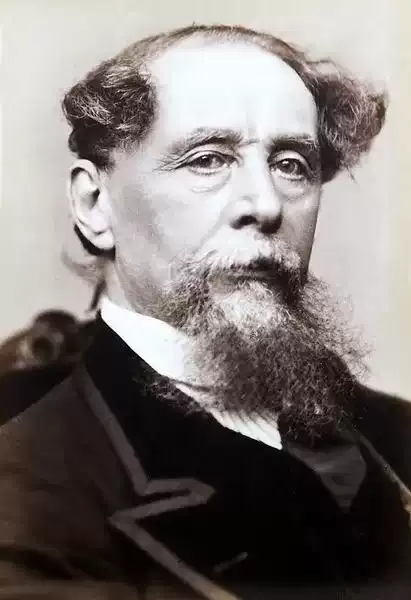
Charles Dickens
The Hymn Of The Wiltshire Laborers
O God! who by Thy prophet's hand
Didst smite the rocky brake,
Whence water came, at Thy command,
Thy people's thirst to slake;
Strike, now, upon this granite wall,
Stern, obdurate, and high;
And let some drops of pity fall
For us who starve and die!
The God who took a little child
And set him in the midst,
And promised him His mercy mild,
As, by Thy Son, Thou didst:
Look down upon our children dear,
So gaunt, so cold, so spare,
And let their images appear
Where lords and gentry are!
O God! teach them to feel how we,
When our poor infants droop,
Are weakened in our trust in Thee,
And how our spirits stoop;
For, in Thy rest, so bright and fair,
All tears and sorrows sleep:
And their young looks, so full of care,
Would make Thine angels weep!
The God who with His finger drew
The judgment coming on,
Write, for these men, what must ensue,
Ere many years be gone!
O God! whose bow is in the sky,
Let them not brave and dare,
Until they look (too late) on high,
And see an Arrow there!
O God, remind them! In the bread
They break upon the knee,
These sacred words may yet be read,
'In memory of Me!'
O God! remind them of His sweet
Compassion for the poor,
And how He gave them Bread to eat,
And went from door to door!
Charles Dickens
The Hymn Of The Wiltshire Laborers
O God! who by Thy prophet's hand
Didst smite the rocky brake,
Whence water came, at Thy command,
Thy people's thirst to slake;
Strike, now, upon this granite wall,
Stern, obdurate, and high;
And let some drops of pity fall
For us who starve and die!
The God who took a little child
And set him in the midst,
And promised him His mercy mild,
As, by Thy Son, Thou didst:
Look down upon our children dear,
So gaunt, so cold, so spare,
And let their images appear
Where lords and gentry are!
O God! teach them to feel how we,
When our poor infants droop,
Are weakened in our trust in Thee,
And how our spirits stoop;
For, in Thy rest, so bright and fair,
All tears and sorrows sleep:
And their young looks, so full of care,
Would make Thine angels weep!
The God who with His finger drew
The judgment coming on,
Write, for these men, what must ensue,
Ere many years be gone!
O God! whose bow is in the sky,
Let them not brave and dare,
Until they look (too late) on high,
And see an Arrow there!
O God, remind them! In the bread
They break upon the knee,
These sacred words may yet be read,
'In memory of Me!'
O God! remind them of His sweet
Compassion for the poor,
And how He gave them Bread to eat,
And went from door to door!
Charles Dickens
The Song Of The Wreck
The wind blew high, the waters raved,
A ship drove on the land,
A hundred human creatures saved
Kneel'd down upon the sand.
Threescore were drown'd, threescore were thrown
Upon the black rocks wild,
And thus among them, left alone,
They found one helpless child.
A seaman rough, to shipwreck bred,
Stood out from all the rest,
And gently laid the lonely head
Upon his honest breast.
And travelling o'er the desert wide
It was a solemn joy,
To see them, ever side by side,
The sailor and the boy.
In famine, sickness, hunger, thirst,
The two were still but one,
Until the strong man droop'd the first
And felt his labors done.
Then to a trusty friend he spake,
'Across the desert wide,
Oh, take this poor boy for my sake!'
And kiss'd the child and died.
Toiling along in weary plight
Through heavy jungle, mire,
These two came later every night
To warm them at the fire.
Until the captain said one day
'O seaman, good and kind,
To save thyself now come away,
And leave the boy behind!'
The child was slumbering near the blaze:
'O captain, let him rest
Until it sinks, when God's own ways
Shall teach us what is best!'
They watch'd the whiten'd, ashy heap,
They touch'd the child in vain;
They did not leave him there asleep,
He never woke again.
Charles Dickens
A fine Old English Gentleman
I'll sing you a new ballad, and I'll warrant it first-rate,
Of the days of that old gentleman who had that old estate;
When they spent the public money at a bountiful old rate
On ev'ry mistress, pimp, and scamp, at ev'ry noble gate,
In the fine old English Tory times;
Soon may they come again!
The good old laws were garnished well with gibbets, whips, and chains,
With fine old English penalties, and fine old English pains,
With rebel heads, and seas of blood once hot in rebel veins;
For all these things were requisite to guard the rich old gains
Of the fine old English Tory times;
Soon may they come again!
This brave old code, like Argus, had a hundred watchful eyes,
And ev'ry English peasant had his good old English spies,
To tempt his starving discontent with fine old English lies,
Then call the good old Yeomanry to stop his peevish cries,
In the fine old English Tory times;
Soon may they come again!
The good old times for cutting throats that cried out in their need,
The good old times for hunting men who held their fathers' creed,
The good old times when William Pitt, as all good men agreed,
Came down direct from Paradise at more than railroad speed. . . .
Oh the fine old English Tory times;
When will they come again!
In those rare days, the press was seldom known to snarl or bark,
But sweetly sang of men in pow'r, like any tuneful lark;
Grave judges, too, to all their evil deeds were in the dark;
And not a man in twenty score knew how to make his mark.
Oh the fine old English Tory times;
Soon may they come again!
Those were the days for taxes, and for war's infernal din;
For scarcity of bread, that fine old dowagers might win;
For shutting men of letters up, through iron bars to grin,
Because they didn't think the Prince was altogether thin,
In the fine old English Tory times;
Soon may they come again!
But Tolerance, though slow in flight, is strong-wing'd in the main;
That night must come on these fine days, in course of time was plain;
The pure old spirit struggled, but Its struggles were in vain;
A nation's grip was on it, and it died in choking pain,
With the fine old English Tory days,
All of the olden time.
The bright old day now dawns again; the cry runs through the land,
In England there shall be dear bread -- in Ireland, sword and brand;
And poverty, and ignorance, shall swell the rich and grand,
So, rally round the rulers with the gentle iron hand,
Of the fine old English Tory days; Hail to the coming time!
Charles Dickens
A fine Old English Gentleman
I'll sing you a new ballad, and I'll warrant it first-rate,
Of the days of that old gentleman who had that old estate;
When they spent the public money at a bountiful old rate
On ev'ry mistress, pimp, and scamp, at ev'ry noble gate,
In the fine old English Tory times;
Soon may they come again!
The good old laws were garnished well with gibbets, whips, and chains,
With fine old English penalties, and fine old English pains,
With rebel heads, and seas of blood once hot in rebel veins;
For all these things were requisite to guard the rich old gains
Of the fine old English Tory times;
Soon may they come again!
This brave old code, like Argus, had a hundred watchful eyes,
And ev'ry English peasant had his good old English spies,
To tempt his starving discontent with fine old English lies,
Then call the good old Yeomanry to stop his peevish cries,
In the fine old English Tory times;
Soon may they come again!
The good old times for cutting throats that cried out in their need,
The good old times for hunting men who held their fathers' creed,
The good old times when William Pitt, as all good men agreed,
Came down direct from Paradise at more than railroad speed. . . .
Oh the fine old English Tory times;
When will they come again!
In those rare days, the press was seldom known to snarl or bark,
But sweetly sang of men in pow'r, like any tuneful lark;
Grave judges, too, to all their evil deeds were in the dark;
And not a man in twenty score knew how to make his mark.
Oh the fine old English Tory times;
Soon may they come again!
Those were the days for taxes, and for war's infernal din;
For scarcity of bread, that fine old dowagers might win;
For shutting men of letters up, through iron bars to grin,
Because they didn't think the Prince was altogether thin,
In the fine old English Tory times;
Soon may they come again!
But Tolerance, though slow in flight, is strong-wing'd in the main;
That night must come on these fine days, in course of time was plain;
The pure old spirit struggled, but Its struggles were in vain;
A nation's grip was on it, and it died in choking pain,
With the fine old English Tory days,
All of the olden time.
The bright old day now dawns again; the cry runs through the land,
In England there shall be dear bread -- in Ireland, sword and brand;
And poverty, and ignorance, shall swell the rich and grand,
So, rally round the rulers with the gentle iron hand,
Of the fine old English Tory days; Hail to the coming time!
Charles Dickens
A fine Old English Gentleman
I'll sing you a new ballad, and I'll warrant it first-rate,
Of the days of that old gentleman who had that old estate;
When they spent the public money at a bountiful old rate
On ev'ry mistress, pimp, and scamp, at ev'ry noble gate,
In the fine old English Tory times;
Soon may they come again!
The good old laws were garnished well with gibbets, whips, and chains,
With fine old English penalties, and fine old English pains,
With rebel heads, and seas of blood once hot in rebel veins;
For all these things were requisite to guard the rich old gains
Of the fine old English Tory times;
Soon may they come again!
This brave old code, like Argus, had a hundred watchful eyes,
And ev'ry English peasant had his good old English spies,
To tempt his starving discontent with fine old English lies,
Then call the good old Yeomanry to stop his peevish cries,
In the fine old English Tory times;
Soon may they come again!
The good old times for cutting throats that cried out in their need,
The good old times for hunting men who held their fathers' creed,
The good old times when William Pitt, as all good men agreed,
Came down direct from Paradise at more than railroad speed. . . .
Oh the fine old English Tory times;
When will they come again!
In those rare days, the press was seldom known to snarl or bark,
But sweetly sang of men in pow'r, like any tuneful lark;
Grave judges, too, to all their evil deeds were in the dark;
And not a man in twenty score knew how to make his mark.
Oh the fine old English Tory times;
Soon may they come again!
Those were the days for taxes, and for war's infernal din;
For scarcity of bread, that fine old dowagers might win;
For shutting men of letters up, through iron bars to grin,
Because they didn't think the Prince was altogether thin,
In the fine old English Tory times;
Soon may they come again!
But Tolerance, though slow in flight, is strong-wing'd in the main;
That night must come on these fine days, in course of time was plain;
The pure old spirit struggled, but Its struggles were in vain;
A nation's grip was on it, and it died in choking pain,
With the fine old English Tory days,
All of the olden time.
The bright old day now dawns again; the cry runs through the land,
In England there shall be dear bread -- in Ireland, sword and brand;
And poverty, and ignorance, shall swell the rich and grand,
So, rally round the rulers with the gentle iron hand,
Of the fine old English Tory days; Hail to the coming time!
Charles Dickens
A fine Old English Gentleman
I'll sing you a new ballad, and I'll warrant it first-rate,
Of the days of that old gentleman who had that old estate;
When they spent the public money at a bountiful old rate
On ev'ry mistress, pimp, and scamp, at ev'ry noble gate,
In the fine old English Tory times;
Soon may they come again!
The good old laws were garnished well with gibbets, whips, and chains,
With fine old English penalties, and fine old English pains,
With rebel heads, and seas of blood once hot in rebel veins;
For all these things were requisite to guard the rich old gains
Of the fine old English Tory times;
Soon may they come again!
This brave old code, like Argus, had a hundred watchful eyes,
And ev'ry English peasant had his good old English spies,
To tempt his starving discontent with fine old English lies,
Then call the good old Yeomanry to stop his peevish cries,
In the fine old English Tory times;
Soon may they come again!
The good old times for cutting throats that cried out in their need,
The good old times for hunting men who held their fathers' creed,
The good old times when William Pitt, as all good men agreed,
Came down direct from Paradise at more than railroad speed. . . .
Oh the fine old English Tory times;
When will they come again!
In those rare days, the press was seldom known to snarl or bark,
But sweetly sang of men in pow'r, like any tuneful lark;
Grave judges, too, to all their evil deeds were in the dark;
And not a man in twenty score knew how to make his mark.
Oh the fine old English Tory times;
Soon may they come again!
Those were the days for taxes, and for war's infernal din;
For scarcity of bread, that fine old dowagers might win;
For shutting men of letters up, through iron bars to grin,
Because they didn't think the Prince was altogether thin,
In the fine old English Tory times;
Soon may they come again!
But Tolerance, though slow in flight, is strong-wing'd in the main;
That night must come on these fine days, in course of time was plain;
The pure old spirit struggled, but Its struggles were in vain;
A nation's grip was on it, and it died in choking pain,
With the fine old English Tory days,
All of the olden time.
The bright old day now dawns again; the cry runs through the land,
In England there shall be dear bread -- in Ireland, sword and brand;
And poverty, and ignorance, shall swell the rich and grand,
So, rally round the rulers with the gentle iron hand,
Of the fine old English Tory days; Hail to the coming time!
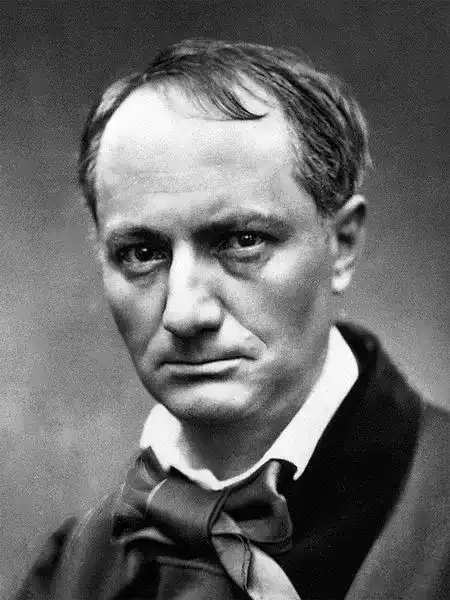
Charles Baudelaire
Voyage to Cythera
Free as a bird and joyfully my heart
Soared up among the rigging, in and out;
Under a cloudless sky the ship rolled on
Like an angel drunk with brilliant sun.
"That dark, grim island there--which would that be?"
"Cythera," we're told, "the legendary isle
Old bachelors tell stories of and smile.
There's really not much to it, you can see."
O place of many a mystic sacrament!
Archaic Aphrodite's splendid shade
Lingers above your waters like a scent
Infusing spirits with an amorous mood.
Worshipped from of old by every nation,
Myrtle-green isle, where each new bud discloses
Sighs of souls in loving adoration
Breathing like incense from a bank of roses
Or like a dove roo-cooing endlessly . . .
No; Cythera was a poor infertile rock,
A stony desert harrowed by the shriek
Of gulls. And yet there was something to see:
This was no temple deep in flowers and trees
With a young priestess moving to and fro,
Her body heated by a secret glow,
Her robe half-opening to every breeze;
But coasting nearer, close enough to land
To scatter flocks of birds as we passed by,
We saw a tall cypress-shaped thing at hand--
A triple gibbet black against the sky.
Ferocious birds, each perched on its own meal,
Were madly tearing at the thing that hung
And ripened; each, its filthy beak a drill,
Made little bleeding holes to root among.
The eyes were hollowed. Heavy guts cascading
Flowed like water halfway down the thighs;
The torturers, though gorged on these vile joys,
Had also put their beaks to use castrating
The corpse. A pack of dogs beneath its feet,
Their muzzles lifted, whirled and snapped and gnawed;
One bigger beast amidst this jealous lot
Looked like an executioner with his guard.
O Cytherean, child of this fair clime,
Silently you suffered these attacks,
Paying the penalty for whatever acts
Of infamy had kept you from a tomb.
Grotesquely dangling, somehow you brought on--
Violent as vomit rising from the chest,
Strong as a river bilious to taste--
A flow of sufferings I'd thought long gone.
Confronted with such dear remembered freight,
Poor devil, now it was my turn to feel
A panther's slavering jaws, a beak's cruel drill--
Once it was my flesh they loved to eat.
The sky was lovely, and the sea divine,
but something thick and binding like a shroud
Wrapped my heart in layers of black and blood;
Henceforth this allegory would be mine.
O Venus! On your isle what did I see
But my own image on the gallows tree?
O God, give me the strength to contemplate
My own heart, my own body without hate!
Charles Baudelaire
Travelling Bohemians
The prophetic tribe of the ardent eyes
Yesterday they took the road, holding their babies
On their backs, delivering to fierce appetites
The always ready treasure of pendulous breasts.
The men stick their feet out, waving their guns
Alongside the caravan where they tremble together,
Scanning the sky their eyes are weighted down
In mourning for absent chimeras.
At the bottom of his sandy retreat, a cricket
Watched passing, redoubles his song,
Cybele, who loves, adds more flower,
Makes fountains out of rock and blossoms from desert
Opening up before these travelers in a yawn—
A familiar empire, the inscrutable future.
Translated by William A. Sigler
Submitted by Ryan McGuire
Charles Baudelaire
Travelling Bohemians
The prophetic tribe of the ardent eyes
Yesterday they took the road, holding their babies
On their backs, delivering to fierce appetites
The always ready treasure of pendulous breasts.
The men stick their feet out, waving their guns
Alongside the caravan where they tremble together,
Scanning the sky their eyes are weighted down
In mourning for absent chimeras.
At the bottom of his sandy retreat, a cricket
Watched passing, redoubles his song,
Cybele, who loves, adds more flower,
Makes fountains out of rock and blossoms from desert
Opening up before these travelers in a yawn—
A familiar empire, the inscrutable future.
Translated by William A. Sigler
Submitted by Ryan McGuire
Charles Baudelaire
The Venal Muse
O muse of my heart, lover of palaces,
Will you bring, when January lets loose its sleet
And its black evenings without solace,
An ember to warm my violet feet?
What will revive your bruised shoulders,
The nocturnal rays that pierce the shutters?
When you cannot feel your palace, just your empty billfold,
How will you harvest the gold of azure vaults and gutters?
You should, to earn your bread today
Like a choir boy with a censer to wave,
Sings hymns with feeling but without belief.
Or, a starving rip-off artist, selling your charm
And your laughter shades the tears so no one sees the harm
In bringing to bloom an ordinary rat, a vulgar thief.
Translated by William A. Sigler
Submitted by Ryan McGuire
Charles Baudelaire
The Venal Muse
O muse of my heart, lover of palaces,
Will you bring, when January lets loose its sleet
And its black evenings without solace,
An ember to warm my violet feet?
What will revive your bruised shoulders,
The nocturnal rays that pierce the shutters?
When you cannot feel your palace, just your empty billfold,
How will you harvest the gold of azure vaults and gutters?
You should, to earn your bread today
Like a choir boy with a censer to wave,
Sings hymns with feeling but without belief.
Or, a starving rip-off artist, selling your charm
And your laughter shades the tears so no one sees the harm
In bringing to bloom an ordinary rat, a vulgar thief.
Translated by William A. Sigler
Submitted by Ryan McGuire
Charles Baudelaire
The Invitation to the Voyage
My sister, my child
imagine, exiled,
The sweetness, of being there, we two!
To live and to sigh,
to love and to die,
In the land that mirrors you!
The misted haze
of its clouded days
Has the same charm to my mind,
as mysterious,
as your traiterous
Eyes, behind glittering blinds.
There everything’s order and beauty,
calm, voluptuousness, and luxury.
The surface gleams
are polished it seems,
Through the years, to grace our room.
The rarest flowers
mix, with fragrant showers,
The vague, amber perfume.
The dark, painted halls,
the deep mirrored walls,
With Eastern splendour hung,
all secretly speak,
To the soul, its discrete,
Sweet, native tongue.
There, everything’s order and beauty,
calm, voluptuousness and luxury.
See, down the canals,
the sleeping vessels,
Those nomads, their white sails furled:
Now, to accomplish
your every wish,
They come from the ends of the world.
- The deep sunsets
surround the west,
The canals, the city, entire,
with blue-violet and gold;
And the Earth grows cold
In an incandescent fire.
There, everything’s order and beauty,
calm, voluptuousness and luxury.
Charles Baudelaire
The Albatross
Often to pass the time on board, the crew
will catch an albatross, one of those big birds
which nonchalently chaperone a ship
across the bitter fathoms of the sea.
Tied to the deck, this sovereign of space,
as if embarrassed by its clumsiness,
pitiably lets its great white wings
drag at its sides like a pair of unshipped oars.
How weak and awkward, even comical
this traveller but lately so adoit -
one deckhand sticks a pipestem in its beak,
another mocks the cripple that once flew!
The Poet is like this monarch of the clouds
riding the storm above the marksman's range;
exiled on the ground, hooted and jeered,
he cannot walk because of his great wings.
Charles Baudelaire
The Albatross
Often to pass the time on board, the crew
will catch an albatross, one of those big birds
which nonchalently chaperone a ship
across the bitter fathoms of the sea.
Tied to the deck, this sovereign of space,
as if embarrassed by its clumsiness,
pitiably lets its great white wings
drag at its sides like a pair of unshipped oars.
How weak and awkward, even comical
this traveller but lately so adoit -
one deckhand sticks a pipestem in its beak,
another mocks the cripple that once flew!
The Poet is like this monarch of the clouds
riding the storm above the marksman's range;
exiled on the ground, hooted and jeered,
he cannot walk because of his great wings.
Charles Baudelaire
Her Hair
O fleece, that down the neck waves to the nape!
O curls! O perfume nonchalant and rare!
O ecstasy! To fill this alcove shape
With memories that in these tresses sleep,
I would shake them like penions in the air!
Languorous Asia, burning Africa,
And a far world, defunct almost, absent,
Within your aromatic forest stay!
As other souls on music drift away,
Mine, O my love! still floats upon your scent.
I shall go there where, full of sap, both tree
And man swoon in the heat of the southern climates;
Strong tresses be the swell that carries me!
I dream upon your sea of amber
Of dazzling sails, of oarsmen, masts, and flames:
A sun-drenched and reverberating port,
Where I imbibe colour and sound and scent;
Where vessels, gliding through the gold and moiré,
Open their vast arms as they leave the shore
To clasp the pure and shimmering firmament.
I'll plunge my head, enamored of its pleasure,
In this black ocean where the other hides;
My subtle spirit then will know a measure
Of fertile idleness and fragrant leisure,
Lulled by the infinite rhythm of its tides!
Pavilion, of autumn-shadowed tresses spun,
You give me back the azure from afar;
And where the twisted locks are fringed with down
Lurk mingled odors I grow drunk upon
Of oil of coconut, of musk, and tar.
A long time! always! my hand in your hair
Will sow the stars of sapphire, pearl, ruby,
That you be never deaf to my desire,
My oasis and my gourd whence I aspire
To drink deep of the wine of memory.
Charles Baudelaire
Get Drunk
Always be drunk.
That's it!
The great imperative!
In order not to feel
Time's horrid fardel
bruise your shoulders,
grinding you into the earth,
Get drunk and stay that way.
On what?
On wine, poetry, virtue, whatever.
But get drunk.
And if you sometimes happen to wake up
on the porches of a palace,
in the green grass of a ditch,
in the dismal loneliness of your own room,
your drunkenness gone or disappearing,
ask the wind,
the wave,
the star,
the bird,
the clock,
ask everything that flees,
everything that groans
or rolls
or sings,
everything that speaks,
ask what time it is;
and the wind,
the wave,
the star,
the bird,
the clock
will answer you:
"Time to get drunk!
Don't be martyred slaves of Time,
Get drunk!
Stay drunk!
On wine, virtue, poetry, whatever!"
Charles Baudelaire
Be Drunk
You have to be always drunk. That's all there is to it--it's the
only way. So as not to feel the horrible burden of time that breaks
your back and bends you to the earth, you have to be continually
drunk.
But on what?Wine, poetry or virtue, as you wish. But be
drunk.
And if sometimes, on the steps of a palace or the green grass of
a ditch, in the mournful solitude of your room, you wake again,
drunkenness already diminishing or gone, ask the wind, the wave,
the star, the bird, the clock, everything that is flying, everything
that is groaning, everything that is rolling, everything that is
singing, everything that is speaking. . .ask what time it is and
wind, wave, star, bird, clock will answer you:"It is time to be
drunk! So as not to be the martyred slaves of time, be drunk, be
continually drunk! On wine, on poetry or on virtue as you wish."
Charles Baudelaire
Au Lecteur
La sottise, l'erreur, le péché, la lésine,
Occupent nos esprits et travaillent nos corps,
Et nous alimentons nos aimables remords,
Comme les mendiants nourrissent leur vermine.
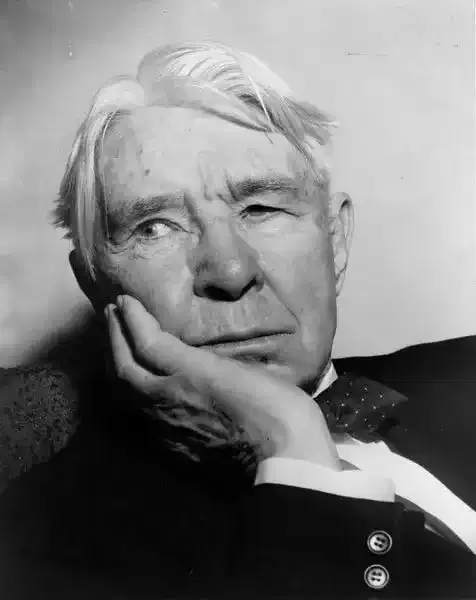
Carl Sandburg
Work Gangs
Box cars run by a mile long.
And I wonder what they say to each other
When they stop a mile long on a sidetrack.
Maybe their chatter goes:
I came from Fargo with a load of wheat up to the danger line.
I came from Omaha with a load of shorthorns and they splintered my boards.
I came from Detroit heavy with a load of fivers.
I carried apples from the Hood river last year and this year bunches of bananas from
Florida; they look for me with watermelons from Mississippi next year.
Hammers and shovels of work gangs sleep in shop corners
when the dark stars come on the sky and the night watchmen walk and look.
Then the hammer heads talk to the handles,
then the scoops of the shovels talk,
how the day’s work nicked and trimmed them,
how they swung and lifted all day,
how the hands of the work gangs smelled of hope.
In the night of the dark stars
when the curve of the sky is a work gang handle,
in the night on the mile long sidetracks,
in the night where the hammers and shovels sleep in corners,
the night watchmen stuff their pipes with dreams—
and sometimes they doze and don’t care for nothin’,
and sometimes they search their heads for meanings, stories, stars.
The stuff of it runs like this:
A long way we come; a long way to go; long rests and long deep sniffs for our lungs on
the way.
Sleep is a belonging of all; even if all songs are old songs and the singing heart is
snuffed out like a switchman’s lantern with the oil gone, even if we forget our names
and houses in the finish, the secret of sleep is left us, sleep belongs to all, sleep is the
first and last and best of all.
People singing; people with song mouths connecting with song hearts; people who
must sing or die; people whose song hearts break if there is no song mouth; these are
my people.