

Poems in this topic
Society and the World
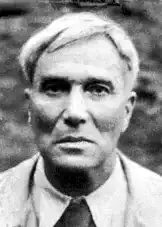
Boris Pasternak
Railway Station
Railway Station
My dear railway station, my treasure
Of meetings and partings, my friend
In times of hard trials and pleasure,
Your favours have been without end.
My scarf would wrap up my whole being -
The train would pull up, with deep sighs,
The muzzles of brash harpies, leering,
Would puff wet white steam in our eyes.
I'd sit at your side for a moment -
A hug and a kiss, brief and rough.
Farewell then, my joy and my torment.
I'm going, conductor, I'm off!
And, shunting bad weather and sleepers,
The west would break open-I'd feel
It grab me with snowflakes to keep me
From falling down under the wheels.
A whistle dies down, echoed weakly,
Another flies from distant tracks.
A train comes past bare platforms sweeping -
A blizzard of many hunched backs.
And twilight is rearing to go,
And, lured by the smoke and the steam,
The wind and the field rush and now
I wish I could be one of them!
My dear railway station, my treasure
Of meetings and partings, my friend
In times of hard trials and pleasure,
Your favours have been without end.
My scarf would wrap up my whole being -
The train would pull up, with deep sighs,
The muzzles of brash harpies, leering,
Would puff wet white steam in our eyes.
I'd sit at your side for a moment -
A hug and a kiss, brief and rough.
Farewell then, my joy and my torment.
I'm going, conductor, I'm off!
And, shunting bad weather and sleepers,
The west would break open-I'd feel
It grab me with snowflakes to keep me
From falling down under the wheels.
A whistle dies down, echoed weakly,
Another flies from distant tracks.
A train comes past bare platforms sweeping -
A blizzard of many hunched backs.
And twilight is rearing to go,
And, lured by the smoke and the steam,
The wind and the field rush and now
I wish I could be one of them!
509
Boris Pasternak
On Early Trains
On Early Trains
This winter I was outside Moscow,
But when the time for work came round,
Through the blizzard, biting frost and snow,
I made the journey into town.
At the hour I stepped outside the door
Not a soul could be seen on the street,
And through the forest darkness drifted forth
The crunching echo of my tramping feet.
At the crossing I was greeted
By the willows of the vacant plot.
The constellations towered above the world
In the dark chill of January's pit.
And usually, there behind the yards,
The number forty or the early mail
Would overhaul me, pulling hard,
But the six forty-five was my own train.
Suddenly some invisible tentacles
Would draw into a circle lines of light,
As a massive searchlight hurtled past
On to the viaduct out of the night.
Once in the carriage's tuffy heat
I would allow myself to sink
Into the state of innate weakness
I imbibed with my mother's milk.
Through all the struggles of the past,
Through all the years of war and want,
I gazed on Russia'a unique face
In silent awe and wonderment.
Passing beyond this adoration,
I worshipped as I looked around
At countrywomen, students, workers
Living on the edge of town.
I could not see a single trace
Of servitude imposed by poverty.
Each new discomfort and each change
Was borne with lordly dignity.
Bunched close together in a group,
Boys and girls sat reading there,
Struck varied poses as they read,
Drinking in the words like vital air.
Moscow greeted us in darkness
Already lined with silver light,
As we emerged from underground,
Out of the ambiguity of night.
Our future pressed against the rails,
Flooding my senses as they went,
With floral soap's lingering trace
And honey-cakes' enticing scent.
This winter I was outside Moscow,
But when the time for work came round,
Through the blizzard, biting frost and snow,
I made the journey into town.
At the hour I stepped outside the door
Not a soul could be seen on the street,
And through the forest darkness drifted forth
The crunching echo of my tramping feet.
At the crossing I was greeted
By the willows of the vacant plot.
The constellations towered above the world
In the dark chill of January's pit.
And usually, there behind the yards,
The number forty or the early mail
Would overhaul me, pulling hard,
But the six forty-five was my own train.
Suddenly some invisible tentacles
Would draw into a circle lines of light,
As a massive searchlight hurtled past
On to the viaduct out of the night.
Once in the carriage's tuffy heat
I would allow myself to sink
Into the state of innate weakness
I imbibed with my mother's milk.
Through all the struggles of the past,
Through all the years of war and want,
I gazed on Russia'a unique face
In silent awe and wonderment.
Passing beyond this adoration,
I worshipped as I looked around
At countrywomen, students, workers
Living on the edge of town.
I could not see a single trace
Of servitude imposed by poverty.
Each new discomfort and each change
Was borne with lordly dignity.
Bunched close together in a group,
Boys and girls sat reading there,
Struck varied poses as they read,
Drinking in the words like vital air.
Moscow greeted us in darkness
Already lined with silver light,
As we emerged from underground,
Out of the ambiguity of night.
Our future pressed against the rails,
Flooding my senses as they went,
With floral soap's lingering trace
And honey-cakes' enticing scent.
602
Boris Pasternak
On Early Trains
On Early Trains
This winter I was outside Moscow,
But when the time for work came round,
Through the blizzard, biting frost and snow,
I made the journey into town.
At the hour I stepped outside the door
Not a soul could be seen on the street,
And through the forest darkness drifted forth
The crunching echo of my tramping feet.
At the crossing I was greeted
By the willows of the vacant plot.
The constellations towered above the world
In the dark chill of January's pit.
And usually, there behind the yards,
The number forty or the early mail
Would overhaul me, pulling hard,
But the six forty-five was my own train.
Suddenly some invisible tentacles
Would draw into a circle lines of light,
As a massive searchlight hurtled past
On to the viaduct out of the night.
Once in the carriage's tuffy heat
I would allow myself to sink
Into the state of innate weakness
I imbibed with my mother's milk.
Through all the struggles of the past,
Through all the years of war and want,
I gazed on Russia'a unique face
In silent awe and wonderment.
Passing beyond this adoration,
I worshipped as I looked around
At countrywomen, students, workers
Living on the edge of town.
I could not see a single trace
Of servitude imposed by poverty.
Each new discomfort and each change
Was borne with lordly dignity.
Bunched close together in a group,
Boys and girls sat reading there,
Struck varied poses as they read,
Drinking in the words like vital air.
Moscow greeted us in darkness
Already lined with silver light,
As we emerged from underground,
Out of the ambiguity of night.
Our future pressed against the rails,
Flooding my senses as they went,
With floral soap's lingering trace
And honey-cakes' enticing scent.
This winter I was outside Moscow,
But when the time for work came round,
Through the blizzard, biting frost and snow,
I made the journey into town.
At the hour I stepped outside the door
Not a soul could be seen on the street,
And through the forest darkness drifted forth
The crunching echo of my tramping feet.
At the crossing I was greeted
By the willows of the vacant plot.
The constellations towered above the world
In the dark chill of January's pit.
And usually, there behind the yards,
The number forty or the early mail
Would overhaul me, pulling hard,
But the six forty-five was my own train.
Suddenly some invisible tentacles
Would draw into a circle lines of light,
As a massive searchlight hurtled past
On to the viaduct out of the night.
Once in the carriage's tuffy heat
I would allow myself to sink
Into the state of innate weakness
I imbibed with my mother's milk.
Through all the struggles of the past,
Through all the years of war and want,
I gazed on Russia'a unique face
In silent awe and wonderment.
Passing beyond this adoration,
I worshipped as I looked around
At countrywomen, students, workers
Living on the edge of town.
I could not see a single trace
Of servitude imposed by poverty.
Each new discomfort and each change
Was borne with lordly dignity.
Bunched close together in a group,
Boys and girls sat reading there,
Struck varied poses as they read,
Drinking in the words like vital air.
Moscow greeted us in darkness
Already lined with silver light,
As we emerged from underground,
Out of the ambiguity of night.
Our future pressed against the rails,
Flooding my senses as they went,
With floral soap's lingering trace
And honey-cakes' enticing scent.
602
Boris Pasternak
It's spring, I leave a street where poplars...
It's spring, I leave a street where poplars...
It's spring, I leave a street where poplars are astonished,
Where distance is alarmed and the house fears it may fall.
Where air is blue just like the linen bundle
A discharged patient takes from hospital,
Where dusk is empty, like a broken tale,
Abandoned by a star, without conclusion,
So that expressionless, unfathomable,
A thousand clamouring eyes are in confusion.
It's spring, I leave a street where poplars are astonished,
Where distance is alarmed and the house fears it may fall.
Where air is blue just like the linen bundle
A discharged patient takes from hospital,
Where dusk is empty, like a broken tale,
Abandoned by a star, without conclusion,
So that expressionless, unfathomable,
A thousand clamouring eyes are in confusion.
345
Boris Pasternak
Imitators
Imitators
A boat came in; the cliff was baked;
The noisy boat-chain fell and clanked on
The sand-an iron rattle-snake,
A rattling rust among the plankton.
And two got out; and from the cliff
I felt like calling down, 'Forgive me,
But would you kindly throw yourselves
Apart or else into the river?
Your miming is without a fault-
Of course the seeker finds the fancied-
But stop this playing with the boat!
Your model on the cliff resents it.'
A boat came in; the cliff was baked;
The noisy boat-chain fell and clanked on
The sand-an iron rattle-snake,
A rattling rust among the plankton.
And two got out; and from the cliff
I felt like calling down, 'Forgive me,
But would you kindly throw yourselves
Apart or else into the river?
Your miming is without a fault-
Of course the seeker finds the fancied-
But stop this playing with the boat!
Your model on the cliff resents it.'
536
Boris Pasternak
Humble home. But rum, and charcoal...
Humble home. But rum, and charcoal...
Humble home. But rum, and charcoal
Grog of sketches on the wall,
And the cell becomes a mansion,
And the garret is a hall.
No more waves of housecoats: questions,
Even footsteps disappear;
Glassy mica fills the latticed
Work-encompassed vault of air.
Voice, commanding as a levy,
Does not leave a thing immune,
Smelting, fusing… In his gullet
Flows the tin of molten spoons.
What is fame for him, and glory,
Name, position in the world,
When the sudden breath of fusion
Blends his words into the Word?
He will burn for it his chattels,
Friendship, reason, daily round.
On his desk-a glass, unfinished,
World forgotten, clock unwound.
Clustered stanzas change like seething
Wax at fortune-telling times.
He will bless the sleeping children
With the steam of molten rhymes.
Humble home. But rum, and charcoal
Grog of sketches on the wall,
And the cell becomes a mansion,
And the garret is a hall.
No more waves of housecoats: questions,
Even footsteps disappear;
Glassy mica fills the latticed
Work-encompassed vault of air.
Voice, commanding as a levy,
Does not leave a thing immune,
Smelting, fusing… In his gullet
Flows the tin of molten spoons.
What is fame for him, and glory,
Name, position in the world,
When the sudden breath of fusion
Blends his words into the Word?
He will burn for it his chattels,
Friendship, reason, daily round.
On his desk-a glass, unfinished,
World forgotten, clock unwound.
Clustered stanzas change like seething
Wax at fortune-telling times.
He will bless the sleeping children
With the steam of molten rhymes.
579
Boris Pasternak
Here will be echoes in the mountains...
Here will be echoes in the mountains...
Here will be echoes in the mountains,
The distant landslides' rumbling boom,
The rocks, the dwellings in the village,
The sorry little inn, the gloom
Of something black beyond the Terek,
Clouds moving heavily. Up there
The day was breaking very slowly;
It dawned, but light was nowhere near.
One sensed the heaviness of darkness
For miles ahead around Kazbek
Wound on the heights: though some were trying
To throw the halter from their neck.
As if cemented in an oven,
In the strange substance of a dream,
A pot of poisoned food, the region
Of Daghestan there slowly steamed.
Its towering peaks towards us rolling,
All black from top to foot, it strained
To meet our car, if not with clashing
Of daggers, then with pouring rain.
The mountains were preparing trouble.
The handsome giants, fierce and black,
Each one more evil than the other
Were closing down upon our track.
Here will be echoes in the mountains,
The distant landslides' rumbling boom,
The rocks, the dwellings in the village,
The sorry little inn, the gloom
Of something black beyond the Terek,
Clouds moving heavily. Up there
The day was breaking very slowly;
It dawned, but light was nowhere near.
One sensed the heaviness of darkness
For miles ahead around Kazbek
Wound on the heights: though some were trying
To throw the halter from their neck.
As if cemented in an oven,
In the strange substance of a dream,
A pot of poisoned food, the region
Of Daghestan there slowly steamed.
Its towering peaks towards us rolling,
All black from top to foot, it strained
To meet our car, if not with clashing
Of daggers, then with pouring rain.
The mountains were preparing trouble.
The handsome giants, fierce and black,
Each one more evil than the other
Were closing down upon our track.
470
Boris Pasternak
From early dawn the thirtieth of April...
From early dawn the thirtieth of April...
From early dawn the thirtieth of April
Is given up to children of the town,
And caught in trying on the festive necklace,
By dusk it only just is settling down.
Like heaps of squashy berries under muslin
The town emerges out of crimson gauze.
Along the streets the boulevards are dragging
Their twilight with them, like a rank of dwarves.
The evening world is always eve and blossom,
But this one with a sprouting of its own
From May-day anniversaries will flower
One day into a commune fully blown.
For long it will remain a day of shifting,
Pre-festive cleaning, fanciful decor,
As once it used to be with Whitsun birches
Or pan-Athenian fires long before.
Just so they will go on, conveying actors
To their assembly points; beat sand; just so
Pull up towards illuminated ledges
The plywood boards, the crimson calico.
Just so in threes the sailors briskly walking
Will skirt the grass in gardens and in parks,
The moon at nightfall sink into the pavements
Like a dead city or a burnt-out hearth.
But with each year more splendid and more spreading
The taut beginning of the rose will bloom,
More clearly grow in health and sense of honour,
Sincerity more visibly will loom.
The living folksongs, customs and traditions
Will ever spreading, many-petalled lay
Their scent on fields and industries and meadows
From early buddings on the first of May,
Until the full fermented risen spirit
Of ripened years will shoot up, like the smell
Of humid centifolia. It will have to
Reveal itself, it cannot help but tell.
From early dawn the thirtieth of April
Is given up to children of the town,
And caught in trying on the festive necklace,
By dusk it only just is settling down.
Like heaps of squashy berries under muslin
The town emerges out of crimson gauze.
Along the streets the boulevards are dragging
Their twilight with them, like a rank of dwarves.
The evening world is always eve and blossom,
But this one with a sprouting of its own
From May-day anniversaries will flower
One day into a commune fully blown.
For long it will remain a day of shifting,
Pre-festive cleaning, fanciful decor,
As once it used to be with Whitsun birches
Or pan-Athenian fires long before.
Just so they will go on, conveying actors
To their assembly points; beat sand; just so
Pull up towards illuminated ledges
The plywood boards, the crimson calico.
Just so in threes the sailors briskly walking
Will skirt the grass in gardens and in parks,
The moon at nightfall sink into the pavements
Like a dead city or a burnt-out hearth.
But with each year more splendid and more spreading
The taut beginning of the rose will bloom,
More clearly grow in health and sense of honour,
Sincerity more visibly will loom.
The living folksongs, customs and traditions
Will ever spreading, many-petalled lay
Their scent on fields and industries and meadows
From early buddings on the first of May,
Until the full fermented risen spirit
Of ripened years will shoot up, like the smell
Of humid centifolia. It will have to
Reveal itself, it cannot help but tell.
579
Boris Pasternak
Feasts
Feasts
I drink the gall of skies in autumn, tuberoses'
Sweet bitterness in your betrayals burning stream;
I drink the gall of nights, of crowded parties' noises,
Of sobbing virgin verse, and of a throbbing dream.
We fiends of studious fight a battle everlasting
Against our daily bread - can't stand the sober mood.
The troubled wind of nights is merely a toastmaster
Whose toasts, as like as not, will do no one much good.
Heredity and death are our guests at table.
A quiet dawn will paint bright-red the tops of trees.
An anapaest, like mice, will on the bread-plate scrabble,
And Cinderella will rush in to change her dress.
The floors have all been swept, and everything is dainty,
And like a child's sweet kiss, breathes quietly my verse,
And Cinderella flees-by cab on days of plenty,
And on shanks' pony when the last small coin is lost.
I drink the gall of skies in autumn, tuberoses'
Sweet bitterness in your betrayals burning stream;
I drink the gall of nights, of crowded parties' noises,
Of sobbing virgin verse, and of a throbbing dream.
We fiends of studious fight a battle everlasting
Against our daily bread - can't stand the sober mood.
The troubled wind of nights is merely a toastmaster
Whose toasts, as like as not, will do no one much good.
Heredity and death are our guests at table.
A quiet dawn will paint bright-red the tops of trees.
An anapaest, like mice, will on the bread-plate scrabble,
And Cinderella will rush in to change her dress.
The floors have all been swept, and everything is dainty,
And like a child's sweet kiss, breathes quietly my verse,
And Cinderella flees-by cab on days of plenty,
And on shanks' pony when the last small coin is lost.
523
Boris Pasternak
Fairy Tale
Fairy Tale
Once, in times forgotten,
In a fairy place,
Through the steppe, a rider
Made his way apace.
While he sped to battle,
Nearing from the dim
Distance, a dark forest
Rose ahead of him.
Something kept repeating,
Seemed his heart to graze:
Tighten up the saddle,
Fear the watering-place.
But he did not listen.
Heeding but his will,
At full speed he bounded
Up the wooded hill;
Rode into a valley,
Turning from the mound,
Galloped through a meadow,
Skirted higher ground;
Reached a gloomy hollow,
Found a trail to trace
Down the woodland pathway
To the watering-place.
Deaf to voice of warning,
And without remorse,
Down the slope, the rider
Led his thirsty horse.
Where the stream grew shallow,
Winding through the glen,
Eerie flames lit up the
Entrance to a den.
Through thick clouds of crimson
Smoke above the spring,
An uncanny calling
Made the forest ring.
And the rider started,
And with peering eye
Urged his horse in answer
To the haunting cry.
Then he saw the dragon,
And he gripped his lance;
And his horse stood breathless
Fearing to advance.
Thrice around a maiden
Was the serpent wound;
Fire-breathing nostrils
Cast a glare around.
And the dragon's body
Moved his scaly neck,
At her shoulder snaking
Whiplike forth and back.
By that country's custom
Was a young and fair
Captive brought as ransom
To the dragon's lair.
This then was the tribute
That the people owed
To the worm-protection
For a poor abode.
Now the dragon hugged his
Victim in alarm,
And the coils grew tighter
Round her throat and arm.
Skyward looked the horseman
With imploring glance,
And for the impending
Fight he couched his lance.
Tightly closing eyelids.
Heights and cloudy spheres.
Rivers. Waters. Boulders.
Centuries and years.
Helmetless, the wounded
Lies, his life at stake.
With his hooves the charger
Tramples down the snake.
On the sand, together-
Dragon, steed, and lance;
In a swoon the rider,
The maiden-in a trance.
Blue the sky; soft breezes
Tender noon caress.
Who is she? A lady?
Peasant girl? Princess?
Now in joyous wonder
Cannot cease to weep;
Now again abandoned
To unending sleep.
Now, his strength returning,
Opens up his eyes;
Now anew the wounded
Limp and listless lies.
But their hearts are beating.
Waves surge up, die down;
Carry them, and waken,
And in slumber drown.
Tightly closing eyelids.
Heights and cloudy spheres.
Rivers. Waters. Boulders.
Centuries and years.
Once, in times forgotten,
In a fairy place,
Through the steppe, a rider
Made his way apace.
While he sped to battle,
Nearing from the dim
Distance, a dark forest
Rose ahead of him.
Something kept repeating,
Seemed his heart to graze:
Tighten up the saddle,
Fear the watering-place.
But he did not listen.
Heeding but his will,
At full speed he bounded
Up the wooded hill;
Rode into a valley,
Turning from the mound,
Galloped through a meadow,
Skirted higher ground;
Reached a gloomy hollow,
Found a trail to trace
Down the woodland pathway
To the watering-place.
Deaf to voice of warning,
And without remorse,
Down the slope, the rider
Led his thirsty horse.
Where the stream grew shallow,
Winding through the glen,
Eerie flames lit up the
Entrance to a den.
Through thick clouds of crimson
Smoke above the spring,
An uncanny calling
Made the forest ring.
And the rider started,
And with peering eye
Urged his horse in answer
To the haunting cry.
Then he saw the dragon,
And he gripped his lance;
And his horse stood breathless
Fearing to advance.
Thrice around a maiden
Was the serpent wound;
Fire-breathing nostrils
Cast a glare around.
And the dragon's body
Moved his scaly neck,
At her shoulder snaking
Whiplike forth and back.
By that country's custom
Was a young and fair
Captive brought as ransom
To the dragon's lair.
This then was the tribute
That the people owed
To the worm-protection
For a poor abode.
Now the dragon hugged his
Victim in alarm,
And the coils grew tighter
Round her throat and arm.
Skyward looked the horseman
With imploring glance,
And for the impending
Fight he couched his lance.
Tightly closing eyelids.
Heights and cloudy spheres.
Rivers. Waters. Boulders.
Centuries and years.
Helmetless, the wounded
Lies, his life at stake.
With his hooves the charger
Tramples down the snake.
On the sand, together-
Dragon, steed, and lance;
In a swoon the rider,
The maiden-in a trance.
Blue the sky; soft breezes
Tender noon caress.
Who is she? A lady?
Peasant girl? Princess?
Now in joyous wonder
Cannot cease to weep;
Now again abandoned
To unending sleep.
Now, his strength returning,
Opens up his eyes;
Now anew the wounded
Limp and listless lies.
But their hearts are beating.
Waves surge up, die down;
Carry them, and waken,
And in slumber drown.
Tightly closing eyelids.
Heights and cloudy spheres.
Rivers. Waters. Boulders.
Centuries and years.
578
Boris Pasternak
Fairy Tale
Fairy Tale
Once, in times forgotten,
In a fairy place,
Through the steppe, a rider
Made his way apace.
While he sped to battle,
Nearing from the dim
Distance, a dark forest
Rose ahead of him.
Something kept repeating,
Seemed his heart to graze:
Tighten up the saddle,
Fear the watering-place.
But he did not listen.
Heeding but his will,
At full speed he bounded
Up the wooded hill;
Rode into a valley,
Turning from the mound,
Galloped through a meadow,
Skirted higher ground;
Reached a gloomy hollow,
Found a trail to trace
Down the woodland pathway
To the watering-place.
Deaf to voice of warning,
And without remorse,
Down the slope, the rider
Led his thirsty horse.
Where the stream grew shallow,
Winding through the glen,
Eerie flames lit up the
Entrance to a den.
Through thick clouds of crimson
Smoke above the spring,
An uncanny calling
Made the forest ring.
And the rider started,
And with peering eye
Urged his horse in answer
To the haunting cry.
Then he saw the dragon,
And he gripped his lance;
And his horse stood breathless
Fearing to advance.
Thrice around a maiden
Was the serpent wound;
Fire-breathing nostrils
Cast a glare around.
And the dragon's body
Moved his scaly neck,
At her shoulder snaking
Whiplike forth and back.
By that country's custom
Was a young and fair
Captive brought as ransom
To the dragon's lair.
This then was the tribute
That the people owed
To the worm-protection
For a poor abode.
Now the dragon hugged his
Victim in alarm,
And the coils grew tighter
Round her throat and arm.
Skyward looked the horseman
With imploring glance,
And for the impending
Fight he couched his lance.
Tightly closing eyelids.
Heights and cloudy spheres.
Rivers. Waters. Boulders.
Centuries and years.
Helmetless, the wounded
Lies, his life at stake.
With his hooves the charger
Tramples down the snake.
On the sand, together-
Dragon, steed, and lance;
In a swoon the rider,
The maiden-in a trance.
Blue the sky; soft breezes
Tender noon caress.
Who is she? A lady?
Peasant girl? Princess?
Now in joyous wonder
Cannot cease to weep;
Now again abandoned
To unending sleep.
Now, his strength returning,
Opens up his eyes;
Now anew the wounded
Limp and listless lies.
But their hearts are beating.
Waves surge up, die down;
Carry them, and waken,
And in slumber drown.
Tightly closing eyelids.
Heights and cloudy spheres.
Rivers. Waters. Boulders.
Centuries and years.
Once, in times forgotten,
In a fairy place,
Through the steppe, a rider
Made his way apace.
While he sped to battle,
Nearing from the dim
Distance, a dark forest
Rose ahead of him.
Something kept repeating,
Seemed his heart to graze:
Tighten up the saddle,
Fear the watering-place.
But he did not listen.
Heeding but his will,
At full speed he bounded
Up the wooded hill;
Rode into a valley,
Turning from the mound,
Galloped through a meadow,
Skirted higher ground;
Reached a gloomy hollow,
Found a trail to trace
Down the woodland pathway
To the watering-place.
Deaf to voice of warning,
And without remorse,
Down the slope, the rider
Led his thirsty horse.
Where the stream grew shallow,
Winding through the glen,
Eerie flames lit up the
Entrance to a den.
Through thick clouds of crimson
Smoke above the spring,
An uncanny calling
Made the forest ring.
And the rider started,
And with peering eye
Urged his horse in answer
To the haunting cry.
Then he saw the dragon,
And he gripped his lance;
And his horse stood breathless
Fearing to advance.
Thrice around a maiden
Was the serpent wound;
Fire-breathing nostrils
Cast a glare around.
And the dragon's body
Moved his scaly neck,
At her shoulder snaking
Whiplike forth and back.
By that country's custom
Was a young and fair
Captive brought as ransom
To the dragon's lair.
This then was the tribute
That the people owed
To the worm-protection
For a poor abode.
Now the dragon hugged his
Victim in alarm,
And the coils grew tighter
Round her throat and arm.
Skyward looked the horseman
With imploring glance,
And for the impending
Fight he couched his lance.
Tightly closing eyelids.
Heights and cloudy spheres.
Rivers. Waters. Boulders.
Centuries and years.
Helmetless, the wounded
Lies, his life at stake.
With his hooves the charger
Tramples down the snake.
On the sand, together-
Dragon, steed, and lance;
In a swoon the rider,
The maiden-in a trance.
Blue the sky; soft breezes
Tender noon caress.
Who is she? A lady?
Peasant girl? Princess?
Now in joyous wonder
Cannot cease to weep;
Now again abandoned
To unending sleep.
Now, his strength returning,
Opens up his eyes;
Now anew the wounded
Limp and listless lies.
But their hearts are beating.
Waves surge up, die down;
Carry them, and waken,
And in slumber drown.
Tightly closing eyelids.
Heights and cloudy spheres.
Rivers. Waters. Boulders.
Centuries and years.
578
Boris Pasternak
Do not fret, do not cry, do not tax...
Do not fret, do not cry, do not tax...
Do not fret, do not cry, do not tax
Your last strength, and your heart do not torture.
You're alive, you're inside me, intact,
As a buttress, a friend, an adventure.
I've no fear of standing exposed
As a fraud in my faith in the future.
It's not life, not a union of souls
We are breaking off, but a hoax mutual.
From straw mattresses' sick wretchedness
To the fresh air of wide open spaces!
It's my brother and hand. It's addressed
Like a letter, to you, crisp and bracing.
Like an envelope, tear it across,
With Horizon begin correspondence,
Give your speech the sheer Alpian force,
Overcome the sick sense of forlornness.
O'er the bowl of Bavarian lakes
With the marrow of osseous mountains
You will know I was not a glib fake
And of sugared assurances spouter.
Fare ye well and God bless you! Our bond
And our honour aren't tamely domestic.
Like a sprout in the sunlight, unbend,
And then things will assume a new aspect.
Do not fret, do not cry, do not tax
Your last strength, and your heart do not torture.
You're alive, you're inside me, intact,
As a buttress, a friend, an adventure.
I've no fear of standing exposed
As a fraud in my faith in the future.
It's not life, not a union of souls
We are breaking off, but a hoax mutual.
From straw mattresses' sick wretchedness
To the fresh air of wide open spaces!
It's my brother and hand. It's addressed
Like a letter, to you, crisp and bracing.
Like an envelope, tear it across,
With Horizon begin correspondence,
Give your speech the sheer Alpian force,
Overcome the sick sense of forlornness.
O'er the bowl of Bavarian lakes
With the marrow of osseous mountains
You will know I was not a glib fake
And of sugared assurances spouter.
Fare ye well and God bless you! Our bond
And our honour aren't tamely domestic.
Like a sprout in the sunlight, unbend,
And then things will assume a new aspect.
533
Boris Pasternak
Change
Change
I used to glorify the poor,
Not simply lofty views expressing:
Their lives alone, I felt, were true,
Devoid of pomp and window-dressing.
No stranger to the manor house,
Its finery and lordly tenor,
I was a friend of down-and-outs,
And shunned the idly sponging manner.
For choosing friendship in the ranks
Of working people, though no rebel,
I had the honour to be stamped
As also one among the rabble.
The state of basements, unadorned,
Of attics with no frills or curtains
Was tangible without pretence
And full of substance, weighty, certain.
And I went bad when rot defaced
Our time, and life became infested,
When grief was censured as disgrace
And all played optimists and yes-men.
My faith in those who seemed my friends
Was broken and our ties were sundered.
I, too, lost Man, the Human, since
He had been lost by all and sundry.
I used to glorify the poor,
Not simply lofty views expressing:
Their lives alone, I felt, were true,
Devoid of pomp and window-dressing.
No stranger to the manor house,
Its finery and lordly tenor,
I was a friend of down-and-outs,
And shunned the idly sponging manner.
For choosing friendship in the ranks
Of working people, though no rebel,
I had the honour to be stamped
As also one among the rabble.
The state of basements, unadorned,
Of attics with no frills or curtains
Was tangible without pretence
And full of substance, weighty, certain.
And I went bad when rot defaced
Our time, and life became infested,
When grief was censured as disgrace
And all played optimists and yes-men.
My faith in those who seemed my friends
Was broken and our ties were sundered.
I, too, lost Man, the Human, since
He had been lost by all and sundry.
615
Boris Pasternak
Craft
Craft
When, having finished, I shall move my armchair,
The page will gasp, awakened from the strain.
Delirious, she is half asleep at present,
Obedient to suspense and to the rain.
The heaviness of burnt-out ships has numbed her,
Prostrated, weighted down her senseless form;
You cannot dupe this one by false pretences-
It is the poet who will keep her warm.
I told her at an hour (its secret shudder
Vouchsafed by fancy) when the winter will
Light up green screeching ice, fed up with waiting
Behind an office worker's window sill,
And clocks in banks and other public places,
While drinking in the snow and outside's dark,
Will suddenly jump up and strike-their faces
Crossed by the clockhands at the 'seven' mark-
At such a deep, at such a fateful hour,
I made the page wake up and take her chance,
To put on hood and scarf, and venture out to
Descendants, strangers, shaking off her trance.
When, having finished, I shall move my armchair,
The page will gasp, awakened from the strain.
Delirious, she is half asleep at present,
Obedient to suspense and to the rain.
The heaviness of burnt-out ships has numbed her,
Prostrated, weighted down her senseless form;
You cannot dupe this one by false pretences-
It is the poet who will keep her warm.
I told her at an hour (its secret shudder
Vouchsafed by fancy) when the winter will
Light up green screeching ice, fed up with waiting
Behind an office worker's window sill,
And clocks in banks and other public places,
While drinking in the snow and outside's dark,
Will suddenly jump up and strike-their faces
Crossed by the clockhands at the 'seven' mark-
At such a deep, at such a fateful hour,
I made the page wake up and take her chance,
To put on hood and scarf, and venture out to
Descendants, strangers, shaking off her trance.
548
Boris Pasternak
Stars were racing; waves were washing headlands.
Stars were racing; waves were washing headlands.
Salt went blind, and tears were slowly drying.
Darkened were the bedrooms; thoughts were racing,
And the Sphinx was listening to the desert.
Candles swam. It seemed that the Colossus'
Blood grew cold; upon his lips was spreading
The blue shadow smile of the Sahara.
With the turning tide the night was waning.
Sea-breeze from Morocco touched the water.
Simooms blew. In snowdrifts snored Archangel.
Candles swam; the rough draft of 'The Prophet'
Slowly dried, and dawn broke on the Ganges
Мчались
звезды. В
море
мылись
мысы.
Слепла
соль. И
слезы
высыхали.
Были темны
спальни.
Мчались
мысли,
И
прислушивk
2;лся сфинкс
к Сахаре.
Плыли
свечи. И
казалось,
стынет
Кровь
колосса.
Заплывали
губы
Голубой
улыбкою
пустыни.
В час
отлива
ночь пошла
на убыль.
Море
тронул
ветерок с
Марокко.
Шел самум.
Храпел в
снегах
Архангельl
9;к.
Плыли
свечи.
Черновик
'Пророка'
Просыхал, и
брезжил
день на
Ганге.
Salt went blind, and tears were slowly drying.
Darkened were the bedrooms; thoughts were racing,
And the Sphinx was listening to the desert.
Candles swam. It seemed that the Colossus'
Blood grew cold; upon his lips was spreading
The blue shadow smile of the Sahara.
With the turning tide the night was waning.
Sea-breeze from Morocco touched the water.
Simooms blew. In snowdrifts snored Archangel.
Candles swam; the rough draft of 'The Prophet'
Slowly dried, and dawn broke on the Ganges
Мчались
звезды. В
море
мылись
мысы.
Слепла
соль. И
слезы
высыхали.
Были темны
спальни.
Мчались
мысли,
И
прислушивk
2;лся сфинкс
к Сахаре.
Плыли
свечи. И
казалось,
стынет
Кровь
колосса.
Заплывали
губы
Голубой
улыбкою
пустыни.
В час
отлива
ночь пошла
на убыль.
Море
тронул
ветерок с
Марокко.
Шел самум.
Храпел в
снегах
Архангельl
9;к.
Плыли
свечи.
Черновик
'Пророка'
Просыхал, и
брезжил
день на
Ганге.
518
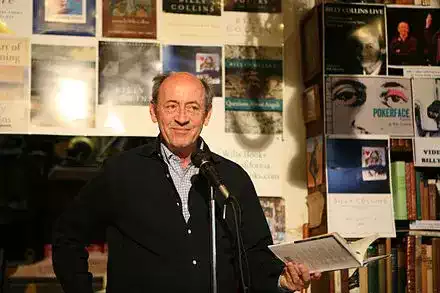
Billy Collins
Walking Across The Atlantic
Walking Across The Atlantic
I wait for the holiday crowd to clear the beach
before stepping onto the first wave.
Soon I am walking across the Atlantic
thinking about Spain,
checking for whales, waterspouts.
I feel the water holding up my shifting weight.
Tonight I will sleep on its rocking surface.
But for now I try to imagine what
this must look like to the fish below,
the bottoms of my feet appearing, disappearing.
I wait for the holiday crowd to clear the beach
before stepping onto the first wave.
Soon I am walking across the Atlantic
thinking about Spain,
checking for whales, waterspouts.
I feel the water holding up my shifting weight.
Tonight I will sleep on its rocking surface.
But for now I try to imagine what
this must look like to the fish below,
the bottoms of my feet appearing, disappearing.
230
Billy Collins
The Best Cigarette
The Best Cigarette
There are many that I miss
having sent my last one out a car window
sparking along the road one night, years ago.
The heralded one, of course:
after sex, the two glowing tips
now the lights of a single ship;
at the end of a long dinner
with more wine to come
and a smoke ring coasting into the chandelier;
or on a white beach,
holding one with fingers still wet from a swim.
How bittersweet these punctuations
of flame and gesture;
but the best were on those mornings
when I would have a little something going
in the typewriter,
the sun bright in the windows,
maybe some Berlioz on in the background.
I would go into the kitchen for coffee
and on the way back to the page,
curled in its roller,
I would light one up and feel
its dry rush mix with the dark taste of coffee.
Then I would be my own locomotive,
trailing behind me as I returned to work
little puffs of smoke,
indicators of progress,
signs of industry and thought,
the signal that told the nineteenth century
it was moving forward.
That was the best cigarette,
when I would steam into the study
full of vaporous hope
and stand there,
the big headlamp of my face
pointed down at all the words in parallel lines.
There are many that I miss
having sent my last one out a car window
sparking along the road one night, years ago.
The heralded one, of course:
after sex, the two glowing tips
now the lights of a single ship;
at the end of a long dinner
with more wine to come
and a smoke ring coasting into the chandelier;
or on a white beach,
holding one with fingers still wet from a swim.
How bittersweet these punctuations
of flame and gesture;
but the best were on those mornings
when I would have a little something going
in the typewriter,
the sun bright in the windows,
maybe some Berlioz on in the background.
I would go into the kitchen for coffee
and on the way back to the page,
curled in its roller,
I would light one up and feel
its dry rush mix with the dark taste of coffee.
Then I would be my own locomotive,
trailing behind me as I returned to work
little puffs of smoke,
indicators of progress,
signs of industry and thought,
the signal that told the nineteenth century
it was moving forward.
That was the best cigarette,
when I would steam into the study
full of vaporous hope
and stand there,
the big headlamp of my face
pointed down at all the words in parallel lines.
293
Billy Collins
Neither Snow
Neither Snow
When all of a sudden the city air filled with snow,
the distinguishable flakes
blowing sideways,
looked like krill
fleeing the maw of an advancing whale.
At least they looked that way to me
from the taxi window,
and since I happened to be sitting
that fading Sunday afternoon
in the very center of the universe,
who was in a better position
to say what looked like what,
which thing resembled some other?
Yes, it was a run of white plankton
borne down the Avenue of the Americas
in the stream of the wind,
phosphorescent against the weighty buildings.
Which made the taxi itself,
yellow and slow-moving,
a kind of undersea creature,
I thought as I wiped the fog from the glass,
and me one of its protruding eyes,
an eye on a stem
swiveling this way and that
monitoring one side of its world,
observing tons of water
tons of people
colored signs and lights
and now a wildly blowing race of snow.
When all of a sudden the city air filled with snow,
the distinguishable flakes
blowing sideways,
looked like krill
fleeing the maw of an advancing whale.
At least they looked that way to me
from the taxi window,
and since I happened to be sitting
that fading Sunday afternoon
in the very center of the universe,
who was in a better position
to say what looked like what,
which thing resembled some other?
Yes, it was a run of white plankton
borne down the Avenue of the Americas
in the stream of the wind,
phosphorescent against the weighty buildings.
Which made the taxi itself,
yellow and slow-moving,
a kind of undersea creature,
I thought as I wiped the fog from the glass,
and me one of its protruding eyes,
an eye on a stem
swiveling this way and that
monitoring one side of its world,
observing tons of water
tons of people
colored signs and lights
and now a wildly blowing race of snow.
270
Billy Collins
Man Listening To Disc
Man Listening To Disc
This is not bad -ambling
along 44th Street
with Sonny Rollins for company,
his music flowing through the soft calipers
of these earphones,
as if he were right beside me
on this clear day in March,
the pavement sparkling with sunlight,
pigeons fluttering off the curb,
nodding over a profusion of bread crumbs.
In fact, I would say
my delight at being suffused
with phrases from his saxophone -some
like honey, some like vinegar -is
surpassed only by my gratitude
to Tommy Potter for taking the time
to join us on this breezy afternoon
with his most unwieldy bass
and to the esteemed Arthur Taylor
who is somehow managing to navigate
this crowd with his cumbersome drums.
And I bow deeply to Thelonious Monk
for figuring out a way
to motorize -- or whatever -- his huge piano
so he could be with us today.
This music is loud yet so confidential.
I cannot help feeling even more
like the center of the universe
than usual as I walk along to a rapid
little version of "The Way You Look Tonight,"
and all I can say to my fellow pedestrians,
to the woman in the white sweater,
the man in the tan raincoat and the heavy glasses,
who mistake themselves for the center of the universe -all
I can say is watch your step,
because the five of us, instruments and all,
are about to angle over
to the south side of the street
and then, in our own tightly knit way,
turn the corner at Sixth Avenue.
And if any of you are curious
about where this aggregation,
this whole battery-powered crew,
is headed, let us just say
that the real center of the universe,
the only true point of view,
is full of hope that he,
the hub of the cosmos
with his hair blown sideways,
will eventually make it all the way downtown.
This is not bad -ambling
along 44th Street
with Sonny Rollins for company,
his music flowing through the soft calipers
of these earphones,
as if he were right beside me
on this clear day in March,
the pavement sparkling with sunlight,
pigeons fluttering off the curb,
nodding over a profusion of bread crumbs.
In fact, I would say
my delight at being suffused
with phrases from his saxophone -some
like honey, some like vinegar -is
surpassed only by my gratitude
to Tommy Potter for taking the time
to join us on this breezy afternoon
with his most unwieldy bass
and to the esteemed Arthur Taylor
who is somehow managing to navigate
this crowd with his cumbersome drums.
And I bow deeply to Thelonious Monk
for figuring out a way
to motorize -- or whatever -- his huge piano
so he could be with us today.
This music is loud yet so confidential.
I cannot help feeling even more
like the center of the universe
than usual as I walk along to a rapid
little version of "The Way You Look Tonight,"
and all I can say to my fellow pedestrians,
to the woman in the white sweater,
the man in the tan raincoat and the heavy glasses,
who mistake themselves for the center of the universe -all
I can say is watch your step,
because the five of us, instruments and all,
are about to angle over
to the south side of the street
and then, in our own tightly knit way,
turn the corner at Sixth Avenue.
And if any of you are curious
about where this aggregation,
this whole battery-powered crew,
is headed, let us just say
that the real center of the universe,
the only true point of view,
is full of hope that he,
the hub of the cosmos
with his hair blown sideways,
will eventually make it all the way downtown.
328
Billy Collins
Fishing On The Susquehanna In July
Fishing On The Susquehanna In July
I have never been fishing on the Susquehanna
or on any river for that matter
to be perfectly honest.
Not in July or any month
have I had the pleasure -- if it is a pleasure -of
fishing on the Susquehanna.
I am more likely to be found
in a quiet room like this one -a
painting of a woman on the wall,
a bowl of tangerines on the table -trying
to manufacture the sensation
of fishing on the Susquehanna.
There is little doubt
that others have been fishing
on the Susquehanna,
rowing upstream in a wooden boat,
sliding the oars under the water
then raising them to drip in the light.
But the nearest I have ever come to
fishing on the Susquehanna
was one afternoon in a museum in Philadelphia,
when I balanced a little egg of time
in front of a painting
in which that river curled around a bend
under a blue cloud-ruffled sky,
dense trees along the banks,
and a fellow with a red bandana
sitting in a small, green
flat-bottom boat
holding the thin whip of a pole.
That is something I am unlikely
ever to do, I remember
saying to myself and the person next to me.
Then I blinked and moved on
to other American scenes
of haystacks, water whitening over rocks,
even one of a brown hare
who seemed so wired with alertness
I imagined him springing right out of the frame.
I have never been fishing on the Susquehanna
or on any river for that matter
to be perfectly honest.
Not in July or any month
have I had the pleasure -- if it is a pleasure -of
fishing on the Susquehanna.
I am more likely to be found
in a quiet room like this one -a
painting of a woman on the wall,
a bowl of tangerines on the table -trying
to manufacture the sensation
of fishing on the Susquehanna.
There is little doubt
that others have been fishing
on the Susquehanna,
rowing upstream in a wooden boat,
sliding the oars under the water
then raising them to drip in the light.
But the nearest I have ever come to
fishing on the Susquehanna
was one afternoon in a museum in Philadelphia,
when I balanced a little egg of time
in front of a painting
in which that river curled around a bend
under a blue cloud-ruffled sky,
dense trees along the banks,
and a fellow with a red bandana
sitting in a small, green
flat-bottom boat
holding the thin whip of a pole.
That is something I am unlikely
ever to do, I remember
saying to myself and the person next to me.
Then I blinked and moved on
to other American scenes
of haystacks, water whitening over rocks,
even one of a brown hare
who seemed so wired with alertness
I imagined him springing right out of the frame.
287
Billy Collins
By A Swimming Pool Outside Syracusa
By A Swimming Pool Outside Syracusa
All afternoon I have been struggling to communicate in Italian with Roberto and
Giuseppe, who have begun to resemble the two male characters in my Italian for
Beginners, the ones who are always shopping or inquiring about the times of trains,
and now I can hardly speak or write English.
All afternoon I have been struggling to communicate in Italian with Roberto and
Giuseppe, who have begun to resemble the two male characters in my Italian for
Beginners, the ones who are always shopping or inquiring about the times of trains,
and now I can hardly speak or write English.
189
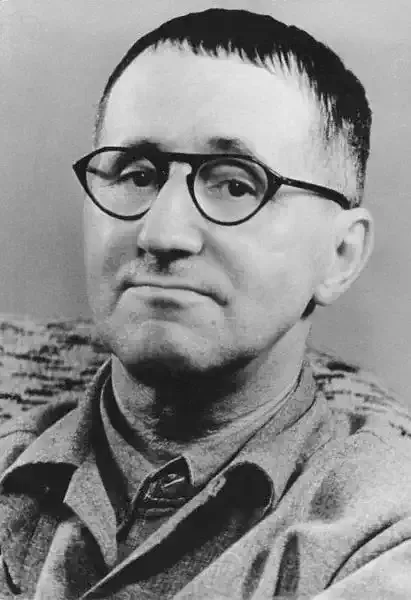
Bertolt Brecht
United Front Song
United Front Song
And because a man is human
He'll want to eat, and thanks a lot
But talk can't take the place of meat
or fill an empty pot.
So left, two, three!
So left, two, three!
Comrade, there's a place for you.
Take your stand in the workers united front
For you are a worker too.
And because a man is human
he won't care for a kick in the face.
He doesn't want slaves under him
Or above him a ruling class.
So left, two, three!
So left, two, three!
Comrade, there's a place for you.
Take your stand in the workers united front
For you are a worker too.
And because a worker's a worker
No one else will bring him liberty.
It's nobody's work but the worker' own
To set the worker free.
So left, two, three!
So left, two, three!
Comrade, there's a place for you.
Take your stand in the workers united front
For you are a worker too.
And because a man is human
He'll want to eat, and thanks a lot
But talk can't take the place of meat
or fill an empty pot.
So left, two, three!
So left, two, three!
Comrade, there's a place for you.
Take your stand in the workers united front
For you are a worker too.
And because a man is human
he won't care for a kick in the face.
He doesn't want slaves under him
Or above him a ruling class.
So left, two, three!
So left, two, three!
Comrade, there's a place for you.
Take your stand in the workers united front
For you are a worker too.
And because a worker's a worker
No one else will bring him liberty.
It's nobody's work but the worker' own
To set the worker free.
So left, two, three!
So left, two, three!
Comrade, there's a place for you.
Take your stand in the workers united front
For you are a worker too.
733
Bertolt Brecht
United Front Song
United Front Song
And because a man is human
He'll want to eat, and thanks a lot
But talk can't take the place of meat
or fill an empty pot.
So left, two, three!
So left, two, three!
Comrade, there's a place for you.
Take your stand in the workers united front
For you are a worker too.
And because a man is human
he won't care for a kick in the face.
He doesn't want slaves under him
Or above him a ruling class.
So left, two, three!
So left, two, three!
Comrade, there's a place for you.
Take your stand in the workers united front
For you are a worker too.
And because a worker's a worker
No one else will bring him liberty.
It's nobody's work but the worker' own
To set the worker free.
So left, two, three!
So left, two, three!
Comrade, there's a place for you.
Take your stand in the workers united front
For you are a worker too.
And because a man is human
He'll want to eat, and thanks a lot
But talk can't take the place of meat
or fill an empty pot.
So left, two, three!
So left, two, three!
Comrade, there's a place for you.
Take your stand in the workers united front
For you are a worker too.
And because a man is human
he won't care for a kick in the face.
He doesn't want slaves under him
Or above him a ruling class.
So left, two, three!
So left, two, three!
Comrade, there's a place for you.
Take your stand in the workers united front
For you are a worker too.
And because a worker's a worker
No one else will bring him liberty.
It's nobody's work but the worker' own
To set the worker free.
So left, two, three!
So left, two, three!
Comrade, there's a place for you.
Take your stand in the workers united front
For you are a worker too.
733
Bertolt Brecht
United Front Song
United Front Song
And because a man is human
He'll want to eat, and thanks a lot
But talk can't take the place of meat
or fill an empty pot.
So left, two, three!
So left, two, three!
Comrade, there's a place for you.
Take your stand in the workers united front
For you are a worker too.
And because a man is human
he won't care for a kick in the face.
He doesn't want slaves under him
Or above him a ruling class.
So left, two, three!
So left, two, three!
Comrade, there's a place for you.
Take your stand in the workers united front
For you are a worker too.
And because a worker's a worker
No one else will bring him liberty.
It's nobody's work but the worker' own
To set the worker free.
So left, two, three!
So left, two, three!
Comrade, there's a place for you.
Take your stand in the workers united front
For you are a worker too.
And because a man is human
He'll want to eat, and thanks a lot
But talk can't take the place of meat
or fill an empty pot.
So left, two, three!
So left, two, three!
Comrade, there's a place for you.
Take your stand in the workers united front
For you are a worker too.
And because a man is human
he won't care for a kick in the face.
He doesn't want slaves under him
Or above him a ruling class.
So left, two, three!
So left, two, three!
Comrade, there's a place for you.
Take your stand in the workers united front
For you are a worker too.
And because a worker's a worker
No one else will bring him liberty.
It's nobody's work but the worker' own
To set the worker free.
So left, two, three!
So left, two, three!
Comrade, there's a place for you.
Take your stand in the workers united front
For you are a worker too.
733