

Poems in this topic
Nature and Elements
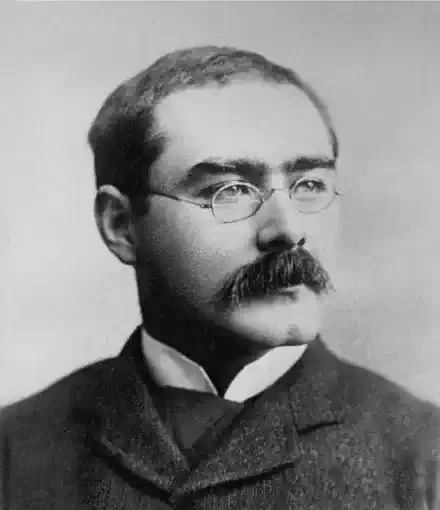
Rudyard Kipling
Angutivaun Taina
"Angutivaun Taina"
Our gloves are stiff with the frozen blood,
Our furs with the drifted snow,
As we come in with the seal--the seal!
In from the edge of the floe.
Au jana! Aua! Oha! Haq!
And the yelping dog-teams go;
And the long whips crack, and the men come back,
Back from the edge of the floe!
We tracked our seal to his secret place,
We heard him scratch below,
We made our mark, and we watched beside,
Out on the edge of the floe.
We raised our lance when he rose to breathe,
We drove it downward--so!
And we played him thus, and we killed him thus,
Out on the edge of the floe.
Our gloves are glued with the frozen blood,
Our eyes with the drifting snow;
But we come back to our wives again,
Back from the edge of the floe!
Au jana! Aua! Oha! Haq!
And the loaded dog-teams go;
And the wives ran hear their men come back,
Back from the edge of the floe!
Our gloves are stiff with the frozen blood,
Our furs with the drifted snow,
As we come in with the seal--the seal!
In from the edge of the floe.
Au jana! Aua! Oha! Haq!
And the yelping dog-teams go;
And the long whips crack, and the men come back,
Back from the edge of the floe!
We tracked our seal to his secret place,
We heard him scratch below,
We made our mark, and we watched beside,
Out on the edge of the floe.
We raised our lance when he rose to breathe,
We drove it downward--so!
And we played him thus, and we killed him thus,
Out on the edge of the floe.
Our gloves are glued with the frozen blood,
Our eyes with the drifting snow;
But we come back to our wives again,
Back from the edge of the floe!
Au jana! Aua! Oha! Haq!
And the loaded dog-teams go;
And the wives ran hear their men come back,
Back from the edge of the floe!
449

Roger Mcgough
The Time I Like Best
The Time I Like Best
The time I like best is am
when the snow is inches deep
which I'm yet to discover
'cause I'm under the covers
fast, fast asleep.
The time I like best is am
when the snow is inches deep
which I'm yet to discover
'cause I'm under the covers
fast, fast asleep.
618

Robert W. Service
Worms
Worms
Worms finer for fishing you couldn't be wishing;
I delved them dismayed from the velvety sod;
The rich loam upturning I gathered them squirming,
big, fat, gleamy earthworms, all ripe for my rod.
Thinks I, without waiting, my hook I'll be baiting,
And flip me a fish from the foam of the pool;
Then Mother beholding, came crying and scolding:
"You're late, ye young devil! Be off to the school."
So grabbing me bait-tin I dropped them fat worms in,
With globs of green turf for their comfort and cheer;
And there, clean forgotten, no doubt dead and rotten;
I left them to languish for nigh on a year.
One day to be cleaning the byre I was meaning,
When seeing that old rusty can on the shelf,
Says I: "To my thinking, them worms must be stinking:
Begorrah! I'd better find out for myself."
So I opened the tin, held my nose and looked in;
And what did I see? Why, most nothing at all.
Just darkness and dank. and . . . a something that stank,
Tucked down in a corner, a greasy grey ball.
My worms -no, not dead, but thin as a thread,
Each seemed to reproach me, protesting its worth:
So softly I took them and tenderly shook them
Back into the bosom of mothering earth.
I'm now in the City; 'tis grand, but I pity
The weariful wretches that crawl in its grime;
The dregs and the scum and the spawn of the slum,
And the poor little children that's cradled in crime.
Sure I see them in terms of my pitiful worms,
surviving despite desperation and doom,
And I wish I was God, with a smile and a nod
To set them all down in a valley of bloom,
Saying: "Let these rejoice with a wonderful voice
For mothering earth and for fathering sea,
And healing of sun, for each weariful one
Of these poor human worms is a wee bit of me. . . .
Let your be the blame and yours be the shame:
What ye do unto them ye do also to ME."
Worms finer for fishing you couldn't be wishing;
I delved them dismayed from the velvety sod;
The rich loam upturning I gathered them squirming,
big, fat, gleamy earthworms, all ripe for my rod.
Thinks I, without waiting, my hook I'll be baiting,
And flip me a fish from the foam of the pool;
Then Mother beholding, came crying and scolding:
"You're late, ye young devil! Be off to the school."
So grabbing me bait-tin I dropped them fat worms in,
With globs of green turf for their comfort and cheer;
And there, clean forgotten, no doubt dead and rotten;
I left them to languish for nigh on a year.
One day to be cleaning the byre I was meaning,
When seeing that old rusty can on the shelf,
Says I: "To my thinking, them worms must be stinking:
Begorrah! I'd better find out for myself."
So I opened the tin, held my nose and looked in;
And what did I see? Why, most nothing at all.
Just darkness and dank. and . . . a something that stank,
Tucked down in a corner, a greasy grey ball.
My worms -no, not dead, but thin as a thread,
Each seemed to reproach me, protesting its worth:
So softly I took them and tenderly shook them
Back into the bosom of mothering earth.
I'm now in the City; 'tis grand, but I pity
The weariful wretches that crawl in its grime;
The dregs and the scum and the spawn of the slum,
And the poor little children that's cradled in crime.
Sure I see them in terms of my pitiful worms,
surviving despite desperation and doom,
And I wish I was God, with a smile and a nod
To set them all down in a valley of bloom,
Saying: "Let these rejoice with a wonderful voice
For mothering earth and for fathering sea,
And healing of sun, for each weariful one
Of these poor human worms is a wee bit of me. . . .
Let your be the blame and yours be the shame:
What ye do unto them ye do also to ME."
238
Robert W. Service
Winnie
Winnie
When I went by the meadow gate
The chestnut mare would trot to meet me,
And as her coming I would wait,
She'd whinney high as if to greet me.
And I would kiss her silky nose,
And stroke her neck until it glistened,
And speak soft words: I don't suppose
She understand - but how she listened!
Then in the war-net I was caught,
Returning three black winters older;
And when the little mare I sought
The farmer told me he had sold her.
And so time passed - when in the street
One day I heard a plaintive whinney
That roused a recollection sweet,
So then I turned and there was Winnie.
I vow she knew me, mooning there.
She raised her nose for me to fondle,
And though I'd lost an arm I'll swear
She kissed the empty sleeve a-dangle.
But oh it cut me to the heart,
Though I was awful glad to meet her,
For lo! she dragged a tinker's cart
And stumbled weakly as he beat her.
Just skin and bone, a sorry hack!
Say, fellow, you may think it funny:
I made a deal and bought her back,
Though it took all my bonus money.
And she'll be in the meadow there,
As long as I have dough for spending . . .
Gee! I'll take care of that old mare "
Sweetheart! you'll have a happy ending."
When I went by the meadow gate
The chestnut mare would trot to meet me,
And as her coming I would wait,
She'd whinney high as if to greet me.
And I would kiss her silky nose,
And stroke her neck until it glistened,
And speak soft words: I don't suppose
She understand - but how she listened!
Then in the war-net I was caught,
Returning three black winters older;
And when the little mare I sought
The farmer told me he had sold her.
And so time passed - when in the street
One day I heard a plaintive whinney
That roused a recollection sweet,
So then I turned and there was Winnie.
I vow she knew me, mooning there.
She raised her nose for me to fondle,
And though I'd lost an arm I'll swear
She kissed the empty sleeve a-dangle.
But oh it cut me to the heart,
Though I was awful glad to meet her,
For lo! she dragged a tinker's cart
And stumbled weakly as he beat her.
Just skin and bone, a sorry hack!
Say, fellow, you may think it funny:
I made a deal and bought her back,
Though it took all my bonus money.
And she'll be in the meadow there,
As long as I have dough for spending . . .
Gee! I'll take care of that old mare "
Sweetheart! you'll have a happy ending."
284
Robert W. Service
Why Do Birds Sing?
Why Do Birds Sing?
Let poets piece prismatic words,
Give me the jewelled joy of birds!
What ecstasy moves them to sing?
Is it the lyric glee of Spring,
The dewy rapture of the rose?
Is it the worship born in those
Who are of Nature's self a part,
The adoration of the heart?
Is it the mating mood in them
That makes each crystal note a gem?
Oh mocking bird and nightingale,
Oh mavis, lark and robin - hail!
Tell me what perfect passion glows
In your inspired arpeggios?
A thrush is thrilling as I write
Its obligato of delight;
And in its fervour, as in mine,
I fathom tenderness divine,
And pity those of earthy ear
Who cannot hear . . . who cannot hear.
Let poets pattern pretty words:
For lovely largesse - bless you, Birds!
Let poets piece prismatic words,
Give me the jewelled joy of birds!
What ecstasy moves them to sing?
Is it the lyric glee of Spring,
The dewy rapture of the rose?
Is it the worship born in those
Who are of Nature's self a part,
The adoration of the heart?
Is it the mating mood in them
That makes each crystal note a gem?
Oh mocking bird and nightingale,
Oh mavis, lark and robin - hail!
Tell me what perfect passion glows
In your inspired arpeggios?
A thrush is thrilling as I write
Its obligato of delight;
And in its fervour, as in mine,
I fathom tenderness divine,
And pity those of earthy ear
Who cannot hear . . . who cannot hear.
Let poets pattern pretty words:
For lovely largesse - bless you, Birds!
187
Robert W. Service
Trixie
Trixie
Dogs have a sense beyond our ken -
At least my little Trixie had:
Tail-wagging when I laughed, and when
I sighed, eyes luminously sad.
And if I planned to go away,
She'd know, oh, days and days before:
Aye, dogs I think are sometimes fey,
They seem to sense our fate in store.
Now take the case of old Tome Low;
With flowers each week he'd call on me.
Dear Trixie used to love him so,
With joyous jump upon his knee.
Yet when he wandered in one day,
Her hair grew sudden stark with dread;
She growled, she howled, she ran away . . .
Well, ten hours later Tom was dead.
Aye, dogs hear sounds we cannot hear,
And dogs see sights we cannot see;
And that is why I took the fear
That one day she would glare at me
As if a Shape cowered on my bead,
And with each hair on end she'd creep
Beneath the couch and whine with dread . . .
And so I've had her put to sleep.
Now Trixie's gone, the only one
Who loved me in my lonely life,
And here I wait, my race nigh run,
My ill too grievous for the knife.
My hand of ice she'll never lick,
My heedless mask she'll never see:
No heartbreak - just a needle prick. . . .
Oh, Doctor, do the same for me!
Dogs have a sense beyond our ken -
At least my little Trixie had:
Tail-wagging when I laughed, and when
I sighed, eyes luminously sad.
And if I planned to go away,
She'd know, oh, days and days before:
Aye, dogs I think are sometimes fey,
They seem to sense our fate in store.
Now take the case of old Tome Low;
With flowers each week he'd call on me.
Dear Trixie used to love him so,
With joyous jump upon his knee.
Yet when he wandered in one day,
Her hair grew sudden stark with dread;
She growled, she howled, she ran away . . .
Well, ten hours later Tom was dead.
Aye, dogs hear sounds we cannot hear,
And dogs see sights we cannot see;
And that is why I took the fear
That one day she would glare at me
As if a Shape cowered on my bead,
And with each hair on end she'd creep
Beneath the couch and whine with dread . . .
And so I've had her put to sleep.
Now Trixie's gone, the only one
Who loved me in my lonely life,
And here I wait, my race nigh run,
My ill too grievous for the knife.
My hand of ice she'll never lick,
My heedless mask she'll never see:
No heartbreak - just a needle prick. . . .
Oh, Doctor, do the same for me!
230
Robert W. Service
Titine
Titine
Although I have a car of class,
A limousine,
I also have a jenny ass
I call Titine.
And if I had in sober sense
To choose between,
I know I'd give the preference
To sleek Titine.
My chauffeur drives my Cadillac
In uniform.
I wear a worn coat on my back
That he would scorn.
He speeds with umpty equine power,
Like an express;
I amble at eight miles an hour,
Or even less.
My wife can use our fancy bus
To cut a dash;
She very definitely does,
And blows my cash.
But this old codger seeks the sane
And simple scene;
Content to jog along a lane
With old Titine.
So as in country ways I go
Wife loves the town;
But though I'm slow, serene I know
I won't break down.
With brawn and bone I reckon mine
The best machine:
Old folks and donkeys best combine,
--"Giddup, Titine!"
Although I have a car of class,
A limousine,
I also have a jenny ass
I call Titine.
And if I had in sober sense
To choose between,
I know I'd give the preference
To sleek Titine.
My chauffeur drives my Cadillac
In uniform.
I wear a worn coat on my back
That he would scorn.
He speeds with umpty equine power,
Like an express;
I amble at eight miles an hour,
Or even less.
My wife can use our fancy bus
To cut a dash;
She very definitely does,
And blows my cash.
But this old codger seeks the sane
And simple scene;
Content to jog along a lane
With old Titine.
So as in country ways I go
Wife loves the town;
But though I'm slow, serene I know
I won't break down.
With brawn and bone I reckon mine
The best machine:
Old folks and donkeys best combine,
--"Giddup, Titine!"
220
Robert W. Service
The Wildy Ones
The Wildy Ones
The sheep are in the silver wood,
The cows are in the broom;
The goats are in the wild mountain
And won't be home by noon.
My mother sang that olden tune
Most every night,
And to her newest she would croon
By candle light;
While cuddling in the velvet gloom
I'd dream of cows
That sought each dawn 'mid golden broom
To gently browse.
Or I would glimpse the silver wood,
The birchen glade,
Where pearly sheep in quiet mood
Cropped unafraid;
But how I loved in lapsing drowse
The mountain wild!
The goats were more than sheep and cows
To one wee child.
For cows and sheep are shelter-wise,
And love the lea;
While goats have starlight in their eyes,
In cragland free . . .
And now on edge of endless sleep
Wryly I note
How less I'm kin to kine and sheep
Than rebel goat!
The sheep are in the silver wood,
The cows are in the broom;
The goats are in the wild mountain
And won't be home by noon.
My mother sang that olden tune
Most every night,
And to her newest she would croon
By candle light;
While cuddling in the velvet gloom
I'd dream of cows
That sought each dawn 'mid golden broom
To gently browse.
Or I would glimpse the silver wood,
The birchen glade,
Where pearly sheep in quiet mood
Cropped unafraid;
But how I loved in lapsing drowse
The mountain wild!
The goats were more than sheep and cows
To one wee child.
For cows and sheep are shelter-wise,
And love the lea;
While goats have starlight in their eyes,
In cragland free . . .
And now on edge of endless sleep
Wryly I note
How less I'm kin to kine and sheep
Than rebel goat!
216
Robert W. Service
The Three Voices
The Three Voices
The waves have a story to tell me,
As I lie on the lonely beach;
Chanting aloft in the pine-tops,
The wind has a lesson to teach;
But the stars sing an anthem of glory
I cannot put into speech.
The waves tell of ocean spaces,
Of hearts that are wild and brave,
Of populous city places,
Of desolate shores they lave,
Of men who sally in quest of gold
To sink in an ocean grave.
The wind is a mighty roamer;
He bids me keep me free,
Clean from the taint of the gold-lust,
Hardy and pure as he;
Cling with my love to nature,
As a child to the mother-knee.
But the stars throng out in their glory,
And they sing of the God in man;
They sing of the Mighty Master,
Of the loom his fingers span,
Where a star or a soul is a part of the whole,
And weft in the wondrous plan.
Here by the camp-fire's flicker,
Deep in my blanket curled,
I long for the peace of the pine-gloom,
When the scroll of the Lord is unfurled,
And the wind and the wave are silent,
And world is singing to world.
The waves have a story to tell me,
As I lie on the lonely beach;
Chanting aloft in the pine-tops,
The wind has a lesson to teach;
But the stars sing an anthem of glory
I cannot put into speech.
The waves tell of ocean spaces,
Of hearts that are wild and brave,
Of populous city places,
Of desolate shores they lave,
Of men who sally in quest of gold
To sink in an ocean grave.
The wind is a mighty roamer;
He bids me keep me free,
Clean from the taint of the gold-lust,
Hardy and pure as he;
Cling with my love to nature,
As a child to the mother-knee.
But the stars throng out in their glory,
And they sing of the God in man;
They sing of the Mighty Master,
Of the loom his fingers span,
Where a star or a soul is a part of the whole,
And weft in the wondrous plan.
Here by the camp-fire's flicker,
Deep in my blanket curled,
I long for the peace of the pine-gloom,
When the scroll of the Lord is unfurled,
And the wind and the wave are silent,
And world is singing to world.
246
Robert W. Service
The Three Bares
The Three Bares
Ma tried to wash her garden slacks but couldn't get 'em clean
And so she thought she'd soak 'em in a bucket o' benzine.
It worked all right. She wrung 'em out then wondered what she'd do
With all that bucket load of high explosive residue.
She knew that it was dangerous to scatter it around,
For Grandpa liked to throw his lighted matches on the ground.
Somehow she didn't dare to pour it down the kitchen sink,
And what the heck to do with it, poor Ma jest couldn't think.
Then Nature seemed to give the clue, as down the garden lot
She spied the edifice that graced a solitary spot,
Their Palace of Necessity, the family joy and pride,
Enshrined in morning-glory vine, with graded seats inside;
Jest like that cabin Goldylocks found occupied by three,
But in this case B-E-A-R was spelt B-A-R-E----
A tiny seat for Baby Bare, a medium for Ma,
A full-sized section sacred to the Bare of Grandpapa.
Well, Ma was mighty glad to get that worry off her mind,
And hefting up the bucket so combustibly inclined,
She hurried down the garden to that refuge so discreet,
And dumped the liquid menace safely through the centre seat.
Next morning old Grandpa arose; he made a hearty meal,
And sniffed the air and said: 'By Gosh! how full of beans I feel.
Darned if I ain't as fresh as paint; my joy will be complete
With jest a quiet session on the usual morning seat;
To smoke me pipe an' meditate, an' maybe write a pome,
For that's the time when bits o' rhyme gits jiggin' in me dome.'
He sat down on that special seat slicked shiny by his age,
And looking like Walt Whitman, jest a silver-whiskered sage,
He filled his corn-cob to the brim and tapped it snugly down,
And chuckled: 'Of a perfect day I reckon this the crown.'
He lit the weed, it soothed his need, it was so soft and sweet:
And then he dropped the lighted match clean through the middle seat.
His little grand-child Rosyleen cried from the kichen door:
'Oh, Ma, come quick; there's sompin wrong; I heared a dreffel roar;
Oh, Ma, I see a sheet of flame; it's rising high and higher...
Oh, Mummy dear, I sadly fear our comfort-cot's caught fire.'
Poor Ma was thrilled with horror at them words o' Rosyleen.
She thought of Grandpa's matches and that bucket of benzine;
So down the garden geared on high, she ran with all her power,
For regular was Grandpa, and she knew it was his hour.
Then graspin' gaspin' Rosyleen she peered into the fire,
A roarin' soarin' furnace now, perchance old Grandpa's pyre....
But as them twain expressed their pain they heard a hearty cheer----
Behold the old rapscallion squattinn' in the duck pond near,
His silver whiskers singed away, a gosh-almighty wreck,
Wi' half a yard o' toilet seat entwined about his neck....
He cried: 'Say, folks, oh, did ye hear the big blow-out I made?
It scared me stiff - I hope you-uns was not too much afraid?
But now I best be crawlin' out o' this dog-gasted wet....
For what I aim to figger out is----WHAT THE HECK I ET?'
Ma tried to wash her garden slacks but couldn't get 'em clean
And so she thought she'd soak 'em in a bucket o' benzine.
It worked all right. She wrung 'em out then wondered what she'd do
With all that bucket load of high explosive residue.
She knew that it was dangerous to scatter it around,
For Grandpa liked to throw his lighted matches on the ground.
Somehow she didn't dare to pour it down the kitchen sink,
And what the heck to do with it, poor Ma jest couldn't think.
Then Nature seemed to give the clue, as down the garden lot
She spied the edifice that graced a solitary spot,
Their Palace of Necessity, the family joy and pride,
Enshrined in morning-glory vine, with graded seats inside;
Jest like that cabin Goldylocks found occupied by three,
But in this case B-E-A-R was spelt B-A-R-E----
A tiny seat for Baby Bare, a medium for Ma,
A full-sized section sacred to the Bare of Grandpapa.
Well, Ma was mighty glad to get that worry off her mind,
And hefting up the bucket so combustibly inclined,
She hurried down the garden to that refuge so discreet,
And dumped the liquid menace safely through the centre seat.
Next morning old Grandpa arose; he made a hearty meal,
And sniffed the air and said: 'By Gosh! how full of beans I feel.
Darned if I ain't as fresh as paint; my joy will be complete
With jest a quiet session on the usual morning seat;
To smoke me pipe an' meditate, an' maybe write a pome,
For that's the time when bits o' rhyme gits jiggin' in me dome.'
He sat down on that special seat slicked shiny by his age,
And looking like Walt Whitman, jest a silver-whiskered sage,
He filled his corn-cob to the brim and tapped it snugly down,
And chuckled: 'Of a perfect day I reckon this the crown.'
He lit the weed, it soothed his need, it was so soft and sweet:
And then he dropped the lighted match clean through the middle seat.
His little grand-child Rosyleen cried from the kichen door:
'Oh, Ma, come quick; there's sompin wrong; I heared a dreffel roar;
Oh, Ma, I see a sheet of flame; it's rising high and higher...
Oh, Mummy dear, I sadly fear our comfort-cot's caught fire.'
Poor Ma was thrilled with horror at them words o' Rosyleen.
She thought of Grandpa's matches and that bucket of benzine;
So down the garden geared on high, she ran with all her power,
For regular was Grandpa, and she knew it was his hour.
Then graspin' gaspin' Rosyleen she peered into the fire,
A roarin' soarin' furnace now, perchance old Grandpa's pyre....
But as them twain expressed their pain they heard a hearty cheer----
Behold the old rapscallion squattinn' in the duck pond near,
His silver whiskers singed away, a gosh-almighty wreck,
Wi' half a yard o' toilet seat entwined about his neck....
He cried: 'Say, folks, oh, did ye hear the big blow-out I made?
It scared me stiff - I hope you-uns was not too much afraid?
But now I best be crawlin' out o' this dog-gasted wet....
For what I aim to figger out is----WHAT THE HECK I ET?'
230
Robert W. Service
The Release
The Release
To-day within a grog-shop near
I saw a newly captured linnet,
Who beat against his cage in fear,
And fell exhausted every minute;
And when I asked the fellow there
If he to sell the bird were willing,
He told me with a careless air
That I could have it for a shilling.
And so I bought it, cage and all
(Although I went without my dinner),
And where some trees were fairly tall
And houses shrank and smoke was thinner,
The tiny door I open threw,
As down upon the grass I sank me:
Poor little chap! How quick he flew . . .
He didn't even wait to thank me.
Life's like a cage; we beat the bars,
We bruise our breasts, we struggle vainly;
Up to the glory of the stars
We strain with flutterings ungainly.
And then -- God opens wide the door;
Our wondrous wings are arched for flying;
We poise, we part, we sing, we soar . . .
Light, freedom, love. . . . Fools call it -- Dying.
To-day within a grog-shop near
I saw a newly captured linnet,
Who beat against his cage in fear,
And fell exhausted every minute;
And when I asked the fellow there
If he to sell the bird were willing,
He told me with a careless air
That I could have it for a shilling.
And so I bought it, cage and all
(Although I went without my dinner),
And where some trees were fairly tall
And houses shrank and smoke was thinner,
The tiny door I open threw,
As down upon the grass I sank me:
Poor little chap! How quick he flew . . .
He didn't even wait to thank me.
Life's like a cage; we beat the bars,
We bruise our breasts, we struggle vainly;
Up to the glory of the stars
We strain with flutterings ungainly.
And then -- God opens wide the door;
Our wondrous wings are arched for flying;
We poise, we part, we sing, we soar . . .
Light, freedom, love. . . . Fools call it -- Dying.
271
Robert W. Service
The Pigeons Of St. Marks
The Pigeons Of St. Marks
Something's wrong in Pigeon-land;
'Tisn't as it used to be,
When the pilgrim, corn in hand,
Courted us with laughing glee;
When we crooned with pinions furled,
Tamest pigeons in the world.
When we packed each arm and shoulder,
Never deeming man a menace;
Surly birds were never bolder
Than our dainty doves of Venice:
Who would have believed a pigeon
Could become wild as a widgeon.
Well, juts blame it on the War,
When Venetians grew thinner,
And gaunt hands would grab us for
Succulence to serve a dinner . . .
How our numbers fast grew fewer,
As we perished on a skewer.
Pa and Mummie went like that,
So when tourist takes his stand,
On his Borsolino hat
Soft as whispered love I land;
Then with cooing liquid vowels
I . . . evacuate my bowls.
Something's wrong in Pigeon-land;
Mankind we no longer trust;
Shrinking from the tendered hand,
pick we corn from out the dust;
While on guileless pilgrim pate,
Thinking that revenge is sweet,
Soft I croon my hymn of hate,
Drop my tribute and retreat.
Something's wrong in Pigeon-land;
'Tisn't as it used to be,
When the pilgrim, corn in hand,
Courted us with laughing glee;
When we crooned with pinions furled,
Tamest pigeons in the world.
When we packed each arm and shoulder,
Never deeming man a menace;
Surly birds were never bolder
Than our dainty doves of Venice:
Who would have believed a pigeon
Could become wild as a widgeon.
Well, juts blame it on the War,
When Venetians grew thinner,
And gaunt hands would grab us for
Succulence to serve a dinner . . .
How our numbers fast grew fewer,
As we perished on a skewer.
Pa and Mummie went like that,
So when tourist takes his stand,
On his Borsolino hat
Soft as whispered love I land;
Then with cooing liquid vowels
I . . . evacuate my bowls.
Something's wrong in Pigeon-land;
Mankind we no longer trust;
Shrinking from the tendered hand,
pick we corn from out the dust;
While on guileless pilgrim pate,
Thinking that revenge is sweet,
Soft I croon my hymn of hate,
Drop my tribute and retreat.
202
Robert W. Service
The Outlaw
The Outlaw
A wild and woeful race he ran
Of lust and sin by land and sea;
Until, abhorred of God and man,
They swung him from the gallows-tree.
And then he climbed the Starry Stair,
And dumb and naked and alone,
With head unbowed and brazen glare,
He stood before the Judgment Throne.
The Keeper of the Records spoke:
"This man, O Lord, has mocked Thy Name.
The weak have wept beneath his yoke,
The strong have fled before his flame.
The blood of babes is on his sword;
His life is evil to the brim:
Look down, decree his doom, O Lord!
Lo! there is none will speak for him."
The golden trumpets blew a blast
That echoed in the crypts of Hell,
For there was Judgment to be passed,
And lips were hushed and silence fell.
The man was mute; he made no stir,
Erect before the Judgment Seat . . .
When all at once a mongrel cur
Crept out and cowered and licked his feet.
It licked his feet with whining cry.
Come Heav'n, come Hell, what did it care?
It leapt, it tried to catch his eye;
Its master, yea, its God was there.
Then, as a thrill of wonder sped
Through throngs of shining seraphim,
The Judge of All looked down and said:
"Lo! here is ONE who pleads for him.
"And who shall love of these the least,
And who by word or look or deed
Shall pity show to bird or beast,
By Me shall have a friend in need.
Aye, though his sin be black as night,
And though he stand 'mid men alone,
He shall be softened in My sight,
And find a pleader by My Throne.
"So let this man to glory win;
From life to life salvation glean;
By pain and sacrifice and sin,
Until he stand before Me -- clean.
For he who loves the least of these
(And here I say and here repeat)
Shall win himself an angel's pleas
For Mercy at My Judgment Seat."
A wild and woeful race he ran
Of lust and sin by land and sea;
Until, abhorred of God and man,
They swung him from the gallows-tree.
And then he climbed the Starry Stair,
And dumb and naked and alone,
With head unbowed and brazen glare,
He stood before the Judgment Throne.
The Keeper of the Records spoke:
"This man, O Lord, has mocked Thy Name.
The weak have wept beneath his yoke,
The strong have fled before his flame.
The blood of babes is on his sword;
His life is evil to the brim:
Look down, decree his doom, O Lord!
Lo! there is none will speak for him."
The golden trumpets blew a blast
That echoed in the crypts of Hell,
For there was Judgment to be passed,
And lips were hushed and silence fell.
The man was mute; he made no stir,
Erect before the Judgment Seat . . .
When all at once a mongrel cur
Crept out and cowered and licked his feet.
It licked his feet with whining cry.
Come Heav'n, come Hell, what did it care?
It leapt, it tried to catch his eye;
Its master, yea, its God was there.
Then, as a thrill of wonder sped
Through throngs of shining seraphim,
The Judge of All looked down and said:
"Lo! here is ONE who pleads for him.
"And who shall love of these the least,
And who by word or look or deed
Shall pity show to bird or beast,
By Me shall have a friend in need.
Aye, though his sin be black as night,
And though he stand 'mid men alone,
He shall be softened in My sight,
And find a pleader by My Throne.
"So let this man to glory win;
From life to life salvation glean;
By pain and sacrifice and sin,
Until he stand before Me -- clean.
For he who loves the least of these
(And here I say and here repeat)
Shall win himself an angel's pleas
For Mercy at My Judgment Seat."
205
Robert W. Service
The Parson's Son
The Parson's Son
This is the song of the parson's son, as he squats in his shack alone,
On the wild, weird nights, when the Northern Lights shoot up from the frozen zone,
And it's sixty below, and couched in the snow the hungry huskies moan:
"I'm one of the Arctic brotherhood, I'm an old-time pioneer.
I came with the first -- O God! how I've cursed this Yukon -- but still I'm here.
I've sweated athirst in its summer heat, I've frozen and starved in its cold;
I've followed my dreams by its thousand streams, I've toiled and moiled for its gold.
"Look at my eyes -- been snow-blind twice; look where my foot's half gone;
And that gruesome scar on my left cheek, where the frost-fiend bit to the bone.
Each one a brand of this devil's land, where I've played and I've lost the game,
A broken wreck with a craze for `hooch', and never a cent to my name.
"This mining is only a gamble; the worst is as good as the best;
I was in with the bunch and I might have come out right on top with the rest;
With Cormack, Ladue and Macdonald -- O God! but it's hell to think
Of the thousands and thousands I've squandered on cards and women and drink.
"In the early days we were just a few, and we hunted and fished around,
Nor dreamt by our lonely camp-fires of the wealth that lay under the ground.
We traded in skins and whiskey, and I've often slept under the shade
Of that lone birch tree on Bonanza, where the first big find was made.
"We were just like a great big family, and every man had his squaw,
And we lived such a wild, free, fearless life beyond the pale of the law;
Till sudden there came a whisper, and it maddened us every man,
And I got in on Bonanza before the big rush began.
"Oh, those Dawson days, and the sin and the blaze, and the town all open wide!
(If God made me in His likeness, sure He let the devil inside.)
But we all were mad, both the good and the bad, and as for the women, well --
No spot on the map in so short a space has hustled more souls to hell.
"Money was just like dirt there, easy to get and to spend.
I was all caked in on a dance-hall jade, but she shook me in the end.
It put me queer, and for near a year I never drew sober breath,
Till I found myself in the bughouse ward with a claim staked out on death.
"Twenty years in the Yukon, struggling along its creeks;
Roaming its giant valleys, scaling its god-like peaks;
Bathed in its fiery sunsets, fighting its fiendish cold --
Twenty years in the Yukon . . . twenty years -- and I'm old.
"Old and weak, but no matter, there's `hooch' in the bottle still.
I'll hitch up the dogs to-morrow, and mush down the trail to Bill.
It's so long dark, and I'm lonesome -- I'll just lay down on the bed;
To-morrow I'll go . . . to-morrow . . . I guess I'll play on the red.
". . . Come, Kit, your pony is saddled. I'm waiting, dear, in the court . . .
. . . Minnie, you devil, I'll kill you if you skip with that flossy sport . . .
. . . How much does it go to the pan, Bill? . . . play up, School, and play the game . . .
. . . Our Father, which art in heaven, hallowed be Thy name . . ."
This was the song of the parson's son, as he lay in his bunk alone,
Ere the fire went out and the cold crept in, and his blue lips ceased to moan,
And the hunger-maddened malamutes had torn him flesh from bone.
This is the song of the parson's son, as he squats in his shack alone,
On the wild, weird nights, when the Northern Lights shoot up from the frozen zone,
And it's sixty below, and couched in the snow the hungry huskies moan:
"I'm one of the Arctic brotherhood, I'm an old-time pioneer.
I came with the first -- O God! how I've cursed this Yukon -- but still I'm here.
I've sweated athirst in its summer heat, I've frozen and starved in its cold;
I've followed my dreams by its thousand streams, I've toiled and moiled for its gold.
"Look at my eyes -- been snow-blind twice; look where my foot's half gone;
And that gruesome scar on my left cheek, where the frost-fiend bit to the bone.
Each one a brand of this devil's land, where I've played and I've lost the game,
A broken wreck with a craze for `hooch', and never a cent to my name.
"This mining is only a gamble; the worst is as good as the best;
I was in with the bunch and I might have come out right on top with the rest;
With Cormack, Ladue and Macdonald -- O God! but it's hell to think
Of the thousands and thousands I've squandered on cards and women and drink.
"In the early days we were just a few, and we hunted and fished around,
Nor dreamt by our lonely camp-fires of the wealth that lay under the ground.
We traded in skins and whiskey, and I've often slept under the shade
Of that lone birch tree on Bonanza, where the first big find was made.
"We were just like a great big family, and every man had his squaw,
And we lived such a wild, free, fearless life beyond the pale of the law;
Till sudden there came a whisper, and it maddened us every man,
And I got in on Bonanza before the big rush began.
"Oh, those Dawson days, and the sin and the blaze, and the town all open wide!
(If God made me in His likeness, sure He let the devil inside.)
But we all were mad, both the good and the bad, and as for the women, well --
No spot on the map in so short a space has hustled more souls to hell.
"Money was just like dirt there, easy to get and to spend.
I was all caked in on a dance-hall jade, but she shook me in the end.
It put me queer, and for near a year I never drew sober breath,
Till I found myself in the bughouse ward with a claim staked out on death.
"Twenty years in the Yukon, struggling along its creeks;
Roaming its giant valleys, scaling its god-like peaks;
Bathed in its fiery sunsets, fighting its fiendish cold --
Twenty years in the Yukon . . . twenty years -- and I'm old.
"Old and weak, but no matter, there's `hooch' in the bottle still.
I'll hitch up the dogs to-morrow, and mush down the trail to Bill.
It's so long dark, and I'm lonesome -- I'll just lay down on the bed;
To-morrow I'll go . . . to-morrow . . . I guess I'll play on the red.
". . . Come, Kit, your pony is saddled. I'm waiting, dear, in the court . . .
. . . Minnie, you devil, I'll kill you if you skip with that flossy sport . . .
. . . How much does it go to the pan, Bill? . . . play up, School, and play the game . . .
. . . Our Father, which art in heaven, hallowed be Thy name . . ."
This was the song of the parson's son, as he lay in his bunk alone,
Ere the fire went out and the cold crept in, and his blue lips ceased to moan,
And the hunger-maddened malamutes had torn him flesh from bone.
230
Robert W. Service
The Mountain And The Lake
The Mountain And The Lake
I know a mountain thrilling to the stars,
Peerless and pure, and pinnacled with snow;
Glimpsing the golden dawn o'er coral bars,
Flaunting the vanisht sunset's garnet glow;
Proudly patrician, passionless, serene;
Soaring in silvered steeps where cloud-surfs break;
Virgin and vestal -- Oh, a very Queen!
And at her feet there dreams a quiet lake.
My lake adores my mountain -- well I know,
For I have watched it from its dawn-dream start,
Stilling its mirror to her splendid snow,
Framing her image in its trembling heart;
Glassing her graciousness of greening wood,
Kissing her throne, melodiously mad,
Thrilling responsive to her every mood,
Gloomed with her sadness, gay when she is glad.
My lake has dreamed and loved since time was born;
Will love and dream till time shall cease to be;
Gazing to Her in worship half forlorn,
Who looks towards the stars and will not see --
My peerless mountain, splendid in her scorn. . . .
Alas! poor little lake! Alas! poor me!
I know a mountain thrilling to the stars,
Peerless and pure, and pinnacled with snow;
Glimpsing the golden dawn o'er coral bars,
Flaunting the vanisht sunset's garnet glow;
Proudly patrician, passionless, serene;
Soaring in silvered steeps where cloud-surfs break;
Virgin and vestal -- Oh, a very Queen!
And at her feet there dreams a quiet lake.
My lake adores my mountain -- well I know,
For I have watched it from its dawn-dream start,
Stilling its mirror to her splendid snow,
Framing her image in its trembling heart;
Glassing her graciousness of greening wood,
Kissing her throne, melodiously mad,
Thrilling responsive to her every mood,
Gloomed with her sadness, gay when she is glad.
My lake has dreamed and loved since time was born;
Will love and dream till time shall cease to be;
Gazing to Her in worship half forlorn,
Who looks towards the stars and will not see --
My peerless mountain, splendid in her scorn. . . .
Alas! poor little lake! Alas! poor me!
210
Robert W. Service
The Mountain And The Lake
The Mountain And The Lake
I know a mountain thrilling to the stars,
Peerless and pure, and pinnacled with snow;
Glimpsing the golden dawn o'er coral bars,
Flaunting the vanisht sunset's garnet glow;
Proudly patrician, passionless, serene;
Soaring in silvered steeps where cloud-surfs break;
Virgin and vestal -- Oh, a very Queen!
And at her feet there dreams a quiet lake.
My lake adores my mountain -- well I know,
For I have watched it from its dawn-dream start,
Stilling its mirror to her splendid snow,
Framing her image in its trembling heart;
Glassing her graciousness of greening wood,
Kissing her throne, melodiously mad,
Thrilling responsive to her every mood,
Gloomed with her sadness, gay when she is glad.
My lake has dreamed and loved since time was born;
Will love and dream till time shall cease to be;
Gazing to Her in worship half forlorn,
Who looks towards the stars and will not see --
My peerless mountain, splendid in her scorn. . . .
Alas! poor little lake! Alas! poor me!
I know a mountain thrilling to the stars,
Peerless and pure, and pinnacled with snow;
Glimpsing the golden dawn o'er coral bars,
Flaunting the vanisht sunset's garnet glow;
Proudly patrician, passionless, serene;
Soaring in silvered steeps where cloud-surfs break;
Virgin and vestal -- Oh, a very Queen!
And at her feet there dreams a quiet lake.
My lake adores my mountain -- well I know,
For I have watched it from its dawn-dream start,
Stilling its mirror to her splendid snow,
Framing her image in its trembling heart;
Glassing her graciousness of greening wood,
Kissing her throne, melodiously mad,
Thrilling responsive to her every mood,
Gloomed with her sadness, gay when she is glad.
My lake has dreamed and loved since time was born;
Will love and dream till time shall cease to be;
Gazing to Her in worship half forlorn,
Who looks towards the stars and will not see --
My peerless mountain, splendid in her scorn. . . .
Alas! poor little lake! Alas! poor me!
210
Robert W. Service
The Great Recall
The Great Recall
I've wearied of so many things
Adored in youthful days;
Music no more my spirit wings,
E'en when Master play.
For stage and screen I have no heart,
Great paintings leave me cold;
Alas! I've lost the love of Art
That raptured me of old.
Only my love of books is left,
Yet that begins to pall;
And if of it I am bereft,
I'll read no more at all.
Then when I am too frail to walk
I'll sit out in the sun,
And there with Nature I will talk . . .
Last friend and dearest one.
For Nature's all in all to me;
My other loves are vain;
Her bosom brought me forth and she
Will take me back again.
So I will let her have her way,
For I've a feeling odd,
Whatever wiser men may say,
That she herself is GOD.
I've wearied of so many things
Adored in youthful days;
Music no more my spirit wings,
E'en when Master play.
For stage and screen I have no heart,
Great paintings leave me cold;
Alas! I've lost the love of Art
That raptured me of old.
Only my love of books is left,
Yet that begins to pall;
And if of it I am bereft,
I'll read no more at all.
Then when I am too frail to walk
I'll sit out in the sun,
And there with Nature I will talk . . .
Last friend and dearest one.
For Nature's all in all to me;
My other loves are vain;
Her bosom brought me forth and she
Will take me back again.
So I will let her have her way,
For I've a feeling odd,
Whatever wiser men may say,
That she herself is GOD.
184
Robert W. Service
The Cuckoo
The Cuckoo
No lyric line I ever penned
The praise this parasitic bird;
And what is more, I don't intend
To write a laudatory word,
Since in my garden robins made
A nest with eggs of dainty spot,
And then a callous cuckoo laid
A lone on on the lot.
Of course the sillies hatched it out
Along with their two tiny chicks,
And there it threw its weight about,
But with the others would not mix.
In fact, it seemed their guts to hate,
And crossly kicked them to the ground,
So that next morning, sorry fate!
Two babes stone dead I found.
These stupid robins, how they strove
To gluttonize that young cuckoo!
And like a prodigy it throve,
And daily greedier it grew.
How it would snap and glup and spit!
Till finally it came to pass,
Growing too big the nest to fit,
It fell out on the grass.
So for a week they fed it there,
As in a nook of turf it lay;
But it was scornful of their care,
for it was twice as big as they.
When lo! one afternoon I heard
A flutelike call: Cuckoo! Cuckoo!
Then suddenly that foulsome bird
Flapped to its feet and flew.
I'm sure it never said goodbye
To its fond foster Pa and Ma,
Though to their desolated sigh
It might have chirruped: "Au revoir."
But no, it went in wanton mood,
Flying the coop for climates new
And so I say: "Ingratitude,
They name's Cuckoo."
No lyric line I ever penned
The praise this parasitic bird;
And what is more, I don't intend
To write a laudatory word,
Since in my garden robins made
A nest with eggs of dainty spot,
And then a callous cuckoo laid
A lone on on the lot.
Of course the sillies hatched it out
Along with their two tiny chicks,
And there it threw its weight about,
But with the others would not mix.
In fact, it seemed their guts to hate,
And crossly kicked them to the ground,
So that next morning, sorry fate!
Two babes stone dead I found.
These stupid robins, how they strove
To gluttonize that young cuckoo!
And like a prodigy it throve,
And daily greedier it grew.
How it would snap and glup and spit!
Till finally it came to pass,
Growing too big the nest to fit,
It fell out on the grass.
So for a week they fed it there,
As in a nook of turf it lay;
But it was scornful of their care,
for it was twice as big as they.
When lo! one afternoon I heard
A flutelike call: Cuckoo! Cuckoo!
Then suddenly that foulsome bird
Flapped to its feet and flew.
I'm sure it never said goodbye
To its fond foster Pa and Ma,
Though to their desolated sigh
It might have chirruped: "Au revoir."
But no, it went in wanton mood,
Flying the coop for climates new
And so I say: "Ingratitude,
They name's Cuckoo."
243
Robert W. Service
The Convalescent
The Convalescent
. . . So I walked among the willows very quietly all night;
There was no moon at all, at all; no timid star alight;
There was no light at all, at all; I wint from tree to tree,
And I called him as his mother called, but he nivver answered me.
Oh I called him all the night-time, as I walked the wood alone;
And I listened and I listened, but I nivver heard a moan;
Then I found him at the dawnin', when the sorry sky was red:
I was lookin' for the livin', but I only found the dead.
Sure I know that it was Shamus by the silver cross he wore;
But the bugles they were callin', and I heard the cannon roar.
Oh I had no time to tarry, so I said a little prayer,
And I clasped his hands together, and I left him lyin' there.
Now the birds are singin', singin', and I'm home in Donegal,
And it's Springtime, and I'm thinkin' that I only dreamed it all;
I dreamed about that evil wood, all crowded with its dead,
Where I knelt beside me brother when the battle-dawn was red.
Where I prayed beside me brother ere I wint to fight anew:
Such dreams as these are evil dreams; I can't believe it's true.
Where all is love and laughter, sure it's hard to think of loss . . .
But mother's sayin' nothin', and she clasps -- a silver cross.
. . . So I walked among the willows very quietly all night;
There was no moon at all, at all; no timid star alight;
There was no light at all, at all; I wint from tree to tree,
And I called him as his mother called, but he nivver answered me.
Oh I called him all the night-time, as I walked the wood alone;
And I listened and I listened, but I nivver heard a moan;
Then I found him at the dawnin', when the sorry sky was red:
I was lookin' for the livin', but I only found the dead.
Sure I know that it was Shamus by the silver cross he wore;
But the bugles they were callin', and I heard the cannon roar.
Oh I had no time to tarry, so I said a little prayer,
And I clasped his hands together, and I left him lyin' there.
Now the birds are singin', singin', and I'm home in Donegal,
And it's Springtime, and I'm thinkin' that I only dreamed it all;
I dreamed about that evil wood, all crowded with its dead,
Where I knelt beside me brother when the battle-dawn was red.
Where I prayed beside me brother ere I wint to fight anew:
Such dreams as these are evil dreams; I can't believe it's true.
Where all is love and laughter, sure it's hard to think of loss . . .
But mother's sayin' nothin', and she clasps -- a silver cross.
222
Robert W. Service
The Bulls
The Bulls
Six bulls I saw as black as jet,
With crimsoned horns and amber eyes
That chewed their cud without a fret,
And swished to brush away the flies,
Unwitting their soon sacrifice.
It is the Corpus Christi fête;
Processions crowd the bannered ways;
Before the alters women wait,
While men unite in hymns of praise,
And children look with angel gaze.
The bulls know naught of holiness,
To pious pomp their eyes are blind;
Their brutish brains will never guess
The sordid passions of mankind:
Poor innocents, they wait resigned.
Till in a black room each is penned,
While from above with cruel aim
Two torturers with lances bend
To goad their fieriness to flame,
To devil them to play the game.
The red with rage and mad with fear
They charge into the roaring ring;
Against the mockery most near
Of human might their hate they fling,
In futile, blind blood-boltering.
And so the day of unction ends;
Six bulls are dragged across the sand.
Ferocity and worship blends,
Religion and red thirst hold hands . . .
Dear Christ! 'Tis hard to understand!
Six bulls I saw as black as jet,
With crimsoned horns and amber eyes
That chewed their cud without a fret,
And swished to brush away the flies,
Unwitting their soon sacrifice.
It is the Corpus Christi fête;
Processions crowd the bannered ways;
Before the alters women wait,
While men unite in hymns of praise,
And children look with angel gaze.
The bulls know naught of holiness,
To pious pomp their eyes are blind;
Their brutish brains will never guess
The sordid passions of mankind:
Poor innocents, they wait resigned.
Till in a black room each is penned,
While from above with cruel aim
Two torturers with lances bend
To goad their fieriness to flame,
To devil them to play the game.
The red with rage and mad with fear
They charge into the roaring ring;
Against the mockery most near
Of human might their hate they fling,
In futile, blind blood-boltering.
And so the day of unction ends;
Six bulls are dragged across the sand.
Ferocity and worship blends,
Religion and red thirst hold hands . . .
Dear Christ! 'Tis hard to understand!
295
Robert W. Service
The Ballad Of The Black Fox Skin
The Ballad Of The Black Fox Skin
I
There was Claw-fingered Kitty and Windy Ike living the life of shame,
When unto them in the Long, Long Night came the man-who-had-no-name;
Bearing his prize of a black fox pelt, out of the Wild he came.
His cheeks were blanched as the flume-head foam when the brown spring freshets
flow;
Deep in their dark, sin-calcined pits were his sombre eyes aglow;
They knew him far for the fitful man who spat forth blood on the snow.
"Did ever you see such a skin?" quoth he; "there's nought in the world so fine--
Such fullness of fur as black as the night, such lustre, such size, such shine;
It's life to a one-lunged man like me; it's London, it's women, it's wine.
"The Moose-hides called it the devil-fox, and swore that no man could kill;
That he who hunted it, soon or late, must surely suffer some ill;
But I laughed at them and their old squaw-tales. Ha! Ha! I'm laughing still.
"For look ye, the skin--it's as smooth as sin, and black as the core of the Pit.
By gun or by trap, whatever the hap, I swore I would capture it;
By star and by star afield and afar, I hunted and would not quit.
"For the devil-fox, it was swift and sly, and it seemed to fleer at me;
I would wake in fright by the camp-fire light, hearing its evil glee;
Into my dream its eyes would gleam, and its shadow would I see.
"It sniffed and ran from the ptarmigan I had poisoned to excess;
Unharmed it sped from my wrathful lead ('twas as if I shot by guess);
Yet it came by night in the stark moonlight to mock at my weariness.
"I tracked it up where the mountains hunch like the vertebrae of the world;
I tracked it down to the death-still pits where the avalanche is hurled;
From the glooms to the sacerdotal snows, where the carded clouds are curled.
"From the vastitudes where the world protrudes through clouds like seas up-shoaled,
I held its track till it led me back to the land I had left of old--
The land I had looted many moons. I was weary and sick and cold.
"I was sick, soul-sick, of the futile chase, and there and then I swore
The foul fiend fox might scathless go, for I would hunt no more;
Then I rubbed mine eyes in a vast surprise--it stood by my cabin door.
"A rifle raised in the wraith-like gloom, and a vengeful shot that sped;
A howl that would thrill a cream-faced corpse-- and the demon fox lay dead. . . .
Yet there was never a sign of wound, and never a drop he bled.
"So that was the end of the great black fox, and here is the prize I've won;
And now for a drink to cheer me up--I've mushed since the early sun;
We'll drink a toast to the sorry ghost of the fox whose race is run."
II
Now Claw-fingered Kitty and Windy Ike, bad as the worst were they;
In their road-house down by the river-trail they waited and watched for prey;
With wine and song they joyed night long, and they slept like swine by day.
For things were done in the Midnight Sun that no tongue will ever tell;
And men there be who walk earth-free, but whose names are writ in hell--
Are writ in flames with the guilty names of Fournier and Labelle.
Put not your trust in a poke of dust would ye sleep the sleep of sin;
For there be those who would rob your clothes ere yet the dawn comes in;
And a prize likewise in a woman's eyes is a peerless black fox skin.
Put your faith in the mountain cat if you lie within his lair;
Trust the fangs of the mother-wolf, and the claws of the lead-ripped bear;
But oh, of the wiles and the gold-tooth smiles of a dance-hall wench beware!
Wherefore it was beyond all laws that lusts of man restrain,
A man drank deep and sank to sleep never to wake again;
And the Yukon swallowed through a hole the cold corpse of the slain.
III
The black fox skin a shadow cast from the roof nigh to the floor;
And sleek it seemed and soft it gleamed, and the woman stroked it o'er;
And the man stood by with a brooding eye, and gnashed his teeth and swore.
When thieves and thugs fall out and fight there's fell arrears to pay;
And soon or late sin meets its fate, and so it fell one day
That Claw-fingered Kitty and Windy Ike fanged up like dogs at bay.
"The skin is mine, all mine," she cried; "I did the deed alone."
"It's share and share with a guilt-yoked pair", he hissed in a pregnant tone;
And so they snarled like malamutes over a mildewed bone.
And so they fought, by fear untaught, till haply it befell
One dawn of day she slipped away to Dawson town to sell
The fruit of sin, this black fox skin that had made their lives a hell.
She slipped away as still he lay, she clutched the wondrous fur;
Her pulses beat, her foot was fleet, her fear was as a spur;
She laughed with glee, she did not see him rise and follow her.
The bluffs uprear and grimly peer far over Dawson town;
They see its lights a blaze o' nights and harshly they look down;
They mock the plan and plot of man with grim, ironic frown.
The trail was steep; 'twas at the time when swiftly sinks the snow;
All honey-combed, the river ice was rotting down below;
The river chafed beneath its rind with many a mighty throe.
And up the swift and oozy drift a woman climbed in fear,
Clutching to her a black fox fur as if she held it dear;
And hard she pressed it to her breast--then Windy Ike drew near.
She made no moan--her heart was stone--she read his smiling face,
And like a dream flashed all her life's dark horror and disgrace;
A moment only--with a snarl he hurled her into space.
She rolled for nigh an hundred feet; she bounded like a ball;
From crag to crag she carromed down through snow and timber fall; . . .
A hole gaped in the river ice; the spray flashed--that was all.
A bird sang for the joy of spring, so piercing sweet and frail;
And blinding bright the land was dight in gay and glittering mail;
And with a wondrous black fox skin a man slid down the trail.
IV
A wedge-faced man there was who ran along the river bank,
Who stumbled through each drift and slough, and ever slipped and sank,
And ever cursed his Maker's name, and ever "hooch" he drank.
He travelled like a hunted thing, hard harried, sore distrest;
The old grandmother moon crept out from her cloud-quilted nest;
The aged mountains mocked at him in their primeval rest.
Grim shadows diapered the snow; the air was strangely mild;
The valley's girth was dumb with mirth, the laughter of the wild;
The still, sardonic laughter of an ogre o'er a child.
The river writhed beneath the ice; it groaned like one in pain,
And yawning chasms opened wide, and closed and yawned again;
And sheets of silver heaved on high until they split in twain.
From out the road-house by the trail they saw a man afar
Make for the narrow river-reach where the swift cross-currents are;
Where, frail and worn, the ice is torn and the angry waters jar.
But they did not see him crash and sink into the icy flow;
They did not see him clinging there, gripped by the undertow,
Clawing with bleeding finger-nails at the jagged ice and snow.
They found a note beside the hole where he had stumbled in:
"Here met his fate by evil luck a man who lived in sin,
And to the one who loves me least I leave this black fox skin."
And strange it is; for, though they searched the river all around,
No trace or sign of black fox skin was ever after found;
Though one man said he saw the tread of HOOFS deep in the ground.
I
There was Claw-fingered Kitty and Windy Ike living the life of shame,
When unto them in the Long, Long Night came the man-who-had-no-name;
Bearing his prize of a black fox pelt, out of the Wild he came.
His cheeks were blanched as the flume-head foam when the brown spring freshets
flow;
Deep in their dark, sin-calcined pits were his sombre eyes aglow;
They knew him far for the fitful man who spat forth blood on the snow.
"Did ever you see such a skin?" quoth he; "there's nought in the world so fine--
Such fullness of fur as black as the night, such lustre, such size, such shine;
It's life to a one-lunged man like me; it's London, it's women, it's wine.
"The Moose-hides called it the devil-fox, and swore that no man could kill;
That he who hunted it, soon or late, must surely suffer some ill;
But I laughed at them and their old squaw-tales. Ha! Ha! I'm laughing still.
"For look ye, the skin--it's as smooth as sin, and black as the core of the Pit.
By gun or by trap, whatever the hap, I swore I would capture it;
By star and by star afield and afar, I hunted and would not quit.
"For the devil-fox, it was swift and sly, and it seemed to fleer at me;
I would wake in fright by the camp-fire light, hearing its evil glee;
Into my dream its eyes would gleam, and its shadow would I see.
"It sniffed and ran from the ptarmigan I had poisoned to excess;
Unharmed it sped from my wrathful lead ('twas as if I shot by guess);
Yet it came by night in the stark moonlight to mock at my weariness.
"I tracked it up where the mountains hunch like the vertebrae of the world;
I tracked it down to the death-still pits where the avalanche is hurled;
From the glooms to the sacerdotal snows, where the carded clouds are curled.
"From the vastitudes where the world protrudes through clouds like seas up-shoaled,
I held its track till it led me back to the land I had left of old--
The land I had looted many moons. I was weary and sick and cold.
"I was sick, soul-sick, of the futile chase, and there and then I swore
The foul fiend fox might scathless go, for I would hunt no more;
Then I rubbed mine eyes in a vast surprise--it stood by my cabin door.
"A rifle raised in the wraith-like gloom, and a vengeful shot that sped;
A howl that would thrill a cream-faced corpse-- and the demon fox lay dead. . . .
Yet there was never a sign of wound, and never a drop he bled.
"So that was the end of the great black fox, and here is the prize I've won;
And now for a drink to cheer me up--I've mushed since the early sun;
We'll drink a toast to the sorry ghost of the fox whose race is run."
II
Now Claw-fingered Kitty and Windy Ike, bad as the worst were they;
In their road-house down by the river-trail they waited and watched for prey;
With wine and song they joyed night long, and they slept like swine by day.
For things were done in the Midnight Sun that no tongue will ever tell;
And men there be who walk earth-free, but whose names are writ in hell--
Are writ in flames with the guilty names of Fournier and Labelle.
Put not your trust in a poke of dust would ye sleep the sleep of sin;
For there be those who would rob your clothes ere yet the dawn comes in;
And a prize likewise in a woman's eyes is a peerless black fox skin.
Put your faith in the mountain cat if you lie within his lair;
Trust the fangs of the mother-wolf, and the claws of the lead-ripped bear;
But oh, of the wiles and the gold-tooth smiles of a dance-hall wench beware!
Wherefore it was beyond all laws that lusts of man restrain,
A man drank deep and sank to sleep never to wake again;
And the Yukon swallowed through a hole the cold corpse of the slain.
III
The black fox skin a shadow cast from the roof nigh to the floor;
And sleek it seemed and soft it gleamed, and the woman stroked it o'er;
And the man stood by with a brooding eye, and gnashed his teeth and swore.
When thieves and thugs fall out and fight there's fell arrears to pay;
And soon or late sin meets its fate, and so it fell one day
That Claw-fingered Kitty and Windy Ike fanged up like dogs at bay.
"The skin is mine, all mine," she cried; "I did the deed alone."
"It's share and share with a guilt-yoked pair", he hissed in a pregnant tone;
And so they snarled like malamutes over a mildewed bone.
And so they fought, by fear untaught, till haply it befell
One dawn of day she slipped away to Dawson town to sell
The fruit of sin, this black fox skin that had made their lives a hell.
She slipped away as still he lay, she clutched the wondrous fur;
Her pulses beat, her foot was fleet, her fear was as a spur;
She laughed with glee, she did not see him rise and follow her.
The bluffs uprear and grimly peer far over Dawson town;
They see its lights a blaze o' nights and harshly they look down;
They mock the plan and plot of man with grim, ironic frown.
The trail was steep; 'twas at the time when swiftly sinks the snow;
All honey-combed, the river ice was rotting down below;
The river chafed beneath its rind with many a mighty throe.
And up the swift and oozy drift a woman climbed in fear,
Clutching to her a black fox fur as if she held it dear;
And hard she pressed it to her breast--then Windy Ike drew near.
She made no moan--her heart was stone--she read his smiling face,
And like a dream flashed all her life's dark horror and disgrace;
A moment only--with a snarl he hurled her into space.
She rolled for nigh an hundred feet; she bounded like a ball;
From crag to crag she carromed down through snow and timber fall; . . .
A hole gaped in the river ice; the spray flashed--that was all.
A bird sang for the joy of spring, so piercing sweet and frail;
And blinding bright the land was dight in gay and glittering mail;
And with a wondrous black fox skin a man slid down the trail.
IV
A wedge-faced man there was who ran along the river bank,
Who stumbled through each drift and slough, and ever slipped and sank,
And ever cursed his Maker's name, and ever "hooch" he drank.
He travelled like a hunted thing, hard harried, sore distrest;
The old grandmother moon crept out from her cloud-quilted nest;
The aged mountains mocked at him in their primeval rest.
Grim shadows diapered the snow; the air was strangely mild;
The valley's girth was dumb with mirth, the laughter of the wild;
The still, sardonic laughter of an ogre o'er a child.
The river writhed beneath the ice; it groaned like one in pain,
And yawning chasms opened wide, and closed and yawned again;
And sheets of silver heaved on high until they split in twain.
From out the road-house by the trail they saw a man afar
Make for the narrow river-reach where the swift cross-currents are;
Where, frail and worn, the ice is torn and the angry waters jar.
But they did not see him crash and sink into the icy flow;
They did not see him clinging there, gripped by the undertow,
Clawing with bleeding finger-nails at the jagged ice and snow.
They found a note beside the hole where he had stumbled in:
"Here met his fate by evil luck a man who lived in sin,
And to the one who loves me least I leave this black fox skin."
And strange it is; for, though they searched the river all around,
No trace or sign of black fox skin was ever after found;
Though one man said he saw the tread of HOOFS deep in the ground.
269
Robert W. Service
The Ballad Of The Ice-Worm Cocktail
The Ballad Of The Ice-Worm Cocktail
To Dawson Town came Percy Brown from London on the Thames.
A pane of glass was in his eye, and stockings on his stems.
Upon the shoulder of his coat a leather pad he wore,
To rest his deadly rifle when it wasn't seeking gore;
The which it must have often been, for Major Percy Brown,
According to his story was a hunter of renown,
Who in the Murrumbidgee wilds had stalked the kangaroo
And killed the cassowary on the plains of Timbuctoo.
And now the Arctic fox he meant to follow to its lair,
And it was also his intent to beard the Artic hare...
Which facts concerning Major Brown I merely tell because
I fain would have you know him for the Nimrod that he was.
Now Skipper Grey and Deacon White were sitting in the shack,
And sampling of the whisky that pertained to Sheriff Black.
Said Skipper Grey: "I want to say a word about this Brown:
The piker's sticking out his chest as if he owned the town."
Said Sheriff Black: "he has no lack of frigorated cheek;
He called himself a Sourdough when he'd just been here a week."
Said Deacon White: "Methinks you're right, and so I have a plan
By which I hope to prove to-night the mettle of the man.
Just meet me where the hooch-bird sings, and though our ways be rude
We'll make a proper Sourdough of this Piccadilly dude."
Within the Malamute Saloon were gathered all the gang;
The fun was fast and furious, and the loud hooch-bird sang.
In fact the night's hilarity had almost reached its crown,
When into its storm-centre breezed the gallant Major Brown.
And at the apparation, whith its glass eye and plus-fours,
From fifty alcoholic throats responded fifty roars.
With shouts of stark amazement and with whoops of sheer delight,
They surged around the stranger, but the first was Deacon White.
"We welcome you," he cried aloud, "to this the Great White Land.
The Artic Brotherhood is proud to grip you by the hand.
Yea, sportsman of the bull-dog breed, from trails of far away,
To Yukoners this is indeed a memorable day.
Our jubilation to express, vocabularies fail...
Boys, hail the Great Cheechako!" And the boys responded: "Hail!"
"And now," continued Deacon White to blushing Major Brown,
"Behold assembled the eelight and cream of Dawson Town,
And one ambition fills their hearts and makes their bosoms glow -
They want to make you, honoured sir, a bony feed Sourdough.
The same, some say, is one who's seen the Yukon ice go out,
But most profound authorities the definition doubt,
And to the genial notion of this meeting, Major Brown,
A Sourdough is a guy who drinks ... an ice-worm cocktail down."
"By Gad!" responded Major Brown, "that's ripping, don't you know.
I've always felt I'd like to be a certified Sourdough.
And though I haven't any doubt your Winter's awf'ly nice,
Mayfair, I fear, may miss me ere the break-up of your ice.
Yet (pray excuse my ignorance of matters such as these)
A cocktail I can understand - but what's an ice-worm, please?"
Said Deacon White: "It is not strange that you should fail to know,
Since ice-worms are peculiar to the Mountain of Blue Snow.
Within the Polar rim it rears, a solitary peak,
And in the smoke of early Spring (a spectacle unique)
Like flame it leaps upon the sight and thrills you through and through,
For though its cone is piercing white, its base is blazing blue.
Yet all is clear as you draw near - for coyley peering out
Are hosts and hosts of tiny worms, each indigo of snout.
And as no nourishment they find, to keep themselves alive
They masticate each other's tails, till just the Tough survive.
Yet on this stern and Spartan fare so-rapidly they grow,
That some attain six inches by the melting of the snow.
Then when the tundra glows to green and nigger heads appear,
They burrow down and are not seen until another year."
"A toughish yarn," laughed Major Brown, "as well you may admit.
I'd like to see this little beast before I swallow it."
"'Tis easy done," said Deacon White, "Ho! Barman, haste and bring
Us forth some pickled ice-worms of the vintage of last Spring."
But sadly still was Barman Bill, then sighed as one bereft:
"There's been a run on cocktails, Boss; there ain't an ice-worm left.
Yet wait . . . By gosh! it seems to me that some of extra size
Were picked and put away to show the scientific guys."
Then deeply in a drawer he sought, and there he found a jar,
The which with due and proper pride he put upon the bar;
And in it, wreathed in queasy rings, or rolled into a ball,
A score of grey and greasy things, were drowned in alcohol.
Their bellies were a bilious blue, their eyes a bulbous red;
Their back were grey, and gross were they, and hideous of head.
And when with gusto and a fork the barman speared one out,
It must have gone four inches from its tail-tip to its snout.
Cried Deacon White with deep delight: "Say, isn't that a beaut?"
"I think it is," sniffed Major Brown, "a most disgustin' brute.
Its very sight gives me the pip. I'll bet my bally hat,
You're only spoofin' me, old chap. You'll never swallow that."
"The hell I won't!" said Deacon White. "Hey! Bill, that fellows fine.
Fix up four ice-worm cocktails, and just put that wop in mine."
So Barman Bill got busy, and with sacerdotal air
His art's supreme achievement he proceeded to prepare.
His silver cups, like sickle moon, went waving to and fro,
And four celestial cocktails soon were shining in a row.
And in the starry depths of each, artistically piled,
A fat and juicy ice-worm raised its mottled mug and smiled.
Then closer pressed the peering crown, suspended was the fun,
As Skipper Grey in courteous way said: "Stranger, please take one."
But with a gesture of disgust the Major shook his head.
"You can't bluff me. You'll never drink that gastly thing," he said.
"You'll see all right," said Deacon White, and held his cocktail high,
Till its ice-worm seemed to wiggle, and to wink a wicked eye.
Then Skipper Grey and Sheriff Black each lifted up a glass,
While through the tense and quiet crown a tremor seemed to pass.
"Drink, Stranger, drink," boomed Deacon White. "proclaim you're of the best,
A doughty Sourdough who has passed the Ice-worm Cocktail Test."
And at these words, with all eyes fixed on gaping Major Brown,
Like a libation to the gods, each dashed his cocktail down.
The Major gasped with horror as the trio smacked their lips.
He twiddled at his eye-glass with unsteady finger-tips.
Into his starry cocktail with a look of woe he peered,
And its ice-worm, to his thinking, mosy incontinently leered.
Yet on him were a hundred eyes, though no one spoke aloud,
For hushed with expectation was the waiting, watching crowd.
The Major's fumbling hand went forth - the gang prepared to cheer;
The Major's falt'ring hand went back, the mob prepared to jeer,
The Major gripped his gleaming glass and laid it to his lips,
And as despairfully he took some nauseated sips,
From out its coil of crapulence the ice-worm raised its head,
Its muzzle was a murky blue, its eyes a ruby red.
And then a roughneck bellowed fourth: "This stiff comes here and struts,
As if he bought the blasted North - jest let him show his guts."
And with a roar the mob proclaimed: "Cheechako, Major Brown,
Reveal that you're of Sourdough stuff, and drink your cocktail down."
The Major took another look, then quickly closed his eyes,
For even as he raised his glass he felt his gorge arise.
Aye, even though his sight was sealed, in fancy he could see
That grey and greasy thing that reared and sneered in mockery.
Yet round him ringed the callous crowd - and how they seemed to gloat!
It must be done . . . He swallowed hard . . . The brute was at his throat.
He choked. . . he gulped . . . Thank God! at last he'd got the horror down.
Then from the crowd went up a roar: "Hooray for Sourdough Brown!"
With shouts they raised him shoulder high, and gave a rousing cheer,
But though they praised him to the sky the Major did not hear.
Amid their demonstrative glee delight he seemed to lack;
Indeed it almost seemed that he - was "keeping something back."
A clammy sweat was on his brow, and pallid as a sheet:
"I feel I must be going now," he'd plaintively repeat.
Aye, though with drinks and smokes galore, they tempted him to stay,
With sudden bolt he gained the door, and made his get-away.
And ere next night his story was the talk of Dawson Town,
But gone and reft of glory was the wrathful Major Brown;
For that ice-worm (so they told him) of such formidable size
Was - a stick of stained spaghetti with two red ink spots for eyes.
To Dawson Town came Percy Brown from London on the Thames.
A pane of glass was in his eye, and stockings on his stems.
Upon the shoulder of his coat a leather pad he wore,
To rest his deadly rifle when it wasn't seeking gore;
The which it must have often been, for Major Percy Brown,
According to his story was a hunter of renown,
Who in the Murrumbidgee wilds had stalked the kangaroo
And killed the cassowary on the plains of Timbuctoo.
And now the Arctic fox he meant to follow to its lair,
And it was also his intent to beard the Artic hare...
Which facts concerning Major Brown I merely tell because
I fain would have you know him for the Nimrod that he was.
Now Skipper Grey and Deacon White were sitting in the shack,
And sampling of the whisky that pertained to Sheriff Black.
Said Skipper Grey: "I want to say a word about this Brown:
The piker's sticking out his chest as if he owned the town."
Said Sheriff Black: "he has no lack of frigorated cheek;
He called himself a Sourdough when he'd just been here a week."
Said Deacon White: "Methinks you're right, and so I have a plan
By which I hope to prove to-night the mettle of the man.
Just meet me where the hooch-bird sings, and though our ways be rude
We'll make a proper Sourdough of this Piccadilly dude."
Within the Malamute Saloon were gathered all the gang;
The fun was fast and furious, and the loud hooch-bird sang.
In fact the night's hilarity had almost reached its crown,
When into its storm-centre breezed the gallant Major Brown.
And at the apparation, whith its glass eye and plus-fours,
From fifty alcoholic throats responded fifty roars.
With shouts of stark amazement and with whoops of sheer delight,
They surged around the stranger, but the first was Deacon White.
"We welcome you," he cried aloud, "to this the Great White Land.
The Artic Brotherhood is proud to grip you by the hand.
Yea, sportsman of the bull-dog breed, from trails of far away,
To Yukoners this is indeed a memorable day.
Our jubilation to express, vocabularies fail...
Boys, hail the Great Cheechako!" And the boys responded: "Hail!"
"And now," continued Deacon White to blushing Major Brown,
"Behold assembled the eelight and cream of Dawson Town,
And one ambition fills their hearts and makes their bosoms glow -
They want to make you, honoured sir, a bony feed Sourdough.
The same, some say, is one who's seen the Yukon ice go out,
But most profound authorities the definition doubt,
And to the genial notion of this meeting, Major Brown,
A Sourdough is a guy who drinks ... an ice-worm cocktail down."
"By Gad!" responded Major Brown, "that's ripping, don't you know.
I've always felt I'd like to be a certified Sourdough.
And though I haven't any doubt your Winter's awf'ly nice,
Mayfair, I fear, may miss me ere the break-up of your ice.
Yet (pray excuse my ignorance of matters such as these)
A cocktail I can understand - but what's an ice-worm, please?"
Said Deacon White: "It is not strange that you should fail to know,
Since ice-worms are peculiar to the Mountain of Blue Snow.
Within the Polar rim it rears, a solitary peak,
And in the smoke of early Spring (a spectacle unique)
Like flame it leaps upon the sight and thrills you through and through,
For though its cone is piercing white, its base is blazing blue.
Yet all is clear as you draw near - for coyley peering out
Are hosts and hosts of tiny worms, each indigo of snout.
And as no nourishment they find, to keep themselves alive
They masticate each other's tails, till just the Tough survive.
Yet on this stern and Spartan fare so-rapidly they grow,
That some attain six inches by the melting of the snow.
Then when the tundra glows to green and nigger heads appear,
They burrow down and are not seen until another year."
"A toughish yarn," laughed Major Brown, "as well you may admit.
I'd like to see this little beast before I swallow it."
"'Tis easy done," said Deacon White, "Ho! Barman, haste and bring
Us forth some pickled ice-worms of the vintage of last Spring."
But sadly still was Barman Bill, then sighed as one bereft:
"There's been a run on cocktails, Boss; there ain't an ice-worm left.
Yet wait . . . By gosh! it seems to me that some of extra size
Were picked and put away to show the scientific guys."
Then deeply in a drawer he sought, and there he found a jar,
The which with due and proper pride he put upon the bar;
And in it, wreathed in queasy rings, or rolled into a ball,
A score of grey and greasy things, were drowned in alcohol.
Their bellies were a bilious blue, their eyes a bulbous red;
Their back were grey, and gross were they, and hideous of head.
And when with gusto and a fork the barman speared one out,
It must have gone four inches from its tail-tip to its snout.
Cried Deacon White with deep delight: "Say, isn't that a beaut?"
"I think it is," sniffed Major Brown, "a most disgustin' brute.
Its very sight gives me the pip. I'll bet my bally hat,
You're only spoofin' me, old chap. You'll never swallow that."
"The hell I won't!" said Deacon White. "Hey! Bill, that fellows fine.
Fix up four ice-worm cocktails, and just put that wop in mine."
So Barman Bill got busy, and with sacerdotal air
His art's supreme achievement he proceeded to prepare.
His silver cups, like sickle moon, went waving to and fro,
And four celestial cocktails soon were shining in a row.
And in the starry depths of each, artistically piled,
A fat and juicy ice-worm raised its mottled mug and smiled.
Then closer pressed the peering crown, suspended was the fun,
As Skipper Grey in courteous way said: "Stranger, please take one."
But with a gesture of disgust the Major shook his head.
"You can't bluff me. You'll never drink that gastly thing," he said.
"You'll see all right," said Deacon White, and held his cocktail high,
Till its ice-worm seemed to wiggle, and to wink a wicked eye.
Then Skipper Grey and Sheriff Black each lifted up a glass,
While through the tense and quiet crown a tremor seemed to pass.
"Drink, Stranger, drink," boomed Deacon White. "proclaim you're of the best,
A doughty Sourdough who has passed the Ice-worm Cocktail Test."
And at these words, with all eyes fixed on gaping Major Brown,
Like a libation to the gods, each dashed his cocktail down.
The Major gasped with horror as the trio smacked their lips.
He twiddled at his eye-glass with unsteady finger-tips.
Into his starry cocktail with a look of woe he peered,
And its ice-worm, to his thinking, mosy incontinently leered.
Yet on him were a hundred eyes, though no one spoke aloud,
For hushed with expectation was the waiting, watching crowd.
The Major's fumbling hand went forth - the gang prepared to cheer;
The Major's falt'ring hand went back, the mob prepared to jeer,
The Major gripped his gleaming glass and laid it to his lips,
And as despairfully he took some nauseated sips,
From out its coil of crapulence the ice-worm raised its head,
Its muzzle was a murky blue, its eyes a ruby red.
And then a roughneck bellowed fourth: "This stiff comes here and struts,
As if he bought the blasted North - jest let him show his guts."
And with a roar the mob proclaimed: "Cheechako, Major Brown,
Reveal that you're of Sourdough stuff, and drink your cocktail down."
The Major took another look, then quickly closed his eyes,
For even as he raised his glass he felt his gorge arise.
Aye, even though his sight was sealed, in fancy he could see
That grey and greasy thing that reared and sneered in mockery.
Yet round him ringed the callous crowd - and how they seemed to gloat!
It must be done . . . He swallowed hard . . . The brute was at his throat.
He choked. . . he gulped . . . Thank God! at last he'd got the horror down.
Then from the crowd went up a roar: "Hooray for Sourdough Brown!"
With shouts they raised him shoulder high, and gave a rousing cheer,
But though they praised him to the sky the Major did not hear.
Amid their demonstrative glee delight he seemed to lack;
Indeed it almost seemed that he - was "keeping something back."
A clammy sweat was on his brow, and pallid as a sheet:
"I feel I must be going now," he'd plaintively repeat.
Aye, though with drinks and smokes galore, they tempted him to stay,
With sudden bolt he gained the door, and made his get-away.
And ere next night his story was the talk of Dawson Town,
But gone and reft of glory was the wrathful Major Brown;
For that ice-worm (so they told him) of such formidable size
Was - a stick of stained spaghetti with two red ink spots for eyes.
339
Robert W. Service
The Ballad Of Casey's Billy-Goat
The Ballad Of Casey's Billy-Goat
You've heard of "Casey at The Bat,"
And "Casey's Tabble Dote";
But now it's time
To write a rhyme
Of "Casey's Billy-goat."
Pat Casey had a billy-goat he gave the name of Shamus,
Because it was (the neighbours said) a national disgrace.
And sure enough that animal was eminently famous
For masticating every rag of laundry round the place.
For shirts to skirts prodigiously it proved its powers of chewing;
The question of digestion seemed to matter not at all;
But you'll agree, I think with me, its limit of misdoing
Was reached the day it swallowed Missis Rooney's ould red shawl.
Now Missis Annie Rooney was a winsome widow women,
And many a bouncing boy had sought to make her change her name;
And living just across the way 'twas surely only human
A lonesome man like Casey should be wishfully the same.
So every Sunday, shaved and shined, he'd make the fine occasion
To call upon the lady, and she'd take his and coat;
And supping tea it seemed that she might yield to his persuasion,
But alas! he hadn't counted on that devastating goat.
For Shamus loved his master with a deep and dumb devotion,
And everywhere that Casey went that goat would want to go;
And though I cannot analyze a quadruped's emotion,
They said the baste was jealous, and I reckon it was so.
For every time that Casey went to call on Missis Rooney,
Beside the gate the goat would wait with woefulness intense;
Until one day it chanced that they were fast becoming spooney,
When Shamus spied that ould red shawl a-flutter on the fence.
Now Missis Rooney loved that shawl beyond all rhyme or reason,
And maybe 'twas an heirloom or a cherished souvenir;
For judging by the way she wore it season after season,
I might have been as precious as a product of Cashmere.
So Shamus strolled towards it, and no doubt the colour pleased him,
For he biffed it and he sniffed it, as most any goat might do;
Then his melancholy vanished as a sense of hunger seized him,
And he wagged his tail with rapture as he started in to chew.
"Begorrah! you're a daisy," said the doting Mister Casey
to the blushing Widow Rooney as they parted at the door.
"Wid yer tinderness an' tazin' sure ye've set me heart a-blazin',
And I dread the day I'll nivver see me Anniw anny more."
"Go on now wid yer blarney," said the widow softly sighing;
And she went to pull his whiskers, when dismay her bosom smote. . . .
Her ould red shawl! 'Twas missin' where she'd left it bravely drying -
Then she saw it disappearing - down the neck of Casey's goat.
Fiercely flamed her Irish temper, "Look!" says she, "The thavin' divvle!
Sure he's made me shawl his supper. Well, I hope it's to his taste;
But excuse me, Mister Casey, if I seem to be oncivil,
For I'll nivver wed a man wid such a misbegotten baste."
So she slammed the door and left him in a state of consternation,
And he couldn't understand it, till he saw that grinning goat:
Then with eloquence he cussed it, and his final fulmination
Was a poem of profanity impossible to quote.
So blasting goats and petticoats and feeling downright sinful,
Despairfully he wandered in to Shinnigan's shebeen;
And straightway he proceeded to absorb a might skinful
Of the deadliest variety of Shinnigan's potheen.
And when he started homeward it was in the early morning,
But Shamus followed faithfully, a yard behind his back;
Then Casey slipped and stumbled, and without the slightest warning
like a lump of lead he tumbled - right across the railroad track.
And there he lay, serenely, and defied the powers to budge him,
Reposing like a baby, with his head upon the rail;
But Shamus seemed unhappy, and from time to time would nudge him,
Though his prods to protestation were without the least avail.
Then to that goatish mind, maybe, a sense of fell disaster
Came stealing like a spectre in the dim and dreary dawn;
For his bleat of warning blended with the snoring of his master
In a chorus of calamity - but Casey slumbered on.
Yet oh, that goat was troubled, for his efforts were redoubled;
Now he tugged at Casey's whisker, now he nibbled at his ear;
Now he shook him by the shoulder, and with fear become bolder,
He bellowed like a fog-horn, but the sleeper did not hear.
Then up and down the railway line he scampered for assistance;
But anxiously he hurried back and sought with tug and strain
To pull his master off the track . . . when sudden! in the distance
He heard the roar and rumble of the fast approaching train.
Did Shamus faint and falter? No, he stood there stark and splendid.
True, his tummy was distended, but he gave his horns a toss.
By them his goathood's honour would be gallantly defended,
And if their valour failed him - he would perish with his boss
So dauntlessly he lowered his head, and ever clearer, clearer,
He heard the throb and thunder of the Continental Mail.
He would face the mighty monster. It was coming nearer, nearer;
He would fight it, he would smite it, but he'd never show his tail.
Can you see that hirsute hero, standing there in tragic glory?
Can you hear the Pullman porters shrieking horror to the sky?
No, you can't; because my story has no end so grim and gory,
For Shamus did not perish and his master did not die.
At this very present moment Casey swaggers hale and hearty,
And Shamus strolls beside him with a bright bell at his throat;
While recent Missis Rooney is the gayest of the party,
For now she's Missis Casey and she's crazy for that goat.
You're wondering what happened? Well, you know that truth is stranger
Than the wildest brand of fiction, so Ill tell you without shame. . . .
There was Shamus and his master in the face of awful danger,
And the giant locomotive dashing down in smoke and flame. . . .
What power on earth could save them? Yet a golden inspiration
To gods and goats alike may come, so in that brutish brain
A thought was born - the ould red shawl. . . . Then rearing with elation,
Like lightning Shamus threw it up - AND FLAGGED AND STOPPED THE TRAIN.
You've heard of "Casey at The Bat,"
And "Casey's Tabble Dote";
But now it's time
To write a rhyme
Of "Casey's Billy-goat."
Pat Casey had a billy-goat he gave the name of Shamus,
Because it was (the neighbours said) a national disgrace.
And sure enough that animal was eminently famous
For masticating every rag of laundry round the place.
For shirts to skirts prodigiously it proved its powers of chewing;
The question of digestion seemed to matter not at all;
But you'll agree, I think with me, its limit of misdoing
Was reached the day it swallowed Missis Rooney's ould red shawl.
Now Missis Annie Rooney was a winsome widow women,
And many a bouncing boy had sought to make her change her name;
And living just across the way 'twas surely only human
A lonesome man like Casey should be wishfully the same.
So every Sunday, shaved and shined, he'd make the fine occasion
To call upon the lady, and she'd take his and coat;
And supping tea it seemed that she might yield to his persuasion,
But alas! he hadn't counted on that devastating goat.
For Shamus loved his master with a deep and dumb devotion,
And everywhere that Casey went that goat would want to go;
And though I cannot analyze a quadruped's emotion,
They said the baste was jealous, and I reckon it was so.
For every time that Casey went to call on Missis Rooney,
Beside the gate the goat would wait with woefulness intense;
Until one day it chanced that they were fast becoming spooney,
When Shamus spied that ould red shawl a-flutter on the fence.
Now Missis Rooney loved that shawl beyond all rhyme or reason,
And maybe 'twas an heirloom or a cherished souvenir;
For judging by the way she wore it season after season,
I might have been as precious as a product of Cashmere.
So Shamus strolled towards it, and no doubt the colour pleased him,
For he biffed it and he sniffed it, as most any goat might do;
Then his melancholy vanished as a sense of hunger seized him,
And he wagged his tail with rapture as he started in to chew.
"Begorrah! you're a daisy," said the doting Mister Casey
to the blushing Widow Rooney as they parted at the door.
"Wid yer tinderness an' tazin' sure ye've set me heart a-blazin',
And I dread the day I'll nivver see me Anniw anny more."
"Go on now wid yer blarney," said the widow softly sighing;
And she went to pull his whiskers, when dismay her bosom smote. . . .
Her ould red shawl! 'Twas missin' where she'd left it bravely drying -
Then she saw it disappearing - down the neck of Casey's goat.
Fiercely flamed her Irish temper, "Look!" says she, "The thavin' divvle!
Sure he's made me shawl his supper. Well, I hope it's to his taste;
But excuse me, Mister Casey, if I seem to be oncivil,
For I'll nivver wed a man wid such a misbegotten baste."
So she slammed the door and left him in a state of consternation,
And he couldn't understand it, till he saw that grinning goat:
Then with eloquence he cussed it, and his final fulmination
Was a poem of profanity impossible to quote.
So blasting goats and petticoats and feeling downright sinful,
Despairfully he wandered in to Shinnigan's shebeen;
And straightway he proceeded to absorb a might skinful
Of the deadliest variety of Shinnigan's potheen.
And when he started homeward it was in the early morning,
But Shamus followed faithfully, a yard behind his back;
Then Casey slipped and stumbled, and without the slightest warning
like a lump of lead he tumbled - right across the railroad track.
And there he lay, serenely, and defied the powers to budge him,
Reposing like a baby, with his head upon the rail;
But Shamus seemed unhappy, and from time to time would nudge him,
Though his prods to protestation were without the least avail.
Then to that goatish mind, maybe, a sense of fell disaster
Came stealing like a spectre in the dim and dreary dawn;
For his bleat of warning blended with the snoring of his master
In a chorus of calamity - but Casey slumbered on.
Yet oh, that goat was troubled, for his efforts were redoubled;
Now he tugged at Casey's whisker, now he nibbled at his ear;
Now he shook him by the shoulder, and with fear become bolder,
He bellowed like a fog-horn, but the sleeper did not hear.
Then up and down the railway line he scampered for assistance;
But anxiously he hurried back and sought with tug and strain
To pull his master off the track . . . when sudden! in the distance
He heard the roar and rumble of the fast approaching train.
Did Shamus faint and falter? No, he stood there stark and splendid.
True, his tummy was distended, but he gave his horns a toss.
By them his goathood's honour would be gallantly defended,
And if their valour failed him - he would perish with his boss
So dauntlessly he lowered his head, and ever clearer, clearer,
He heard the throb and thunder of the Continental Mail.
He would face the mighty monster. It was coming nearer, nearer;
He would fight it, he would smite it, but he'd never show his tail.
Can you see that hirsute hero, standing there in tragic glory?
Can you hear the Pullman porters shrieking horror to the sky?
No, you can't; because my story has no end so grim and gory,
For Shamus did not perish and his master did not die.
At this very present moment Casey swaggers hale and hearty,
And Shamus strolls beside him with a bright bell at his throat;
While recent Missis Rooney is the gayest of the party,
For now she's Missis Casey and she's crazy for that goat.
You're wondering what happened? Well, you know that truth is stranger
Than the wildest brand of fiction, so Ill tell you without shame. . . .
There was Shamus and his master in the face of awful danger,
And the giant locomotive dashing down in smoke and flame. . . .
What power on earth could save them? Yet a golden inspiration
To gods and goats alike may come, so in that brutish brain
A thought was born - the ould red shawl. . . . Then rearing with elation,
Like lightning Shamus threw it up - AND FLAGGED AND STOPPED THE TRAIN.
236
Robert W. Service
The Atavist
The Atavist
What are you doing here, Tom Thorne, on the white top-knot o' the world,
Where the wind has the cut of a naked knife and the stars are rapier keen?
Hugging a smudgy willow fire, deep in a lynx robe curled,
You that's a lord's own son, Tom Thorne -- what does your madness mean?
Go home, go home to your clubs, Tom Thorne! home to your evening dress!
Home to your place of power and pride, and the feast that waits for you!
Why do you linger all alone in the splendid emptiness,
Scouring the Land of the Little Sticks on the trail of the caribou?
Why did you fall off the Earth, Tom Thorne, out of our social ken?
What did your deep damnation prove? What was your dark despair?
Oh with the width of a world between, and years to the count of ten,
If they cut out your heart to-night, Tom Thorne, her name would be graven there!
And you fled afar for the thing called Peace, and you thought you would find it here,
In the purple tundras vastly spread, and the mountains whitely piled;
It's a weary quest and a dreary quest, but I think that the end is near;
For they say that the Lord has hidden it in the secret heart of the Wild.
And you know that heart as few men know, and your eyes are fey and deep,
With a "something lost" come welling back from the raw, red dawn of life:
With woe and pain have you greatly lain, till out of abysmal sleep
The soul of the Stone Age leaps in you, alert for the ancient strife.
And if you came to our feast again, with its pomp and glee and glow,
I think you would sit stone-still, Tom Thorne, and see in a daze of dream,
A mad sun goading to frenzied flame the glittering gems of the snow,
And a monster musk-ox bulking black against the blood-red gleam.
I think you would see berg-battling shores, and stammer and halt and stare,
With a sudden sense of the frozen void, serene and vast and still;
And the aching gleam and the hush of dream, and the track of a great white bear,
And the primal lust that surged in you as you sprang to make your kill.
I think you would hear the bull-moose call, and the glutted river roar;
And spy the hosts of the caribou shadow the shining plain;
And feel the pulse of the Silences, and stand elate once more
On the verge of the yawning vastitudes that call to you in vain.
For I think you are one with the stars and the sun, and the wind and the wave and the
dew;
And the peaks untrod that yearn to God, and the valleys undefiled;
Men soar with wings, and they bridle kings, but what is it all to you,
Wise in the ways of the wilderness, and strong with the strength of the Wild?
You have spent your life, you have waged your strife where never we play a part;
You have held the throne of the Great Unknown, you have ruled a kingdom vast:
. . . . .
But to-night there's a strange, new trail for you, and you go, O weary heart!
To the place and rest of the Great Unguessed . . . at last, Tom Thorne, at last.
What are you doing here, Tom Thorne, on the white top-knot o' the world,
Where the wind has the cut of a naked knife and the stars are rapier keen?
Hugging a smudgy willow fire, deep in a lynx robe curled,
You that's a lord's own son, Tom Thorne -- what does your madness mean?
Go home, go home to your clubs, Tom Thorne! home to your evening dress!
Home to your place of power and pride, and the feast that waits for you!
Why do you linger all alone in the splendid emptiness,
Scouring the Land of the Little Sticks on the trail of the caribou?
Why did you fall off the Earth, Tom Thorne, out of our social ken?
What did your deep damnation prove? What was your dark despair?
Oh with the width of a world between, and years to the count of ten,
If they cut out your heart to-night, Tom Thorne, her name would be graven there!
And you fled afar for the thing called Peace, and you thought you would find it here,
In the purple tundras vastly spread, and the mountains whitely piled;
It's a weary quest and a dreary quest, but I think that the end is near;
For they say that the Lord has hidden it in the secret heart of the Wild.
And you know that heart as few men know, and your eyes are fey and deep,
With a "something lost" come welling back from the raw, red dawn of life:
With woe and pain have you greatly lain, till out of abysmal sleep
The soul of the Stone Age leaps in you, alert for the ancient strife.
And if you came to our feast again, with its pomp and glee and glow,
I think you would sit stone-still, Tom Thorne, and see in a daze of dream,
A mad sun goading to frenzied flame the glittering gems of the snow,
And a monster musk-ox bulking black against the blood-red gleam.
I think you would see berg-battling shores, and stammer and halt and stare,
With a sudden sense of the frozen void, serene and vast and still;
And the aching gleam and the hush of dream, and the track of a great white bear,
And the primal lust that surged in you as you sprang to make your kill.
I think you would hear the bull-moose call, and the glutted river roar;
And spy the hosts of the caribou shadow the shining plain;
And feel the pulse of the Silences, and stand elate once more
On the verge of the yawning vastitudes that call to you in vain.
For I think you are one with the stars and the sun, and the wind and the wave and the
dew;
And the peaks untrod that yearn to God, and the valleys undefiled;
Men soar with wings, and they bridle kings, but what is it all to you,
Wise in the ways of the wilderness, and strong with the strength of the Wild?
You have spent your life, you have waged your strife where never we play a part;
You have held the throne of the Great Unknown, you have ruled a kingdom vast:
. . . . .
But to-night there's a strange, new trail for you, and you go, O weary heart!
To the place and rest of the Great Unguessed . . . at last, Tom Thorne, at last.
254