

Poems in this topic
Others
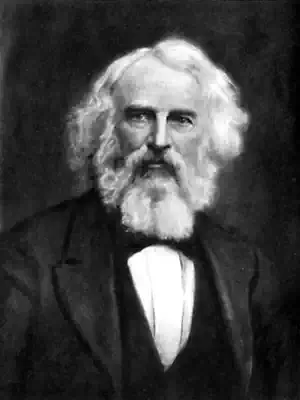
Henry Wadsworth Longfellow
Milton
Milton
I pace the sounding sea-beach and behold
How the voluminous billows roll and run,
Upheaving and subsiding, while the sun
Shines through their sheeted emerald far unrolled,
And the ninth wave, slow gathering fold by fold
All its loose-flowing garments into one,
Plunges upon the shore, and floods the dun
Pale reach of sands, and changes them to gold.
So in majestic cadence rise and fall
The mighty undulations of thy song,
O sightless bard, England's Mæonides!
And ever and anon, high over all
Uplifted, a ninth wave superb and strong,
Floods all the soul with its melodious seas.
I pace the sounding sea-beach and behold
How the voluminous billows roll and run,
Upheaving and subsiding, while the sun
Shines through their sheeted emerald far unrolled,
And the ninth wave, slow gathering fold by fold
All its loose-flowing garments into one,
Plunges upon the shore, and floods the dun
Pale reach of sands, and changes them to gold.
So in majestic cadence rise and fall
The mighty undulations of thy song,
O sightless bard, England's Mæonides!
And ever and anon, high over all
Uplifted, a ninth wave superb and strong,
Floods all the soul with its melodious seas.
394
Henry Wadsworth Longfellow
Maidenhood
Maidenhood
Maiden! with the meek, brown eyes,
In whose orbs a shadow lies
Like the dusk in evening skies!
Thou whose locks outshine the sun,
Golden tresses, wreathed in one,
As the braided streamlets run!
Standing, with reluctant feet,
Where the brook and river meet,
Womanhood and childhood fleet!
Gazing, with a timid glance,
On the brooklet's swift advance,
On the river's broad expanse!
Deep and still, that gliding stream
Beautiful to thee must seem,
As the river of a dream.
Then why pause with indecision,
When bright angels in thy vision
Beckon thee to fields Elysian?
Seest thou shadows sailing by,
As the dove, with startled eye,
Sees the falcon's shadow fly?
Hearest thou voices on the shore,
That our ears perceive no more,
Deafened by the cataract's roar?
O, thou child of many prayers!
Life hath quickeands,--Life hath snares
Care and age come unawares!
Like the swell of some sweet tune,
Morning rises into noon,
May glides onward into June.
Childhood is the bough, where slumbered
Birds and blossoms many-numbered;--
Age, that bough with snows encumbered.
Gather, then, each flower that grows,
When the young heart overflows,
To embalm that tent of snows.
Bear a lily in thy hand;
Gates of brass cannot withstand
One touch of that magic wand.
Bear through sorrow, wrong, and ruth,
In thy heart the dew of youth,
On thy lips the smile of truth1
O, that dew, like balm, shall steal
Into wounds that cannot heal,
Even as sleep our eyes doth seal;
And that smile, like sunshine, dart
Into many a sunless heart,
For a smile of God thou art.
Maiden! with the meek, brown eyes,
In whose orbs a shadow lies
Like the dusk in evening skies!
Thou whose locks outshine the sun,
Golden tresses, wreathed in one,
As the braided streamlets run!
Standing, with reluctant feet,
Where the brook and river meet,
Womanhood and childhood fleet!
Gazing, with a timid glance,
On the brooklet's swift advance,
On the river's broad expanse!
Deep and still, that gliding stream
Beautiful to thee must seem,
As the river of a dream.
Then why pause with indecision,
When bright angels in thy vision
Beckon thee to fields Elysian?
Seest thou shadows sailing by,
As the dove, with startled eye,
Sees the falcon's shadow fly?
Hearest thou voices on the shore,
That our ears perceive no more,
Deafened by the cataract's roar?
O, thou child of many prayers!
Life hath quickeands,--Life hath snares
Care and age come unawares!
Like the swell of some sweet tune,
Morning rises into noon,
May glides onward into June.
Childhood is the bough, where slumbered
Birds and blossoms many-numbered;--
Age, that bough with snows encumbered.
Gather, then, each flower that grows,
When the young heart overflows,
To embalm that tent of snows.
Bear a lily in thy hand;
Gates of brass cannot withstand
One touch of that magic wand.
Bear through sorrow, wrong, and ruth,
In thy heart the dew of youth,
On thy lips the smile of truth1
O, that dew, like balm, shall steal
Into wounds that cannot heal,
Even as sleep our eyes doth seal;
And that smile, like sunshine, dart
Into many a sunless heart,
For a smile of God thou art.
361
Henry Wadsworth Longfellow
Loss And Gain
Loss And Gain
When I compare
What I have lost with what I have gained,
What I have missed with what attained,
Little room do I find for pride.
I am aware
How many days have been idly spent;
How like an arrow the good intent
Has fallen short or been turned aside.
But who shall dare
To measure loss and gain in this wise?
Defeat may be victory in disguise;
The lowest ebb is the turn of the tide.
When I compare
What I have lost with what I have gained,
What I have missed with what attained,
Little room do I find for pride.
I am aware
How many days have been idly spent;
How like an arrow the good intent
Has fallen short or been turned aside.
But who shall dare
To measure loss and gain in this wise?
Defeat may be victory in disguise;
The lowest ebb is the turn of the tide.
451
Henry Wadsworth Longfellow
L'Envoi
L'Envoi
Ye voices, that arose
After the Evening's close,
And whispered to my restless heart repose!
Go, breathe it in the ear
Of all who doubt and fear,
And say to them, "Be of good cheer!"
Ye sounds, so low and calm,
That in the groves of balm
Seemed to me like an angel's psalm!
Go, mingle yet once more
With the perpetual roar
Of the pine forest dark and hoar!
Tongues of the dead, not lost
But speaking from deaths frost,
Like fiery tongues at Pentecost!
Glimmer, as funeral lamps,
Amid the chills and darn ps
Of the vast plain where Death encamps!
Ye voices, that arose
After the Evening's close,
And whispered to my restless heart repose!
Go, breathe it in the ear
Of all who doubt and fear,
And say to them, "Be of good cheer!"
Ye sounds, so low and calm,
That in the groves of balm
Seemed to me like an angel's psalm!
Go, mingle yet once more
With the perpetual roar
Of the pine forest dark and hoar!
Tongues of the dead, not lost
But speaking from deaths frost,
Like fiery tongues at Pentecost!
Glimmer, as funeral lamps,
Amid the chills and darn ps
Of the vast plain where Death encamps!
330
Henry Wadsworth Longfellow
King Trisanku
King Trisanku
Viswamitra the Magician,
By his spells and incantations,
Up to Indra's realms elysian
Raised Trisanku, king of nations.
Indra and the gods offended
Hurled him downward, and descending
In the air he hung suspended,
With these equal powers contending.
Thus by aspirations lifted,
By misgivings downward driven,
Human hearts are tossed and drifted
Midway between earth and heaven.
Viswamitra the Magician,
By his spells and incantations,
Up to Indra's realms elysian
Raised Trisanku, king of nations.
Indra and the gods offended
Hurled him downward, and descending
In the air he hung suspended,
With these equal powers contending.
Thus by aspirations lifted,
By misgivings downward driven,
Human hearts are tossed and drifted
Midway between earth and heaven.
357
Henry Wadsworth Longfellow
Kéramos
Kéramos
Turn, turn, my wheel? Turn round and round
Without a pause, without a sound:
So spins the flying world away!
This clay, well mixed with marl and sand,
Follows the motion of my hand;
Far some must follow, and some command,
Though all are made of clay!
Thus sang the Potter at his task
Beneath the blossoming hawthorn-tree,
While o'er his features, like a mask,
The quilted sunshine and leaf-shade
Moved, as the boughs above him swayed,
And clothed him, till he seemed to be
A figure woven in tapestry,
So sumptuously was he arrayed
In that magnificent attire
Of sable tissue flaked with fire.
Like a magician he appeared,
A conjurer without book or beard;
And while he plied his magic art--
For it was magical to me--
I stood in silence and apart,
And wondered more and more to see
That shapeless, lifeless mass of clay
Rise up to meet the master's hand,
And now contract and now expand,
And even his slightest touch obey;
While ever in a thoughtful mood
He sang his ditty, and at times
Whistled a tune between the rhymes,
As a melodious interlude.
Turn, turn, my wheel! All things must change
To something new, to something strange;
Nothing that is can pause or stay;
The moon will wax, the moon will wane,
The mist and cloud will turn to rain,
The rain to mist and cloud again,
To-morrow be to-day.
Thus still the Potter sang, and still,
By some unconscious act of will,
The melody and even the words
Were intermingled with my thought
As bits of colored thread are caught
And woven into nests of birds.
And thus to regions far remote,
Beyond the ocean's vast expanse,
This wizard in the motley coat
Transported me on wings of song,
And by the northern shores of France
Bore me with restless speed along.
What land is this that seems to be
A mingling of the land and sea?
This land of sluices, dikes, and dunes?
This water-net, that tessellates
The landscape? this unending maze
Of gardens, through whose latticed gates
The imprisoned pinks and tulips gaze;
Where in long summer afternoons
The sunshine, softened by the haze,
Comes streaming down as through a screen;
Where over fields and pastures green
The painted ships float high in air,
And over all and everywhere
The sails of windmills sink and soar
Like wings of sea-gulls on the shore?
What land is this? Yon pretty town
Is Delft, with all its wares displayed;
The pride, the market-place, the crown
And centre of the Potter's trade.
See! every house and room is bright
With glimmers of reflected light
From plates that on the dresser shine;
Flagons to foam with Flemish beer,
Or sparkle with the Rhenish wine,
And pilgrim flasks with fleurs-de-lis,
And ships upon a rolling sea,
And tankards pewter topped, and queer
With comic mask and musketeer!
Each hospitable chimney smiles
A welcome from its painted tiles;
The parlor walls, the chamber floors,
The stairways and the corridors,
The borders of the garden walks,
Are beautiful with fadeless flowers,
That never droop in winds or showers,
And never wither on their stalks.
Turn, turn, my wheel! All life is brief;
What now is bud wilt soon be leaf,
What now is leaf will soon decay;
The wind blows east, the wind blows west;
The blue eyes in the robin's nest
Will soon have wings and beak and breast,
And flutter and fly away.
Now southward through the air I glide,
The song my only pursuivant,
And see across the landscape wide
The blue Charente, upon whose tide
The belfries and the spires of Saintes
Ripple and rock from side to side,
As, when an earthquake rends its walls,
A crumbling city reels and falls.
Who is it in the suburbs here,
This Potter, working with such cheer,
In this mean house, this mean attire,
His manly features bronzed with fire,
Whose figulines and rustic wares
Scarce find him bread from day to day?
This madman, as the people say,
Who breaks his tables and his chairs
To feed his furnace fires, nor cares
Who goes unfed if they are fed,
Nor who may live if they are dead?
This alchemist with hollow cheeks
And sunken, searching eyes, who seeks,
By mingled earths and ores combined
With potency of fire, to find
Some new enamel, hard and bright,
His dream, his passion, his delight?
O Palissy! within thy breast
Burned the hot fever of unrest;
Thine was the prophets vision, thine
The exultation, the divine
Insanity of noble minds,
That never falters nor abates,
But labors and endures and waits,
Till all that it foresees it finds,
Or what it cannot find creates!
Turn, turn, my wheel! This earthen jar
A touch can make, a touch can mar;
And shall it to the Potter say,
What makest thou. Thou hast no hand?
As men who think to understand
A world by their Creator planned,
Who wiser is than they.
Still guided by the dreamy song,
As in a trance I float along
Above the Pyrenean chain,
Above the fields and farms of Spain,
Above the bright Majorcan isle,
That lends its softened name to art,--
A spot, a dot upon the chart,
Whose little towns, red-roofed with tile,
Are ruby-lustred with the light
Of blazing furnaces by night,
And crowned by day with wreaths of smoke.
Then eastward, wafted in my flight
On my enchanter's magic cloak,
I sail across the Tyrrhene Sea
Into the land of Italy,
And o'er the windy Apennines,
Mantled and musical with pines.
The palaces, the princely halls,
The doors of houses and the walls
Of churches and of belfry towers,
Cloister and castle, street and mart,
Are garlanded and gay with flowers
That blossom in the fields of art.
Here Gubbio's workshops gleam and glow
With brilliant, iridescent dyes,
The dazzling whiteness of the snow,
The cobalt blue of summer skies;
And vase and scutcheon, cup and plate,
In perfect finish emulate
Faenza, Florence, Pesaro.
Forth from Urbino's gate there came
A youth with the angelic name
Of Raphael, in form and face
Himself angelic, and divine
In arts of color and design.
From him Francesco Xanto caught
Something of his transcendent grace,
And into fictile fabrics wrought
Suggestions of the master's thought.
Nor less Maestro Giorgio shines
With madre-perl and golden lines
Of arabesques, and interweaves
His birds and fruits and flowers and leaves
About some landscape, shaded brown,
With olive tints on rock and town.
Behold this cup within whose bowl,
Upon a ground of deepest blue
With yellow-lustred stars o'erlaid,
Colors of every tint and hue
Mingle in one harmonious whole!
With large blue eyes and steadfast gaze,
Her yellow hair in net and braid,
Necklace and ear-rings all ablaze
With golden lustre o'er the glaze,
A woman's portrait; on the scroll,
Cana, the Beautiful! A name
Forgotten save for such brief fame
As this memorial can bestow,--
A gift some lover long ago
Gave with his heart to this fair dame.
A nobler title to renown
Is thine, O pleasant Tuscan town,
Seated beside the Arno's stream;
For Lucca della Robbia there
Created forms so wondrous fair,
They made thy sovereignty supreme.
These choristers with lips of stone,
Whose music is not heard, but seen,
Still chant, as from their organ-screen,
Their Maker's praise; nor these alone,
But the more fragile forms of clay,
Hardly less beautiful than they,
These saints and angels that adorn
The walls of hospitals, and tell
The story of good deeds so well
That poverty seems less forlorn,
And life more like a holiday.
Here in this old neglected church,
That long eludes the traveller's search,
Lies the dead bishop on his tomb;
Earth upon earth he slumbering lies,
Life-like and death-like in the gloom;
Garlands of fruit and flowers in bloom
And foliage deck his resting place;
A shadow in the sightless eyes,
A pallor on the patient face,
Made perfect by the furnace heat;
All earthly passions and desires
Burnt out by purgatorial fires;
Seeming to say, 'Our years are fleet,
And to the weary death is sweet.'
But the most wonderful of all
The ornaments on tomb or wall
That grace the fair Ausonian shores
Are those the faithful earth restores,
Near some Apulian town concealed,
In vineyard or in harvest field,--
Vases and urns and bas-reliefs,
Memorials of forgotten griefs,
Or records of heroic deeds
Of demigods and mighty chiefs:
Figures that almost move and speak,
And, buried amid mould and weeds,
Still in their attitudes attest
The presence of the graceful Greek,--
Achilles in his armor dressed,
Alcides with the Cretan bull,
And Aphrodite with her boy,
Or lovely Helena of Troy,
Still living and still beautiful.
Turn, turn, my wheel! 'T is nature's plan
The child should grow into the man,
The man grow wrinkled, old, and gray;
In youth the heart exults and sings,
The pulses leap, the feet have wings;
In age the cricket chirps, and brings
The harvest home of day.
And now the winds that southward blow,
And cool the hot Sicilian isle,
Bear me away. I see below
The long line of the Libyan Nile,
Flooding and feeding the parched land
With annual ebb and overflow,
A fallen palm whose branches lie
Beneath the Abyssinian sky,
Whose roots are in Egyptian sands,
On either bank huge water-wheels,
Belted with jars and dripping weeds,
Send forth their melancholy moans,
As if, in their gray mantles hid,
Dead anchorites of the Thebaid
Knelt on the shore and told their beads,
Beating their breasts with loud appeals
And penitential tears and groans.
This city, walled and thickly set
With glittering mosque and minaret,
Is Cairo, in whose gay bazaars
The dreaming traveller first inhales
The perfume of Arabian gales,
And sees the fabulous earthen jars,
Huge as were those wherein the maid
Morgiana found the Forty Thieves
Concealed in midnight ambuscade;
And seeing, more than half believes
The fascinating tales that run
Through all the Thousand Nights and One,
Told by the fair Scheherezade.
More strange and wonderful than these
Are the Egyptian deities,
Ammonn, and Emeth, and the grand
Osiris, holding in his hand
The lotus; Isis, crowned and veiled;
The sacred Ibis, and the Sphinx;
Bracelets with blue enamelled links;
The Scarabee in emerald mailed,
Or spreading wide his funeral wings;
Lamps that perchance their night-watch kept
O'er Cleopatra while she slept,--
All plundered from the tombs of kings.
Turn, turn, my wheel! The human race,
Of every tongue, of every place,
Caucasian, Coptic, or Malay,
All that inhabit this great earth,
Whatever be their rank or worth,
Are kindred and allied by birth,
And made of the same clay.
O'er desert sands, o'er gulf and bay,
O'er Ganges and o'er Himalay,
Bird-like I fly, and flying sing,
To flowery kingdoms of Cathay,
And bird-like poise on balanced wing
Above the town of King-te-tching,
A burning town, or seeming so,--
Three thousand furnaces that glow
Incessantly, and fill the air
With smoke uprising, gyre on gyre
And painted by the lurid glare,
Of jets and flashes of red fire.
As leaves that in the autumn fall,
Spotted and veined with various hues,
Are swept along the avenues,
And lie in heaps by hedge and wall,
So from this grove of chimneys whirled
To all the markets of the world,
These porcelain leaves are wafted on,--
Light yellow leaves with spots and stains
Of violet and of crimson dye,
Or tender azure of a sky
Just washed by gentle April rains,
And beautiful with celadon.
Nor less the coarser household wares,--
The willow pattern, that we knew
In childhood, with its bridge of blue
Leading to unknown thoroughfares;
The solitary man who stares
At the white river flowing through
Its arches, the fantastic trees
And wild perspective of the view;
And intermingled among these
The tiles that in our nurseries
Filled us with wonder and delight,
Or haunted us in dreams at night.
And yonder by Nankin, behold!
The Tower of Porcelain, strange and old,
Uplifting to the astonished skies
Its ninefold painted balconies,
With balustrades of twining leaves,
And roofs of tile, beneath whose eaves
Hang porcelain bells that all the time
Ring with a soft, melodious chime;
While the whole fabric is ablaze
With varied tints, all fused in one
Great mass of color, like a maze
Of flowers illumined by the sun.
Turn, turn, my wheel! What is begun
At daybreak must at dark be done,
To-morrow will be another day;
To-morrow the hot furnace flame
Will search the heart and try the frame,
And stamp with honor or with shame
These vessels made of clay.
Cradled and rocked in Eastern seas,
The islands of the Japanese
Beneath me lie; o'er lake and plain
The stork, the heron, and the crane
Through the clear realms of azure drift,
And on the hillside I can see
The villages of Imari,
Whose thronged and flaming workshops lift
Their twisted columns of smoke on high,
Cloud cloisters that in ruins lie,
With sunshine streaming through each rift,
And broken arches of blue sky.
All the bright flowers that fill the land,
Ripple of waves on rock or sand,
The snow on Fusiyama's cone,
The midnight heaven so thickly sown
With constellations of bright stars,
The leaves that rustle, the reeds that make
A whisper by each stream and lake,
The saffron dawn, the sunset red,
Are painted on these lovely jars;
Again the skylark sings, again
The stork, the heron, and the crane
Float through the azure overhead,
The counterfeit and counterpart
Of Nature reproduced in Art.
Art is the child of Nature; yes,
Her darling child, in whom we trace
The features of the mother's face,
Her aspect and her attitude,
All her majestic loveliness
Chastened and softened and subdued
Into a more attractive grace,
And with a human sense imbued.
He is the greatest artist, then,
Whether of pencil or of pen,
Who follows Nature. Never man,
As artist or as artisan,
Pursuing his own fantasies,
Can touch the human heart, or please,
Or satisfy our nobler needs,
As he who sets his willing feet
In Nature's footprints, light and fleet,
And follows fearless where she leads.
Thus mused I on that morn in May,
Wrapped in my visions like the Seer,
Whose eyes behold not what is near,
But only what is far away,
When, suddenly sounding peal on peal,
The church-bell from the neighboring town
Proclaimed the welcome hour of noon.
The Potter heard, and stopped his wheel,
His apron on the grass threw down,
Whistled his quiet little tune,
Not overloud nor overlong,
And ended thus his simple song:
Stop, stop, my wheel! Too soon, too soon
The noon will be the afternoon,
Too soon to-day be yesterday;
Behind us in our path we cast
The broken potsherds of the past,
And all are ground to dust a last,
And trodden into clay!
Turn, turn, my wheel? Turn round and round
Without a pause, without a sound:
So spins the flying world away!
This clay, well mixed with marl and sand,
Follows the motion of my hand;
Far some must follow, and some command,
Though all are made of clay!
Thus sang the Potter at his task
Beneath the blossoming hawthorn-tree,
While o'er his features, like a mask,
The quilted sunshine and leaf-shade
Moved, as the boughs above him swayed,
And clothed him, till he seemed to be
A figure woven in tapestry,
So sumptuously was he arrayed
In that magnificent attire
Of sable tissue flaked with fire.
Like a magician he appeared,
A conjurer without book or beard;
And while he plied his magic art--
For it was magical to me--
I stood in silence and apart,
And wondered more and more to see
That shapeless, lifeless mass of clay
Rise up to meet the master's hand,
And now contract and now expand,
And even his slightest touch obey;
While ever in a thoughtful mood
He sang his ditty, and at times
Whistled a tune between the rhymes,
As a melodious interlude.
Turn, turn, my wheel! All things must change
To something new, to something strange;
Nothing that is can pause or stay;
The moon will wax, the moon will wane,
The mist and cloud will turn to rain,
The rain to mist and cloud again,
To-morrow be to-day.
Thus still the Potter sang, and still,
By some unconscious act of will,
The melody and even the words
Were intermingled with my thought
As bits of colored thread are caught
And woven into nests of birds.
And thus to regions far remote,
Beyond the ocean's vast expanse,
This wizard in the motley coat
Transported me on wings of song,
And by the northern shores of France
Bore me with restless speed along.
What land is this that seems to be
A mingling of the land and sea?
This land of sluices, dikes, and dunes?
This water-net, that tessellates
The landscape? this unending maze
Of gardens, through whose latticed gates
The imprisoned pinks and tulips gaze;
Where in long summer afternoons
The sunshine, softened by the haze,
Comes streaming down as through a screen;
Where over fields and pastures green
The painted ships float high in air,
And over all and everywhere
The sails of windmills sink and soar
Like wings of sea-gulls on the shore?
What land is this? Yon pretty town
Is Delft, with all its wares displayed;
The pride, the market-place, the crown
And centre of the Potter's trade.
See! every house and room is bright
With glimmers of reflected light
From plates that on the dresser shine;
Flagons to foam with Flemish beer,
Or sparkle with the Rhenish wine,
And pilgrim flasks with fleurs-de-lis,
And ships upon a rolling sea,
And tankards pewter topped, and queer
With comic mask and musketeer!
Each hospitable chimney smiles
A welcome from its painted tiles;
The parlor walls, the chamber floors,
The stairways and the corridors,
The borders of the garden walks,
Are beautiful with fadeless flowers,
That never droop in winds or showers,
And never wither on their stalks.
Turn, turn, my wheel! All life is brief;
What now is bud wilt soon be leaf,
What now is leaf will soon decay;
The wind blows east, the wind blows west;
The blue eyes in the robin's nest
Will soon have wings and beak and breast,
And flutter and fly away.
Now southward through the air I glide,
The song my only pursuivant,
And see across the landscape wide
The blue Charente, upon whose tide
The belfries and the spires of Saintes
Ripple and rock from side to side,
As, when an earthquake rends its walls,
A crumbling city reels and falls.
Who is it in the suburbs here,
This Potter, working with such cheer,
In this mean house, this mean attire,
His manly features bronzed with fire,
Whose figulines and rustic wares
Scarce find him bread from day to day?
This madman, as the people say,
Who breaks his tables and his chairs
To feed his furnace fires, nor cares
Who goes unfed if they are fed,
Nor who may live if they are dead?
This alchemist with hollow cheeks
And sunken, searching eyes, who seeks,
By mingled earths and ores combined
With potency of fire, to find
Some new enamel, hard and bright,
His dream, his passion, his delight?
O Palissy! within thy breast
Burned the hot fever of unrest;
Thine was the prophets vision, thine
The exultation, the divine
Insanity of noble minds,
That never falters nor abates,
But labors and endures and waits,
Till all that it foresees it finds,
Or what it cannot find creates!
Turn, turn, my wheel! This earthen jar
A touch can make, a touch can mar;
And shall it to the Potter say,
What makest thou. Thou hast no hand?
As men who think to understand
A world by their Creator planned,
Who wiser is than they.
Still guided by the dreamy song,
As in a trance I float along
Above the Pyrenean chain,
Above the fields and farms of Spain,
Above the bright Majorcan isle,
That lends its softened name to art,--
A spot, a dot upon the chart,
Whose little towns, red-roofed with tile,
Are ruby-lustred with the light
Of blazing furnaces by night,
And crowned by day with wreaths of smoke.
Then eastward, wafted in my flight
On my enchanter's magic cloak,
I sail across the Tyrrhene Sea
Into the land of Italy,
And o'er the windy Apennines,
Mantled and musical with pines.
The palaces, the princely halls,
The doors of houses and the walls
Of churches and of belfry towers,
Cloister and castle, street and mart,
Are garlanded and gay with flowers
That blossom in the fields of art.
Here Gubbio's workshops gleam and glow
With brilliant, iridescent dyes,
The dazzling whiteness of the snow,
The cobalt blue of summer skies;
And vase and scutcheon, cup and plate,
In perfect finish emulate
Faenza, Florence, Pesaro.
Forth from Urbino's gate there came
A youth with the angelic name
Of Raphael, in form and face
Himself angelic, and divine
In arts of color and design.
From him Francesco Xanto caught
Something of his transcendent grace,
And into fictile fabrics wrought
Suggestions of the master's thought.
Nor less Maestro Giorgio shines
With madre-perl and golden lines
Of arabesques, and interweaves
His birds and fruits and flowers and leaves
About some landscape, shaded brown,
With olive tints on rock and town.
Behold this cup within whose bowl,
Upon a ground of deepest blue
With yellow-lustred stars o'erlaid,
Colors of every tint and hue
Mingle in one harmonious whole!
With large blue eyes and steadfast gaze,
Her yellow hair in net and braid,
Necklace and ear-rings all ablaze
With golden lustre o'er the glaze,
A woman's portrait; on the scroll,
Cana, the Beautiful! A name
Forgotten save for such brief fame
As this memorial can bestow,--
A gift some lover long ago
Gave with his heart to this fair dame.
A nobler title to renown
Is thine, O pleasant Tuscan town,
Seated beside the Arno's stream;
For Lucca della Robbia there
Created forms so wondrous fair,
They made thy sovereignty supreme.
These choristers with lips of stone,
Whose music is not heard, but seen,
Still chant, as from their organ-screen,
Their Maker's praise; nor these alone,
But the more fragile forms of clay,
Hardly less beautiful than they,
These saints and angels that adorn
The walls of hospitals, and tell
The story of good deeds so well
That poverty seems less forlorn,
And life more like a holiday.
Here in this old neglected church,
That long eludes the traveller's search,
Lies the dead bishop on his tomb;
Earth upon earth he slumbering lies,
Life-like and death-like in the gloom;
Garlands of fruit and flowers in bloom
And foliage deck his resting place;
A shadow in the sightless eyes,
A pallor on the patient face,
Made perfect by the furnace heat;
All earthly passions and desires
Burnt out by purgatorial fires;
Seeming to say, 'Our years are fleet,
And to the weary death is sweet.'
But the most wonderful of all
The ornaments on tomb or wall
That grace the fair Ausonian shores
Are those the faithful earth restores,
Near some Apulian town concealed,
In vineyard or in harvest field,--
Vases and urns and bas-reliefs,
Memorials of forgotten griefs,
Or records of heroic deeds
Of demigods and mighty chiefs:
Figures that almost move and speak,
And, buried amid mould and weeds,
Still in their attitudes attest
The presence of the graceful Greek,--
Achilles in his armor dressed,
Alcides with the Cretan bull,
And Aphrodite with her boy,
Or lovely Helena of Troy,
Still living and still beautiful.
Turn, turn, my wheel! 'T is nature's plan
The child should grow into the man,
The man grow wrinkled, old, and gray;
In youth the heart exults and sings,
The pulses leap, the feet have wings;
In age the cricket chirps, and brings
The harvest home of day.
And now the winds that southward blow,
And cool the hot Sicilian isle,
Bear me away. I see below
The long line of the Libyan Nile,
Flooding and feeding the parched land
With annual ebb and overflow,
A fallen palm whose branches lie
Beneath the Abyssinian sky,
Whose roots are in Egyptian sands,
On either bank huge water-wheels,
Belted with jars and dripping weeds,
Send forth their melancholy moans,
As if, in their gray mantles hid,
Dead anchorites of the Thebaid
Knelt on the shore and told their beads,
Beating their breasts with loud appeals
And penitential tears and groans.
This city, walled and thickly set
With glittering mosque and minaret,
Is Cairo, in whose gay bazaars
The dreaming traveller first inhales
The perfume of Arabian gales,
And sees the fabulous earthen jars,
Huge as were those wherein the maid
Morgiana found the Forty Thieves
Concealed in midnight ambuscade;
And seeing, more than half believes
The fascinating tales that run
Through all the Thousand Nights and One,
Told by the fair Scheherezade.
More strange and wonderful than these
Are the Egyptian deities,
Ammonn, and Emeth, and the grand
Osiris, holding in his hand
The lotus; Isis, crowned and veiled;
The sacred Ibis, and the Sphinx;
Bracelets with blue enamelled links;
The Scarabee in emerald mailed,
Or spreading wide his funeral wings;
Lamps that perchance their night-watch kept
O'er Cleopatra while she slept,--
All plundered from the tombs of kings.
Turn, turn, my wheel! The human race,
Of every tongue, of every place,
Caucasian, Coptic, or Malay,
All that inhabit this great earth,
Whatever be their rank or worth,
Are kindred and allied by birth,
And made of the same clay.
O'er desert sands, o'er gulf and bay,
O'er Ganges and o'er Himalay,
Bird-like I fly, and flying sing,
To flowery kingdoms of Cathay,
And bird-like poise on balanced wing
Above the town of King-te-tching,
A burning town, or seeming so,--
Three thousand furnaces that glow
Incessantly, and fill the air
With smoke uprising, gyre on gyre
And painted by the lurid glare,
Of jets and flashes of red fire.
As leaves that in the autumn fall,
Spotted and veined with various hues,
Are swept along the avenues,
And lie in heaps by hedge and wall,
So from this grove of chimneys whirled
To all the markets of the world,
These porcelain leaves are wafted on,--
Light yellow leaves with spots and stains
Of violet and of crimson dye,
Or tender azure of a sky
Just washed by gentle April rains,
And beautiful with celadon.
Nor less the coarser household wares,--
The willow pattern, that we knew
In childhood, with its bridge of blue
Leading to unknown thoroughfares;
The solitary man who stares
At the white river flowing through
Its arches, the fantastic trees
And wild perspective of the view;
And intermingled among these
The tiles that in our nurseries
Filled us with wonder and delight,
Or haunted us in dreams at night.
And yonder by Nankin, behold!
The Tower of Porcelain, strange and old,
Uplifting to the astonished skies
Its ninefold painted balconies,
With balustrades of twining leaves,
And roofs of tile, beneath whose eaves
Hang porcelain bells that all the time
Ring with a soft, melodious chime;
While the whole fabric is ablaze
With varied tints, all fused in one
Great mass of color, like a maze
Of flowers illumined by the sun.
Turn, turn, my wheel! What is begun
At daybreak must at dark be done,
To-morrow will be another day;
To-morrow the hot furnace flame
Will search the heart and try the frame,
And stamp with honor or with shame
These vessels made of clay.
Cradled and rocked in Eastern seas,
The islands of the Japanese
Beneath me lie; o'er lake and plain
The stork, the heron, and the crane
Through the clear realms of azure drift,
And on the hillside I can see
The villages of Imari,
Whose thronged and flaming workshops lift
Their twisted columns of smoke on high,
Cloud cloisters that in ruins lie,
With sunshine streaming through each rift,
And broken arches of blue sky.
All the bright flowers that fill the land,
Ripple of waves on rock or sand,
The snow on Fusiyama's cone,
The midnight heaven so thickly sown
With constellations of bright stars,
The leaves that rustle, the reeds that make
A whisper by each stream and lake,
The saffron dawn, the sunset red,
Are painted on these lovely jars;
Again the skylark sings, again
The stork, the heron, and the crane
Float through the azure overhead,
The counterfeit and counterpart
Of Nature reproduced in Art.
Art is the child of Nature; yes,
Her darling child, in whom we trace
The features of the mother's face,
Her aspect and her attitude,
All her majestic loveliness
Chastened and softened and subdued
Into a more attractive grace,
And with a human sense imbued.
He is the greatest artist, then,
Whether of pencil or of pen,
Who follows Nature. Never man,
As artist or as artisan,
Pursuing his own fantasies,
Can touch the human heart, or please,
Or satisfy our nobler needs,
As he who sets his willing feet
In Nature's footprints, light and fleet,
And follows fearless where she leads.
Thus mused I on that morn in May,
Wrapped in my visions like the Seer,
Whose eyes behold not what is near,
But only what is far away,
When, suddenly sounding peal on peal,
The church-bell from the neighboring town
Proclaimed the welcome hour of noon.
The Potter heard, and stopped his wheel,
His apron on the grass threw down,
Whistled his quiet little tune,
Not overloud nor overlong,
And ended thus his simple song:
Stop, stop, my wheel! Too soon, too soon
The noon will be the afternoon,
Too soon to-day be yesterday;
Behind us in our path we cast
The broken potsherds of the past,
And all are ground to dust a last,
And trodden into clay!
358
Henry Wadsworth Longfellow
Kéramos
Kéramos
Turn, turn, my wheel? Turn round and round
Without a pause, without a sound:
So spins the flying world away!
This clay, well mixed with marl and sand,
Follows the motion of my hand;
Far some must follow, and some command,
Though all are made of clay!
Thus sang the Potter at his task
Beneath the blossoming hawthorn-tree,
While o'er his features, like a mask,
The quilted sunshine and leaf-shade
Moved, as the boughs above him swayed,
And clothed him, till he seemed to be
A figure woven in tapestry,
So sumptuously was he arrayed
In that magnificent attire
Of sable tissue flaked with fire.
Like a magician he appeared,
A conjurer without book or beard;
And while he plied his magic art--
For it was magical to me--
I stood in silence and apart,
And wondered more and more to see
That shapeless, lifeless mass of clay
Rise up to meet the master's hand,
And now contract and now expand,
And even his slightest touch obey;
While ever in a thoughtful mood
He sang his ditty, and at times
Whistled a tune between the rhymes,
As a melodious interlude.
Turn, turn, my wheel! All things must change
To something new, to something strange;
Nothing that is can pause or stay;
The moon will wax, the moon will wane,
The mist and cloud will turn to rain,
The rain to mist and cloud again,
To-morrow be to-day.
Thus still the Potter sang, and still,
By some unconscious act of will,
The melody and even the words
Were intermingled with my thought
As bits of colored thread are caught
And woven into nests of birds.
And thus to regions far remote,
Beyond the ocean's vast expanse,
This wizard in the motley coat
Transported me on wings of song,
And by the northern shores of France
Bore me with restless speed along.
What land is this that seems to be
A mingling of the land and sea?
This land of sluices, dikes, and dunes?
This water-net, that tessellates
The landscape? this unending maze
Of gardens, through whose latticed gates
The imprisoned pinks and tulips gaze;
Where in long summer afternoons
The sunshine, softened by the haze,
Comes streaming down as through a screen;
Where over fields and pastures green
The painted ships float high in air,
And over all and everywhere
The sails of windmills sink and soar
Like wings of sea-gulls on the shore?
What land is this? Yon pretty town
Is Delft, with all its wares displayed;
The pride, the market-place, the crown
And centre of the Potter's trade.
See! every house and room is bright
With glimmers of reflected light
From plates that on the dresser shine;
Flagons to foam with Flemish beer,
Or sparkle with the Rhenish wine,
And pilgrim flasks with fleurs-de-lis,
And ships upon a rolling sea,
And tankards pewter topped, and queer
With comic mask and musketeer!
Each hospitable chimney smiles
A welcome from its painted tiles;
The parlor walls, the chamber floors,
The stairways and the corridors,
The borders of the garden walks,
Are beautiful with fadeless flowers,
That never droop in winds or showers,
And never wither on their stalks.
Turn, turn, my wheel! All life is brief;
What now is bud wilt soon be leaf,
What now is leaf will soon decay;
The wind blows east, the wind blows west;
The blue eyes in the robin's nest
Will soon have wings and beak and breast,
And flutter and fly away.
Now southward through the air I glide,
The song my only pursuivant,
And see across the landscape wide
The blue Charente, upon whose tide
The belfries and the spires of Saintes
Ripple and rock from side to side,
As, when an earthquake rends its walls,
A crumbling city reels and falls.
Who is it in the suburbs here,
This Potter, working with such cheer,
In this mean house, this mean attire,
His manly features bronzed with fire,
Whose figulines and rustic wares
Scarce find him bread from day to day?
This madman, as the people say,
Who breaks his tables and his chairs
To feed his furnace fires, nor cares
Who goes unfed if they are fed,
Nor who may live if they are dead?
This alchemist with hollow cheeks
And sunken, searching eyes, who seeks,
By mingled earths and ores combined
With potency of fire, to find
Some new enamel, hard and bright,
His dream, his passion, his delight?
O Palissy! within thy breast
Burned the hot fever of unrest;
Thine was the prophets vision, thine
The exultation, the divine
Insanity of noble minds,
That never falters nor abates,
But labors and endures and waits,
Till all that it foresees it finds,
Or what it cannot find creates!
Turn, turn, my wheel! This earthen jar
A touch can make, a touch can mar;
And shall it to the Potter say,
What makest thou. Thou hast no hand?
As men who think to understand
A world by their Creator planned,
Who wiser is than they.
Still guided by the dreamy song,
As in a trance I float along
Above the Pyrenean chain,
Above the fields and farms of Spain,
Above the bright Majorcan isle,
That lends its softened name to art,--
A spot, a dot upon the chart,
Whose little towns, red-roofed with tile,
Are ruby-lustred with the light
Of blazing furnaces by night,
And crowned by day with wreaths of smoke.
Then eastward, wafted in my flight
On my enchanter's magic cloak,
I sail across the Tyrrhene Sea
Into the land of Italy,
And o'er the windy Apennines,
Mantled and musical with pines.
The palaces, the princely halls,
The doors of houses and the walls
Of churches and of belfry towers,
Cloister and castle, street and mart,
Are garlanded and gay with flowers
That blossom in the fields of art.
Here Gubbio's workshops gleam and glow
With brilliant, iridescent dyes,
The dazzling whiteness of the snow,
The cobalt blue of summer skies;
And vase and scutcheon, cup and plate,
In perfect finish emulate
Faenza, Florence, Pesaro.
Forth from Urbino's gate there came
A youth with the angelic name
Of Raphael, in form and face
Himself angelic, and divine
In arts of color and design.
From him Francesco Xanto caught
Something of his transcendent grace,
And into fictile fabrics wrought
Suggestions of the master's thought.
Nor less Maestro Giorgio shines
With madre-perl and golden lines
Of arabesques, and interweaves
His birds and fruits and flowers and leaves
About some landscape, shaded brown,
With olive tints on rock and town.
Behold this cup within whose bowl,
Upon a ground of deepest blue
With yellow-lustred stars o'erlaid,
Colors of every tint and hue
Mingle in one harmonious whole!
With large blue eyes and steadfast gaze,
Her yellow hair in net and braid,
Necklace and ear-rings all ablaze
With golden lustre o'er the glaze,
A woman's portrait; on the scroll,
Cana, the Beautiful! A name
Forgotten save for such brief fame
As this memorial can bestow,--
A gift some lover long ago
Gave with his heart to this fair dame.
A nobler title to renown
Is thine, O pleasant Tuscan town,
Seated beside the Arno's stream;
For Lucca della Robbia there
Created forms so wondrous fair,
They made thy sovereignty supreme.
These choristers with lips of stone,
Whose music is not heard, but seen,
Still chant, as from their organ-screen,
Their Maker's praise; nor these alone,
But the more fragile forms of clay,
Hardly less beautiful than they,
These saints and angels that adorn
The walls of hospitals, and tell
The story of good deeds so well
That poverty seems less forlorn,
And life more like a holiday.
Here in this old neglected church,
That long eludes the traveller's search,
Lies the dead bishop on his tomb;
Earth upon earth he slumbering lies,
Life-like and death-like in the gloom;
Garlands of fruit and flowers in bloom
And foliage deck his resting place;
A shadow in the sightless eyes,
A pallor on the patient face,
Made perfect by the furnace heat;
All earthly passions and desires
Burnt out by purgatorial fires;
Seeming to say, 'Our years are fleet,
And to the weary death is sweet.'
But the most wonderful of all
The ornaments on tomb or wall
That grace the fair Ausonian shores
Are those the faithful earth restores,
Near some Apulian town concealed,
In vineyard or in harvest field,--
Vases and urns and bas-reliefs,
Memorials of forgotten griefs,
Or records of heroic deeds
Of demigods and mighty chiefs:
Figures that almost move and speak,
And, buried amid mould and weeds,
Still in their attitudes attest
The presence of the graceful Greek,--
Achilles in his armor dressed,
Alcides with the Cretan bull,
And Aphrodite with her boy,
Or lovely Helena of Troy,
Still living and still beautiful.
Turn, turn, my wheel! 'T is nature's plan
The child should grow into the man,
The man grow wrinkled, old, and gray;
In youth the heart exults and sings,
The pulses leap, the feet have wings;
In age the cricket chirps, and brings
The harvest home of day.
And now the winds that southward blow,
And cool the hot Sicilian isle,
Bear me away. I see below
The long line of the Libyan Nile,
Flooding and feeding the parched land
With annual ebb and overflow,
A fallen palm whose branches lie
Beneath the Abyssinian sky,
Whose roots are in Egyptian sands,
On either bank huge water-wheels,
Belted with jars and dripping weeds,
Send forth their melancholy moans,
As if, in their gray mantles hid,
Dead anchorites of the Thebaid
Knelt on the shore and told their beads,
Beating their breasts with loud appeals
And penitential tears and groans.
This city, walled and thickly set
With glittering mosque and minaret,
Is Cairo, in whose gay bazaars
The dreaming traveller first inhales
The perfume of Arabian gales,
And sees the fabulous earthen jars,
Huge as were those wherein the maid
Morgiana found the Forty Thieves
Concealed in midnight ambuscade;
And seeing, more than half believes
The fascinating tales that run
Through all the Thousand Nights and One,
Told by the fair Scheherezade.
More strange and wonderful than these
Are the Egyptian deities,
Ammonn, and Emeth, and the grand
Osiris, holding in his hand
The lotus; Isis, crowned and veiled;
The sacred Ibis, and the Sphinx;
Bracelets with blue enamelled links;
The Scarabee in emerald mailed,
Or spreading wide his funeral wings;
Lamps that perchance their night-watch kept
O'er Cleopatra while she slept,--
All plundered from the tombs of kings.
Turn, turn, my wheel! The human race,
Of every tongue, of every place,
Caucasian, Coptic, or Malay,
All that inhabit this great earth,
Whatever be their rank or worth,
Are kindred and allied by birth,
And made of the same clay.
O'er desert sands, o'er gulf and bay,
O'er Ganges and o'er Himalay,
Bird-like I fly, and flying sing,
To flowery kingdoms of Cathay,
And bird-like poise on balanced wing
Above the town of King-te-tching,
A burning town, or seeming so,--
Three thousand furnaces that glow
Incessantly, and fill the air
With smoke uprising, gyre on gyre
And painted by the lurid glare,
Of jets and flashes of red fire.
As leaves that in the autumn fall,
Spotted and veined with various hues,
Are swept along the avenues,
And lie in heaps by hedge and wall,
So from this grove of chimneys whirled
To all the markets of the world,
These porcelain leaves are wafted on,--
Light yellow leaves with spots and stains
Of violet and of crimson dye,
Or tender azure of a sky
Just washed by gentle April rains,
And beautiful with celadon.
Nor less the coarser household wares,--
The willow pattern, that we knew
In childhood, with its bridge of blue
Leading to unknown thoroughfares;
The solitary man who stares
At the white river flowing through
Its arches, the fantastic trees
And wild perspective of the view;
And intermingled among these
The tiles that in our nurseries
Filled us with wonder and delight,
Or haunted us in dreams at night.
And yonder by Nankin, behold!
The Tower of Porcelain, strange and old,
Uplifting to the astonished skies
Its ninefold painted balconies,
With balustrades of twining leaves,
And roofs of tile, beneath whose eaves
Hang porcelain bells that all the time
Ring with a soft, melodious chime;
While the whole fabric is ablaze
With varied tints, all fused in one
Great mass of color, like a maze
Of flowers illumined by the sun.
Turn, turn, my wheel! What is begun
At daybreak must at dark be done,
To-morrow will be another day;
To-morrow the hot furnace flame
Will search the heart and try the frame,
And stamp with honor or with shame
These vessels made of clay.
Cradled and rocked in Eastern seas,
The islands of the Japanese
Beneath me lie; o'er lake and plain
The stork, the heron, and the crane
Through the clear realms of azure drift,
And on the hillside I can see
The villages of Imari,
Whose thronged and flaming workshops lift
Their twisted columns of smoke on high,
Cloud cloisters that in ruins lie,
With sunshine streaming through each rift,
And broken arches of blue sky.
All the bright flowers that fill the land,
Ripple of waves on rock or sand,
The snow on Fusiyama's cone,
The midnight heaven so thickly sown
With constellations of bright stars,
The leaves that rustle, the reeds that make
A whisper by each stream and lake,
The saffron dawn, the sunset red,
Are painted on these lovely jars;
Again the skylark sings, again
The stork, the heron, and the crane
Float through the azure overhead,
The counterfeit and counterpart
Of Nature reproduced in Art.
Art is the child of Nature; yes,
Her darling child, in whom we trace
The features of the mother's face,
Her aspect and her attitude,
All her majestic loveliness
Chastened and softened and subdued
Into a more attractive grace,
And with a human sense imbued.
He is the greatest artist, then,
Whether of pencil or of pen,
Who follows Nature. Never man,
As artist or as artisan,
Pursuing his own fantasies,
Can touch the human heart, or please,
Or satisfy our nobler needs,
As he who sets his willing feet
In Nature's footprints, light and fleet,
And follows fearless where she leads.
Thus mused I on that morn in May,
Wrapped in my visions like the Seer,
Whose eyes behold not what is near,
But only what is far away,
When, suddenly sounding peal on peal,
The church-bell from the neighboring town
Proclaimed the welcome hour of noon.
The Potter heard, and stopped his wheel,
His apron on the grass threw down,
Whistled his quiet little tune,
Not overloud nor overlong,
And ended thus his simple song:
Stop, stop, my wheel! Too soon, too soon
The noon will be the afternoon,
Too soon to-day be yesterday;
Behind us in our path we cast
The broken potsherds of the past,
And all are ground to dust a last,
And trodden into clay!
Turn, turn, my wheel? Turn round and round
Without a pause, without a sound:
So spins the flying world away!
This clay, well mixed with marl and sand,
Follows the motion of my hand;
Far some must follow, and some command,
Though all are made of clay!
Thus sang the Potter at his task
Beneath the blossoming hawthorn-tree,
While o'er his features, like a mask,
The quilted sunshine and leaf-shade
Moved, as the boughs above him swayed,
And clothed him, till he seemed to be
A figure woven in tapestry,
So sumptuously was he arrayed
In that magnificent attire
Of sable tissue flaked with fire.
Like a magician he appeared,
A conjurer without book or beard;
And while he plied his magic art--
For it was magical to me--
I stood in silence and apart,
And wondered more and more to see
That shapeless, lifeless mass of clay
Rise up to meet the master's hand,
And now contract and now expand,
And even his slightest touch obey;
While ever in a thoughtful mood
He sang his ditty, and at times
Whistled a tune between the rhymes,
As a melodious interlude.
Turn, turn, my wheel! All things must change
To something new, to something strange;
Nothing that is can pause or stay;
The moon will wax, the moon will wane,
The mist and cloud will turn to rain,
The rain to mist and cloud again,
To-morrow be to-day.
Thus still the Potter sang, and still,
By some unconscious act of will,
The melody and even the words
Were intermingled with my thought
As bits of colored thread are caught
And woven into nests of birds.
And thus to regions far remote,
Beyond the ocean's vast expanse,
This wizard in the motley coat
Transported me on wings of song,
And by the northern shores of France
Bore me with restless speed along.
What land is this that seems to be
A mingling of the land and sea?
This land of sluices, dikes, and dunes?
This water-net, that tessellates
The landscape? this unending maze
Of gardens, through whose latticed gates
The imprisoned pinks and tulips gaze;
Where in long summer afternoons
The sunshine, softened by the haze,
Comes streaming down as through a screen;
Where over fields and pastures green
The painted ships float high in air,
And over all and everywhere
The sails of windmills sink and soar
Like wings of sea-gulls on the shore?
What land is this? Yon pretty town
Is Delft, with all its wares displayed;
The pride, the market-place, the crown
And centre of the Potter's trade.
See! every house and room is bright
With glimmers of reflected light
From plates that on the dresser shine;
Flagons to foam with Flemish beer,
Or sparkle with the Rhenish wine,
And pilgrim flasks with fleurs-de-lis,
And ships upon a rolling sea,
And tankards pewter topped, and queer
With comic mask and musketeer!
Each hospitable chimney smiles
A welcome from its painted tiles;
The parlor walls, the chamber floors,
The stairways and the corridors,
The borders of the garden walks,
Are beautiful with fadeless flowers,
That never droop in winds or showers,
And never wither on their stalks.
Turn, turn, my wheel! All life is brief;
What now is bud wilt soon be leaf,
What now is leaf will soon decay;
The wind blows east, the wind blows west;
The blue eyes in the robin's nest
Will soon have wings and beak and breast,
And flutter and fly away.
Now southward through the air I glide,
The song my only pursuivant,
And see across the landscape wide
The blue Charente, upon whose tide
The belfries and the spires of Saintes
Ripple and rock from side to side,
As, when an earthquake rends its walls,
A crumbling city reels and falls.
Who is it in the suburbs here,
This Potter, working with such cheer,
In this mean house, this mean attire,
His manly features bronzed with fire,
Whose figulines and rustic wares
Scarce find him bread from day to day?
This madman, as the people say,
Who breaks his tables and his chairs
To feed his furnace fires, nor cares
Who goes unfed if they are fed,
Nor who may live if they are dead?
This alchemist with hollow cheeks
And sunken, searching eyes, who seeks,
By mingled earths and ores combined
With potency of fire, to find
Some new enamel, hard and bright,
His dream, his passion, his delight?
O Palissy! within thy breast
Burned the hot fever of unrest;
Thine was the prophets vision, thine
The exultation, the divine
Insanity of noble minds,
That never falters nor abates,
But labors and endures and waits,
Till all that it foresees it finds,
Or what it cannot find creates!
Turn, turn, my wheel! This earthen jar
A touch can make, a touch can mar;
And shall it to the Potter say,
What makest thou. Thou hast no hand?
As men who think to understand
A world by their Creator planned,
Who wiser is than they.
Still guided by the dreamy song,
As in a trance I float along
Above the Pyrenean chain,
Above the fields and farms of Spain,
Above the bright Majorcan isle,
That lends its softened name to art,--
A spot, a dot upon the chart,
Whose little towns, red-roofed with tile,
Are ruby-lustred with the light
Of blazing furnaces by night,
And crowned by day with wreaths of smoke.
Then eastward, wafted in my flight
On my enchanter's magic cloak,
I sail across the Tyrrhene Sea
Into the land of Italy,
And o'er the windy Apennines,
Mantled and musical with pines.
The palaces, the princely halls,
The doors of houses and the walls
Of churches and of belfry towers,
Cloister and castle, street and mart,
Are garlanded and gay with flowers
That blossom in the fields of art.
Here Gubbio's workshops gleam and glow
With brilliant, iridescent dyes,
The dazzling whiteness of the snow,
The cobalt blue of summer skies;
And vase and scutcheon, cup and plate,
In perfect finish emulate
Faenza, Florence, Pesaro.
Forth from Urbino's gate there came
A youth with the angelic name
Of Raphael, in form and face
Himself angelic, and divine
In arts of color and design.
From him Francesco Xanto caught
Something of his transcendent grace,
And into fictile fabrics wrought
Suggestions of the master's thought.
Nor less Maestro Giorgio shines
With madre-perl and golden lines
Of arabesques, and interweaves
His birds and fruits and flowers and leaves
About some landscape, shaded brown,
With olive tints on rock and town.
Behold this cup within whose bowl,
Upon a ground of deepest blue
With yellow-lustred stars o'erlaid,
Colors of every tint and hue
Mingle in one harmonious whole!
With large blue eyes and steadfast gaze,
Her yellow hair in net and braid,
Necklace and ear-rings all ablaze
With golden lustre o'er the glaze,
A woman's portrait; on the scroll,
Cana, the Beautiful! A name
Forgotten save for such brief fame
As this memorial can bestow,--
A gift some lover long ago
Gave with his heart to this fair dame.
A nobler title to renown
Is thine, O pleasant Tuscan town,
Seated beside the Arno's stream;
For Lucca della Robbia there
Created forms so wondrous fair,
They made thy sovereignty supreme.
These choristers with lips of stone,
Whose music is not heard, but seen,
Still chant, as from their organ-screen,
Their Maker's praise; nor these alone,
But the more fragile forms of clay,
Hardly less beautiful than they,
These saints and angels that adorn
The walls of hospitals, and tell
The story of good deeds so well
That poverty seems less forlorn,
And life more like a holiday.
Here in this old neglected church,
That long eludes the traveller's search,
Lies the dead bishop on his tomb;
Earth upon earth he slumbering lies,
Life-like and death-like in the gloom;
Garlands of fruit and flowers in bloom
And foliage deck his resting place;
A shadow in the sightless eyes,
A pallor on the patient face,
Made perfect by the furnace heat;
All earthly passions and desires
Burnt out by purgatorial fires;
Seeming to say, 'Our years are fleet,
And to the weary death is sweet.'
But the most wonderful of all
The ornaments on tomb or wall
That grace the fair Ausonian shores
Are those the faithful earth restores,
Near some Apulian town concealed,
In vineyard or in harvest field,--
Vases and urns and bas-reliefs,
Memorials of forgotten griefs,
Or records of heroic deeds
Of demigods and mighty chiefs:
Figures that almost move and speak,
And, buried amid mould and weeds,
Still in their attitudes attest
The presence of the graceful Greek,--
Achilles in his armor dressed,
Alcides with the Cretan bull,
And Aphrodite with her boy,
Or lovely Helena of Troy,
Still living and still beautiful.
Turn, turn, my wheel! 'T is nature's plan
The child should grow into the man,
The man grow wrinkled, old, and gray;
In youth the heart exults and sings,
The pulses leap, the feet have wings;
In age the cricket chirps, and brings
The harvest home of day.
And now the winds that southward blow,
And cool the hot Sicilian isle,
Bear me away. I see below
The long line of the Libyan Nile,
Flooding and feeding the parched land
With annual ebb and overflow,
A fallen palm whose branches lie
Beneath the Abyssinian sky,
Whose roots are in Egyptian sands,
On either bank huge water-wheels,
Belted with jars and dripping weeds,
Send forth their melancholy moans,
As if, in their gray mantles hid,
Dead anchorites of the Thebaid
Knelt on the shore and told their beads,
Beating their breasts with loud appeals
And penitential tears and groans.
This city, walled and thickly set
With glittering mosque and minaret,
Is Cairo, in whose gay bazaars
The dreaming traveller first inhales
The perfume of Arabian gales,
And sees the fabulous earthen jars,
Huge as were those wherein the maid
Morgiana found the Forty Thieves
Concealed in midnight ambuscade;
And seeing, more than half believes
The fascinating tales that run
Through all the Thousand Nights and One,
Told by the fair Scheherezade.
More strange and wonderful than these
Are the Egyptian deities,
Ammonn, and Emeth, and the grand
Osiris, holding in his hand
The lotus; Isis, crowned and veiled;
The sacred Ibis, and the Sphinx;
Bracelets with blue enamelled links;
The Scarabee in emerald mailed,
Or spreading wide his funeral wings;
Lamps that perchance their night-watch kept
O'er Cleopatra while she slept,--
All plundered from the tombs of kings.
Turn, turn, my wheel! The human race,
Of every tongue, of every place,
Caucasian, Coptic, or Malay,
All that inhabit this great earth,
Whatever be their rank or worth,
Are kindred and allied by birth,
And made of the same clay.
O'er desert sands, o'er gulf and bay,
O'er Ganges and o'er Himalay,
Bird-like I fly, and flying sing,
To flowery kingdoms of Cathay,
And bird-like poise on balanced wing
Above the town of King-te-tching,
A burning town, or seeming so,--
Three thousand furnaces that glow
Incessantly, and fill the air
With smoke uprising, gyre on gyre
And painted by the lurid glare,
Of jets and flashes of red fire.
As leaves that in the autumn fall,
Spotted and veined with various hues,
Are swept along the avenues,
And lie in heaps by hedge and wall,
So from this grove of chimneys whirled
To all the markets of the world,
These porcelain leaves are wafted on,--
Light yellow leaves with spots and stains
Of violet and of crimson dye,
Or tender azure of a sky
Just washed by gentle April rains,
And beautiful with celadon.
Nor less the coarser household wares,--
The willow pattern, that we knew
In childhood, with its bridge of blue
Leading to unknown thoroughfares;
The solitary man who stares
At the white river flowing through
Its arches, the fantastic trees
And wild perspective of the view;
And intermingled among these
The tiles that in our nurseries
Filled us with wonder and delight,
Or haunted us in dreams at night.
And yonder by Nankin, behold!
The Tower of Porcelain, strange and old,
Uplifting to the astonished skies
Its ninefold painted balconies,
With balustrades of twining leaves,
And roofs of tile, beneath whose eaves
Hang porcelain bells that all the time
Ring with a soft, melodious chime;
While the whole fabric is ablaze
With varied tints, all fused in one
Great mass of color, like a maze
Of flowers illumined by the sun.
Turn, turn, my wheel! What is begun
At daybreak must at dark be done,
To-morrow will be another day;
To-morrow the hot furnace flame
Will search the heart and try the frame,
And stamp with honor or with shame
These vessels made of clay.
Cradled and rocked in Eastern seas,
The islands of the Japanese
Beneath me lie; o'er lake and plain
The stork, the heron, and the crane
Through the clear realms of azure drift,
And on the hillside I can see
The villages of Imari,
Whose thronged and flaming workshops lift
Their twisted columns of smoke on high,
Cloud cloisters that in ruins lie,
With sunshine streaming through each rift,
And broken arches of blue sky.
All the bright flowers that fill the land,
Ripple of waves on rock or sand,
The snow on Fusiyama's cone,
The midnight heaven so thickly sown
With constellations of bright stars,
The leaves that rustle, the reeds that make
A whisper by each stream and lake,
The saffron dawn, the sunset red,
Are painted on these lovely jars;
Again the skylark sings, again
The stork, the heron, and the crane
Float through the azure overhead,
The counterfeit and counterpart
Of Nature reproduced in Art.
Art is the child of Nature; yes,
Her darling child, in whom we trace
The features of the mother's face,
Her aspect and her attitude,
All her majestic loveliness
Chastened and softened and subdued
Into a more attractive grace,
And with a human sense imbued.
He is the greatest artist, then,
Whether of pencil or of pen,
Who follows Nature. Never man,
As artist or as artisan,
Pursuing his own fantasies,
Can touch the human heart, or please,
Or satisfy our nobler needs,
As he who sets his willing feet
In Nature's footprints, light and fleet,
And follows fearless where she leads.
Thus mused I on that morn in May,
Wrapped in my visions like the Seer,
Whose eyes behold not what is near,
But only what is far away,
When, suddenly sounding peal on peal,
The church-bell from the neighboring town
Proclaimed the welcome hour of noon.
The Potter heard, and stopped his wheel,
His apron on the grass threw down,
Whistled his quiet little tune,
Not overloud nor overlong,
And ended thus his simple song:
Stop, stop, my wheel! Too soon, too soon
The noon will be the afternoon,
Too soon to-day be yesterday;
Behind us in our path we cast
The broken potsherds of the past,
And all are ground to dust a last,
And trodden into clay!
358
Henry Wadsworth Longfellow
Jugurtha
Jugurtha
How cold are thy baths, Apollo!
Cried the African monarch, the splendid,
As down to his death in the hollow
Dark dungeons of Rome he descended,
Uncrowned, unthroned, unattended;
How cold are thy baths, Apollo!
How cold are thy baths, Apollo!
Cried the Poet, unknown, unbefriended,
As the vision, that lured him to follow,
With the mist and the darkness blended,
And the dream of his life was ended;
How cold are thy baths, Apollo!
How cold are thy baths, Apollo!
Cried the African monarch, the splendid,
As down to his death in the hollow
Dark dungeons of Rome he descended,
Uncrowned, unthroned, unattended;
How cold are thy baths, Apollo!
How cold are thy baths, Apollo!
Cried the Poet, unknown, unbefriended,
As the vision, that lured him to follow,
With the mist and the darkness blended,
And the dream of his life was ended;
How cold are thy baths, Apollo!
406
Henry Wadsworth Longfellow
Italian Scenery
Italian Scenery
Night rests in beauty on Mont Alto.
Beneath its shade the beauteous Arno sleeps
In vallombrosa's bosom, and dark trees
Bend with a calm and quiet shadow down
Upon the beauty of that silent river.
Still in the west a melancholy smile
Mantles the lips of day, and twilight pale
Moves like a spectre in the dusky sky,
While eve's sweet star on the fast-fading year
Smiles calmly. Music steals at intervals
Across the water, with a tremulous swell,
From out the upland dingle of tall firs;
And a faint footfall sounds, where, dim and dark,
Hangs the gray willow from the river's brink,
O'ershadowing its current. Slowly there
The lover's gondola drops down the stream,
Silent, save when its dipping oar is heard,
Or in its eddy sighs the rippling wave.
Mouldering and moss-grown through the lapse of years,
In motionless beauty stands the giant oak;
Whilst those that saw its green and flourishing youth
Are gone and are forgotten. Soft the fount,
Whose secret springs the star-light pale discloses,
Gushes in hollow music; and beyond
The broader river sweeps its silent way,
Mingling a silver current with that sea,
Whose waters have no tides, coming nor going.
On noiseless wing along that fair blue sea
The halcyon flits; and where the wearied storm
Left a loud moaning, all is peace again.
A calm is on the deep. The winds that came
O'er the dark sea-surge with a tremulous breathing,
And mourned on the dark cliff where weeds grew rank,
And to the autumnal death-dirge the deep sea
Heaved its long billows, with a cheerless song
Have passed away to the cold earth again,
Like a wayfaring mourner. Silently
Up from the calm sea's dim and distant verge,
Full and unveiled, the moon's broad disk emerges.
On Tivoli, and where the fairy hues
Of autumn glow upon Abruzzi's woods,
The silver light is spreading. Far above,
Encompassed with their thin, cold atmosphere,
The Apennines uplift their snowy brows,
Glowing with colder beauty, where unheard
The eagle screams in the fathomless, ether,
And stays his wearied wing. Here let us pause.
The spirit of these solitudes -- the soul
That dwells within these steep and difficult places--
Spearks a mysterious language to mine own,
And brings unutterable musings. Earth
Sleeps in the shades of nightfall, and the sea
Spreads like a thin blue haze beneath my feet;
Whilst the gray columns and the mouldering tombs
Of the Imperial City, hidden deep
Beneath the mantle of their shadows, rest.
My spirit looks on earth. A heavnly voice
Comes silently: 'Dreamer, is earth thy dwelling?
Lo! Nursed within that fair and fruitful bosom,
Which has sustained thy being, and within
The colder breast of Ocean, lie the germs
Of thine own dissolution! E'en the air,
That fans the clear blue sky, and gives thee strength,
Up from the sullen lake of mouldering reeds,
And the wide waste of forest, where the osier
Thrives in the damp and motionless atmosphere,
Shall bring the dire and wasting pestilence,
And blight they cheek. Dram thou of higher things:
This world is not thy home!' And yet my eye
Rests upon earth again. How beautiful,
Where wild Velino heaves its sullen aves
Down the high cliff of gray and shapeless granite,
Hung on the curling mist, the moonlight bow
Arches the perilous river! A soft light
Silvers the Albanian mountains, and the haze
That rests upon their summits mellows down
The austerer features of their beauty. Faint
And dim-discovered glow, the Sabine hills;
And, listening to the sea's monotonous shell,
High on the cliffs of Terracina stands
The castle of the royal Goth* in ruins.
But night is in her wane: day's early flush
Glows like a hectic on her fading cheek,
Wasting its beauty. And the opening dawn
With cheerful luster lights the royal city,
Where, with its proud tiara of dark towers,
It sleeps upon its own romantic bay.
Night rests in beauty on Mont Alto.
Beneath its shade the beauteous Arno sleeps
In vallombrosa's bosom, and dark trees
Bend with a calm and quiet shadow down
Upon the beauty of that silent river.
Still in the west a melancholy smile
Mantles the lips of day, and twilight pale
Moves like a spectre in the dusky sky,
While eve's sweet star on the fast-fading year
Smiles calmly. Music steals at intervals
Across the water, with a tremulous swell,
From out the upland dingle of tall firs;
And a faint footfall sounds, where, dim and dark,
Hangs the gray willow from the river's brink,
O'ershadowing its current. Slowly there
The lover's gondola drops down the stream,
Silent, save when its dipping oar is heard,
Or in its eddy sighs the rippling wave.
Mouldering and moss-grown through the lapse of years,
In motionless beauty stands the giant oak;
Whilst those that saw its green and flourishing youth
Are gone and are forgotten. Soft the fount,
Whose secret springs the star-light pale discloses,
Gushes in hollow music; and beyond
The broader river sweeps its silent way,
Mingling a silver current with that sea,
Whose waters have no tides, coming nor going.
On noiseless wing along that fair blue sea
The halcyon flits; and where the wearied storm
Left a loud moaning, all is peace again.
A calm is on the deep. The winds that came
O'er the dark sea-surge with a tremulous breathing,
And mourned on the dark cliff where weeds grew rank,
And to the autumnal death-dirge the deep sea
Heaved its long billows, with a cheerless song
Have passed away to the cold earth again,
Like a wayfaring mourner. Silently
Up from the calm sea's dim and distant verge,
Full and unveiled, the moon's broad disk emerges.
On Tivoli, and where the fairy hues
Of autumn glow upon Abruzzi's woods,
The silver light is spreading. Far above,
Encompassed with their thin, cold atmosphere,
The Apennines uplift their snowy brows,
Glowing with colder beauty, where unheard
The eagle screams in the fathomless, ether,
And stays his wearied wing. Here let us pause.
The spirit of these solitudes -- the soul
That dwells within these steep and difficult places--
Spearks a mysterious language to mine own,
And brings unutterable musings. Earth
Sleeps in the shades of nightfall, and the sea
Spreads like a thin blue haze beneath my feet;
Whilst the gray columns and the mouldering tombs
Of the Imperial City, hidden deep
Beneath the mantle of their shadows, rest.
My spirit looks on earth. A heavnly voice
Comes silently: 'Dreamer, is earth thy dwelling?
Lo! Nursed within that fair and fruitful bosom,
Which has sustained thy being, and within
The colder breast of Ocean, lie the germs
Of thine own dissolution! E'en the air,
That fans the clear blue sky, and gives thee strength,
Up from the sullen lake of mouldering reeds,
And the wide waste of forest, where the osier
Thrives in the damp and motionless atmosphere,
Shall bring the dire and wasting pestilence,
And blight they cheek. Dram thou of higher things:
This world is not thy home!' And yet my eye
Rests upon earth again. How beautiful,
Where wild Velino heaves its sullen aves
Down the high cliff of gray and shapeless granite,
Hung on the curling mist, the moonlight bow
Arches the perilous river! A soft light
Silvers the Albanian mountains, and the haze
That rests upon their summits mellows down
The austerer features of their beauty. Faint
And dim-discovered glow, the Sabine hills;
And, listening to the sea's monotonous shell,
High on the cliffs of Terracina stands
The castle of the royal Goth* in ruins.
But night is in her wane: day's early flush
Glows like a hectic on her fading cheek,
Wasting its beauty. And the opening dawn
With cheerful luster lights the royal city,
Where, with its proud tiara of dark towers,
It sleeps upon its own romantic bay.
355
Henry Wadsworth Longfellow
Introduction To The Song Of Hiawatha
Introduction To The Song Of Hiawatha
Should you ask me,
whence these stories?
Whence these legends and traditions,
With the odors of the forest
With the dew and damp of meadows,
With the curling smoke of wigwams,
With the rushing of great rivers,
With their frequent repetitions,
And their wild reverberations
As of thunder in the mountains?
I should answer, I should tell you,
"From the forests and the prairies,
From the great lakes of the Northland,
From the land of the Ojibways,
From the land of the Dacotahs,
From the mountains, moors, and fen-lands
Where the heron, the Shuh-shuh-gah,
Feeds among the reeds and rushes.
I repeat them as I heard them
From the lips of Nawadaha,
The musician, the sweet singer."
Should you ask where Nawadaha
Found these songs so wild and wayward,
Found these legends and traditions,
I should answer, I should tell you,
"In the bird's-nests of the forest,
In the lodges of the beaver,
In the hoofprint of the bison,
In the eyry of the eagle!
"All the wild-fowl sang them to him,
In the moorlands and the fen-lands,
In the melancholy marshes;
Chetowaik, the plover, sang them,
Mahng, the loon, the wild-goose, Wawa,
The blue heron, the Shuh-shuh-gah,
And the grouse, the Mushkodasa!"
If still further you should ask me,
Saying, "Who was Nawadaha?
Tell us of this Nawadaha,"
I should answer your inquiries
Straightway in such words as follow.
"In the vale of Tawasentha,
In the green and silent valley,
By the pleasant water-courses,
Dwelt the singer Nawadaha.
Round about the Indian village
Spread the meadows and the corn-fields,
And beyond them stood the forest,
Stood the groves of singing pine-trees,
Green in Summer, white in Winter,
Ever sighing, ever singing.
"And the pleasant water-courses,
You could trace them through the valley,
By the rushing in the Spring-time,
By the alders in the Summer,
By the white fog in the Autumn,
By the black line in the Winter;
And beside them dwelt the singer,
In the vale of Tawasentha,
In the green and silent valley.
"There he sang of Hiawatha,
Sang the Song of Hiawatha,
Sang his wondrous birth and being,
How he prayed and how be fasted,
How he lived, and toiled, and suffered,
That the tribes of men might prosper,
That he might advance his people!"
Ye who love the haunts of Nature,
Love the sunshine of the meadow,
Love the shadow of the forest,
Love the wind among the branches,
And the rain-shower and the snow-storm,
And the rushing of great rivers
Through their palisades of pine-trees,
And the thunder in the mountains,
Whose innumerable echoes
Flap like eagles in their eyries;-
Listen to these wild traditions,
To this Song of Hiawatha!
Ye who love a nation's legends,
Love the ballads of a people,
That like voices from afar off
Call to us to pause and listen,
Speak in tones so plain and childlike,
Scarcely can the ear distinguish
Whether they are sung or spoken;-
Listen to this Indian Legend,
To this Song of Hiawatha!
Ye whose hearts are fresh and simple,
Who have faith in God and Nature,
Who believe that in all ages
Every human heart is human,
That in even savage bosoms
There are longings, yearnings, strivings
For the good they comprehend not,
That the feeble hands and helpless,
Groping blindly in the darkness,
Touch God's right hand in that darkness
And are lifted up and strengthened;-
Listen to this simple story,
To this Song of Hiawatha!
Ye, who sometimes, in your rambles
Through the green lanes of the country,
Where the tangled barberry-bushes
Hang their tufts of crimson berries
Over stone walls gray with mosses,
Pause by some neglected graveyard,
For a while to muse, and ponder
On a half-effaced inscription,
Written with little skill of song-craft,
Homely phrases, but each letter
Full of hope and yet of heart-break,
Full of all the tender pathos
Of the Here and the Hereafter;
Stay and read this rude inscription,
Read this Song of Hiawatha!
Should you ask me,
whence these stories?
Whence these legends and traditions,
With the odors of the forest
With the dew and damp of meadows,
With the curling smoke of wigwams,
With the rushing of great rivers,
With their frequent repetitions,
And their wild reverberations
As of thunder in the mountains?
I should answer, I should tell you,
"From the forests and the prairies,
From the great lakes of the Northland,
From the land of the Ojibways,
From the land of the Dacotahs,
From the mountains, moors, and fen-lands
Where the heron, the Shuh-shuh-gah,
Feeds among the reeds and rushes.
I repeat them as I heard them
From the lips of Nawadaha,
The musician, the sweet singer."
Should you ask where Nawadaha
Found these songs so wild and wayward,
Found these legends and traditions,
I should answer, I should tell you,
"In the bird's-nests of the forest,
In the lodges of the beaver,
In the hoofprint of the bison,
In the eyry of the eagle!
"All the wild-fowl sang them to him,
In the moorlands and the fen-lands,
In the melancholy marshes;
Chetowaik, the plover, sang them,
Mahng, the loon, the wild-goose, Wawa,
The blue heron, the Shuh-shuh-gah,
And the grouse, the Mushkodasa!"
If still further you should ask me,
Saying, "Who was Nawadaha?
Tell us of this Nawadaha,"
I should answer your inquiries
Straightway in such words as follow.
"In the vale of Tawasentha,
In the green and silent valley,
By the pleasant water-courses,
Dwelt the singer Nawadaha.
Round about the Indian village
Spread the meadows and the corn-fields,
And beyond them stood the forest,
Stood the groves of singing pine-trees,
Green in Summer, white in Winter,
Ever sighing, ever singing.
"And the pleasant water-courses,
You could trace them through the valley,
By the rushing in the Spring-time,
By the alders in the Summer,
By the white fog in the Autumn,
By the black line in the Winter;
And beside them dwelt the singer,
In the vale of Tawasentha,
In the green and silent valley.
"There he sang of Hiawatha,
Sang the Song of Hiawatha,
Sang his wondrous birth and being,
How he prayed and how be fasted,
How he lived, and toiled, and suffered,
That the tribes of men might prosper,
That he might advance his people!"
Ye who love the haunts of Nature,
Love the sunshine of the meadow,
Love the shadow of the forest,
Love the wind among the branches,
And the rain-shower and the snow-storm,
And the rushing of great rivers
Through their palisades of pine-trees,
And the thunder in the mountains,
Whose innumerable echoes
Flap like eagles in their eyries;-
Listen to these wild traditions,
To this Song of Hiawatha!
Ye who love a nation's legends,
Love the ballads of a people,
That like voices from afar off
Call to us to pause and listen,
Speak in tones so plain and childlike,
Scarcely can the ear distinguish
Whether they are sung or spoken;-
Listen to this Indian Legend,
To this Song of Hiawatha!
Ye whose hearts are fresh and simple,
Who have faith in God and Nature,
Who believe that in all ages
Every human heart is human,
That in even savage bosoms
There are longings, yearnings, strivings
For the good they comprehend not,
That the feeble hands and helpless,
Groping blindly in the darkness,
Touch God's right hand in that darkness
And are lifted up and strengthened;-
Listen to this simple story,
To this Song of Hiawatha!
Ye, who sometimes, in your rambles
Through the green lanes of the country,
Where the tangled barberry-bushes
Hang their tufts of crimson berries
Over stone walls gray with mosses,
Pause by some neglected graveyard,
For a while to muse, and ponder
On a half-effaced inscription,
Written with little skill of song-craft,
Homely phrases, but each letter
Full of hope and yet of heart-break,
Full of all the tender pathos
Of the Here and the Hereafter;
Stay and read this rude inscription,
Read this Song of Hiawatha!
438
Henry Wadsworth Longfellow
In The Harbour: To The Avon
In The Harbour: To The Avon
Flow on, sweet river! like his verse
Who lies beneath this sculptured hearse;
Nor wait beside the churchyard wall
For him who cannot hear thy call.
Thy playmate once; I see him now
A boy with sunshine on his brow,
And hear in Stratford's quiet street
The patter of his little feet.
I see him by thy shallow edge
Wading knee-deep amid the sedge;
And lost in thought, as if thy stream
Were the swift river of a dream.
He wonders whitherward it flows;
And fain would follow where it goes,
To the wide world, that shall erelong
Be filled with his melodious song.
Flow on, fair stream! That dream is o'er;
He stands upon another shore;
A vaster river near him flows,
And still he follows where it goes.
Flow on, sweet river! like his verse
Who lies beneath this sculptured hearse;
Nor wait beside the churchyard wall
For him who cannot hear thy call.
Thy playmate once; I see him now
A boy with sunshine on his brow,
And hear in Stratford's quiet street
The patter of his little feet.
I see him by thy shallow edge
Wading knee-deep amid the sedge;
And lost in thought, as if thy stream
Were the swift river of a dream.
He wonders whitherward it flows;
And fain would follow where it goes,
To the wide world, that shall erelong
Be filled with his melodious song.
Flow on, fair stream! That dream is o'er;
He stands upon another shore;
A vaster river near him flows,
And still he follows where it goes.
358
Henry Wadsworth Longfellow
In The Harbour: To The Avon
In The Harbour: To The Avon
Flow on, sweet river! like his verse
Who lies beneath this sculptured hearse;
Nor wait beside the churchyard wall
For him who cannot hear thy call.
Thy playmate once; I see him now
A boy with sunshine on his brow,
And hear in Stratford's quiet street
The patter of his little feet.
I see him by thy shallow edge
Wading knee-deep amid the sedge;
And lost in thought, as if thy stream
Were the swift river of a dream.
He wonders whitherward it flows;
And fain would follow where it goes,
To the wide world, that shall erelong
Be filled with his melodious song.
Flow on, fair stream! That dream is o'er;
He stands upon another shore;
A vaster river near him flows,
And still he follows where it goes.
Flow on, sweet river! like his verse
Who lies beneath this sculptured hearse;
Nor wait beside the churchyard wall
For him who cannot hear thy call.
Thy playmate once; I see him now
A boy with sunshine on his brow,
And hear in Stratford's quiet street
The patter of his little feet.
I see him by thy shallow edge
Wading knee-deep amid the sedge;
And lost in thought, as if thy stream
Were the swift river of a dream.
He wonders whitherward it flows;
And fain would follow where it goes,
To the wide world, that shall erelong
Be filled with his melodious song.
Flow on, fair stream! That dream is o'er;
He stands upon another shore;
A vaster river near him flows,
And still he follows where it goes.
358
Henry Wadsworth Longfellow
In The Harbour: The City And The Sea
In The Harbour: The City And The Sea
The panting City cried to the Sea,
'I am faint with heat,--O breathe on me!'
And the Sea said, 'Lo, I breathe! but my breath
To some will be life, to others death!'
As to Prometheus, bringing ease
In pain, come the Oceanides,
So to the City, hot with the flame
Of the pitiless sun, the east wind came.
It came from the heaving breast of the deep,
Silent as dreams are, and sudden as sleep.
Life-giving, death-giving, which will it be;
O breath of the merciful, merciless Sea?
The panting City cried to the Sea,
'I am faint with heat,--O breathe on me!'
And the Sea said, 'Lo, I breathe! but my breath
To some will be life, to others death!'
As to Prometheus, bringing ease
In pain, come the Oceanides,
So to the City, hot with the flame
Of the pitiless sun, the east wind came.
It came from the heaving breast of the deep,
Silent as dreams are, and sudden as sleep.
Life-giving, death-giving, which will it be;
O breath of the merciful, merciless Sea?
318
Henry Wadsworth Longfellow
In The Harbour: Possibilities
In The Harbour: Possibilities
Where are the Poets, unto whom belong
The Olympian heights; whose singing shafts were sent
Straight to the mark, and not from bows half bent,
But with the utmost tension of the thong?
Where are the stately argosies of song,
Whose rushing keels made music as they went
Sailing in search of some new continent,
With all sail set, and steady winds and strong?
Perhaps there lives some dreamy boy, untaught
In schools, some graduate of the field or street,
Who shall become a master of the art,
An admiral sailing the high seas of thought,
Fearless and first, and steering with his fleet
For lands not yet laid down in any chart.
Where are the Poets, unto whom belong
The Olympian heights; whose singing shafts were sent
Straight to the mark, and not from bows half bent,
But with the utmost tension of the thong?
Where are the stately argosies of song,
Whose rushing keels made music as they went
Sailing in search of some new continent,
With all sail set, and steady winds and strong?
Perhaps there lives some dreamy boy, untaught
In schools, some graduate of the field or street,
Who shall become a master of the art,
An admiral sailing the high seas of thought,
Fearless and first, and steering with his fleet
For lands not yet laid down in any chart.
309
Henry Wadsworth Longfellow
In The Harbour: Possibilities
In The Harbour: Possibilities
Where are the Poets, unto whom belong
The Olympian heights; whose singing shafts were sent
Straight to the mark, and not from bows half bent,
But with the utmost tension of the thong?
Where are the stately argosies of song,
Whose rushing keels made music as they went
Sailing in search of some new continent,
With all sail set, and steady winds and strong?
Perhaps there lives some dreamy boy, untaught
In schools, some graduate of the field or street,
Who shall become a master of the art,
An admiral sailing the high seas of thought,
Fearless and first, and steering with his fleet
For lands not yet laid down in any chart.
Where are the Poets, unto whom belong
The Olympian heights; whose singing shafts were sent
Straight to the mark, and not from bows half bent,
But with the utmost tension of the thong?
Where are the stately argosies of song,
Whose rushing keels made music as they went
Sailing in search of some new continent,
With all sail set, and steady winds and strong?
Perhaps there lives some dreamy boy, untaught
In schools, some graduate of the field or street,
Who shall become a master of the art,
An admiral sailing the high seas of thought,
Fearless and first, and steering with his fleet
For lands not yet laid down in any chart.
309
Henry Wadsworth Longfellow
In The Harbour: Possibilities
In The Harbour: Possibilities
Where are the Poets, unto whom belong
The Olympian heights; whose singing shafts were sent
Straight to the mark, and not from bows half bent,
But with the utmost tension of the thong?
Where are the stately argosies of song,
Whose rushing keels made music as they went
Sailing in search of some new continent,
With all sail set, and steady winds and strong?
Perhaps there lives some dreamy boy, untaught
In schools, some graduate of the field or street,
Who shall become a master of the art,
An admiral sailing the high seas of thought,
Fearless and first, and steering with his fleet
For lands not yet laid down in any chart.
Where are the Poets, unto whom belong
The Olympian heights; whose singing shafts were sent
Straight to the mark, and not from bows half bent,
But with the utmost tension of the thong?
Where are the stately argosies of song,
Whose rushing keels made music as they went
Sailing in search of some new continent,
With all sail set, and steady winds and strong?
Perhaps there lives some dreamy boy, untaught
In schools, some graduate of the field or street,
Who shall become a master of the art,
An admiral sailing the high seas of thought,
Fearless and first, and steering with his fleet
For lands not yet laid down in any chart.
309
Henry Wadsworth Longfellow
In The Harbour: Memories
In The Harbour: Memories
Oft I remember those I have known
In other days, to whom my heart was lead
As by a magnet, and who are not dead,
But absent, and their memories overgrown
With other thoughts and troubles of my own,
As graves with grasses are, and at their head
The stone with moss and lichens so o'er spread,
Nothing is legible but the name alone.
And is it so with them? After long years.
Do they remember me in the same way,
And is the memory pleasant as to me?
I fear to ask; yet wherefore are my fears?
Pleasures, like flowers, may wither and decay,
And yet the root perennial may be.
Oft I remember those I have known
In other days, to whom my heart was lead
As by a magnet, and who are not dead,
But absent, and their memories overgrown
With other thoughts and troubles of my own,
As graves with grasses are, and at their head
The stone with moss and lichens so o'er spread,
Nothing is legible but the name alone.
And is it so with them? After long years.
Do they remember me in the same way,
And is the memory pleasant as to me?
I fear to ask; yet wherefore are my fears?
Pleasures, like flowers, may wither and decay,
And yet the root perennial may be.
421
Henry Wadsworth Longfellow
In The Harbour: Elegiac Verse
In The Harbour: Elegiac Verse
I.
Peradventure of old, some bard in Ionian Islands,
Walking alone by the sea, hearing the wash of the waves,
Learned the secret from them of the beautiful verse elegiac,
Breathing into his song motion and sound of the sea.
For as the wave of the sea, upheaving in long undulations,
Plunges loud on the sands, pauses, and turns, and retreats,
So the Hexameter, rising and singing, with cadence sonorous,
Falls; and in refluent rhythm back the Pentameter flows.
II.
Not in his youth alone, but in age, may the heart of the poet
Bloom into song, as the gorse blossoms in autumn and spring.
III.
Not in tenderness wanting, yet rough are the rhymes of our poet;
Though it be Jacob's voice, Esau's, alas! are the hands.
IV.
Let us be grateful to writers for what is left in the inkstand;
When to leave off is an art only attained by the few.
V.
How can the Three be One? you ask me; I answer by asking,
Hail and snow and rain, are they not three, and yet one?
VI.
By the mirage uplifted, the land floats vague in the ether,
Ships and the shadows of ships hang in the motionless air;
So by the art of the poet our common life is uplifted,
So, transfigured, the world floats in a luminous haze.
VII.
Like a French poem is Life; being only perfect in structure
When with the masculine rhymes mingled the feminine are.
VIII.
Down from the mountain descends the brooklet, rejoicing in
freedom;
Little it dreams of the mill hid in the valley below;
Glad with the joy of existence, the child goes singing and
laughing,
Little dreaming what toils lie in the future concealed.
IX.
As the ink from our pen, so flow our thoughts and our feelings
When we begin to write, however sluggish before.
X.
Like the Kingdom of Heaven, the Fountain of Youth is within us;
If we seek it elsewhere, old shall we grow in the search.
XI.
If you would hit the mark, you must aim a little above it;
Every arrow that flies feels the attraction of earth.
XII.
Wisely the Hebrews admit no Present tense in their language;
While we are speaking the word, it is is already the Past.
XIII.
In the twilight of age all things seem strange and phantasmal,
As between daylight and dark ghost-like the landscape appears.
XIV.
Great is the art of beginning, but greater the art is of ending;
Many a poem is marred by a superfluous verse.
I.
Peradventure of old, some bard in Ionian Islands,
Walking alone by the sea, hearing the wash of the waves,
Learned the secret from them of the beautiful verse elegiac,
Breathing into his song motion and sound of the sea.
For as the wave of the sea, upheaving in long undulations,
Plunges loud on the sands, pauses, and turns, and retreats,
So the Hexameter, rising and singing, with cadence sonorous,
Falls; and in refluent rhythm back the Pentameter flows.
II.
Not in his youth alone, but in age, may the heart of the poet
Bloom into song, as the gorse blossoms in autumn and spring.
III.
Not in tenderness wanting, yet rough are the rhymes of our poet;
Though it be Jacob's voice, Esau's, alas! are the hands.
IV.
Let us be grateful to writers for what is left in the inkstand;
When to leave off is an art only attained by the few.
V.
How can the Three be One? you ask me; I answer by asking,
Hail and snow and rain, are they not three, and yet one?
VI.
By the mirage uplifted, the land floats vague in the ether,
Ships and the shadows of ships hang in the motionless air;
So by the art of the poet our common life is uplifted,
So, transfigured, the world floats in a luminous haze.
VII.
Like a French poem is Life; being only perfect in structure
When with the masculine rhymes mingled the feminine are.
VIII.
Down from the mountain descends the brooklet, rejoicing in
freedom;
Little it dreams of the mill hid in the valley below;
Glad with the joy of existence, the child goes singing and
laughing,
Little dreaming what toils lie in the future concealed.
IX.
As the ink from our pen, so flow our thoughts and our feelings
When we begin to write, however sluggish before.
X.
Like the Kingdom of Heaven, the Fountain of Youth is within us;
If we seek it elsewhere, old shall we grow in the search.
XI.
If you would hit the mark, you must aim a little above it;
Every arrow that flies feels the attraction of earth.
XII.
Wisely the Hebrews admit no Present tense in their language;
While we are speaking the word, it is is already the Past.
XIII.
In the twilight of age all things seem strange and phantasmal,
As between daylight and dark ghost-like the landscape appears.
XIV.
Great is the art of beginning, but greater the art is of ending;
Many a poem is marred by a superfluous verse.
409
Henry Wadsworth Longfellow
In The Harbour: Elegiac Verse
In The Harbour: Elegiac Verse
I.
Peradventure of old, some bard in Ionian Islands,
Walking alone by the sea, hearing the wash of the waves,
Learned the secret from them of the beautiful verse elegiac,
Breathing into his song motion and sound of the sea.
For as the wave of the sea, upheaving in long undulations,
Plunges loud on the sands, pauses, and turns, and retreats,
So the Hexameter, rising and singing, with cadence sonorous,
Falls; and in refluent rhythm back the Pentameter flows.
II.
Not in his youth alone, but in age, may the heart of the poet
Bloom into song, as the gorse blossoms in autumn and spring.
III.
Not in tenderness wanting, yet rough are the rhymes of our poet;
Though it be Jacob's voice, Esau's, alas! are the hands.
IV.
Let us be grateful to writers for what is left in the inkstand;
When to leave off is an art only attained by the few.
V.
How can the Three be One? you ask me; I answer by asking,
Hail and snow and rain, are they not three, and yet one?
VI.
By the mirage uplifted, the land floats vague in the ether,
Ships and the shadows of ships hang in the motionless air;
So by the art of the poet our common life is uplifted,
So, transfigured, the world floats in a luminous haze.
VII.
Like a French poem is Life; being only perfect in structure
When with the masculine rhymes mingled the feminine are.
VIII.
Down from the mountain descends the brooklet, rejoicing in
freedom;
Little it dreams of the mill hid in the valley below;
Glad with the joy of existence, the child goes singing and
laughing,
Little dreaming what toils lie in the future concealed.
IX.
As the ink from our pen, so flow our thoughts and our feelings
When we begin to write, however sluggish before.
X.
Like the Kingdom of Heaven, the Fountain of Youth is within us;
If we seek it elsewhere, old shall we grow in the search.
XI.
If you would hit the mark, you must aim a little above it;
Every arrow that flies feels the attraction of earth.
XII.
Wisely the Hebrews admit no Present tense in their language;
While we are speaking the word, it is is already the Past.
XIII.
In the twilight of age all things seem strange and phantasmal,
As between daylight and dark ghost-like the landscape appears.
XIV.
Great is the art of beginning, but greater the art is of ending;
Many a poem is marred by a superfluous verse.
I.
Peradventure of old, some bard in Ionian Islands,
Walking alone by the sea, hearing the wash of the waves,
Learned the secret from them of the beautiful verse elegiac,
Breathing into his song motion and sound of the sea.
For as the wave of the sea, upheaving in long undulations,
Plunges loud on the sands, pauses, and turns, and retreats,
So the Hexameter, rising and singing, with cadence sonorous,
Falls; and in refluent rhythm back the Pentameter flows.
II.
Not in his youth alone, but in age, may the heart of the poet
Bloom into song, as the gorse blossoms in autumn and spring.
III.
Not in tenderness wanting, yet rough are the rhymes of our poet;
Though it be Jacob's voice, Esau's, alas! are the hands.
IV.
Let us be grateful to writers for what is left in the inkstand;
When to leave off is an art only attained by the few.
V.
How can the Three be One? you ask me; I answer by asking,
Hail and snow and rain, are they not three, and yet one?
VI.
By the mirage uplifted, the land floats vague in the ether,
Ships and the shadows of ships hang in the motionless air;
So by the art of the poet our common life is uplifted,
So, transfigured, the world floats in a luminous haze.
VII.
Like a French poem is Life; being only perfect in structure
When with the masculine rhymes mingled the feminine are.
VIII.
Down from the mountain descends the brooklet, rejoicing in
freedom;
Little it dreams of the mill hid in the valley below;
Glad with the joy of existence, the child goes singing and
laughing,
Little dreaming what toils lie in the future concealed.
IX.
As the ink from our pen, so flow our thoughts and our feelings
When we begin to write, however sluggish before.
X.
Like the Kingdom of Heaven, the Fountain of Youth is within us;
If we seek it elsewhere, old shall we grow in the search.
XI.
If you would hit the mark, you must aim a little above it;
Every arrow that flies feels the attraction of earth.
XII.
Wisely the Hebrews admit no Present tense in their language;
While we are speaking the word, it is is already the Past.
XIII.
In the twilight of age all things seem strange and phantasmal,
As between daylight and dark ghost-like the landscape appears.
XIV.
Great is the art of beginning, but greater the art is of ending;
Many a poem is marred by a superfluous verse.
409
Henry Wadsworth Longfellow
In The Harbour: From The French
In The Harbour: From The French
Will ever the dear days come back again,
Those days of June, when lilacs were in bloom,
And bluebirds sang their sonnets in the gloom
Of leaves that roofed them in from sun or rain?
I know not; but a presence will remain
For ever and for ever in this room,
Formless, diffused in air, like a perfume,--
A phantom of the heart, and not the brain.
Delicious days! when every spoken word
Was like a foot-fall nearer and more near
And a mysterious knocking at the gate
Of the heart's secret places, and we heard
In the sweet tumult of delight and fear
A voice that whispered, 'Open, I cannot wait!'
Will ever the dear days come back again,
Those days of June, when lilacs were in bloom,
And bluebirds sang their sonnets in the gloom
Of leaves that roofed them in from sun or rain?
I know not; but a presence will remain
For ever and for ever in this room,
Formless, diffused in air, like a perfume,--
A phantom of the heart, and not the brain.
Delicious days! when every spoken word
Was like a foot-fall nearer and more near
And a mysterious knocking at the gate
Of the heart's secret places, and we heard
In the sweet tumult of delight and fear
A voice that whispered, 'Open, I cannot wait!'
301
Henry Wadsworth Longfellow
In The Harbour: Autumn Within
In The Harbour: Autumn Within
It is autumn; not without
But within me is the cold.
Youth and spring are all about;
It is I that have grown old.
Birds are darting through the air,
Singing, building without rest;
Life is stirring everywhere,
Save within my lonely breast.
There is silence: the dead leaves
Fall and rustle and are still;
Beats no flail upon the sheaves,
Comes no murmur from the mill.
It is autumn; not without
But within me is the cold.
Youth and spring are all about;
It is I that have grown old.
Birds are darting through the air,
Singing, building without rest;
Life is stirring everywhere,
Save within my lonely breast.
There is silence: the dead leaves
Fall and rustle and are still;
Beats no flail upon the sheaves,
Comes no murmur from the mill.
386
Henry Wadsworth Longfellow
In The Harbour: Chimes
In The Harbour: Chimes
Sweet chimes! that in the loneliness of night
Salute the passing hour, and in the dark
And silent chambers of the household mark
The movements of the myriad orbs of light!
Through my closed eyelids, by the inner sight,
I see the constellations in the arc
Of their great circles moving on, and hark!
I almost hear them singing in their flight.
Better than sleep it is to lie awake,
O'er-canopied by the vast starry dome
Of the immeasurable sky; to feel
The slumbering world sink under us, and make
Hardly an eddy,--a mere rush of foam
On the great sea beneath a sinking keel.
Sweet chimes! that in the loneliness of night
Salute the passing hour, and in the dark
And silent chambers of the household mark
The movements of the myriad orbs of light!
Through my closed eyelids, by the inner sight,
I see the constellations in the arc
Of their great circles moving on, and hark!
I almost hear them singing in their flight.
Better than sleep it is to lie awake,
O'er-canopied by the vast starry dome
Of the immeasurable sky; to feel
The slumbering world sink under us, and make
Hardly an eddy,--a mere rush of foam
On the great sea beneath a sinking keel.
275
Henry Wadsworth Longfellow
In The Harbour: At La Chaudeau. (From The French Of Charles Coran)
In The Harbour: At La Chaudeau. (From The French Of Charles Coran)
At La Chaudeau,--'tis long since then:
I was young,--my years twice ten;
All things smiled on the happy boy,
Dreams of love and songs of joy,
Azure of heaven and wave below,
At La Chaudeau.
At La Chaudeau I come back old:
My head is gray, my blood is cold;
Seeking along the meadow ooze,
Seeking beside the river Seymouse,
The days of my spring-time of long ago
At La Chaudeau.
At La Chaudeau nor heart nor brain
Ever grows old with grief and pain;
A sweet remembrance keeps off age;
A tender friendship doth still assuage
The burden of sorrow that one may know
At La Chaudeau.
At La Chaudeau, had fate decreed
To limit the wandering life I lead,
Peradventure I still, forsooth,
Should have preserved my fresh green youth,
Under the shadows the hill-tops throw
At La Chaudeau.
At La Chaudeau, live on, my friends,
Happy to be where God intends;
And sometimes, by the evening fire,
Think of him whose sole desire
Is again to sit in the old chateau
At La Chaudeau.
At La Chaudeau,--'tis long since then:
I was young,--my years twice ten;
All things smiled on the happy boy,
Dreams of love and songs of joy,
Azure of heaven and wave below,
At La Chaudeau.
At La Chaudeau I come back old:
My head is gray, my blood is cold;
Seeking along the meadow ooze,
Seeking beside the river Seymouse,
The days of my spring-time of long ago
At La Chaudeau.
At La Chaudeau nor heart nor brain
Ever grows old with grief and pain;
A sweet remembrance keeps off age;
A tender friendship doth still assuage
The burden of sorrow that one may know
At La Chaudeau.
At La Chaudeau, had fate decreed
To limit the wandering life I lead,
Peradventure I still, forsooth,
Should have preserved my fresh green youth,
Under the shadows the hill-tops throw
At La Chaudeau.
At La Chaudeau, live on, my friends,
Happy to be where God intends;
And sometimes, by the evening fire,
Think of him whose sole desire
Is again to sit in the old chateau
At La Chaudeau.
347
Henry Wadsworth Longfellow
Il Ponte Vecchio Di Firenze
Il Ponte Vecchio Di Firenze
Gaddi mi fece; il Ponte Vecchio sono;
Cinquecent' anni giá sull' Arno pianto
Il piede, come il suo Michele Santo
Piantó sul draco. Mentre ch' io ragiono
Lo vedo torcere con flebil suono
Le rilucenti scaglie. Ha questi affranto
Due volte i miei maggior. Me solo intanto
Neppure muove, ed io non l' abbandono.
Io mi rammento quando fur cacciati
I Medici; pur quando Ghibellino
E Guelfo fecer pace mi rammento.
Fiorenza i suoi giojelli m' ha prestati;
E quando penso ch' Agnolo il divino
Su me posava, insuperbir mi sento.
Gaddi mi fece; il Ponte Vecchio sono;
Cinquecent' anni giá sull' Arno pianto
Il piede, come il suo Michele Santo
Piantó sul draco. Mentre ch' io ragiono
Lo vedo torcere con flebil suono
Le rilucenti scaglie. Ha questi affranto
Due volte i miei maggior. Me solo intanto
Neppure muove, ed io non l' abbandono.
Io mi rammento quando fur cacciati
I Medici; pur quando Ghibellino
E Guelfo fecer pace mi rammento.
Fiorenza i suoi giojelli m' ha prestati;
E quando penso ch' Agnolo il divino
Su me posava, insuperbir mi sento.
297