

Poems in this topic
Others
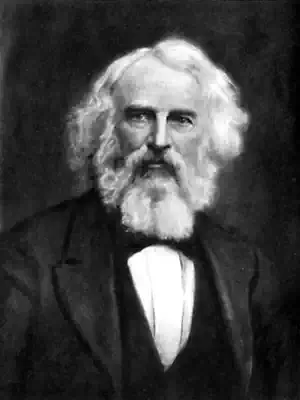
Henry Wadsworth Longfellow
Hymn to the Night
Hymn to the Night
I heard the trailing garments of the Night
Sweep through her marble halls!
I saw her sable skirts all fringed with light
From the celestial walls!
I felt her presence, by its spell of might,
Stoop o'er me from above;
The calm, majestic presence of the Night,
As of the one I love.
I heard the sounds of sorrow and delight,
The manifold, soft chimes,
That fill the haunted chambers of the Night
Like some old poet's rhymes.
From the cool cisterns of the midnight air
My spirit drank repose;
The fountain of perpetual peace flows there,-From
those deep cisterns flows.
O holy Night! from thee I learn to bear
What man has borne before!
Thou layest thy finger on the lips of Care,
And they complain no more.
Peace! Peace! Orestes-like I breathe this prayer!
Descend with broad-winged flight,
The welcome, the thrice-prayed for, the most fair,
The best-beloved Night!
I heard the trailing garments of the Night
Sweep through her marble halls!
I saw her sable skirts all fringed with light
From the celestial walls!
I felt her presence, by its spell of might,
Stoop o'er me from above;
The calm, majestic presence of the Night,
As of the one I love.
I heard the sounds of sorrow and delight,
The manifold, soft chimes,
That fill the haunted chambers of the Night
Like some old poet's rhymes.
From the cool cisterns of the midnight air
My spirit drank repose;
The fountain of perpetual peace flows there,-From
those deep cisterns flows.
O holy Night! from thee I learn to bear
What man has borne before!
Thou layest thy finger on the lips of Care,
And they complain no more.
Peace! Peace! Orestes-like I breathe this prayer!
Descend with broad-winged flight,
The welcome, the thrice-prayed for, the most fair,
The best-beloved Night!
368
Henry Wadsworth Longfellow
Holidays
Holidays
The holiest of all holidays are those
Kept by ourselves in silence and apart;
The secret anniversaries of the heart,
When the full river of feeling overflows;--
The happy days unclouded to their close;
The sudden joys that out of darkness start
As flames from ashes; swift desires that dart
Like swallows singing down each wind that blows!
White as the gleam of a receding sail,
White as a cloud that floats and fades in air,
White as the whitest lily on a stream,
These tender memories are;--a fairy tale
Of some enchanted land we know not where,
But lovely as a landscape in a dream.
The holiest of all holidays are those
Kept by ourselves in silence and apart;
The secret anniversaries of the heart,
When the full river of feeling overflows;--
The happy days unclouded to their close;
The sudden joys that out of darkness start
As flames from ashes; swift desires that dart
Like swallows singing down each wind that blows!
White as the gleam of a receding sail,
White as a cloud that floats and fades in air,
White as the whitest lily on a stream,
These tender memories are;--a fairy tale
Of some enchanted land we know not where,
But lovely as a landscape in a dream.
436
Henry Wadsworth Longfellow
Hermes Trismegistus
Hermes Trismegistus
Still through Egypt's desert places
Flows the lordly Nile,
From its banks the great stone faces
Gaze with patient smile.
Still the pyramids imperious
Pierce the cloudless skies,
And the Sphinx stares with mysterious,
Solemn, stony eyes.
But where are the old Egyptian
Demi-gods and kings?
Nothing left but an inscription
Graven on stones and rings.
Where are Helios and Hephaestus,
Gods of eldest eld?
Where is Hermes Trismegistus,
Who their secrets held?
Where are now the many hundred
Thousand books he wrote?
By the Thaumaturgists plundered,
Lost in lands remote;
In oblivion sunk forever,
As when o'er the land
Blows a storm-wind, in the river
Sinks the scattered sand.
Something unsubstantial, ghostly,
Seems this Theurgist,
In deep meditation mostly
Wrapped, as in a mist.
Vague, phantasmal, and unreal
To our thought he seems,
Walking in a world ideal,
In a land of dreams.
Was he one, or many, merging
Name and fame in one,
Like a stream, to which, converging
Many streamlets run?
Till, with gathered power proceeding,
Ampler sweep it takes,
Downward the sweet waters leading
From unnumbered lakes.
By the Nile I see him wandering,
Pausing now and then,
On the mystic union pondering
Between gods and men;
Half believing, wholly feeling,
With supreme delight,
How the gods, themselves concealing,
Lift men to their height.
Or in Thebes, the hundred-gated,
In the thoroughfare
Breathing, as if consecrated,
A diviner air;
And amid discordant noises,
In the jostling throng,
Hearing far, celestial voices
Of Olympian song.
Who shall call his dreams fallacious?
Who has searched or sought
All the unexplored and spacious
Universe of thought?
Who, in his own skill confiding,
Shall with rule and line
Mark the border-land dividing
Human and divine?
Trismegistus! three times greatest!
How thy name sublime
Has descended to this latest
Progeny of time!
Happy they whose written pages
Perish with their lives,
If amid the crumbling ages
Still their name survives!
Thine, O priest of Egypt, lately
Found I in the vast,
Weed-encumbered sombre, stately,
Grave-yard of the Past;
And a presence moved before me
On that gloomy shore,
As a waft of wind, that o'er me
Breathed, and was no more.
Still through Egypt's desert places
Flows the lordly Nile,
From its banks the great stone faces
Gaze with patient smile.
Still the pyramids imperious
Pierce the cloudless skies,
And the Sphinx stares with mysterious,
Solemn, stony eyes.
But where are the old Egyptian
Demi-gods and kings?
Nothing left but an inscription
Graven on stones and rings.
Where are Helios and Hephaestus,
Gods of eldest eld?
Where is Hermes Trismegistus,
Who their secrets held?
Where are now the many hundred
Thousand books he wrote?
By the Thaumaturgists plundered,
Lost in lands remote;
In oblivion sunk forever,
As when o'er the land
Blows a storm-wind, in the river
Sinks the scattered sand.
Something unsubstantial, ghostly,
Seems this Theurgist,
In deep meditation mostly
Wrapped, as in a mist.
Vague, phantasmal, and unreal
To our thought he seems,
Walking in a world ideal,
In a land of dreams.
Was he one, or many, merging
Name and fame in one,
Like a stream, to which, converging
Many streamlets run?
Till, with gathered power proceeding,
Ampler sweep it takes,
Downward the sweet waters leading
From unnumbered lakes.
By the Nile I see him wandering,
Pausing now and then,
On the mystic union pondering
Between gods and men;
Half believing, wholly feeling,
With supreme delight,
How the gods, themselves concealing,
Lift men to their height.
Or in Thebes, the hundred-gated,
In the thoroughfare
Breathing, as if consecrated,
A diviner air;
And amid discordant noises,
In the jostling throng,
Hearing far, celestial voices
Of Olympian song.
Who shall call his dreams fallacious?
Who has searched or sought
All the unexplored and spacious
Universe of thought?
Who, in his own skill confiding,
Shall with rule and line
Mark the border-land dividing
Human and divine?
Trismegistus! three times greatest!
How thy name sublime
Has descended to this latest
Progeny of time!
Happy they whose written pages
Perish with their lives,
If amid the crumbling ages
Still their name survives!
Thine, O priest of Egypt, lately
Found I in the vast,
Weed-encumbered sombre, stately,
Grave-yard of the Past;
And a presence moved before me
On that gloomy shore,
As a waft of wind, that o'er me
Breathed, and was no more.
369
Henry Wadsworth Longfellow
Haunted Houses. (Birds Of Passage. Flight The First)
Haunted Houses. (Birds Of Passage. Flight The First)
All houses wherein men have lived and died
Are haunted houses. Through the open doors
The harmless phantoms on their errands glide,
With feet that make no sound upon the floors.
We meet them at the doorway, on the stair,
Along the passages they come and go,
Impalpable impressions on the air,
A sense of something moving to and fro.
There are more guests at table, than the hosts
Invited; the illuminated hall
Is thronged with quiet, inoffensive ghosts,
As silent as the pictures on the wall.
The stranger at my fireside cannot see
The forms I see, nor hear the sounds I hear;
He but perceives what is; while unto me
All that has been is visible and clear.
We have no title-deeds to house or lands;
Owners and occupants of earlier dates
From graves forgotten stretch their dusty hands,
And hold in mortmain still their old estates.
The spirit-world around this world of sense
Floats like an atmosphere, and everywhere
Wafts through these earthly mists and vapors dense
A vital breath of more ethereal air.
Our little lives are kept in equipoise
By opposite attractions and desires;
The struggle of the instinct that enjoys,
And the more noble instinct that aspires.
These perturbations, this perpetual jar
Of earthly wants and aspirations high,
Come from the influence of an unseen star,
An undiscovered planet in our sky.
And as the moon from some dark gate of cloud
Throws o'er the sea a floating bridge of light,
Across whose trembling planks our fancies crowd
Into the realm of mystery and night,--
So from the world of spirits there descends
A bridge of light, connecting it with this,
O'er whose unsteady floor, that sways and bends,
Wander our thoughts above the dark abyss.
All houses wherein men have lived and died
Are haunted houses. Through the open doors
The harmless phantoms on their errands glide,
With feet that make no sound upon the floors.
We meet them at the doorway, on the stair,
Along the passages they come and go,
Impalpable impressions on the air,
A sense of something moving to and fro.
There are more guests at table, than the hosts
Invited; the illuminated hall
Is thronged with quiet, inoffensive ghosts,
As silent as the pictures on the wall.
The stranger at my fireside cannot see
The forms I see, nor hear the sounds I hear;
He but perceives what is; while unto me
All that has been is visible and clear.
We have no title-deeds to house or lands;
Owners and occupants of earlier dates
From graves forgotten stretch their dusty hands,
And hold in mortmain still their old estates.
The spirit-world around this world of sense
Floats like an atmosphere, and everywhere
Wafts through these earthly mists and vapors dense
A vital breath of more ethereal air.
Our little lives are kept in equipoise
By opposite attractions and desires;
The struggle of the instinct that enjoys,
And the more noble instinct that aspires.
These perturbations, this perpetual jar
Of earthly wants and aspirations high,
Come from the influence of an unseen star,
An undiscovered planet in our sky.
And as the moon from some dark gate of cloud
Throws o'er the sea a floating bridge of light,
Across whose trembling planks our fancies crowd
Into the realm of mystery and night,--
So from the world of spirits there descends
A bridge of light, connecting it with this,
O'er whose unsteady floor, that sways and bends,
Wander our thoughts above the dark abyss.
617
Henry Wadsworth Longfellow
Good Part, That Shall Not Be Taken Away, The
Good Part, That Shall Not Be Taken Away, The
She dwells by Great Kenhawa's side,
In valleys green and cool;
And all her hope and all her pride
Are in the village school.
Her soul, like the transparent air
That robes the hills above,
Though not of earth, encircles there
All things with arms of love.
And thus she walks among her girls
With praise and mild rebukes;
Subduing e'en rude village churls
By her angelic looks.
She reads to them at eventide
Of One who came to save;
To cast the captive's chains aside
And liberate the slave.
And oft the blessed time foretells
When all men shall be free;
And musical, as silver bells,
Their falling chains shall be.
And following her beloved Lord,
In decent poverty,
She makes her life one sweet record
And deed of charity.
For she was rich, and gave up all
To break the iron bands
Of those who waited in her hall,
And labored in her lands.
Long since beyond the Southern Sea
Their outbound sails have sped,
While she, in meek humility,
Now earns her daily bread.
It is their prayers, which never cease,
That clothe her with such grace;
Their blessing is the light of peace
That shines upon her face.
She dwells by Great Kenhawa's side,
In valleys green and cool;
And all her hope and all her pride
Are in the village school.
Her soul, like the transparent air
That robes the hills above,
Though not of earth, encircles there
All things with arms of love.
And thus she walks among her girls
With praise and mild rebukes;
Subduing e'en rude village churls
By her angelic looks.
She reads to them at eventide
Of One who came to save;
To cast the captive's chains aside
And liberate the slave.
And oft the blessed time foretells
When all men shall be free;
And musical, as silver bells,
Their falling chains shall be.
And following her beloved Lord,
In decent poverty,
She makes her life one sweet record
And deed of charity.
For she was rich, and gave up all
To break the iron bands
Of those who waited in her hall,
And labored in her lands.
Long since beyond the Southern Sea
Their outbound sails have sped,
While she, in meek humility,
Now earns her daily bread.
It is their prayers, which never cease,
That clothe her with such grace;
Their blessing is the light of peace
That shines upon her face.
346
Henry Wadsworth Longfellow
Garfield
Garfield
'E venni dal martirio a questa pace.'
These words the poet heard in Paradise,
Uttered by one who, bravely dying here,
In the true faith was living in that sphere
Where the celestial cross of sacrifice
Spread its protecting arms athwart the skies;
And set thereon, like jewels crystal clear,
The souls magnanimous, that knew not fear,
Flashed their effulgence on his dazzled eyes.
Ah me! how dark the discipline of pain,
Were not the suffering followed by the sense
Of infinite rest and infinite release!
This is our consolation; and again
A great soul cries to us in our suspense,
'I came from martyrdom unto this peace!'
'E venni dal martirio a questa pace.'
These words the poet heard in Paradise,
Uttered by one who, bravely dying here,
In the true faith was living in that sphere
Where the celestial cross of sacrifice
Spread its protecting arms athwart the skies;
And set thereon, like jewels crystal clear,
The souls magnanimous, that knew not fear,
Flashed their effulgence on his dazzled eyes.
Ah me! how dark the discipline of pain,
Were not the suffering followed by the sense
Of infinite rest and infinite release!
This is our consolation; and again
A great soul cries to us in our suspense,
'I came from martyrdom unto this peace!'
371
Henry Wadsworth Longfellow
Forsaken. (From The German)
Forsaken. (From The German)
Something the heart must have to cherish,
Must love and joy and sorrow learn,
Something with passion clasp, or perish,
And in itself to ashes burn.
So to this child my heart is clinging,
And its frank eyes, with look intense,
Me from a world of sin are bringing
Back to a world of innocence.
Disdain must thou endure for ever;
Strong may thy heart in danger be!
Thou shalt not fail! but ah, be never
False as thy father was to me.
Never will I forsake thee, faithless,
And thou thy mother ne'er forsake,
Until her lips are white and breathless,
Until in death her eyes shall break.
Something the heart must have to cherish,
Must love and joy and sorrow learn,
Something with passion clasp, or perish,
And in itself to ashes burn.
So to this child my heart is clinging,
And its frank eyes, with look intense,
Me from a world of sin are bringing
Back to a world of innocence.
Disdain must thou endure for ever;
Strong may thy heart in danger be!
Thou shalt not fail! but ah, be never
False as thy father was to me.
Never will I forsake thee, faithless,
And thou thy mother ne'er forsake,
Until her lips are white and breathless,
Until in death her eyes shall break.
338
Henry Wadsworth Longfellow
Flower-De-Luce: The Bridge Of Cloud
Flower-De-Luce: The Bridge Of Cloud
Burn, O evening hearth, and waken
Pleasant visions, as of old!
Though the house by winds be shaken,
Safe I keep this room of gold!
Ah, no longer wizard Fancy
Builds her castles in the air,
Luring me by necromancy
Up the never-ending stair!
But, instead, she builds me bridges
Over many a dark ravine,
Where beneath the gusty ridges
Cataracts dash and roar unseen.
And I cross them, little heeding
Blast of wind or torrent's roar,
As I follow the receding
Footsteps that have gone before.
Naught avails the imploring gesture,
Naught avails the cry of pain!
When I touch the flying vesture,
'Tis the gray robe of the rain.
Baffled I return, and, leaning
O'er the parapets of cloud,
Watch the mist that intervening
Wraps the valley in its shroud.
And the sounds of life ascending
Faintly, vaguely, meet the ear,
Murmur of bells and voices blending
With the rush of waters near.
Well I know what there lies hidden,
Every tower and town and farm,
And again the land forbidden
Reassumes its vanished charm.
Well I know the secret places,
And the nests in hedge and tree;
At what doors are friendly faces,
In what hearts are thoughts of me.
Through the mist and darkness sinking,
Blown by wind and beaten by shower,
Down I fling the thought I'm thinking,
Down I toss this Alpine flower.
Burn, O evening hearth, and waken
Pleasant visions, as of old!
Though the house by winds be shaken,
Safe I keep this room of gold!
Ah, no longer wizard Fancy
Builds her castles in the air,
Luring me by necromancy
Up the never-ending stair!
But, instead, she builds me bridges
Over many a dark ravine,
Where beneath the gusty ridges
Cataracts dash and roar unseen.
And I cross them, little heeding
Blast of wind or torrent's roar,
As I follow the receding
Footsteps that have gone before.
Naught avails the imploring gesture,
Naught avails the cry of pain!
When I touch the flying vesture,
'Tis the gray robe of the rain.
Baffled I return, and, leaning
O'er the parapets of cloud,
Watch the mist that intervening
Wraps the valley in its shroud.
And the sounds of life ascending
Faintly, vaguely, meet the ear,
Murmur of bells and voices blending
With the rush of waters near.
Well I know what there lies hidden,
Every tower and town and farm,
And again the land forbidden
Reassumes its vanished charm.
Well I know the secret places,
And the nests in hedge and tree;
At what doors are friendly faces,
In what hearts are thoughts of me.
Through the mist and darkness sinking,
Blown by wind and beaten by shower,
Down I fling the thought I'm thinking,
Down I toss this Alpine flower.
279
Henry Wadsworth Longfellow
Flower-De-Luce: To-Morrow
Flower-De-Luce: To-Morrow
'Tis late at night, and in the realm of sleep
My little lambs are folded like the flocks;
From room to room I hear the wakeful clocks
Challenge the passing hour, like guards that keep
Their solitary watch on tower and steep;
Far off I hear the crowing of the cocks,
And through the opening door that time unlocks
Feel the fresh breathing of To-morrow creep.
To-morrow! the mysterious, unknown guest,
Who cries to me: 'Remember Barmecide,
And tremble to be happy with the rest.'
And I make answer: 'I am satisfied;
I dare not ask; I know not what is best;
God hath already said what shall betide.'
'Tis late at night, and in the realm of sleep
My little lambs are folded like the flocks;
From room to room I hear the wakeful clocks
Challenge the passing hour, like guards that keep
Their solitary watch on tower and steep;
Far off I hear the crowing of the cocks,
And through the opening door that time unlocks
Feel the fresh breathing of To-morrow creep.
To-morrow! the mysterious, unknown guest,
Who cries to me: 'Remember Barmecide,
And tremble to be happy with the rest.'
And I make answer: 'I am satisfied;
I dare not ask; I know not what is best;
God hath already said what shall betide.'
346
Henry Wadsworth Longfellow
Flower-De-Luce: Palingenesis
Flower-De-Luce: Palingenesis
I lay upon the headland-height, and listened
To the incessant sobbing of the sea
In caverns under me,
And watched the waves, that tossed and fled and glistened,
Until the rolling meadows of amethyst
Melted away in mist.
Then suddenly, as one from sleep, I started;
For round about me all the sunny capes
Seemed peopled with the shapes
Of those whom I had known in days departed,
Apparelled in the loveliness which gleams
On faces seen in dreams.
A moment only, and the light and glory
Faded away, and the disconsolate shore
Stood lonely as before;
And the wild-roses of the promontory
Around me shuddered in the wind, and shed
Their petals of pale red.
There was an old belief that in the embers
Of all things their primordial form exists,
And cunning alchemists
Could re-create the rose with all its members
From its own ashes, but without the bloom,
Without the lost perfume.
Ah me! what wonder-working, occult science
Can from the ashes in our hearts once more
The rose of youth restore?
What craft of alchemy can bid defiance
To time and change, and for a single hour
Renew this phantom-flower?
'O, give me back,' I cried, 'the vanished splendors,
The breath of morn, and the exultant strife,
When the swift stream of life
Bounds o'er its rocky channel, and surrenders
The pond, with all its lilies, for the leap
Into the unknown deep!'
And the sea answered, with a lamentation,
Like some old prophet wailing, and it said,
'Alas! thy youth is dead!
It breathes no more, its heart has no pulsation;
In the dark places with the dead of old
It lies forever cold!'
Then said I, 'From its consecrated cerements
I will not drag this sacred dust again,
Only to give me pain;
But, still remembering all the lost endearments,
Go on my way, like one who looks before,
And turns to weep no more.'
Into what land of harvests, what plantations
Bright with autumnal foliage and the glow
Of sunsets burning low;
Beneath what midnight skies, whose constellations
Light up the spacious avenues between
This world and the unseen!
Amid what friendly greetings and caresses,
What households, though not alien, yet not mine,
What bowers of rest divine;
To what temptations in lone wildernesses,
What famine of the heart, what pain and loss,
The bearing of what cross!
I do not know; nor will I vainly question
Those pages of the mystic book which hold
The story still untold,
But without rash conjecture or suggestion
Turn its last leaves in reverence and good heed,
Until 'The End' I read.
I lay upon the headland-height, and listened
To the incessant sobbing of the sea
In caverns under me,
And watched the waves, that tossed and fled and glistened,
Until the rolling meadows of amethyst
Melted away in mist.
Then suddenly, as one from sleep, I started;
For round about me all the sunny capes
Seemed peopled with the shapes
Of those whom I had known in days departed,
Apparelled in the loveliness which gleams
On faces seen in dreams.
A moment only, and the light and glory
Faded away, and the disconsolate shore
Stood lonely as before;
And the wild-roses of the promontory
Around me shuddered in the wind, and shed
Their petals of pale red.
There was an old belief that in the embers
Of all things their primordial form exists,
And cunning alchemists
Could re-create the rose with all its members
From its own ashes, but without the bloom,
Without the lost perfume.
Ah me! what wonder-working, occult science
Can from the ashes in our hearts once more
The rose of youth restore?
What craft of alchemy can bid defiance
To time and change, and for a single hour
Renew this phantom-flower?
'O, give me back,' I cried, 'the vanished splendors,
The breath of morn, and the exultant strife,
When the swift stream of life
Bounds o'er its rocky channel, and surrenders
The pond, with all its lilies, for the leap
Into the unknown deep!'
And the sea answered, with a lamentation,
Like some old prophet wailing, and it said,
'Alas! thy youth is dead!
It breathes no more, its heart has no pulsation;
In the dark places with the dead of old
It lies forever cold!'
Then said I, 'From its consecrated cerements
I will not drag this sacred dust again,
Only to give me pain;
But, still remembering all the lost endearments,
Go on my way, like one who looks before,
And turns to weep no more.'
Into what land of harvests, what plantations
Bright with autumnal foliage and the glow
Of sunsets burning low;
Beneath what midnight skies, whose constellations
Light up the spacious avenues between
This world and the unseen!
Amid what friendly greetings and caresses,
What households, though not alien, yet not mine,
What bowers of rest divine;
To what temptations in lone wildernesses,
What famine of the heart, what pain and loss,
The bearing of what cross!
I do not know; nor will I vainly question
Those pages of the mystic book which hold
The story still untold,
But without rash conjecture or suggestion
Turn its last leaves in reverence and good heed,
Until 'The End' I read.
303
Henry Wadsworth Longfellow
Flower-De-Luce: Hawthorne
Flower-De-Luce: Hawthorne
How beautiful it was, that one bright day
In the long week of rain!
Though all its splendor could not chase away
The omnipresent pain.
The lovely town was white with apple-blooms,
And the great elms o'erhead
Dark shadows wove on their aerial looms
Shot through with golden thread.
Across the meadows, by the gray old manse,
The historic river flowed:
I was as one who wanders in a trance,
Unconscious of his road.
The faces of familiar friends seemed strange;
Their voices I could hear,
And yet the words they uttered seemed to change
Their meaning to my ear.
For the one face I looked for was not there,
The one low voice was mute;
Only an unseen presence filled the air,
And baffled my pursuit.
Now I look back, and meadow, manse, and stream
Dimly my thought defines;
I only see--a dream within a dream--
The hill-top hearsed with pines.
I only hear above his place of rest
Their tender undertone,
The infinite longings of a troubled breast,
The voice so like his own.
There in seclusion and remote from men
The wizard hand lies cold,
Which at its topmost speed let fall the pen,
And left the tale half told.
Ah! who shall lift that wand of magic power,
And the lost clew regain?
The unfinished window in Aladdin's tower
Unfinished must remain!
How beautiful it was, that one bright day
In the long week of rain!
Though all its splendor could not chase away
The omnipresent pain.
The lovely town was white with apple-blooms,
And the great elms o'erhead
Dark shadows wove on their aerial looms
Shot through with golden thread.
Across the meadows, by the gray old manse,
The historic river flowed:
I was as one who wanders in a trance,
Unconscious of his road.
The faces of familiar friends seemed strange;
Their voices I could hear,
And yet the words they uttered seemed to change
Their meaning to my ear.
For the one face I looked for was not there,
The one low voice was mute;
Only an unseen presence filled the air,
And baffled my pursuit.
Now I look back, and meadow, manse, and stream
Dimly my thought defines;
I only see--a dream within a dream--
The hill-top hearsed with pines.
I only hear above his place of rest
Their tender undertone,
The infinite longings of a troubled breast,
The voice so like his own.
There in seclusion and remote from men
The wizard hand lies cold,
Which at its topmost speed let fall the pen,
And left the tale half told.
Ah! who shall lift that wand of magic power,
And the lost clew regain?
The unfinished window in Aladdin's tower
Unfinished must remain!
387
Henry Wadsworth Longfellow
Fire. (Sonnet II.)
Fire. (Sonnet II.)
Not without fire can any workman mould
The iron to his preconceived design,
Nor can the artist without fire refine
And purify from all its dross the gold;
Nor can revive the phoenix, we are told,
Except by fire. Hence if such death be mine
I hope to rise again with the divine,
Whom death augments, and time cannot make old.
O sweet, sweet death! O fortunate fire that burns
Within me still to renovate my days,
Though I am almost numbered with the dead!
If by its nature unto heaven returns
This element, me, kindled in its blaze,
Will it bear upward when my life is fled.
Not without fire can any workman mould
The iron to his preconceived design,
Nor can the artist without fire refine
And purify from all its dross the gold;
Nor can revive the phoenix, we are told,
Except by fire. Hence if such death be mine
I hope to rise again with the divine,
Whom death augments, and time cannot make old.
O sweet, sweet death! O fortunate fire that burns
Within me still to renovate my days,
Though I am almost numbered with the dead!
If by its nature unto heaven returns
This element, me, kindled in its blaze,
Will it bear upward when my life is fled.
378
Henry Wadsworth Longfellow
Flower-De-Luce: Divina Commedia
Flower-De-Luce: Divina Commedia
I.
Oft have I seen at some cathedral door
A laborer, pausing in the dust and heat,
Lay down his burden, and with reverent feet
Enter, and cross himself, and on the floor
Kneel to repeat his paternoster o'er;
Far off the noises of the world retreat;
The loud vociferations of the street
Become an undistinguishable roar.
So, as I enter here from day to day,
And leave my burden at this minster gate,
Kneeling in prayer, and not ashamed to pray,
The tumult of the time disconsolate
To inarticulate murmurs dies away,
While the eternal ages watch and wait.
II.
How strange the sculptures that adorn these towers!
This crowd of statues, in whose folded sleeves
Birds build their nests; while canopied with leaves
Parvis and portal bloom like trellised bowers,
And the vast minster seems a cross of flowers!
But fiends and dragons on the gargoyled eaves
Watch the dead Christ between the living thieves,
And, underneath, the traitor Judas lowers!
Ah! from what agonies of heart and brain,
What exultations trampling on despair,
What tenderness, what tears, what hate of wrong,
What passionate outcry of a soul in pain,
Uprose this poem of the earth and air,
This medieval miracle of song!
III.
I enter, and I see thee in the gloom
Of the long aisles, O poet saturnine!
And strive to make my steps keep pace with thine.
The air is filled with some unknown perfume;
The congregation of the dead make room
For thee to pass; the votive tapers shine;
Like rooks that haunt Ravenna's groves of pine
The hovering echoes fly from tomb to tomb.
From the confessionals I hear arise
Rehearsals of forgotten tragedies,
And lamentations from the crypts below;
And then a voice celestial, that begins
With the pathetic words, 'Although your sins
As scarlet be,' and ends with 'as the snow.'
IV.
With snow-white veil and garments as of flame,
She stands before thee, who so long ago
Filled thy young heart with passion and the woe
From which thy song and all its splendors came;
And while with stern rebuke she speaks thy name,
The ice about thy heart melts as the snow
On mountain height; and in swift overflow
Comes gushing from thy lips in sobs of shame.
Thou makest full confession; and a gleam,
As of the dawn on some dark forest cast,
Seems on thy lifted forehead to increase;
Lethe and Eunoe--the remembered dream
And the forgotten sorrow--bring at last
That perfect pardon which is perfect peace.
V.
I lift mine eyes, and all the windows blaze
With forms of saints and holy men who died,
Here martyred and hereafter glorified;
And the great Rose upon its leaves displays
Christ's Triumph, and the angelic roundelays,
With splendor upon splendor multiplied;
And Beatrice again at Dante's side
No more rebukes, but smiles her words of praise.
And then the organ sounds, and unseen choirs
Sing the old Latin hymns of peace and love,
And benedictions of the Holy Ghost;
And the melodious bells among the spires
O'er all the house-tops and through heaven above
Proclaim the elevation of the Host!
VI.
O star of morning and of liberty!
O bringer of the light, whose splendor shines
Above the darkness of the Apennines,
Forerunner of the day that is to be!
The voices of the city and the sea,
The voices of the mountains and the pines,
Repeat thy song, till the familiar lines
Are footpaths for the thought of Italy!
Thy fame is blown abroad from all the heights,
Through all the nations, and a sound is heard,
As of a mighty wind, and men devout,
Strangers of Rome, and the new proselytes,
In their own language hear thy wondrous word,
And many are amazed and many doubt.
I.
Oft have I seen at some cathedral door
A laborer, pausing in the dust and heat,
Lay down his burden, and with reverent feet
Enter, and cross himself, and on the floor
Kneel to repeat his paternoster o'er;
Far off the noises of the world retreat;
The loud vociferations of the street
Become an undistinguishable roar.
So, as I enter here from day to day,
And leave my burden at this minster gate,
Kneeling in prayer, and not ashamed to pray,
The tumult of the time disconsolate
To inarticulate murmurs dies away,
While the eternal ages watch and wait.
II.
How strange the sculptures that adorn these towers!
This crowd of statues, in whose folded sleeves
Birds build their nests; while canopied with leaves
Parvis and portal bloom like trellised bowers,
And the vast minster seems a cross of flowers!
But fiends and dragons on the gargoyled eaves
Watch the dead Christ between the living thieves,
And, underneath, the traitor Judas lowers!
Ah! from what agonies of heart and brain,
What exultations trampling on despair,
What tenderness, what tears, what hate of wrong,
What passionate outcry of a soul in pain,
Uprose this poem of the earth and air,
This medieval miracle of song!
III.
I enter, and I see thee in the gloom
Of the long aisles, O poet saturnine!
And strive to make my steps keep pace with thine.
The air is filled with some unknown perfume;
The congregation of the dead make room
For thee to pass; the votive tapers shine;
Like rooks that haunt Ravenna's groves of pine
The hovering echoes fly from tomb to tomb.
From the confessionals I hear arise
Rehearsals of forgotten tragedies,
And lamentations from the crypts below;
And then a voice celestial, that begins
With the pathetic words, 'Although your sins
As scarlet be,' and ends with 'as the snow.'
IV.
With snow-white veil and garments as of flame,
She stands before thee, who so long ago
Filled thy young heart with passion and the woe
From which thy song and all its splendors came;
And while with stern rebuke she speaks thy name,
The ice about thy heart melts as the snow
On mountain height; and in swift overflow
Comes gushing from thy lips in sobs of shame.
Thou makest full confession; and a gleam,
As of the dawn on some dark forest cast,
Seems on thy lifted forehead to increase;
Lethe and Eunoe--the remembered dream
And the forgotten sorrow--bring at last
That perfect pardon which is perfect peace.
V.
I lift mine eyes, and all the windows blaze
With forms of saints and holy men who died,
Here martyred and hereafter glorified;
And the great Rose upon its leaves displays
Christ's Triumph, and the angelic roundelays,
With splendor upon splendor multiplied;
And Beatrice again at Dante's side
No more rebukes, but smiles her words of praise.
And then the organ sounds, and unseen choirs
Sing the old Latin hymns of peace and love,
And benedictions of the Holy Ghost;
And the melodious bells among the spires
O'er all the house-tops and through heaven above
Proclaim the elevation of the Host!
VI.
O star of morning and of liberty!
O bringer of the light, whose splendor shines
Above the darkness of the Apennines,
Forerunner of the day that is to be!
The voices of the city and the sea,
The voices of the mountains and the pines,
Repeat thy song, till the familiar lines
Are footpaths for the thought of Italy!
Thy fame is blown abroad from all the heights,
Through all the nations, and a sound is heard,
As of a mighty wind, and men devout,
Strangers of Rome, and the new proselytes,
In their own language hear thy wondrous word,
And many are amazed and many doubt.
286
Henry Wadsworth Longfellow
Flower-De-Luce: Divina Commedia
Flower-De-Luce: Divina Commedia
I.
Oft have I seen at some cathedral door
A laborer, pausing in the dust and heat,
Lay down his burden, and with reverent feet
Enter, and cross himself, and on the floor
Kneel to repeat his paternoster o'er;
Far off the noises of the world retreat;
The loud vociferations of the street
Become an undistinguishable roar.
So, as I enter here from day to day,
And leave my burden at this minster gate,
Kneeling in prayer, and not ashamed to pray,
The tumult of the time disconsolate
To inarticulate murmurs dies away,
While the eternal ages watch and wait.
II.
How strange the sculptures that adorn these towers!
This crowd of statues, in whose folded sleeves
Birds build their nests; while canopied with leaves
Parvis and portal bloom like trellised bowers,
And the vast minster seems a cross of flowers!
But fiends and dragons on the gargoyled eaves
Watch the dead Christ between the living thieves,
And, underneath, the traitor Judas lowers!
Ah! from what agonies of heart and brain,
What exultations trampling on despair,
What tenderness, what tears, what hate of wrong,
What passionate outcry of a soul in pain,
Uprose this poem of the earth and air,
This medieval miracle of song!
III.
I enter, and I see thee in the gloom
Of the long aisles, O poet saturnine!
And strive to make my steps keep pace with thine.
The air is filled with some unknown perfume;
The congregation of the dead make room
For thee to pass; the votive tapers shine;
Like rooks that haunt Ravenna's groves of pine
The hovering echoes fly from tomb to tomb.
From the confessionals I hear arise
Rehearsals of forgotten tragedies,
And lamentations from the crypts below;
And then a voice celestial, that begins
With the pathetic words, 'Although your sins
As scarlet be,' and ends with 'as the snow.'
IV.
With snow-white veil and garments as of flame,
She stands before thee, who so long ago
Filled thy young heart with passion and the woe
From which thy song and all its splendors came;
And while with stern rebuke she speaks thy name,
The ice about thy heart melts as the snow
On mountain height; and in swift overflow
Comes gushing from thy lips in sobs of shame.
Thou makest full confession; and a gleam,
As of the dawn on some dark forest cast,
Seems on thy lifted forehead to increase;
Lethe and Eunoe--the remembered dream
And the forgotten sorrow--bring at last
That perfect pardon which is perfect peace.
V.
I lift mine eyes, and all the windows blaze
With forms of saints and holy men who died,
Here martyred and hereafter glorified;
And the great Rose upon its leaves displays
Christ's Triumph, and the angelic roundelays,
With splendor upon splendor multiplied;
And Beatrice again at Dante's side
No more rebukes, but smiles her words of praise.
And then the organ sounds, and unseen choirs
Sing the old Latin hymns of peace and love,
And benedictions of the Holy Ghost;
And the melodious bells among the spires
O'er all the house-tops and through heaven above
Proclaim the elevation of the Host!
VI.
O star of morning and of liberty!
O bringer of the light, whose splendor shines
Above the darkness of the Apennines,
Forerunner of the day that is to be!
The voices of the city and the sea,
The voices of the mountains and the pines,
Repeat thy song, till the familiar lines
Are footpaths for the thought of Italy!
Thy fame is blown abroad from all the heights,
Through all the nations, and a sound is heard,
As of a mighty wind, and men devout,
Strangers of Rome, and the new proselytes,
In their own language hear thy wondrous word,
And many are amazed and many doubt.
I.
Oft have I seen at some cathedral door
A laborer, pausing in the dust and heat,
Lay down his burden, and with reverent feet
Enter, and cross himself, and on the floor
Kneel to repeat his paternoster o'er;
Far off the noises of the world retreat;
The loud vociferations of the street
Become an undistinguishable roar.
So, as I enter here from day to day,
And leave my burden at this minster gate,
Kneeling in prayer, and not ashamed to pray,
The tumult of the time disconsolate
To inarticulate murmurs dies away,
While the eternal ages watch and wait.
II.
How strange the sculptures that adorn these towers!
This crowd of statues, in whose folded sleeves
Birds build their nests; while canopied with leaves
Parvis and portal bloom like trellised bowers,
And the vast minster seems a cross of flowers!
But fiends and dragons on the gargoyled eaves
Watch the dead Christ between the living thieves,
And, underneath, the traitor Judas lowers!
Ah! from what agonies of heart and brain,
What exultations trampling on despair,
What tenderness, what tears, what hate of wrong,
What passionate outcry of a soul in pain,
Uprose this poem of the earth and air,
This medieval miracle of song!
III.
I enter, and I see thee in the gloom
Of the long aisles, O poet saturnine!
And strive to make my steps keep pace with thine.
The air is filled with some unknown perfume;
The congregation of the dead make room
For thee to pass; the votive tapers shine;
Like rooks that haunt Ravenna's groves of pine
The hovering echoes fly from tomb to tomb.
From the confessionals I hear arise
Rehearsals of forgotten tragedies,
And lamentations from the crypts below;
And then a voice celestial, that begins
With the pathetic words, 'Although your sins
As scarlet be,' and ends with 'as the snow.'
IV.
With snow-white veil and garments as of flame,
She stands before thee, who so long ago
Filled thy young heart with passion and the woe
From which thy song and all its splendors came;
And while with stern rebuke she speaks thy name,
The ice about thy heart melts as the snow
On mountain height; and in swift overflow
Comes gushing from thy lips in sobs of shame.
Thou makest full confession; and a gleam,
As of the dawn on some dark forest cast,
Seems on thy lifted forehead to increase;
Lethe and Eunoe--the remembered dream
And the forgotten sorrow--bring at last
That perfect pardon which is perfect peace.
V.
I lift mine eyes, and all the windows blaze
With forms of saints and holy men who died,
Here martyred and hereafter glorified;
And the great Rose upon its leaves displays
Christ's Triumph, and the angelic roundelays,
With splendor upon splendor multiplied;
And Beatrice again at Dante's side
No more rebukes, but smiles her words of praise.
And then the organ sounds, and unseen choirs
Sing the old Latin hymns of peace and love,
And benedictions of the Holy Ghost;
And the melodious bells among the spires
O'er all the house-tops and through heaven above
Proclaim the elevation of the Host!
VI.
O star of morning and of liberty!
O bringer of the light, whose splendor shines
Above the darkness of the Apennines,
Forerunner of the day that is to be!
The voices of the city and the sea,
The voices of the mountains and the pines,
Repeat thy song, till the familiar lines
Are footpaths for the thought of Italy!
Thy fame is blown abroad from all the heights,
Through all the nations, and a sound is heard,
As of a mighty wind, and men devout,
Strangers of Rome, and the new proselytes,
In their own language hear thy wondrous word,
And many are amazed and many doubt.
286
Henry Wadsworth Longfellow
Flower-De-Luce: Divina Commedia
Flower-De-Luce: Divina Commedia
I.
Oft have I seen at some cathedral door
A laborer, pausing in the dust and heat,
Lay down his burden, and with reverent feet
Enter, and cross himself, and on the floor
Kneel to repeat his paternoster o'er;
Far off the noises of the world retreat;
The loud vociferations of the street
Become an undistinguishable roar.
So, as I enter here from day to day,
And leave my burden at this minster gate,
Kneeling in prayer, and not ashamed to pray,
The tumult of the time disconsolate
To inarticulate murmurs dies away,
While the eternal ages watch and wait.
II.
How strange the sculptures that adorn these towers!
This crowd of statues, in whose folded sleeves
Birds build their nests; while canopied with leaves
Parvis and portal bloom like trellised bowers,
And the vast minster seems a cross of flowers!
But fiends and dragons on the gargoyled eaves
Watch the dead Christ between the living thieves,
And, underneath, the traitor Judas lowers!
Ah! from what agonies of heart and brain,
What exultations trampling on despair,
What tenderness, what tears, what hate of wrong,
What passionate outcry of a soul in pain,
Uprose this poem of the earth and air,
This medieval miracle of song!
III.
I enter, and I see thee in the gloom
Of the long aisles, O poet saturnine!
And strive to make my steps keep pace with thine.
The air is filled with some unknown perfume;
The congregation of the dead make room
For thee to pass; the votive tapers shine;
Like rooks that haunt Ravenna's groves of pine
The hovering echoes fly from tomb to tomb.
From the confessionals I hear arise
Rehearsals of forgotten tragedies,
And lamentations from the crypts below;
And then a voice celestial, that begins
With the pathetic words, 'Although your sins
As scarlet be,' and ends with 'as the snow.'
IV.
With snow-white veil and garments as of flame,
She stands before thee, who so long ago
Filled thy young heart with passion and the woe
From which thy song and all its splendors came;
And while with stern rebuke she speaks thy name,
The ice about thy heart melts as the snow
On mountain height; and in swift overflow
Comes gushing from thy lips in sobs of shame.
Thou makest full confession; and a gleam,
As of the dawn on some dark forest cast,
Seems on thy lifted forehead to increase;
Lethe and Eunoe--the remembered dream
And the forgotten sorrow--bring at last
That perfect pardon which is perfect peace.
V.
I lift mine eyes, and all the windows blaze
With forms of saints and holy men who died,
Here martyred and hereafter glorified;
And the great Rose upon its leaves displays
Christ's Triumph, and the angelic roundelays,
With splendor upon splendor multiplied;
And Beatrice again at Dante's side
No more rebukes, but smiles her words of praise.
And then the organ sounds, and unseen choirs
Sing the old Latin hymns of peace and love,
And benedictions of the Holy Ghost;
And the melodious bells among the spires
O'er all the house-tops and through heaven above
Proclaim the elevation of the Host!
VI.
O star of morning and of liberty!
O bringer of the light, whose splendor shines
Above the darkness of the Apennines,
Forerunner of the day that is to be!
The voices of the city and the sea,
The voices of the mountains and the pines,
Repeat thy song, till the familiar lines
Are footpaths for the thought of Italy!
Thy fame is blown abroad from all the heights,
Through all the nations, and a sound is heard,
As of a mighty wind, and men devout,
Strangers of Rome, and the new proselytes,
In their own language hear thy wondrous word,
And many are amazed and many doubt.
I.
Oft have I seen at some cathedral door
A laborer, pausing in the dust and heat,
Lay down his burden, and with reverent feet
Enter, and cross himself, and on the floor
Kneel to repeat his paternoster o'er;
Far off the noises of the world retreat;
The loud vociferations of the street
Become an undistinguishable roar.
So, as I enter here from day to day,
And leave my burden at this minster gate,
Kneeling in prayer, and not ashamed to pray,
The tumult of the time disconsolate
To inarticulate murmurs dies away,
While the eternal ages watch and wait.
II.
How strange the sculptures that adorn these towers!
This crowd of statues, in whose folded sleeves
Birds build their nests; while canopied with leaves
Parvis and portal bloom like trellised bowers,
And the vast minster seems a cross of flowers!
But fiends and dragons on the gargoyled eaves
Watch the dead Christ between the living thieves,
And, underneath, the traitor Judas lowers!
Ah! from what agonies of heart and brain,
What exultations trampling on despair,
What tenderness, what tears, what hate of wrong,
What passionate outcry of a soul in pain,
Uprose this poem of the earth and air,
This medieval miracle of song!
III.
I enter, and I see thee in the gloom
Of the long aisles, O poet saturnine!
And strive to make my steps keep pace with thine.
The air is filled with some unknown perfume;
The congregation of the dead make room
For thee to pass; the votive tapers shine;
Like rooks that haunt Ravenna's groves of pine
The hovering echoes fly from tomb to tomb.
From the confessionals I hear arise
Rehearsals of forgotten tragedies,
And lamentations from the crypts below;
And then a voice celestial, that begins
With the pathetic words, 'Although your sins
As scarlet be,' and ends with 'as the snow.'
IV.
With snow-white veil and garments as of flame,
She stands before thee, who so long ago
Filled thy young heart with passion and the woe
From which thy song and all its splendors came;
And while with stern rebuke she speaks thy name,
The ice about thy heart melts as the snow
On mountain height; and in swift overflow
Comes gushing from thy lips in sobs of shame.
Thou makest full confession; and a gleam,
As of the dawn on some dark forest cast,
Seems on thy lifted forehead to increase;
Lethe and Eunoe--the remembered dream
And the forgotten sorrow--bring at last
That perfect pardon which is perfect peace.
V.
I lift mine eyes, and all the windows blaze
With forms of saints and holy men who died,
Here martyred and hereafter glorified;
And the great Rose upon its leaves displays
Christ's Triumph, and the angelic roundelays,
With splendor upon splendor multiplied;
And Beatrice again at Dante's side
No more rebukes, but smiles her words of praise.
And then the organ sounds, and unseen choirs
Sing the old Latin hymns of peace and love,
And benedictions of the Holy Ghost;
And the melodious bells among the spires
O'er all the house-tops and through heaven above
Proclaim the elevation of the Host!
VI.
O star of morning and of liberty!
O bringer of the light, whose splendor shines
Above the darkness of the Apennines,
Forerunner of the day that is to be!
The voices of the city and the sea,
The voices of the mountains and the pines,
Repeat thy song, till the familiar lines
Are footpaths for the thought of Italy!
Thy fame is blown abroad from all the heights,
Through all the nations, and a sound is heard,
As of a mighty wind, and men devout,
Strangers of Rome, and the new proselytes,
In their own language hear thy wondrous word,
And many are amazed and many doubt.
286
Henry Wadsworth Longfellow
Evening Star, The
Evening Star, The
Lo! in the painted oriel of the West,
Whose panes the sunken sun incarnadines,
Like a fair lady at her casement, shines
The evening star, the star of love and rest!
And then anon she doth herself divest
Of all her radiant garments, and reclines
Behind the sombre screen of yonder pines,
With slumber and soft dreams of love oppressed.
O my beloved, my sweet Hesperus!
My morning and my evening star of love!
My best and gentlest lady! even thus,
As that fair planet in the sky above,
Dost thou retire unto thy rest at night,
And from thy darkened window fades the light.
Lo! in the painted oriel of the West,
Whose panes the sunken sun incarnadines,
Like a fair lady at her casement, shines
The evening star, the star of love and rest!
And then anon she doth herself divest
Of all her radiant garments, and reclines
Behind the sombre screen of yonder pines,
With slumber and soft dreams of love oppressed.
O my beloved, my sweet Hesperus!
My morning and my evening star of love!
My best and gentlest lady! even thus,
As that fair planet in the sky above,
Dost thou retire unto thy rest at night,
And from thy darkened window fades the light.
417
Henry Wadsworth Longfellow
Evangeline: Part The Second. V.
Evangeline: Part The Second. V.
IN that delightful land, which is washed by the Delaware's waters,
Guarding in sylvan shades the name of Penn the apostle.
Stands on the banks of its beautiful stream the city he founded.
There all the air is balm, and the peach is the emblem of beauty,
And the streets still re-echo the names of the trees of the forest,
As if they fain would appease the Dryads whose haunts they molested.
There from the troubled sea had Evangeline landed, an exile,
Finding among the children of Penn a home and a country.
There old René Leblanc had died; and when he departed,
Saw at his side only one of all his hundred descendants.
Something at least there was in the friendly streets of the city,
Something that spake to her heart, and made her no longer a stranger;
And her ear was pleased with the Thee and Thou of the Quakers,
For it recalled the past, the old Acadian country,
Where all men were equal, and all were brothers and sisters.
So, when the fruitless search, the disappointed endeavor,
Ended, to recommence no more upon earth, uncomplaining,
Thither, as leaves to the light, were turned her thoughts and her footsteps.
As from a mountain's top the rainy mists of the morning
Roll away, and afar we behold the landscape below us,
Sun-illumined, with shining rivers and cities and hamlets,
So fell the mists from her mind, and she saw the world far below her,
Dark no longer, but all illumined with love; and the pathway
Which she had climbed so far, lying smooth and fair in the distance.
Gabriel was not forgotten. Within her heart was his image,
Clothed in the beauty of love and youth, as last she beheld him,
Only more beautiful made by his deathlike silence and absence.
Into her thoughts of him time entered not, for it was not.
Over him years had no power; he was not changed, but transfigured;
He had become to her heart as one who is dead, and not absent;
Patience and abnegation of self, and devotion to others,
This was the lesson a life of trial and sorrow had taught her.
So was her love diffused, but, like to some odorous spices,
Suffered no waste nor loss, though filling the air with aroma.
Other hope had she none, nor wish in life, but to follow
Meekly, with reverent steps, the sacred feet of her Saviour.
Thus many years she lived as a Sister of Mercy; frequenting
Lonely and wretched roofs in the crowded lanes of the city,
Where distress and want concealed themselves from the sunlight,
Where disease and sorrow in garrets languished neglected.
Night after night, when the world was asleep, as the watchman repeated
Loud, through the gusty streets, that all was well in the city,
High at some lonely window he saw the light of her taper.
Day after day, in the gray of the dawn, as slow through the suburbs
Plodded the German farmer, with flowers and fruits for the market,
Met he that meek, pale face, returning home from its watchings.
Then it came to pass that a pestilence fell on the city,
Presaged by wondrous signs, and mostly by flocks of wild pigeons,
Darkening the sun in their flight, with naught in their craws but an acorn.
And, as the tides of the sea arise in the month of September,
Flooding some silver stream, till it spreads to a lake in the meadow,
So death flooded life, and, o'erflowing its natural margin,
Spread to a brackish lake, the silver stream of existence.
Wealth had no power to bribe, nor beauty to charm, the oppressor;
But all perished alike beneath the scourge of his anger;-
Only, alas! the poor, who had neither friends nor attendants,
Crept away to die in the almshouse, home of the homeless.
Then in the suburbs it stood, in the midst of meadows and woodlands;-
Now the city surrounds it; but still, with its gateway and wicket
Meek, in the midst of splendor, its humble walls seem to echo
Softly the words of the Lord:-'The poor ye always have with you.'
Thither, by night and by day, came the Sister of Mercy. The dying
Looked up into her face, and thought, indeed, to behold there
Gleams of celestial light encircle her forehead with splendor,
Such as the artist paints o'er the brows of saints and apostles,
Or such as hangs by night o'er a city seen at a distance.
Unto their eyes it seemed the lamps of the city celestial,
Into whose shining gates erelong their spirits would enter.
Thus, on a Sabbath morn, through the streets, deserted and silent,
Wending her quiet way, she entered the door of the almshouse.
Sweet on the summer air was the odor of flowers in the garden;
And she paused on her way to gather the fairest among them,
That the dying once more might rejoice in their fragrance and beauty.
Then, as she mounted the stairs to the corridors, cooled by the east wind,
Distant and soft on her ear fell the chimes from the belfry of Christ Church,
While, intermingled with these, across the meadows were wafted
Sounds of psalms, that were sung by the Swedes in their church at Wicaco.
Soft as descending wings fell the calm of the hour on her spirit;
Something within her said, 'At length thy trials are ended';
And, with light in her looks, she entered the chambers of sickness.
Noiselessly moved about the assiduous, careful attendants,
Moistening the feverish lip, and the aching brow, and in silence
Closing the sightless eyes of the dead, and concealing their faces,
Where on their pallets they lay, like drifts of snow by the roadside.
Many a languid head, upraised as Evangeline entered,
Turned on its pillow of pain to gaze while she passed, for her presence
Fell on their hearts like a ray of the sun on the walls of a prison.
And, as she looked around, she saw how Death, the consoler,
Laying his hand upon many a heart, had healed it forever.
Many familiar forms had disappeared in the night-time;
Vacant their places were, or filled already by strangers.
Suddenly, as if arrested by fear or a feeling of wonder,
Still she stood, with her colorless lips apart, while a shudder
Ran through her frame, and, forgotten, the flowerets dropped from her fingers,
And from her eyes and cheeks the light and bloom of the morning.
Then there escaped from her lips a cry of such terrible anguish,
That the dying heard it, and started up from their pillows.
On the pallet before her was stretched the form of an old man.
Long, and thin, and gray were the locks that shaded his temples;
But, as he lay in the morning light, his face for a moment
Seemed to assume once more the forms of its earlier manhood;
So are wont to be changed the faces of those who are dying.
Hot and red on his lips still burned the flush of the fever,
As if life, like the Hebrew, with blood had besprinkled its portals,
That the Angel of Death might see the sign, and pass over.
Motionless, senseless, dying, he lay, and his spirit exhausted
Seemed to be sinking down through infinite depths in the darkness,
Darkness of slumber and death, forever sinking and sinking.
Then through those realms of shade, in multiplied reverberations,
Heard he that cry of pain, and through the hush that succeeded
Whispered a gentle voice, in accents tender and saint-like,
'Gabriel! O my beloved!' and died away into silence.
Then he beheld, in a dream, once more the home of his childhood;
Green Acadian meadows, with sylvan rivers among them,
Village, and mountain, and woodlands; and, walking under their shadow,
As in the days of her youth, Evangeline rose in his vision.
Tears came into his eyes; and as slowly he lifted his eyelids,
Vanished the vision away, but Evangeline knelt by his bedside.
Vainly he strove to whisper her name, for the accents unuttered
Died on his lips, and their motion revealed what his tongue would have spoken.
Vainly he strove to rise; and Evangeline, kneeling beside him,
Kissed his dying lips, and laid his head on her bosom.
Sweet was the light of his eyes; but it suddenly sank into darkness,
As when a lamp is blown out by a gust of wind at a casement.
All was ended now, the hope, and the fear, and the sorrow,
All the aching of heart, the restless, unsatisfied longing,
All the dull, deep pain, and constant anguish of patience!
And, as she pressed once more the lifeless head to her bosom,
Meekly she bowed her own, and murmured, 'Father, I thank thee!'
STILL stands the forest primeval; but far away from its shadow,
Side by side, in their nameless graves, the lovers are sleeping.
Under the humble walls of the little Catholic churchyard,
In the heart of the city, they lie, unknown and unnoticed.
Daily the tides of life go ebbing and flowing beside them,
Thousands of throbbing hearts, where theirs are at rest and forever,
Thousands of aching brains, where theirs no longer are busy,
Thousands of toiling hands, where theirs have ceased from their labors,
Thousands of weary feet, where theirs have completed their journey!
Still stands the forest primeval; but under the shade of its branches
Dwells another race, with other customs and language.
Only along the shore of the mournful and misty Atlantic
Linger a few Acadian peasants, whose fathers from exile
Wandered back to their native land to die in its bosom.
In the fisherman's cot the wheel and the loom are still busy;
Maidens still wear their Norman caps and their kirtles of homespun,
And by the evening fire repeat Evangeline's story.
While from its rocky caverns the deep-voiced, neighboring ocean
Speaks, and in accents disconsolate answers the wail of the forest.
IN that delightful land, which is washed by the Delaware's waters,
Guarding in sylvan shades the name of Penn the apostle.
Stands on the banks of its beautiful stream the city he founded.
There all the air is balm, and the peach is the emblem of beauty,
And the streets still re-echo the names of the trees of the forest,
As if they fain would appease the Dryads whose haunts they molested.
There from the troubled sea had Evangeline landed, an exile,
Finding among the children of Penn a home and a country.
There old René Leblanc had died; and when he departed,
Saw at his side only one of all his hundred descendants.
Something at least there was in the friendly streets of the city,
Something that spake to her heart, and made her no longer a stranger;
And her ear was pleased with the Thee and Thou of the Quakers,
For it recalled the past, the old Acadian country,
Where all men were equal, and all were brothers and sisters.
So, when the fruitless search, the disappointed endeavor,
Ended, to recommence no more upon earth, uncomplaining,
Thither, as leaves to the light, were turned her thoughts and her footsteps.
As from a mountain's top the rainy mists of the morning
Roll away, and afar we behold the landscape below us,
Sun-illumined, with shining rivers and cities and hamlets,
So fell the mists from her mind, and she saw the world far below her,
Dark no longer, but all illumined with love; and the pathway
Which she had climbed so far, lying smooth and fair in the distance.
Gabriel was not forgotten. Within her heart was his image,
Clothed in the beauty of love and youth, as last she beheld him,
Only more beautiful made by his deathlike silence and absence.
Into her thoughts of him time entered not, for it was not.
Over him years had no power; he was not changed, but transfigured;
He had become to her heart as one who is dead, and not absent;
Patience and abnegation of self, and devotion to others,
This was the lesson a life of trial and sorrow had taught her.
So was her love diffused, but, like to some odorous spices,
Suffered no waste nor loss, though filling the air with aroma.
Other hope had she none, nor wish in life, but to follow
Meekly, with reverent steps, the sacred feet of her Saviour.
Thus many years she lived as a Sister of Mercy; frequenting
Lonely and wretched roofs in the crowded lanes of the city,
Where distress and want concealed themselves from the sunlight,
Where disease and sorrow in garrets languished neglected.
Night after night, when the world was asleep, as the watchman repeated
Loud, through the gusty streets, that all was well in the city,
High at some lonely window he saw the light of her taper.
Day after day, in the gray of the dawn, as slow through the suburbs
Plodded the German farmer, with flowers and fruits for the market,
Met he that meek, pale face, returning home from its watchings.
Then it came to pass that a pestilence fell on the city,
Presaged by wondrous signs, and mostly by flocks of wild pigeons,
Darkening the sun in their flight, with naught in their craws but an acorn.
And, as the tides of the sea arise in the month of September,
Flooding some silver stream, till it spreads to a lake in the meadow,
So death flooded life, and, o'erflowing its natural margin,
Spread to a brackish lake, the silver stream of existence.
Wealth had no power to bribe, nor beauty to charm, the oppressor;
But all perished alike beneath the scourge of his anger;-
Only, alas! the poor, who had neither friends nor attendants,
Crept away to die in the almshouse, home of the homeless.
Then in the suburbs it stood, in the midst of meadows and woodlands;-
Now the city surrounds it; but still, with its gateway and wicket
Meek, in the midst of splendor, its humble walls seem to echo
Softly the words of the Lord:-'The poor ye always have with you.'
Thither, by night and by day, came the Sister of Mercy. The dying
Looked up into her face, and thought, indeed, to behold there
Gleams of celestial light encircle her forehead with splendor,
Such as the artist paints o'er the brows of saints and apostles,
Or such as hangs by night o'er a city seen at a distance.
Unto their eyes it seemed the lamps of the city celestial,
Into whose shining gates erelong their spirits would enter.
Thus, on a Sabbath morn, through the streets, deserted and silent,
Wending her quiet way, she entered the door of the almshouse.
Sweet on the summer air was the odor of flowers in the garden;
And she paused on her way to gather the fairest among them,
That the dying once more might rejoice in their fragrance and beauty.
Then, as she mounted the stairs to the corridors, cooled by the east wind,
Distant and soft on her ear fell the chimes from the belfry of Christ Church,
While, intermingled with these, across the meadows were wafted
Sounds of psalms, that were sung by the Swedes in their church at Wicaco.
Soft as descending wings fell the calm of the hour on her spirit;
Something within her said, 'At length thy trials are ended';
And, with light in her looks, she entered the chambers of sickness.
Noiselessly moved about the assiduous, careful attendants,
Moistening the feverish lip, and the aching brow, and in silence
Closing the sightless eyes of the dead, and concealing their faces,
Where on their pallets they lay, like drifts of snow by the roadside.
Many a languid head, upraised as Evangeline entered,
Turned on its pillow of pain to gaze while she passed, for her presence
Fell on their hearts like a ray of the sun on the walls of a prison.
And, as she looked around, she saw how Death, the consoler,
Laying his hand upon many a heart, had healed it forever.
Many familiar forms had disappeared in the night-time;
Vacant their places were, or filled already by strangers.
Suddenly, as if arrested by fear or a feeling of wonder,
Still she stood, with her colorless lips apart, while a shudder
Ran through her frame, and, forgotten, the flowerets dropped from her fingers,
And from her eyes and cheeks the light and bloom of the morning.
Then there escaped from her lips a cry of such terrible anguish,
That the dying heard it, and started up from their pillows.
On the pallet before her was stretched the form of an old man.
Long, and thin, and gray were the locks that shaded his temples;
But, as he lay in the morning light, his face for a moment
Seemed to assume once more the forms of its earlier manhood;
So are wont to be changed the faces of those who are dying.
Hot and red on his lips still burned the flush of the fever,
As if life, like the Hebrew, with blood had besprinkled its portals,
That the Angel of Death might see the sign, and pass over.
Motionless, senseless, dying, he lay, and his spirit exhausted
Seemed to be sinking down through infinite depths in the darkness,
Darkness of slumber and death, forever sinking and sinking.
Then through those realms of shade, in multiplied reverberations,
Heard he that cry of pain, and through the hush that succeeded
Whispered a gentle voice, in accents tender and saint-like,
'Gabriel! O my beloved!' and died away into silence.
Then he beheld, in a dream, once more the home of his childhood;
Green Acadian meadows, with sylvan rivers among them,
Village, and mountain, and woodlands; and, walking under their shadow,
As in the days of her youth, Evangeline rose in his vision.
Tears came into his eyes; and as slowly he lifted his eyelids,
Vanished the vision away, but Evangeline knelt by his bedside.
Vainly he strove to whisper her name, for the accents unuttered
Died on his lips, and their motion revealed what his tongue would have spoken.
Vainly he strove to rise; and Evangeline, kneeling beside him,
Kissed his dying lips, and laid his head on her bosom.
Sweet was the light of his eyes; but it suddenly sank into darkness,
As when a lamp is blown out by a gust of wind at a casement.
All was ended now, the hope, and the fear, and the sorrow,
All the aching of heart, the restless, unsatisfied longing,
All the dull, deep pain, and constant anguish of patience!
And, as she pressed once more the lifeless head to her bosom,
Meekly she bowed her own, and murmured, 'Father, I thank thee!'
STILL stands the forest primeval; but far away from its shadow,
Side by side, in their nameless graves, the lovers are sleeping.
Under the humble walls of the little Catholic churchyard,
In the heart of the city, they lie, unknown and unnoticed.
Daily the tides of life go ebbing and flowing beside them,
Thousands of throbbing hearts, where theirs are at rest and forever,
Thousands of aching brains, where theirs no longer are busy,
Thousands of toiling hands, where theirs have ceased from their labors,
Thousands of weary feet, where theirs have completed their journey!
Still stands the forest primeval; but under the shade of its branches
Dwells another race, with other customs and language.
Only along the shore of the mournful and misty Atlantic
Linger a few Acadian peasants, whose fathers from exile
Wandered back to their native land to die in its bosom.
In the fisherman's cot the wheel and the loom are still busy;
Maidens still wear their Norman caps and their kirtles of homespun,
And by the evening fire repeat Evangeline's story.
While from its rocky caverns the deep-voiced, neighboring ocean
Speaks, and in accents disconsolate answers the wail of the forest.
326
Henry Wadsworth Longfellow
Evangeline: Part The Second. I.
Evangeline: Part The Second. I.
MANY a weary year had passed since the burning of Grand-Pré,
When on the falling tide the freighted vessels departed,
Bearing a nation, with all its household gods, into exile,
Exile without an end, and without an example in story.
Far asunder, on separate coasts, the Acadians landed;
Scattered were they, like flakes of snow, when the wind from the northeast
Strikes aslant through the fogs that darken the Banks of Newfoundland.
Friendless, homeless, hopeless, they wandered from city to city,
From the cold lakes of the North to sultry Southern savannas,-
From the bleak shores of the sea to the lands where the Father of Waters
Seizes the hills in his hands, and drags them down to the ocean,
Deep in their sands to bury the scattered bones of the mammoth.
Friends they sought and homes; and many, despairing, heart-broken,
Asked of the earth but a grave, and no longer a friend nor a fireside.
Written their history stands on tablets of stone in the churchyards.
Long among them was seen a maiden who waited and wandered,
Lowly and meek in spirit, and patiently suffering all things.
Fair was she and young; but, alas! before her extended,
Dreary and vast and silent, the desert of life, with its pathway
Marked by the graves of those who had sorrowed and suffered before her,
Passions long extinguished, and hopes long dead and abandoned,
As the emigrant's way o'er the Western desert is marked by
Camp-fires long consumed, and bones that bleach in the sunshine.
Something there was in her life incomplete, imperfect, unfinished;
As if a morning of June, with all its music and sunshine,
Suddenly paused in the sky, and, fading, slowly descended
Into the east again, from whence it late had arisen.
Sometimes she lingered in towns, till, urged by the fever within her,
Urged by a restless longing, the hunger and thirst of the spirit,
She would commence again her endless search and endeavor;
Sometimes in churchyards strayed, and gazed on the crosses and tombstones,
Sat by some nameless grave, and thought that perhaps in its bosom
He was already at rest, and she longed to slumber beside him.
Sometimes a rumor, a hearsay, an inarticulate whisper,
Came with its airy hand to point and beckon her forward.
Sometimes she spake with those who had seen her beloved and known him,
But it was long ago, in some far-off place or forgotten.
'Gabriel Lajeunesse!' they said; 'O yes! we have seen him.
He was with Basil the blacksmith, and both have gone to the prairies;
Coureurs-des-Bois are they, and famous hunters and trappers,'
'Gabriel Lajeunesse!' said others; 'O yes! we have seen him.
He is a Voyageur in the lowlands of Louisiana.'
Then would they say: 'Dear child! why dream and wait for him longer?
Are there not other youths as fair as Gabriel? others
Who have hearts as tender and true, and spirits as loyal?
Here is Baptiste Leblanc, the notary's son, who has loved thee
Many a tedious year; come, give him thy hand and be happy!
Thou art too fair to be left to braid St. Catherine's tresses.'
Then would Evangeline answer, serenely but sadly, 'I cannot!
Whither my heart has gone, there follows my hand, and not elsewhere.
For when the heart goes before, like a lamp, and illumines the pathway,
Many things are made clear, that else lie hidden in darkness.'
Thereupon the priest, her friend and father-confessor,
Said, with a smile, 'O daughter! thy God thus speaketh within thee!
Talk not of wasted affection, affection never was wasted;
If it enrich not the heart of another, its waters, returning
Back to their springs, like the rain, shall fill them full of refreshment;
That which the fountain sends forth returns again to the fountain.
Patience; accomplish thy labor; accomplish thy work of affection!
Sorrow and silence are strong, and patient endurance is godlike.
Therefore accomplish thy labor of love, till the heart is made godlike,
Purified, strengthened, perfected, and rendered more worthy of heaven!'
Cheered by the good man's words, Evangeline labored and waited.
Still in her heart she heard the funeral dirge of the ocean,
But with its sound there was mingled a voice that whispered, 'Despair not!'
Thus did that poor soul wander in want and cheerless discomfort,
Bleeding, barefooted, over the shards and thorns of existence.
Let me essay, O Muse! to follow the wanderer's footsteps;-
Not through each devious path, each changeful year of existence;
But as a traveller follows a streamlet's course through the valley:
Far from its margin at times, and seeing the gleam of its water
Here and there, in some open space, and at intervals only;
Then drawing nearer its banks, through sylvan glooms that conceal it,
Though he behold it not, he can hear its continuous murmur;
Happy, at length, if he find the spot where it reaches an outlet.
MANY a weary year had passed since the burning of Grand-Pré,
When on the falling tide the freighted vessels departed,
Bearing a nation, with all its household gods, into exile,
Exile without an end, and without an example in story.
Far asunder, on separate coasts, the Acadians landed;
Scattered were they, like flakes of snow, when the wind from the northeast
Strikes aslant through the fogs that darken the Banks of Newfoundland.
Friendless, homeless, hopeless, they wandered from city to city,
From the cold lakes of the North to sultry Southern savannas,-
From the bleak shores of the sea to the lands where the Father of Waters
Seizes the hills in his hands, and drags them down to the ocean,
Deep in their sands to bury the scattered bones of the mammoth.
Friends they sought and homes; and many, despairing, heart-broken,
Asked of the earth but a grave, and no longer a friend nor a fireside.
Written their history stands on tablets of stone in the churchyards.
Long among them was seen a maiden who waited and wandered,
Lowly and meek in spirit, and patiently suffering all things.
Fair was she and young; but, alas! before her extended,
Dreary and vast and silent, the desert of life, with its pathway
Marked by the graves of those who had sorrowed and suffered before her,
Passions long extinguished, and hopes long dead and abandoned,
As the emigrant's way o'er the Western desert is marked by
Camp-fires long consumed, and bones that bleach in the sunshine.
Something there was in her life incomplete, imperfect, unfinished;
As if a morning of June, with all its music and sunshine,
Suddenly paused in the sky, and, fading, slowly descended
Into the east again, from whence it late had arisen.
Sometimes she lingered in towns, till, urged by the fever within her,
Urged by a restless longing, the hunger and thirst of the spirit,
She would commence again her endless search and endeavor;
Sometimes in churchyards strayed, and gazed on the crosses and tombstones,
Sat by some nameless grave, and thought that perhaps in its bosom
He was already at rest, and she longed to slumber beside him.
Sometimes a rumor, a hearsay, an inarticulate whisper,
Came with its airy hand to point and beckon her forward.
Sometimes she spake with those who had seen her beloved and known him,
But it was long ago, in some far-off place or forgotten.
'Gabriel Lajeunesse!' they said; 'O yes! we have seen him.
He was with Basil the blacksmith, and both have gone to the prairies;
Coureurs-des-Bois are they, and famous hunters and trappers,'
'Gabriel Lajeunesse!' said others; 'O yes! we have seen him.
He is a Voyageur in the lowlands of Louisiana.'
Then would they say: 'Dear child! why dream and wait for him longer?
Are there not other youths as fair as Gabriel? others
Who have hearts as tender and true, and spirits as loyal?
Here is Baptiste Leblanc, the notary's son, who has loved thee
Many a tedious year; come, give him thy hand and be happy!
Thou art too fair to be left to braid St. Catherine's tresses.'
Then would Evangeline answer, serenely but sadly, 'I cannot!
Whither my heart has gone, there follows my hand, and not elsewhere.
For when the heart goes before, like a lamp, and illumines the pathway,
Many things are made clear, that else lie hidden in darkness.'
Thereupon the priest, her friend and father-confessor,
Said, with a smile, 'O daughter! thy God thus speaketh within thee!
Talk not of wasted affection, affection never was wasted;
If it enrich not the heart of another, its waters, returning
Back to their springs, like the rain, shall fill them full of refreshment;
That which the fountain sends forth returns again to the fountain.
Patience; accomplish thy labor; accomplish thy work of affection!
Sorrow and silence are strong, and patient endurance is godlike.
Therefore accomplish thy labor of love, till the heart is made godlike,
Purified, strengthened, perfected, and rendered more worthy of heaven!'
Cheered by the good man's words, Evangeline labored and waited.
Still in her heart she heard the funeral dirge of the ocean,
But with its sound there was mingled a voice that whispered, 'Despair not!'
Thus did that poor soul wander in want and cheerless discomfort,
Bleeding, barefooted, over the shards and thorns of existence.
Let me essay, O Muse! to follow the wanderer's footsteps;-
Not through each devious path, each changeful year of existence;
But as a traveller follows a streamlet's course through the valley:
Far from its margin at times, and seeing the gleam of its water
Here and there, in some open space, and at intervals only;
Then drawing nearer its banks, through sylvan glooms that conceal it,
Though he behold it not, he can hear its continuous murmur;
Happy, at length, if he find the spot where it reaches an outlet.
309
Henry Wadsworth Longfellow
Endymion
Endymion
The rising moon has hid the stars;
Her level rays, like golden bars,
Lie on the landscape green,
With shadows brown between.
And silver white the river gleams,
As if Diana, in her dreams,
Had dropt her silver bow
Upon the meadows low.
On such a tranquil night as this,
She woke Endymion with a kiss,
When, sleeping in the grove,
He dreamed not of her love.
Like Dian's kiss, unasked, unsought,
Love gives itself, but is not bought;
Nor voice, nor sound betrays
Its deep, impassioned gaze.
It comes,--the beautiful, the free,
The crown of all humanity,-In
silence and alone
To seek the elected one.
It lifts the boughs, whose shadows deep
Are Life's oblivion, the soul's sleep,
And kisses the closed eyes
Of him, who slumbering lies.
O weary hearts! O slumbering eyes!
O drooping souls, whose destinies
Are fraught with fear and pain,
Ye shall be loved again!
No one is so accursed by fate,
No one so utterly desolate,
But some heart, though unknown,
Responds unto his own.
Responds,--as if with unseen wings,
An angel touched its quivering strings;
And whispers, in its song,
"'Where hast thou stayed so long?"
The rising moon has hid the stars;
Her level rays, like golden bars,
Lie on the landscape green,
With shadows brown between.
And silver white the river gleams,
As if Diana, in her dreams,
Had dropt her silver bow
Upon the meadows low.
On such a tranquil night as this,
She woke Endymion with a kiss,
When, sleeping in the grove,
He dreamed not of her love.
Like Dian's kiss, unasked, unsought,
Love gives itself, but is not bought;
Nor voice, nor sound betrays
Its deep, impassioned gaze.
It comes,--the beautiful, the free,
The crown of all humanity,-In
silence and alone
To seek the elected one.
It lifts the boughs, whose shadows deep
Are Life's oblivion, the soul's sleep,
And kisses the closed eyes
Of him, who slumbering lies.
O weary hearts! O slumbering eyes!
O drooping souls, whose destinies
Are fraught with fear and pain,
Ye shall be loved again!
No one is so accursed by fate,
No one so utterly desolate,
But some heart, though unknown,
Responds unto his own.
Responds,--as if with unseen wings,
An angel touched its quivering strings;
And whispers, in its song,
"'Where hast thou stayed so long?"
418
Henry Wadsworth Longfellow
Earlier Poems : The Spirit Of Poetry
Earlier Poems : The Spirit Of Poetry
There is a quiet spirit in these woods,
That dwells where'er the gentle south-wind blows;
Where, underneath the white-thorn, in the glade,
The wild flowers bloom, or, kissing the soft air,
The leaves above their sunny palms outspread.
With what a tender and impassioned voice
It fills the nice and delicate ear of thought,
When the fast ushering star of morning comes
O'er-riding the gray hills with golden scarf;
Or when the cowled and dusky-sandalled Eve,
In mourning weeds, from out the western gate,
Departs with silent pace! That spirit moves
In the green valley, where the silver brook,
From its full laver, pours the white cascade;
And, babbling low amid the tangled woods,
Slips down through moss-grown stones with endless laughter.
And frequent, on the everlasting hills,
Its feet go forth, when it doth wrap itself
In all the dark embroidery of the storm,
And shouts the stern, strong wind. And here, amid
The silent majesty of these deep woods,
lts presence shall uplift thy thoughts from earth,
As to the sunshine and the pure, bright air
Their tops the green trees lift. Hence gifted bards
Have ever loved the calm and quiet shades.
For them there was an eloquent voice in all
The sylvan pomp of woods, the golden sun,
The flowers, the leaves, the river on its way,
Blue skies, and silver clouds, and gentle winds,
The swelling upland, where the sidelong sun
Aslant the wooded slope, at evening, goes,
Groves, through whose broken roof the sky looks in,
Mountain, and shattered cliff, and sunny vale,
The distant lake, fountains, and mighty trees,
In many a lazy syllable, repeating
Their old poetic legends to the wind.
And this is the sweet spirit, that doth fill
The world; and, in these wayward days of youth,
My busy fancy oft embodies it,
As a bright image of the light and beauty
That dwell in nature; of the heavenly forms
We worship in our dreams, and the soft hues
That stain the wild bird's wing, and flush the clouds
When the sun sets. Within her tender eye
The heaven of April, with its changing light,
And when it wears the blue of May, is hung,
And on her lip the rich, red rose. Her hair
Is like the summer tresses of the trees,
When twilight makes them brown, and on her cheek
Blushes the richness of an autumn sky,
With ever-shifting beauty. Then her breath,
It is so like the gentle air of Spring,
As, front the morning's dewy flowers, it comes
Full of their fragrance, that it is a joy
To have it round us, and her silver voice
Is the rich music of a summer bird,
Heard in the still night, with its passionate cadence.
There is a quiet spirit in these woods,
That dwells where'er the gentle south-wind blows;
Where, underneath the white-thorn, in the glade,
The wild flowers bloom, or, kissing the soft air,
The leaves above their sunny palms outspread.
With what a tender and impassioned voice
It fills the nice and delicate ear of thought,
When the fast ushering star of morning comes
O'er-riding the gray hills with golden scarf;
Or when the cowled and dusky-sandalled Eve,
In mourning weeds, from out the western gate,
Departs with silent pace! That spirit moves
In the green valley, where the silver brook,
From its full laver, pours the white cascade;
And, babbling low amid the tangled woods,
Slips down through moss-grown stones with endless laughter.
And frequent, on the everlasting hills,
Its feet go forth, when it doth wrap itself
In all the dark embroidery of the storm,
And shouts the stern, strong wind. And here, amid
The silent majesty of these deep woods,
lts presence shall uplift thy thoughts from earth,
As to the sunshine and the pure, bright air
Their tops the green trees lift. Hence gifted bards
Have ever loved the calm and quiet shades.
For them there was an eloquent voice in all
The sylvan pomp of woods, the golden sun,
The flowers, the leaves, the river on its way,
Blue skies, and silver clouds, and gentle winds,
The swelling upland, where the sidelong sun
Aslant the wooded slope, at evening, goes,
Groves, through whose broken roof the sky looks in,
Mountain, and shattered cliff, and sunny vale,
The distant lake, fountains, and mighty trees,
In many a lazy syllable, repeating
Their old poetic legends to the wind.
And this is the sweet spirit, that doth fill
The world; and, in these wayward days of youth,
My busy fancy oft embodies it,
As a bright image of the light and beauty
That dwell in nature; of the heavenly forms
We worship in our dreams, and the soft hues
That stain the wild bird's wing, and flush the clouds
When the sun sets. Within her tender eye
The heaven of April, with its changing light,
And when it wears the blue of May, is hung,
And on her lip the rich, red rose. Her hair
Is like the summer tresses of the trees,
When twilight makes them brown, and on her cheek
Blushes the richness of an autumn sky,
With ever-shifting beauty. Then her breath,
It is so like the gentle air of Spring,
As, front the morning's dewy flowers, it comes
Full of their fragrance, that it is a joy
To have it round us, and her silver voice
Is the rich music of a summer bird,
Heard in the still night, with its passionate cadence.
237
Henry Wadsworth Longfellow
Earlier Poems : The Spirit Of Poetry
Earlier Poems : The Spirit Of Poetry
There is a quiet spirit in these woods,
That dwells where'er the gentle south-wind blows;
Where, underneath the white-thorn, in the glade,
The wild flowers bloom, or, kissing the soft air,
The leaves above their sunny palms outspread.
With what a tender and impassioned voice
It fills the nice and delicate ear of thought,
When the fast ushering star of morning comes
O'er-riding the gray hills with golden scarf;
Or when the cowled and dusky-sandalled Eve,
In mourning weeds, from out the western gate,
Departs with silent pace! That spirit moves
In the green valley, where the silver brook,
From its full laver, pours the white cascade;
And, babbling low amid the tangled woods,
Slips down through moss-grown stones with endless laughter.
And frequent, on the everlasting hills,
Its feet go forth, when it doth wrap itself
In all the dark embroidery of the storm,
And shouts the stern, strong wind. And here, amid
The silent majesty of these deep woods,
lts presence shall uplift thy thoughts from earth,
As to the sunshine and the pure, bright air
Their tops the green trees lift. Hence gifted bards
Have ever loved the calm and quiet shades.
For them there was an eloquent voice in all
The sylvan pomp of woods, the golden sun,
The flowers, the leaves, the river on its way,
Blue skies, and silver clouds, and gentle winds,
The swelling upland, where the sidelong sun
Aslant the wooded slope, at evening, goes,
Groves, through whose broken roof the sky looks in,
Mountain, and shattered cliff, and sunny vale,
The distant lake, fountains, and mighty trees,
In many a lazy syllable, repeating
Their old poetic legends to the wind.
And this is the sweet spirit, that doth fill
The world; and, in these wayward days of youth,
My busy fancy oft embodies it,
As a bright image of the light and beauty
That dwell in nature; of the heavenly forms
We worship in our dreams, and the soft hues
That stain the wild bird's wing, and flush the clouds
When the sun sets. Within her tender eye
The heaven of April, with its changing light,
And when it wears the blue of May, is hung,
And on her lip the rich, red rose. Her hair
Is like the summer tresses of the trees,
When twilight makes them brown, and on her cheek
Blushes the richness of an autumn sky,
With ever-shifting beauty. Then her breath,
It is so like the gentle air of Spring,
As, front the morning's dewy flowers, it comes
Full of their fragrance, that it is a joy
To have it round us, and her silver voice
Is the rich music of a summer bird,
Heard in the still night, with its passionate cadence.
There is a quiet spirit in these woods,
That dwells where'er the gentle south-wind blows;
Where, underneath the white-thorn, in the glade,
The wild flowers bloom, or, kissing the soft air,
The leaves above their sunny palms outspread.
With what a tender and impassioned voice
It fills the nice and delicate ear of thought,
When the fast ushering star of morning comes
O'er-riding the gray hills with golden scarf;
Or when the cowled and dusky-sandalled Eve,
In mourning weeds, from out the western gate,
Departs with silent pace! That spirit moves
In the green valley, where the silver brook,
From its full laver, pours the white cascade;
And, babbling low amid the tangled woods,
Slips down through moss-grown stones with endless laughter.
And frequent, on the everlasting hills,
Its feet go forth, when it doth wrap itself
In all the dark embroidery of the storm,
And shouts the stern, strong wind. And here, amid
The silent majesty of these deep woods,
lts presence shall uplift thy thoughts from earth,
As to the sunshine and the pure, bright air
Their tops the green trees lift. Hence gifted bards
Have ever loved the calm and quiet shades.
For them there was an eloquent voice in all
The sylvan pomp of woods, the golden sun,
The flowers, the leaves, the river on its way,
Blue skies, and silver clouds, and gentle winds,
The swelling upland, where the sidelong sun
Aslant the wooded slope, at evening, goes,
Groves, through whose broken roof the sky looks in,
Mountain, and shattered cliff, and sunny vale,
The distant lake, fountains, and mighty trees,
In many a lazy syllable, repeating
Their old poetic legends to the wind.
And this is the sweet spirit, that doth fill
The world; and, in these wayward days of youth,
My busy fancy oft embodies it,
As a bright image of the light and beauty
That dwell in nature; of the heavenly forms
We worship in our dreams, and the soft hues
That stain the wild bird's wing, and flush the clouds
When the sun sets. Within her tender eye
The heaven of April, with its changing light,
And when it wears the blue of May, is hung,
And on her lip the rich, red rose. Her hair
Is like the summer tresses of the trees,
When twilight makes them brown, and on her cheek
Blushes the richness of an autumn sky,
With ever-shifting beauty. Then her breath,
It is so like the gentle air of Spring,
As, front the morning's dewy flowers, it comes
Full of their fragrance, that it is a joy
To have it round us, and her silver voice
Is the rich music of a summer bird,
Heard in the still night, with its passionate cadence.
237
Henry Wadsworth Longfellow
Earlier Poems : Autumn
Earlier Poems : Autumn
With what a glory comes and goes the year!
The buds of spring, those beautiful harbingers
Of sunny skies and cloudless times, enjoy
Life's newness, and earth's garniture spread out;
And when the silver habit of the clouds
Comes down upon the autumn sun, and with
A sober gladness the old year takes up
His bright inheritance of golden fruits,
A pomp and pageant fill the splendid scene.
There is a beautiful spirit breathing now
Its mellow richness on the clustered trees,
And, from a beaker full of richest dyes,
Pouring new glory on the autumn woods,
And dipping in warm light the pillared clouds.
Morn on the mountain, like a summer bird,
Lifts up her purple wing, and in the vales
The gentle wind, a sweet and passionate wooer,
Kisses the blushing leaf, and stirs up life
Within the solemn woods of ash deep-crimsoned,
And silver beech, and maple yellow-leaved,
Where Autumn, like a faint old man, sits down
By the wayside a-weary. Through the trees
The golden robin moves. The purple finch,
That on wild cherry and red cedar feeds,
A winter bird, comes with its plaintive whistle,
And pecks by the witch-hazel, whilst aloud
From cottage roofs the warbling blue-bird sings,
And merrily, with oft-repeated stroke,
Sounds from the threshing-floor the busy flail.
O what a glory doth this world put on
For him who, with a fervent heart, goes forth
Under the bright and glorious sky, and looks
On duties well performed, and days well spent!
For him the wind, ay, and the yellow leaves,
Shall have a voice, and give him eloquent teachings.
He shall so hear the solemn hymn that Death
Has lifted up for all, that he shall go
To his long resting-place without a tear.
With what a glory comes and goes the year!
The buds of spring, those beautiful harbingers
Of sunny skies and cloudless times, enjoy
Life's newness, and earth's garniture spread out;
And when the silver habit of the clouds
Comes down upon the autumn sun, and with
A sober gladness the old year takes up
His bright inheritance of golden fruits,
A pomp and pageant fill the splendid scene.
There is a beautiful spirit breathing now
Its mellow richness on the clustered trees,
And, from a beaker full of richest dyes,
Pouring new glory on the autumn woods,
And dipping in warm light the pillared clouds.
Morn on the mountain, like a summer bird,
Lifts up her purple wing, and in the vales
The gentle wind, a sweet and passionate wooer,
Kisses the blushing leaf, and stirs up life
Within the solemn woods of ash deep-crimsoned,
And silver beech, and maple yellow-leaved,
Where Autumn, like a faint old man, sits down
By the wayside a-weary. Through the trees
The golden robin moves. The purple finch,
That on wild cherry and red cedar feeds,
A winter bird, comes with its plaintive whistle,
And pecks by the witch-hazel, whilst aloud
From cottage roofs the warbling blue-bird sings,
And merrily, with oft-repeated stroke,
Sounds from the threshing-floor the busy flail.
O what a glory doth this world put on
For him who, with a fervent heart, goes forth
Under the bright and glorious sky, and looks
On duties well performed, and days well spent!
For him the wind, ay, and the yellow leaves,
Shall have a voice, and give him eloquent teachings.
He shall so hear the solemn hymn that Death
Has lifted up for all, that he shall go
To his long resting-place without a tear.
375
Henry Wadsworth Longfellow
Dante
Dante
Tuscan, that wanderest through the realms of gloom,
With thoughtful pace, and sad, majestic eyes,
Stern thoughts and awful from thy soul arise,
Like Farinata from his fiery tomb.
Thy sacred song is like the trump of doom;
Yet in thy heart what human sympathies,
What soft compassion glows, as in the skies
The tender stars their clouded lamps relume!
Methinks I see thee stand, with pallid cheeks,
By Fra Hilario in his diocese,
As up the convent-walls, in golden streaks,
The ascending sunbeams mark the day's decrease;
And, as he asks what there the stranger seeks,
Thy voice along the cloister whispers, "Peace!"
Tuscan, that wanderest through the realms of gloom,
With thoughtful pace, and sad, majestic eyes,
Stern thoughts and awful from thy soul arise,
Like Farinata from his fiery tomb.
Thy sacred song is like the trump of doom;
Yet in thy heart what human sympathies,
What soft compassion glows, as in the skies
The tender stars their clouded lamps relume!
Methinks I see thee stand, with pallid cheeks,
By Fra Hilario in his diocese,
As up the convent-walls, in golden streaks,
The ascending sunbeams mark the day's decrease;
And, as he asks what there the stranger seeks,
Thy voice along the cloister whispers, "Peace!"
375
Henry Wadsworth Longfellow
Dante
Dante
Tuscan, that wanderest through the realms of gloom,
With thoughtful pace, and sad, majestic eyes,
Stern thoughts and awful from thy soul arise,
Like Farinata from his fiery tomb.
Thy sacred song is like the trump of doom;
Yet in thy heart what human sympathies,
What soft compassion glows, as in the skies
The tender stars their clouded lamps relume!
Methinks I see thee stand, with pallid cheeks,
By Fra Hilario in his diocese,
As up the convent-walls, in golden streaks,
The ascending sunbeams mark the day's decrease;
And, as he asks what there the stranger seeks,
Thy voice along the cloister whispers, "Peace!"
Tuscan, that wanderest through the realms of gloom,
With thoughtful pace, and sad, majestic eyes,
Stern thoughts and awful from thy soul arise,
Like Farinata from his fiery tomb.
Thy sacred song is like the trump of doom;
Yet in thy heart what human sympathies,
What soft compassion glows, as in the skies
The tender stars their clouded lamps relume!
Methinks I see thee stand, with pallid cheeks,
By Fra Hilario in his diocese,
As up the convent-walls, in golden streaks,
The ascending sunbeams mark the day's decrease;
And, as he asks what there the stranger seeks,
Thy voice along the cloister whispers, "Peace!"
375