

Poems in this topic
Others

Henry Lawson
Never, Never Land
Never, Never Land
By hut, homestead and shearing shed,
By railroad, coach and track-
By lonely graves where rest the dead,
Up-Country and Out-Back:
To where beneath the clustered stars
The dreamy plains expand-
My home lies wide a thousand miles
In Never-Never Land.
It lies beyond the farming belt,
Wide wastes of scrub and plain,
A blazing desert in the drought,
A lake-land after rain;
To the skyline sweeps the waving grass,
Or whirls the scorching sand-
A phantom land, a mystic realm!
The Never-Never Land.
Where lone Mount Desolation lies
Mounts Dreadful and Despair'
Tis lost beneath the rainless skies
In hopeless deserts there;
It spreads nor-west by No-Man's Land
Where clouds are seldom seen
To where the cattle stations lie
Three hundred miles between.
The drovers of the Great Stock Routes
The strange Gulf country Know
Where, travelling from the southern droughts,
The big lean bullocks go;
And camped by night where plains lie wide,
Like some old ocean's bed,
The watchmen in the starlight ride
Round fifteen hundred head.
Lest in the city I forget
True mateship after all,
My water-bag and billy yet
Are hanging on the wall;
And I, to save my soul again,
Would tramp to sunsets grand
With sad-eyed mates across the plain
In Never-Never Land.
By hut, homestead and shearing shed,
By railroad, coach and track-
By lonely graves where rest the dead,
Up-Country and Out-Back:
To where beneath the clustered stars
The dreamy plains expand-
My home lies wide a thousand miles
In Never-Never Land.
It lies beyond the farming belt,
Wide wastes of scrub and plain,
A blazing desert in the drought,
A lake-land after rain;
To the skyline sweeps the waving grass,
Or whirls the scorching sand-
A phantom land, a mystic realm!
The Never-Never Land.
Where lone Mount Desolation lies
Mounts Dreadful and Despair'
Tis lost beneath the rainless skies
In hopeless deserts there;
It spreads nor-west by No-Man's Land
Where clouds are seldom seen
To where the cattle stations lie
Three hundred miles between.
The drovers of the Great Stock Routes
The strange Gulf country Know
Where, travelling from the southern droughts,
The big lean bullocks go;
And camped by night where plains lie wide,
Like some old ocean's bed,
The watchmen in the starlight ride
Round fifteen hundred head.
Lest in the city I forget
True mateship after all,
My water-bag and billy yet
Are hanging on the wall;
And I, to save my soul again,
Would tramp to sunsets grand
With sad-eyed mates across the plain
In Never-Never Land.
203
Henry Lawson
My Literary Friend
My Literary Friend
Once I wrote a little poem which I thought was very fine,
And I showed the printer’s copy to a critic friend of mine,
First he praised the thing a little, then he found a little fault;
‘The ideas are good,’ he muttered, ‘but the rhythm seems to halt.’
So I straighten’d up the rhythm where he marked it with his pen,
And I copied it and showed it to my clever friend again.
‘You’ve improved the metre greatly, but the rhymes are bad,’ he said,
As he read it slowly, scratching surplus wisdom from his head.
So I worked as he suggested (I believe in taking time),
And I burnt the ‘midnight taper’ while I straightened up the rhyme.
‘It is better now,’ he muttered, ‘you go on and you’ll succeed,
‘It has got a ring about it—the ideas are what you need.’
So I worked for hours upon it (I go on when I commence),
And I kept in view the rhythm and the jingle and the sense,
And I copied it and took it to my solemn friend once more—
It reminded him of something he had somewhere read before.
Now the people say I’d never put such horrors into print
If I wasn’t too conceited to accept a friendly hint,
And my dearest friends are certain that I’d profit in the end
If I’d always show my copy to a literary friend.
Once I wrote a little poem which I thought was very fine,
And I showed the printer’s copy to a critic friend of mine,
First he praised the thing a little, then he found a little fault;
‘The ideas are good,’ he muttered, ‘but the rhythm seems to halt.’
So I straighten’d up the rhythm where he marked it with his pen,
And I copied it and showed it to my clever friend again.
‘You’ve improved the metre greatly, but the rhymes are bad,’ he said,
As he read it slowly, scratching surplus wisdom from his head.
So I worked as he suggested (I believe in taking time),
And I burnt the ‘midnight taper’ while I straightened up the rhyme.
‘It is better now,’ he muttered, ‘you go on and you’ll succeed,
‘It has got a ring about it—the ideas are what you need.’
So I worked for hours upon it (I go on when I commence),
And I kept in view the rhythm and the jingle and the sense,
And I copied it and took it to my solemn friend once more—
It reminded him of something he had somewhere read before.
Now the people say I’d never put such horrors into print
If I wasn’t too conceited to accept a friendly hint,
And my dearest friends are certain that I’d profit in the end
If I’d always show my copy to a literary friend.
252
Henry Lawson
Mount Bukaroo
Mount Bukaroo
Only one old post is standing -Solid
yet, but only one --
Where the milking, and the branding,
And the slaughtering were done.
Later years have brought dejection,
Care, and sorrow; but we knew
Happy days on that selection
Underneath old Bukaroo.
Then the light of day commencing
Found us at the gully's head,
Splitting timber for the fencing,
Stripping bark to roof the shed.
Hands and hearts the labour strengthened;
Weariness we never knew,
Even when the shadows lengthened
Round the base of Bukaroo.
There for days below the paddock
How the wilderness would yield
To the spade, and pick, and mattock,
While we toiled to win the field.
Bronzed hands we used to sully
Till they were of darkest hue,
`Burning off' down in the gully
At the back of Bukaroo.
When we came the baby brother
Left in haste his broken toys,
Shouted to the busy mother:
`Here is dadda and the boys!'
Strange it seems that she was able
For the work that she would do;
How she'd bustle round the table
In the hut 'neath Bukaroo!
When the cows were safely yarded,
And the calves were in the pen,
All the cares of day discarded,
Closed we round the hut-fire then.
Rang the roof with boyish laughter
While the flames o'er-topped the flue;
Happy days remembered after -Far
away from Bukaroo.
But the years were full of changes,
And a sorrow found us there;
For our home amid the ranges
Was not safe from searching Care.
On he came, a silent creeper;
And another mountain threw
O'er our lives a shadow deeper
Than the shade of Bukaroo.
All the farm is disappearing;
For the home has vanished now,
Mountain scrub has choked the clearing,
Hid the furrows of the plough.
Nearer still the scrub is creeping
Where the little garden grew;
And the old folks now are sleeping
At the foot of Bukaroo.
Only one old post is standing -Solid
yet, but only one --
Where the milking, and the branding,
And the slaughtering were done.
Later years have brought dejection,
Care, and sorrow; but we knew
Happy days on that selection
Underneath old Bukaroo.
Then the light of day commencing
Found us at the gully's head,
Splitting timber for the fencing,
Stripping bark to roof the shed.
Hands and hearts the labour strengthened;
Weariness we never knew,
Even when the shadows lengthened
Round the base of Bukaroo.
There for days below the paddock
How the wilderness would yield
To the spade, and pick, and mattock,
While we toiled to win the field.
Bronzed hands we used to sully
Till they were of darkest hue,
`Burning off' down in the gully
At the back of Bukaroo.
When we came the baby brother
Left in haste his broken toys,
Shouted to the busy mother:
`Here is dadda and the boys!'
Strange it seems that she was able
For the work that she would do;
How she'd bustle round the table
In the hut 'neath Bukaroo!
When the cows were safely yarded,
And the calves were in the pen,
All the cares of day discarded,
Closed we round the hut-fire then.
Rang the roof with boyish laughter
While the flames o'er-topped the flue;
Happy days remembered after -Far
away from Bukaroo.
But the years were full of changes,
And a sorrow found us there;
For our home amid the ranges
Was not safe from searching Care.
On he came, a silent creeper;
And another mountain threw
O'er our lives a shadow deeper
Than the shade of Bukaroo.
All the farm is disappearing;
For the home has vanished now,
Mountain scrub has choked the clearing,
Hid the furrows of the plough.
Nearer still the scrub is creeping
Where the little garden grew;
And the old folks now are sleeping
At the foot of Bukaroo.
242
Henry Lawson
Macleay Street and Red Rock Lane
Macleay Street and Red Rock Lane
Macleay Street looks to Mosman,
Across the other side,
With brave asphalted pavements
And roadway clean and wide.
Macleay Street hath its mansions,
Its grounds and greenery;
Macleay Street hath its terraces
As terraces should be.
Red Rock Lane looks to nowhere,
With pockets into hell;
Red Rock Lane is a horror
Of heat and dirt and smell.
Red Rock Lane hath its brothels,
Of houses one in three;
Red Rock Lane hath its corner pubs
As fourth-rate pubs should be.
Macleay Street, cool and quiet,
Is marked off from the town,
And standing in the centre
The tall arc lamps look down.
The jealous closed cabs vanish
That stole from out the row,
Fair women stroll bareheaded,
And theatre parties go.
Red Rock Lane, hot with riot,
Hides things that none should know;
The furtive couples vanish
Through doorways dark and low.
Lust, thievery, drink and madness
In one infernal stew—
And Mrs Johnson, raving,
Walks out—bareheaded too.
Macleay Street hath its swindles,
But on a public scale;
Macleay Street hath its razzles
Until the night grows pale.
Macleay Street hath its scandals,
But—only this is plain,
That nothing is a scandal
Down there in Red Rock Lane.
Macleay Street looks to Mosman
In morning’s rosy glow,
And freshly to the city
The summer-suited go
While wild-eyed, foul and shaking,
Red Rock Lane wakes again.
This morning at the Central
They’re fining Red Rock Lane.
The Central says “the risin’”,
“Seven days”, or what you will;
Macleay Street says, “Drive slowly”
When any one is ill.
The law sends Black Maria
When Red Rock Lane is dead.
But doctors come in motor cars
When Macleay Street’s got a head.
The grey-faced, weedy parents
Sunk in Red Rock Lane holes—
They worry, pinch, and perish
To save their children’s souls.
The fairy of Macleay Street
Shall never soil her hands—
Her Pa is independent,
Or high up in “the Lands”.
And—well, there seems no moral,
And nothing more to tell,
But because of that fierce sympathy
Of souls to souls in hell;
And because of that wild kindness
To souls in sordid pain,
My soul I’d rather venture
With some in Red Rock Lane.
Macleay Street looks to Mosman,
Across the other side,
With brave asphalted pavements
And roadway clean and wide.
Macleay Street hath its mansions,
Its grounds and greenery;
Macleay Street hath its terraces
As terraces should be.
Red Rock Lane looks to nowhere,
With pockets into hell;
Red Rock Lane is a horror
Of heat and dirt and smell.
Red Rock Lane hath its brothels,
Of houses one in three;
Red Rock Lane hath its corner pubs
As fourth-rate pubs should be.
Macleay Street, cool and quiet,
Is marked off from the town,
And standing in the centre
The tall arc lamps look down.
The jealous closed cabs vanish
That stole from out the row,
Fair women stroll bareheaded,
And theatre parties go.
Red Rock Lane, hot with riot,
Hides things that none should know;
The furtive couples vanish
Through doorways dark and low.
Lust, thievery, drink and madness
In one infernal stew—
And Mrs Johnson, raving,
Walks out—bareheaded too.
Macleay Street hath its swindles,
But on a public scale;
Macleay Street hath its razzles
Until the night grows pale.
Macleay Street hath its scandals,
But—only this is plain,
That nothing is a scandal
Down there in Red Rock Lane.
Macleay Street looks to Mosman
In morning’s rosy glow,
And freshly to the city
The summer-suited go
While wild-eyed, foul and shaking,
Red Rock Lane wakes again.
This morning at the Central
They’re fining Red Rock Lane.
The Central says “the risin’”,
“Seven days”, or what you will;
Macleay Street says, “Drive slowly”
When any one is ill.
The law sends Black Maria
When Red Rock Lane is dead.
But doctors come in motor cars
When Macleay Street’s got a head.
The grey-faced, weedy parents
Sunk in Red Rock Lane holes—
They worry, pinch, and perish
To save their children’s souls.
The fairy of Macleay Street
Shall never soil her hands—
Her Pa is independent,
Or high up in “the Lands”.
And—well, there seems no moral,
And nothing more to tell,
But because of that fierce sympathy
Of souls to souls in hell;
And because of that wild kindness
To souls in sordid pain,
My soul I’d rather venture
With some in Red Rock Lane.
197
Henry Lawson
Laughing and Sneering
Laughing and Sneering
WHAT tho' the world does me ill turns
And cares my life environ;
I’d sooner laugh with Bobbie Burns
Than sneer with titl'd Byron.
The smile has always been the best;
’Tis stronger than the frown, sirs:
And Venus smiled the waves to rest;
She didn’t sneer them down, sirs.
WHAT tho' the world does me ill turns
And cares my life environ;
I’d sooner laugh with Bobbie Burns
Than sneer with titl'd Byron.
The smile has always been the best;
’Tis stronger than the frown, sirs:
And Venus smiled the waves to rest;
She didn’t sneer them down, sirs.
264
Henry Lawson
Knocked Up
Knocked Up
I'm lyin' on the barren ground that's baked and cracked with drought,
And dunno if my legs or back or heart is most wore out;
I've got no spirits left to rise and smooth me achin' brow -I'm
too knocked up to light a fire and bile the billy now.
Oh it's trampin', trampin', tra-a-mpin', in flies an' dust an' heat,
Or it's trampin' trampin' tra-a-a-mpin'
through mud and slush 'n sleet;
It's tramp an' tramp for tucker -- one everlastin' strife,
An' wearin' out yer boots an' heart in the wastin' of yer life.
They whine o' lost an' wasted lives in idleness and crime -I've
wasted mine for twenty years, and grafted all the time
And never drunk the stuff I earned, nor gambled when I shore --
But somehow when yer on the track yer life seems wasted more.
A long dry stretch of thirty miles I've tramped this broilin' day,
All for the off-chance of a job a hundred miles away;
There's twenty hungry beggars wild for any job this year,
An' fifty might be at the shed while I am lyin' here.
The sinews in my legs seem drawn, red-hot -- 'n that's the truth;
I seem to weigh a ton, and ache like one tremendous tooth;
I'm stung between my shoulder-blades -- my blessed back seems broke;
I'm too knocked out to eat a bite -- I'm too knocked up to smoke.
The blessed rain is comin' too -- there's oceans in the sky,
An' I suppose I must get up and rig the blessed fly;
The heat is bad, the water's bad, the flies a crimson curse,
The grub is bad, mosquitoes damned -- but rheumatism's worse.
I wonder why poor blokes like me will stick so fast ter breath,
Though Shakespeare says it is the fear of somethin' after death;
But though Eternity be cursed with God's almighty curse --
What ever that same somethin' is I swear it can't be worse.
For it's trampin', trampin', tra-a-mpin' thro' hell across the plain,
And it's trampin' trampin' tra-a-mpin' thro' slush 'n mud 'n rain -A
livin' worse than any dog -- without a home 'n wife,
A-wearin' out yer heart 'n soul in the wastin' of yer life.
I'm lyin' on the barren ground that's baked and cracked with drought,
And dunno if my legs or back or heart is most wore out;
I've got no spirits left to rise and smooth me achin' brow -I'm
too knocked up to light a fire and bile the billy now.
Oh it's trampin', trampin', tra-a-mpin', in flies an' dust an' heat,
Or it's trampin' trampin' tra-a-a-mpin'
through mud and slush 'n sleet;
It's tramp an' tramp for tucker -- one everlastin' strife,
An' wearin' out yer boots an' heart in the wastin' of yer life.
They whine o' lost an' wasted lives in idleness and crime -I've
wasted mine for twenty years, and grafted all the time
And never drunk the stuff I earned, nor gambled when I shore --
But somehow when yer on the track yer life seems wasted more.
A long dry stretch of thirty miles I've tramped this broilin' day,
All for the off-chance of a job a hundred miles away;
There's twenty hungry beggars wild for any job this year,
An' fifty might be at the shed while I am lyin' here.
The sinews in my legs seem drawn, red-hot -- 'n that's the truth;
I seem to weigh a ton, and ache like one tremendous tooth;
I'm stung between my shoulder-blades -- my blessed back seems broke;
I'm too knocked out to eat a bite -- I'm too knocked up to smoke.
The blessed rain is comin' too -- there's oceans in the sky,
An' I suppose I must get up and rig the blessed fly;
The heat is bad, the water's bad, the flies a crimson curse,
The grub is bad, mosquitoes damned -- but rheumatism's worse.
I wonder why poor blokes like me will stick so fast ter breath,
Though Shakespeare says it is the fear of somethin' after death;
But though Eternity be cursed with God's almighty curse --
What ever that same somethin' is I swear it can't be worse.
For it's trampin', trampin', tra-a-mpin' thro' hell across the plain,
And it's trampin' trampin' tra-a-mpin' thro' slush 'n mud 'n rain -A
livin' worse than any dog -- without a home 'n wife,
A-wearin' out yer heart 'n soul in the wastin' of yer life.
248
Henry Lawson
In The Day's When We Are Dead
In The Day's When We Are Dead
Listen! The end draws nearer,
Nearer the morning—or night—
And I see with a vision clearer
That the beginning was right!
These shall be words to remember
When all has been done and said,
And my fame is a dying ember
In the days when I am dead.
Listen! We wrote in sorrow,
And we wrote by candle light;
We took no heed of the morrow,
And I think that we were right—
(To-morrow, but not the day after,
And I think that we were right).
We wrote of a world that was human
And we wrote of blood that was red,
For a child, or a man, or a woman—
Remember when we are dead.
Listen! We wrote not for money,
And listen! We wrote not for fame—
We wrote for the milk and the honey
Of Kindness, and not for a name.
We paused not, nor faltered for any,
Though many fell back where we led;
We wrote of the few for the many—
Remember when we are dead.
We suffered as few men suffer,
Yet laughed as few men laugh;
We grin as the road grows rougher,
And a bitterer cup we quaff.
We lived for Right and for Laughter,
And we fought for a Nation ahead—
Remember it, friends, hereafter,
In the years when I am dead—
For to-morrow and not the day after,
For ourselves, and a Nation ahead.
Listen! The end draws nearer,
Nearer the morning—or night—
And I see with a vision clearer
That the beginning was right!
These shall be words to remember
When all has been done and said,
And my fame is a dying ember
In the days when I am dead.
Listen! We wrote in sorrow,
And we wrote by candle light;
We took no heed of the morrow,
And I think that we were right—
(To-morrow, but not the day after,
And I think that we were right).
We wrote of a world that was human
And we wrote of blood that was red,
For a child, or a man, or a woman—
Remember when we are dead.
Listen! We wrote not for money,
And listen! We wrote not for fame—
We wrote for the milk and the honey
Of Kindness, and not for a name.
We paused not, nor faltered for any,
Though many fell back where we led;
We wrote of the few for the many—
Remember when we are dead.
We suffered as few men suffer,
Yet laughed as few men laugh;
We grin as the road grows rougher,
And a bitterer cup we quaff.
We lived for Right and for Laughter,
And we fought for a Nation ahead—
Remember it, friends, hereafter,
In the years when I am dead—
For to-morrow and not the day after,
For ourselves, and a Nation ahead.
216
Henry Lawson
Hannah Thomburn
Hannah Thomburn
They lifted her out of a story
Too sordid and selfish by far,
They left me the innocent glory
Of love that was pure as a star;
They left me all guiltless of “evil”
That would have brought years of distress
When the chance to be man, god or devil,
Was mine, on return from Success.
With a name and a courage uncommon
She had come in the soul striving days,
She had come as a child, girl and woman—
Come only to comfort and praise.
There was never a church that could marry,
For never a court could divorce,
In the season of Hannah and Harry
When the love of my life ran its course.
Her hair was red gold on head Grecian,
But fluffed from the parting away,
And her eyes were the warm grey Venetian
That comes with the dawn of the day.
No Fashion nor Fad could entrap her,
And a simple print work dress wore she,
But her long limbs were formed for the “wrapper”
And her fair arms were meant to be free.
(Oh, I knew by the thrill of pure passion
At the touch of her elbow, or hand—
By the wife’s loveless eyes that would flash on
The feeling I could not command.
Oh, I knew when revulsion came rushing—
Oh, I knew by the brush strokes that hurt
At the sight of a sculptor friend brushing
The clay from the hem of her skirt.)
She was mine on return from succeeding
In a struggle that no one shall know;
She only knew my heart was bleeding,
She only knew what dealt the blow.
I had fought back the friends that were clutching,
I had forced back the heart-scalding tears
Just to lay my hot head to her touching
And to weep for Two Terrible Years.
Oh! the hand on my hair that was greying!
Oh! the kiss on my brow that was lined!
Oh! the peace when my reason was straying
And the rest and relief for my mind.
Till, no longer world shackled or frightened,
The voice of the past would be stilled,
Hearts quickened, cheeks flushed and eyes brightened,
And the love of our lives be fulfilled!
It was Antwerp, and Plymouth—th’ Atlantic
And, so well had Love’s network been laid,
That I heard of her illness, grown frantic,
At Genoa, Naples—Port Said.
I was mad just to reach her and “tell her”,
But a sandbank at Suez tripped me,
And we limped, with a crippled propeller,
Through all Hades adown the Red Sea.
Through the monsoon we rolled like a Jumbo
With a second blade shaken away,
There was never a dock in Colombo
So the captain drank hard to Bombay.
Then a “point” in the south like an anthill
Or seawastes—then hove into sight—
I called for no news at Fremantle
For I wanted to hope through the Bight.
There’s a gentleman, reading, shall know it,
There’s an earl who will now understand
Why I “slighted” the son of their poet
(And a vice regal lord of the land)—
Semaphore—and a burst through the wicket
On platform left guards in distress—
A run without luggage or ticket,
A cab, and the Melbourne Express.
’Twas a brother-in-grief of mine told me
With harsh eyes unwontedly dim,
With a hand on my shoulder to hold me
And a grip on my own—to hold him.
A dry choke, and words cracked and hurried,
A stare, as of something afraid,
And he told me that Hannah was buried
On the day I reached Port Adelaide.
They could greet me—let Heaven or Hell come,
They could weep—for the grave by the sea
Oh! the mother and father could welcome
And the kinsfolk without fear of me.
For they watched her safe out of a story
Where she slaved and suffered alone—
They could weep to the tune of the hoary
Old lie “If we only had known”.
But I have the letter that followed
That she wrote to England and me—
That crossed us perchance as we wallowed
That birthday of mine on the sea,
That she wrote on the eve of her going,
Hopeful and loving and brave,
To keep me there, prosperous, knowing,
No care save the far away grave.
They have lifted her out of a story
Too sordid and selfish by far,
And left me the innocent glory
Of love that was pure as a star:
That was human and strong though she hid it
To write before death in last lines—
And I kneel to the angels who did it
And I bow to the fate that refines.
They lifted her out of a story
Too sordid and selfish by far,
They left me the innocent glory
Of love that was pure as a star;
They left me all guiltless of “evil”
That would have brought years of distress
When the chance to be man, god or devil,
Was mine, on return from Success.
With a name and a courage uncommon
She had come in the soul striving days,
She had come as a child, girl and woman—
Come only to comfort and praise.
There was never a church that could marry,
For never a court could divorce,
In the season of Hannah and Harry
When the love of my life ran its course.
Her hair was red gold on head Grecian,
But fluffed from the parting away,
And her eyes were the warm grey Venetian
That comes with the dawn of the day.
No Fashion nor Fad could entrap her,
And a simple print work dress wore she,
But her long limbs were formed for the “wrapper”
And her fair arms were meant to be free.
(Oh, I knew by the thrill of pure passion
At the touch of her elbow, or hand—
By the wife’s loveless eyes that would flash on
The feeling I could not command.
Oh, I knew when revulsion came rushing—
Oh, I knew by the brush strokes that hurt
At the sight of a sculptor friend brushing
The clay from the hem of her skirt.)
She was mine on return from succeeding
In a struggle that no one shall know;
She only knew my heart was bleeding,
She only knew what dealt the blow.
I had fought back the friends that were clutching,
I had forced back the heart-scalding tears
Just to lay my hot head to her touching
And to weep for Two Terrible Years.
Oh! the hand on my hair that was greying!
Oh! the kiss on my brow that was lined!
Oh! the peace when my reason was straying
And the rest and relief for my mind.
Till, no longer world shackled or frightened,
The voice of the past would be stilled,
Hearts quickened, cheeks flushed and eyes brightened,
And the love of our lives be fulfilled!
It was Antwerp, and Plymouth—th’ Atlantic
And, so well had Love’s network been laid,
That I heard of her illness, grown frantic,
At Genoa, Naples—Port Said.
I was mad just to reach her and “tell her”,
But a sandbank at Suez tripped me,
And we limped, with a crippled propeller,
Through all Hades adown the Red Sea.
Through the monsoon we rolled like a Jumbo
With a second blade shaken away,
There was never a dock in Colombo
So the captain drank hard to Bombay.
Then a “point” in the south like an anthill
Or seawastes—then hove into sight—
I called for no news at Fremantle
For I wanted to hope through the Bight.
There’s a gentleman, reading, shall know it,
There’s an earl who will now understand
Why I “slighted” the son of their poet
(And a vice regal lord of the land)—
Semaphore—and a burst through the wicket
On platform left guards in distress—
A run without luggage or ticket,
A cab, and the Melbourne Express.
’Twas a brother-in-grief of mine told me
With harsh eyes unwontedly dim,
With a hand on my shoulder to hold me
And a grip on my own—to hold him.
A dry choke, and words cracked and hurried,
A stare, as of something afraid,
And he told me that Hannah was buried
On the day I reached Port Adelaide.
They could greet me—let Heaven or Hell come,
They could weep—for the grave by the sea
Oh! the mother and father could welcome
And the kinsfolk without fear of me.
For they watched her safe out of a story
Where she slaved and suffered alone—
They could weep to the tune of the hoary
Old lie “If we only had known”.
But I have the letter that followed
That she wrote to England and me—
That crossed us perchance as we wallowed
That birthday of mine on the sea,
That she wrote on the eve of her going,
Hopeful and loving and brave,
To keep me there, prosperous, knowing,
No care save the far away grave.
They have lifted her out of a story
Too sordid and selfish by far,
And left me the innocent glory
Of love that was pure as a star:
That was human and strong though she hid it
To write before death in last lines—
And I kneel to the angels who did it
And I bow to the fate that refines.
239
Henry Lawson
Golden Gully
Golden Gully
No one lives in Golden Gully, for its golden days are o’er,
And its clay shall never sully blucher-boots of diggers more,
For the diggers long have vanished — nought but broken shafts remain,
And the bush, by diggers banished, fast reclaims its own again.
Now, when dying Daylight slowly draws her fingers from the “Peak”,
The Weird Empress Melancholy rises from the reedy creek —
In the gap above the gully, while the dismal curlews scream
Loud to welcome her as ruler of the dreary night supreme —
Takes her throne, and by her presence fills the strange, uncertain air
With a ghostly phosphorescence of the horrors hidden there.
None would think, by camp-fire blazy, lighting fitfully the scene,
In the seasons that are hazy, how in seasons gone between,
Diggers yarned or joined in jolly ballads of the field and foam,
Or grew sad and melancholy over songs like “Home, Sweet Home” —
Songs of other times, demanding sullen tears that would not start,
Every digger understanding what was in his comrade’s heart.
It may seem to you a riddle how a poet’s fancies roam,
But methinks I hear a fiddle softly playing “Home, Sweet Home”
’Mid the trees, while meditative diggers round the camp-fire stand.
(Those were days before Australians learned to love their native land.)
Now the dismal curlew screeches round the shafts when night winds sough;
Startling murmurs, broken speeches, shake each twisted, tangled bough,
And whene’er the night comes dreary, darkened by the falling rain,
Voices, loud and dread and eerie, come again and come again —
Come like troubled souls forbidden rest until their tales are told —
Tales of deeds of darkness hidden in the whirl of days of gold —
Come like troubled spirits telling tales of dire and dread mishaps,
Kissing, falling, rising, swelling, dying in the dismal gaps.
When the coming daylight slowly lays her fingers on the “Peak”
Then the Empress Melancholy hurries off to swamps that reek.
But the scene is never cheery, be it sunshine, be it rain,
For the Gully keeps its dreary look till darkness comes again.
As you stand beside the broken shafts, where grass is growing thick,
You can almost hear a spoken word, or hear a thudding pick;
And your very soul seems sinking, foetid grows the morning air,
For you cannot help believing that there’s something buried there.
There’s a ring amid the saplings by a travelling circus worn,
That amused the noisy diggers e’er the rising race was born;
There’s a road where scrub encroaches that was once the main highway,
Over which two rival coaches dashed in glory twice a day;
Gone — all gone from Golden Gully, for its golden days are o’er,
And its clay shall never sully wheels of crowded coaches more.
No one lives in Golden Gully, for its golden days are o’er,
And its clay shall never sully blucher-boots of diggers more,
For the diggers long have vanished — nought but broken shafts remain,
And the bush, by diggers banished, fast reclaims its own again.
Now, when dying Daylight slowly draws her fingers from the “Peak”,
The Weird Empress Melancholy rises from the reedy creek —
In the gap above the gully, while the dismal curlews scream
Loud to welcome her as ruler of the dreary night supreme —
Takes her throne, and by her presence fills the strange, uncertain air
With a ghostly phosphorescence of the horrors hidden there.
None would think, by camp-fire blazy, lighting fitfully the scene,
In the seasons that are hazy, how in seasons gone between,
Diggers yarned or joined in jolly ballads of the field and foam,
Or grew sad and melancholy over songs like “Home, Sweet Home” —
Songs of other times, demanding sullen tears that would not start,
Every digger understanding what was in his comrade’s heart.
It may seem to you a riddle how a poet’s fancies roam,
But methinks I hear a fiddle softly playing “Home, Sweet Home”
’Mid the trees, while meditative diggers round the camp-fire stand.
(Those were days before Australians learned to love their native land.)
Now the dismal curlew screeches round the shafts when night winds sough;
Startling murmurs, broken speeches, shake each twisted, tangled bough,
And whene’er the night comes dreary, darkened by the falling rain,
Voices, loud and dread and eerie, come again and come again —
Come like troubled souls forbidden rest until their tales are told —
Tales of deeds of darkness hidden in the whirl of days of gold —
Come like troubled spirits telling tales of dire and dread mishaps,
Kissing, falling, rising, swelling, dying in the dismal gaps.
When the coming daylight slowly lays her fingers on the “Peak”
Then the Empress Melancholy hurries off to swamps that reek.
But the scene is never cheery, be it sunshine, be it rain,
For the Gully keeps its dreary look till darkness comes again.
As you stand beside the broken shafts, where grass is growing thick,
You can almost hear a spoken word, or hear a thudding pick;
And your very soul seems sinking, foetid grows the morning air,
For you cannot help believing that there’s something buried there.
There’s a ring amid the saplings by a travelling circus worn,
That amused the noisy diggers e’er the rising race was born;
There’s a road where scrub encroaches that was once the main highway,
Over which two rival coaches dashed in glory twice a day;
Gone — all gone from Golden Gully, for its golden days are o’er,
And its clay shall never sully wheels of crowded coaches more.
280
Henry Lawson
Caricatures
Caricatures
There are writers great and writers small
And writers on the spree;
And writers short and writers tall,
And bards of low degree.
There are artists small and artist great,
With lines both bold and free –
It takes a Low to illustrate
Us bards of low degree.
There are writers great and writers small
And writers on the spree;
And writers short and writers tall,
And bards of low degree.
There are artists small and artist great,
With lines both bold and free –
It takes a Low to illustrate
Us bards of low degree.
203
Henry Lawson
Caricatures
Caricatures
There are writers great and writers small
And writers on the spree;
And writers short and writers tall,
And bards of low degree.
There are artists small and artist great,
With lines both bold and free –
It takes a Low to illustrate
Us bards of low degree.
There are writers great and writers small
And writers on the spree;
And writers short and writers tall,
And bards of low degree.
There are artists small and artist great,
With lines both bold and free –
It takes a Low to illustrate
Us bards of low degree.
203
Henry Lawson
Ben Duggan
Ben Duggan
Jack Denver died on Talbragar when Christmas Eve began,
And there was sorrow round the place, for Denver was a man;
Jack Denver's wife bowed down her head -- her daughter's grief was wild,
And big Ben Duggan by the bed stood sobbing like a child.
But big Ben Duggan saddled up, and galloped fast and far,
To raise the longest funeral ever seen on Talbragar.
By station home
And shearing shed
Ben Duggan cried, `Jack Denver's dead!
Roll up at Talbragar!'
He borrowed horses here and there, and rode all Christmas Eve,
And scarcely paused a moment's time the mournful news to leave;
He rode by lonely huts and farms, and when the day was done
He turned his panting horse's head and rode to Ross's Run.
No bushman in a single day had ridden half so far
Since Johnson brought the doctor to his wife at Talbragar.
By diggers' camps
Ben Duggan sped -At
each he cried, `Jack Denver's dead!
Roll up at Talbragar!'
That night he passed the humpies of the splitters on the ridge,
And roused the bullock-drivers camped at Belinfante's Bridge;
And as he climbed the ridge again the moon shone on the rise;
The soft white moonbeams glistened in the tears that filled his eyes;
He dashed the rebel drops away -- for blinding things they are --
But 'twas his best and truest friend who died on Talbragar.
At Blackman's Run
Before the dawn,
Ben Duggan cried, `Poor Denver's gone!
Roll up at Talbragar!'
At all the shanties round the place they'd heard his horse's tramp,
He took the track to Wilson's Luck, and told the diggers' camp;
But in the gorge by Deadman's Gap the mountain shades were black,
And there a newly-fallen tree was lying on the track --
He saw too late, and then he heard the swift hoof's sudden jar,
And big Ben Duggan ne'er again rode home to Talbragar.
`The wretch is drunk,
And Denver's dead -A
burning shame!' the people said
Next day at Talbragar.
For thirty miles round Talbragar the boys rolled up in strength,
And Denver had a funeral a good long mile in length;
Round Denver's grave that Christmas day rough bushmen's eyes were dim -
The western bushmen knew the way to bury dead like him;
But some returning homeward found, by light of moon and star,
Ben Duggan dying in the rocks, five miles from Talbragar.
They knelt around,
He raised his head
And faintly gasped, `Jack Denver's dead,
Roll up at Talbragar!'
But one short hour before he died he woke to understand,
They told him, when he asked them, that the funeral was `grand';
And then there came into his eyes a strange victorious light,
He smiled on them in triumph, and his great soul took its flight.
And still the careless bushmen tell by tent and shanty bar
How Duggan raised a funeral years back on Talbragar.
And far and wide
When Duggan died,
The bushmen of the western side
Rode in to Talbragar.
Jack Denver died on Talbragar when Christmas Eve began,
And there was sorrow round the place, for Denver was a man;
Jack Denver's wife bowed down her head -- her daughter's grief was wild,
And big Ben Duggan by the bed stood sobbing like a child.
But big Ben Duggan saddled up, and galloped fast and far,
To raise the longest funeral ever seen on Talbragar.
By station home
And shearing shed
Ben Duggan cried, `Jack Denver's dead!
Roll up at Talbragar!'
He borrowed horses here and there, and rode all Christmas Eve,
And scarcely paused a moment's time the mournful news to leave;
He rode by lonely huts and farms, and when the day was done
He turned his panting horse's head and rode to Ross's Run.
No bushman in a single day had ridden half so far
Since Johnson brought the doctor to his wife at Talbragar.
By diggers' camps
Ben Duggan sped -At
each he cried, `Jack Denver's dead!
Roll up at Talbragar!'
That night he passed the humpies of the splitters on the ridge,
And roused the bullock-drivers camped at Belinfante's Bridge;
And as he climbed the ridge again the moon shone on the rise;
The soft white moonbeams glistened in the tears that filled his eyes;
He dashed the rebel drops away -- for blinding things they are --
But 'twas his best and truest friend who died on Talbragar.
At Blackman's Run
Before the dawn,
Ben Duggan cried, `Poor Denver's gone!
Roll up at Talbragar!'
At all the shanties round the place they'd heard his horse's tramp,
He took the track to Wilson's Luck, and told the diggers' camp;
But in the gorge by Deadman's Gap the mountain shades were black,
And there a newly-fallen tree was lying on the track --
He saw too late, and then he heard the swift hoof's sudden jar,
And big Ben Duggan ne'er again rode home to Talbragar.
`The wretch is drunk,
And Denver's dead -A
burning shame!' the people said
Next day at Talbragar.
For thirty miles round Talbragar the boys rolled up in strength,
And Denver had a funeral a good long mile in length;
Round Denver's grave that Christmas day rough bushmen's eyes were dim -
The western bushmen knew the way to bury dead like him;
But some returning homeward found, by light of moon and star,
Ben Duggan dying in the rocks, five miles from Talbragar.
They knelt around,
He raised his head
And faintly gasped, `Jack Denver's dead,
Roll up at Talbragar!'
But one short hour before he died he woke to understand,
They told him, when he asked them, that the funeral was `grand';
And then there came into his eyes a strange victorious light,
He smiled on them in triumph, and his great soul took its flight.
And still the careless bushmen tell by tent and shanty bar
How Duggan raised a funeral years back on Talbragar.
And far and wide
When Duggan died,
The bushmen of the western side
Rode in to Talbragar.
291
Henry Lawson
Australian Bards And Bush Reviewers
Australian Bards And Bush Reviewers
While you use your best endeavour to immortalise in verse
The gambling and the drink which are your country's greatest curse,
While you glorify the bully and take the spieler's part -You're
a clever southern writer, scarce inferior to Bret Harte.
If you sing of waving grasses when the plains are dry as bricks,
And discover shining rivers where there's only mud and sticks;
If you picture `mighty forests' where the mulga spoils the view -You're
superior to Kendall, and ahead of Gordon too.
If you swear there's not a country like the land that gave you birth,
And its sons are just the noblest and most glorious chaps on earth;
If in every girl a Venus your poetic eye discerns,
You are gracefully referred to as the `young Australian Burns'.
But if you should find that bushmen -- spite of all the poets say --
Are just common brother-sinners, and you're quite as good as they -You're
a drunkard, and a liar, and a cynic, and a sneak,
Your grammar's simply awful and your intellect is weak.
While you use your best endeavour to immortalise in verse
The gambling and the drink which are your country's greatest curse,
While you glorify the bully and take the spieler's part -You're
a clever southern writer, scarce inferior to Bret Harte.
If you sing of waving grasses when the plains are dry as bricks,
And discover shining rivers where there's only mud and sticks;
If you picture `mighty forests' where the mulga spoils the view -You're
superior to Kendall, and ahead of Gordon too.
If you swear there's not a country like the land that gave you birth,
And its sons are just the noblest and most glorious chaps on earth;
If in every girl a Venus your poetic eye discerns,
You are gracefully referred to as the `young Australian Burns'.
But if you should find that bushmen -- spite of all the poets say --
Are just common brother-sinners, and you're quite as good as they -You're
a drunkard, and a liar, and a cynic, and a sneak,
Your grammar's simply awful and your intellect is weak.
227
Henry Lawson
And What Have You To Say?
And What Have You To Say?
I MIND the days when ladies fair
Helped on my overcoat,
And tucked the silken handkerchief
About my precious throat;
They used to see the poet’s soul
In every song I wrote.
They pleaded hard, but I had work
To do, and could not stay
I used to work the whole night through,
And what have you to say?
’Twas clever, handsome woman then,
And I their rising star;
I could not see they worshipped me,
Because I saw too far.
(’Tis well for one or two, I think,
That things are as they are.)
(I used to write for writing’s sake,
I used to write till day,
I loved my prose and poetry,
And what have you to say?)
I guess if one should meet me now
That she would gasp to think,
She ever knew a thing like me,
As down the street I slink,
And trembling cadge from some old pal
The tray-bit for a drink.
I used to drink with gentlemen
To pass an hour away:
I drink long beers in common bars,
And what have you to say?
But often, in the darkest night
(And ’tis a wondrous thing)—
When others see the devils dance,
I hear the angels sing,
And round the drunkard’s lonely bed
Heaven’s nurses whispering.
I wrote for Truth and Right alone,
I wrote from night till day;
I’ll find a drunken pauper grave,
And what have you to say?
Good night!
Good day!
My noble friends,
And what have you to say?
I MIND the days when ladies fair
Helped on my overcoat,
And tucked the silken handkerchief
About my precious throat;
They used to see the poet’s soul
In every song I wrote.
They pleaded hard, but I had work
To do, and could not stay
I used to work the whole night through,
And what have you to say?
’Twas clever, handsome woman then,
And I their rising star;
I could not see they worshipped me,
Because I saw too far.
(’Tis well for one or two, I think,
That things are as they are.)
(I used to write for writing’s sake,
I used to write till day,
I loved my prose and poetry,
And what have you to say?)
I guess if one should meet me now
That she would gasp to think,
She ever knew a thing like me,
As down the street I slink,
And trembling cadge from some old pal
The tray-bit for a drink.
I used to drink with gentlemen
To pass an hour away:
I drink long beers in common bars,
And what have you to say?
But often, in the darkest night
(And ’tis a wondrous thing)—
When others see the devils dance,
I hear the angels sing,
And round the drunkard’s lonely bed
Heaven’s nurses whispering.
I wrote for Truth and Right alone,
I wrote from night till day;
I’ll find a drunken pauper grave,
And what have you to say?
Good night!
Good day!
My noble friends,
And what have you to say?
293
Henry Lawson
And What Have You To Say?
And What Have You To Say?
I MIND the days when ladies fair
Helped on my overcoat,
And tucked the silken handkerchief
About my precious throat;
They used to see the poet’s soul
In every song I wrote.
They pleaded hard, but I had work
To do, and could not stay
I used to work the whole night through,
And what have you to say?
’Twas clever, handsome woman then,
And I their rising star;
I could not see they worshipped me,
Because I saw too far.
(’Tis well for one or two, I think,
That things are as they are.)
(I used to write for writing’s sake,
I used to write till day,
I loved my prose and poetry,
And what have you to say?)
I guess if one should meet me now
That she would gasp to think,
She ever knew a thing like me,
As down the street I slink,
And trembling cadge from some old pal
The tray-bit for a drink.
I used to drink with gentlemen
To pass an hour away:
I drink long beers in common bars,
And what have you to say?
But often, in the darkest night
(And ’tis a wondrous thing)—
When others see the devils dance,
I hear the angels sing,
And round the drunkard’s lonely bed
Heaven’s nurses whispering.
I wrote for Truth and Right alone,
I wrote from night till day;
I’ll find a drunken pauper grave,
And what have you to say?
Good night!
Good day!
My noble friends,
And what have you to say?
I MIND the days when ladies fair
Helped on my overcoat,
And tucked the silken handkerchief
About my precious throat;
They used to see the poet’s soul
In every song I wrote.
They pleaded hard, but I had work
To do, and could not stay
I used to work the whole night through,
And what have you to say?
’Twas clever, handsome woman then,
And I their rising star;
I could not see they worshipped me,
Because I saw too far.
(’Tis well for one or two, I think,
That things are as they are.)
(I used to write for writing’s sake,
I used to write till day,
I loved my prose and poetry,
And what have you to say?)
I guess if one should meet me now
That she would gasp to think,
She ever knew a thing like me,
As down the street I slink,
And trembling cadge from some old pal
The tray-bit for a drink.
I used to drink with gentlemen
To pass an hour away:
I drink long beers in common bars,
And what have you to say?
But often, in the darkest night
(And ’tis a wondrous thing)—
When others see the devils dance,
I hear the angels sing,
And round the drunkard’s lonely bed
Heaven’s nurses whispering.
I wrote for Truth and Right alone,
I wrote from night till day;
I’ll find a drunken pauper grave,
And what have you to say?
Good night!
Good day!
My noble friends,
And what have you to say?
293
Henry Lawson
And What Have You To Say?
And What Have You To Say?
I MIND the days when ladies fair
Helped on my overcoat,
And tucked the silken handkerchief
About my precious throat;
They used to see the poet’s soul
In every song I wrote.
They pleaded hard, but I had work
To do, and could not stay
I used to work the whole night through,
And what have you to say?
’Twas clever, handsome woman then,
And I their rising star;
I could not see they worshipped me,
Because I saw too far.
(’Tis well for one or two, I think,
That things are as they are.)
(I used to write for writing’s sake,
I used to write till day,
I loved my prose and poetry,
And what have you to say?)
I guess if one should meet me now
That she would gasp to think,
She ever knew a thing like me,
As down the street I slink,
And trembling cadge from some old pal
The tray-bit for a drink.
I used to drink with gentlemen
To pass an hour away:
I drink long beers in common bars,
And what have you to say?
But often, in the darkest night
(And ’tis a wondrous thing)—
When others see the devils dance,
I hear the angels sing,
And round the drunkard’s lonely bed
Heaven’s nurses whispering.
I wrote for Truth and Right alone,
I wrote from night till day;
I’ll find a drunken pauper grave,
And what have you to say?
Good night!
Good day!
My noble friends,
And what have you to say?
I MIND the days when ladies fair
Helped on my overcoat,
And tucked the silken handkerchief
About my precious throat;
They used to see the poet’s soul
In every song I wrote.
They pleaded hard, but I had work
To do, and could not stay
I used to work the whole night through,
And what have you to say?
’Twas clever, handsome woman then,
And I their rising star;
I could not see they worshipped me,
Because I saw too far.
(’Tis well for one or two, I think,
That things are as they are.)
(I used to write for writing’s sake,
I used to write till day,
I loved my prose and poetry,
And what have you to say?)
I guess if one should meet me now
That she would gasp to think,
She ever knew a thing like me,
As down the street I slink,
And trembling cadge from some old pal
The tray-bit for a drink.
I used to drink with gentlemen
To pass an hour away:
I drink long beers in common bars,
And what have you to say?
But often, in the darkest night
(And ’tis a wondrous thing)—
When others see the devils dance,
I hear the angels sing,
And round the drunkard’s lonely bed
Heaven’s nurses whispering.
I wrote for Truth and Right alone,
I wrote from night till day;
I’ll find a drunken pauper grave,
And what have you to say?
Good night!
Good day!
My noble friends,
And what have you to say?
293
Henry Lawson
And What Have You To Say?
And What Have You To Say?
I MIND the days when ladies fair
Helped on my overcoat,
And tucked the silken handkerchief
About my precious throat;
They used to see the poet’s soul
In every song I wrote.
They pleaded hard, but I had work
To do, and could not stay
I used to work the whole night through,
And what have you to say?
’Twas clever, handsome woman then,
And I their rising star;
I could not see they worshipped me,
Because I saw too far.
(’Tis well for one or two, I think,
That things are as they are.)
(I used to write for writing’s sake,
I used to write till day,
I loved my prose and poetry,
And what have you to say?)
I guess if one should meet me now
That she would gasp to think,
She ever knew a thing like me,
As down the street I slink,
And trembling cadge from some old pal
The tray-bit for a drink.
I used to drink with gentlemen
To pass an hour away:
I drink long beers in common bars,
And what have you to say?
But often, in the darkest night
(And ’tis a wondrous thing)—
When others see the devils dance,
I hear the angels sing,
And round the drunkard’s lonely bed
Heaven’s nurses whispering.
I wrote for Truth and Right alone,
I wrote from night till day;
I’ll find a drunken pauper grave,
And what have you to say?
Good night!
Good day!
My noble friends,
And what have you to say?
I MIND the days when ladies fair
Helped on my overcoat,
And tucked the silken handkerchief
About my precious throat;
They used to see the poet’s soul
In every song I wrote.
They pleaded hard, but I had work
To do, and could not stay
I used to work the whole night through,
And what have you to say?
’Twas clever, handsome woman then,
And I their rising star;
I could not see they worshipped me,
Because I saw too far.
(’Tis well for one or two, I think,
That things are as they are.)
(I used to write for writing’s sake,
I used to write till day,
I loved my prose and poetry,
And what have you to say?)
I guess if one should meet me now
That she would gasp to think,
She ever knew a thing like me,
As down the street I slink,
And trembling cadge from some old pal
The tray-bit for a drink.
I used to drink with gentlemen
To pass an hour away:
I drink long beers in common bars,
And what have you to say?
But often, in the darkest night
(And ’tis a wondrous thing)—
When others see the devils dance,
I hear the angels sing,
And round the drunkard’s lonely bed
Heaven’s nurses whispering.
I wrote for Truth and Right alone,
I wrote from night till day;
I’ll find a drunken pauper grave,
And what have you to say?
Good night!
Good day!
My noble friends,
And what have you to say?
293
Henry Lawson
After All
After All
The brooding ghosts of Australian night have gone from the bush and town;
My spirit revives in the morning breeze,
though it died when the sun went down;
The river is high and the stream is strong,
and the grass is green and tall,
And I fain would think that this world of ours is a good world after all.
The light of passion in dreamy eyes, and a page of truth well read,
The glorious thrill in a heart grown cold of the spirit I thought was dead,
A song that goes to a comrade's heart, and a tear of pride let fall --
And my soul is strong! and the world to me is a grand world after all!
Let our enemies go by their old dull tracks,
and theirs be the fault or shame
(The man is bitter against the world who has only himself to blame);
Let the darkest side of the past be dark, and only the good recall;
For I must believe that the world, my dear, is a kind world after all.
It well may be that I saw too plain, and it may be I was blind;
But I'll keep my face to the dawning light,
though the devil may stand behind!
Though the devil may stand behind my back, I'll not see his shadow fall,
But read the signs in the morning stars of a good world after all.
Rest, for your eyes are weary, girl -- you have driven the worst away --
The ghost of the man that I might have been is gone from my heart to-day;
We'll live for life and the best it brings till our twilight shadows fall;
My heart grows brave, and the world, my girl, is a good world after all.
The brooding ghosts of Australian night have gone from the bush and town;
My spirit revives in the morning breeze,
though it died when the sun went down;
The river is high and the stream is strong,
and the grass is green and tall,
And I fain would think that this world of ours is a good world after all.
The light of passion in dreamy eyes, and a page of truth well read,
The glorious thrill in a heart grown cold of the spirit I thought was dead,
A song that goes to a comrade's heart, and a tear of pride let fall --
And my soul is strong! and the world to me is a grand world after all!
Let our enemies go by their old dull tracks,
and theirs be the fault or shame
(The man is bitter against the world who has only himself to blame);
Let the darkest side of the past be dark, and only the good recall;
For I must believe that the world, my dear, is a kind world after all.
It well may be that I saw too plain, and it may be I was blind;
But I'll keep my face to the dawning light,
though the devil may stand behind!
Though the devil may stand behind my back, I'll not see his shadow fall,
But read the signs in the morning stars of a good world after all.
Rest, for your eyes are weary, girl -- you have driven the worst away --
The ghost of the man that I might have been is gone from my heart to-day;
We'll live for life and the best it brings till our twilight shadows fall;
My heart grows brave, and the world, my girl, is a good world after all.
252
Henry Lawson
I only woke this morning
I only woke this morning
To find the world is fair—
I’m going on for forty,
With scarcely one grey hair;
I’m going on for forty,
Where man’s strong life begins,
With scarce a sign of crows’ feet,
In spite of all my sins.
Then here’s the living Forties!
The Forties! The Forties!
Then here’s the living Forties!
We’re good for ten years more.
The teens were black and bitter,
A smothered boyhood’s grave—
A farm-drudge in the drought-time,
A weary workshop slave.
But twenty years have laid them,
And all the world is fair—
We’ll find time in the Forties,
To have some boyhood there.
Then here’s the wide, free Forties—
The Forties! The Forties!
Then here’s the wide, free Forties!
We’re good for ten years more!
The twenties they were noble,
The bravest years, I think;
’Twas man to man in trouble,
In working and in drink;
’Twas man to man in fighting,
For money or for praise.
And we’ll find in the Forties
Some more Bohemian days.
Then here’s the wiser Forties!
The Forties! The Forties!
Then here’s the wiser Forties!
We’re good for ten years more.
The thirties were the fate years;
I fought behind the scenes.
The thirties were more cruel
And blacker than the teens;
I held them not but bore them—
They were no years of mine;
But they are going from me,
For I am thirty-nine.
So here’s the stronger Forties!
The Forties! The Forties!
And here’s the good old Forties!
We’re good for ten years more.
To find the world is fair—
I’m going on for forty,
With scarcely one grey hair;
I’m going on for forty,
Where man’s strong life begins,
With scarce a sign of crows’ feet,
In spite of all my sins.
Then here’s the living Forties!
The Forties! The Forties!
Then here’s the living Forties!
We’re good for ten years more.
The teens were black and bitter,
A smothered boyhood’s grave—
A farm-drudge in the drought-time,
A weary workshop slave.
But twenty years have laid them,
And all the world is fair—
We’ll find time in the Forties,
To have some boyhood there.
Then here’s the wide, free Forties—
The Forties! The Forties!
Then here’s the wide, free Forties!
We’re good for ten years more!
The twenties they were noble,
The bravest years, I think;
’Twas man to man in trouble,
In working and in drink;
’Twas man to man in fighting,
For money or for praise.
And we’ll find in the Forties
Some more Bohemian days.
Then here’s the wiser Forties!
The Forties! The Forties!
Then here’s the wiser Forties!
We’re good for ten years more.
The thirties were the fate years;
I fought behind the scenes.
The thirties were more cruel
And blacker than the teens;
I held them not but bore them—
They were no years of mine;
But they are going from me,
For I am thirty-nine.
So here’s the stronger Forties!
The Forties! The Forties!
And here’s the good old Forties!
We’re good for ten years more.
254
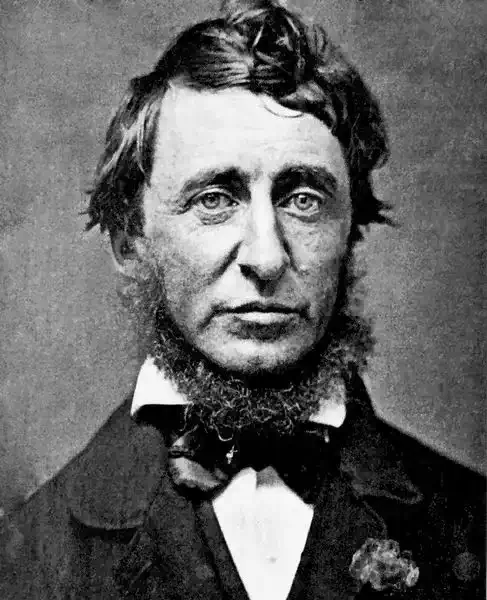
Henry David Thoreau
The Poet's Delay
The Poet's Delay
IN vain I see the morning rise,
In vain observe the western blaze,
Who idly look to other skies,
Expecting life by other ways.
Amidst such boundless wealth without,
I only still am poor within,
The birds have sung their summer out,
But still my spring does not begin.
Shall I then wait the autumn wind,
Compelled to seek a milder day,
And leave no curious nest behind,
No woods still echoing to my lay?
IN vain I see the morning rise,
In vain observe the western blaze,
Who idly look to other skies,
Expecting life by other ways.
Amidst such boundless wealth without,
I only still am poor within,
The birds have sung their summer out,
But still my spring does not begin.
Shall I then wait the autumn wind,
Compelled to seek a milder day,
And leave no curious nest behind,
No woods still echoing to my lay?
222
Henry David Thoreau
The Inward Morning
The Inward Morning
Packed in my mind lie all the clothes
Which outward nature wears,
And in its fashion's hourly change
It all things else repairs.
In vain I look for change abroad,
And can no difference find,
Till some new ray of peace uncalled
Illumes my inmost mind.
What is it gilds the trees and clouds,
And paints the heavens so gay,
But yonder fast-abiding light
With its unchanging ray?
Lo, when the sun streams through the wood,
Upon a winter's morn,
Where'er his silent beams intrude,
The murky night is gone.
How could the patient pine have known
The morning breeze would come,
Or humble flowers anticipate
The insect's noonday hum--
Till the new light with morning cheer
From far streamed through the aisles,
And nimbly told the forest trees
For many stretching miles?
I've heard within my inmost soul
Such cheerful morning news,
In the horizon of my mind
Have seen such orient hues,
As in the twilight of the dawn,
When the first birds awake,
Are heard within some silent wood,
Where they the small twigs break,
Or in the eastern skies are seen,
Before the sun appears,
The harbingers of summer heats
Which from afar he bears.
Packed in my mind lie all the clothes
Which outward nature wears,
And in its fashion's hourly change
It all things else repairs.
In vain I look for change abroad,
And can no difference find,
Till some new ray of peace uncalled
Illumes my inmost mind.
What is it gilds the trees and clouds,
And paints the heavens so gay,
But yonder fast-abiding light
With its unchanging ray?
Lo, when the sun streams through the wood,
Upon a winter's morn,
Where'er his silent beams intrude,
The murky night is gone.
How could the patient pine have known
The morning breeze would come,
Or humble flowers anticipate
The insect's noonday hum--
Till the new light with morning cheer
From far streamed through the aisles,
And nimbly told the forest trees
For many stretching miles?
I've heard within my inmost soul
Such cheerful morning news,
In the horizon of my mind
Have seen such orient hues,
As in the twilight of the dawn,
When the first birds awake,
Are heard within some silent wood,
Where they the small twigs break,
Or in the eastern skies are seen,
Before the sun appears,
The harbingers of summer heats
Which from afar he bears.
223
Henry David Thoreau
Song Of Nature
Song Of Nature
Mine are the night and morning,
The pits of air, the gull of space,
The sportive sun, the gibbous moon,
The innumerable days.
I hide in the solar glory,
I am dumb in the pealing song,
I rest on the pitch of the torrent,
In slumber I am strong.
No numbers have counted my tallies,
No tribes my house can fill,
I sit by the shining Fount of Life
And pour the deluge still;
And ever by delicate powers
Gathering along the centuries
From race on race the rarest flowers,
My wreath shall nothing miss.
And many a thousand summers
My gardens ripened well,
And light from meliorating stars
With firmer glory fell.
I wrote the past in characters
Of rock and fire the scroll,
The building in the coral sea,
The planting of the coal.
And thefts from satellites and rings
And broken stars I drew,
And out of spent and aged things
I formed the world anew;
What time the gods kept carnival,
Tricked out in star and flower,
And in cramp elf and saurian forms
They swathed their too much power.
Time and Thought were my surveyors,
They laid their courses well,
They boiled the sea, and piled the layers
Of granite, marl and shell.
But he, the man-child glorious, -
Where tarries he the while?
The rainbow shines his harbinger,
The sunset gleams his smile.
My boreal lights leap upward,
Forthright my planets roll,
And still the man-child is not born,
The summit of the whole.
Must time and tide forever run?
Will never my winds go sleep in the west?
Will never my wheels which whirl the sun
And satellites have rest?
Too much of donning and doffing,
Too slow the rainbow fades,
I weary of my robe of snow,
My leaves and my cascades;
I tire of globes and races,
Too long the game is played;
What without him is summer's pomp,
Or winter's frozen shade?
I travail in pain for him,
My creatures travail and wait;
His couriers come by squadrons,
He comes not to the gate.
Twice I have moulded an image,
And thrice outstretched my hand,
Made one of day and one of night
And one of the salt sea-sand.
One in a Judaean manger,
And one by Avon stream,
One over against the mouths of Nile,
And one in the Academe.
I moulded kings and saviors,
And bards o'er kings to rule; -
But fell the starry influence short,
The cup was never full.
Yet whirl the glowing wheels once more,
And mix the bowl again;
Seethe, Fate! the ancient elements,
Heat, cold, wet, dry, and peace, and pain.
Let war and trade and creeds and song
Blend, ripen race on race,
The sunburnt world a man shall breed
Of all the zones and countless days.
No ray is dimmed, no atom worn,
My oldest force is good as new,
And the fresh rose on yonder thorn
Gives back the bending heavens in dew.
Mine are the night and morning,
The pits of air, the gull of space,
The sportive sun, the gibbous moon,
The innumerable days.
I hide in the solar glory,
I am dumb in the pealing song,
I rest on the pitch of the torrent,
In slumber I am strong.
No numbers have counted my tallies,
No tribes my house can fill,
I sit by the shining Fount of Life
And pour the deluge still;
And ever by delicate powers
Gathering along the centuries
From race on race the rarest flowers,
My wreath shall nothing miss.
And many a thousand summers
My gardens ripened well,
And light from meliorating stars
With firmer glory fell.
I wrote the past in characters
Of rock and fire the scroll,
The building in the coral sea,
The planting of the coal.
And thefts from satellites and rings
And broken stars I drew,
And out of spent and aged things
I formed the world anew;
What time the gods kept carnival,
Tricked out in star and flower,
And in cramp elf and saurian forms
They swathed their too much power.
Time and Thought were my surveyors,
They laid their courses well,
They boiled the sea, and piled the layers
Of granite, marl and shell.
But he, the man-child glorious, -
Where tarries he the while?
The rainbow shines his harbinger,
The sunset gleams his smile.
My boreal lights leap upward,
Forthright my planets roll,
And still the man-child is not born,
The summit of the whole.
Must time and tide forever run?
Will never my winds go sleep in the west?
Will never my wheels which whirl the sun
And satellites have rest?
Too much of donning and doffing,
Too slow the rainbow fades,
I weary of my robe of snow,
My leaves and my cascades;
I tire of globes and races,
Too long the game is played;
What without him is summer's pomp,
Or winter's frozen shade?
I travail in pain for him,
My creatures travail and wait;
His couriers come by squadrons,
He comes not to the gate.
Twice I have moulded an image,
And thrice outstretched my hand,
Made one of day and one of night
And one of the salt sea-sand.
One in a Judaean manger,
And one by Avon stream,
One over against the mouths of Nile,
And one in the Academe.
I moulded kings and saviors,
And bards o'er kings to rule; -
But fell the starry influence short,
The cup was never full.
Yet whirl the glowing wheels once more,
And mix the bowl again;
Seethe, Fate! the ancient elements,
Heat, cold, wet, dry, and peace, and pain.
Let war and trade and creeds and song
Blend, ripen race on race,
The sunburnt world a man shall breed
Of all the zones and countless days.
No ray is dimmed, no atom worn,
My oldest force is good as new,
And the fresh rose on yonder thorn
Gives back the bending heavens in dew.
270
Henry David Thoreau
Tall Ambrosia
Tall Ambrosia
Among the signs of autumn I perceive
The Roman wormwood (called by learned men
Ambrosia elatior, food for gods,—
For to impartial science the humblest weed
Is as immortal once as the proudest flower—)
Sprinkles its yellow dust over my shoes
As I cross the now neglected garden.
—We trample under foot the food of gods
And spill their nectar in each dropp of dew—
My honest shoes, fast friends that never stray
Far from my couch, thus powdered, countryfied,
Bearing many a mile the marks of their adventure,
At the post-house disgrace the Gallic gloss
Of those well dressed ones who no morning dew
Nor Roman wormwood ever have been through,
Who never walk but are transported rather—
For what old crime of theirs I do not gather.
Among the signs of autumn I perceive
The Roman wormwood (called by learned men
Ambrosia elatior, food for gods,—
For to impartial science the humblest weed
Is as immortal once as the proudest flower—)
Sprinkles its yellow dust over my shoes
As I cross the now neglected garden.
—We trample under foot the food of gods
And spill their nectar in each dropp of dew—
My honest shoes, fast friends that never stray
Far from my couch, thus powdered, countryfied,
Bearing many a mile the marks of their adventure,
At the post-house disgrace the Gallic gloss
Of those well dressed ones who no morning dew
Nor Roman wormwood ever have been through,
Who never walk but are transported rather—
For what old crime of theirs I do not gather.
214
Henry David Thoreau
Rumors from an Aeolian Harp
Rumors from an Aeolian Harp
There is a vale which none hath seen,
Where foot of man has never been,
Such as here lives with toil and strife,
An anxious and a sinful life.
There every virtue has its birth,
Ere it descends upon the earth,
And thither every deed returns,
Which in the generous bosom burns.
There love is warm, and youth is young,
And poetry is yet unsung.
For Virtue still adventures there,
And freely breathes her native air.
And ever, if you hearken well,
You still may hear its vesper bell,
And tread of high-souled men go by,
Their thoughts conversing with the sky.
There is a vale which none hath seen,
Where foot of man has never been,
Such as here lives with toil and strife,
An anxious and a sinful life.
There every virtue has its birth,
Ere it descends upon the earth,
And thither every deed returns,
Which in the generous bosom burns.
There love is warm, and youth is young,
And poetry is yet unsung.
For Virtue still adventures there,
And freely breathes her native air.
And ever, if you hearken well,
You still may hear its vesper bell,
And tread of high-souled men go by,
Their thoughts conversing with the sky.
313