

Poems in this topic
Others
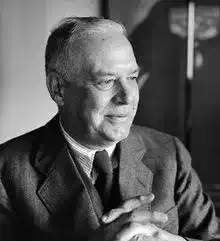
Wallace Stevens
Continual Conversation With A Silent Man
Continual Conversation With A Silent Man
The old brown hen and the old blue sky,
Between the two we live and die--
The broken cartwheel on the hill.
As if, in the presence of the sea,
We dried our nets and mended sail
And talked of never-ending things,
Of the never-ending storm of will,
One will and many wills, and the wind,
Of many meanings in the leaves,
Brought down to one below the eaves,
Link, of that tempest, to the farm,
The chain of the turquoise hen and sky
And the wheel that broke as the cart went by.
It is not a voice that is under the eaves.
It is not speech, the sound we hear
In this conversation, but the sound
Of things and their motion: the other man,
A turquoise monster moving round.
The old brown hen and the old blue sky,
Between the two we live and die--
The broken cartwheel on the hill.
As if, in the presence of the sea,
We dried our nets and mended sail
And talked of never-ending things,
Of the never-ending storm of will,
One will and many wills, and the wind,
Of many meanings in the leaves,
Brought down to one below the eaves,
Link, of that tempest, to the farm,
The chain of the turquoise hen and sky
And the wheel that broke as the cart went by.
It is not a voice that is under the eaves.
It is not speech, the sound we hear
In this conversation, but the sound
Of things and their motion: the other man,
A turquoise monster moving round.
369
Wallace Stevens
A High-Toned Old Christian Woman
A High-Toned Old Christian Woman
Poetry is the supreme fiction, madame.
Take the moral law and make a nave of it
And from the nave build haunted heaven. Thus,
The conscience is converted into palms,
Like windy citherns hankering for hymns.
We agree in principle. That's clear. But take
The opposing law and make a peristyle,
And from the peristyle project a masque
Beyond the planets. Thus, our bawdiness,
Unpurged by epitaph, indulged at last,
Is equally converted into palms,
Squiggling like saxophones. And palm for palm,
Madame, we are where we began. Allow,
Therefore, that in the planetary scene
Your disaffected flagellants, well-stuffed,
Smacking their muzzy bellies in parade,
Proud of such novelties of the sublime,
Such tink and tank and tunk-a-tunk-tunk,
May, merely may, madame, whip from themselves
A jovial hullabaloo among the spheres.
This will make widows wince. But fictive things
Wink as they will. Wink most when widows wince.
Poetry is the supreme fiction, madame.
Take the moral law and make a nave of it
And from the nave build haunted heaven. Thus,
The conscience is converted into palms,
Like windy citherns hankering for hymns.
We agree in principle. That's clear. But take
The opposing law and make a peristyle,
And from the peristyle project a masque
Beyond the planets. Thus, our bawdiness,
Unpurged by epitaph, indulged at last,
Is equally converted into palms,
Squiggling like saxophones. And palm for palm,
Madame, we are where we began. Allow,
Therefore, that in the planetary scene
Your disaffected flagellants, well-stuffed,
Smacking their muzzy bellies in parade,
Proud of such novelties of the sublime,
Such tink and tank and tunk-a-tunk-tunk,
May, merely may, madame, whip from themselves
A jovial hullabaloo among the spheres.
This will make widows wince. But fictive things
Wink as they will. Wink most when widows wince.
331
Wallace Stevens
A High-Toned Old Christian Woman
A High-Toned Old Christian Woman
Poetry is the supreme fiction, madame.
Take the moral law and make a nave of it
And from the nave build haunted heaven. Thus,
The conscience is converted into palms,
Like windy citherns hankering for hymns.
We agree in principle. That's clear. But take
The opposing law and make a peristyle,
And from the peristyle project a masque
Beyond the planets. Thus, our bawdiness,
Unpurged by epitaph, indulged at last,
Is equally converted into palms,
Squiggling like saxophones. And palm for palm,
Madame, we are where we began. Allow,
Therefore, that in the planetary scene
Your disaffected flagellants, well-stuffed,
Smacking their muzzy bellies in parade,
Proud of such novelties of the sublime,
Such tink and tank and tunk-a-tunk-tunk,
May, merely may, madame, whip from themselves
A jovial hullabaloo among the spheres.
This will make widows wince. But fictive things
Wink as they will. Wink most when widows wince.
Poetry is the supreme fiction, madame.
Take the moral law and make a nave of it
And from the nave build haunted heaven. Thus,
The conscience is converted into palms,
Like windy citherns hankering for hymns.
We agree in principle. That's clear. But take
The opposing law and make a peristyle,
And from the peristyle project a masque
Beyond the planets. Thus, our bawdiness,
Unpurged by epitaph, indulged at last,
Is equally converted into palms,
Squiggling like saxophones. And palm for palm,
Madame, we are where we began. Allow,
Therefore, that in the planetary scene
Your disaffected flagellants, well-stuffed,
Smacking their muzzy bellies in parade,
Proud of such novelties of the sublime,
Such tink and tank and tunk-a-tunk-tunk,
May, merely may, madame, whip from themselves
A jovial hullabaloo among the spheres.
This will make widows wince. But fictive things
Wink as they will. Wink most when widows wince.
331
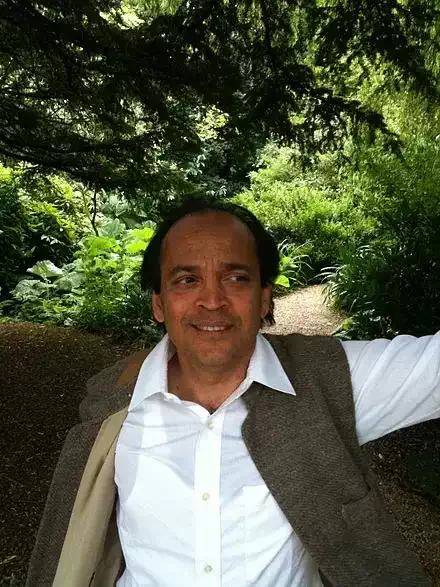
Vikram Seth
At Evening
At Evening
Let me now sleep, let me not think, let me
Not ache with inconsistent tenderness.
It was untenable delight; we are free--
Separate, equal--and if loverless,
Love consumes time which is more dear than love,
More unreplicable. With everything
Thus posited, the choice was clear enough
And daylight ratified our reckoning.
Now only movement marks the birds from the pines;
Now it's dark; the blinded stars appear;
I am alone, you cannot read these lines
Who are with me when no one else is here,
Who are with me and cannot hear my voice
And take my hand and abrogate the choice.
Let me now sleep, let me not think, let me
Not ache with inconsistent tenderness.
It was untenable delight; we are free--
Separate, equal--and if loverless,
Love consumes time which is more dear than love,
More unreplicable. With everything
Thus posited, the choice was clear enough
And daylight ratified our reckoning.
Now only movement marks the birds from the pines;
Now it's dark; the blinded stars appear;
I am alone, you cannot read these lines
Who are with me when no one else is here,
Who are with me and cannot hear my voice
And take my hand and abrogate the choice.
646
Vikram Seth
From California
From California
Sunday night in the house.
The blinds drawn, the phone dead.
The sound of the kettle, the rain.
Supper: cheese, celery, bread.
For company, old letters
In the same disjointed script.
Old love wells up again,
All that I thought had slipped
Through the sieve of long absence
Is here with me again:
The long stone walls, the green
Hillsides renewed with rain.
The way you would lick your finger
And touch your forehead, the way
You hummed a phrase from the flute
Sonatas, or turned to say,
"Larches--the only conifers
That honestly blend with Wales."
I walk with you again
Along these settled trails.
It seems I started this poem
So many years ago
I cannt follow its ending
And must begin anew.
Blame, some bitterness,
I recall there were these.
Yet what survives is Bach
And a few blackberries
Something of the "falling starlight",
In the phrase of Wang Wei,
Falls on my shadowed self.
I thank you that today
His words are open to me.
How much you have inspired
You cannot know. The end
Left much to be desired.
"There is a comfort in
The strength of love." I quote
Another favourite
You vouchsafed me. Please note
The lack of hope or faith:
Neither is justified.
I have closed out the night.
The random rain outside
Rejuvenates the parched
Foothills along the Bay.
Anaesthetised by years
I think of you today
Not with impassionedness
So much as half a smile
To see the weathered past
Still worth my present while.
Sunday night in the house.
The blinds drawn, the phone dead.
The sound of the kettle, the rain.
Supper: cheese, celery, bread.
For company, old letters
In the same disjointed script.
Old love wells up again,
All that I thought had slipped
Through the sieve of long absence
Is here with me again:
The long stone walls, the green
Hillsides renewed with rain.
The way you would lick your finger
And touch your forehead, the way
You hummed a phrase from the flute
Sonatas, or turned to say,
"Larches--the only conifers
That honestly blend with Wales."
I walk with you again
Along these settled trails.
It seems I started this poem
So many years ago
I cannt follow its ending
And must begin anew.
Blame, some bitterness,
I recall there were these.
Yet what survives is Bach
And a few blackberries
Something of the "falling starlight",
In the phrase of Wang Wei,
Falls on my shadowed self.
I thank you that today
His words are open to me.
How much you have inspired
You cannot know. The end
Left much to be desired.
"There is a comfort in
The strength of love." I quote
Another favourite
You vouchsafed me. Please note
The lack of hope or faith:
Neither is justified.
I have closed out the night.
The random rain outside
Rejuvenates the parched
Foothills along the Bay.
Anaesthetised by years
I think of you today
Not with impassionedness
So much as half a smile
To see the weathered past
Still worth my present while.
652
Vikram Seth
A Style Of Loving
A Style Of Loving
Light now restricts itself
To the top half of trees;
The angled sun
Slants honey-coloured rays
That lessen to the ground
As we bike through
The corridor of Palm Drive
We two
Have reached a safety the years
Can claim to have created:
Unconsumated, therefore
Unjaded, unsated.
Picnic, movie, ice-cream;
Talk; to clear my head
Hot buttered rum - coffee for you;
And so not to bed
And so we have set the question
Aside, gently.
Were we to become lovers
Where would our best friends be?
You do not wish, nor I
To risk again
This savoured light for noon's
High joy or pain.
Light now restricts itself
To the top half of trees;
The angled sun
Slants honey-coloured rays
That lessen to the ground
As we bike through
The corridor of Palm Drive
We two
Have reached a safety the years
Can claim to have created:
Unconsumated, therefore
Unjaded, unsated.
Picnic, movie, ice-cream;
Talk; to clear my head
Hot buttered rum - coffee for you;
And so not to bed
And so we have set the question
Aside, gently.
Were we to become lovers
Where would our best friends be?
You do not wish, nor I
To risk again
This savoured light for noon's
High joy or pain.
885
Vikram Seth
Across
Across
Across these miles I wish you well.
May nothing haunt your heart but sleep.
May you not sense what I don't tell.
May you not dream, or doubt, or weep.
May what my pen this peaceless day
Writes on this page not reach your view
Till its deferred print lets you say
It speaks to someone else than you.
Across these miles I wish you well.
May nothing haunt your heart but sleep.
May you not sense what I don't tell.
May you not dream, or doubt, or weep.
May what my pen this peaceless day
Writes on this page not reach your view
Till its deferred print lets you say
It speaks to someone else than you.
689

D.H. Lawrence
The Genesis of the Butterfly
The Genesis of the Butterfly
The dawn is smiling on the dew that covers
The tearful roses; lo, the little lovers
That kiss the buds, and all the flutterings
In jasmine bloom, and privet, of white wings,
That go and come, and fly, and peep and hide,
With muffled music, murmured far and wide.
Ah, the Spring time, when we think of all the lays
That dreamy lovers send to dreamy mays,
Of the fond hearts within a billet bound,
Of all the soft silk paper that pens wound,
The messages of love that mortals write
Filled with intoxication of delight,
Written in April and before the May time
Shredded and flown, playthings for the wind's playtime,
We dream that all white butterflies above,
Who seek through clouds or waters souls to love,
And leave their lady mistress in despair,
To flit to flowers, as kinder and more fair,
Are but torn love-letters, that through the skies
Flutter, and float, and change to butterflies
The dawn is smiling on the dew that covers
The tearful roses; lo, the little lovers
That kiss the buds, and all the flutterings
In jasmine bloom, and privet, of white wings,
That go and come, and fly, and peep and hide,
With muffled music, murmured far and wide.
Ah, the Spring time, when we think of all the lays
That dreamy lovers send to dreamy mays,
Of the fond hearts within a billet bound,
Of all the soft silk paper that pens wound,
The messages of love that mortals write
Filled with intoxication of delight,
Written in April and before the May time
Shredded and flown, playthings for the wind's playtime,
We dream that all white butterflies above,
Who seek through clouds or waters souls to love,
And leave their lady mistress in despair,
To flit to flowers, as kinder and more fair,
Are but torn love-letters, that through the skies
Flutter, and float, and change to butterflies
322
D.H. Lawrence
The Genesis of the Butterfly
The Genesis of the Butterfly
The dawn is smiling on the dew that covers
The tearful roses; lo, the little lovers
That kiss the buds, and all the flutterings
In jasmine bloom, and privet, of white wings,
That go and come, and fly, and peep and hide,
With muffled music, murmured far and wide.
Ah, the Spring time, when we think of all the lays
That dreamy lovers send to dreamy mays,
Of the fond hearts within a billet bound,
Of all the soft silk paper that pens wound,
The messages of love that mortals write
Filled with intoxication of delight,
Written in April and before the May time
Shredded and flown, playthings for the wind's playtime,
We dream that all white butterflies above,
Who seek through clouds or waters souls to love,
And leave their lady mistress in despair,
To flit to flowers, as kinder and more fair,
Are but torn love-letters, that through the skies
Flutter, and float, and change to butterflies
The dawn is smiling on the dew that covers
The tearful roses; lo, the little lovers
That kiss the buds, and all the flutterings
In jasmine bloom, and privet, of white wings,
That go and come, and fly, and peep and hide,
With muffled music, murmured far and wide.
Ah, the Spring time, when we think of all the lays
That dreamy lovers send to dreamy mays,
Of the fond hearts within a billet bound,
Of all the soft silk paper that pens wound,
The messages of love that mortals write
Filled with intoxication of delight,
Written in April and before the May time
Shredded and flown, playthings for the wind's playtime,
We dream that all white butterflies above,
Who seek through clouds or waters souls to love,
And leave their lady mistress in despair,
To flit to flowers, as kinder and more fair,
Are but torn love-letters, that through the skies
Flutter, and float, and change to butterflies
322
D.H. Lawrence
Letter
Letter
You can see it already: chalks and ochers;
Country crossed with a thousand furrow-lines;
Ground-level rooftops hidden by the shrubbery;
Sporadic haystacks standing on the grass;
Smoky old rooftops tarnishing the landscape;
A river (not Cayster or Ganges, though:
A feeble Norman salt-infested watercourse);
On the right, to the north, bizarre terrain
All angular--you'd think a shovel did it.
So that's the foreground. An old chapel adds
Its antique spire, and gathers alongside it
A few gnarled elms with grumpy silhouettes;
Seemingly tired of all the frisky breezes,
They carp at every gust that stirs them up.
At one side of my house a big wheelbarrow
Is rusting; and before me lies the vast
Horizon, all its notches filled with ocean blue;
Cocks and hens spread their gildings, and converse
Beneath my window; and the rooftop attics,
Now and then, toss me songs in dialect.
In my lane dwells a patriarchal rope-maker;
The old man makes his wheel run loud, and goes
Retrograde, hemp wreathed tightly round the midriff.
I like these waters where the wild gale scuds;
All day the country tempts me to go strolling;
The little village urchins, book in hand,
Envy me, at the schoolmaster's (my lodging),
As a big schoolboy sneaking a day off.
The air is pure, the sky smiles; there's a constant
Soft noise of children spelling things aloud.
The waters flow; a linnet flies; and I say: "Thank you!
Thank you, Almighty God!"--So, then, I live:
Peacefully, hour by hour, with little fuss, I shed
My days, and think of you, my lady fair!
I hear the children chattering; and I see, at times,
Sailing across the high seas in its pride,
Over the gables of the tranquil village,
Some winged ship which is traveling far away,
Flying across the ocean, hounded by all the winds.
Lately it slept in port beside the quay.
Nothing has kept it from the jealous sea-surge:
No tears of relatives, nor fears of wives,
Nor reefs dimly reflected in the waters,
Nor importunity of sinister birds.
You can see it already: chalks and ochers;
Country crossed with a thousand furrow-lines;
Ground-level rooftops hidden by the shrubbery;
Sporadic haystacks standing on the grass;
Smoky old rooftops tarnishing the landscape;
A river (not Cayster or Ganges, though:
A feeble Norman salt-infested watercourse);
On the right, to the north, bizarre terrain
All angular--you'd think a shovel did it.
So that's the foreground. An old chapel adds
Its antique spire, and gathers alongside it
A few gnarled elms with grumpy silhouettes;
Seemingly tired of all the frisky breezes,
They carp at every gust that stirs them up.
At one side of my house a big wheelbarrow
Is rusting; and before me lies the vast
Horizon, all its notches filled with ocean blue;
Cocks and hens spread their gildings, and converse
Beneath my window; and the rooftop attics,
Now and then, toss me songs in dialect.
In my lane dwells a patriarchal rope-maker;
The old man makes his wheel run loud, and goes
Retrograde, hemp wreathed tightly round the midriff.
I like these waters where the wild gale scuds;
All day the country tempts me to go strolling;
The little village urchins, book in hand,
Envy me, at the schoolmaster's (my lodging),
As a big schoolboy sneaking a day off.
The air is pure, the sky smiles; there's a constant
Soft noise of children spelling things aloud.
The waters flow; a linnet flies; and I say: "Thank you!
Thank you, Almighty God!"--So, then, I live:
Peacefully, hour by hour, with little fuss, I shed
My days, and think of you, my lady fair!
I hear the children chattering; and I see, at times,
Sailing across the high seas in its pride,
Over the gables of the tranquil village,
Some winged ship which is traveling far away,
Flying across the ocean, hounded by all the winds.
Lately it slept in port beside the quay.
Nothing has kept it from the jealous sea-surge:
No tears of relatives, nor fears of wives,
Nor reefs dimly reflected in the waters,
Nor importunity of sinister birds.
242
D.H. Lawrence
Boaz Asleep
Boaz Asleep
Boaz, overcome with weariness, by torchlight
made his pallet on the threshing floor
where all day he had worked, and now he slept
among the bushels of threshed wheat.
The old man owned wheatfields and barley,
and though he was rich, he was still fair-minded.
No filth soured the sweetness of his well.
No hot iron of torture whitened in his forge.
His beard was silver as a brook in April.
He bound sheaves without the strain of hate
or envy. He saw gleaners pass, and said,
Let handfuls of the fat ears fall to them.
The man's mind, clear of untoward feeling,
clothed itself in candor. He wore clean robes.
His heaped granaries spilled over always
toward the poor, no less than public fountains.
Boaz did well by his workers and by kinsmen.
He was generous, and moderate. Women held him
worthier than younger men, for youth is handsome,
but to him in his old age came greatness.
An old man, nearing his first source, may find
the timelessness beyond times of trouble.
And though fire burned in young men's eyes,
to Ruth the eyes of Boaz shone clear light.
Boaz, overcome with weariness, by torchlight
made his pallet on the threshing floor
where all day he had worked, and now he slept
among the bushels of threshed wheat.
The old man owned wheatfields and barley,
and though he was rich, he was still fair-minded.
No filth soured the sweetness of his well.
No hot iron of torture whitened in his forge.
His beard was silver as a brook in April.
He bound sheaves without the strain of hate
or envy. He saw gleaners pass, and said,
Let handfuls of the fat ears fall to them.
The man's mind, clear of untoward feeling,
clothed itself in candor. He wore clean robes.
His heaped granaries spilled over always
toward the poor, no less than public fountains.
Boaz did well by his workers and by kinsmen.
He was generous, and moderate. Women held him
worthier than younger men, for youth is handsome,
but to him in his old age came greatness.
An old man, nearing his first source, may find
the timelessness beyond times of trouble.
And though fire burned in young men's eyes,
to Ruth the eyes of Boaz shone clear light.
261
D.H. Lawrence
Boaz Asleep
Boaz Asleep
Boaz, overcome with weariness, by torchlight
made his pallet on the threshing floor
where all day he had worked, and now he slept
among the bushels of threshed wheat.
The old man owned wheatfields and barley,
and though he was rich, he was still fair-minded.
No filth soured the sweetness of his well.
No hot iron of torture whitened in his forge.
His beard was silver as a brook in April.
He bound sheaves without the strain of hate
or envy. He saw gleaners pass, and said,
Let handfuls of the fat ears fall to them.
The man's mind, clear of untoward feeling,
clothed itself in candor. He wore clean robes.
His heaped granaries spilled over always
toward the poor, no less than public fountains.
Boaz did well by his workers and by kinsmen.
He was generous, and moderate. Women held him
worthier than younger men, for youth is handsome,
but to him in his old age came greatness.
An old man, nearing his first source, may find
the timelessness beyond times of trouble.
And though fire burned in young men's eyes,
to Ruth the eyes of Boaz shone clear light.
Boaz, overcome with weariness, by torchlight
made his pallet on the threshing floor
where all day he had worked, and now he slept
among the bushels of threshed wheat.
The old man owned wheatfields and barley,
and though he was rich, he was still fair-minded.
No filth soured the sweetness of his well.
No hot iron of torture whitened in his forge.
His beard was silver as a brook in April.
He bound sheaves without the strain of hate
or envy. He saw gleaners pass, and said,
Let handfuls of the fat ears fall to them.
The man's mind, clear of untoward feeling,
clothed itself in candor. He wore clean robes.
His heaped granaries spilled over always
toward the poor, no less than public fountains.
Boaz did well by his workers and by kinsmen.
He was generous, and moderate. Women held him
worthier than younger men, for youth is handsome,
but to him in his old age came greatness.
An old man, nearing his first source, may find
the timelessness beyond times of trouble.
And though fire burned in young men's eyes,
to Ruth the eyes of Boaz shone clear light.
261
D.H. Lawrence
Beneath their solemn beauty is a mystery infinite:
Beneath their solemn beauty is a mystery infinite:
If winter hue them like a pall, or if the summer night
Fantasy them starre brede.
If winter hue them like a pall, or if the summer night
Fantasy them starre brede.
162
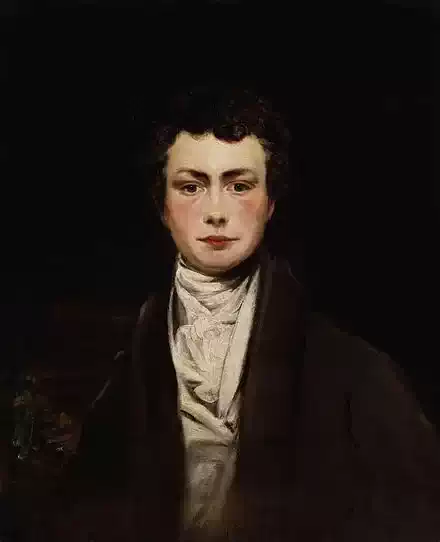
Thomas Moore
Wreath the Bowl
Wreath the Bowl
Wreath the bowl
With flowers of soul,
The brightest Wit can find us,
We'll take a flight
Towards heaven to-night,
And leave dull earth behind us.
Should Love amid
The wreaths be hid
That Joy, the enchanter, brings us,
No danger fear,
While wine is near --
We'll drown him if he stings us.
Then, wreath the bowl
With flowers of soul,
The brightest Wit can find us.
We'll take a flight
Towards heaven to-night,
And leave dull earth behind us.
'Twas nectar fed
Of old, 'tis said,
Their Junos, Joves, Apollos,
And man may brew
His nectar too,
The rich receipt's as follows:
Take wine like this,
Let looks of bliss
Around it well be blended,
Then bring Wit's beam
To warm the stream,
And there's your nectar, splendid!
So, wreath the bowl,
With flowers of soul,
The brightest Wit can find us,
We'll take a flight
Towards heaven to-night,
And leave dull earth behind us.
Say, why did Time
His glass sublime
Fill up with sands unsightly,
When wine, he knew,
Runs brisker through,
And sparkles far more brightly?
Oh, lend it us,
And, smiling thus,
The glass in two we'll sever,
Make pleasure glide
In double tide,
And fill both ends for ever!
Then, wreath the bowl
With flowers of soul
The brightest Wit can find us;
We'll take a flight
Towards heaven to-night,
And leave dull earth behind us.
Wreath the bowl
With flowers of soul,
The brightest Wit can find us,
We'll take a flight
Towards heaven to-night,
And leave dull earth behind us.
Should Love amid
The wreaths be hid
That Joy, the enchanter, brings us,
No danger fear,
While wine is near --
We'll drown him if he stings us.
Then, wreath the bowl
With flowers of soul,
The brightest Wit can find us.
We'll take a flight
Towards heaven to-night,
And leave dull earth behind us.
'Twas nectar fed
Of old, 'tis said,
Their Junos, Joves, Apollos,
And man may brew
His nectar too,
The rich receipt's as follows:
Take wine like this,
Let looks of bliss
Around it well be blended,
Then bring Wit's beam
To warm the stream,
And there's your nectar, splendid!
So, wreath the bowl,
With flowers of soul,
The brightest Wit can find us,
We'll take a flight
Towards heaven to-night,
And leave dull earth behind us.
Say, why did Time
His glass sublime
Fill up with sands unsightly,
When wine, he knew,
Runs brisker through,
And sparkles far more brightly?
Oh, lend it us,
And, smiling thus,
The glass in two we'll sever,
Make pleasure glide
In double tide,
And fill both ends for ever!
Then, wreath the bowl
With flowers of soul
The brightest Wit can find us;
We'll take a flight
Towards heaven to-night,
And leave dull earth behind us.
197
Thomas Moore
Whene'er I See Those Smiling Eyes
Whene'er I See Those Smiling Eyes
Whene'er I see those smiling eyes,
So full of hope, and joy, and light,
As if no cloud could ever rise,
To dim a heaven so purely bright --
I sigh to think how soon that brow
In grief may lose its every ray,
And that light heart, so joyous now,
Almost forget it once was gay.
For time will come with all its blights,
The ruin'd hope, the friend unkind,
And love, that leaves, where'er it lights,
A chill'd or burning heart behind:
While youth, that now like snow appears,
Ere sullied by the darkening rain,
When once 'tis touch'd by sorrow's tears,
Can never shine so bright again.
Whene'er I see those smiling eyes,
So full of hope, and joy, and light,
As if no cloud could ever rise,
To dim a heaven so purely bright --
I sigh to think how soon that brow
In grief may lose its every ray,
And that light heart, so joyous now,
Almost forget it once was gay.
For time will come with all its blights,
The ruin'd hope, the friend unkind,
And love, that leaves, where'er it lights,
A chill'd or burning heart behind:
While youth, that now like snow appears,
Ere sullied by the darkening rain,
When once 'tis touch'd by sorrow's tears,
Can never shine so bright again.
214
Thomas Moore
While Gazing on the Moon's Light
While Gazing on the Moon's Light
While gazing on the moon's light,
A moment from her smile I turn'd,
To look at orbs that, more bright,
In lone and distant glory burn'd.
But too far
Each proud star,
For me to feel its warming flame;
Much more dear
That mild sphere,
Which near our planet smiling came;
Thus, Mary, be but thou my own,
While brighter eyes unheeded play,
I'll love those moonlight looks alone
That bless my home and guide my way.
The day had sunk in dim showers,
But midnight now, with lustre meet,
Illumined all the pale flowers,
Like hope upon a mourner's cheek.
I said (while
The moon's smile
Play'd o'er a stream, in dimpling bliss,)
"The moon looks
On many brooks,
The brook can see no moon but this;"
And thus, I thought, our fortunes run,
For many a lover looks to thee,
While oh! I feel there is but one,
One Mary in the world for me.
While gazing on the moon's light,
A moment from her smile I turn'd,
To look at orbs that, more bright,
In lone and distant glory burn'd.
But too far
Each proud star,
For me to feel its warming flame;
Much more dear
That mild sphere,
Which near our planet smiling came;
Thus, Mary, be but thou my own,
While brighter eyes unheeded play,
I'll love those moonlight looks alone
That bless my home and guide my way.
The day had sunk in dim showers,
But midnight now, with lustre meet,
Illumined all the pale flowers,
Like hope upon a mourner's cheek.
I said (while
The moon's smile
Play'd o'er a stream, in dimpling bliss,)
"The moon looks
On many brooks,
The brook can see no moon but this;"
And thus, I thought, our fortunes run,
For many a lover looks to thee,
While oh! I feel there is but one,
One Mary in the world for me.
198
Thomas Moore
When First I Met Thee
When First I Met Thee
When first I met thee, warm and young,
There shone such truth about thee,
And on thy lip such promise hung,
I did not dare to doubt thee.
I saw thee change, yet still relied,
Still clung with hope the fonder,
And thought, though false to all beside,
From me thou couldst not wander.
But go, deceiver! go,
The heart, whose hopes could make it
Trust one so false, so low,
Deserves that thou shouldst break it.
When every tongue thy follies named,
I fled the unwelcome story,
Or found, in even the faults they blamed,
Some gleams of future glory.
I still was true, when nearer friends
Conspired to wrong, to slight thee;
The heart that now thy falsehood rends
Would then have bled to right thee.
But go, deceiver! go --
Some day, perhaps, thou'lt waken
From pleasure's dream, to know
The grief of hearts forsaken.
Even now, though youth its bloom has shed,
No lights of age adorn thee;
The few who loved thee once have fled,
And they who flatter scorn thee.
Thy midnight cup is pledged to slaves,
No genial ties enwreath it;
The smiling there, like light on graves,
Has rank cold hearts beneath it.
Go -- go -- though worlds were thine,
I would not now surrender
One taintless tear of mine
For all thy guilty splendour!
And days may come, thou false one! yet,
When even those ties shall sever!
When thou wilt call, with vain regret,
On her thou'st lost for ever;
On her who, in thy fortune's fall,
With smiles had still received thee,
And gladly died to prove thee all
Her fancy first believed thee.
Go -- go -- 'tis vain to curse,
'Tis weakness to upbraid thee;
Hate cannot wish thee worse
Than guilt and shame have made thee.
When first I met thee, warm and young,
There shone such truth about thee,
And on thy lip such promise hung,
I did not dare to doubt thee.
I saw thee change, yet still relied,
Still clung with hope the fonder,
And thought, though false to all beside,
From me thou couldst not wander.
But go, deceiver! go,
The heart, whose hopes could make it
Trust one so false, so low,
Deserves that thou shouldst break it.
When every tongue thy follies named,
I fled the unwelcome story,
Or found, in even the faults they blamed,
Some gleams of future glory.
I still was true, when nearer friends
Conspired to wrong, to slight thee;
The heart that now thy falsehood rends
Would then have bled to right thee.
But go, deceiver! go --
Some day, perhaps, thou'lt waken
From pleasure's dream, to know
The grief of hearts forsaken.
Even now, though youth its bloom has shed,
No lights of age adorn thee;
The few who loved thee once have fled,
And they who flatter scorn thee.
Thy midnight cup is pledged to slaves,
No genial ties enwreath it;
The smiling there, like light on graves,
Has rank cold hearts beneath it.
Go -- go -- though worlds were thine,
I would not now surrender
One taintless tear of mine
For all thy guilty splendour!
And days may come, thou false one! yet,
When even those ties shall sever!
When thou wilt call, with vain regret,
On her thou'st lost for ever;
On her who, in thy fortune's fall,
With smiles had still received thee,
And gladly died to prove thee all
Her fancy first believed thee.
Go -- go -- 'tis vain to curse,
'Tis weakness to upbraid thee;
Hate cannot wish thee worse
Than guilt and shame have made thee.
184
Thomas Moore
We May Roam Through This World
We May Roam Through This World
We may roam through this world, like a child at a feast,
Who but sips of a sweet, and then flies to the rest;
And, when pleasure begins to grow dull in the east,
We may order our wings and be off to the west:
But if hearts that feel, and eyes that smile,
Are the dearest gifts that heaven supplies,
We never need leave our own green isle,
For sensitive hearts, and for sun-bright eyes.
Then, remember, wherever your goblet is crown'd,
Through this world, whether eastward or westward you roam,
When a cup to the smile of dear woman goes round,
Oh! remember the smile which adorns her at home.
In England, the garden of Beauty is kept
By a dragon of prudery placed within call;
But so oft this unamiable dragon has slept,
That the garden's but carelessly watch'd after all.
Oh! they want the wild sweet-briery fence
Which round the flowers of Erin dwells;
Which warns the touch, while winning the sense,
Nor charms us least when it most repels.
Then remember, wherever your goblet is crown'd,
Through this world, whether eastward or westward you roam,
When a cup to the smile of dear woman goes round,
Oh! remember the smile that adorns her at home.
In France, when the heart of a woman sets sail,
On the ocean of wedlock its fortune to try,
Love seldom goes far in a vessel so frail,
But just pilots her off, and then bids her good-bye.
While the daughters of Erin keep the boy,
Ever smiling beside his faithful oar,
Through billows of woe, and beams of joy,
The same as he look's when he left the shore.
Then remember, wherever your goblet is crown'd,
Through this world, whether eastward or westward you roam,
When a cup to the smile of dear woman goes round,
Oh! remember the smile that adorns her at home.
We may roam through this world, like a child at a feast,
Who but sips of a sweet, and then flies to the rest;
And, when pleasure begins to grow dull in the east,
We may order our wings and be off to the west:
But if hearts that feel, and eyes that smile,
Are the dearest gifts that heaven supplies,
We never need leave our own green isle,
For sensitive hearts, and for sun-bright eyes.
Then, remember, wherever your goblet is crown'd,
Through this world, whether eastward or westward you roam,
When a cup to the smile of dear woman goes round,
Oh! remember the smile which adorns her at home.
In England, the garden of Beauty is kept
By a dragon of prudery placed within call;
But so oft this unamiable dragon has slept,
That the garden's but carelessly watch'd after all.
Oh! they want the wild sweet-briery fence
Which round the flowers of Erin dwells;
Which warns the touch, while winning the sense,
Nor charms us least when it most repels.
Then remember, wherever your goblet is crown'd,
Through this world, whether eastward or westward you roam,
When a cup to the smile of dear woman goes round,
Oh! remember the smile that adorns her at home.
In France, when the heart of a woman sets sail,
On the ocean of wedlock its fortune to try,
Love seldom goes far in a vessel so frail,
But just pilots her off, and then bids her good-bye.
While the daughters of Erin keep the boy,
Ever smiling beside his faithful oar,
Through billows of woe, and beams of joy,
The same as he look's when he left the shore.
Then remember, wherever your goblet is crown'd,
Through this world, whether eastward or westward you roam,
When a cup to the smile of dear woman goes round,
Oh! remember the smile that adorns her at home.
196
Thomas Moore
Twas One of Those Dreams
Twas One of Those Dreams
'TWAS one of those dreams, that by music are brought,
Like a bright summer haze, o'er the poet's warm thought --
When, lost in the future, his soul wanders on,
And all of this life, but its sweetness, is gone.
The wild notes he heard o'er the water were those
He had taught to sing Erin's dark bondage and woes,
And the breath of the bugle now wafted them o'er
From Dinis' green isle, to Glena's wooded shore.
He listen'd -- while, high o'er the eagle's rude nest,
The lingering sounds on their way loved to rest;
And the echoes sung back from their full mountain quire,
As if loath to let song to enchanting expire.
It seem'd as if every sweet note that died here
Was again brought to life in some airier sphere,
Some heaven in those hills, where the soul of the strain
That had ceased upon earth was awaking again!
Oh forgive, if, while listening to music, whose breath
Seem'd to circle his name with a charm against death,
He should feel a proud spirit within him proclaim,
"Even so shalt thou live in the echoes of Fame:
"Even so, though thy memory should now die away,
'Twill be caught up again in some happier day,
And the hearts and the voices of Erin prolong,
Through the answering Future, thy name and thy song."
'TWAS one of those dreams, that by music are brought,
Like a bright summer haze, o'er the poet's warm thought --
When, lost in the future, his soul wanders on,
And all of this life, but its sweetness, is gone.
The wild notes he heard o'er the water were those
He had taught to sing Erin's dark bondage and woes,
And the breath of the bugle now wafted them o'er
From Dinis' green isle, to Glena's wooded shore.
He listen'd -- while, high o'er the eagle's rude nest,
The lingering sounds on their way loved to rest;
And the echoes sung back from their full mountain quire,
As if loath to let song to enchanting expire.
It seem'd as if every sweet note that died here
Was again brought to life in some airier sphere,
Some heaven in those hills, where the soul of the strain
That had ceased upon earth was awaking again!
Oh forgive, if, while listening to music, whose breath
Seem'd to circle his name with a charm against death,
He should feel a proud spirit within him proclaim,
"Even so shalt thou live in the echoes of Fame:
"Even so, though thy memory should now die away,
'Twill be caught up again in some happier day,
And the hearts and the voices of Erin prolong,
Through the answering Future, thy name and thy song."
195
Thomas Moore
Twas One of Those Dreams
Twas One of Those Dreams
'TWAS one of those dreams, that by music are brought,
Like a bright summer haze, o'er the poet's warm thought --
When, lost in the future, his soul wanders on,
And all of this life, but its sweetness, is gone.
The wild notes he heard o'er the water were those
He had taught to sing Erin's dark bondage and woes,
And the breath of the bugle now wafted them o'er
From Dinis' green isle, to Glena's wooded shore.
He listen'd -- while, high o'er the eagle's rude nest,
The lingering sounds on their way loved to rest;
And the echoes sung back from their full mountain quire,
As if loath to let song to enchanting expire.
It seem'd as if every sweet note that died here
Was again brought to life in some airier sphere,
Some heaven in those hills, where the soul of the strain
That had ceased upon earth was awaking again!
Oh forgive, if, while listening to music, whose breath
Seem'd to circle his name with a charm against death,
He should feel a proud spirit within him proclaim,
"Even so shalt thou live in the echoes of Fame:
"Even so, though thy memory should now die away,
'Twill be caught up again in some happier day,
And the hearts and the voices of Erin prolong,
Through the answering Future, thy name and thy song."
'TWAS one of those dreams, that by music are brought,
Like a bright summer haze, o'er the poet's warm thought --
When, lost in the future, his soul wanders on,
And all of this life, but its sweetness, is gone.
The wild notes he heard o'er the water were those
He had taught to sing Erin's dark bondage and woes,
And the breath of the bugle now wafted them o'er
From Dinis' green isle, to Glena's wooded shore.
He listen'd -- while, high o'er the eagle's rude nest,
The lingering sounds on their way loved to rest;
And the echoes sung back from their full mountain quire,
As if loath to let song to enchanting expire.
It seem'd as if every sweet note that died here
Was again brought to life in some airier sphere,
Some heaven in those hills, where the soul of the strain
That had ceased upon earth was awaking again!
Oh forgive, if, while listening to music, whose breath
Seem'd to circle his name with a charm against death,
He should feel a proud spirit within him proclaim,
"Even so shalt thou live in the echoes of Fame:
"Even so, though thy memory should now die away,
'Twill be caught up again in some happier day,
And the hearts and the voices of Erin prolong,
Through the answering Future, thy name and thy song."
195
Thomas Moore
To Ladies' Eyes
To Ladies' Eyes
To Ladies' eyes a round, boy,
We can't refuse, we can't refuse;
Though bright eyes so abound, boy,
'Tis hard to choose, 'tis hard to choose.
For thick as stars that lighten
Yon airy bowers, yon airy bowers,
The countless eyes that brighten
This earth of ours, this earth of ours.
But fill the cup -- where'er, boy,
Our choice may fall, our choice may fall,
We're sure to find Love there, boy,
So drink them all! so drink them all!
Some looks there are so holy,
They seem but given, they seem but given,
As shining beacons, solely,
To light to heaven, to light to heaven,
While some -- oh! ne'er believe them --
With tempting ray, with tempting ray,
Would lead us (God forgive them!)
The other way, the other way.
But fill the cup -- where'er, boy,
Our choice may fall, our choice may fall,
We're sure to find Love there, boy;
So drink them all! so drink them all!
In some, as in a mirror,
Love seems pourtray'd, Love seems pourtray'd,
But shun the flattering error,
'Tis but his shade, 'tis but his shade.
Himself has fix'd his dwelling
In eyes we know, in eyes we know,
And lips -- but this is telling --
So here they go! so here they go!
Fill up, fill up -- where'er, boy,
Our choice may fall, our choice may fall,
We're sure to find Love there, boy;
So drink them all ! so drink them all!
To Ladies' eyes a round, boy,
We can't refuse, we can't refuse;
Though bright eyes so abound, boy,
'Tis hard to choose, 'tis hard to choose.
For thick as stars that lighten
Yon airy bowers, yon airy bowers,
The countless eyes that brighten
This earth of ours, this earth of ours.
But fill the cup -- where'er, boy,
Our choice may fall, our choice may fall,
We're sure to find Love there, boy,
So drink them all! so drink them all!
Some looks there are so holy,
They seem but given, they seem but given,
As shining beacons, solely,
To light to heaven, to light to heaven,
While some -- oh! ne'er believe them --
With tempting ray, with tempting ray,
Would lead us (God forgive them!)
The other way, the other way.
But fill the cup -- where'er, boy,
Our choice may fall, our choice may fall,
We're sure to find Love there, boy;
So drink them all! so drink them all!
In some, as in a mirror,
Love seems pourtray'd, Love seems pourtray'd,
But shun the flattering error,
'Tis but his shade, 'tis but his shade.
Himself has fix'd his dwelling
In eyes we know, in eyes we know,
And lips -- but this is telling --
So here they go! so here they go!
Fill up, fill up -- where'er, boy,
Our choice may fall, our choice may fall,
We're sure to find Love there, boy;
So drink them all ! so drink them all!
197
Thomas Moore
Tis Sweet to Think
Tis Sweet to Think
Tis sweet to think that, where'er we rove,
We are sure to find something blissful and dear,
And that, when we're far from the lips that we love,
We've but to make love to the lips we are near.
The heart, like a tendril, accustom'd to cling,
Let it grow where it will, cannot flourish alone,
But will lean to the nearest and loveliest thing
It can twine with itself, and make closely its own.
Then oh! what pleasure, where'er we rove,
To be sure to find something, still, that is dear,
And to know, when far from the lips we love,
We've but to make love to the lips we are near.
'Twere a shame, when flowers around us rise,
To make light of the rest, if the rose isn't there,
And the world's so rich in resplendent eyes,
'Twere a pity to limit one's love to a pair.
Love's wing and the peacock's are nearly alike,
They are both of them bright, but the're changeable too,
And wherever a new beam of beauty can strike,
It will tincture Love's plume with a different hue.
Then oh! what pleasure, where'er we rove,
To be sure to find something, still, that is dear,
And to know, when far from the lips we love,
We've but to make love to the lips we are near.
Tis sweet to think that, where'er we rove,
We are sure to find something blissful and dear,
And that, when we're far from the lips that we love,
We've but to make love to the lips we are near.
The heart, like a tendril, accustom'd to cling,
Let it grow where it will, cannot flourish alone,
But will lean to the nearest and loveliest thing
It can twine with itself, and make closely its own.
Then oh! what pleasure, where'er we rove,
To be sure to find something, still, that is dear,
And to know, when far from the lips we love,
We've but to make love to the lips we are near.
'Twere a shame, when flowers around us rise,
To make light of the rest, if the rose isn't there,
And the world's so rich in resplendent eyes,
'Twere a pity to limit one's love to a pair.
Love's wing and the peacock's are nearly alike,
They are both of them bright, but the're changeable too,
And wherever a new beam of beauty can strike,
It will tincture Love's plume with a different hue.
Then oh! what pleasure, where'er we rove,
To be sure to find something, still, that is dear,
And to know, when far from the lips we love,
We've but to make love to the lips we are near.
175
Thomas Moore
This Life Is All Chequer'd With Pleasures and Woes
This Life Is All Chequer'd With Pleasures and Woes
This life is all chequer'd with pleasures and woes,
That chase one another like waves of the deep --
Each brightly or darkly, as onward it flows,
Reflecting our eyes, as they sparkle or weep.
So closely our whims on our miseries tread,
That the laugh is awaked ere the tear can be dried;
And, as fast as the rain-drop of Pity is shed,
The goose-plumage of Folly can turn it aside.
But pledge me the cup -- if existence would cloy,
With hearts ever happy and heads ever wise,
Be ours the light Sorrow, half-sister to Joy,
And the light brilliant Folly that flashes and dies.
When Hylas was sent with his urn to the fount,
Through fields full of light, and with heart full of play,
Light rambled the boy, over meadow and mount,
And neglected his task for the flowers on the way.
Thus many, like me, who in youth should have tasted
The fountain that runs by Philosophy's shrine,
Their time with the flowers on the margin have wasted,
And left their light urns all as empty as mine.
But pledge me the goblet; -- while idleness weaves
These flowerets together, should Wisdom but see
One bright drop or two that has fall'n on the leaves
From her fountain divine, 'tis sufficient for me.
This life is all chequer'd with pleasures and woes,
That chase one another like waves of the deep --
Each brightly or darkly, as onward it flows,
Reflecting our eyes, as they sparkle or weep.
So closely our whims on our miseries tread,
That the laugh is awaked ere the tear can be dried;
And, as fast as the rain-drop of Pity is shed,
The goose-plumage of Folly can turn it aside.
But pledge me the cup -- if existence would cloy,
With hearts ever happy and heads ever wise,
Be ours the light Sorrow, half-sister to Joy,
And the light brilliant Folly that flashes and dies.
When Hylas was sent with his urn to the fount,
Through fields full of light, and with heart full of play,
Light rambled the boy, over meadow and mount,
And neglected his task for the flowers on the way.
Thus many, like me, who in youth should have tasted
The fountain that runs by Philosophy's shrine,
Their time with the flowers on the margin have wasted,
And left their light urns all as empty as mine.
But pledge me the goblet; -- while idleness weaves
These flowerets together, should Wisdom but see
One bright drop or two that has fall'n on the leaves
From her fountain divine, 'tis sufficient for me.
198
Thomas Moore
Thee, Thee, Only Thee
Thee, Thee, Only Thee
The dawning of morn, the daylight's sinking,
The night's long hours still find me thinking
Of thee, thee, only thee.
When friends are met, and goblets crown'd,
And smiles are near, that once enchanted,
Unreach'd by all that sunshine round,
My soul, like some dark spot, is haunted
By thee, thee, only thee.
Whatever in fame's high path could waken
My spirit once, is now forsaken
For thee, thee, only thee.
Like shores, by which some headlong bark
To the ocean hurries, resting never,
Life's scenes go by me, bright or dark,
I know not, heed not, hastening ever
To thee, thee, only thee.
I have not a joy but of thy bringing,
And pain itself seems sweet when springing
From thee, thee, only thee.
Like spells, that nought on earth can break,
Till lips, that know the charm, have spoken,
This heart, howe'er the world may wake
Its grief, its scorn, can but be broken
By thee, thee, only thee.
The dawning of morn, the daylight's sinking,
The night's long hours still find me thinking
Of thee, thee, only thee.
When friends are met, and goblets crown'd,
And smiles are near, that once enchanted,
Unreach'd by all that sunshine round,
My soul, like some dark spot, is haunted
By thee, thee, only thee.
Whatever in fame's high path could waken
My spirit once, is now forsaken
For thee, thee, only thee.
Like shores, by which some headlong bark
To the ocean hurries, resting never,
Life's scenes go by me, bright or dark,
I know not, heed not, hastening ever
To thee, thee, only thee.
I have not a joy but of thy bringing,
And pain itself seems sweet when springing
From thee, thee, only thee.
Like spells, that nought on earth can break,
Till lips, that know the charm, have spoken,
This heart, howe'er the world may wake
Its grief, its scorn, can but be broken
By thee, thee, only thee.
202