

Poems in this topic
Regret and Guilt

Henry Lawson
He Mourned His Master
He Mourned His Master
INTRODUCTION
The theme is ancient as the hills,
With all their prehistoric glory;
But yet of Corney and his friend,
We’ve often longed to tell the story;
And should we jar the reader’s ear,
Or fail to please his eye observant,
We only trust that he’ll forgive
The bush muse and—your humble servant.
THE STORY
Old Corney built in Deadman’s Gap
A hut, where mountain shades grow denser,
And there he lived for many years,
A timber-getter and a fencer.
And no one knew if he’d a soul
Above long sprees, or split-rail fences,
Unless, indeed, it was his friend,
Who always kept his confidences.
There was a saw-pit in the range;
’Twas owned by three, and they were brothers,
And visitors to Corney’s hut—
’Twas seldom visited by others.
They came because, as they averred,
“Old Corney licked—a gent infernal.”
“His yarns,” if I might trust their word,
“Would made the fortune of a journal.”
In short, the splitter was a “cure”,
Who brightened up their lives’ dull courses;
And so on Sunday afternoons,
At Corney’s hut they’d hang their horses.
They’d have a game of cards and smoke,
And sometimes sing, which was a rum thing—
Unless, in spite of legal folk,
The splitter kept a “drop of something”.
If, as ’twas said, he was “a swell”
Before he sought these sombre ranges,
’Twixt mother’s arms and coffin gear
He must have seen a world of changes.
But from his lips would never fall
A hint of home, or friends, or brothers;
And if he told his tale at all,
He must have told it as another’s.
Though he was good at telling yarns,
At listening he excelled not less so,
And greatly helped the bushman’s tales
With “yes”, “exactly so”, or “jes’ so”.
In short, the hut became a club
Like our Assembly Legislative,
Combining smokeroom, hall, and “pub”,
Political and recreative.
Old Corney lived and Corney died,
As we will, too, on some to-morrow,
But not as Corney died, we hope,
Of heart disease, and rum, and sorrow.
(We hope to lead a married life,
At times the cup of comfort quaffing;
And when we leave this world of strife
We trust that we may die of laughing.)
One New Year’s Eve they found him dead—
For rum had made his life unstable—
They found him stretched upon his bed,
And also found, upon the table,
The coloured portrait of a girl—
Blue eyes of course. The hair was golden,
A faded letter and a curl,
And—well, we said the theme was olden.
The splitter had for days been dead
And cold before the sawyers found him,
And none had witnessed how he died
Except the friend who whimpered round him;
A noble friend, and of a kind
Who stay when other friends forsake us;
And he at last was left behind
To greet the rough bush undertakers.
This was a season when the bush
Was somewhat ruled by time and distance,
And bushmen came and tried the world,
And “gave it best” without assistance.
Then one might die of heart disease,
And still be spared the inquest horrors.
And when the splitter lay at ease,
So, also, did his sins and sorrows.
“Ole Corey’s dead,” the bushmen said;
“He’s gone at last, an’ ne’er a blunder.”
And so they brought a horse and dray,
And tools to “tuck the old cove under.”
The funeral wended through the range,
And slowly round its rugged corners;
The reader will not think it strange
That Corney’s friend was chief of mourners.
He must have thought the bushmen hard,
And of his misery unheeding,
Because they shunned his anxious eyes,
That seemed for explanation pleading.
At intervals his tongue would wipe
The jaws that seemed with anguish quaking;
As some strong hand impatiently
Might chide the tears for prison breaking.
They reached by rugged ways at last,
A desolate bush cemetery,
Where now (our tale is of the past),
A thriving town its dead doth bury.
And where the bones of pioneers
Are found and thrown aside unheeded—
For later sleepers, blessed with tears
Of many friends, the graves are needed.
The funeral reached the bushmen’s graves,
Where these old pioneers were sleeping,
And now while down the granite ridge
The shadow of the peak was creeping,
They dug a grave beneath a gum
And lowered the dead as gently may be
As Corney’s mother long before
Had laid him down to “hush-a-baby”.
A bushman read the words to which
The others reverently listened,
Some bearded lips were seen to twitch,
Some shaded eyes with moisture glistened.
Perhaps this weakness was because
Their work reminded them in sorrow
Of other burials long ago,
When friends “turned in to wait the morrow.”
The boys had brought the splitter’s tools,
And now they split and put together
Four panels such as Corney made,
To stand the stress of western weather.
Perhaps this second weakness rose,
From some good reason undetected;
They may have thought of other graves
Of dearer friends they left neglected.
“Old Corney’s dead, he paid his bills”
(These words upon the tree were graven)
“And oft a swagman down in luck,
At Corey’s mansion found a haven.”
If this an explanation needs,
We greatly fear we can’t afford it;
Unless they thought of other dead,
Whose virtues they had not recorded.
The day had crossed the homeward track,
And as the bushmen turned to tread it,
They thought and spoke of many things,
Remembered now to Corney’s credit;
And strange to say, above their heads
The kookaburra burst with laughter.
(Perhaps he thought of other friends
Whose virtues they remembered—after.)
But now the bushmen hurried on
Lest darkness in the range should find them;
And strange to say they never saw
That Corney’s friend had stayed behind them.
If one had thrown a backward glance
Along the rugged path they wended,
He might have seen a darker form
Upon the damp cold mound extended.
But soon their forms had vanished all,
And night came down the ranges faster,
And no one saw the shadows fall
Upon the dog that mourned his master.
INTRODUCTION
The theme is ancient as the hills,
With all their prehistoric glory;
But yet of Corney and his friend,
We’ve often longed to tell the story;
And should we jar the reader’s ear,
Or fail to please his eye observant,
We only trust that he’ll forgive
The bush muse and—your humble servant.
THE STORY
Old Corney built in Deadman’s Gap
A hut, where mountain shades grow denser,
And there he lived for many years,
A timber-getter and a fencer.
And no one knew if he’d a soul
Above long sprees, or split-rail fences,
Unless, indeed, it was his friend,
Who always kept his confidences.
There was a saw-pit in the range;
’Twas owned by three, and they were brothers,
And visitors to Corney’s hut—
’Twas seldom visited by others.
They came because, as they averred,
“Old Corney licked—a gent infernal.”
“His yarns,” if I might trust their word,
“Would made the fortune of a journal.”
In short, the splitter was a “cure”,
Who brightened up their lives’ dull courses;
And so on Sunday afternoons,
At Corney’s hut they’d hang their horses.
They’d have a game of cards and smoke,
And sometimes sing, which was a rum thing—
Unless, in spite of legal folk,
The splitter kept a “drop of something”.
If, as ’twas said, he was “a swell”
Before he sought these sombre ranges,
’Twixt mother’s arms and coffin gear
He must have seen a world of changes.
But from his lips would never fall
A hint of home, or friends, or brothers;
And if he told his tale at all,
He must have told it as another’s.
Though he was good at telling yarns,
At listening he excelled not less so,
And greatly helped the bushman’s tales
With “yes”, “exactly so”, or “jes’ so”.
In short, the hut became a club
Like our Assembly Legislative,
Combining smokeroom, hall, and “pub”,
Political and recreative.
Old Corney lived and Corney died,
As we will, too, on some to-morrow,
But not as Corney died, we hope,
Of heart disease, and rum, and sorrow.
(We hope to lead a married life,
At times the cup of comfort quaffing;
And when we leave this world of strife
We trust that we may die of laughing.)
One New Year’s Eve they found him dead—
For rum had made his life unstable—
They found him stretched upon his bed,
And also found, upon the table,
The coloured portrait of a girl—
Blue eyes of course. The hair was golden,
A faded letter and a curl,
And—well, we said the theme was olden.
The splitter had for days been dead
And cold before the sawyers found him,
And none had witnessed how he died
Except the friend who whimpered round him;
A noble friend, and of a kind
Who stay when other friends forsake us;
And he at last was left behind
To greet the rough bush undertakers.
This was a season when the bush
Was somewhat ruled by time and distance,
And bushmen came and tried the world,
And “gave it best” without assistance.
Then one might die of heart disease,
And still be spared the inquest horrors.
And when the splitter lay at ease,
So, also, did his sins and sorrows.
“Ole Corey’s dead,” the bushmen said;
“He’s gone at last, an’ ne’er a blunder.”
And so they brought a horse and dray,
And tools to “tuck the old cove under.”
The funeral wended through the range,
And slowly round its rugged corners;
The reader will not think it strange
That Corney’s friend was chief of mourners.
He must have thought the bushmen hard,
And of his misery unheeding,
Because they shunned his anxious eyes,
That seemed for explanation pleading.
At intervals his tongue would wipe
The jaws that seemed with anguish quaking;
As some strong hand impatiently
Might chide the tears for prison breaking.
They reached by rugged ways at last,
A desolate bush cemetery,
Where now (our tale is of the past),
A thriving town its dead doth bury.
And where the bones of pioneers
Are found and thrown aside unheeded—
For later sleepers, blessed with tears
Of many friends, the graves are needed.
The funeral reached the bushmen’s graves,
Where these old pioneers were sleeping,
And now while down the granite ridge
The shadow of the peak was creeping,
They dug a grave beneath a gum
And lowered the dead as gently may be
As Corney’s mother long before
Had laid him down to “hush-a-baby”.
A bushman read the words to which
The others reverently listened,
Some bearded lips were seen to twitch,
Some shaded eyes with moisture glistened.
Perhaps this weakness was because
Their work reminded them in sorrow
Of other burials long ago,
When friends “turned in to wait the morrow.”
The boys had brought the splitter’s tools,
And now they split and put together
Four panels such as Corney made,
To stand the stress of western weather.
Perhaps this second weakness rose,
From some good reason undetected;
They may have thought of other graves
Of dearer friends they left neglected.
“Old Corney’s dead, he paid his bills”
(These words upon the tree were graven)
“And oft a swagman down in luck,
At Corey’s mansion found a haven.”
If this an explanation needs,
We greatly fear we can’t afford it;
Unless they thought of other dead,
Whose virtues they had not recorded.
The day had crossed the homeward track,
And as the bushmen turned to tread it,
They thought and spoke of many things,
Remembered now to Corney’s credit;
And strange to say, above their heads
The kookaburra burst with laughter.
(Perhaps he thought of other friends
Whose virtues they remembered—after.)
But now the bushmen hurried on
Lest darkness in the range should find them;
And strange to say they never saw
That Corney’s friend had stayed behind them.
If one had thrown a backward glance
Along the rugged path they wended,
He might have seen a darker form
Upon the damp cold mound extended.
But soon their forms had vanished all,
And night came down the ranges faster,
And no one saw the shadows fall
Upon the dog that mourned his master.
192
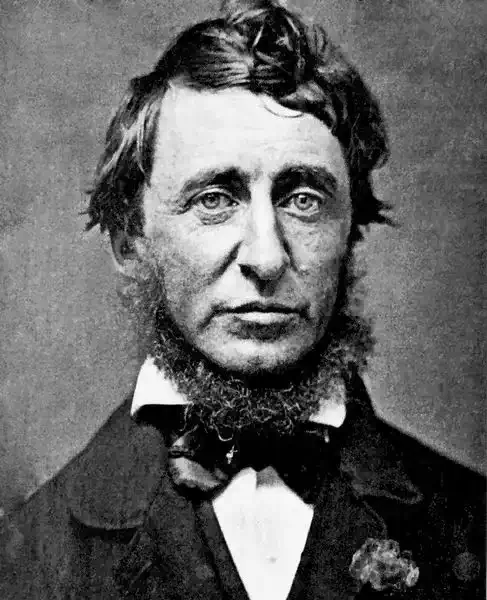
Henry David Thoreau
All Things Are Current Found
All Things Are Current Found
ALL things are current found
On earthly ground,
Spirits and elements
Have their descents.
Night and day, year on year,
High and low, far and near,
These are our own aspects,
These are our own regrets.
Ye gods of the shore,
Who abide evermore,
I see you far headland,
Stretching on either hand;
I hear the sweet evening sounds
From your undecaying grounds;
Cheat me no more with time,
Take me to your clime.
ALL things are current found
On earthly ground,
Spirits and elements
Have their descents.
Night and day, year on year,
High and low, far and near,
These are our own aspects,
These are our own regrets.
Ye gods of the shore,
Who abide evermore,
I see you far headland,
Stretching on either hand;
I hear the sweet evening sounds
From your undecaying grounds;
Cheat me no more with time,
Take me to your clime.
212

Gwendolyn Brooks
Of Robert Frost
Of Robert Frost
There is a little lightning in his eyes.
Iron at the mouth.
His brows ride neither too far up nor down.
He is splendid. With a place to stand.
Some glowing in the common blood.
Some specialness within.
There is a little lightning in his eyes.
Iron at the mouth.
His brows ride neither too far up nor down.
He is splendid. With a place to stand.
Some glowing in the common blood.
Some specialness within.
254
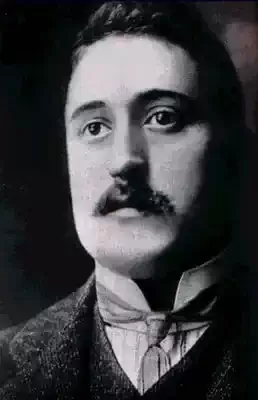
Guillaume Apollinaire
Vitam Impendere Amori
Vitam Impendere Amori
(Vitam Impendere Amori: To Threaten Life for Love)
Love is dead within your arms
Do you remember his encounter
He’s dead you restore the charms
He returns at your encounter
Another spring of springs gone past
I think of all its tenderness
Farewell season done at last
You’ll return as tenderly
****
In the evening light that’s faded
Where our several loves brush by
Your memory lies enchained
Far from our shades that die
O hands bound by memory
Burning like a funeral pyre
Where the last black Phoenix
Perfection comes to respire
Link by link the chain wears thin
Deriding us your memory
Flies ah hear it you who rail
I kneel again at your feet
****
You’ve not surprised my secret yet
Already the cortège moves on
But left to us is the regret
of there being no connivance none
The rose floats at the water’s edge
The maskers have passed by in crowds
It trembles in me like a bell
This heavy secret you ask now
****
Evening falls and in the garden
Women tell their histories
to Night that not without disdain
spills their dark hair’s mysteries
Little children little children
Your wings have flown away
But you rose that defend yourself
Throw your unrivalled scents away
For now’s the hour of petty theft
Of plumes of flowers and of tresses
Gather the fountain jets so free
Of whom the roses are mistresses
****
You descended through the water clear
I drowned my self so in your glance
The soldier passes she leans down
Turns and breaks away a branch
You float on nocturnal waves
The flame is my own heart reversed
Coloured as that comb’s tortoiseshell
The wave that bathes you mirrors well
****
O my abandoned youth is dead
Like a garland faded
Here the season comes again
Of suspicion and disdain
The landscape’s formed of canvasses
A false stream of blood flows down
And under the tree the stars glow fresh
The only passer by’s a clown
The glass in the frame has cracked
An air defined uncertainly
Hovers between sound and thought
Between ‘to be’ and memory
O my abandoned youth is dead
Like a garland faded
Here the season comes again
Of suspicion and disdain
(Vitam Impendere Amori: To Threaten Life for Love)
Love is dead within your arms
Do you remember his encounter
He’s dead you restore the charms
He returns at your encounter
Another spring of springs gone past
I think of all its tenderness
Farewell season done at last
You’ll return as tenderly
****
In the evening light that’s faded
Where our several loves brush by
Your memory lies enchained
Far from our shades that die
O hands bound by memory
Burning like a funeral pyre
Where the last black Phoenix
Perfection comes to respire
Link by link the chain wears thin
Deriding us your memory
Flies ah hear it you who rail
I kneel again at your feet
****
You’ve not surprised my secret yet
Already the cortège moves on
But left to us is the regret
of there being no connivance none
The rose floats at the water’s edge
The maskers have passed by in crowds
It trembles in me like a bell
This heavy secret you ask now
****
Evening falls and in the garden
Women tell their histories
to Night that not without disdain
spills their dark hair’s mysteries
Little children little children
Your wings have flown away
But you rose that defend yourself
Throw your unrivalled scents away
For now’s the hour of petty theft
Of plumes of flowers and of tresses
Gather the fountain jets so free
Of whom the roses are mistresses
****
You descended through the water clear
I drowned my self so in your glance
The soldier passes she leans down
Turns and breaks away a branch
You float on nocturnal waves
The flame is my own heart reversed
Coloured as that comb’s tortoiseshell
The wave that bathes you mirrors well
****
O my abandoned youth is dead
Like a garland faded
Here the season comes again
Of suspicion and disdain
The landscape’s formed of canvasses
A false stream of blood flows down
And under the tree the stars glow fresh
The only passer by’s a clown
The glass in the frame has cracked
An air defined uncertainly
Hovers between sound and thought
Between ‘to be’ and memory
O my abandoned youth is dead
Like a garland faded
Here the season comes again
Of suspicion and disdain
1,464

George Herbert
The Sinner
The Sinner
Lord, how I am all ague, when I seek
What I have treasur'd in my memory!
Since, if my soul make even with the week,
Each seventh note by right is due to thee.
I find there quarries of pil'd vanities,
But shreds of holiness, that dare not venture
To show their face, since cross to thy decrees:
There the circumference earth is, heav'n the centre.
In so much dregs the quintessence is small:
The spirit and good extract of my heart
Comes to about the many hundredth part.
Yet Lord restore thine image, hear my call:
And though my hard heart scarce to thee can groan,
Remember that thou once didst write in stone.
Lord, how I am all ague, when I seek
What I have treasur'd in my memory!
Since, if my soul make even with the week,
Each seventh note by right is due to thee.
I find there quarries of pil'd vanities,
But shreds of holiness, that dare not venture
To show their face, since cross to thy decrees:
There the circumference earth is, heav'n the centre.
In so much dregs the quintessence is small:
The spirit and good extract of my heart
Comes to about the many hundredth part.
Yet Lord restore thine image, hear my call:
And though my hard heart scarce to thee can groan,
Remember that thou once didst write in stone.
359
George Herbert
Sin's Round
Sin's Round
Sorry I am, my God, sorry I am,
That my offences course it in a ring.
My thoughts are working like a busy flame,
Until their cockatrice they hatch and bring:
And when they once have perfected their draughts,
My words take fire from my inflamed thoughts.
My words take fire fro m my inflamed thoughts,
Which spit it forth like the Sicilian hill.
They vent their wares, and pass them with their faults,
And by their breathing ventilate the ill.
But words suffice not, where are lewd intentions:
My hands do join to finish the inventions.
My hands do join to finish the inventions:
And so my sins ascend three stories high,
As Babel grew, before there were dissentions.
Let ill deeds loiter not: for they supply
New thoughts of sinning:
wherefore, to my shame,
Sorry I am, my God, sorry I am.
Sorry I am, my God, sorry I am,
That my offences course it in a ring.
My thoughts are working like a busy flame,
Until their cockatrice they hatch and bring:
And when they once have perfected their draughts,
My words take fire from my inflamed thoughts.
My words take fire fro m my inflamed thoughts,
Which spit it forth like the Sicilian hill.
They vent their wares, and pass them with their faults,
And by their breathing ventilate the ill.
But words suffice not, where are lewd intentions:
My hands do join to finish the inventions.
My hands do join to finish the inventions:
And so my sins ascend three stories high,
As Babel grew, before there were dissentions.
Let ill deeds loiter not: for they supply
New thoughts of sinning:
wherefore, to my shame,
Sorry I am, my God, sorry I am.
243
George Herbert
Sin (I)
Sin (I)
Lord, with what care hast Thou begirt us round!
Parents first season us; then schoolmasters
Deliver us to laws; -they send us bound
To rules of reason, holy messengers,
Pulpits and Sundays, sorrow dogging sin,
Afflictions sorted, anguish of all sizes,
Fine nets and stratagems to catch us in,
Bibles laid open, millions of surprises,
Blessings beforehand, ties of gratefulness,
The sound of glory ringing in our ears;
Without, our shame; within, our consciences;
Angels and grace, eternal hopes and fears:
Yet all these fences and their whole array
One cunning bosom-sin blows quite away.
Lord, with what care hast Thou begirt us round!
Parents first season us; then schoolmasters
Deliver us to laws; -they send us bound
To rules of reason, holy messengers,
Pulpits and Sundays, sorrow dogging sin,
Afflictions sorted, anguish of all sizes,
Fine nets and stratagems to catch us in,
Bibles laid open, millions of surprises,
Blessings beforehand, ties of gratefulness,
The sound of glory ringing in our ears;
Without, our shame; within, our consciences;
Angels and grace, eternal hopes and fears:
Yet all these fences and their whole array
One cunning bosom-sin blows quite away.
266
George Herbert
Repentance
Repentance
Lord, I confess my sin is great;
Great is my sin. Oh! gently treat
With thy quick flow'r, thy momentany bloom;
Whose life still pressing
Is one undressing,
A steady aiming at a tomb.
Man's age is two hours' work, or three:
Each day doth round about us see.
Thus are we to delights: but we are all
To sorrows old,
If life be told
From what life feeleth, Adam's fall.
O let thy height of mercy then
Compassionate short-breathed men.
Cut me not off for my most foul transgression:
I do confess
My foolishness;
My God, accept of my confession.
Sweeten at length this bitter bowl,
Which thou hast pour'd into my soul;
Thy wormwood turn to health, winds to fair weather:
For if thou stay,
I and this day,
As we did rise, we die together.
When thou for sin rebukest man,
Forthwith he waxeth woe and wan:
Bitterness fills our bowels; all our hearts
Pine, and decay,
And dropp away,
And carry with them th'other parts.
But thou wilt sin and grief destroy;
That so the broken bones may joy,
And tune together in a well-set song,
Full of his praises,
Who dead men raises;
Fractures well cur'd make us more strong.
Lord, I confess my sin is great;
Great is my sin. Oh! gently treat
With thy quick flow'r, thy momentany bloom;
Whose life still pressing
Is one undressing,
A steady aiming at a tomb.
Man's age is two hours' work, or three:
Each day doth round about us see.
Thus are we to delights: but we are all
To sorrows old,
If life be told
From what life feeleth, Adam's fall.
O let thy height of mercy then
Compassionate short-breathed men.
Cut me not off for my most foul transgression:
I do confess
My foolishness;
My God, accept of my confession.
Sweeten at length this bitter bowl,
Which thou hast pour'd into my soul;
Thy wormwood turn to health, winds to fair weather:
For if thou stay,
I and this day,
As we did rise, we die together.
When thou for sin rebukest man,
Forthwith he waxeth woe and wan:
Bitterness fills our bowels; all our hearts
Pine, and decay,
And dropp away,
And carry with them th'other parts.
But thou wilt sin and grief destroy;
That so the broken bones may joy,
And tune together in a well-set song,
Full of his praises,
Who dead men raises;
Fractures well cur'd make us more strong.
306
George Herbert
Love (III)
Love (III)
Love bade me welcome: yet my soul drew back,
Guilty of dust and sin.
But quick-ey'd Love, observing me grow slack,
From my first entrance in,
Drew nearer to me, sweetly questioning,
If I lack'd anything.
A guest, I answer'd, worthy to be here:
Love said, You shall be he.
I the unkind, ungrateful? Ah my dear,
I cannot look on thee.
Love took my hand, and smiling did reply,
Who made the eyes but I?
Truth Lord, but I have marr'd them: let my shame
Go where it doth deserve.
And know you not, says Love, who bore the blame?
My dear, then I will serve.
You must sit down, says Love, and tast me meat:
So I did sit and eat.
Love bade me welcome: yet my soul drew back,
Guilty of dust and sin.
But quick-ey'd Love, observing me grow slack,
From my first entrance in,
Drew nearer to me, sweetly questioning,
If I lack'd anything.
A guest, I answer'd, worthy to be here:
Love said, You shall be he.
I the unkind, ungrateful? Ah my dear,
I cannot look on thee.
Love took my hand, and smiling did reply,
Who made the eyes but I?
Truth Lord, but I have marr'd them: let my shame
Go where it doth deserve.
And know you not, says Love, who bore the blame?
My dear, then I will serve.
You must sit down, says Love, and tast me meat:
So I did sit and eat.
324
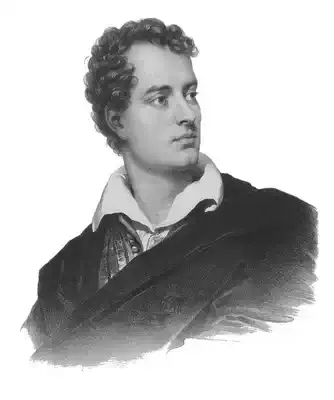
Lord Byron
To The Countess Of Blessington
To The Countess Of Blessington
You have ask'd for a verse:the
request
In a rhymer 'twere strange to deny;
But my Hippocrene was but my breast,
And my feelings (its fountain) are dry.
Were I now as I was, I had sung
What Lawrence has painted so well;
But the strain would expire on my tongue,
And the theme is too soft for my shell.
I am ashes where once I was fire,
And the bard in my bosom is dead;
What I loved I now merely admire,
And my heart is as grey as my head.
My life is not dated by yearsThere
are moments which act as plough;
And there is not a furrow appears
But is deep in my soul as my brow.
Let the young and the brilliant aspire
To sing what I gaze on in vain;
For sorrow has torn from my lyre
The string which was worthy the strain.
You have ask'd for a verse:the
request
In a rhymer 'twere strange to deny;
But my Hippocrene was but my breast,
And my feelings (its fountain) are dry.
Were I now as I was, I had sung
What Lawrence has painted so well;
But the strain would expire on my tongue,
And the theme is too soft for my shell.
I am ashes where once I was fire,
And the bard in my bosom is dead;
What I loved I now merely admire,
And my heart is as grey as my head.
My life is not dated by yearsThere
are moments which act as plough;
And there is not a furrow appears
But is deep in my soul as my brow.
Let the young and the brilliant aspire
To sing what I gaze on in vain;
For sorrow has torn from my lyre
The string which was worthy the strain.
512
Lord Byron
To Dives. A Fragment
To Dives. A Fragment
Unhappy Dives! in an evil hour
'Gainst Nature's voice seduced to deeds accurst!
Once Fortune's minion, now thou feel'st her power;
Wrath's vial on thy lofty head bath burst.
In Wit, in Genius, as in Wealth the first,
How wondrous bright thy blooming morn arose!
But thou went smitten with th' unhallow'd thirst
Of crime unnamed,
and thy sad noon must close
In scorn, and solitude unsought, the worst of woes.
Unhappy Dives! in an evil hour
'Gainst Nature's voice seduced to deeds accurst!
Once Fortune's minion, now thou feel'st her power;
Wrath's vial on thy lofty head bath burst.
In Wit, in Genius, as in Wealth the first,
How wondrous bright thy blooming morn arose!
But thou went smitten with th' unhallow'd thirst
Of crime unnamed,
and thy sad noon must close
In scorn, and solitude unsought, the worst of woes.
388
Lord Byron
To Caroline
To Caroline
Think'st thou I saw thy beauteous eyes,
Suffus'd in tears, implore to stay;
And heard unmov'd thy plenteous sighs,
Which said far more than words can say?
Though keen the grief thy tears exprest,
When love and hope lay both o'erthrown;
Yet still, my girl, this bleeding breast
Throbb'd, with deep sorrow, as thine own.
But, when our cheeks with anguish glow'd,
When thy sweet lips were join'd to mine;
The tears that from my eyelids flow'd
Were lost in those which fell from thine.
Thou could'st not feel my burning cheek,
Thy gushing tears had quench'd its flame,
And, as thy tongue essay'd to speak,
In sighs alone it breath'd my name.
And yet, my girl, we weep in vain,
In vain our fate in sighs deplore;
Remembrance only can remain,
But that, will make us weep the more.
Again, thou best belov'd, adieu!
Ah! if thou canst, o'ercome regret,
Nor let thy mind past joys review,
Our only hope is, to forget!
Think'st thou I saw thy beauteous eyes,
Suffus'd in tears, implore to stay;
And heard unmov'd thy plenteous sighs,
Which said far more than words can say?
Though keen the grief thy tears exprest,
When love and hope lay both o'erthrown;
Yet still, my girl, this bleeding breast
Throbb'd, with deep sorrow, as thine own.
But, when our cheeks with anguish glow'd,
When thy sweet lips were join'd to mine;
The tears that from my eyelids flow'd
Were lost in those which fell from thine.
Thou could'st not feel my burning cheek,
Thy gushing tears had quench'd its flame,
And, as thy tongue essay'd to speak,
In sighs alone it breath'd my name.
And yet, my girl, we weep in vain,
In vain our fate in sighs deplore;
Remembrance only can remain,
But that, will make us weep the more.
Again, thou best belov'd, adieu!
Ah! if thou canst, o'ercome regret,
Nor let thy mind past joys review,
Our only hope is, to forget!
530
Lord Byron
To A Lady
To A Lady
O! had my Fate been join'd with thine,
As once this pledge appear'd a token,
These follies had not, then, been mine,
For, then, my peace had not been broken.
To thee, these early faults I owe,
To thee, the wise and old reproving:
They know my sins, but do not know
'Twas thine to break the bonds of loving.
For once my soul, like thine, was pure,
And all its rising fires could smother;
But, now, thy vows no more endure,
Bestow'd by thee upon another.
Perhaps, his peace I could destroy,
And spoil the blisses that await him;
Yet let my Rival smile in joy,
For thy dear sake, I cannot hate him.
Ah! since thy angel form is gone,
My heart no more can rest with any;
But what it sought in thee alone,
Attempts, alas! to find in many.
Then, fare thee well, deceitful Maid!
'Twere vain and fruitless to regret thee;
Nor Hope, nor Memory yield their aid,
But Pride may teach me to forget thee.
Yet all this giddy waste of years,
This tiresome round of palling pleasures;
These varied loves, these matrons' fears,
These thoughtless strains to Passion's measures
If thou wert mine, had all been hush'd:This
cheek, now pale from early riot,
With Passion's hectic ne'er had flush'd,
But bloom'd in calm domestic quiet.
Yes, once the rural Scene was sweet,
For Nature seem'd to smile before thee;
And once my Breast abhorr'd deceit,For
then it beat but to adore thee.
But, now, I seek for other joysTo
think, would drive my soul to madness;
In thoughtless throngs, and empty noise,
I conquer half my Bosom's sadness.
Yet, even in these, a thought will steal,
In spite of every vain endeavor;
And fiends might pity what I feelTo
know that thou art lost for ever.
O! had my Fate been join'd with thine,
As once this pledge appear'd a token,
These follies had not, then, been mine,
For, then, my peace had not been broken.
To thee, these early faults I owe,
To thee, the wise and old reproving:
They know my sins, but do not know
'Twas thine to break the bonds of loving.
For once my soul, like thine, was pure,
And all its rising fires could smother;
But, now, thy vows no more endure,
Bestow'd by thee upon another.
Perhaps, his peace I could destroy,
And spoil the blisses that await him;
Yet let my Rival smile in joy,
For thy dear sake, I cannot hate him.
Ah! since thy angel form is gone,
My heart no more can rest with any;
But what it sought in thee alone,
Attempts, alas! to find in many.
Then, fare thee well, deceitful Maid!
'Twere vain and fruitless to regret thee;
Nor Hope, nor Memory yield their aid,
But Pride may teach me to forget thee.
Yet all this giddy waste of years,
This tiresome round of palling pleasures;
These varied loves, these matrons' fears,
These thoughtless strains to Passion's measures
If thou wert mine, had all been hush'd:This
cheek, now pale from early riot,
With Passion's hectic ne'er had flush'd,
But bloom'd in calm domestic quiet.
Yes, once the rural Scene was sweet,
For Nature seem'd to smile before thee;
And once my Breast abhorr'd deceit,For
then it beat but to adore thee.
But, now, I seek for other joysTo
think, would drive my soul to madness;
In thoughtless throngs, and empty noise,
I conquer half my Bosom's sadness.
Yet, even in these, a thought will steal,
In spite of every vain endeavor;
And fiends might pity what I feelTo
know that thou art lost for ever.
554
Lord Byron
The Siege and Conquest of Alhama
The Siege and Conquest of Alhama
The Moorish King rides up and down,
Through Granada's royal town;
From Elvira's gate to those
Of Bivarambla on he goes.
Woe is me, Alhama!
Letters to the monarch tell
How Alhama's city fell:
In the fire the scroll he threw,
And the messenger he slew.
Woe is me, Albamal
He quits his mule, and mounts his horse,
And through the street directs his course;
Through the street of Zacatin
To the Alhambra spurring in.
Woe is me, Alhama!
When the Alhambra walls he gain'd,
On the moment he ordain'd
That the trumpet straight should sound
With the silver clarion round.
Woe is me, Alhamal
And when the hollow drums of war
Beat the loud alarm afar,
That the Moors of town and plain
Might answer to the martial strain.
Woe is me, Alhama!
Then the Moors, by this aware,
That bloody Mars recall'd them there,
One by one, and two by two,
To a mighty squadron grew.
Woe is me, Alhama!
Out then spake an aged Moor
In these words the king before,
'Wherefore call on us, oh King?
What may mean this gathering?'
Woe is me, Alhama!
'Friends! ye have, alas! to know
Of a most disastrous blow;
That the Christians, stern and bold,
Have obtain'd Alhama's hold.'
Woe is me, Alhama!
Out then spake old Alfaqui,
With his beard so white to see,
'Good King! thou art justly served,
Good King! this thou hast deserved.
Woe is me, Alhama!
'By thee were slain, in evil hour,
The Abencerrage, Granada's flower;
And strangers were received by thee
Of Cordova the Chivalry.
Woe is me, Alhama!
'And for this, oh King! is sent
On thee a double chastisement:
Thee and thine, thy crown and realm,
One last wreck shall overwhelm.
Woe is me, Alhama!
'He who holds no laws in awe,
He must perish by the law;
And Granada must be won,
And thyself with her undone.'
Woe is me, Alhama!
Fire crashed from out the old Moor's eyes,
The Monarch's wrath began to rise,
Because he answer'd, and because
He spake exceeding well of laws.
Woe is me, Alhama!
'There is no law to say such things
As may disgust the ear of kings:
'Thus, snorting with his choler, said
The Moorish King, and doom'd him dead.
Woe is me, Alhama!
Moor Alfaqui! Moor Alfaqui!
Though thy beard so hoary be,
The King hath sent to have thee seized,
For Alhama's loss displeased.
Woe is me, Alhama!
And to fix thy head upon
High Alhambra's loftiest stone;
That thus for thee should be the law,
And others tremble when they saw.
Woe is me, Alhama!
'Cavalier, and man of worth!
Let these words of mine go forth!
Let the Moorish Monarch know,
That to him I nothing owe.
Woe is me, Alhama!
'But on my soul Alhama weighs,
And on my inmost spirit preys;
And if the King his land hath lost,
Yet others may have lost the most.
Woe is me, Alhama!
'Sires have lost their children, wives
Their lords, and valiant men their lives!
One what best his love might claim
Hath lost, another wealth, or fame.
Woe is me, Alhama!
'I lost a damsel in that hour,
Of all the land the loveliest flower;
Doubloons a hundred I would pay,
And think her ransom cheap that day.'
Woe is me, Alhama!
And as these things the old Moor said,
They sever'd from the trunk his head;
And to the Alhambra's wall with speed
'Twas carried, as the King decreed.
Woe is me, Alhama!
And men and infants therein weep
Their loss, so heavy and so deep;
Granada's ladies, all she rears
Within her walls, burst into tears.
Woe is me, Alhama!
And from the windows o'er the walls
The sable web of mourning falls;
The King weeps as a woman o'er
His loss, for it is much and sore.
Woe is me, Alhama!
The Moorish King rides up and down,
Through Granada's royal town;
From Elvira's gate to those
Of Bivarambla on he goes.
Woe is me, Alhama!
Letters to the monarch tell
How Alhama's city fell:
In the fire the scroll he threw,
And the messenger he slew.
Woe is me, Albamal
He quits his mule, and mounts his horse,
And through the street directs his course;
Through the street of Zacatin
To the Alhambra spurring in.
Woe is me, Alhama!
When the Alhambra walls he gain'd,
On the moment he ordain'd
That the trumpet straight should sound
With the silver clarion round.
Woe is me, Alhamal
And when the hollow drums of war
Beat the loud alarm afar,
That the Moors of town and plain
Might answer to the martial strain.
Woe is me, Alhama!
Then the Moors, by this aware,
That bloody Mars recall'd them there,
One by one, and two by two,
To a mighty squadron grew.
Woe is me, Alhama!
Out then spake an aged Moor
In these words the king before,
'Wherefore call on us, oh King?
What may mean this gathering?'
Woe is me, Alhama!
'Friends! ye have, alas! to know
Of a most disastrous blow;
That the Christians, stern and bold,
Have obtain'd Alhama's hold.'
Woe is me, Alhama!
Out then spake old Alfaqui,
With his beard so white to see,
'Good King! thou art justly served,
Good King! this thou hast deserved.
Woe is me, Alhama!
'By thee were slain, in evil hour,
The Abencerrage, Granada's flower;
And strangers were received by thee
Of Cordova the Chivalry.
Woe is me, Alhama!
'And for this, oh King! is sent
On thee a double chastisement:
Thee and thine, thy crown and realm,
One last wreck shall overwhelm.
Woe is me, Alhama!
'He who holds no laws in awe,
He must perish by the law;
And Granada must be won,
And thyself with her undone.'
Woe is me, Alhama!
Fire crashed from out the old Moor's eyes,
The Monarch's wrath began to rise,
Because he answer'd, and because
He spake exceeding well of laws.
Woe is me, Alhama!
'There is no law to say such things
As may disgust the ear of kings:
'Thus, snorting with his choler, said
The Moorish King, and doom'd him dead.
Woe is me, Alhama!
Moor Alfaqui! Moor Alfaqui!
Though thy beard so hoary be,
The King hath sent to have thee seized,
For Alhama's loss displeased.
Woe is me, Alhama!
And to fix thy head upon
High Alhambra's loftiest stone;
That thus for thee should be the law,
And others tremble when they saw.
Woe is me, Alhama!
'Cavalier, and man of worth!
Let these words of mine go forth!
Let the Moorish Monarch know,
That to him I nothing owe.
Woe is me, Alhama!
'But on my soul Alhama weighs,
And on my inmost spirit preys;
And if the King his land hath lost,
Yet others may have lost the most.
Woe is me, Alhama!
'Sires have lost their children, wives
Their lords, and valiant men their lives!
One what best his love might claim
Hath lost, another wealth, or fame.
Woe is me, Alhama!
'I lost a damsel in that hour,
Of all the land the loveliest flower;
Doubloons a hundred I would pay,
And think her ransom cheap that day.'
Woe is me, Alhama!
And as these things the old Moor said,
They sever'd from the trunk his head;
And to the Alhambra's wall with speed
'Twas carried, as the King decreed.
Woe is me, Alhama!
And men and infants therein weep
Their loss, so heavy and so deep;
Granada's ladies, all she rears
Within her walls, burst into tears.
Woe is me, Alhama!
And from the windows o'er the walls
The sable web of mourning falls;
The King weeps as a woman o'er
His loss, for it is much and sore.
Woe is me, Alhama!
482
Lord Byron
Stanzas For Music: There's Not A Joy The World Can Give
Stanzas For Music: There's Not A Joy The World Can Give
There's not a joy the world can give like that it takes away
When the glow of early thought declines in feeling's dull decay;
'Tis not on youth's smooth cheek the blush alone, which fades so fast,
But the tender bloom of heart is gone, ere youth itself be past.
Then the few whose spirits float above the wreck of happiness
Are driven o'er the shoals of guilt, or ocean of excess:
The magnet of their course is gone, or only points in vain
The shore to which their shivered sail shall never stretch again.
Then the mortal coldness of the soul like death itself comes down;
It cannot feel for others' woes, it dare not dream its own;
That heavy chill has frozen o'er the fountain of our tears,
And though the eye may sparkle still, 'tis where the ice appears.
Though wit may flash from fluent lips, and mirth distract the breast,
Through midnight hours that yield no more their former hope of rest,
'Tis but as ivyleaves
around the ruined turret wreath—
All green and wildly fresh without, but worn and grey beneath.
Oh, could I feel as I have felt, or be what I have been,
Or weep as I could once have wept, o'er many a vanished scene;
As springs in deserts found seem sweet, all brackish though they be,
So, midst the withered waste of life, those tears would flow to me.
There's not a joy the world can give like that it takes away
When the glow of early thought declines in feeling's dull decay;
'Tis not on youth's smooth cheek the blush alone, which fades so fast,
But the tender bloom of heart is gone, ere youth itself be past.
Then the few whose spirits float above the wreck of happiness
Are driven o'er the shoals of guilt, or ocean of excess:
The magnet of their course is gone, or only points in vain
The shore to which their shivered sail shall never stretch again.
Then the mortal coldness of the soul like death itself comes down;
It cannot feel for others' woes, it dare not dream its own;
That heavy chill has frozen o'er the fountain of our tears,
And though the eye may sparkle still, 'tis where the ice appears.
Though wit may flash from fluent lips, and mirth distract the breast,
Through midnight hours that yield no more their former hope of rest,
'Tis but as ivyleaves
around the ruined turret wreath—
All green and wildly fresh without, but worn and grey beneath.
Oh, could I feel as I have felt, or be what I have been,
Or weep as I could once have wept, o'er many a vanished scene;
As springs in deserts found seem sweet, all brackish though they be,
So, midst the withered waste of life, those tears would flow to me.
398
Lord Byron
Remember Thee! Remember Thee!
Remember Thee! Remember Thee!
Remember thee! remember thee!
Till Lethe quench life's burning stream
Remorse and shame shall cling to thee,
And haunt thee like a feverish dream!
Remember thee! Aye, doubt it not.
Thy husband too shall think of thee:
By neither shalt thou be forgot,
Thou false to him, thou fiend to me!
Remember thee! remember thee!
Till Lethe quench life's burning stream
Remorse and shame shall cling to thee,
And haunt thee like a feverish dream!
Remember thee! Aye, doubt it not.
Thy husband too shall think of thee:
By neither shalt thou be forgot,
Thou false to him, thou fiend to me!
408
Lord Byron
On this Day I Complete my Thirty-Sixth Year
On this Day I Complete my Thirty-Sixth Year
'Tis time the heart should be unmoved,
Since others it hath ceased to move:
Yet, though I cannot be beloved,
Still let me love!
My days are in the yellow leaf;
The flowers and fruits of love are gone;
The worm, the canker, and the grief
Are mine alone!
The fire that on my bosom preys
Is lone as some volcanic isle;
No torch is kindled at its blazeA
funeral pile.
The hope, the fear, the jealous care,
The exalted portion of the pain
And power of love, I cannot share,
But wear the chain.
But 'tis not thusand
'tis not hereSuch
thoughts should shake my soul nor now,
Where glory decks the hero's bier,
Or binds his brow.
The sword, the banner, and the field,
Glory and Greece, around me see!
The Spartan, borne upon his shield,
Was not more free.
Awake! (not Greeceshe
is awake!)
Awake, my spirit! Think through whom
Thy lifeblood
tracks its parent lake,
And then strike home!
Tread those reviving passions down,
Unworthy manhood!unto
thee
Indifferent should the smile or frown
Of beauty be.
If thou regrett'st thy youth, why live?
The land of honourable death
Is here:up
to the field, and give
Away thy breath!
Seek outless
often sought than foundA
soldier's grave, for thee the best;
Then look around, and choose thy ground,
And take thy rest.
'Tis time the heart should be unmoved,
Since others it hath ceased to move:
Yet, though I cannot be beloved,
Still let me love!
My days are in the yellow leaf;
The flowers and fruits of love are gone;
The worm, the canker, and the grief
Are mine alone!
The fire that on my bosom preys
Is lone as some volcanic isle;
No torch is kindled at its blazeA
funeral pile.
The hope, the fear, the jealous care,
The exalted portion of the pain
And power of love, I cannot share,
But wear the chain.
But 'tis not thusand
'tis not hereSuch
thoughts should shake my soul nor now,
Where glory decks the hero's bier,
Or binds his brow.
The sword, the banner, and the field,
Glory and Greece, around me see!
The Spartan, borne upon his shield,
Was not more free.
Awake! (not Greeceshe
is awake!)
Awake, my spirit! Think through whom
Thy lifeblood
tracks its parent lake,
And then strike home!
Tread those reviving passions down,
Unworthy manhood!unto
thee
Indifferent should the smile or frown
Of beauty be.
If thou regrett'st thy youth, why live?
The land of honourable death
Is here:up
to the field, and give
Away thy breath!
Seek outless
often sought than foundA
soldier's grave, for thee the best;
Then look around, and choose thy ground,
And take thy rest.
540
Lord Byron
On Revisiting Harrow
On Revisiting Harrow
Here once engaged the stranger's view
Young Friendship's record simply traced;
Few were her words; but yet, though few,
Resentment's hand the line defaced.
Deeply she cutbut
not erased,
The characters were still so pain,
That Friendship once return'd, and gazed,Till
Memory hail'd the words again.
Repentance placed them as before;
Forgiveness join d her gentle name;
So fair the inscription seem'd once more,
That Friendship thought it still the same.
Thus might the Record now have been;
But, ah, in spite of Hopes endeavour,
Or Friendships tears, Pride rush'd between
And blotted out the line for ever.
Here once engaged the stranger's view
Young Friendship's record simply traced;
Few were her words; but yet, though few,
Resentment's hand the line defaced.
Deeply she cutbut
not erased,
The characters were still so pain,
That Friendship once return'd, and gazed,Till
Memory hail'd the words again.
Repentance placed them as before;
Forgiveness join d her gentle name;
So fair the inscription seem'd once more,
That Friendship thought it still the same.
Thus might the Record now have been;
But, ah, in spite of Hopes endeavour,
Or Friendships tears, Pride rush'd between
And blotted out the line for ever.
581
Lord Byron
On A Nun
On A Nun
Of two fair virgins, modest, though admired,
Heaven made us happy; and now, wretched sires,
Heaven for a nobler doom their worth desires,
And gazing upon either, both required.
Mine, while the torch of Hymen newly fired
Becomes extinguish'd, soon too
soon expires:
But thine, within the closing grate retired,
Eternal captive, to her God aspires.
But thou at least from out the jealous door,
Which shuts between your never meeting
eyes,
May'st hear her sweet and pious voice once more:
I to the marble, where my daughter lies,
Rush, the
swoln flood of bitterness I pour,
And knock, and knock, and knock but none replies.
Of two fair virgins, modest, though admired,
Heaven made us happy; and now, wretched sires,
Heaven for a nobler doom their worth desires,
And gazing upon either, both required.
Mine, while the torch of Hymen newly fired
Becomes extinguish'd, soon too
soon expires:
But thine, within the closing grate retired,
Eternal captive, to her God aspires.
But thou at least from out the jealous door,
Which shuts between your never meeting
eyes,
May'st hear her sweet and pious voice once more:
I to the marble, where my daughter lies,
Rush, the
swoln flood of bitterness I pour,
And knock, and knock, and knock but none replies.
446
Lord Byron
On A Cornelian Heart Which Was Broken
On A Cornelian Heart Which Was Broken
Illfated
Heart! And can it be,
That thou should'st thus be rent in vain?
Have years of care for thine and thee
Alike been all employ'd in vain?
Yet precious seems each shatter'd part
And every fragment dearer grown
Since he who wears thee feels thou art
A fitter emblem of his own.
March 16, 1812
Illfated
Heart! And can it be,
That thou should'st thus be rent in vain?
Have years of care for thine and thee
Alike been all employ'd in vain?
Yet precious seems each shatter'd part
And every fragment dearer grown
Since he who wears thee feels thou art
A fitter emblem of his own.
March 16, 1812
404
Lord Byron
Lines On Hearing That Lady Byron Was Ill
Lines On Hearing That Lady Byron Was Ill
And thou wert sad yet
I was not with thee;
And thou wert sick, and yet I was not near;
Methought that joy and health alone could be
Where I was not and
pain and sorrow here!
And is it thus?it
is as I foretold,
And shall be more so; for the mind recoils
Upon itself, and the wreck'd heart lies cold,
While heaviness collects the shatter'd spoils.
It is not in the storm nor in the strife
We feel benumb'd, and wish to be no more,
But in the after silence
on the shore.
When all is lost, except a little life.
I am too well avenged! but
'twas my right ;
Whate'er my sins might be, thou wert not sent
To be the Nemesis who should requite Nor
did Heaven choose so near an instrument.
Mercy is for the merciful! thou
Hast been of such, 'twill be accorded now.
Thy nights are banish'd from the realms of sleep! Yes!
they may flatter thee, but thou shalt feel
A hollow agony which will not heal,
For thou art pillow'd on a curse too deep;
Thou hast sown in my sorrow, and must reap
The bitter harvest in a woe as real!
I have had many foes, but none like thee;
For 'gainst the rest myself I could defend,
And be avenged, or turn them into friend;
But thou in safe implacability
Hadst nought to dread in
thy own weakness shielded,
And in my love, which hath but too much yielded,
And spared, for thy sake, some I should not spare;
And thus upon the world trust
in thy truth,
And the wild fame of my ungovern'd youth On
things that were not, and on things that are Even
upon such a basis hast thou built
A monument, whose cement hath been guilt!
The moral Clytemnestra of thy lord,
And hew'd down, with an unsuspected sword,
Fame, peace, and hope and
all the better life,
Which, but for this cold treason of thy heart,
Might still have risen from out the grave of strife,
And found a nobler duty than to part.
But of thy virtues didst thou make a vice,
Trafficking with them in a purpose cold,
For present anger, and for future gold And
buying others' grief at any price.
And thus once enter 'd into crooked ways,
The earthly truth, which was thy proper praise,
Did not still walk beside thee but
at times,
And with a breast unknowing its own crimes,
Deceit, averments incompatible,
Equivocations, and the thoughts which dwell
In Janusspirits
the
significant eye
Which learns to lie with silence the
pretext
Of prudence, with advantages annex'd The
acquiescence in all things which tend,
No matter how, to the desired end
All found a place in thy philosophy.
The means were worthy, and the end is won
I would not do by thee as thou hast done!
September 1816.
And thou wert sad yet
I was not with thee;
And thou wert sick, and yet I was not near;
Methought that joy and health alone could be
Where I was not and
pain and sorrow here!
And is it thus?it
is as I foretold,
And shall be more so; for the mind recoils
Upon itself, and the wreck'd heart lies cold,
While heaviness collects the shatter'd spoils.
It is not in the storm nor in the strife
We feel benumb'd, and wish to be no more,
But in the after silence
on the shore.
When all is lost, except a little life.
I am too well avenged! but
'twas my right ;
Whate'er my sins might be, thou wert not sent
To be the Nemesis who should requite Nor
did Heaven choose so near an instrument.
Mercy is for the merciful! thou
Hast been of such, 'twill be accorded now.
Thy nights are banish'd from the realms of sleep! Yes!
they may flatter thee, but thou shalt feel
A hollow agony which will not heal,
For thou art pillow'd on a curse too deep;
Thou hast sown in my sorrow, and must reap
The bitter harvest in a woe as real!
I have had many foes, but none like thee;
For 'gainst the rest myself I could defend,
And be avenged, or turn them into friend;
But thou in safe implacability
Hadst nought to dread in
thy own weakness shielded,
And in my love, which hath but too much yielded,
And spared, for thy sake, some I should not spare;
And thus upon the world trust
in thy truth,
And the wild fame of my ungovern'd youth On
things that were not, and on things that are Even
upon such a basis hast thou built
A monument, whose cement hath been guilt!
The moral Clytemnestra of thy lord,
And hew'd down, with an unsuspected sword,
Fame, peace, and hope and
all the better life,
Which, but for this cold treason of thy heart,
Might still have risen from out the grave of strife,
And found a nobler duty than to part.
But of thy virtues didst thou make a vice,
Trafficking with them in a purpose cold,
For present anger, and for future gold And
buying others' grief at any price.
And thus once enter 'd into crooked ways,
The earthly truth, which was thy proper praise,
Did not still walk beside thee but
at times,
And with a breast unknowing its own crimes,
Deceit, averments incompatible,
Equivocations, and the thoughts which dwell
In Janusspirits
the
significant eye
Which learns to lie with silence the
pretext
Of prudence, with advantages annex'd The
acquiescence in all things which tend,
No matter how, to the desired end
All found a place in thy philosophy.
The means were worthy, and the end is won
I would not do by thee as thou hast done!
September 1816.
445
Lord Byron
Herod's Lament For Mariamne
Herod's Lament For Mariamne
Oh, Mariamne! now for thee
The heart of which thou bled'st is bleeding;
Revenge is lost in agony,
And wild remorse to rage succeeding.
Oh, Mariamne! where art thou?
Thou canst not hear my bitter pleading:
Ah! could'st thouthou
would'st pardon now,
Though Heaven were to my prayer unheeding.
And is she dead?and
did they dare
Obey my frenzy's jealous raving?
My wrath but doom'd my own despair:
The sword that smote her's o'er me waving.But
thou art cold, my murder'd love!
And this dark heart is vainly craving
For her who soars alone above,
And leaves my soul unworthy saving.
She's gone, who shared my diadem;
She sunk, with her my joys entombing;
I swept that flower from Judah's stem,
Whose leaves for me alone were blooming;
And mine's the guilt, and mine the hell,
This bosom's desolation dooming;
And I have earn'd those tortures well,
Which unconsumed are still consuming!
Oh, Mariamne! now for thee
The heart of which thou bled'st is bleeding;
Revenge is lost in agony,
And wild remorse to rage succeeding.
Oh, Mariamne! where art thou?
Thou canst not hear my bitter pleading:
Ah! could'st thouthou
would'st pardon now,
Though Heaven were to my prayer unheeding.
And is she dead?and
did they dare
Obey my frenzy's jealous raving?
My wrath but doom'd my own despair:
The sword that smote her's o'er me waving.But
thou art cold, my murder'd love!
And this dark heart is vainly craving
For her who soars alone above,
And leaves my soul unworthy saving.
She's gone, who shared my diadem;
She sunk, with her my joys entombing;
I swept that flower from Judah's stem,
Whose leaves for me alone were blooming;
And mine's the guilt, and mine the hell,
This bosom's desolation dooming;
And I have earn'd those tortures well,
Which unconsumed are still consuming!
697
Lord Byron
I Speak Not, I Trace Not, I Breathe Not Thy Name
I Speak Not, I Trace Not, I Breathe Not Thy Name
I speak not, I trace not, I breathe not thy name;
There is grief in the sound, there is guilt in the fame;
But the tear that now burns on my cheek may impart
The deep thoughts that dwell in that silence of heart.
Too brief for our passion, too long for our peace,
Were those hours can
their joy or their bitterness cease?
We repent, we abjure, we will break from our chain, We
will part, we will fly to unite
it again!
Oh! thine be the gladness, and mine be the guilt!
Forgive me, adored one! forsake
if thou wilt;
But the heart which is thine shall expire undebased,
And man shall not break it whatever
thou may'st.
And stern to the haughty, but humble to thee,
This soul in its bitterest blackness shall be;
And our days seem as swift, and our moments more sweet,
With thee at my side, than with worlds at our feet.
One sigh of thy sorrow, one look of thy love,
Shall turn me or fix, shall reward or reprove.
And the heartless may wonder at all I resign Thy
lips shall reply, not to them, but to mine.
May, 1814.
I speak not, I trace not, I breathe not thy name;
There is grief in the sound, there is guilt in the fame;
But the tear that now burns on my cheek may impart
The deep thoughts that dwell in that silence of heart.
Too brief for our passion, too long for our peace,
Were those hours can
their joy or their bitterness cease?
We repent, we abjure, we will break from our chain, We
will part, we will fly to unite
it again!
Oh! thine be the gladness, and mine be the guilt!
Forgive me, adored one! forsake
if thou wilt;
But the heart which is thine shall expire undebased,
And man shall not break it whatever
thou may'st.
And stern to the haughty, but humble to thee,
This soul in its bitterest blackness shall be;
And our days seem as swift, and our moments more sweet,
With thee at my side, than with worlds at our feet.
One sigh of thy sorrow, one look of thy love,
Shall turn me or fix, shall reward or reprove.
And the heartless may wonder at all I resign Thy
lips shall reply, not to them, but to mine.
May, 1814.
661
Lord Byron
All Is Vanity, Saieth the Preacher
All Is Vanity, Saieth the Preacher
I.
Fame, wisdom, love, and power were mine,
And health and youth possess'd me;
My goblets blush'd from every vine,
And lovely forms caress'd me;
I sunn'd my heart in beauty's eyes,
And felt my soul grow tender:
All earth can give, or mortal prize,
Was mine of regal splendour.
II.
I strive to number o'er what days
Remembrance can discover,
Which all that life or earth displays
Would lure me to live over.
There rose no day, there roll'd no hour
Of pleasure unembitter'd;
And not a trapping deck'd my power
That gall'd not while it glitter'd.
III.
The serpent of the field, by art
And spells, is won from harming;
But that which coils around the heart,
Oh! who hath pwer of charming?
It will not list to wisdom's lore,
Nor music's voice can lure it;
But there it stings for evermore
The soul that must endure it.
I.
Fame, wisdom, love, and power were mine,
And health and youth possess'd me;
My goblets blush'd from every vine,
And lovely forms caress'd me;
I sunn'd my heart in beauty's eyes,
And felt my soul grow tender:
All earth can give, or mortal prize,
Was mine of regal splendour.
II.
I strive to number o'er what days
Remembrance can discover,
Which all that life or earth displays
Would lure me to live over.
There rose no day, there roll'd no hour
Of pleasure unembitter'd;
And not a trapping deck'd my power
That gall'd not while it glitter'd.
III.
The serpent of the field, by art
And spells, is won from harming;
But that which coils around the heart,
Oh! who hath pwer of charming?
It will not list to wisdom's lore,
Nor music's voice can lure it;
But there it stings for evermore
The soul that must endure it.
488