

Poems in this topic
Courage and Strength
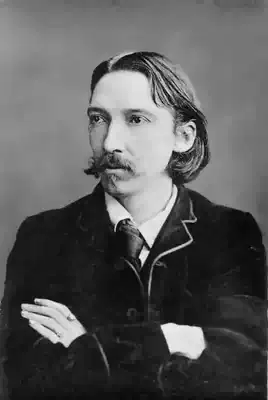
Robert Louis Stevenson
Let Love Go, If Go She Will
Let Love Go, If Go She Will
LET love go, if go she will.
Seek not, O fool, her wanton flight to stay.
Of all she gives and takes away
The best remains behind her still.
The best remains behind; in vain
Joy she may give and take again,
Joy she may take and leave us pain,
If yet she leave behind
The constant mind
To meet all fortunes nobly, to endure
All things with a good heart, and still be pure,
Still to be foremost in the foremost cause,
And still be worthy of the love that was.
Love coming is omnipotent indeed,
But not Love going. Let her go. The seed
Springs in the favouring Summer air, and grows,
And waxes strong; and when the Summer goes,
Remains, a perfect tree.
Joy she may give and take again,
Joy she may take and leave us pain.
O Love, and what care we?
For one thing thou hast given, O Love, one thing
Is ours that nothing can remove;
And as the King discrowned is still a King,
The unhappy lover still preserves his love.
LET love go, if go she will.
Seek not, O fool, her wanton flight to stay.
Of all she gives and takes away
The best remains behind her still.
The best remains behind; in vain
Joy she may give and take again,
Joy she may take and leave us pain,
If yet she leave behind
The constant mind
To meet all fortunes nobly, to endure
All things with a good heart, and still be pure,
Still to be foremost in the foremost cause,
And still be worthy of the love that was.
Love coming is omnipotent indeed,
But not Love going. Let her go. The seed
Springs in the favouring Summer air, and grows,
And waxes strong; and when the Summer goes,
Remains, a perfect tree.
Joy she may give and take again,
Joy she may take and leave us pain.
O Love, and what care we?
For one thing thou hast given, O Love, one thing
Is ours that nothing can remove;
And as the King discrowned is still a King,
The unhappy lover still preserves his love.
300
Robert Louis Stevenson
If This Were Faith
If This Were Faith
God, if this were enough,
That I see things bare to the buff
And up to the buttocks in mire;
That I ask nor hope nor hire,
Nut in the husk,
Nor dawn beyond the dusk,
Nor life beyond death:
God, if this were faith!
Having felt thy wind in my face
Spit sorrow and disgrace,
Having seen thine evil doom
In Golgotha and Khartoum,
And the brutes, the work of thine hands,
Fill with injustice lands
And stain with blood the sea:
If still in my veins the glee
Of the black night and the sun
And the lost battle, run:
If, an adept,
The iniquitous lists I still accept
With joy, and joy to endure and be withstood,
And still to battle and perish for a dream of good:
God, if that were enough!
If to feel, in the ink of the slough,
And the sink of the mire,
Veins of glory and fire
Run through and transpierce and transpire,
And a secret purpose of glory in every part,
And the answering glory of battle fill my heart;
To thrill with the joy of girded men
To go on for ever and fail and go on again,
And be mauled to the earth and arise,
And contend for the shade of a word and a thing
not seen with the eyes:
With the half of a broken hope for a pillow at night
That somehow the right is the right
And the smooth shall bloom from the rough:
Lord, if that were enough!
God, if this were enough,
That I see things bare to the buff
And up to the buttocks in mire;
That I ask nor hope nor hire,
Nut in the husk,
Nor dawn beyond the dusk,
Nor life beyond death:
God, if this were faith!
Having felt thy wind in my face
Spit sorrow and disgrace,
Having seen thine evil doom
In Golgotha and Khartoum,
And the brutes, the work of thine hands,
Fill with injustice lands
And stain with blood the sea:
If still in my veins the glee
Of the black night and the sun
And the lost battle, run:
If, an adept,
The iniquitous lists I still accept
With joy, and joy to endure and be withstood,
And still to battle and perish for a dream of good:
God, if that were enough!
If to feel, in the ink of the slough,
And the sink of the mire,
Veins of glory and fire
Run through and transpierce and transpire,
And a secret purpose of glory in every part,
And the answering glory of battle fill my heart;
To thrill with the joy of girded men
To go on for ever and fail and go on again,
And be mauled to the earth and arise,
And contend for the shade of a word and a thing
not seen with the eyes:
With the half of a broken hope for a pillow at night
That somehow the right is the right
And the smooth shall bloom from the rough:
Lord, if that were enough!
413
Robert Louis Stevenson
A Valentine's Song
A Valentine's Song
MOTLEY I count the only wear
That suits, in this mixed world, the truly wise,
Who boldly smile upon despair
And shake their bells in Grandam Grundy's eyes.
Singers should sing with such a goodly cheer
That the bare listening should make strong like wine,
At this unruly time of year,
The Feast of Valentine.
We do not now parade our "oughts"
And "shoulds" and motives and beliefs in God.
Their life lies all indoors; sad thoughts
Must keep the house, while gay thoughts go abroad,
Within we hold the wake for hopes deceased;
But in the public streets, in wind or sun,
Keep open, at the annual feast,
The puppet-booth of fun.
Our powers, perhaps, are small to please,
But even negro-songs and castanettes,
Old jokes and hackneyed repartees
Are more than the parade of vain regrets.
Let Jacques stand Wert(h)ering by the wounded deer -
We shall make merry, honest friends of mine,
At this unruly time of year,
The Feast of Valentine.
I know how, day by weary day,
Hope fades, love fades, a thousand pleasures fade.
I have not trudged in vain that way
On which life's daylight darkens, shade by shade.
And still, with hopes decreasing, griefs increased,
Still, with what wit I have shall I, for one,
Keep open, at the annual feast,
The puppet-booth of fun.
I care not if the wit be poor,
The old worn motley stained with rain and tears,
If but the courage still endure
That filled and strengthened hope in earlier years;
If still, with friends averted, fate severe,
A glad, untainted cheerfulness be mine
To greet the unruly time of year,
The Feast of Valentine.
Priest, I am none of thine, and see
In the perspective of still hopeful youth
That Truth shall triumph over thee -
Truth to one's self - I know no other truth.
I see strange days for thee and thine, O priest,
And how your doctrines, fallen one by one,
Shall furnish at the annual feast
The puppet-booth of fun.
Stand on your putrid ruins - stand,
White neck-clothed bigot, fixedly the same,
Cruel with all things but the hand,
Inquisitor in all things but the name.
Back, minister of Christ and source of fear -
We cherish freedom - back with thee and thine
From this unruly time of year,
The Feast of Valentine.
Blood thou mayest spare; but what of tears?
But what of riven households, broken faith -
Bywords that cling through all men's years
And drag them surely down to shame and death?
Stand back, O cruel man, O foe of youth,
And let such men as hearken not thy voice
Press freely up the road to truth,
The King's highway of choice.
MOTLEY I count the only wear
That suits, in this mixed world, the truly wise,
Who boldly smile upon despair
And shake their bells in Grandam Grundy's eyes.
Singers should sing with such a goodly cheer
That the bare listening should make strong like wine,
At this unruly time of year,
The Feast of Valentine.
We do not now parade our "oughts"
And "shoulds" and motives and beliefs in God.
Their life lies all indoors; sad thoughts
Must keep the house, while gay thoughts go abroad,
Within we hold the wake for hopes deceased;
But in the public streets, in wind or sun,
Keep open, at the annual feast,
The puppet-booth of fun.
Our powers, perhaps, are small to please,
But even negro-songs and castanettes,
Old jokes and hackneyed repartees
Are more than the parade of vain regrets.
Let Jacques stand Wert(h)ering by the wounded deer -
We shall make merry, honest friends of mine,
At this unruly time of year,
The Feast of Valentine.
I know how, day by weary day,
Hope fades, love fades, a thousand pleasures fade.
I have not trudged in vain that way
On which life's daylight darkens, shade by shade.
And still, with hopes decreasing, griefs increased,
Still, with what wit I have shall I, for one,
Keep open, at the annual feast,
The puppet-booth of fun.
I care not if the wit be poor,
The old worn motley stained with rain and tears,
If but the courage still endure
That filled and strengthened hope in earlier years;
If still, with friends averted, fate severe,
A glad, untainted cheerfulness be mine
To greet the unruly time of year,
The Feast of Valentine.
Priest, I am none of thine, and see
In the perspective of still hopeful youth
That Truth shall triumph over thee -
Truth to one's self - I know no other truth.
I see strange days for thee and thine, O priest,
And how your doctrines, fallen one by one,
Shall furnish at the annual feast
The puppet-booth of fun.
Stand on your putrid ruins - stand,
White neck-clothed bigot, fixedly the same,
Cruel with all things but the hand,
Inquisitor in all things but the name.
Back, minister of Christ and source of fear -
We cherish freedom - back with thee and thine
From this unruly time of year,
The Feast of Valentine.
Blood thou mayest spare; but what of tears?
But what of riven households, broken faith -
Bywords that cling through all men's years
And drag them surely down to shame and death?
Stand back, O cruel man, O foe of youth,
And let such men as hearken not thy voice
Press freely up the road to truth,
The King's highway of choice.
359
Robert Frost
The Exposed Nest
The Exposed Nest
You were forever finding some new play.
So when I saw you down on hands and knees
I the meadow, busy with the new-cut hay,
Trying, I thought, to set it up on end,
I went to show you how to make it stay,
If that was your idea, against the breeze,
And, if you asked me, even help pretend
To make it root again and grow afresh.
But 'twas no make-believe with you today,
Nor was the grass itself your real concern,
Though I found your hand full of wilted fern,
Steel-bright June-grass, and blackening heads of clovers.
'Twas a nest full of young birds on the ground
The cutter-bar had just gone champing over
(Miraculously without tasking flesh)
And left defenseless to the heat and light.
You wanted to restore them to their right
Of something interposed between their sight
And too much world at once--could means be found.
The way the nest-full every time we stirred
Stood up to us as to a mother-bird
Whose coming home has been too long deferred,
Made me ask would the mother-bird return
And care for them in such a change of scene
And might out meddling make her more afraid.
That was a thing we could not wait to learn.
We saw the risk we took in doing good,
But dared not spare to do the best we could
Though harm should come of it; so built the screen
You had begun, and gave them back their shade.
All this to prove we cared. Why is there then
No more to tell? We turned to other things.
I haven't any memory--have you?--
Of ever coming to the place again
To see if the birds lived the first night through,
And so at last to learn to use their wings.
You were forever finding some new play.
So when I saw you down on hands and knees
I the meadow, busy with the new-cut hay,
Trying, I thought, to set it up on end,
I went to show you how to make it stay,
If that was your idea, against the breeze,
And, if you asked me, even help pretend
To make it root again and grow afresh.
But 'twas no make-believe with you today,
Nor was the grass itself your real concern,
Though I found your hand full of wilted fern,
Steel-bright June-grass, and blackening heads of clovers.
'Twas a nest full of young birds on the ground
The cutter-bar had just gone champing over
(Miraculously without tasking flesh)
And left defenseless to the heat and light.
You wanted to restore them to their right
Of something interposed between their sight
And too much world at once--could means be found.
The way the nest-full every time we stirred
Stood up to us as to a mother-bird
Whose coming home has been too long deferred,
Made me ask would the mother-bird return
And care for them in such a change of scene
And might out meddling make her more afraid.
That was a thing we could not wait to learn.
We saw the risk we took in doing good,
But dared not spare to do the best we could
Though harm should come of it; so built the screen
You had begun, and gave them back their shade.
All this to prove we cared. Why is there then
No more to tell? We turned to other things.
I haven't any memory--have you?--
Of ever coming to the place again
To see if the birds lived the first night through,
And so at last to learn to use their wings.
475
Robert Frost
A Soldier
A Soldier
He is that fallen lance that lies as hurled,
That lies unlifted now, come dew, come rust,
But still lies pointed as it plowed the dust.
If we who sight along it round the world,
See nothing worthy to have been its mark,
It is because like men we look too near,
Forgetting that as fitted to the sphere,
Our missiles always make too short an arc.
They fall, they rip the grass, they intersect
The curve of earth, and striking, break their own;
They make us cringe for metal-point on stone.
But this we know, the obstacle that checked
And tripped the body, shot the spirit on
Further than target ever showed or shone.
He is that fallen lance that lies as hurled,
That lies unlifted now, come dew, come rust,
But still lies pointed as it plowed the dust.
If we who sight along it round the world,
See nothing worthy to have been its mark,
It is because like men we look too near,
Forgetting that as fitted to the sphere,
Our missiles always make too short an arc.
They fall, they rip the grass, they intersect
The curve of earth, and striking, break their own;
They make us cringe for metal-point on stone.
But this we know, the obstacle that checked
And tripped the body, shot the spirit on
Further than target ever showed or shone.
477
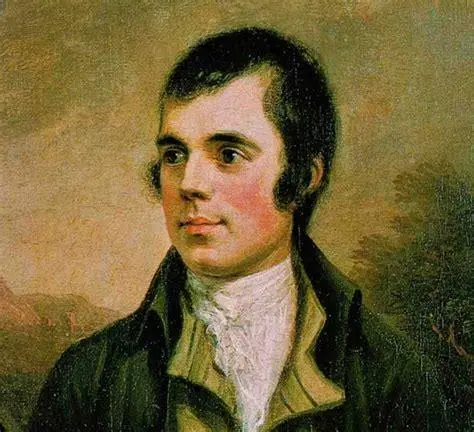
Robert Burns
Scots, Wha Hae Wi' Wallace Bled
Scots, Wha Hae Wi' Wallace Bled
Scots, wha hae wi' Wallace bled,
Scots, wham Bruce has aften led,
Welcome to your gory bed,
Or to victory!
Now's the day, and now's the hour;
See the front o' battle lour,
See approach proud Edward's power—
Chains and slavery!
Wha will be a traitor-knave?
Wha can fill a coward's grave?
Wha sae base as be a slave?
Let him turn and flee!
Wha for Scotland's king and law
Freedom's sword will strongly draw,
Freeman stand or freeman fa',
Let him follow me!
By oppression's woes and pains,
By your sons in servile chains,
We will drain our dearest veins,
But they shall be free!
Lay the proud usurpers low!
Tyrants fall in ev'ry foe!
Liberty's in ev'ry blow!
Let us do or die!
Scots, wha hae wi' Wallace bled,
Scots, wham Bruce has aften led,
Welcome to your gory bed,
Or to victory!
Now's the day, and now's the hour;
See the front o' battle lour,
See approach proud Edward's power—
Chains and slavery!
Wha will be a traitor-knave?
Wha can fill a coward's grave?
Wha sae base as be a slave?
Let him turn and flee!
Wha for Scotland's king and law
Freedom's sword will strongly draw,
Freeman stand or freeman fa',
Let him follow me!
By oppression's woes and pains,
By your sons in servile chains,
We will drain our dearest veins,
But they shall be free!
Lay the proud usurpers low!
Tyrants fall in ev'ry foe!
Liberty's in ev'ry blow!
Let us do or die!
239
Robert Burns
Here's A Health To Them That's Awa
Here's A Health To Them That's Awa
Here's a health to them that's awa,
Here's a health to them that's awa
And wha winna wish guid luck to our cause,
May never guid luck be their fa'!
It's guid to be merry and wise,
It's guid to be honest and true,
It's guid to support Caledonia's cause
And bide by the buff and the blue.
Here's a health to them that's awa,
Here's a health to them that's awa!
Here's a health to Charlie, the chief o' the clan,
Altho that his band be sma'!
May Liberty meet wi success,
May Prudence protect her frae evil!
May tyrants and Tyranny tine i' the mist
And wander their way to the Devil!
Here's a health to them that's awa,
Here's a health to them that's awa;
Here's a health to Tammie, the Norlan' laddie,
That lives at the lug o' the Law!
Here's freedom to thern that wad read,
Here's freedom to them that would write!
There's nane ever fear'd that the truth should be heard,
But they whom the truth would indite!
Here's a health to them that's awa,
An here's to them that's awa!
Here's to Maitland and Wycombe! let wha does na like 'em
Be built in a hole in the wa'!
Here's timmer that's red at the heart,
Here's fruit that is sound at the core,
And may he that wad turn the buff and blue coat
Be turn'd to the back o' the door!
Here's a health to them that's awa,
Here's a health to them that's awa,
Here's Chieftain M'Leod, a chieftain worth gowd,
Tho' bred amang mountains o' snaw!
Here's friends on baith sides o' the Firth,
And friends on baith sides o' the Tweed,
And wha wad betray old Albion's right,
May they never eat of her bread!
Here's a health to them that's awa,
Here's a health to them that's awa
And wha winna wish guid luck to our cause,
May never guid luck be their fa'!
It's guid to be merry and wise,
It's guid to be honest and true,
It's guid to support Caledonia's cause
And bide by the buff and the blue.
Here's a health to them that's awa,
Here's a health to them that's awa!
Here's a health to Charlie, the chief o' the clan,
Altho that his band be sma'!
May Liberty meet wi success,
May Prudence protect her frae evil!
May tyrants and Tyranny tine i' the mist
And wander their way to the Devil!
Here's a health to them that's awa,
Here's a health to them that's awa;
Here's a health to Tammie, the Norlan' laddie,
That lives at the lug o' the Law!
Here's freedom to thern that wad read,
Here's freedom to them that would write!
There's nane ever fear'd that the truth should be heard,
But they whom the truth would indite!
Here's a health to them that's awa,
An here's to them that's awa!
Here's to Maitland and Wycombe! let wha does na like 'em
Be built in a hole in the wa'!
Here's timmer that's red at the heart,
Here's fruit that is sound at the core,
And may he that wad turn the buff and blue coat
Be turn'd to the back o' the door!
Here's a health to them that's awa,
Here's a health to them that's awa,
Here's Chieftain M'Leod, a chieftain worth gowd,
Tho' bred amang mountains o' snaw!
Here's friends on baith sides o' the Firth,
And friends on baith sides o' the Tweed,
And wha wad betray old Albion's right,
May they never eat of her bread!
233
Robert Burns
For a' That and a' That
For a' That and a' That
Is there, for honest poverty,
That hings his head, an' a' that?
The coward slave, we pass him by,
We dare be poor for a' that!
For a' that, an' a' that,
Our toils obscure, an' a' that;
The rank is but the guinea's stamp;
The man's the gowd for a' that,
What tho' on hamely fare we dine,
Wear hoddin-gray, an' a' that;
Gie fools their silks, and knaves their wine,
A man's a man for a' that.
For a' that, an' a' that,
Their tinsel show an' a' that;
The honest man, tho' e'er sae poor,
Is king o' men for a' that.
Ye see yon birkie, ca'd a lord
Wha struts, an' stares, an' a' that;
Tho' hundreds worship at his word,
He's but a coof for a' that:
For a' that, an' a' that,
His riband, star, an' a' that,
The man o' independent mind,
He looks and laughs at a' that.
A prince can mak a belted knight,
A marquis, duke, an' a' that;
But an honest man's aboon his might,
Guid faith he mauna fa' that!
For a' that, an' a' that,
Their dignities, an' a' that,
The pith o' sense, an' pride o' worth,
Are higher rank than a' that.
Then let us pray that come it may,
As come it will for a' that,
That sense and worth, o'er a' the earth,
May bear the gree, an' a' that.
For a' that, an' a' that,
It's coming yet, for a' that,
That man to man, the warld o'er,
Shall brothers be for a' that.
Is there, for honest poverty,
That hings his head, an' a' that?
The coward slave, we pass him by,
We dare be poor for a' that!
For a' that, an' a' that,
Our toils obscure, an' a' that;
The rank is but the guinea's stamp;
The man's the gowd for a' that,
What tho' on hamely fare we dine,
Wear hoddin-gray, an' a' that;
Gie fools their silks, and knaves their wine,
A man's a man for a' that.
For a' that, an' a' that,
Their tinsel show an' a' that;
The honest man, tho' e'er sae poor,
Is king o' men for a' that.
Ye see yon birkie, ca'd a lord
Wha struts, an' stares, an' a' that;
Tho' hundreds worship at his word,
He's but a coof for a' that:
For a' that, an' a' that,
His riband, star, an' a' that,
The man o' independent mind,
He looks and laughs at a' that.
A prince can mak a belted knight,
A marquis, duke, an' a' that;
But an honest man's aboon his might,
Guid faith he mauna fa' that!
For a' that, an' a' that,
Their dignities, an' a' that,
The pith o' sense, an' pride o' worth,
Are higher rank than a' that.
Then let us pray that come it may,
As come it will for a' that,
That sense and worth, o'er a' the earth,
May bear the gree, an' a' that.
For a' that, an' a' that,
It's coming yet, for a' that,
That man to man, the warld o'er,
Shall brothers be for a' that.
231

Robert Browning
Through The Metidja To Abd-El-Kadr
Through The Metidja To Abd-El-Kadr
Abd-el-Kadr was an Arab Chief of Algiers who resisted the French in .]
I.
As I ride, as I ride,
With a full heart for my guide,
So its tide rocks my side,
As I ride, as I ride,
That, as I were double-eyed,
He, in whom our Tribes confide,
Is descried, ways untried
As I ride, as I ride.
II.
As I ride, as I ride
To our Chief and his Allied,
Who dares chide my heart's pride
As I ride, as I ride?
Or are witnesses denied---
Through the desert waste and wide
Do I glide unespied
As I ride, as I ride?
III.
As I ride, as I ride,
When an inner voice has cried,
The sands slide, nor abide
(As I ride, as I ride)
O'er each visioned homicide
That came vaunting (has he lied?)
To reside---where he died,
As I ride, as I ride.
IV.
As I ride, as I ride,
Ne'er has spur my swift horse plied,
Yet his hide, streaked and pied,
As I ride, as I ride,
Shows where sweat has sprung and dried,
---Zebra-footed, ostrich-thighed---
How has vied stride with stride
As I ride, as I ride!
V.
As I ride, as I ride,
Could I loose what Fate has tied,
Ere I pried, she should hide
(As I ride, as I ride)
All that's meant me---satisfied
When the Prophet and the Bride
Stop veins I'd have subside
As I ride, as I ride!
Abd-el-Kadr was an Arab Chief of Algiers who resisted the French in .]
I.
As I ride, as I ride,
With a full heart for my guide,
So its tide rocks my side,
As I ride, as I ride,
That, as I were double-eyed,
He, in whom our Tribes confide,
Is descried, ways untried
As I ride, as I ride.
II.
As I ride, as I ride
To our Chief and his Allied,
Who dares chide my heart's pride
As I ride, as I ride?
Or are witnesses denied---
Through the desert waste and wide
Do I glide unespied
As I ride, as I ride?
III.
As I ride, as I ride,
When an inner voice has cried,
The sands slide, nor abide
(As I ride, as I ride)
O'er each visioned homicide
That came vaunting (has he lied?)
To reside---where he died,
As I ride, as I ride.
IV.
As I ride, as I ride,
Ne'er has spur my swift horse plied,
Yet his hide, streaked and pied,
As I ride, as I ride,
Shows where sweat has sprung and dried,
---Zebra-footed, ostrich-thighed---
How has vied stride with stride
As I ride, as I ride!
V.
As I ride, as I ride,
Could I loose what Fate has tied,
Ere I pried, she should hide
(As I ride, as I ride)
All that's meant me---satisfied
When the Prophet and the Bride
Stop veins I'd have subside
As I ride, as I ride!
322
Robert Browning
The Italian In England
The Italian In England
That second time they hunted me
From hill to plain, from shore to sea,
And Austria, hounding far and wide
Her blood-hounds thro' the country-side,
Breathed hot and instant on my trace,---
I made six days a hiding-place
Of that dry green old aqueduct
Where I and Charles, when boys, have plucked
The fire-flies from the roof above,
Bright creeping thro' the moss they love:
---How long it seems since Charles was lost!
Six days the soldiers crossed and crossed
The country in my very sight;
And when that peril ceased at night,
The sky broke out in red dismay
With signal fires; well, there I lay
Close covered o'er in my recess,
Up to the neck in ferns and cress,
Thinking on Metternich our friend,
And Charles's miserable end,
And much beside, two days; the third,
Hunger o'ercame me when I heard
The peasants from the village go
To work among the maize; you know,
With us in Lombardy, they bring
Provisions packed on mules, a string
With little bells that cheer their task,
And casks, and boughs on every cask
To keep the sun's heat from the wine;
These I let pass in jingling line,
And, close on them, dear noisy crew,
The peasants from the village, too;
For at the very rear would troop
Their wives and sisters in a group
To help, I knew. When these had passed,
I threw my glove to strike the last,
Taking the chance: she did not start,
Much less cry out, but stooped apart,
One instant rapidly glanced round,
And saw me beckon from the ground.
A wild bush grows and hides my crypt;
She picked my glove up while she stripped
A branch off, then rejoined the rest
With that; my glove lay in her breast.
Then I drew breath; they disappeared:
It was for Italy I feared.
An hour, and she returned alone
Exactly where my glove was thrown.
Meanwhile came many thoughts: on me
Rested the hopes of Italy.
I had devised a certain tale
Which, when 'twas told her, could not fail
Persuade a peasant of its truth;
I meant to call a freak of youth
This hiding, and give hopes of pay,
And no temptation to betray.
But when I saw that woman's face,
Its calm simplicity of grace,
Our Italy's own attitude
In which she walked thus far, and stood,
Planting each naked foot so firm,
To crush the snake and spare the worm---
At first sight of her eyes, I said,
``I am that man upon whose head
``They fix the price, because I hate
``The Austrians over us: the State
``Will give you gold---oh, gold so much!---
``If you betray me to their clutch,
``And be your death, for aught I know,
``If once they find you saved their foe.
``Now, you must bring me food and drink,
``And also paper, pen and ink,
``And carry safe what I shall write
``To Padua, which you'll reach at night
``Before the duomo shuts; go in,
``And wait till Tenebr begin;
``Walk to the third confessional,
``Between the pillar and the wall,
``And kneeling whisper, _Whence comes peace?_
``Say it a second time, then cease;
``And if the voice inside returns,
``_From Christ and Freedom; what concerns
``The cause of Peace?_---for answer, slip
``My letter where you placed your lip;
``Then come back happy we have done
``Our mother service---I, the son,
``As you the daughter of our land!''
Three mornings more, she took her stand
In the same place, with the same eyes:
I was no surer of sun-rise
That of her coming. We conferred
Of her own prospects, and I heard
She had a lover---stout and tall,
She said---then let her eyelids fall,
``He could do much''---as if some doubt
Entered her heart,---then, passing out,
``She could not speak for others, who
``Had other thoughts; herself she knew:''
And so she brought me drink and food.
After four days, the scouts pursued
Another path; at last arrived
The help my Paduan friends contrived
To furnish me: she brought the news.
For the first time I could not choose
But kiss her hand, and lay my own
Upon her head---``This faith was shown
``To Italy, our mother; she
``Uses my hand and blesses thee.''
She followed down to the sea-shore;
I left and never saw her more.
How very long since I have thought
Concerning---much less wished for---aught
Beside the good of Italy,
For which I live and mean to die!
I never was in love; and since
Charles proved false, what shall now convince.
My inmost heart I have a friend?
However, if I pleased to spend
Real wishes on myself---say, three---
I know at least what one should be.
I would grasp Metternich until
I felt his red wet throat distil
In blood thro' these two hands. And next,
---Nor much for that am I perplexed---
Charles, perjured traitor, for his part,
Should die slow of a broken heart
Under his new employer. Last
---Ah, there, what should I wish? For fast
Do I grow old and out of strength.
If I resolved to seek at length
My father's house again, how scared
They all would look, and unprepared!
My brothers live in Austria's pay
---Disowned me long ago, men say;
And all my early mates who used
To praise me so---perhaps induced
More than one early step of mine---
Are turning wise: while some opine
``Freedom grows license,'' some suspect
``Haste breeds delay,'' and recollect
They always said, such premature
Beginnings never could endure!
So, with a sullen ``All's for best,''
The land seems settling to its rest.
I think then, I should wish to stand
This evening in that dear, lost land,
Over the sea the thousand miles,
And know if yet that woman smiles
With the calm smile; some little farm
She lives in there, no doubt: what harm
If I sat on the door-side bench,
And, while her spindle made a trench
Fantastically in the dust,
Inquired of all her fortunes---just
Her children's ages and their names,
And what may be the husband's aims
For each of them. I'd talk this out,
And sit there, for an hour about,
Then kiss her hand once more, and lay
Mine on her head, and go my way.
So much for idle wishing---how
It steals the time! To business now.
That second time they hunted me
From hill to plain, from shore to sea,
And Austria, hounding far and wide
Her blood-hounds thro' the country-side,
Breathed hot and instant on my trace,---
I made six days a hiding-place
Of that dry green old aqueduct
Where I and Charles, when boys, have plucked
The fire-flies from the roof above,
Bright creeping thro' the moss they love:
---How long it seems since Charles was lost!
Six days the soldiers crossed and crossed
The country in my very sight;
And when that peril ceased at night,
The sky broke out in red dismay
With signal fires; well, there I lay
Close covered o'er in my recess,
Up to the neck in ferns and cress,
Thinking on Metternich our friend,
And Charles's miserable end,
And much beside, two days; the third,
Hunger o'ercame me when I heard
The peasants from the village go
To work among the maize; you know,
With us in Lombardy, they bring
Provisions packed on mules, a string
With little bells that cheer their task,
And casks, and boughs on every cask
To keep the sun's heat from the wine;
These I let pass in jingling line,
And, close on them, dear noisy crew,
The peasants from the village, too;
For at the very rear would troop
Their wives and sisters in a group
To help, I knew. When these had passed,
I threw my glove to strike the last,
Taking the chance: she did not start,
Much less cry out, but stooped apart,
One instant rapidly glanced round,
And saw me beckon from the ground.
A wild bush grows and hides my crypt;
She picked my glove up while she stripped
A branch off, then rejoined the rest
With that; my glove lay in her breast.
Then I drew breath; they disappeared:
It was for Italy I feared.
An hour, and she returned alone
Exactly where my glove was thrown.
Meanwhile came many thoughts: on me
Rested the hopes of Italy.
I had devised a certain tale
Which, when 'twas told her, could not fail
Persuade a peasant of its truth;
I meant to call a freak of youth
This hiding, and give hopes of pay,
And no temptation to betray.
But when I saw that woman's face,
Its calm simplicity of grace,
Our Italy's own attitude
In which she walked thus far, and stood,
Planting each naked foot so firm,
To crush the snake and spare the worm---
At first sight of her eyes, I said,
``I am that man upon whose head
``They fix the price, because I hate
``The Austrians over us: the State
``Will give you gold---oh, gold so much!---
``If you betray me to their clutch,
``And be your death, for aught I know,
``If once they find you saved their foe.
``Now, you must bring me food and drink,
``And also paper, pen and ink,
``And carry safe what I shall write
``To Padua, which you'll reach at night
``Before the duomo shuts; go in,
``And wait till Tenebr begin;
``Walk to the third confessional,
``Between the pillar and the wall,
``And kneeling whisper, _Whence comes peace?_
``Say it a second time, then cease;
``And if the voice inside returns,
``_From Christ and Freedom; what concerns
``The cause of Peace?_---for answer, slip
``My letter where you placed your lip;
``Then come back happy we have done
``Our mother service---I, the son,
``As you the daughter of our land!''
Three mornings more, she took her stand
In the same place, with the same eyes:
I was no surer of sun-rise
That of her coming. We conferred
Of her own prospects, and I heard
She had a lover---stout and tall,
She said---then let her eyelids fall,
``He could do much''---as if some doubt
Entered her heart,---then, passing out,
``She could not speak for others, who
``Had other thoughts; herself she knew:''
And so she brought me drink and food.
After four days, the scouts pursued
Another path; at last arrived
The help my Paduan friends contrived
To furnish me: she brought the news.
For the first time I could not choose
But kiss her hand, and lay my own
Upon her head---``This faith was shown
``To Italy, our mother; she
``Uses my hand and blesses thee.''
She followed down to the sea-shore;
I left and never saw her more.
How very long since I have thought
Concerning---much less wished for---aught
Beside the good of Italy,
For which I live and mean to die!
I never was in love; and since
Charles proved false, what shall now convince.
My inmost heart I have a friend?
However, if I pleased to spend
Real wishes on myself---say, three---
I know at least what one should be.
I would grasp Metternich until
I felt his red wet throat distil
In blood thro' these two hands. And next,
---Nor much for that am I perplexed---
Charles, perjured traitor, for his part,
Should die slow of a broken heart
Under his new employer. Last
---Ah, there, what should I wish? For fast
Do I grow old and out of strength.
If I resolved to seek at length
My father's house again, how scared
They all would look, and unprepared!
My brothers live in Austria's pay
---Disowned me long ago, men say;
And all my early mates who used
To praise me so---perhaps induced
More than one early step of mine---
Are turning wise: while some opine
``Freedom grows license,'' some suspect
``Haste breeds delay,'' and recollect
They always said, such premature
Beginnings never could endure!
So, with a sullen ``All's for best,''
The land seems settling to its rest.
I think then, I should wish to stand
This evening in that dear, lost land,
Over the sea the thousand miles,
And know if yet that woman smiles
With the calm smile; some little farm
She lives in there, no doubt: what harm
If I sat on the door-side bench,
And, while her spindle made a trench
Fantastically in the dust,
Inquired of all her fortunes---just
Her children's ages and their names,
And what may be the husband's aims
For each of them. I'd talk this out,
And sit there, for an hour about,
Then kiss her hand once more, and lay
Mine on her head, and go my way.
So much for idle wishing---how
It steals the time! To business now.
340
Robert Browning
Prospice
Prospice
Fear death?---to feel the fog in my throat,
The mist in my face,
When the snows begin, and the blasts denote
I am nearing the place,
The power of the night, the press of the storm,
The post of the foe;
Where he stands, the Arch Fear in a visible form;
Yet the strong man must go:
For the journey is done and the summit attained,
And the barriers fall,
Though a battle's to fight ere the guerdon be gained,
The reward of it all.
I was ever a fighter, so---one fight more,
The best and the last!
I would hate that Death bandaged my eyes, and forbore,
And made me creep past.
No! let me taste the whole of it, fare like my peers,
The heroes of old,
Bear the brunt, in a minute pay glad life's arrears
Of pain, darkness and cold.
For sudden the worst turns the best to the brave.
The black minute's at end,
And the elements' rage, the fiend voices that rave,
Shall dwindle, shall blend,
Shall change, shall become first a peace out of pain.
Then a light, then thy breat,
O thou soul of my soul! I shall clasp thee again,
And with God be the rest!
Fear death?---to feel the fog in my throat,
The mist in my face,
When the snows begin, and the blasts denote
I am nearing the place,
The power of the night, the press of the storm,
The post of the foe;
Where he stands, the Arch Fear in a visible form;
Yet the strong man must go:
For the journey is done and the summit attained,
And the barriers fall,
Though a battle's to fight ere the guerdon be gained,
The reward of it all.
I was ever a fighter, so---one fight more,
The best and the last!
I would hate that Death bandaged my eyes, and forbore,
And made me creep past.
No! let me taste the whole of it, fare like my peers,
The heroes of old,
Bear the brunt, in a minute pay glad life's arrears
Of pain, darkness and cold.
For sudden the worst turns the best to the brave.
The black minute's at end,
And the elements' rage, the fiend voices that rave,
Shall dwindle, shall blend,
Shall change, shall become first a peace out of pain.
Then a light, then thy breat,
O thou soul of my soul! I shall clasp thee again,
And with God be the rest!
585
Robert Browning
Life in a Bottle
Life in a Bottle
Escape me?
Never--
Beloved!
While I am I, and you are you,
So long as the world contains us both,
Me the loving and you the loth,
While the one eludes, must the other pursue.
My life is a fault at last, I fear:
It seems too much like a fate, indeed!
Though I do my best I shall scarce succeed.
But what if I fail of my purpose here?
It is but to keep the nerves at strain,
To dry one's eyes and laugh at a fall,
And, baffled, get up and begin again,--
So the chace takes up one's life, that's all.
While, look but once from your farthest bound
At me so deep in the dust and dark,
No sooner the old hope goes to ground
Than a new one, straight to the self-same mark,
I shape me--
Ever
Removed!
Escape me?
Never--
Beloved!
While I am I, and you are you,
So long as the world contains us both,
Me the loving and you the loth,
While the one eludes, must the other pursue.
My life is a fault at last, I fear:
It seems too much like a fate, indeed!
Though I do my best I shall scarce succeed.
But what if I fail of my purpose here?
It is but to keep the nerves at strain,
To dry one's eyes and laugh at a fall,
And, baffled, get up and begin again,--
So the chace takes up one's life, that's all.
While, look but once from your farthest bound
At me so deep in the dust and dark,
No sooner the old hope goes to ground
Than a new one, straight to the self-same mark,
I shape me--
Ever
Removed!
307
Robert Browning
Instans Tyrannus
Instans Tyrannus
I.
Of the million or two, more or less,
I rule and possess,
One man, for some cause undefined,
Was least to my mind.
II.
I struck him, he grovelled of course---
For, what was his force?
I pinned him to earth with my weight
And persistence of hate:
And he lay, would not moan, would not curse,
As his lot might be worse.
III.
``Were the object less mean, would he stand
``At the swing of my hand!
``For obscurity helps him and blots
``The hole where he squats.''
So, I set my five wits on the stretch
To inveigle the wretch.
All in vain! Gold and jewels I threw,
Still he couched there perdue;
I tempted his blood and his flesh,
Hid in roses my mesh,
Choicest cates and the flagon's best spilth:
Still he kept to his filth.
IV.
Had he kith now or kin, were access
To his heart, did I press:
Just a son or a mother to seize!
No such booty as these.
Were it simply a friend to pursue
'Mid my million or two,
Who could pay me in person or pelf
What he owes me himself!
No: I could not but smile through my chafe:
For the fellow lay safe
As his mates do, the midge and the nit,
---Through minuteness, to wit.
V.
Then a humour more great took its place
At the thought of his face,
The droop, the low cares of the mouth,
The trouble uncouth
'Twixt the brows, all that air one is fain
To put out of its pain.
And, ``no!'' I admonished myself,
``Is one mocked by an elf,
``Is one baffled by toad or by rat?
``The gravamen's in that!
``How the lion, who crouches to suit
``His back to my foot,
``Would admire that I stand in debate!
``But the small turns the great
``If it vexes you,---that is the thing!
``Toad or rat vex the king?
``Though I waste half my realm to unearth
``Toad or rat, 'tis well worth!''
VI.
So, I soberly laid my last plan
To extinguish the man.
Round his creep-hole, with never a break
Ran my fires for his sake;
Over-head, did my thunder combine
With my underground mine:
Till I looked from my labour content
To enjoy the event.
VII.
When sudden ... how think ye, the end?
Did I say ``without friend''?
Say rather, from marge to blue marge
The whole sky grew his targe
With the sun's self for visible boss,
While an Arm ran across
Which the earth heaved beneath like a breast
Where the wretch was safe prest!
Do you see? Just my vengeance complete,
The man sprang to his feet,
Stood erect, caught at God's skirts, and prayed!
---So, _I_ was afraid!
I.
Of the million or two, more or less,
I rule and possess,
One man, for some cause undefined,
Was least to my mind.
II.
I struck him, he grovelled of course---
For, what was his force?
I pinned him to earth with my weight
And persistence of hate:
And he lay, would not moan, would not curse,
As his lot might be worse.
III.
``Were the object less mean, would he stand
``At the swing of my hand!
``For obscurity helps him and blots
``The hole where he squats.''
So, I set my five wits on the stretch
To inveigle the wretch.
All in vain! Gold and jewels I threw,
Still he couched there perdue;
I tempted his blood and his flesh,
Hid in roses my mesh,
Choicest cates and the flagon's best spilth:
Still he kept to his filth.
IV.
Had he kith now or kin, were access
To his heart, did I press:
Just a son or a mother to seize!
No such booty as these.
Were it simply a friend to pursue
'Mid my million or two,
Who could pay me in person or pelf
What he owes me himself!
No: I could not but smile through my chafe:
For the fellow lay safe
As his mates do, the midge and the nit,
---Through minuteness, to wit.
V.
Then a humour more great took its place
At the thought of his face,
The droop, the low cares of the mouth,
The trouble uncouth
'Twixt the brows, all that air one is fain
To put out of its pain.
And, ``no!'' I admonished myself,
``Is one mocked by an elf,
``Is one baffled by toad or by rat?
``The gravamen's in that!
``How the lion, who crouches to suit
``His back to my foot,
``Would admire that I stand in debate!
``But the small turns the great
``If it vexes you,---that is the thing!
``Toad or rat vex the king?
``Though I waste half my realm to unearth
``Toad or rat, 'tis well worth!''
VI.
So, I soberly laid my last plan
To extinguish the man.
Round his creep-hole, with never a break
Ran my fires for his sake;
Over-head, did my thunder combine
With my underground mine:
Till I looked from my labour content
To enjoy the event.
VII.
When sudden ... how think ye, the end?
Did I say ``without friend''?
Say rather, from marge to blue marge
The whole sky grew his targe
With the sun's self for visible boss,
While an Arm ran across
Which the earth heaved beneath like a breast
Where the wretch was safe prest!
Do you see? Just my vengeance complete,
The man sprang to his feet,
Stood erect, caught at God's skirts, and prayed!
---So, _I_ was afraid!
359
Robert Browning
Glove, The
Glove, The
(PETER RONSARD _loquitur_.)
``Heigho!'' yawned one day King Francis,
``Distance all value enhances!
``When a man's busy, why, leisure
``Strikes him as wonderful pleasure:
`` 'Faith, and at leisure once is he?
``Straightway he wants to be busy.
``Here we've got peace; and aghast I'm
``Caught thinking war the true pastime.
``Is there a reason in metre?
``Give us your speech, master Peter!''
I who, if mortal dare say so,
Ne'er am at loss with my Naso,
``Sire,'' I replied, ``joys prove cloudlets:
``Men are the merest Ixions''---
Here the King whistled aloud, ``Let's
``---Heigho---go look at our lions!''
Such are the sorrowful chances
If you talk fine to King Francis.
And so, to the courtyard proceeding,
Our company, Francis was leading,
Increased by new followers tenfold
Before be arrived at the penfold;
Lords, ladies, like clouds which bedizen
At sunset the western horizon.
And Sir De Lorge pressed 'mid the foremost
With the dame he professed to adore most.
Oh, what a face! One by fits eyed
Her, and the horrible pitside;
For the penfold surrounded a hollow
Which led where the eye scarce dared follow,
And shelved to the chamber secluded
Where Bluebeard, the great lion, brooded.
The King bailed his keeper, an Arab
As glossy and black as a scarab,*
And bade him make sport and at once stir
Up and out of his den the old monster.
They opened a hole in the wire-work
Across it, and dropped there a firework,
And fled: one's heart's beating redoubled;
A pause, while the pit's mouth was troubled,
The blackness and silence so utter,
By the firework's slow sparkling and sputter;
Then earth in a sudden contortion
Gave out to our gaze her abortion.
Such a brute! Were I friend Clement Marot
(Whose experience of nature's but narrow,
And whose faculties move in no small mist
When he versifies David the Psalmist)
I should study that brute to describe you
_Illim Juda Leonem de Tribu_.
One's whole blood grew curdling and creepy
To see the black mane, vast and heapy,
The tail in the air stiff and straining,
The wide eyes, nor waxing nor waning,
As over the barrier which bounded
His platform, and us who surrounded
The barrier, they reached and they rested
On space that might stand him in best stead:
For who knew, he thought, what the amazement,
The eruption of clatter and blaze meant,
And if, in this minute of wonder,
No outlet, 'mid lightning and thunder,
Lay broad, and, his shackles all shivered,
The lion at last was delivered?
Ay, that was the open sky o'erhead!
And you saw by the flash on his forehead,
By the hope in those eyes wide and steady,
He was leagues in the desert already,
Driving the flocks up the mountain,
Or catlike couched hard by the fountain
To waylay the date-gathering negress:
So guarded he entrance or egress.
``How he stands!'' quoth the King: ``we may well swear,
(``No novice, we've won our spurs elsewhere
``And so can afford the confession,)
``We exercise wholesome discretion
``In keeping aloof from his threshold;
``Once hold you, those jaws want no fresh hold,
``Their first would too pleasantly purloin
``The visitor's brisket or surloin:
``But who's he would prove so fool-hardy?
``Not the best man of Marignan, pardie!''
The sentence no sooner was uttered,
Than over the rails a glove flattered,
Fell close to the lion, and rested:
The dame 'twas, who flung it and jested
With life so, De Lorge had been wooing
For months past; he sat there pursuing
His suit, weighing out with nonchalance
Fine speeches like gold from a balance.
Sound the trumpet, no true knight's a tarrier!
De Lorge made one leap at the barrier,
Walked straight to the glove,---while the lion
Neer moved, kept his far-reaching eye on
The palm-tree-edged desert-spring's sapphire,
And the musky oiled skin of the Kaffir,---
Picked it up, and as calmly retreated,
Leaped back where the lady was seated,
And full in the face of its owner
Flung the glove.
``Your heart's queen, you dethrone her?
``So should I!''---cried the King---``'twas mere vanity,
``Not love, set that task to humanity!''
Lords and ladies alike turned with loathing
From such a proved wolf in sheep's clothing.
Not so, I; for I caught an expression
In her brow's undisturbed self-possession
Amid the Court's scoffing and merriment,---
As if from no pleasing experiment
She rose, yet of pain not much heedful
So long as the process was needful,---
As if she had tried in a crucible,
To what ``speeches like gold'' were reducible,
And, finding the finest prove copper,
Felt the smoke in her face was but proper;
To know what she had _not_ to trust to,
Was worth all the ashes and dust too.
She went out 'mid hooting and laughter;
Clement Marot stayed; I followed after,
And asked, as a grace, what it all meant?
If she wished not the rash deed's recalment?
``For I''---so I spoke---``am a poet:
``Human nature,---behoves that I know it!''
She told me, ``Too long had I heard
``Of the deed proved alone by the word:
``For my love---what De Lorge would not dare!
``With my scorn---what De Lorge could compare!
``And the endless descriptions of death
``He would brave when my lip formed a breath,
``I must reckon as braved, or, of course,
``Doubt his word---and moreover, perforce,
``For such gifts as no lady could spurn,
``Must offer my love in return.
``When I looked on your lion, it brought
``All the dangers at once to my thought,
``Encountered by all sorts of men,
``Before he was lodged in his den,---
``From the poor slave whose club or bare hands
``Dug the trap, set the snare on the sands,
``With no King and no Court to applaud,
``By no shame, should he shrink, overawed,
``Yet to capture the creature made shift,
``That his rude boys might laugh at the gift,
``---To the page who last leaped o'er the fence
``Of the pit, on no greater pretence
``Than to get back the bonnet he dropped,
``Lest his pay for a week should be stopped.
``So, wiser I judged it to make
``One trial what `death for my sake'
``Really meant, while the power was yet mine,
``Than to wait until time should define
``Such a phrase not so simply as I,
``Who took it to mean just `to die.'
``The blow a glove gives is but weak:
``Does the mark yet discolour my cheek?
``But when the heart suffers a blow,
``Will the pain pass so soon, do you know?''
I looked, as away she was sweeping,
And saw a youth eagerly keeping
As close as he dared to the doorway.
No doubt that a noble should more weigh
His life than befits a plebeian;
And yet, had our brute been Nemean---
(I judge by a certain calm fervour
The youth stepped with, forward to serve her)
---He'd have scarce thought you did him the worst turn
If you whispered ``Friend, what you'd get, first earn!''
And when, shortly after, she carried
Her shame from the Court, and they married,
To that marriage some happiness, maugre
The voice of the Court, I dared augur.
For De Lorge, he made women with men vie,
Those in wonder and praise, these in envy;
And in short stood so plain a head taller
That he wooed and won ... how do you call her?
The beauty, that rose in the sequel
To the King's love, who loved her a week well.
And 'twas noticed he never would honour
De Lorge (who looked daggers upon her)
With the easy commission of stretching
His legs in the service, and fetching
His wife, from her chamber, those straying
Sad gloves she was always mislaying,
While the King took the closet to chat in,---
But of course this adventure came pat in.
And never the King told the story,
How bringing a glove brought such glory,
But the wife smiled---``His nerves are grown firmer:
``Mine he brings now and utters no murmur.''
_Venienti occurrite morbo!_
With which moral I drop my theorbo.
* A beetle.
(PETER RONSARD _loquitur_.)
``Heigho!'' yawned one day King Francis,
``Distance all value enhances!
``When a man's busy, why, leisure
``Strikes him as wonderful pleasure:
`` 'Faith, and at leisure once is he?
``Straightway he wants to be busy.
``Here we've got peace; and aghast I'm
``Caught thinking war the true pastime.
``Is there a reason in metre?
``Give us your speech, master Peter!''
I who, if mortal dare say so,
Ne'er am at loss with my Naso,
``Sire,'' I replied, ``joys prove cloudlets:
``Men are the merest Ixions''---
Here the King whistled aloud, ``Let's
``---Heigho---go look at our lions!''
Such are the sorrowful chances
If you talk fine to King Francis.
And so, to the courtyard proceeding,
Our company, Francis was leading,
Increased by new followers tenfold
Before be arrived at the penfold;
Lords, ladies, like clouds which bedizen
At sunset the western horizon.
And Sir De Lorge pressed 'mid the foremost
With the dame he professed to adore most.
Oh, what a face! One by fits eyed
Her, and the horrible pitside;
For the penfold surrounded a hollow
Which led where the eye scarce dared follow,
And shelved to the chamber secluded
Where Bluebeard, the great lion, brooded.
The King bailed his keeper, an Arab
As glossy and black as a scarab,*
And bade him make sport and at once stir
Up and out of his den the old monster.
They opened a hole in the wire-work
Across it, and dropped there a firework,
And fled: one's heart's beating redoubled;
A pause, while the pit's mouth was troubled,
The blackness and silence so utter,
By the firework's slow sparkling and sputter;
Then earth in a sudden contortion
Gave out to our gaze her abortion.
Such a brute! Were I friend Clement Marot
(Whose experience of nature's but narrow,
And whose faculties move in no small mist
When he versifies David the Psalmist)
I should study that brute to describe you
_Illim Juda Leonem de Tribu_.
One's whole blood grew curdling and creepy
To see the black mane, vast and heapy,
The tail in the air stiff and straining,
The wide eyes, nor waxing nor waning,
As over the barrier which bounded
His platform, and us who surrounded
The barrier, they reached and they rested
On space that might stand him in best stead:
For who knew, he thought, what the amazement,
The eruption of clatter and blaze meant,
And if, in this minute of wonder,
No outlet, 'mid lightning and thunder,
Lay broad, and, his shackles all shivered,
The lion at last was delivered?
Ay, that was the open sky o'erhead!
And you saw by the flash on his forehead,
By the hope in those eyes wide and steady,
He was leagues in the desert already,
Driving the flocks up the mountain,
Or catlike couched hard by the fountain
To waylay the date-gathering negress:
So guarded he entrance or egress.
``How he stands!'' quoth the King: ``we may well swear,
(``No novice, we've won our spurs elsewhere
``And so can afford the confession,)
``We exercise wholesome discretion
``In keeping aloof from his threshold;
``Once hold you, those jaws want no fresh hold,
``Their first would too pleasantly purloin
``The visitor's brisket or surloin:
``But who's he would prove so fool-hardy?
``Not the best man of Marignan, pardie!''
The sentence no sooner was uttered,
Than over the rails a glove flattered,
Fell close to the lion, and rested:
The dame 'twas, who flung it and jested
With life so, De Lorge had been wooing
For months past; he sat there pursuing
His suit, weighing out with nonchalance
Fine speeches like gold from a balance.
Sound the trumpet, no true knight's a tarrier!
De Lorge made one leap at the barrier,
Walked straight to the glove,---while the lion
Neer moved, kept his far-reaching eye on
The palm-tree-edged desert-spring's sapphire,
And the musky oiled skin of the Kaffir,---
Picked it up, and as calmly retreated,
Leaped back where the lady was seated,
And full in the face of its owner
Flung the glove.
``Your heart's queen, you dethrone her?
``So should I!''---cried the King---``'twas mere vanity,
``Not love, set that task to humanity!''
Lords and ladies alike turned with loathing
From such a proved wolf in sheep's clothing.
Not so, I; for I caught an expression
In her brow's undisturbed self-possession
Amid the Court's scoffing and merriment,---
As if from no pleasing experiment
She rose, yet of pain not much heedful
So long as the process was needful,---
As if she had tried in a crucible,
To what ``speeches like gold'' were reducible,
And, finding the finest prove copper,
Felt the smoke in her face was but proper;
To know what she had _not_ to trust to,
Was worth all the ashes and dust too.
She went out 'mid hooting and laughter;
Clement Marot stayed; I followed after,
And asked, as a grace, what it all meant?
If she wished not the rash deed's recalment?
``For I''---so I spoke---``am a poet:
``Human nature,---behoves that I know it!''
She told me, ``Too long had I heard
``Of the deed proved alone by the word:
``For my love---what De Lorge would not dare!
``With my scorn---what De Lorge could compare!
``And the endless descriptions of death
``He would brave when my lip formed a breath,
``I must reckon as braved, or, of course,
``Doubt his word---and moreover, perforce,
``For such gifts as no lady could spurn,
``Must offer my love in return.
``When I looked on your lion, it brought
``All the dangers at once to my thought,
``Encountered by all sorts of men,
``Before he was lodged in his den,---
``From the poor slave whose club or bare hands
``Dug the trap, set the snare on the sands,
``With no King and no Court to applaud,
``By no shame, should he shrink, overawed,
``Yet to capture the creature made shift,
``That his rude boys might laugh at the gift,
``---To the page who last leaped o'er the fence
``Of the pit, on no greater pretence
``Than to get back the bonnet he dropped,
``Lest his pay for a week should be stopped.
``So, wiser I judged it to make
``One trial what `death for my sake'
``Really meant, while the power was yet mine,
``Than to wait until time should define
``Such a phrase not so simply as I,
``Who took it to mean just `to die.'
``The blow a glove gives is but weak:
``Does the mark yet discolour my cheek?
``But when the heart suffers a blow,
``Will the pain pass so soon, do you know?''
I looked, as away she was sweeping,
And saw a youth eagerly keeping
As close as he dared to the doorway.
No doubt that a noble should more weigh
His life than befits a plebeian;
And yet, had our brute been Nemean---
(I judge by a certain calm fervour
The youth stepped with, forward to serve her)
---He'd have scarce thought you did him the worst turn
If you whispered ``Friend, what you'd get, first earn!''
And when, shortly after, she carried
Her shame from the Court, and they married,
To that marriage some happiness, maugre
The voice of the Court, I dared augur.
For De Lorge, he made women with men vie,
Those in wonder and praise, these in envy;
And in short stood so plain a head taller
That he wooed and won ... how do you call her?
The beauty, that rose in the sequel
To the King's love, who loved her a week well.
And 'twas noticed he never would honour
De Lorge (who looked daggers upon her)
With the easy commission of stretching
His legs in the service, and fetching
His wife, from her chamber, those straying
Sad gloves she was always mislaying,
While the King took the closet to chat in,---
But of course this adventure came pat in.
And never the King told the story,
How bringing a glove brought such glory,
But the wife smiled---``His nerves are grown firmer:
``Mine he brings now and utters no murmur.''
_Venienti occurrite morbo!_
With which moral I drop my theorbo.
* A beetle.
336
Robert Browning
Epilogue
Epilogue
At the midnight in the silence of the sleep-time,
When you set your fancies free,
Will they pass to where--by death, fools think, imprisoned--
Low he lies who once so loved you, whom you loved so,
--Pity me?
Oh to love so, be so loved, yet so mistaken!
What had I on earth to do
With the slothful, with the mawkish, the unmanly?
Like the aimless, helpless, hopeless, did I drivel
--Being--who?
One who never turned his back but marched breast forward,
Never doubted clouds would break,
Never dreamed, though right were worsted, wrong would triumph,
Held we fall to rise, are baffled to fight better,
Sleep to wake.
No, at noonday in the bustle of man's work-time
Greet the unseen with a cheer!
Bid him forward, breast and back as either should be,
"Strive and thrive!" cry "Speed,--fight on, fare ever
There as here!"
At the midnight in the silence of the sleep-time,
When you set your fancies free,
Will they pass to where--by death, fools think, imprisoned--
Low he lies who once so loved you, whom you loved so,
--Pity me?
Oh to love so, be so loved, yet so mistaken!
What had I on earth to do
With the slothful, with the mawkish, the unmanly?
Like the aimless, helpless, hopeless, did I drivel
--Being--who?
One who never turned his back but marched breast forward,
Never doubted clouds would break,
Never dreamed, though right were worsted, wrong would triumph,
Held we fall to rise, are baffled to fight better,
Sleep to wake.
No, at noonday in the bustle of man's work-time
Greet the unseen with a cheer!
Bid him forward, breast and back as either should be,
"Strive and thrive!" cry "Speed,--fight on, fare ever
There as here!"
305
Robert Browning
Count Gismond--Aix in Provence
Count Gismond--Aix in Provence
Christ God who savest man, save most
Of men Count Gismond who saved me!
Count Gauthier, when he chose his post,
Chose time and place and company
To suit it; when he struck at length
My honour, 't was with all his strength.
And doubtlessly, ere he could draw
All points to one, he must have schemed!
That miserable morning saw
Few half so happy as I seemed,
While being dressed in queen's array
To give our tourney prize away.
I thought they loved me, did me grace
To please themselves; 't was all their deed;
God makes, or fair or foul, our face;
If showing mine so caused to bleed
My cousins' hearts, they should have dropped
A word, and straight the play had stopped.
They, too, so beauteous! Each a queen
By virtue of her brow and breast;
Not needing to be crowned, I mean,
As I do. E'en when I was dressed,
Had either of them spoke, instead
Of glancing sideways with still head!
But no: they let me laugh, and sing
My birthday song quite through, adjust
The last rose in my garland, fling
A last look on the mirror, trust
My arms to each an arm of theirs,
And so descend the castle-stairs-
And come out on the morning troop
Of merry friends who kissed my cheek,
And called me queen, and made me stoop
Under the canopy-(a streak
That pierced it, of the outside sun,
Powdered with gold its gloom's soft dun)-
And they could let me take my state
And foolish throne amid applause
Of all come there to celebrate
My queen's-day-Oh I think the cause
Of much was, they forgot no crowd
Makes up for parents in their shroud!
However that be, all eyes were bent
Upon me, when my cousins cast
Theirs down; 't was time I should present
The victor's crown, but ... there, 't will last
No long time ... the old mist again
Blinds me as then it did. How vain!
See! Gismond's at the gate, in talk
With his two boys: I can proceed.
Well, at that moment, who should stalk
Forth boldly-to my face, indeed-
But Gauthier? and he thundered "Stay!"
And all stayed. "Bring no crowns, I say!
"Bring torches! Wind the penance-sheet
"About her! Let her shun the chaste,
"Or lay herself before their feet!
"Shall she, whose body I embraced
"A night long, queen it in the day?
"For honour's sake no crowns, I say!"
I? What I answered? As I live,
I never fancied such a thing
As answer possible to give.
What says the body when they spring
Some monstrous torture-engine's whole
Strength on it? No more says the soul.
Till out strode Gismond; then I knew
That I was saved. I never met
His face before, but, at first view,
I felt quite sure that God had set
Himself to Satan; would who spend
A minute's mistrust on the end?
He strode to Gauthier, in his throat
Gave him the lie, then struck his mouth
With one back-handed blow that wrote
In blood men's verdict there. North, South,
East, West, I looked. The lie was dead,
And damned, and truth stood up instead.
This glads me most, that I enjoyed
The heart o' the joy, with my content
In watching Gismond unalloyed
By any doubt of the event:
God took that on him-I was bid
Watch Gismond for my part: I did.
Did I not watch him while he let
His armourer just brace his greaves,
Rivet his hauberk, on the fret
The while! His foot ... my memory leaves
No least stamp out nor how anon
He pulled his ringing gauntlets on.
And e'en before the trumpet's sound
Was finished, prone lay the false knight,
Prone as his lie, upon the ground:
Gismond flew at him, used no sleight
O' the sword, but open-breasted drove,
Cleaving till out the truth he clove.
Which done, he dragged him to my feet
And said, "Here die, but end thy breath
"In full confession, lest thou fleet
"From my first, to God's second death!
"Say, hast thou lied? "And, "I have lied
"To God and her,"he said, and died.
Then Gismond, kneeling to me, asked
-What safe my heart holds, though no word
Could I repeat now, if I tasked
My powers for ever, to a third
Dear even as you are. Pass the rest
Until I sank upon his breast.
Over my head his arm he flung
Against the world; and scarce I felt
His sword (that dripped by me and swung)
A little shifted in its belt:
For he began to say the while
How South our home lay many a mile.
So, 'mid the shouting multitude
We two walked forth to never more
Return. My cousins have pursued
Their life, untroubled as before
I vexed them. Gauthier's dwelling-place
God lighten! May his soul find grace!
Our elder boy has got the clear
Great brow, tho' when his brother's black
Full eye shows scorn, it ... Gismond here?
And have you brought my tercel back?
I was just telling Adela
How many birds it struck since May.
Christ God who savest man, save most
Of men Count Gismond who saved me!
Count Gauthier, when he chose his post,
Chose time and place and company
To suit it; when he struck at length
My honour, 't was with all his strength.
And doubtlessly, ere he could draw
All points to one, he must have schemed!
That miserable morning saw
Few half so happy as I seemed,
While being dressed in queen's array
To give our tourney prize away.
I thought they loved me, did me grace
To please themselves; 't was all their deed;
God makes, or fair or foul, our face;
If showing mine so caused to bleed
My cousins' hearts, they should have dropped
A word, and straight the play had stopped.
They, too, so beauteous! Each a queen
By virtue of her brow and breast;
Not needing to be crowned, I mean,
As I do. E'en when I was dressed,
Had either of them spoke, instead
Of glancing sideways with still head!
But no: they let me laugh, and sing
My birthday song quite through, adjust
The last rose in my garland, fling
A last look on the mirror, trust
My arms to each an arm of theirs,
And so descend the castle-stairs-
And come out on the morning troop
Of merry friends who kissed my cheek,
And called me queen, and made me stoop
Under the canopy-(a streak
That pierced it, of the outside sun,
Powdered with gold its gloom's soft dun)-
And they could let me take my state
And foolish throne amid applause
Of all come there to celebrate
My queen's-day-Oh I think the cause
Of much was, they forgot no crowd
Makes up for parents in their shroud!
However that be, all eyes were bent
Upon me, when my cousins cast
Theirs down; 't was time I should present
The victor's crown, but ... there, 't will last
No long time ... the old mist again
Blinds me as then it did. How vain!
See! Gismond's at the gate, in talk
With his two boys: I can proceed.
Well, at that moment, who should stalk
Forth boldly-to my face, indeed-
But Gauthier? and he thundered "Stay!"
And all stayed. "Bring no crowns, I say!
"Bring torches! Wind the penance-sheet
"About her! Let her shun the chaste,
"Or lay herself before their feet!
"Shall she, whose body I embraced
"A night long, queen it in the day?
"For honour's sake no crowns, I say!"
I? What I answered? As I live,
I never fancied such a thing
As answer possible to give.
What says the body when they spring
Some monstrous torture-engine's whole
Strength on it? No more says the soul.
Till out strode Gismond; then I knew
That I was saved. I never met
His face before, but, at first view,
I felt quite sure that God had set
Himself to Satan; would who spend
A minute's mistrust on the end?
He strode to Gauthier, in his throat
Gave him the lie, then struck his mouth
With one back-handed blow that wrote
In blood men's verdict there. North, South,
East, West, I looked. The lie was dead,
And damned, and truth stood up instead.
This glads me most, that I enjoyed
The heart o' the joy, with my content
In watching Gismond unalloyed
By any doubt of the event:
God took that on him-I was bid
Watch Gismond for my part: I did.
Did I not watch him while he let
His armourer just brace his greaves,
Rivet his hauberk, on the fret
The while! His foot ... my memory leaves
No least stamp out nor how anon
He pulled his ringing gauntlets on.
And e'en before the trumpet's sound
Was finished, prone lay the false knight,
Prone as his lie, upon the ground:
Gismond flew at him, used no sleight
O' the sword, but open-breasted drove,
Cleaving till out the truth he clove.
Which done, he dragged him to my feet
And said, "Here die, but end thy breath
"In full confession, lest thou fleet
"From my first, to God's second death!
"Say, hast thou lied? "And, "I have lied
"To God and her,"he said, and died.
Then Gismond, kneeling to me, asked
-What safe my heart holds, though no word
Could I repeat now, if I tasked
My powers for ever, to a third
Dear even as you are. Pass the rest
Until I sank upon his breast.
Over my head his arm he flung
Against the world; and scarce I felt
His sword (that dripped by me and swung)
A little shifted in its belt:
For he began to say the while
How South our home lay many a mile.
So, 'mid the shouting multitude
We two walked forth to never more
Return. My cousins have pursued
Their life, untroubled as before
I vexed them. Gauthier's dwelling-place
God lighten! May his soul find grace!
Our elder boy has got the clear
Great brow, tho' when his brother's black
Full eye shows scorn, it ... Gismond here?
And have you brought my tercel back?
I was just telling Adela
How many birds it struck since May.
364
Robert Browning
Childe Roland To The Dark Tower Came
Childe Roland To The Dark Tower Came
I.
My first thought was, he lied in every word,
That hoary cripple, with malicious eye
Askance to watch the working of his lie
On mine, and mouth scarce able to afford
Suppression of the glee, that pursed and scored
Its edge, at one more victim gained thereby.
II.
What else should he be set for, with his staff?
What, save to waylay with his lies, ensnare
All travellers who might find him posted there,
And ask the road? I guessed what skull-like laugh
Would break, what crutch 'gin write my epitaph
For pastime in the dusty thoroughfare,
III.
If at his counsel I should turn aside
Into that ominous tract which, all agree,
Hides the Dark Tower. Yet acquiescingly
I did turn as he pointed: neither pride
Nor hope rekindling at the end descried,
So much as gladness that some end might be.
IV.
For, what with my whole world-wide wandering,
What with my search drawn out thro' years, my hope
Dwindled into a ghost not fit to cope
With that obstreperous joy success would bring,
I hardly tried now to rebuke the spring
My heart made, finding failure in its scope.
V.
As when a sick man very near to death
Seems dead indeed, and feels begin and end
The tears and takes the farewell of each friend,
And hears one bid the other go, draw breath
Freelier outside, (``since all is o'er,'' he saith,
``And the blow falIen no grieving can amend;'')
VI.
While some discuss if near the other graves
Be room enough for this, and when a day
Suits best for carrying the corpse away,
With care about the banners, scarves and staves:
And still the man hears all, and only craves
He may not shame such tender love and stay.
VII.
Thus, I had so long suffered in this quest,
Heard failure prophesied so oft, been writ
So many times among ``The Band''---to wit,
The knights who to the Dark Tower's search addressed
Their steps---that just to fail as they, seemed best,
And all the doubt was now---should I be fit?
VIII.
So, quiet as despair, I turned from him,
That hateful cripple, out of his highway
Into the path he pointed. All the day
Had been a dreary one at best, and dim
Was settling to its close, yet shot one grim
Red leer to see the plain catch its estray.
IX.
For mark! no sooner was I fairly found
Pledged to the plain, after a pace or two,
Than, pausing to throw backward a last view
O'er the safe road, 'twas gone; grey plain all round:
Nothing but plain to the horizon's bound.
I might go on; nought else remained to do.
X.
So, on I went. I think I never saw
Such starved ignoble nature; nothing throve:
For flowers---as well expect a cedar grove!
But cockle, spurge, according to their law
Might propagate their kind, with none to awe,
You'd think; a burr had been a treasure-trove.
XI.
No! penury, inertness and grimace,
In some strange sort, were the land's portion. ``See
``Or shut your eyes,'' said nature peevishly,
``It nothing skills: I cannot help my case:
``'Tis the Last judgment's fire must cure this place,
``Calcine its clods and set my prisoners free.''
XII.
If there pushed any ragged thistle-stalk
Above its mates, the head was chopped; the bents
Were jealous else. What made those holes and rents
In the dock's harsh swarth leaves, bruised as to baulk
All hope of greenness?'tis a brute must walk
Pashing their life out, with a brute's intents.
XIII.
As for the grass, it grew as scant as hair
In leprosy; thin dry blades pricked the mud
Which underneath looked kneaded up with blood.
One stiff blind horse, his every bone a-stare,
Stood stupefied, however he came there:
Thrust out past service from the devil's stud!
XIV.
Alive? he might be dead for aught I know,
With that red gaunt and colloped neck a-strain,
And shut eyes underneath the rusty mane;
Seldom went such grotesqueness with such woe;
I never saw a brute I hated so;
He must be wicked to deserve such pain.
XV.
I shut my eyes and turned them on my heart.
As a man calls for wine before he fights,
I asked one draught of earlier, happier sights,
Ere fitly I could hope to play my part.
Think first, fight afterwards---the soldier's art:
One taste of the old time sets all to rights.
XVI.
Not it! I fancied Cuthbert's reddening face
Beneath its garniture of curly gold,
Dear fellow, till I almost felt him fold
An arm in mine to fix me to the place,
That way he used. Alas, one night's disgrace!
Out went my heart's new fire and left it cold.
XVII.
Giles then, the soul of honour---there he stands
Frank as ten years ago when knighted first.
What honest man should dare (he said) he durst.
Good---but the scene shifts---faugh! what hangman hands
Pin to his breast a parchment? His own bands
Read it. Poor traitor, spit upon and curst!
XVIII.
Better this present than a past like that;
Back therefore to my darkening path again!
No sound, no sight as far as eye could strain.
Will the night send a howlet or a bat?
I asked: when something on the dismal flat
Came to arrest my thoughts and change their train.
XIX.
A sudden little river crossed my path
As unexpected as a serpent comes.
No sluggish tide congenial to the glooms;
This, as it frothed by, might have been a bath
For the fiend's glowing hoof---to see the wrath
Of its black eddy bespate with flakes and spumes.
XX.
So petty yet so spiteful! All along,
Low scrubby alders kneeled down over it;
Drenched willows flung them headlong in a fit
Of route despair, a suicidal throng:
The river which had done them all the wrong,
Whate'er that was, rolled by, deterred no whit.
XXI.
Which, while I forded,---good saints, how I feared
To set my foot upon a dead man's cheek,
Each step, or feel the spear I thrust to seek
For hollows, tangled in his hair or beard!
---It may have been a water-rat I speared,
But, ugh! it sounded like a baby's shriek.
XXII.
Glad was I when I reached the other bank.
Now for a better country. Vain presage!
Who were the strugglers, what war did they wage,
Whose savage trample thus could pad the dank
Soil to a plash? Toads in a poisoned tank,
Or wild cats in a red-hot iron cage---
XXIII.
The fight must so have seemed in that fell cirque.
What penned them there, with all the plain to choose?
No foot-print leading to that horrid mews,
None out of it. Mad brewage set to work
Their brains, no doubt, like galley-slaves the Turk
Pits for his pastime, Christians against Jews.
XXIV.
And more than that---a furlong on---why, there!
What bad use was that engine for, that wheel,
Or brake, not wheel---that harrow fit to reel
Men's bodies out like silk? with all the air
Of Tophet's tool, on earth left unaware,
Or brought to sharpen its rusty teeth of steel.
XXV.
Then came a bit of stubbed ground, once a wood,
Next a marsh, it would seem, and now mere earth
Desperate and done with; (so a fool finds mirth,
Makes a thing and then mars it, till his mood
Changes and off he goes!) within a rood---
Bog, clay and rubble, sand and stark black dearth.
XXVI.
Now blotches rankling, coloured gay and grim,
Now patches where some leanness of the soil's
Broke into moss or substances like boils;
Then came some palsied oak, a cleft in him
Like a distorted mouth that splits its rim
Gaping at death, and dies while it recoils.
XXVII.
And just as far as ever from the end!
Nought in the distance but the evening, nought
To point my footstep further! At the thought,
great black bird, Apollyon's bosom-friend,
Sailed past, nor beat his wide wing dragon-penned
That brushed my cap---perchance the guide I sought.
XXVIII.
For, looking up, aware I somehow grew,
'Spite of the dusk, the plain had given place
All round to mountains---with such name to grace
Mere ugly heights and heaps now stolen in view.
How thus they had surprised me,---solve it, you!
How to get from them was no clearer case.
XXIX.
Yet half I seemed to recognize some trick
Of mischief happened to me, God knows when---
In a bad dream perhaps. Here ended, then,
Progress this way. When, in the very nick
Of giving up, one time more, came a click
As when a trap shuts---you're inside the den!
XXX.
Burningly it came on me all at once,
This was the place! those two hills on the right,
Crouched like two bulls locked horn in horn in fight;
While to the left, a tall scalped mountain ... Dunce,
Dotard, a-dozing at the very nonce,
After a life spent training for the sight!
XXXI.
What in the midst lay but the Tower itself?
The round squat turret, blind as the fool's heart,
Built of brown stone, without a counter-part
In the whole world. The tempest's mocking elf
Points to the shipman thus the unseen shelf
He strikes on, only when the timbers start.
XXXII.
Not see? because of night perhaps?---why, day
Came back again for that! before it left,
The dying sunset kindled through a cleft:
The hills, like giants at a hunting, lay,
Chin upon hand, to see the game at bay,---
``Now stab and end the creature---to the heft!''
XXXIII.
Not hear? when noise was everywhere! it tolled
Increasing like a bell. Names in my ears
Of all the lost adventurers my peers,---
How such a one was strong, and such was bold,
And such was fortunate, yet, each of old
Lost, lost! one moment knelled the woe of years.
XXXIV.
There they stood, ranged along the hill-sides, met
To view the last of me, a living frame
For one more picture! in a sheet of flame
I saw them and I knew them all. And yet
Dauntless the slug-horn to my lips I set,
And blew. ``_Childe Roland to the Dark Tower came._''
I.
My first thought was, he lied in every word,
That hoary cripple, with malicious eye
Askance to watch the working of his lie
On mine, and mouth scarce able to afford
Suppression of the glee, that pursed and scored
Its edge, at one more victim gained thereby.
II.
What else should he be set for, with his staff?
What, save to waylay with his lies, ensnare
All travellers who might find him posted there,
And ask the road? I guessed what skull-like laugh
Would break, what crutch 'gin write my epitaph
For pastime in the dusty thoroughfare,
III.
If at his counsel I should turn aside
Into that ominous tract which, all agree,
Hides the Dark Tower. Yet acquiescingly
I did turn as he pointed: neither pride
Nor hope rekindling at the end descried,
So much as gladness that some end might be.
IV.
For, what with my whole world-wide wandering,
What with my search drawn out thro' years, my hope
Dwindled into a ghost not fit to cope
With that obstreperous joy success would bring,
I hardly tried now to rebuke the spring
My heart made, finding failure in its scope.
V.
As when a sick man very near to death
Seems dead indeed, and feels begin and end
The tears and takes the farewell of each friend,
And hears one bid the other go, draw breath
Freelier outside, (``since all is o'er,'' he saith,
``And the blow falIen no grieving can amend;'')
VI.
While some discuss if near the other graves
Be room enough for this, and when a day
Suits best for carrying the corpse away,
With care about the banners, scarves and staves:
And still the man hears all, and only craves
He may not shame such tender love and stay.
VII.
Thus, I had so long suffered in this quest,
Heard failure prophesied so oft, been writ
So many times among ``The Band''---to wit,
The knights who to the Dark Tower's search addressed
Their steps---that just to fail as they, seemed best,
And all the doubt was now---should I be fit?
VIII.
So, quiet as despair, I turned from him,
That hateful cripple, out of his highway
Into the path he pointed. All the day
Had been a dreary one at best, and dim
Was settling to its close, yet shot one grim
Red leer to see the plain catch its estray.
IX.
For mark! no sooner was I fairly found
Pledged to the plain, after a pace or two,
Than, pausing to throw backward a last view
O'er the safe road, 'twas gone; grey plain all round:
Nothing but plain to the horizon's bound.
I might go on; nought else remained to do.
X.
So, on I went. I think I never saw
Such starved ignoble nature; nothing throve:
For flowers---as well expect a cedar grove!
But cockle, spurge, according to their law
Might propagate their kind, with none to awe,
You'd think; a burr had been a treasure-trove.
XI.
No! penury, inertness and grimace,
In some strange sort, were the land's portion. ``See
``Or shut your eyes,'' said nature peevishly,
``It nothing skills: I cannot help my case:
``'Tis the Last judgment's fire must cure this place,
``Calcine its clods and set my prisoners free.''
XII.
If there pushed any ragged thistle-stalk
Above its mates, the head was chopped; the bents
Were jealous else. What made those holes and rents
In the dock's harsh swarth leaves, bruised as to baulk
All hope of greenness?'tis a brute must walk
Pashing their life out, with a brute's intents.
XIII.
As for the grass, it grew as scant as hair
In leprosy; thin dry blades pricked the mud
Which underneath looked kneaded up with blood.
One stiff blind horse, his every bone a-stare,
Stood stupefied, however he came there:
Thrust out past service from the devil's stud!
XIV.
Alive? he might be dead for aught I know,
With that red gaunt and colloped neck a-strain,
And shut eyes underneath the rusty mane;
Seldom went such grotesqueness with such woe;
I never saw a brute I hated so;
He must be wicked to deserve such pain.
XV.
I shut my eyes and turned them on my heart.
As a man calls for wine before he fights,
I asked one draught of earlier, happier sights,
Ere fitly I could hope to play my part.
Think first, fight afterwards---the soldier's art:
One taste of the old time sets all to rights.
XVI.
Not it! I fancied Cuthbert's reddening face
Beneath its garniture of curly gold,
Dear fellow, till I almost felt him fold
An arm in mine to fix me to the place,
That way he used. Alas, one night's disgrace!
Out went my heart's new fire and left it cold.
XVII.
Giles then, the soul of honour---there he stands
Frank as ten years ago when knighted first.
What honest man should dare (he said) he durst.
Good---but the scene shifts---faugh! what hangman hands
Pin to his breast a parchment? His own bands
Read it. Poor traitor, spit upon and curst!
XVIII.
Better this present than a past like that;
Back therefore to my darkening path again!
No sound, no sight as far as eye could strain.
Will the night send a howlet or a bat?
I asked: when something on the dismal flat
Came to arrest my thoughts and change their train.
XIX.
A sudden little river crossed my path
As unexpected as a serpent comes.
No sluggish tide congenial to the glooms;
This, as it frothed by, might have been a bath
For the fiend's glowing hoof---to see the wrath
Of its black eddy bespate with flakes and spumes.
XX.
So petty yet so spiteful! All along,
Low scrubby alders kneeled down over it;
Drenched willows flung them headlong in a fit
Of route despair, a suicidal throng:
The river which had done them all the wrong,
Whate'er that was, rolled by, deterred no whit.
XXI.
Which, while I forded,---good saints, how I feared
To set my foot upon a dead man's cheek,
Each step, or feel the spear I thrust to seek
For hollows, tangled in his hair or beard!
---It may have been a water-rat I speared,
But, ugh! it sounded like a baby's shriek.
XXII.
Glad was I when I reached the other bank.
Now for a better country. Vain presage!
Who were the strugglers, what war did they wage,
Whose savage trample thus could pad the dank
Soil to a plash? Toads in a poisoned tank,
Or wild cats in a red-hot iron cage---
XXIII.
The fight must so have seemed in that fell cirque.
What penned them there, with all the plain to choose?
No foot-print leading to that horrid mews,
None out of it. Mad brewage set to work
Their brains, no doubt, like galley-slaves the Turk
Pits for his pastime, Christians against Jews.
XXIV.
And more than that---a furlong on---why, there!
What bad use was that engine for, that wheel,
Or brake, not wheel---that harrow fit to reel
Men's bodies out like silk? with all the air
Of Tophet's tool, on earth left unaware,
Or brought to sharpen its rusty teeth of steel.
XXV.
Then came a bit of stubbed ground, once a wood,
Next a marsh, it would seem, and now mere earth
Desperate and done with; (so a fool finds mirth,
Makes a thing and then mars it, till his mood
Changes and off he goes!) within a rood---
Bog, clay and rubble, sand and stark black dearth.
XXVI.
Now blotches rankling, coloured gay and grim,
Now patches where some leanness of the soil's
Broke into moss or substances like boils;
Then came some palsied oak, a cleft in him
Like a distorted mouth that splits its rim
Gaping at death, and dies while it recoils.
XXVII.
And just as far as ever from the end!
Nought in the distance but the evening, nought
To point my footstep further! At the thought,
great black bird, Apollyon's bosom-friend,
Sailed past, nor beat his wide wing dragon-penned
That brushed my cap---perchance the guide I sought.
XXVIII.
For, looking up, aware I somehow grew,
'Spite of the dusk, the plain had given place
All round to mountains---with such name to grace
Mere ugly heights and heaps now stolen in view.
How thus they had surprised me,---solve it, you!
How to get from them was no clearer case.
XXIX.
Yet half I seemed to recognize some trick
Of mischief happened to me, God knows when---
In a bad dream perhaps. Here ended, then,
Progress this way. When, in the very nick
Of giving up, one time more, came a click
As when a trap shuts---you're inside the den!
XXX.
Burningly it came on me all at once,
This was the place! those two hills on the right,
Crouched like two bulls locked horn in horn in fight;
While to the left, a tall scalped mountain ... Dunce,
Dotard, a-dozing at the very nonce,
After a life spent training for the sight!
XXXI.
What in the midst lay but the Tower itself?
The round squat turret, blind as the fool's heart,
Built of brown stone, without a counter-part
In the whole world. The tempest's mocking elf
Points to the shipman thus the unseen shelf
He strikes on, only when the timbers start.
XXXII.
Not see? because of night perhaps?---why, day
Came back again for that! before it left,
The dying sunset kindled through a cleft:
The hills, like giants at a hunting, lay,
Chin upon hand, to see the game at bay,---
``Now stab and end the creature---to the heft!''
XXXIII.
Not hear? when noise was everywhere! it tolled
Increasing like a bell. Names in my ears
Of all the lost adventurers my peers,---
How such a one was strong, and such was bold,
And such was fortunate, yet, each of old
Lost, lost! one moment knelled the woe of years.
XXXIV.
There they stood, ranged along the hill-sides, met
To view the last of me, a living frame
For one more picture! in a sheet of flame
I saw them and I knew them all. And yet
Dauntless the slug-horn to my lips I set,
And blew. ``_Childe Roland to the Dark Tower came._''
433
Robert Browning
Boot and Saddle
Boot and Saddle
Boot, saddle, to horse, and away!
Rescue my Castle, before the hot day
Brightens the blue from its silvery grey,
(Chorus) "Boot, saddle, to horse, and away!"
Ride past the suburbs, asleep as you'd say;
Many's the friend there, will listen and pray
"God's luck to gallants that strike up the lay,
(Chorus) "Boot, saddle, to horse, and away!"
Forty miles off, like a roebuck at bay,
Flouts Castle Brancepeth the Roundheads array:
Who laughs, Good fellows ere this, by my fay,
(Chorus) "Boot, saddle, to horse, and away!"
Who? My wife Gertrude; that, honest and gay,
Laughs when you talk of surrendering, "Nay!
I've better counsellors; what counsel they?"
(Chorus) "Boot, saddle, to horse, and away!"
Boot, saddle, to horse, and away!
Rescue my Castle, before the hot day
Brightens the blue from its silvery grey,
(Chorus) "Boot, saddle, to horse, and away!"
Ride past the suburbs, asleep as you'd say;
Many's the friend there, will listen and pray
"God's luck to gallants that strike up the lay,
(Chorus) "Boot, saddle, to horse, and away!"
Forty miles off, like a roebuck at bay,
Flouts Castle Brancepeth the Roundheads array:
Who laughs, Good fellows ere this, by my fay,
(Chorus) "Boot, saddle, to horse, and away!"
Who? My wife Gertrude; that, honest and gay,
Laughs when you talk of surrendering, "Nay!
I've better counsellors; what counsel they?"
(Chorus) "Boot, saddle, to horse, and away!"
326
Rabindranath Tagore
The Hero
The Hero
Mother, let us imagine we are travelling, and passing through a
strange and dangerous country.
You are riding in a palanquin and I am trotting by you on a
red horse.
It is evening and the sun goes down. The waste of Joradighi
lies wan and grey before us. The land is desolate and barren.
You are frightened and thinking-"I know not where we have come
to."
I say to you, "Mother, do not be afraid."
The meadow is prickly with spiky grass, and through it runs
a narrow broken path.
There are no cattle to be seen in the wide field; they have
gone to their village stalls.
It grows dark and dim on the land and sky, and we cannot tell
where we are going.
Suddenly you call me and ask me in a whisper, "What light is
that near the bank?"
Just then there bursts out a fearful yell, and figures come
running towards us.
You sit crouched in your palanquin and repeat the names of the
gods in prayer.
The bearers, shaking in terror, hide themselves in the thorny
bush.
I shout to you, "Don't be afraid, mother. I am here."
With long sticks in their hands and hair all wild about their
heads, they come nearer and nearer.
I shout, "Have a care, you villains! One step more and you are
dead men."
They give another terrible yell and rush forward.
You clutch my hand and say, "Dear boy, for heaven's sake, keep
away from them."
I say, "Mother, just you watch me."
Then I spur my horse for a wild gallop, and my sword and
buckler clash against each other.
The fight becomes so fearful, mother, that it would give you
a cold shudder could you see it from your palanquin.
Many of them fly, and a great number are cut to pieces.
I know you are thinking, sitting all by yourself, that your
boy must be dead by this time.
But I come to you all stained with blood, and say,"Mother, the
fight is over now."
You come out and kiss me, pressing me to your heart, and you
say to yourself,
"I don't know what I should do if I hadn't my boy to escort
me."
A thousand useless things happen day after day, and why
couldn't such a thing come true by chance?
It would be like a story in a book.
My brother would say, "Is it possible? I always thought he was
so delicate!"
Our village people would all say in amazement, "Was it not
lucky that the boy was with his mother?"
Mother, let us imagine we are travelling, and passing through a
strange and dangerous country.
You are riding in a palanquin and I am trotting by you on a
red horse.
It is evening and the sun goes down. The waste of Joradighi
lies wan and grey before us. The land is desolate and barren.
You are frightened and thinking-"I know not where we have come
to."
I say to you, "Mother, do not be afraid."
The meadow is prickly with spiky grass, and through it runs
a narrow broken path.
There are no cattle to be seen in the wide field; they have
gone to their village stalls.
It grows dark and dim on the land and sky, and we cannot tell
where we are going.
Suddenly you call me and ask me in a whisper, "What light is
that near the bank?"
Just then there bursts out a fearful yell, and figures come
running towards us.
You sit crouched in your palanquin and repeat the names of the
gods in prayer.
The bearers, shaking in terror, hide themselves in the thorny
bush.
I shout to you, "Don't be afraid, mother. I am here."
With long sticks in their hands and hair all wild about their
heads, they come nearer and nearer.
I shout, "Have a care, you villains! One step more and you are
dead men."
They give another terrible yell and rush forward.
You clutch my hand and say, "Dear boy, for heaven's sake, keep
away from them."
I say, "Mother, just you watch me."
Then I spur my horse for a wild gallop, and my sword and
buckler clash against each other.
The fight becomes so fearful, mother, that it would give you
a cold shudder could you see it from your palanquin.
Many of them fly, and a great number are cut to pieces.
I know you are thinking, sitting all by yourself, that your
boy must be dead by this time.
But I come to you all stained with blood, and say,"Mother, the
fight is over now."
You come out and kiss me, pressing me to your heart, and you
say to yourself,
"I don't know what I should do if I hadn't my boy to escort
me."
A thousand useless things happen day after day, and why
couldn't such a thing come true by chance?
It would be like a story in a book.
My brother would say, "Is it possible? I always thought he was
so delicate!"
Our village people would all say in amazement, "Was it not
lucky that the boy was with his mother?"
536
Phillis Wheatley
To Captain H-----d, of the th Regiment
To Captain H-----d, of the th Regiment
Say, muse divine, can hostile scenes delight
The warrior's bosom in the fields of fight?
Lo! here the christian and the hero join
With mutual grace to form the man divine.
In H-----D see with pleasure and surprise,
Where valour kindles, and where virtue lies:
Go, hero brave, still grace the post of fame,
And add new glories to thine honour'd name,
Still to the field, and still to virtue true:
Britannia glories in no son like you.
Say, muse divine, can hostile scenes delight
The warrior's bosom in the fields of fight?
Lo! here the christian and the hero join
With mutual grace to form the man divine.
In H-----D see with pleasure and surprise,
Where valour kindles, and where virtue lies:
Go, hero brave, still grace the post of fame,
And add new glories to thine honour'd name,
Still to the field, and still to virtue true:
Britannia glories in no son like you.
176
Phillis Wheatley
Isaiah Lxiii -------
Isaiah Lxiii -------
SAY, heav'nly muse, what king or mighty God,
That moves sublime from Idumea's road?
In Bosrah's dies, with martial glories join'd,
His purple vesture waves upon the wind.
Why thus enrob'd delights he to appear
In the dread image of the Pow'r of war?
Compres'd in wrath the swelling wine-press groan'd,
It bled, and pour'd the gushing purple round.
"Mine was the act," th' Almighty Saviour said,
And shook the dazzling glories of his head,
"When all forsook I trod the press alone,
"And conquer'd by omnipotence my own;
"For man's release sustain'd the pond'rous load,
"For man the wrath of an immortal God:
"To execute th' Eternal's dread command
"My soul I sacrific'd with willing hand;
"Sinless I stood before the avenging frown,
"Atoning thus for vices not my own."
His eye the ample field of battle round
Survey'd, but no created succours found;
His own omnipotence sustain'd the right,
His vengeance sunk the haughty foes in night;
Beneath his feet the prostrate troops were spread,
And round him lay the dying, and the dead.
Great God, what light'ning flashes from thine eyes?
What pow'r withstands if thou indignant rise?
Against thy Zion though her foes may rage,
And all their cunning, all their strength engage,
Yet she serenely on thy bosom lies,
Smiles at their arts, and all their force defies.
SAY, heav'nly muse, what king or mighty God,
That moves sublime from Idumea's road?
In Bosrah's dies, with martial glories join'd,
His purple vesture waves upon the wind.
Why thus enrob'd delights he to appear
In the dread image of the Pow'r of war?
Compres'd in wrath the swelling wine-press groan'd,
It bled, and pour'd the gushing purple round.
"Mine was the act," th' Almighty Saviour said,
And shook the dazzling glories of his head,
"When all forsook I trod the press alone,
"And conquer'd by omnipotence my own;
"For man's release sustain'd the pond'rous load,
"For man the wrath of an immortal God:
"To execute th' Eternal's dread command
"My soul I sacrific'd with willing hand;
"Sinless I stood before the avenging frown,
"Atoning thus for vices not my own."
His eye the ample field of battle round
Survey'd, but no created succours found;
His own omnipotence sustain'd the right,
His vengeance sunk the haughty foes in night;
Beneath his feet the prostrate troops were spread,
And round him lay the dying, and the dead.
Great God, what light'ning flashes from thine eyes?
What pow'r withstands if thou indignant rise?
Against thy Zion though her foes may rage,
And all their cunning, all their strength engage,
Yet she serenely on thy bosom lies,
Smiles at their arts, and all their force defies.
218

Paul Laurence Dunbar
The Paradox
The Paradox
I am the mother of sorrows,
I am the ender of grief;
I am the bud and the blossom,
I am the late-falling leaf.
I am thy priest and thy poet,
I am thy serf and thy king;
I cure the tears of the heartsick,
When I come near they shall sing.
White are my hands as the snowdrop;
Swart are my fingers as clay;
Dark is my frown as the midnight,
Fair is my brow as the day.
Battle and war are my minions,
Doing my will as divine;
I am the calmer of passions,
Peace is a nursling of mine.
Speak to me gently or curse me,
Seek me or fly from my sight;
I am thy fool in the morning,
Thou art my slave in the night.
Down to the grave I will take thee,
Out from the noise of the strife,
Then shalt thou see me and know me--
Death, then, no longer, but life.
Then shalt thou sing at my coming,
Kiss me with passionate breath,
Clasp me and smile to have thought me
Aught save the foeman of death.
Come to me, brother, when weary,
Come when thy lonely heart swells;
I'll guide thy footsteps and lead thee
Down where the Dream Woman dwells.
I am the mother of sorrows,
I am the ender of grief;
I am the bud and the blossom,
I am the late-falling leaf.
I am thy priest and thy poet,
I am thy serf and thy king;
I cure the tears of the heartsick,
When I come near they shall sing.
White are my hands as the snowdrop;
Swart are my fingers as clay;
Dark is my frown as the midnight,
Fair is my brow as the day.
Battle and war are my minions,
Doing my will as divine;
I am the calmer of passions,
Peace is a nursling of mine.
Speak to me gently or curse me,
Seek me or fly from my sight;
I am thy fool in the morning,
Thou art my slave in the night.
Down to the grave I will take thee,
Out from the noise of the strife,
Then shalt thou see me and know me--
Death, then, no longer, but life.
Then shalt thou sing at my coming,
Kiss me with passionate breath,
Clasp me and smile to have thought me
Aught save the foeman of death.
Come to me, brother, when weary,
Come when thy lonely heart swells;
I'll guide thy footsteps and lead thee
Down where the Dream Woman dwells.
718
Oscar Wilde
Louis Napoleon
Louis Napoleon
EAGLE of Austerlitz! where were thy wings
When far away upon a barbarous strand,
In fight unequal, by an obscure hand,
Fell the last scion of thy brood of Kings!
Poor boy! thou wilt not flaunt thy cloak of red,
Nor ride in state through Paris in the van
Of thy returning legions, but instead
Thy mother France, free and republican,
Shall on thy dead and crownless forehead place
The better laurels of a soldier's crown,
That not dishonoured should thy soul go down
To tell the mighty Sire of thy race
That France hath kissed the mouth of Liberty,
And found it sweeter than his honied bees,
And that the giant wave Democracy
Breaks on the shores where Kings lay crouched at ease.
EAGLE of Austerlitz! where were thy wings
When far away upon a barbarous strand,
In fight unequal, by an obscure hand,
Fell the last scion of thy brood of Kings!
Poor boy! thou wilt not flaunt thy cloak of red,
Nor ride in state through Paris in the van
Of thy returning legions, but instead
Thy mother France, free and republican,
Shall on thy dead and crownless forehead place
The better laurels of a soldier's crown,
That not dishonoured should thy soul go down
To tell the mighty Sire of thy race
That France hath kissed the mouth of Liberty,
And found it sweeter than his honied bees,
And that the giant wave Democracy
Breaks on the shores where Kings lay crouched at ease.
205

Nazim Hikmet
Some Advice To Those Who Will Serve Time In Prison
Some Advice To Those Who Will Serve Time In Prison
If instead of being hanged by the neck
you're thrown inside
for not giving up hope
in the world, your country, your people,
if you do ten or fifteen years
apart from the time you have left,
you won't say,
"Better I had swung from the end of a rope
like a flag" --
You'll put your foot down and live.
It may not be a pleasure exactly,
but it's your solemn duty
to live one more day
to spite the enemy.
Part of you may live alone inside,
like a tone at the bottom of a well.
But the other part
must be so caught up
in the flurry of the world
that you shiver there inside
when outside, at forty days' distance, a leaf moves.
To wait for letters inside,
to sing sad songs,
or to lie awake all night staring at the ceiling
is sweet but dangerous.
Look at your face from shave to shave,
forget your age,
watch out for lice
and for spring nights,
and always remember
to eat every last piece of bread--
also, don't forget to laugh heartily.
And who knows,
the woman you love may stop loving you.
Don't say it's no big thing:
it's like the snapping of a green branch
to the man inside.
To think of roses and gardens inside is bad,
to think of seas and mountains is good.
Read and write without rest,
and I also advise weaving
and making mirrors.
I mean, it's not that you can't pass
ten or fifteen years inside
and more --
you can,
as long as the jewel
on the left side of your chest doesn't lose it's luster!
May
Trans. by Randy Blasing and Mutlu Konuk ()
If instead of being hanged by the neck
you're thrown inside
for not giving up hope
in the world, your country, your people,
if you do ten or fifteen years
apart from the time you have left,
you won't say,
"Better I had swung from the end of a rope
like a flag" --
You'll put your foot down and live.
It may not be a pleasure exactly,
but it's your solemn duty
to live one more day
to spite the enemy.
Part of you may live alone inside,
like a tone at the bottom of a well.
But the other part
must be so caught up
in the flurry of the world
that you shiver there inside
when outside, at forty days' distance, a leaf moves.
To wait for letters inside,
to sing sad songs,
or to lie awake all night staring at the ceiling
is sweet but dangerous.
Look at your face from shave to shave,
forget your age,
watch out for lice
and for spring nights,
and always remember
to eat every last piece of bread--
also, don't forget to laugh heartily.
And who knows,
the woman you love may stop loving you.
Don't say it's no big thing:
it's like the snapping of a green branch
to the man inside.
To think of roses and gardens inside is bad,
to think of seas and mountains is good.
Read and write without rest,
and I also advise weaving
and making mirrors.
I mean, it's not that you can't pass
ten or fifteen years inside
and more --
you can,
as long as the jewel
on the left side of your chest doesn't lose it's luster!
May
Trans. by Randy Blasing and Mutlu Konuk ()
354