

Poems in this topic
War and Peace

Siegfried Sassoon
Enemies
Enemies
He stood alone in some queer sunless place
Where Armageddon ends. Perhaps he longed
For days he might have lived; but his young face
Gazed forth untroubled: and suddenly there thronged
Round him the hulking Germans that I shot
When for his death my brooding rage was hot.
He stared at them, half-wondering; and then
They told him how I’d killed them for his sake—
Those patient, stupid, sullen ghosts of men;
And still there seemed no answer he could make.
At last he turned and smiled. One took his hand
Because his face could make them understand.
He stood alone in some queer sunless place
Where Armageddon ends. Perhaps he longed
For days he might have lived; but his young face
Gazed forth untroubled: and suddenly there thronged
Round him the hulking Germans that I shot
When for his death my brooding rage was hot.
He stared at them, half-wondering; and then
They told him how I’d killed them for his sake—
Those patient, stupid, sullen ghosts of men;
And still there seemed no answer he could make.
At last he turned and smiled. One took his hand
Because his face could make them understand.
108
Siegfried Sassoon
Falling Asleep
Falling Asleep
Voices moving about in the quiet house:
Thud of feet and a muffled shutting of doors:
Everyone yawning. Only the clocks are alert.
Out in the night there’s autumn-smelling gloom
Crowded with whispering trees; across the park
A hollow cry of hounds like lonely bells:
And I know that the clouds are moving across the moon;
The low, red, rising moon. Now herons call
And wrangle by their pool; and hooting owls
Sail from the wood above pale stooks of oats.
Waiting for sleep, I drift from thoughts like these;
And where to-day was dream-like, build my dreams.
Music ... there was a bright white room below,
And someone singing a song about a soldier,
One hour, two hours ago: and soon the song
Will be ‘last night’: but now the beauty swings
Across my brain, ghost of remembered chords
Which still can make such radiance in my dream
That I can watch the marching of my soldiers,
And count their faces; faces; sunlit faces.
Falling asleep ... the herons, and the hounds....
September in the darkness; and the world
I’ve known; all fading past me into peace.
Voices moving about in the quiet house:
Thud of feet and a muffled shutting of doors:
Everyone yawning. Only the clocks are alert.
Out in the night there’s autumn-smelling gloom
Crowded with whispering trees; across the park
A hollow cry of hounds like lonely bells:
And I know that the clouds are moving across the moon;
The low, red, rising moon. Now herons call
And wrangle by their pool; and hooting owls
Sail from the wood above pale stooks of oats.
Waiting for sleep, I drift from thoughts like these;
And where to-day was dream-like, build my dreams.
Music ... there was a bright white room below,
And someone singing a song about a soldier,
One hour, two hours ago: and soon the song
Will be ‘last night’: but now the beauty swings
Across my brain, ghost of remembered chords
Which still can make such radiance in my dream
That I can watch the marching of my soldiers,
And count their faces; faces; sunlit faces.
Falling asleep ... the herons, and the hounds....
September in the darkness; and the world
I’ve known; all fading past me into peace.
139
Siegfried Sassoon
Editorial Impressions
Editorial Impressions
He seemed so certain ‘all was going well’,
As he discussed the glorious time he’d had
While visiting the trenches.
‘One can tell
You’ve gathered big impressions!’ grinned the lad
Who’d been severely wounded in the back
In some wiped-out impossible Attack.
‘Impressions? Yes, most vivid! I am writing
A little book called Europe on the Rack,
Based on notes made while witnessing the fighting.
I hope I’ve caught the feeling of “the Line”,
And the amazing spirit of the troops.
By Jove, those flying-chaps of ours are fine!
I watched one daring beggar looping loops,
Soaring and diving like some bird of prey.
And through it all I felt that splendour shine
Which makes us win.’
The soldier sipped his wine.
‘Ah, yes, but it’s the Press that leads the way!
He seemed so certain ‘all was going well’,
As he discussed the glorious time he’d had
While visiting the trenches.
‘One can tell
You’ve gathered big impressions!’ grinned the lad
Who’d been severely wounded in the back
In some wiped-out impossible Attack.
‘Impressions? Yes, most vivid! I am writing
A little book called Europe on the Rack,
Based on notes made while witnessing the fighting.
I hope I’ve caught the feeling of “the Line”,
And the amazing spirit of the troops.
By Jove, those flying-chaps of ours are fine!
I watched one daring beggar looping loops,
Soaring and diving like some bird of prey.
And through it all I felt that splendour shine
Which makes us win.’
The soldier sipped his wine.
‘Ah, yes, but it’s the Press that leads the way!
112
Siegfried Sassoon
Devotion to Duty
Devotion to Duty
I was near the King that day. I saw him snatch
And briskly scan the G.H.Q. dispatch.
Thick-voiced, he read it out. (His face was grave.)
‘This officer advanced with the first wave,
‘And when our first objective had been gained,
‘(Though wounded twice), reorganized the line:
‘The spirit of the troops was by his fine
‘Example most effectively sustained.’
He gripped his beard; then closed his eyes and said,
‘Bathsheba must be warned that he is dead.
‘Send for her. I will be the first to tell
‘This wife how her heroic husband fell.’
I was near the King that day. I saw him snatch
And briskly scan the G.H.Q. dispatch.
Thick-voiced, he read it out. (His face was grave.)
‘This officer advanced with the first wave,
‘And when our first objective had been gained,
‘(Though wounded twice), reorganized the line:
‘The spirit of the troops was by his fine
‘Example most effectively sustained.’
He gripped his beard; then closed his eyes and said,
‘Bathsheba must be warned that he is dead.
‘Send for her. I will be the first to tell
‘This wife how her heroic husband fell.’
89
Siegfried Sassoon
Does It Matter?
Does It Matter?
Does it matter?-losing your legs?
For people will always be kind,
And you need not show that you mind
When others come in after hunting
To gobble their muffins and eggs.
Does it matter?-losing you sight?
There’s such splendid work for the blind;
And people will always be kind,
As you sit on the terrace remembering
And turning your face to the light.
Do they matter-those dreams in the pit?
You can drink and forget and be gald,
And people won't say that you’re mad;
For they know that you've fought for your country,
And no one will worry a bit.
Does it matter?-losing your legs?
For people will always be kind,
And you need not show that you mind
When others come in after hunting
To gobble their muffins and eggs.
Does it matter?-losing you sight?
There’s such splendid work for the blind;
And people will always be kind,
As you sit on the terrace remembering
And turning your face to the light.
Do they matter-those dreams in the pit?
You can drink and forget and be gald,
And people won't say that you’re mad;
For they know that you've fought for your country,
And no one will worry a bit.
116
Siegfried Sassoon
Counter-Attack
Counter-Attack
We’d gained our first objective hours before
While dawn broke like a face with blinking eyes,
Pallid, unshaved and thirsty, blind with smoke.
Things seemed all right at first. We held their line,
With bombers posted, Lewis guns well placed,
And clink of shovels deepening the shallow trench.
The place was rotten with dead; green clumsy legs
High-booted, sprawled and grovelled along the saps
And trunks, face downward, in the sucking mud,
Wallowed like trodden sand-bags loosely filled;
And naked sodden buttocks, mats of hair,
Bulged, clotted heads slept in the plastering slime.
And then the rain began,—the jolly old rain!
A yawning soldier knelt against the bank,
Staring across the morning blear with fog;
He wondered when the Allemands would get busy;
And then, of course, they started with five-nines
Traversing, sure as fate, and never a dud.
Mute in the clamour of shells he watched them burst
Spouting dark earth and wire with gusts from hell,
While posturing giants dissolved in drifts of smoke.
He crouched and flinched, dizzy with galloping fear,
Sick for escape,—loathing the strangled horror
And butchered, frantic gestures of the dead.
An officer came blundering down the trench:
‘Stand-to and man the fire-step!’ On he went...
Gasping and bawling, ‘Fire-step ... counter-attack!’
Then the haze lifted. Bombing on the right
Down the old sap: machine-guns on the left;
And stumbling figures looming out in front.
‘O Christ, they’re coming at us!’ Bullets spat,
And he remembered his rifle ... rapid fire...
And started blazing wildly ... then a bang
Crumpled and spun him sideways, knocked him out
To grunt and wriggle: none heeded him; he choked
And fought the flapping veils of smothering gloom,
Lost in a blurred confusion of yells and groans...
Down, and down, and down, he sank and drowned,
Bleeding to death. The counter-attack had failed.
We’d gained our first objective hours before
While dawn broke like a face with blinking eyes,
Pallid, unshaved and thirsty, blind with smoke.
Things seemed all right at first. We held their line,
With bombers posted, Lewis guns well placed,
And clink of shovels deepening the shallow trench.
The place was rotten with dead; green clumsy legs
High-booted, sprawled and grovelled along the saps
And trunks, face downward, in the sucking mud,
Wallowed like trodden sand-bags loosely filled;
And naked sodden buttocks, mats of hair,
Bulged, clotted heads slept in the plastering slime.
And then the rain began,—the jolly old rain!
A yawning soldier knelt against the bank,
Staring across the morning blear with fog;
He wondered when the Allemands would get busy;
And then, of course, they started with five-nines
Traversing, sure as fate, and never a dud.
Mute in the clamour of shells he watched them burst
Spouting dark earth and wire with gusts from hell,
While posturing giants dissolved in drifts of smoke.
He crouched and flinched, dizzy with galloping fear,
Sick for escape,—loathing the strangled horror
And butchered, frantic gestures of the dead.
An officer came blundering down the trench:
‘Stand-to and man the fire-step!’ On he went...
Gasping and bawling, ‘Fire-step ... counter-attack!’
Then the haze lifted. Bombing on the right
Down the old sap: machine-guns on the left;
And stumbling figures looming out in front.
‘O Christ, they’re coming at us!’ Bullets spat,
And he remembered his rifle ... rapid fire...
And started blazing wildly ... then a bang
Crumpled and spun him sideways, knocked him out
To grunt and wriggle: none heeded him; he choked
And fought the flapping veils of smothering gloom,
Lost in a blurred confusion of yells and groans...
Down, and down, and down, he sank and drowned,
Bleeding to death. The counter-attack had failed.
106
Siegfried Sassoon
Concert Party
Concert Party
(EGYPTIAN BASE CAMP)
They are gathering round....
Out of the twilight; over the grey-blue sand,
Shoals of low-jargoning men drift inward to the sound—
The jangle and throb of a piano ... tum-ti-tum...
Drawn by a lamp, they come
Out of the glimmering lines of their tents, over the shuffling sand.
O sing us the songs, the songs of our own land,
You warbling ladies in white.
Dimness conceals the hunger in our faces,
This wall of faces risen out of the night,
These eyes that keep their memories of the places
So long beyond their sight.
Jaded and gay, the ladies sing; and the chap in brown
Tilts his grey hat; jaunty and lean and pale,
He rattles the keys ... some actor-bloke from town...
God send you home; and then A long, long trail;
I hear you calling me; and Dixieland....
Sing slowly ... now the chorus ... one by one
We hear them, drink them; till the concert’s done.
Silent, I watch the shadowy mass of soldiers stand.
Silent, they drift away, over the glimmering sand.
Kantara, April .
(EGYPTIAN BASE CAMP)
They are gathering round....
Out of the twilight; over the grey-blue sand,
Shoals of low-jargoning men drift inward to the sound—
The jangle and throb of a piano ... tum-ti-tum...
Drawn by a lamp, they come
Out of the glimmering lines of their tents, over the shuffling sand.
O sing us the songs, the songs of our own land,
You warbling ladies in white.
Dimness conceals the hunger in our faces,
This wall of faces risen out of the night,
These eyes that keep their memories of the places
So long beyond their sight.
Jaded and gay, the ladies sing; and the chap in brown
Tilts his grey hat; jaunty and lean and pale,
He rattles the keys ... some actor-bloke from town...
God send you home; and then A long, long trail;
I hear you calling me; and Dixieland....
Sing slowly ... now the chorus ... one by one
We hear them, drink them; till the concert’s done.
Silent, I watch the shadowy mass of soldiers stand.
Silent, they drift away, over the glimmering sand.
Kantara, April .
94
Siegfried Sassoon
Blighters
Blighters
The House is crammed: tier beyond tier they grin
And cackle at the Show, while prancing ranks
Of harlots shrill the chorus, drunk with din;
‘We’re sure the Kaiser loves our dear old Tanks!’
I’d like to see a Tank come down the stalls,
Lurching to rag-time tunes, or ‘Home, sweet Home’,
And there’d be no more jokes in Music-halls
To mock the riddled corpses round Bapaume.
The House is crammed: tier beyond tier they grin
And cackle at the Show, while prancing ranks
Of harlots shrill the chorus, drunk with din;
‘We’re sure the Kaiser loves our dear old Tanks!’
I’d like to see a Tank come down the stalls,
Lurching to rag-time tunes, or ‘Home, sweet Home’,
And there’d be no more jokes in Music-halls
To mock the riddled corpses round Bapaume.
114
Siegfried Sassoon
Bombardment
Bombardment
Four days the earth was rent and torn
By bursting steel,
The houses fell about us;
Three nights we dared not sleep,
Sweating, and listening for the imminent crash
Which meant our death.
The fourth night every man,
Nerve-tortured, racked to exhaustion,
Slept, muttering and twitching,
While the shells crashed overhead.
The fifth day there came a hush;
We left our holes
And looked above the wreckage of the earth
To where the white clouds moved in silent lines
Across the untroubled blue.
Four days the earth was rent and torn
By bursting steel,
The houses fell about us;
Three nights we dared not sleep,
Sweating, and listening for the imminent crash
Which meant our death.
The fourth night every man,
Nerve-tortured, racked to exhaustion,
Slept, muttering and twitching,
While the shells crashed overhead.
The fifth day there came a hush;
We left our holes
And looked above the wreckage of the earth
To where the white clouds moved in silent lines
Across the untroubled blue.
92
Siegfried Sassoon
Base Details
Base Details
If I were fierce, and bald, and short of breath
I'd live with scarlet Majors at the Base,
And speed glum heroes up the line to death.
You'd see me with my puffy petulant face,
Guzzling and gulping in the best hotel,
Reading the Roll of Honour. "Poor young chap,"
I'd say -- "I used to know his father well;
Yes, we've lost heavily in this last scrap."
And when the war is done and youth stone dead,
I'd toddle safely home and die -- in bed.
If I were fierce, and bald, and short of breath
I'd live with scarlet Majors at the Base,
And speed glum heroes up the line to death.
You'd see me with my puffy petulant face,
Guzzling and gulping in the best hotel,
Reading the Roll of Honour. "Poor young chap,"
I'd say -- "I used to know his father well;
Yes, we've lost heavily in this last scrap."
And when the war is done and youth stone dead,
I'd toddle safely home and die -- in bed.
146
Siegfried Sassoon
Autumn
Autumn
October's bellowing anger breaks and cleaves
The bronzed battalions of the stricken wood
In whose lament I hear a voice that grieves
For battle’s fruitless harvest, and the feud
Of outraged men. Their lives are like the leaves
Scattered in flocks of ruin, tossed and blown
Along the westering furnace flaring red.
O martyred youth and manhood overthrown,
The burden of your wrongs is on my head.
October's bellowing anger breaks and cleaves
The bronzed battalions of the stricken wood
In whose lament I hear a voice that grieves
For battle’s fruitless harvest, and the feud
Of outraged men. Their lives are like the leaves
Scattered in flocks of ruin, tossed and blown
Along the westering furnace flaring red.
O martyred youth and manhood overthrown,
The burden of your wrongs is on my head.
95
Siegfried Sassoon
Arms and the Man
Arms and the Man
Young Croesus went to pay his call
On Colonel Sawbones, Caxton Hall:
And, though his wound was healed and mended,
He hoped he’d get his leave extended.
The waiting-room was dark and bare.
He eyed a neat-framed notice there
Above the fireplace hung to show
Disabled heroes where to go
For arms and legs; with scale of price,
And words of dignified advice
How officers could get them free.
Elbow or shoulder, hip or knee,
Two arms, two legs, though all were lost,
They’d be restored him free of cost.
Then a Girl Guide looked to say,
‘Will Captain Croesus come this way?’
Young Croesus went to pay his call
On Colonel Sawbones, Caxton Hall:
And, though his wound was healed and mended,
He hoped he’d get his leave extended.
The waiting-room was dark and bare.
He eyed a neat-framed notice there
Above the fireplace hung to show
Disabled heroes where to go
For arms and legs; with scale of price,
And words of dignified advice
How officers could get them free.
Elbow or shoulder, hip or knee,
Two arms, two legs, though all were lost,
They’d be restored him free of cost.
Then a Girl Guide looked to say,
‘Will Captain Croesus come this way?’
120
Siegfried Sassoon
Aftermath
Aftermath
Have you forgotten yet?...
For the world's events have rumbled on since those gagged days,
Like traffic checked while at the crossing of city-ways:
And the haunted gap in your mind has filled with thoughts that flow
Like clouds in the lit heaven of life; and you're a man reprieved to go,
Taking your peaceful share of Time, with joy to spare.
But the past is just the same--and War's a bloody game...
Have you forgotten yet?...
Look down, and swear by the slain of the War that you'll never forget.
Do you remember the dark months you held the sector at Mametz--
The nights you watched and wired and dug and piled sandbags on parapets?
Do you remember the rats; and the stench
Of corpses rotting in front of the front-line trench--
And dawn coming, dirty-white, and chill with a hopeless rain?
Do you ever stop and ask, 'Is it all going to happen again?'
Do you remember that hour of din before the attack--
And the anger, the blind compassion that seized and shook you then
As you peered at the doomed and haggard faces of your men?
Do you remember the stretcher-cases lurching back
With dying eyes and lolling heads--those ashen-grey
Masks of the lads who once were keen and kind and gay?
Have you forgotten yet?...
Look up, and swear by the green of the spring that you'll never forget.
Have you forgotten yet?...
For the world's events have rumbled on since those gagged days,
Like traffic checked while at the crossing of city-ways:
And the haunted gap in your mind has filled with thoughts that flow
Like clouds in the lit heaven of life; and you're a man reprieved to go,
Taking your peaceful share of Time, with joy to spare.
But the past is just the same--and War's a bloody game...
Have you forgotten yet?...
Look down, and swear by the slain of the War that you'll never forget.
Do you remember the dark months you held the sector at Mametz--
The nights you watched and wired and dug and piled sandbags on parapets?
Do you remember the rats; and the stench
Of corpses rotting in front of the front-line trench--
And dawn coming, dirty-white, and chill with a hopeless rain?
Do you ever stop and ask, 'Is it all going to happen again?'
Do you remember that hour of din before the attack--
And the anger, the blind compassion that seized and shook you then
As you peered at the doomed and haggard faces of your men?
Do you remember the stretcher-cases lurching back
With dying eyes and lolling heads--those ashen-grey
Masks of the lads who once were keen and kind and gay?
Have you forgotten yet?...
Look up, and swear by the green of the spring that you'll never forget.
96
Siegfried Sassoon
A Working Party
A Working Party
Three hours ago he blundered up the trench,
Sliding and poising, groping with his boots;
Sometimes he tripped and lurched against the walls
With hands that pawed the sodden bags of chalk.
He couldn't see the man who walked in front;
Only he heard the drum and rattle of feet
Stepping along barred trench boards, often splashing
Wretchedly where the sludge was ankle-deep.
Voices would grunt `Keep to your right -- make way!'
When squeezing past some men from the front-line:
White faces peered, puffing a point of red;
Candles and braziers glinted through the chinks
And curtain-flaps of dug-outs; then the gloom
Swallowed his sense of sight; he stooped and swore
Because a sagging wire had caught his neck.
A flare went up; the shining whiteness spread
And flickered upward, showing nimble rats
And mounds of glimmering sand-bags, bleached with rain;
Then the slow silver moment died in dark.
The wind came posting by with chilly gusts
And buffeting at the corners, piping thin.
And dreary through the crannies; rifle-shots
Would split and crack and sing along the night,
And shells came calmly through the drizzling air
To burst with hollow bang below the hill.
Three hours ago, he stumbled up the trench;
Now he will never walk that road again:
He must be carried back, a jolting lump
Beyond all needs of tenderness and care.
He was a young man with a meagre wife
And two small children in a Midland town,
He showed their photographs to all his mates,
And they considered him a decent chap
Who did his work and hadn't much to say,
And always laughed at other people's jokes
Because he hadn't any of his own.
That night when he was busy at his job
Of piling bags along the parapet,
He thought how slow time went, stamping his feet
And blowing on his fingers, pinched with cold.
He thought of getting back by half-past twelve,
And tot of rum to send him warm to sleep
In draughty dug-out frowsty with the fumes
Of coke, and full of snoring weary men.
He pushed another bag along the top,
Craning his body outward; then a flare
Gave one white glimpse of No Man's Land and wire;
And as he dropped his head the instant split
His startled life with lead, and all went out.
Three hours ago he blundered up the trench,
Sliding and poising, groping with his boots;
Sometimes he tripped and lurched against the walls
With hands that pawed the sodden bags of chalk.
He couldn't see the man who walked in front;
Only he heard the drum and rattle of feet
Stepping along barred trench boards, often splashing
Wretchedly where the sludge was ankle-deep.
Voices would grunt `Keep to your right -- make way!'
When squeezing past some men from the front-line:
White faces peered, puffing a point of red;
Candles and braziers glinted through the chinks
And curtain-flaps of dug-outs; then the gloom
Swallowed his sense of sight; he stooped and swore
Because a sagging wire had caught his neck.
A flare went up; the shining whiteness spread
And flickered upward, showing nimble rats
And mounds of glimmering sand-bags, bleached with rain;
Then the slow silver moment died in dark.
The wind came posting by with chilly gusts
And buffeting at the corners, piping thin.
And dreary through the crannies; rifle-shots
Would split and crack and sing along the night,
And shells came calmly through the drizzling air
To burst with hollow bang below the hill.
Three hours ago, he stumbled up the trench;
Now he will never walk that road again:
He must be carried back, a jolting lump
Beyond all needs of tenderness and care.
He was a young man with a meagre wife
And two small children in a Midland town,
He showed their photographs to all his mates,
And they considered him a decent chap
Who did his work and hadn't much to say,
And always laughed at other people's jokes
Because he hadn't any of his own.
That night when he was busy at his job
Of piling bags along the parapet,
He thought how slow time went, stamping his feet
And blowing on his fingers, pinched with cold.
He thought of getting back by half-past twelve,
And tot of rum to send him warm to sleep
In draughty dug-out frowsty with the fumes
Of coke, and full of snoring weary men.
He pushed another bag along the top,
Craning his body outward; then a flare
Gave one white glimpse of No Man's Land and wire;
And as he dropped his head the instant split
His startled life with lead, and all went out.
139
Siegfried Sassoon
A Letter Home
A Letter Home
(To Robert Graves)
I
Here I'm sitting in the gloom
Of my quiet attic room.
France goes rolling all around,
Fledged with forest May has crowned.
And I puff my pipe, calm-hearted,
Thinking how the fighting started,
Wondering when we'll ever end it,
Back to hell with Kaiser sent it,
Gag the noise, pack up and go,
Clockwork soldiers in a row.
I've got better things to do
Than to waste my time on you.
II
Robert, when I drowse to-night,
Skirting lawns of sleep to chase
Shifting dreams in mazy light,
Somewhere then I'll see your face
Turning back to bid me follow
Where I wag my arms and hollo,
Over hedges hasting after
Crooked smile and baffling laughter,
Running tireless, floating, leaping,
Down your web-hung woods and valleys,
Where the glowworm stars are peeping,
Till I find you, quiet as stone
On a hill-top all alone,
Staring outward, gravely pondering
Jumbled leagues of hillock-wandering.
III
You and I have walked together
In the starving winter weather.
We've been glad because we knew
Time's too short and friends are few.
We've been sad because we missed
One whose yellow head was kissed
By the gods, who thought about him
Till they couldn't do without him.
Now he's here again; I've been
Soldier David dressed in green,
Standing in a wood that swings
To the madrigal he sings.
He's come back, all mirth and glory,
Like the prince in a fairy tory.
Winter called him far away;
Blossoms bring him home with May.
IV
Well, I know you'll swear it's true
That you found him decked in blue
Striding up through morning-land
With a cloud on either hand.
Out in Wales, you'll say, he marches
Arm-in-arm with aoks and larches;
Hides all night in hilly nooks,
Laughs at dawn in tumbling brooks.
Yet, it's certain, here he teaches
Outpost-schemes to groups of beeches.
And I'm sure, as here I stand,
That he shines through every land,
That he sings in every place
Where we're thinking of his face.
V
Robert, there's a war in France;
Everywhere men bang and blunder,
Sweat and swear and worship Chance,
Creep and blink through cannon thunder.
Rifles crack and bullets flick,
Sing and hum like hornet-swarms.
Bones are smashed and buried quick.
Yet, through stunning battle storms,
All the while I watch the spark
Lit to guide me; for I know
Dreams will triumph, though the dark
Scowls above me where I go.
You can hear me; you can mingle
Radiant folly with my jingle.
War's a joke for me and you
While we know such dreams are true!
(To Robert Graves)
I
Here I'm sitting in the gloom
Of my quiet attic room.
France goes rolling all around,
Fledged with forest May has crowned.
And I puff my pipe, calm-hearted,
Thinking how the fighting started,
Wondering when we'll ever end it,
Back to hell with Kaiser sent it,
Gag the noise, pack up and go,
Clockwork soldiers in a row.
I've got better things to do
Than to waste my time on you.
II
Robert, when I drowse to-night,
Skirting lawns of sleep to chase
Shifting dreams in mazy light,
Somewhere then I'll see your face
Turning back to bid me follow
Where I wag my arms and hollo,
Over hedges hasting after
Crooked smile and baffling laughter,
Running tireless, floating, leaping,
Down your web-hung woods and valleys,
Where the glowworm stars are peeping,
Till I find you, quiet as stone
On a hill-top all alone,
Staring outward, gravely pondering
Jumbled leagues of hillock-wandering.
III
You and I have walked together
In the starving winter weather.
We've been glad because we knew
Time's too short and friends are few.
We've been sad because we missed
One whose yellow head was kissed
By the gods, who thought about him
Till they couldn't do without him.
Now he's here again; I've been
Soldier David dressed in green,
Standing in a wood that swings
To the madrigal he sings.
He's come back, all mirth and glory,
Like the prince in a fairy tory.
Winter called him far away;
Blossoms bring him home with May.
IV
Well, I know you'll swear it's true
That you found him decked in blue
Striding up through morning-land
With a cloud on either hand.
Out in Wales, you'll say, he marches
Arm-in-arm with aoks and larches;
Hides all night in hilly nooks,
Laughs at dawn in tumbling brooks.
Yet, it's certain, here he teaches
Outpost-schemes to groups of beeches.
And I'm sure, as here I stand,
That he shines through every land,
That he sings in every place
Where we're thinking of his face.
V
Robert, there's a war in France;
Everywhere men bang and blunder,
Sweat and swear and worship Chance,
Creep and blink through cannon thunder.
Rifles crack and bullets flick,
Sing and hum like hornet-swarms.
Bones are smashed and buried quick.
Yet, through stunning battle storms,
All the while I watch the spark
Lit to guide me; for I know
Dreams will triumph, though the dark
Scowls above me where I go.
You can hear me; you can mingle
Radiant folly with my jingle.
War's a joke for me and you
While we know such dreams are true!
122
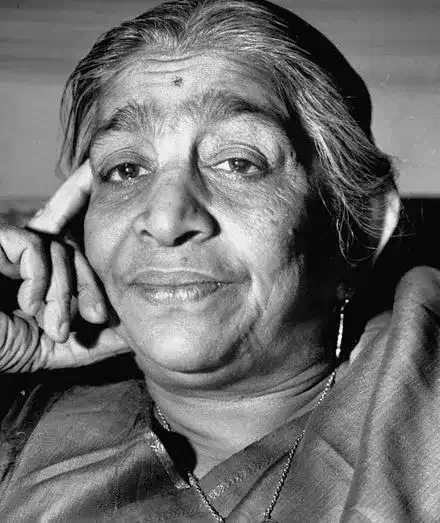
Sarojini Naidu
An Indian Love Song
An Indian Love Song
He
Lift up the veils that darken the delicate moon
of thy glory and grace,
Withhold not, O love, from the night
of my longing the joy of thy luminous face,
Give me a spear of the scented keora
guarding thy pinioned curls,
Or a silken thread from the fringes
that trouble the dream of thy glimmering pearls;
Faint grows my soul with thy tresses' perfume
and the song of thy anklets' caprice,
Revive me, I pray, with the magical nectar
that dwells in the flower of thy kiss.
She
How shall I yield to the voice of thy pleading,
how shall I grant thy prayer,
Or give thee a rose-red silken tassel,
a scented leaf from my hair?
Or fling in the flame of thy heart's desire the veils that cover my face,
Profane the law of my father's creed for a foe
of my father's race?
Thy kinsmen have broken our sacred altars and slaughtered our sacred kine,
The feud of old faiths and the blood of old battles sever thy people and mine.
He
What are the sins of my race, Beloved,
what are my people to thee?
And what are thy shrines, and kine and kindred,
what are thy gods to me?
Love recks not of feuds and bitter follies,
of stranger, comrade or kin,
Alike in his ear sound the temple bells
and the cry of the muezzin.
For Love shall cancel the ancient wrong
and conquer the ancient rage,
Redeem with his tears the memoried sorrow
that sullied a bygone age.
He
Lift up the veils that darken the delicate moon
of thy glory and grace,
Withhold not, O love, from the night
of my longing the joy of thy luminous face,
Give me a spear of the scented keora
guarding thy pinioned curls,
Or a silken thread from the fringes
that trouble the dream of thy glimmering pearls;
Faint grows my soul with thy tresses' perfume
and the song of thy anklets' caprice,
Revive me, I pray, with the magical nectar
that dwells in the flower of thy kiss.
She
How shall I yield to the voice of thy pleading,
how shall I grant thy prayer,
Or give thee a rose-red silken tassel,
a scented leaf from my hair?
Or fling in the flame of thy heart's desire the veils that cover my face,
Profane the law of my father's creed for a foe
of my father's race?
Thy kinsmen have broken our sacred altars and slaughtered our sacred kine,
The feud of old faiths and the blood of old battles sever thy people and mine.
He
What are the sins of my race, Beloved,
what are my people to thee?
And what are thy shrines, and kine and kindred,
what are thy gods to me?
Love recks not of feuds and bitter follies,
of stranger, comrade or kin,
Alike in his ear sound the temple bells
and the cry of the muezzin.
For Love shall cancel the ancient wrong
and conquer the ancient rage,
Redeem with his tears the memoried sorrow
that sullied a bygone age.
995
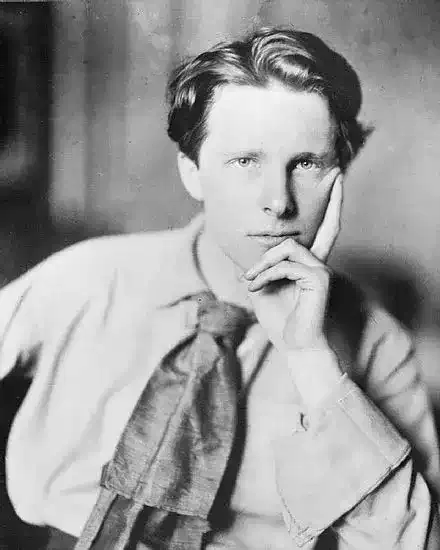
Rupert Brooke
V. The Soldier
V. The Soldier
If I should die, think only this of me:
That there's some corner of a foreign field
That is for ever England. There shall be
In that rich earth a richer dust concealed;
A dust whom England bore, shaped, made aware,
Gave, once, her flowers to love, her ways to roam,
A body of England's, breathing English air,
Washed by the rivers, blest by suns of home.
And think, this heart, all evil shed away,
A pulse in the eternal mind, no less
Gives somewhere back the thoughts by England given;
Her sights and sounds; dreams happy as her day;
And laughter, learnt of friends; and gentleness,
In hearts at peace, under an English heaven.
If I should die, think only this of me:
That there's some corner of a foreign field
That is for ever England. There shall be
In that rich earth a richer dust concealed;
A dust whom England bore, shaped, made aware,
Gave, once, her flowers to love, her ways to roam,
A body of England's, breathing English air,
Washed by the rivers, blest by suns of home.
And think, this heart, all evil shed away,
A pulse in the eternal mind, no less
Gives somewhere back the thoughts by England given;
Her sights and sounds; dreams happy as her day;
And laughter, learnt of friends; and gentleness,
In hearts at peace, under an English heaven.
220
Rupert Brooke
The Soldier
The Soldier
If I should die, think only this of me:
That there's some corner of a foreign field
That is for ever England. There shall be
In that rich earth a richer dust concealed;
A dust whom England bore, shaped, made aware,
Gave once her flowers to love, her ways to roam;
A body of England's, breathing English air,
Washed by the rivers, blest by suns of home.
And think, this heart, all evil shed away,
A pulse in the eternal mind, no less
Gives somewhere back the thoughts by England given;
Her sights and sounds; dreams happy as her day;
And laughter, learnt of friends; and gentleness,
In hearts at peace, under an English heaven.
If I should die, think only this of me:
That there's some corner of a foreign field
That is for ever England. There shall be
In that rich earth a richer dust concealed;
A dust whom England bore, shaped, made aware,
Gave once her flowers to love, her ways to roam;
A body of England's, breathing English air,
Washed by the rivers, blest by suns of home.
And think, this heart, all evil shed away,
A pulse in the eternal mind, no less
Gives somewhere back the thoughts by England given;
Her sights and sounds; dreams happy as her day;
And laughter, learnt of friends; and gentleness,
In hearts at peace, under an English heaven.
205
Rupert Brooke
The Dead
The Dead
Blow out, you bugles, over the rich Dead!
There's none of these so lonely and poor of old,
But, dying, has made us rarer gifts than gold.
These laid the world away; poured out the red
Sweet wine of youth; gave up the years to be
Of work and joy, and that unhoped serene,
That men call age; and those who would have been,
Their sons, they gave, their immortality.
Blow, bugles, blow! They brought us, for our dearth,
Holiness, lacked so long, and Love, and Pain.
Honour has come back, as a king, to earth,
And paid his subjects with a royal wage;
And Nobleness walks in our ways again;
And we have come into our heritage.
Blow out, you bugles, over the rich Dead!
There's none of these so lonely and poor of old,
But, dying, has made us rarer gifts than gold.
These laid the world away; poured out the red
Sweet wine of youth; gave up the years to be
Of work and joy, and that unhoped serene,
That men call age; and those who would have been,
Their sons, they gave, their immortality.
Blow, bugles, blow! They brought us, for our dearth,
Holiness, lacked so long, and Love, and Pain.
Honour has come back, as a king, to earth,
And paid his subjects with a royal wage;
And Nobleness walks in our ways again;
And we have come into our heritage.
197
Rupert Brooke
I. Peace
I. Peace
Now, God be thanked Who has matched us with His hour,
And caught our youth, and wakened us from sleeping,
With hand made sure, clear eye, and sharpened power,
To turn, as swimmers into cleanness leaping,
Glad from a world grown old and cold and weary,
Leave the sick hearts that honour could not move,
And half-men, and their dirty songs and dreary,
And all the little emptiness of love!
Oh! we, who have known shame, we have found release there,
Where there's no ill, no grief, but sleep has mending,
Naught broken save this body, lost but breath;
Nothing to shake the laughing heart's long peace there
But only agony, and that has ending;
And the worst friend and enemy is but Death.
Now, God be thanked Who has matched us with His hour,
And caught our youth, and wakened us from sleeping,
With hand made sure, clear eye, and sharpened power,
To turn, as swimmers into cleanness leaping,
Glad from a world grown old and cold and weary,
Leave the sick hearts that honour could not move,
And half-men, and their dirty songs and dreary,
And all the little emptiness of love!
Oh! we, who have known shame, we have found release there,
Where there's no ill, no grief, but sleep has mending,
Naught broken save this body, lost but breath;
Nothing to shake the laughing heart's long peace there
But only agony, and that has ending;
And the worst friend and enemy is but Death.
197
Rupert Brooke
III. The Dead
III. The Dead
Blow out, you bugles, over the rich Dead!
There's none of these so lonely and poor of old,
But, dying, has made us rarer gifts than gold.
These laid the world away; poured out the red
Sweet wine of youth; gave up the years to be
Of work and joy, and that unhoped serene,
That men call age; and those who would have been,
Their sons, they gave, their immortality.
Blow, bugles, blow! They brought us, for our dearth,
Holiness, lacked so long, and Love, and Pain.
Honour has come back, as a king, to earth,
And paid his subjects with a royal wage;
And Nobleness walks in our ways again;
And we have come into our heritage.
Blow out, you bugles, over the rich Dead!
There's none of these so lonely and poor of old,
But, dying, has made us rarer gifts than gold.
These laid the world away; poured out the red
Sweet wine of youth; gave up the years to be
Of work and joy, and that unhoped serene,
That men call age; and those who would have been,
Their sons, they gave, their immortality.
Blow, bugles, blow! They brought us, for our dearth,
Holiness, lacked so long, and Love, and Pain.
Honour has come back, as a king, to earth,
And paid his subjects with a royal wage;
And Nobleness walks in our ways again;
And we have come into our heritage.
227
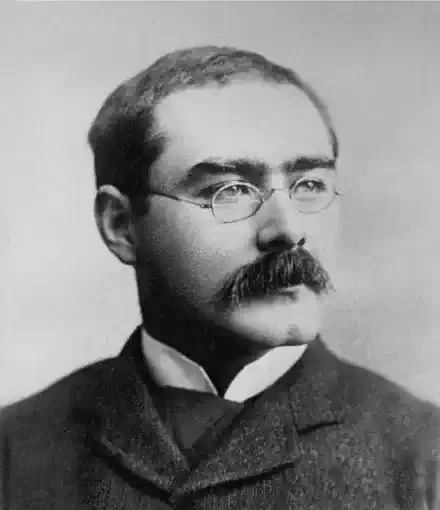
Rudyard Kipling
With Scindia To Delhi
With Scindia To Delhi
More than a hundred years ago, in a great battle fought near Delhi,
an Indian Prince rode fifty miles after the day was lost
with a beggar-girl, who had loved him and followed him in all his camps,
on his saddle-bow. He lost the girl when almost within sight of safety.
A Maratta trooper tells the story: --
The wreath of banquet overnight lay withered on the neck,
Our hands and scarfs were saffron-dyed for signal of despair,
When we went forth to Paniput to battle with the ~Mlech~, --
Ere we came back from Paniput and left a kingdom there.
Thrice thirty thousand men were we to force the Jumna fords --
The hawk-winged horse of Damajee, mailed squadrons of the Bhao,
Stark levies of the southern hills, the Deccan's sharpest swords,
And he the harlot's traitor son the goatherd Mulhar Rao!
Thrice thirty thousand men were we before the mists had cleared,
The low white mists of morning heard the war-conch scream and bray;
We called upon Bhowani and we gripped them by the beard,
We rolled upon them like a flood and washed their ranks away.
The children of the hills of Khost before our lances ran,
We drove the black Rohillas back as cattle to the pen;
'Twas then we needed Mulhar Rao to end what we began,
A thousand men had saved the charge; he fled the field with ten!
There was no room to clear a sword -- no power to strike a blow,
For foot to foot, ay, breast to breast, the battle held us fast --
Save where the naked hill-men ran, and stabbing from below
Brought down the horse and rider and we trampled them and passed.
To left the roar of musketry rang like a falling flood --
To right the sunshine rippled red from redder lance and blade --
Above the dark ~Upsaras~* flew, beneath us plashed the blood,
And, bellying black against the dust, the Bhagwa Jhanda swayed.
* The Choosers of the Slain.
I saw it fall in smoke and fire, the banner of the Bhao;
I heard a voice across the press of one who called in vain: --
"Ho! Anand Rao Nimbalkhur, ride! Get aid of Mulhar Rao!
Go shame his squadrons into fight -- the Bhao -- the Bhao is slain!"
Thereat, as when a sand-bar breaks in clotted spume and spray --
When rain of later autumn sweeps the Jumna water-head,
Before their charge from flank to flank our riven ranks gave way;
But of the waters of that flood the Jumna fords ran red.
I held by Scindia, my lord, as close as man might hold;
A Soobah of the Deccan asks no aid to guard his life;
But Holkar's Horse were flying, and our chiefest chiefs were cold,
And like a flame among us leapt the long lean Northern knife.
I held by Scindia -- my lance from butt to tuft was dyed,
The froth of battle bossed the shield and roped the bridle-chain --
What time beneath our horses' feet a maiden rose and cried,
And clung to Scindia, and I turned a sword-cut from the twain.
(He set a spell upon the maid in woodlands long ago,
A hunter by the Tapti banks she gave him water there:
He turned her heart to water, and she followed to her woe.
What need had he of Lalun who had twenty maids as fair?)
Now in that hour strength left my lord; he wrenched his mare aside;
He bound the girl behind him and we slashed and struggled free.
Across the reeling wreck of strife we rode as shadows ride
From Paniput to Delhi town, but not alone were we.
'Twas Lutuf-Ullah Populzai laid horse upon our track,
A swine-fed reiver of the North that lusted for the maid;
I might have barred his path awhile, but Scindia called me back,
And I -- O woe for Scindia! -- I listened and obeyed.
League after league the formless scrub took shape and glided by --
League after league the white road swirled behind the white mare's feet --
League after league, when leagues were done, we heard the Populzai,
Where sure as Time and swift as Death the tireless footfall beat.
Noon's eye beheld that shame of flight, the shadows fell, we fled
Where steadfast as the wheeling kite he followed in our train;
The black wolf warred where we had warred, the jackal mocked our dead,
And terror born of twilight-tide made mad the labouring brain.
I gasped: -- "A kingdom waits my lord; her love is but her own.
A day shall mar, a day shall cure for her, but what for thee?
Cut loose the girl: he follows fast. Cut loose and ride alone!"
Then Scindia 'twixt his blistered lips: -- "My Queens' Queen shall she be!
"Of all who ate my bread last night 'twas she alone that came
To seek her love between the spears and find her crown therein!
One shame is mine to-day, what need the weight of double shame?
If once we reach the Delhi gate, though all be lost, I win!"
We rode -- the white mare failed -- her trot a staggering stumble grew, --
The cooking-smoke of even rose and weltered and hung low;
And still we heard the Populzai and still we strained anew,
And Delhi town was very near, but nearer was the foe.
Yea, Delhi town was very near when Lalun whispered: -- "Slay!
Lord of my life, the mare sinks fast -- stab deep and let me die!"
But Scindia would not, and the maid tore free and flung away,
And turning as she fell we heard the clattering Populzai.
Then Scindia checked the gasping mare that rocked and groaned for breath,
And wheeled to charge and plunged the knife a hand's-breadth in her side --
The hunter and the hunted know how that last pause is death --
The blood had chilled about her heart, she reared and fell and died.
Our Gods were kind. Before he heard the maiden's piteous scream
A log upon the Delhi road, beneath the mare he lay --
Lost mistress and lost battle passed before him like a dream;
The darkness closed about his eyes -- I bore my King away.
More than a hundred years ago, in a great battle fought near Delhi,
an Indian Prince rode fifty miles after the day was lost
with a beggar-girl, who had loved him and followed him in all his camps,
on his saddle-bow. He lost the girl when almost within sight of safety.
A Maratta trooper tells the story: --
The wreath of banquet overnight lay withered on the neck,
Our hands and scarfs were saffron-dyed for signal of despair,
When we went forth to Paniput to battle with the ~Mlech~, --
Ere we came back from Paniput and left a kingdom there.
Thrice thirty thousand men were we to force the Jumna fords --
The hawk-winged horse of Damajee, mailed squadrons of the Bhao,
Stark levies of the southern hills, the Deccan's sharpest swords,
And he the harlot's traitor son the goatherd Mulhar Rao!
Thrice thirty thousand men were we before the mists had cleared,
The low white mists of morning heard the war-conch scream and bray;
We called upon Bhowani and we gripped them by the beard,
We rolled upon them like a flood and washed their ranks away.
The children of the hills of Khost before our lances ran,
We drove the black Rohillas back as cattle to the pen;
'Twas then we needed Mulhar Rao to end what we began,
A thousand men had saved the charge; he fled the field with ten!
There was no room to clear a sword -- no power to strike a blow,
For foot to foot, ay, breast to breast, the battle held us fast --
Save where the naked hill-men ran, and stabbing from below
Brought down the horse and rider and we trampled them and passed.
To left the roar of musketry rang like a falling flood --
To right the sunshine rippled red from redder lance and blade --
Above the dark ~Upsaras~* flew, beneath us plashed the blood,
And, bellying black against the dust, the Bhagwa Jhanda swayed.
* The Choosers of the Slain.
I saw it fall in smoke and fire, the banner of the Bhao;
I heard a voice across the press of one who called in vain: --
"Ho! Anand Rao Nimbalkhur, ride! Get aid of Mulhar Rao!
Go shame his squadrons into fight -- the Bhao -- the Bhao is slain!"
Thereat, as when a sand-bar breaks in clotted spume and spray --
When rain of later autumn sweeps the Jumna water-head,
Before their charge from flank to flank our riven ranks gave way;
But of the waters of that flood the Jumna fords ran red.
I held by Scindia, my lord, as close as man might hold;
A Soobah of the Deccan asks no aid to guard his life;
But Holkar's Horse were flying, and our chiefest chiefs were cold,
And like a flame among us leapt the long lean Northern knife.
I held by Scindia -- my lance from butt to tuft was dyed,
The froth of battle bossed the shield and roped the bridle-chain --
What time beneath our horses' feet a maiden rose and cried,
And clung to Scindia, and I turned a sword-cut from the twain.
(He set a spell upon the maid in woodlands long ago,
A hunter by the Tapti banks she gave him water there:
He turned her heart to water, and she followed to her woe.
What need had he of Lalun who had twenty maids as fair?)
Now in that hour strength left my lord; he wrenched his mare aside;
He bound the girl behind him and we slashed and struggled free.
Across the reeling wreck of strife we rode as shadows ride
From Paniput to Delhi town, but not alone were we.
'Twas Lutuf-Ullah Populzai laid horse upon our track,
A swine-fed reiver of the North that lusted for the maid;
I might have barred his path awhile, but Scindia called me back,
And I -- O woe for Scindia! -- I listened and obeyed.
League after league the formless scrub took shape and glided by --
League after league the white road swirled behind the white mare's feet --
League after league, when leagues were done, we heard the Populzai,
Where sure as Time and swift as Death the tireless footfall beat.
Noon's eye beheld that shame of flight, the shadows fell, we fled
Where steadfast as the wheeling kite he followed in our train;
The black wolf warred where we had warred, the jackal mocked our dead,
And terror born of twilight-tide made mad the labouring brain.
I gasped: -- "A kingdom waits my lord; her love is but her own.
A day shall mar, a day shall cure for her, but what for thee?
Cut loose the girl: he follows fast. Cut loose and ride alone!"
Then Scindia 'twixt his blistered lips: -- "My Queens' Queen shall she be!
"Of all who ate my bread last night 'twas she alone that came
To seek her love between the spears and find her crown therein!
One shame is mine to-day, what need the weight of double shame?
If once we reach the Delhi gate, though all be lost, I win!"
We rode -- the white mare failed -- her trot a staggering stumble grew, --
The cooking-smoke of even rose and weltered and hung low;
And still we heard the Populzai and still we strained anew,
And Delhi town was very near, but nearer was the foe.
Yea, Delhi town was very near when Lalun whispered: -- "Slay!
Lord of my life, the mare sinks fast -- stab deep and let me die!"
But Scindia would not, and the maid tore free and flung away,
And turning as she fell we heard the clattering Populzai.
Then Scindia checked the gasping mare that rocked and groaned for breath,
And wheeled to charge and plunged the knife a hand's-breadth in her side --
The hunter and the hunted know how that last pause is death --
The blood had chilled about her heart, she reared and fell and died.
Our Gods were kind. Before he heard the maiden's piteous scream
A log upon the Delhi road, beneath the mare he lay --
Lost mistress and lost battle passed before him like a dream;
The darkness closed about his eyes -- I bore my King away.
591
Rudyard Kipling
Wilful Missing
Wilful Missing
(Deserters)
There is a world outside the one you know,
To which for curiousness 'Ell can't compare--
It is the place where "wilful-missings" go,
As we can testify, for we are there.
You may 'ave read a bullet laid us low,
That we was gathered in "with reverent care"
And buried proper. But it was not so,
As we can testify --for we are there!
They can't be certain--faces alter so
After the old aasvogel 'ad 'is share.
The uniform's the mark by which they go--
And--ain't it odd?--the one we best can spare.
We might 'ave seen our chance to cut the show--
Name, number, record, an 'begin elsewhere--
Leaven'' some not too late-lamented foe
One funeral-private-British-for 'is share.
We may 'ave took it yonder in the Low
Bush-veldt that sends men stragglin' 'unaware
Among the Kaffirs, till their columns go,
An 'they are left past call or count or care.
We might 'ave been your lovers long ago,
'Usbands or children--comfort or despair.
Our death (an' burial) settles all we owe,
An' why we done it is our own affair.
Marry again, and we will not say no,
Nor come to barstardise the kids you bear.
Wait on in 'ope--you've all your life below
Before you'll ever 'ear us on the stair.
There is no need to give our reasons, though
Gawd knows we all 'ad reasons which were fair;
But other people might not judge 'em so--
And now it doesn't matter what they were.
What man can weigh or size another's woe:
There are some things too bitter 'ard to bear.
Suffice it we 'ave finished--Domino!
As we can testify, for we are there,
In the side-world where "wilful-missings " go.
(Deserters)
There is a world outside the one you know,
To which for curiousness 'Ell can't compare--
It is the place where "wilful-missings" go,
As we can testify, for we are there.
You may 'ave read a bullet laid us low,
That we was gathered in "with reverent care"
And buried proper. But it was not so,
As we can testify --for we are there!
They can't be certain--faces alter so
After the old aasvogel 'ad 'is share.
The uniform's the mark by which they go--
And--ain't it odd?--the one we best can spare.
We might 'ave seen our chance to cut the show--
Name, number, record, an 'begin elsewhere--
Leaven'' some not too late-lamented foe
One funeral-private-British-for 'is share.
We may 'ave took it yonder in the Low
Bush-veldt that sends men stragglin' 'unaware
Among the Kaffirs, till their columns go,
An 'they are left past call or count or care.
We might 'ave been your lovers long ago,
'Usbands or children--comfort or despair.
Our death (an' burial) settles all we owe,
An' why we done it is our own affair.
Marry again, and we will not say no,
Nor come to barstardise the kids you bear.
Wait on in 'ope--you've all your life below
Before you'll ever 'ear us on the stair.
There is no need to give our reasons, though
Gawd knows we all 'ad reasons which were fair;
But other people might not judge 'em so--
And now it doesn't matter what they were.
What man can weigh or size another's woe:
There are some things too bitter 'ard to bear.
Suffice it we 'ave finished--Domino!
As we can testify, for we are there,
In the side-world where "wilful-missings " go.
438
Rudyard Kipling
What Happened
What Happened
Hurree Chunder Mookerjee, pride of Bow Bazaar,
Owner of a native press, "Barrishter-at-Lar,"
Waited on the Government with a claim to wear
Sabres by the bucketful, rifles by the pair.
Then the Indian Government winked a wicked wink,
Said to Chunder Mookerjee: "Stick to pen and ink.
They are safer implements, but, if you insist,
We will let you carry arms wheresoe'er you list."
Hurree Chunder Mookerjee sought the gunsmith and
Bought the tubes of Lancaster, Ballard, Dean, and Bland,
Bought a shiny bowie-knife, bought a town-made sword,
Jingled like a carriage-horse when he went abroad.
But the Indian Government, always keen to please,
Also gave permission to horrid men like these --
Yar Mahommed Yusufzai, down to kill or steal,
Chimbu Singh from Bikaneer, Tantia the Bhil;
Killar Khan the Marri chief, Jowar Singh the Sikh,
Nubbee Baksh Punjabi Jat, Abdul Huq Rafiq --
He was a Wahabi; last, little Boh Hla-oo
Took advantage of the Act -- took a Snider too.
They were unenlightened men, Ballard knew them not.
They procured their swords and guns chiefly on the spot;
And the lore of centuries, plus a hundred fights,
Made them slow to disregard one another's rights.
With a unanimity dear to patriot hearts
All those hairy gentlemen out of foreign parts
Said: "The good old days are back -- let us go to war!"
Swaggered down the Grand Trunk Road into Bow Bazaar,
Nubbee Baksh Punjabi Jat found a hide-bound flail;
Chimbu Singh from Bikaneer oiled his Tonk jezail;
Yar Mahommed Yusufzai spat and grinned with glee
As he ground the butcher-knife of the Khyberee.
Jowar Singh the Sikh procured sabre, quoit, and mace,
Abdul Huq, Wahabi, jerked his dagger from its place,
While amid the jungle-grass danced and grinned and jabbered
Little Boh Hla-oo and cleared his dah-blade from the scabbard.
What became of Mookerjee? Smoothly, who can say?
Yar Mahommed only grins in a nasty way,
Jowar Singh is reticent, Chimbu Singh is mute.
But the belts of all of them simply bulge with loot.
What became of Ballard's guns? Afghans black and grubby
Sell them for their silver weight to the men of Pubbi;
And the shiny bowie-knife and the town-made sword are
Hanging in a Marri camp just across the Border.
What became of Mookerjee? Ask Mahommed Yar
Prodding Siva's sacred bull down the Bow Bazaar.
Speak to placid Nubbee Baksh -- question land and sea --
Ask the Indian Congressmen -- only don't ask me!
Hurree Chunder Mookerjee, pride of Bow Bazaar,
Owner of a native press, "Barrishter-at-Lar,"
Waited on the Government with a claim to wear
Sabres by the bucketful, rifles by the pair.
Then the Indian Government winked a wicked wink,
Said to Chunder Mookerjee: "Stick to pen and ink.
They are safer implements, but, if you insist,
We will let you carry arms wheresoe'er you list."
Hurree Chunder Mookerjee sought the gunsmith and
Bought the tubes of Lancaster, Ballard, Dean, and Bland,
Bought a shiny bowie-knife, bought a town-made sword,
Jingled like a carriage-horse when he went abroad.
But the Indian Government, always keen to please,
Also gave permission to horrid men like these --
Yar Mahommed Yusufzai, down to kill or steal,
Chimbu Singh from Bikaneer, Tantia the Bhil;
Killar Khan the Marri chief, Jowar Singh the Sikh,
Nubbee Baksh Punjabi Jat, Abdul Huq Rafiq --
He was a Wahabi; last, little Boh Hla-oo
Took advantage of the Act -- took a Snider too.
They were unenlightened men, Ballard knew them not.
They procured their swords and guns chiefly on the spot;
And the lore of centuries, plus a hundred fights,
Made them slow to disregard one another's rights.
With a unanimity dear to patriot hearts
All those hairy gentlemen out of foreign parts
Said: "The good old days are back -- let us go to war!"
Swaggered down the Grand Trunk Road into Bow Bazaar,
Nubbee Baksh Punjabi Jat found a hide-bound flail;
Chimbu Singh from Bikaneer oiled his Tonk jezail;
Yar Mahommed Yusufzai spat and grinned with glee
As he ground the butcher-knife of the Khyberee.
Jowar Singh the Sikh procured sabre, quoit, and mace,
Abdul Huq, Wahabi, jerked his dagger from its place,
While amid the jungle-grass danced and grinned and jabbered
Little Boh Hla-oo and cleared his dah-blade from the scabbard.
What became of Mookerjee? Smoothly, who can say?
Yar Mahommed only grins in a nasty way,
Jowar Singh is reticent, Chimbu Singh is mute.
But the belts of all of them simply bulge with loot.
What became of Ballard's guns? Afghans black and grubby
Sell them for their silver weight to the men of Pubbi;
And the shiny bowie-knife and the town-made sword are
Hanging in a Marri camp just across the Border.
What became of Mookerjee? Ask Mahommed Yar
Prodding Siva's sacred bull down the Bow Bazaar.
Speak to placid Nubbee Baksh -- question land and sea --
Ask the Indian Congressmen -- only don't ask me!
487