

Poems in this topic
Freedom
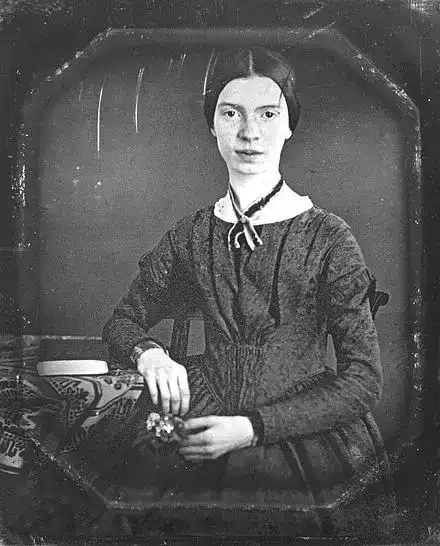
Emily Dickinson
They Shut Me Up in Prose
They Shut Me Up in Prose
They shut me up in Prose --
As when a little Girl
They put me in the Closet --
Because they liked me "still" --
Still! Could themself have peeped --
And seen my Brain -- go round --
They might as wise have lodged a Bird
For Treason -- in the Pound --
Himself has but to will
And easy as a Star
Abolish his Captivity --
And laugh -- No more have I --
They shut me up in Prose --
As when a little Girl
They put me in the Closet --
Because they liked me "still" --
Still! Could themself have peeped --
And seen my Brain -- go round --
They might as wise have lodged a Bird
For Treason -- in the Pound --
Himself has but to will
And easy as a Star
Abolish his Captivity --
And laugh -- No more have I --
289
Emily Dickinson
They put Us far apart
They put Us far apart
474
They put Us far apart-
As separate as Sea
And Her unsown Peninsula-
We signified "These see"-
They took away our Eyes-
They thwarted Us with Guns"
I see Thee" each responded straight
Through Telegraphic Signs-
With Dungeons-They devised-
But through their thickest skill-
And their opaquest Adamant-
Our Souls saw-just as well-
They summoned Us to die-
With sweet alacrity
We stood upon our stapled feetCondemned-
but just-to see-
Permission to recant-
Permission to forget-
We turned our backs upon the Sun
For perjury of that-
Not Either-noticed Death-
Of Paradise-aware-
Each other's Face-was all the Disc
Each other's setting-saw-
474
They put Us far apart-
As separate as Sea
And Her unsown Peninsula-
We signified "These see"-
They took away our Eyes-
They thwarted Us with Guns"
I see Thee" each responded straight
Through Telegraphic Signs-
With Dungeons-They devised-
But through their thickest skill-
And their opaquest Adamant-
Our Souls saw-just as well-
They summoned Us to die-
With sweet alacrity
We stood upon our stapled feetCondemned-
but just-to see-
Permission to recant-
Permission to forget-
We turned our backs upon the Sun
For perjury of that-
Not Either-noticed Death-
Of Paradise-aware-
Each other's Face-was all the Disc
Each other's setting-saw-
358
Emily Dickinson
The Soul has Bandaged moments
The Soul has Bandaged moments
512
The Soul has Bandaged moments-
When too appalled to stir-
She feels some ghastly Fright come up
And stop to look at her-
Salute her-with long fingers-
Caress her freezing hair-
Sip, Goblin, from the very lips
The Lover-hovered-o'er-
Unworthy, that a thought so mean
Accost a Theme-so-fair-
The soul has moments of Escape-
When bursting all the doors-
She dances like a Bomb, abroad,
And swings upon the Hours,
As do the Bee-delirious borne-
Long Dungeoned from his Rose-
Touch Liberty-then know no more,
But Noon, and Paradise-
The Soul's retaken moments-
When, Felon led along,
With shackles on the plumed feet,
And staples, in the Song,
The Horror welcomes her, again,
These, are not brayed of Tongue-
512
The Soul has Bandaged moments-
When too appalled to stir-
She feels some ghastly Fright come up
And stop to look at her-
Salute her-with long fingers-
Caress her freezing hair-
Sip, Goblin, from the very lips
The Lover-hovered-o'er-
Unworthy, that a thought so mean
Accost a Theme-so-fair-
The soul has moments of Escape-
When bursting all the doors-
She dances like a Bomb, abroad,
And swings upon the Hours,
As do the Bee-delirious borne-
Long Dungeoned from his Rose-
Touch Liberty-then know no more,
But Noon, and Paradise-
The Soul's retaken moments-
When, Felon led along,
With shackles on the plumed feet,
And staples, in the Song,
The Horror welcomes her, again,
These, are not brayed of Tongue-
302
Emily Dickinson
Renunciation
Renunciation
Renunciation -- is a piercing Virtue --
The letting go
A Presence -- for an Expectation --
Not now --
The putting out of Eyes --
Just Sunrise --
Lest Day -Day's
Great Progenitor --
Outvie
Renunciation -- is the Choosing
Against itself --
Itself to justify
Unto itself --
When larger function --
Make that appear --
Smaller -- that Covered Vision -- Here --
Renunciation -- is a piercing Virtue --
The letting go
A Presence -- for an Expectation --
Not now --
The putting out of Eyes --
Just Sunrise --
Lest Day -Day's
Great Progenitor --
Outvie
Renunciation -- is the Choosing
Against itself --
Itself to justify
Unto itself --
When larger function --
Make that appear --
Smaller -- that Covered Vision -- Here --
295
Emily Dickinson
Publication
Publication
Publication -- is the Auction
Of the Mind of Man --
Poverty -- be justifying
For so foul a thing
Possibly -- but We -- would rather
From Our Garret go
White -- Unto the White Creator --
Than invest -- Our Snow --
Thought belong to Him who gave it --
Then -- to Him Who bear
Its Corporeal illustration -- Sell
The Royal Air --
In the Parcel -- Be the Merchant
Of the Heavenly Grace --
But reduce no Human Spirit
To Disgrace of Price --
Publication -- is the Auction
Of the Mind of Man --
Poverty -- be justifying
For so foul a thing
Possibly -- but We -- would rather
From Our Garret go
White -- Unto the White Creator --
Than invest -- Our Snow --
Thought belong to Him who gave it --
Then -- to Him Who bear
Its Corporeal illustration -- Sell
The Royal Air --
In the Parcel -- Be the Merchant
Of the Heavenly Grace --
But reduce no Human Spirit
To Disgrace of Price --
302
Emily Dickinson
Out of sight? What of that?
Out of sight? What of that?
703
Out of sight? What of that?
See the Bird-reach it!
Curve by Curve-Sweep by Sweep-
Round the Steep Air-
Danger! What is that to Her?
Better 'tis to fail-there-
Than debate-here-
Blue is Blue-the World throughAmber-
Amber-Dew-DewSeek-
Friend-and see-
Heaven is shy of Earth-that's all-
Bashful Heaven-thy Lovers smallHide-
too-from thee-
703
Out of sight? What of that?
See the Bird-reach it!
Curve by Curve-Sweep by Sweep-
Round the Steep Air-
Danger! What is that to Her?
Better 'tis to fail-there-
Than debate-here-
Blue is Blue-the World throughAmber-
Amber-Dew-DewSeek-
Friend-and see-
Heaven is shy of Earth-that's all-
Bashful Heaven-thy Lovers smallHide-
too-from thee-
272
Emily Dickinson
No Rack can torture me
No Rack can torture me
384
No Rack can torture me-
My Soul-at Liberty-
Behind this mortal Bone
There knits a bolder One-
You cannot prick with saw-
Nor pierce with Scimitar-
Two Bodies-therefore be-
Bind One-The Other fly-
The Eagle of his Nest
No easier divest-
And gain the Sky
Than mayest Thou-
Except Thyself may be
Thine Enemy-
Captivity is ConsciousnessSo's
Liberty.
384
No Rack can torture me-
My Soul-at Liberty-
Behind this mortal Bone
There knits a bolder One-
You cannot prick with saw-
Nor pierce with Scimitar-
Two Bodies-therefore be-
Bind One-The Other fly-
The Eagle of his Nest
No easier divest-
And gain the Sky
Than mayest Thou-
Except Thyself may be
Thine Enemy-
Captivity is ConsciousnessSo's
Liberty.
364
Emily Dickinson
My life had stood
My life had stood
My life had stood--a Loaded Gun--
In Corners--till a Day
The Owner passed--identified--
And carried Me away--
And now We roam in Sovereign Woods--
And now We hunt the Doe--
And every time I speak for Him--
The Mountains straight reply--
And do I smile, such cordial light
Upon the Valley glow--
It is as a Vesuvian face
Had let its pleasure through--
And when at Night--Our good Day done--
I guard My Master's Head-'
Tis better than the Eider-Duck's
Deep Pillow--to have shared--
To foe of His--I'm deadly foe--
None stir the second time--
On whom I lay a Yellow Eye--
Or an emphatic Thumb--
Though I than He--may longer live
He longer must--than I--
For I have but the power to kill,
Without--the power to die--
My life had stood--a Loaded Gun--
In Corners--till a Day
The Owner passed--identified--
And carried Me away--
And now We roam in Sovereign Woods--
And now We hunt the Doe--
And every time I speak for Him--
The Mountains straight reply--
And do I smile, such cordial light
Upon the Valley glow--
It is as a Vesuvian face
Had let its pleasure through--
And when at Night--Our good Day done--
I guard My Master's Head-'
Tis better than the Eider-Duck's
Deep Pillow--to have shared--
To foe of His--I'm deadly foe--
None stir the second time--
On whom I lay a Yellow Eye--
Or an emphatic Thumb--
Though I than He--may longer live
He longer must--than I--
For I have but the power to kill,
Without--the power to die--
323
Emily Dickinson
Much Madness is divinest Sense
Much Madness is divinest Sense
Much Madness is divinest Sense -
To a discerning Eye -
Much Sense - the starkest Madness `
Tis the Majority
In this, as All, prevail -
Assent - and you are sane -
Demur - you`re straightaway dangerous -
And handled with a Chain -
Much Madness is divinest Sense -
To a discerning Eye -
Much Sense - the starkest Madness `
Tis the Majority
In this, as All, prevail -
Assent - and you are sane -
Demur - you`re straightaway dangerous -
And handled with a Chain -
270
Emily Dickinson
If your Nerve, deny you
If your Nerve, deny you
292
If your Nerve, deny you-
Go above your Nerve-
He can lean against the Grave,
If he fear to swerve
That's a steady posture-
Never any bend
Held of those Brass arms-
Best Giant made-
If your Soul seesaw-
Lift the Flesh door-
The Poltroon wants Oxygen-
Nothing more-
292
If your Nerve, deny you-
Go above your Nerve-
He can lean against the Grave,
If he fear to swerve
That's a steady posture-
Never any bend
Held of those Brass arms-
Best Giant made-
If your Soul seesaw-
Lift the Flesh door-
The Poltroon wants Oxygen-
Nothing more-
322
Emily Dickinson
If this is fading
If this is "fading"
120
If this is "fading"
Oh let me immediately "fade"!
If this is "dying"
Bury me, in such a shroud of red!
If this is "sleep,"
On such a night
How proud to shut the eye!
Good Evening, gentle Fellow men!
Peacock presumes to die!
120
If this is "fading"
Oh let me immediately "fade"!
If this is "dying"
Bury me, in such a shroud of red!
If this is "sleep,"
On such a night
How proud to shut the eye!
Good Evening, gentle Fellow men!
Peacock presumes to die!
251
Emily Dickinson
Exultation is the going
Exultation is the going
76
Exultation is the going
Of an inland soul to sea,
Past the houses-past the headlands-
Into deep Eternity-
Bred as we, among the mountains,
Can the sailor understand
The divine intoxication
Of the first league out from land?
76
Exultation is the going
Of an inland soul to sea,
Past the houses-past the headlands-
Into deep Eternity-
Bred as we, among the mountains,
Can the sailor understand
The divine intoxication
Of the first league out from land?
356
Emily Dickinson
Before I got my eye put out
Before I got my eye put out
327
Before I got my eye put out
I liked as well to see-
As other Creatures, that have Eyes
And know no other way-
But were it told to me-Today-
That I might have the sky
For mine-I tell you that my Heart
Would split, for size of me-
The Meadows-mine-
The Mountains-mine-
All Forests-Stintless Stars-
As much of Noon as I could take
Between my finite eyes-
The Motions of the Dipping Birds-
The Morning's Amber Road-
For mine-to look at when I liked-
The News would strike me dead-
So safer-guess-with just my soul
Upon the Window pane-
Where other Creatures put their eyesIncautious-
of the Sun-
327
Before I got my eye put out
I liked as well to see-
As other Creatures, that have Eyes
And know no other way-
But were it told to me-Today-
That I might have the sky
For mine-I tell you that my Heart
Would split, for size of me-
The Meadows-mine-
The Mountains-mine-
All Forests-Stintless Stars-
As much of Noon as I could take
Between my finite eyes-
The Motions of the Dipping Birds-
The Morning's Amber Road-
For mine-to look at when I liked-
The News would strike me dead-
So safer-guess-with just my soul
Upon the Window pane-
Where other Creatures put their eyesIncautious-
of the Sun-
384
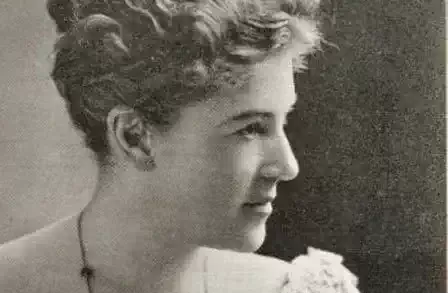
Ella Wheeler Wilcox
War
War
I
There is no picturesqueness and no glory,
No halo of romance, in war to-day.
It is a hideous thing; Time would turn grey
With horror, were he not already hoary
At sight of this vile monster, foul and gory.
Yet while sweet women perish as they pray,
And new-born babes are slaughtered, who dare say
'Halt!' till Right pens its 'Finis' to the story!
There is no pathway, but the path through blood,
Out of the horrors of this holocaust.
Hell has let loose its scalding crimson flood,
And he who stops to argue now is lost.
Not brooms of creeds, not Pacifistic words
Can stem the tide, but swords-uplifted swords!
II
Yet, after Peace has turned the clean white page
There shall be sorrow on the earth for years;
Abysmal grief, that has no eyes for tears,
And youth that hobbles through the earth like age.
But better to play this part upon life's stage
Than to aid structures that a tyrant rears,
To live a stalwart hireling torn with fears,
And shamed by feeding on a conqueror's wage.
Death, yea, a thousand deaths, were sweet in truth
Rather than such ignoble life. God gave
Being, and breath, and high resolve to youth
That it might be Wrong's master, not its slave.
Our road to Freedom is the road to guns!
Go, arm your sons! I say, Go, arm your sons!
III
Arm! arm! that mandate on each wind is whirled.
Let no man hesitate or look askance,
For from the devastated homes of France
And ruined Belgium the cry is hurled.
Why, Christ Himself would keep peace banners furled
Were He among us, till, with lifted lance,
He saw the hosts of Righteousness advance
To purify the Temples of the world.
There is no safety on the earth to-day
For any sacred thing, or clean, or fair;
Nor can there be, until men rise and slay
The hydra-headed monster in his lair.
War! horrid War! now Virtue's only friend;
Clasp hands with War, and battle to the end!
I
There is no picturesqueness and no glory,
No halo of romance, in war to-day.
It is a hideous thing; Time would turn grey
With horror, were he not already hoary
At sight of this vile monster, foul and gory.
Yet while sweet women perish as they pray,
And new-born babes are slaughtered, who dare say
'Halt!' till Right pens its 'Finis' to the story!
There is no pathway, but the path through blood,
Out of the horrors of this holocaust.
Hell has let loose its scalding crimson flood,
And he who stops to argue now is lost.
Not brooms of creeds, not Pacifistic words
Can stem the tide, but swords-uplifted swords!
II
Yet, after Peace has turned the clean white page
There shall be sorrow on the earth for years;
Abysmal grief, that has no eyes for tears,
And youth that hobbles through the earth like age.
But better to play this part upon life's stage
Than to aid structures that a tyrant rears,
To live a stalwart hireling torn with fears,
And shamed by feeding on a conqueror's wage.
Death, yea, a thousand deaths, were sweet in truth
Rather than such ignoble life. God gave
Being, and breath, and high resolve to youth
That it might be Wrong's master, not its slave.
Our road to Freedom is the road to guns!
Go, arm your sons! I say, Go, arm your sons!
III
Arm! arm! that mandate on each wind is whirled.
Let no man hesitate or look askance,
For from the devastated homes of France
And ruined Belgium the cry is hurled.
Why, Christ Himself would keep peace banners furled
Were He among us, till, with lifted lance,
He saw the hosts of Righteousness advance
To purify the Temples of the world.
There is no safety on the earth to-day
For any sacred thing, or clean, or fair;
Nor can there be, until men rise and slay
The hydra-headed monster in his lair.
War! horrid War! now Virtue's only friend;
Clasp hands with War, and battle to the end!
380
Ella Wheeler Wilcox
The Engine
The Engine
Into the gloom of the deep, dark night,
With panting breath and a startled scream;
Swift as a bird in sudden flight
Darts this creature of steel and steam.
Awful dangers are lurking nigh,
Rocks and chasms are near the track,
But straight by the light of its great white eye
It speeds through the shadows, dense and black.
Terrible thoughts and fierce desires
Trouble its mad heart many an hour,
Where burn and smoulder the hidden fires,
Coupled ever with might and power.
It hates, as a wild horse hates the rein,
The narrow track by vale and hill;
And shrieks with a cry of startled pain,
And longs to follow its own wild will.
Into the gloom of the deep, dark night,
With panting breath and a startled scream;
Swift as a bird in sudden flight
Darts this creature of steel and steam.
Awful dangers are lurking nigh,
Rocks and chasms are near the track,
But straight by the light of its great white eye
It speeds through the shadows, dense and black.
Terrible thoughts and fierce desires
Trouble its mad heart many an hour,
Where burn and smoulder the hidden fires,
Coupled ever with might and power.
It hates, as a wild horse hates the rein,
The narrow track by vale and hill;
And shrieks with a cry of startled pain,
And longs to follow its own wild will.
444
Ella Wheeler Wilcox
Song Of The Spirit
Song Of The Spirit
Too sweet and too subtle for pen or for tongue
In phrases unwritten and measures unsung,
As deep and as strange as the sounds of the sea,
Is the song that my spirit is singing to me.
In the midnight and tempest when forest trees shiver,
In the roar of the surf, and the rush of the river,
In the rustle of leaves and the fall of the rain,
And on the low breezes I catch the refrain.
From the vapours that frame and envelop the earth,
And beyond, from the realms where my spirit had birth,
From the mists of the land and the fogs of the sea,
For ever and ever the songs come to me.
I know not its wording - its import I know -
For the rhythm is broken, the measure runs low,
When vexed or allured by the things of this life
My soul is merged into its pleasures or strife.
When up to the hill tops of beauty and light
My soul like a lark in the ether takes flight,
And the white gates of heaven shine brighter and nearer,
The song of the spirit grows sweeter and clearer.
Up, up to the realms where no mortal has trod -
Into space and infinity near to my God -
With whiteness, and silence, and beautiful things,
I am bourne when the voice of eternity sings.
When once in the winds or the dropp of the rain
Thy spirit shall listen and hear the refrain,
Thy soul shall soar up like a bird on the breeze,
And the things that have pleased thee will never more please.
Too sweet and too subtle for pen or for tongue
In phrases unwritten and measures unsung,
As deep and as strange as the sounds of the sea,
Is the song that my spirit is singing to me.
In the midnight and tempest when forest trees shiver,
In the roar of the surf, and the rush of the river,
In the rustle of leaves and the fall of the rain,
And on the low breezes I catch the refrain.
From the vapours that frame and envelop the earth,
And beyond, from the realms where my spirit had birth,
From the mists of the land and the fogs of the sea,
For ever and ever the songs come to me.
I know not its wording - its import I know -
For the rhythm is broken, the measure runs low,
When vexed or allured by the things of this life
My soul is merged into its pleasures or strife.
When up to the hill tops of beauty and light
My soul like a lark in the ether takes flight,
And the white gates of heaven shine brighter and nearer,
The song of the spirit grows sweeter and clearer.
Up, up to the realms where no mortal has trod -
Into space and infinity near to my God -
With whiteness, and silence, and beautiful things,
I am bourne when the voice of eternity sings.
When once in the winds or the dropp of the rain
Thy spirit shall listen and hear the refrain,
Thy soul shall soar up like a bird on the breeze,
And the things that have pleased thee will never more please.
430
Ella Wheeler Wilcox
Song Of The Aviator
Song Of The Aviator
You may thrill with the speed of your thoroughbred steed,
You may laugh with delight as you ride the ocean,
You may rush afar in your touring car,
Leaping, sweeping, by things that are creeping-
But you never will know the joy of motion
Till you rise up over the earth some day,
And soar like an eagle, away-away.
High and higher above each spire,
Till lost to sight is the tallest steeple,
With the winds you chase in a valiant race,
Looping, swooping, where mountains are grouping,
Hailing them comrades, in place of people.
Oh! vast is the rapture the birdman knows,
As into the ether he mounts and goes.
He is over the sphere of human fear;
He has come into touch with things supernal.
At each man's gate death stands await;
And dying, flying, were better than lying
In sick-beds, crying for life eternal,
Better to fly half-way to God
Than to burrow too long like a worm in the sod.
You may thrill with the speed of your thoroughbred steed,
You may laugh with delight as you ride the ocean,
You may rush afar in your touring car,
Leaping, sweeping, by things that are creeping-
But you never will know the joy of motion
Till you rise up over the earth some day,
And soar like an eagle, away-away.
High and higher above each spire,
Till lost to sight is the tallest steeple,
With the winds you chase in a valiant race,
Looping, swooping, where mountains are grouping,
Hailing them comrades, in place of people.
Oh! vast is the rapture the birdman knows,
As into the ether he mounts and goes.
He is over the sphere of human fear;
He has come into touch with things supernal.
At each man's gate death stands await;
And dying, flying, were better than lying
In sick-beds, crying for life eternal,
Better to fly half-way to God
Than to burrow too long like a worm in the sod.
393
Ella Wheeler Wilcox
Independence Ode
Independence Ode
Columbia, fair queen in your glory!
Columbia, the pride of the earth!
We crown you with song- wreath and story;
We honour the day of your birth!
The wrath of a king and his minions
You braved, to be free, on that day;
And the eagle sailed up on strong pinions,
And frightened the lion at bay.
Since the chains and the shackles are broken,
And citizens now replace slaves,
Since the hearts of your heros have spoken
How dear they held freedom - by graves.
Your beautiful banner is blotless
As it floats to the breezes unfurled,
And but for one blemish, all spotless
Is the record you show to the world.
Like a scar on the features of beauty,
Lies Utah, sin-cursed to the west.
Columbia! Columbia! your duty
Is to wipe out that stain with the rest!
Not only in freedom, and science,
And letters, should you lead the earth;
But let the earth learn your reliance
In honour and true moral worth.
When Liberty's torch shall be lighted,
Let her brightest most far-reaching rays
Discover no wrong thats unrighted Go
challenge the jealous world's gaze!
Columbia, your star is ascending!
Columbia, all lands own your sway!
May your reign be as proud and unrending
As your glory is brilliant today.
Columbia, fair queen in your glory!
Columbia, the pride of the earth!
We crown you with song- wreath and story;
We honour the day of your birth!
The wrath of a king and his minions
You braved, to be free, on that day;
And the eagle sailed up on strong pinions,
And frightened the lion at bay.
Since the chains and the shackles are broken,
And citizens now replace slaves,
Since the hearts of your heros have spoken
How dear they held freedom - by graves.
Your beautiful banner is blotless
As it floats to the breezes unfurled,
And but for one blemish, all spotless
Is the record you show to the world.
Like a scar on the features of beauty,
Lies Utah, sin-cursed to the west.
Columbia! Columbia! your duty
Is to wipe out that stain with the rest!
Not only in freedom, and science,
And letters, should you lead the earth;
But let the earth learn your reliance
In honour and true moral worth.
When Liberty's torch shall be lighted,
Let her brightest most far-reaching rays
Discover no wrong thats unrighted Go
challenge the jealous world's gaze!
Columbia, your star is ascending!
Columbia, all lands own your sway!
May your reign be as proud and unrending
As your glory is brilliant today.
429
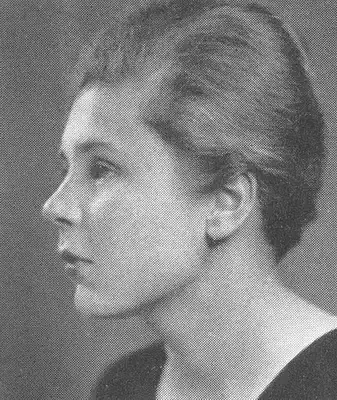
Elizabeth Bishop
Songs for a Colored Singer
Songs for a Colored Singer
I
A washing hangs upon the line,
but it's not mine.
None of the things that I can see
belong to me.
The neighbors got a radio with an aerial;
we got a little portable.
They got a lot of closet space;
we got a suitcase.
I say, "Le Roy, just how much are we owing?
Something I can't comprehend,
the more we got the more we spend...."
He only answers, "Let's get going."
Le Roy, you're earning too much money now.
I sit and look at our backyard
and find it very hard.
What have we got for all his dollars and cents?
--A pile of bottles by the fence.
He's faithful and he's kind
but he sure has an inquiring mind.
He's seen a lot; he's bound to see the rest,
and if I protest
Le Roy answers with a frown,
"Darling, when I earns I spends.
The world is wide; it still extends....
I'm going to get a job in the next town."
Le Roy, you're earning too much money now.
II
The time has come to call a halt;
and so it ends.
He's gone off with his other friends.
He needn't try to make amends,
this occasion's all his fault.
Through rain and dark I see his face
across the street at Flossie's place.
He's drinking in the warm pink glow
to th' accompaniment of the piccolo.
The time has come to call a halt.
I met him walking with Varella
and hit him twice with my umbrella.
Perhaps that occasion was my fault,
but the time has come to call a halt.
Go drink your wine and go get tight.
Let the piccolo play.
I'm sick of all your fussing anyway.
Now I'm pursuing my own way.
I'm leaving on the bus tonight.
Far down the highway wet and black
I'll ride and ride and not come back.
I'm going to go and take the bus
and find someone monogamous.
The time has come to call a halt.
I've borrowed fifteen dollars fare
and it will take me anywhere.
For this occasion's all his fault.
The time has come to call a halt.
III
Lullaby.
Adult and child
sink to their rest.
At sea the big ship sinks and dies,
lead in its breast.
Lullaby.
Let mations rage,
let nations fall.
The shadow of the crib makes an enormous cage
upon the wall.
Lullaby.
Sleep on and on,
war's over soon.
Drop the silly, harmless toy,
pick up the moon.
Lullaby.
If they should say
you have no sense,
don't you mind them; it won't make
much difference.
Lullaby.
Adult and child
sink to their rest.
At sea the big ship sinks and dies,
lead in its breast.
IV
What's that shining in the leaves,
the shadowy leaves,
like tears when somebody grieves,
shining, shining in the leaves?
Is it dew or is it tears,
dew or tears,
hanging there for years and years
like a heavy dew of tears?
Then that dew begins to fall,
roll down and fall,
Maybe it's not tears at all.
See it, see it roll and fall.
Hear it falling on the ground,
hear, all around.
That is not a tearful sound,
beating, beating on the ground.
See it lying there like seeds,
like black seeds.
see it taking root like weeds,
faster, faster than the weeds,
all the shining seeds take root,
conspiring root,
and what curious flower or fruit
will grow from that conspiring root?
fruit or flower? It is a face.
Yes, a face.
In that dark and dreary place
each seed grows into a face.
Like an army in a dream
the faces seem,
darker, darker, like a dream.
They're too real to be a dream.
I
A washing hangs upon the line,
but it's not mine.
None of the things that I can see
belong to me.
The neighbors got a radio with an aerial;
we got a little portable.
They got a lot of closet space;
we got a suitcase.
I say, "Le Roy, just how much are we owing?
Something I can't comprehend,
the more we got the more we spend...."
He only answers, "Let's get going."
Le Roy, you're earning too much money now.
I sit and look at our backyard
and find it very hard.
What have we got for all his dollars and cents?
--A pile of bottles by the fence.
He's faithful and he's kind
but he sure has an inquiring mind.
He's seen a lot; he's bound to see the rest,
and if I protest
Le Roy answers with a frown,
"Darling, when I earns I spends.
The world is wide; it still extends....
I'm going to get a job in the next town."
Le Roy, you're earning too much money now.
II
The time has come to call a halt;
and so it ends.
He's gone off with his other friends.
He needn't try to make amends,
this occasion's all his fault.
Through rain and dark I see his face
across the street at Flossie's place.
He's drinking in the warm pink glow
to th' accompaniment of the piccolo.
The time has come to call a halt.
I met him walking with Varella
and hit him twice with my umbrella.
Perhaps that occasion was my fault,
but the time has come to call a halt.
Go drink your wine and go get tight.
Let the piccolo play.
I'm sick of all your fussing anyway.
Now I'm pursuing my own way.
I'm leaving on the bus tonight.
Far down the highway wet and black
I'll ride and ride and not come back.
I'm going to go and take the bus
and find someone monogamous.
The time has come to call a halt.
I've borrowed fifteen dollars fare
and it will take me anywhere.
For this occasion's all his fault.
The time has come to call a halt.
III
Lullaby.
Adult and child
sink to their rest.
At sea the big ship sinks and dies,
lead in its breast.
Lullaby.
Let mations rage,
let nations fall.
The shadow of the crib makes an enormous cage
upon the wall.
Lullaby.
Sleep on and on,
war's over soon.
Drop the silly, harmless toy,
pick up the moon.
Lullaby.
If they should say
you have no sense,
don't you mind them; it won't make
much difference.
Lullaby.
Adult and child
sink to their rest.
At sea the big ship sinks and dies,
lead in its breast.
IV
What's that shining in the leaves,
the shadowy leaves,
like tears when somebody grieves,
shining, shining in the leaves?
Is it dew or is it tears,
dew or tears,
hanging there for years and years
like a heavy dew of tears?
Then that dew begins to fall,
roll down and fall,
Maybe it's not tears at all.
See it, see it roll and fall.
Hear it falling on the ground,
hear, all around.
That is not a tearful sound,
beating, beating on the ground.
See it lying there like seeds,
like black seeds.
see it taking root like weeds,
faster, faster than the weeds,
all the shining seeds take root,
conspiring root,
and what curious flower or fruit
will grow from that conspiring root?
fruit or flower? It is a face.
Yes, a face.
In that dark and dreary place
each seed grows into a face.
Like an army in a dream
the faces seem,
darker, darker, like a dream.
They're too real to be a dream.
573
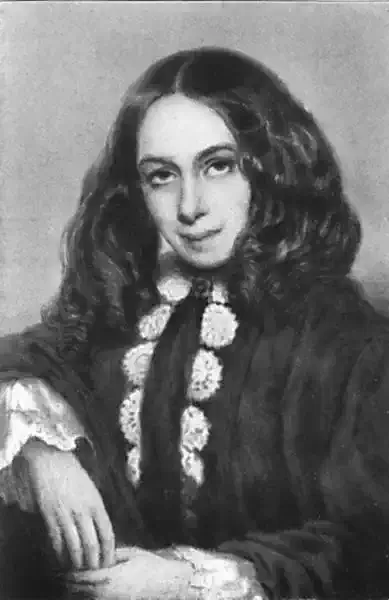
Elizabeth Barrett Browning
The Runaway Slave at Pilgrim's Point
The Runaway Slave at Pilgrim's Point
I.
I stand on the mark beside the shore
Of the first white pilgrim's bended knee,
Where exile turned to ancestor,
And God was thanked for liberty.
I have run through the night, my skin is as dark,
I bend my knee down on this mark . . .
I look on the sky and the sea.
II.
O pilgrim-souls, I speak to you!
I see you come out proud and slow
From the land of the spirits pale as dew. . .
And round me and round me ye go!
O pilgrims, I have gasped and run
All night long from the whips of one
Who in your names works sin and woe.
III.
And thus I thought that I would come
And kneel here where I knelt before,
And feel your souls around me hum
In undertone to the ocean's roar;
And lift my black face, my black hand,
Here, in your names, to curse this land
Ye blessed in freedom's evermore.
IV.
I am black, I am black;
And yet God made me, they say.
But if He did so, smiling back
He must have cast His work away
Under the feet of His white creatures,
With a look of scorn,--that the dusky features
Might be trodden again to clay.
V.
And yet He has made dark things
To be glad and merry as light.
There's a little dark bird sits and sings;
There's a dark stream ripples out of sight;
And the dark frogs chant in the safe morass,
And the sweetest stars are made to pass
O'er the face of the darkest night.
VI.
But we who are dark, we are dark!
Ah, God, we have no stars!
About our souls in care and cark
Our blackness shuts like prison bars:
The poor souls crouch so far behind,
That never a comfort can they find
By reaching through the prison-bars.
VII.
Indeed, we live beneath the sky, . . .
That great smooth Hand of God, stretched out
On all His children fatherly,
To bless them from the fear and doubt,
Which would be, if, from this low place,
All opened straight up to His face
Into the grand eternity.
VIII.
And still God's sunshine and His frost,
They make us hot, they make us cold,
As if we were not black and lost:
And the beasts and birds, in wood and fold,
Do fear and take us for very men!
Could the weep-poor-will or the cat of the glen
Look into my eyes and be bold?
IX.
I am black, I am black!--
But, once, I laughed in girlish glee;
For one of my colour stood in the track
Where the drivers drove, and looked at me--
And tender and full was the look he gave:
Could a slave look so at another slave?--
I look at the sky and the sea.
X.
And from that hour our spirits grew
As free as if unsold, unbought:
Oh, strong enough, since we were two
To conquer the world, we thought!
The drivers drove us day by day;
We did not mind, we went one way,
And no better a liberty sought.
XI.
In the sunny ground between the canes,
He said 'I love you' as he passed:
When the shingle-roof rang sharp with the rains,
I heard how he vowed it fast:
While others shook, he smiled in the hut
As he carved me a bowl of the cocoa-nut,
Through the roar of the hurricanes.
XII.
I sang his name instead of a song;
Over and over I sang his name--
Upward and downward I drew it along
My various notes; the same, the same!
I sang it low, that the slave-girls near
Might never guess from aught they could hear,
It was only a name.
XIII.
I look on the sky and the sea--
We were two to love, and two to pray,--
Yes, two, O God, who cried to Thee,
Though nothing didst Thou say.
Coldly Thou sat'st behind the sun!
And now I cry who am but one,
How wilt Thou speak to-day?--
XIV.
We were black, we were black!
We had no claim to love and bliss:
What marvel, if each turned to lack?
They wrung my cold hands out of his,--
They dragged him . . . where ? . . . I crawled to touch
His blood's mark in the dust! . . . not much,
Ye pilgrim-souls, . . . though plain as this!
XV.
Wrong, followed by a deeper wrong!
Mere grief's too good for such as I.
So the white men brought the shame ere long
To strangle the sob of my agony.
They would not leave me for my dull
Wet eyes!--it was too merciful
To let me weep pure tears and die.
XVI.
I am black, I am black!--
I wore a child upon my breast
An amulet that hung too slack,
And, in my unrest, could not rest:
Thus we went moaning, child and mother,
One to another, one to another,
Until all ended for the best:
XVII.
For hark ! I will tell you low . . . Iow . . .
I am black, you see,--
And the babe who lay on my bosom so,
Was far too white . . . too white for me;
As white as the ladies who scorned to pray
Beside me at church but yesterday;
Though my tears had washed a place for my knee.
XVIII.
My own, own child! I could not bear
To look in his face, it was so white.
I covered him up with a kerchief there;
I covered his face in close and tight:
And he moaned and struggled, as well might be,
For the white child wanted his liberty--
Ha, ha! he wanted his master right.
XIX.
He moaned and beat with his head and feet,
His little feet that never grew--
He struck them out, as it was meet,
Against my heart to break it through.
I might have sung and made him mild--
But I dared not sing to the white-faced child
The only song I knew.
XX.
I pulled the kerchief very close:
He could not see the sun, I swear,
More, then, alive, than now he does
From between the roots of the mango . . . where
. . . I know where. Close! a child and mother
Do wrong to look at one another,
When one is black and one is fair.
XXI.
Why, in that single glance I had
Of my child's face, . . . I tell you all,
I saw a look that made me mad . . .
The master's look, that used to fall
On my soul like his lash . . . or worse!
And so, to save it from my curse,
I twisted it round in my shawl.
XXII.
And he moaned and trembled from foot to head,
He shivered from head to foot;
Till, after a time, he lay instead
Too suddenly still and mute.
I felt, beside, a stiffening cold, . . .
I dared to lift up just a fold . . .
As in lifting a leaf of the mango-fruit.
XXIII.
But my fruit . . . ha, ha!--there, had been
(I laugh to think on't at this hour! . . .)
Your fine white angels, who have seen
Nearest the secret of God's power, . . .
And plucked my fruit to make them wine,
And sucked the soul of that child of mine,
As the humming-bird sucks the soul of the flower.
XXIV.
Ha, ha, for the trick of the angels white!
They freed the white child's spirit so.
I said not a word, but, day and night,
I carried the body to and fro;
And it lay on my heart like a stone . . . as chill.
--The sun may shine out as much as he will:
I am cold, though it happened a month ago.
XXV.
From the white man's house, and the black man's hut,
I carried the little body on,
The forest's arms did round us shut,
And silence through the trees did run:
They asked no question as I went,--
They stood too high for astonishment,--
They could see God sit on His throne.
XXVI.
My little body, kerchiefed fast,
I bore it on through the forest . . . on:
And when I felt it was tired at last,
I scooped a hole beneath the moon.
Through the forest-tops the angels far,
With a white sharp finger from every star,
Did point and mock at what was done.
XXVII.
Yet when it was all done aright, . . .
Earth, 'twixt me and my baby, strewed,
All, changed to black earth, . . . nothing white, . . .
A dark child in the dark,--ensued
Some comfort, and my heart grew young:
I sate down smiling there and sung
The song I learnt in my maidenhood.
XXVIII.
And thus we two were reconciled,
The white child and black mother, thus:
For, as I sang it, soft and wild
The same song, more melodious,
Rose from the grave whereon I sate!
It was the dead child singing that,
To join the souls of both of us.
XXIX.
I look on the sea and the sky!
Where the pilgrims' ships first anchored lay,
The free sun rideth gloriously;
But the pilgrim-ghosts have slid away
Through the earliest streaks of the morn.
My face is black, but it glares with a scorn
Which they dare not meet by day.
XXX.
Ah!--in their 'stead, their hunter sons!
Ah, ah! they are on me--they hunt in a ring--
Keep off! I brave you all at once--
I throw off your eyes like snakes that sting!
You have killed the black eagle at nest, I think:
Did you never stand still in your triumph, and shrink
From the stroke of her wounded wing?
XXXI.
(Man, drop that stone you dared to lift!--)
I wish you, who stand there five a-breast,
Each, for his own wife's joy and gift,
A little corpse as safely at rest
As mine in the mangos!--Yes, but she
May keep live babies on her knee,
And sing the song she liketh best.
XXXll.
I am not mad: I am black.
I see you staring in my face--
I know you, staring, shrinking back--
Ye are born of the Washington-race:
And this land is the free America:
And this mark on my wrist . . . (I prove what I say)
Ropes tied me up here to the flogging-place.
XXXIII.
You think I shrieked then? Not a sound!
I hung, as a gourd hangs in the sun.
I only cursed them all around,
As softly as I might have done
My very own child!--From these sands
Up to the mountains, lift your hands,
O slaves, and end what I begun!
XXXIV.
Whips, curses; these must answer those!
For in this UNION, you have set
Two kinds of men in adverse rows,
Each loathing each: and all forget
The seven wounds in Christ's body fair;
While HE sees gaping everywhere
Our countless wounds that pay no debt.
XXXV.
Our wounds are different. Your white men
Are, after all, not gods indeed,
Nor able to make Christs again
Do good with bleeding. We who bleed . . .
(Stand off!) we help not in our loss!
We are too heavy for our cross,
And fall and crush you and your seed.
XXXVI.
I fall, I swoon! I look at the sky:
The clouds are breaking on my brain;
I am floated along, as if I should die
Of liberty's exquisite pain--
In the name of the white child, waiting for me
In the death-dark where we may kiss and agree,
White men, I leave you all curse-free
In my broken heart's disdain!
I.
I stand on the mark beside the shore
Of the first white pilgrim's bended knee,
Where exile turned to ancestor,
And God was thanked for liberty.
I have run through the night, my skin is as dark,
I bend my knee down on this mark . . .
I look on the sky and the sea.
II.
O pilgrim-souls, I speak to you!
I see you come out proud and slow
From the land of the spirits pale as dew. . .
And round me and round me ye go!
O pilgrims, I have gasped and run
All night long from the whips of one
Who in your names works sin and woe.
III.
And thus I thought that I would come
And kneel here where I knelt before,
And feel your souls around me hum
In undertone to the ocean's roar;
And lift my black face, my black hand,
Here, in your names, to curse this land
Ye blessed in freedom's evermore.
IV.
I am black, I am black;
And yet God made me, they say.
But if He did so, smiling back
He must have cast His work away
Under the feet of His white creatures,
With a look of scorn,--that the dusky features
Might be trodden again to clay.
V.
And yet He has made dark things
To be glad and merry as light.
There's a little dark bird sits and sings;
There's a dark stream ripples out of sight;
And the dark frogs chant in the safe morass,
And the sweetest stars are made to pass
O'er the face of the darkest night.
VI.
But we who are dark, we are dark!
Ah, God, we have no stars!
About our souls in care and cark
Our blackness shuts like prison bars:
The poor souls crouch so far behind,
That never a comfort can they find
By reaching through the prison-bars.
VII.
Indeed, we live beneath the sky, . . .
That great smooth Hand of God, stretched out
On all His children fatherly,
To bless them from the fear and doubt,
Which would be, if, from this low place,
All opened straight up to His face
Into the grand eternity.
VIII.
And still God's sunshine and His frost,
They make us hot, they make us cold,
As if we were not black and lost:
And the beasts and birds, in wood and fold,
Do fear and take us for very men!
Could the weep-poor-will or the cat of the glen
Look into my eyes and be bold?
IX.
I am black, I am black!--
But, once, I laughed in girlish glee;
For one of my colour stood in the track
Where the drivers drove, and looked at me--
And tender and full was the look he gave:
Could a slave look so at another slave?--
I look at the sky and the sea.
X.
And from that hour our spirits grew
As free as if unsold, unbought:
Oh, strong enough, since we were two
To conquer the world, we thought!
The drivers drove us day by day;
We did not mind, we went one way,
And no better a liberty sought.
XI.
In the sunny ground between the canes,
He said 'I love you' as he passed:
When the shingle-roof rang sharp with the rains,
I heard how he vowed it fast:
While others shook, he smiled in the hut
As he carved me a bowl of the cocoa-nut,
Through the roar of the hurricanes.
XII.
I sang his name instead of a song;
Over and over I sang his name--
Upward and downward I drew it along
My various notes; the same, the same!
I sang it low, that the slave-girls near
Might never guess from aught they could hear,
It was only a name.
XIII.
I look on the sky and the sea--
We were two to love, and two to pray,--
Yes, two, O God, who cried to Thee,
Though nothing didst Thou say.
Coldly Thou sat'st behind the sun!
And now I cry who am but one,
How wilt Thou speak to-day?--
XIV.
We were black, we were black!
We had no claim to love and bliss:
What marvel, if each turned to lack?
They wrung my cold hands out of his,--
They dragged him . . . where ? . . . I crawled to touch
His blood's mark in the dust! . . . not much,
Ye pilgrim-souls, . . . though plain as this!
XV.
Wrong, followed by a deeper wrong!
Mere grief's too good for such as I.
So the white men brought the shame ere long
To strangle the sob of my agony.
They would not leave me for my dull
Wet eyes!--it was too merciful
To let me weep pure tears and die.
XVI.
I am black, I am black!--
I wore a child upon my breast
An amulet that hung too slack,
And, in my unrest, could not rest:
Thus we went moaning, child and mother,
One to another, one to another,
Until all ended for the best:
XVII.
For hark ! I will tell you low . . . Iow . . .
I am black, you see,--
And the babe who lay on my bosom so,
Was far too white . . . too white for me;
As white as the ladies who scorned to pray
Beside me at church but yesterday;
Though my tears had washed a place for my knee.
XVIII.
My own, own child! I could not bear
To look in his face, it was so white.
I covered him up with a kerchief there;
I covered his face in close and tight:
And he moaned and struggled, as well might be,
For the white child wanted his liberty--
Ha, ha! he wanted his master right.
XIX.
He moaned and beat with his head and feet,
His little feet that never grew--
He struck them out, as it was meet,
Against my heart to break it through.
I might have sung and made him mild--
But I dared not sing to the white-faced child
The only song I knew.
XX.
I pulled the kerchief very close:
He could not see the sun, I swear,
More, then, alive, than now he does
From between the roots of the mango . . . where
. . . I know where. Close! a child and mother
Do wrong to look at one another,
When one is black and one is fair.
XXI.
Why, in that single glance I had
Of my child's face, . . . I tell you all,
I saw a look that made me mad . . .
The master's look, that used to fall
On my soul like his lash . . . or worse!
And so, to save it from my curse,
I twisted it round in my shawl.
XXII.
And he moaned and trembled from foot to head,
He shivered from head to foot;
Till, after a time, he lay instead
Too suddenly still and mute.
I felt, beside, a stiffening cold, . . .
I dared to lift up just a fold . . .
As in lifting a leaf of the mango-fruit.
XXIII.
But my fruit . . . ha, ha!--there, had been
(I laugh to think on't at this hour! . . .)
Your fine white angels, who have seen
Nearest the secret of God's power, . . .
And plucked my fruit to make them wine,
And sucked the soul of that child of mine,
As the humming-bird sucks the soul of the flower.
XXIV.
Ha, ha, for the trick of the angels white!
They freed the white child's spirit so.
I said not a word, but, day and night,
I carried the body to and fro;
And it lay on my heart like a stone . . . as chill.
--The sun may shine out as much as he will:
I am cold, though it happened a month ago.
XXV.
From the white man's house, and the black man's hut,
I carried the little body on,
The forest's arms did round us shut,
And silence through the trees did run:
They asked no question as I went,--
They stood too high for astonishment,--
They could see God sit on His throne.
XXVI.
My little body, kerchiefed fast,
I bore it on through the forest . . . on:
And when I felt it was tired at last,
I scooped a hole beneath the moon.
Through the forest-tops the angels far,
With a white sharp finger from every star,
Did point and mock at what was done.
XXVII.
Yet when it was all done aright, . . .
Earth, 'twixt me and my baby, strewed,
All, changed to black earth, . . . nothing white, . . .
A dark child in the dark,--ensued
Some comfort, and my heart grew young:
I sate down smiling there and sung
The song I learnt in my maidenhood.
XXVIII.
And thus we two were reconciled,
The white child and black mother, thus:
For, as I sang it, soft and wild
The same song, more melodious,
Rose from the grave whereon I sate!
It was the dead child singing that,
To join the souls of both of us.
XXIX.
I look on the sea and the sky!
Where the pilgrims' ships first anchored lay,
The free sun rideth gloriously;
But the pilgrim-ghosts have slid away
Through the earliest streaks of the morn.
My face is black, but it glares with a scorn
Which they dare not meet by day.
XXX.
Ah!--in their 'stead, their hunter sons!
Ah, ah! they are on me--they hunt in a ring--
Keep off! I brave you all at once--
I throw off your eyes like snakes that sting!
You have killed the black eagle at nest, I think:
Did you never stand still in your triumph, and shrink
From the stroke of her wounded wing?
XXXI.
(Man, drop that stone you dared to lift!--)
I wish you, who stand there five a-breast,
Each, for his own wife's joy and gift,
A little corpse as safely at rest
As mine in the mangos!--Yes, but she
May keep live babies on her knee,
And sing the song she liketh best.
XXXll.
I am not mad: I am black.
I see you staring in my face--
I know you, staring, shrinking back--
Ye are born of the Washington-race:
And this land is the free America:
And this mark on my wrist . . . (I prove what I say)
Ropes tied me up here to the flogging-place.
XXXIII.
You think I shrieked then? Not a sound!
I hung, as a gourd hangs in the sun.
I only cursed them all around,
As softly as I might have done
My very own child!--From these sands
Up to the mountains, lift your hands,
O slaves, and end what I begun!
XXXIV.
Whips, curses; these must answer those!
For in this UNION, you have set
Two kinds of men in adverse rows,
Each loathing each: and all forget
The seven wounds in Christ's body fair;
While HE sees gaping everywhere
Our countless wounds that pay no debt.
XXXV.
Our wounds are different. Your white men
Are, after all, not gods indeed,
Nor able to make Christs again
Do good with bleeding. We who bleed . . .
(Stand off!) we help not in our loss!
We are too heavy for our cross,
And fall and crush you and your seed.
XXXVI.
I fall, I swoon! I look at the sky:
The clouds are breaking on my brain;
I am floated along, as if I should die
Of liberty's exquisite pain--
In the name of the white child, waiting for me
In the death-dark where we may kiss and agree,
White men, I leave you all curse-free
In my broken heart's disdain!
661
Elizabeth Barrett Browning
The Lady's Yes
The Lady's Yes
'Yes,' I answered you last night;
'No,' this morning, Sir, I say.
Colours seen by candlelight,
Will not look the same by day.
When the viols played their best,
Lamps above, and laughs below---
Love me sounded like a jest,
Fit for Yes or fit for No.
Call me false, or call me free--Vow,
whatever light may shine,
No man on your face shall see
Any grief for change on mine.
Yet the sin is on us both--Time
to dance is not to woo---
Wooer light makes fickle troth--Scorn
of me recoils on you.
Learn to win a lady's faith
Nobly, as the thing is high;
Bravely, as for life and death--With
a loyal gravity.
Lead her from the festive boards,
Point her to the starry skies,
Guard her, by your truthful words,
Pure from courtship's flatteries.
By your truth she shall be true--Ever
true, as wives of yore---
And her Yes, once said to you,
SHALL be Yes for evermore.
'Yes,' I answered you last night;
'No,' this morning, Sir, I say.
Colours seen by candlelight,
Will not look the same by day.
When the viols played their best,
Lamps above, and laughs below---
Love me sounded like a jest,
Fit for Yes or fit for No.
Call me false, or call me free--Vow,
whatever light may shine,
No man on your face shall see
Any grief for change on mine.
Yet the sin is on us both--Time
to dance is not to woo---
Wooer light makes fickle troth--Scorn
of me recoils on you.
Learn to win a lady's faith
Nobly, as the thing is high;
Bravely, as for life and death--With
a loyal gravity.
Lead her from the festive boards,
Point her to the starry skies,
Guard her, by your truthful words,
Pure from courtship's flatteries.
By your truth she shall be true--Ever
true, as wives of yore---
And her Yes, once said to you,
SHALL be Yes for evermore.
359
Elizabeth Barrett Browning
Stanzas on the Death of Lord Byron
Stanzas on the Death of Lord Byron
He was, and is not! Graecia's trembling shore,
Sighing through all her palmy groves, shall tell
That Harold's pilgrimage at last is o'er—
Mute the impassioned tongue, and tuneful shell,
That erst was wont in noblest strains to swell—
Hush'd the proud shouts that rode Aegaea's wave!
For lo! the great Deliv'rer breathes farewell!
Gives to the world his mem'ry and a grave—
Expiring in the land he only lived to save!
Mourn, Hellas, mourn! and o'er thy widow'd brow,
For aye, the cypress wreath of sorrow twine;
And in thy new-form'd beauty, desolate, throw
The fresh-cull'd flowers on his sepulchral shrine.
Yes! let that heart whose fervour was all thine,
In consecrated urn lamented be!
That generous heart where genius thrill'd divine,
Hath spent its last most glorious throb for thee—
Then sank amid the storm that made thy children free!
Britannia's Poet! Graecia's hero, sleeps!
And Freedom, bending o'er the breathless clay,
Lifts up her voice, and in her anguish weeps!
For us, a night hath clouded o'er our day,
And hush'd the lips that breath'd our fairest lay.
Alas! and must the British lyre resound
A requiem, while the spirit wings away
Of him who on its strings such music found,
And taught its startling chords to give so sweet a sound!
The theme grows sadder — but my soul shall find
A language in those tears! No more — no more!
Soon, 'midst the shriekings of the tossing wind,
The 'dark blue depths' he sang of, shall have bore
Our all of Byron to his native shore!
His grave is thick with voices — to the ear
Murm'ring an awful tale of greatness o'er;
But Memory strives with Death, and lingering near,
Shall consecrate the dust of Harold's lonely bier!
He was, and is not! Graecia's trembling shore,
Sighing through all her palmy groves, shall tell
That Harold's pilgrimage at last is o'er—
Mute the impassioned tongue, and tuneful shell,
That erst was wont in noblest strains to swell—
Hush'd the proud shouts that rode Aegaea's wave!
For lo! the great Deliv'rer breathes farewell!
Gives to the world his mem'ry and a grave—
Expiring in the land he only lived to save!
Mourn, Hellas, mourn! and o'er thy widow'd brow,
For aye, the cypress wreath of sorrow twine;
And in thy new-form'd beauty, desolate, throw
The fresh-cull'd flowers on his sepulchral shrine.
Yes! let that heart whose fervour was all thine,
In consecrated urn lamented be!
That generous heart where genius thrill'd divine,
Hath spent its last most glorious throb for thee—
Then sank amid the storm that made thy children free!
Britannia's Poet! Graecia's hero, sleeps!
And Freedom, bending o'er the breathless clay,
Lifts up her voice, and in her anguish weeps!
For us, a night hath clouded o'er our day,
And hush'd the lips that breath'd our fairest lay.
Alas! and must the British lyre resound
A requiem, while the spirit wings away
Of him who on its strings such music found,
And taught its startling chords to give so sweet a sound!
The theme grows sadder — but my soul shall find
A language in those tears! No more — no more!
Soon, 'midst the shriekings of the tossing wind,
The 'dark blue depths' he sang of, shall have bore
Our all of Byron to his native shore!
His grave is thick with voices — to the ear
Murm'ring an awful tale of greatness o'er;
But Memory strives with Death, and lingering near,
Shall consecrate the dust of Harold's lonely bier!
544
Edna St. Vincent Millay
Oh, Oh, You Will Be Sorry
Oh, Oh, You Will Be Sorry
Oh, oh, you will be sorry for that word!
Give me back my book and take my kiss instead.
Was it my enemy or my friend I heard,
"What a big book for such a little head!"
Come, I will show you now my newest hat,
And you may watch me purse my mouth and prink!
Oh, I shall love you still, and all of that.
I never again shall tell you what I think.
I shall be sweet and crafty, soft and sly;
You will not catch me reading any more:
I shall be called a wife to pattern by;
And some day when you knock and push the door,
Some sane day, not too bright and not too stormy,
I shall be gone, and you may whistle for me.
Oh, oh, you will be sorry for that word!
Give me back my book and take my kiss instead.
Was it my enemy or my friend I heard,
"What a big book for such a little head!"
Come, I will show you now my newest hat,
And you may watch me purse my mouth and prink!
Oh, I shall love you still, and all of that.
I never again shall tell you what I think.
I shall be sweet and crafty, soft and sly;
You will not catch me reading any more:
I shall be called a wife to pattern by;
And some day when you knock and push the door,
Some sane day, not too bright and not too stormy,
I shall be gone, and you may whistle for me.
381
Edna St. Vincent Millay
Not Even My Pride Shall Suffer Much
Not Even My Pride Shall Suffer Much
Not even my pride shall suffer much;
Not even my pride at all, maybe,
If this ill-timed, intemperate clutch
Be loosed by you and not by me,
Will suffer; I have been so true
A vestal to that only pride
Wet wood cannot extinguish, nor
Sand, nor its embers scattered, for,
See all these years, it has not died.
And if indeed, as I dare think,
You cannot push this patient flame,
By any breath your lungs could store,
Even for a moment to the floor
To crawl there, even for a moment crawl,
What can you mix for me to drink
That shall deflect me? What you do
Is either malice, crude defense
Of ego, or indifference:
I know these things as well as you;
You do not dazzle me at all—
Some love, and some simplicity,
Might well have been the death of me—
Not even my pride shall suffer much;
Not even my pride at all, maybe,
If this ill-timed, intemperate clutch
Be loosed by you and not by me,
Will suffer; I have been so true
A vestal to that only pride
Wet wood cannot extinguish, nor
Sand, nor its embers scattered, for,
See all these years, it has not died.
And if indeed, as I dare think,
You cannot push this patient flame,
By any breath your lungs could store,
Even for a moment to the floor
To crawl there, even for a moment crawl,
What can you mix for me to drink
That shall deflect me? What you do
Is either malice, crude defense
Of ego, or indifference:
I know these things as well as you;
You do not dazzle me at all—
Some love, and some simplicity,
Might well have been the death of me—
299