

Poems in this topic
Freedom
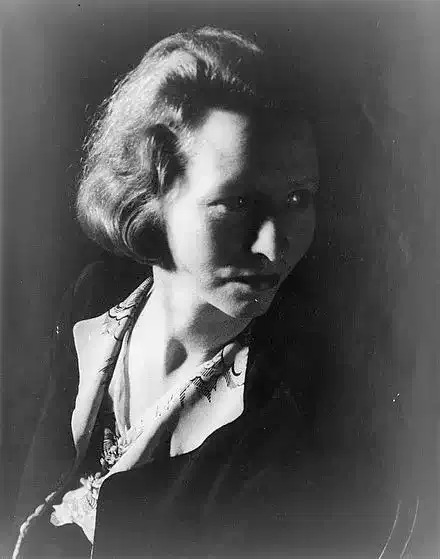
Edna St. Vincent Millay
Conscientious Objector
Conscientious Objector
I shall die, but
that is all that I shall do for Death.
I hear him leading his horse out of the stall;
I hear the clatter on the barn-floor.
He is in haste; he has business in Cuba,
business in the Balkans, many calls to make this morning.
But I will not hold the bridle
while he clinches the girth.
And he may mount by himself:
I will not give him a leg up.
Though he flick my shoulders with his whip,
I will not tell him which way the fox ran.
With his hoof on my breast, I will not tell him where
the black boy hides in the swamp.
I shall die, but that is all that I shall do for Death;
I am not on his pay-roll.
I will not tell him the whereabout of my friends
nor of my enemies either.
Though he promise me much,
I will not map him the route to any man's door.
Am I a spy in the land of the living,
that I should deliver men to Death?
Brother, the password and the plans of our city
are safe with me; never through me Shall you be overcome.
I shall die, but
that is all that I shall do for Death.
I hear him leading his horse out of the stall;
I hear the clatter on the barn-floor.
He is in haste; he has business in Cuba,
business in the Balkans, many calls to make this morning.
But I will not hold the bridle
while he clinches the girth.
And he may mount by himself:
I will not give him a leg up.
Though he flick my shoulders with his whip,
I will not tell him which way the fox ran.
With his hoof on my breast, I will not tell him where
the black boy hides in the swamp.
I shall die, but that is all that I shall do for Death;
I am not on his pay-roll.
I will not tell him the whereabout of my friends
nor of my enemies either.
Though he promise me much,
I will not map him the route to any man's door.
Am I a spy in the land of the living,
that I should deliver men to Death?
Brother, the password and the plans of our city
are safe with me; never through me Shall you be overcome.
328
Edna St. Vincent Millay
Being Young And Green
Being Young And Green
Being Young and Green, I said in love's despite:
Never in the world will I to living wight
Give over, air my mind
To anyone,
Hang out its ancient secrets in the strong wind
To be shredded and faded—
Oh, me, invaded
And sacked by the wind and the sun!
Being Young and Green, I said in love's despite:
Never in the world will I to living wight
Give over, air my mind
To anyone,
Hang out its ancient secrets in the strong wind
To be shredded and faded—
Oh, me, invaded
And sacked by the wind and the sun!
302
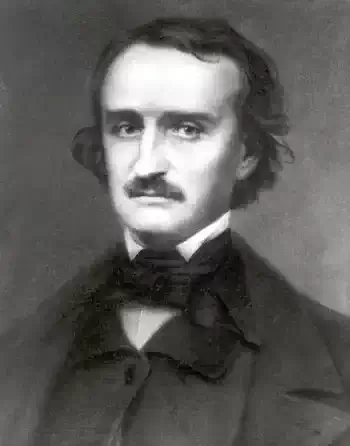
Edgar Allan Poe
Hymn to Aristogeiton and Harmodius
Hymn to Aristogeiton and Harmodius
Wreathed in myrtle, my sword I'll conceal
Like those champions devoted and brave,
When they plunged in the tyrant their steel,
And to Athens deliverance gave.
Beloved heroes! your deathless souls roam
In the joy breathing isles of the blest;
Where the mighty of old have their home -
Where Achilles and Diomed rest.
In fresh myrtle my blade I'll entwine,
Like Harmodious, the gallant and good,
When he made at the tutelar shrine
A libation of Tyranny's blood.
Ye deliverers of Athens from shame!
Ye avengers of Liberty's wrongs!
Endless ages shall cherish your fame
Embalmed in their echoing songs!
Wreathed in myrtle, my sword I'll conceal
Like those champions devoted and brave,
When they plunged in the tyrant their steel,
And to Athens deliverance gave.
Beloved heroes! your deathless souls roam
In the joy breathing isles of the blest;
Where the mighty of old have their home -
Where Achilles and Diomed rest.
In fresh myrtle my blade I'll entwine,
Like Harmodious, the gallant and good,
When he made at the tutelar shrine
A libation of Tyranny's blood.
Ye deliverers of Athens from shame!
Ye avengers of Liberty's wrongs!
Endless ages shall cherish your fame
Embalmed in their echoing songs!
269
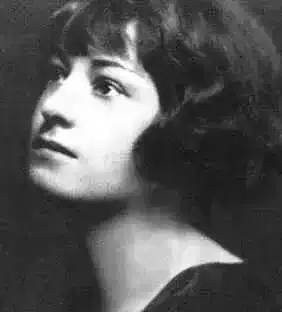
Dorothy Parker
The Satin Dress
The Satin Dress
Needle, needle, dip and dart,
Thrusting up and down,
Where's the man could ease a heart
Like a satin gown?
See the stitches curve and crawl
Round the cunning seams-
Patterns thin and sweet and small
As a lady's dreams.
Wantons go in bright brocade;
Brides in organdie;
Gingham's for the plighted maid;
Satin's for the free!
Wool's to line a miser's chest;
Crepe's to calm the old;
Velvet hides an empty breast
Satin's for the bold!
Lawn is for a bishop's yoke;
Linen's for a nun;
Satin is for wiser folk-
Would the dress were done!
Satin glows in candlelightSatin's
for the proud!
They will say who watch at night,
"What a fine shroud!"
Needle, needle, dip and dart,
Thrusting up and down,
Where's the man could ease a heart
Like a satin gown?
See the stitches curve and crawl
Round the cunning seams-
Patterns thin and sweet and small
As a lady's dreams.
Wantons go in bright brocade;
Brides in organdie;
Gingham's for the plighted maid;
Satin's for the free!
Wool's to line a miser's chest;
Crepe's to calm the old;
Velvet hides an empty breast
Satin's for the bold!
Lawn is for a bishop's yoke;
Linen's for a nun;
Satin is for wiser folk-
Would the dress were done!
Satin glows in candlelightSatin's
for the proud!
They will say who watch at night,
"What a fine shroud!"
421

Claude Mckay
One Year After
One Year After
I
Not once in all our days of poignant love,
Did I a single instant give to thee
My undivided being wholly free.
Not all thy potent passion could remove
The barrier that loomed between to prove
The full supreme surrendering of me.
Oh, I was beaten, helpless utterly
Against the shadow-fact with which I strove.
For when a cruel power forced me to face
The truth which poisoned our illicit wine,
That even I was faithless to my race
Bleeding beneath the iron hand of thine,
Our union seemed a monstrous thing and base!
I was an outcast from thy world and mine.
II
Adventure-seasoned and storm-buffeted,
I shun all signs of anchorage, because
The zest of life exceeds the bound of laws.
New gales of tropic fury round my head
Break lashing me through hours of soulful dread;
But when the terror thins and, spent, withdraws,
Leaving me wondering awhile, I pause--
But soon again the risky ways I tread!
No rigid road for me, no peace, no rest,
While molten elements run through my blood;
And beauty-burning bodies manifest
Their warm, heart-melting motions to be wooed;
And passion boldly rising in my breast,
Like rivers of the Spring, lets loose its flood.
I
Not once in all our days of poignant love,
Did I a single instant give to thee
My undivided being wholly free.
Not all thy potent passion could remove
The barrier that loomed between to prove
The full supreme surrendering of me.
Oh, I was beaten, helpless utterly
Against the shadow-fact with which I strove.
For when a cruel power forced me to face
The truth which poisoned our illicit wine,
That even I was faithless to my race
Bleeding beneath the iron hand of thine,
Our union seemed a monstrous thing and base!
I was an outcast from thy world and mine.
II
Adventure-seasoned and storm-buffeted,
I shun all signs of anchorage, because
The zest of life exceeds the bound of laws.
New gales of tropic fury round my head
Break lashing me through hours of soulful dread;
But when the terror thins and, spent, withdraws,
Leaving me wondering awhile, I pause--
But soon again the risky ways I tread!
No rigid road for me, no peace, no rest,
While molten elements run through my blood;
And beauty-burning bodies manifest
Their warm, heart-melting motions to be wooed;
And passion boldly rising in my breast,
Like rivers of the Spring, lets loose its flood.
387
Claude Mckay
In Bondage
In Bondage
I would be wandering in distant fields
Where man, and bird, and beast, lives leisurely,
And the old earth is kind, and ever yields
Her goodly gifts to all her children free;
Where life is fairer, lighter, less demanding,
And boys and girls have time and space for play
Before they come to years of understanding--
Somewhere I would be singing, far away.
For life is greater than the thousand wars
Men wage for it in their insatiate lust,
And will remain like the eternal stars,
When all that shines to-day is drift and dust
But I am bound with you in your mean graves,
O black men, simple slaves of ruthless slaves.
I would be wandering in distant fields
Where man, and bird, and beast, lives leisurely,
And the old earth is kind, and ever yields
Her goodly gifts to all her children free;
Where life is fairer, lighter, less demanding,
And boys and girls have time and space for play
Before they come to years of understanding--
Somewhere I would be singing, far away.
For life is greater than the thousand wars
Men wage for it in their insatiate lust,
And will remain like the eternal stars,
When all that shines to-day is drift and dust
But I am bound with you in your mean graves,
O black men, simple slaves of ruthless slaves.
434

Christina Rossetti
Love From The North
Love From The North
I had a love in soft south land,
Beloved through April far in May;
He waited on my lightest breath,
And never dared to say me nay.
He saddened if my cheer was sad,
But gay he grew if I was gay;
We never differed on a hair,
My yes his yes, my nay his nay.
The wedding hour was come, the aisles
Were flushed with sun and flowers that day;
I pacing balanced in my thoughts:
'It's quite too late to think of nay.'—
My bridegroom answered in his turn,
Myself had almost answered 'yea:'
When through the flashing nave I heard
A struggle and resounding 'nay.'
Bridemaids and bridegroom shrank in fear,
But I stood high who stood at bay:
'And if I answer yea, fair Sir,
What man art thou to bar with nay?'
He was a strong man from the north,
Light-locked, with eyes of dangerous grey:
'Put yea by for another time
In which I will not say thee nay.'
He took me in his strong white arms,
He bore me on his horse away
O'er crag, morass, and hairbreadth pass,
But never asked me yea or nay.
He made me fast with book and bell,
With links of love he makes me stay;
Till now I've neither heart nor power
Nor will nor wish to say him nay.
I had a love in soft south land,
Beloved through April far in May;
He waited on my lightest breath,
And never dared to say me nay.
He saddened if my cheer was sad,
But gay he grew if I was gay;
We never differed on a hair,
My yes his yes, my nay his nay.
The wedding hour was come, the aisles
Were flushed with sun and flowers that day;
I pacing balanced in my thoughts:
'It's quite too late to think of nay.'—
My bridegroom answered in his turn,
Myself had almost answered 'yea:'
When through the flashing nave I heard
A struggle and resounding 'nay.'
Bridemaids and bridegroom shrank in fear,
But I stood high who stood at bay:
'And if I answer yea, fair Sir,
What man art thou to bar with nay?'
He was a strong man from the north,
Light-locked, with eyes of dangerous grey:
'Put yea by for another time
In which I will not say thee nay.'
He took me in his strong white arms,
He bore me on his horse away
O'er crag, morass, and hairbreadth pass,
But never asked me yea or nay.
He made me fast with book and bell,
With links of love he makes me stay;
Till now I've neither heart nor power
Nor will nor wish to say him nay.
236
Christina Rossetti
Amor Mundi
Amor Mundi
'Oh, where are you going with your love-locks flowing
On the west wind blowing along this valley track?'
'The downhill path is easy, come with me an' it please ye,
We shall escape the uphill by never turning back.'
So they two went together in glowing August weather,
The honey-breathing heather lay to their left and right;
And dear she was to doat on, her swift feet seemed to float on
The air like soft twin pigeons too sportive to alight.
'Oh, what is that in heaven where grey cloud-flakes are seven,
Where blackest clouds hang riven just at the rainy skirt?'
'Oh, that's a meteor sent us, a message dumb, portentous,—
An undeciphered solemn signal of help or hurt.'
'Oh, what is that glides quickly where velvet flowers grow thickly,
Their scent comes rich and sickly?'—'A scaled and hooded worm.'
'Oh, what's that in the hollow, so pale I quake to follow?'
'Oh, that's a thin dead body which waits th' eternal term.'
'Turn again, O my sweetest,—turn again, false and fleetest:
This way whereof thou weetest I fear is hell's own track.'
'Nay, too steep for hill-mounting,—nay, too late for cost-counting:
This downhill path is easy, but there's no turning back.'
'Oh, where are you going with your love-locks flowing
On the west wind blowing along this valley track?'
'The downhill path is easy, come with me an' it please ye,
We shall escape the uphill by never turning back.'
So they two went together in glowing August weather,
The honey-breathing heather lay to their left and right;
And dear she was to doat on, her swift feet seemed to float on
The air like soft twin pigeons too sportive to alight.
'Oh, what is that in heaven where grey cloud-flakes are seven,
Where blackest clouds hang riven just at the rainy skirt?'
'Oh, that's a meteor sent us, a message dumb, portentous,—
An undeciphered solemn signal of help or hurt.'
'Oh, what is that glides quickly where velvet flowers grow thickly,
Their scent comes rich and sickly?'—'A scaled and hooded worm.'
'Oh, what's that in the hollow, so pale I quake to follow?'
'Oh, that's a thin dead body which waits th' eternal term.'
'Turn again, O my sweetest,—turn again, false and fleetest:
This way whereof thou weetest I fear is hell's own track.'
'Nay, too steep for hill-mounting,—nay, too late for cost-counting:
This downhill path is easy, but there's no turning back.'
256
Christina Rossetti
A Royal Princess
A Royal Princess
I, a princess, king-descended, decked with jewels, gilded, drest,
Would rather be a peasant with her baby at her breast,
For all I shine so like the sun, and am purple like the west.
Two and two my guards behind, two and two before,
Two and two on either hand, they guard me evermore;
Me, poor dove, that must not coo—eagle that must not soar.
All my fountains cast up perfumes, all my gardens grow
Scented woods and foreign spices, with all flowers in blow
That are costly, out of season as the seasons go.
All my walls are lost in mirrors, whereupon I trace
Self to right hand, self to left hand, self in every place,
Self-same solitary figure, self-same seeking face.
Then I have an ivory chair high to sit upon,
Almost like my father's chair, which is an ivory throne;
There I sit uplift and upright, there I sit alone.
Alone by day, alone by night, alone days without end;
My father and my mother give me treasures, search and spend—
O my father! O my mother! have you ne'er a friend?
As I am a lofty princess, so my father is
A lofty king, accomplished in all kingly subtilties,
Holding in his strong right hand world-kingdoms' balances.
He has quarrelled with his neighbours, he has scourged his foes;
Vassal counts and princes follow where his pennon goes,
Long-descended valiant lords whom the vulture knows,
On whose track the vulture swoops, when they ride in state
To break the strength of armies and topple down the great:
Each of these my courteous servant, none of these my mate.
My father counting up his strength sets down with equal pen
So many head of cattle, head of horses, head of men;
These for slaughter, these for breeding, with the how and when.
Some to work on roads, canals; some to man his ships;
Some to smart in mines beneath sharp overseers' whips;
Some to trap fur-beasts in lands where utmost winter nips.
Once it came into my heart, and whelmed me like a flood,
That these too are men and women, human flesh and blood;
Men with hearts and men with souls, though trodden down like mud.
Our feasting was not glad that night, our music was not gay:
On my mother's graceful head I marked a thread of grey,
My father frowning at the fare seemed every dish to weigh.
I sat beside them sole princess in my exalted place,
My ladies and my gentlemen stood by me on the dais:
A mirror showed me I look old and haggard in the face;
It showed me that my ladies all are fair to gaze upon,
Plump, plenteous-haired, to every one love's secret lore is known,
They laugh by day, they sleep by night; ah me, what is a throne?
The singing men and women sang that night as usual,
The dancers danced in pairs and sets, but music had a fall,
A melancholy windy fall as at a funeral.
Amid the toss of torches to my chamber back we swept;
My ladies loosed my golden chain; meantime I could have wept
To think of some in galling chains whether they waked or slept.
I took my bath of scented milk, delicately waited on,
They burned sweet things for my delight, cedar and cinnamon,
They lit my shaded silver lamp, and left me there alone.
A day went by, a week went by. One day I heard it said:
'Men are clamouring, women, children, clamouring to be fed;
Men like famished dogs are howling in the streets for bread.'
So two whispered by my door, not thinking I could hear,
Vulgar naked truth, ungarnished for a royal ear;
Fit for cooping in the background, not to stalk so near.
But I strained my utmost sense to catch this truth, and mark:
'There are families out grazing like cattle in the park.'
'A pair of peasants must be saved even if we build an ark.'
A merry jest, a merry laugh, each strolled upon his way;
One was my page, a lad I reared and bore with day by day;
One was my youngest maid as sweet and white as cream in May.
Other footsteps followed softly with a weightier tramp;
Voices said: 'Picked soldiers have been summoned from the camp
To quell these base-born ruffians who make free to howl and stamp.'
'Howl and stamp?' one answered: 'They made free to hurl a stone
At the minister's state coach, well aimed and stoutly thrown.'
'There's work then for the soldiers, for this rank crop must be mown.'
'One I saw, a poor old fool with ashes on his head,
Whimpering because a girl had snatched his crust of bread:
Then he dropped; when some one raised him, it turned out he was dead.'
'After us the deluge,' was retorted with a laugh:
'If bread's the staff of life, they must walk without a staff.'
'While I've a loaf they're welcome to my blessing and the chaff.'
These passed. The king: stand up. Said my father with a smile:
'Daughter mine, your mother comes to sit with you awhile,
She's sad to-day, and who but you her sadness can beguile?'
He too left me. Shall I touch my harp now while I wait,—
(I hear them doubling guard below before our palace gate—)
Or shall I work the last gold stitch into my veil of state;
Or shall my woman stand and read some unimpassioned scene,
There's music of a lulling sort in words that pause between;
Or shall she merely fan me while I wait here for the queen?
Again I caught my father's voice in sharp word of command:
'Charge!' a clash of steel: 'Charge again, the rebels stand.
Smite and spare not, hand to hand; smite and spare not, hand to hand.'
There swelled a tumult at the gate, high voices waxing higher;
A flash of red reflected light lit the cathedral spire;
I heard a cry for faggots, then I heard a yell for fire.
'Sit and roast there with your meat, sit and bake there with your bread,
You who sat to see us starve,' one shrieking woman said:
'Sit on your throne and roast with your crown upon your head.'
Nay, this thing will I do, while my mother tarrieth,
I will take my fine spun gold, but not to sew therewith,
I will take my gold and gems, and rainbow fan and wreath;
With a ransom in my lap, a king's ransom in my hand,
I will go down to this people, will stand face to face, will stand
Where they curse king, queen, and princess of this cursed land.
They shall take all to buy them bread, take all I have to give;
I, if I perish, perish; they to-day shall eat and live;
I, if I perish, perish; that's the goal I half conceive:
Once to speak before the world, rend bare my heart and show
The lesson I have learned which is death, is life, to know.
I, if I perish, perish; in the name of God I go.
I, a princess, king-descended, decked with jewels, gilded, drest,
Would rather be a peasant with her baby at her breast,
For all I shine so like the sun, and am purple like the west.
Two and two my guards behind, two and two before,
Two and two on either hand, they guard me evermore;
Me, poor dove, that must not coo—eagle that must not soar.
All my fountains cast up perfumes, all my gardens grow
Scented woods and foreign spices, with all flowers in blow
That are costly, out of season as the seasons go.
All my walls are lost in mirrors, whereupon I trace
Self to right hand, self to left hand, self in every place,
Self-same solitary figure, self-same seeking face.
Then I have an ivory chair high to sit upon,
Almost like my father's chair, which is an ivory throne;
There I sit uplift and upright, there I sit alone.
Alone by day, alone by night, alone days without end;
My father and my mother give me treasures, search and spend—
O my father! O my mother! have you ne'er a friend?
As I am a lofty princess, so my father is
A lofty king, accomplished in all kingly subtilties,
Holding in his strong right hand world-kingdoms' balances.
He has quarrelled with his neighbours, he has scourged his foes;
Vassal counts and princes follow where his pennon goes,
Long-descended valiant lords whom the vulture knows,
On whose track the vulture swoops, when they ride in state
To break the strength of armies and topple down the great:
Each of these my courteous servant, none of these my mate.
My father counting up his strength sets down with equal pen
So many head of cattle, head of horses, head of men;
These for slaughter, these for breeding, with the how and when.
Some to work on roads, canals; some to man his ships;
Some to smart in mines beneath sharp overseers' whips;
Some to trap fur-beasts in lands where utmost winter nips.
Once it came into my heart, and whelmed me like a flood,
That these too are men and women, human flesh and blood;
Men with hearts and men with souls, though trodden down like mud.
Our feasting was not glad that night, our music was not gay:
On my mother's graceful head I marked a thread of grey,
My father frowning at the fare seemed every dish to weigh.
I sat beside them sole princess in my exalted place,
My ladies and my gentlemen stood by me on the dais:
A mirror showed me I look old and haggard in the face;
It showed me that my ladies all are fair to gaze upon,
Plump, plenteous-haired, to every one love's secret lore is known,
They laugh by day, they sleep by night; ah me, what is a throne?
The singing men and women sang that night as usual,
The dancers danced in pairs and sets, but music had a fall,
A melancholy windy fall as at a funeral.
Amid the toss of torches to my chamber back we swept;
My ladies loosed my golden chain; meantime I could have wept
To think of some in galling chains whether they waked or slept.
I took my bath of scented milk, delicately waited on,
They burned sweet things for my delight, cedar and cinnamon,
They lit my shaded silver lamp, and left me there alone.
A day went by, a week went by. One day I heard it said:
'Men are clamouring, women, children, clamouring to be fed;
Men like famished dogs are howling in the streets for bread.'
So two whispered by my door, not thinking I could hear,
Vulgar naked truth, ungarnished for a royal ear;
Fit for cooping in the background, not to stalk so near.
But I strained my utmost sense to catch this truth, and mark:
'There are families out grazing like cattle in the park.'
'A pair of peasants must be saved even if we build an ark.'
A merry jest, a merry laugh, each strolled upon his way;
One was my page, a lad I reared and bore with day by day;
One was my youngest maid as sweet and white as cream in May.
Other footsteps followed softly with a weightier tramp;
Voices said: 'Picked soldiers have been summoned from the camp
To quell these base-born ruffians who make free to howl and stamp.'
'Howl and stamp?' one answered: 'They made free to hurl a stone
At the minister's state coach, well aimed and stoutly thrown.'
'There's work then for the soldiers, for this rank crop must be mown.'
'One I saw, a poor old fool with ashes on his head,
Whimpering because a girl had snatched his crust of bread:
Then he dropped; when some one raised him, it turned out he was dead.'
'After us the deluge,' was retorted with a laugh:
'If bread's the staff of life, they must walk without a staff.'
'While I've a loaf they're welcome to my blessing and the chaff.'
These passed. The king: stand up. Said my father with a smile:
'Daughter mine, your mother comes to sit with you awhile,
She's sad to-day, and who but you her sadness can beguile?'
He too left me. Shall I touch my harp now while I wait,—
(I hear them doubling guard below before our palace gate—)
Or shall I work the last gold stitch into my veil of state;
Or shall my woman stand and read some unimpassioned scene,
There's music of a lulling sort in words that pause between;
Or shall she merely fan me while I wait here for the queen?
Again I caught my father's voice in sharp word of command:
'Charge!' a clash of steel: 'Charge again, the rebels stand.
Smite and spare not, hand to hand; smite and spare not, hand to hand.'
There swelled a tumult at the gate, high voices waxing higher;
A flash of red reflected light lit the cathedral spire;
I heard a cry for faggots, then I heard a yell for fire.
'Sit and roast there with your meat, sit and bake there with your bread,
You who sat to see us starve,' one shrieking woman said:
'Sit on your throne and roast with your crown upon your head.'
Nay, this thing will I do, while my mother tarrieth,
I will take my fine spun gold, but not to sew therewith,
I will take my gold and gems, and rainbow fan and wreath;
With a ransom in my lap, a king's ransom in my hand,
I will go down to this people, will stand face to face, will stand
Where they curse king, queen, and princess of this cursed land.
They shall take all to buy them bread, take all I have to give;
I, if I perish, perish; they to-day shall eat and live;
I, if I perish, perish; that's the goal I half conceive:
Once to speak before the world, rend bare my heart and show
The lesson I have learned which is death, is life, to know.
I, if I perish, perish; in the name of God I go.
237

Charlotte Brontë
The Wood
The Wood
BUT two miles more, and then we rest !
Well, there is still an hour of day,
And long the brightness of the West
Will light us on our devious way;
Sit then, awhile, here in this woodSo
total is the solitude,
We safely may delay.
These massive roots afford a seat,
Which seems for weary travellers made.
There rest. The air is soft and sweet
In this sequestered forest glade,
And there are scents of flowers around,
The evening dew draws from the ground;
How soothingly they spread !
Yes; I was tired, but not at heart;
Nothat
beats full of sweet content,
For now I have my natural part
Of action with adventure blent;
Cast forth on the wide vorld with thee,
And all my once waste energy
To weighty purpose bent.
Yetsay'st
thou, spies around us roam,
Our aims are termed conspiracy ?
Haply, no more our English home
An anchorage for us may be ?
That there is risk our mutual blood
May redden in some lonely wood
The knife of treachery ?
Say'st thouthat
where we lodge each night,
In each lone farm, or lonelier hall
Of Norman Peerere
morning light
Suspicion must as duly fall,
As day returnssuch
vigilance
Presides and watches over France,
Such rigour governs all ?
I fear not, William; dost thou fear ?
So that the knife does not divide,
It may be ever hovering near:
I could not tremble at thy side,
And strenuous lovelike
mine for theeIs
buckler strong, 'gainst treachery,
And turns its stab aside.
I am resolved that thou shalt learn
To trust my strength as I trust thine;
I am resolved our souls shall burn,
With equal, steady, mingling shine;
Part of the field is conquered now,
Our lives in the same channel flow,
Along the selfsame
line;
And while no groaning storm is heard,
Thou seem'st content it should be so,
But soon as comes a warning word
Of dangerstraight
thine anxious brow
Bends over me a mournful shade,
As doubting if my powers are made
To ford the floods of woe.
Know, then it is my spirit swells,
And drinks, with eager joy, the air
Of freedomwhere
at last it dwells,
Chartered, a common task to share
With thee, and then it stirs alert,
And pants to learn what menaced hurt
Demands for thee its care.
Remember, I have crossed the deep,
And stood with thee on deck, to gaze
On waves that rose in threatening heap,
While stagnant lay a heavy haze,
Dimly confusing sea with sky,
And baffling, even, the pilot's eye,
Intent to thread the maze
Of rocks, on Bretagne's dangerous coast,
And find a way to steer our band
To the one point obscure, which lost,
Flung us, as victims, on the strand;All,
elsewhere, gleamed the Gallic sword,
And not a wherry could be moored
Along the guarded land.
I feared not thenI
fear not now;
The interest of each stirring scene
Wakes a new sense, a welcome glow,
In every nerve and bounding vein;
Alike on turbid Channel sea,
Or in still wood of Normandy,
I feel as born again.
The rain descended that wild morn
When, anchoring in the cove at last,
Our band, all weary and forlorn,
Ashore, like waveworn
sailors, castSought
for a sheltering roof in vain,
And scarce could scanty food obtain
To break their morning fast.
Thou didst thy crust with me divide,
Thou didst thy cloak around me fold;
And, sitting silent by thy side,
I ate the bread in peace untold:
Given kindly from thy hand, 'twas sweet
As costly fare or princely treat
On royal plate of gold.
Sharp blew the sleet upon my face,
And, rising wild, the gusty wind
Drove on those thundering waves apace,
Our crew so late had left behind;
But, spite of frozen shower and storm,
So close to thee, my heart beat warm,
And tranquil slept my mind.
So nownor
footsore
nor opprest
With walking all this August day,
I taste a heaven in this brief rest,
This gipsyhalt
beside the way.
England's wild flowers are fair to view,
Like balm is England's summer dew,
Like gold her sunset ray.
But the white violets, growing here,
Are sweeter than I yet have seen,
And ne'er did dew so pure and clear
Distil on forest mosses green,
As now, called forth by summer heat,
Perfumes our cool and fresh retreat
These fragrant limes between.
That sunset ! Look beneath the boughs,
Over the copsebeyond
the hills;
How soft, yet deep and warm it glows,
And heaven with rich suffusion fills;
With hues where still the opal's tint,
Its gleam of poisoned fire is blent,
Where flame through azure thrills !
Depart we nowfor
fast will fade
That solemn splendour of decline,
And deep must be the aftershade
As stars alone tonight
will shine;
No moon is destinedpaleto
gaze
On such a day's vast Phoenix blaze,
A day in fires decayed !
Therehandinhand
we tread again
The mazes of this varying wood,
And soon, amid a cultured plain,
Girt in with fertile solitude,
We shall our restingplace
descry,
Marked by one rooftree,
towering high
Above a farmstead
rude.
Refreshed, erelong, with rustic fare,
We'll seek a couch of dreamless ease;
Courage will guard thy heart from fear,
And Love give mine divinest peace:
Tomorrow
brings more dangerous toil,
And through its conflict and turmoil
We'll pass, as God shall please.
BUT two miles more, and then we rest !
Well, there is still an hour of day,
And long the brightness of the West
Will light us on our devious way;
Sit then, awhile, here in this woodSo
total is the solitude,
We safely may delay.
These massive roots afford a seat,
Which seems for weary travellers made.
There rest. The air is soft and sweet
In this sequestered forest glade,
And there are scents of flowers around,
The evening dew draws from the ground;
How soothingly they spread !
Yes; I was tired, but not at heart;
Nothat
beats full of sweet content,
For now I have my natural part
Of action with adventure blent;
Cast forth on the wide vorld with thee,
And all my once waste energy
To weighty purpose bent.
Yetsay'st
thou, spies around us roam,
Our aims are termed conspiracy ?
Haply, no more our English home
An anchorage for us may be ?
That there is risk our mutual blood
May redden in some lonely wood
The knife of treachery ?
Say'st thouthat
where we lodge each night,
In each lone farm, or lonelier hall
Of Norman Peerere
morning light
Suspicion must as duly fall,
As day returnssuch
vigilance
Presides and watches over France,
Such rigour governs all ?
I fear not, William; dost thou fear ?
So that the knife does not divide,
It may be ever hovering near:
I could not tremble at thy side,
And strenuous lovelike
mine for theeIs
buckler strong, 'gainst treachery,
And turns its stab aside.
I am resolved that thou shalt learn
To trust my strength as I trust thine;
I am resolved our souls shall burn,
With equal, steady, mingling shine;
Part of the field is conquered now,
Our lives in the same channel flow,
Along the selfsame
line;
And while no groaning storm is heard,
Thou seem'st content it should be so,
But soon as comes a warning word
Of dangerstraight
thine anxious brow
Bends over me a mournful shade,
As doubting if my powers are made
To ford the floods of woe.
Know, then it is my spirit swells,
And drinks, with eager joy, the air
Of freedomwhere
at last it dwells,
Chartered, a common task to share
With thee, and then it stirs alert,
And pants to learn what menaced hurt
Demands for thee its care.
Remember, I have crossed the deep,
And stood with thee on deck, to gaze
On waves that rose in threatening heap,
While stagnant lay a heavy haze,
Dimly confusing sea with sky,
And baffling, even, the pilot's eye,
Intent to thread the maze
Of rocks, on Bretagne's dangerous coast,
And find a way to steer our band
To the one point obscure, which lost,
Flung us, as victims, on the strand;All,
elsewhere, gleamed the Gallic sword,
And not a wherry could be moored
Along the guarded land.
I feared not thenI
fear not now;
The interest of each stirring scene
Wakes a new sense, a welcome glow,
In every nerve and bounding vein;
Alike on turbid Channel sea,
Or in still wood of Normandy,
I feel as born again.
The rain descended that wild morn
When, anchoring in the cove at last,
Our band, all weary and forlorn,
Ashore, like waveworn
sailors, castSought
for a sheltering roof in vain,
And scarce could scanty food obtain
To break their morning fast.
Thou didst thy crust with me divide,
Thou didst thy cloak around me fold;
And, sitting silent by thy side,
I ate the bread in peace untold:
Given kindly from thy hand, 'twas sweet
As costly fare or princely treat
On royal plate of gold.
Sharp blew the sleet upon my face,
And, rising wild, the gusty wind
Drove on those thundering waves apace,
Our crew so late had left behind;
But, spite of frozen shower and storm,
So close to thee, my heart beat warm,
And tranquil slept my mind.
So nownor
footsore
nor opprest
With walking all this August day,
I taste a heaven in this brief rest,
This gipsyhalt
beside the way.
England's wild flowers are fair to view,
Like balm is England's summer dew,
Like gold her sunset ray.
But the white violets, growing here,
Are sweeter than I yet have seen,
And ne'er did dew so pure and clear
Distil on forest mosses green,
As now, called forth by summer heat,
Perfumes our cool and fresh retreat
These fragrant limes between.
That sunset ! Look beneath the boughs,
Over the copsebeyond
the hills;
How soft, yet deep and warm it glows,
And heaven with rich suffusion fills;
With hues where still the opal's tint,
Its gleam of poisoned fire is blent,
Where flame through azure thrills !
Depart we nowfor
fast will fade
That solemn splendour of decline,
And deep must be the aftershade
As stars alone tonight
will shine;
No moon is destinedpaleto
gaze
On such a day's vast Phoenix blaze,
A day in fires decayed !
Therehandinhand
we tread again
The mazes of this varying wood,
And soon, amid a cultured plain,
Girt in with fertile solitude,
We shall our restingplace
descry,
Marked by one rooftree,
towering high
Above a farmstead
rude.
Refreshed, erelong, with rustic fare,
We'll seek a couch of dreamless ease;
Courage will guard thy heart from fear,
And Love give mine divinest peace:
Tomorrow
brings more dangerous toil,
And through its conflict and turmoil
We'll pass, as God shall please.
277
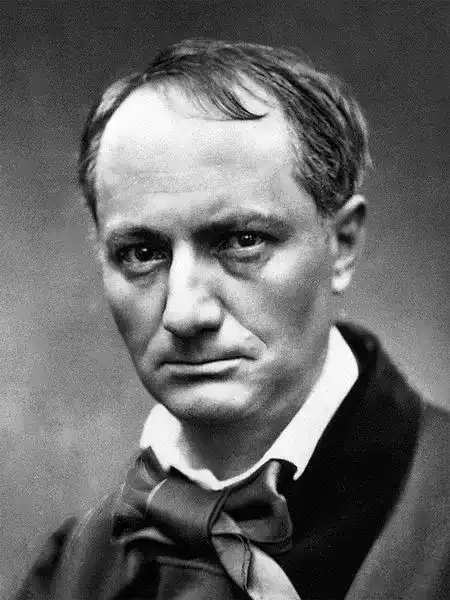
Charles Baudelaire
The Albatross
The Albatross
Often to pass the time on board, the crew
will catch an albatross, one of those big birds
which nonchalently chaperone a ship
across the bitter fathoms of the sea.
Tied to the deck, this sovereign of space,
as if embarrassed by its clumsiness,
pitiably lets its great white wings
drag at its sides like a pair of unshipped oars.
How weak and awkward, even comical
this traveller but lately so adoit -
one deckhand sticks a pipestem in its beak,
another mocks the cripple that once flew!
The Poet is like this monarch of the clouds
riding the storm above the marksman's range;
exiled on the ground, hooted and jeered,
he cannot walk because of his great wings.
Often to pass the time on board, the crew
will catch an albatross, one of those big birds
which nonchalently chaperone a ship
across the bitter fathoms of the sea.
Tied to the deck, this sovereign of space,
as if embarrassed by its clumsiness,
pitiably lets its great white wings
drag at its sides like a pair of unshipped oars.
How weak and awkward, even comical
this traveller but lately so adoit -
one deckhand sticks a pipestem in its beak,
another mocks the cripple that once flew!
The Poet is like this monarch of the clouds
riding the storm above the marksman's range;
exiled on the ground, hooted and jeered,
he cannot walk because of his great wings.
590
Charles Baudelaire
Get Drunk
Get Drunk
Always be drunk.
That's it!
The great imperative!
In order not to feel
Time's horrid fardel
bruise your shoulders,
grinding you into the earth,
Get drunk and stay that way.
On what?
On wine, poetry, virtue, whatever.
But get drunk.
And if you sometimes happen to wake up
on the porches of a palace,
in the green grass of a ditch,
in the dismal loneliness of your own room,
your drunkenness gone or disappearing,
ask the wind,
the wave,
the star,
the bird,
the clock,
ask everything that flees,
everything that groans
or rolls
or sings,
everything that speaks,
ask what time it is;
and the wind,
the wave,
the star,
the bird,
the clock
will answer you:
"Time to get drunk!
Don't be martyred slaves of Time,
Get drunk!
Stay drunk!
On wine, virtue, poetry, whatever!"
Always be drunk.
That's it!
The great imperative!
In order not to feel
Time's horrid fardel
bruise your shoulders,
grinding you into the earth,
Get drunk and stay that way.
On what?
On wine, poetry, virtue, whatever.
But get drunk.
And if you sometimes happen to wake up
on the porches of a palace,
in the green grass of a ditch,
in the dismal loneliness of your own room,
your drunkenness gone or disappearing,
ask the wind,
the wave,
the star,
the bird,
the clock,
ask everything that flees,
everything that groans
or rolls
or sings,
everything that speaks,
ask what time it is;
and the wind,
the wave,
the star,
the bird,
the clock
will answer you:
"Time to get drunk!
Don't be martyred slaves of Time,
Get drunk!
Stay drunk!
On wine, virtue, poetry, whatever!"
744
Charles Baudelaire
Be Drunk
Be Drunk
You have to be always drunk. That's all there is to it--it's the
only way. So as not to feel the horrible burden of time that breaks
your back and bends you to the earth, you have to be continually
drunk.
But on what?Wine, poetry or virtue, as you wish. But be
drunk.
And if sometimes, on the steps of a palace or the green grass of
a ditch, in the mournful solitude of your room, you wake again,
drunkenness already diminishing or gone, ask the wind, the wave,
the star, the bird, the clock, everything that is flying, everything
that is groaning, everything that is rolling, everything that is
singing, everything that is speaking. . .ask what time it is and
wind, wave, star, bird, clock will answer you:"It is time to be
drunk! So as not to be the martyred slaves of time, be drunk, be
continually drunk! On wine, on poetry or on virtue as you wish."
You have to be always drunk. That's all there is to it--it's the
only way. So as not to feel the horrible burden of time that breaks
your back and bends you to the earth, you have to be continually
drunk.
But on what?Wine, poetry or virtue, as you wish. But be
drunk.
And if sometimes, on the steps of a palace or the green grass of
a ditch, in the mournful solitude of your room, you wake again,
drunkenness already diminishing or gone, ask the wind, the wave,
the star, the bird, the clock, everything that is flying, everything
that is groaning, everything that is rolling, everything that is
singing, everything that is speaking. . .ask what time it is and
wind, wave, star, bird, clock will answer you:"It is time to be
drunk! So as not to be the martyred slaves of time, be drunk, be
continually drunk! On wine, on poetry or on virtue as you wish."
835
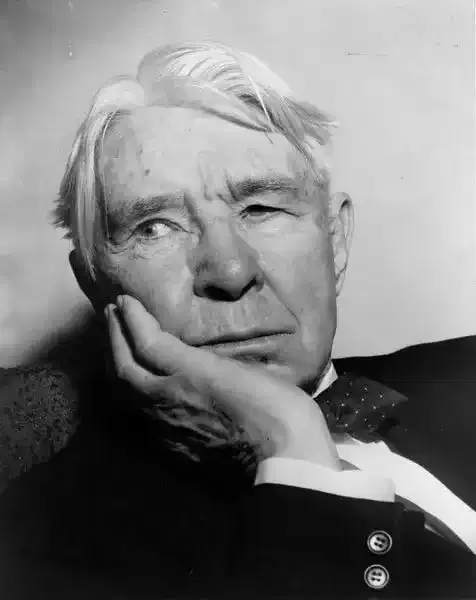
Carl Sandburg
Waiting
Waiting
Today I will let the old boat stand
Where the sweep of the harbor tide comes in
To the pulse of a far, deep-steady sway.
And I will rest and dream and sit on the deck
Watching the world go by
And take my pay for many hard days gone I remember.
I will choose what clouds I like
In the great white fleets that wander the blue
As I lie on my back or loaf at the rail.
And I will listen as the veering winds kiss me and fold me
And put on my brow the touch of the world's great will.
Daybreak will hear the heart of the boat beat,
Engine throb and piston play
In the quiver and leap at call of life.
To-morrow we move in the gaps and heights
On changing floors of unlevel seas
And no man shall stop us and no man follow
For ours is the quest of an unknown shore
And we are husky and lusty and shouting-gay.
Today I will let the old boat stand
Where the sweep of the harbor tide comes in
To the pulse of a far, deep-steady sway.
And I will rest and dream and sit on the deck
Watching the world go by
And take my pay for many hard days gone I remember.
I will choose what clouds I like
In the great white fleets that wander the blue
As I lie on my back or loaf at the rail.
And I will listen as the veering winds kiss me and fold me
And put on my brow the touch of the world's great will.
Daybreak will hear the heart of the boat beat,
Engine throb and piston play
In the quiver and leap at call of life.
To-morrow we move in the gaps and heights
On changing floors of unlevel seas
And no man shall stop us and no man follow
For ours is the quest of an unknown shore
And we are husky and lusty and shouting-gay.
344
Carl Sandburg
Threes
Threes
I was a boy when I heard three red words
a thousand Frenchmen died in the streets
for: Liberty, Equality, Fraternity--I asked
why men die for words.
I was older; men with mustaches, sideburns,
lilacs, told me the high golden words are:
Mother, Home, and Heaven--other older men with
face decorations said: God, Duty, Immortality
--they sang these threes slow from deep lungs.
Years ticked off their say-so on the great clocks
of doom and damnation, soup, and nuts: meteors flashed
their say-so: and out of great Russia came three
dusky syllables workmen took guns and went out to die
for: Bread, Peace, Land.
And I met a marine of the U.S.A., a leatherneck with a girl on his knee
for a memory in ports circling the earth and he said: Tell me how to say
three things and I always get by--gimme a plate of ham and eggs--how
much--and--do you love me, kid?
I was a boy when I heard three red words
a thousand Frenchmen died in the streets
for: Liberty, Equality, Fraternity--I asked
why men die for words.
I was older; men with mustaches, sideburns,
lilacs, told me the high golden words are:
Mother, Home, and Heaven--other older men with
face decorations said: God, Duty, Immortality
--they sang these threes slow from deep lungs.
Years ticked off their say-so on the great clocks
of doom and damnation, soup, and nuts: meteors flashed
their say-so: and out of great Russia came three
dusky syllables workmen took guns and went out to die
for: Bread, Peace, Land.
And I met a marine of the U.S.A., a leatherneck with a girl on his knee
for a memory in ports circling the earth and he said: Tell me how to say
three things and I always get by--gimme a plate of ham and eggs--how
much--and--do you love me, kid?
345
Carl Sandburg
The Noon Hour
The Noon Hour
She sits in the dust at the walls
And makes cigars,
Bending at the bench
With fingers wage-anxious,
Changing her sweat for the day’s pay.
Now the noon hour has come,
And she leans with her bare arms
On the window-sill over the river,
Leans and feels at her throat
Cool-moving things out of the free open ways:
At her throat and eyes and nostrils
The touch and the blowing cool
Of great free ways beyond the walls.
She sits in the dust at the walls
And makes cigars,
Bending at the bench
With fingers wage-anxious,
Changing her sweat for the day’s pay.
Now the noon hour has come,
And she leans with her bare arms
On the window-sill over the river,
Leans and feels at her throat
Cool-moving things out of the free open ways:
At her throat and eyes and nostrils
The touch and the blowing cool
Of great free ways beyond the walls.
360
Carl Sandburg
Gypsy
Gypsy
I asked a gypsy pal
To imitate an old image
And speak old wisdom.
She drew in her chin,
Made her neck and head
The top piece of a Nile obelisk
and said:
Snatch off the gag from thy mouth, child,
And be free to keep silence.
Tell no man anything for no man listens,
Yet hold thy lips ready to speak.
I asked a gypsy pal
To imitate an old image
And speak old wisdom.
She drew in her chin,
Made her neck and head
The top piece of a Nile obelisk
and said:
Snatch off the gag from thy mouth, child,
And be free to keep silence.
Tell no man anything for no man listens,
Yet hold thy lips ready to speak.
384
Carl Sandburg
Blacklisted
Blacklisted
Why shall I keep the old name?
What is a name anywhere anyway?
A name is a cheap thing all fathers and mothers leave each child:
A job is a job and I want to live, so
Why does God Almighty or anybody else care whether I take a new name to go by?
Why shall I keep the old name?
What is a name anywhere anyway?
A name is a cheap thing all fathers and mothers leave each child:
A job is a job and I want to live, so
Why does God Almighty or anybody else care whether I take a new name to go by?
350
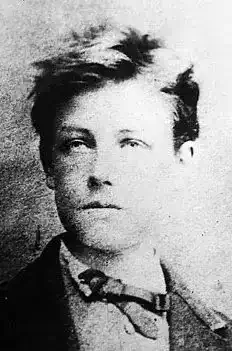
Arthur Rimbaud
Ophelia
Ophelia
I
On the calm black water where the stars are sleeping
White Ophelia floats like a great lily ;
Floats very slowly, lying in her long veils…
-In the far-off woods you can hear them sound the mort.
For more than a thousand years sad Ophelia
Has passed, a white phantom, down the long black river.
For more than a thousand years her sweet madness
Has murmured its ballad to the evening breeze.
The wind kisses her breasts and unfolds in a wreath
Her great veils rising and falling with the waters ;
The shivering willows weep on her shoulder,
The rushes lean over her wide, dreaming brow.
The ruffled water-lilies are sighing around her ;
At times she rouses, in a slumbering alder,
Some nest from which escapes a small rustle of wings ;
-A mysterious anthem falls from the golden stars.
II
O pale Ophelia ! beautiful as snow !
Yes child, you died, carried off by a river !
-It was the winds descending from the great mountains of Norway
That spoke to you in low voices of better freedom.
It was a breath of wind, that, twisting your great hair,
Brought strange rumors to your dreaming mind ;
It was your heart listening to the song of Nature
In the groans of the tree and the sighs of the nights ;
It was the voice of mad seas, the great roar,
That shattered your child's heart, too human and too soft ;
It was a handsome pale knight, a poor madman
Who one April morning sate mute at your knees !
Heaven ! Love ! Freedom ! What a dream, oh poor crazed Girl !
You melted to him as snow does to a fire ;
Your great visions strangled your words
-And fearful Infinity terrified your blue eye !
III
-And the poet says that by starlight
You come seeking, in the night, the flowers that you picked
And that he has seen on the water, lying in her long veils
White Ophelia floating, like a great lily.
Ophélie
I
Sur l'onde calme et noire où dorment les étoiles
La blanche Ophélia flotte comme un grand lys,
Flotte très lentement, couchée en ses longs voiles…
-On entend dans les bois lointains des hallalis.
Voici plus de mille ans que la triste Ophélie
Passe, fantôme blanc, sur le long fleuve noir;
Voici plus de mille ans que sa douce folie
Murmure sa romance à la brise du soir.
Le vent baise ses seins et déploie en corolle
Ses grands voiles bercés mollement par les eaux;
Les saules frissonnants pleurent sur son épaule,
Sur son grand front rêveur s'inclinent les roseaux.
Les nénuphars froissés soupirent autour d'elle;
Elle éveille parfois, dans un aune qui dort,
Quelque nid, d'où s'échappe un petit frisson d'aile:
-Un chant mystérieux tombe des astres d'or.
II
O pâle Ophélia! belle comme la neige!
Oui, tu mourus, enfant, par un fleuve emporté!
-C'est que les vents tombant des grands monts de Norwège
T'avaient parlé tout bas de l'âpre liberté;
C'est qu'un souffle, tordant ta grande chevelure,
A ton esprit rêveur portait d'étranges bruits;
Que ton coeur écoutait le chant de la Nature
Dans les plaintes de l'arbre et les soupirs des nuits;
C'est que la voix des mers folles, immense râle,
Brisait ton sein d'enfant, trop humain et trop doux;
C'est qu'un matin d'avril, un beau cavalier pâle,
Un pauvre fou, s'assit muet à tes genoux!
Ciel! Amour! Liberté! Quel rêve, ô pauvre Folle!
Tu te fondais à lui comme une neige au feu:
Tes grandes visions étranglaient ta parole
-Et l'Infini terrible effara ton oeil bleu!
III
-Et le Poète dit qu'aux rayons des étoiles
Tu viens chercher, la nuit, les fleurs que tu cueillis,
Et qu'il a vu sur l'eau, couchée en ses longs voiles,
La blanche Ophélia flotter, comme un grand lys.
I
On the calm black water where the stars are sleeping
White Ophelia floats like a great lily ;
Floats very slowly, lying in her long veils…
-In the far-off woods you can hear them sound the mort.
For more than a thousand years sad Ophelia
Has passed, a white phantom, down the long black river.
For more than a thousand years her sweet madness
Has murmured its ballad to the evening breeze.
The wind kisses her breasts and unfolds in a wreath
Her great veils rising and falling with the waters ;
The shivering willows weep on her shoulder,
The rushes lean over her wide, dreaming brow.
The ruffled water-lilies are sighing around her ;
At times she rouses, in a slumbering alder,
Some nest from which escapes a small rustle of wings ;
-A mysterious anthem falls from the golden stars.
II
O pale Ophelia ! beautiful as snow !
Yes child, you died, carried off by a river !
-It was the winds descending from the great mountains of Norway
That spoke to you in low voices of better freedom.
It was a breath of wind, that, twisting your great hair,
Brought strange rumors to your dreaming mind ;
It was your heart listening to the song of Nature
In the groans of the tree and the sighs of the nights ;
It was the voice of mad seas, the great roar,
That shattered your child's heart, too human and too soft ;
It was a handsome pale knight, a poor madman
Who one April morning sate mute at your knees !
Heaven ! Love ! Freedom ! What a dream, oh poor crazed Girl !
You melted to him as snow does to a fire ;
Your great visions strangled your words
-And fearful Infinity terrified your blue eye !
III
-And the poet says that by starlight
You come seeking, in the night, the flowers that you picked
And that he has seen on the water, lying in her long veils
White Ophelia floating, like a great lily.
Ophélie
I
Sur l'onde calme et noire où dorment les étoiles
La blanche Ophélia flotte comme un grand lys,
Flotte très lentement, couchée en ses longs voiles…
-On entend dans les bois lointains des hallalis.
Voici plus de mille ans que la triste Ophélie
Passe, fantôme blanc, sur le long fleuve noir;
Voici plus de mille ans que sa douce folie
Murmure sa romance à la brise du soir.
Le vent baise ses seins et déploie en corolle
Ses grands voiles bercés mollement par les eaux;
Les saules frissonnants pleurent sur son épaule,
Sur son grand front rêveur s'inclinent les roseaux.
Les nénuphars froissés soupirent autour d'elle;
Elle éveille parfois, dans un aune qui dort,
Quelque nid, d'où s'échappe un petit frisson d'aile:
-Un chant mystérieux tombe des astres d'or.
II
O pâle Ophélia! belle comme la neige!
Oui, tu mourus, enfant, par un fleuve emporté!
-C'est que les vents tombant des grands monts de Norwège
T'avaient parlé tout bas de l'âpre liberté;
C'est qu'un souffle, tordant ta grande chevelure,
A ton esprit rêveur portait d'étranges bruits;
Que ton coeur écoutait le chant de la Nature
Dans les plaintes de l'arbre et les soupirs des nuits;
C'est que la voix des mers folles, immense râle,
Brisait ton sein d'enfant, trop humain et trop doux;
C'est qu'un matin d'avril, un beau cavalier pâle,
Un pauvre fou, s'assit muet à tes genoux!
Ciel! Amour! Liberté! Quel rêve, ô pauvre Folle!
Tu te fondais à lui comme une neige au feu:
Tes grandes visions étranglaient ta parole
-Et l'Infini terrible effara ton oeil bleu!
III
-Et le Poète dit qu'aux rayons des étoiles
Tu viens chercher, la nuit, les fleurs que tu cueillis,
Et qu'il a vu sur l'eau, couchée en ses longs voiles,
La blanche Ophélia flotter, comme un grand lys.
717
Arthur Rimbaud
May Banners
May Banners
In the bright lime-tree branches
Dies a fainting mort. But lively song
Flutters among the currant bushes.
So that our bloods may laugh in our veins,
See the vines tangling themselves.
The sky is as pretty as an angel,
The azure and the wave commune.
I go out. If a sunbeam wounds me
I shall succumb on the moss.
Being patient and being bored
Are too simple. To the devil with my cares.
I want dramatic summer
To bind me to its chariot of fortune.
Let me most because of you, o Nature, -
Ah ! less alone and less useless ! - die.
There where the Shepherds, it's strange,
Die more or less because of the world.
I am willing that the seasons should wear me out.
To you, Nature, I surrender ;
With my hunger and all my thirst.
And, if it please you, feed and water me.
Nothing, nothing at all deceives me ;
To laugh at the sun is to laugh at one's parents,
But I do not wish to laugh at anything ;
And may this misfortune go free.
~~
May Banners
(alternative translation
)
In the bright branches of the lindens dies a sickly hunting call.
But the lively songs fly about in the currant bushes.
So that our blood will laugh in our veins, here are the vines all entangled.
The sky is pretty as an angel.
The azure and the wave commune.
I go out. If a ray of light wounds me, I will expire on the moss
To be patient and to be bored are to simple. Fie* on my cares.
I want a dramatic summer to bind me to it's chariot of fortune.
Let me, o nature, mostly through you
-Ah ! less alone and less worthless ! - die.
In the place where the shepherds, it is strange,
die approximately through out the world
I am willing that the seasons wear me out.
To you nature, I give myself over;
And my hunger and all my thirst.
And, if you will, feed and water me.
Nothing at all deceives me;
To laugh at the sun is to laugh at one's parents,
but I do not want to laugh at anything;
And may this misfortune be free.
In the bright lime-tree branches
Dies a fainting mort. But lively song
Flutters among the currant bushes.
So that our bloods may laugh in our veins,
See the vines tangling themselves.
The sky is as pretty as an angel,
The azure and the wave commune.
I go out. If a sunbeam wounds me
I shall succumb on the moss.
Being patient and being bored
Are too simple. To the devil with my cares.
I want dramatic summer
To bind me to its chariot of fortune.
Let me most because of you, o Nature, -
Ah ! less alone and less useless ! - die.
There where the Shepherds, it's strange,
Die more or less because of the world.
I am willing that the seasons should wear me out.
To you, Nature, I surrender ;
With my hunger and all my thirst.
And, if it please you, feed and water me.
Nothing, nothing at all deceives me ;
To laugh at the sun is to laugh at one's parents,
But I do not wish to laugh at anything ;
And may this misfortune go free.
~~
May Banners
(alternative translation
)
In the bright branches of the lindens dies a sickly hunting call.
But the lively songs fly about in the currant bushes.
So that our blood will laugh in our veins, here are the vines all entangled.
The sky is pretty as an angel.
The azure and the wave commune.
I go out. If a ray of light wounds me, I will expire on the moss
To be patient and to be bored are to simple. Fie* on my cares.
I want a dramatic summer to bind me to it's chariot of fortune.
Let me, o nature, mostly through you
-Ah ! less alone and less worthless ! - die.
In the place where the shepherds, it is strange,
die approximately through out the world
I am willing that the seasons wear me out.
To you nature, I give myself over;
And my hunger and all my thirst.
And, if you will, feed and water me.
Nothing at all deceives me;
To laugh at the sun is to laugh at one's parents,
but I do not want to laugh at anything;
And may this misfortune be free.
525
Arthur Rimbaud
LINES, an excerpt from
LINES, an excerpt from
When the world comes down to this one dark wood
Before our four astonished eyes...
To a beach for two faithful children...
To a house of music, for our clear accord...
I will find you.
Let there be no one here below but one old man,
Beautiful and calm, surrounded with 'unimagined luxury'...
I will be at your feet.
Let me penetrate all of your memories...
Let me be that woman who can bind you hand and foot...
I will strangle you.
When we are very strong - who can hold us back?
And very gay - how can ridicule harm us?
When we are very bad - what can they do to us?
Dress yourself up,
And dance,
And laugh.
I could never throw Love out the window.
(translated by Paul Schmidt)
When the world comes down to this one dark wood
Before our four astonished eyes...
To a beach for two faithful children...
To a house of music, for our clear accord...
I will find you.
Let there be no one here below but one old man,
Beautiful and calm, surrounded with 'unimagined luxury'...
I will be at your feet.
Let me penetrate all of your memories...
Let me be that woman who can bind you hand and foot...
I will strangle you.
When we are very strong - who can hold us back?
And very gay - how can ridicule harm us?
When we are very bad - what can they do to us?
Dress yourself up,
And dance,
And laugh.
I could never throw Love out the window.
(translated by Paul Schmidt)
559
Arthur Rimbaud
Clearance Sale
Clearance Sale
For what the Jews have not sold,
what neither nobility nor crime have tasted,
what is unknown to monstrous love
and to the infernal probity of the masses!
what neither time nor science need recognize: The Voices restored;
fraternal awakening of all choral and orchestral energies
and their instantaneous application; the opportunity, the only one,
for the release of our senses! For sale Bodies without price,
outside any race, any world, any sex, any lineage! Riches gushing at every step!
Uncontrolled sale of diamonds!
For sale anarchy for the masses;
irrepressible satisfaction for rare connoisseurs;
agonizing death for the faithful and for lovers!
For sale colonization and migrations, sports,
fairylands and incomparable comforts,
and the noise and the movement
and the future they make!
For sale the application of calculations
and the incredible leaps of harmony.
Discoveries and terms never dreamed of,
-- immediate possession.
Wild and infinite flight toward invisible splendors,
toward intangible delights-and
its maddening secrets for every vice
-- and its terrifying gaiety for the mob.
For sale, the bodies, the voices,
the enormous and unquestionable wealth,
that which will never be sold.
Salesmen are not at the end of their stock!
It will be some time before travelers have to turn in their accounts.
For what the Jews have not sold,
what neither nobility nor crime have tasted,
what is unknown to monstrous love
and to the infernal probity of the masses!
what neither time nor science need recognize: The Voices restored;
fraternal awakening of all choral and orchestral energies
and their instantaneous application; the opportunity, the only one,
for the release of our senses! For sale Bodies without price,
outside any race, any world, any sex, any lineage! Riches gushing at every step!
Uncontrolled sale of diamonds!
For sale anarchy for the masses;
irrepressible satisfaction for rare connoisseurs;
agonizing death for the faithful and for lovers!
For sale colonization and migrations, sports,
fairylands and incomparable comforts,
and the noise and the movement
and the future they make!
For sale the application of calculations
and the incredible leaps of harmony.
Discoveries and terms never dreamed of,
-- immediate possession.
Wild and infinite flight toward invisible splendors,
toward intangible delights-and
its maddening secrets for every vice
-- and its terrifying gaiety for the mob.
For sale, the bodies, the voices,
the enormous and unquestionable wealth,
that which will never be sold.
Salesmen are not at the end of their stock!
It will be some time before travelers have to turn in their accounts.
482

Anne Brontë
Song 2
Song 2
Come to the banquet triumph
in your songs!
Strike up the chords and
sing of Victory!
The oppressed have risen to redress their wrongs;
The Tyrants are o'erthrown; the Land is free!
The Land is free! Aye, shout it forth once more;
Is she not red with her oppressors' gore?
We are her champions shall
we not rejoice?
Are not the tyrants' broad domains our own?
Then wherefore triumph with a faltering voice;
And talk of freedom in a doubtful tone?
Have we not longed through life the reign to see
Of Justice, linked with Glorious Liberty?
Shout you that will, and you that can rejoice
To revel in the riches of your foes.
In praise of deadly vengeance lift you voice,
Gloat o'er your tyrants' blood, you victims' woes.
I'd rather listen to the skylarks' songs,
And think on Gondal's, and my Father's wrongs.
It may be pleasant, to recall the death
Of those beneath whose sheltering roof you lie;
But I would rather press the mountain heath,
With naught to shield me from the starry sky,
And dream of yet untasted victory A
distant hope and
feel that I am free!
O happy life! To range the mountains wild,
The waving woods or
Ocean's heaving breast,
With limbs unfettered, conscience undefiled,
And choosing where to wander, where to rest!
Hunted, oppressed, but ever strong to cope With
toils, and perils ever
full of hope!
'Our flower is budding' When
that word was heard
On desert shore, or breezy mountain's brow,
Wherever said what
glorious thoughts it stirred!
'Twas budding then Say
has it blossomed now?
Is this the end we struggled to obtain?
O for the wandering Outlaw's life again!
Come to the banquet triumph
in your songs!
Strike up the chords and
sing of Victory!
The oppressed have risen to redress their wrongs;
The Tyrants are o'erthrown; the Land is free!
The Land is free! Aye, shout it forth once more;
Is she not red with her oppressors' gore?
We are her champions shall
we not rejoice?
Are not the tyrants' broad domains our own?
Then wherefore triumph with a faltering voice;
And talk of freedom in a doubtful tone?
Have we not longed through life the reign to see
Of Justice, linked with Glorious Liberty?
Shout you that will, and you that can rejoice
To revel in the riches of your foes.
In praise of deadly vengeance lift you voice,
Gloat o'er your tyrants' blood, you victims' woes.
I'd rather listen to the skylarks' songs,
And think on Gondal's, and my Father's wrongs.
It may be pleasant, to recall the death
Of those beneath whose sheltering roof you lie;
But I would rather press the mountain heath,
With naught to shield me from the starry sky,
And dream of yet untasted victory A
distant hope and
feel that I am free!
O happy life! To range the mountains wild,
The waving woods or
Ocean's heaving breast,
With limbs unfettered, conscience undefiled,
And choosing where to wander, where to rest!
Hunted, oppressed, but ever strong to cope With
toils, and perils ever
full of hope!
'Our flower is budding' When
that word was heard
On desert shore, or breezy mountain's brow,
Wherever said what
glorious thoughts it stirred!
'Twas budding then Say
has it blossomed now?
Is this the end we struggled to obtain?
O for the wandering Outlaw's life again!
84
Anne Brontë
A Prisoner in a Dungeon Deep
A Prisoner in a Dungeon Deep
A prisoner in a dungeon deep
Sat musing silently;
His head was rested on his hand,
His elbow on his knee.
Turned he his thoughts to future times
Or are they backward cast?
For freedom is he pining now
Or mourning for the past?
No, he has lived so long enthralled
Alone in dungeon gloom
That he has lost regret and hope,
Has ceased to mourn his doom.
He pines not for the light of day
Nor sighs for freedom now;
Such weary thoughts have ceased at length
To rack his burning brow.
Lost in a maze of wandering thoughts
He sits unmoving there;
That posture and that look proclaim
The stupor of despair.
Yet not for ever did that mood
Of sullen calm prevail;
There was a something in his eye
That told another tale.
It did not speak of reason gone,
It was not madness quite;
It was a fitful flickering fire,
A strange uncertain light.
And sooth to say, these latter years
Strange fancies now and then
Had filled his cell with scenes of life
And forms of living men.
A mind that cannot cease to think
Why needs he cherish there?
Torpor may bring relief to pain
And madness to despair.
Such wildering scenes, such flitting shapes
As feverish dreams display:
What if those fancies still increase
And reason quite decay?
But hark, what sounds have struck his ear;
Voices of men they seem;
And two have entered now his cell;
Can this too be a dream?
'Orlando, hear our joyful news:
Revenge and liberty!
Your foes are dead, and we are come
At last to set you free.'
So spoke the elder of the two,
And in the captive's eyes
He looked for gleaming ecstasy
But only found surprise.
'My foes are dead! It must be then
That all mankind are gone.
For they were all my deadly foes
And friends I had not one.'
A prisoner in a dungeon deep
Sat musing silently;
His head was rested on his hand,
His elbow on his knee.
Turned he his thoughts to future times
Or are they backward cast?
For freedom is he pining now
Or mourning for the past?
No, he has lived so long enthralled
Alone in dungeon gloom
That he has lost regret and hope,
Has ceased to mourn his doom.
He pines not for the light of day
Nor sighs for freedom now;
Such weary thoughts have ceased at length
To rack his burning brow.
Lost in a maze of wandering thoughts
He sits unmoving there;
That posture and that look proclaim
The stupor of despair.
Yet not for ever did that mood
Of sullen calm prevail;
There was a something in his eye
That told another tale.
It did not speak of reason gone,
It was not madness quite;
It was a fitful flickering fire,
A strange uncertain light.
And sooth to say, these latter years
Strange fancies now and then
Had filled his cell with scenes of life
And forms of living men.
A mind that cannot cease to think
Why needs he cherish there?
Torpor may bring relief to pain
And madness to despair.
Such wildering scenes, such flitting shapes
As feverish dreams display:
What if those fancies still increase
And reason quite decay?
But hark, what sounds have struck his ear;
Voices of men they seem;
And two have entered now his cell;
Can this too be a dream?
'Orlando, hear our joyful news:
Revenge and liberty!
Your foes are dead, and we are come
At last to set you free.'
So spoke the elder of the two,
And in the captive's eyes
He looked for gleaming ecstasy
But only found surprise.
'My foes are dead! It must be then
That all mankind are gone.
For they were all my deadly foes
And friends I had not one.'
79