

Work and Profession
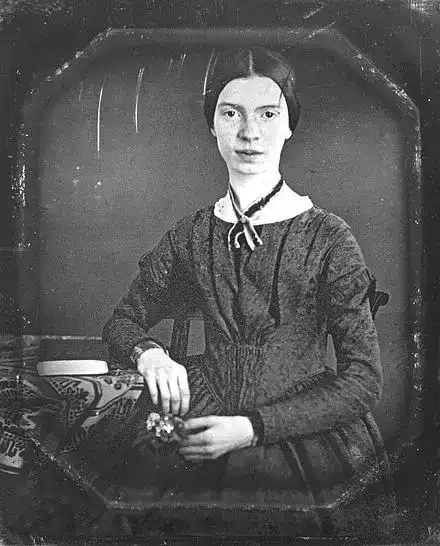
Emily Dickinson
Morning-means Milking-to the Farmer
300
"Morning"-means "Milking"-to the FarmerDawn-
to the TeneriffeDice-
to the Maid-
Morning means just Risk-to the Lover-
Just revelation-to the Beloved
Epicures-date a Breakfast-by itBrides-
an ApocalypseWorlds-
a FloodFaint-
going Lives-Their Lapse from SighingFaith-
The Experiment of Our Lord
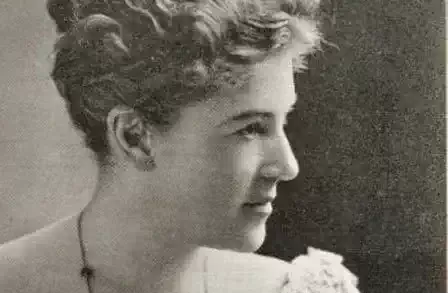
Ella Wheeler Wilcox
Where Are The Temperance People? In Reply To A Query
Where are the temperance people?
Well, scattered here and there:
Some gathering in their produce
To show at the autumn fair;
Some threshing wheat for market,
And others threshing rye,
That will go to the fat distiller
For whiskey by-and-by.
And some are selling their hop crops
At a first-rate price, this year,
And the seller pockets the money,
While the drunkard swallows the beer.
And some 'staunch temperance workers'(?)
Who'd do anything for the cause,
Save to give it a dime or a moment,
Or work for temperance laws,
May be seen from now to election,
Near any tavern stand
Where liquor flows in plenty,
With a voter on either hand.
And these temperance office-seekers
That we hear of far and near
Are the ones who furnish the money
That buys the lager-beer.
But these are only the black sheep
Who want the temperance name
Without living up to the precepts,
And so bring themselves to shame.
And the true, brave temperance people,
Who have the cause at heart,
Are doing the work that's nearest,
Each his allotted part:
Some lifting the fallen drunkard,
Some preaching unto men,
Some aiding the cause with money,
And others with the pen.
Each has a different mission,
Each works in a different way,
But their works shall melt together
In one grand result, some day.
And one, our chief (God bless him),
Is working day and night:
With his sword of burning eloquence,
He is fighting the noble fight.
Whether in lodge or convention,
Whether at home or abroad,
He is reaping a golden harvest
To lay at the feet of God.
Where are the temperance people?
All scattered here and there,
Sowing the seeds of righteous deeds,
That the harvest may be fair.
Ella Wheeler Wilcox
What Had He Done?
I saw the farmer, when the day was done,
And the proud sun had sought his crimson bed,
And the mild stars came forward one by one-
I saw the sturdy farmer, and I said:
'What have you done to-day,
O farmer! say?'
'Oh! I have sown the wheat in yonder field,
And pruned my orchard to increase its yield,
And turned the furrow for a patch of corn:
This have I done, with other things, since morn.'
I saw the blacksmith in his smithy-door,
When day had vanished and the west grew red,
And all the busy noise and strife were o'er-
I saw the kingly blacksmith, and I said:
'What have you done to-day,
O blacksmith! say?
'Oh! I have made two plough-shares all complete,
And nailed the shoes on many horses' feet;
And-O my friend! I cannot tell you half,'
The man of muscle answered, with a laugh.
I saw the miller, when the day had gone,
And all the sunlight from the hills had fled,
And tender shadows crept across the lawn-
I saw the trusty miller, and I said:
'What have you done to-day,
O miller gray?'
'Oh! I have watched my mill from morn to night,
And never saw yon flour so snowy white.
And many are the mouths to-day I've fed,
I ween,' the merry miller laughed and said.
I saw another, when the night grew nigh,
And turned each daily toiler from his task,
When gold and crimson banners decked the sky-
I saw another, and I paused to ask:
'What have you done to-day,
Rumseller, say?'
But the rumseller turned with dropping head,
And not a single word in answer said.
What had he done? His work he knew full well
Was plunging human souls in deepest hell.
Alas! rumseller, on that awful day,
When death shall call you, and your race is run,
How can you answer? What can you hope to say?
When God shall ask you, 'What have you done?'
How can you meet the eye
Of the Most High?
When night approaches and the day grows late,
Think you to find the way to heaven's gate?
Think you to dwell with souls of righteous men?
Think you to enter in? If not, what then?
Ella Wheeler Wilcox
The Stevedores
We are the army stevedores, lusty and virile and strong,
We are given the hardest work of the war, and the hours are long.
We handle the heavy boxes, and shovel the dirty coal;
While soldiers and sailors work in the light, we burrow below like a mole.
But somebody has to do this work, or the soldiers could not fight!
And whatever work is given a man, is good if he does it right.
We are the army stevedores, and we are volunteers.
We did not wait for the draft to come, to put aside our fears;
We flung them away on the winds of fate, at the very first call of our land,
And each of us offered a willing heart and the strength of a brawny hand.
We are the army stevedores, and work as we must and may,
The cross of honour will never be ours to proudly wear away.
But the men at the Front could never be there,
And the battles could not be won,
If the stevedores stopped in their dull routine
And left their work undone.
Somebody has to do this work, be glad that it isn't you!
We are the army stevedores-give us our due!
Ella Wheeler Wilcox
Robin's Mistake
What do you think Red Robin
Found by a mow of hay?
Why, a flask brimful of liquor,
That the mowers brought that day
To slake their thirst in the hayfield.
And Robin he shook his head:
'Now, I wonder what they call it,
And how it tastes?' he said.
'I have seen the mowers drink it-
Why isn't it good for me?
So I'll just draw out the stopper
And get at the stuff, and see!'
But alas! for the curious Robin,
One draught, and he burned his throat
From his bill to his poor crop's lining,
And he could not utter a note.
And his head grew light and dizzy,
And he staggered left and right,
Tipped over the flask of brandy,
And spilled it, every mite.
But after awhile he sobered,
And quietly flew away,
And he never has tasted liquor,
Or touched it, since that day.
But I heard him say to his kindred.
In the course of a friendly chat,
'These men think they are above us,
Yet they drink such stuff as that!
Oh, the poor degraded creatures!
I am glad I am only a bird!'
Then he flew up over the meadow,
And that was all I heard.
Ella Wheeler Wilcox
Idler's Song
I sit in the twilight dim
At the close of an idle day,
And I list to the soft sweet hymn,
That rises far away,
And dies on the evening air.
Oh, all day long,
They sing their song,
Who toil in the valley there.
But never a song sing I,
Sitting with folded hands,
The hours pass me by Dropping
their golden sands -
And I list, from day to day,
To the 'tick, tick, tock'
Of the old brown clock,
Ticking my life away.
And I see the twilight fade,
And I see the night come on,
And then, in the gloom and shade,
I weep for the day that's gone -
Weep and wail in pain,
For the misspent day
That has flown away,
And will not come again.
Another morning beams,
And I forget the last,
And I sit in idle dreams
Till the day over - past.
Oh, the toiler's heart is glad!
When the day is gone
And the night comes on,
But mine is sore and sad.
For I dare not look behind!
No shining, golden sheaves
Can I ever hope to find:
Nothing but withered leaves.
Ah! dreams are very sweet!
But will not please
If only these
I lay at the Master's feet.
And what will the Master say
To dreams and nothing more?
Oh, idler, all the day!
Think, ere thy life is o'er!
And when the day grows late,
Oh, soul of sin!
Will He let you in,
There at the pearly gate?
Oh, idle heart, beware!
On, to the field of strife!
On, to the valley there!
And live a useful life!
Up, do not wait a day!
For the old brown clock,
With its 'tick, tick, tock, '
Is ticking your life away.
Ella Wheeler Wilcox
Fame
If I should die, to-day,
To-morrow, maybe, the world would see
Would waken from sleep, and say,
"Why here was talent! why here was worth!
Why here was a luminous light o' the earth.
A soul as free
As the winds of the sea:
To whom was given
A dower of heaven.
And fame, and name, and glory belongs
To this dead singer of living songs.
Bring hither a wreath, for the bride of death!"
And so they would praise me, and so they would raise me
Mayhap, a column, high over the bed
Where I should be lying, all cold and dead.
But I am a living poet!
Walking abroad in the sunlight of God,
Not lying asleep, where the clay worms creep,
And the cold world will not show it,
E'en when it sees that my song should please;
But sneering says: "Avaunt, with thy lays
Do not sing them, and do not bring them
Into this rustling, bustling life.
We have no time, for a jingling rhyme,
In this scene of hurrying, worrying strife."
And so I say, there is but one way
To win me a name, and bring me fame.
And that is, to die, and be buried low,
When the world would praise me, an hour or so.
Ella Wheeler Wilcox
Don't Tease The Lion
If you saw a lion
Not within a cage,
Would you tease and fret him
Till he roared in rage?
Would you tempt his anger
And his savage power,
Knowing he could crush you,
Kill you, and devour?
Yet I know some people
Who, morn and noon and night,
Tease and fret with bitters
The lion-appetite.
It matters not what ails them,
For each disease and all
They seem to think there's healing
In demon alcohol.
So they fret the lion,
And anger him, until,
In his awful power,
He springs up to kill.
Let me warn you, children,
From this foolish way.
Do not tease the lion,
Nor tempt him any day.
Don't believe the doctors
If they say you need
Any wines or ciders;
For there are, indeed,
Better cures, and safer,
Than these drinks, that slay
More than a hundred people
Without fail each day.
Ella Wheeler Wilcox
Death Of Labour
Methought a great wind swept across the earth,
And all the toilers perished. Then I saw
Pale terror blanch the rosy face of mirth,
And careless eyes grow full of fear and awe.
The sounds of pleasure ceased; the laughing song
On folly's lip changed to an angry cures:
A nameless horror seized the idle throng,
And death and ruin filled the universe.
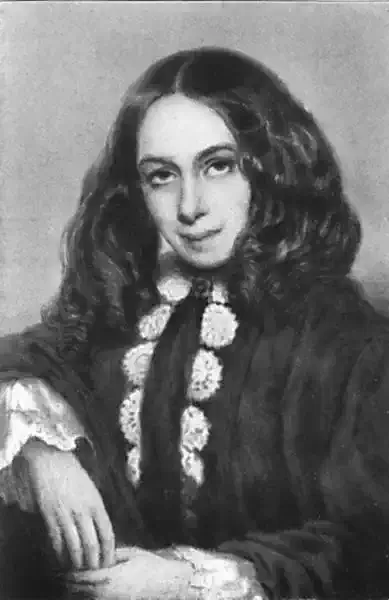
Elizabeth Barrett Browning
Work And Contemplation
The woman singeth at her spinning-wheel
A pleasant chant, ballad or barcarole;
She thinketh of her song, upon the whole,
Far more than of her flax; and yet the reel
Is full, and artfully her fingers feel
With quick adjustment, provident control,
The lines--too subtly twisted to unroll--
Out to a perfect thread. I hence appeal
To the dear Christian Church--that we may do
Our Father's business in these temples mirk,
Thus swift and steadfast, thus intent and strong;
While thus, apart from toil, our souls pursue
Some high calm spheric tune, and prove our work
The better for the sweetness of our song.
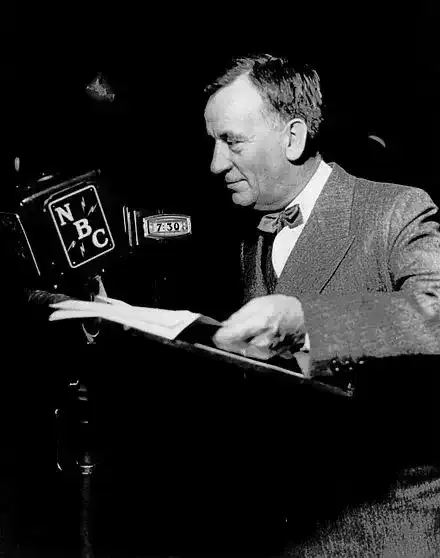
Edgar Albert Guest
The Bachelor's Soliloquy
To wed, or not to wed; that is the question;
Whether 'tis nobler in the mind to suffer
The bills and house rent of a wedded fortune,
Or to say "nit" when she proposes,
And by declining cut her. To wed; to smoke
No more; And have a wife at home to mend
The holes in socks and shirts
And underwear and so forth. 'Tis a consummation
Devoutly to be wished. To wed for life;
To wed; perchance to fight; ay, there's the rub;
For in that married life what fights may come,
When we have honeymooning ceased
Must give us pause; there's the respect
That makes the joy of single life.
For who would bear her mother's scornful tongue,
Canned goods for tea, the dying furnace fire;
The pangs of sleepless nights when baby cries;
The pain of barking shins upon a chair and
Closing waists that button down the back,
When he himself might all these troubles shirk
With a bare refusal? Who would bundles bear,
And grunt and sweat under a shopping load?
Who would samples match; buy rats for hair,
Cart cheese and crackers home to serve at night
For lunch to feed your friends; play pedro
After tea; sing rag time songs, amusing
Friendly neighbors. Buy garden tools
To lend unto the same. Stay home at nights
In smoking coat and slippers and slink to bed
At ten o'clock to save the light bills?
Thus duty does make cowards of us all,
And thus the native hue of matrimony
Is sicklied o'er with the pale cast of chores;
And thus the gloss of marriage fades away,
And loses its attraction.
Edgar Albert Guest
Life's Slacker
The saddest sort of death to die
Would be to quit the game called life
And know, beneath the gentle sky,
You'd lived a slacker in the strife.
That nothing men on earth would find
To mark the spot that you had filled;
That you must go and leave behind
No patch of soil your hands had tilled.
I know no greater shame than this:
To feel that yours were empty years;
That after death no man would miss
Your presence in this vale of tears;
That you had breathed the fragrant air
And sat by kindly fires that burn,
And in earth's riches had a share
But gave no labor in return.
Yet some men die this way, nor care:
They enter and they leave life's door
And at the end, their record's bare—
The world's no better than before.
A few false tears are shed, and then,
In busy service, they're forgot.
We have no time to mourn for men
Who lived on earth but served it not.
A man in perfect peace to die
Must leave some mark of toil behind,
Some building towering to the sky,
Some symbol that his heart was kind,
Some roadway where strange feet may tread
That out of gratitude he made;
He cannot bravely look ahead
Unless his debt to life is paid.
Edgar Albert Guest
Father
My father knows the proper way
The nation should be run;
He tells us children every day
Just what should now be done.
He knows the way to fix the trusts,
He has a simple plan;
But if the furnace needs repairs,
We have to hire a man.
My father, in a day or two
Could land big thieves in jail;
There's nothing that he cannot do,
He knows no word like "fail."
"Our confidence" he would restore,
Of that there is no doubt;
But if there is a chair to mend,
We have to send it out.
All public questions that arise,
He settles on the spot;
He waits not till the tumult dies,
But grabs it while it's hot.
In matters of finance he can
Tell Congress what to do;
But, O, he finds it hard to meet
His bills as they fall due.
It almost makes him sick to read
The things law-makers say;
Why, father's just the man they need,
He never goes astray.
All wars he'd very quickly end,
As fast as I can write it;
But when a neighbor starts a fuss,
'Tis mother has to fight it.
In conversation father can
Do many wondrous things;
He's built upon a wiser plan
Than presidents or kings.
He knows the ins and outs of each
And every deep transaction;
We look to him for theories,
But look to ma for action.
Edgar Albert Guest
Compensation
I'd like to think when life is done
That I had filled a needed post.
That here and there I'd paid my fare
With more than idle talk and boast;
That I had taken gifts divine.
The breath of life and manhood fine,
And tried to use them now and then
In service for my fellow men.
I'd hate to think when life is through
That I had lived my round of years
A useless kind, that leaves behind
No record in this vale of tears;
That I had wasted all my days
By treading only selfish ways,
And that this world would be the same
If it had never known my name.
I'd like to think that here and there,
When I am gone, there shall remain
A happier spot that might have not
Existed had I toiled for gain;
That someone's cheery voice and smile
Shall prove that I had been worth while;
That I had paid with something fine
My debt to God for life divine.
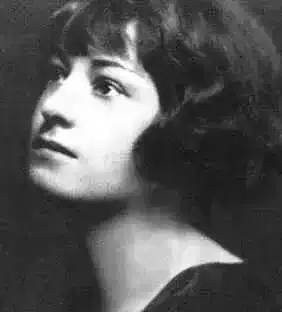
Dorothy Parker
Coda
There's little in taking or giving,
There's little in water or wine;
This living, this living, this living
Was never a project of mine.
Oh, hard is the struggle, and sparse is
The gain of the one at the top,
For art is a form of catharsis,
And love is a permanent flop,
And work is the province of cattle,
And rest's for a clam in a shell,
So I'm thinking of throwing the battleWould
you kindly direct me to hell?

Claude Mckay
Joy in the Woods
There is joy in the woods just now,
The leaves are whispers of song,
And the birds make mirth on the bough
And music the whole day long,
And God! to dwell in the town
In these springlike summer days,
On my brow an unfading frown
And hate in my heart always—
A machine out of gear, aye, tired,
Yet forced to go on—for I’m hired.
Just forced to go on through fear,
For every day I must eat
And find ugly clothes to wear,
And bad shoes to hurt my feet
And a shelter for work-drugged sleep!
A mere drudge! but what can one do?
A man that’s a man cannot weep!
Suicide? A quitter? Oh, no!
But a slave should never grow tired,
Whom the masters have kindly hired.
But oh! for the woods, the flowers
Of natural, sweet perfume,
The heartening, summer showers
And the smiling shrubs in bloom,
Dust-free, dew-tinted at morn,
The fresh and life-giving air,
The billowing waves of corn
And the birds’ notes rich and clear:—
For a man-machine toil-tired
May crave beauty too—though he’s hired
Claude Mckay
Dawn in New York
The Dawn! The Dawn! The crimson-tinted, comes
Out of the low still skies, over the hills,
Manhattan's roofs and spires and cheerless domes!
The Dawn! My spirit to its spirit thrills.
Almost the mighty city is asleep,
No pushing crowd, no tramping, tramping feet.
But here and there a few cars groaning creep
Along, above, and underneath the street,
Bearing their strangely-ghostly burdens by,
The women and the men of garish nights,
Their eyes wine-weakened and their clothes awry,
Grotesques beneath the strong electric lights.
The shadows wane. The Dawn comes to New York.
And I go darkly-rebel to my work.
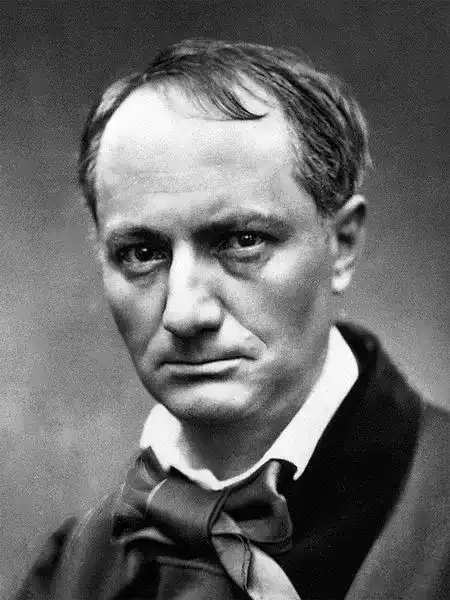
Charles Baudelaire
The Venal Muse
O muse of my heart, lover of palaces,
Will you bring, when January lets loose its sleet
And its black evenings without solace,
An ember to warm my violet feet?
What will revive your bruised shoulders,
The nocturnal rays that pierce the shutters?
When you cannot feel your palace, just your empty billfold,
How will you harvest the gold of azure vaults and gutters?
You should, to earn your bread today
Like a choir boy with a censer to wave,
Sings hymns with feeling but without belief.
Or, a starving rip-off artist, selling your charm
And your laughter shades the tears so no one sees the harm
In bringing to bloom an ordinary rat, a vulgar thief.
Translated by William A. Sigler
Submitted by Ryan McGuire
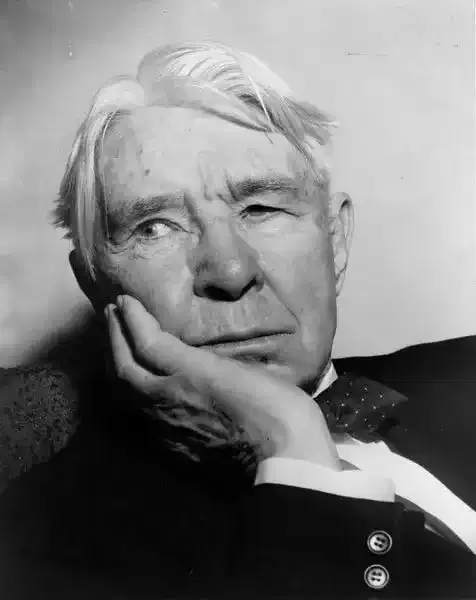
Carl Sandburg
Work Gangs
Box cars run by a mile long.
And I wonder what they say to each other
When they stop a mile long on a sidetrack.
Maybe their chatter goes:
I came from Fargo with a load of wheat up to the danger line.
I came from Omaha with a load of shorthorns and they splintered my boards.
I came from Detroit heavy with a load of fivers.
I carried apples from the Hood river last year and this year bunches of bananas from
Florida; they look for me with watermelons from Mississippi next year.
Hammers and shovels of work gangs sleep in shop corners
when the dark stars come on the sky and the night watchmen walk and look.
Then the hammer heads talk to the handles,
then the scoops of the shovels talk,
how the day’s work nicked and trimmed them,
how they swung and lifted all day,
how the hands of the work gangs smelled of hope.
In the night of the dark stars
when the curve of the sky is a work gang handle,
in the night on the mile long sidetracks,
in the night where the hammers and shovels sleep in corners,
the night watchmen stuff their pipes with dreams—
and sometimes they doze and don’t care for nothin’,
and sometimes they search their heads for meanings, stories, stars.
The stuff of it runs like this:
A long way we come; a long way to go; long rests and long deep sniffs for our lungs on
the way.
Sleep is a belonging of all; even if all songs are old songs and the singing heart is
snuffed out like a switchman’s lantern with the oil gone, even if we forget our names
and houses in the finish, the secret of sleep is left us, sleep belongs to all, sleep is the
first and last and best of all.
People singing; people with song mouths connecting with song hearts; people who
must sing or die; people whose song hearts break if there is no song mouth; these are
my people.
Carl Sandburg
To Certain Journeymen
Undertakers, hearse drivers, grave diggers,
I speak to you as one not afraid of your business.
You handle dust going to a long country,
You know the secret behind your job is the same whether
you lower the coffin with modern, automatic machinery,
well-oiled and noiseless, or whether the
body is laid in by naked hands and then covered
by the shovels.
Your day's work is done with laughter many days of the year,
And you earn a living by those who say good-by today
in thin whispers.
Carl Sandburg
The Shovel Man
On the street
Slung on his shoulder is a handle half way across,
Tied in a big knot on the scoop of cast iron
Are the overalls faded from sun and rain in the ditches;
Spatter of dry clay sticking yellow on his left sleeve
And a flimsy shirt open at the throat,
I know him for a shovel man,
A dago working for a dollar six bits a day
And a dark-eyed woman in the old country dreams of
him for one of the world's ready men with a pair
of fresh lips and a kiss better than all the wild
grapes that ever grew in Tuscany.
Carl Sandburg
The Noon Hour
She sits in the dust at the walls
And makes cigars,
Bending at the bench
With fingers wage-anxious,
Changing her sweat for the day’s pay.
Now the noon hour has come,
And she leans with her bare arms
On the window-sill over the river,
Leans and feels at her throat
Cool-moving things out of the free open ways:
At her throat and eyes and nostrils
The touch and the blowing cool
Of great free ways beyond the walls.
Carl Sandburg
The Mayor of Gary
I asked the mayor of Gary about the 12-hour day and the 7-day week.
And the mayor of Gary answered more workmen steal time on the job in Gary than any
other place in the United States.
"Go into the plants and you will see men sitting around doing nothing--machinery does
everything," said the mayor of Gary when I asked him about the 12-hour day and the
7-day week.
And he wore cool cream pants, the Mayor of Gary, and white shoes, and a barber had
fixed him up with a shampoo and a shave and he was east and imperturbable though
the government weather bureau thermometer said 96 and children were soaking their
heads at bubbling fountains on the street corners.
And I said good-bye to the Mayor of Gary and I went out from the city hall and turned
the corner into Broadway.
And I saw workmen wearing leather shoes scruffed with fire and cinders, and pitted
with little holes from running molten steel,
And some had bunches of specialized muscles around their shoulder blades hard as pig
iron, muscles of their forearms were sheet steel and they looked to me like men who
had been somewhere.
Carl Sandburg
The Hangman at Home
What does a hangman think about
When he goes home at night from work?
When he sits down with his wife and
Children for a cup of coffee and a
Plate of ham and eggs, do they ask
Him if it was a good day's work
And everything went well or do they
Stay off some topics and kill about
The weather, baseball, politics
And the comic strips in the papers
And the movies? Do they look at his
Hands when he reaches for the coffee
Or the ham and eggs? If the little
Ones say, Daddy, play horse, here's
A rope--does he answer like a joke:
I seen enough rope for today?
Or does his face light up like a
Bonfire of joy and does he say:
It's a good and dandy world we live
'In. And if a white face moon looks
In through a window where a baby girl
Sleeps and the moon-gleams mix with
Baby ears and baby hair--the hangman--
How does he act then? It must be easy
For him. Anything is easy for a hangman,
I guess.