
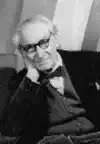
Pierre Albert-Birot
1876–1967
· lived 91 years
 FR
FR
FR
Pierre Albert-Birot was a French poet, writer, and editor, a prominent figure of the Cubist movement and the artistic avant-gardes of the early 20th century. His work, marked by radical experimentation and the search for a new language, spanned poetry, theater, and criticism, reflecting the innovative and challenging spirit of his time.
n. 1876-04-22, Angoulême · m. 1967-07-25, Paris
20
Views
Bio
Identification and Basic Context
**Full Name:** Pierre Albert-Birot **Pseudonyms or Heteronyms:** No records of significant pseudonyms. **Date and Place of Birth:** Born in 1876 in Paris, France. **Date and Place of Death:** Died in 1967 in Paris, France. **Family Background, Social Class, and Cultural Origin:** Specific details about his family background and social class are not widely disclosed, but his involvement with the artistic avant-garde suggests a culturally stimulating environment. **Nationality and Language(s) of Writing:** French. **Historical Context in Which He Lived:** He lived during a period of intense social, political, and artistic transformations, including the two World Wars, the Belle Époque, the interwar period, and the post-war era.Childhood and Education
Detailed information about Pierre Albert-Birot's childhood and education is limited in available sources. However, his later involvement in arts and literature suggests an education that allowed him to develop a critical and experimental spirit.Literary Career
Pierre Albert-Birot began his literary career in the effervescent context of the Parisian avant-gardes. He was one of the founders of the magazine "SIC" (1916-1919), an important vehicle for disseminating new artistic trends, where he published poets such as Apollinaire, Cendrars, Cocteau, among others. His own poetic work, such as "La Joie," "Le Poème de la Terre," and "Grabinoulor," is a landmark of Cubist and experimental poetry. In addition to being a poet, he was also a playwright and literary critic.Work, Style, and Literary Characteristics
Pierre Albert-Birot's work is defined by its experimental audacity and his relentless pursuit of a new form of poetic expression. He is considered one of the pioneers of Cubist poetry, exploring fragmentation, multiplicity of perspectives, and the deconstruction of traditional language. Themes such as joy, nature, man, and literary creation itself are explored in his works. His style is characterized by formal freedom, the use of invented words (neologisms), the graphic arrangement of text on the page, and a vitalizing energy. The poetic voice is often expansive, celebratory, and provocative. He published works such as "La Joie" (1919), "Le Poème de la Terre" (1920), and the novel "Grabinoulor" (1914).Cultural and Historical Context
Pierre Albert-Birot lived and produced in the heart of avant-garde Paris. He was a contemporary and friend of figures such as Guillaume Apollinaire, Blaise Cendrars, and Jean Cocteau. His magazine "SIC" was a meeting point and dissemination hub for Cubism, Futurism, and other avant-garde movements. His work reflects the optimism and spirit of renewal that characterized the early 20th century, but also the tensions and reflections arising from the world wars.Personal Life
Information about Pierre Albert-Birot's personal life, such as family or romantic relationships, is less prominent in the analysis of his work than his involvement with artistic and literary circles. His dedication to "SIC" and the promotion of avant-garde movements shaped much of his life.Recognition and Reception
Although he was a central figure in the avant-garde movements, Pierre Albert-Birot's recognition as a poet and visionary evolved over time. In his time, he was celebrated by some and misunderstood by others. Today, he is recognized as one of the precursors of experimental and Cubist poetry, with his work being studied and valued for its originality and historical importance.Influences and Legacy
Pierre Albert-Birot was influenced by the artistic movements of his time, such as Cubism, and in turn influenced later generations of experimental poets. His magazine "SIC" and his own poetic work left an important legacy in the exploration of the potentialities of language and poetic form.Interpretation and Critical Analysis
Albert-Birot's work is a fertile ground for critical analysis, particularly regarding the deconstruction of language, the relationship between form and content, and the representation of the modern world through a Cubist lens. His "joy" expressed in poetry is often interpreted as a counterpoint to the turbulence of his time.Curiosities and Lesser-Known Aspects
A curiosity about Pierre Albert-Birot is his novel "Grabinoulor" (1914), considered one of the first Cubist novels, which stands out for its fragmented structure and narrative experimentation.Death and Memory
Pierre Albert-Birot died in Paris, leaving a significant legacy for avant-garde literature. His memory is preserved through the continuous publication and study of his work, and by the fundamental role he played in disseminating Cubist and experimental ideas in poetry.Poems
0No poems found
Comments (0)
Log in
to post a comment.
No comments yet. Be the first to comment.