
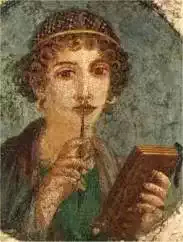
Rabia de Basra

Rabia of Basra, also known as Rabi'a al-Adawiyya, was an 8th-century Sufi ascetic and Muslim mystic, revered for her unwavering devotion to God and her approach to divine love. She is considered one of the most important figures in Islamic mysticism, pioneering the doctrine of pure, selfless, and liberating divine love. Her life and teachings continue to inspire, highlighting the importance of total surrender to God, renunciation of the ego, and the pursuit of spiritual union as the path to true fulfillment. Rabia represents an ideal of female sainthood and a profound expression of the mystical experience.
n. 717ac, Baçorá · m. 0801-01-01, Baçorá
Bio
Identification and basic context
Rabia of Basra, whose full name is Rabi'a al-Adawiyya al-Qaysiyya, was an influential Sufi ascetic and mystic who lived in the 8th century (approximately 717-801 AD). She was born in Basra, in present-day Iraq. She is one of the most important and revered female figures in Islamic mysticism. She is known for developing and popularizing the doctrine of pure and selfless divine love.Childhood and education
Narratives about Rabia of Basra's childhood describe a humble origin. According to tradition, she was the third of four daughters of an impoverished family in Basra. After the death of her parents and a period of hardship, she was sold into slavery. However, due to her piety and virtuous character, she was freed by her master. Her education was largely self-taught, shaped by deep religious devotion and spiritual meditation, rather than formal traditional schooling.Literary career
Rabia of Basra is not known to have left written literary works in the conventional sense. Her influence was transmitted through stories, anecdotes, and sayings that were collected and passed down orally by her followers and later biographers, such as Farid al-Din Attar in his "Tadhkirat al-Awliya" (Memorial of the Saints). Her "work," therefore, is her exemplary life and her teachings on divine love.Work, style, and literary characteristics
Rabia of Basra's "work," although unwritten, is characterized by the depth of her divine love. Her teachings focus on the idea of loving God for His own sake, without the hope of reward in paradise or the fear of hell. Her style, as conveyed through anecdotes, is direct, poignant, and profoundly spiritual. The dominant themes are absolute love for God, renunciation of the material world, humility, patience, and total surrender to the divine will.Work, style, and literary characteristics
Cultural and historical context Rabia of Basra lived during a period of Sufism's consolidation as a mystical current within Islam. The historical context was that of the Abbasid Caliphate, a time of cultural and intellectual expansion, but also of theological and spiritual debates. She emerged as a powerful female voice in a predominantly male environment, challenging conventions and redefining the relationship between the believer and the Divine through the lens of pure love.Work, style, and literary characteristics
Personal life Rabia of Basra led an ascetic life dedicated entirely to the worship of God. She refused several marriage proposals, stating that her heart belonged solely to God. Her life was marked by voluntary poverty, constant prayer, and deep meditation. Anecdotes about her portray a figure of immense wisdom, integrity, and spiritual strength.Work, style, and literary characteristics
Recognition and reception Rabia of Basra is widely recognized as a saint and one of the "mothers" of Sufism. Her devotion and her philosophy of pure divine love were fundamental to the subsequent development of Islamic mystical thought. She is revered by both men and women, and her influence transcends the time and geographical boundaries of the Islamic world.Work, style, and literary characteristics
Influences and legacy Rabia of Basra profoundly influenced generations of Sufi mystics, including figures like Al-Ghazali. She is credited with transforming ascetic practice into a path of divine love, moving away from an emphasis on retribution (paradise/hell) towards selfless love. Her legacy lies in her demonstration that mystical experience and sainthood are not exclusive to men and in her elevation of love as the supreme path to God.Work, style, and literary characteristics
Interpretation and critical analysis Rabia of Basra's work and life are often interpreted as a radical example of devotion and a spirituality that prioritizes a personal and loving relationship with the Divine. Her insistence on selfless love is seen as an antidote to religiosity based on fear or the pursuit of earthly benefits, proposing a total and liberating surrender.Work, style, and literary characteristics
Curiosities and lesser-known aspects A famous anecdote tells of Rabia being seen walking with a torch in one hand and a bucket of water in the other, explaining that she wanted to burn Paradise and extinguish Hell so that people would love God for His own sake.Work, style, and literary characteristics
Death and memory Rabia of Basra passed away in Basra, where her tomb is said to have become a pilgrimage site. Her memory is celebrated annually, and her figure remains a beacon of inspiration for all who seek a deep spiritual connection and unconditional love for God.Poems
0No poems found
Comments (0)
No comments yet. Be the first to comment.