
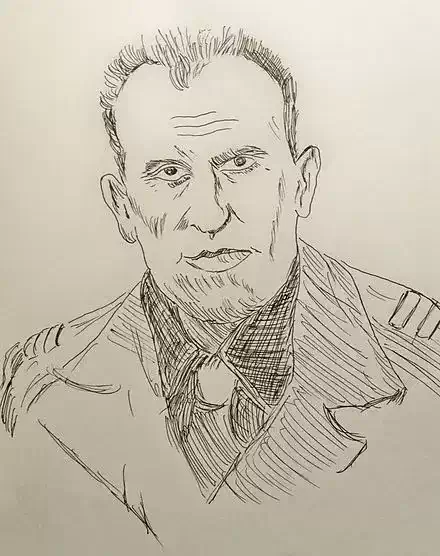
René Char
1907–1988
· lived 80 years
 FR
FR
FR
René Char was a French poet, a central figure of surrealist poetry and, later, one of the most original and influential poets of the 20th century. His work is marked by concise, aphoristic language and a profound reflection on the human condition, freedom, and resistance. Char's poetry, often defined as "poetry of action," seeks the alliance between thought and lyricism, exploring beauty and transcendence in everyday life.
n. 1907-06-14, L'Isle-sur-la-Sorgue · m. 1988-02-19, 5.º arrondissement de Paris
52
Views
Bio
Identification and basic context
René Char was born in L'Isle-sur-la-Sorgue, in Provence, France, and was a world-renowned poet. Known for his connection to surrealism and for developing a unique and influential poetic style, Char explored themes such as freedom, revolt, nature, and the human condition. His French nationality and the language of writing, French, were fundamental to his artistic expression.Childhood and education
Born into a family involved in river trade, Char's childhood and youth were marked by the landscape of Provence, which would profoundly influence his work. His formal education was complemented by vigorous self-study, and he absorbed influences from artistic and philosophical movements of his time, especially surrealism.Literary career
Char began writing in his youth. He was one of the founders of the surrealist group in Paris, but eventually distanced himself from the movement, seeking a more personal path. His literary evolution spanned decades, with distinct phases reflecting his experiences, including his participation in the French Resistance during World War II. He published in various literary magazines and anthologies.Work, style, and literary characteristics
René Char's major works include "Fureur et mystère" (1948), "Le Marteau sans maître" (1934), and "La Parole en archipel" (1962). His dominant themes are freedom, revolt, beauty, love, nature, and the quest for transcendence. His style is characterized by conciseness, the use of aphorisms, precise language, and deep musicality. Free verse and formal experimentation are recurrent. Char's poetic voice is often intense, lyrical, and reflective, seeking the alliance between thought and emotion. He is frequently associated with surrealism and existentialism, but developed a singular poetics that transcends categorization.Cultural and historical context
René Char lived through turbulent periods in French history, including World War II, during which he actively participated in the Resistance. This context of struggle for freedom and human dignity permeated his work. He associated with important figures of surrealism and other artistic and literary movements, such as André Breton, Paul Éluard, and Albert Camus. His poetry reflects the spirit of his generation, marked by conflicts and the search for new artistic and philosophical paths.Personal life
Char's personal life was profoundly marked by his experiences, especially during the war. His emotional and family relationships, as well as his friendships with other artists and intellectuals, certainly shaped his worldview and his poetic production. His strong connection to Provence, his homeland, was a constant in his life.Recognition and reception
René Char is widely recognized as one of the great French poets of the 20th century. His work has received numerous awards and distinctions, and he is studied and admired internationally. Critical reception of his poetry, since the beginning of his career, has been consistently positive, highlighting the originality and depth of his work.Influences and legacy
Char was influenced by poets such as Arthur Rimbaud and Stéphane Mallarmé. In turn, his work influenced generations of poets worldwide with its ability to condense thought and emotion into precise and evocative language. His legacy lies in his poetics of action, in the alliance between beauty and ethics, and in his contribution to the renewal of modern poetry.Interpretation and critical analysis
René Char's work has been the subject of numerous critical analyses exploring its existential, philosophical, and aesthetic dimensions. The interpretation of his poems often delves into the relationship between language and reality, the search for truth, and the importance of individual and collective freedom.Curiosities and lesser-known aspects
Char had a habit of writing in notebooks, often in natural landscapes, demonstrating his deep connection with the environment. His relationship with Provence was so intrinsic that the region's landscape and culture are constant elements in his poetry.Death and memory
René Char passed away in 1988. His memory is honored through his published works, which continue to inspire readers and writers, and through institutions that promote the study of his poetry. His posthumous work continues to be unveiled and appreciated.Poems
0No poems found
Quotes
2No poems found
Comments (0)
Log in
to post a comment.
No comments yet. Be the first to comment.