
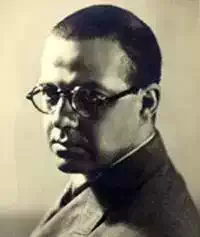
Ribeiro Couto
1898–1963
· lived 65 years
 BR
BR
BR
Ribeiro Couto was a Brazilian poet and diplomat, whose work is part of the modernist movement, with particular emphasis on his poetry that explores themes such as Brazil, its people, and national identity. His writing is characterized by formal experimentation, colloquial language, and the valorization of Brazilian culture, marked by a strong connection to regionalism and orality.
n. 1898-03-12, Santos · m. 1963-05-30, Paris
56
Views
Bio
Identification and basic context
Manuel de Albuquerque Couto, better known as Ribeiro Couto, was a prominent Brazilian poet, short story writer, and diplomat. Born in Minas Gerais, his work is intrinsically linked to the culture and landscapes of Brazil, especially the interior. His nationality was Brazilian and he wrote in Portuguese.Childhood and education
Ribeiro Couto had a childhood marked by life in the interior of Minas Gerais, an experience that profoundly shaped his sensitivity and literary work. His education, beyond formal schooling, was enriched by immersion in the traditions, language, and landscapes of his home state. He absorbed influences from popular Brazilian culture and folklore.Literary career
Ribeiro Couto's literary career began with a strong inclination towards poetry and prose, where he sought to portray the Brazilian soul. He was one of the important names of the second generation of Brazilian Modernism, also known as the Generation of '30. His work evolved into the consolidation of his own style, which valued colloquial language, regionalism, and national identity. He worked as a diplomat, which allowed him to connect with other cultures, but he always maintained a strong link with Brazil, reflected in his writing.Work, style, and literary characteristics
Ribeiro Couto's work is vast and encompasses poetry and prose. Among his poetic works, "Poesias" (1926), "No Brasil" (1931), and "O Ombro da Arara" (1937) stand out. In prose, he wrote "Terra de Sol e Sombra" (1941). The dominant themes in his work include the exaltation of Brazil, rural life, the landscapes of Minas Gerais, national identity, popular religiosity, and subtle social critique. His style is marked by experimentation with language, the use of free verse, musicality inspired by popular speech and Brazilian music, and strong visual imagery. His poetic voice is authentically Brazilian, confessional, and sometimes nostalgic. Ribeiro Couto is considered one of the precursors of a poetry that moves away from urban and literary centers to delve into the country's cultural roots, engaging with oral tradition and folklore.Work, style, and literary characteristics
Cultural and historical context Ribeiro Couto lived during a period of great cultural and political effervescence in Brazil, marked by Modernism and the social transformations of the 20th century. He was an exponent of the Generation of '30, which sought to consolidate the modernist achievements and give a more nationalist and regionalist focus to literary production. His diplomatic career allowed him valuable cultural exchange, but his work remained firmly anchored in Brazilian reality.Work, style, and literary characteristics
Personal life Ribeiro Couto's life was marked by his dual career as a diplomat and writer. His experiences abroad enriched his perspective, but his heart remained in Minas Gerais. His family relationships and his life in the interior were constant sources of inspiration for his literary work.Work, style, and literary characteristics
Recognition and reception Ribeiro Couto was a recognized poet during his lifetime, belonging to the important Generation of '30 of Brazilian Modernism. His work was well-received by critics for its originality and for the way it captured the essence of Brazil. His name holds a prominent place in Brazilian literature, valued for his regionalism and his authentic poetics.Work, style, and literary characteristics
Influences and legacy Influenced by the currents of Modernism, Ribeiro Couto, in turn, influenced later generations of poets who sought a literary expression more connected with Brazilian roots and identity. His legacy lies in his ability to merge formal experimentation with the celebration of deep Brazil, consolidating the importance of regionalism in poetry.Work, style, and literary characteristics
Interpretation and critical analysis Ribeiro Couto's work is often analyzed from the perspective of literary nationalism and the valorization of regionalism. His poems offer an intimate and lyrical vision of Brazil, inviting reflection on national identity and the landscapes that shape it.Work, style, and literary characteristics
Curiosities and lesser-known aspects An interesting aspect is how his diplomatic career intertwined with his literary production, offering him unique perspectives on Brazil and the world.Work, style, and literary characteristics
Death and memory Ribeiro Couto passed away in Rio de Janeiro, leaving a significant poetic and literary legacy for Brazilian culture. His works continue to be studied and appreciated for their authenticity and relevance.Poems
0No poems found
Comments (0)
Log in
to post a comment.
No comments yet. Be the first to comment.