
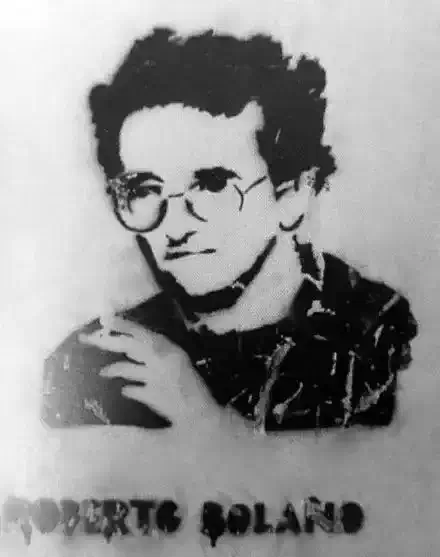
Roberto Bolaño
 --
--
Roberto Bolaño was an influential Chilean writer, whose work, marked by a hypnotic prose and a deep darkness, explored the labyrinths of identity, memory, violence, and literature itself. His life, spent between Chile, Mexico, and Europe, was reflected in a narrative that often fused autobiographical elements with fiction and social criticism. Bolaño became a post-mortem cult figure, acclaimed for his stylistic audacity, his vast imagination, and his ability to capture the complexity of the contemporary world through unforgettable characters and absorbing plots.
n. 1953-04-28, Santiago · m. 2003-07-15, Barcelona
Bio
Identification and basic context
Roberto Bolaño Ávalos was a Chilean novelist and short-story writer, born in Santiago on April 28, 1953, and died in Barcelona on July 15, 2003. He is considered one of the most important writers of contemporary Latin American literature and a key figure in Spanish-language literature of the 20th and 21st centuries. His work is characterized by powerful, dark, and often experimental prose, addressing recurring themes such as violence, identity, memory, the search for beauty in decay, and literature itself as a refuge and a condemnation.Childhood and education
Bolaño's childhood was spent in various cities in Chile, such as Santiago, Valparaíso, and Linares, due to the job transfers of his father, who was a driver and later a soldier. This early mobility marked his perception of the world and identity. In his adolescence, he lived in Mexico with his family, where he became interested in literature and politics. He was a voracious and self-taught reader, influenced by authors such as Jorge Luis Borges, Franz Kafka, William S. Burroughs, Céline, and by existentialism.Literary career
Bolaño's literary career is complex and diverse. He began his career as a poet and left-wing militant in Chile, participating in political and cultural movements. After the 1973 military coup, he went into exile in Mexico, where he continued writing and working in various jobs to survive. In the 1980s, he moved to Spain, residing on the Costa Brava, where he developed most of his novelistic work. His international recognition came posthumously, especially after the publication of "The Savage Detectives" and "2666".Work, style, and literary characteristics
Bolaño's work is extensive and includes novels, short stories, and poetry. Some of his most important works include "The Savage Detectives" (1998), "By Night in Chile" (2000), "Amuleto" (1999), "2666" (published posthumously in 2004), and "The Kill Hole" (2001). His style is unmistakable: a direct prose, often raw and visceral, but at the same time lyrical and evocative. His narratives are characterized by fragmentation, multiple voices, the exploration of marginal characters, and the interconnection between the real and literary worlds. Themes such as political violence, crime, homosexuality, drug addiction, the decline of the West, and the figure of the writer as a detective or witness are intertwined in his stories. Bolaño experimented with non-linear narrative structures and metafiction, questioning the boundaries between reality and fiction.Cultural and historical context
Bolaño lived and wrote during periods of great social and political upheaval in Latin America and Europe. Exile, the Chilean dictatorship, and the disillusionment with political utopias are central themes in his work. His generation, often called "the crack generation," was characterized by a critical attitude towards the Latin American boom and a search for new narrative forms. Bolaño engaged with the Latin American literary tradition but also questioned and reinvented it, incorporating influences from Anglo-Saxon and European literature.Personal life
Roberto Bolaño's life was marked by exile, economic precariousness, and an intense dedication to writing. He had several relationships and was the father of two children. His work in various jobs (dishwasher, waiter, security guard) enriched his worldview and his characters. Despite his literary recognition, Bolaño maintained a humble attitude, distant from the publishing world and fame, preferring a reclusive life. His political beliefs, initially linked to the radical left, evolved towards a more disenchanted and critical stance, though always committed to denouncing injustice.Recognition and reception
Roberto Bolaño's recognition was gradual and intensified exponentially after his death. "The Savage Detectives" brought him great fame in the Spanish-speaking world, but it was the publication of "2666" that definitively established him as a world-class author. Critics and writers of various nationalities praised his originality, his audacity, and the depth of his work. Today, he is the subject of numerous academic studies, and his influence on new generations of writers is undeniable.Influences and legacy
Bolaño was influenced by a wide range of authors, from the classics of universal literature to contemporary writers. His legacy is that of a renovator of Spanish-language narrative, who knew how to capture the complexity and violence of the modern world with a unique and powerful voice. His work has been translated into numerous languages and continues to inspire readers and writers around the world, consolidating him as a pillar of contemporary literature.Interpretation and critical analysis
Bolaño's work has been subject to multiple interpretations. His relationship with detective literature, his critique of power structures, his exploration of the human condition in environments of extreme violence, and his vision of the writing profession have been analyzed. The figure of the "cursed writer" and his connection with literary avant-gardes are also recurring themes in the critical analysis of his work.Childhood and education
Roberto Bolaño had a strong connection with rock music and popular culture, elements that are often reflected in his work. He was a great chess enthusiast. Despite his often somber image, he also possessed a sharp sense of humor. His relationship with death, so present in his work, intensified as his own health deteriorated, and he continued writing until the end.Death and memory
Roberto Bolaño died prematurely at the age of 50 due to liver failure, leaving a magnum opus, "2666", incomplete. His premature death shocked the literary world and intensified interest in his work, which continues to grow in popularity and study. His memory is kept alive through his books, which continue to be read and analyzed, and through the impact he has had on contemporary literature.Poems
0No poems found
Comments (0)
No comments yet. Be the first to comment.