
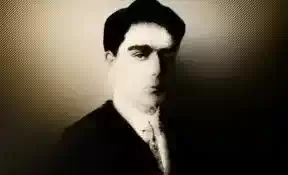
Ronald de Carvalho
1893–1935
· lived 41 years
 BR
BR
BR
Ronald de Carvalho was a Brazilian poet, writer, and diplomat, an important figure of Modernism. His work is marked by the search for a renewed poetic language, the exploration of national themes, and irreverence. As one of the pioneers of Modernism, he contributed to the consolidation of an authentic Brazilian literary identity, combining formal experimentation with a deep love for the homeland and Brazilian culture.
n. 1893-05-16, Rio de Janeiro · m. 1935-02-15, Rio de Janeiro
45
Views
Bio
Identification and basic context
Ronald de Carvalho, whose full name was Ronald Cláudio de Carvalho, was a Brazilian poet, writer, essayist, and diplomat, born in Rio de Janeiro on April 26, 1894, and died in Rio de Janeiro on October 3, 1955. He was one of the most important exponents of the first phase of Brazilian Modernism. His literary production is written in Portuguese.Childhood and education
Ronald de Carvalho was born into a wealthy family in Rio de Janeiro. He completed his primary and secondary education in his hometown. He graduated in law from the Rio de Janeiro Law School in 1917. During his youth, he came into contact with the literary and intellectual circles of the time, showing an early interest in the new aesthetic currents that were beginning to emerge.Literary career
Ronald de Carvalho's literary career is intrinsically linked to the modernist movement. In 1921, he published his first book of poems, "Trombeta," which already presented characteristics of formal and thematic renewal. However, it was with the publication of "Epigramas" in 1922, the year of the Modern Art Week, that he consolidated himself as one of the fundamental poets of the movement. His work evolved over time, always maintaining a dialogue with tradition, but with a constant search for originality and expression of Brazilian identity. He collaborated in various literary magazines and newspapers of the time, disseminating modernist ideas.Work, style, and literary characteristics
Ronald de Carvalho's work encompasses poetry, prose, and essays. In poetry, "Trombeta" (1921) and "Epigramas" (1922) stand out. His central themes revolve around Brazilian daily life, the national landscape and culture, love, and reflection on art. Carvalho's style is marked by colloquial language, irreverence, humor, and experimentation with form. He used free verse, fragmentation, and conciseness, drawing inspiration from foreign models but always focusing on Brazilian reality. His poetic tone is often lyrical, but also ironic and satirical. In his prose, Carvalho wrote "Brasil, País do Futuro" (1927), a book of chronicles and impressions about the country, which became a classic of travel literature and the modernist view of Brazil.Cultural and historical context
Ronald de Carvalho was a central figure in the cultural effervescence of Rio de Janeiro in the 1920s and 1930s. He lived in a period of great transformations in Brazil, with the end of the Old Republic and the rise of Getúlio Vargas. He was a friend of other modernists such as Oswald de Andrade, Mário de Andrade, and Manuel Bandeira, and actively participated in the debates that shaped modern aesthetics in the country. His vision of Brazil, expressed in "Brasil, País do Futuro," reflects the optimism and the desire for modernization that characterized part of the thinking of the time.Personal life
In addition to his literary career, Ronald de Carvalho pursued a diplomatic career, serving in various Brazilian embassies abroad. This international experience, combined with his interest in culture, enriched his worldview and his work. His personal life was marked by dedication to the arts and letters, and by a strong connection to Brazil, despite his periods abroad.Recognition and reception
Ronald de Carvalho was recognized during his lifetime as one of the pioneers of Brazilian Modernism. His work, especially "Epigramas" and "Brasil, País do Futuro," was well-received by critics and the public, consolidating his place in the national literary canon. His poems and chronicles continue to be studied and appreciated for their originality and their representation of Brazil.Influences and legacy
Carvalho was influenced by Parnassian and Symbolist poetry, and above all, by European avant-garde movements such as Futurism and Cubism. His work, in turn, influenced poets and writers who sought renewal in Brazilian literature, with an emphasis on expressing national identity. "Brasil, País do Futuro" is an important legacy for understanding Brazil at the time and the vision that the modernists had of the country.Interpretation and critical analysis
Ronald de Carvalho's work has been the subject of critical analysis that highlights his ability to combine formal experimentation with national themes. Critics emphasize his irony, his humor, and his critical, yet affectionate, view of Brazil. His poetry is seen as an invitation to reflect on Brazilian identity and the art of writing itself.Curiosities and lesser-known aspects
A curious aspect of his work is the choice of the title "Epigramas" for a book of poems, suggesting a brevity and sharpness that characterize many of his compositions. His diplomatic career also kept him away, at times, from the center of Brazilian literary debate, which may have influenced how his work was received at different moments.Death and memory
Ronald de Carvalho died in 1955, in Rio de Janeiro. His memory is preserved through the continued reading and study of his work, which remains relevant for understanding Modernism and 20th-century Brazilian literature.Poems
0No poems found
Comments (0)
Log in
to post a comment.
No comments yet. Be the first to comment.