
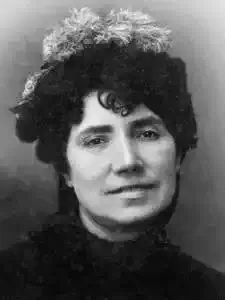
Rosalía de Castro
1837–1885
· lived 48 years
 ES
ES
ES
Rosalía de Castro was a central figure of Galician and Portuguese literature, known for her lyrical poetry and her deep connection to the land and people of Galicia. Her work addresses themes such as saudade (longing), social injustice, the condition of women, and the melancholic beauty of the landscape. She is considered one of the most important voices of the Rexurdimento, a movement of cultural renaissance in Galicia.
n. 1837-02-23, Conxo, Santiago de Compostela · m. 1885-07-22, A Matanza
68
Views
Bio
Identification and Basic Context
Rosalía de Castro, whose full name was María Rosalía Rita de Castro, is one of the most important poets in Galician and Portuguese literature. She was born in Santiago de Compostela, Galicia, and died in Padrón. Her work is a landmark of the Rexurdimento, the movement of renaissance of Galician culture in the 19th century. She wrote predominantly in Galician, but also in Castilian.Childhood and Education
Born in 1837, Rosalía had a childhood marked by illegitimacy, being raised by her godmother and, later, by her mother. This context of family and social uncertainty influenced her sensitivity and her worldview. Her formal education, although not extensive, allowed her access to readings that shaped her intellectual and literary formation. She was exposed to Galician popular culture, songs, and traditions, which would become central themes in her work.Literary Career
The beginning of her literary activity dates back to her youth, with the publication of her first poems in Castilian. Her work evolved from her early, more romantic compositions to maturity, where her lyrical voice deepened, exploring pain, saudade, and social criticism. She published in various magazines and newspapers of the time, actively contributing to the dissemination of Galician and Castilian literature. Her work in Galician, such as "Cantares Gallegos" (1863) and "Follas Novas" (1881), is considered foundational for modern Galician poetry.Work, Style, and Literary Characteristics
Rosalía de Castro's main works include "Cantares Gallegos", "Follas Novas", and "En las orillas del Sar" (in Castilian). The dominant themes in her poetry are saudade, melancholy, the condition of women, social injustice, emigration, and her deep connection with the Galician land. She used free verse and traditional forms, adapting them to an intense and personal lyrical expression. Her style is characterized by apparent simplicity, musicality, and a strong emotional charge. Her poetic voice is simultaneously personal and universal, confessional and representative of collective suffering.Work, Style, and Literary Characteristics
Cultural and Historical Context Rosalía de Castro lived in a period of cultural effervescence in Galicia, the Rexurdimento, which sought the recovery and valorization of the Galician language and culture. Her work fits into this context, but transcends it by addressing universal themes with unique sensitivity. She was a contemporary of other Romantic and Post-Romantic writers, but developed her own style, a precursor to later literary trends.Work, Style, and Literary Characteristics
Personal Life Her personal life was marked by difficulties and losses, including the premature death of some of her children and financial instability. These experiences contributed to the melancholy and depth that characterize her work. She married Manuel Murguía, a historian and important figure of the Rexurdimento, with whom she had several children.Work, Style, and Literary Characteristics
Recognition and Reception Although she was recognized during her lifetime, especially in Galicia, her work gained greater dimension and posthumous recognition. "Cantares Gallegos" is a landmark, celebrated annually on the Day of Galician Literature. Her poetry is widely studied and admired today for its originality and expressive power.Work, Style, and Literary Characteristics
Influences and Legacy Rosalía de Castro was influenced by the Galician oral tradition and by Romantic poets. Her legacy is immense for Galician literature, having been an inspiration for subsequent generations of writers. Her work is a fundamental pillar for Galician cultural identity and has been studied for its universal resonance.Work, Style, and Literary Characteristics
Interpretation and Critical Analysis Rosalía de Castro's work has been the subject of numerous critical analyses, which highlight her ability to merge the lyrical with the social, the personal with the collective. Her poetry is seen as a mirror of the Galician soul, but also as a deep exploration of the human condition, fragility, and the search for meaning.Work, Style, and Literary Characteristics
Curiosities and Lesser-Known Aspects Rosalía de Castro was known for her introspection and, at times, for her melancholic temperament. Her letters reveal a sensitive woman deeply concerned with the social reality around her.Work, Style, and Literary Characteristics
Death and Memory Rosalía de Castro died in 1885, from cancer. Her death was felt as a great loss to Galician culture. Her memory is celebrated annually on the Day of Galician Literature, May 17th, the date of the publication of "Cantares Gallegos".Poems
0No poems found
Comments (0)
Log in
to post a comment.
No comments yet. Be the first to comment.