
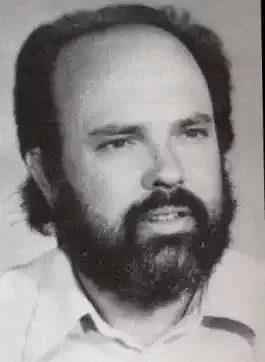
Ruy Belo
1933–1978
· lived 45 years
 PT
PT
PT
Ruy Belo was one of the most important Portuguese poets of the 20th century. His work is marked by a profound reflection on existence, faith, solitude, and time, with a language that is both colloquial and erudite. He moved between the sacred and the profane, the everyday and the transcendental, exploring the contradictions of the human condition with humor, melancholy, and subtle irony. His poetry, accessible yet complex, continues to touch readers with its honesty and the beauty of its imagery.
n. 1933-02-27, Freguesia de São João da Ribeira · m. 1978-08-08, Queluz
83
Views
Bio
Identification and basic context
Ruy Belo, full name Ruy Ventura dos Santos Belo, was a Portuguese poet. He was born on February 19, 1931, in Rio Moinhos, municipality of Aljustrel, Baixo Alentejo. He passed away on August 10, 1987, in Lisbon. He is considered one of the greatest figures in Portuguese poetry of the second half of the 20th century.Childhood and education
Born into a family of peasants, in a rural context of economic hardship. His childhood and youth were marked by poverty and life in the countryside. He began his studies in Aljustrel and later at Liceu Passos Manuel, in Lisbon, where he graduated in Germanic Philology from the Faculty of Arts of the University of Lisbon in 1956. He was a scholar of the Calouste Gulbenkian Foundation in Tübingen and Munich (Germany).Literary career
His first book, "Aquele Grande Rio Eufrates" (That Great River Euphrates), was published in 1959. His work, though not extensive, shows remarkable evolution, passing through distinct phases. He actively collaborated in various cultural and literary publications, such as the magazines "Távola Redonda" (Round Table) and "O Tempo e o Modo" (Time and Mode). He was also a high school teacher and, later, director of the magazine "Litoral" (Coast). His literary activity was always linked to a deep existential and spiritual questioning.Work, style, and literary characteristics
Ruy Belo's works explore themes such as faith, doubt, solitude, time, death, love, the relationship with God, and the homeland. His style is characterized by a language that moves between the colloquial and the erudite, the everyday and the transcendent. He frequently uses free verse, but also resorts to more traditional forms. His poetry is marked by subtle irony, melancholic humor, and a unique ability to transform the mundane into something profound and universal. "O Problema do Ser em Fernando Pessoa" (The Problem of Being in Fernando Pessoa) (1966), "Homem de Palavra" (Man of Word) (1970), "Transportes e Pedras" (Transport and Stones) (1970), "Paisagem com Mevlana" (Landscape with Mevlana) (1973), and "Toda a Terra" (All the Land) (1985) are some of his most significant works. His final work, "Aquele Grande Rio Eufrates", is considered a milestone in Portuguese poetry.Work, style, and literary characteristics
Cultural and historical context Ruy Belo lived in Portugal during the dictatorial regime of the Estado Novo, the Colonial War, and the Revolution of April 25, 1974. These historical events, although not the explicit focus of his work, permeate his questioning of the human condition, freedom, and hope. He was a poet who dialogued with the Portuguese literary tradition but also engaged with the poetic renewal movements of the 20th century.Work, style, and literary characteristics
Personal life Ruy Belo had a complex relationship with religion, oscillating between faith and doubt. This duality is a central theme in his work. He was a teacher, and also held positions in cultural institutions. His personal life, often marked by melancholy and the search for meaning, is reflected in the intensity and depth of his poetry.Work, style, and literary characteristics
Recognition and reception Although he had a relatively limited published output during his lifetime, Ruy Belo earned a prominent place in Portuguese literature. His poetry has increasingly gained recognition and study, being appreciated for its authenticity and its ability to touch upon universal issues.Work, style, and literary characteristics
Influences and legacy In his work, Ruy Belo dialogues with the Portuguese poetic tradition, especially with Fernando Pessoa and poetry of religious inspiration. His influence is evident in later generations of poets who identify with his sincerity, his exploration of faith and the everyday, and his refined language. He left a legacy of poetry that calls for reflection on the great mysteries of life.Work, style, and literary characteristics
Interpretation and critical analysis Ruy Belo's poetry has been the subject of various critical analyses, which highlight its existential and spiritual dimension. His ability to express religious doubt and the search for God, combined with a direct and evocative language, makes his work a fertile ground for philosophical and theological interpretations.Work, style, and literary characteristics
Curiosities and lesser-known aspects Ruy Belo was known for his sometimes biting humor and his ability to observe everyday life. He was also a great admirer of music and art. His connection to the Alentejo region, where he was born, is a constant inspiration in his work.Work, style, and literary characteristics
Death and memory Ruy Belo died prematurely at the age of 56, victim of a prolonged illness. His death left a void in Portuguese poetry, but his work continues to be published and rediscovered, keeping his memory and his poetic voice alive.Poems
0No poems found
Comments (0)
Log in
to post a comment.
No comments yet. Be the first to comment.