
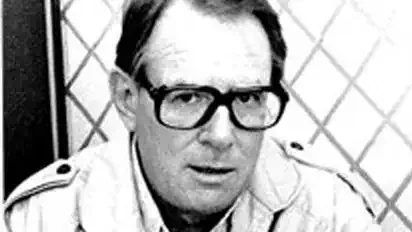
Sérgio Jockyman
1930–2011
· lived 80 years
 BR
BR
BR
Sérgio Jockyman is a contemporary Brazilian poet, whose work stands out for its exploration of existential, social, and philosophical themes, often intertwined with a deep reflection on language and the human condition. His poetry, marked by precise language and a critical view of the world, addresses solitude, the search for meaning, and the complexity of interpersonal relationships, consolidating him as a relevant voice in current Brazilian poetry.
n. 1930-04-29, Palmeira das Missões · m. 2011-02-16, Campinas
43
Views
Bio
Identification and basic context
Sérgio Jockyman is a contemporary Brazilian poet, essayist, and professor. His poetic work is recognized for its thematic depth and rigorous formal construction, exploring the relationship between the individual, society, and language. His publications encompass poetry, literary criticism, and essays on philosophical and cultural themes.Childhood and education
Jockyman received a solid academic education, which influenced his intellectual approach to poetry. His work reveals a constant dialogue with philosophy and literary theory, demonstrating a deep understanding of the currents of thought that have shaped Western culture. The intellectual environment in which he was involved, both in academia and in literary circles, contributed to the development of an erudite and reflective poetics.Literary career
Sérgio Jockyman's literary career is marked by a consistent production of poetry and essays. He began his literary career with the publication of poems in magazines and anthologies, gradually consolidating his space in the Brazilian poetic scene. His work has evolved over time, maintaining a line of thematic and stylistic coherence, but always with a keen eye on the transformations of the contemporary world and of language itself.Work, style, and literary characteristics
Jockyman's work is characterized by careful language and a strong reflective component. Central themes include human existence, solitude, memory, the relationship with time, and social criticism. His poetry explores the complexity of human relationships and the search for meaning in an often fragmented world. Jockyman's style is marked by conceptual density and the pursuit of verbal precision, avoiding superficial lyricism in favor of a more introspective and philosophical approach. He often engages with the literary tradition, but with a distinctly modern and critical perspective.Cultural and historical context
Sérgio Jockyman is part of the context of contemporary Brazilian poetry, an era marked by rapid social, technological, and cultural transformations. His work reflects the anxieties and challenges of the 21st century, engaging with the tensions between the individual and the collective, the global and the local. His position as an intellectual and university professor gives him a privileged perspective on current cultural and philosophical debates.Personal life
Detailed information about Sérgio Jockyman's personal life is less publicized, as the focus of his intellectual production tends to be his work and theoretical reflections. However, his writing suggests a refined sensitivity to the existential and relational issues that shape human experience.Recognition and reception
Sérgio Jockyman's work has been the subject of study and appreciation by literary and academic critics. His poetry is valued for its originality, depth, and formal rigor, contributing to the enrichment of contemporary Brazilian poetry.Influences and legacy
The influences in Jockyman's work are diverse, encompassing philosophical and literary currents ranging from the classical tradition to contemporary thought. His legacy lies in his ability to articulate erudite and reflective poetry with universal themes, engaging with the literary tradition while simultaneously proposing new ways of thinking and feeling the world.Interpretation and critical analysis
Jockyman's poetry invites reflection on the human condition, the nature of consciousness, and the role of language in constructing reality. His works are often analyzed from the perspective of existential philosophy and critical theory, exploring the ambiguities and complexities of being in the contemporary world.Curiosities and lesser-known aspects
As a figure more focused on intellectual and academic production, many aspects of Jockyman's personal life may be less known to the general public. His methodical approach to writing and reflection is a distinctive trait of his personality.Death and memory
Sérgio Jockyman is a contemporary author, and his work continues to be produced and evolve. His memory and legacy are under construction as his work gains increasing relevance and recognition in Brazilian literature.Poems
0No poems found
Comments (0)
Log in
to post a comment.
No comments yet. Be the first to comment.