
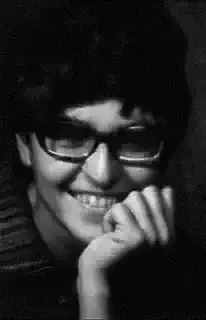
Susana Thénon
1935–1991
· lived 55 years
 AR
AR
AR
Susana Thénon was an Argentine poet, associated with the avant-garde movement and experimental poetry. Her work is known for its formal daring, its exploration of humor, irony, and its trenchant social criticism. Thénon challenged literary and social conventions, using language innovatively to address themes such as identity, the body, and power relations.
n. 1935-05-07, Buenos Aires · m. 1991-04-05, Buenos Aires
33
Views
Bio
Identification and basic context
Susana Thénon was an Argentine writer, best known for her experimental and avant-garde poetry. She used language subversively and innovatively, exploring humor, irony, and social criticism. She was an important figure in 20th-century Argentine literature, associated with movements of aesthetic renewal.Childhood and education
Little is publicly known about her childhood and early education, but her work reveals a robust intellectual background and a deep understanding of language and its potential. Her writing demonstrates a complex relationship with norms and tradition.Literary career
The beginning of her literary career was marked by the publication of works that distinguished her by their originality and rupture with established standards. She developed her own experimental and irreverent style, which consolidated her as a singular voice in Argentine poetry. Her work evolved in terms of experimentation and critical depth.Work, style, and literary characteristics
Susana Thénon's works include "Oção" (1970), "Círculo de Fogo" (1974), "El huésped" (1978), and "El ojo de la cerradura" (1981). Her central themes address identity, the body, madness, social oppression, and critique of the patriarchy. Thénon is known for her experimentation with language, the creation of neologisms, the use of different linguistic registers, and the incorporation of elements from popular culture and media. She employs black humor, irony, and parody to destabilize the reader and question power structures. Her poetic voice is transgressive, challenging, and deeply engaged with social and existential issues. The style is fragmented, energetic, and often aggressive, breaking with traditional musicality.Work, style, and literary characteristics
Cultural and historical context Her work developed during a period of intense political and social turbulence in Argentina, including the military dictatorship. Thénon navigated this context with poetry that, obliquely and subversively, questioned the established order and repression. She participated in avant-garde literary circles, seeking new forms of expression.Work, style, and literary characteristics
Personal life Susana Thénon maintained a discreet personal life, but her work reflects a deep concern with individual and collective experiences, the body, and the psyche.Work, style, and literary characteristics
Recognition and reception Although her work was challenging and at times controversial, Susana Thénon is today widely recognized as one of the most original and important voices in contemporary Argentine poetry. Her formal daring and her social criticism have made her a reference for new generations of writers.Work, style, and literary characteristics
Influences and legacy Her work engages with the tradition of avant-garde and experimental poetry, and her legacy lies in her ability to subvert language to question the status quo and explore the complexities of the human experience. She has influenced poets seeking formal experimentation and social critique in their works.Work, style, and literary characteristics
Interpretation and critical analysis Thénon's poetry is often analyzed for its approach to language as a battlefield, its critique of power, and its exploration of subjectivity in a context of oppression.Work, style, and literary characteristics
Curiosities and lesser-known aspects Her irreverent and experimental approach to poetry, often marked by sharp and cutting humor, distinguishes her from many of her contemporaries. She challenged expectations of what poetry should be.Work, style, and literary characteristics
Death and memory Susana Thénon passed away in Buenos Aires. Her work continues to be rediscovered and celebrated for its innovative strength and social relevance.Poems
0No poems found
Comments (0)
Log in
to post a comment.
No comments yet. Be the first to comment.