
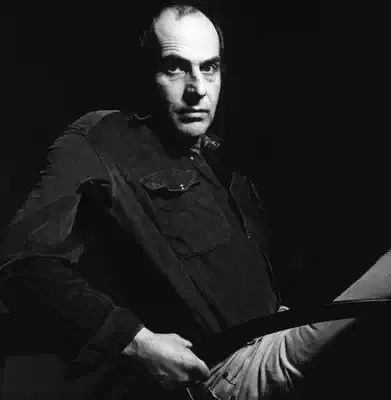
Thomas Brasch
 DE
DE
Thomas Brasch was a German poet, playwright, and filmmaker, known for his provocative work and social critique. His creations frequently addressed themes such as identity, alienation, and repression in East Germany and society in general, reflecting his own experiences and political activism. His writing is marked by emotional intensity and direct, often blunt, language. Brasch left a significant legacy in the German cultural landscape, with his work continuing to be studied and interpreted for its social and artistic relevance.
n. 1945-02-19, Westow · m. 2001-11-03, Berlim
Bio
Identification and Basic Context
Thomas Brasch was born in Weißenfels, East Germany, on February 19, 1949, and died in Berlin on November 3, 2001. He was a poet, playwright, writer, and filmmaker. The son of a communist politician, his father held prominent positions in the GDR government, which placed him in a position of privilege, but also of scrutiny. Brasch wrote in German.Childhood and Education
He grew up in a family environment linked to politics and power in East Germany. His education was influenced by the country's ideological context, but from an early age, he showed an inclination for critical thinking and artistic expression. He studied philosophy at Humboldt University in Berlin, where he became involved in student and cultural movements. His readings included authors who questioned the status quo and conventional thinking.Literary Career
Thomas Brasch began his literary career as a poet and playwright in East Germany. His early works already showed a strong critique of the socialist system and social repression. In 1976, due to public protests against the expulsion of Wolf Biermann, he was banned from publishing and practicing his profession, which led to his expulsion from the country and his move to West Berlin. In West Germany, he continued his career as a writer, playwright, and later, as a filmmaker. He collaborated on several publications and founded the theater group "Volksbühne."Work, Style, and Literary Characteristics
Thomas Brasch's work is characterized by a strong critical and existential charge. His central themes include alienation, fragmented identity, social and political repression, family, and the search for freedom. In poetry, he used free verse, with direct, incisive, and often aggressive language, but also capable of great lyricism and sensitivity. In theater, his plays explore family and social conflicts, with sharp dialogues and complex characters. In film, his approach remained interventionist and personal. His work reflects the division of Germany and its consequences on people's lives.Cultural and Historical Context
Brasch lived and produced his work during a period of great political and social tension, especially during the Cold War and the existence of East Germany. His work is a direct reflection of the contradictions and repression of the communist regime, as well as the difficulties of adapting to Western society. He was part of a generation of artists and intellectuals who questioned both communism and capitalism. He was a contemporary of other important German writers and artists who addressed similar themes.Personal Life
Thomas Brasch's life was marked by conflicts with East German authorities, his expulsion from the country, and the difficulties of establishing himself in the West. His family relationships, especially with his father, were complex and influenced his work. He experienced a period of great personal and artistic instability. His activity as a filmmaker emerged as a new way to express his concerns and visions.Recognition and Reception
Although he faced censorship and exile in East Germany, Thomas Brasch achieved considerable recognition in West Germany and internationally, especially in theatrical and film circles. His plays were staged in various countries, and his films were screened at festivals. His work continues to be studied for its importance in contemporary German literature and cinema.Influences and Legacy
Brasch was influenced by existentialist authors and other German writers who addressed the issue of identity and society. His legacy lies in his courage to confront power and repression, and in his ability to create an artistic work that resonates with universal human concerns. He influenced a generation of German artists who sought a form of authentic and critical expression.Interpretation and Critical Analysis
Brasch's work is often interpreted as a cry of revolt against oppression and dehumanization, whether political or social. His exploration of fragmented identity and dysfunctional family relationships offers a profound insight into the human condition. Some analyses focus on his pessimistic vision, while others highlight his relentless search for authenticity and freedom.Curiosities and Lesser-Known Aspects
Brasch had a strong connection with the city of Berlin, which was the scene of much of his life and work. His experience as a filmmaker was an attempt to expand his artistic expression beyond the written word. His correspondence and diaries, when published, revealed even further the depth of his anxieties and reflections.Death and Memory
Thomas Brasch died prematurely in 2001, leaving a vast artistic legacy. After his death, his work has been reissued, and his plays continue to be staged, keeping his memory and the relevance of his issues alive.Poems
0No poems found
Comments (0)
No comments yet. Be the first to comment.