
Today marks 235 years since the death of Tomás de Iriarte
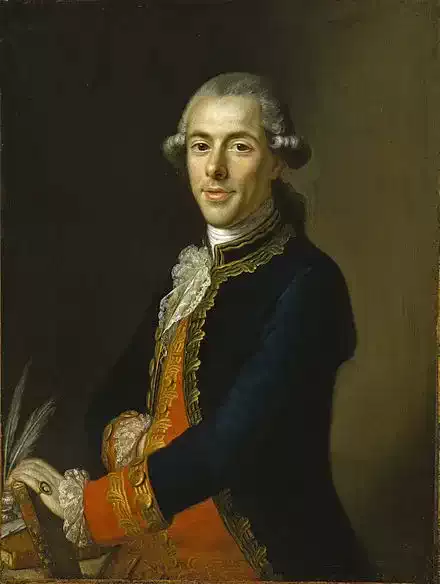
Tomás de Iriarte
1750–1791
· lived 40 years
 --
--
--
Tomás de Iriarte was a distinguished Spanish fabulist and poet of the 18th century, primarily known for his collection of moral fables. His work, imbued with the spirit of the Enlightenment, uses animal allegory to convey ethical teachings and social criticism in an ingenious and accessible way. Through his verses, Iriarte explored human nature and criticized vices such as hypocrisy and ambition, establishing himself as a key figure of Spanish Neoclassical literature.
n. 1750-09-18, Los Realejos · m. 1791-09-17, Madrid
22
Views
Bio
Identification and Basic Context
Tomás de Iriarte y Nieves (1750-1791) was a Spanish poet and writer, primarily recognized for his work of fables. Born in Orotava, Tenerife, Canary Islands, and died in Madrid, his production is part of the Neoclassicism and Spanish Enlightenment period. He was the nephew of the also enlightened poet Bernardo de las Casas. His work is written in Spanish.Childhood and Education
His childhood was marked by the influence of his uncle, Bernardo de las Casas, who fostered his early fondness for literature. He completed his primary studies in his hometown and later moved to Seville to study Grammar and Rhetoric, and then to Madrid to study Theology and Canon Law at the Royal University of San Jerónimo, where he earned his doctorate.Literary Career
Iriarte's literary career began early, showing a great inclination for poetry. He was a member of the Royal Spanish Academy from 1782. His activity focused on composing lyrical, satirical, and, above all, fables, a genre that would bring him greater recognition. He also worked as an official in the Secretariat of State and in the Directorate General of Revenues.Work, Style, and Literary Characteristics
Iriarte's masterpiece is his "Literary Fables" (1782), a collection of fifty fables in verse that, using animals as protagonists, criticize customs, vices, and defects of the society of his time, as well as aspects of literary life. His style is clear, concise, and elegant, with careful language and varied meter. Other important works include "La música" (didactic poem), "El ruiseñor y el jilguero" (The Nightingale and the Goldfinch), and several plays and translations. His fables aim for moral teaching and subtle criticism, characteristic of the enlightened spirit.Cultural and Historical Context
Iriarte lived during the reign of Charles III, a period of enlightened reforms in Spain. He belonged to the second generation of Spanish enlightened figures, who sought to modernize the country through reason and education. He was a contemporary of other great enlightened figures such as Jovellanos or Feijoo, and was part of the intellectual circles of the time, such as the Royal Spanish Academy.Personal Life
Iriarte led a life dedicated to literature and public administration. His character is described as reserved and erudite. His personal relationships were marked by his academic and literary environment. No affective or family relationships of great public relevance are known in his life.Recognition and Reception
In his time, Iriarte enjoyed considerable recognition, especially for his fables, which were very popular and widely read. He was admitted to the Royal Spanish Academy, which represented significant institutional recognition. His work has been reissued and studied over time, consolidating his place in Spanish literature.Influences and Legacy
Iriarte was inspired by classical fabulists such as Aesop and Phaedrus, as well as La Fontaine. His main legacy is the renovation and adaptation of the fable genre to the Spanish context of the Enlightenment, introducing a more critical and literary tone. He influenced subsequent fabulists, and his work remains a reference for 18th-century didactic and satirical poetry.Interpretation and Critical Analysis
Iriarte's fables are a reflection of the enlightened mentality, seeking moral and social perfection through reason. Critics highlight his ability to condense complex teachings into accessible poetic forms and his sharp observation of human and social nature.Childhood and Education
A curiosity is his participation in the so-called "War of the Poets," a literary dispute in which Iriarte and Tomás de lasarte clashed over issues of style and literary merits.Death and Memory
Tomás de Iriarte died in Madrid in 1791. His memory endures through his works, especially the "Literary Fables," which continue to be read and studied as a classic of Spanish literature.Poems
0No poems found
Comments (0)
Log in
to post a comment.
No comments yet. Be the first to comment.