
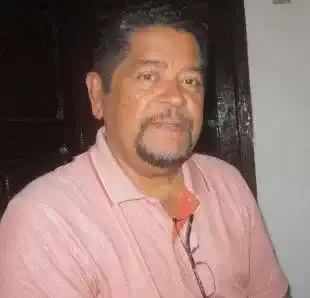
Tony Tcheca

Tony Tcheca, artistic name of Antônio Carlos da Silva, was a Brazilian poet, songwriter, and cultural activist. Known for his transgressive vein and raw, visceral poetry, his work addresses themes such as marginality, sexuality, politics, and social criticism, often with a provocative and ironic tone. His trajectory is intrinsically linked to the cultural effervescence and countercultural movements of Rio de Janeiro. He acted as a central figure in alternative art and poetry spaces, using his art as a form of denunciation and affirmation of marginalized identities. His poetry is marked by direct language, the use of slang, and a strong orality, reflecting the urgency and intensity of his worldview. Tony Tcheca left an important legacy for marginal poetry and for the representation of diversity and cultural resistance in Brazil.
Bio
Identification and basic context
Tony Tcheca's full name is Antônio Carlos da Silva. Born in 1953 in Rio de Janeiro, he was a prominent figure in marginal poetry and Brazilian counterculture. His family background and social class are not widely detailed, but his cultural activities associated him with alternative and peripheral circles. He was Brazilian and wrote in Portuguese. His life and work are set in the context of the 1970s and 1980s in Brazil, a period of political repression under the military dictatorship and the effervescence of cultural resistance movements.Childhood and education
Information about Tony Tcheca's childhood and education is scarce. It is known that he grew up in an urban environment, absorbing influences from street life in Rio de Janeiro. His education was largely based on life experience and immersion in alternative cultural circuits, where poetry and music were tools of expression and criticism.Literary career
Tony Tcheca began his literary career in the 1970s, as one of the exponents of marginal poetry, also known as underground poetry. His writing was marked by urgency and transgression, moving away from conventional forms and themes. He published in alternative newspapers and fanzines, actively participating in poetry readings and cultural events. His work evolved to deepen social criticism and the exploration of themes related to sexuality and identity.Work, style, and literary characteristics
Tony Tcheca's work is characterized by raw, direct, and often shocking language, using slang, neologisms, and colloquial vocabulary. His recurring themes include life in the peripheries, marginality, homosexuality, criticism of the bourgeoisie, political repression, and the search for freedom of expression. The poetic form is often free, with strong orality and a marked rhythm, suitable for declamation at poetry readings. The tone is provocative, ironic, combative, and sometimes confessional. Tcheca innovated by bringing themes and language to Brazilian poetry that were stigmatized and marginalized, opening space for new voices and perspectives. His work is associated with the marginal poetry movement and counterculture.Work, style, and literary characteristics
Cultural and historical context Tony Tcheca emerged in a period of great cultural and political effervescence in Brazil, marked by the military dictatorship. Marginal poetry was an artistic response and resistance to this context, seeking to express reality authentically and challengingly. He interacted and shared spaces with other poets and artists who challenged the status quo, such as Chacal, Ana Cristina Cesar, Cacaso, among others. His work dialogued with social tensions and debates about freedom of expression, sexuality, and identity.Work, style, and literary characteristics
Personal life Tony Tcheca intensely lived the alternative cultural scene of Rio de Janeiro. His personal life, marked by the exposure of his sexuality and his transgressive stance, often blurred with his work. Literary friendships and rivalries were part of the underground circuit. His role as a cultural activist and his pursuit of freedom were central to his life.Work, style, and literary characteristics
Recognition and reception Tony Tcheca's recognition during his lifetime was primarily within the circles of marginal and alternative poetry. His work was revered by an audience that identified with his boldness and the authenticity of his expression. Formal critical reception was sometimes ambiguous, given the transgressive nature of his poetry. After his death, there was a greater rediscovery and appreciation of his work, recognizing its historical and artistic importance to Brazilian poetry.Work, style, and literary characteristics
Influences and legacy Tony Tcheca was influenced by American Beat Generation poets and Brazilian cultural manifestations. In turn, he influenced later generations of poets and artists who identify with marginal poetry, raw language, and the themes of sexual diversity and social criticism. His legacy is that of having paved the way for the expression of identities and realities previously silenced in Brazilian literature.Work, style, and literary characteristics
Interpretation and critical analysis Tony Tcheca's work is subject to critical analysis from various perspectives: as an expression of counterculture, as a manifestation of marginal poetry, as a record of the social and sexual tensions of Brazil in his time, and as an act of affirming marginalized identities. His poetry challenges conservative interpretations, demanding a reading attentive to its multiple layers of meaning and provocation.Work, style, and literary characteristics
Curiosities and lesser-known aspects Tony Tcheca was known for his irreverent and provocative personality, both in life and in his work. Often, his poems were declaimed with great expressiveness and intensity. His participation in musical projects and his work as a DJ were also part of his multifaceted artistic universe.Work, style, and literary characteristics
Death and memory Tony Tcheca died in 1989 from complications related to AIDS, becoming one of the first notable figures in Brazilian culture to die from the disease. His death profoundly impacted the alternative cultural scene. His memory is kept alive through the publication of his poems, studies of his work, and tribute events, consolidating his place as an icon of marginal poetry and cultural resistance.Poems
0No poems found
Comments (0)
No comments yet. Be the first to comment.