
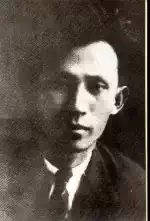
Yi Sáng
1910–1937
· lived 26 years
 KR
KR
KR
Yi Sáng was a Korean poet and writer, a prominent figure in his country's modernist literature. His work, marked by formal experimentation and language exploration, reflects the social and political upheavals of Korea under Japanese rule and the subsequent period of division. He is recognized for his originality and the way he challenged the literary conventions of the time.
n. 1910-08-20, Jong-ro · m. 1937-04-17, Tóquio
37
Views
Bio
Identification and basic context
Yi Sáng (이상, 1910-1950) was one of the most influential Korean poets and prose writers of the 20th century. His birth name was Kim Hae-gyeong (김해경). He was born in Seoul, Korea, during the period of Japanese rule.Childhood and education
Kim Hae-gyeong was born into an upper-middle-class family in Seoul. He received a Westernized education and attended Gyeongseong High School, where he excelled academically. Later, he studied at Josai Technical School in Tokyo, Japan, graduating in architecture.Literary career
Yi Sáng began writing in Japanese and Korean, initially publishing short stories and poems. He gained recognition for his participation in literary magazines and his innovative style. His poetic and prose work challenged aesthetic and linguistic norms, exploring fragmentation and ambiguity.Work, style, and literary characteristics
Yi Sáng's best-known works include poems such as "Work, style, and literary characteristics
Cultural and historical context Yi Sáng lived and wrote during a period of intense turmoil in Korea, marked by the Japanese occupation (1910-1945) and the subsequent division of the country. His work reflects the existential anguish and cultural disorientation of a nation under foreign rule and the struggle for national identity.Work, style, and literary characteristics
Personal life Yi Sáng faced personal difficulties and health problems throughout his life. He had a complex relationship with his wife, Kim Nam-hee. His life was marked by financial difficulties and political instability.Work, style, and literary characteristics
Recognition and reception During his lifetime, Yi Sáng did not receive widespread recognition, but after his death, his work was rediscovered and acclaimed for its originality and depth. He is now considered one of the pillars of Korean modernist literature.Work, style, and literary characteristics
Influences and legacy Yi Sáng was influenced by European and Japanese modernist writers. His legacy lies in his experimental boldness and the way he expanded the boundaries of poetic language and prose in Korean, paving the way for future generations of writers.Work, style, and literary characteristics
Interpretation and critical analysis Yi Sáng's work is often interpreted as a reflection of alienation, fragmented identity, and a critique of colonial and modern society. His exploration of language is seen as an attempt to find new forms of expression in a changing world.Work, style, and literary characteristics
Curiosities and lesser-known aspects Yi Sáng was known for being an introverted thinker and for taking his art very seriously, constantly experimenting with words and forms.Work, style, and literary characteristics
Death and memory Yi Sáng died in Seoul in 1950, from tuberculosis, shortly after the start of the Korean War. His works were widely published and studied after his death, solidifying his place as one of Korea's greatest poets.Poems
0No poems found
Comments (0)
Log in
to post a comment.
No comments yet. Be the first to comment.