
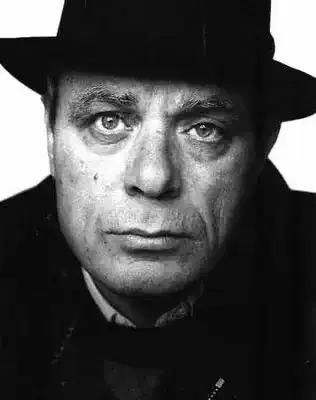
António Lobo Antunes
1942–2026
· vivió 83 años
 PT
PT
PT
António Lobo Antunes is one of the most prominent contemporary Portuguese writers, known for his complex work deeply marked by the experiences of the Colonial War in Africa. His writing, characterized by a non-linear narrative structure, the use of multiple points of view, and a dense and often fragmented language, explores themes such as memory, madness, violence, guilt, and identity. Lobo Antunes is internationally recognized for his contribution to world literature.
n. 1942-09-01, Lisboa · m. 2026-03-05, Lisboa
105
Visualizaciones
Biografía
Identificación y contexto básico
António Lobo Antunes is a Portuguese writer, a psychiatrist by training, who has become one of the most important literary voices in Portugal in recent decades. He was born in Lisbon, Portugal, on March 1, 1942. His vast and complex work is often associated with his experiences during the Colonial War in Angola and Mozambique, as well as a profound reflection on memory, history, and the human condition. He writes in Portuguese.Infancia y formación
António Lobo Antunes grew up in a conservative family with ties to the intellectual and medical elite of Lisbon. He attended the French Lyceum and later studied Medicine at the University of Lisbon, specializing in psychiatry. His medical training and clinical practice, especially in psychiatry, had a profound influence on his view of the human being and his approach to representing the mind and memory in his literary work.Trayectoria literaria
Lobo Antunes's literary career began in the 1970s, with the publication of his first novel, "Memória de Elefante" (Memory of an Elephant), in 1979. Since then, he has built a prolific body of work, marked by constant stylistic and thematic evolution. His writing is characterized by a non-linear narrative structure, a multiplicity of voices, and a deep exploration of the human psyche, often revisiting his war experiences and their consequences on individual identity and Portugal's history.Obra, estilo y características literarias
Obra, estilo y características literarias Among his best-known works are "Memória de Elefante" (1979), "Os Cus de Judas" (1979), "O Esplendor de Portugal" (1997), "Não é um Rio Estrelado" (2001), and "As Mulheres que Damo-nos Conta" (2011). The central themes of his work include memory, madness, guilt, violence, decolonization, identity, and the search for meaning in a fragmented world. Lobo Antunes's style is unmistakable: complex, polyphonic, with long, sinuous, recursive sentences that mirror the complexity of thought and memory. He frequently uses narrative fragmentation, juxtaposition of times and spaces, and the exploration of different language registers. His work is marked by an often dark and hopeless tone, but also by profound humanity and a constant search for truth, however painful.Obra, estilo y características literarias
Contexto cultural e histórico António Lobo Antunes's work is inextricably linked to Portugal's historical context in the 20th century, particularly the final years of the dictatorial regime, the Colonial War in Africa, and its consequences. His writing reflects the collective and individual trauma left by these events, questioning the official narrative of history and exploring the open wounds in Portuguese identity. He is an author who critically engages with Portugal's past and present.Obra, estilo y características literarias
Vida pessoal António Lobo Antunes served as a military doctor in Angola during the Colonial War, an experience that indelibly shaped his worldview and his literary work. His psychiatric training allowed him a deep exploration of the human mind, its frailties, and its defense mechanisms. His personal life, marked by intense experiences and profound reflection on the human condition, is reflected in the density and complexity of his writing.Obra, estilo y características literarias
Reconocimiento y recepción Lobo Antunes is widely recognized as one of the most important writers of contemporary Portuguese literature and on an international level. His work has been the subject of numerous academic studies and has received various prestigious literary awards. Although sometimes considered difficult to read, his name is often mentioned as a strong candidate for the Nobel Prize in Literature.Obra, estilo y características literarias
Influencias y legado Influenced by authors such as William Faulkner and Marguerite Duras, Lobo Antunes, in turn, has a significant impact on contemporary literature, admired for his stylistic originality and his courage in addressing difficult and taboo subjects. His legacy lies in his ability to deconstruct established narratives and offer a deep and multifaceted vision of the human experience, especially regarding trauma and memory.Obra, estilo y características literarias
Interpretación y análisis crítico Lobo Antunes's work is often analyzed as a complex exploration of traumatic memory, guilt, and the search for redemption. His writing challenges the reader to confront uncomfortable truths about Portugal's history and the human condition. Interpretations of his work vary, but converge on its originality and expressive power.Obra, estilo y características literarias
Curiosidades y aspetos menos conocidos Lobo Antunes is known for being an extremely rigorous and methodical writer in his writing process, dedicating long hours to crafting his sentences and constructing his narratives. His approach to literature is seen by many as a form of therapy, both for him and his readers, allowing for the exploration and catharsis of difficult traumas and memories.Obra, estilo y características literarias
Muerte y memoria António Lobo Antunes continues his literary work, being an active and productive author. His memory is built not only through his work but also through his role as one of the most important chroniclers of Portugal's recent history and the complexity of the human condition.Poemas
0No se encontraron poemas
Videos
50
Comentarios (0)
Iniciar sesión
para publicar un comentario.
Aún no hay comentarios. Sé el primero en comentar.