
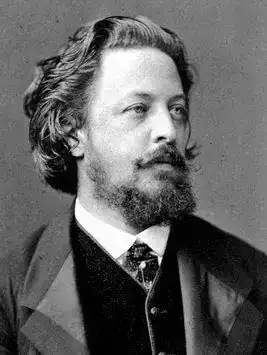
Paul von Heyse
1830–1914
· vivió 84 años
 DE
DE
DE
Paul Heyse was a prominent German writer, known for his extensive work in poetry, prose, and theater. He was a central figure in German literary life in the 19th and early 20th centuries, being awarded the Nobel Prize in Literature in 1910. His writing covered a wide range of themes, often exploring human psychology and the complexities of social relationships. Heyse is remembered as a representative of the Munich School, associated with a certain academicism and refined aesthetics.
n. 1830-03-15, Berlim · m. 1914-04-02, Munique
97
Visualizaciones
Biografía
Identification and basic context
Paul Johann Ludwig von Heyse was born on March 15, 1830, in Berlin, and died on April 2, 1914, in Munich. Pseudonym: Paul von Heyse. He was a prominent German writer and playwright, a central figure in German literary life in the second half of the 19th and early 20th centuries. His family background was from the educated middle class; his father was a philologist and professor. He was a citizen of the Kingdom of Prussia and later of the German Empire, writing in German.Childhood and education
Heyse had a childhood marked by an intellectual environment. He attended high school in Berlin, where he showed an aptitude for languages and literature. He studied Classical and Romance Philology at the universities of Bonn and Berlin, being a student of renowned academics. His early readings included Greek and Latin classics, as well as German and Italian romantic literature. He was strongly influenced by Italian culture, which he would visit and deeply love.Literary career
Heyse's writing began in his youth, with the publication of his first poems and plays while still a student. His literary career is characterized by extensive production in various genres. He evolved from romantic lyricism to a greater focus on psychological and realistic details, without ever abandoning a certain aesthetic idealism. He published numerous collections of poems, short stories, novellas, and dramas over more than six decades. He actively collaborated in important literary magazines of the time and worked as a translator, especially of Italian and French works.Work, style, and literary characteristics
Among his best-known works are the short story cycle "Novellen" (1871-1913), the novel "Kinder der Welt" (1873), and plays like "Colberg" (1868). The dominant themes in his work include love, beauty, art, ethics, human psychology, and the conflict between the ideal and the real. Heyse valued poetic form, often using the sonnet and other fixed forms, but he also explored free verse. His style is marked by clarity, formal elegance, and imagistic precision. The poetic voice tends to be lyrical and explore the characters' inner lives. His language is careful and polished. He introduced a certain aesthetic refinement and a more psychological approach to narrative, associating himself with the Munich School, which advocated for formal beauty and art for art's sake.Cultural and historical context
Heyse lived in a period of great transformations in Germany, from the revolutions of 1848 to German unification and the early 20th century. He was a contemporary of figures like Theodor Fontane and Gottfried Keller. He was part of the so-called "Generation of 1840" and was a prominent representative of Psychological Realism and Aestheticism in Germany. Although not directly involved in politics, his work reflected the cultural and social tensions of the time, sometimes clashing with more radical or naturalist trends, as in the famous debate with Wilhelm Bode.Personal life
Heyse married twice, first to the artist Margarethe Sterzinger and then to Anna Sydow. His relationships and social life in Munich, a vibrant cultural center, influenced his worldview and writing. He maintained friendships with other writers and artists, but also had rivalries. His dedication to art and literature was total, being a respected and influential figure in literary circles.Recognition and reception
Paul von Heyse enjoyed enormous prestige during his lifetime, being considered one of the greatest German writers of his generation. He received numerous awards and honors, culminating in the Nobel Prize in Literature in 1910. His work was widely translated and read internationally. However, after his death and with the advent of new literary movements, his work was progressively overshadowed by more modern and experimental authors.Influences and legacy
Heyse was influenced by Goethe, Heine, and by classical and Italian literature. His work, in turn, influenced a generation of German writers who valued formal perfection and psychological depth. His legacy lies in his contribution to the development of the novella and short story in German literature, as well as in his advocacy for a rigorous aesthetic ideal. He was studied by many literary critics, although part of his work has been re-evaluated in light of later aesthetic changes.Interpretation and critical analysis
Heyse's work has been interpreted as an exploration of the complexities of the human soul, ethical conflicts, and the pursuit of beauty. Critics highlight his formal mastery and his ability to create psychologically credible characters. However, some have pointed to a certain thematic and stylistic conservatism, especially when compared to the literary avant-gardes of the 20th century.Curiosities and lesser-known aspects
Heyse was an art collector and passionate about Italian culture, having lived in Italy for long periods. He was known for his formal rigor and his dedication to art for art's sake. He was also a frequent host of literary salons in Munich. His correspondence reveals a man deeply dedicated to his art and an attentive observer of society.Death and memory
Paul von Heyse passed away peacefully in Munich. After his death, his work continued to be published, but his place in the literary canon was gradually challenged by new aesthetics. However, his historical importance as a central figure in 19th-century German literature and his Nobel Prize remain landmarks in his memory.Poemas
0No se encontraron poemas
Comentarios (0)
Iniciar sesión
para publicar un comentario.
Aún no hay comentarios. Sé el primero en comentar.