
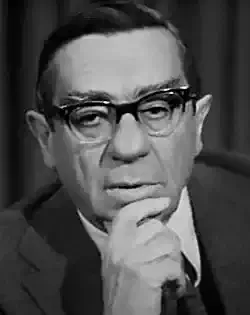
Vitorino Nemésio
1901–1978
· vivió 76 años
 PT
PT
PT
Vitorino Nemésio was a prominent Portuguese poet, novelist, and essayist, whose work is distinguished by its lyrical depth and exploration of Azorean and Portuguese identity. His writing is marked by a rich and musical language, frequently evoking the landscape and culture of the islands where he was born. Nemésio was also an important figure in the academic and cultural world, leaving a lasting legacy in Lusophone literature.
n. 1901-12-19, Praia da Vitória · m. 1978-02-20, Lisboa
49
Visualizaciones
Biografía
Identificación y contexto básico
Vitorino Máximo de Sousa Freire Nemésio was a Portuguese writer, known mainly for his poetry, but also an author of novels and essays. He was born in the Azores, in Praia da Vitória, Terceira, on February 21, 1901, and died in Lisbon on March 2, 1978. His work is intrinsically linked to his Azorean identity, which he explores with depth and affection, intertwining it with broader Portuguese identity. He wrote in Portuguese.Infancia y formación
Born into a family with means and connections to local politics, Nemésio had a childhood marked by the beauty and isolation of the Azorean archipelago. His intellectual training was solid, having completed the Romance Philology course at the Faculty of Letters of the University of Lisbon. From an early age, he showed a great interest in literature and culture, absorbing influences that would shape his worldview and his writing.Trayectoria literaria
Vitorino Nemésio's literary career began early, with the publication of his first poems in his youth. Throughout his life, he published a vast poetic work, which evolved in style and theme, but always maintained a strong connection to his homeland and a highly sensitive lyricism. He was also a university professor and played an active role in promoting Portuguese culture, collaborating in various publications and anthologies.Obra, estilo y características literarias
Among his best-known poetic works are "O Bicho Harmonioso" (1938), "Nem Mais Um Dia" (1940), "A Secreta Viagem" (1950), and "Oração de Panorama" (1958). Nemésio explores themes such as love, saudade, the passage of time, the exuberant nature of the Azores, identity, and the human condition. His style is characterized by educated but accessible language, remarkable musicality, and the use of vivid and evocative imagery. He often resorted to more traditional forms, such as the sonnet, but also experimented with free verse. His poetry has a predominantly lyrical and confessional tone, but can also be markedly reflective and elegiac.Contexto cultural e histórico
Vitorino Nemésio lived and wrote during a significant period of Portuguese history, encompassing the Military Dictatorship, the Estado Novo, and the years of transition to democracy. His work subtly reflects the existential and identity concerns of a Portugal in transformation. He was a contemporary of other great names in Portuguese literature, with whom he shared a vibrant cultural scene, but he always maintained an authentic and distinctive voice.Vida pessoal
Vitorino Nemésio was married and had children. His connection to the Azores was a constant throughout his life, serving as an ambassador for island culture in mainland Portugal. He was a university professor, dedicating himself to teaching and research in the field of Romance Philology, which influenced his profound literary culture.Reconocimiento y recepción
Nemésio is widely recognized as one of the great Portuguese poets of the 20th century. His work has been the subject of study and admiration both in Portugal and abroad. He received various awards and honors throughout his career, consolidating his place in the canon of Portuguese-language literature.Influencias y legado
Influenced by authors such as Fernando Pessoa and Camilo Pessanha, Vitorino Nemésio, in turn, influenced later generations of poets with his lyrical sensitivity and his unique way of expressing Azorean identity. His legacy lies in how he managed to merge the landscape and soul of the Azores with the universality of the human experience, leaving behind a work of undeniable aesthetic and emotional value.Interpretación y análisis crítico
Nemésio's work has been analyzed from various perspectives, from the exploration of regional identity to reflection on universal themes such as finitude and the search for meaning. His poetry is often seen as a testament to the intrinsic relationship between the individual, the land, and the cosmos.Curiosidades y aspectos menos conocidos
Beyond his facet as a poet and professor, Nemésio was passionate about the culture and history of the Azores, dedicating himself to researching and disseminating the island heritage. His poetic work, although often melancholic, is also imbued with a deep vitality and a love for life.Muerte y memoria
Vitorino Nemésio died in Lisbon in 1978. His memory is celebrated through his work, which continues to be read and studied, and through his relevance as one of the most important Portuguese poets of the 20th century, with a prominent place in the literature of the Azores.Poemas
0No se encontraron poemas
Comentarios (0)
Iniciar sesión
para publicar un comentario.
Aún no hay comentarios. Sé el primero en comentar.