
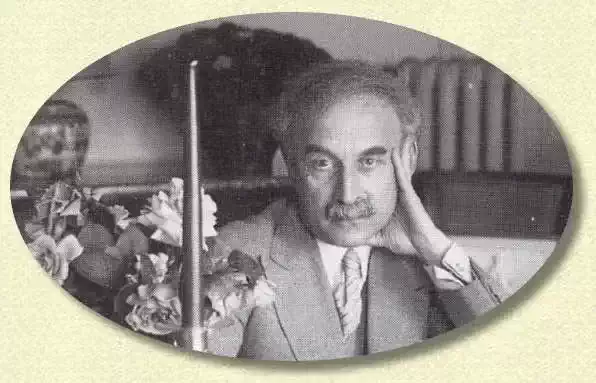
Abel Bonnard

Abel Bonnard

1883–1968 · lived 84 years FR FR

Abel Bonnard was a French poet, novelist, and essayist known for his lyrical work and, later, for his controversial political stances. Born at the end of the 19th century, Bonnard began his literary career with poems and novels that explored themes such as nature, beauty, and introspection. His early writing was praised for its elegance and aesthetic sensitivity. However, his trajectory took a different turn in the following decades, especially during and after World War II, when he adopted political positions aligned with the far-right and the Vichy regime, which significantly tarnished his reputation.

n. 1883-12-19, Poitiers · m. 1968-05-31, Madrid

52 Views
Bio
Abel Bonnard (December 12, 1883 – May 29, 1961) was a French poet, novelist, and essayist. He was born in Poitiers and studied at the Sorbonne, where he excelled in literature. Bonnard began his literary career with the publication of poetry collections and novels. His early work, such as 'Les Impudeurs' (1907) and 'Quand le coq chantera' (1911), demonstrated a talent for lyrical description and a sensitivity to aesthetics. He won the Prix Goncourt in 1931 for his novel 'L'Ciel de Bari'. During the 1930s, Bonnard increasingly leaned towards right-wing political positions. With the advent of World War II and the German occupation of France, he became an active supporter of the Vichy regime. He served as Minister of National Education under the government of Pierre Laval, where he implemented policies that were considered repressive and reactionary. After the liberation of France, Bonnard was tried for collaborationism but escaped punishment and lived his final years in voluntary exile. His later political activities largely overshadowed his earlier literary legacy, and he is remembered today for both his written work and his controversial political associations. He passed away in Paris.

Poems

0

No poems found

Comments (0)

Share
Log in to post a comment.

No comments yet. Be the first to comment.