

Awards
Grand prix de littérature de l'Académie française
Grand prix de l'Académie
Description
History and Foundation
The Grand Prix de Littérature of the Académie française, founded in 1912, stands out as one of the oldest and most respected literary awards in France. Its awarding by the Académie française, an institution with a rich history in safeguarding and promoting the French language, confers undeniable institutional weight upon it.
Characteristics and Scope
This award is distinguished by its broad scope, not limiting itself to a specific literary genre. It can be awarded to novels, essays, biographies, historical works, or poetry, as long as they demonstrate exceptional literary merit and a remarkable command of the French language.
Its distinctive characteristic lies in rewarding a complete work, rather than a book published in a specific year. Although, in practice, it often falls upon a recent work, its primary objective is to celebrate the excellence of writing and the cultural impact of an author throughout their career, or a work that stands out particularly.
Selection Criteria
The selection criteria are rigorous, focusing on stylistic quality, thematic depth, originality, and the relevance of the work. The final decision is made by the members of the Académie française, in deliberations held in secret sessions.
Distinguished Laureates
Throughout its existence, the award has distinguished some of the most prominent French writers, such as André Gide, François Mauriac, Julien Green, Marguerite Yourcenar, and Patrick Modiano. Many of these laureates would go on to receive other internationally renowned accolades, including the Nobel Prize in Literature.
Impact and Relevance
The relevance of this award transcends the prestige conferred upon the author and the work. Its ability to highlight and promote French literature to a wider audience, both in France and abroad, is one of its greatest legacies.
The monetary value of the award, although secondary to the recognition, is symbolic and serves to reinforce the distinction granted. A curious fact is the possibility of the award being divided between two authors, should the Academy deem two works equally deserving of distinction.
The longevity of the Grand Prix de Littérature and the solidity of the institution that confers it ensure its continued importance in the Francophone literary landscape, functioning as a seal of quality and an indicator of works that stand the test of time.
Winners

Michel Bernard


Daniel Pennac

Patrick Deville

Régis Debray

Charles Juliet
Charles Juliet is a French writer known for his introspective and deeply personal work, which often explores themes such as childhood, memory, the relationship with the body, and the search for meaning amidst life's adversities. His writing is marked by a brutal honesty and an exploration of the complexities of the human psyche. His work, which includes novels and diaries, is a continuous attempt to understand himself and the world, often through a raw and unadorned language that reveals great sensitivity and vulnerability.

Laurence Cossé

Michel Butor
Michel Butor was an influential French novelist and essayist, associated with the Nouveau Roman. His work is characterized by formal experimentation, exploration of the novel's structure, and interrogation of reality.

Jean-Bertrand Pontalis

Vincent Delecroix

Michel Chaillou

Danièle Sallenave

Jean Raspail
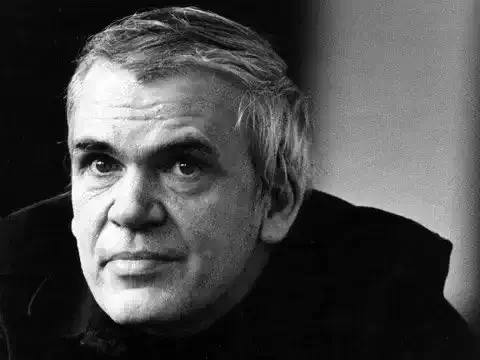
Milan Kundera

André Brincourt

Béatrix Beck

Jacques Brenner
Jacques Brenner was a French writer, literary critic, and editor. His work encompasses essays, criticisms, and texts on literature, with a particular interest in contemporary poetry and prose. Brenner dedicated himself to analyzing and promoting the work of various writers, contributing to intellectual debate and literary dissemination in France. His role as an editor was also fundamental to launching new talents.

Louis Nucera

Jacques Lacarrière

Roger Vrigny

Jacques Brosse

Roger Grenier

Michel Mohrt

Jacques Laurent

Antoine Blondin

Paul Guth
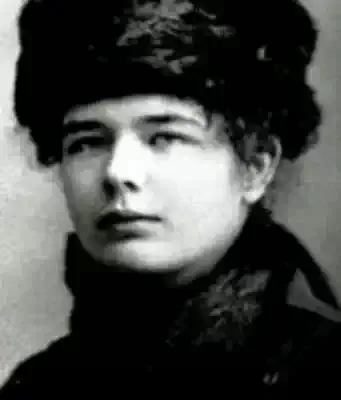
Marguerite Yourcenar
Marguerite Yourcenar was a French-American writer, translator, and literary critic, born in Belgium. She was the first woman elected to the French Academy in 1980. Her work is marked by a scholarly, reflective style and a profound exploration of the human condition, history, and mythology.

José Cabanis

Henri Queffélec

André Dhôtel

Louis Guilloux

Jean-Louis Curtis

Georges Emmanuel Clancier
Georges Emmanuel Clancier was a French poet, novelist, and essayist, whose work is characterized by a profound reflection on the human condition, nature, memory, and the passage of time. His poetry, often marked by a serene melancholy and great musicality, explores the tensions between being and becoming, the visible and the invisible. Clancier is recognized for his lyrical and philosophical writing, which dialogues with literary tradition and offers a unique vision of existence.

Julien Green


Pierre Gascar

Henri Bosco
Henri Bosco was a French novelist whose works explore the landscapes of Provence and human psychology, often with elements of mystery and suspense. His writing is praised for its dense atmosphere and reflections on the human condition.

Emmanuel Berl

Henri Gouhier

Henri Petit

Gustave Thibon
Gustave Thibon was a French philosopher and essayist, known for his reflections on the human condition, spirituality, and the relationship between man and nature. His work is marked by a profound humanism and the search for a synthesis between rational thought and intuition.

Charles Vildrac

Luc Estang

Jacques Maritain

Simone Porché

Thierry Maulnier

Jules Roy

Henri Clouard

Jules Supervielle


Jean Guitton

Marcel Brion

Marcel Arland

Marc Chadourne

Gabriel Marcel

Jean Paulhan

Jean Schlumberger

André Suarès
André Suarès was a French writer, poet, and critic, known for his intense and passionate style and his philosophical exploration of art and life. Born in Marseille in 1868, he dedicated himself to literature and reflection on European culture. His work includes essays, poetry, and criticism, often focusing on historical and artistic figures. Suarès was an original thinker, whose writing is marked by rich language and a profound existential questioning.
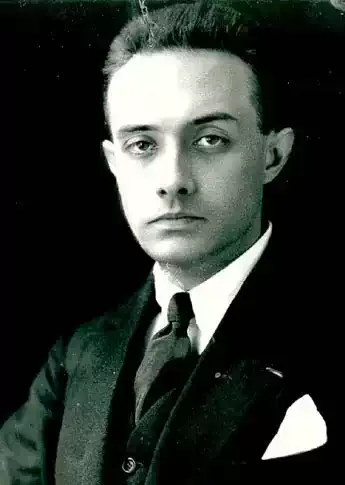
Henry de Montherlant
Henry de Montherlant was a renowned French novelist, playwright, and essayist. Born in Paris, France, on April 20, 1895, he is known for his works that explore themes such as virility, love, honor, and the pursuit of beauty. Montherlant developed a distinct literary style, often lyrical and with a strong emotional charge. His work reflects a melancholic and idealistic view of the world, with characters frequently tormented by internal conflicts and the passage of time.

Raymond Escholier

Henri Massis

Jean-Louis Vaudoyer

Joseph de Pesquidoux
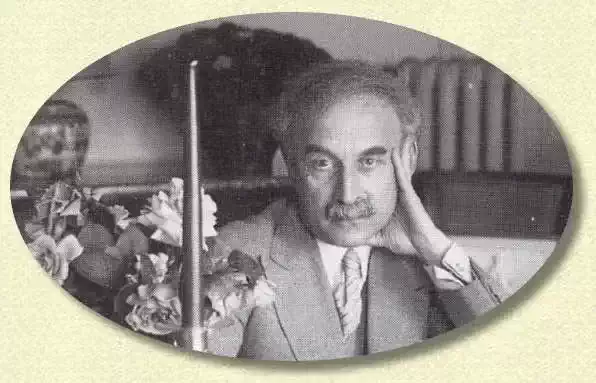
Abel Bonnard
Abel Bonnard was a French poet, novelist, and essayist known for his lyrical work and, later, for his controversial political stances. Born at the end of the 19th century, Bonnard began his literary career with poems and novels that explored themes such as nature, beauty, and introspection. His early writing was praised for its elegance and aesthetic sensitivity. However, his trajectory took a different turn in the following decades, especially during and after World War II, when he adopted political positions aligned with the far-right and the Vichy regime, which significantly tarnished his reputation.

Pierre Lasserre

Anna de Noailles
Anna de Noailles was a Franco-Romanian poet and novelist, born in 1876. She is considered one of the most important poetic voices in France in the early 20th century. Her work is marked by intense lyricism, sensuality, and a deep reflection on life, death, and nature.

Edmond Jaloux

Jean Tharaud

Jérôme Tharaud

Gérard d'Houville
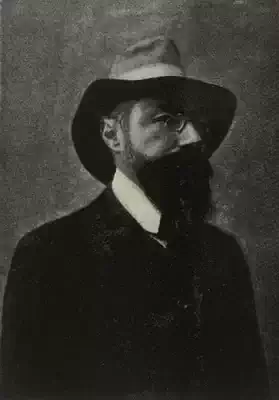
Francis Jammes
Francis Jammes was a French symbolist poet, known for his lyrical and imagistic poetry, often inspired by rural life and nature. He was born on December 2, 1868, in Tournay, France. His work is marked by simple and direct language, evoking sensations and landscapes with great sensitivity. Jammes also explored religious and philosophical themes in his writing, developing a unique style that distinguished him in the literary scene of his time.

Pierre-Maurice Masson

Émile Nolly
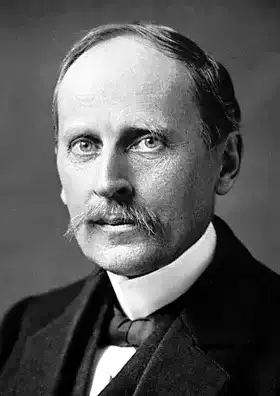
Romain Rolland
Romain Rolland was a prominent French novelist, playwright, and musicologist, who was awarded the Nobel Prize in Literature in 1915. Born in Clamecy, France, in 1866, he is famous for his work "Jean-Christophe", a cycle of ten novels that narrates the life of a German composer. His work is marked by a profound humanism, pacifism, and an interest in music and spirituality.

André Lafon
André Lafon is a French author, journalist, and editor, known for his work in the field of science fiction and fantasy. With a career dedicated to writing and promoting literature, Lafon has explored themes such as technology, contemporary society, and human relationships in his texts, often with a critical and imaginative perspective.