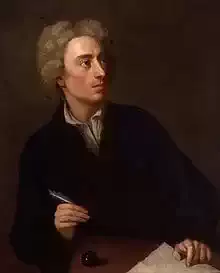
Sappho to Phaon (Ovid Heroid XV)
Sappho to Phaon (Ovid Heroid XV)
Say, lovely youth, that dost my heart command,
Can Phaon's eyes forget his Sappho's hand?
Must then her name the wretched writer prove,
To thy remembrance lost, as to thy love?
Ask not the cause that I new numbers choose,
The Lute neglected, and the Lyric muse;
Love taught my tears in adder notes to flow,
And tun'd my heart to Elegies of woe,
I burn, I burn, as when thro' ripen'd corn
By driving winds the spreading flames are borne!
Phaon to Aetna's scorching fields retires,
While I consume with more than Aetna's fires!
No more my soul a charm in music finds,
Music has charms alone for peaceful minds.
Soft scenes of solitude no more can please,
Love enters there, and I'm my own disease.
No more the Lesbian dames my passion move,
Once the dear objects of my guilty love;
All other loves are lost in only thine,
Ah youth ungrateful to a flame like mine!
Whom would not all those blooming charms surprize,
Those heav'nly looks, and dear deluding eyes?
The harp and bow would you like Phoebus bear,
A brighter Phoebus Phaon might appear;
Would you with ivy wreath your flowing hair,
Not Bacchus' self with Phaon could compare:
Yet Phoebus lov'd, and Bacchus felt the flame,
One Daphne warm'd, and one the Cretan dame,
Nymphs that in verse no more could rival me,
That ev'n those Gods contend in charms with thee.
The Muses teach me all their softest lays,
And the wide world resounds with Sappho's praise.
Tho' great Alcaeus more sublimely sings,
And strikes with bolder rage the sounding strings,
No less renown attends the moving lyre,
Which Venus tunes, and all her loves inspire;
To me what nature has in charms deny'd,
Is well by wit's more lasting flames supply'd.
Tho' short my stature, yet my name extends
To heav'n itself, and earth's remotest ends.
Brown as I am, an Ethiopian dame
Inspir'd young Perseus with a gen'rous flame;
Turtles and doves of diff'ring hues unite,
And glossy jet is pair'd with shining white.
If to no charms thou wilt thy heart resign,
But such as merit, such as equal thine,
By none, alas! by none thou canst be mov'd,
Phaon alone by Phaon must be lov'd!
Yet once thy Sappho could thy cares employ,
Once in her arms you center'd all your joy:
No time the dear remembrance can remove,
For oh! how vast a memory has love!
My music, then, you could for ever hear,
And all my words were music to your ear;
You stopp'd with kisses my enchanting tongue,
And found my kisses sweeter than my song.
In all I pleas'd, but most in what was best;
And the last joy was dearer than the rest.
Then with each word, each glance, each motion fir'd,
You still enjoy'd, and yet you still desir'd,
'Till all dissolving in the trance we lay,
And in tumultuous raptures died away.
The fair Sicilians now thy soul inflame;
Why was I born, ye Gods, a Lesbian dame?
But ah beware, Sicilian nymphs! nor boast
That wand'ring heart which I so lately lost;
Nor be with all those tempting words abus'd,
Those tempting words were all to Sappho us'd.
And you that rule Sicilia's happy plains,
Have pity, Venus, on your Poet's pains!
Shall fortune still in one sad tenor run,
And still increase the woes so soon begun?
Inur'd to sorrow from my tender years,
My parent's ashes drank my early tears:
My brother next, neglecting wealth and fame,
Ignobly burn'd in a destructive flame:
An infant daughter late my griefs increas'd,
And all a mother's cares distract my breast.
Alas, what more could fate itself impose,
But thee, the last and greatest of my woes?
No more my robes in waving purple flow,
Nor on my hand the sparkling di'monds glow;
No more my locks in ringlets curl'd diffuse
The costly sweetness of Arabian dews,
Nor braids of gold the varied tresses bind,
That fly disorder'd with the wanton wind,
For whom should Sappho use such arts as these?
He's gone, whom only she desir'd to please!
Cupid's light darts my tender bosom move,
Still is there cause for Sappho still to love:
So from my birth the Sisters fix'd my doom,
And gave to Venus all my life to come;
Or while my Muse in melting notes complains,
My yielding heart keeps measure to my strains.
By charms like thine which all my soul have won,
Who might not - ah! who would not be undone?
For those Aurora Cephalus might scorn,
And with fresh blushes paint the conscious morn.
For those might Cynthia lengthen Phaon's sleep,
And bit Endymion nightly tend his sheep.
Venus for those had rapt thee to the skies,
But Mars on thee might look with Venus' eyes.
O scarce a youth, yet scarce a tender boy!
O useful time for lovers to employ!
Pride of thy age, and glory of thy race,
Come to these arms, and melt in this embrace!
The vows you never will return, receive;
And take at least the love you will not give.
See, while I write, my words are lost in tears;
The less my sense, the more my love appears.
Sure 'twas not much to bid one kind adieu,
(At least to feign was never hard to you)
Farewell, my Lesbian love, you might have said,
Or coldly thus, Farewell, oh Lesbian maid!
No tear did you, no parting kiss receive,
Nor knew I then how much I was to grieve.
No lover's gift your Sappho could confer,
And wrongs and woes were all you left with her.
No charge I gave you, and no charge could give,
But this, Be mindful of our loves, and live.
Now by the Nine, those pow'rs ador'd by me,
And Love, the God that ever waits on thee,
When first I heard (from whom I hardly knew)
That you were fled, and all my joys with you,
Like some sad statue, speechless, pale I stood,
Grief chill'd my breast, and stopp'd my freezing blood;
No sigh to rise, no tear had powr to flow,
Fix'd in a stupid lethargy of woe:
But when its way th' impetuous passion found,
I rend my tresses, and my breast I wound,
I rave, then weep, I curse, and then complain,
Now swell to rage, no melt in tears again.
Not fiercer pangs distract the mournful dame,
Whose first-born infant feeds the fun'ral flame.
My scornful brother with a smile appears,
Insults my woes, and triumphs in my tears;
His hated image ever haunts my eyes,
And why this grief? thy daughter lives, he cries.
Stung with my Love, and furious with despair,
All torn my garments, and my bosom bare,
My woes, thy crimes, I to the world proclaim;
Such inconsistent things are love and shame!
'Tis thou art all my care and my delight,
My daily longing, and my dream by night:
Oh night more pleasing than the brightest day,
When fancy gives what absence takes away,
And, dress'd in all its visionary charms,
Restores my fair deserter to my arms!
Then round your neck in wanton wreaths I twine,
Then you, methinks, as fondly circle mine:
A thousand tender words I hear and speak;
A thousand melting kisses give, and take:
Then fiercer joys, I blush to mention these,
Yet while I blush, confess how much they please.
But when, with day, the sweet delusions fly,
And all things wake to life and joy, but I,
As if once more forsaken, I complain,
And close my eyes to dream of you again;
Then frantic rise, and like some Fury rove
Thro' lonely plains, and thro' the silent grove,
As if the silent grove, and lonely plains,
That knew my pleasures, could relieve my pains.
I view the Grotto, once the scene of love,
The rocks around, the hanging roofs above,
That charm'd me more, with native moss o'ergrown,
Than Phyrgian marble, or the Parian stone.
I find the shades that veil'd our joys before;
But, Phaon gone, those shades delight no more.
Here the press'd herbs with bending tops betray
Where oft entwin'd in am'rous folds we lay;
I kiss that earth which once was press'd by you,
And all with tears the with'ring herbs bedew.
For thee the fading trees appear to mourn,
And birds defer their songs till thy return;
Night shades the grove,s and all in silence lie,
All but the mournful Philomel and I:
With mournful Philomel I join my strain,
Of Tereus she, of Phaeon I complain.
A spring there is, whose silver waters show,
Clear as a glass, the shining sands below:
A flow'ry Lotos spreads its arms above,
Shades all the banks, and seems itself a grove;
Eternal greens the mossy margin grace,
Watch'd by the sylvan Genius of the place.
Here as I lay, and swell'd with tears the flood,
Before my sight a wat'ry Virgin stood:
She stood and cry'd, 'O you that love in vain!
'Fly hence, and seek the fair Leucadian main;
'There stands a rock, from whose impending steep
'Apollo's fane surveys the rolling deep;
'There injur'd lovers, leaping from above,
'Their flames extinguish, and forget to love.
'Deucalion once, with hopeless fury burn'd,
'In vain he lov'd, relentless Pyrrha scorn'd;
'But when from hence he plung'd into the main,
'Deucalion scorn'd, and Pyrrha lov'd in vain.
Haste, Sappho, haste, from high Leucadia throw
'Thy wretched weight, nor dread the deeps below!'
She spoke, and vanish'd with the voice - I rise,
And silent tears fall trickling from my eyes.
I go, ye Nymphs! those rocks and seas to prove;
How much I fear, but ah, how much I love!
I go, ye Nymphs! where furious love inspires;
Let female fears submit to female fires.
To rocks and seas I fly from Phaon's hate,
And hope from seas and rocks a milder fate.
Ye gentle gales, beneath my body blow,
And softly lay me on the waves below!
And thou, kind Love, my sinking limbs sustain,
Spread thy soft wings, and waft me o'er the main,
Nor let a Lover's death the guiltless flood profane!
On Phoebus' shrine my harp I'll then bestow,
And this Inscription shall be plac'd below.
'Here she who sung, to him that did inspire,
'Sappho to Phoebus consecrates her Lyre;
'What suits with Sappho, Phoebus, suits with thee;
The Gift, the giver, and the God agree.'
But why, alas, relentless youth, ah why
To distant seas must tender Sappho fly?
Thy charms than those may far more pow'rful be,
And Phoebus' self is less a God to me.
Ah! canst thou doom me to the rocks and sea,
O far more faithless and more hard than they?
Ah! canst thou rather see this tender breast
Dash'd on these rocks than to thy bosom prest?
This breast which once, in vain! you lik'd so well;
Where Loves play'd, and where the Muses dwell.
Alas! the Muses now no more inspire,
Untun'd my lute, and silent is my lyre,
My languid numbers have forgot to flow,
And fancy sinks beneath a weight of woe.
Ye Lesbian virgins, and ye Lesbian dames,
Themes of my verse, and objects of my flames,
No more your groves with my glad songs shall ring,
No more these hands shall touch the trembling string:
My Phaon's fled, and I those arts resign
(Wretch that I am, to call that Phaon mine!)
Return, fair youth, return, and bring along
Joy to my soul, and vigour to my song:
Absent from thee, the Poet's flame expires;
But ah! how fiercely burn the Lover's fires!
Gods! can no pray'rs, no sighs, no numbers move
One savage heart, or teach it how to love?
The winds my pray'rs, my sighs, my numbers bear,
The flying winds have lost them all in air!
Oh when, alas! shall more auspicious gales
To these fond eyes restore thy welcome sails?
If you return - ah why these long delays?
Poor Sappho dies while careless Phaon stays.
O launch thy bark, secure of prosp'rous gales;
Cupid for thee shall spread the swelling gales;
I you will fly - (yet ah! what cause can be,
Too cruel youth, that you should fly from me?)
If not from Phaon I must hope for ease,
Ah let me seek it from the raging seas:
To raging seas unpity'd I'll remove,
And either cease to live or cease to love!
Ode on St. Cecilia's Day
Ode on St. Cecilia's Day
I.
Descend ye Nine! descend and sing;
The breathing instruments inspire,
Wake into voice each silent string,
And sweep the sounding lyre!
In a sadly-pleasing strain
Let the warbling lute complain:
Let the loud trumpet sound,
'Till the roofs all around
The shrill echo's rebound:
While in more lengthen'd notes and slow,
The deep, majestic, solemn organs blow.
Hark! the numbers, soft and clear,
Gently steal upon the ear;
Now louder, and yet louder rise,
And fill with spreading sounds the skies;
Exulting in triumph now swell the bold notes,
In broken air, trembling, the wild music floats;
'Till, by degrees, remote and small,
The strains decay,
And melt away,
In a dying, dying fall.
II.
By Music, minds an equal temper know,
Nor swell too high, nor sink too low.
If in the breast tumultuous joys arise,
Music her soft, assuasive voice applies;
Or when the soul is press'd with cares,
Exalts her in enlivening airs.
Warriors she fires with animated sounds;
Pours balm into the bleeding lover's wounds:
Melancholy lifts her head,
Morpheus rouzes from his bed,
Sloth unfolds her arms and wakes,
List'ning Envy drops her snakes;
Intestine war no more our Passions wage,
And giddy Factions hear away their rage.
III.
But when our Country's cause provokes to Arms,
How martial music ev'ry bosom warms!
So when the first bold vessel dar'd the seas,
High on the stern the Thracian rais'd his strain,
While Argo saw her kindred trees
Descend from Pelion to the main.
Transported demi-gods stood round,
And men grew heroes at the sound,
Enflam'd with glory's charms:
Each chief his sev'nfold shield display'd,
And half unsheath'd the shining blade:
And seas, and rocks, and skies rebound
To arms, to arms, to arms!
IV.
But when thro' all th'infernal bounds
Which flaming Phlegeton surrounds,
Love, strong as Death, the Poet led
To the pale nations of the dead,
What sounds were heard,
What scenes appear'd,
O'er all the dreary coasts!
Dreadful gleams,
Dismal screams,
Fires that glow,
Shrieks of woe,
Sullen moans,
Hollow groans,
And cries of tortur'd ghosts!
But hark! he strikes the golden lyre;
And see! the tortur'd ghosts respire,
See, shady forms advance!
Thy stone, O Sysiphus, stands still,
Ixion rests upon his wheel,
And the pale spectres dance!
The Furies sink upon their iron beds,
And snakes uncurl'd hang list'ning round their heads.
V.
By the streams that ever flow,
By the fragrant winds that blow
O'er th' Elysian flow'rs,
By those happy souls who dwell
In yellow meads of Asphodel,
Or Amaranthine bow'rs,
By the hero's armed shades,
Glitt'ring thro' the gloomy glades,
By the youths that dy'd for love,
Wand'ring in the myrtle grove,
Restore, restore Eurydice to life;
Oh take the husband, or return the wife!
He sung, and hell consented
To hear the Poet's pray'r;
Stern Proserpine relented,
And gave him back the fair.
Thus song could prevail
O'er death and o'er hell,
A conquest how hard and how glorious?
Tho' fate had fast bound her
With Styx nine times round her,
Yet music and love were victorious.
VI.
But soon, too soon, the lover turns his eyes:
Again she falls, again she dies, she dies!
How wilt thou now the fatal sisters move?
No crime was thine, if 'tis no crime to love.
Now under hanging mountains,
Beside the falls of fountains,
Or where Hebrus wanders,
Rolling in Maeanders,
All alone,
Unheard, unknown,
He makes his moan;
And calls her ghost,
For ever, ever, ever lost!
Now with Furies surrounded,
Despairing, confounded,
He trembles, he glows,
Amidst Rhodope's snows:
See, wild as the winds, o'er the desart he flies;
Hark! Haemus resounds with the Bacchanals cries
-Ah see, he dies!
Yet ev'n in death Eurydice he sung,
Eurydice still trembled on his tongue,
Eurydice the woods,
Eurydice the floods,
Eurydice the rocks, and hollow mountains rung.
VII.
Music the fiercest grief can charm,
And fate's severest rage disarm:
Music can soften pain to ease,
And make despair and madness please:
Our joys below it can improve,
And antedate the bliss above.
This the divine Cecilia found,
And to her Maker's praise confin'd the sound.
When the full organ joins the tuneful quire,
Th'immortal pow'rs incline their ear;
Borne on the swelling notes our souls aspire,
While solemn airs improve the sacred fire;
And Angels lean from heav'n to hear.
Of Orpheus now no more let Poets tell,
To bright Cecilia greater pow'r is giv'n;
His numbers rais'd a shade from hell,
Hers lift the soul to heav'n.