
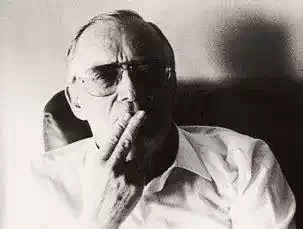
António Osório
 PT
PT
António Osório was a Portuguese poet who deeply explored the dimensions of faith, love, and human existence in his work. His poetry is marked by a lyrical and introspective language, often addressing religious themes with a personal and contemporary approach. His ability to dialogue with spiritual tradition, yet project it onto the anxieties of modern man, stands out. His writing reflects a constant search for meaning and transcendence, revealing a profound humanism and a keen sensitivity to the complexities of inner life and human relationships.
n. 1933-08-01, Setúbal · m. 2021-11-18, Setúbal, Portugal
Bio
Identification and basic context
António Osório, full name António Manuel de Oliveira Osório, was born in São João da Talha, Loures. He was a Portuguese poet whose work fits into a context of renewal in religious and lyrical poetry in Portugal, engaging with the spiritual and existential anxieties of the 20th century.Childhood and education
His childhood and education were marked by an environment that fostered his sensitivity and interest in words. Although specific details are less publicly documented, his work clearly shows a solid education, possibly with self-taught inclinations in literature and theology, absorbing influences that shaped his lyrical and spiritual vision.Literary career
António Osório's literary career began with the publication of his first poems, revealing an early singular voice in Portuguese poetry. His work evolved over time, maintaining a thematic focus on faith, love, and the search for God, but always with an innovative and personal approach. He actively participated in the dissemination of poetry, contributing to the enrichment of the literary landscape.Work, style, and literary characteristics
Work, style, and literary characteristics Among his best-known works are titles that explore the relationship between man and the divine, and with his neighbor. The dominant themes are faith, love (divine and human), hope, human fragility, and the search for transcendent meaning. His style is characterized by deep lyricism, clear language rich in symbolism and poetic imagery, with strong musicality. He frequently uses free verse, prioritizing the expression of emotion and reflection. His poetic voice is confessional and universal, reflecting an intimacy that resonates with the human experience.Work, style, and literary characteristics
Cultural and historical context António Osório wrote in a period marked by profound social, political, and cultural transformations in Portugal and worldwide. His work engages with the spiritual and existential anxieties that emerged after World War II and in a context of changing mentalities. His religious poetry is part of a movement that sought to update and make the experience of faith accessible in the contemporary world, moving away from excessive formalism and closer to personal experience.Work, style, and literary characteristics
Personal life Details about António Osório's personal life are sometimes scarce in general publications, but his work reveals a profound inner life. His relationships, both affective and spiritual, seem to have been a rich source for his poetic creation. It is likely that he maintained a discreet life, largely dedicated to his literary and spiritual vocation.Work, style, and literary characteristics
Recognition and reception António Osório gained significant recognition during his lifetime, especially among readers who identified with his lyrical and spiritual approach to poetry. His work was well received by critics who valued the depth and originality of his poetic expression. He continues to be read and studied as one of the important poets of Portuguese religious poetry.Work, style, and literary characteristics
Influences and legacy In his work, influences from poets who explored the spiritual dimension of poetry can be identified, but Osório developed his own distinctive style. His legacy lies in how he managed to bring poetic language closer to the experience of faith, making it accessible and relevant to new generations. He influenced poets who seek to explore similar themes with authenticity and depth.Work, style, and literary characteristics
Interpretation and critical analysis António Osório's work has been interpreted as a testament to the persistence of spiritual seeking in the modern world. Critical analyses highlight his ability to reconcile religious tradition with contemporary sensibility, addressing universal themes such as love, pain, and hope in a lyrical and profoundly human way.Work, style, and literary characteristics
Curiosities and lesser-known aspects An interesting aspect of his work is how, through seemingly simple language, he manages to touch upon complex existential questions. His poetry invites meditation and introspection, serving as a mirror to the anxieties of those who read it.Work, style, and literary characteristics
Death and memory António Osório passed away in Lisbon. His memory endures through his poetic work, which continues to be published and inspire readers and other creators, keeping his lyrical and spiritual voice alive.Poems
0No poems found
Videos
50
Comments (0)
No comments yet. Be the first to comment.