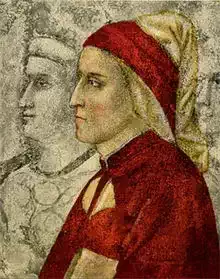
Dante Alighieri

Dante Alighieri

1265–1321 · lived 56 years IT IT

Dante Alighieri was a Florentine poet of the Middle Ages, widely considered the greatest poet of the Italian language and the most important writer of the Western Middle Ages. His epic poem, the Divine Comedy, is regarded as one of the greatest works of world literature and has had a profound impact on religious, political, and literary thought. Dante's work is characterized by its theological depth, intricate symbolism, and vivid depictions of the afterlife. His synthesis of medieval Christian theology, classical philosophy, and contemporary politics solidified his place as a central figure in literary and intellectual history, shaping the development of Italian language and literature.

n. 1265-05-30, Florença · m. 1321-09-13, Ravena

8,471 Views

Ulysses' Last Voyage

Ulysses' Last Voyage

I launched her with my small remaining band
and, putting out to sea, we set the main
on that lone ship and said farewell to land.

Far to starboard rose the coast of Spain,
astern was Sardi, Islas at our bow,
and soon we saw Morocco port abeam.

Though I and comrades now were old and slow,
we hauled till nightfall for the narrow sound
where Hercules had shown what not to do,

by setting marks for men to stay behind.
At dawn the starboard lookout made Seville,
and at the straits stood Ceuta t'other hand.

'Brothers,' I shouted, 'who have had the will
to come through danger, and have reached the west!
our time awake is brief from now until

the senses die, and so I say we test
the sun's own motion and do not forego
the worlds beyond, unknown and peopleless.

Think of the roots from which you sprang, and show
that you are human: not unconscious brutes
but made to follow virtue and to know.'
Read full poem
Bio

Identification and basic context

Dante Alighieri was a central figure of medieval Italian literature, a poet, writer, and political thinker. He is best known for his epic poem, the *Divine Comedy* (*La Divina Commedia*), which is considered one of the greatest works of world literature and a foundational text of the Italian language. Born in Florence, Dante was deeply involved in the political life of his city-state, which significantly influenced his literary output. He wrote in Tuscan vernacular, elevating it to a literary language and contributing immensely to the development of modern Italian. His work is characterized by its profound theological content, intricate allegorical structure, and its synthesis of classical and Christian thought.

Childhood and education

Dante was born into a minor noble family in Florence. His early education was typical for a boy of his standing, including religious instruction and the rudiments of Latin. He is believed to have studied at the 'Dante Alighieri' school in Florence, though details are scarce. He likely received further education from scholars and clerics, immersing himself in classical literature, philosophy, and theology. His education was further shaped by his encounters with influential figures of his time, including the poet and philosopher Brunetto Latini, who became a mentor. His formative years were marked by the political turbulence of Florence, which instilled in him a deep understanding of civic life and a strong sense of justice.

Literary trajectory

Dante's literary career began in his youth. His early works, such as the *Vita Nuova* (New Life), blend poetry and prose to explore themes of love, loss, and spiritual aspiration, centered on his idealized love for Beatrice. This work established his reputation as a significant poet. His political involvement led to his exile from Florence in 1302, a pivotal event that profoundly shaped his masterpiece, the *Divine Comedy*. Written during his exile, this epic poem narrates his allegorical journey through Hell, Purgatory, and Paradise. The *Divine Comedy* became his magnum opus, cementing his place in literary history and demonstrating the artistic potential of the vernacular. He also produced important works of political and philosophical prose, such as *De Monarchia* (On Monarchy) and *Convivio* (The Banquet).

Works, style, and literary characteristics

Dante's most famous work is the *Divine Comedy*, an allegorical epic poem divided into three parts: *Inferno* (Hell), *Purgatorio* (Purgatory), and *Paradiso* (Paradise). Written in vernacular Tuscan, it describes Dante's journey through the afterlife, guided first by the Roman poet Virgil and then by his beloved Beatrice. Key themes include divine justice, sin and redemption, love, faith, reason, and the political and spiritual state of contemporary Europe. His style is characterized by its immense symbolic richness, vivid imagery, theological rigor, and rhetorical power. He utilized the terza rima, a three-line stanzaic form, which created a sense of continuous movement and interconnectedness. Dante's linguistic innovations and his ability to fuse classical learning with Christian doctrine were groundbreaking. Other significant works include the *Vita Nuova*, *De Monarchia*, and *Convivio*.

Cultural and historical context

Dante lived during a period of intense political and social change in Italy, marked by the struggles between the Guelphs and Ghibellines, papal and imperial power, and the rise of powerful city-states like Florence. His political involvement as a Guelph led to his exile, a profound experience that informed his critique of contemporary society and his vision of a just political order in *De Monarchia*. He was deeply influenced by Scholastic philosophy, particularly the works of Thomas Aquinas, and by classical authors such as Virgil, Ovid, and Aristotle. His work reflects the intellectual and spiritual climate of the late Middle Ages, synthesizing elements of theology, philosophy, and political thought.

Personal life

Dante's personal life was significantly shaped by his political activities and his idealized love for Beatrice Portinari, whom he met in childhood and who became his muse. His marriage to Gemma Donati was politically arranged and produced children, but it is Beatrice who occupies a central place in his literary imagination, symbolizing divine grace and spiritual enlightenment. His exile from Florence was a deeply traumatic experience that profoundly affected his life and work, forcing him to wander through various courts and cities. His friendships and rivalries, particularly within the complex political landscape of Florence, played a crucial role in his life. His strong sense of justice and his deep religious convictions were fundamental aspects of his character.

Recognition and reception

Dante Alighieri received considerable recognition during his lifetime, particularly for the *Vita Nuova*. However, the *Divine Comedy* gained widespread fame and critical acclaim posthumously, solidifying his status as a literary titan. His work was highly influential on subsequent generations of Italian writers and thinkers. The *Divine Comedy* became a cornerstone of Western literature, studied for its theological depth, poetic artistry, and profound human insights. His elevation of the vernacular Tuscan dialect to a literary standard also earned him immense respect and ensured the lasting legacy of the Italian language.

Influences and legacy

Dante was heavily influenced by classical poets like Virgil, Ovid, and Statius, as well as by biblical texts and medieval theologians such as Augustine and Thomas Aquinas. His major influence was on the development of the Italian language and literature; he is often called the "father of the Italian language." His *Divine Comedy* profoundly impacted subsequent European literature, art, and theology, inspiring countless writers, artists, and thinkers across centuries. His allegorical method, his theological framework, and his vivid portrayal of the afterlife became enduring elements in Western culture. His work continues to be translated, studied, and adapted, testament to its enduring power and universal appeal.

Interpretation and critical analysis

Interpretations of Dante's *Divine Comedy* are vast and varied, encompassing theological, philosophical, political, and literary analyses. Key critical debates revolve around the precise nature of his theological orthodoxy, the political allegories embedded in the poem, and the extent to which Beatrice represents a purely spiritual ideal or a more complex human figure. His portrayal of sin, justice, and divine love continues to be explored, as does his complex relationship with classical philosophy and its integration into Christian thought. The poem's enduring power lies in its multifaceted nature, allowing for continuous reinterpretation.

Curiosities and lesser-known aspects

While Dante is primarily known for the *Divine Comedy*, he was also a significant political figure in Florence, serving as one of its priors (chief magistrates). His exile was a deeply personal tragedy that fueled his artistic creation. He had a strong belief in the divine order and the interconnectedness of all things, which permeates his work. Despite his elevated status, his personal life was marked by the practicalities of exile, including reliance on patrons. His meticulous attention to detail and his profound intellectual curiosity are evident in the complex structure and rich allusions of his poetry.

Death and memory

Dante Alighieri died in Ravenna in 1321, likely from malaria, while still in exile. His death was mourned by many, and his tomb in Ravenna became a site of pilgrimage. His legacy has been meticulously preserved and celebrated, with numerous editions, translations, and scholarly studies of his work. The city of Florence has made repeated efforts to have his remains returned, though they remain in Ravenna. Dante's memory is honored through academies, festivals, and countless artistic and literary references, ensuring his enduring presence in global culture.

Poems

12

Autumn Song

Autumn Song

Know'st thou not at the fall of the leaf
How the heart feels a languid grief
Laid on it for a covering,
And how sleep seems a goodly thing
In Autumn at the fall of the leaf?

And how the swift beat of the brain
Falters because it is in vain,
In Autumn at the fall of the leaf
Knowest thou not? and how the chief
Of joys seems--not to suffer pain?

Know'st thou not at the fall of the leaf
How the soul feels like a dried sheaf
Bound up at length for harvesting,
And how death seems a comely thing
In Autumn at the fall of the leaf?
282

Inferno Canto 01

Inferno Canto 01

Nel mezzo del cammin di nostra vita
mi ritrovai per una selva oscura
ché la diritta via era smarrita .

When I had journeyed half of our life's way,
I found myself within a shadowed forest,
for I had lost the path that does not stray.

Ahi quanto a dir qual era è cosa dura
esta selva selvaggia e aspra e forte
che nel pensier rinova la paura !

Ah, it is hard to speak of what it was,
that savage forest, dense and difficult,
which even in recall renews my fear:

Tant'è amara che poco è più morte;
ma per trattar del ben ch'i' vi trovai,
dirò de l'altre cose ch'i' v'ho scorte .

so bitter-death is hardly more severe!
But to retell the good discovered there,
I'll also tell the other things I saw.

Io non so ben ridir com'i' v'intrai,
tant'era pien di sonno a quel punto
che la verace via abbandonai .

I cannot clearly say how I had entered
the wood; I was so full of sleep just at
the point where I abandoned the true path.

Ma poi ch'i' fui al piè d'un colle giunto,
là dove terminava quella valle
che m'avea di paura il cor compunto ,

But when I'd reached the bottom of a hillit
rose along the boundary of the valley
that had harassed my heart with so much fear


guardai in alto, e vidi le sue spalle
vestite già de' raggi del pianeta
che mena dritto altrui per ogne calle .

I looked on high and saw its shoulders clothed
already by the rays of that same planet
which serves to lead men straight along all roads.


Allor fu la paura un poco queta
che nel lago del cor m'era durata
la notte ch'i' passai con tanta pieta .


At this my fear was somewhat quieted;
for through the night of sorrow I had spent,
the lake within my heart felt terror present.


E come quei che con lena affannata
uscito fuor del pelago a la riva
si volge a l'acqua perigliosa e guata ,


And just as he who, with exhausted breath,
having escaped from sea to shore, turns back
to watch the dangerous waters he has quit,


così l'animo mio, ch'ancor fuggiva,
si volse a retro a rimirar lo passo
che non lasciò già mai persona viva .


so did my spirit, still a fugitive,
turn back to look intently at the pass
that never has let any man survive.


Poi ch'èi posato un poco il corpo lasso,
ripresi via per la piaggia diserta,
sì che 'l piè fermo sempre era 'l più basso .


I let my tired body rest awhile.
Moving again, I tried the lonely slopemy
firm foot always was the one below.


Ed ecco, quasi al cominciar de l'erta,
una lonza leggera e presta molto,
che di pel macolato era coverta ;


And almost where the hillside starts to riselook
there!-a leopard, very quick and lithe,
a leopard covered with a spotted hide.


e non mi si partia dinanzi al volto,
anzi 'mpediva tanto il mio cammino,
ch'i' fui per ritornar più volte vòlto .


He did not disappear from sight, but stayed;


indeed, he so impeded my ascent
that I had often to turn back again.

Temp'era dal principio del mattino,
e 'l sol montava 'n sù con quelle stelle
ch'eran con lui quando l'amor divino

The time was the beginning of the morning;
the sun was rising now in fellowship
with the same stars that had escorted it

mosse di prima quelle cose belle;
sì ch'a bene sperar m'era cagione
di quella fiera a la gaetta pelle

when Divine Love first moved those things of beauty;
so that the hour and the gentle season
gave me good cause for hopefulness on seeing

l'ora del tempo e la dolce stagione;
ma non sì che paura non mi desse
la vista che m'apparve d'un leone .

that beast before me with his speckled skin;
but hope was hardly able to prevent
the fear I felt when I beheld a lion.

Questi parea che contra me venisse
con la test'alta e con rabbiosa fame,
sì che parea che l'aere ne tremesse .

His head held high and ravenous with hungereven
the air around him seemed to shudderthis
lion seemed to make his way against me.

Ed una lupa, che di tutte brame
sembiava carca ne la sua magrezza,
e molte genti fé già viver grame ,

And then a she-wolf showed herself; she seemed
to carry every craving in her leanness;
she had already brought despair to many.

questa mi porse tanto di gravezza
con la paura ch'uscia di sua vista,
ch'io perdei la speranza de l'altezza .


The very sight of her so weighted me
with fearfulness that I abandoned hope
of ever climbing up that mountain slope.


E qual è quei che volontieri acquista,
e giugne 'l tempo che perder lo face,
che 'n tutt'i suoi pensier piange e s'attrista ;


Even as he who glories while he gains
will, when the time has come to tally loss,
lament with every thought and turn despondent,


tal mi fece la bestia sanza pace,
che, venendomi 'ncontro, a poco a poco
mi ripigneva là dove 'l sol tace .


so was I when I faced that restless beast
which, even as she stalked me, step by step
had thrust me back to where the sun is speechless.


Mentre ch'i' rovinava in basso loco,
dinanzi a li occhi mi si fu offerto
chi per lungo silenzio parea fioco .


While I retreated down to lower ground,
before my eyes there suddenly appeared
one who seemed faint because of the long silence.


Quando vidi costui nel gran diserto,
«Miserere di me», gridai a lui,
«qual che tu sii, od ombra od omo certo !».


When I saw him in that vast wilderness,
"Have pity on me," were the words I cried,
"whatever you may be-a shade, a man."


Rispuosemi: «Non omo, omo già fui,
e li parenti miei furon lombardi,
mantoani per patria ambedui .


He answered me: "Not man; I once was man.
Both of my parents came from Lombardy,
and both claimed Mantua as native city.


Nacqui sub Iulio, ancor che fosse tardi,


e vissi a Roma sotto 'l buono Augusto
nel tempo de li dèi falsi e bugiardi .


And I was born, though late, sub Julio,
and lived in Rome under the good Augustusthe
season of the false and lying gods.


Poeta fui, e cantai di quel giusto
figliuol d'Anchise che venne di Troia,
poi che 'l superbo Ilión fu combusto .


I was a poet, and I sang the righteous
son of Anchises who had come from Troy
when flames destroyed the pride of Ilium.


Ma tu perché ritorni a tanta noia?
perché non sali il dilettoso monte
ch'è principio e cagion di tutta gioia? ».


But why do you return to wretchedness?
Why not climb up the mountain of delight,
the origin and cause of every joy?"


«Or se' tu quel Virgilio e quella fonte
che spandi di parlar sì largo fiume?»,
rispuos'io lui con vergognosa fronte .


"And are you then that Virgil, you the fountain
that freely pours so rich a stream of speech?"
I answered him with shame upon my brow.


«O de li altri poeti onore e lume
vagliami 'l lungo studio e 'l grande amore
che m'ha fatto cercar lo tuo volume .


"O light and honor of all other poets,
may my long study and the intense love
that made me search your volume serve me now.


Tu se' lo mio maestro e 'l mio autore;
tu se' solo colui da cu' io tolsi
lo bello stilo che m'ha fatto onore .


You are my master and my author, youthe
only one from whom my writing drew
the noble style for which I have been honored.


Vedi la bestia per cu' io mi volsi:
aiutami da lei, famoso saggio,
ch'ella mi fa tremar le vene e i polsi ».

You see the beast that made me turn aside;
help me, o famous sage, to stand against her,
for she has made my blood and pulses shudder,"

«A te convien tenere altro viaggio»,
rispuose poi che lagrimar mi vide,
«se vuo' campar d'esto loco selvaggio :

"It is another path that you must take,"
he answered when he saw my tearfulness,
"if you would leave this savage wilderness;

ché questa bestia, per la qual tu gride,
non lascia altrui passar per la sua via,
ma tanto lo 'mpedisce che l'uccide ;

the beast that is the cause of your outcry
allows no man to pass along her track,
but blocks him even to the point of death;

e ha natura sì malvagia e ria,
che mai non empie la bramosa voglia,
e dopo 'l pasto ha più fame che pria .

her nature is so squalid, so malicious
that she can never sate her greedy will;
when she has fed, she's hungrier than ever.

Molti son li animali a cui s'ammoglia,
e più saranno ancora, infin che 'l veltro
verrà, che la farà morir con doglia .

She mates with many living souls and shall
yet mate with many more, until the Greyhound
arrives, inflicting painful death on her.

Questi non ciberà terra né peltro,
ma sapienza, amore e virtute,
e sua nazion sarà tra feltro e feltro .

That Hound will never feed on land or pewter,
but find his fare in wisdom, love, and virtue;


his place of birth shall be between two felts.

Di quella umile Italia fia salute
per cui morì la vergine Cammilla,
Eurialo e Turno e Niso di ferute .

He will restore low-lying Italy for which
the maid Camilla died of wounds,
and Nisus, Turnus, and Euryalus.

Questi la caccerà per ogne villa,
fin che l'avrà rimessa ne lo 'nferno,
là onde 'nvidia prima dipartilla .

And he will hunt that beast through every city
until he thrusts her back again to Hell,
for which she was first sent above by envy.

Ond'io per lo tuo me' penso e discerno
che tu mi segui, e io sarò tua guida,
e trarrotti di qui per loco etterno ,

Therefore, I think and judge it best for you
to follow me, and I shall guide you, taking
you from this place through an eternal place,

ove udirai le disperate strida,
vedrai li antichi spiriti dolenti,
ch'a la seconda morte ciascun grida ;

where you shall hear the howls of desperation
and see the ancient spirits in their pain,
as each of them laments his second death;

e vederai color che son contenti
nel foco, perché speran di venire
quando che sia a le beate genti .

and you shall see those souls who are content
within the fire, for they hope to reachwhenever
that may be-the blessed people.

A le quai poi se tu vorrai salire,
anima fia a ciò più di me degna:
con lei ti lascerò nel mio partire ;


If you would then ascend as high as these,
a soul more worthy than I am will guide you;
I'll leave you in her care when I depart,

ché quello imperador che là sù regna,
perch'i' fu' ribellante a la sua legge,
non vuol che 'n sua città per me si vegna .

because that Emperor who reigns above,
since I have been rebellious to His law,
will not allow me entry to His city.

In tutte parti impera e quivi regge;
quivi è la sua città e l'alto seggio:
oh felice colui cu' ivi elegge! ».

He governs everywhere, but rules from there;
there is His city, His high capital:

o happy those He chooses to be there!"
E io a lui: «Poeta, io ti richeggio
per quello Dio che tu non conoscesti,
acciò ch'io fugga questo male e peggio ,


And I replied: "O poet-by that God
whom you had never come to know-I beg you,
that I may flee this evil and worse evils,


che tu mi meni là dov'or dicesti,
sì ch'io veggia la porta di san Pietro
e color cui tu fai cotanto mesti ».


to lead me to the place of which you spoke,
that I may see the gateway of Saint Peter
and those whom you describe as sorrowful."


Allor si mosse, e io li tenni dietro.


Then he set out, and I moved on behind him.

264

Quotes

40

Videos

50

Comments (0)

Share
Log in to post a comment.

No comments yet. Be the first to comment.