Identification and basic context
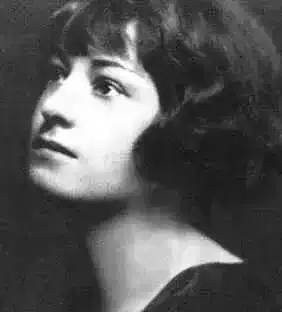
Dorothy Parker, born Dorothy Rothschild, was a renowned American poet, short story writer, critic, and satirist. She is best known for her acerbic wit, her incisive social commentary, and her masterful use of the epigram. Parker was a central figure in the literary scene of New York City during the 1920s and 1930s, particularly associated with the famous Algonquin Round Table. Her work often reflected a disillusionment with conventional societal norms and explored themes of love, loss, and the absurdities of modern life. She was a significant voice of her time, known for her independent spirit and sharp intellect.
Childhood and education
Dorothy Parker's early life was marked by a sense of isolation and a precocious intellect. She received a formal education at the Convent of Mount St. Ursula and the Blessed Sacrament Academy. However, she was largely self-taught, devouring books and developing a keen observational eye from a young age. Her experiences with loss, including the early death of her mother and a difficult relationship with her father and stepmother, contributed to a certain cynicism and independence that would later permeate her writing. She possessed a natural talent for language and a dry sense of humor that set her apart.
Literary trajectory
Parker began her literary career in the advertising world before finding her voice in journalism and poetry. She worked for Vanity Fair and later contributed to The New Yorker, where her reviews and short pieces gained widespread attention. Her first collection of poems, "Enough Rope," published in 1926, was a critical and commercial success, establishing her as a significant literary figure. She continued to publish poetry collections, short stories, and plays throughout her career. Her trajectory saw her evolve from a young writer finding her way to a celebrated, albeit often controversial, literary personality.
Works, style, and literary characteristics
Parker's major works include the poetry collections "Enough Rope" (1926), "Sunset Gun" (1928), and "Death and Taxes" (1931), as well as numerous short stories and essays. Her dominant themes include the disappointments of love, the superficiality of society, disillusionment, and the search for meaning in a seemingly absurd world. Her style is characterized by its brevity, precision, and devastating wit. She was a master of the epigram, crafting memorable lines that often delivered a sharp, ironic punch. Her tone is typically cynical, satirical, and world-weary, though often laced with a profound underlying sadness. Her poetic voice is confessional yet detached, offering keen observations on the human condition. Parker's language is deceptively simple, but her word choices are always deliberate, creating a potent impact. She injected a modern, urban sensibility into her verse, capturing the zeitgeist of her era.
Cultural and historical context
Parker was deeply embedded in the vibrant cultural milieu of New York City during the Roaring Twenties and the Great Depression. She was a central figure in the Algonquin Round Table, a group of writers, critics, and actors who met regularly at the Algonquin Hotel, engaging in witty banter and intellectual sparring. This period fostered a climate of artistic experimentation and social liberation. Parker's work often critiqued the societal conventions and hypocrisies of the time, particularly concerning gender roles and the pressures faced by women. She was also politically active, often aligning with progressive causes, which sometimes led to controversy and blacklisting during the McCarthy era.
Personal life
Dorothy Parker's personal life was often tumultuous, marked by two marriages to Edwin Pond Parker II, and later to Alan Campbell, with whom she shared a complex relationship. Her romantic relationships often served as inspiration for her poignant and often sorrowful poems about love and heartbreak. She struggled with alcoholism and bouts of depression, issues that sometimes surfaced in her writing. Despite her public persona as a sophisticated wit, she harbored a deep sensitivity and a profound empathy for the marginalized. Her friendships within the literary circle were significant, but her sharp tongue also led to rivalries.
Recognition and reception
During her lifetime, Dorothy Parker achieved considerable fame and recognition for her wit and literary contributions. She was a beloved figure for her sharp observations and her ability to articulate the anxieties and ironies of modern life. However, her critical reception was sometimes divided; while admired for her skill, some found her cynicism too pervasive. Posthumously, her reputation as a literary icon has grown, with her works being anthologized and studied for their enduring relevance and stylistic brilliance. She is particularly celebrated for her contributions to the short story and her influence on conversational and ironic modes of writing.
Influences and legacy
Parker was influenced by classical poets and her contemporaries, but she forged a unique style. Her legacy lies in her mastery of wit and irony, and her ability to capture the nuances of human relationships and societal critique with remarkable brevity. She influenced generations of writers who sought to emulate her sharp, epigrammatic style. Her contributions to feminist literature and her outspokenness on social issues have also cemented her place as a significant cultural figure. Her works continue to be read and appreciated for their timeless insights into the human condition.
Interpretation and critical analysis
Parker's work is frequently analyzed for its sophisticated use of irony, its exploration of existential themes, and its critique of social norms. Her poems often reveal a profound sadness beneath the witty surface, exploring the anxieties of modern womanhood and the complexities of love. Critics have debated the extent to which her cynicism reflects genuine despair or a form of protective detachment. Her ability to distill complex emotions into concise, memorable lines continues to fascinate readers and scholars.
Curiosities and lesser-known aspects
Parker was famously known for her sharp retorts and her often-cynical outlook, but she also possessed a deep well of compassion, particularly for social justice causes. She was an ardent supporter of civil rights and a staunch opponent of fascism, actively participating in political activism. Her personal life was often more complex and melancholic than her public persona suggested, marked by struggles with addiction and depression. She was also known for her love of animals, particularly her dogs.
Death and memory
Dorothy Parker died in 1967. In accordance with her wishes, her ashes were sent to the Garden of Remembrance at the All Faiths Cemetery in Queens, New York. Her memory is kept alive through her enduring literary works, which continue to be read, quoted, and admired for their wit, intelligence, and poignant observations on life.