
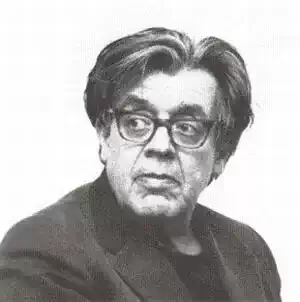
Erich Fried
 AT
AT
Erich Fried was an Austrian poet, writer, and critic, whose work is characterized by social and political depth, combined with a remarkable lyrical sensibility. Exiled to England during the Nazi period, his life experience profoundly marked his writing, giving him a unique perspective on themes such as war, oppression, love, and justice. Fried is recognized for his direct and accessible language, yet loaded with meaning, and for his ability to address complex issues with clarity and empathy. His often engaged poetry invites critical reflection and transformative action.
n. 1921-05-06, Viena · m. 1988-11-22, Baden-Baden
Bio
Identification and basic context
Erich Fried was born in Vienna, Austria, on May 6, 1921. He used the name "Erich Fried" as a pseudonym. He was of Austrian and German nationality, writing primarily in German. His life was marked by historically significant events, such as the rise of Nazism and World War II, which led him to exile.Childhood and education
Fried grew up in a family environment that, although not directly involved in the arts, exposed him to the social and political tensions of pre-war Austria. His intellectual development was shaped by reading and participation in clandestine political activities. His early influences include German literature, Marxist thought, and the artistic avant-gardes of the time. The most significant event of his youth was persecution and the need to flee the Nazi regime.Literary career
Fried's writing began in his youth, driven by experiences of repression and the need to express his discontent. His literary career was shaped by exile and his constant reflection on the human condition in times of crisis. He published his first poems in clandestine newspapers and continued his intense literary activity after the war. He was also an active translator, literary critic, and essayist, contributing significantly to cultural debate.Works, style, and literary characteristics
Erich Fried's main works include "Reich der Necessität" (Reich of Necessity), "Und was geschehen wird" (And What Will Happen), "Liebesschaukel" (Love Swing), and "Fast alles" (Almost Everything). The dominant themes in his poetry are war, violence, social injustice, freedom, love, and human resilience. His style is characterized by clarity, irony, and the strength of his message. Fried often uses free verse and colloquial language, but laden with symbolism. His poetic voice is engaged, critical, and, at the same time, deeply human and lyrical. His work is often associated with critical realism and social poetry.Cultural and historical context
Erich Fried spent most of his adult life in exile in London, where he became a prominent intellectual figure. His work is intrinsically linked to the historical events of the 20th century, such as World War II, the Cold War, and the civil rights struggles. He was a fierce critic of authoritarian regimes and a defender of peace and social justice. He maintained contact with other exiled writers and intellectuals and with the British cultural scene, although his main output remained in German.Personal life
Exile was an indelible mark on Erich Fried's life. His personal experiences of persecution and loss shaped his worldview and his writing. He maintained significant personal relationships, but his dedication to the political and literary cause occupied a central space in his life. His profession as a writer and translator allowed him to live from his art, although his life was marked by constant reflection on the human condition and individual responsibility.Recognition and reception
Erich Fried achieved significant recognition, especially in Germany and Austria, as one of the most important poets of his generation. He received several literary awards, and his work was widely translated and studied. His popularity is due to the clarity of his message and his ability to address universal themes with accessible language.Influences and legacy
Erich Fried was influenced by poets such as Bertolt Brecht and by movements like socialist realism and resistance poetry. His legacy lies in his socially engaged poetry, his ability to articulate the experience of exile, and his persistent defense of humanist values. He influenced later generations of poets who focus on social and political issues.Interpretation and critical analysis
Fried's work is often analyzed from the perspective of his social and political critique. His poetry offers a deep reflection on the nature of power, oppression, and hope. The duality between romantic lyricism and social denunciation is a central point of critical debate.Curiosities and lesser-known aspects
A curiosity about Erich Fried is his passion for football, which appears in some of his poems. Despite the seriousness of the themes he addressed, he possessed a biting humor and a keen observation of everyday life. His manuscripts and correspondence reveal a meticulous creative process and a deep dedication to the word.Death and memory
Erich Fried passed away in Baden-Baden, Germany, on November 6, 1984. His works continue to be published and studied, keeping alive his memory as a fundamental poet of the 20th century, whose voice resonates with its social and humanistic relevance.Poems
0No poems found
Comments (0)
No comments yet. Be the first to comment.